When you purchase through links on our site, we may earn a commission at no extra cost to you. Learn more.
You think you’re choosing between two friendly family dogs. You’re actually choosing between a high-energy shadow that needs constant activity and a 130-pound gentle giant that drools on your walls.
Table of Contents
Breed Comparison
- Height27-29 Inches
- Height21-24 Inches
- Weight100-150 Pounds
- Weight55-80 Pounds
- TemperamentFriendly, Calm, Independent
- TemperamentFriendly, Hardworking, Intelligent
- EnergyRelaxed
- EnergyEnergetic
- HealthAverage
- HealthAbove Average
- Lifespan8-10 Years
- Lifespan13-14 Years
- Puppy Prices$2,000 and Up
- $1,000 and UpPuppy Prices
Start Here: Newfoundland Vs Labrador At A Glance
If you only have 30 seconds, here’s the reality most people wish they knew first:
- Size: Newfoundlands are massive, often 100 to 150 pounds. Labs are large, but much more manageable at 55 to 80 pounds.
- Energy: Labs are high-energy and need daily activity. Newfies are far more relaxed but still require consistent movement.
- Grooming: Newfoundlands require heavy, frequent grooming. Labs shed consistently but are easier to maintain.
- Mess Factor: Labs shed. Newfoundlands shed and drool — a lot.
- Lifespan: Labs typically live 13 to 14 years. Newfoundlands average 8 to 10 years.
- Ease of Ownership: Labs are one of the best choices for first-time owners. Newfoundlands are better suited to experienced or well-prepared households.
Quick Takeaway
If you want a more predictable, active, and easier-to-manage dog, the Labrador is usually the better fit. If you’re drawn to a calm, deeply loyal giant and are prepared for the size, grooming, and cost, a Newfoundland can be incredibly rewarding.
The Biggest Differences Most People Underestimate
The biggest differences between a Newfoundland and a Labrador don’t show up in breed summaries, they show up in your routine, your space, and your tolerance for things like energy, mess, and maintenance. These are the factors that tend to catch people off guard.
1. Size Is Not Just A Number
On paper, both are “large breeds.” In reality, they live in completely different categories.
A Labrador is strong, athletic, and solid. A Newfoundland is massive, powerful, and takes up real physical space in your home, your car, and your daily life.
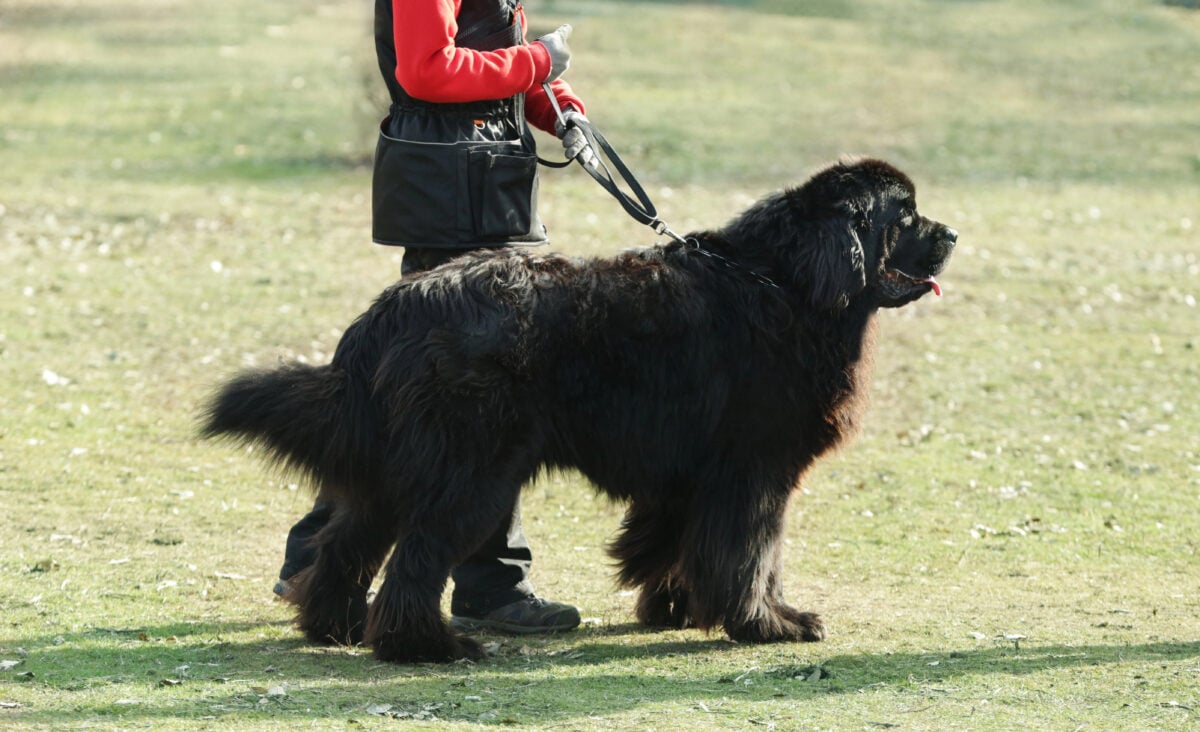
This shows up in ways people don’t always expect:
- A Newfie leaning on you feels like weight, not just affection
- Doorways, couches, and cars suddenly feel smaller
- Controlling them on a leash requires strength and training
With a Lab, you’re managing energy. With a Newfoundland, you’re managing size and force.
2. Energy Level Feels Completely Different Day-To-Day
Both breeds are active in their own way, but the experience of living with them is very different.
Labradors are always ready to go. Walks, fetch, swimming, training games, they want to be involved in everything. Even as adults, many Labs keep that playful, slightly chaotic energy.
Newfoundlands are much more relaxed. They’ll play, they’ll walk, but they’re just as happy lying nearby, watching everything instead of being in the middle of it.
What This Feels Like At Home
- Lab = “What are we doing next?”
- Newfie = “I’ll be right here with you.”
Neither is better. But they are not interchangeable.
3. Drool Vs Shedding: Pick Your Battle
This is where expectations can make or break the experience.
Labradors shed. A lot. You’ll find hair on your clothes, your floors, your furniture, and probably in places that don’t make sense.
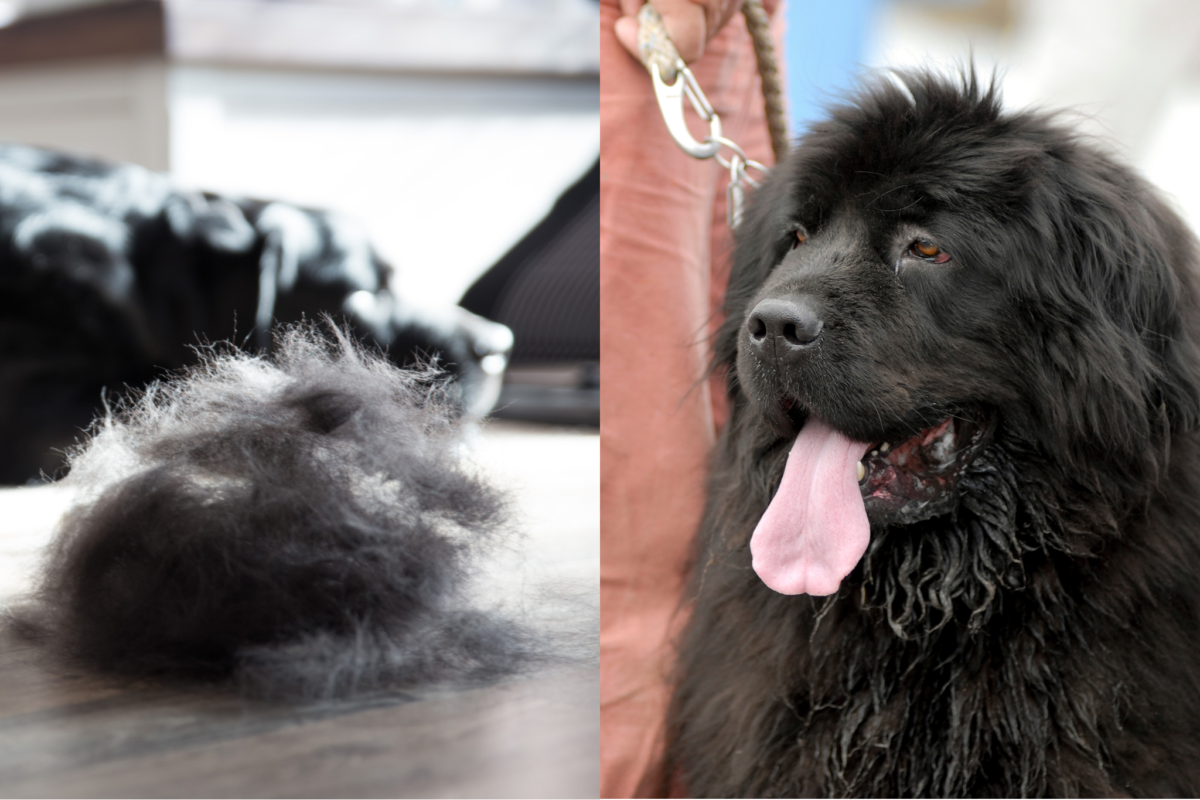
Newfoundlands shed too, but that’s only part of the story. They also drool. Frequently.
- Water after drinking ends up on your floors
- Drool can land on walls, furniture, and you
- Towels become part of your daily routine
Reality Check
- If hair bothers you, Labs can be frustrating
- If constant moisture and drool bother you, Newfoundlands can be overwhelming
There isn’t a clean option here. Just a different kind of mess.
4. Lifespan Difference Is Bigger Than You Think
This is one of the most overlooked differences. Labradors typically live well into their early teens. Newfoundlands, like many giant breeds, have much shorter lifespans.
It’s not just emotional. It also affects long-term cost, care, and planning.
5. First-Time Owner Reality
Both breeds are friendly and trainable. That doesn’t mean they’re equally easy to own.
Labradors are one of the most forgiving breeds for new owners because they’re:
- Eager to please
- Highly trainable
- Adaptable to different lifestyles
Newfoundlands require more awareness and preparation:
- Their size alone raises the stakes
- Grooming and maintenance are significant
- Training matters more because mistakes scale with size
Bottom Line: If this is your first dog, a Lab is usually the safer and more manageable choice.
They Both Come From Canada… But Were Built For Different Jobs
At first glance, it’s easy to assume these breeds share a similar background. They both trace back to the same region of Canada and were shaped by life around cold water, fishing communities, and harsh weather.
But they were built for very different roles, and that difference still shows up in how they behave today.
Newfoundland
Newfoundlands were bred to work in brutal, icy conditions along the coast of Newfoundland. Their job wasn’t just to assist, it was to handle heavy, demanding physical tasks.
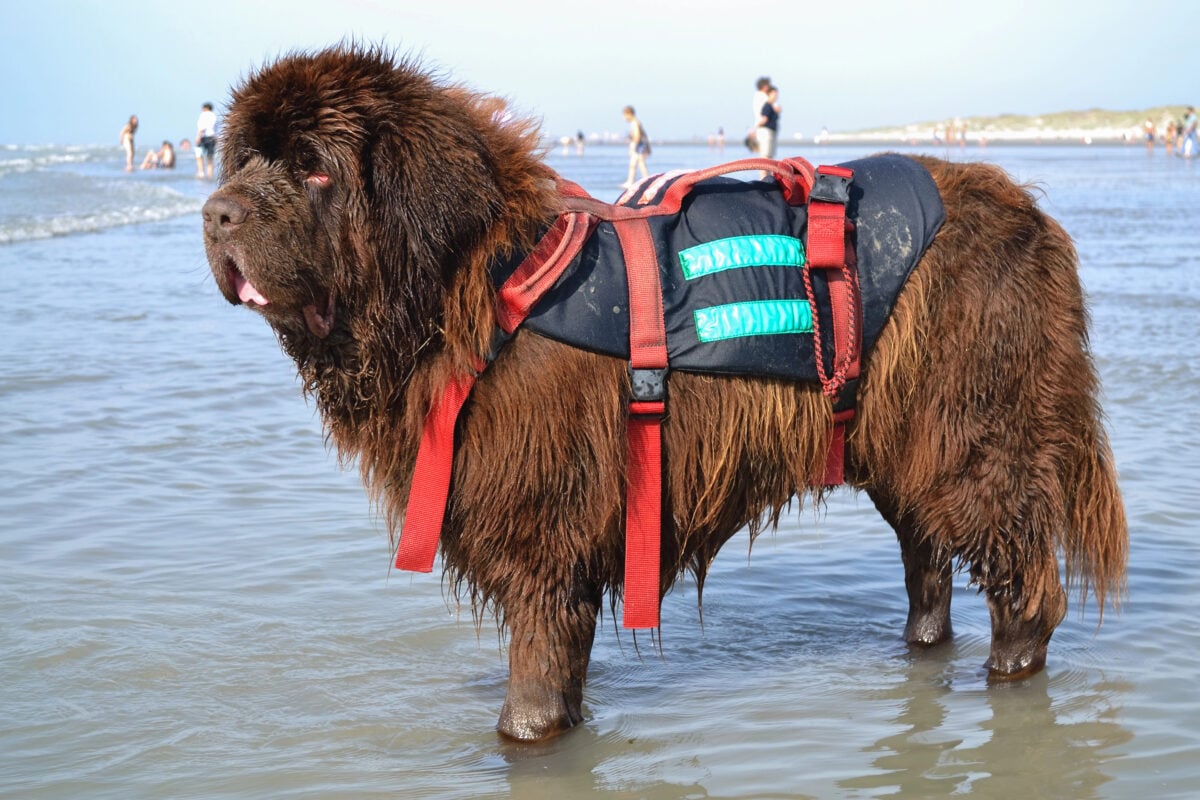
They pulled fishing nets, hauled equipment, and even performed water rescues. Their massive size, strength, and thick, water-resistant coat made them uniquely suited for this kind of work.
That history explains a lot about the modern Newfie:
- Calm, steady temperament
- Strong swimming instincts
- Built for endurance, not speed
- Naturally protective and aware of their surroundings
They weren’t designed to be constantly “on.” They were designed to be reliable under pressure.
Labrador Retriever
Labradors also originated in Newfoundland, but from a different working line known as the St. John’s water dog. Their role was more agile and fast-paced. Instead of hauling heavy loads, they were bred to:
- Retrieve fishing lines and nets
- Fetch game for hunters
- Move quickly between water and land
When Labs were brought to England, breeders refined them into the highly versatile hunting companions we know today.
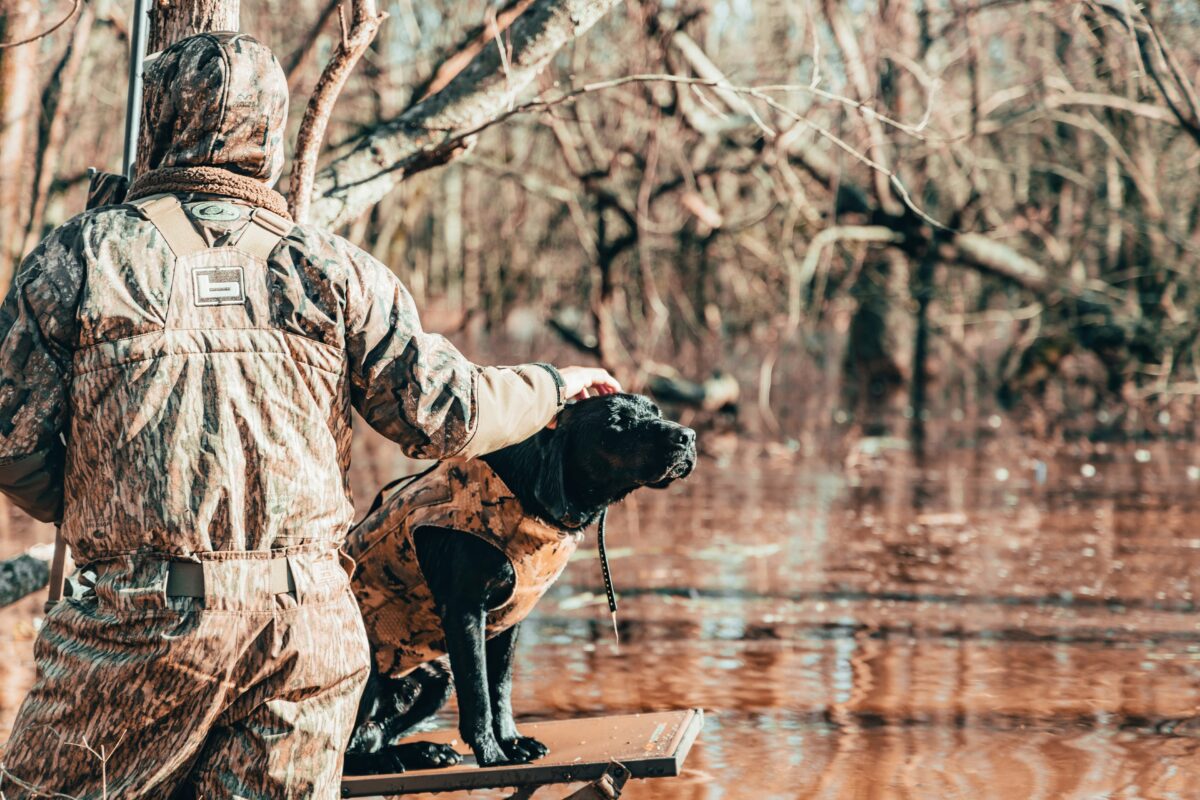
That background shows up clearly in modern Labs:
- High energy and stamina
- Strong desire to retrieve and chase
- Eagerness to work and engage
- Extremely trainable and responsive
They weren’t built to wait around. They were built to move, retrieve, and stay busy.
Why This Still Matters Today
Even though both breeds are now popular family pets, they still retain traits of their breed’s original function:
- A Lab’s need for activity comes from generations of constant movement and retrieval
- A Newfie’s calm presence comes from being bred to conserve energy and handle heavy work when needed
This is why one dog tends to feel like a daily workout partner, while the other feels more like a steady, watchful companion.
Appearance: Gentle Giant vs Athletic Classic
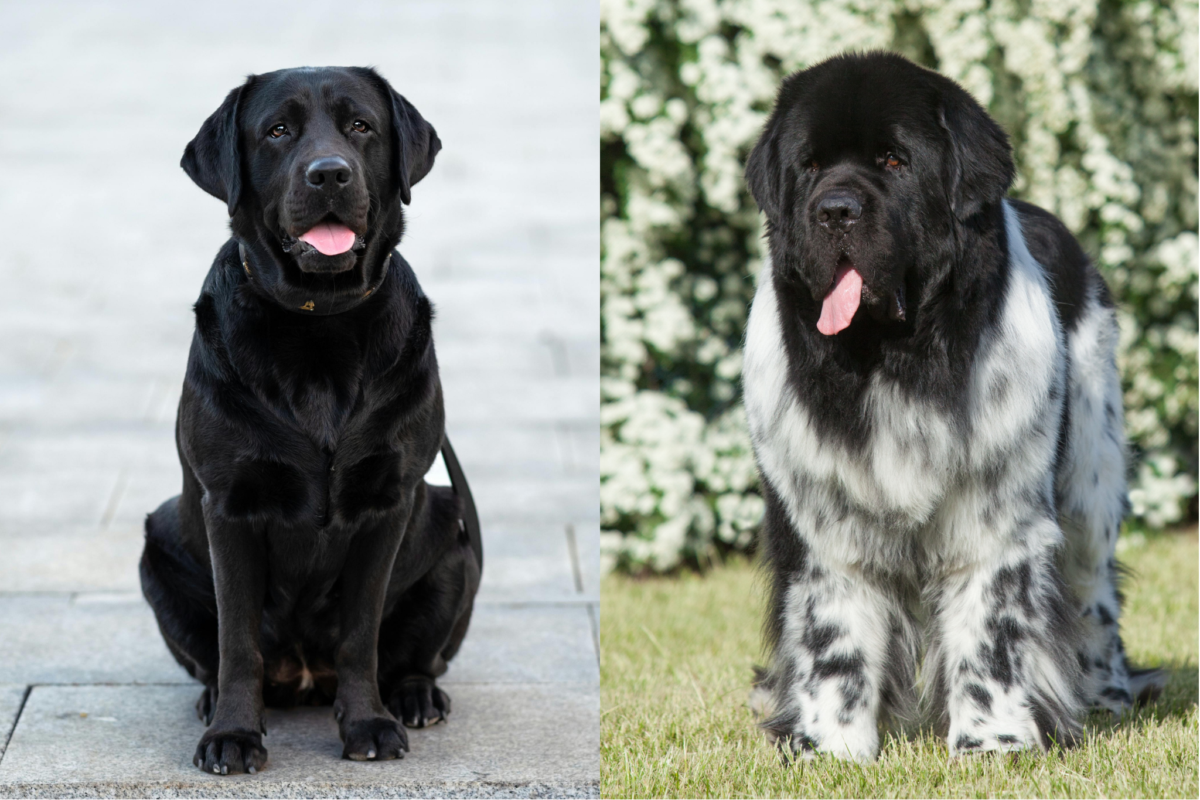
These breeds look dramatically different the moment you see them side by side.
Size & Weight Reality
Labradors fall into the large dog category, but they’re still manageable for most households.
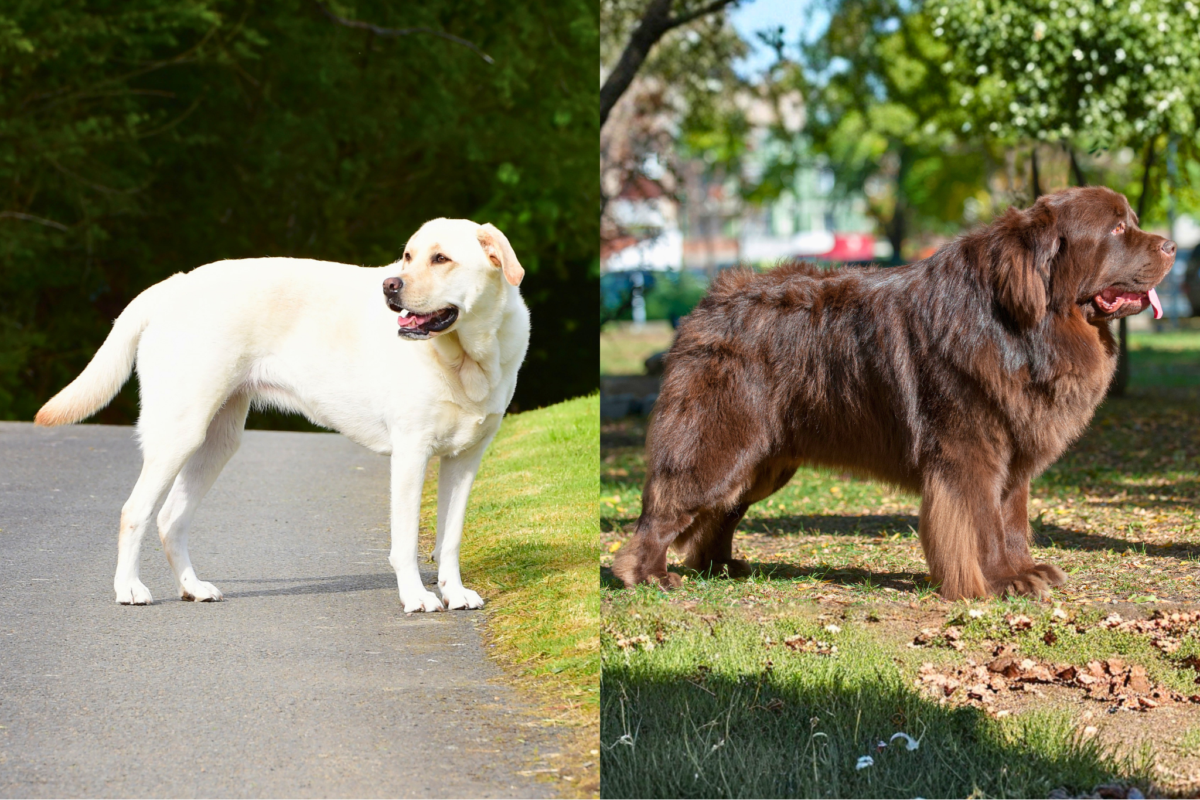
Labrador Retriever
- 55 to 80 pounds
- 21 to 24 inches tall
Newfoundlands, on the other hand, are true giant-breed dogs.
Newfoundland
- 100 to 150 pounds (sometimes more)
- 26 to 29 inches tall
Coat Type & Weather Tolerance
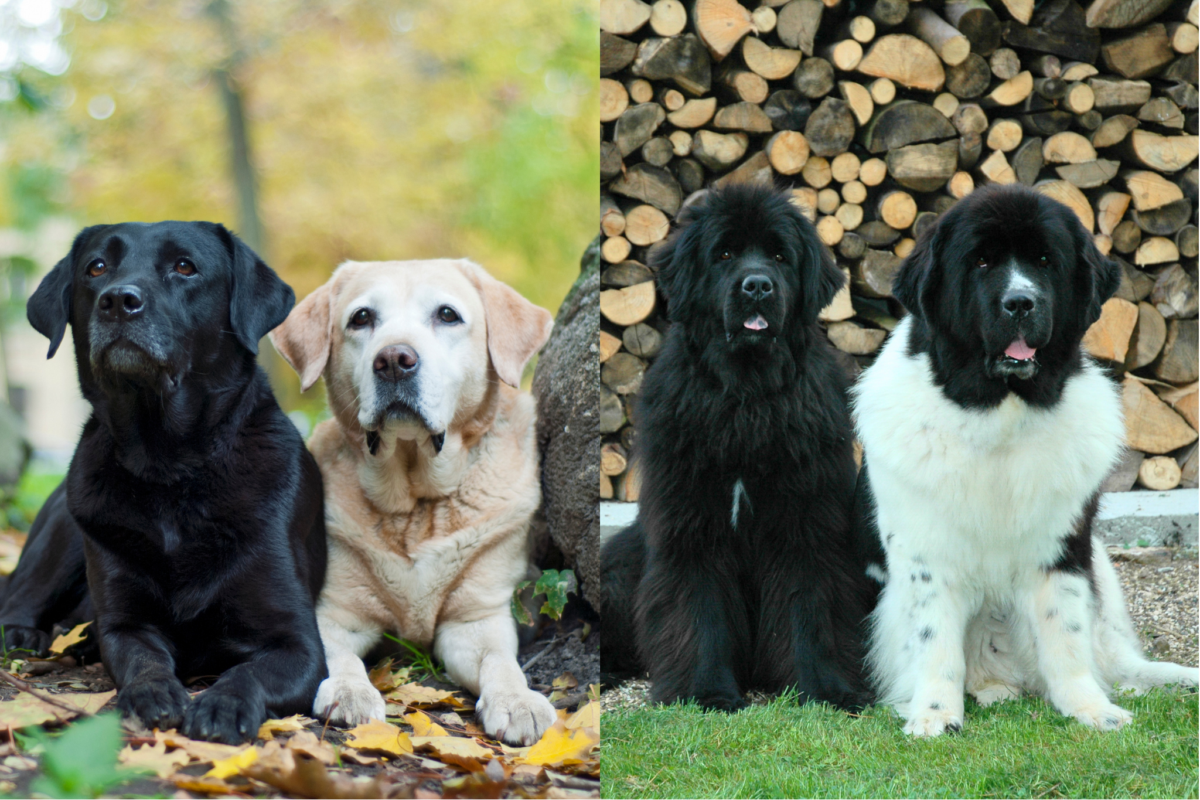
Newfoundlands have a thick, dense double coat designed for freezing water and harsh winters. It’s long, heavy, and highly insulating.
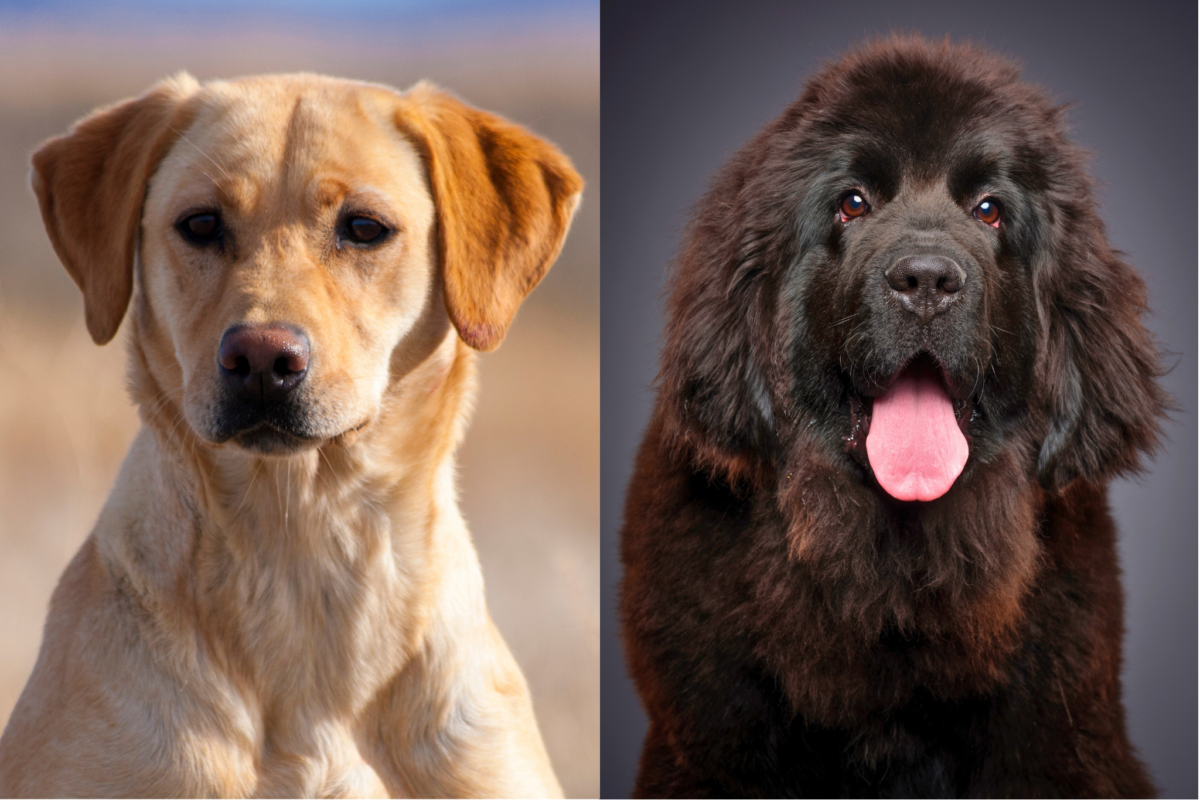
Labradors also have a double coat, but it’s much shorter and easier to manage. Their coat is still water-resistant, but better suited for moderate climates.
What This Means
- Newfies handle cold weather exceptionally well
- Labs are more adaptable across different climates
- Grooming requirements are significantly higher for Newfoundlands
Colors & Breed Standards
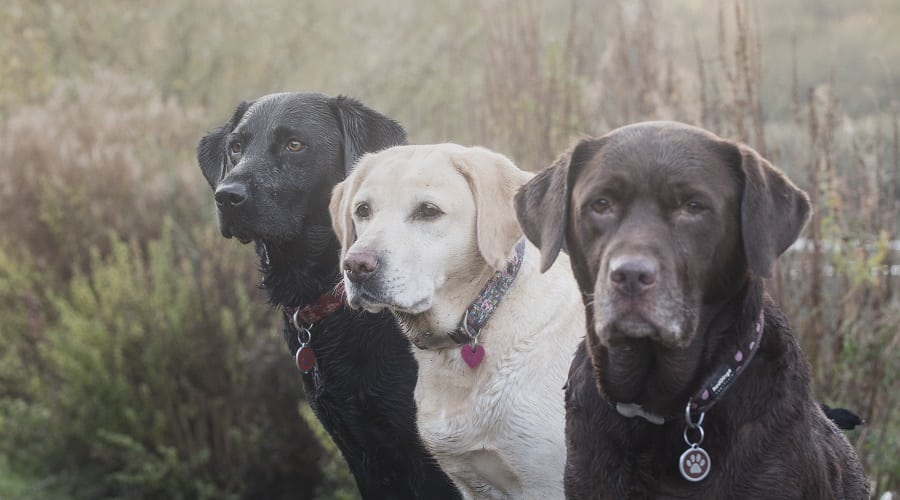
Labradors have three officially recognized colors — black, yellow, and chocolate — though you may see them bred in other colors, including silver and fox red.
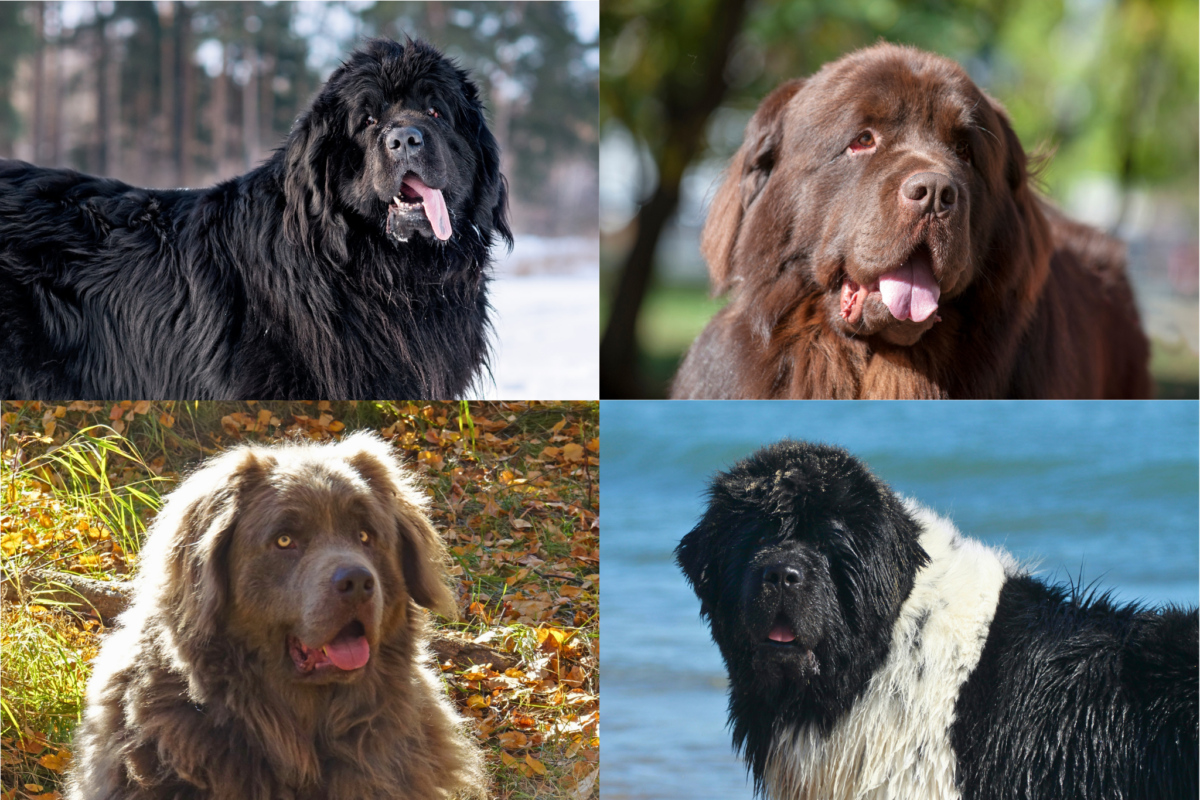
Newfoundlands have a broader range:
- Black (most common)
- Brown
- Gray
- Black and white (often called Landseer)
While color doesn’t impact temperament, it can affect availability and price depending on breeder demand.
Temperament: Same Sweet Reputation, Different Experience
Both of these breeds are known for being friendly, loyal, and great with families. That reputation is accurate. But the way that personality shows up is very different.
Quick Take: Calm Companion Vs Playful Extrovert
- Labrador Retriever: Outgoing, playful, always ready to engage
- Newfoundland: Calm, gentle, observant, and more reserved
Labs tend to bring energy into the room. Newfoundlands tend to bring calm.
Family Life & Kids
Both breeds are excellent with children and other dogs, but for different reasons.
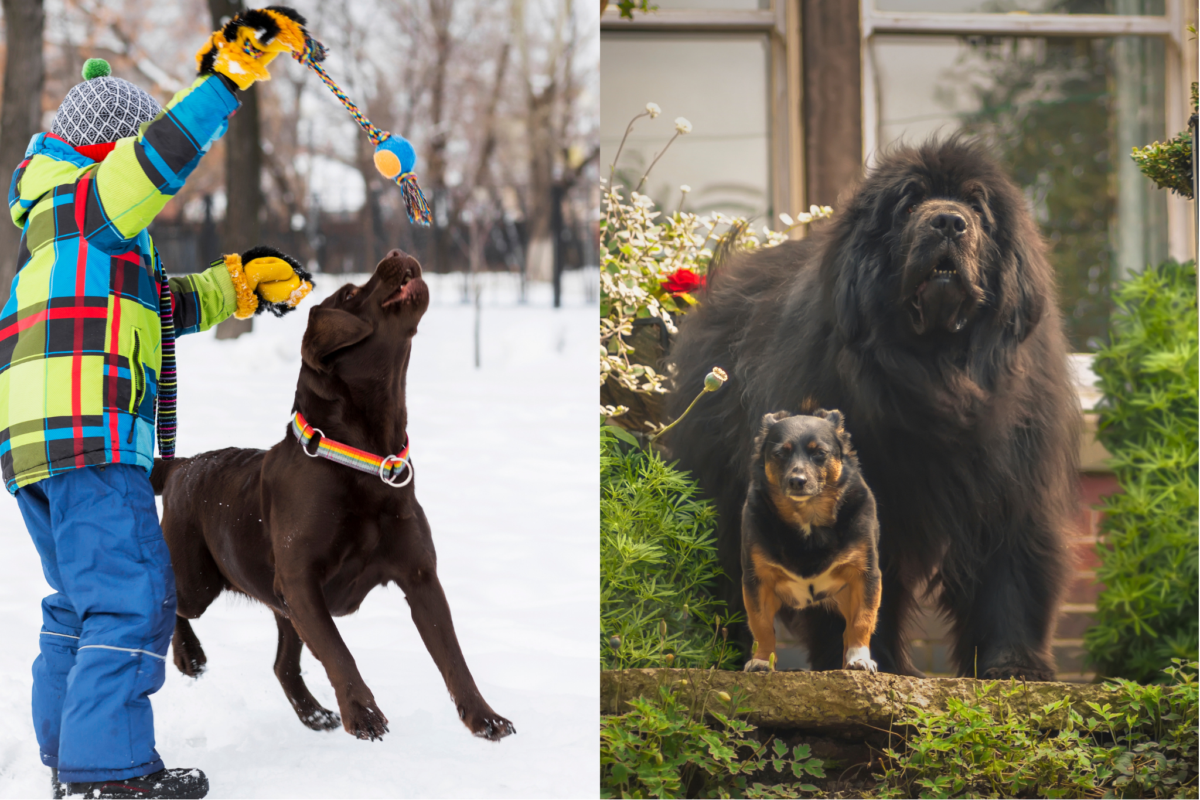
Newfoundlands are often called “gentle giants” because of their patience and calm demeanor. They tend to move carefully and tolerate a lot, which makes them especially appealing for families with younger kids and smaller pets.
Labradors are more playful and energetic. They’re great with kids and other active dogs who want a companion, but their enthusiasm can sometimes be a bit much for very small children.
Stranger Behavior & Friendliness
Labradors are famously friendly. They’re often just as excited to meet a stranger as they are to see their owner.
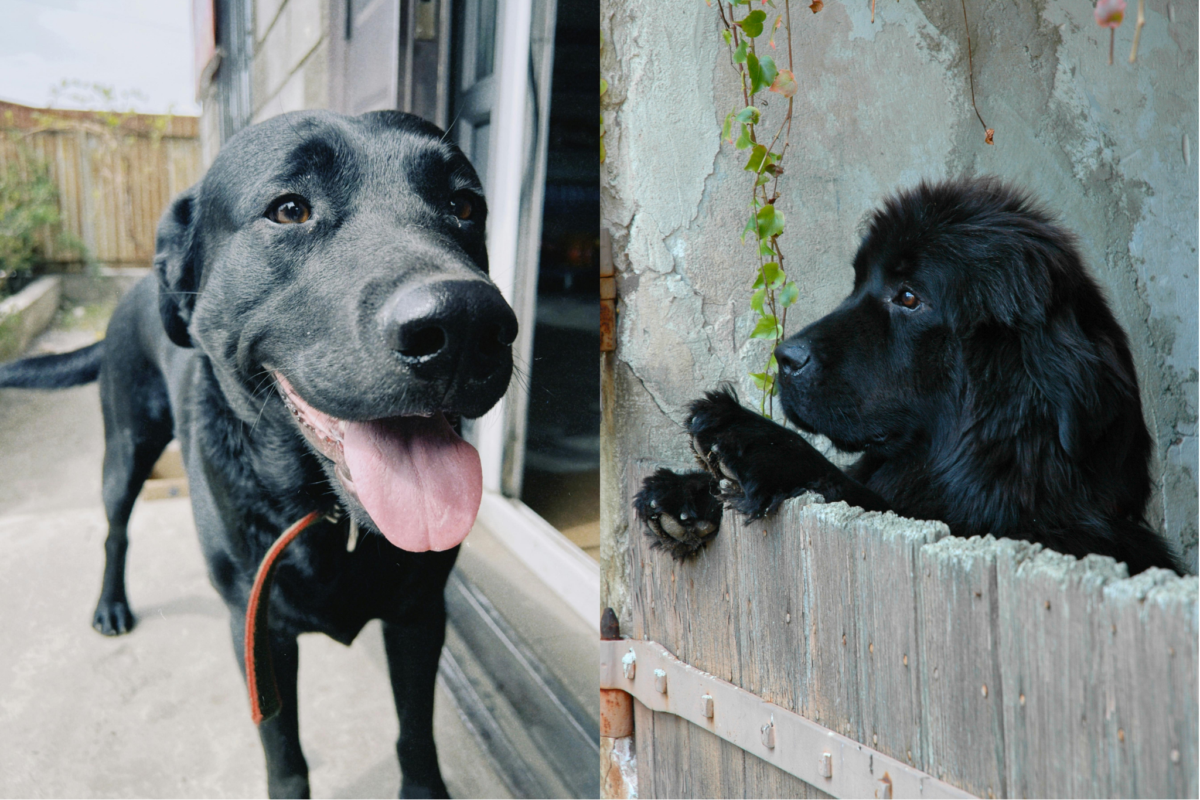
Newfoundlands are also friendly, but more reserved. They tend to observe first and engage second, which can make them feel more naturally protective.
Watchdog Instincts
Neither breed is aggressive by nature, but both will alert you if something feels off.
- Labs are more likely to greet than guard
- Newfoundlands are more likely to assess before reacting
This makes Newfies feel slightly more protective, even though both breeds are generally safe and family-oriented.
Daily Life: What Living With Each Dog Actually Feels Like
Both of these breeds sound great on paper. But what matters is how they fit into your actual routine, your space, and your energy level.
A Day With A Labrador
Living with a Labrador usually means your day has a built-in activity schedule. They wake up ready to go. Walks, playtime, training, mental games — they want to be involved in everything you’re doing.

If you meet their needs, they’re incredibly rewarding. If you don’t, that energy doesn’t disappear. It redirects.
What that can look like:
- Chewing, digging, or destructive behavior
- Restlessness and pacing
- Constant attention-seeking
Labs thrive when they have structure and an outlet for their energy. Without it, they can quickly become overwhelming.
A Day With A Newfoundland
Newfoundlands bring a completely different pace into your home. They’re still social and affectionate, but much calmer overall. Instead of constantly initiating activity, they tend to stay close and observe.
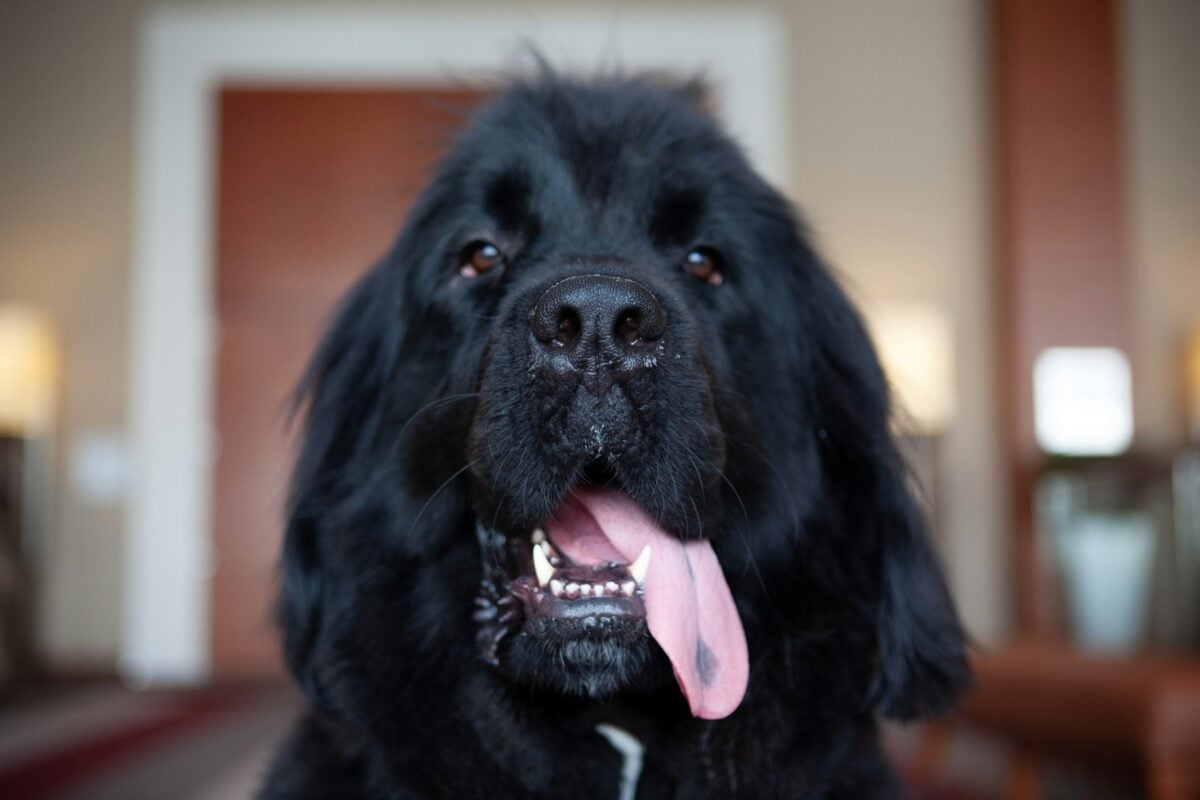
What daily life often looks like:
- Shorter, slower walks
- Periods of play followed by long stretches of rest
- A strong physical presence
They’re often described as “easygoing,” which is true in terms of energy. But that doesn’t mean low effort.
The tradeoff:
- Their size changes how you manage everyday tasks
- Grooming and cleanup are ongoing
- Their physical presence affects your space and routine
A Newfie may be calmer than a Lab, but they are not a low-maintenance dog.
Space Requirements (This Matters More Than People Think)
Both breeds can technically adapt to different living situations, but one is much easier to accommodate.
Labradors can do well in apartments if their exercise needs are met. They’re active, but their size is still manageable indoors.
Newfoundlands are a different story:
- They take up significant room when lying down
- Turning around in tight spaces can be awkward
- Furniture, doorways, and even car space need to be considered
It’s not just about square footage. It’s about how comfortable your home feels with a giant dog in it.
Water Obsession (Both Love It… But Differently)
Both breeds have a strong connection to water, but how they interact with it feels very different.
Labradors treat water like a playground. They’ll jump in, splash around, retrieve anything you throw, and come back ready to do it again.
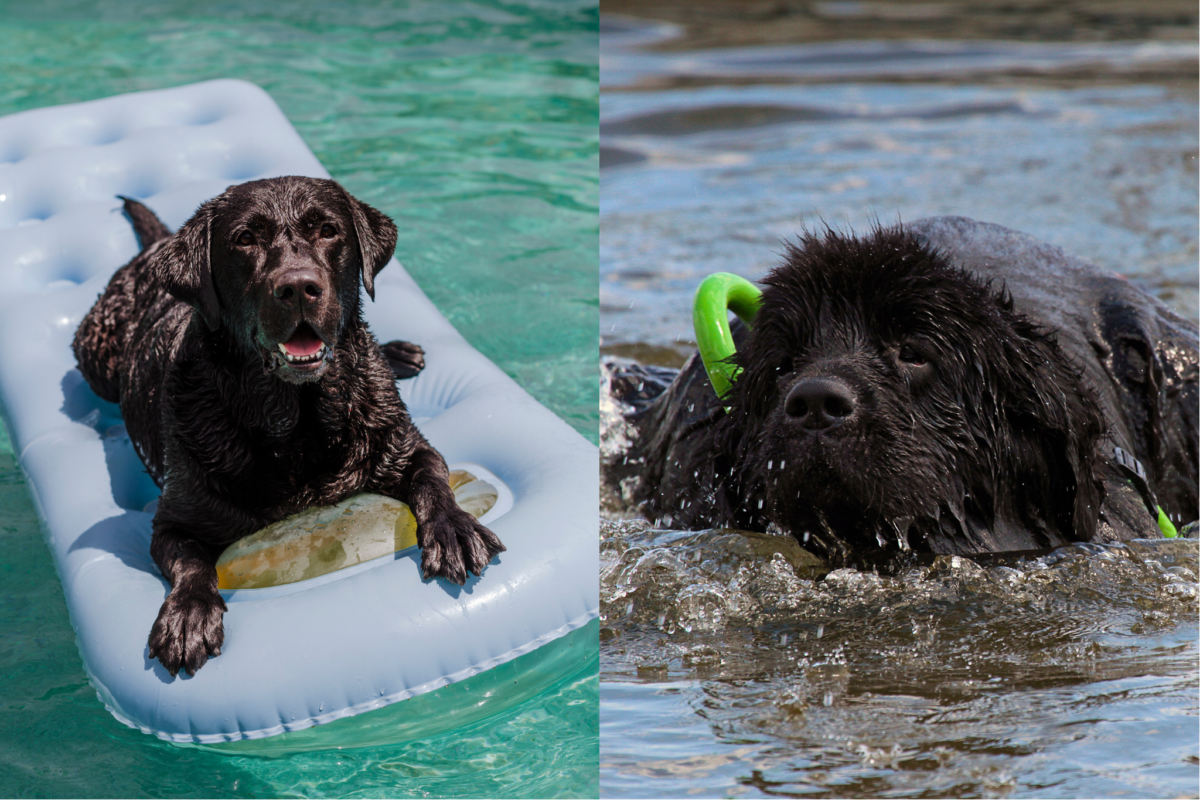
Newfoundlands approach water more deliberately. They’re powerful swimmers with natural rescue instincts, often moving with purpose rather than excitement.
Either way, expect wet floors, damp fur, and a dog that doesn’t hesitate to get soaked.
Exercise & Energy: One Will Wear You Out
Energy needs aren’t just about how much exercise a dog requires. They determine how your time, routine, and lifestyle will need to adjust.
Labrador Exercise Needs
Labradors are high-energy dogs that need consistent daily activity.
Typical Needs
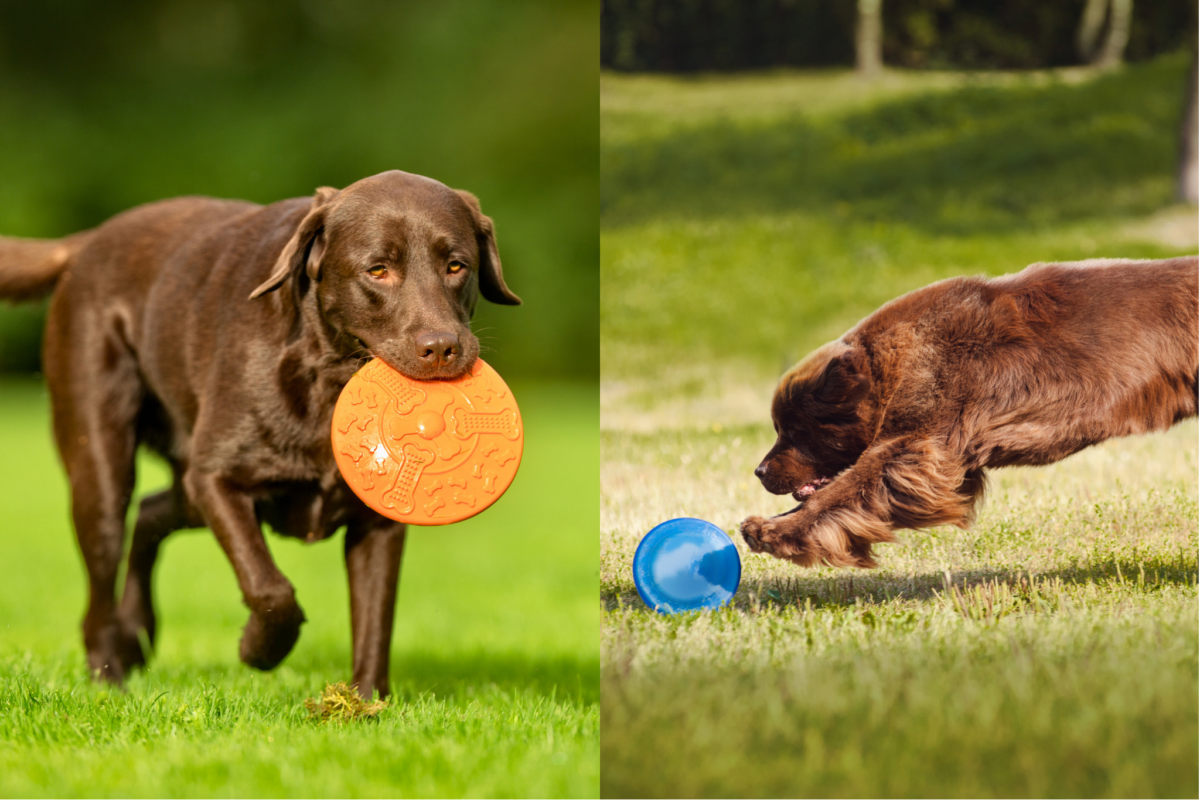
- Around 1.5 to 2 hours of exercise per day
- A mix of physical and mental stimulation
- Activities like fetch, swimming, training, or running
They don’t just need movement. They need engagement. Without enough stimulation, they can become bored quickly, which often leads to unwanted behaviors.
Newfoundland Exercise Needs
Newfoundlands require less exercise, but consistency still matters.
Typical Needs
- Around 45 to 60 minutes per day
- Moderate activity like walking or swimming
- Avoiding overexertion, especially in heat
Because of their size, too much intense activity can strain their joints over time. They benefit from steady, controlled movement rather than high-impact exercise.
What Happens If They Don’t Get Enough
This is where the difference becomes very obvious.
- Labrador without exercise: restless, destructive, attention-seeking
- Newfoundland without exercise: sluggish, prone to weight gain, less engaged
Labs demand activity. Newfies require it, but won’t always ask for it.
Training: Easy To Teach, Very Different To Manage
Both breeds are intelligent and capable of learning quickly. But how you train them — and what happens if you don’t — is very different.
Motivation Differences
Labradors are highly food-motivated and eager to please. They respond extremely well to positive reinforcement and tend to enjoy training sessions.
Newfoundlands are also intelligent, but slightly more independent. They learn quickly, but may not have the same constant drive to perform.
Labs tend to seek out training. Newfies tend to cooperate, but not chase it.
Strength & Control (Critical For Newfoundlands)
Training matters for both breeds. But with Newfoundlands, it becomes essential.
A poorly trained Lab is difficult. A poorly trained Newfoundland can be physically hard to control.
Key focus areas for Newfies:
- Leash manners
- Jumping prevention
- Recall and responsiveness
Their size amplifies every behavior, good or bad.
Mental Stimulation Needs
Both breeds need mental engagement, but Labs typically demand more of it.
- Labs thrive on games, training, and problem-solving
- Newfies benefit from stimulation but are less likely to become restless without constant input
Labs need you to keep them busy. Newfies need you to keep them balanced.
Health Tradeoffs You Should Understand First
Both breeds are generally healthy, but they come with very different risk profiles.
Labrador Retriever Health Patterns
Labradors are considered a relatively healthy breed overall, especially when sourced from responsible breeders.
That said, they are prone to a few common issues:
- Hip and elbow dysplasia
- Obesity (very common if overfed)
- Skin conditions and allergies
- Ear infections (especially due to water exposure)
Labs tend to stay active well into their senior years, but weight management is critical. Because they love food and are highly motivated by it, overfeeding is a major long-term risk.
Newfoundland Health Patterns
Newfoundlands face more health challenges, largely due to their size.
Common concerns include:
- Hip and elbow dysplasia
- Heart conditions (such as subvalvular aortic stenosis)
- Cystinuria (a genetic condition affecting the urinary system)
- Increased risk of joint strain and mobility issues
Because they’re a giant breed, their bodies simply endure more stress over time.
Joint Stress & Size-Related Issues
This is one of the most important differences to understand. All large dogs can develop joint issues. But with Newfoundlands, the impact is greater.
This is why:
- High-impact activity is often limited as Newfies age
- Weight management becomes even more critical
- Vet costs can increase as mobility declines
Labs can also experience joint issues, but they typically maintain mobility longer.
Cost & Maintenance Reality (The Part People Underestimate)
This is where the day-to-day differences really add up.
Food Costs (The Size Difference Shows Up Fast)
Both dogs require high-quality food. But the amount is very different.
- Labrador: around 1,200 to 1,500 calories per day
- Newfoundland: often 2,000 to 2,500+ calories per day
Feeding a Newfie isn’t just slightly more expensive. It’s significantly more over time.
Grooming Time & Expense
This is one of the biggest lifestyle differences.
Labrador:
- Weekly brushing
- Occasional baths
- Manageable shedding
Newfoundland:
- Frequent, thorough brushing
- Regular bathing to prevent matting
- Much higher grooming effort overall
Many Newfie owners either invest significant time in grooming or pay for professional grooming regularly.
Vet Bills & Long-Term Costs
Bigger dogs tend to incur higher veterinary costs.
- Medications are dosed by weight
- Procedures often cost more
- Joint and mobility care becomes more likely
Newfoundlands typically cost more to care for medically over time. Labs still require care, but overall costs are usually more moderate.
Puppy Prices, Breeders & Rescue Reality
Both breeds can be found through breeders or rescues, but availability differs.
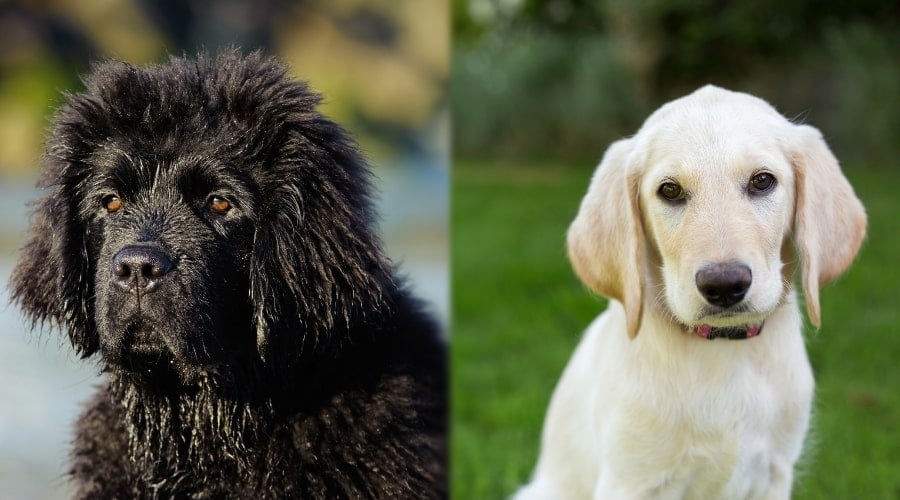
- Labrador puppies: typically start around $1,000 and increase with pedigree
- Newfoundland puppies: often $2,000+ and can go significantly higher
Labs are much more common in shelters and rescues. Newfoundlands are rarer, which often means longer wait times, higher upfront cost, and fewer adoption opportunities.
Which Breed Is Right For You?
At this point, it’s less about which dog is “better” and more about which one fits your life. The right choice should feel manageable, not overwhelming, once the day-to-day reality sets in.
A Labrador May Be A Better Fit If…
- You want a more active, engaging dog
- You enjoy walks, playtime, and daily interaction
- You’re a first-time dog owner
- You prefer easier grooming and maintenance
- You want a longer average lifespan
A Newfoundland May Be A Better Fit If…
- You prefer a calmer, more laid-back companion
- You’re comfortable handling a very large dog
- You don’t mind grooming and cleanup
- You have enough space to accommodate their size
- You’re prepared for higher long-term costs
Frequently Asked Questions
If you’re still deciding between a Newfoundland and a Labrador, these are some of the most common questions that come up. The answers below can help clarify key differences and fill in any remaining gaps before you choose.
Which Breed Is Easier To Own, A Newfoundland Or Labrador?
For most people, Labradors are easier to own. They require more exercise, but are more manageable in size, grooming, and overall maintenance.
Which Breed Is Better For Families With Kids?
Both are excellent family dogs. Newfoundlands are known for their calm, gentle nature, while Labradors are more playful and energetic. The better choice depends on your household’s activity level.
Do Newfoundlands Shed More Than Labradors?
Both breeds shed significantly. However, Newfoundlands also drool, which adds another layer of daily maintenance.
Are Labradors Or Newfoundlands Easier To Train?
Both are intelligent and trainable. Labradors are typically more eager to please, while Newfoundlands may require a bit more consistency due to their independent streak.
Still Deciding? Compare These Next
If you’re still narrowing it down, it usually helps to look at how each breed compares to similar dogs with overlapping traits.
If you’re drawn to the Newfoundland’s size and temperament:
If you’re leaning more toward a Labrador, the decision usually comes down to energy level, coat type, and overall lifestyle fit. These comparisons can help clarify that:
Sometimes the right choice becomes obvious when you see how your top pick compares to one more alternative.