When you purchase through links on our site, we may earn a commission at no extra cost to you. Learn more.
If dogs ran the world, privacy wouldn’t exist. Your stress levels, hormones, emotional state, recent workout, and questionable late-night snack decisions would all be public information. Because to a dog, your body is constantly broadcasting chemical updates, and your crotch happens to be one of the strongest signal sources available.
Table of Contents
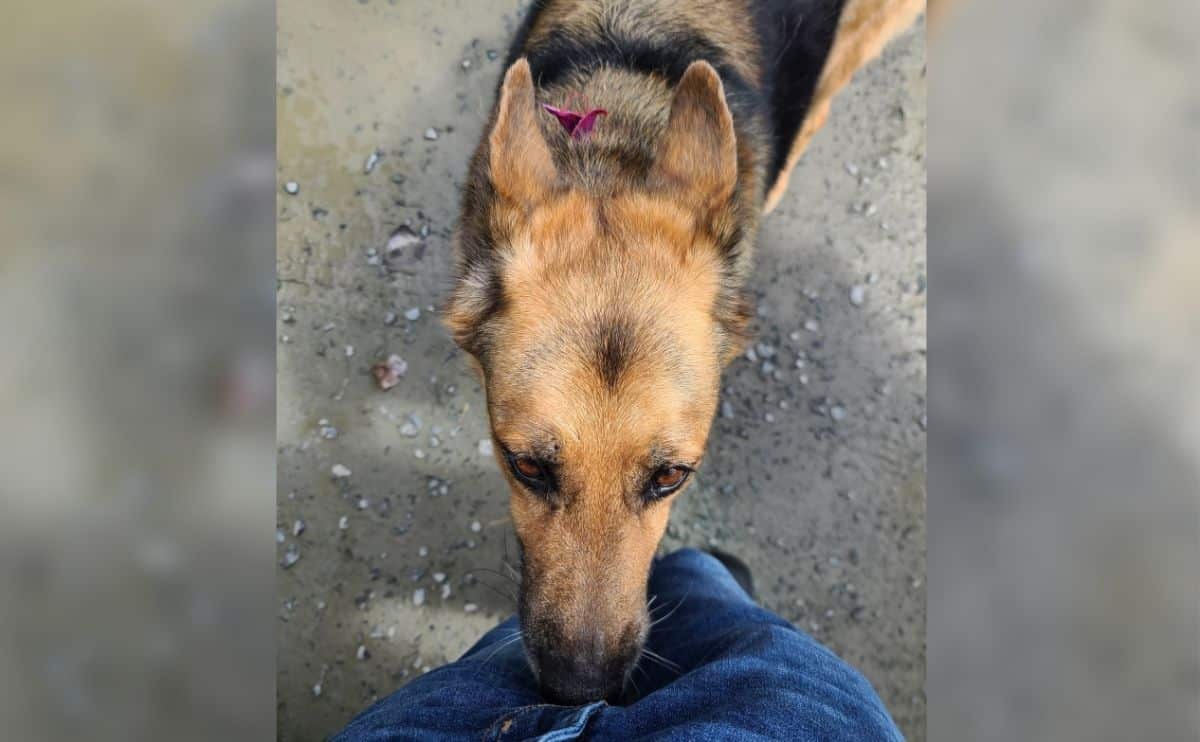
Humans rely on awkward small talk, social media stalking, and years of emotional baggage to figure each other out. Dogs skip the guesswork entirely. One sniff tells them whether you’re nervous, sweaty, pregnant, hormonal, sick, or recently hanging out with another animal.
So why does your dog obsess over certain people while ignoring others? And, most importantly, how do you stop your dog from turning every guest greeting into an aggressive full-body investigation?
Start Here: Your Dog Is Basically Reading Your Medical Chart
Your dog is not randomly choosing crotches. As awkward as it feels when they skip saying hello and go straight for the most socially unacceptable part of the human body, there’s actually a very strategic reason behind it. Dogs are drawn to areas packed with biological information, and humans happen to concentrate a lot of it in one unfortunate location.
The human body contains apocrine glands, which release sweat, pheromones, hormones, and other chemical signals unique to each person. These glands are heavily concentrated in the armpits and groin area, making those spots the canine equivalent of a breaking news alert. While humans rely on conversation and body language to figure each other out, dogs gather information chemically.
That one awkward sniff may tell your dog whether someone is stressed, pregnant, hormonal, sick, nervous, recently exercised, or even around another animal. It also explains why some people get targeted more aggressively than others. To your dog, certain humans are simply broadcasting louder “updates” than everyone else in the room.
Is Crotch Sniffing Normal, Or Is Your Dog Just A Weirdo?
If your dog greets guests by immediately diving nose-first into their personal space, you are definitely not alone. Many dog owners have experienced the slow-motion horror of watching their dog skip the polite greeting phase and head straight for the crotch like they’re conducting an airport security screening.
As awkward and invasive as this behavior feels, it’s completely normal. Dogs gather information through scent, and humans happen to store a shocking amount of biological information in one very unfortunate location.
That’s also why you’ve probably noticed dogs doing the exact same thing to each other. Dogs naturally investigate one another through scent, especially during introductions, greetings, and social interactions.
Wait… Dogs Do This To Each Other Too?
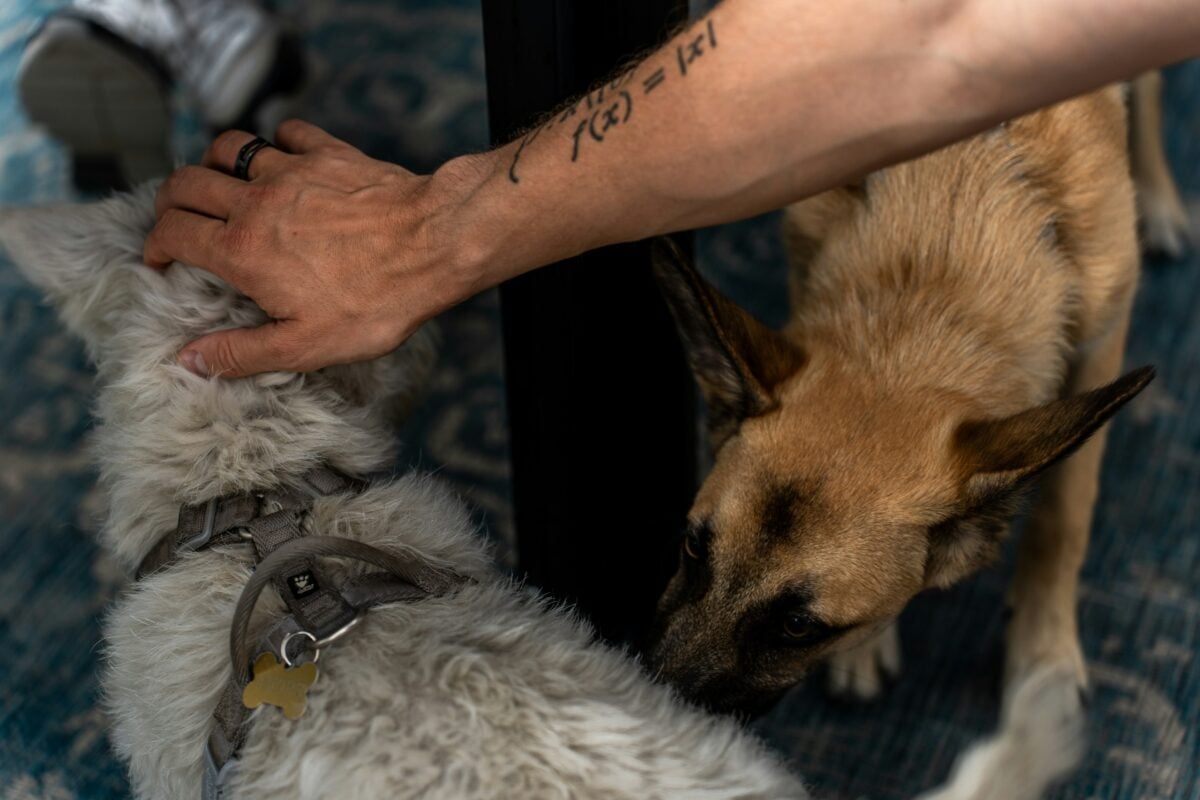
Dogs naturally sniff each other during greetings to gather information about health, stress, sex, and reproductive status. So yes, your dog is basically greeting humans the same way they greet other dogs.
Sniffing another dog’s rear end is one of the primary ways dogs gather social and biological information during introductions. You can read more in our guide to why dogs sniff butts.
Why Dogs Go Straight For The Crotch
Dogs have an entire world of smells at their disposal, yet somehow your crotch keeps making the top of their search history. It’s not personal. To dogs, the human groin area is basically a concentrated hotspot of biological information.
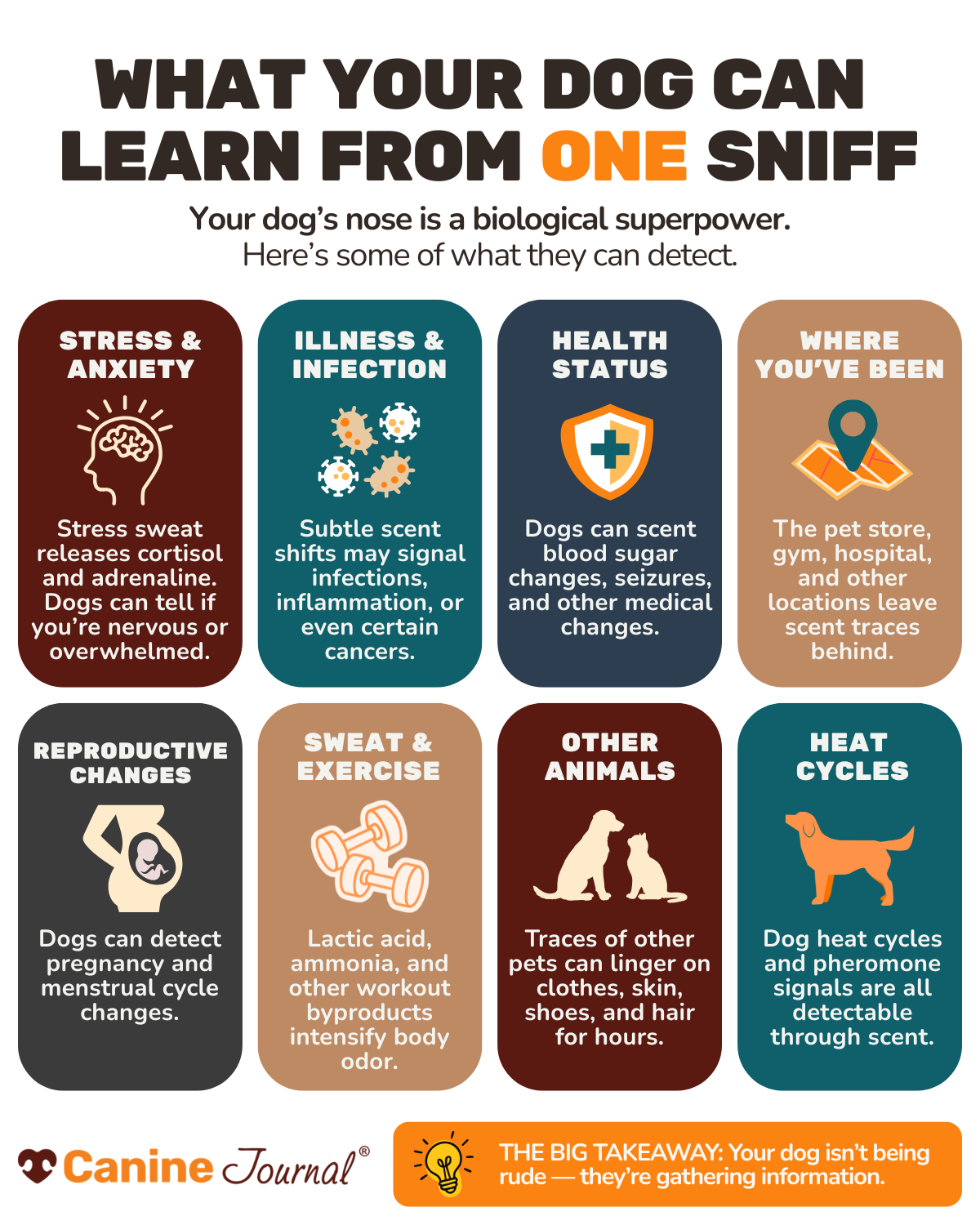
Your Body Is Broadcasting Chemical Information Constantly
Humans are constantly releasing chemical signals through sweat, hormones, pheromones, and body oils. Most people never notice them, but your dog absolutely does.
That one awkward sniff may reveal information about your stress levels, reproductive status, health, emotional state, recent workout, or whether you’ve been hanging around another animal. To dogs, your body is basically sending out live updates all day long.
Apocrine Glands: Your Body’s Chemical Billboard
The main reason dogs target the crotch specifically comes down to apocrine glands. These scent-producing glands release chemical compounds unique to each person, and humans have a high concentration of them in the groin and armpit areas.
Unfortunately for humans, most dogs can’t stand up and sniff your armpits. So, they go for the next strongest and most accessible scent source available.
The Awkward Truth: Your dog is not targeting your crotch to embarrass you. They’re targeting one of the strongest concentrations of scent-producing glands on the human body.
Why Some People Become Instant Targets
Ever notice how your dog ignores one guest completely but acts absolutely obsessed with another? That’s usually because some people are broadcasting stronger scent signals than others.
Dogs are often more interested in people who are:
- Sweaty or recently exercised
- Nervous or stressed
- Pregnant
- Menstruating
- Around other animals
- Wearing strong fragrances or scented products
To your dog, these humans smell “louder” than others.
Hormones, Stress & Reproductive Changes
Dogs are surprisingly good at detecting subtle hormonal and chemical changes in the human body. Some owners notice their dog becomes clingier, more interested in sniffing, or unusually attentive during pregnancy, menstruation, illness, or periods of emotional stress.
Stress sweat is especially interesting because humans produce different chemical compounds when anxious or afraid. While humans may completely miss these subtle scent changes, dogs can detect them almost immediately.
Fun Fact: Some trained dogs can detect seizures, blood sugar changes, infections, and even certain cancers through scent alone.
Dogs Don’t Just Smell Odors. They Decode Them
Humans smell odors. Dogs analyze chemical information. While we might notice perfume, sweat, or food, dogs are processing layers of biological data we cannot even detect.
Dogs have hundreds of millions of olfactory receptors, specialized airflow that separates breathing from smelling, and large brain regions dedicated entirely to scent analysis. Their noses are so sensitive that they can detect substances as small as one part per trillion.
Fun Fact: Science says sniffing is distinctly different than passive breathing. Dogs use rapid, repeated sniffing cycles to refresh and analyze scent information in real time constantly.
That’s also why dogs have wet noses. The thin layer of moisture helps trap and dissolve scent particles, making them easier to detect and analyze.
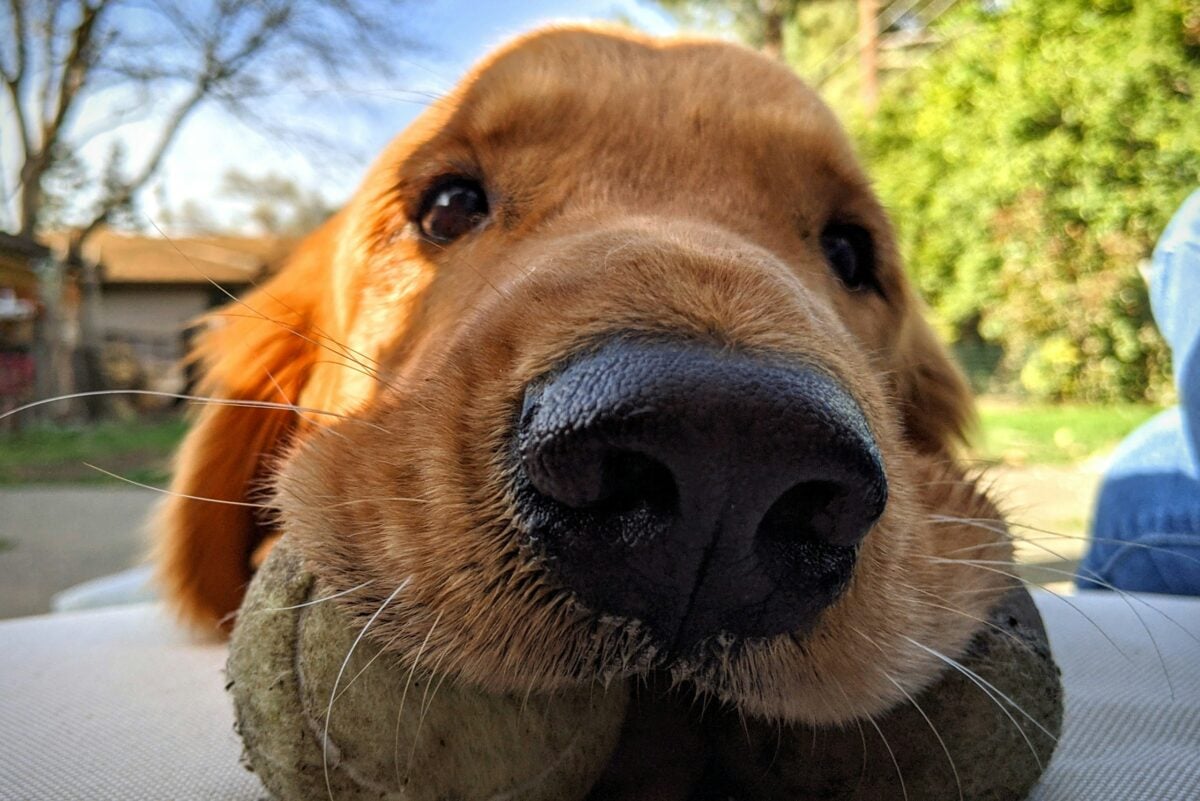
Frequent nose licking helps “refresh” that moisture layer so they can continue collecting new scent information. You can learn more in our guide to why dogs’ noses are wet.
Jacobson’s Organ: Dogs Basically “Taste” The Air
Dogs also have a second scent-processing system called the Jacobson’s organ, or vomeronasal organ. Located on the roof of the mouth, this specialized organ helps process pheromones and chemical signals associated with hormones, emotions, and reproductive status.
When dogs really want to investigate a scent, you may notice nose licking, tongue flicking, or subtle lip movements. These behaviors help move scent particles toward the Jacobson’s organ for deeper analysis.
Did You Know? Humans technically have a Jacobson’s organ too, but ours is considered mostly nonfunctional. In dogs, however, this system remains highly active and plays a major role in social and biological communication.
3 People Dogs Obsess Over Most
Some people walk into a room and barely get acknowledged. Others immediately become the center of a full canine investigation.
Why? Because certain body odors and chemical changes stand out more to dogs. To your dog, some humans are simply more “informative” than others.
1. People Experiencing Hormonal Changes
Dogs are incredibly sensitive to hormonal fluctuations. Changes in adrenaline, cortisol, estrogen, and other hormones can amplify scent markers.
This is why many owners notice their dogs becoming unusually clingy, sniffy, or attentive during certain times of the month.
Real-Life Example
Many dog owners know their pups have an incredible sense of smell, but my dog, Bonkers, takes it to another level. Like clockwork, a day before my period starts, he sniffs my crotch with unwavering determination. He picks up on a scent change I’m completely unaware of, giving me an awkward yet oddly impressive monthly reminder.
My menstrual cycle is very irregular, and it’s quite helpful to have my own menstruation barometer. While it’s not the most dignified signal, it’s a testament to just how finely tuned a dog’s nose really is!
– Emma Braby, Dog Mom & Writer For Canine Journal
2. People Who’ve Been Sweating
Sweat can make people far more interesting to dogs. Increased body heat, perspiration, and hormone activity amplify scent output, turning recently active humans into giant walking scent beacons.
Dogs can also detect emotional changes through sweat. In other words, your anxiety may be introducing itself before you do.
Research has found that dogs exposed to “fear sweat” often display stress-related behaviors themselves, including lip licking, avoidance behaviors, tail tucking, and increased attachment to their owners. Dogs exposed to “happy sweat,” meanwhile, behaved more relaxed and social, even around strangers.
This is one reason dogs sometimes react strangely to someone who looks perfectly normal to us. To your dog, their scent may be telling a completely different story. Learn more in our guide to why dogs don’t like certain people.
3. People Who Have Been Around Other Animals
Your dog absolutely knows when you’ve been cheating on them with another animal. Even small traces of scent left on your clothes, shoes, or skin can prompt a thorough investigation.
Some dogs become excited, overstimulated, suspicious, or unusually focused after you interact with another pet. This is especially common after:
- Visiting another dog owner’s house
- Going to the vet
- Visiting a pet store or dog park
- Petting unfamiliar animals
The same thing can happen when guests visit your home. If your dog suddenly becomes obsessed with sniffing a specific person, there’s a good chance they have pets at home or recently interacted with another animal.
Can Dogs Smell Illness?
Dogs have repeatedly demonstrated the ability to detect subtle chemical changes associated with illness, infection, and shifts in human physiology. In some cases, they can identify these changes before symptoms become obvious to people or even before medical tests confirm a problem.
Researchers believe dogs pick up on a combination of scent changes, including volatile organic compounds (VOCs), hormone-related chemical shifts, changes in sweat composition, and other biological odor markers released through breath, skin, sweat, and bodily fluids.
Research has shown dogs can detect:
- Certain cancers
- Low blood sugar episodes
- Seizure activity
- Infections, including COVID-19
- Hormonal and metabolic diseases
Some dogs naturally become fixated on a specific area of the body, repeatedly sniffing, pawing, or hovering around it. Others suddenly become unusually clingy or attentive when their owner is sick or stressed.
That said, crotch-sniffing alone is not reliable evidence that something is medically wrong. Most of the time, dogs are simply gathering normal information and reacting to everyday scent changes.
However, some trained medical alert and detection dogs can learn to identify specific physiological changes associated with conditions such as diabetes, seizures, and certain illnesses.
Watch: This service dog detects a medical emergency mid-play.
Signs Your Dog May Be Reacting To A Physical Change
- Persistent sniffing focused on one specific area
- Sudden clinginess or unusual attention
- Pawing, nudging, or hovering behavior
- Increased alertness around one person
- Behavior changes that seem out of character
This is one reason medical detection dogs are now being trained for everything from seizure alerts to diabetic episodes and cancer screening. Your dog may not fully understand what they’re smelling, but they absolutely know something smells different.
Are You Accidentally Encouraging The Behavior?
If your dog immediately dives toward your crotch every time you walk through the door, there’s a good chance the behavior has accidentally been reinforced over time.
Dogs repeat behaviors that get attention. Unfortunately, laughing, reacting dramatically, pushing them away, scolding them, or even making eye contact can all function as reinforcement for highly social dogs.
Some dogs also learn that crotch-sniffing reliably produces a reaction from guests. And from a dog’s perspective, a behavior that gets a big response is often worth repeating.
Signs You May Be Reinforcing The Behavior
- Your dog immediately targets guests during greetings
- The behavior gets worse when people laugh or react loudly
- Your dog becomes more persistent after being pushed away
- The sniffing happens most during exciting social situations
The good news? Once you understand why the behavior happens, it becomes much easier to redirect it appropriately.
When Sniffing Isn’t Just Normal Curiosity
Most crotch-sniffing is completely harmless and driven by normal scent investigation. But if your dog suddenly becomes intensely scent-focused, they may be dealing with with anxiety, compulsive behavior, or underlying medical issues like skin infections, gastrointestinal problems, or chronic discomfort.
Sudden clinginess, repetitive sniffing, or dramatic behavior changes may warrant a veterinary visit or behavioral evaluation. A behavioral consult, diagnostic testing, imaging, or medication trial can become expensive quickly. That’s one reason many owners consider pet insurance before problems arise.
You can compare options in our in-depth guide to the best pet insurance plans for dogs to see what coverage makes sense for your situation.

Why Some Dogs Never Do This
Not every dog becomes obsessed with crotches. Some dogs barely sniff people at all, while others act like they’ve been hired to conduct full forensic investigations at every social gathering.
Part of this comes down to personality. Some dogs are naturally more scent-driven, social, curious, or environmentally aware than others. Confident, outgoing dogs often investigate new people more intensely, while shy or less social dogs may keep their distance.
Breed tendencies can also play a role. Scent hounds and working breeds bred for tracking or detection work are often more interested in gathering information through smell. Breeds like Beagles, Bloodhounds, Basset Hounds, and other scent-focused dogs are basically hardwired to investigate the world nose-first.
Age, training, excitement levels, and previous reinforcement matter too. Puppies often sniff excessively because they’re still learning social boundaries, while older dogs may become more selective or less scent-focused over time.
How To Stop The Behavior
While crotch-sniffing is natural, that doesn’t mean you have to accept it as part of your dog’s official greeting routine. The goal is not to punish your dog for using their nose. It’s to redirect the behavior into something more socially acceptable.
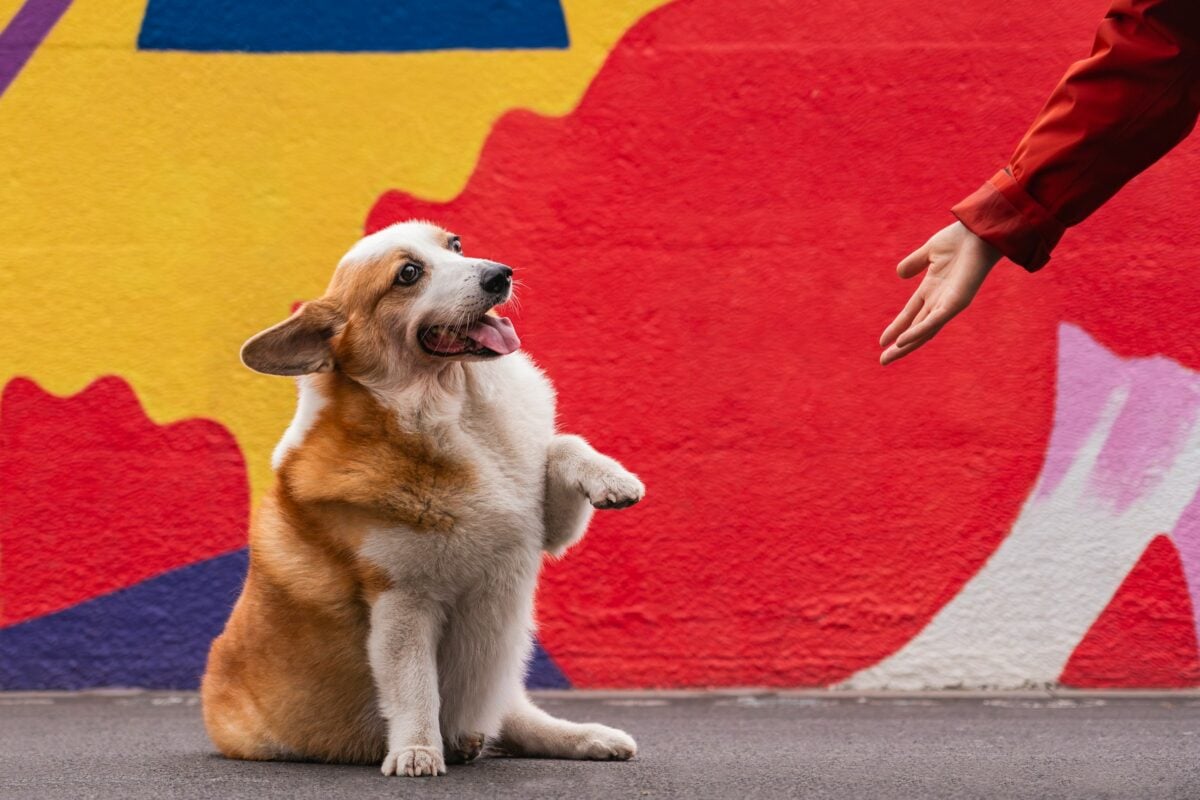
1. Teach A “Sit” Greeting
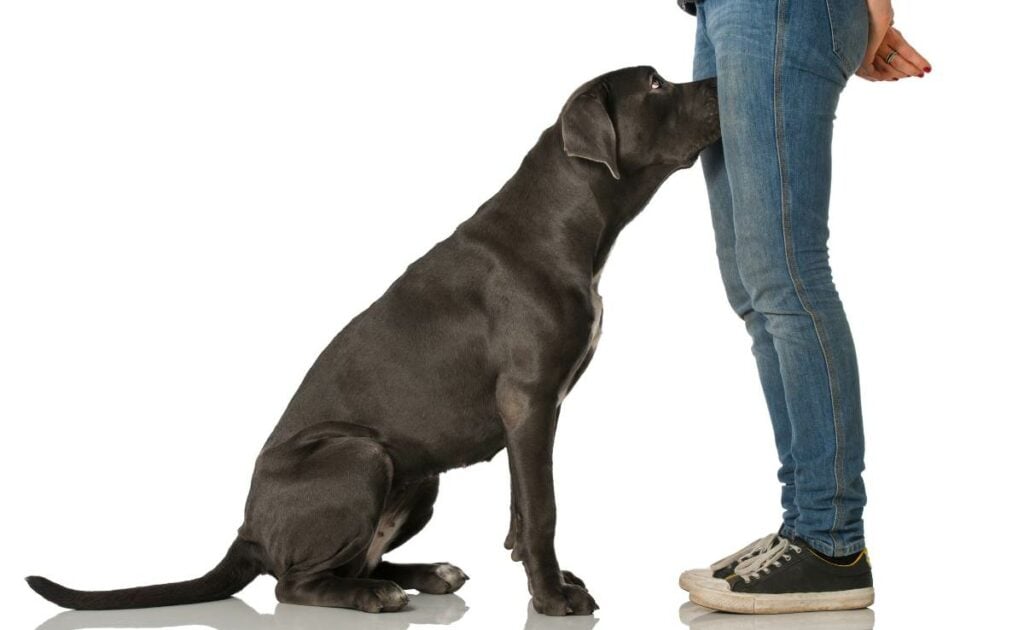
One of the easiest ways to prevent crotch-sniffing is to redirect your dog before they make contact. Teaching a reliable sit command gives them a different job to focus on when guests arrive.
This works especially well for dogs who become overstimulated during greetings.
A calm sit:
- Keeps your dog’s nose farther away from sensitive areas
- Reduces jumping and frantic greeting behavior
- Gives guests a more comfortable interaction
- Creates a predictable routine your dog can learn quickly
Reward calm sitting immediately with treats, praise, or attention.
2. Use A “Place” Command Before Guests Enter
For dogs who become wildly overstimulated when the door opens, a place command can be a game changer.
Teach your dog to go to a bed, mat, or designated spot when someone arrives. This creates physical distance during the most exciting part of the greeting and helps prevent the immediate nose-first rush toward guests.
Many dogs sniff crotches simply because excitement overrides impulse control. A place command gives them time to settle, observe, and calm down before interacting with visitors. Once your dog is relaxed, you can release them for a more controlled greeting.
This strategy works especially well for high-energy dogs, puppies, herding breeds, and overly social dogs who completely lose their minds when company arrives.
Watch: Learn how to teach your dog the “place” command.
3. Reward Hand Sniffing Instead
If your dog wants information, give them a more appropriate place to gather it. Encourage guests to offer a hand at your dog’s nose level while keeping other body parts out of reach. Then reward calm, polite sniffing with praise or treats.
Over time, many dogs learn:
- Hand sniff = acceptable
- Full-body investigation = no reward
4. Interrupt Before The Dive Happens
Serial crotch-sniffers usually have a predictable pattern. Most owners can tell exactly when their dog is about to make their move.
Catch the behavior early by:
- Keeping your dog on a leash during greetings
- Using cues like “leave it” or “uh-uh”
- Redirecting attention immediately
- Rewarding calm behavior quickly
Timing matters. It’s much easier to interrupt the behavior before contact happens.
5. Burn Off Energy Before Guests Arrive
Some dogs get dramatically more “sniffy” when overstimulated or overexcited.
Before visitors come over, try:
- A long walk
- Fetch or active play
- Puzzles toys, a snuffle mat, or sniffing games
- Short training sessions
A mentally and physically satisfied dog is often far less likely to launch a surprise crotch investigation at the front door.
6. Stop Accidentally Rewarding It
Dogs repeat behaviors that consistently get attention. Unfortunately, laughing, yelling, pushing them away, or reacting dramatically can all accidentally reinforce the behavior.
To your dog, a big reaction may feel rewarding, even if you’re completely mortified. Some dogs quickly learn that crotch-sniffing reliably creates excitement, interaction, and chaos the second guests walk through the door.
Instead, stay calm, interrupt the behavior neutrally, and immediately redirect your dog toward a more appropriate greeting. The less emotionally charged the interaction feels, the less rewarding the behavior typically becomes over time.
7. Teach A Controlled “Go Say Hi”
Some dogs genuinely love greeting people. Instead of stopping greetings entirely, teach a structured version of them.
Only allow greetings when:
- Your dog is calm
- All four paws are on the floor
- The greeting stays brief and controlled
This gives social dogs an outlet without allowing chaos to take over.
Watch: This trainer shows one technique for teaching “go say hi.”
8. Use Management Tools When Needed
For especially persistent dogs, temporary management can make training much easier.
Helpful tools include:
Management is not failure. Sometimes it’s simply the fastest way to prevent your dog from turning every guest introduction into a deeply uncomfortable experience.
Some Dogs Are Basically Built To Sniff Everything
Breed genetics play a major role in how strongly dogs rely on scent. Certain breeds were specifically developed for tracking, hunting, detection work, and following odor trails over long distances. These dogs are naturally more likely to investigate people, environments, and yes, occasionally your crotch, with unsettling dedication.
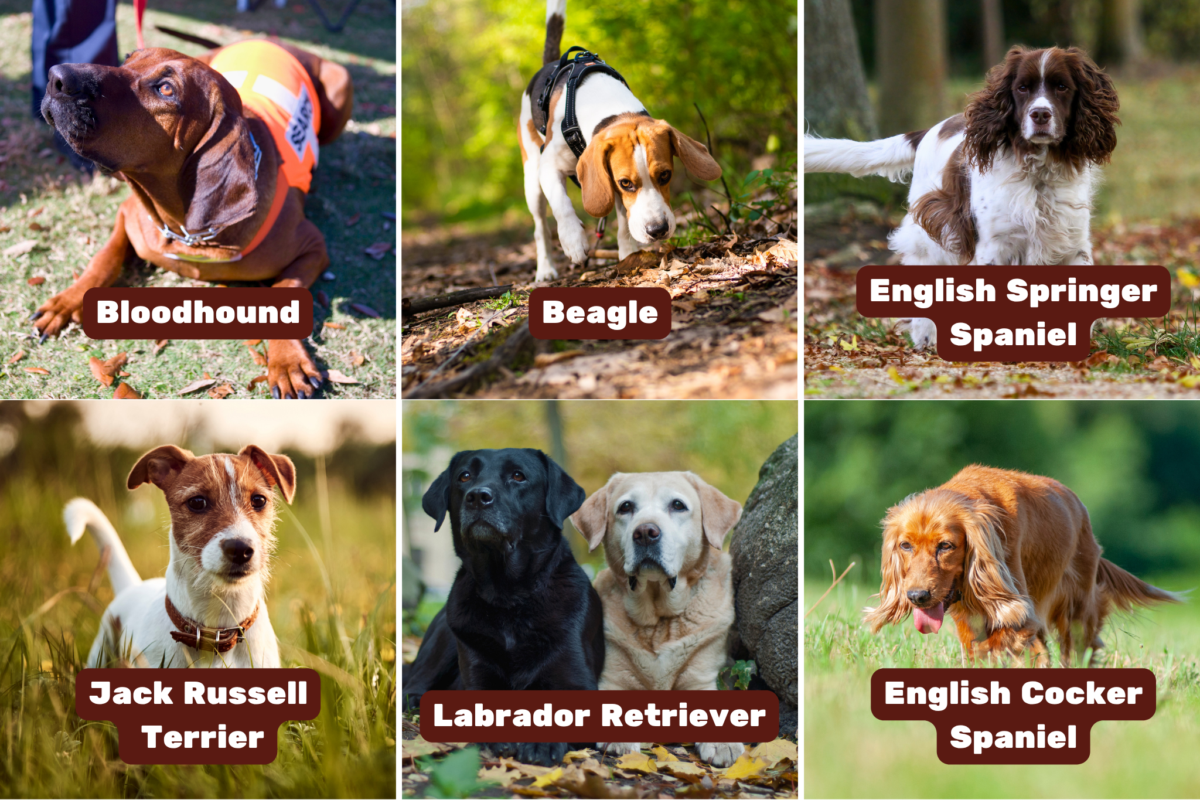
10 Dog Breeds With Elite Noses
These breeds are widely recognized for their scent-detection ability and are commonly used in tracking, detection work, search-and-rescue, and medical alert training.
- Bloodhound: Their noses are so reliable that Bloodhound evidence is admissible in court, meaning if a Bloodhound sniffs you out, you might want to lawyer up.
- Beagle: Compact and determined, Beagles are widely used in airport screening and medical detection work because of their relentless noses.
- Labrador Retriever: Labs combine excellent scent discrimination with high trainability, making them one of the most common detection dogs in the world.
- English Cocker Spaniel: Friendly and highly trainable, Cocker Spaniels have evolved into excellent detection dogs used in bomb detection, drug searches, and medical alert work.
- English Springer Spaniel: Energetic and highly scent-driven, Springers are widely used in detection work and tend to notice absolutely everything happening around them.
- German Shorthaired Pointer: Bred for hunting and retrieving, German Shorthaired Pointers are so precise with scent work that they’ve been trained for cadaver detection, narcotics searches, and conservation tracking.
- Russell Terriers: Despite their small size, Russell Terriers recently ranked among the top-performing breeds in a 2025 olfactory study thanks to their intense drive and scent focus.
- Border Collie: Border Collies combine strong scent ability with extreme intelligence and environmental awareness, making them surprisingly skilled at scent discrimination and detection tasks.
- German Shepherd: Known for their investigative abilities and strong scent memory, German Shepherds excel in search-and-rescue and law enforcement work.
- Belgian Malinois: Frequently used in military and police work, Malinois are intense, fast, and extremely focused scent-detection dogs.
And The Worst Sniffers?
Flat-faced breeds like Pugs, Bulldogs, Boxers, and Boston Terriers generally struggle more with scent detection because shortened nasal passages reduce airflow and scent-processing efficiency. That does not mean these dogs have poor noses compared to humans. They’re simply less specialized for advanced scent work than traditional scent hounds and working detection breeds.
Our Personal Experience With Dog Crotch Sniffing
My husband and I had a dog named Iris, a Beagle Golden Retriever mix, who was a big-time crotch sniffer. This dog was always there waiting after anyone used the bathroom, just ready for an opportunity to sniff.
She especially targeted my husband’s male friends during gatherings, and one friend joked he visited mostly because Iris made him feel “appreciated.” Funny for him. Horrifying for us.
One of my dogs now, Daisy, a Labrador Pitbull mix, has always been a crotch sniffer as a way of greeting both males and females. She is the perfect height for it, too.
As she has aged, Daisy has gotten more aggressive with the crotch sniffing. This dog will literally meet me at the door and make a forceful attempt to get as close to me as she can as soon as possible anytime I come home. If I am cooking or doing something in the kitchen, she is always there, directly behind me, just waiting to take a sniff.
It is not a behavior that anyone in the family likes. We will reinforce training periodically, and she will tone it down, but she always amps back up again. Now, we have started leaving her in a room when we go out rather than having the entire run of the house so that we can get in the door without fear of a wet nose in the crotch.
– Danielle DeGroot, Rescue Dog Mom, Canine Journal Research & Writer
Frequently Asked Questions
Dogs may be masters of awkward social behavior, but crotch-sniffing raises a lot of surprisingly interesting questions. Here are some of the things dog owners ask most often about why dogs do this, what they can actually smell, and whether you should try to stop it.
Don’t see your question? Respond in the comments, and we’ll get back to you!
Can Dogs Smell Period Blood?
Yes. Dogs can detect hormonal and scent changes associated with menstruation, including changes in sweat, hormones, and bodily fluids. Many owners notice their dogs becoming more clingy, sniffy, or attentive during certain points in the menstrual cycle.
That does not mean dogs fully understand what a period is, but they can absolutely detect that your body chemistry has changed.
Can Dogs Smell Pregnancy?
Dogs can often detect pregnancy-related hormonal changes surprisingly early. Some owners report their dogs becoming more protective, affectionate, clingy, or unusually interested in sniffing during pregnancy.
Researchers believe dogs are responding to changes in hormones, sweat composition, and other scent markers associated with physiological changes in the body.
Why Does My Dog Sniff Me More Than Other People?
Some people naturally produce stronger or more interesting scent signals than others. Hormonal changes, stress, sweat, exercise, illness, emotional state, perfumes, and even being around other animals can all make one person more “interesting” to a dog. Your dog may also be more bonded to you and therefore more invested in closely monitoring your scent changes.
Can Dogs Smell Fear Or Anxiety?
Yes. Research has shown that dogs can detect stress-related chemical changes in human sweat.
Studies found that dogs exposed to “fear sweat” often displayed stress-related behaviors, while those exposed to “happy sweat” behaved more relaxed and social. This may help explain why some dogs react differently to nervous or anxious people.
Is Crotch-Sniffing A Dominance Thing?
Usually not. Most crotch-sniffing is driven by curiosity, scent investigation, excitement, and social information gathering rather than dominance.
Dogs rely heavily on smell to understand the world around them, and crotch-sniffing is often simply the fastest way to gather biological information about a person.
Why Do Some Dogs Never Do This?
Some dogs are naturally more scent-driven, social, curious, or investigative than others. Breed tendencies, personality, training, excitement levels, and reinforcement history can all influence how much a dog investigates people through scent.
Scent hounds and working detection breeds are often far more likely to engage in intense sniffing behaviors than less scent-focused breeds.
Should I Stop My Dog From Sniffing People?
You do not need to punish normal scent investigation, but it is reasonable to teach boundaries and more polite greeting behaviors.
Most owners focus on redirecting the behavior rather than eliminating sniffing entirely. Commands like sit, place, leave it, and structured greetings can help prevent uncomfortable guest interactions without discouraging your dog’s natural communication instincts.
Still Trying To Decode Your Dog?
Dogs communicate through body language, vocalizations, scent, and some deeply confusing behavior choices. If your pup has ever barked at nothing, stared into your soul for an uncomfortable amount of time, or wagged their tail while actively causing chaos, you’re definitely not alone.
Keep exploring your dog’s weird little communication system with these guides: