When you purchase through links on our site, we may earn a commission at no extra cost to you. Learn more.
Blue eyes can make a dog unforgettable, but the color isn’t the whole story.
Table of Contents
From the iconic Siberian Husky to blue-eyed Australian Shepherds and merle Dachshunds, dogs can develop blue or partially blue eyes for several genetic reasons. Some breeds commonly produce them, while others may have blue eyes only with certain coat patterns or through mixed-breed ancestry.
Below, you’ll meet 25 blue-eyed dog breeds and mixes, with practical details about how common blue eyes are, what causes them, temperament, exercise, grooming, and the type of owner or home they suit best.

Blue-Eyed Dog Breeds At A Glance
Blue eyes are much more common in some purebred dogs than others, and the genetics behind them can vary by breed. This quick comparison shows how likely you are to see blue eyes in each breed and what typically contributes to this striking trait.
| Breed | How Common Are Blue Eyes? | Most Often Associated With |
|---|---|---|
| Siberian Husky | Common | Breed-specific genetics, including ALX4 association |
| Australian Shepherd | Occasional | Often merle genetics |
| Weimaraner | Mostly puppies | Eye pigmentation changing with maturity |
| Dalmatian | Uncommon | Pigmentation genetics |
| Border Collie | Occasional | Often merle coloring |
| Dachshund | Uncommon | Dapple (merle) coloring |
| Cardigan Welsh Corgi | Uncommon | Blue merle coloring |
| Shetland Sheepdog | Uncommon | Blue merle coloring |
| American Pit Bull Terrier | Rare in adults | Puppy eye color or pigmentation |
| Alaskan Malamute | Not expected in purebreds | May indicate mixed ancestry |
| Alaskan Klee Kai | Common | Inherited genetics |
| Great Dane | Uncommon | Merle or certain white-patterned coats |
| Catahoula Leopard Dog | Occasional | Merle and pigmentation genetics |
| Cane Corso | Rare in adults | Puppy eye color or atypical pigmentation |
Why Do Some Dogs Have Blue Eyes?
Blue eyes in dogs usually result from reduced pigment in the iris, but there isn’t one universal “blue-eye gene.” Different genetic mechanisms can produce blue or partially blue eyes.
Genetics
In Siberian Huskies, researchers identified a genetic variant near the ALX4 gene on canine chromosome 18 that is strongly associated with blue eyes. Huskies can have two blue eyes, one blue and one brown eye, or mixed-color eyes.
Other breeds can develop blue eyes through different genetic pathways, including coat-pattern genes that affect pigmentation.
Merle Coloring
Merle is one of the most common genetic patterns associated with blue or partially blue eyes. It creates irregular patches of diluted pigment in the coat and can also affect eye pigmentation.
Australian Shepherds, Border Collies, Shetland Sheepdogs, Dachshunds, Cardigan Welsh Corgis, Great Danes, and Catahoula Leopard Dogs are among the breeds where merle coloring can be associated with blue eyes.
Merle is not the same thing as blue eyes, however. A dog can have blue eyes without being merle, and a merle dog does not necessarily have blue eyes.
Puppy Eye Color Changes
Young puppies can have lighter-looking eyes that change as pigmentation develops. If you’re choosing a puppy specifically because you want blue eyes, ask the breeder or rescue whether the color is expected to remain into adulthood.
Mixed Breeds
Mixed-breed dogs can inherit blue-eye-associated genetics from either parent. A Husky mix may inherit the genetic factors associated with the breed’s blue eyes, while an Australian Shepherd mix may inherit merle-related traits.
Inheritance isn’t predictable enough to guarantee blue eyes just because one parent is a Husky, Australian Shepherd, or another breed associated with blue eyes.
Blue-Eyed Puppies vs. Adults
A puppy’s eye color isn’t always its final eye color. As puppies grow, some keep their blue eyes, while others’ eyes change to brown, amber, hazel, or another adult color as pigmentation increases.
If blue eyes are important to you, ask about the puppy’s parents, coat pattern, genetics, and expected adult eye color rather than relying on a young puppy’s appearance alone.
Are Blue Eyes Connected To Coat Color?
Sometimes, but not always.
Blue eyes are often associated with merle coloring because the merle pattern can affect pigment in both the coat and eyes. However, Siberian Huskies can have blue eyes without a merle coat.
The safest rule is simple: don’t use coat color alone to predict eye color.
25 Blue-Eyed Dog Breeds
The breeds and mixes listed below include both those that naturally have blue eyes and those whose blue eyes are typically linked to certain coat patterns.
Purebred Blue-Eyed Dogs
Blue eyes occur naturally in several purebred dogs, although how common they are varies widely by breed and genetics. From iconic blue-eyed breeds like the Siberian Husky to breeds where the trait is much less common, these dogs prove that striking eye color can appear alongside a wide range of sizes, coats, and personalities.
Here are the purebred dogs known for sporting beautiful blue eyes.
1. Siberian Husky
The Siberian Husky is probably the dog most people picture when they hear “blue-eyed dog.”
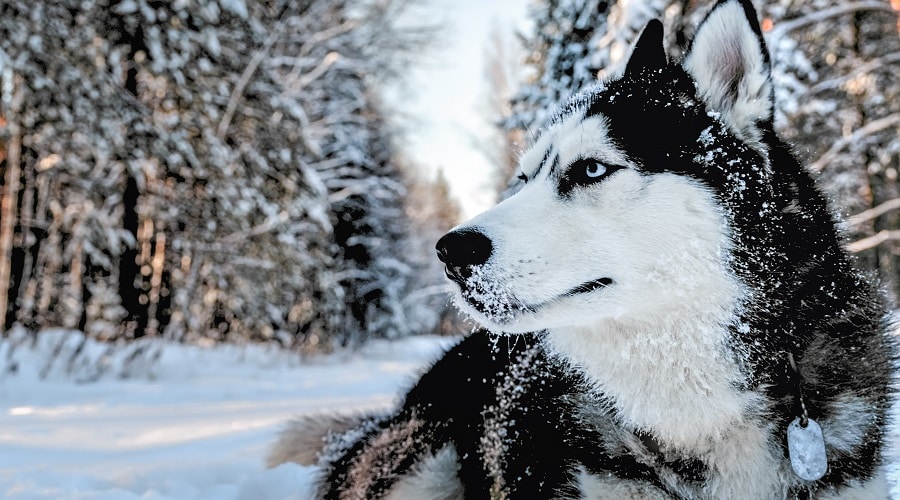
Blue eyes are relatively common in the breed, and Huskies can have two blue eyes, one blue and one brown eye, or mixed-color eyes. The breed’s blue eyes are associated with a genetic variant near ALX4 rather than simply resulting from merle coloring.
- Temperament: Friendly, social, energetic, and independent.
- Best fit: Active owners who enjoy outdoor activities and can provide secure space to run.
- Exercise: High. Huskies were bred for endurance and have a strong instinct to run.
- Grooming: Moderate to high, with a thick double coat that sheds heavily.
Their exercise needs and tendency to roam matter more than their eye color. These adventurous, high-energy dogs thrive with active owners who can keep them busy, challenged, and safely contained.
2. Australian Shepherd
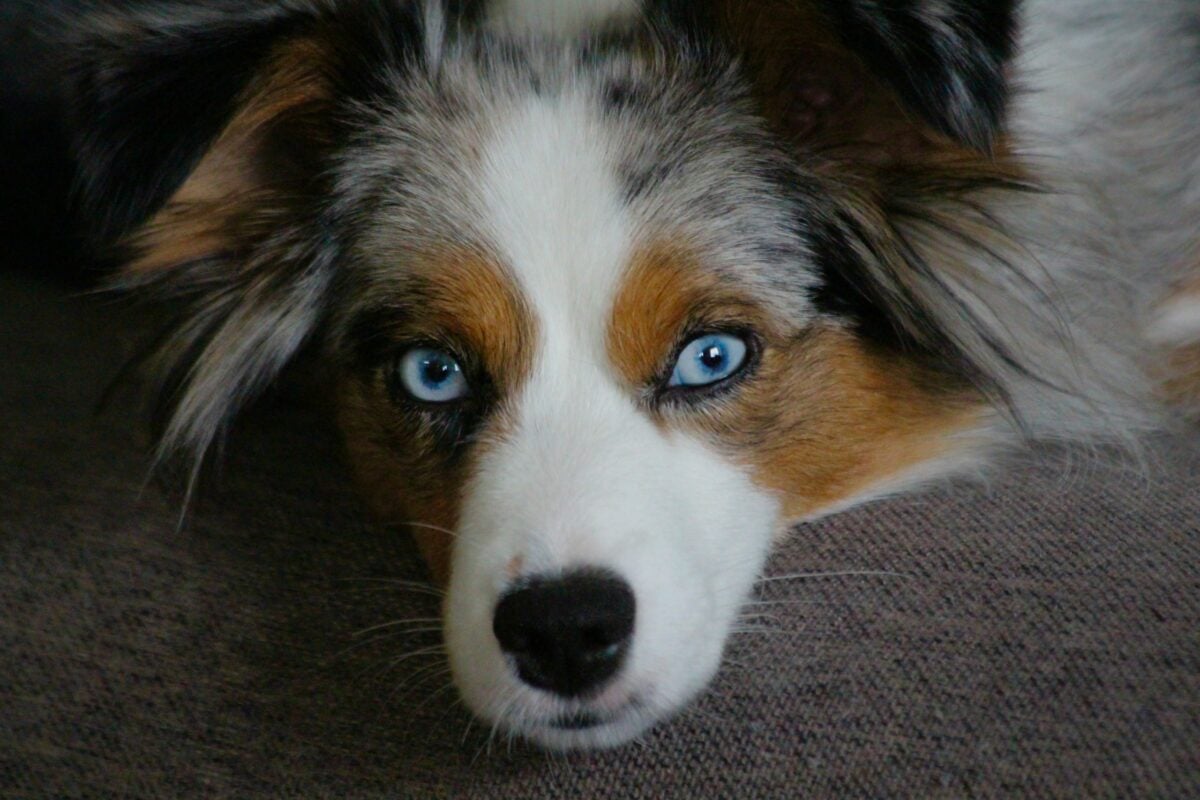
Blue eyes are fairly common in Australian Shepherds, especially in dogs with merle coats.
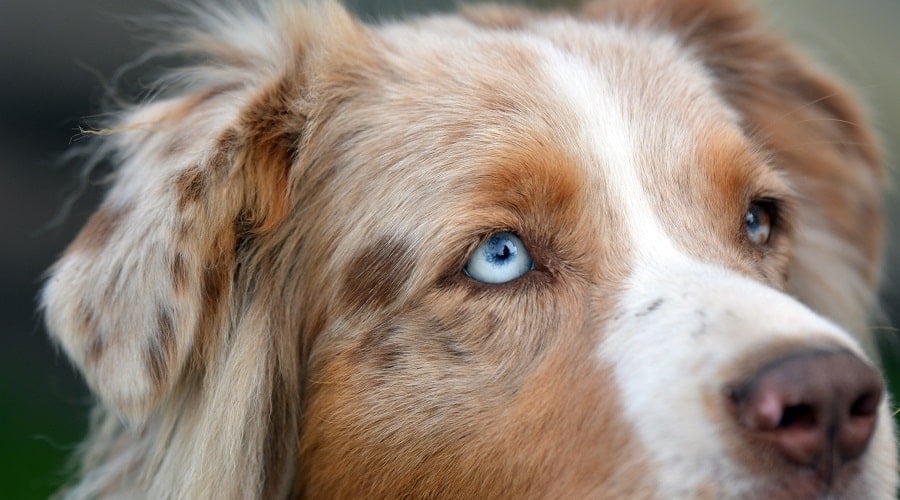
Aussies can have blue, brown, amber, or mixed eye colors. The breed can also have heterochromia.
- Temperament: Intelligent, energetic, attentive, and highly trainable.
- Best fit: Active owners who enjoy training, hiking, dog sports, or other structured activities.
- Exercise: High.
- Grooming: Moderate to high. Their double coat sheds substantially and benefits from frequent brushing.
If merle coloring is involved, responsible breeding and appropriate genetic testing are important.
3. Weimaraner
Weimaraner puppies can have lighter eyes that change as they mature, while adult dogs typically develop amber, gray, or blue-gray eyes rather than the vivid blue associated with Huskies.
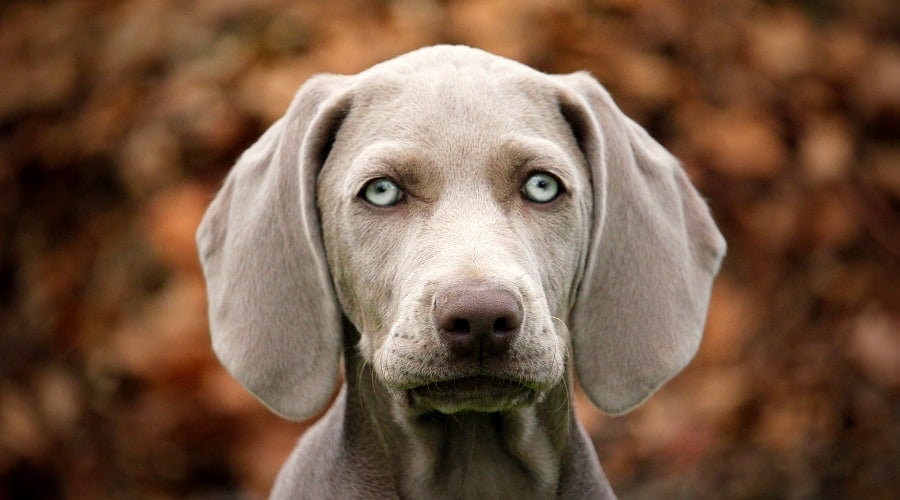
The breed’s naturally pale eye colors can complement its distinctive silver-gray coat, giving the Weimaraner its characteristic appearance.
- Temperament: Affectionate, athletic, energetic, and people-oriented.
- Best fit: Active owners who want a running, hiking, or training companion.
- Exercise: High.
- Grooming: Low.
Don’t assume an unusually pale adult eye has the same genetic basis as the blue eyes commonly seen in Huskies.
4. Dalmatian
Blue eyes can occur in Dalmatians, but they are uncommon and have an important health context.

Dalmatians are among the breeds where pigmentation genetics and congenital deafness are closely linked. A blue-eyed dog or unusually white Dalmatian is not automatically deaf, but owners should have its hearing assessed appropriately.
- Temperament: Energetic, intelligent, loyal, and athletic.
- Best fit: Active households that can provide substantial daily exercise and training.
- Exercise: High.
- Grooming: Moderate. Their short coat is easy to brush but sheds consistently.
If you’re considering a Dalmatian puppy, prioritize appropriate hearing and health screening over eye color. Congenital deafness is associated with certain pigmentation patterns in dogs, including Dalmatians.
5. Border Collie
Blue eyes are most strongly associated with Border Collies that have merle coloring.
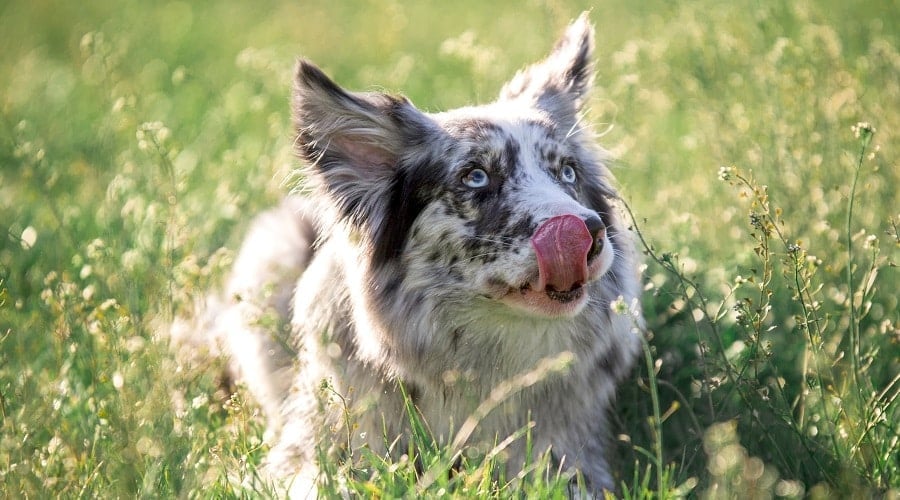
For a Border Collie, blue eyes are an eye-catching feature, but this breed’s exceptional intelligence and drive are what truly define it.
- Temperament: Exceptionally intelligent, focused, energetic, and responsive.
- Best fit: Experienced or highly active owners who enjoy training and dog sports.
- Exercise: Very high.
- Grooming: Moderate, dependingon coat type.
Their need for substantial physical and mental stimulation makes them a demanding choice for inexperienced owners.
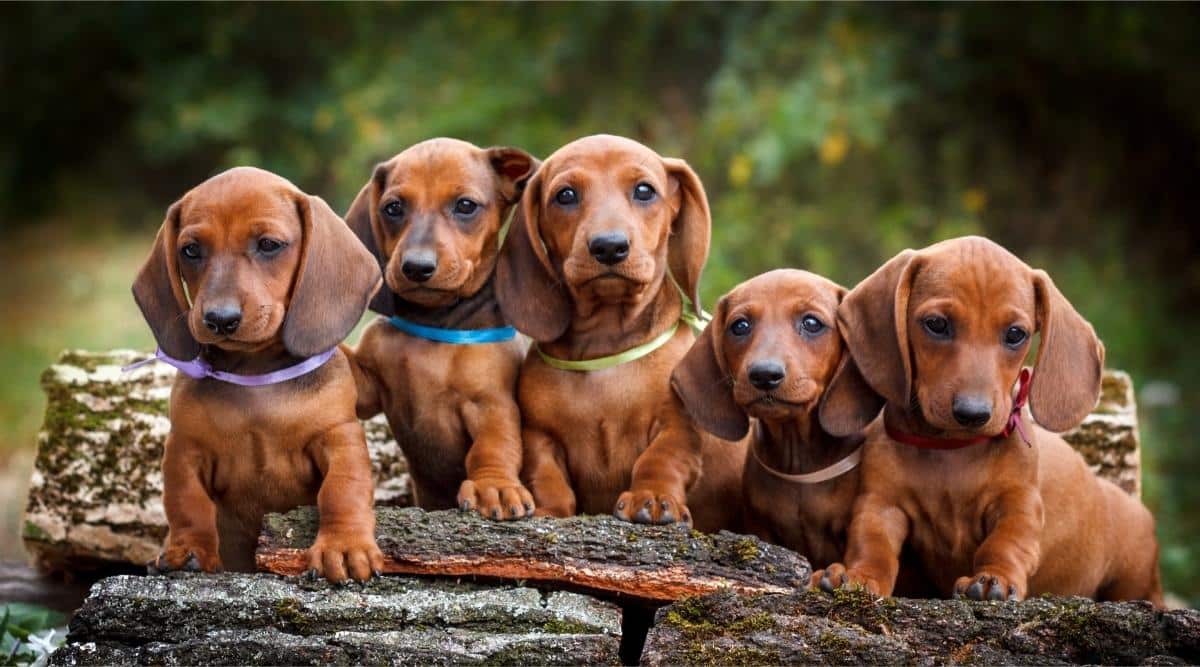
6. Dachshund
Blue eyes are uncommon in Dachshunds and are most closely associated with merle, also called dapple coloring.
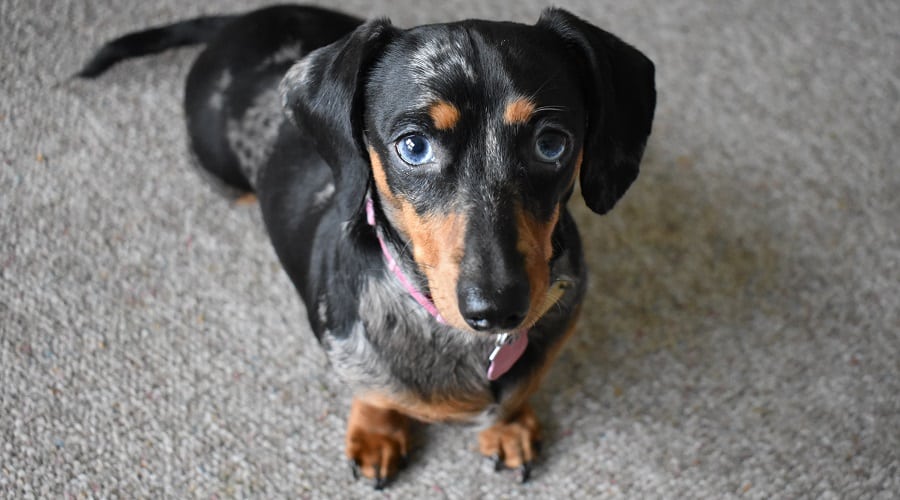
A blue-eyed Dachshund may stand out visually, but its bold personality and distinctive body shape matter just as much.
- Temperament: Bold, curious, affectionate, and sometimes stubborn.
- Best fit: Owners who want a small dog but are prepared for a strong personality.
- Exercise: Moderate.
- Grooming: Low to moderate, depending on whether the Dachshund has a smooth, wirehaired, or longhaired coat.
If considering a dapple Dachshund, ask about the parents’ coat genetics and the breeder’s health-testing practices.
7. Cardigan Welsh Corgi
Blue or partially blue eyes can occur in Cardigan Welsh Corgis, particularly in merle dogs.
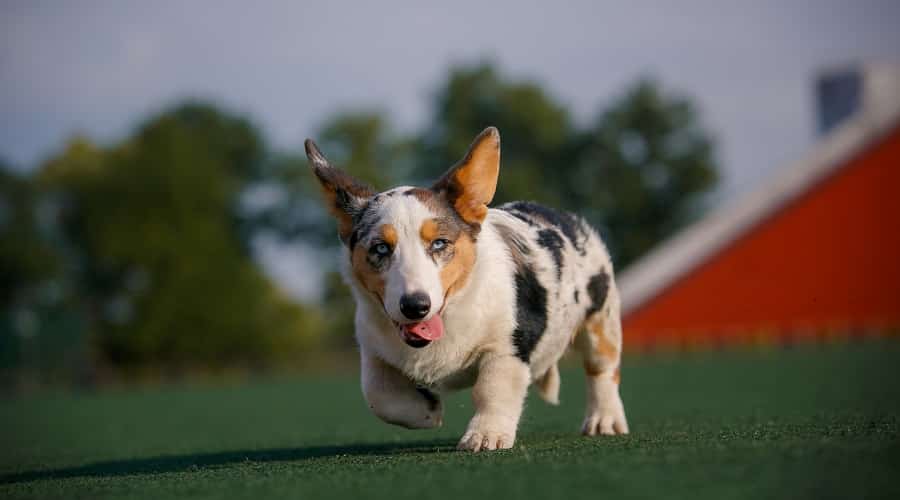
A merle Cardigan can look especially striking when blue eyes accompany its distinctive coat pattern.
- Temperament: Intelligent, affectionate, alert, and sometimes vocal.
- Best fit: Ideal for families or individuals seeking a small, energetic herding breed.
- Exercise: Moderate to high.
- Grooming: Moderate, with regular shedding.
Look at the dog’s coat pattern and pedigree rather than assuming every Cardigan Corgi can produce blue eyes.
8. Shetland Sheepdog
Blue eyes are most closely associated with blue merle Shelties.
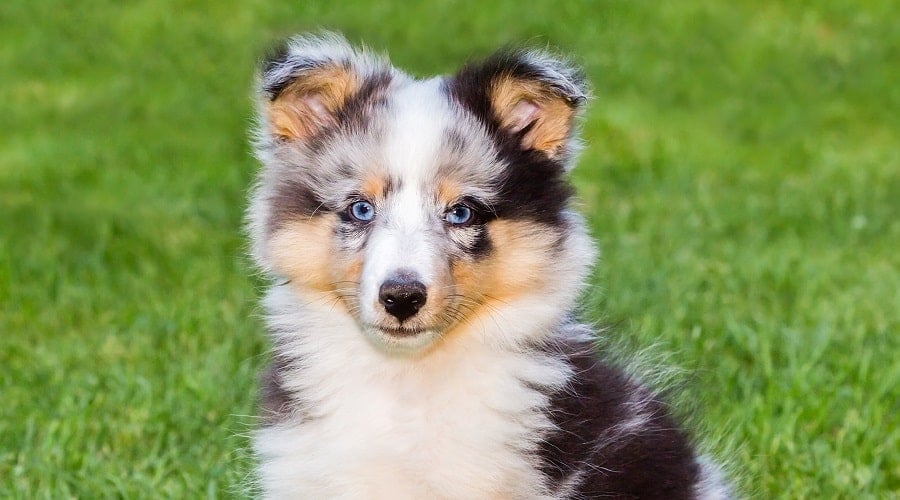
Like the Australian Shepherd, the Sheltie is another herding breed with blue-eye potential.
- Temperament: Intelligent, responsive, sensitive, and energetic.
- Best fit: Owners who enjoy training and want a smaller herding dog.
- Exercise: Moderate to high.
- Grooming: High. Their long double coat requires regular brushing.
Choose the breed for its temperament and care requirements first, then consider eye color.
9. American Pit Bull Terrier
Blue eyes can occur, but they are uncommon in adult American Pit Bulls and shouldn’t be treated as a defining breed trait.
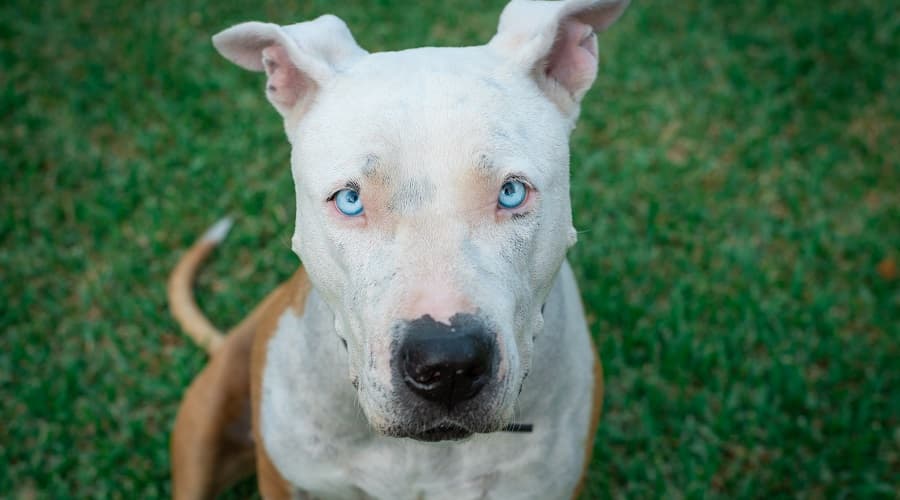
Eye color can also change as a puppy matures, so an early blue shade doesn’t necessarily mean it will remain into adulthood.
- Temperament: These dogs are often affectionate, energetic, and people-oriented, but individual temperaments can vary greatly.
- Best fit: Experienced owners who can provide consistent training, exercise, and responsible management.
- Exercise: Moderate to high.
- Grooming: Low.
These athletic, people-oriented dogs thrive with consistent training, daily activity, and plenty of time with their families.
10. Alaskan Malamute
Purebred Alaskan Malamutes are not expected to have blue eyes under the breed standard. Blue eyes may suggest mixed ancestry, especially if Siberian Husky genes are present.
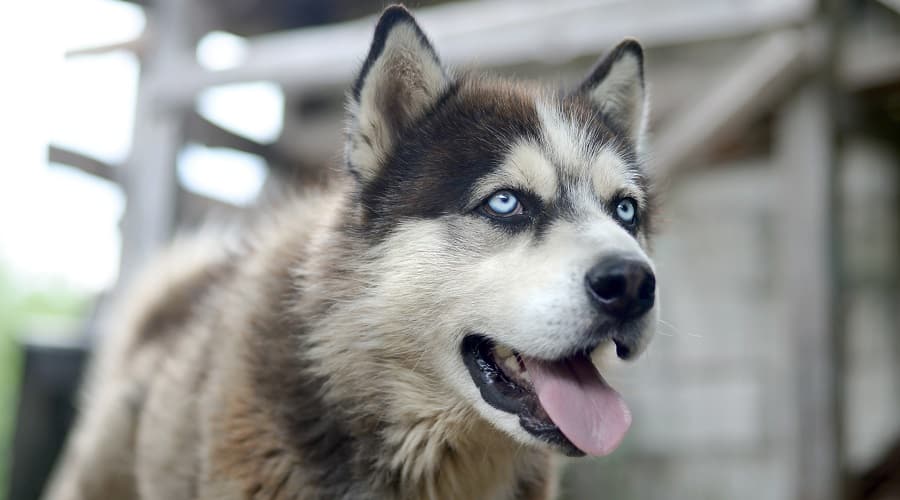
Despite its Husky-like appearance, the breed standard has different eye-color expectations for the Alaskan Malamute.
- Temperament: Powerful, social, independent, and energetic.
- Best fit: Experienced owners with space and time for a large working dog.
- Exercise: High.
- Grooming: High because of the thick double coat.
The Alaskan Malamute typically has brown eyes, so a blue-eyed dog advertised as this breed deserves careful evaluation. Buyers should verify the dog’s breed and ancestry, especially when it has unusual eye color.
11. Alaskan Klee Kai
The Alaskan Klee Kai resembles a smaller Husky and can have blue eyes.
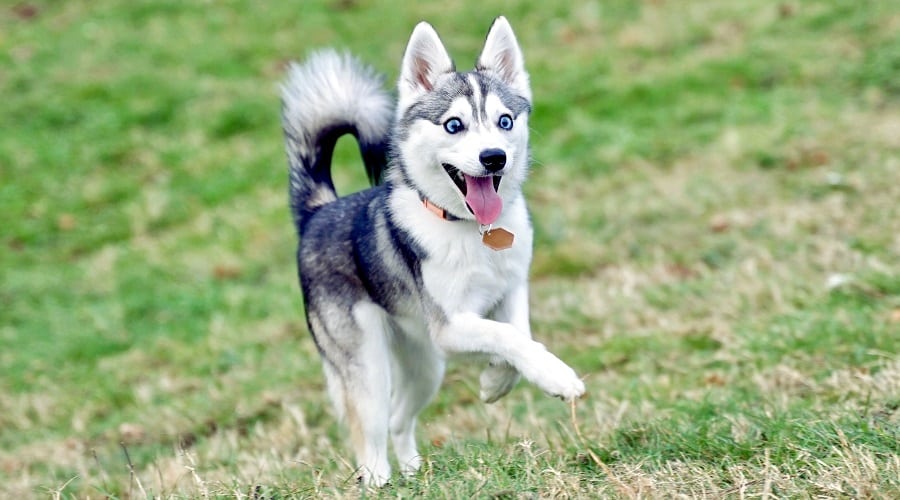
Its connection to the Siberian Husky is also relevant genetically: research on Husky blue eyes found the same distinctive variant in Alaskan Klee Kai.
- Temperament: Alert, intelligent, energetic, and more reserved around strangers than many Huskies.
- Best fit: Owners who want a smaller northern-type dog and are prepared for an active, sometimes cautious companion.
- Exercise: Moderate to high.
- Grooming: Moderate to high.
Despite their smaller size, Alaskan Klee Kai are active, intelligent dogs that need regular exercise, mental stimulation, and consistent training.
12. Great Dane
Blue eyes are uncommon in Great Danes but can occur, particularly with merle coloring or certain white-patterned coats.
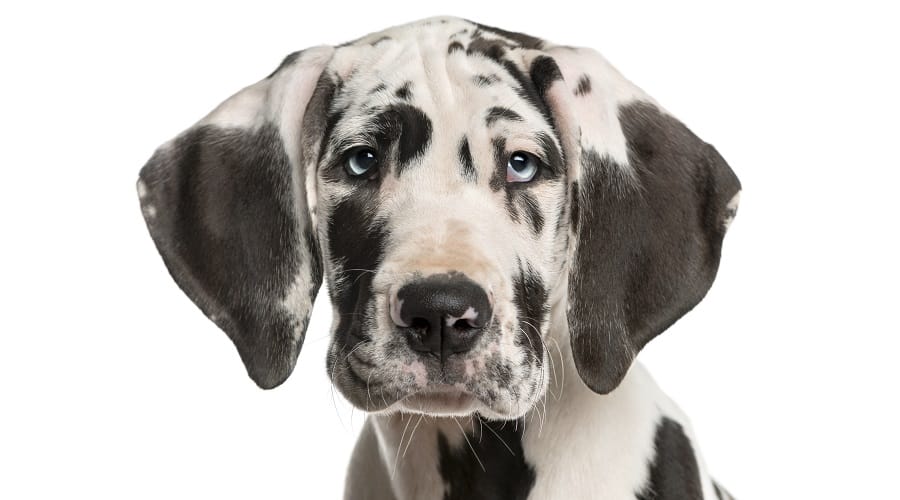
When a Great Dane has blue eyes, its enormous size and gentle nature remain far more important considerations than this unusual feature.
- Temperament: Generally, lazy, gentle, affectionate, and comparatively laid-back.
- Best fit: Owners with sufficient space and the ability to manage a giant dog.
- Exercise: Moderate.
- Grooming: Low.
Their giant size, training needs, and overall health should be much bigger considerations than eye color when deciding if a Great Dane is right for you.
13. Catahoula Leopard Dog
The Catahoula Leopard Dog is one of the more recognizable blue-eyed breeds because of its association with merle coloring.
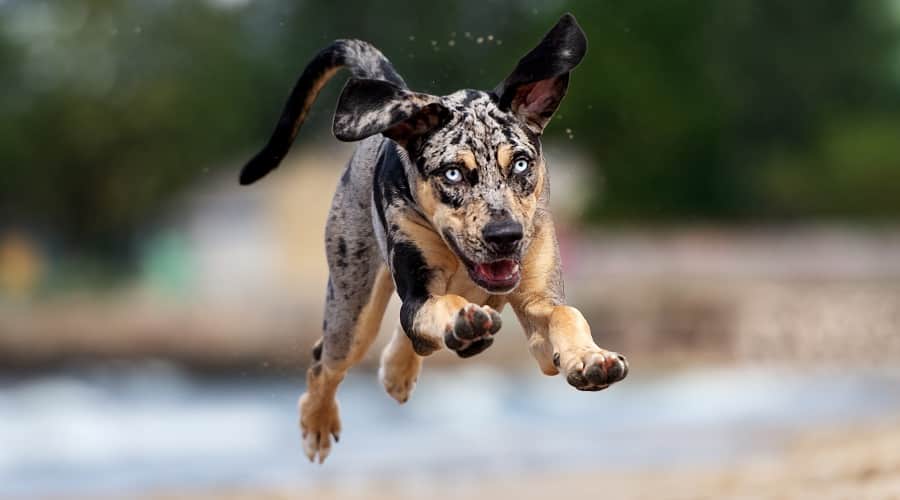
Its distinctive coat patterns can make the Catahoula’s blue or partially blue eyes especially noticeable.
- Temperament: Independent, intelligent, protective, and energetic.
- Best fit: Active owners with experience handling working or guardian-type dogs.
- Exercise: High.
- Grooming: Low.
Consider their working temperament and exercise needs carefully before adoption.
14. Cane Corso
Blue eyes are not a normal defining feature of the Cane Corso, and unusually pale eyes should not be treated as a desirable breed trait simply because they look striking.
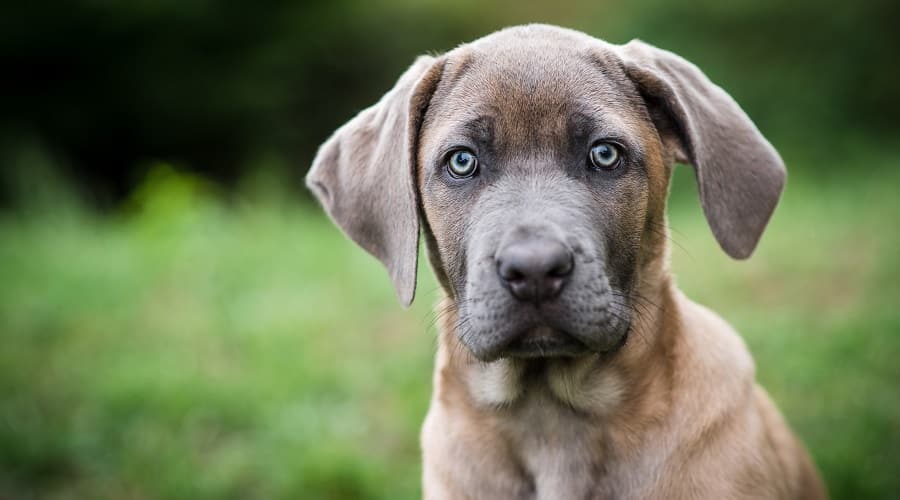
Although striking, unusual eye color should never outweigh the Cane Corso’s need for experienced handling and responsible training.
- Temperament: Protective, confident, powerful, and devoted to its family.
- Best fit: Experienced owners comfortable with a large guardian breed.
- Exercise: Moderate to high.
- Grooming: Low.
This powerful guardian thrives with confident leadership, early socialization, and consistent training.
Blue-Eyed Mixed Breeds
Mixed breeds can inherit blue-eye-associated genetics from a parent, but their adult appearance and temperament are less predictable than those of established breeds.
For these dogs, treat blue eyes as a possibility, not a guarantee. Ask about both parents, and consider the traits, exercise needs, grooming requirements, and adult size that either side of the mix may contribute.
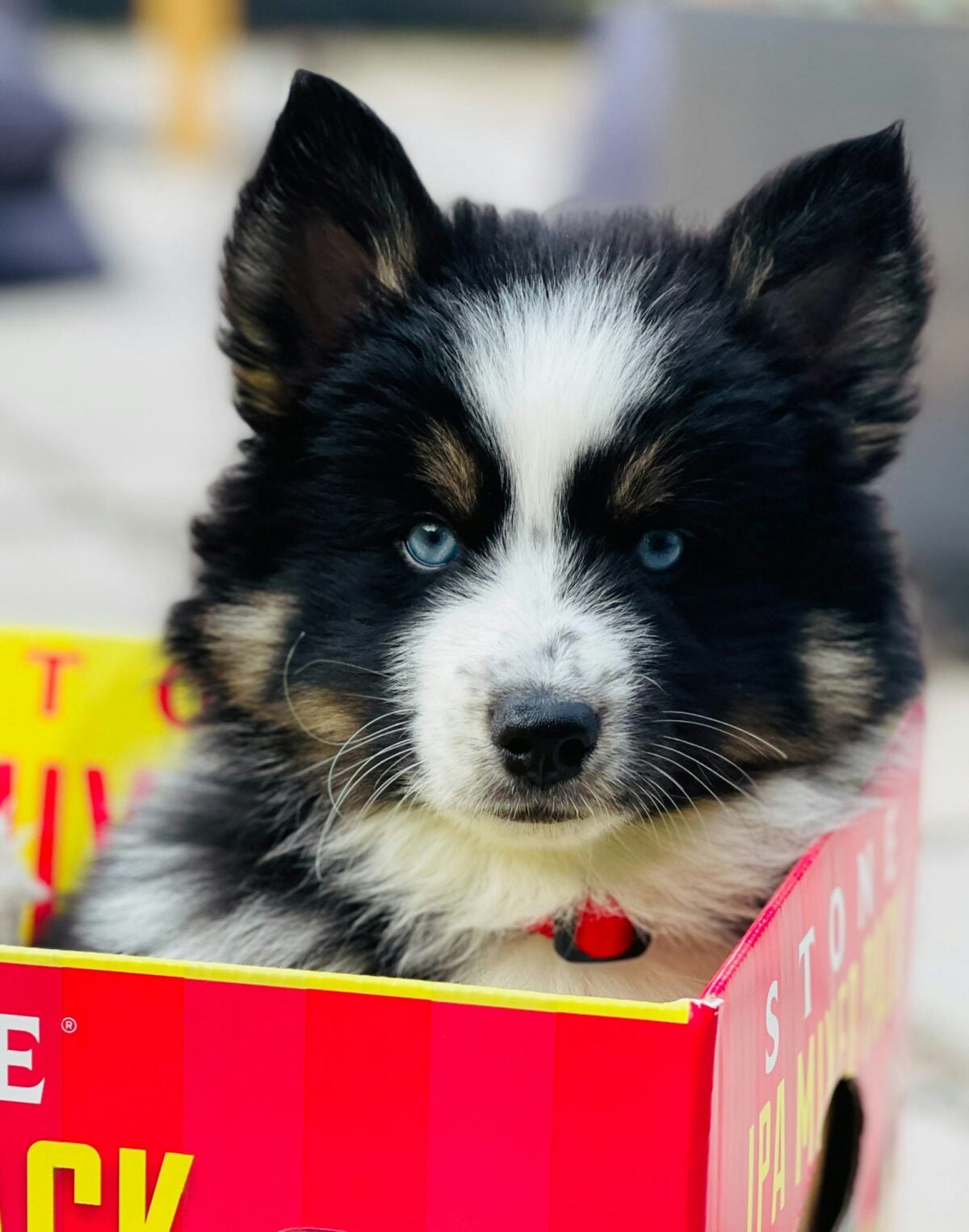
15. Pomsky
The Pomsky is a cross between the Pomeranian and Siberian Husky.
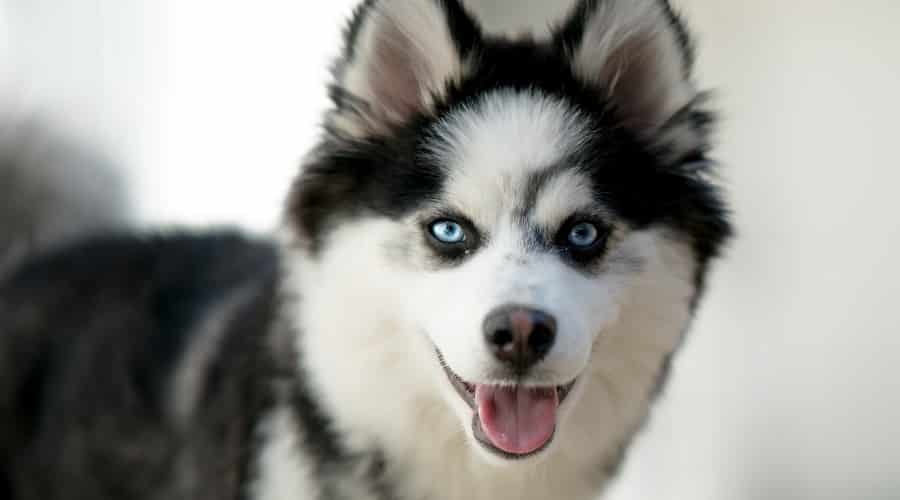
The Pomsky can inherit blue eyes from its Husky parent.
- Blue eyes: Possible through Husky ancestry.
- Temperament: Energetic, intelligent, playful, and variable.
- Best fit: Owners who want a smaller companion but can provide substantial exercise and training.
- Exercise: Moderate to high.
- Grooming: Moderate to high.
Appearance can vary considerably between individual Pomskies, even within the same litter.
16. Saint Berhusky
The Saint Berhusky is a cross of the Siberian Husky and Saint Bernard.
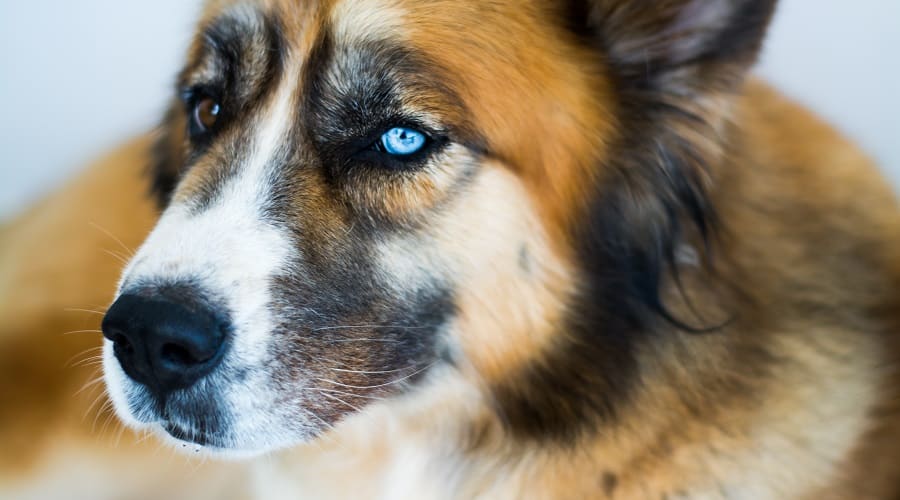
Because both parent breeds can contribute very different physical traits, a Saint Berhusky’s appearance can vary considerably from one dog to another.
- Blue eyes: Possible through Husky ancestry; heterochromia may also occur.
- Temperament: Often affectionate and social, but highly variable.
- Best fit: Owners with plenty of space who are prepared for a potentially very large dog.
- Exercise: Moderate to high.
- Grooming: Moderate to high.
Adult size can vary considerably, so prepare for the larger end of the range.
17. Husky Inu
The Husky Inu combines the Siberian Husky and Shiba Inu.
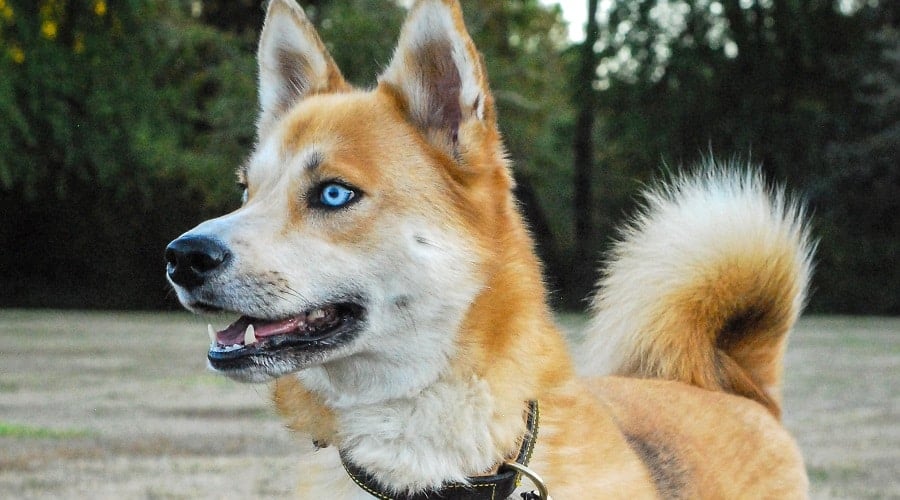
The Husky Inu combines the Shiba Inu’s independent nature with the Siberian Husky’s energetic character so individual dogs can vary widely.
- Blue eyes: Possible through Husky ancestry.
- Temperament: Intelligent, independent, energetic, and sometimes stubborn.
- Best fit: Experienced owners comfortable with independent breeds.
- Exercise: Moderate to high.
- Grooming: Moderate to high.
18. Goberian
The Goberian is a cross between the Golden Retriever and Siberian Husky.
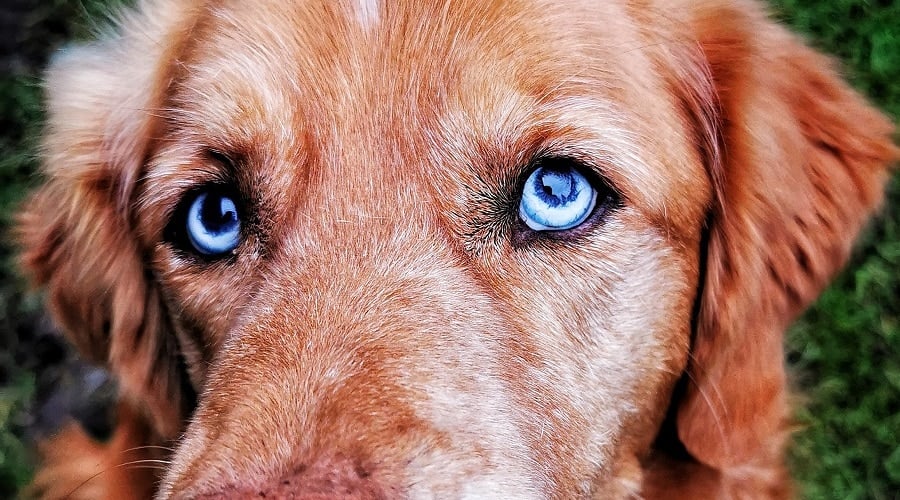
A Goberian can inherit the friendly nature of a Golden Retriever and the energetic, independent traits of a Husky, creating a highly variable companion.
- Blue eyes: Possible through Husky ancestry.
- Temperament: Usually energetic, social, intelligent, and people-oriented, but highly variable.
- Best fit: Active families or individuals with time for exercise and training.
- Exercise: High.
- Grooming: Moderate to high.
Don’t assume a Goberian will inherit a specific appearance or temperament from either parent.
19. Gerberian Shepsky
The Gerberian Shepsky is a cross of the German Shepherd and Siberian Husky.
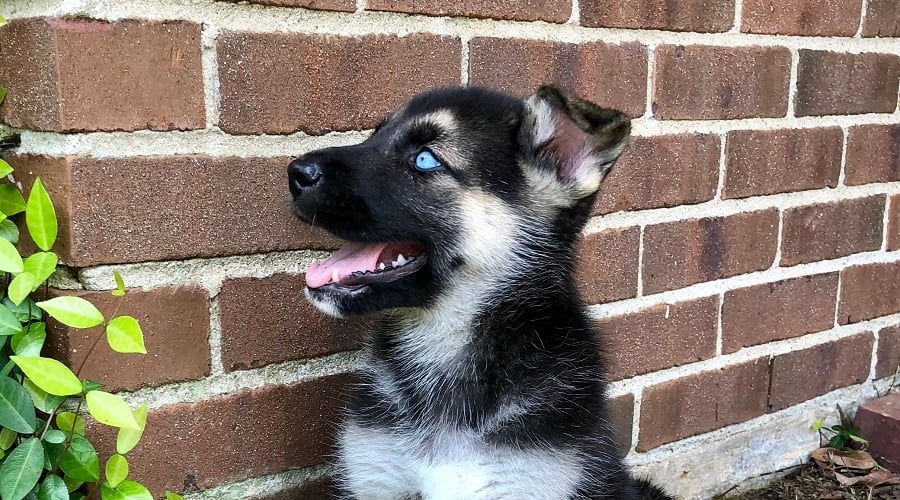
With a German Shepherd and Siberian Husky parent, the Gerberian Shepsky can combine intelligence, energy, and a strong working instinct.
- Blue eyes: Possible through Husky ancestry.
- Temperament: Intelligent, energetic, protective, and highly trainable.
- Best fit: Experienced owners who want an active working-type companion.
- Exercise: High.
- Grooming: Moderate to high.
20. Huskador
The Huskador is a cross between the Siberian Husky and Labrador Retriever.
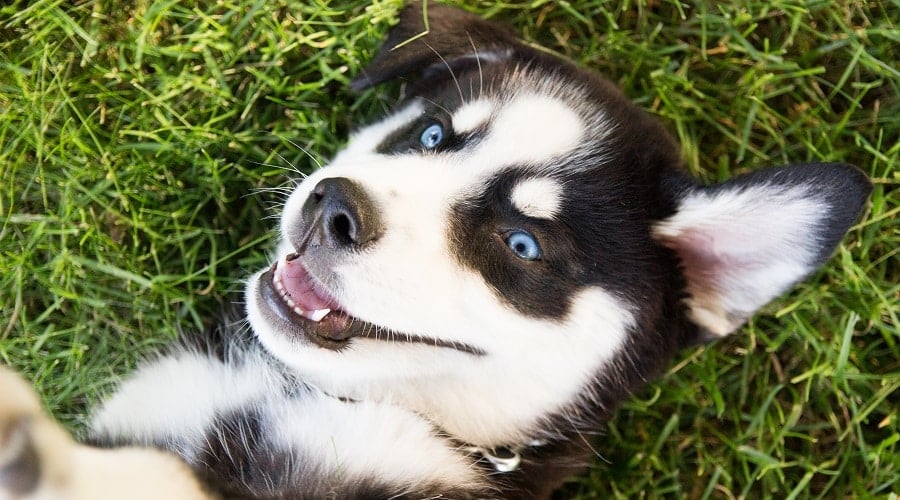
The Huskador blends the Labrador Retriever’s friendly, outgoing nature with the Siberian Husky’s athletic build, energy, and distinctive appearance.
- Blue eyes: Possible through Husky ancestry.
- Temperament: Social, energetic, playful, and food-motivated.
- Best fit: Active families and owners who enjoy outdoor activities.
- Exercise: High.
- Grooming: Moderate to high.
21. Horgi
The Horgi is a cross of the Siberian Husky and Corgi.
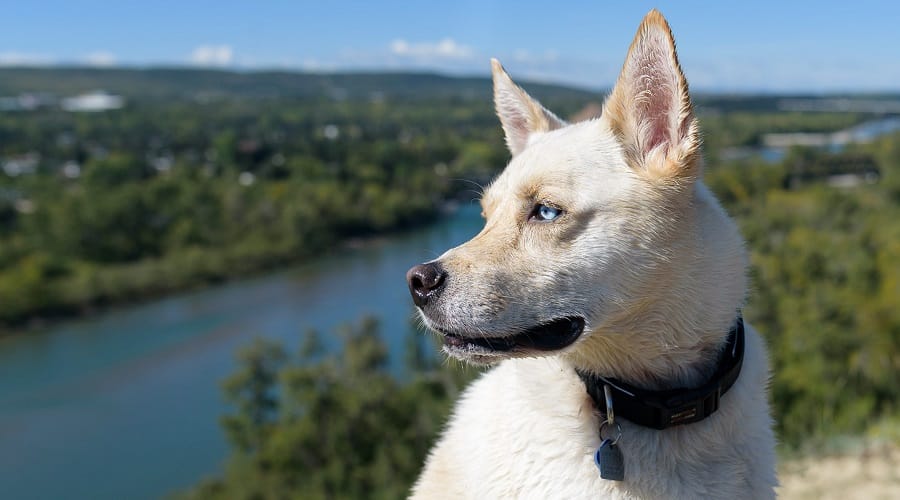
The Horgi blends the compact build of a Corgi with the distinctive look and energy of a Siberian Husky.
- Blue eyes: Possible through Husky ancestry.
- Temperament: Social, playful, energetic, and sometimes stubborn.
- Best fit: Active households that want a smaller dog with plenty of personality.
- Exercise: Moderate to high.
- Grooming: Moderate to high.
22. Aussie Siberian
The Aussie Siberian is a cross between the Australian Shepherd and Siberian Husky.
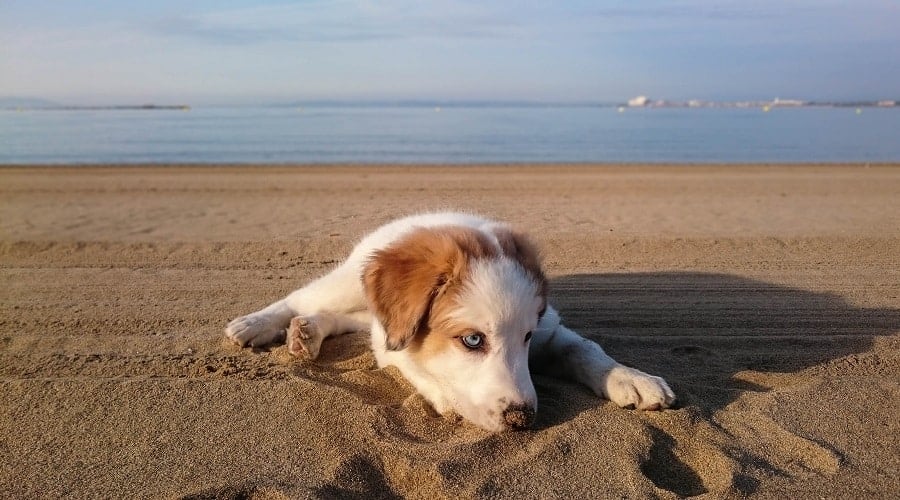
With two athletic working breeds in its background, the Aussie Siberian is typically best suited to an active home that can provide plenty of physical and mental stimulation.
- Blue eyes: Possible through either parent, depending on the inherited genetics.
- Temperament: Highly intelligent, energetic, alert, and people-oriented.
- Best fit: Experienced, active owners.
- Exercise: Very high.
- Grooming: Moderate to high.
Both parent breeds can require substantial daily physical and mental activity.
23. Aussiedoodle
The Aussiedoodle is a cross between the Australian Shepherd and Poodle.
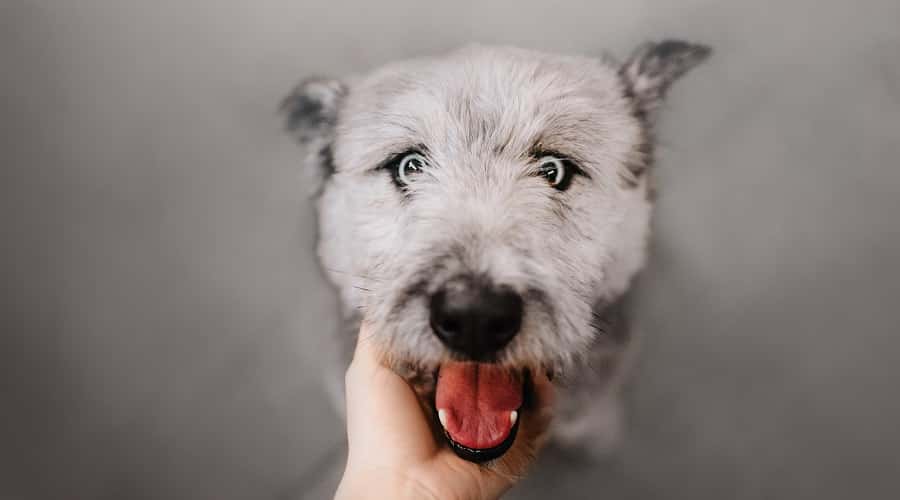
Aussiedoodles can vary considerably in coat color, texture, and appearance depending on which traits they inherit from each parent.
- Blue eyes: Possible, particularly when merle genetics come from the Australian Shepherd side.
- Temperament: Intelligent, energetic, affectionate, and highly trainable.
- Best fit: Owners who enjoy training and can provide daily mental stimulation.
- Exercise: Moderate to high.
- Grooming: High.
The Poodle side may contribute a lower-shedding coat, but coat type is not guaranteed.
24. Border Aussie
People often confuse the Border Collie and Australian Shepherd, but the Border Aussie is actually a mix of the two breeds.
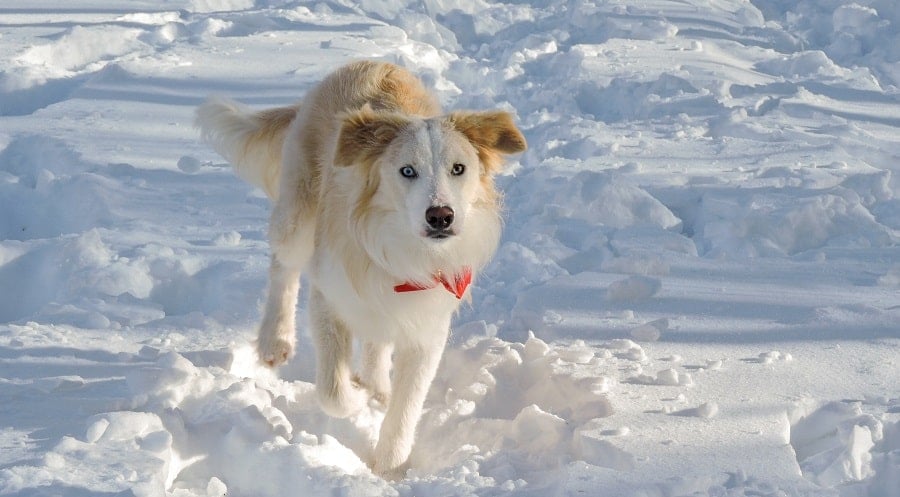
Combining two highly intelligent herding breeds, the Border Aussie suits owners who want an active, mentally demanding companion.
- Blue eyes: Possible, particularly with merle coloring.
- Temperament: Exceptionally intelligent, energetic, focused, and eager to work.
- Best fit: Experienced owners who enjoy dog sports, training, hiking, or other demanding activities.
- Exercise: Very high.
- Grooming: Moderate.
This mix can be extremely demanding and suits owners who want an active working companion.
25. Aussiedor
The Aussiedor is a cross of the Australian Shepherd and Labrador Retriever.
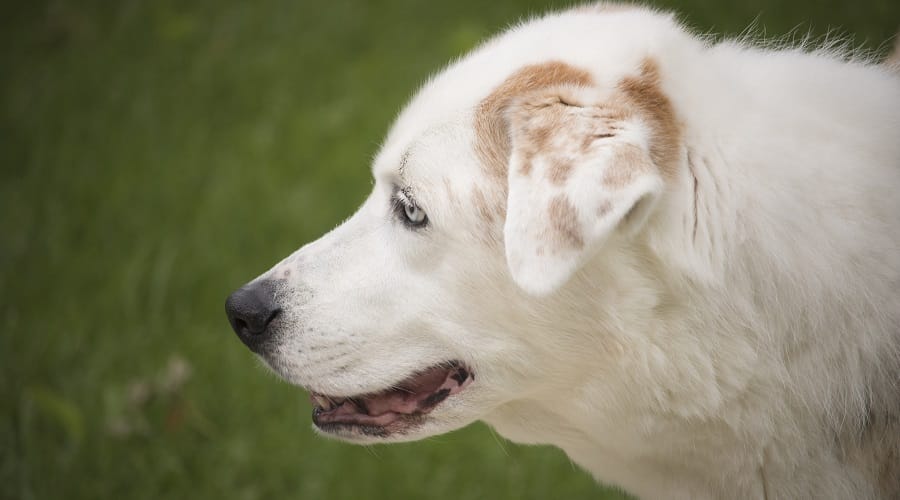
The Aussiedor can combine the Australian Shepherd’s herding instincts with the Labrador Retriever’s friendly, outgoing nature.
- Blue eyes: Possible through Australian Shepherd ancestry.
- Temperament: Friendly, energetic, intelligent, and affectionate.
- Best fit: Active families and owners who want a trainable companion.
- Exercise: High.
- Grooming: Moderate to high.
As with any mixed breed, blue eyes and a specific coat pattern aren’t guaranteed.
When Blue Eyes May Be A Health Concern
Naturally blue eyes are not automatically a health problem. The main difference is between dogs that naturally have blue or partially blue eyes and those whose eyes suddenly become cloudy, bluish, red, painful, or otherwise change in appearance.
Blue Eyes vs. Cloudy Eyes
A dog that has always had blue eyes is very different from a dog whose eyes suddenly begin looking blue, gray, or cloudy. Natural blue eye color comes from the iris, while a cloudy or bluish appearance can involve changes within other structures of the eye.
One common age-related change is lenticular (nuclear) sclerosis, which can create a transparent, bluish haze in the lens of middle-aged and senior dogs. It usually doesn’t significantly affect vision. Cataracts are different: they make the lens increasingly opaque and can interfere with vision.
Because it can be difficult to distinguish normal age-related changes from cataracts or other eye conditions at home, have your veterinarian examine any new change in your dog’s eye appearance. Seek veterinary attention promptly if cloudiness is accompanied by redness, discharge, squinting, pawing or rubbing at the eye, apparent pain, or changes in vision.
Quick distinction: If your dog has had blue irises since puppyhood, that may simply be their natural eye color. If previously clear or differently colored eyes become cloudy, hazy, or bluish, schedule a veterinary exam to determine the cause.
Merle, Blue Eyes, and Deafness
Merle coloring can be associated with blue or partially blue eyes, deafness, and eye abnormalities. The risk is substantially higher in double-merle dogs, which inherit two copies of the merle allele. For this reason, responsible breeders avoid merle-to-merle pairings.
Blue eyes alone do not mean a dog is deaf. Certain pigmentation patterns, including merle and extensive white spotting, are more strongly associated with inherited hearing problems.
What Is Double Merle?
A double-merle dog inherits merle-associated genetics from both parents, which can happen when two merle dogs are bred together. These dogs have a higher risk of congenital hearing and vision problems than single-merle dogs.
This doesn’t mean every merle dog has health problems. The greater concern is double-merle breeding, which is why responsible breeding, genetic testing, and appropriate hearing and eye screening are important. If you’re considering a merle puppy, ask about both parents’ genetics and health testing.
If you’re concerned about a puppy’s hearing, don’t judge it from eye color. Ask about appropriate hearing screening. The Orthopedic Foundation for Animals identifies the BAER test as the accepted diagnostic test for congenital deafness in dogs.
What Is BAER Testing?
BAER is a quick, objective hearing test that measures how a dog’s brain responds to sound. Each ear is tested separately, which can identify hearing loss that may not be obvious at home.
BAER stands for:
- B – Brainstem: The part of the nervous system involved in processing sound.
- A – Auditory: Relating to hearing.
- E – Evoked: The response triggered by a sound.
- R – Response: The electrical activity recorded during the test.
BAER testing is especially useful for puppies and breeds at increased risk of congenital deafness. A dog that hears normally in one ear may still respond to everyday sounds, making hearing loss in the other ear difficult to notice without testing.
When To Call Your Veterinarian
Have a vet examine your dog if you notice:
- A sudden change in eye color
- Cloudiness or an opaque appearance
- Redness
- Squinting or obvious discomfort
- Excessive tearing or discharge
- A noticeably enlarged or bulging eye
- Changes in vision or behavior
- A blue or cloudy appearance that develops later in life
A sudden painful or cloudy eye can indicate an eye condition requiring prompt treatment. Glaucoma, for example, can cause pain, redness, a cloudy or bluish cornea, and rapid vision loss.
Older blue-eyed dogs can also develop a bluish haze from lenticular sclerosis, a common age-related change affecting the lens rather than the iris. This differs from the naturally blue iris color seen in some dogs.
Are Blue-Eyed Dogs More Likely To Be Deaf?
Not simply because their eyes are blue.
The connection becomes more important when blue eyes occur alongside certain pigmentation patterns, particularly merle or extensive white spotting. Merle-associated pigmentation changes can affect the cells involved in the development of the inner ear and eye. Double-merle dogs have a substantially higher risk of deafness and eye abnormalities.
That doesn’t mean every blue-eyed dog is deaf.
Are you concerned about a puppy’s hearing? Ask the breeder about health screening and consider an appropriate hearing evaluation rather than judging hearing ability from eye color alone.
What To Know Before Choosing a Blue-Eyed Dog
Blue eyes may catch your attention, but the breed and individual dog need to fit your lifestyle.
Before choosing one, consider:
- Activity: Can you meet the dog’s daily physical and mental exercise needs?
- Temperament: Do you want a social companion, independent dog, or highly trainable working breed?
- Grooming: Can you manage shedding, brushing, or professional grooming?
- Home: Will the dog’s adult size and energy level work in your living situation?
- Health: Can you manage routine veterinary care and breed-specific health risks?
- Breeder practices: If you’re buying a puppy, does the breeder health-test the parents and understand the genetics behind merle and other pigmentation patterns?
The right blue-eyed dog is one whose temperament, care requirements, and lifestyle needs fit your household.
Frequently Asked Questions About Blue-Eyed Dogs
These are questions we often get about blue-eyed dogs. If you can’t find yours here, drop it in the comments.
What Dog Breeds Commonly Have Blue Eyes?
Siberian Huskies, Australian Shepherds, Alaskan Klee Kai, and some merle-coated breeds are among the better-known blue-eyed dogs. Blue eyes can also occur in certain mixed breeds that inherit the relevant genetics from a parent.
Can Blue-Eyed Dogs See Normally?
Naturally, blue eyes do not automatically mean a dog has poor vision. However, some genetic patterns associated with blue eyes, particularly double merle, can increase the risk of eye abnormalities.
Can A Dog Have One Blue Eye and One Brown Eye?
Of course, and this is called heterochromia. A dog can have one blue eye and one brown or amber eye, and some dogs have more than one color within the same eye. Siberian Huskies are particularly well known for this variation.
Do Blue-Eyed Puppies Keep Their Blue Eyes?
Not always. Some puppies retain blue eyes as they mature, while others develop darker eye colors as pigmentation develops. If you’re choosing a puppy specifically for blue eyes, ask about its parents, genetics, coat pattern, and expected adult eye color.
Is My Blue-Eyed Dog More Likely To Be Deaf?
Blue eyes alone do not mean a dog is deaf. The concern is greater when blue eyes occur with certain pigmentation patterns, including merle or extensive white spotting. Double-merle dogs have a substantially higher risk of deafness and eye abnormalities.
How Can I Tell If a Blue-Eyed Puppy Can Hear?
You cannot reliably determine hearing ability from eye color. If congenital deafness is a concern, ask whether the puppy has had a BAER hearing test, the accepted diagnostic test for congenital deafness in dogs.
What Should I Look for When Buying a Blue-Eyed Puppy?
Look beyond eye color. Ask about the parents’ health testing, the puppy’s hearing evaluation when appropriate, the genetics behind its coat pattern, and whether the breeder avoids risky merle pairings. Then consider the breed’s temperament, exercise needs, grooming requirements, adult size, and known health risks.
Are Blue Eyes in Dogs a Sign of a Health Problem?
No. Blue eyes are not automatically a sign of a health problem. Some dogs naturally have blue or partially blue eyes because of their genetics. However, certain pigmentation patterns, particularly double merle, can be associated with a higher risk of deafness and eye abnormalities. A sudden change to a cloudy, bluish, red, or painful eye is different and should be evaluated by a veterinarian.
Keeping Your Dog’s Eyes Healthy
Whether your dog’s eyes are icy blue, warm brown, or somewhere in between, pay attention to changes in how they look or how your pup behaves. Redness, unusual discharge, squinting, cloudiness, or changes in vision can be signs of dog eye problems that need veterinary attention.
As dogs get older, their eyes can also develop a bluish or grayish haze. Sometimes this is an age-related change called nuclear sclerosis, but a cloudy appearance can also be caused by cataracts or other conditions. A veterinarian can help determine the cause.
Some eye problems require particularly quick attention. Glaucoma in dogs, for example, can cause pain and permanent vision loss if it isn’t treated promptly. If you notice your dog struggling to see, our guide to vision loss in dogs explains signs to watch for and how dogs can adapt to changes in their eyesight.
Ultimately, your dog’s eye health matters far more than eye color. Regularly check their eyes for changes, keep up with veterinary visits, and seek prompt care when something doesn’t look right.
Found Your Favorite Blue-Eyed Dog? Tell Us What You Think
A blue-eyed dog may catch your eye, but choosing the right companion requires considering more than just their striking looks.
Are you considering a Siberian Husky, Australian Shepherd, merle Dachshund, or one of the blue-eyed mixes on this list? Or do you already live with a blue-eyed pup?
Tell us your favorite breed, share your experience, or drop your questions in the comments below.