When you purchase through links on our site, we may earn a commission at no extra cost to you. Learn more.
Can dogs really have blue fur? Of course, but in dogs, “blue” usually means a diluted black or gray coat rather than a true sapphire or navy color.
Table of Contents
And blue is only the beginning. A Blue Heeler, Great Dane, Yorkshire Terrier, and Poodle may all have blue coloring, but their exercise, grooming, training, and family needs can be completely different.
Below, you’ll meet 17 breeds that can have blue or blue-patterned coats, with quick comparisons for size, energy, grooming, family fit, and owner experience. If you’re choosing a dog based on appearance, use these comparisons to make sure the breed fits your lifestyle, too.
And if you’re considering a blue puppy, there’s one health issue—and a few “rare color” breeder claims—you’ll want to understand first.
What Does “Blue” Mean In Dogs?
In canine coat terminology, blue usually refers to a diluted form of black pigmentation that can appear gray, slate, silver, or blue-gray. The American Kennel Club similarly uses “blue” to describe gray coats, although the exact terminology can vary between breeds.
This color results from a genetic dilution mechanism associated with the D locus. When a dog inherits the relevant recessive combination, its black pigmentation becomes lighter, creating the blue-gray appearance seen in many breeds.
In simple terms:
Black pigment + the appropriate dilute genetic combination = a blue-looking coat.
Not every dog called ‘blue’ gets that appearance through the same genetic mechanism. In some breeds, blue refers to diluted eumelanin; in others, ticking, roaning, merle, mixed hairs, or breed-specific color terminology creates a blue-gray appearance.
That doesn’t mean every blue dog looks the same. Breed genetics and other coat-color genes influence the final shade and pattern.
Blue Coat vs. Blue Pattern
These terms are easy to confuse:
- Solid Blue: A diluted black coat that appears gray or blue-gray.
- Blue Merle: A mottled pattern of darker pigment against a lighter blue-gray background.
- Blue Brindle: A brindle pattern incorporating blue-gray coloration.
- Blue and White: Blue coloring combined with white markings.
- Ticked or Speckled: Small areas of pigment scattered across a lighter background.
Merle is a pattern, not simply another name for a solid blue coat. In blue merle dogs, darker patches appear against a blue-gray background.
So when someone searches for “blue dog breeds,” they may be looking for either a solid blue dog or a breed that can produce a blue-based pattern.
A Simple Look At Blue Dog Genetics
Now that we know what “blue” means in canine coat terminology, it helps to understand how that color develops. You don’t need a degree in genetics to follow the basics. Dogs produce two primary types of pigment: eumelanin, associated with black and brown coloration, and pheomelanin, associated with red and yellow coloration.
The dilution mechanism can lighten black or brown pigment, while other genes influence the resulting patterns and where those colors appear.
For dilute coloration to show up, a dog needs the relevant genetic combination. A dog can also carry a recessive variant without visibly showing the diluted color.
The key point is that “blue” describes the appearance of the coat rather than a completely separate type of pigment.
Blue Dog Breeds By Type
If you’re choosing a dog based on lifestyle rather than coat color alone, these quick comparisons can help narrow your options.
| What You’re Looking for | Breeds to Consider |
|---|---|
| Best family fit | Great Dane, Poodle, Whippet, Greyhound |
| Best small blue dog | Yorkshire Terrier, Italian Greyhound |
| Best large blue dog | Great Dane, Irish Wolfhound, Neapolitan Mastiff |
| Best Low-Shedding Option | Kerry Blue Terrier, Poodle |
| Best for Active Owners | Australian Cattle Dog, Australian Shepherd |
These are starting points, not guarantees. Individual temperament varies, and family fit depends on factors such as training, socialization, children’s ages, other pets, and how much time an owner can devote to the dog.
Low shedding also does not mean low maintenance. Poodles and Kerry Blue Terriers can shed less than many other breeds, but their coats still require regular care.
17 Blue Dog Breeds
The breeds below remain in the original alphabetical order, but each profile now includes quick-fit information to make comparison easier.
1. Australian Cattle Dog
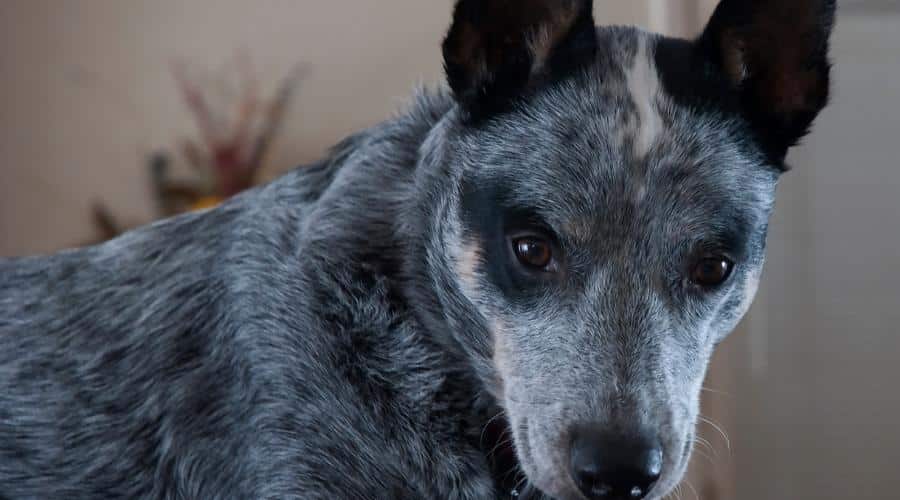
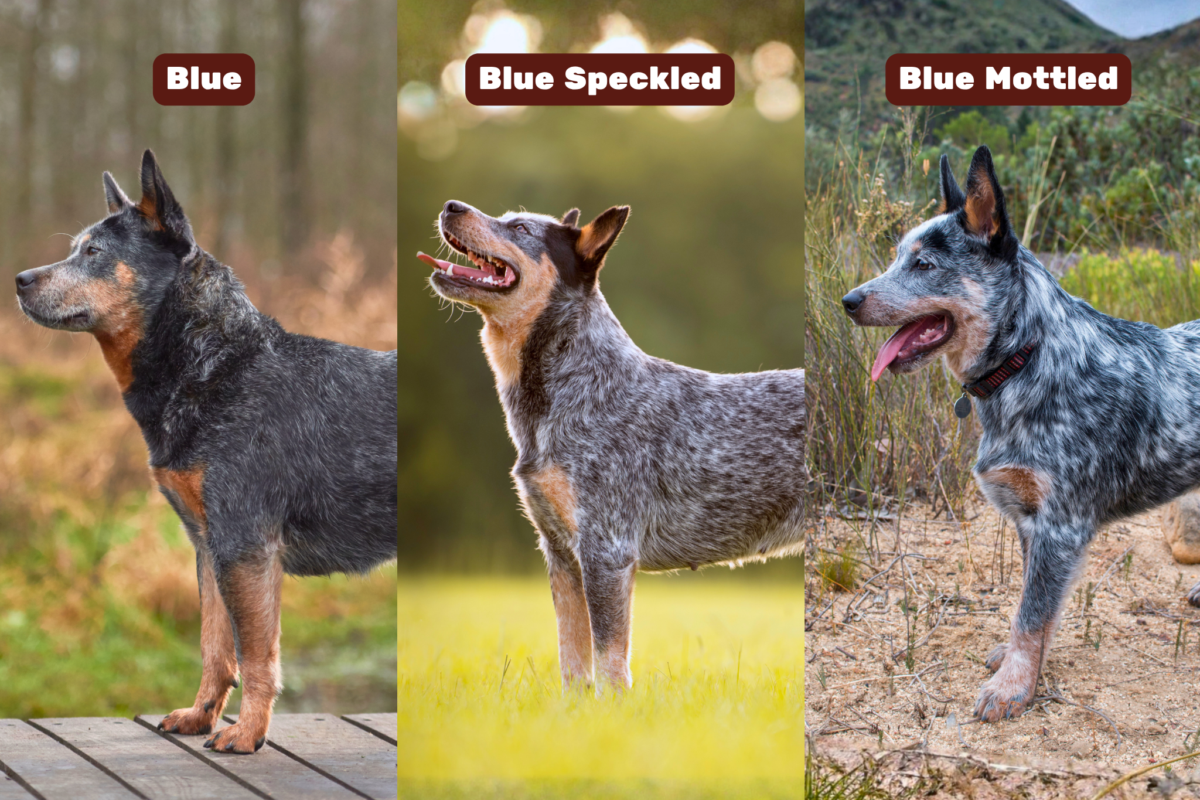
Also called the Blue Heeler or Red Heeler, the Australian Cattle Dog is probably the first breed many people picture when they hear “blue dog.” It has a compact, muscular build, upright ears, and a bushy tail. Some dogs also have heterochromia, with two different-colored eyes.
The blue variety has a mottled gray, black, and white coat, while the Red Heeler has more reddish-brown coloring. Both are varieties of the same breed. Developed to work cattle over long distances, Australian Cattle Dogs are alert, determined, and highly driven.
Quick Fit
- Energy: Very high
- Grooming: Low to moderate
- Family fit: Best for active families.
- Experience: Experienced or highly committed owners.
This is a working breed that needs more than a few casual walks each week.
2. Australian Shepherd
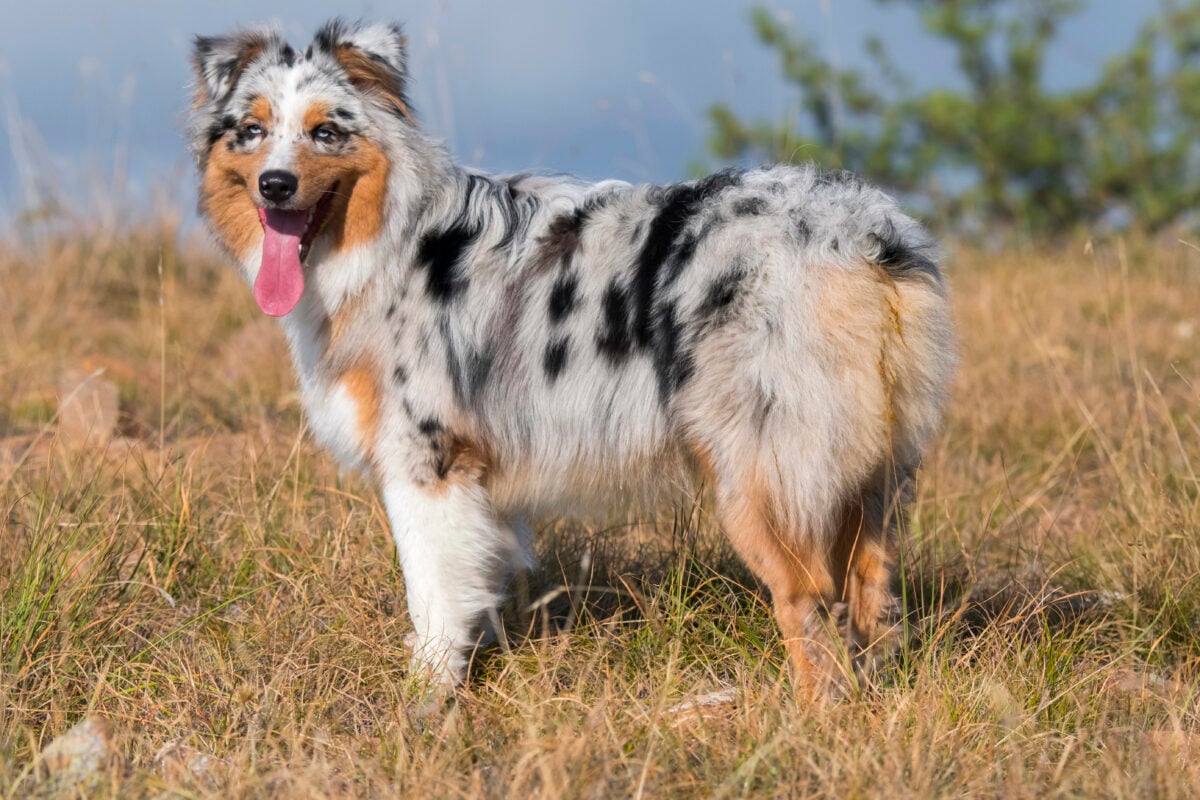
Australian Shepherds can have striking blue merle coats, often combined with white and copper markings.
Originally developed as working ranch dogs, Aussies are intelligent, athletic, and eager to participate in family activities. Their long double coat needs regular brushing, particularly during shedding periods.
Blue merle is an accepted color, with darker patches or mottling over a gray-blue base. Australian Shepherds may also have blue or partially blue eyes. Their intelligence and strong herding instinct make them responsive to training, particularly when given activities that keep them mentally engaged.
Quick Fit
- Energy: High
- Grooming: Moderate to high
- Family fit: Excellent for active families.
- Experience: Best for owners prepared for consistent training and daily activity.
If you want a blue merle dog that can join you on hikes, training sessions, and outdoor adventures, the Australian Shepherd deserves a closer look.
3. Blue Lacy
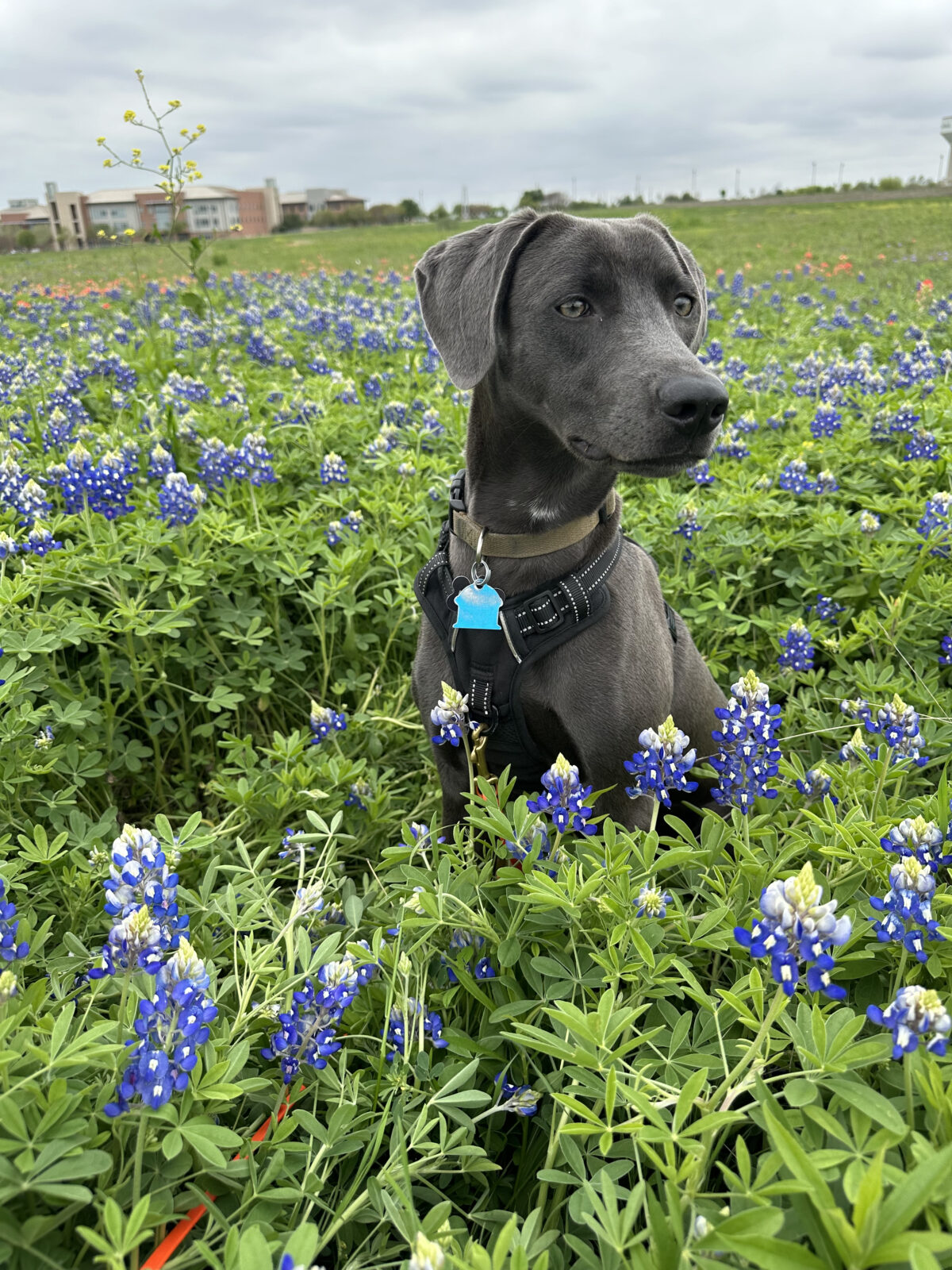
Ranchers, hunters, and herders developed the Blue Lacy in Texas during the 1800s. The breed is valued for its speed, stamina, and working ability and has been the official state dog of Texas since 2005.
Its coat can range from silvery gray to nearly black, although red and tri-colored coats also occur. Blue Lacys generally weigh between 25 and 55 pounds and have lean, athletic bodies. Their strong prey drive and independent nature are important considerations for prospective owners.
Quick Fit
- Energy: Very high
- Grooming: Low
- Family fit: Better for active households.
- Experience: Experienced owners preferred.
This is a working dog first and a casual companion second.
4. Chow Chow
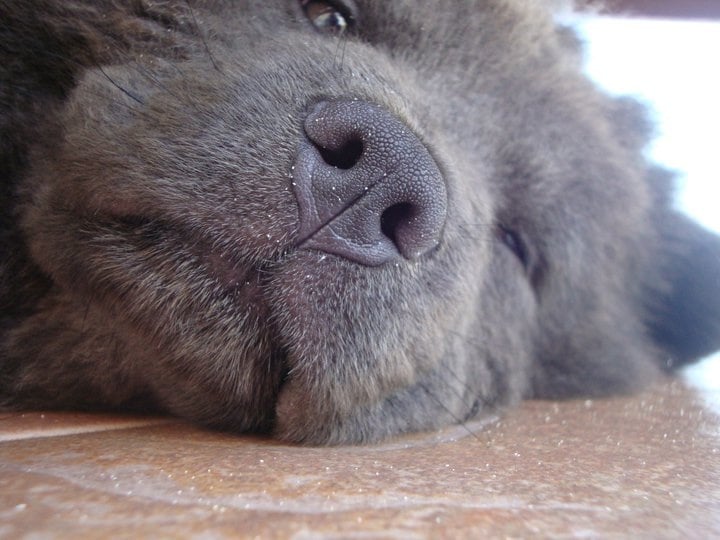
Chow Chows are an ancient breed known for their heavy coat, compact build, and blue-black tongue. They usually weigh between 45 and 70 pounds, although their dense fur can make them appear considerably larger.
Blue is one of the recognized coat colors and can range from a darker shade to a softer blue-gray. Chows can be fairly independent and protective of their families, giving them a different temperament from many highly social companion breeds.
Quick Fit
- Energy: Moderate
- Grooming: High
- Family fit: Better for experienced families.
- Experience: Moderate to high
The most important lifestyle factor to consider is their independence, protective nature, and need for regular coat care.
5. Great Dane
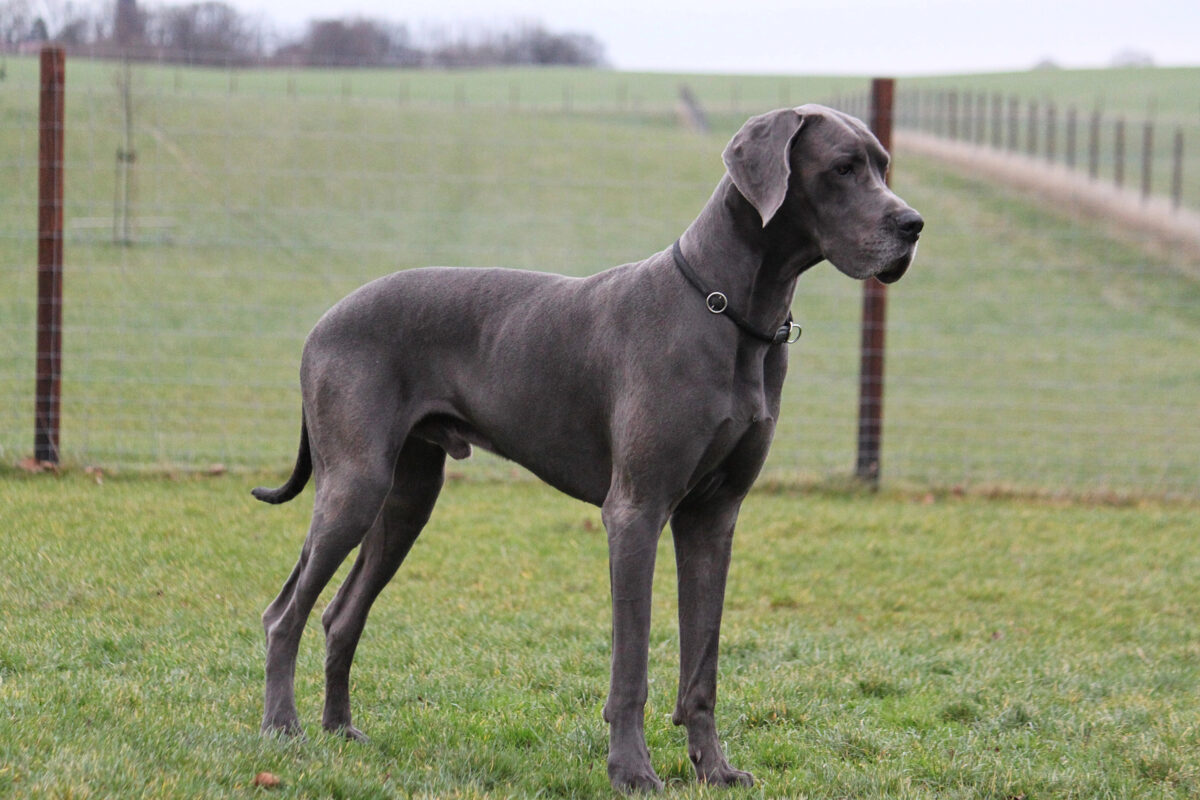
Great Danes are a giant breed from Germany that can weigh between 110 and 175 pounds or more. Their short, smooth coat is easy to maintain, while their height and overall size make them one of the most imposing breeds on this list.
Blue Great Danes typically have a steel-blue or deep silver-gray coat. Despite their stature, they are often affectionate and closely attached to their owners. They generally do not require the same level of intense activity as working breeds, but regular walks and controlled play remain important.
Quick Fit
- Energy: Moderate
- Grooming: Low
- Family fit: Good with appropriate training and supervision.
- Experience: Moderate
A giant breed can also mean substantial veterinary expenses. Before bringing one home, consider how you would handle unexpected medical costs and whether pet insurance fits your budget. Compare coverage differences in our best pet insurance guide, which includes reviews, pros, cons & personal experiences.
6. Greyhound
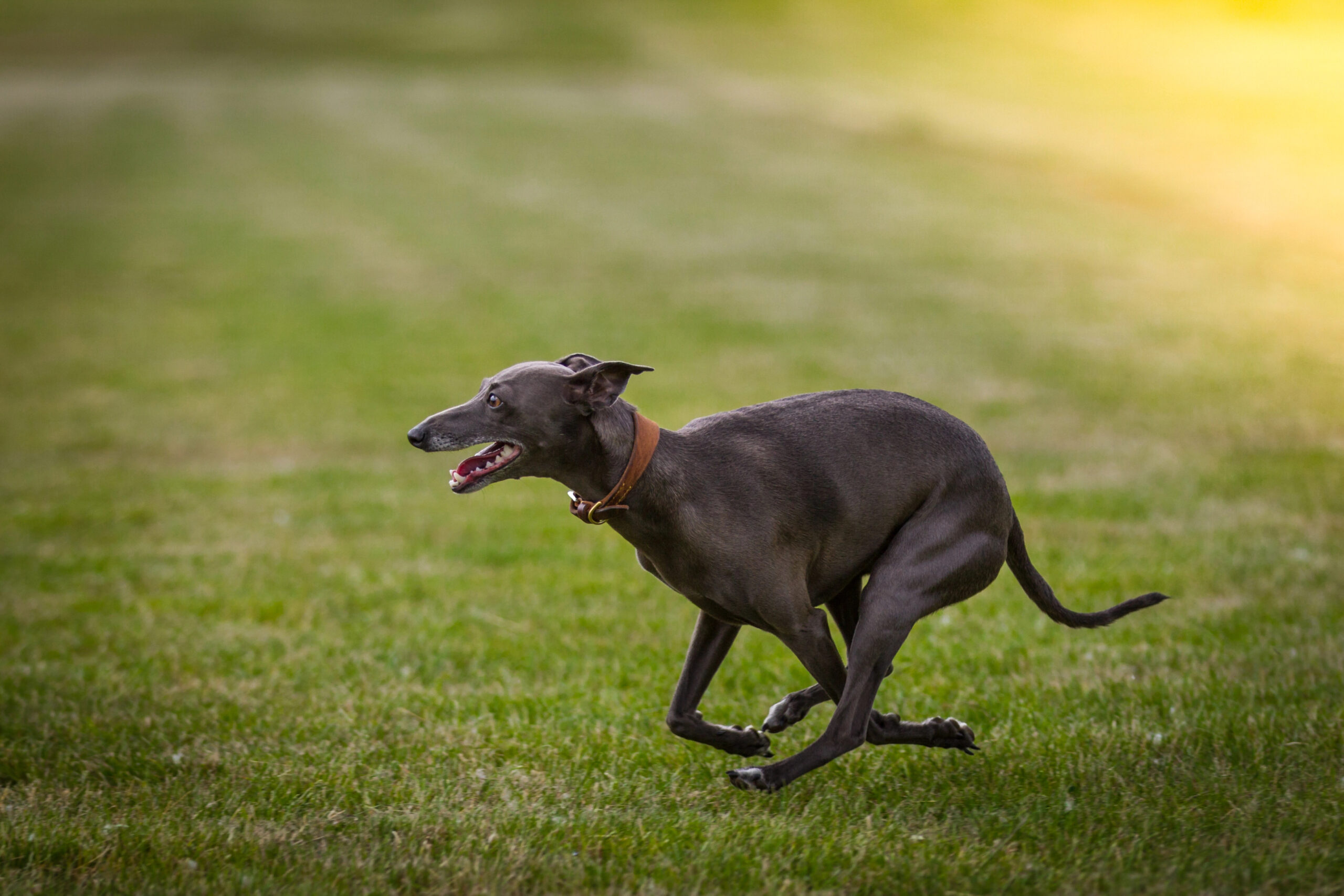
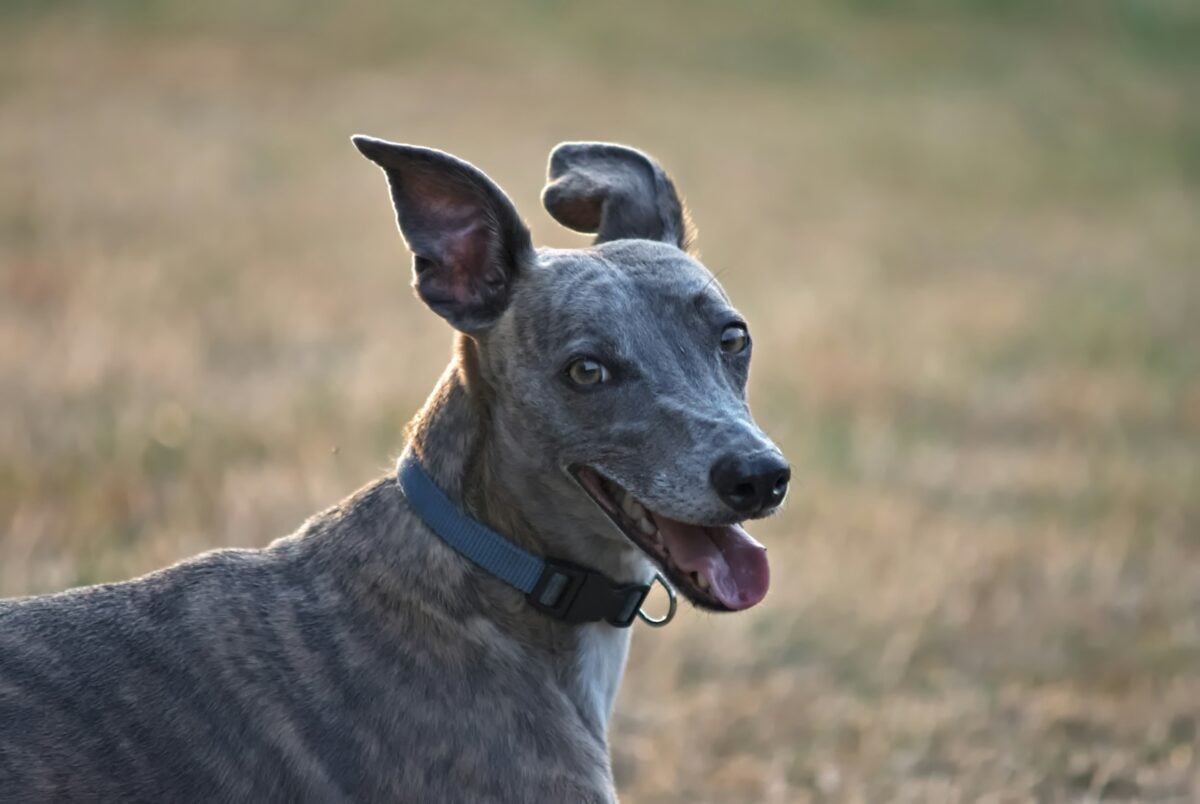
Blue is one of the rarer Greyhound colors, appearing in shades from slate gray to a lighter blue-gray. The breed can also have brindle or fawn markings, and blue-coated dogs may have a matching bluish nose.
Although Greyhounds are famous for their speed, many are surprisingly content to relax at home after appropriate exercise. Their strong prey drive, however, can make life with smaller pets more complicated.
Quick Fit
- Energy: Moderate
- Grooming: Low
- Family fit: Good for calm families.
- Experience: Beginner to moderate.
Their sensitive nature also makes patient, gentle handling especially important.
7. Irish Wolfhound
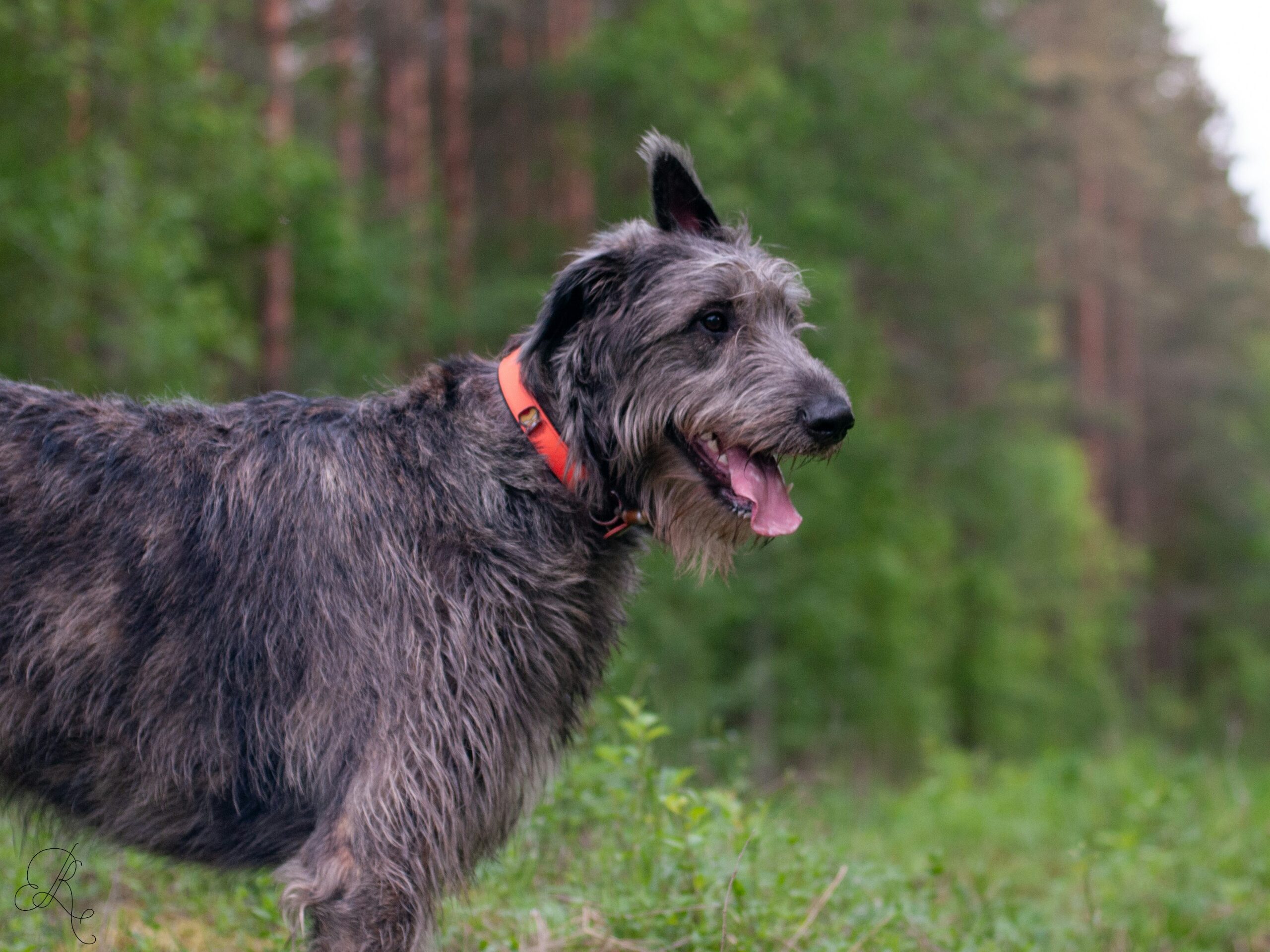
Irish Wolfhounds are one of the tallest dog breeds, with adults typically standing around 30 to 32 inches at the shoulder. They commonly weigh 105 to 120 pounds or more, and some individuals can be considerably heavier.
Although gray is common, Irish Wolfhounds can also have blue, black brindle, fawn, red, cream, wheaten, and white coats. They are generally gentle and even-tempered, but their enormous size means they need adequate living space and room to move comfortably.
Quick Fit
- Energy: Moderate
- Grooming: Moderate
- Family fit: Good for families with sufficient space.
- Experience: Moderate
The biggest practical question isn’t whether you can handle their temperament—it’s whether you can realistically accommodate their size.
8. Italian Greyhound
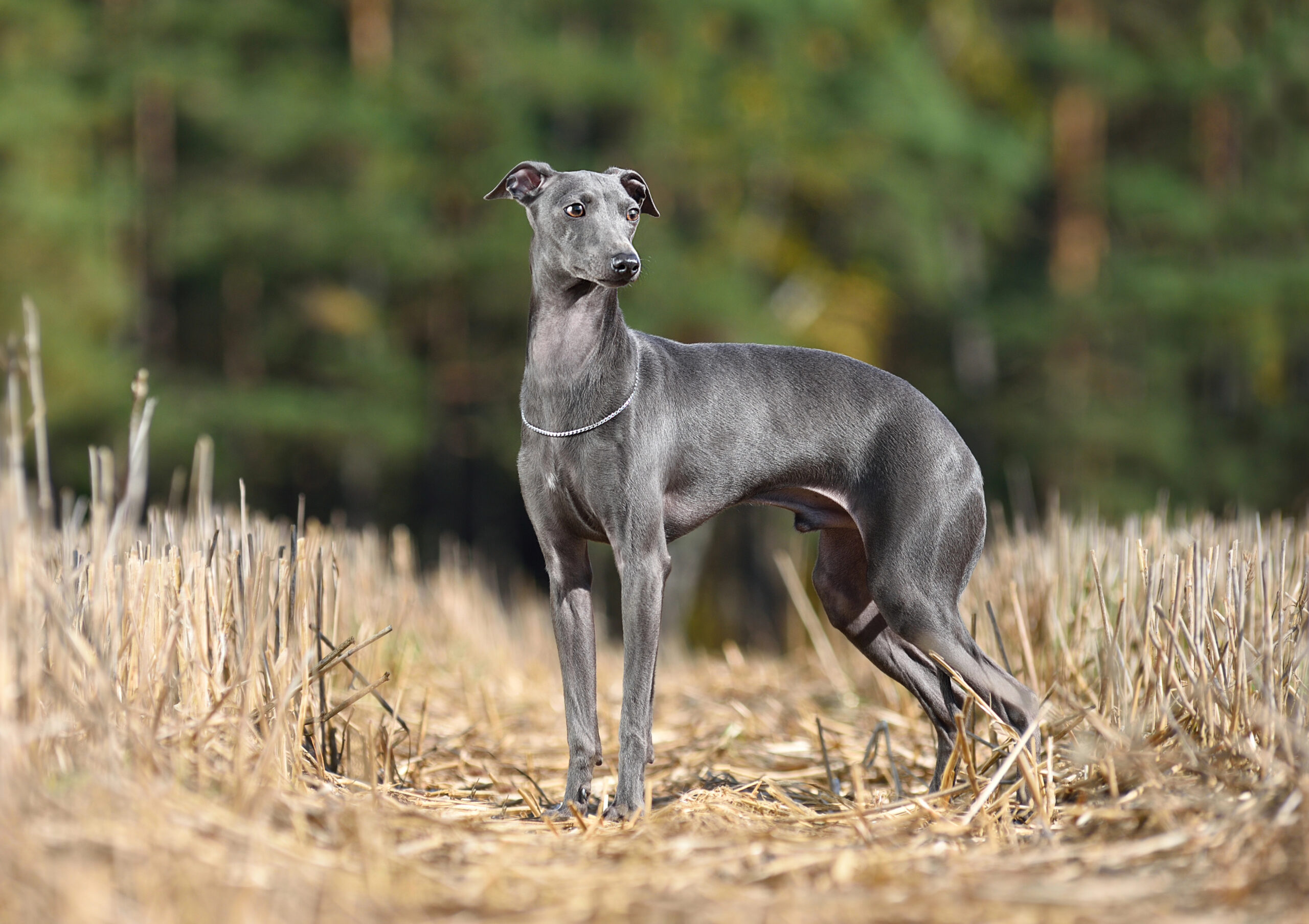
The Italian Greyhound is the smallest member of the sighthound group, weighing only about 7 to 14 pounds. It has the slim build and refined features of larger Greyhounds, but in a much smaller package.
Blue and blue-and-white coats are possible, along with several other colors. These dogs are affectionate with their people and can form close attachments to their owners. Their delicate build means they need careful handling, while their instinct to chase can be challenging around smaller pets.
Quick Fit
- Energy: Moderate to high
- Grooming: Low
- Family fit: Better with gentle older children.
- Experience: Beginner to moderate.
Their small size makes them convenient for many homes, but they still need exercise, training, and companionship.
9. Kerry Blue Terrier
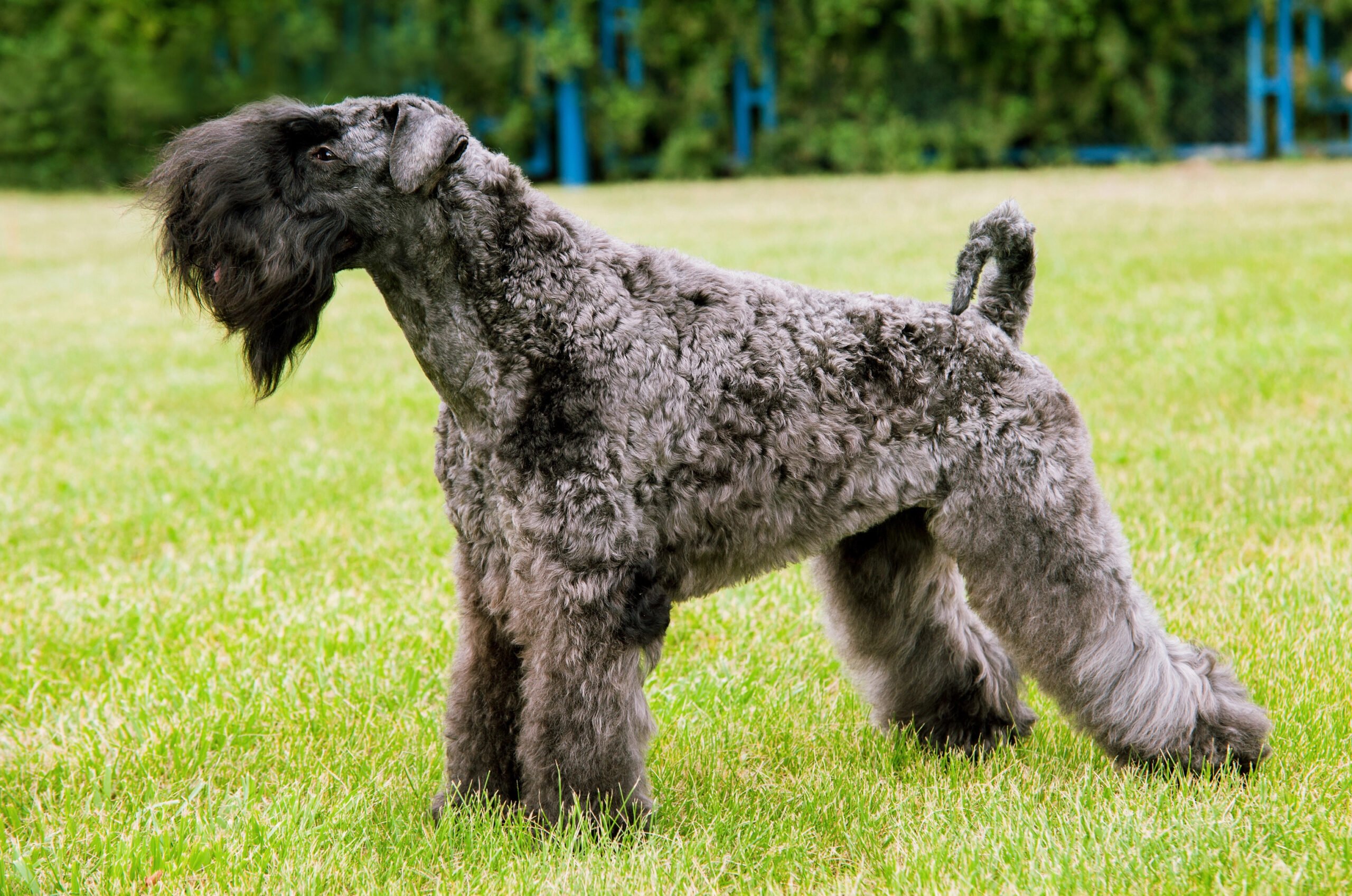
The Kerry Blue Terrier is recognized for its soft, curly coat, distinctive beard, and blue coloring. Its coat can develop from deep slate to lighter blue-gray as the dog matures, and puppies are often born with darker coats before the characteristic color develops.
Weighing about 33 to 40 pounds, the breed combines a compact build with the bold personality typical of a terrier. Kerry Blues are intelligent, alert, and confident. Their low-shedding coat can be appealing to owners who want less loose hair around the home, but regular grooming is essential to keep it healthy and well-maintained.
Quick Fit
- Energy: Moderate to high
- Grooming: High
- Family fit: Good for active families.
- Experience: Moderate to experienced.
One interesting detail is that Kerry Blue puppies are typically born black and gradually develop their characteristic blue coat as they mature.
10. Neapolitan Mastiff
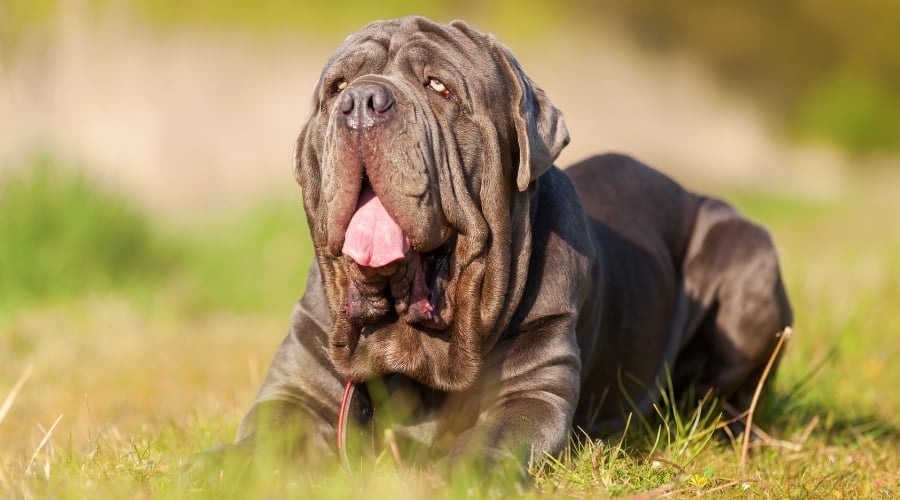
The Neapolitan Mastiff is an enormous Italian guardian breed distinguished by its heavy build, loose skin, large head, and pronounced jowls. Historically, these physical traits helped protect the dog while working as a guard.
Adults can weigh around 150 to 200 pounds or more. Blue is one of the breed’s recognized colors and can also appear in brindle patterns. Because of their considerable strength and size, Neapolitan Mastiffs require owners who can manage them confidently and provide appropriate training and socialization.
Quick Fit
- Energy: Low to moderate
- Grooming: Moderate
- Family fit: Better for experienced families.
- Experience: Experienced owner strongly recommended.
Their sheer strength and size make early training, socialization, and responsible handling particularly important.
11. Poodle
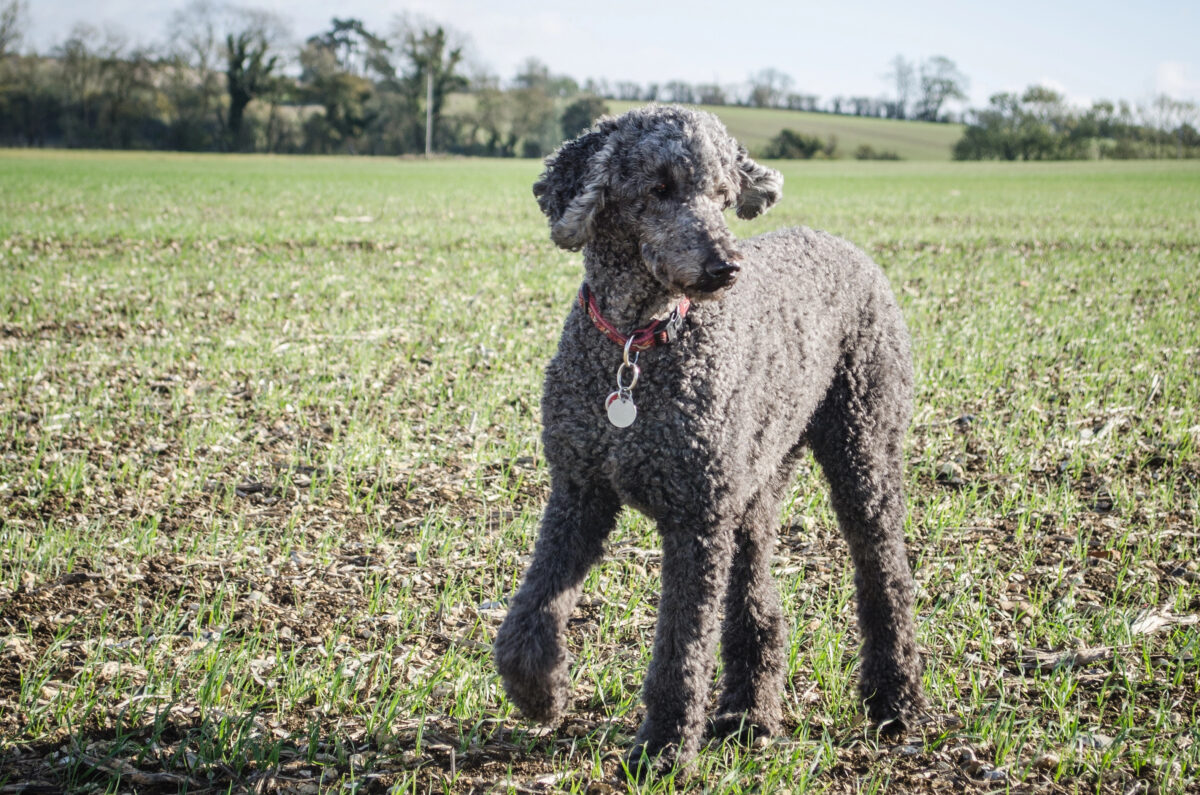
Poodles come in three sizes: Toy, Miniature, and Standard, so that they can suit a range of living situations. They are highly intelligent dogs with a history as water retrievers, and their curly coats produce relatively little loose hair.
Blue Poodles have a coat resulting from diluted black pigmentation. The color can vary in intensity, and some dogs become noticeably lighter or change in appearance as they mature. Their coats require regular grooming regardless of size.
Quick Fit
- Energy: Moderate to high
- Grooming: High
- Family fit: Excellent with appropriate training.
- Experience: Beginner to experienced, depending on size and lifestyle.
A blue Poodle can also change in appearance as its coat matures, so puppy coloring isn’t necessarily its final adult color.
12. Shar Pei
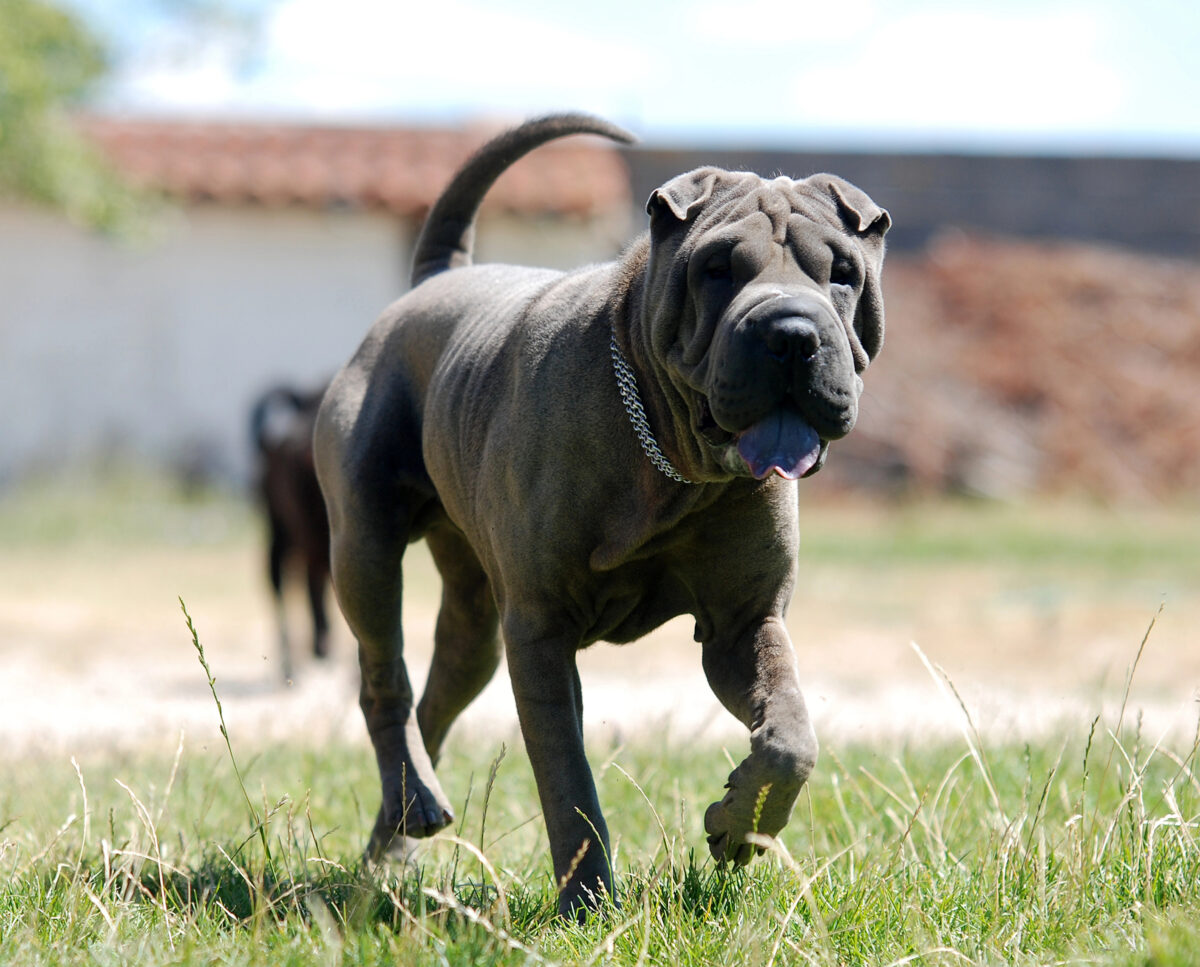
The Chinese Shar-Pei is an ancient breed from China, recognizable for its compact build, short coat, and loose folds of skin. Adults generally weigh between 45 and 60 pounds.
Blue Shar-Peis have a solid blue-gray coat that can range from charcoal to a lighter silver tone. The breed is often devoted to its household but can be reserved and protective, so early socialization is especially important.
Quick Fit
- Energy: Moderate
- Grooming: Low to moderate
- Family fit: Better for experienced families.
- Experience: Moderate to experienced.
Their distinctive skin folds also mean owners need to pay close attention to skin health and hygiene.
13. Stumpy Tail Cattle Dog
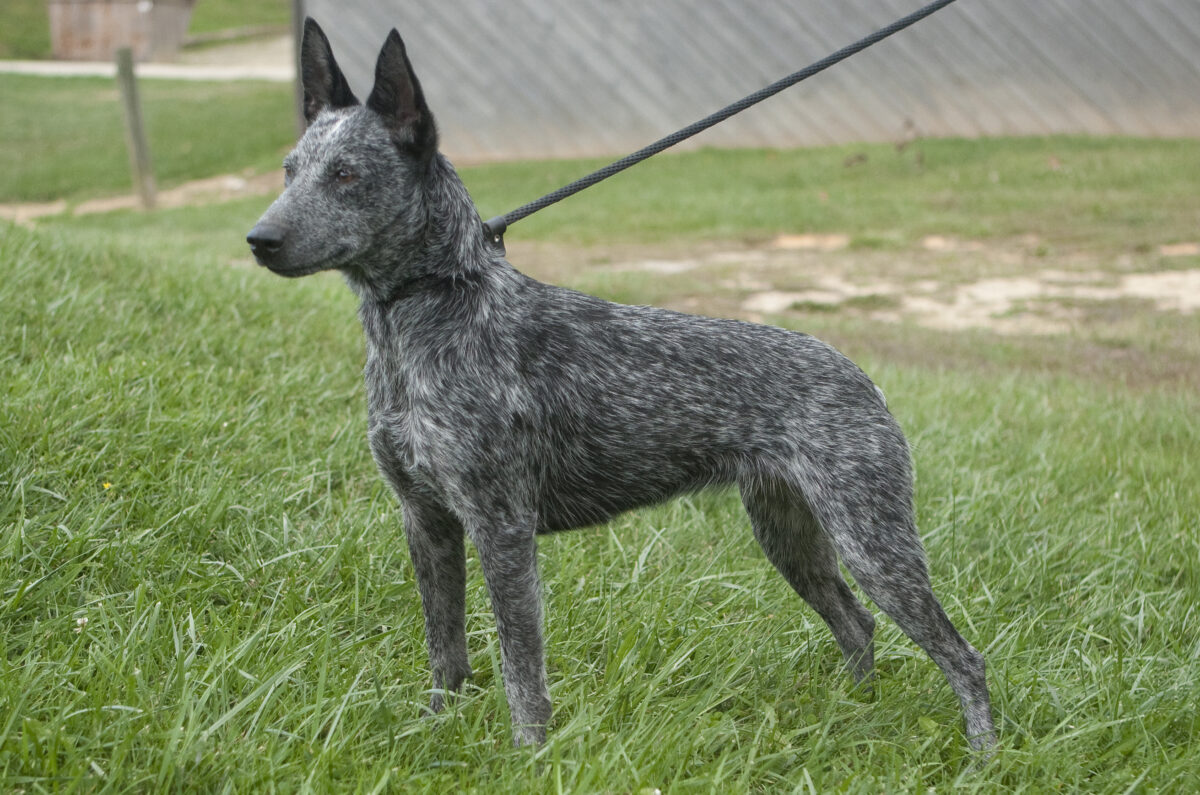
The Australian Stumpy Tail Cattle Dog is a distinct breed, not an Australian Cattle Dog with a shortened tail. As its name suggests, these dogs are typically born with a naturally bobbed tail. The breed shares ancestry with the Australian Cattle Dog and was developed for demanding work with livestock.
Stumpies have muscular bodies, erect ears, and short, dense coats. Blue coats can feature speckles, splotches, or merle-like patterns, with red and tan also appearing in the breed. Their working background gives them plenty of drive and stamina.
Quick Fit
- Energy: Very high
- Grooming: Low to moderate
- Family fit: Best for active households.
- Experience: Experienced owner preferred.
Like the Australian Cattle Dog, the Stumpy needs meaningful physical and mental activity, not just occasional exercise.
14. Thai Ridgeback
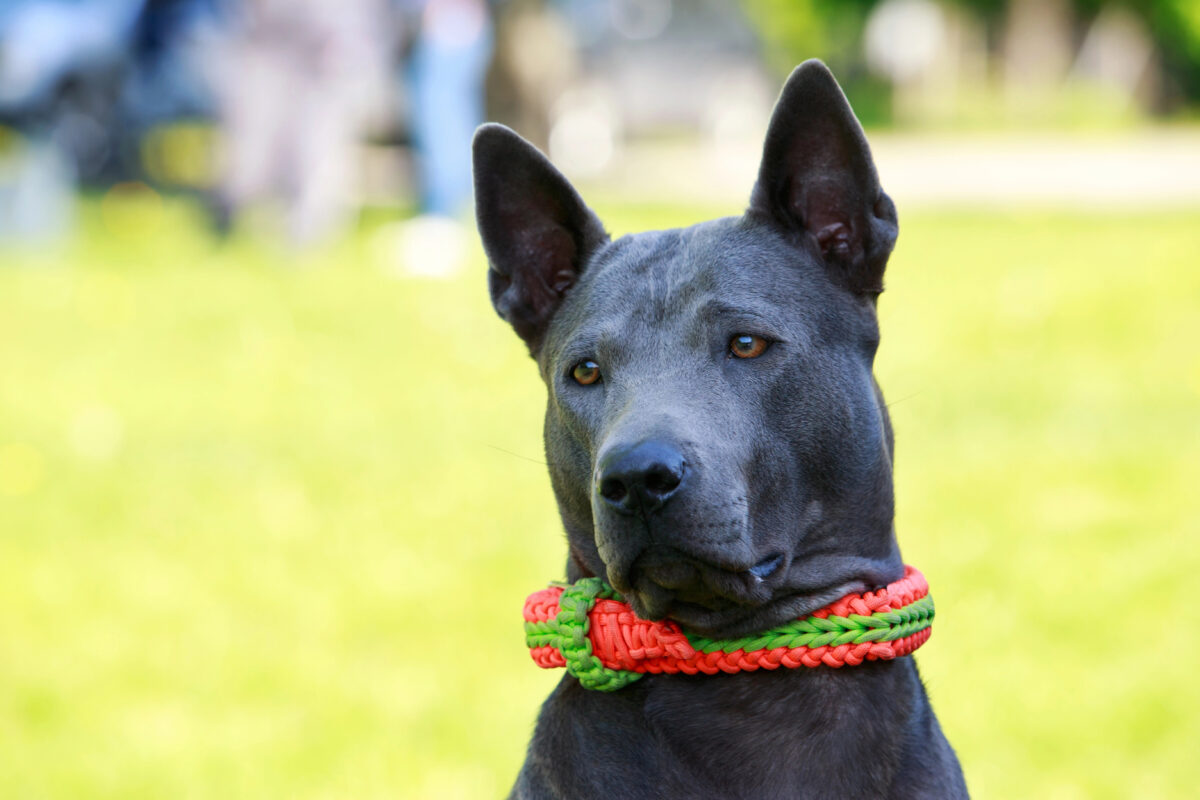
The Thai Ridgeback is a relatively rare breed that originated in Thailand. It has a muscular, athletic build, upright ears, and the distinctive ridge of hair running along its back in the opposite direction of the surrounding coat.
Blue is one of the breed’s recognized colors and can give the short coat a smooth blue-gray appearance. Thai Ridgebacks are known for their independence and can be strong-willed, so they tend to respond best to consistent training rather than harsh handling.
Quick Fit
- Energy: High
- Grooming: Low
- Family fit: Better for experienced households.
- Experience: Experienced owner recommended.
Their independent nature makes early socialization and consistent training particularly important.
15. Weimaraner
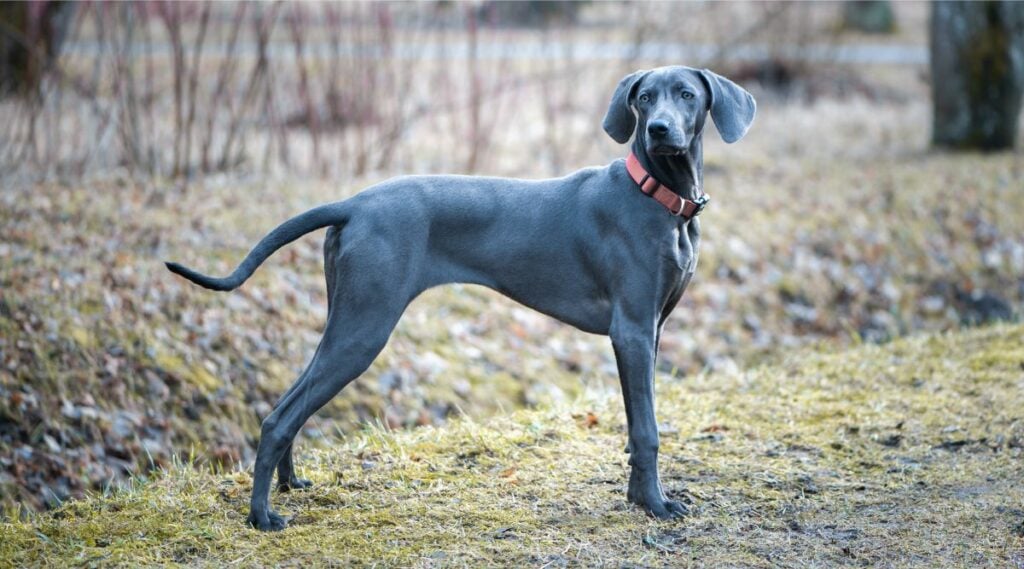
Blue Weimaraners are a German hunting breed developed as a gun dog for tracking and pursuing game. They have a lean, muscular body and typically weigh between 55 and 90 pounds.
The Blue Weimaraner has a charcoal-gray or diluted-black appearance. This color has been controversial within the breed, and blue is not accepted for conformation competition under the AKC breed standard. Despite the unusual coat, the dogs have the same athletic build and hunting heritage as other Weimaraners.
Quick Fit
- Energy: High
- Grooming: Low
- Family fit: Best for active families.
- Experience: Moderate to experienced.
If you’re specifically considering a blue Weimaraner, research the breed standard and breeder practices carefully rather than assuming that every blue-colored dog has the same status within the breed.
16. Whippet
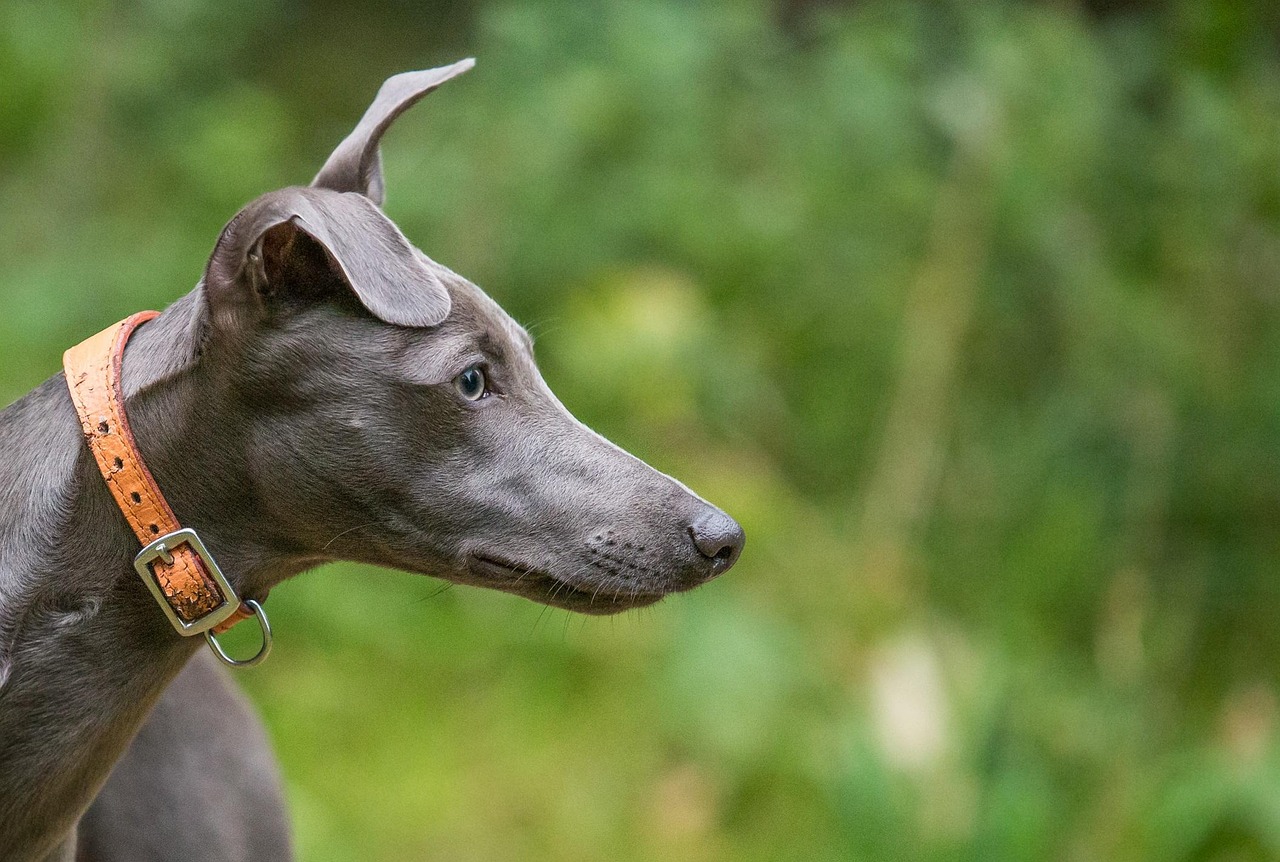
Whippets are smaller relatives of Greyhounds, generally weighing between 25 and 40 pounds. Their narrow heads, long necks, deep chests, and lean bodies give them the streamlined shape associated with sprinting breeds.
Blue and blue brindle are among the possible coat colors. Whippets are playful, affectionate companions, and their athletic build lets them enjoy active play without the constant activity required by some working breeds.
Quick Fit
- Energy: Moderate to high
- Grooming: Low
- Family fit: Good for active families.
- Experience: Beginner to moderate.
Their slender build means owners should protect them from rough play and extreme cold.
17. Yorkshire Terrier
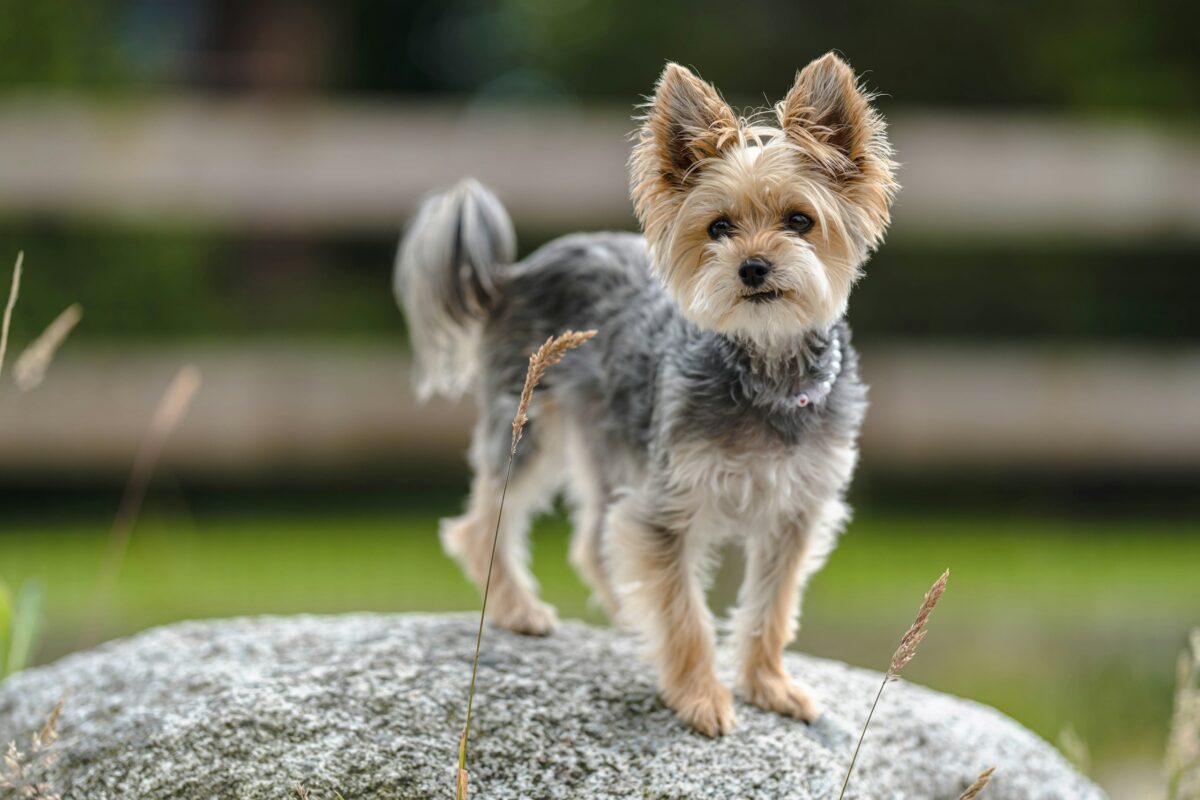
Yorkshire Terriers or Yorkies are tiny companion dogs that generally weigh only 4 to 7 pounds. Their coats can include blue coloring, often combined with tan or gold, and the shade can change as the dog matures.
Despite their small size, Yorkies have lively personalities and can be surprisingly bold. They are affectionate with people but retain a strong prey drive and may enjoy chasing small moving objects or animals. Their size also makes them practical for smaller homes and apartments.
Quick Fit
- Energy: Moderate to high
- Grooming: High
- Family fit: Better with older or gentle children.
- Experience: Beginner to moderate.
Don’t let the tiny body fool you—Yorkies can have plenty of personality and energy.
Color Dilution Alopecia: Should You Be Concerned?
Now that we’ve covered what blue coats look like and how they occur, there’s one health consideration worth knowing about. Some dogs with dilute coat colors, including blue and fawn, can develop color dilution alopecia (CDA), an inherited follicular disorder that causes hair thinning or hair loss. It may also cause dry, flaky, or itchy skin and secondary skin problems.
Having a blue coat does not mean a dog will develop CDA. The important thing is to know what changes to watch for rather than assuming every skin problem is related to coat color.
Signs To Watch For
Contact your veterinarian if you notice:
- Progressive hair thinning or bald patches.
- Broken or fragile hairs.
- Dry, flaky, or scaly skin.
- Persistent itching or irritation.
- Redness, crusting, or sores.
- Recurrent skin infections.
These symptoms can have various causes, including parasites, allergies, infections, or other skin conditions, so don’t assume that coat color is responsible.
When Should You Ask Your Vet?
Schedule a veterinary examination if your dog develops persistent or progressive hair loss, repeated skin infections, significant itching, scaling, or unexplained changes in the skin or coat.
Your veterinarian can examine the skin and coat to determine whether CDA is possible or whether another condition needs investigation. CDA itself is not considered a threat to a dog’s overall health, but associated skin problems may require treatment.
A healthy blue-coated dog does not need treatment simply because it has dilute coloring. Instead, monitor the skin and coat, and have your veterinarian check any concerning changes.
Because veterinary treatment can become expensive when skin problems become chronic or require repeated testing and medication, pet parents may also want to consider how they would handle unexpected veterinary bills. If you’re comparing coverage options, our guide to finding the right pet insurance for you explains differences in coverage, deductibles, reimbursement rates, waiting periods, and claim processing.
Are Blue Dogs Rare?
The answer depends on the breed.
Blue coloration can occur naturally in many breeds, but it may be uncommon within a particular breed because the necessary genetic combination is not always present. Just because a color can occur genetically doesn’t mean every breed standard accepts it.
When researching a blue dog, separate these four questions:
- Can the color occur genetically?
- How common is it within the breed?
- Does the breed standard accept this color?
- Does the color affect eligibility for competition or registration?
It’s also worth remembering that rare does not necessarily mean healthier, more valuable, or more desirable. Uncommon coat colors can attract higher prices, but color alone says little about a dog’s health, temperament, or quality. Be cautious of breeders who market a rare color as the main selling point.
This distinction matters with controversial colors such as blue Weimaraners and with breeds where particular patterns or colors have specific standard requirements.
If you’re choosing a puppy because you want a blue coat, prioritize responsible breeding, health, temperament, and breed suitability over color alone.
Frequently Asked Questions
These are questions we often get about blue breed dogs. If you can’t find yours here, drop it in the comments.
What Is the Best-Known Blue Dog Breeds?
The Australian Cattle Dog, commonly called the Blue Heeler, is one of the best-known blue dog breeds. Its blue-gray coat may feature black, white, or tan markings, while its intelligence, stamina, and strong herding instincts make it a popular choice for active owners.
What Are the Best Blue Dog Breeds for Families?
There isn’t one universally best family dog because temperament, socialization, training, children’s ages, and the individual dog’s personality all matter. Among the blue dog breeds in this guide, Great Danes, Poodles, Whippets, and Greyhounds can be appealing family companions when their exercise and handling needs fit the household.
Can Blue Dogs Have Blue Eyes?
Some blue-coated dogs can have blue or partially blue eyes, but coat color alone does not mean a dog will have blue eyes. Eye color depends on the breed and the combination of genes the dog inherits. Australian Shepherds, for example, can have blue eyes, while other blue-coated breeds may typically have brown or amber eyes.
Does a Blue Coat Mean a Dog Will Stay the Same Color?
Not necessarily. Some dogs can change in shade as they mature. Poodles, for example, may become lighter as their coats develop, while other breeds can show more subtle changes over time. A puppy’s coat color may therefore give you an idea of its adult appearance without guaranteeing exactly how it will look later.
Does Blue Coat Color Affect Temperament?
A blue coat does not determine a dog’s personality or temperament. A blue Australian Cattle Dog, for example, will generally have the same breed traits as an Australian Cattle Dog with another accepted coat color. Genetics, breeding, early socialization, training, and environment influence individual temperament.
So, if you’re choosing a blue dog, focus on the breed and the individual dog, rather than assuming the coat color tells you what the dog will be like.
Are Blue Dog Breeds Good for First-Time Owners?
Some are, but others are much more demanding. Yorkshire Terriers, Whippets, Greyhounds, and some Poodles may be manageable for committed first-time owners. Meanwhile, breeds such as the Australian Cattle Dog, Blue Lacy, Thai Ridgeback, and Neapolitan Mastiff generally require more experience with training, exercise, handling, or breed-specific behavior.
Which Blue Dog Breeds Are Best for Active Owners?
Australian Cattle Dogs, Australian Shepherds, Blue Lacys, Thai Ridgebacks, and Weimaraners are among the most demanding options in this guide. They tend to do best with owners who can provide substantial physical activity, training, and mental enrichment rather than relying on walks alone.
Choosing the Right Blue Dog Breed
Blue dogs aren’t actually sapphire or navy. In most cases, “blue” describes a diluted black or gray coat, ranging from deep charcoal to pale silver.
But coat color tells you very little about what living with a dog will actually be like. A Blue Heeler and a Great Dane may both have blue coats, yet their exercise, space, training, grooming, and handling requirements are completely different.
Choose the dog first, then the color. Before bringing one home, consider size, energy level, grooming, family situation, training experience, health, and long-term veterinary costs. The best blue dog isn’t simply the one with the most striking coat; it’s the one whose needs fit your life.
More Help Finding Your Perfect Pup
From the speckled Australian Cattle Dog to the silvery Weimaraner and tiny blue-and-tan Yorkie, blue dog breeds come in almost every size, shape, and personality. Their striking coats may be what first catches your eye, but color should never be the deciding factor when choosing your next canine companion.
Think about the traits that will affect your everyday life, including exercise needs, temperament, trainability, grooming, size, and potential health concerns. Our guide on how to pick the right dog breed walks you through these considerations and can help narrow down your choices.
Welcoming your first pup? Some breeds are much easier for new pet parents to manage than others, so check out our best dogs for first-time owners. Households with children may also want to explore our guide to the best family dogs for more options.
Whichever breed steals your heart, look beyond that beautiful blue coat. Finding a dog whose personality and needs fit your lifestyle is far more important than finding the perfect color—and gives you both the best chance at a happy life together.
Tell Us About Your Blue Dog
Which of these blue dog breeds is your favorite, or do you already have a blue-coated dog? Tell us about your experience in the comments below! Share what you love about your dog, what surprised you, or which breed you’d recommend to other readers.