When you purchase through links on our site, we may earn a commission at no extra cost to you. Learn more.
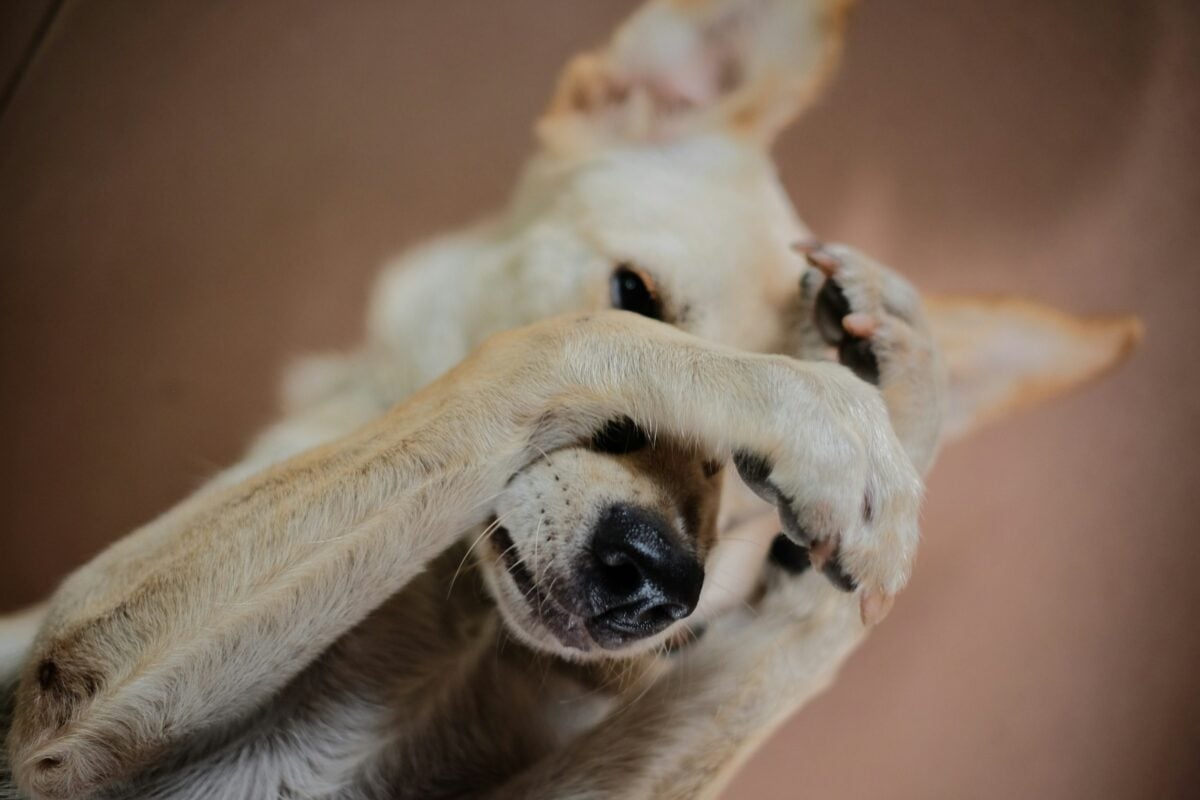
Your dog flops down, lets out a sigh, and then covers their face with their paws like they just can’t deal with the world anymore.
Table of Contents
It looks exactly like a human facepalm. Like they’re embarrassed, being dramatic, or maybe even judging you. It’s hard not to laugh.
But here’s the thing… Dogs aren’t actually “facepalming” at all.
Most of the time, this behavior has a surprisingly simple explanation. But in certain moments, it can mean something else entirely — and once you know the difference, it’s hard to unsee.
Want our human-written content to rank above AI-generated garbage? Help us out by clicking this button!
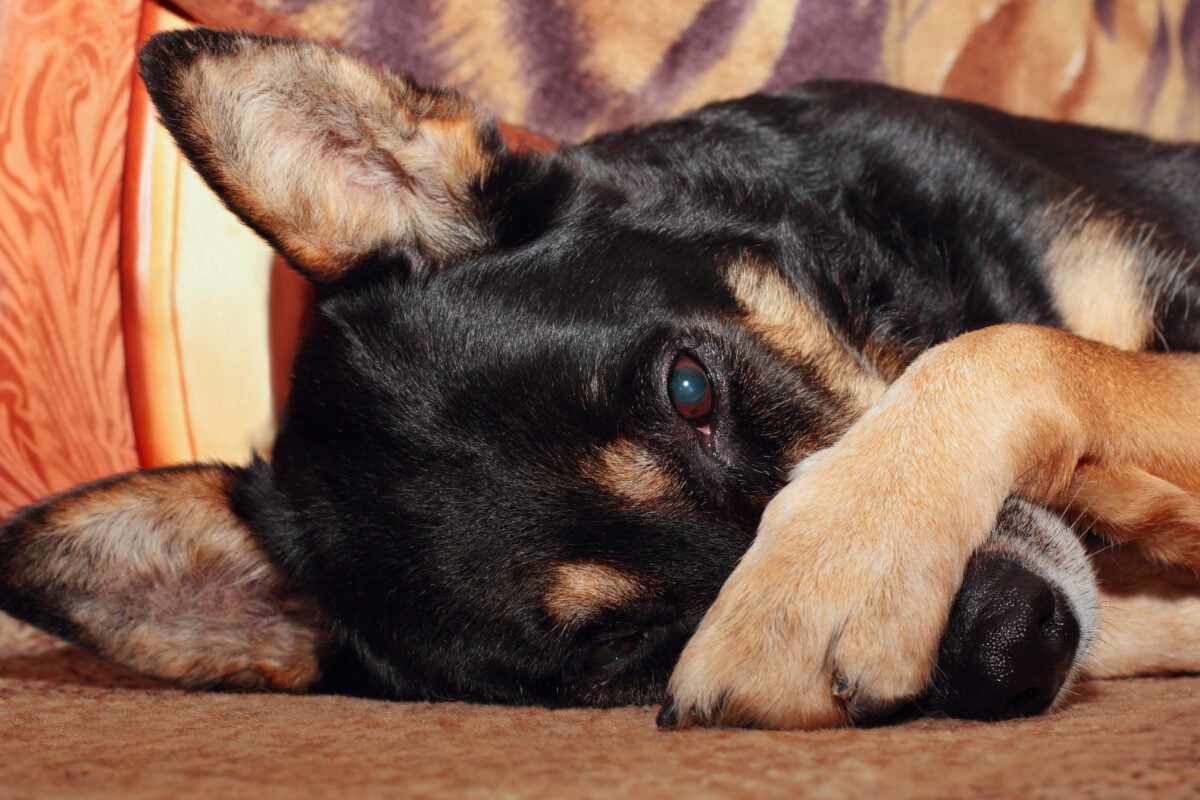
Why It Looks Like A “Facepalm” (But Isn’t)
The movement is simple, but it lands like a signal, which is exactly why it’s so easy to misread.
It’s the kind of behavior people instantly assign meaning to. But dogs aren’t replaying awkward moments or silently judging your life choices.
What’s really happening is much simpler, but not always for the same reason.
In many cases, this shows up when a dog is settling in to rest. But it can also appear in completely different moments, which is where things get more interesting.
In most cases, it comes down to one of these:
What It Usually Means When Dogs Cover Their Face
- Getting comfortable for sleep
- Blocking light or staying warm
- Grooming or irritation
- Responding to social tension
- Seeking attention
6 Reasons Dogs Cover Their Face With Their Paws (And What It Means)
Dogs usually cover their face for one of a few simple reasons, but which one it is depends entirely on the moment.
1. Is Your Dog Just Getting Comfortable?
Most dogs don’t just fall asleep. They prepare for it in their quirky, meticulous ways.
There’s the circling. The half-turn. The brief reconsideration. Sometimes, a full relocation.
And then, once everything feels acceptable, the final detail — a paw lifted and placed across the face like the last adjustment before committing to sleep.
Have you ever noticed your dog doing this right before they fall asleep?
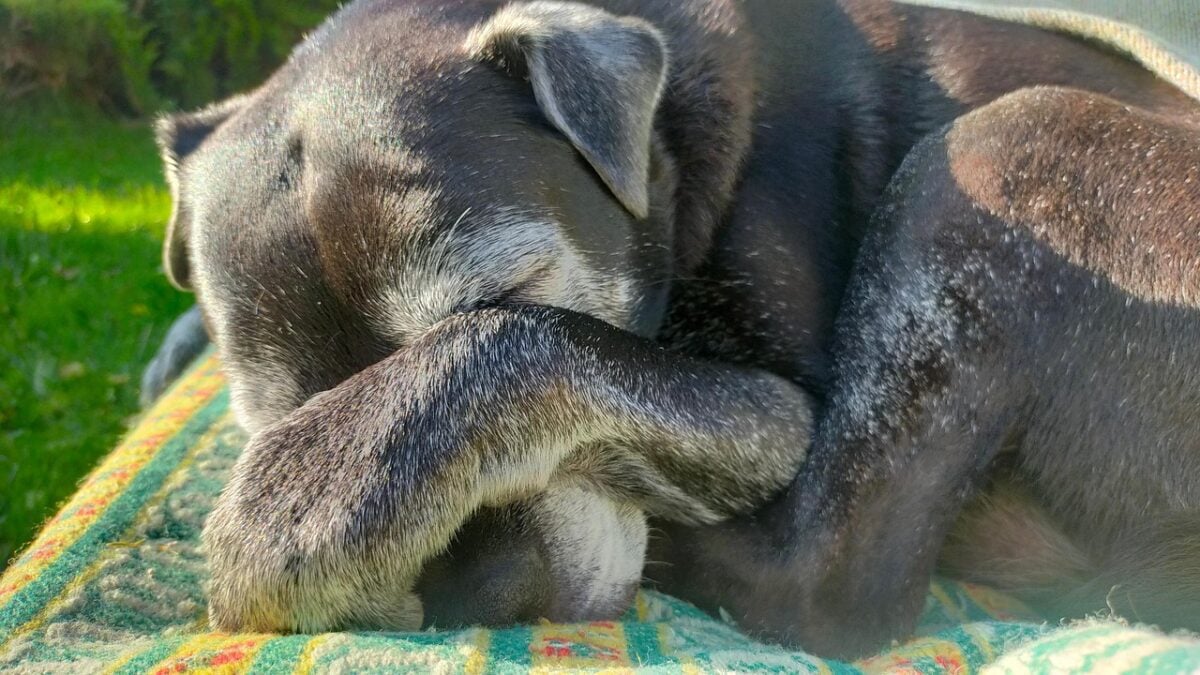
This isn’t just random behavior.
In the wild, canines resting required minimizing exposure. Even in your climate-controlled living room, that wiring hasn’t disappeared.
Curling inward, tucking the nose, or covering the face creates a smaller, more contained posture — one that feels protected.
2. Could They Be Blocking Light Or Staying Warm?
In many cases, yes — covering the face is a simple way for dogs to control their environment while they rest.
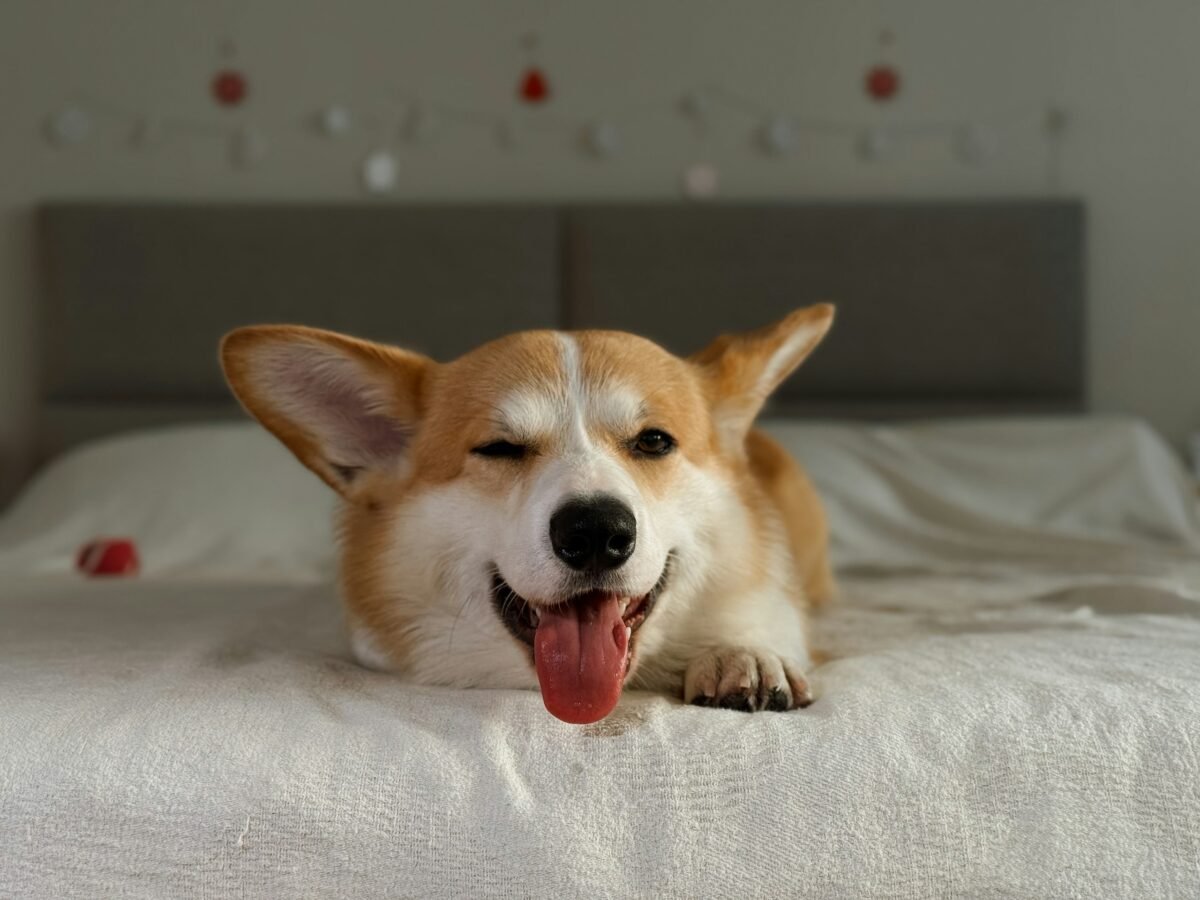
Some dogs are sensitive to light. Others instinctively conserve heat through their nose. And like most committed nappers, they prefer sleep setups that feel contained and undisturbed. A paw over the face can handle all three at once.
The Way They Cover Their Face Tells You Something
Not all paw placements look the same.
Some dogs press their paw firmly against their face, almost sealing themselves in. Others rest it lightly, barely touching.
And then there are the nose-tuckers, the ones who curl so tightly that the paw becomes part of a full-body effort to fold inward.
That variation usually comes down to sensitivity and personality.
Dogs who are more alert to light or movement may create a stronger barrier. More relaxed dogs may only need the suggestion of one.
Either way, the gesture tends to appear at the final stage of settling, once they’ve assessed and approved the room.
And once they slip into deeper sleep, you’ll often see the paw slide away. At that point, the monitoring stops. They’re fully under.
3. Could Something Be Irritating Their Face?
Most of the time, a paw over the face is about comfort or communication.
But occasionally, it’s much simpler than that. Something itches.
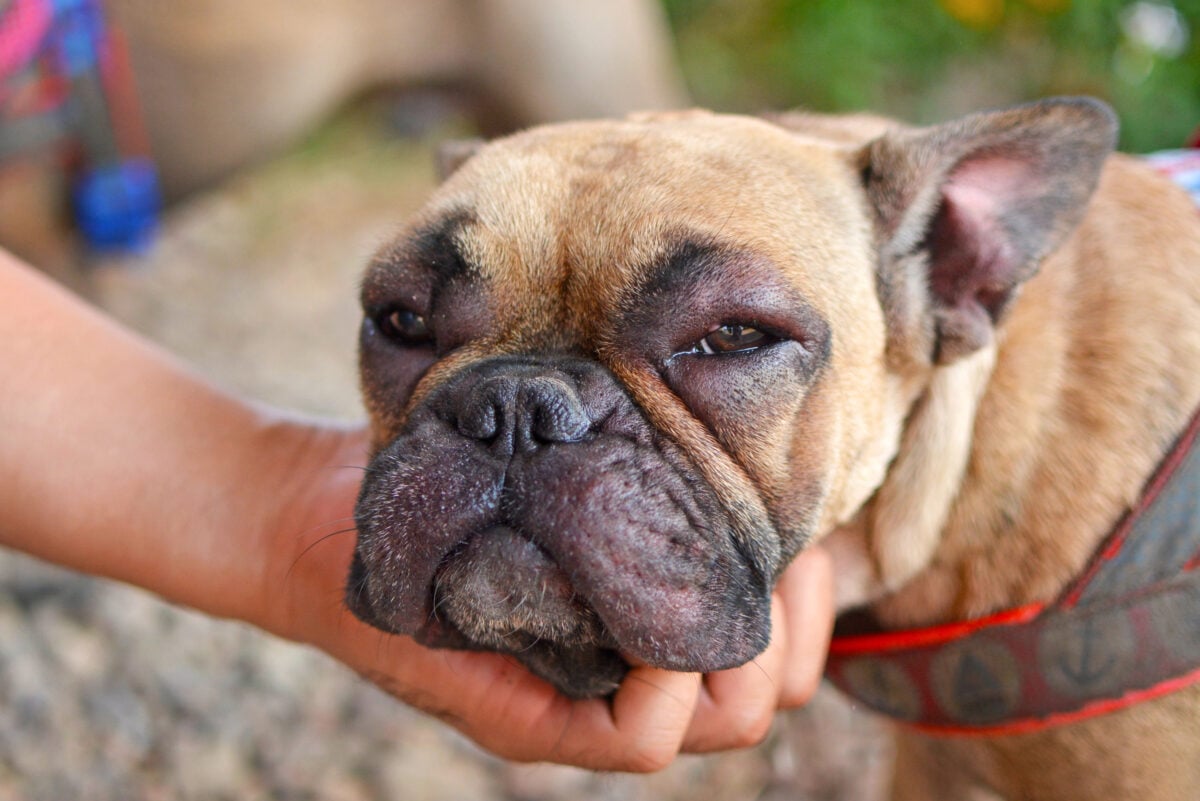
When face-covering shifts from a soft, relaxed placement to repeated rubbing, the movement becomes more purposeful, more frequent, and harder to ignore.
Allergies And Environmental Irritation
Dogs with food intolerances or environmental allergies often experience mild itching around the eyes and muzzle. Pollen, dust, dry air, or even new cleaning products can trigger subtle irritation.
In these cases, the paw doesn’t just rest; it rubs. You might also see your dog press their face against furniture or the floor, as if trying to scratch from a different angle.
Seasonality can be a clue. If the behavior occurs more often during certain times of year or after outdoor exposure, irritation is more likely.
Eye Discomfort vs. Ear Discomfort
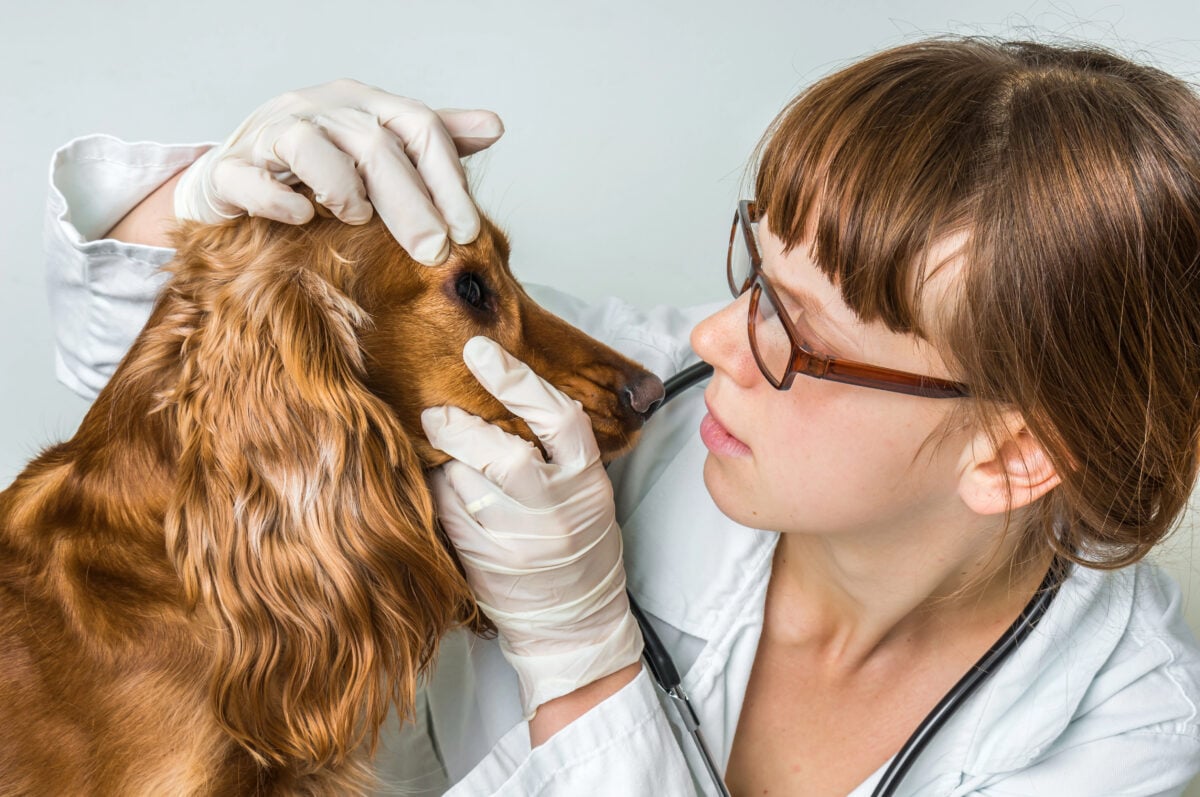
Where the paw lands can also offer hints. Frequent pawing directly at the eyes, especially paired with squinting, redness, or discharge, may suggest eye irritation.
If the movement seems to target one side of the face and is accompanied by head shaking, ear scratching, or sensitivity around the ear base, the source may be ear-related instead.
Dental discomfort can also cause dogs to paw at their muzzle, though this is usually accompanied by changes in eating behavior or drooling.
Face-Covering vs. Face-Rubbing
They can look similar at a glance. The difference is in the energy behind it.
Face-covering (usually normal):
- Paw rests gently over the nose or eyes
- Body remains relaxed
- Happens during sleep or calm moments
- Appears once, then stops
Face-rubbing (often irritation-related):
- Repeated pawing or scraping at the face
- Pressing their face against furniture or the floor
- Head shaking or eye squinting
- Redness, discharge, or visible discomfort
A relaxed drape is very different from persistent contact. One looks like someone settling in. The other looks like someone trying to fix something. If the movement feels repetitive or urgent, it’s worth paying attention.
When To Call The Vet
If you notice any of these signs, it’s a good idea to contact your veterinarian.
- Frequent or escalating pawing at the face
- Redness, swelling, or discharge around the eyes
- Persistent head shaking
- Sensitivity when you touch the face or ears
- Sudden changes in behavior or mood
A Quick Note on Unexpected Vet Costs
In most cases, a paw over the face isn’t a concern. But if allergies, eye issues, or infections enter the picture, treatment can add up quickly. Pet insurance can help cover unexpected exams, diagnostics, and treatment, giving you financial flexibility if a small behavior turns out to have a physical cause.
Keep in mind that pre-existing conditions typically aren’t covered, which is why many owners choose coverage before health problems arise. See our expert’s reviews of the best pet insurance providers to learn more.
4. Sometimes It’s A Social Signal (Not Just A Habit)
Sleep is straightforward. Awake is where it gets interesting.
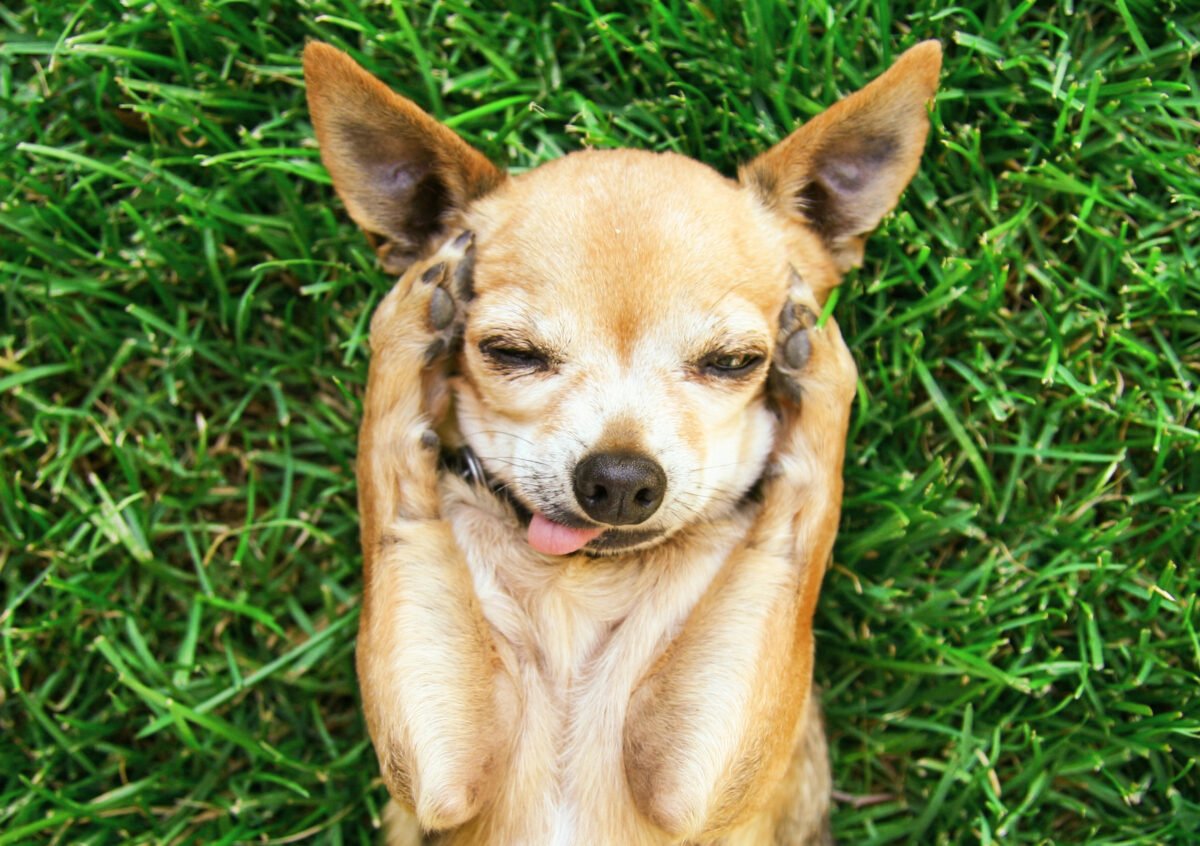
Some dogs lift a paw for praise, during correction, or mid-eye contact. It can look deliberate, even perfectly timed.
In these cases, the paw isn’t about light or warmth. It’s part of the interaction.
Dogs rely on small, subtle gestures to navigate social moments, and a paw across the face can be one of them.
5. Could Your Dog Be Trying To Get Your Attention?
Dogs are very good at noticing what makes humans react.
If your pup covered their face once and you immediately laughed, reached for your phone, or announced to the room that this was “the cutest thing that has ever happened,” they noticed and made the connection.
Behavior that gets attention usually repeats. And that attention doesn’t have to be dramatic to matter. A quick laugh. A softer voice. You stopped what you were doing for a second. That’s enough.
For some dogs, the paw-over-the-face becomes part comfort, part encore. It’s easy. It works. And from their perspective, if something works, why not use it again?
As the American Kennel Club explains in its training guidance, dogs tend to repeat behaviors that are rewarded, and rewards don’t have to be treats. Attention alone can be enough to make something stick.
6. Is Your Dog Trying To Diffuse The Moment? (It’s Not Guilt)
If your dog covers their face right after being corrected, it can look suspiciously like guilt — as if they’ve had a sudden realization about their life choices.
It’s a convincing performance.
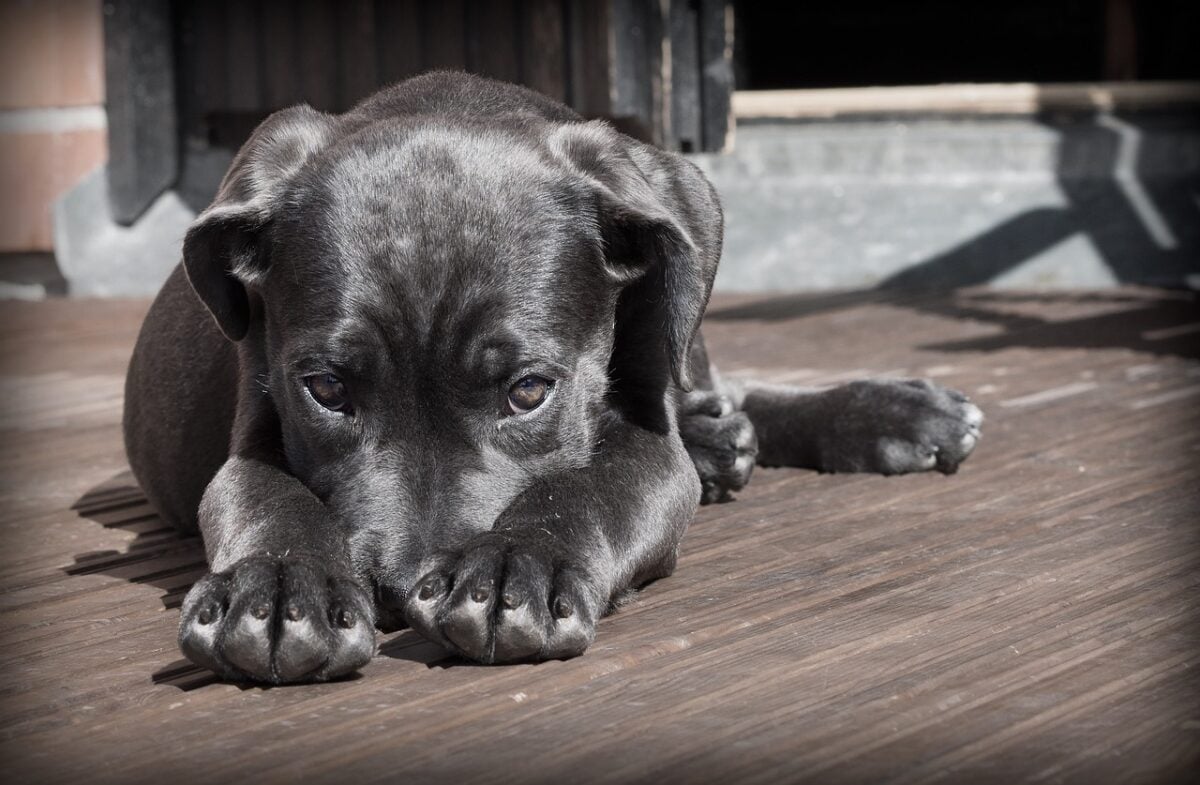
In reality, dogs don’t replay events and reflect on wrongdoing the way we do. What they respond to is your tone, posture, and social pressure in the moment.
Covering the face in that moment is often part of a larger “let’s calm this down” sequence. It reduces eye contact, softens their presence, and signals, “I’m not challenging this.”
Dogs are remarkably good at smoothing things over (at least in their minds).
A paw across the face can act as a small appeasement signal — a way to lower the intensity of an interaction without stepping away from it. Eye contact softens. Posture shrinks slightly. And the moment loses a little edge.
Veterinary behavior experts, including VCA Animal Hospitals, describe appeasement signals as subtle body language that reduces conflict and diffuses social pressure, often by softening posture or limiting eye contact.
You might notice it:
- During play that’s getting a little too intense
- When someone leans in closer than expected
- When the energy in a room shifts
A well-known study by canine cognition researcher Alexandra Horowitz found that the so-called “guilty look” in dogs was more closely tied to the owner’s reaction than to whether the dog had actually done anything wrong.
In other words, they’re reading you rather than replaying their questionable choices.
Hold On: It’s Important To Read The Rest Of Your Pup’s Body Language
A paw over the face is just one piece of information. The rest of the body usually fills in the meaning.
Dogs rarely communicate with a single gesture. Instead, they stack body language signals. Posture, muscle tension, ear position, breathing, tail carriage — all of these “tells” contribute to the message. So when you see the paw, zoom out to understand what’s going on with your pup.
Look At Your Dog’s Eyes
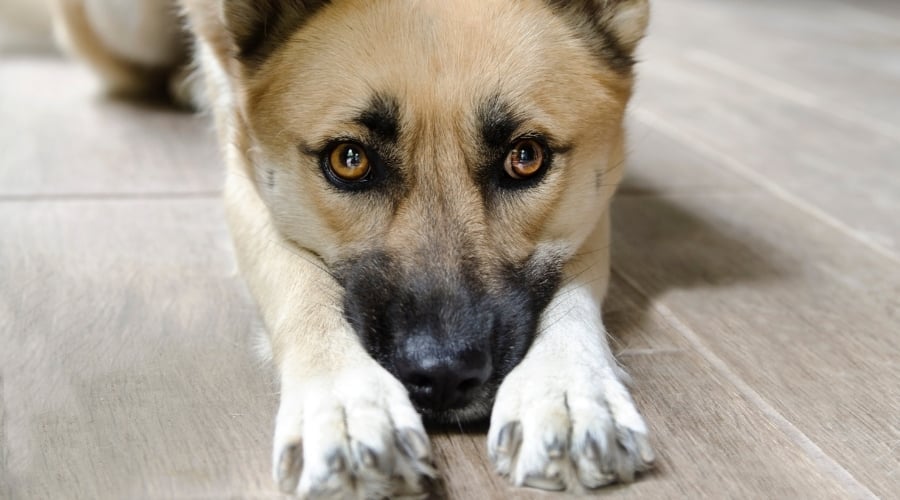
Are they soft and half-closed? Or wide and scanning? A relaxed dog will often have loose eyelids and slow breathing.
The paw rests lightly, almost absentmindedly. In contrast, a dog who is uncertain or overstimulated may show more facial tension, such as a tighter mouth, slightly raised brows, or quicker eye movement. The difference can be subtle, but it’s there.
Notice The Ear Position
Ears in a neutral or loosely back position typically signal comfort.
Pinned tightly against the head, especially when paired with a lowered posture, can suggest submission or unease. Upright and alert ears paired with a lifted paw may indicate the dog is still engaged and assessing.
Check Their Body Tension
Is the body loose and draped? Or slightly stiff? Comfort-based face covering tends to happen in relaxed postures, such as curled limbs, slow breathing, and settled weight.
Social or tension-related versions may show up with a more contained stance: tucked limbs, lowered head, subtle muscle tightening. Dogs don’t usually freeze dramatically. They adjust quietly.
Watch Tail Position
A neutral, loosely resting tail often accompanies sleep-based or comfort gestures.
A lowered tail during a social interaction, especially alongside other appeasement signals, suggests the dog is trying to reduce intensity. It’s not fear by default. It’s often just smoothing the moment.
Experts Weight In
Behavior experts, such as the American Veterinary Society of Animal Behavior (AVSAB), consistently recommend evaluating the entire posture, including tail, ears, muscle tone, and facial expression, rather than interpreting a single gesture in isolation.
Why Some Dogs Do “The Paw-Face-Covering-Thing” More Than Others
Not every dog covers their face. And among the ones who do, some treat it like a recurring character trait. The frequency usually comes down to temperament. Some dogs are highly aware of everything. Others are blissfully unaware of almost everything. The paw reflects that difference.
The Hyper-Aware Analysts
These are the dogs who notice the mail truck before it turns onto your street and catch the slight change in your tone before you do. They prefer predictability. A paw across the face isn’t dramatic so much as it’s preventative. They’re not overwhelmed; they’re adjusting early.
The Light Sleepers
Some dogs rest lightly, even in their own home. They look settled, but part of them remains on standby. A paw over the face narrows their field of vision just enough to make relaxation feel safer. It’s not anxiety; it’s a controlled descent into sleep.
The Fully Unbothered
Then there are the dogs who sprawl belly-up in the center of the room, limbs extended, unconcerned about life. Lighting conditions? Irrelevant. Social dynamics? Also irrelevant.
These dogs rarely bother with face-covering at all. If your dog never does it, that’s not a communication gap. It may just mean they’re comfortable without it.
The Social Negotiators
Some dogs track social shifts with impressive accuracy. When play intensifies, or someone leans in too quickly, the paw can become part of a smoothing strategy — a smaller posture, a softened gaze, a subtle signal that the moment could use less volume.
The Opportunists
And yes, some dogs learn that the move works. If covering their face once earned laughter, affection, or attention, they remember. If something reliably gets a response, it’s likely to return.
What Type Of Face-Coverer Do You Have?
Most dogs don’t use the paw move randomly. If they do it often, it tends to follow a theme.
- The Emotional Support Paw – Appears whenever life feels slightly overstimulating.
- The Dramatic Sleeper – Commits fully to blackout conditions. No light. No witnesses.
- The “Please Dim The Lights” – That lamp is simply too much.
- The Selective Listener – Paw goes up mid-eye contact like, “This conversation has peaked.”
- The Mid-Cuddle Regulator – Affection is fine. Excessive affection requires intervention.
- The Encore Performer – Discovered once that it earns a reaction. Has been workshopping it ever since.
- The Unflappable Legend – Sleeps belly-up in fluorescent lighting. Never facepalms. Thrives any time.
Should You Try To Stop Face Covering?
In most cases, no. If your dog occasionally covers their face while resting or during calm moments, there’s nothing to correct. It’s comfortable, harmless, and part of how they settle. Interrupting it would only add confusion.
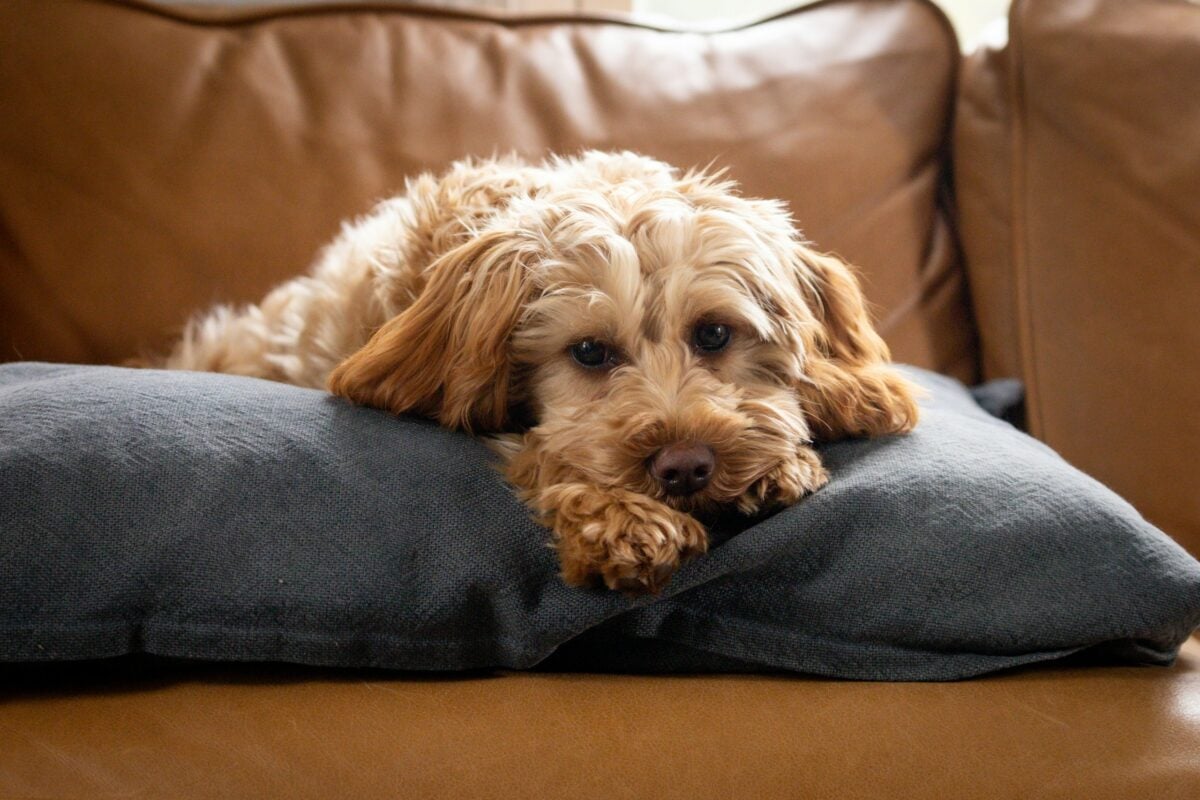
Owners are more likely to question it when it shows up during discipline or at cuddle time. But even then, the gesture itself isn’t the issue; it’s communication.
If your dog lifts a paw during a tense moment, a better question than “How do I stop that?” is “What just changed?” Did your tone sharpen, or did play escalate? The paw is usually responding to something, not creating it.
Action only makes sense in two situations:
- The behavior becomes repetitive and irritation-driven
- It interferes with normal activity or seems compulsive
In those cases, you’re not correcting the gesture. You’re addressing an underlying issue. Otherwise, observe. Don’t overmanage. Not every behavior needs fixing.
Frequently Asked Questions
Below are the most common questions owners ask about face-covering behavior. If yours isn’t here, feel free to ask it in the comments.
Do All Dogs Cover Their Faces?
No. Some dogs do it regularly, others rarely or never. Like most small behaviors, it depends on personality, sensitivity to light or stimulation, and individual comfort preferences. One dog may carefully drape a paw over their nose every night, while another prefers to sprawl in full view of the room without any concern at all.
Why Do Dogs Cover Their Face With Their Paws When They Sleep?
Most dogs cover their face during sleep to stay comfortable. A paw over the nose or eyes can block light, conserve warmth, and create a more secure, contained position. It’s a common and usually harmless sleep posture.
Why Is My Dog Covering Their Nose With Their Paw?
Dogs lose body heat through their noses, so covering them can help them stay warm. It can also reduce light or visual stimulation while they rest. If your dog appears relaxed, it’s typically just a matter of comfort.
Why Do Dogs Put Their Paws Over Their Face When They’re Awake?
When awake, the gesture can mean something different. Some dogs learn that it gets a positive reaction from their owners. Others use it as a way to reduce stimulation, avoid eye contact, or soften social tension. Context matters more than the movement itself.
Is My Dog Feeling Guilty When They Cover Their Face?
Probably not. Dogs don’t experience guilt in the human sense. If your dog covers their face during discipline, it’s more likely a response to your tone or body language — a way to ease tension or avoid direct confrontation.
When Should I Be Concerned?
If face-covering becomes repeated rubbing and is paired with redness, discharge, swelling, or signs of discomfort, it may signal irritation or pain. In that case, it’s worth consulting your veterinarian.
Decoding Other Quirky Sleep Habits
Our pups have some downright adorable and often hilarious things they do in their sleep. It’s hard not to wonder what’s going on in those little brains when it’s downtime.
If you’d like to understand your dog’s sleep and body language a little more deeply, these Canine Journal guides are good next reads:
Does your dog have a very specific “paw moment” — during naps, mid-cuddle, or right after you say their name in that tone? Share what it looks like in the comments. Chances are, someone else’s dog is doing the exact same oddly timed move for a completely different reason.