When you purchase through links on our site, we may earn a commission at no extra cost to you. Learn more.
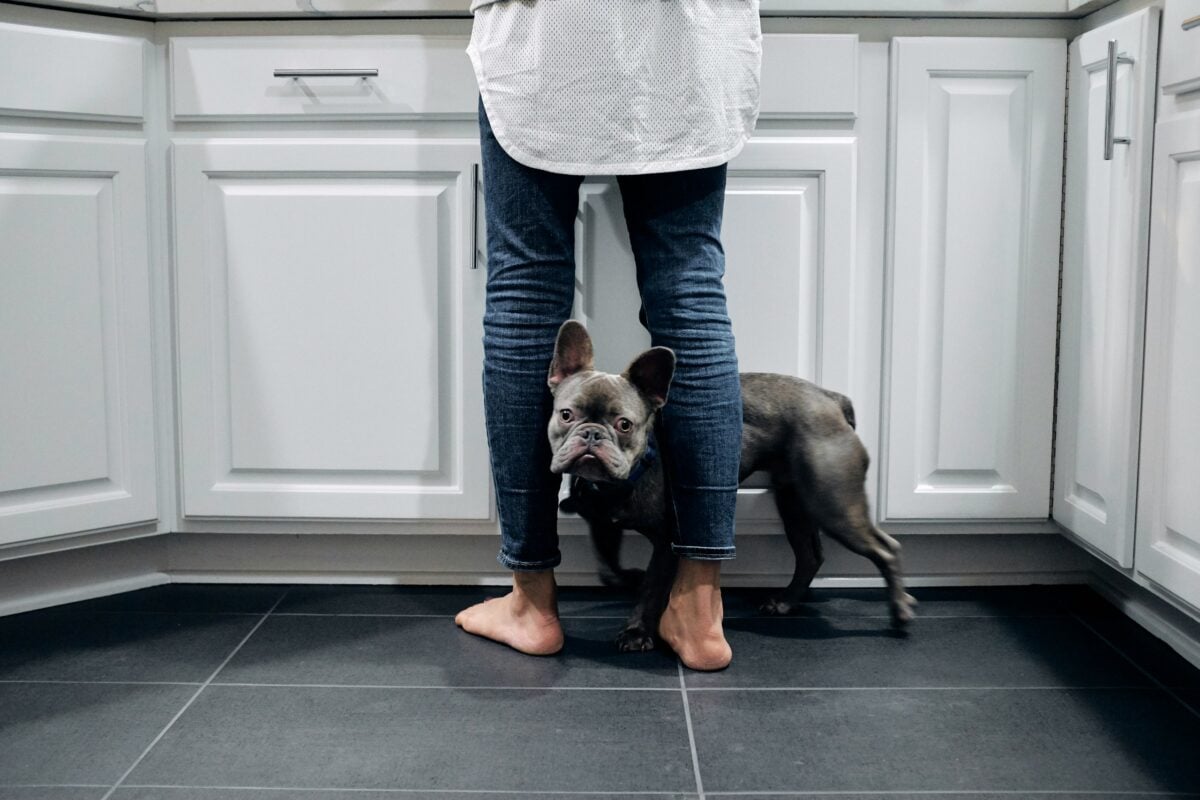
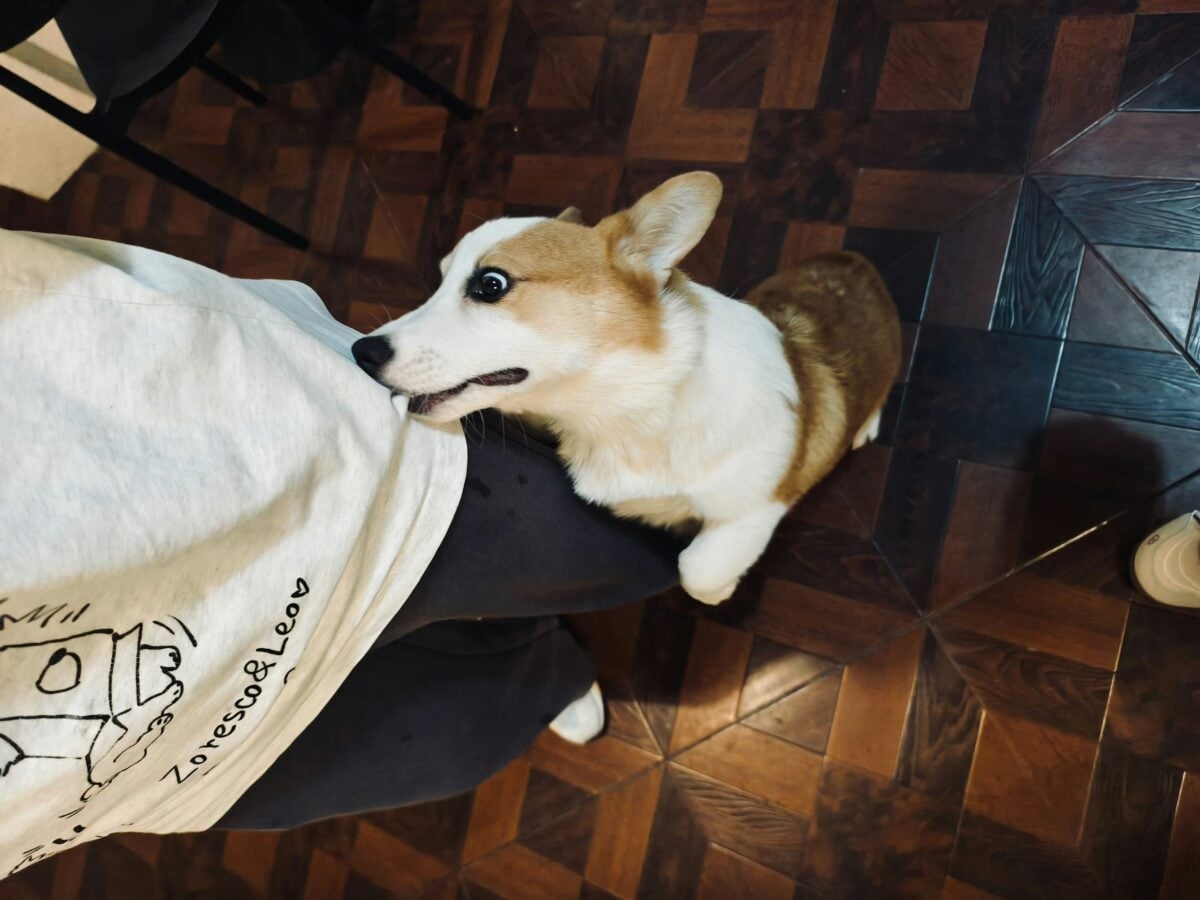
You’re standing in the kitchen when your dog walks over, presses their whole body against your leg, and just… stays there.
Table of Contents
Is your dog asking for affection? Feeling nervous? Trying to get your attention? Or could something about the behavior have changed? The surprising part is that the same leaning behavior can mean very different things depending on what happens before and after it—and what the rest of your dog’s body is doing.
The good news? Most dog leans are completely normal and, honestly, kind of sweet. This article will walk you through how to tell the difference.
What Does It Mean When Your Dog Leans Against You?
A dog leaning against you isn’t always saying the same thing. Sometimes it’s a sweet request for affection, while other times your pup might be looking for reassurance, trying to get your attention, or communicating something less obvious.
Want our human-written content to rank above AI-generated garbage? Help us out by clicking this button!
The secret is in how they lean and what the rest of their body is telling you. A relaxed dog melting against your legs may have a very different reason for leaning than one who’s stiff, nervous, or suddenly doing it more often.
Let’s look at what those different leans can reveal.
6 Different Types of Leans & What They Really Mean
From affectionate cuddles to nervous nudges, dogs have plenty of reasons for leaning against their favorite humans. Here are six common explanations and the clues that can help you tell them apart.
1. Relaxed Leaning: Your Dog’s Version Of A Hug
If your dog’s body is loose, their face looks relaxed, and they seem comfortable staying close to you, the lean is likely a friendly request for contact, attention, or reassurance. You may also notice a soft tail wag, relaxed ears, or a contented sigh.
Sometimes dogs lean on you for the same reason people sit shoulder-to-shoulder on the couch or reach for a hug after a long day. They just want to feel close to someone they love.
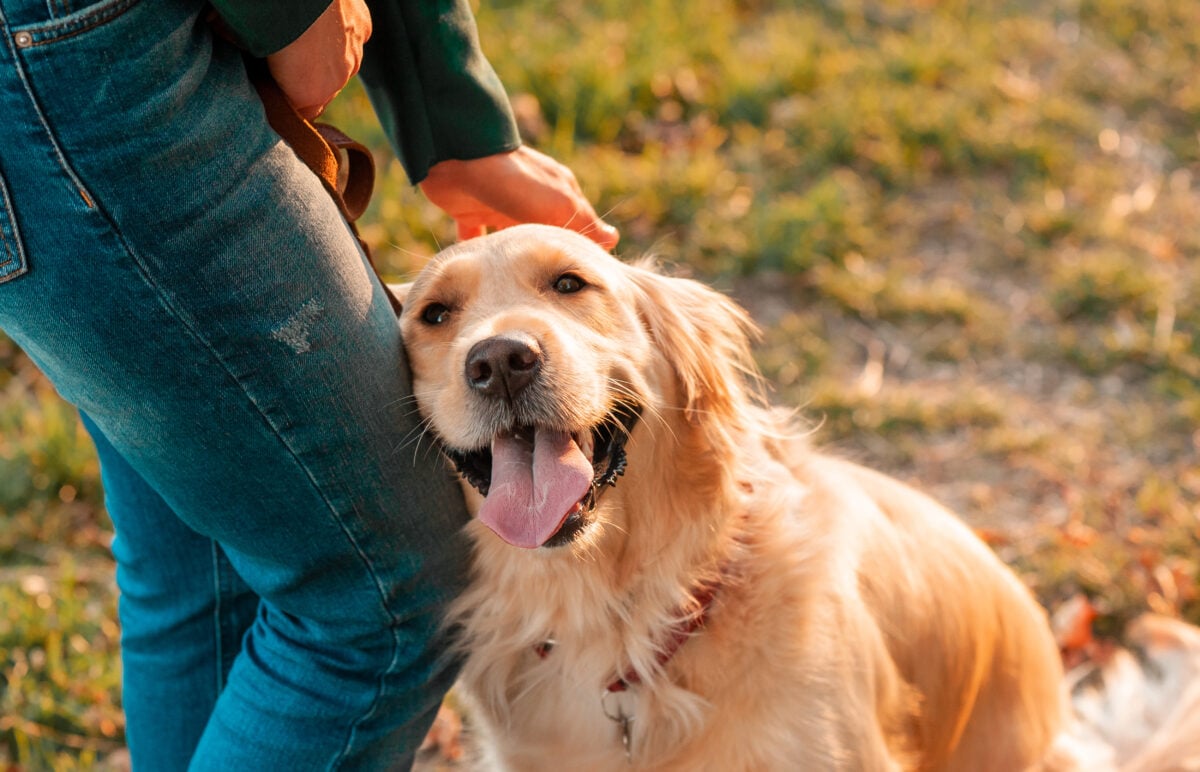
Many affectionate dogs naturally seek physical contact as a way to connect. Some curl up beside you, some put their head in your lap, and some full-body leaners seem determined to fuse themselves to your leg.
Then there’s what I like to call the slow-motion collapse. Usually, it happens during pets or cuddle time. Your dog gradually gets heavier, lets out a dramatic sigh, and slowly melts into you as though they’ve completely forgotten how to hold themselves upright. It’s often a sign they’re relaxed, comfortable, and thoroughly enjoying the attention.
Physical touch also releases feel-good hormones associated with bonding and relaxation. That’s one reason many dogs lean most often during calm, quiet moments like:
- While being petted
- During couch time
- After you come home
- When they’re sleepy or winding down for the night
Dogs that lean affectionately often follow their humans from room to room, sleep pressed against you, or constantly seek physical contact throughout the day.
Is Your Dog a Little Extra Attached?
Leaning against you might be just one of the ways your pup shows how much you mean to them. From following you around the house to demanding a spot right next to you, dogs have all kinds of ways of showing affection. Learn more about the signs your dog loves you and how to recognize when your dog has imprinted on you.
2. Anxious Leaning: Your Dog Thinks You’re Their Safe Place
A dog that leans against you when it feels nervous or anxious may seem much more tense. Look for trembling, panting, lip licking, tucked ears or tail, pacing, or repeatedly trying to stay close to you. In these situations, leaning may be a way to seek security rather than simply ask for affection.
You may notice your dog pressing against you more during stressful situations, like thunderstorms, crowded places, vet visits, or your first trip to a busy dog park. In many ways, dogs use trusted humans as emotional anchors. Physical contact can help them feel calmer and more grounded when something around them feels uncertain. This is especially common in sensitive or stressed dogs.
More on this: Dogs with separation anxiety can also be big leaners to stay in constant physical contact with the people they trust most. If your dog struggles to settle alone, panics when separated from you, or seems emotionally distressed without constant contact, it may help to learn more about separation anxiety in dogs and other common signs of dog anxiety.
3. The Professional Lean: For Some Dogs It’s Natural
Some dogs seem especially determined to turn their humans into a personal backrest. Certain breeds and individual dogs are known for being particularly people-oriented and physically affectionate, making leaning a common part of how they interact with their families.
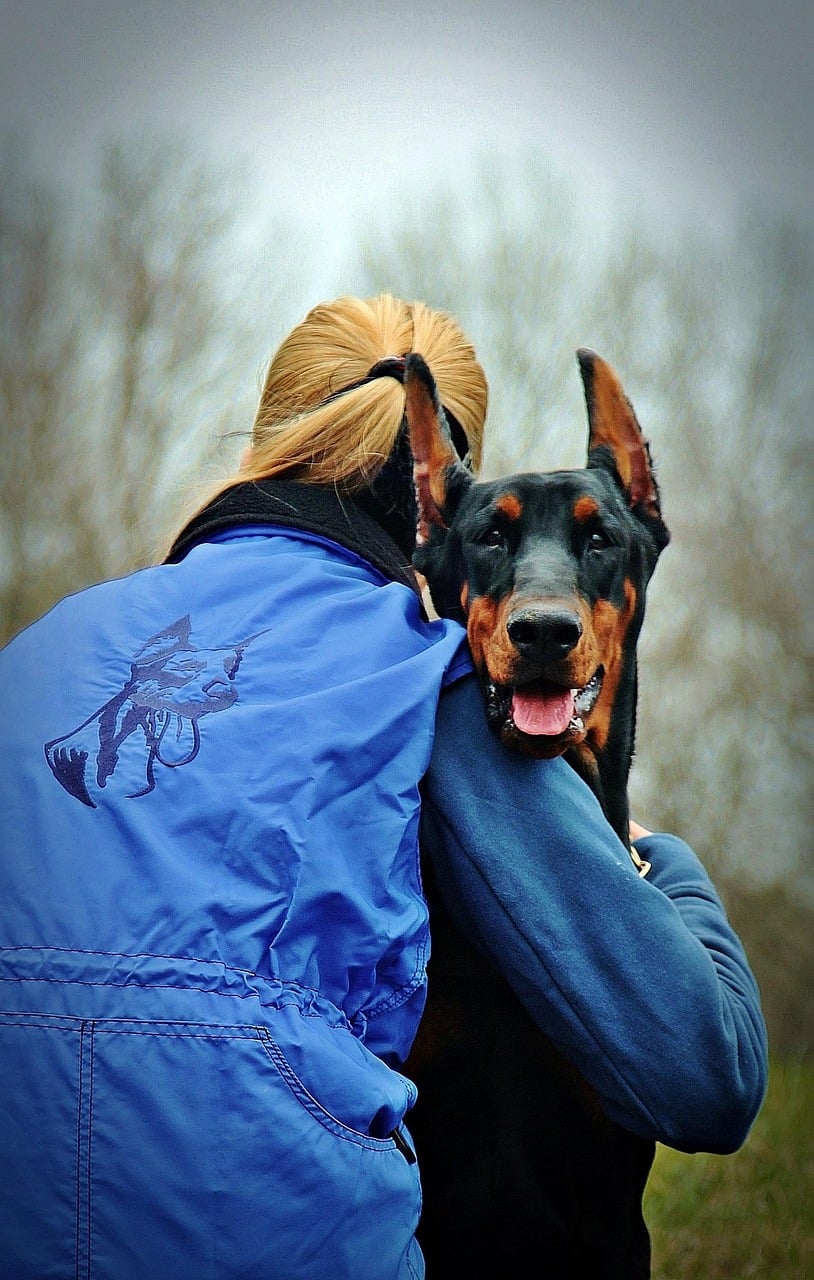
The classic example is the Doberman, whose tendency to press against their person has earned the behavior the nickname “the Doberman lean” or “Velcro dogs.” Different breeds tend to show affection in different ways. For example:
- Herding breeds, like Border Collies, may show affection by “helping,” supervising, or constantly trying to stay involved in what you’re doing.
- Guardian breeds may watch you from a distance or quietly place themselves between you and something they view as unusual.
- Companion breeds often want to snuggle, curl up beside you, or stay in constant physical contact.
Dobermans and Greyhounds are probably two of the most legendary “leaners.”
Other dogs known for leaning heavily on their favorite humans include affectionate, large breeds like Bernese Mountain Dogs, Great Danes, Boxers, Labrador Retrievers, and Golden Retrievers. Smaller companion breeds, like Chihuahuas and Cavaliers, are often more likely to express attachment through full-on cuddling or lap sitting instead of the dramatic standing lean.
Watch: This Doberman demonstrates the classic “Dobie lean” by pressing its body against its owner as a sign of affection and loyalty.
4. Attention-Seeking Lean: ‘Pay Attention to Me!’
Not every lean is deep or emotional. Sometimes your dog is simply trying to get your attention. Dogs quickly learn which behaviors get a reaction from their humans, and if leaning against your leg reliably leads to pets, eye contact, baby talk, treats, or being invited onto the couch, many dogs start doing it on purpose.
Dogs asking for attention may also:
- Paw at you
- Mouth your hands or clothes
- Stare directly at you
- Nuzzle you
- Rest their head on you
- Lick your face
- Follow you from room to room
This is especially common when dogs want food, playtime, affection, or general interaction.
Attention-seeking behavior is usually harmless unless it becomes excessive or demanding. If your dog becomes pushy, anxious, or unable to settle without constant interaction, it may help to encourage more independence and calm downtime throughout the day.
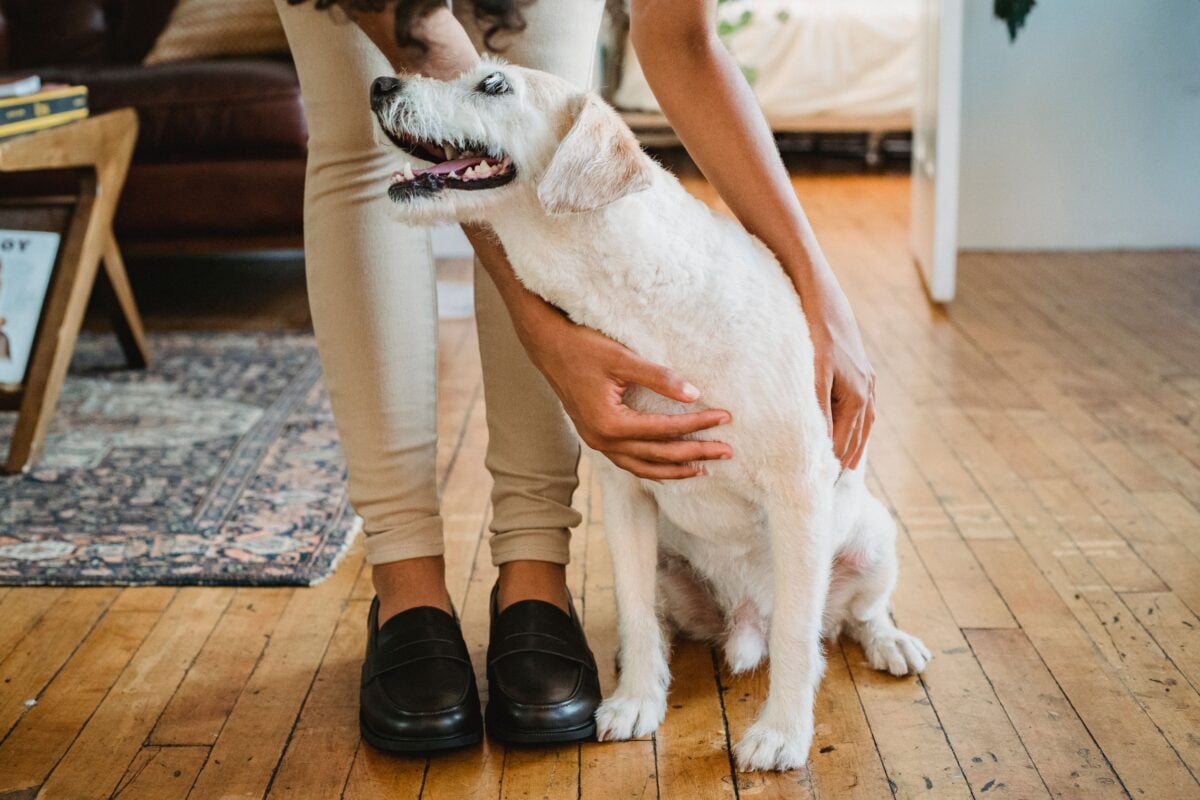
5. Possessive or Guarding Lean: Your Dog Is On Alert
Leaning can sometimes occur alongside guarding behavior, particularly when another person or dog approaches. A stiff body, hard stare, blocking, growling, or attempts to prevent someone from getting close are more important clues than the lean itself. If these behaviors occur together, treat the situation as potential guarding rather than assuming your dog is simply being affectionate.
On its own, this behavior is not always a cause for concern. But watch for signs commonly associated with resource guarding. It can develop around food, toys, sleeping spaces, or even people. Some dogs become so attached to one person that they start guarding that relationship from others, often without the owner realizing it at first.
Left unaddressed, the behavior can escalate over time and potentially become dangerous for both people and pets. That’s why it’s important to recognize the signs early and work on the behavior before it becomes more intense.
If this sounds familiar, our guides on resource guarding in dogs, sudden aggression in dogs, and aggressive dog training tips may help you better understand what’s going on.
Watch: This owner explains how their dog’s leaning behavior was linked to resource guarding and over-attachment, along with the steps they used to improve the behavior safely.
6. Uncomfortable or Painful Leaning: Is Something Wrong?
Leaning alone doesn’t mean your dog is in pain, but a sudden change in how often or how heavily they lean deserves attention. A dog experiencing discomfort may press against you for support, avoid certain movements, or struggle to get comfortable.
Watch for stiffness, limping, difficulty getting up, reluctance to climb stairs, sensitivity to touch, or changes in activity. If your dog’s leaning changes alongside other physical symptoms, contact your veterinarian.
Myth Check: Is Leaning A Sign Of Dominance?
Despite some older dog-training myths, most dogs aren’t trying to “dominate” their owners when they lean against them. In most cases, leaning signals affection, comfort, attention-seeking, trust, or emotional attachment. Body language matters much more than the leaning itself.
Why Does My Dog Lean on Me in Certain Situations?
Your dog’s reason for leaning can change depending on what’s happening around them. The same behavior can mean something different during a cuddle, at bedtime, around unfamiliar people or dogs, or when your dog feels frightened. These common situations can help you better understand what your dog may be communicating.
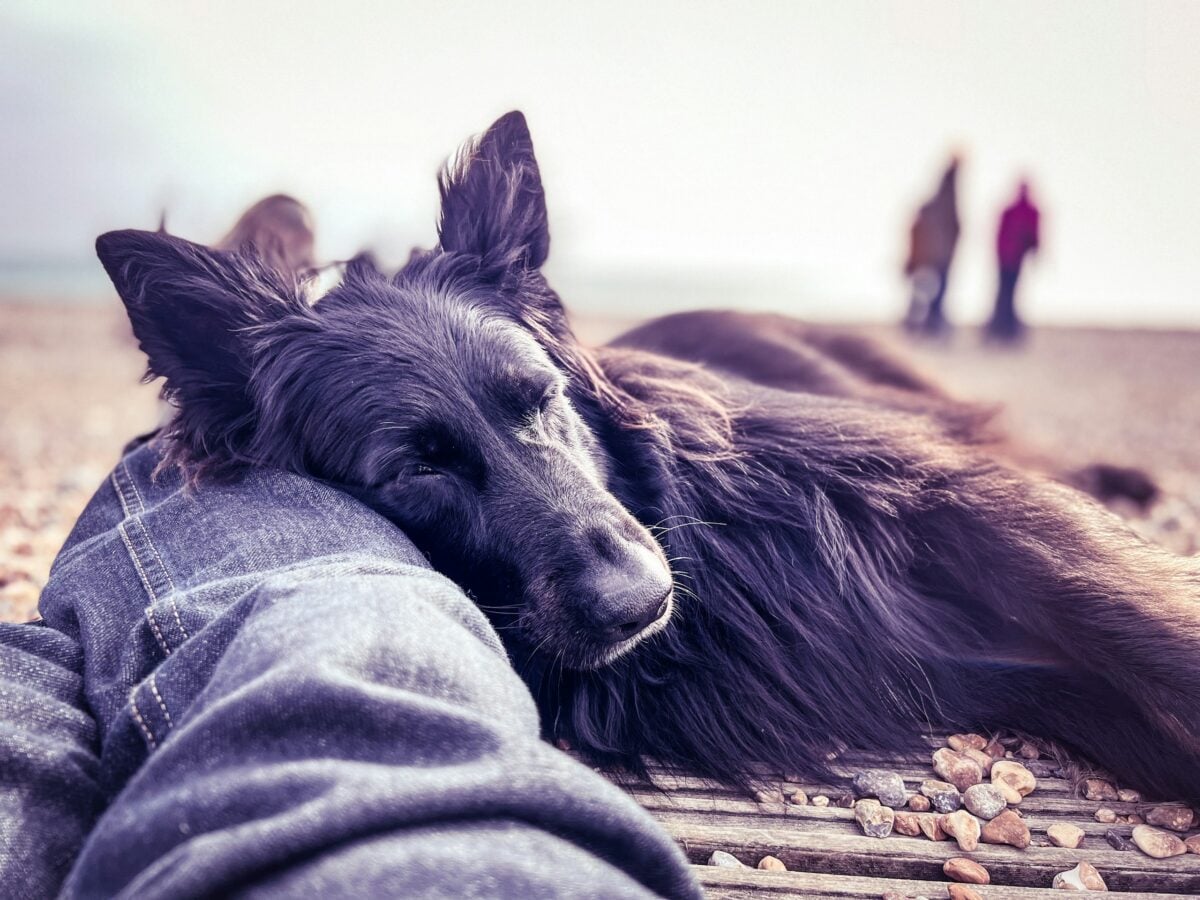
Lean on Me While I Pet Them?
If your dog presses closer while you pet them, with a loose body and relaxed expression, they may simply be enjoying the interaction and seeking more physical contact. If they become tense, move away, or seem uncomfortable when touched, pay attention to those signals instead.
Lean on Me While Sleeping?
Some dogs like to sleep with their bodies touching their favorite people. Leaning against you while resting can simply be a preferred sleeping position or a way to stay close and comfortable.
Lean on Me Around Strangers or Other Dogs?
Leaning around unfamiliar people or dogs can help your dog stay close to you when they’re uncertain. Watch the rest of their body language: a relaxed dog may simply be checking in with you, while stiffness, staring, growling, or blocking can point to fear, stress, or guarding.
Lean on Me When They’re Scared?
During thunderstorms, fireworks, vet visits, or other stressful situations, your dog may press against you for reassurance. Look for other signs of fear, such as trembling, panting, tucked ears or tail, pacing, or attempts to hide.
Suddenly Lean on Me More Than Usual?
If your dog has suddenly become your permanent shadow, pay attention to what else has changed. A new habit of leaning can be connected to stress, aging, or physical discomfort. We’ll cover the warning signs to watch for below.
What Your Dog’s Body Language Reveals About Their Lean
Not all leans tell the same story. A dog pressing against your legs with soft eyes and a relaxed body is communicating something very different from one who’s stiff, trembling, or uncomfortable. The trick is to look at the whole dog, not just the lean.
| Type Of Lean | Body Language To Watch For |
|---|---|
| Happy & relaxed | Loose posture, soft eyes, relaxed ears, gentle tail wagging, or a contented sigh. Your pup is probably enjoying the closeness. |
| Nervous or anxious | Tucked tail, trembling, pinned-back ears, panting, lip licking, or pacing. Your dog may be seeking reassurance. |
| Guarding or possessive | Stiff posture, hard staring, freezing, growling, or blocking someone from approaching. These can signal discomfort or guarding behavior. |
| Uncomfortable or painful | Stiff movements, limping, sensitivity to touch, difficulty standing, or reluctance to move. Physical discomfort may be contributing to the behavior. |
Remember, context matters. A wagging tail doesn’t automatically mean happiness, and even affectionate dogs can feel uncomfortable in certain situations. Look for combinations of signals and changes from your dog’s normal behavior.
When a Sudden Increase in Leaning Might Be Something More
Has your dog suddenly turned into a four-legged shadow? A little extra clinginess isn’t always cause for concern, but a noticeable change in leaning habits can sometimes signal that something else is going on. Here are four possibilities worth considering.
- Pain or discomfort: Increased leaning may occur alongside stiffness, difficulty getting up, reluctance to climb stairs or jump, limping, sensitivity to touch, or reduced activity.
- Aging: Older dogs may become more dependent on their people as changes in mobility, hearing, vision, or cognitive function affect how comfortable and secure they feel.
- Anxiety or stress: A dog may become more clingy after moving, welcoming a new pet or family member, changing routines, or going through a frightening event.
- Illness: If increased leaning happens with loss of appetite, lethargy, vomiting, changes in drinking or bathroom habits, breathing changes, or other unusual behavior, don’t assume it’s simply a need for extra affection.
A sudden behavioral change doesn’t necessarily mean something is wrong, but if the change persists or occurs alongside other concerning signs, talk with your veterinarian.
Could Pet Insurance Help With Unexpected Health Problems?
Behavioral concerns can become expensive quickly if they require veterinary visits, medications, trainers, or long-term anxiety management. That’s one reason many owners choose to explore pet insurance coverage for dogs before unexpected health or behavioral issues arise.
Pet insurance may help cover eligible costs, depending on the policy. Coverage varies, and pre-existing conditions are generally excluded, so it’s worth understanding what’s included before your pup needs care.

Frequently Asked Questions
Dogs have many oddly specific ways of showing affection, trust, stress, and attachment, and “the lean” is one of the most common. Below are answers to some of the questions owners ask most about why dogs press against people, lean on their legs, or suddenly become extra clingy. Don’t see your question? Comment below, and we’ll get back to you!
Why Does My Dog Lean On Me and Then Walk Away?
A brief lean doesn’t necessarily mean your dog wants prolonged contact. They may be checking in with you, asking for a moment of attention, or simply enjoying a quick touch before returning to whatever they were doing.
Why Do Big Dogs Lean More Than Small Dogs?
Large breeds are often more physically expressive and easier to notice when they lean because of their size and weight. Many large breeds, like Dobermans, Great Danes, Golden Retrievers, and Labradors, are also naturally affectionate and people-oriented.
Why Does My Dog Lean Against Me But Not Other People?
Dogs develop individual relationships and preferences, so your dog may seek more physical contact from the person they interact with most or associate with particular activities. It doesn’t necessarily mean your dog dislikes everyone else.
Why Does My Dog Lean Against My Legs?
Your legs are an easy place for a dog to make physical contact while still watching what’s happening around them. If your dog is relaxed, it may simply be a comfortable way to stay close while you stand or move around.
Should I Stop My Dog From Leaning On Me?
Not necessarily. In most cases, leaning is a harmless sign of affection or attachment. However, if the behavior becomes obsessive, demanding, anxious, or possessive, encourage more independence and address any underlying stress or guarding behaviors early.
Still Decoding Your Dog’s Weird Little Habits?
Dogs have a funny way of keeping us guessing. One minute they’re leaning against us like a furry weighted blanket, and the next they’re doing something that leaves us scratching our heads.
If you love figuring out what makes your pup tick, check out these other curious canine behaviors:
- Why Your Dog Stares At You While Pooping: Find out why your pup insists on making eye contact during bathroom breaks.
- Why Dogs Cover Their Face: Discover what’s behind that adorable doggy facepalm.
- Why Dogs Sleep On Their Backs: Learn what those belly-up sleeping positions might reveal.
Does Your Dog Have a Signature Lean?
Is your pup a gentle leaner, a full-body snuggler, or the kind who gradually puts their entire weight against you until you’re practically holding them up? Tell us about your dog’s favorite leaning move in the comments below. We’d love to hear your stories!