When you purchase through links on our site, we may earn a commission at no extra cost to you. Learn more.
You lean down to say hello, and suddenly your dog’s tongue is all over your face. Sometimes it’s a quick lick. Other times, it feels like a full-on slobber assault.
Table of Contents
So why do dogs lick your face?
Maybe it happens when you walk through the door, when you’re upset, or right after you’ve watched them investigate something outside you’d prefer not to think about.
We often call them “dog kisses,” but face licking doesn’t always mean the same thing. While affection can certainly be part of it, dogs lick for several reasons, and the best clue is often what’s happening around the behavior.
Want our human-written content to rank above AI-generated garbage? Help us out by clicking this button!
Understanding what’s driving your dog’s licking can help you decide whether to allow it, redirect it, or stop it altogether.
Start Here: Is Face Licking Normal Or A Sign Of Something Else?
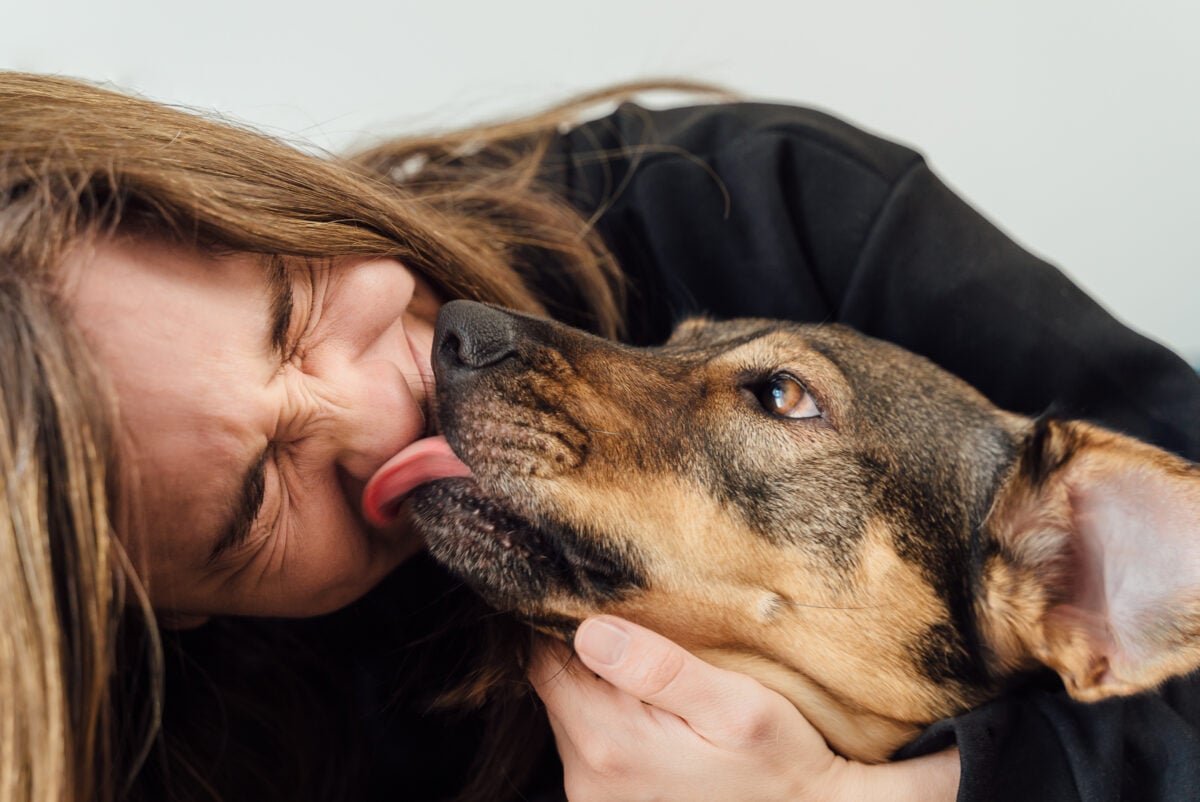
In most cases, face licking is completely normal dog behavior. It’s one of the ways dogs communicate, bond, and interact with the people they trust most.
That said, how and when your dog licks your face matters. A quick lick when you get home, during cuddles, or after you’ve been away is very different from constant, frantic licking that feels difficult to interrupt.
Look at what’s happening before and during the licking. Is your dog loose and wiggly, or are their ears back and body stiff? Do they lick once or twice and settle, or keep going while whining, pawing, or climbing, licensed via you? Those context clues can tell you much more than the licking alone.
Before deciding whether you want to allow face licking, it helps to understand what’s driving the behavior. Once you know the reason, it becomes much easier to set boundaries without confusing or frustrating your dog.
Below, we’ll break down the most common reasons dogs lick faces, when licking can become a problem, and how to gently discourage it if it’s not something you enjoy.
Could Excessive Licking Ever Signal A Health Issue?
Most face licking is completely normal. But a sudden or significant change in your dog’s licking can sometimes point to an underlying health issue.
Dental pain, nausea, allergies, anxiety, and other conditions can all contribute to increased licking. If the behavior is new, intense, or accompanied by other changes in your dog, it’s worth mentioning to your veterinarian.
Figuring out what’s behind a behavior change may involve an exam, blood work, allergy testing, dental care, or other diagnostics, and those costs can add up quickly. Pet insurance can help cover eligible testing and treatment for newly diagnosed conditions, making an unexpected vet visit easier to manage.
If you’re considering coverage, explore our in-depth guide to the best pet insurance plans for dogs to compare options and see what’s typically covered.

Why Dogs Lick Faces At All (The Behavioral Science)
Licking is a natural form of communication for dogs. From the time they’re puppies, dogs use their mouths to interact with their world, their littermates, and their mother. It’s one of the earliest ways they learn to bond, seek care, and exchange information.
Unlike humans, dogs don’t have hands to explore or connect. They rely on their mouths, noses, and tongues to investigate, self-soothe, and communicate socially. Face licking taps into all three.
That makes licking a surprisingly multipurpose behavior. The same action can be used for social connection, attention, appeasement, sensory investigation, or simply because your post-workout forehead tastes like a salt lick.
Dogs, Saliva, & The Human Microbiome
Research suggests that living closely with dogs may influence the human microbiome, especially during early life. Studies have found differences in gut bacteria among children and adolescents who live with dogs compared with those who don’t.
One study found that adolescents who lived with dogs showed differences in gut microbiota associated with reduced depression and increased sociability, with microbial transfer likely occurring through everyday contact, including saliva exposure. Other research has found that infants exposed to household pets show measurable changes in gut microbiota during early development.
These findings don’t mean face licking is necessary or beneficial. They simply show that sharing our homes and lives with dogs can affect us in some surprisingly microscopic ways.
What Your Dog Is Actually Saying When They Lick Your Face
Dogs don’t lick faces for just one reason. The meaning depends on timing, intensity, and what’s happening around them. Here are the most common explanations, starting with the ones owners recognize fastest.
1. Attention-Seeking (Learned Behavior)
For many dogs, face licking works. It interrupts what you’re doing, pulls your focus back to them, and almost always triggers a response, even if that response is telling them to stop.
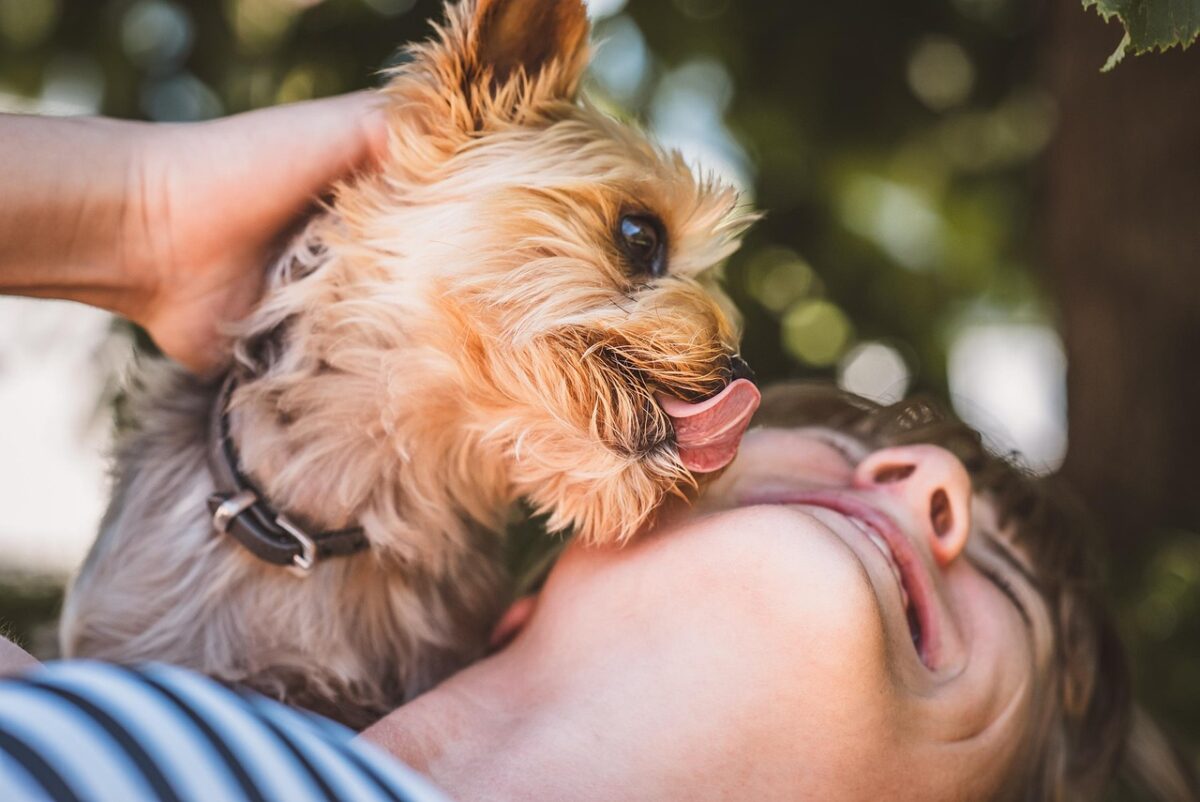
Dogs are excellent pattern learners. If licking your face consistently gets a reaction, they learn that it’s a reliable way to get engagement. For example:
- You pet them while protesting: They’ve hit the attention jackpot.
- You laugh: They got a reaction.
- You push them away: To an excited dog, that may feel like interaction.
- You tell them, “Stop licking me!”: You’re talking to them.
You may also notice the licking paired with pawing, whining, nudging, climbing onto you, or repeated attempts after you’ve turned away. Those extra efforts are a good clue that your attention may be the real goal.
If this sounds familiar, your pup might be bored, a little lonely, or just craving interaction. Consider redirecting that energy with a quick walk, play session, or something that keeps their brain and paws busy.
See our reviews of the best interactive dog toys and brain games for dogs to keep your pup mentally and physically stimulated.
2. Affection & Social Bonding
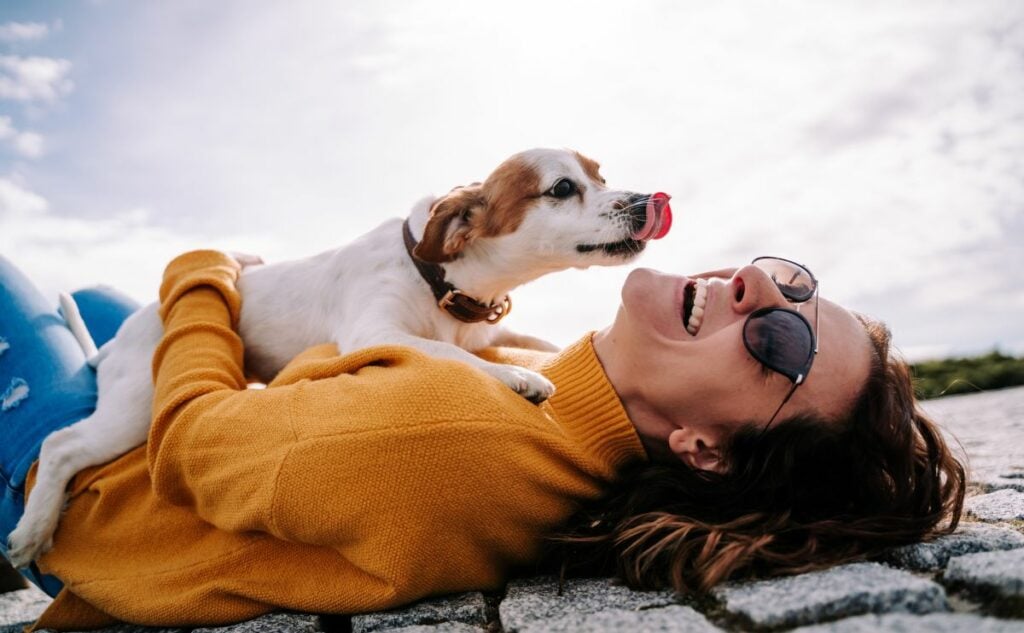
Face licking can be a genuine sign of affection. Many dogs lick the people they feel closest to during greetings, cuddling, or calm bonding moments.
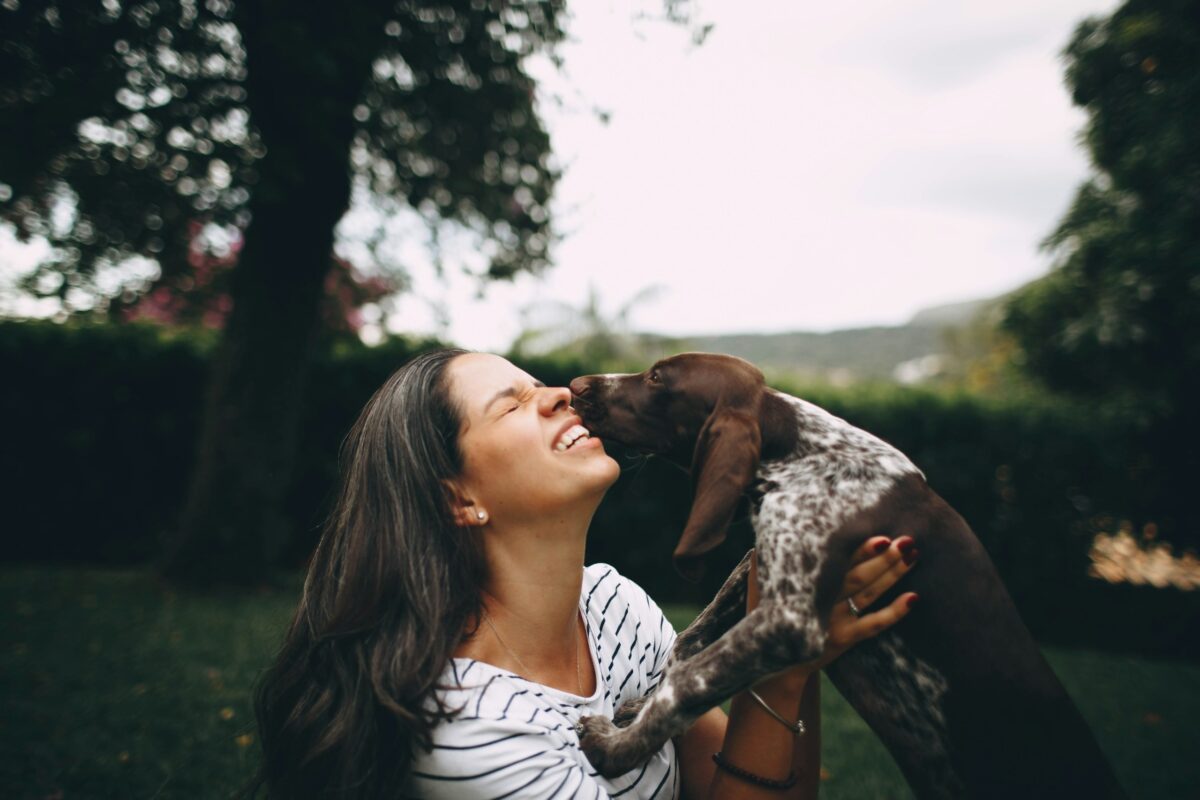
If your dog gives you a few gentle licks while you’re lying, licensed via the couch together, with a loose body and relaxed expression, that looks very different from frantic licking paired with pawing, whining, or repeated attempts to get your attention.
This behavior traces back to puppyhood, when licking is part of social connection between a mother and her litter. When a dog offers gentle, relaxed licks and settles afterward, it’s often their way of reinforcing trust and closeness.
3. Instinct From Puppyhood
In early development, puppies lick their mother’s muzzle to stimulate feeding and maintain social bonds. While adult dogs don’t rely on this behavior for survival, the instinct itself remains.
As dogs mature, that early licking behavior becomes part of broader social communication. Humans become part of the dog’s social world, and our faces naturally become a focal point.
4. Emotional Regulation
Licking can also help dogs manage heightened emotions. Some dogs become more licky when they’re excited, overstimulated, nervous, or simply having trouble settling.
You might notice this when an exciting visitor arrives, during an especially enthusiastic greeting, or when your dog gets wound up during play. In these moments, the licking may be less about sending you a specific message and more about having an outlet for all that emotional energy.
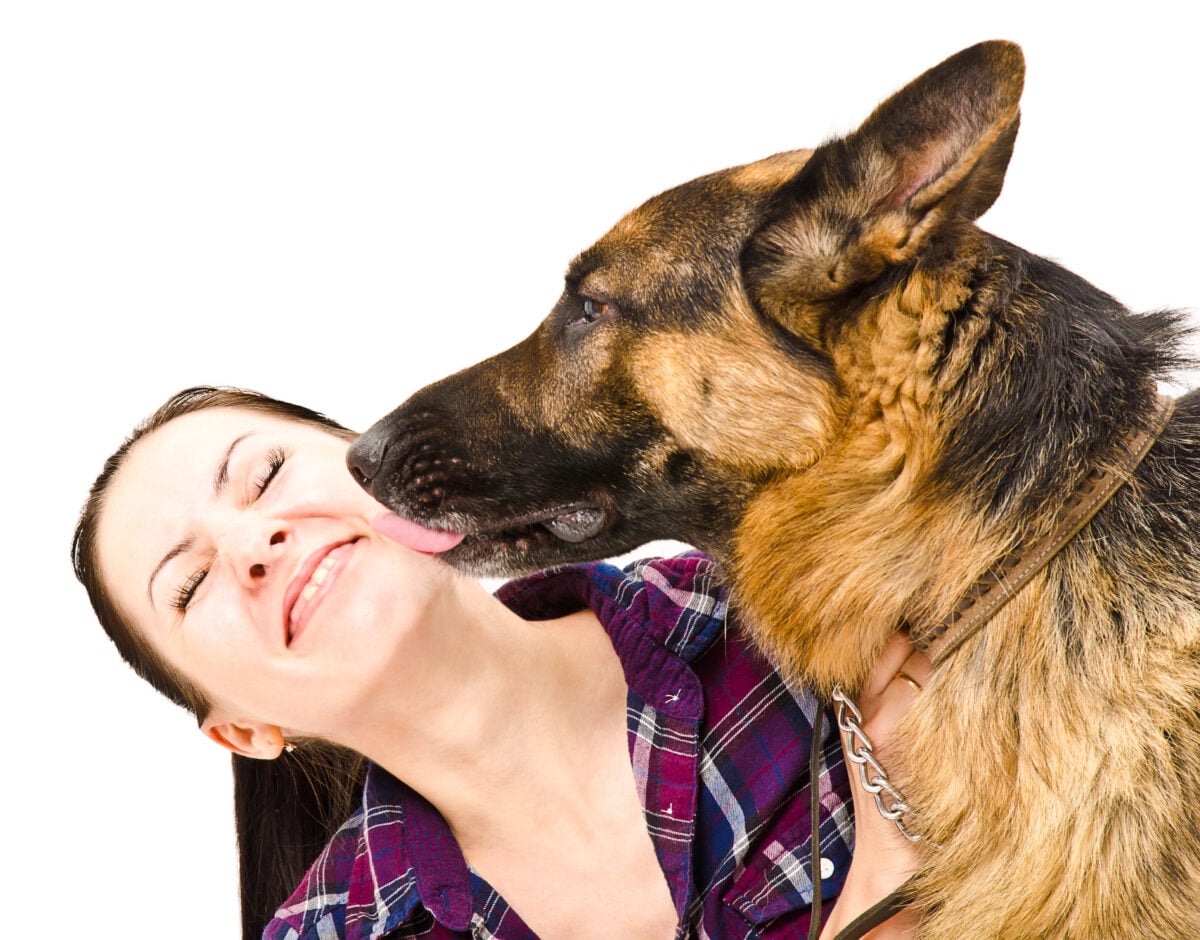
The context can help you tell the difference. A dog who licks excitedly while bouncing around, wagging, or climbing all over you is giving you a very different picture from one who licks while showing signs of discomfort or stress.
5. Appeasement
Face licking can also be an appeasement signal, particularly during an interaction that makes your dog feel uncertain or uncomfortable. A dog may lick your face when you lean over them or speak firmly. This isn’t submission in a dominance sense, but rather a conflict-avoidant communication strategy.
The biggest clue is what the rest of your dog is doing. Look for licking paired with:
- Ears pulled back
- Whale eye (showing the whites of the eyes)
- A stiff or lowered body
- Lip licking
- Yawning
- Turning their head or body away
For example, a dog who licks you while you’re leaning over them but also pulls their ears back and turns away may be asking for a little more space. That’s very different from a loose, wiggly dog enthusiastically licking you when you walk through the door.
6. Information Gathering
Dogs experience much of the world through chemical cues. Your face carries a constantly changing mix of scents related to where you’ve been, what you’ve touched, and what you’ve been doing.
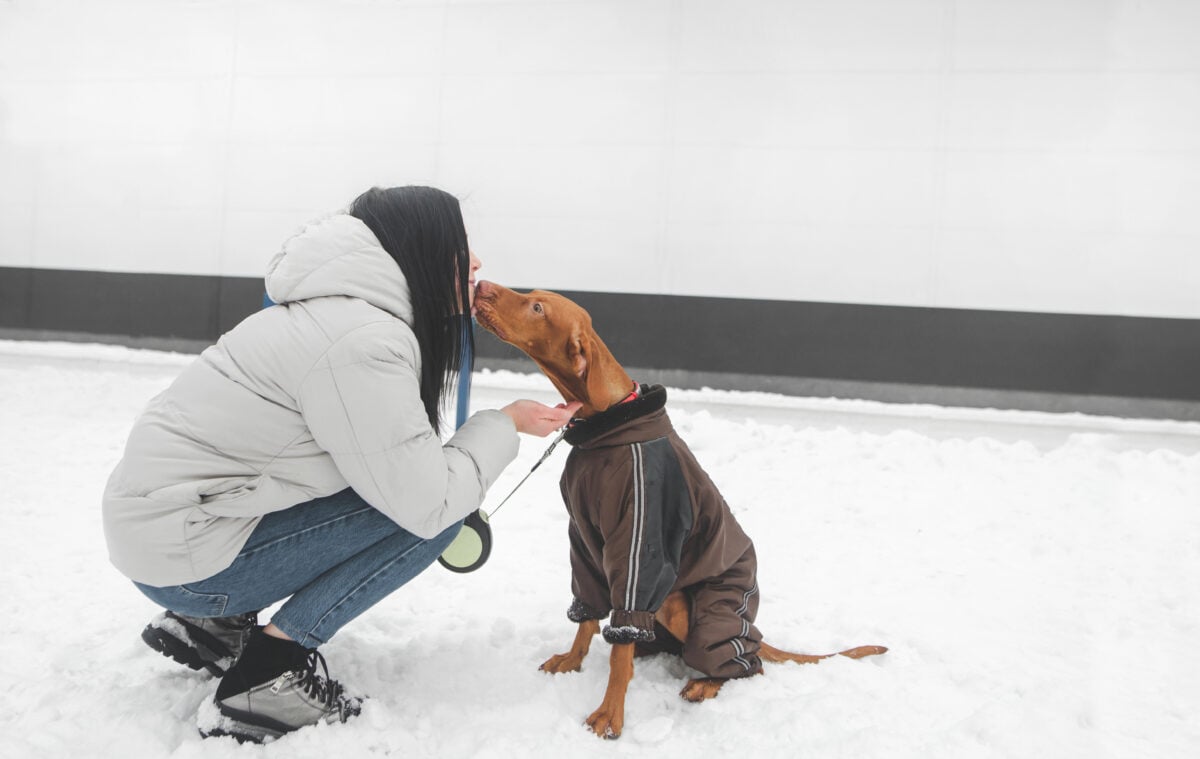
Licking gives dogs another way to investigate those changes. If you’ve been crying, for example, your dog may notice tears, changes in your scent, and differences in your voice or body language.
They may recognize that something about you is different without necessarily understanding exactly what you’re feeling.
In this context, face licking may be less about affection and more about checking out what’s changed. To your dog, your face is a highly informative surface.
7. You Taste Interesting
Sometimes the explanation really is simple: you taste interesting.
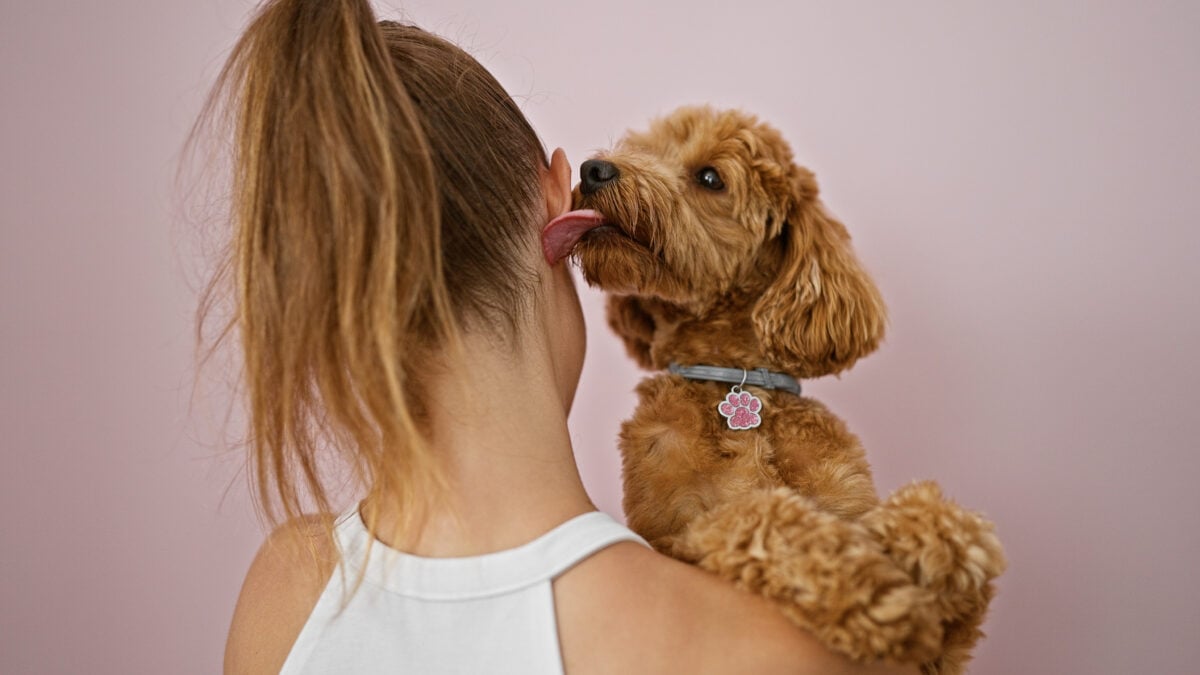
Human skin can taste salty, especially after a workout, a hot day, or crying. Food residue around your mouth, natural skin oils, lip balm, and skincare products can also make your face especially tempting to investigate.
So if your dog makes a beeline for your face right after dinner or tries to lick the sweat off you after exercising, you may not need to search for a profound emotional explanation. You might just taste fantastic.
When Face Licking Becomes Too Much
There’s no magic number of licks that separates normal behavior from excessive licking. What matters more is whether your dog’s usual pattern suddenly changes or the licking starts interfering with everyday life.
Pay closer attention if your dog:
- Suddenly starts licking much more than usual
- Seems difficult to interrupt or immediately starts again
- Appears driven to keep licking, rather than stopping after a few licks
- Starts licking other things excessively, including their paws, floors, furniture, objects, or even the air
- Has other symptoms or behavior changes alongside the licking
- Licks so much that it interferes with eating, sleeping, playing, or settling down
Excessive licking can have behavioral or medical causes. Anxiety or compulsive behavior may be involved, but nausea and other digestive problems, allergies and itchy skin, or dental and oral pain can also trigger increased licking.
If the behavior is new, persistent, or difficult to interrupt, talk to your veterinarian about what you’re seeing and when it started.
Is It Safe To Let Your Dog Lick Your Face?
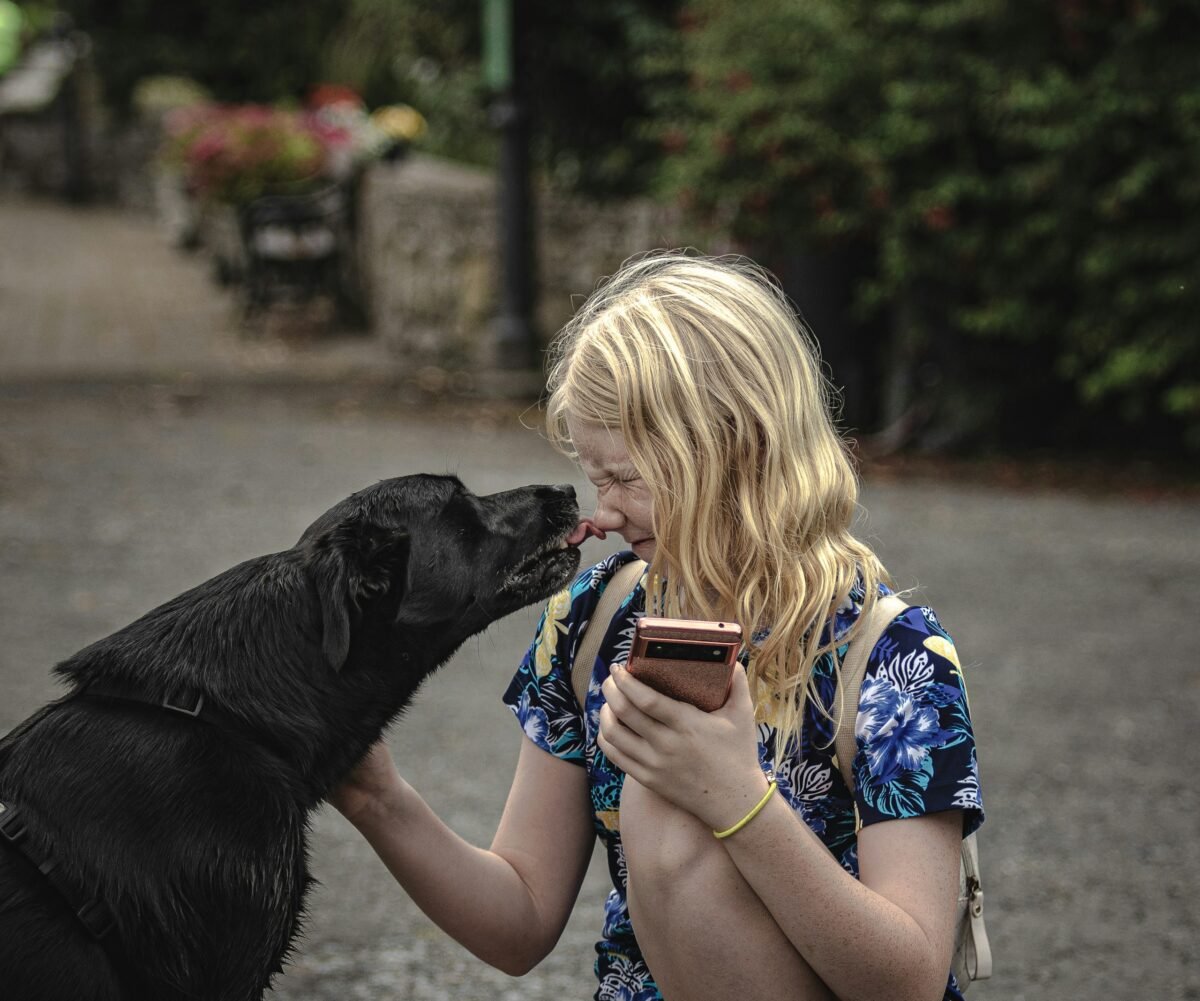
For most healthy adults, occasional face licking is low risk. But where your dog’s tongue lands matters: healthy, intact skin is one thing; your mouth, eyes, nose, or broken skin are another.
If you enjoy the occasional dog kiss, there’s usually no reason to panic. Still, it’s best to redirect licking away from mucous membranes, cuts, scratches, and irritated or open skin, where germs have an easier route into the body.
You may also want to wash the area afterward, especially if your dog is a frequent face licker.
1. Dogs’ Mouths Contain Potentially Harmful Germs
Dog saliva isn’t sterile. It can contain bacteria such as Capnocytophaga, which can occasionally be passed to humans. Serious illness from a lick is rare, but some situations warrant extra caution, including if:
- You have a cut, scratch, or other broken skin where your dog licks
- Your immune system is weakened due to age, illness, or medication
- Your dog has signs of dental disease, such as persistent bad breath, inflamed gums, or an untreated tooth infection
For most people, healthy, intact skin provides an effective barrier. But if your dog’s breath could clear a room or their gums look red and inflamed, that’s also a good reason to schedule a dental checkup — and keep the kisses away from your face in the meantime.
2. Avoid Mucous Membranes
If your dog’s tongue heads for your mouth, nose, or eyes, it’s best to redirect. These areas don’t have the same protective barrier as intact skin, making it easier for germs to enter the body.
3. Parasites Are Also A Consideration
If your dog regularly licks or eats things outside like garbage, animal feces, or dead critters — or if your pup licks their own butt — they could carry parasites such as giardia or hookworms. While transmission to humans from licking is uncommon, it’s not impossible.
Who Should Be More Cautious?
A little extra caution makes sense for babies and young children, older adults, and people with weakened immune systems. These groups may be more vulnerable to infections or complications from germs carried in a dog’s mouth.
For babies and young children in particular:
- Supervise close face-to-face interactions
- Redirect licking away from the mouth, nose, and eyes
- Keep dogs away from cuts, scratches, or irritated skin
- Encourage handwashing after close play
Dogs and kids can still share plenty of affection. The goal isn’t to keep them apart; it’s simply to keep the dog kisses away from the places where germs have the easiest way in.
Our Personal Experience With Face Licking
My dog Falkor, a Poodle-Beagle mix, acts like I’m the center of his universe. The second I walk through the door, he’s already vibrating with excitement.
It doesn’t matter if I’ve been gone for hours or just stepped outside to grab the mail. His enthusiasm is Olympic-level. His tail wags so hard I’m sure he’s one spin away from liftoff.
As soon as I free him from his crate, Falkor transforms into a licking machine. Usually, it’s a sweet, gentle “hello.” But sometimes, he gets carried away, like he’s trying to exfoliate my face with his tongue.
Sure, I’ve invested in dog toothpaste and toothbrushes because, let’s face it, no one wants stinky breath, licensed via their cheeks. But even with all the mess and the occasional overzealous licks, I wouldn’t trade those moments of pure, unfiltered love for anything in the world.
– Danielle DeGroot, Rescue Dog Mom & Canine Journal Writer
5 Tips To Stop Unwanted Face Licking (Without Punishment)
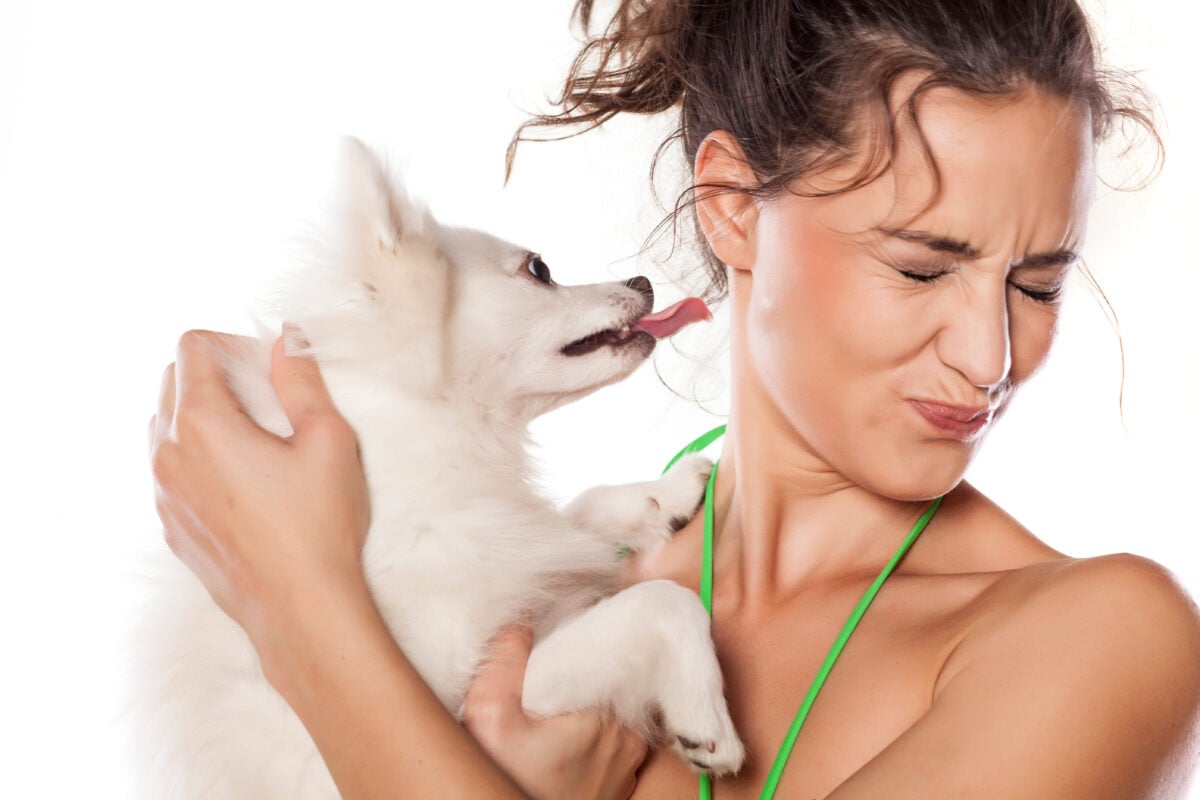
Not everyone enjoys having a dog’s tongue all over their face, and you don’t have to allow face licking just because it’s normal dog behavior. You can teach your dog other ways to greet you, ask for attention, and show affection without punishment.
These tips can also help keep enthusiastic lickers out of visitors’ faces.
1. Don’t Accidentally Reward The Licking
If your dog licks for attention, your reaction can become part of the reward. Laughing, talking, petting, playfully pushing them away, or excitedly saying “No!” may give them exactly the interaction they wanted.
Instead, keep your response boring. Calmly turn your head or shift away when the licking starts rather than turning it into a game.
2. Reward Four Paws On The Floor
For dogs who launch themselves toward faces during greetings, reward the behavior you’d rather see. When your dog approaches with four paws on the floor, give them attention, praise, or a treat.
This is especially useful when you come home or visitors arrive. Your dog learns that staying grounded gets the greeting started, while climbing toward someone’s face doesn’t.
3. Teach A Different Kind Of “Kiss”
If you don’t mind dog kisses but would prefer them somewhere other than your face, give your dog an approved target. You can teach a cue such as “kiss” that rewards them for gently touching or licking your hand instead.
Now your dog still gets a way to interact with you, but your face is no longer the target.
4. Redirect The Behavior
When you can see the licking coming, give your dog something else to do. Depending on the situation, you might:
- Offer a toy or chew
- Ask for a sit
- Use a “touch” cue and have them target your hand
- Send them to their mat or bed
This can be particularly useful for dogs who lick when they’re excited or during predictable situations like greetings.
5. Create Clear Physical Boundaries
If face licking happens most often while you’re cuddling or lying down, calmly turn your face or body away when your dog starts licking. You can also teach them to settle beside you or in a nearby spot instead of climbing toward your face.
Avoid laughing, wrestling, or dramatically pushing your dog away if physical interaction tends to excite them more. Be consistent about where affection is welcome, and make the alternative easy for your dog to understand.
Frequently Asked Questions
Do you still have questions? Here are some we get often about dog licking. If you don’t see yours here, please ask us in our comments.
What Does It Mean When A Puppy Licks Your Face?
Puppies use licking as part of their early social behavior with their mother and littermates, and that instinct can carry over to their new human family. Puppies also explore extensively with their mouths, so licking may be especially frequent while they’re young.
Why Do Dogs Lick Your Face When You Cry?
Your dog may recognize that something about you has changed when you cry. Your voice, facial expressions, body language, behavior, and even scent may all be different.
Licking could be an attempt to interact with you or a response to those unusual cues.
There’s also a much simpler possibility: tears are salty, and your dog may be investigating the taste. Several motivations can be happening at once.
Why Does My Dog Lick My Face When I’m Lying Down Or Sleeping?
Lying down suddenly puts your face within easy reach, which can be invitation enough for some dogs. If you’re asleep, licking can also be an extremely effective wake-up button.
Your dog may be looking for attention, trying to get you up for breakfast or a bathroom break, investigating smells on your skin, or simply repeating a behavior that has successfully woken you before.
Why Does My Dog Lick My Face First Thing In The Morning?
Morning licking often has a very practical motivation: your dog has learned that waking you gets the day started. Breakfast, a trip outside, playtime, and attention may all follow.
If licking reliably makes you open your eyes, speak, pet them, or get out of bed, your dog has plenty of reasons to keep using a strategy that works.
Why Does My Dog Lick Me More Than Everyone Else?
Dogs don’t necessarily behave the same way with every person in the household. Your dog may lick you more because of your relationship, your reactions, your scent or taste, or simply because licking has historically worked especially well on you.
If you’re the person who laughs, pets them, or engages every time the tongue appears, you may also have accidentally earned the household title of Most Lickable Human.
Why Does My Dog Lick My Face And Then Paw At Me?
That combination often points toward a request for interaction rather than licking alone. Your dog may want attention, play, affection, food, or something else they’ve learned you provide.
Look at what happens next. A dog who licks, paws at you, and then runs toward the door may have a very different request from one who climbs into your lap and settles against you.
Why Does My Dog Suddenly Stop Licking My Face?
Dogs can change their social habits over time, and less face licking by itself isn’t necessarily a problem. Your dog may have learned different ways to interact with you, become less excitable with age, or simply changed their preferences.
A sudden decrease is more noteworthy if it comes with other changes, such as reduced appetite, withdrawal, lethargy, reluctance to interact, or signs of mouth pain. In that case, the bigger behavior change is worth discussing with your veterinarian.
More Dog Behavior Explained
Once you start paying attention to what happens before and after a behavior, some of your dog’s stranger habits become much easier to decode. The same is true when your dog turns that tongue toward something other than your face.
Find out why dogs lick the floor, what it means when dogs lick each other’s mouths, and why your dog insists on sniffing people’s crotches when a polite hello would have worked just fine.
When does your dog turn into a licking machine? Is it when you get home, when you’re trying to relax, or seemingly whenever your face is within tongue range? Tell us about your dog’s favorite licking strategy in the comments.