When you purchase through links on our site, we may earn a commission at no extra cost to you. Learn more.
Most of our dogs would rather avoid a confrontation than start one. The tricky part for us is that they may be trying to prevent one long before we realize there’s a problem.
Table of Contents
A dog trying to say “I’d rather not” may not growl, bark, or make a scene. They might look away, move a few feet, lower their head, or suddenly find something else to do.
These behaviors are so ordinary that we often completely miss what’s happening. To a dog, they can be a way to ease an uncomfortable moment, create a little space, or keep things from escalating.
Once you know what to watch for, some very ordinary dog behaviors start looking different.
What Does “Conflict” Actually Mean To A Dog?
When we hear the word “conflict,” most of us picture something obvious: two dogs squaring off over a toy, growling at each other through a fence, or getting confrontational at the dog park.
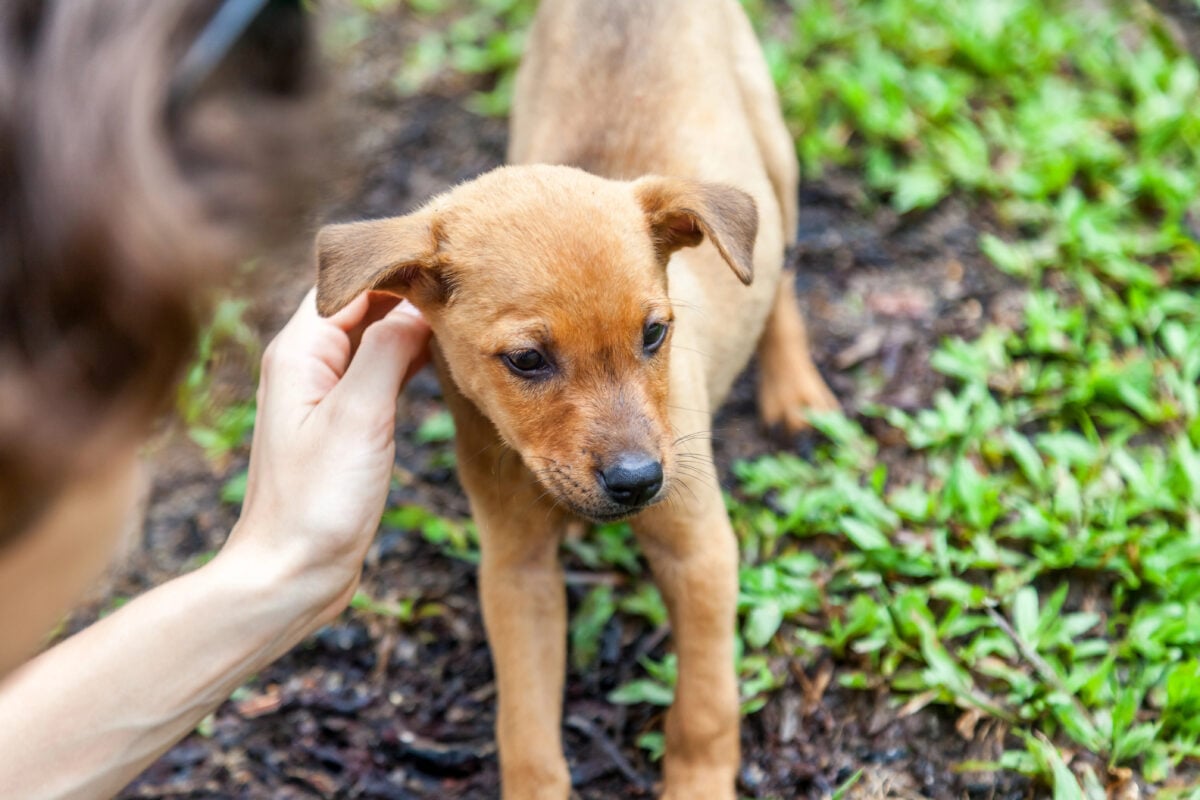
But from your dog’s perspective, conflict can start much earlier and in much more ordinary situations. It can simply mean something is happening that they’d rather change, pause, or get away from.
And that can happen with almost anyone in their world:
- With owners & family members: Being restrained, groomed, scolded, moved from a favorite spot, or having something taken away.
- With other pets at home: Navigating food, toys, beds, doorways, attention, personal space, or play that has become too much.
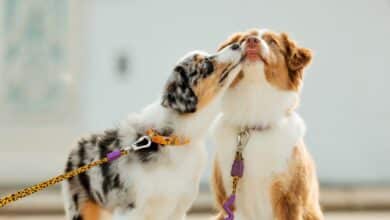
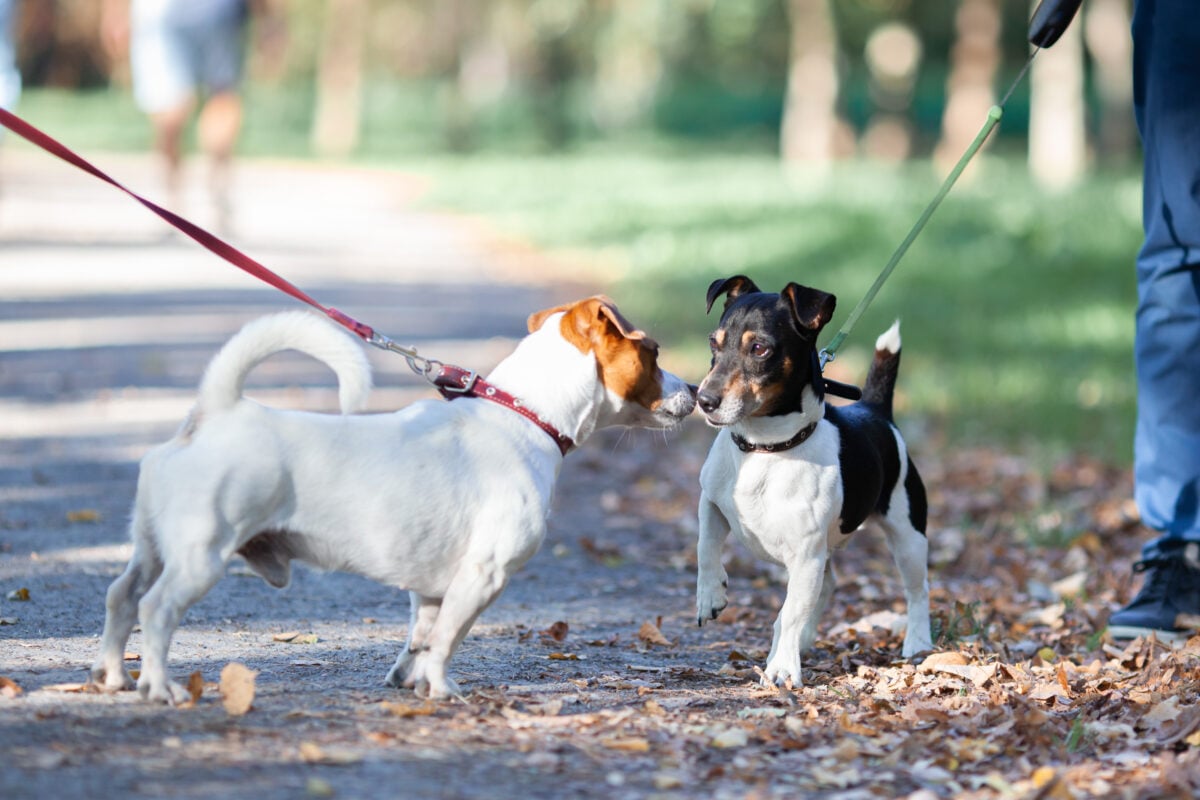
- With unfamiliar dogs: Meeting on leash, being approached too directly, getting crowded at the dog park, or dealing with an overly enthusiastic greeting.
- With visitors and strangers: Being stared at, leaned over, reached for, or expected to greet someone they aren’t ready to meet.
- With children: Being hugged, followed, grabbed, cornered, climbed on, or repeatedly approached when they’re trying to rest.
Even dogs that adore each other can occasionally want different things. One wants to wrestle; the other wants to nap. One is still investigating the food bowl; the other has arrived to conduct an inspection.
That’s why the behavior itself is only part of the clue. What was happening when it appeared matters just as much.
As we go through the behaviors below, watch three things: what happened immediately before it, what changed in your dog’s body, and whether another signal followed. A single movement can be ambiguous. Several changes appearing together can tell you much more.
12 Things Dogs Do When They’re Trying To Avoid Conflict
Dogs have plenty of ways to say “I’d rather not” without making a scene. Some are so subtle you might barely notice them; others become harder to miss as the pressure builds.
Here are 12 behaviors worth watching for, especially when they appear during a tense, unwanted, or overly intense interaction.
1. They Look Away
You’re explaining, with considerable passion, why the kitchen trash is not a buffet. Your dog turns their head and stares somewhere else. It’s tempting to read that as guilt — or perhaps a refusal to acknowledge the prosecution’s very strong case.
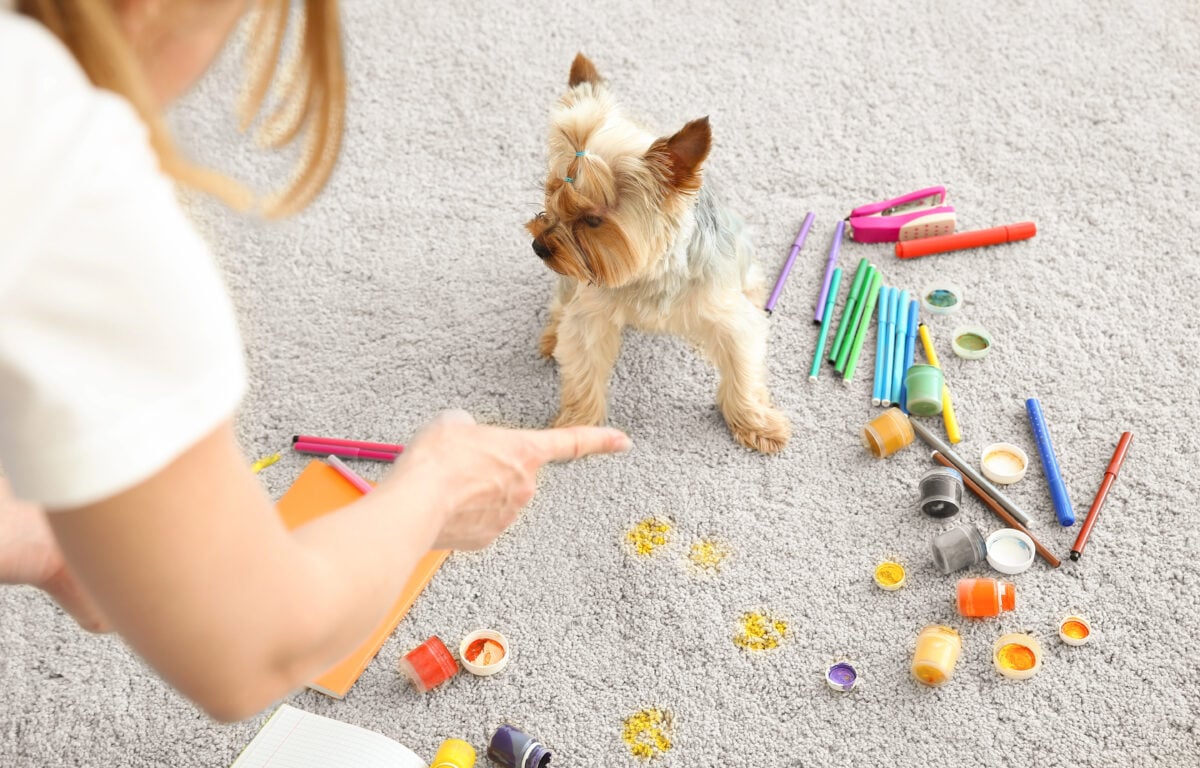
But looking away can be a simple way of taking some intensity out of an interaction. You might notice it when:
- Another dog approaches directly
- Someone leans over or stares at them
- A person gets close to their face
- Your voice or body language becomes tense
Your dog doesn’t necessarily need to leave. Simply breaking that direct face-to-face interaction can make the moment less confrontational.
2. They Turn Their Whole Body Sideways
Sometimes your dog doesn’t just look away. They rotate their entire body so they’re no longer facing the other dog or person head-on.
You may see this when two dogs meet for the first time, when a stranger approaches, or when someone reaches toward a dog who isn’t entirely comfortable with the attention.
Watch for a dog who:
- Angles their body instead of standing face-to-face
- Turns one shoulder toward the person or dog
- Curves away during an approach
- Keeps their body angled during a greeting
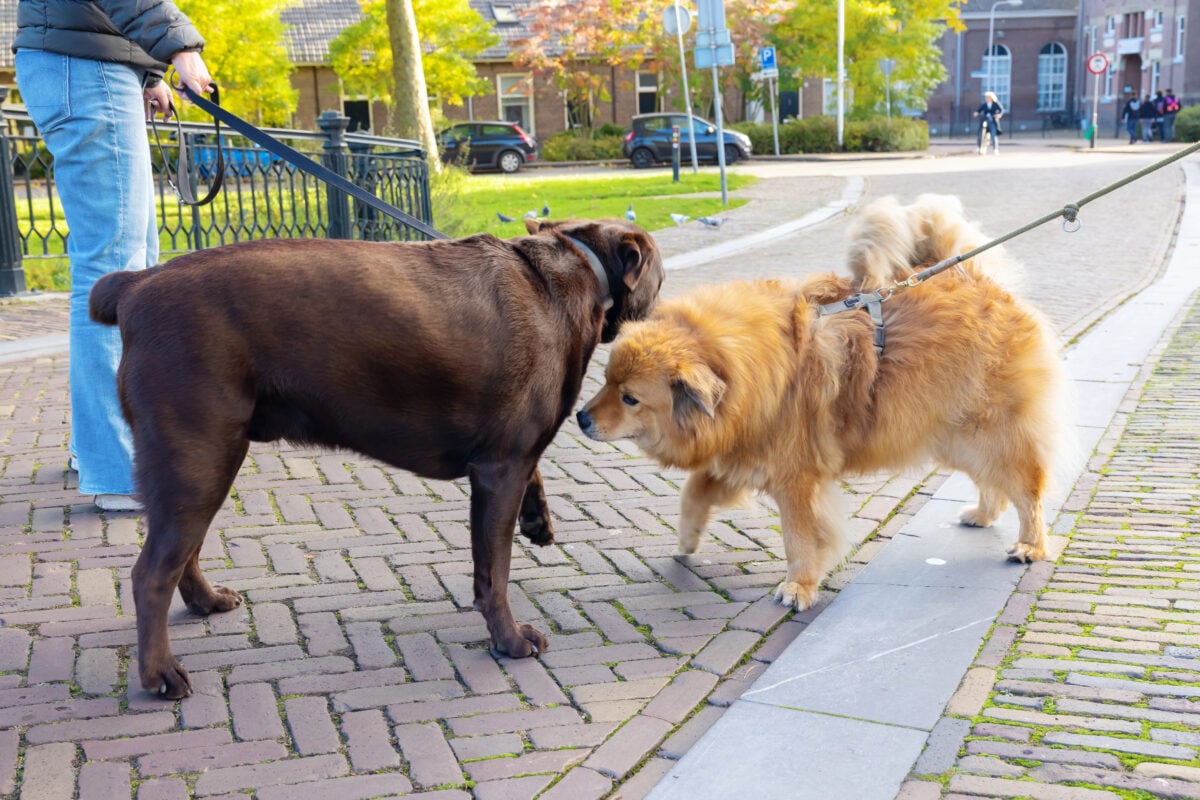
That change in position matters. A direct, head-on interaction can feel more intense, while turning sideways makes the encounter less direct without requiring the dog to leave altogether.
It’s a small adjustment, but a rather diplomatic one: We can both stay here; we just don’t need to make this weird.
What should you do? Don’t immediately step into the space your dog just created or steer them back into a face-to-face greeting. Give them room to keep the interaction at an angle or move farther away if they choose.
3. They Lick Their Lips When There’s No Food Around
A quick flick of the tongue across the lips or nose is one of those signals that’s easy to miss. We’re not talking about the enthusiastic cleanup operation after dinner.
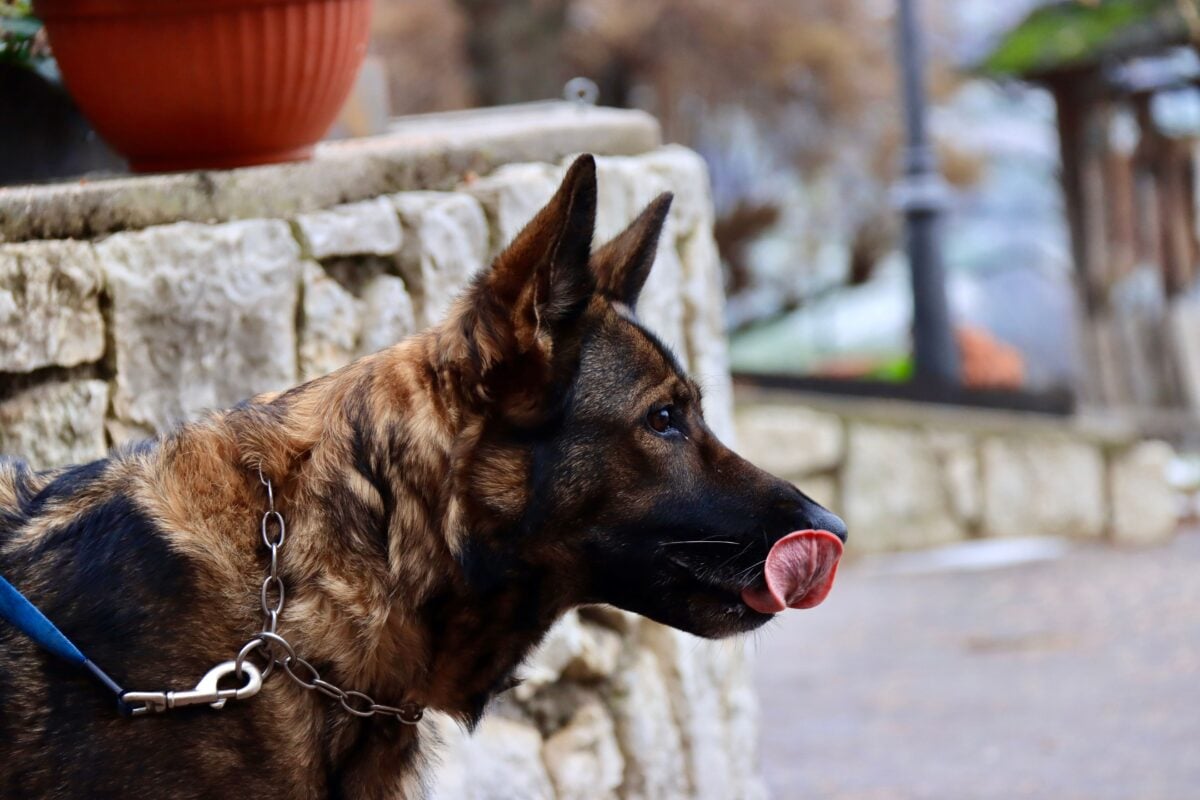
Pay attention when a brief lip lick suddenly appears while:
- A child is hugging or crowding your dog
- Someone leans over or reaches toward them
- They’re being groomed, examined, or restrained
- Another dog gets very close
- Someone reaches toward something they’re holding or guarding
In these situations, lip licking can accompany stress or discomfort as the social pressure increases. Because it may last only a second, it’s often gone before you realize your dog wasn’t entirely comfortable.
Interesting Side Note
In a 2018 study, dogs licked their mouths more often after seeing negative human facial expressions than positive ones. Interestingly, mouth licking occurred more often in response to human faces versus dog faces. That’s another reason a quick tongue flick is worth noticing when an interaction suddenly gets tense.
4. They Yawn At A Suspiciously Convenient Moment
Sometimes a yawn means your dog is tired. Sometimes it arrives right when things get a little awkward.
You might notice one during a vet exam, while you’re clipping nails, when a stranger gets overly enthusiastic with their affection, or when your dog is being held in place. The clue isn’t the yawn by itself. It’s the timing.
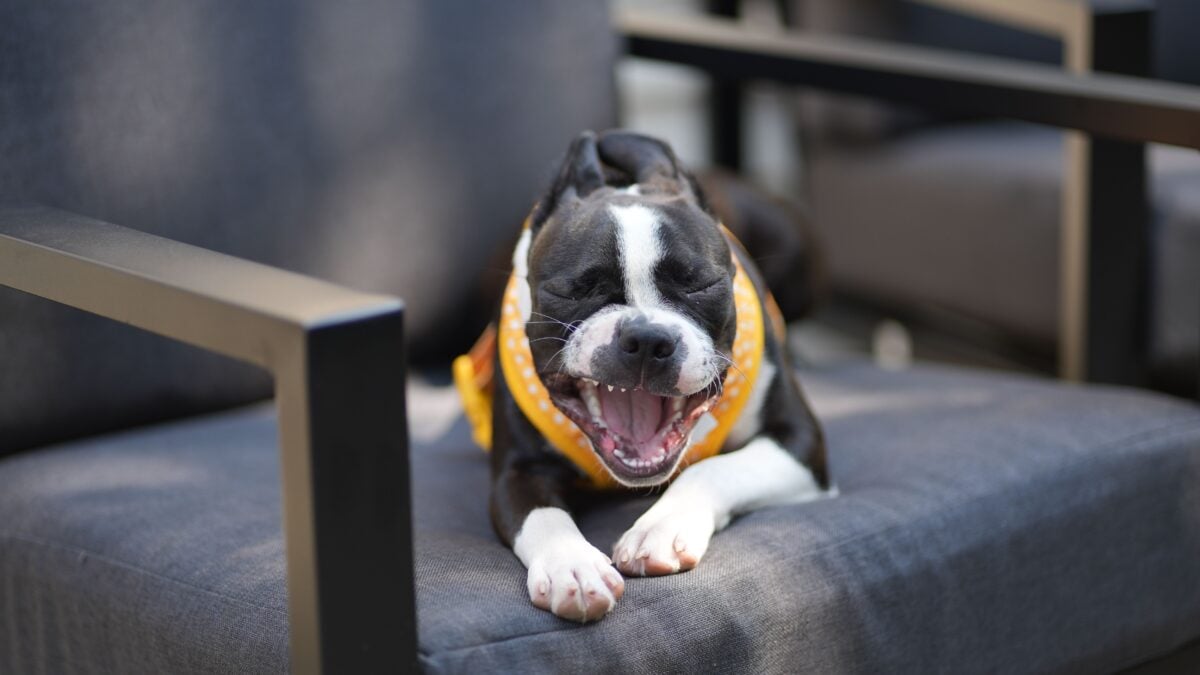
Stress and heightened arousal can trigger yawning, so a yawn that suddenly appears during an intense interaction may tell you more than one that happens when your dog is sprawled across the couch at bedtime.
Look at what happens next, too. A yawn followed by a head turn, lowered posture, lip lick, or attempt to move away gives you considerably more information than a lone yawn.
5. They Suddenly Need To Inspect The Ground
Another dog is approaching, and your dog suddenly discovers a patch of grass requiring their immediate professional attention. That timing may not be accidental.
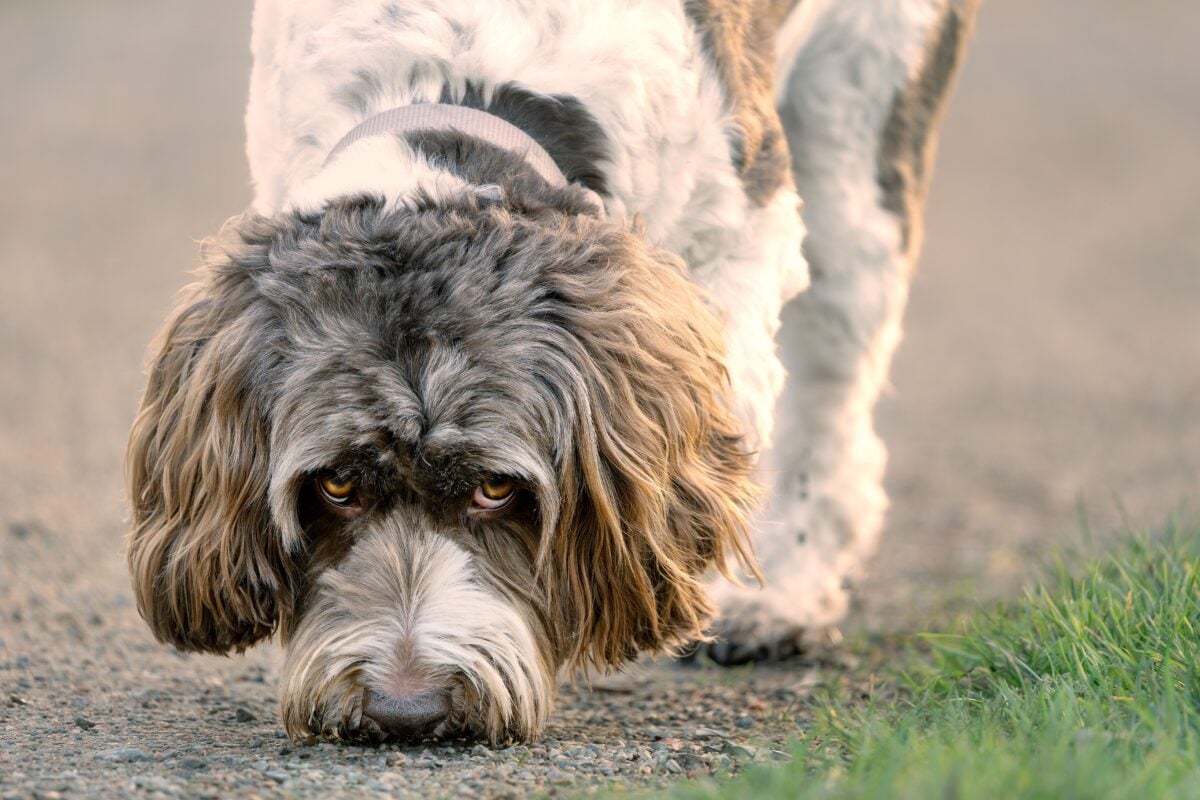
Sniffing is obviously normal dog behavior. But when a dog abruptly drops their nose to the ground in the middle of a socially tense moment, it can serve another purpose: disengaging without having to walk away completely.
You might spot it when:
- Another dog approaches on leash
- Play starts getting too intense
- A greeting becomes prolonged or uncomfortable
- Your dog is caught between whether to approach or move away
Instead of continuing a direct interaction, your dog has something else to do—and, importantly, somewhere else to look. That sudden interest in the ground can help take some of the social pressure out of the moment.
6. They Make Themselves Appear Smaller
Some dogs respond to social pressure by seeming to shrink right in front of you. Their previously normal posture becomes lower, tighter, and less confident-looking.
That change might include:
- Lowering the head or neck
- Crouching or bending the legs
- Pulling the ears back
- Shifting their weight away
- Tucking or lowering the tail
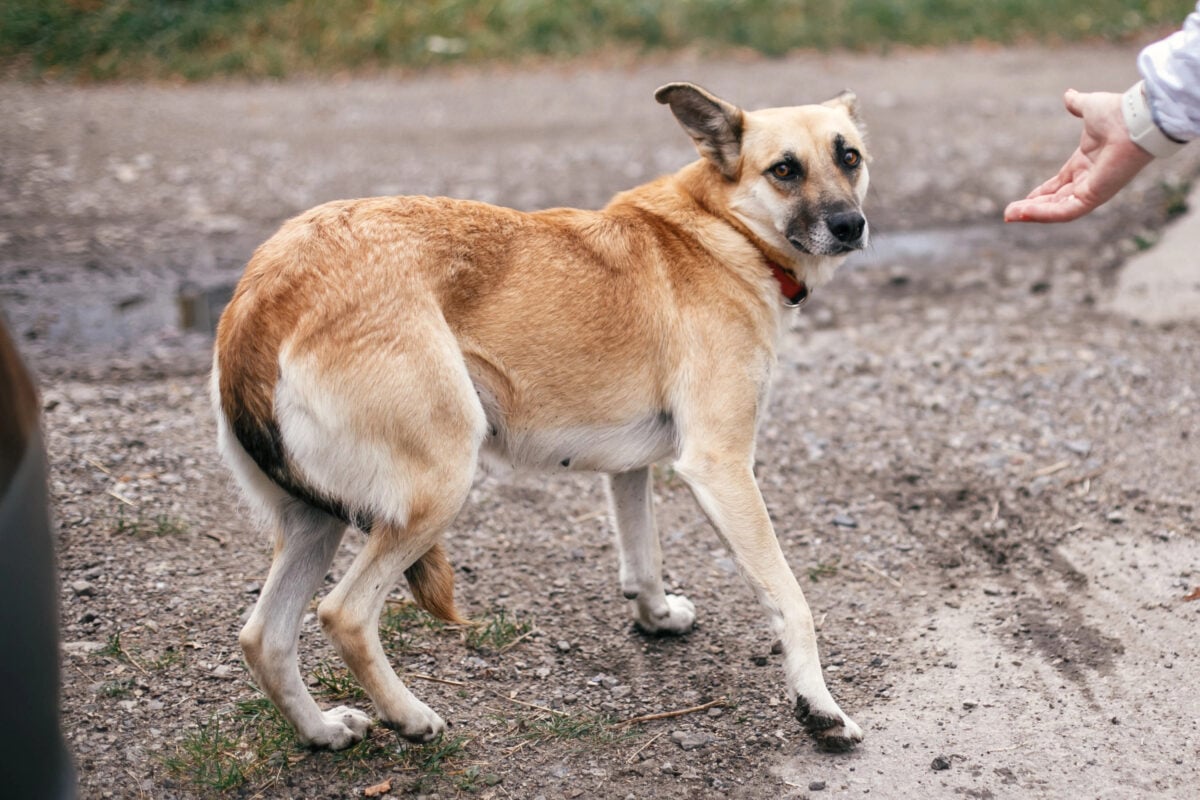
It’s tempting to bundle all of this under the familiar label “submissive.” But that label doesn’t tell you much about what’s happening in the moment.
The more useful question is what caused your dog’s posture to change. You might see them suddenly lower themselves when:
- A larger dog stands over them or blocks their path
- A stranger reaches down over their head to pet them
- Someone corners them while trying to attach a leash
- A child hugs them tightly or gets close to their face
- You reach for something they don’t want to give up
Now the posture has context. Your dog was standing normally, something changed in the interaction, and their whole body responded.
7. They Walk Away
Sometimes dogs skip the subtle stuff and choose the most straightforward option available: they leave.
Your dog might walk away when petting goes on longer than they want, another dog won’t stop pestering them, play gets too rough, or a child keeps following them around.
They may hop off the couch, leave the room, retreat to their bed, or simply put several feet between themselves and whoever is bothering them.
That’s useful information. Instead of escalating the interaction, your dog has found a way to end it.
When it’s safe to do so, letting your dog leave can be one of the simplest ways to respect what they’re communicating.
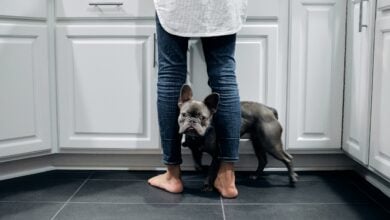
8. They Move Behind You
If your dog has ever ducked behind your legs when someone approaches, congratulations: you may have just been promoted to human security detail.
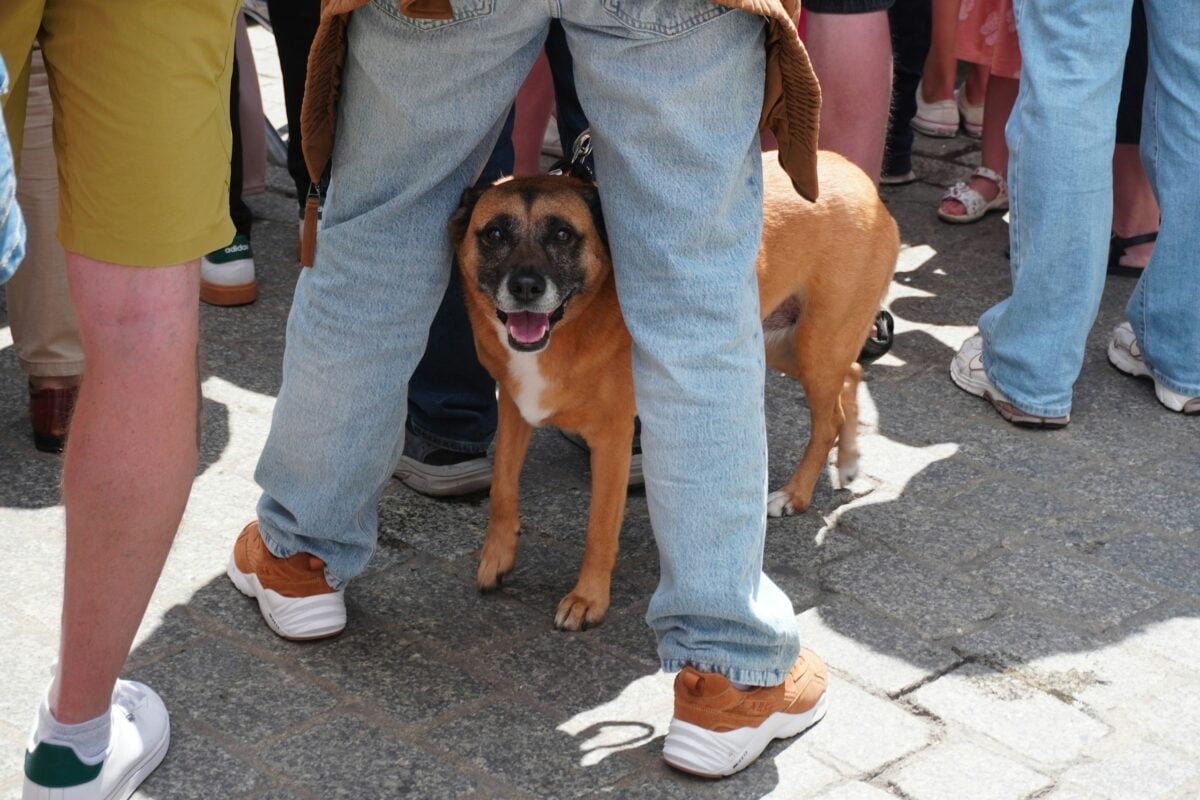
Moving behind you can give your dog something they didn’t have a moment ago — a physical buffer between them and whatever is making them uncomfortable.
You might notice it when:
- An unfamiliar dog approaches on a walk
- A stranger tries to pet them
- An enthusiastic visitor comes through the door
- The veterinary waiting room gets crowded
- Someone keeps approaching after your dog has backed away
It’s easy to respond by stepping aside and encouraging, “Go say hi!” But that can remove the exact barrier your dog just sought out.
If your dog chooses your legs as home base, you don’t have to turn every encounter into a meet-and-greet. Sometimes standing there and giving them a moment is useful enough.
What Research Shows
Researchers have tested whether owners act as a kind of “safe haven” when dogs face something threatening. In one experiment involving 30 dogs approached by a threatening stranger, the researchers found evidence that the owner’s presence influenced dogs’ behavioral and heart-rate responses. Our dogs may rely on us for more than somewhere convenient to hide their noses.
9. They Roll Partway Over — But Something Looks Off
A dog rolls over and shows you their belly. Obviously, the belly-rub department is now open for business. Except sometimes it isn’t.
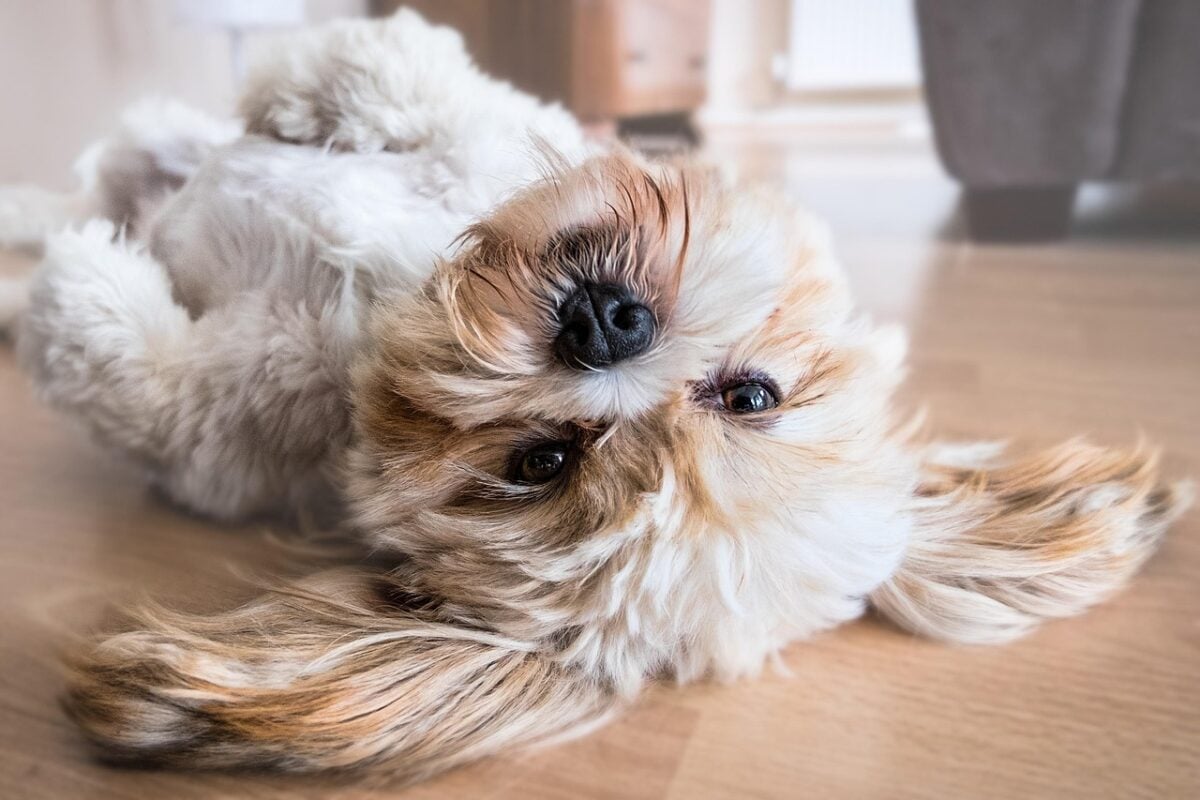
Belly exposure can happen when a dog is trying to avoid confrontation, particularly if the rest of their body looks nothing like the loose, wiggly dog who flops over and practically files a formal request for scratches.
Look at the whole picture. An uncomfortable dog may:
- Hold their body stiff or low
- Keep their limbs tucked close
- Turn their head or eyes away
- Pull their ears back
- Tuck their tail
- Lip lick or show other signs of tension
The important difference isn’t simply belly up versus belly down. It’s what the rest of your dog is doing and what happened immediately beforehand.
A loose dog rolling toward you during cuddles is very different from a tense dog rolling partly over after being approached, cornered, or reached for.
10. They Shake It Off Afterward
You know that full-body shake dogs do after getting wet? They sometimes do the same thing when they’re perfectly dry.
A shake can appear just after a moment of tension or heightened arousal, such as:
- A too-intense encounter with another dog
- Being hugged or restrained
- A grooming or nail-trimming session
- Handling during a veterinary exam
- An uncomfortable greeting with a stranger
Of course, dogs shake for plenty of ordinary reasons. But when one happens immediately after the social pressure disappears, the timing is worth noticing.
Unlike many of the behaviors we’ve covered, this one can give you information in hindsight. The interaction may already be over, but your dog’s shake can be one more clue that the moment was more intense for them than it looked to you.
11. They Suddenly Stop Moving
A dog who isn’t struggling, pulling away, or making noise can look perfectly cooperative. That’s what makes sudden stillness so easy to misread.
Maybe a child is hugging your dog, and they simply stand there. You’re reaching to take a toy, and your dog stops moving. Another dog gets close, and the loose body you saw a second ago suddenly becomes rigid.
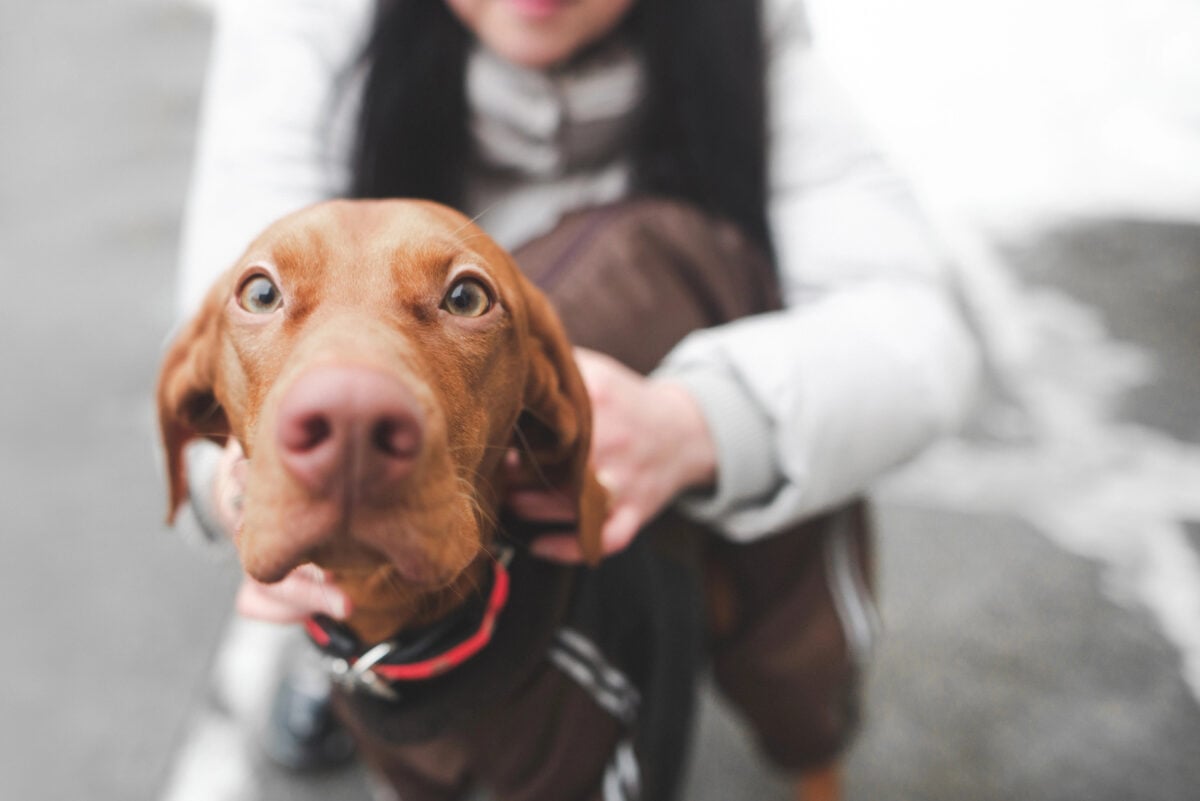
Watch for a change rather than stillness alone:
- Their body suddenly stiffens
- Their mouth closes
- Their face becomes tense
- Their gaze fixes or their eyes shift sideways
- Previously loose movement disappears
- They hold their position rather than moving naturally
This is different from a dog who’s simply standing still and relaxed. The important clue is the sudden transition from loose to frozen.
And because a frozen dog isn’t actively resisting, people sometimes continue exactly what they were doing. But stillness isn’t necessarily permission to keep going.
12. They Leave, Come Back, Then Leave Again
Here’s one that can be genuinely confusing: your dog walks away from an interaction…and then comes right back.
It’s easy to assume the return means “Never mind, I actually loved that.” But dogs don’t necessarily want either all interaction or no interaction. Sometimes they want the interaction itself, just not everything that’s happening within it.
You might see a dog:
- Approach a visitor but move away when the person pets them
- Rejoin another dog, then leave when play gets rough again
- Return to a child but move away when hugging starts
- Come back for attention, then leave when petting becomes too intense
The return matters, but so does the next departure.
Your dog may be perfectly happy to stay social when they have some control over the distance, intensity, or type of interaction. “I came back” isn’t the same thing as “you can do whatever you were doing before.”
Conflict Avoidance, Fear, Stress & “Submission” Aren’t The Same Thing
Once you start noticing these behaviors, it’s tempting to put a single label on them, but real dog behavior is messier than that. These experiences can overlap, but they aren’t interchangeable.
- Conflict avoidance describes what the dog is doing: trying to reduce, change, or escape an uncomfortable social interaction.
- Stress is broader. Dogs can experience it in social situations, but also because of pain, unfamiliar environments, loud noises, frustration, or other challenges.
- Fear involves perceiving something as threatening. A fearful dog may avoid conflict, but a dog doesn’t have to be terrified to decide they’d rather move away.
- “Submission” is commonly used to describe lowered postures, rolling over, and similar behaviors, but the label can hide useful details about what the dog is actually responding to.
More than one can be happening at once. A dog frightened by an unfamiliar dog may experience stress and turn away or retreat to avoid a confrontation.
Another dog may not appear particularly fearful at all but still walk away when play becomes too rough. The behavior tells you what the dog is doing; the emotion behind it isn’t always as easy to identify.
You may also hear behaviors such as looking away, lip licking, yawning, or sniffing described as “calming signals.” That’s a useful concept, but don’t assume every yawn or nose lick is a deliberate message designed to calm someone else. Context, timing, and the rest of the dog’s body still tell the fuller story.
Don’t Turn “No Thanks” Into “Try Again”
One of the easiest ways to help a dog avoid conflict is also one of the simplest: when they safely create distance, don’t immediately take that distance away.
We humans are surprisingly good at doing exactly that.
A dog walks away from a child, so we bring them back because “he loves you.” They retreat from a visitor, and the visitor follows to prove they’re friendly. The dog hops off the couch while being petted, and we reach down for one more scratch.
With other dogs, a leash can complicate things further. Your dog may be trying to increase the distance while the person holding the leash keeps moving them closer.
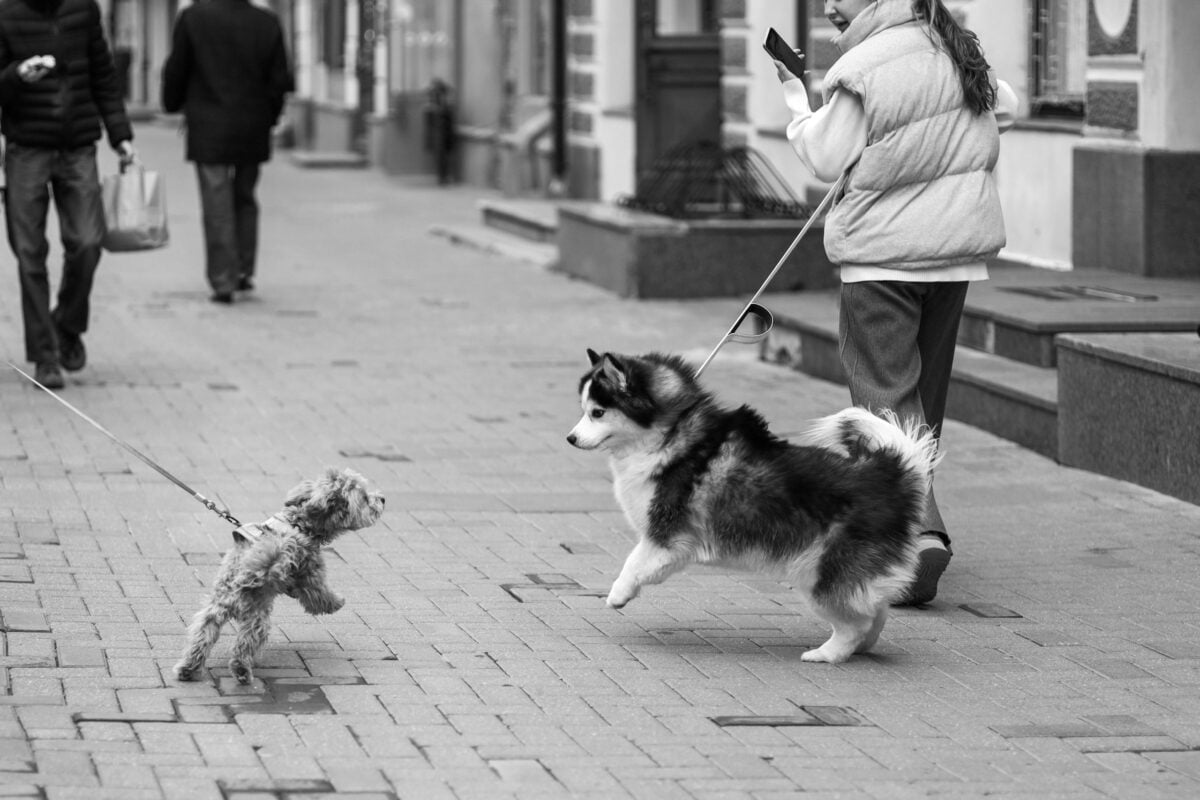
That doesn’t mean your dog should always get to flee every mildly uncomfortable situation or that avoidance should replace thoughtful training. But in an everyday social interaction, walking away can be a successful solution to a problem.
If the dog leaves and the pressure stops, they don’t need to figure out what comes next.
And sometimes that’s the difference between a dog who walks away and one who eventually has to make “please stop” much harder to misunderstand.
What Happens When The Subtle Signals Don’t Work?
A head turn works only if the other dog backs off. Walking away works only if nobody follows. When the thing making a dog uncomfortable continues, their response may become harder to ignore.
That doesn’t mean every dog moves neatly through the same sequence. But an interaction can shift from subtle avoidance toward more obvious signs of tension:
Looking away or disengaging → trying to create distance → stiffening or freezing → growling or snapping
Depending on the dog and situation, you might see:
- Repeated attempts to move away
- A suddenly stiff or frozen body
- A hard, fixed stare
- Growling
- Air snapping
- Snapping or biting
Some dogs may show several of these behaviors. Others may move from subtle to serious communication much faster, particularly if they’re frightened, in pain, trapped, guarding something valuable, or have learned that earlier signals don’t change what happens.
This is also why you shouldn’t view a growl only as bad behavior that needs to be stopped. It’s information. Something about the situation has pushed the dog to communicate more forcefully.
Punishing the sound without addressing what’s provoking it may stop the obvious warning while leaving the underlying problem untouched.
“But There Was No Warning”
Sometimes there truly is little warning that’s obvious to us. But sometimes what the person remembers is: Snap.
What actually happened may have looked more like: Head turn → lip lick → attempted retreat → freeze → snap.
The problem is that the first four don’t look nearly as dramatic as the fifth. Thinking backward through an interaction can reveal communication that was easy to miss in the moment.
What To Do When Your Dog Is Asking For More Space
Once you recognize that your dog is uncomfortable, you don’t need to decode every ear twitch or tongue flick before responding. Often, the most useful first step is simply to reduce whatever pressure you can control.
Depending on what’s happening, that might mean:
- Stop moving toward them and give them a moment to decide what to do next.
- Pause petting, grooming, handling, or restraint if their body language changes.
- Leave them a clear exit rather than cornering or blocking them.
- Increase distance from another dog instead of insisting on a greeting.
- Don’t let children follow a dog who has walked away or retreated to a resting place.
- Skip forced introductions with visitors, strangers, or other dogs.
- Separate household dogs when necessary if food, toys, beds, attention, or another valued resource is creating tension.
- Don’t repeatedly test their tolerance by recreating the interaction to see whether they’ll “do it again.”
Giving space doesn’t mean ignoring the underlying issue forever. A dog who’s repeatedly frightened by everyday situations may need help becoming more comfortable with them.
But in the moment, your first job isn’t to prove your dog can handle it. It’s to keep an uncomfortable interaction from becoming a confrontation.
Can People Get Better At Reading These Signals? Yes.
Researchers tested children ages 3 to 5 and their parents on their ability to recognize and interpret dogs’ distress signals. After being taught what those signals meant, both children and adults showed significant improvement in understanding them. Reading dog body language isn’t necessarily something we’re born knowing. It’s something we can learn.
A Sudden Change In Your Dog’s Tolerance Deserves Attention
There’s an important difference between a dog who has always disliked having their paws handled and one who suddenly pulls away when you touch a paw they never minded you touching before.
Changes in tolerance can sometimes be behavioral, but pain, illness, sensory changes, and other medical problems can also change how a dog responds to people and animals around them.
Pay particular attention if your dog suddenly:
- Avoids touch or handling they previously enjoyed
- Withdraws from people they normally seek out
- Becomes defensive during grooming, lifting, or handling
- Reacts differently around familiar pets
- Protects or avoids having a particular body area touched
- Begins growling or snapping unexpectedly
- Seems noticeably less tolerant of everyday interaction
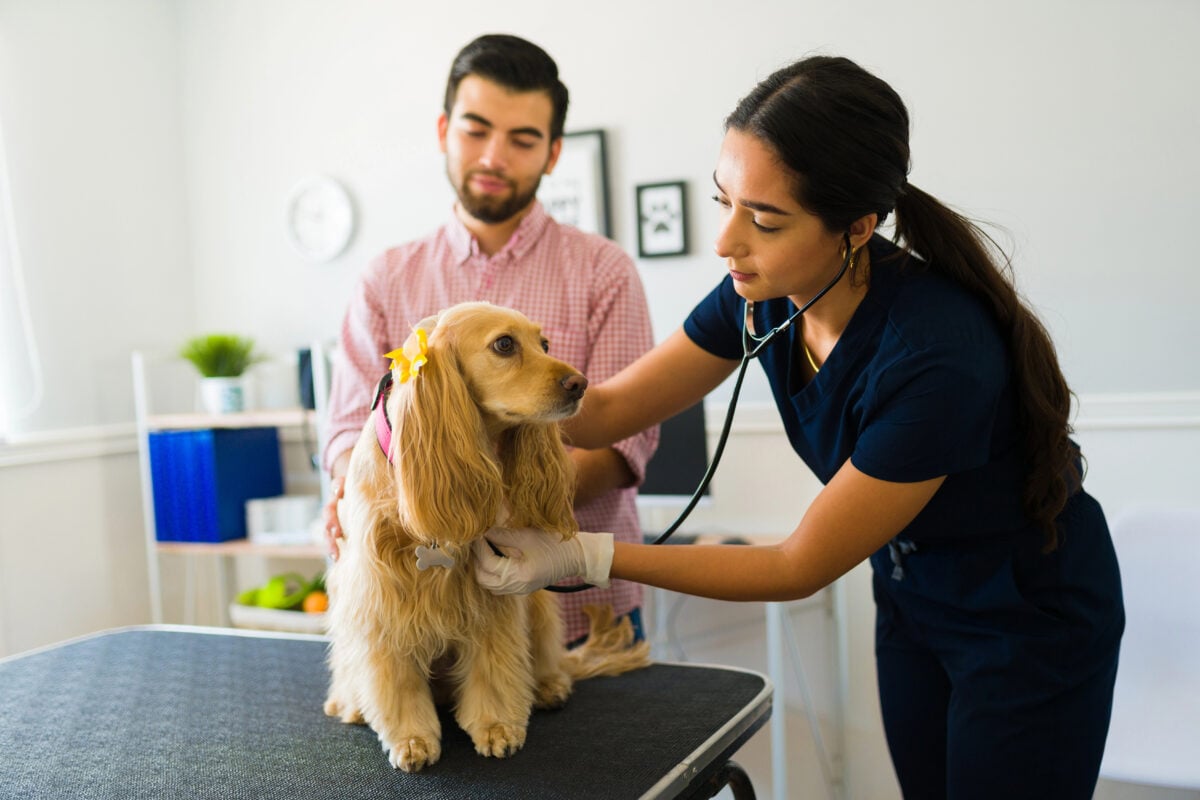
When avoidance or defensive behavior represents a noticeable change from your dog’s normal behavior, a veterinary exam is a sensible first step. Training can’t fix pain, and you don’t want to spend weeks treating a new behavior as a training problem while missing a medical cause.
Pet Insurance Can Make An Unexpected Vet Visit Easier
When a sudden behavior change sends you to the vet, an exam may lead to bloodwork, imaging, or other diagnostic testing to find the cause — and those costs can add up quickly.
Having pet insurance can provide some valuable breathing room by helping cover eligible unexpected illnesses and accidents. Instead of weighing what your dog may need against what you can afford, you can focus on getting answers and the ideal treatment.
Pet insurance generally won’t cover pre-existing conditions, which is why coverage is most valuable before unexplained symptoms or diagnosed health problems appear. If you’re considering coverage, check out our guide to the best pet insurance to compare your options.
When It’s Time To Bring In Professional Help
Not every head turn or awkward dog greeting requires professional intervention. The pattern matters. If avoiding conflict is becoming a regular part of your dog’s day — or those attempts are increasingly turning into stronger responses — it’s worth getting help.
That’s particularly important when:
- Avoidance becomes frequent or intense
- Your dog seems persistently stressed or fearful
- Resource guarding develops or worsens
- Freezing or growling happens regularly
- Behavior progresses to snapping or biting
- Children are involved, and interactions feel difficult to manage safely
- Dogs or other pets in the household repeatedly come into conflict
- You’re reorganizing everyday life to prevent confrontations
For ongoing fear, guarding, reactivity, or conflict, a qualified trainer or behavior professional can help identify triggers and build a management and behavior-modification plan.
If aggression is escalating or someone’s safety is at risk, don’t deliberately recreate the situation to test what your dog will do.
Frequently Asked Questions
Dog body language rarely fits into a tidy dictionary where one behavior always means one thing. Here are a few questions that can help you make sense of the situations that aren’t quite as obvious. If there’s something your dog does that leaves you wondering, tell us about it in the comments.
Can A Friendly Dog Still Be Uncomfortable With A Greeting?
Absolutely. Being friendly doesn’t mean wanting every interaction with every person or dog. A social dog may enjoy meeting people but dislike being hugged, crowded, or touched on the head. A dog who generally likes other dogs may still find a particular dog’s play style or approach overwhelming.
Think of sociability as a tendency, not blanket permission. What your dog chooses to do during that particular greeting still matters.
Can Dogs That Live Together Still Have Conflict?
Yes. Dogs can be closely bonded and still occasionally want different things.
One may want to play while the other wants to sleep. Both may want the same resting spot, toy, doorway, or person’s attention. Age, illness, pain, and changes in the household can also affect how tolerant dogs are of each other.
Frequent tension around food, toys, resting places, or other valued resources deserves particular attention rather than assuming the dogs will always work it out themselves.
Should I Let My Dog Avoid Other Dogs?
Your dog does not need to greet every dog they encounter. Allowing them to pass another dog, increase distance, or decline an interaction can be perfectly reasonable.
That’s different from a dog whose fear is making ordinary walks, veterinary visits, or daily life difficult. Persistent or worsening avoidance is worth addressing with appropriate professional help rather than forcing repeated interactions in hopes they’ll eventually get used to them.
Does Avoiding Conflict Mean My Dog Is Anxious?
Not necessarily. Choosing not to engage in conflict can be a normal social strategy, including for confident dogs.
Anxiety becomes a broader concern when fear or stress appears frequently, persists outside a particular interaction, interferes with normal activities, or significantly limits where your dog can comfortably go and what they can do.
Can Dogs Learn That Subtle Signals Don’t Work?
A dog’s behavior can be shaped by what happens after they use it. If moving away consistently ends an unwanted interaction, that strategy works. If attempts to retreat are repeatedly blocked or ignored, the dog may need another way to respond.
That doesn’t mean every dog will inevitably escalate, or that there’s a predictable sequence they’ll follow. It does mean our response to their behavior becomes part of what they learn from the interaction.
Why Does My Dog Avoid Conflict With One Person But Not Another?
Dogs learn from individual relationships and past experiences. The same dog may behave differently depending on who they’re interacting with and what usually happens next.
One person may naturally give the dog space when they turn away. Another may continue reaching, hugging, or following. Dogs can also respond differently to a person’s movement, voice, familiarity, handling style, or predictability.
So if your dog seems particularly uncomfortable around one person, look beyond who the person is and pay attention to what tends to happen when they’re together.
Start Watching What Happens Before The Obvious Part
The more interesting part of dog communication often happens before the behavior that finally gets our attention. Learning to notice those earlier moments can change what you see happening between your dog, other animals, and the people around them.
Want to keep decoding what your dog is telling you? These guides dig deeper:
- 10 Subtle Signs Your Dog Is Secretly Stressed — Spot other easily missed changes that can signal your dog is struggling.
- Why Dogs Growl & What They’re Trying To Tell You — Learn what can happen when communication becomes harder to ignore.
- Resource Guarding In Dogs — Understand why tension develops around food, toys, spaces, and even people.
- How To Introduce Dogs Without Creating A Lifetime Grudge — Put your new body-language skills to work when dogs first meet.
What does your dog do when they’ve had enough — the head turn, strategic exit, or sudden urgent investigation of the floor? Tell us what you’ve noticed in the comments.