When you purchase through links on our site, we may earn a commission at no extra cost to you. Learn more.
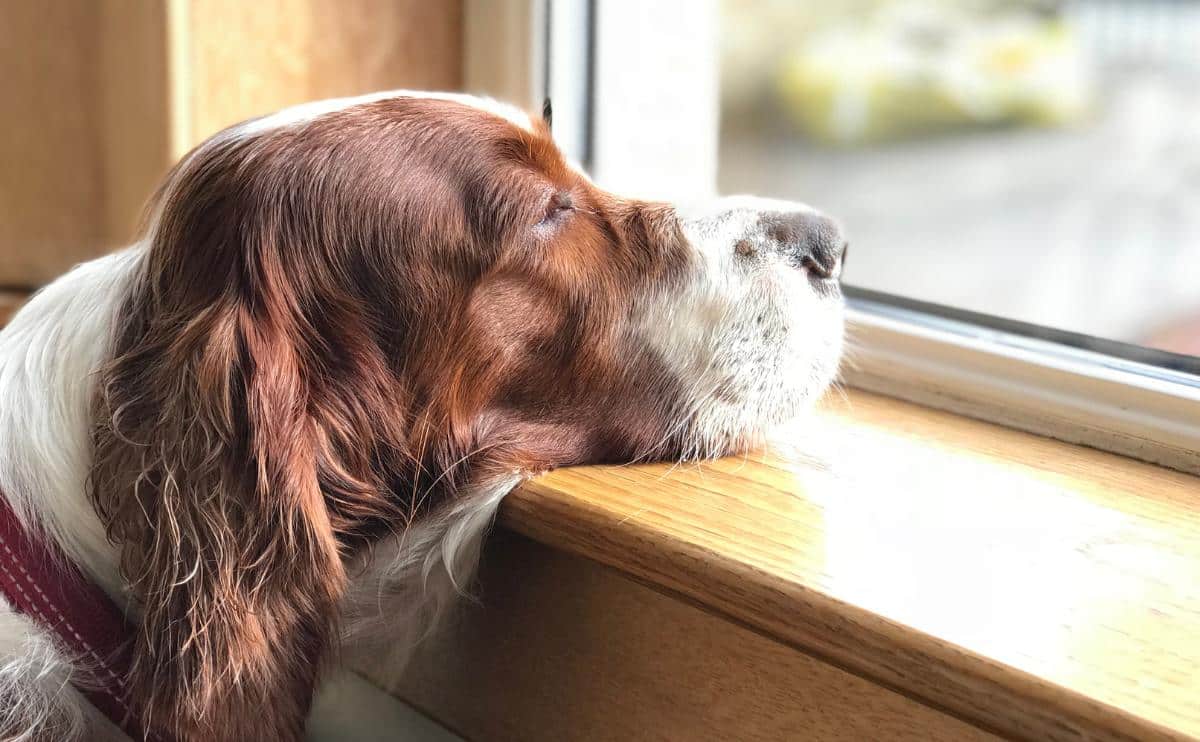
You’re ready to sleep, but your dog has other plans. They pace beside the bed, switch sleeping spots every few minutes, or stare at you from the doorway as though you’ve forgotten something very important.
Table of Contents
Nighttime restlessness can come from a simple need, such as a bathroom break or a cooler place to lie down. A quiet day, unfamiliar noise, anxiety, pain, or age-related changes can also keep a dog awake.
The most useful question to ask yourself is “what’s different tonight?” A dog who has always made a few laps before bed is in a different situation from one who suddenly paces the house for hours. Their timing and movements can help you decide what to try first.

Quick Guide: Why Won’t My Dog Settle At Night?
| If Your Dog Is… | Start By Considering… |
|---|---|
| Walking toward the door or whining beside it | A bathroom break |
| Staring at you or following you around | Potty needs, a changed routine, anxiety, or discomfort |
| Moving between their bed and the floor | Temperature, bedding, or difficulty getting comfortable |
| Panting and pacing | Heat, stress, pain, or illness |
| Barking at seemingly nothing | Outdoor sounds, wildlife, or household noises |
| Wide awake when you go to bed | Daytime activity and mental stimulation |
| Wandering or seeming confused | Changes in a senior dog’s senses, health, or sleep pattern |
If your dog is suddenly unable to settle and has a swollen belly, tries to vomit without bringing anything up, struggles to breathe, or collapses, seek emergency veterinary care immediately. Restlessness can occur alongside signs of a serious emergency, including bloat.
Want our human-written content to rank above AI-generated garbage? Help us out by clicking this button!
Does The Timing Offer A Clue?
A dog who cannot settle when everyone first goes to bed may still have energy after a quiet day, be reacting to a change in the evening routine or dislike their sleeping spot. Think about what happened between dinner and bedtime.
A dog who sleeps for several hours and then wakes you may need a bathroom break. Notice whether they head toward the door and whether they settle again after going outside.
Restlessness at roughly the same time every night invites a closer look at the household and neighborhood. Does the heating system turn on? Does someone arrive home next door? Does your dog expect breakfast soon after waking you?
Timing won’t reveal the answer by itself, but it can turn “my dog was up all night” into a more useful observation.

1. They Need To Go Potty
Before investigating why your dog has suddenly forgotten how bedtime works, offer a trip outside. A dog who keeps walking toward the bedroom door may be making a fairly direct request.
Young puppies may still need an overnight bathroom break while they develop bladder control. An adult dog might need an extra trip after drinking more than usual or experiencing an upset stomach, and a senior dog’s bathroom schedule may shift.
Keep the trip calm and give your dog time to go. If a previously housetrained dog starts waking frequently to urinate, has accidents, or drinks noticeably more water, schedule a veterinary visit. Increased thirst and urination can have several causes, including medication effects.
2. They Slept Too Much Or Didn’t Get Enough Activity
Did rain cancel the usual walk? Did your dog spend the afternoon napping while you worked? Your schedules may have parted ways: You’re exhausted, and your dog still has energy to use.
If lively bedtimes tend to follow quiet days, spread appropriate activity across the day. A walk that allows time to sniff may be more useful than starting an energetic game just before you want everyone to sleep.
Age, health, and mobility affect how much activity makes sense. Puppies also need plenty of sleep, so the goal is a workable daily rhythm for your dog, not a campaign to wear them out.

3. They Need More To Think About During The Day
A walk can exercise your dog’s legs while leaving much of the day empty. Sniffing, brief training sessions, food-search games, and puzzle feeders offer different kinds of mental activity.
You could scatter part of dinner in a suitable area for your dog to find or spend a few minutes practicing familiar cues. Small activities woven into the day are easier to sustain than an elaborate new bedtime program.
Timing matters here. If a special puzzle appears every time your dog paces beside the bed at 2 a.m., the puzzle could become one more reason to wake you.
4. Anxiety, Stress, Or A Routine Change Is Keeping Them Awake
A visitor is sleeping down the hall. Someone in the family is away. Your new work hours have changed the evening routine. Any of these can make bedtime feel unfamiliar.
A stressed dog might follow you between rooms, lie down and pop back up, whine, or repeatedly check the doorway. Pacing and vocalizing can accompany anxiety, though neither sign identifies the cause on its own.
Sleeping arrangements can offer another clue. A dog who settles beside your bed but paces when asked to sleep downstairs may be struggling with the new location or separation from you. If they relax as soon as you return to the room, pay attention to that difference.
Think about the evening your dog expects: where they usually sleep, who is home, and what happens before the lights go out. Returning to a familiar sleeping place and a predictable routine may help after a temporary disruption. If your dog remains distressed or the anxiety is new, ask your veterinarian for guidance.

5. They Hear Something You Don’t
The dog who barks at “nothing” may have heard a neighbor’s car, wildlife near the window, or the heating system clicking on. From bed, you might miss the sound entirely.
A dog who repeatedly rushes to one window may settle better with the curtains closed or their bed farther from that side of the room. Steady background sound can also soften predictable interruptions.
Some noises cause more than a brief alert. Dogs frightened by a sound may pace or pant after it stops; frequent or intense fear is worth discussing with your veterinarian.
6. They’re Hungry, Thirsty, Or Off Their Usual Schedule
Sometimes the difference is in the evening schedule. Dinner was unusually early, the water bowl is empty, or everyone went to bed an hour later than usual.
Notice where your dog goes when they wake. A trip straight to the water bowl or kitchen offers a more useful clue than staring at you from the doorway. Make sure water is available, and meals follow an appropriate, reasonably consistent schedule.
Recent medications belong on your list of possible changes, too. Some can increase thirst, urination, appetite, or panting. Tell your veterinarian what your dog takes and when the nighttime waking began, and speak with them before adjusting a prescribed dose.
7. Nighttime Activity Has Become Part Of Their Routine
Your dog paces beside the bed. You get up, offer a snack, and take a leisurely trip around the yard. After enough repetitions, that can become a familiar part of the night for both of you.
First, make sure your dog’s needs are met. For an established habit in an otherwise comfortable dog, keep necessary nighttime trips quiet and predictable. Save play, food games, and longer walks for daytime.
8. Their Sleeping Spot Isn’t Comfortable
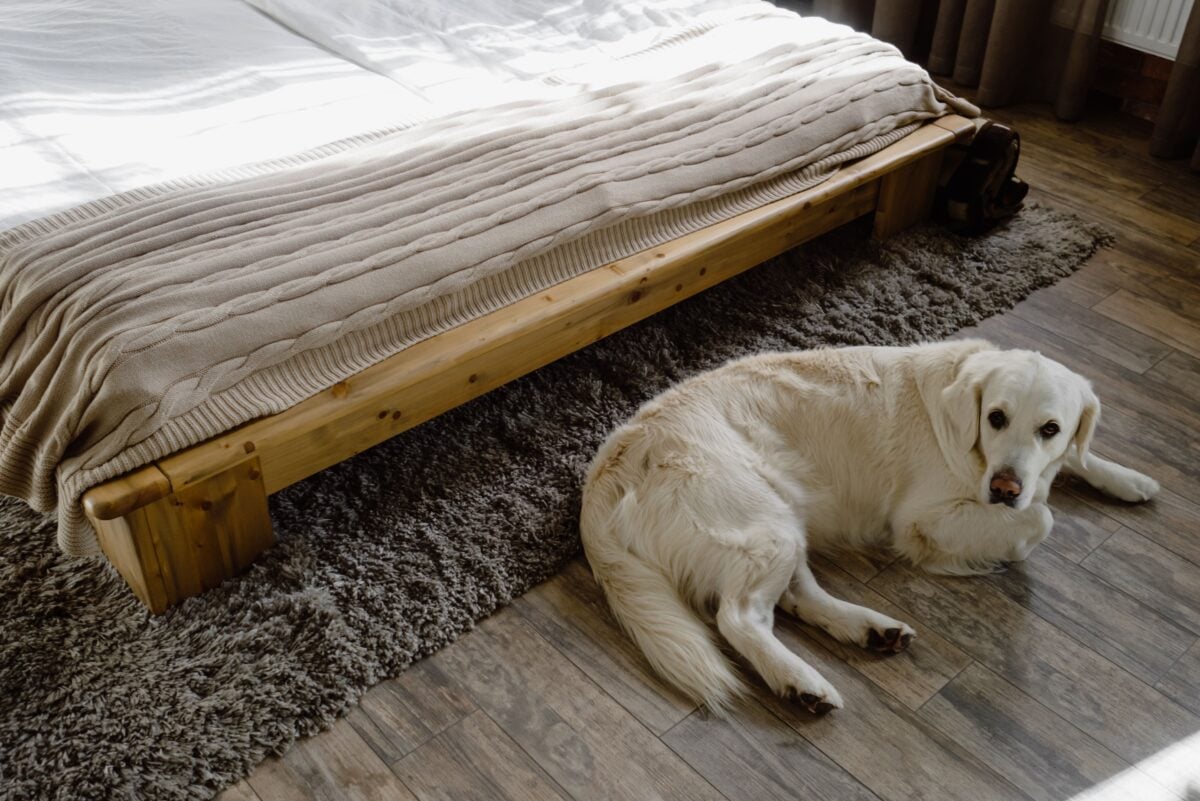
Your dog climbs onto bed, moves to the cool floor, and returns a few minutes later. Perhaps the room is warmer than usual, or the thick bedding that felt cozy in winter is now too much.
Give your dog enough room to stretch out and consider whether a different surface or quieter location would suit them better. You may learn more by watching where they finally settle than by buying a new bed immediately.
9. Pain, Stiffness, Or Other Discomfort Makes It Hard To Settle
Pain can show up as pacing, panting, whining, or repeatedly changing position. A dog may lie down, get back up within minutes, and try another spot without ever seeming comfortable. During the day, you might also notice reluctance to climb stairs, jump onto the bed, or rise after resting.
Joint stiffness is one possibility, particularly in an older dog. Digestive discomfort can also interrupt sleep, sometimes along with lip licking, appetite changes, vomiting, or requests to go outside.
Watch what happens when your dog tries to settle. Do they struggle to lower themselves, rest briefly before pacing again, or react when they turn a particular way? A short video and a description of any daytime changes can help your veterinarian assess what’s happening.
Call your veterinarian if your dog’s difficulty getting comfortable is new or continues through the night. A dog who also has a swollen abdomen or repeatedly tries to vomit without bringing anything up needs emergency care.
10. Senior Dogs May Become More Restless At Night
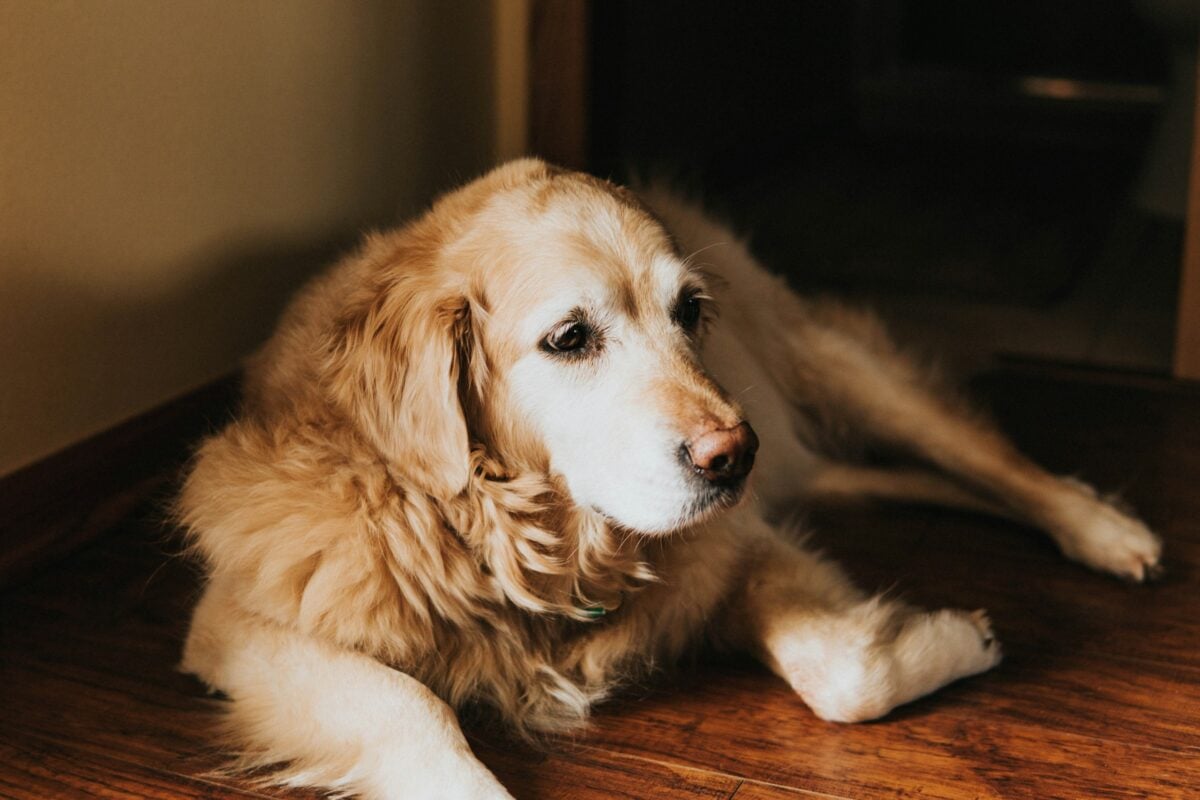
An older dog who once slept until morning may start wandering through familiar rooms or vocalizing after the lights go out. Vision or hearing changes, pain, bathroom needs, and shifts in sleep can all affect their nights.
Canine cognitive dysfunction can also disrupt the sleep-wake cycle and cause disorientation, activity changes, or house soiling. A veterinarian can assess an older dog’s new nighttime behavior and consider other possible causes.
At home, a familiar sleeping area and a clear route to the door can make the night easier to navigate. Mention daytime changes during the veterinary visit, even if the wandering is what first caught your attention.
What To Pay Attention To
If your dog has another unsettled night, a few specific notes can help you find a connection and describe it to your veterinarian:
- Time: Does the activity start at bedtime, after a few hours of sleep, or at roughly the same hour each night?
- Action: Is your dog pacing, panting, whining, barking, changing positions, or wandering?
- Destination: Do they head toward the door, a window, the water bowl, or you?
- Relief: What, if anything, helps them settle?
- Other changes: Have appetite, thirst, bathroom habits, mobility, or daytime behavior shifted?
A brief phone video may also help your veterinarian see movements or sounds that disappear by morning.
What To Do Tonight If Your Dog Won’t Settle
- Offer a calm potty break. Give your dog a chance to go, then head back inside.
- Check water and the sleeping spot. Consider temperature, bedding, and access to their usual resting place.
- Listen for a trigger. Look for outdoor activity or a new household noise.
- Observe how your dog moves. Difficulty lying down, confusion, weakness, or signs of distress call for veterinary advice.
Keep the interaction quiet while you work through these steps. If your dog seems unwell or cannot get comfortable, call your veterinarian.
4 Ways To Help Your Dog Get A Better Night’s Sleep
Once you’ve checked for an immediate need, use what you’ve noticed about your dog’s nights to make a longer-term adjustment.
1. Make Their Sleeping Spot More Comfortable
Where your dog chooses to rest can help you decide what to change:
- They leave a plush bed for the cool floor: Try lighter bedding or a cooler location. An elevated dog bed may appeal to a dog who prefers more airflow.
- They curl against pillows or seek a snug corner: Give them a sheltered spot where they can settle undisturbed. Our guide to calming dog beds covers beds made for dogs who like to curl up or burrow.
- They seem stiff after resting: A supportive surface may make lying down and getting up easier. Compare orthopedic dog beds and tell your veterinarian about the change in mobility.
Give your dog a chance to choose between appropriate sleeping surfaces. Their preference may be more informative than how comfortable a bed looks to you.
2. Keep The Bedtime Routine Predictable
A familiar sequence can help after visitors, travel or a change in work hours. Keep it simple:
- Offer a final, unhurried bathroom trip.
- Let your dog settle in their usual sleeping place.
- Lower household activity as bedtime approaches.
- Give puppies who still need one a calm overnight potty break.
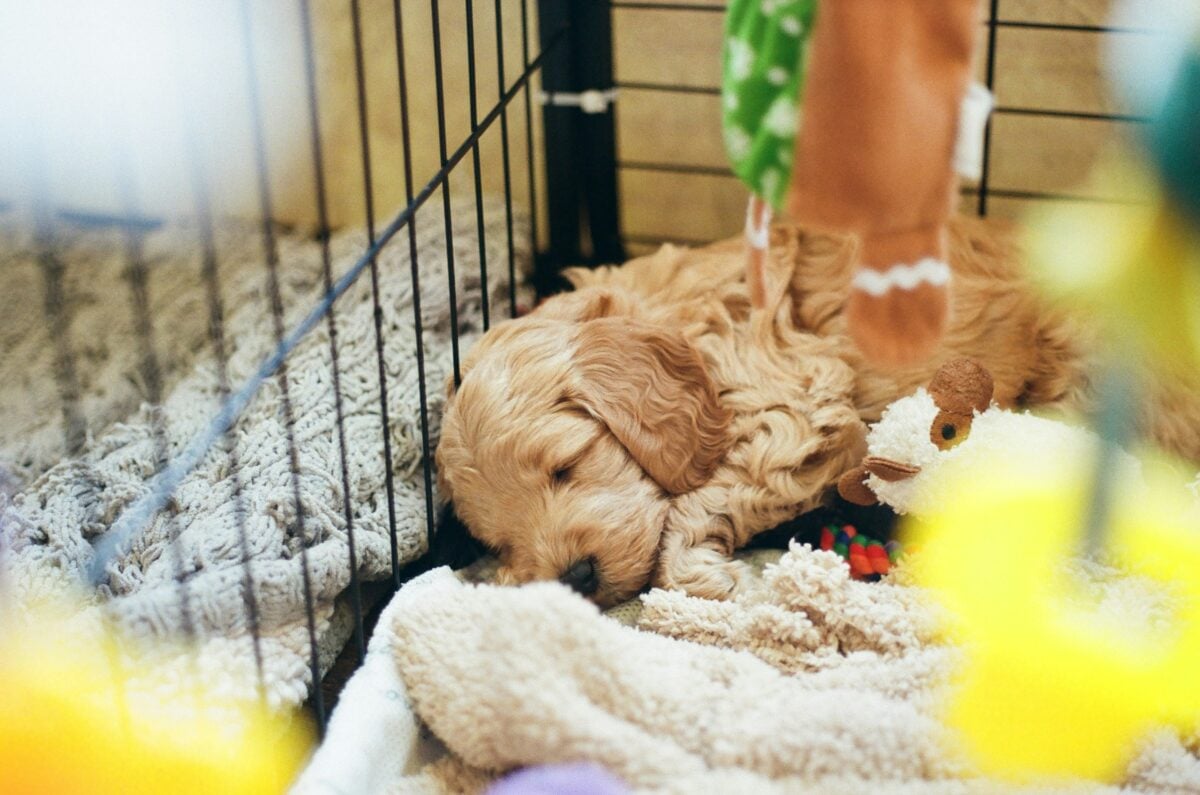
If your puppy cries in a crate, check whether they need to go outside and whether the setup suits them. Our guides to crate training a puppy and puppies crying in crates cover that situation in more detail.
3. Address Noise And Anxiety
When barking begins at a particular window or after a predictable sound, close the curtains or move your dog’s bed farther from the trigger. Soft, steady background sound may help some dogs; our guide to TV and music for dogs explores those options.
If your dog remains anxious, ask your veterinarian what support fits the cause and severity of their distress. Calming treats and supplements are options to discuss, as well as prescription medication.
4. Get Help For Pain Or Ongoing Sleep Changes
A comfortable bed may make resting easier, but a dog who repeatedly tries to lie down and gets back up needs a veterinary evaluation. Tell your veterinarian about stiffness, panting, appetite changes, and what you see when your dog moves. You can read about pain relief options for dogs before the visit so you know what to ask.
Some dogs with diagnosed mobility problems may also benefit from a veterinarian-guided rehabilitation plan, such as physical therapy or hydrotherapy. The right approach depends on the cause of the discomfort.
When Should I Call The Vet About Nighttime Restlessness?
Arrange a veterinary visit if nighttime pacing or waking begins suddenly, happens repeatedly, or comes with changes in appetite, thirst, urination, mobility, breathing, or daytime behavior. New wandering, vocalization, or confusion in a senior dog also deserves an evaluation.
Seek emergency care immediately if your dog struggles to breathe, collapses, has a swollen abdomen, or repeatedly tries to vomit without bringing anything up. If you’re uncertain how urgently your dog needs care, call your veterinarian or an emergency clinic and describe exactly what you’re seeing.
Frequently Asked Questions
A few common nighttime situations need a closer look at timing or accompanying signs. Don’t see your question? Respond in the comments, and we’ll get back to you!
Why Is My Dog Restless At Night But Fine During The Day?
Something specific to nighttime may be waking them, such as outside sounds or a warmer bedroom. Watch how your dog moves after resting, too. Stiffness or difficulty getting comfortable can become especially noticeable when they’ve been lying still.
Why Does My Dog Pace And Pant At Night?
A hot room or a frightening sound may explain it, but pain and illness are also possible. Call your veterinarian when the panting is new, persistent, or unexplained, particularly if your dog cannot lie down comfortably. Difficulty breathing requires emergency care.
Should I Ignore My Dog When They Whine At Night?
First, check whether your dog needs a bathroom break or seems frightened or uncomfortable. Young puppies may still need to go outside overnight.
If your dog’s needs are met and you’ve ruled out health problems, you can try ignoring the whining when it’s part of an established bedtime habit. Be consistent, and give your dog plenty of activity and attention during the day.
More Help For Restless Nights
The hour your dog wakes, where they go, and how they move can reveal far more than “they won’t sleep.” If bedtime remains difficult, Canine Journal’s guides to dog anxiety, senior dog care, and choosing a comfortable dog bed are useful next reads.