When you purchase through links on our site, we may earn a commission at no extra cost to you. Learn more.
Your dog nudges your hand. Then your arm. Then your face.
Table of Contents
It is gentle but persistent. And it usually comes out of nowhere. So what does it mean?
Start Here: That Nose Nudge Is Not Random
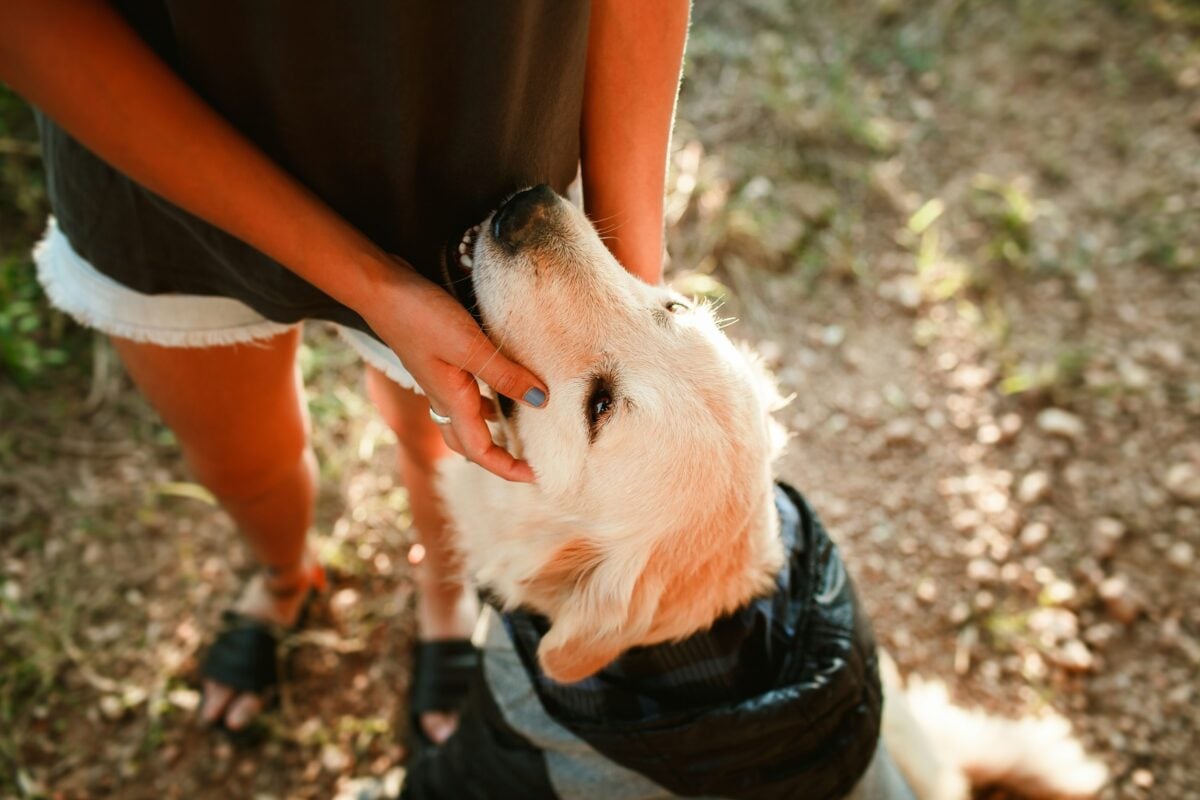
If your dog nuzzles you, it is not accidental. Dogs use physical contact the way humans use words. And nuzzling is one of their most flexible signals.
It can mean:
- I want attention
- I feel safe with you
- Feed me
- Something is off
- I just want to be close
Same behavior. Different meanings. That is why context matters more than the nudge itself.
What “Nuzzling” Actually Is (And What It Is Not)
Before we break it down, it helps to define what counts as nuzzling.
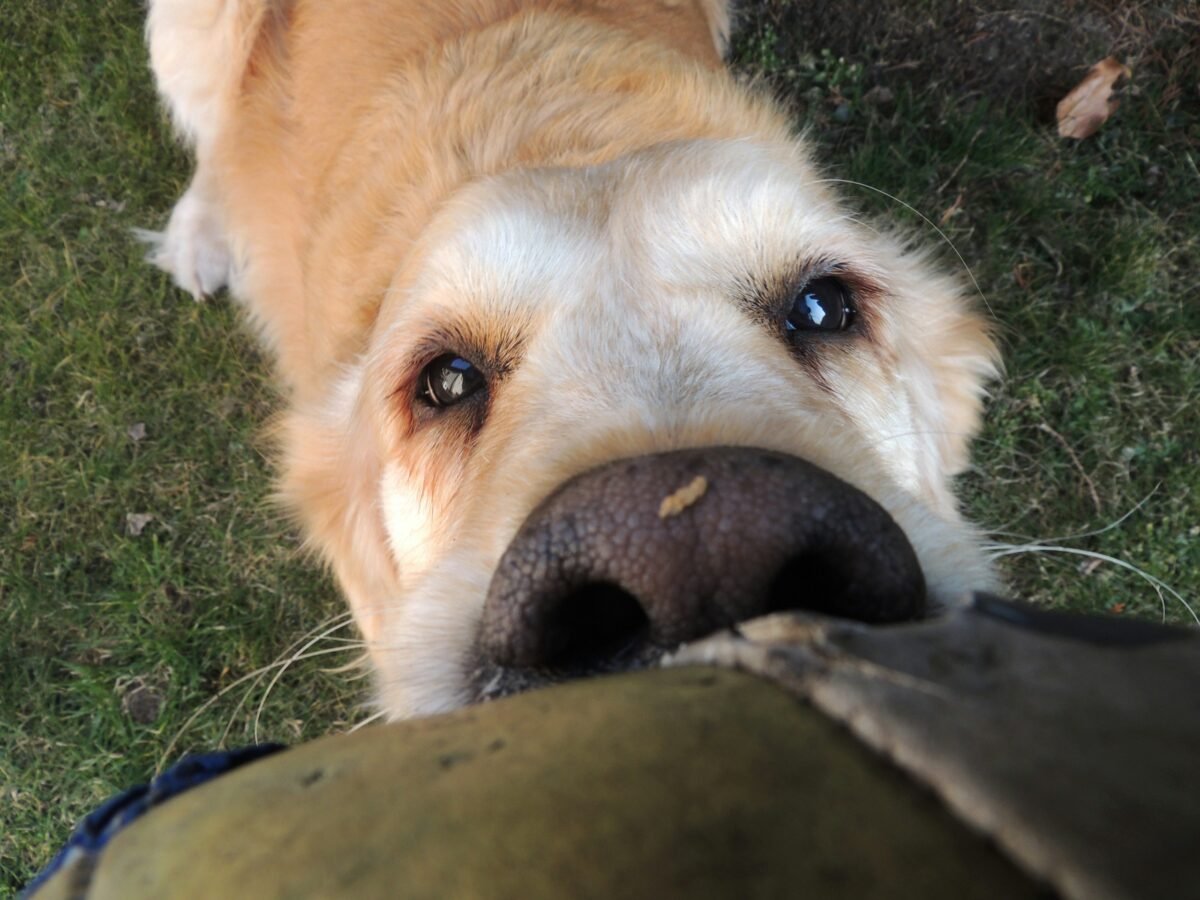
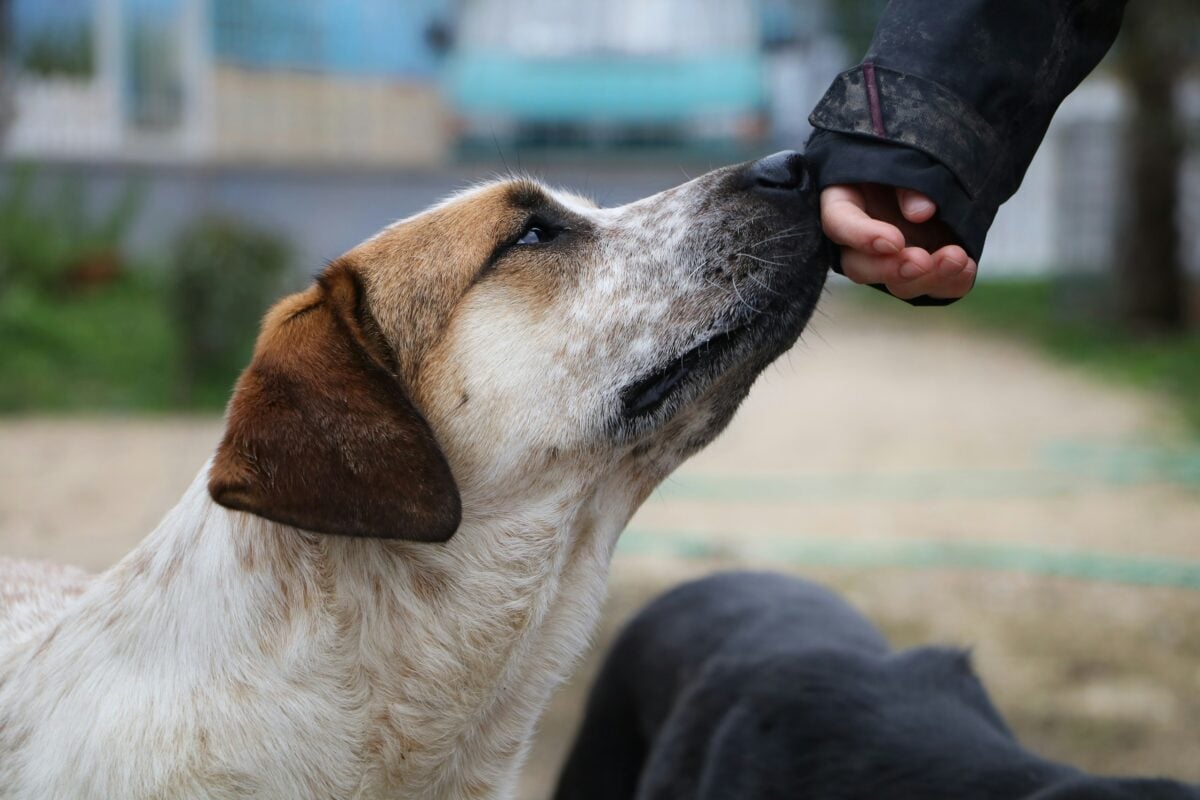
Nuzzling is when your dog presses, nudges, or buries their nose or face into you. It is usually slow and intentional, not frantic or aggressive.
It can look like:
- Pushing their nose under your hand
- Pressing into your side or chest
- Burying their face into your lap
- Nudging you repeatedly with their snout
Dogs do not just nuzzle humans. They also use similar nose and face contact with other dogs.
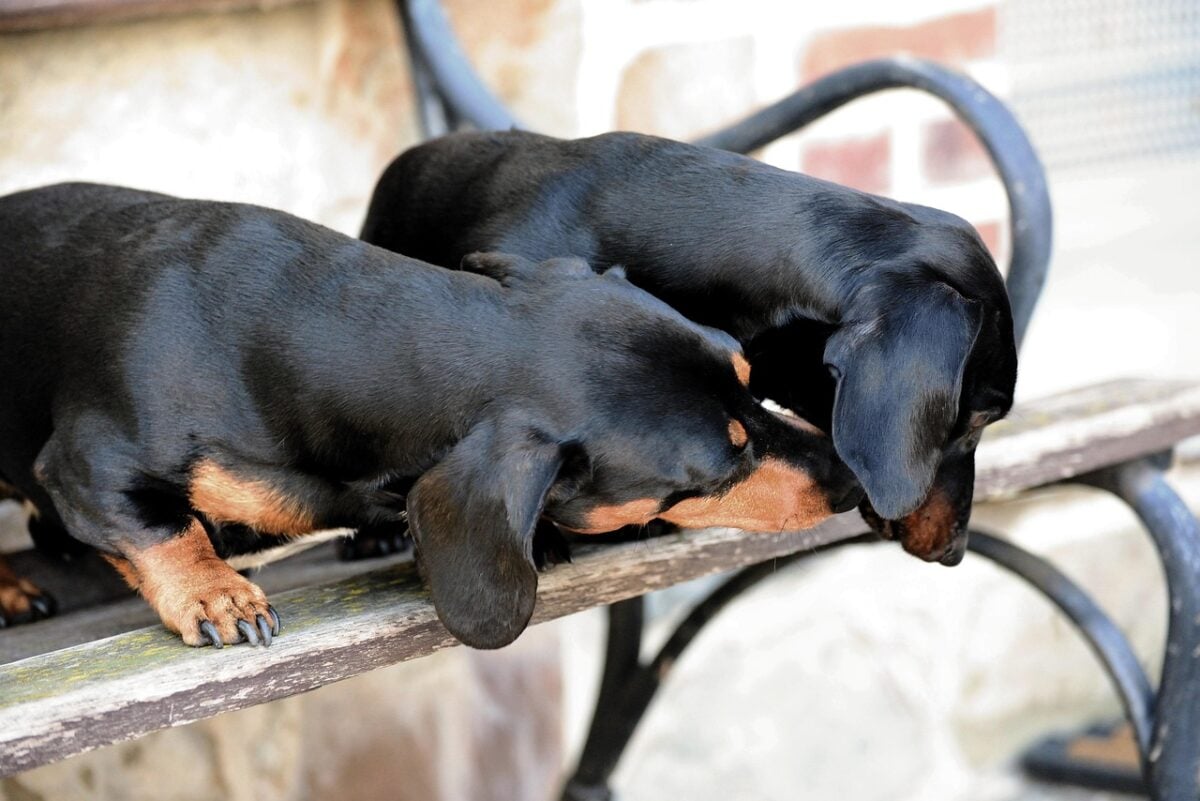
You may see this during greetings, play, or when one dog is trying to get another’s attention. It is part of their social communication.
The difference is that with humans, dogs tend to rely on it more. We do not pick up on subtle cues as easily, so dogs use clearer, more direct signals like nudging.
What Does Dog Nuzzling Look Like In Real Life?
Some dogs are subtle. Others act like they are trying to physically move you with their face. Once you start paying attention, you will notice patterns.
- The Gentle Tap: A quick, soft nudge. Easy to miss if you are distracted.
- The Persistent Poke: Nudge. Pause. Then another. This one usually means they want something.
- The Face Burrow: Your dog presses their face into your lap, arm, or side and stays there.
- The Under-Hand Lift: They wedge their nose under your hand to get you to start petting them again.
- The Lean And Nudge Combo: Leaning their body into you while nudging. Often tied to comfort or affection.
What These Styles Usually Mean
- Gentle, occasional nudges = relaxed and social
- Repeated nudging = attention or a request
- Face burying = comfort or security
- Strong, forceful nudging = urgency or learned behavior
The style alone does not tell you everything, but it gives you a strong starting point.
The 7 Most Common Reasons Dogs Nuzzle You
This is where things get interesting. The same nudge can mean something completely different depending on timing, environment, and your dog’s personality. Here are the most common reasons behind it.
1. Affection (The “I Like You” Nudge)
Dogs nuzzle to show closeness and bonding. It is a carryover from puppy behavior, in which physical contact signals safety and comfort. If your dog leans into you or gently presses their face into you while relaxed, this is usually affection.
Signs it is affection:
- Soft body language
- Relaxed eyes
- Slow, gentle nudges
- Happens during calm moments
This is your dog choosing proximity. Not because they need something. Just because they want to be near you.
2. Attention-Seeking (You Are Being Summoned)
Sometimes it is less emotional and more strategic. Dogs quickly learn that nudging works.
It gets your attention almost every time. So, they use it.
Common scenarios:
- You stop petting them and they nudge your hand back
- You are focused on something else and they interrupt
- They nudge, pause, then nudge again
If your dog nudges you while you are on your phone, working, or not actively engaging with them, this is likely attention-seeking.
3. Food Motivation (They Know Exactly What They Are Doing)
This one is extremely common. If your dog nudges you around meal times, snacks, or when you are eating, there is a good chance food is involved.
Look for:
Dogs are excellent at pattern recognition. If nudging has ever resulted in food, even once, they will remember.
- Nudging near the kitchen
- Nudging while you are eating
- Nudging around feeding times
- Following up with staring or pacing
This is not affection. This is negotiation.
4. Comfort & Security (You Are Their Safe Place)
Dogs often nuzzle when they want reassurance. This can happen during stressful situations or when something feels off in their environment. Your presence provides stability.
Common triggers:
- Loud noises
- New environments
- Changes in routine
- After being startled
The nuzzle here is not about getting something. It is your dog saying, “I feel better when I am close to you.”
5. Communication (A Subtle Ask)
Dogs use nuzzling as a way to ask for something specific. It is often paired with other small cues.
Examples:
- Nudging you, then walking toward the door
- Nudging, then looking at their empty bowl
- Nudging, then leading you somewhere
This is where people miss the message. The nudge is step one. What happens next tells you what they actually want.
6. Habit & Learned Behavior (You Accidentally Trained This)
If your dog nudges you a lot, there is a good chance you reinforced it. Every time you respond to a nudge with attention, food, or interaction, you strengthen the behavior. Over time, it becomes automatic.
Signs it is habit-driven:
- Happens frequently without a clear reason
- Your dog expects a response every time
- It escalates if ignored
7. Anxiety Or Stress (When It Is Not Just Cute)
Most nuzzling is harmless, but repeated or intense nuzzling can be a sign of stress or anxiety. This usually looks different from casual nudging.
Watch for:
- Rapid or repetitive nudging
- Combined with whining or pacing
- Happens in specific stressful situations
- Difficulty settling down
How To Tell What Your Dog Means
The behavior alone is not enough. You have to look at context. Here is a quick way to break it down:
- If your dog is relaxed: Likely affection or comfort
- If your dog is interrupting you: Attention-seeking
- If it is near food or routine times: Food motivation
- If it is paired with movement or cues: Communication
- If it feels intense or repetitive: Check for stress
Quick Read: What Your Dog Is Saying
- Gentle nudge while cuddling = affection
- Nudge while you are busy = attention
- Nudge near food = asking for food
- Nudge then walk away = follow me
- Repetitive nudging with tension = possible stress
Same action. Different message.
Do Some Dogs Nuzzle More Than Others?
If it feels like your dog is especially “nudgey,” you are probably right. Not all dogs use nuzzling the same way. Some rely on it constantly, while others barely do it at all.
This comes down to three main factors: personality, breed tendencies, and learned behavior.
Personality Plays A Bigger Role Than You Think
Some dogs naturally seek more physical contact. These are the dogs that:
- Follow you from room to room
- Lean against you when standing
- Always want some part of their body touching you
For these dogs, nuzzling is just an extension of that need for closeness.
Other dogs are more independent. They may still be affectionate, but they show it differently.
Instead of nudging, they might:
- Sit nearby without touching
- Check in visually instead of physically
- Come and go on their own terms
Neither type is better. They just communicate differently.
Certain Breeds Are More Likely To Nuzzle
Dogs bred to work closely with humans tend to use more physical communication. These include:
- Companion breeds that were selected for closeness
- Herding dogs that are tuned into human movement
- Sporting and working dogs that rely on human interaction
These dogs are more likely to use nudging because they are wired to stay connected to you. On the other hand, more independent breeds may rely less on physical contact and more on movement or distance-based signals.
Your Response Shapes The Behavior
This is the part most people overlook. Even if your dog was not naturally a big nuzzler, they can become one.
Every time you respond to a nudge, you reinforce it. From your dog’s perspective, that is a successful strategy. So they repeat it.
Over time, what started as occasional nudging can turn into a go-to behavior.
Quick Takeaway: Why Your Dog Nuzzles So Much
If your dog nudges you constantly, it is usually a mix of:
- A social, people-focused personality
- A breed tendency toward closeness
- A history of getting rewarded for nudging
Nuzzling Vs Other Dog Behaviors (Easy Comparison)
Not all “pushy” behaviors are the same. Some look similar but have very different meanings.
Nuzzling Vs Pawing
Nuzzling and pawing are both action-prompting behaviors.
- Nuzzling is usually a controlled, intentional request
- Pawing is more demanding
Nuzzling is often your dog’s first attempt to get something. Pawing tends to show up when that does not work or when your dog is more excited or frustrated.
Nuzzling Vs Licking
- Nuzzling is about getting a response from you
- Licking is often about managing emotions or influencing behavior
Dogs nuzzle when they want a response. Attention, food, movement, or interaction. Licking,on the other hand, is usually more about communication or self-soothing.
It can mean:
- Excitement or affection
- Trying to calm themselves
- Trying to calm you
- A subtle “that’s enough” signal in some situations
Nuzzling Vs Mouthing
- Nuzzling uses the nose
- Mouthing involves the mouth and teeth
Nuzzling is typically controlled and low-pressure. Your dog is communicating or asking for something.
Mouthing often shows up during play or excitement and can be a normal part of how dogs interact. If it is not managed, mouthing can escalate into biting, especially in high-energy moments or with overstimulation.
When Nuzzling Is Normal & When It Is Not
For most dogs, nuzzling is completely normal. It is part of how they interact with you. You do not need to correct it unless it becomes excessive or disruptive.
Normal:
- Occasional nudging
- Gentle contact
- Situational behavior
Potential concern:
- Constant nudging
- Escalating behavior when ignored
- Signs of anxiety alongside it
If it feels excessive, it is worth looking at what your dog is trying to get or avoid.
Should You Encourage It or Stop It?
This depends on your dog and your tolerance for it. Some people love it. Others do not want a nose constantly in their personal space.
Encourage it if:
- It is calm and occasional
- You enjoy the interaction
- It is not disruptive
Redirect it if:
- It is constant
- It interrupts work or routines
- It is clearly attention-demanding
You do not need to punish the behavior. Just control how you respond to it.
If nudging always gets attention, it will continue. If it does not, your dog will adjust.
How To Respond To Your Dog’s Nuzzling
How you respond matters more than you think. Every time your dog nudges you and gets a reaction, they learn something.
If You Want To Encourage It
Reinforce calm, gentle nudging.
- Give attention when your dog is relaxed
- Pet them when the nudge is soft and appropriate
- Reward the behavior you actually want to see
This turns nuzzling into a positive bonding behavior.
If You Want Less Of It
Be more selective with your response.
- Do not react to every nudge
- Avoid giving attention during demanding or repetitive nudging
- Wait for calm behavior before engaging
Consistency is key. If the behavior stops working, your dog will adjust.
4 Common Mistakes Owners Make With Nuzzling
This is where things usually go wrong.
- Assuming it always means affection. It often does not.
- Reinforcing it without realizing. Every response teaches your dog something.
- Ignoring context. The situation matters more than the behavior.
- Overcorrecting normal behavior. Not everything needs to be trained out.
Frequently Asked Questions
Nuzzling can seem simple on the surface, but once you start paying attention, it raises a lot of questions. Here are some of the most common ones dog owners ask, along with what is actually going on behind the behavior.
Don’t see your question? Respond in the comments, and we’ll get back to you!
Why Does My Dog Nuzzle Me With Their Nose?
Dogs use their nose the way we use our hands. It is one of their main tools for interacting with the world.
When your dog nuzzles you with their nose, they are trying to get your attention or communicate something specific. In many cases, it is a sign of affection or a way to stay physically connected to you. But it can also mean they want something, like food, play, or petting.
The key is to look at when it happens. A relaxed nuzzle during quiet time usually means bonding, while a more persistent nudge during activity often means they are asking for something.
Why Does My Dog Nuzzle Me And Then Stare At Me?
This is usually a two-step communication. The nudge gets your attention. The stare delivers the message.
If your dog nudges you and then locks eyes with you, they are waiting for a response. This often happens when they want something specific, like going outside, getting fed, or playing.
If you pay attention to what happens next, you will usually see a pattern. Over time, this becomes one of the clearest ways your dog communicates their needs.
Why Does My Dog Nuzzle My Face?
Face nuzzling is typically a sign of closeness and trust. Dogs reserve this kind of behavior for people they feel safe with. It is often tied to affection, bonding, and social behavior that starts in puppyhood.
However, context still matters. If it happens when you are distracted, it may also be a way of redirecting your attention back to them. If it is gentle and calm, it is more likely to be emotional. If it is persistent, it may be attention-seeking.
Is Nuzzling The Same As Cuddling?
Not quite. Nuzzling is usually an active behavior with a purpose behind it. Your dog is initiating contact to communicate something.
Cuddling is more passive. It happens when your dog is already settled and relaxed, often staying in one place without trying to get your attention.
Think of nuzzling as a conversation starter, and cuddling as what happens once the conversation is over.
Can Nuzzling Be A Sign Of Anxiety?
Yes, in certain situations. Most nuzzling is completely normal and harmless. But if it becomes repetitive, intense, or happens during stressful situations, it can be a sign your dog is trying to self-soothe.
You may notice it alongside other behaviors, such as pacing, whining, or difficulty settling down. In these cases, the nuzzling is less about communication and more about coping.
If you see that pattern, it is worth looking at what might be causing stress and how to help your dog feel more secure.