When you purchase through links on our site, we may earn a commission at no extra cost to you. Learn more.
You crawl into bed after a long day or settle onto the couch for a quick Sunday afternoon nap, stretch out your legs, and bam. Your dog wedges themselves directly between your legs, dropping down like a 40-pound furry anchor.
Table of Contents
Welcome to “canine paralysis.” Your foot is falling asleep, the TV remote is just out of reach, but the unwritten rules of dog ownership state that you are legally forbidden from moving.
While it’s easily the most awkward sleeping position on earth, this hilarious ritual isn’t an accident.
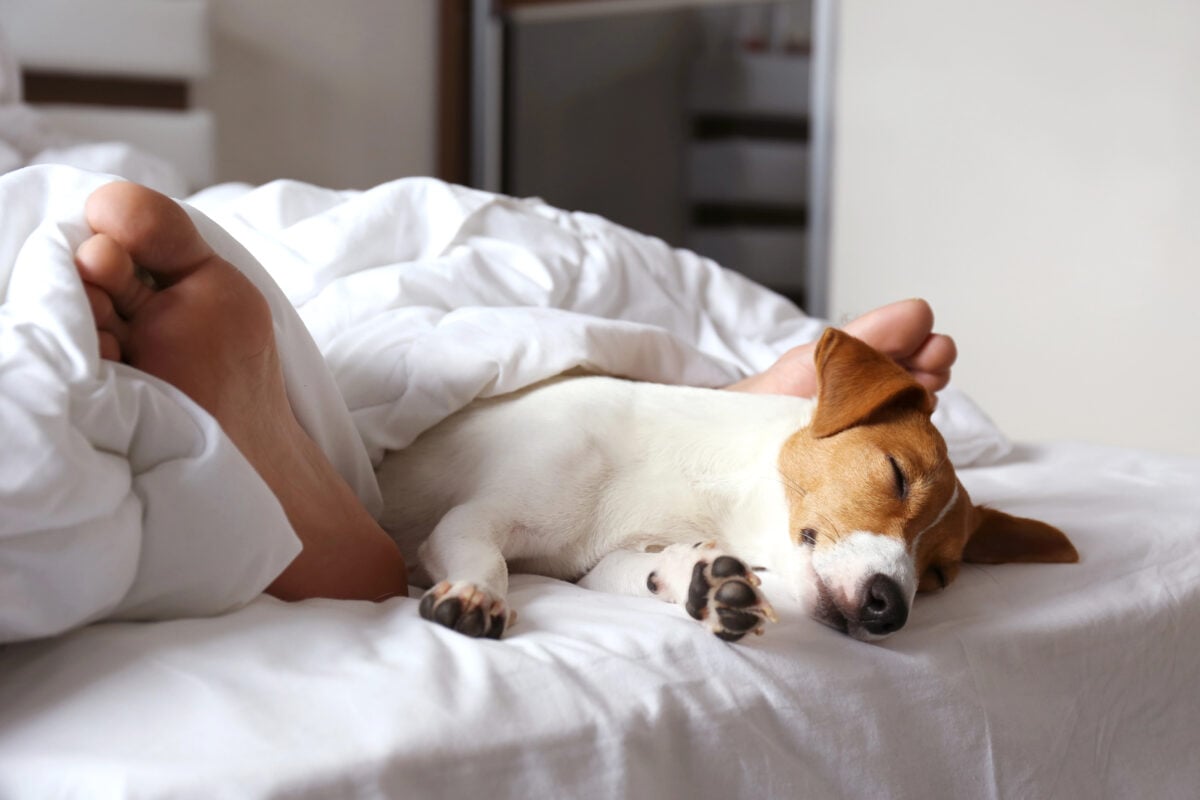
So why does your dog treat your legs like the most exclusive sleeping spot in the house?
Let’s look at the real reasons behind this cozy, clingy, and occasionally circulation-threatening behavior.
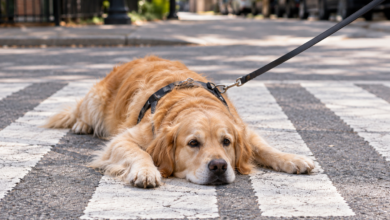
Can You Relate?
This dog has mastered the art of canine paralysis, and their owner clearly no longer has a say in the sleeping arrangement.
7 Reasons Why Your Dog Sleeps Between Your Legs
While it might feel like your pup is just trying to make it impossible for you to roll over, this sleeping habit is completely normal.
Whether you’re settling in for an eight-hour night of sleep or just crashingon the couch for a quick nap, here are the real reasons your canine sidekick refuses to give you any personal space.
1. The Cozy V-Shape: Pure Warmth and Physical Comfort
Let’s be honest: our dogs are professional comfort-seekers. If there’s a patch of sunlight on the hardwood floor or a stray pile of warm laundry fresh from the dryer, your dog will find it.
When it comes to human anatomy, the space between your legs is basically peak luxury.
Think of yourself as a giant, walking radiator. When you lie down on your back in bed or stretch out on the couch, your legs naturally form a warm, insulated “V” shape.
For a dog, this area functions like a custom-built little den. It traps your body heat perfectly, creating a pocket of warmth that’s impossible to replicate with a standard dog bed.
This setup is especially appealing to certain pups:
- Small or short-haired breeds
Breeds like Whippets, Chihuahuas, and French Bulldogs have thinner coats and lower body fat, so they lose heat more easily. To them, your legs are basically a self-heating blanket. - Senior dogs
Older dogs with stiff joints or arthritis often seek out gentle warmth and supportive sleeping positions to relax more comfortably.

There’s also the structural appeal. A flat mattress or couch cushions a dog, but it doesn’t hold them in place.
By wedging themselves between your thighs or calves, your dog creates a snug, contoured sleeping spot where they can fully relax without constantly readjusting.
Your knees become side bolsters, your shins become pillows, and suddenly your dog is sleeping harder than you are.
2. The Ultimate Safe Zone (Security and Vulnerability)
To understand why your dog treats your legs like a personal fortress, we have to look at the world through their eyes.
In the animal kingdom, sleeping is a highly hazardous activity. It’s the one time a creature is completely defenseless against potential threats.
Even though the biggest danger in your house is probably the evening vacuum cleaner, your dog’s DNA doesn’t know that. Their ancestral survival radar is always spinning.
That’s part of what makes the space between your legs so appealing.
The “Human Shield”
When a dog curls up out in the open, they stay slightly more aware of their surroundings. But when they wedge themselves tightly between your legs, they effectively neutralize their blind spots.
For many dogs, this position offers:
- Protection around vulnerable areas like their back and sides
- Physical contact that feels grounding and secure
- Reassurance that their favorite human is right there beside them
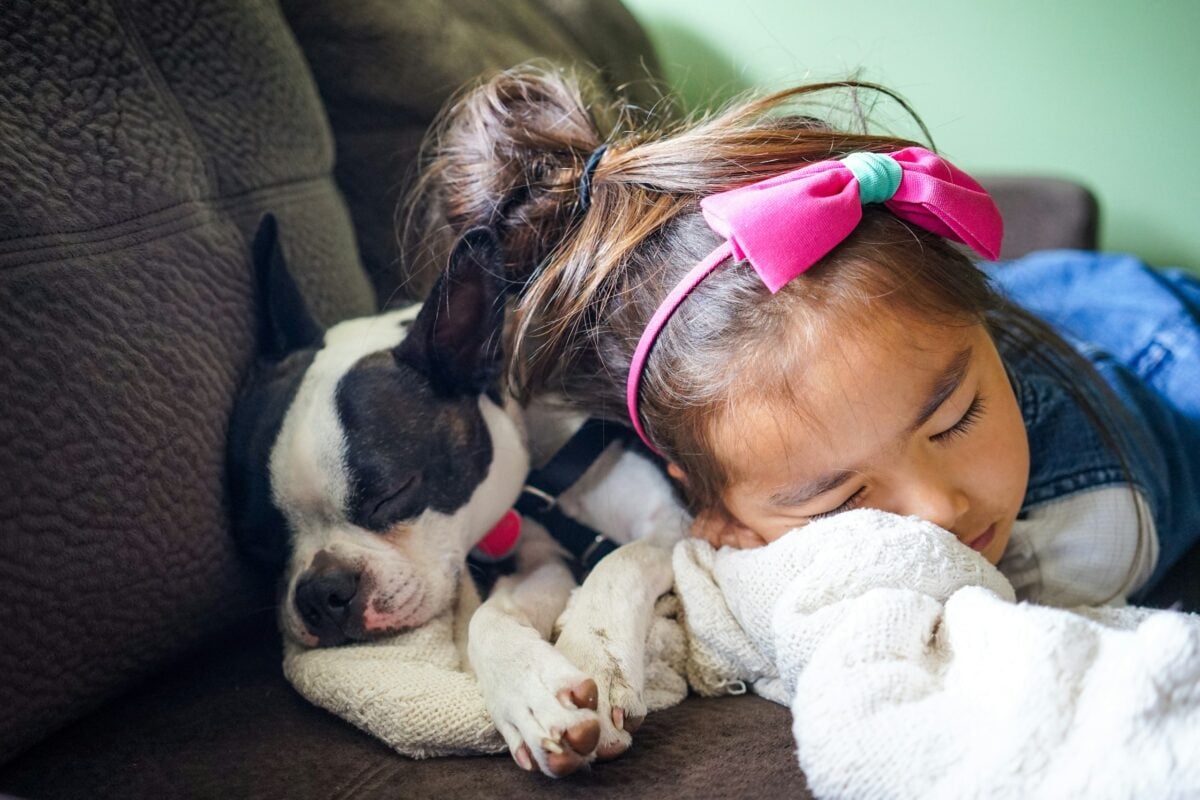
There’s also a comfort element to the pressure itself. Similar to how some people find weighted blankets calming, many dogs seem to relax more when they’re pressed firmly against something secure and familiar.
The Built-In Motion Detector
Dogs also love this position because they instantly know when you move.
When they’re pressed directly against your legs, they can feel:
- Shifts in your weight
- Sudden movements
- Changes in breathing or body position
- The moment you start getting up
That physical connection acts like a built-in early warning system while they sleep.
Is This Your Dog?
You sit downon the couch, and your classic velcro dog immediately marches over. They don’t just sit next to you; they deliberately climb over your ankles, circle twice, and drop their full body weight across your shins like they’re securing a parking spot nobody else is allowed to have.
The second you try to slide one foot out to prevent a leg cramp, they instantly rearrange themselves to pin you back into position.
3. Deep-Rooted Instincts (The Canine Pack Mentality)
Even if your pup wears a rhinestone collar and sleeps on a designer mattress, they’re still social animals at heart.
Dogs may be highly domesticated, but many of their natural comfort and sleeping instincts still trace back to their wild ancestors, who relied heavily on group living for warmth, protection, and survival.
That instinct starts early. Puppies naturally sleep piled tightly together with their mother and littermates because physical closeness helps them feel safe and comfortable.
For many dogs, that association never fully disappears.
By wedging themselves between your legs, your dog may be recreating that same cozy, secure feeling while also staying close to someone they deeply trust.

4. Scent-Soaking and “Velcro” Bonding (Pure Love)
It is easy to get caught up in the biological and survival-based reasons behind this behavior. But sometimes the simplest answer is also the most accurate:
Your dog just really loves being close to you.
Choosing to sleep between your legs often involves physical closeness, comfort, a familiar scent, and attachment.
To dogs, scent is deeply emotional. Your blankets, clothes, and body all carry a smell that feels familiar, safe, and reassuring to them.
In fact, one study found that dogs with stronger attachment to their owners showed measurable differences in sleep structure when resting near them, suggesting that an owner’s presence can influence how securely and deeply some dogs sleep.
That’s part of why so many velcro dogs don’t just sleep near their owners — they sleep practically attached to them.
And because dogs often bond through physical closeness and routine, sleeping pressed against your legs can become part of their nightly ritual of connection.
They aren’t just looking for the warmest spot on the couch or bed. They’re looking for their person.
A Real-Life Velcro Dog Owner Confession
Some dogs don’t just sleep near their owners — they fully commit to the assignment.
When people talk about their dogs sleeping with them, I always laugh because in my house, I’m not sleeping with the dogs — I am literally the mattress.
My larger dogs have some boundaries, but my small dogs? Absolutely none. The second I stretch out on the couch or settle into bed, they immediately claim the space between my legs like it’s reserved seating.
And somehow, despite weighing 10 pounds, they anchor themselves with the gravitational force of a dying star.
The funniest part is that this isn’t a privilege they extend to everyone. I’m clearly the premium mattress in the household.
If I get up, they’ll temporarily relocate to one of the kids, but everyone knows they’re just waiting for the deluxe bedding package to return.
— Danielle DeGroot, Canine Journal writer and professional human dog mattress
Quick Quiz: Which Bedtime Personality Is Your Pup?
- The Extortionist: Rested a chin on your ankle at 10 p.m. By midnight, they used slow-motion physics to push you completely off the mattress.
- The Kickboxer: Runs a full midnight marathon in their dreams. You wake up with mysterious shin bruises from rapid-fire paw attacks.
- The Face Planter: Rejects all human boundaries. Sleeps with a wet nose jammed directly against your eyeball or pressed firmly into your neck crease.
- The Acrobat: Sleeps completely upside down with four limbs pointing stiffly at the ceiling. Looks deeply uncomfortable. Somehow thriving.
- The Blanketeer: Tunnels directly into the center of the duvet and happily creates a zero-oxygen fabric cave until morning.
- The Exorcist: Emits creepy, muffled barking sounds and unsettling eye twitches while dreaming. Horrifying to witness. Probably chasing a leaf.
- The Sidewinder: Sleeps completely horizontal across a king-sized bed while two humans cling to the outer edges like shipwreck survivors.
5. The Bodyguard Stance (Protective Instincts)
Does your dog always seem to sleep facing the door, even when they’re wedged tightly between your legs? If so, you might have a furry secret service agent on your hands.
Some dogs naturally prefer positions where they can stay close to you while still keeping an eye on the room around them.
By sleeping against your legs, they can:
- Stay physically connected to you
- React quickly to unusual sounds or movement
- Immediately feel when you wake up or shift positions
This behavior is especially common in breeds with stronger guardian or watchdog instincts, but even tiny dogs can act like unpaid overnight security staff.
Is This Your Dog?
You hear a strange noise outside and instantly feel the furry weight between your knees go stiff.
Your dog quietly lifts their head, ears angled toward the bedroom door, trying to determine whether there’s an actual threat — or just your neighbor closing a trash can dramatically again. Your devoted pup is waiting, watching, and acting as your personal, living shield.
6. Seeking Reassurance During Stress
While this sleeping habit is often just about comfort and affection, some dogs also use physical closeness to help themselves feel calmer during stressful moments.
For anxious or sensitive dogs, pressing tightly against your legs may feel reassuring and grounding, especially during situations that make them nervous or overstimulated.
You may notice this behavior becomes much more intense during:
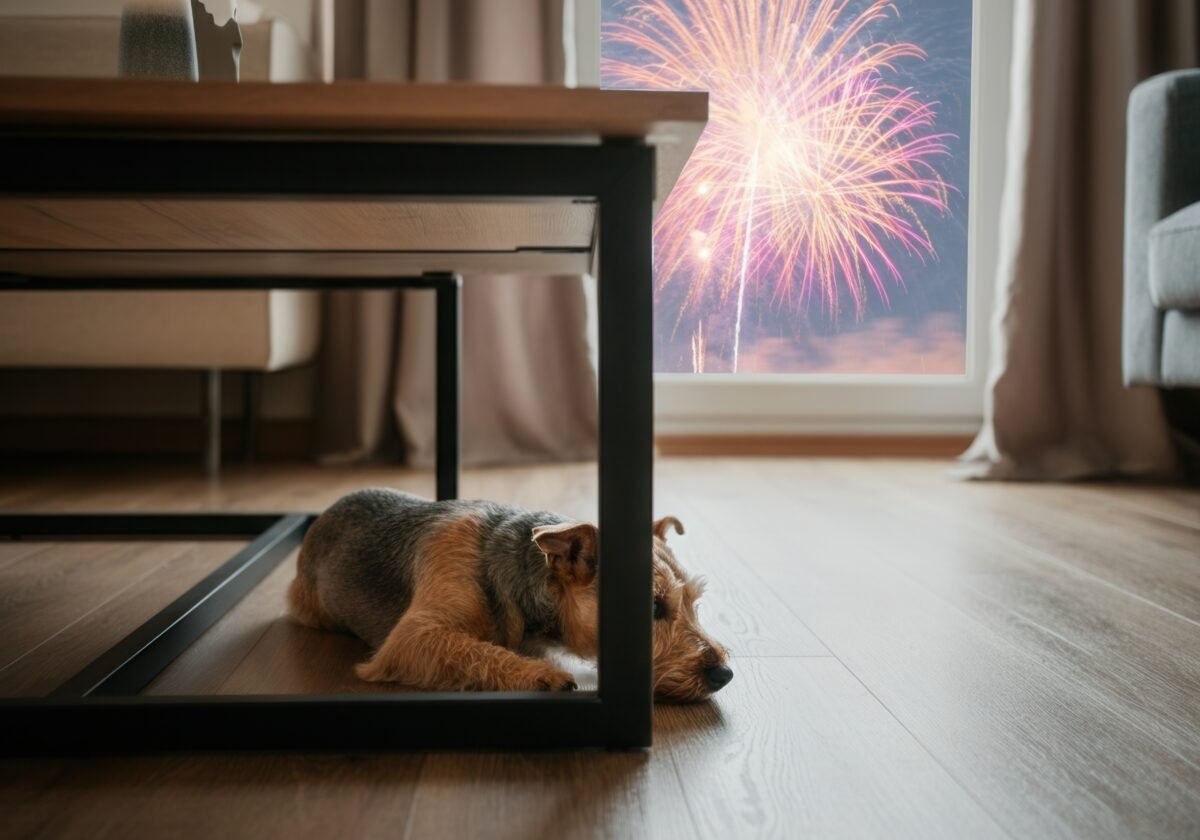
- Thunderstorms or fireworks
- Major routine changes
- Stressful environments
- Periods of separation anxiety
Some dogs naturally seek firm physical contact when they’re overwhelmed, much as some people find comfort in weighted blankets or snug pressure.
If your dog only wedges themselves tightly between your legs when the sky starts booming or fireworks go off, they may simply be looking for the place where they feel safest and most secure.
7. Staking Their Claim (Clingy and Attention-Seeking Behavior)
Sometimes, the reasons behind your dog’s favorite sleeping spot aren’t entirely altruistic. Dogs are spatial creatures, and choosing to drop anchor right in the middle of your lower body can be a masterclass in subtle canine politics.
Some dogs naturally become a little more “claim-y” with their favorite humans, especially in multi-pet households or homes where they constantly compete for attention.
- “You Are Mine”
By parking their full body weight directly between your knees, your pup is gently claiming you. It’s a comforting way of saying, “You are my person, and I’m making sure everyone else knows it.” - Sibling Rivalry
If you live in a multi-pet household, this position is the ultimate power move. It effectively blocks the resident cat or a second dog from getting close to your core body warmth and attention.
Why Does My Dog Do This More Than Others?
If you have a multi-dog household, you might notice that while one dog treats your legs like an exclusive VIP lounge, the other is perfectly happy sleepingon the floor across the room.

The Breed Factor: Natural Clingers vs. Independent Thinkers
Centuries of selective breeding have hardwired different dog breeds with vastly different comfort requirements and attachment levels:
The “Velcro” Breeds
These breeds are genetically driven to seek constant physical closeness. They thrive on touch and view separation as a design flaw.
The Guard and Herding Groups
Often more alert and watchful while resting, these breeds possess a strong protective drive and may be more likely to sleep against your legs while keeping an eye on the room around them.
The Aloof Independent Breeds
On the flip side, these breeds value their personal space. They love you deeply, but they prefer to look at you from a comfortable, cool distance.
Personality Matters, Too
Breed tendencies only go so far. Sometimes it just comes down to individual temperament. Some dogs are simply more clingy, affectionate, or physically attached than others.
An anxious or deeply sensitive dog will use your legs as an emotional anchor to self-soothe throughout the night or during a chaotic daytime nap.
Meanwhile, a highly confident, relaxed dog might only slide into your personal space when the room temperature drops and they need to borrow your heat.
Should You Let Your Dog Sleep Between Your Legs? (Pros & Cons)
As sweet as it is to have your furry best friend curled up against your shins, sharing a bed with a living leg anchor isn’t always the world’s most ergonomic sleeping arrangement.
If you’re trying to decide whether to keep welcoming them into the “V-shape” or gently encourage a little more personal space, here are the biggest pros and cons.

The Pros
For many dog owners, the emotional benefits easily outweigh the inconvenience:
- Comfort and companionship: Sleeping close to your dog can feel calming, comforting, and emotionally reassuring.
- Warmth: Dogs are basically portable space heaters, especially during colder months.
- Bonding: Many dogs see shared sleeping space as part of their daily connection and routine with you.
- Stress relief: Some people simply sleep better with their dog nearby.
The Cons
Of course, the arrangement is slightly less magical when you wake up unable to feel your left leg.
- Restricted movement: Sleeping in one position for hours can leave you stiff, cramped, or sore.
- Interrupted sleep: Dogs shift, kick, snore, dream-run, and aggressively reorganize themselves at 3 a.m.
- Overheating: A furry radiator pressed against your legs can become deeply unpleasant during the summer.
- Clingy habits: Some dogs can become overly dependenton constant nighttime contact.
How to Set Bedtime Boundaries
If you love the emotional closeness of sharing a bed with your pup but your lower back and knees are screaming for mercy, you don’t have to choose between a painful spine and a guilty conscience.
You can reclaim a little personal space while still ensuring your dog feels safe, loved, and connected to you.
The Gentle Eviction Plan
Shifting a dog’s favorite sleeping habit usually takes consistency and a few comfort-focused adjustments:
Create a “Den” Right Next Door
Place a high-quality, bolstered dog bed next to your side of the bed or couch. Raised edges can recreate some of the cozy, enclosed feeling dogs naturally seek out between your legs.
The Scent Hack
Place an old t-shirt or pillowcase that smells like you inside their new bed. Familiar scent alone can make a sleeping spot feel much more comforting and secure.
Implement a Boundary Command
Teach a cue word, such as “Side” or “Off,” using positive reinforcement. When your dog drops directly across your shins, use your cue and gently guide them to another spot, rewarding them with praise when they settle there calmly.

The Power of the “Side-Cuddle” Compromise
If your dog is a true velcro pup, a total banishment to the floor might cause unnecessary pacing or stress.
Instead, try shifting them from directly between your knees to sleeping beside your hip or against your outer leg.
They still get the closeness and comfort they want, and you regain partial use of your lower body.
Embrace the Bond
At the end of the day, a dog choosing to press against you while they sleep is s usually a sign of trust, comfort, and attachment.
Whether it’s driven by warmth, instinct, reassurance, or pure affection, your dog is ultimately choosing the place where they feel safest: right beside you.
Watch: What Do Different Dog Sleeping Positions Mean?
Curious to dive deeper into your pup’s sleeping habits?
From curled-up donut sleepers to upside-down sprawlers, your dog’s favorite sleeping position can reveal a surprising amount about their comfort level, personality, and overall sense of security.
Now that you’ve seen these sleeping positions, you might be noticing something: your dog definitely has favorites.
Some dogs sleep in the exact same position every day and night, like tiny creatures of habit. Others treat naps and bedtime like an ongoing experimental phase with multiple costume changes.
How Dogs Communicate With Their Bodies While They Sleep
Even while sleeping, dogs still communicate a lot through their body language.
Small movements can give you clues about whether they’re staying lightly alert to their surroundings, how deeply they’re resting, and how relaxed they feel.
The Ears
A dog’s ears often reveal how deeply asleep they actually are.
- Loose, relaxed ears: Usually signal your dog feels calm and completely comfortable.
- Twitching or swiveling ears: Often means they’re still lightly monitoring sounds around them, even while resting.
The Tail Positioning
Tail position can also reveal a dog’s comfort level during sleep.
- Loose, relaxed, untucked tail: Typically signals physical comfort and relaxation.
- Tucked tail with tense body posture: May indicate stress, nervousness, or an attempt to conserve warmth.
The Paw Paddle
Twitching paws, soft whimpers, and little running motions are usually completely normal.
Dogs experience REM sleep just like humans do, which is why many pups appear to “run,” bark softly, or paddle their paws while dreaming.
And yes, there’s a decent chance your dog is currently winning an imaginary argument with a squirrel.
When Comfort Turns to Concern: Stress, Anxiety, and Sudden Changes
While sleeping between your legs is usually a harmless comfort habit, a sudden change in this behavior can sometimes point to stress, anxiety, or physical discomfort.
If your normally independent dog suddenly becomes intensely clingy at bedtime, it’s worth paying attention to what else may be going on in their environment.
Common Emotional Triggers
Dogs are creatures of habit, and major changes can sometimes increase comfort-seeking behavior.
You may notice your dog becoming extra attached during:
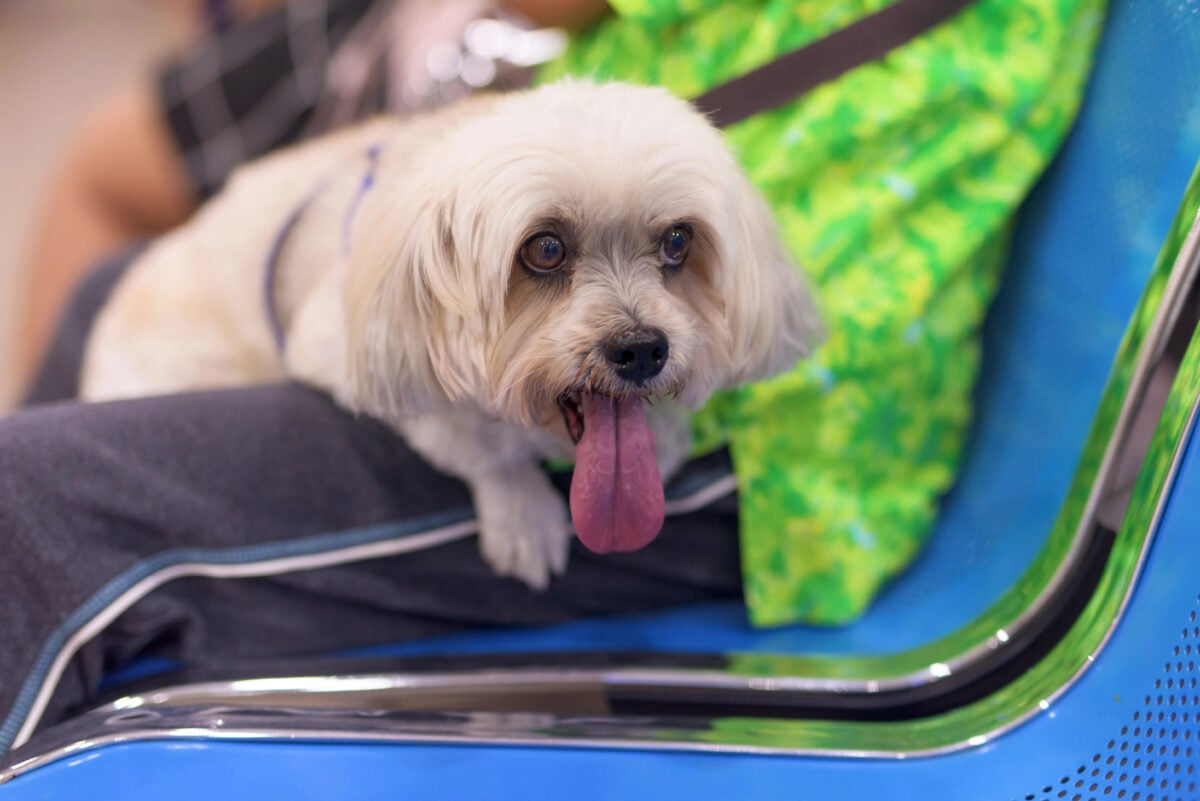
- Thunderstorms or fireworks
- Moving to a new home
- Schedule changes
- Introducing a new baby or pet
- Stressful household changes
- Periods of separation anxiety
Some dogs naturally seek more physical closeness when they feel unsettled or overstimulated.
Many pet owners find that a few small comfort adjustments can help anxious dogs settle more easily at bedtime, including calming vests during storms or vet-approved calming aids when appropriate.
More Serious Anxiety
There’s a difference between a dog who enjoys sleeping near you and a dog who always becomes distressed when they can’t.
If your dog shows these signs, they may be struggling with severe anxiety rather than simple affection.
- Panting
- Whining
- Pacing
- Refusing to settle unless touching you
- Reacting anxiously when you move away
Research highlighted by the American Veterinary Medical Association has also suggested that separation-related behaviors in dogs may be tied to underlying stress and frustration responses, especially during major routine or environmental changes.
That’s one reason some dogs suddenly become much more physically attached at bedtime after disruptions in their normal routine.
When to Call Your Vet
Sometimes, a sudden fixationon sleeping against your legs may also point to physical discomfort or pain.
It’s a good idea to schedule a veterinary checkup if this behavior appears alongside:
- Heavy panting or shivering
- Limping or stiffness
- Hesitation jumping onto the bed or couch
- Sudden clinginess in an otherwise independent dog
- Yelping, growling, or defensive reactions when touched
Dogs often hide discomfort surprisingly well, so sudden behavioral changes are sometimes among the earliest signs that something feels wrong, such as joint pain, illness, or an underlying medical issue.
Frequently Asked Questions
Have a weird sleeping habit or question about your pup’s nighttime routine that we didn’t cover here? Drop it in the comments below.
In the meantime, check out these quick answers to the most common questions pet parents ask about this cozy sleeping habit.
Why Does My Dog Only Sleep Between My Legs During The Day?
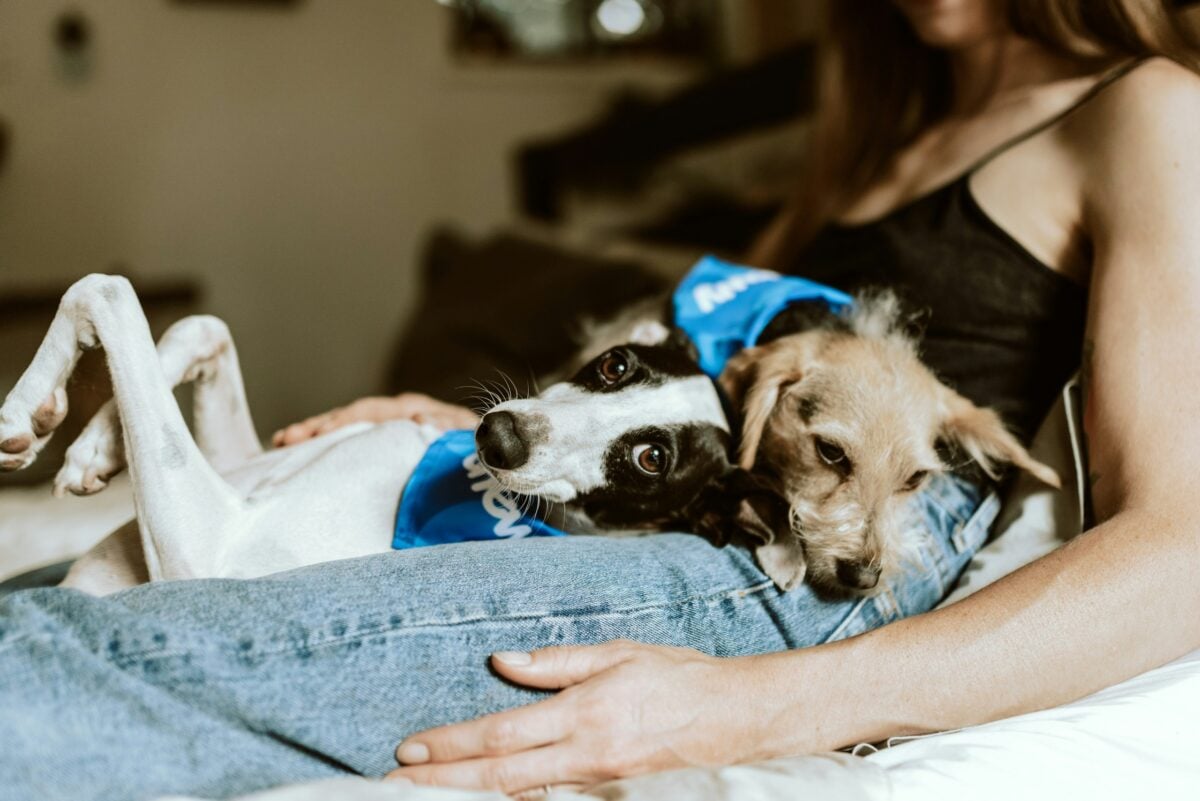
Daytime naps occur in a busier environment, so some dogs prefer to stay physically connected to their owners while they rest. By sleeping between your legs, they instantly notice when you get up, shift positions, or head toward the kitchen without them.
My Dog Growls At My Partner From Between My Legs. Is That Normal?
Not really. Mild grumbling can sometimes occur when a dog is startled awake, but consistent growling around a sleeping spot may point to resource guarding or possessive behavior.
If your dog becomes tense, growls, or tries to control who approaches you while cuddling, it’s a good idea to calmly interrupt the behavior and work on healthier boundaries around furniture and personal space.
Can This Position Hurt My Dog’s Joints Over Time?
For most dogs, occasionally sleeping between your legs isn’t a problem. But senior dogs or dogs with arthritis, hip dysplasia, or mobility issues may become uncomfortable if they stay twisted in awkward positions for long periods.
If your dog seems stiff, sore, or slow to get up afterward, a supportive orthopedic bed may be a better long-term option.
Why Does My Dog Press Their Butt Against Me While Sleeping?
As weird as it feels, this is often a sign of trust and comfort. Dogs tend to sleep with their more vulnerable areas positioned near people they feel safe around.
It can also simply be a warmth-and-contact thing. Some dogs just really enjoy touching their humans at all times, even if that means aggressively backing into you like a furry dump truck.

Deciphering Other “Clingy” Dog Behaviors
Sleeping between your legs is usually just one piece of a much bigger attachment puzzle. Dogs have all kinds of strangely specific ways of staying close to their favorite humans — and once you notice them, you start seeing them everywhere.
If your pup also follows you around the house, stares at you constantly, waits outside the bathroom door, or acts personally betrayed every time you stand up without them, check out these related guides next:
- Why Does My Dog Follow Me Everywhere?
- Why Does My Dog Stare At Me?
- Why Does My Dog Follow Me Into The Bathroom?
- Signs Your Dog Has Imprinted On You
Because once you live with a dog long enough, you realize they all have their own highly specific ways of saying:
“You’re not leaving this room without me, correct?”
What bizarre sleeping habit has your dog fully committed to at this point? Are they a leg-locking Velcro sleeper, a full-body bed hog, a midnight kickboxer, or a tiny heated ankle weight with separation issues? Tell us in the comments — dog owners have some wildly specific bedtime stories.