
When you purchase through links on our site, we may earn a commission at no extra cost to you. Learn more.
Why do dogs bury bones in the backyard, hide treats under couch cushions, stash socks in the laundry, or cover toys with blankets? Scooby-Doo didn’t invent bone burying; he just made it famous. Long before cartoon mysteries, wild canids buried extra food to protect it from scavengers and save it for later. Modern dogs still carry this instinct, even if dinner arrives in a bowl every day.
Table of Contents
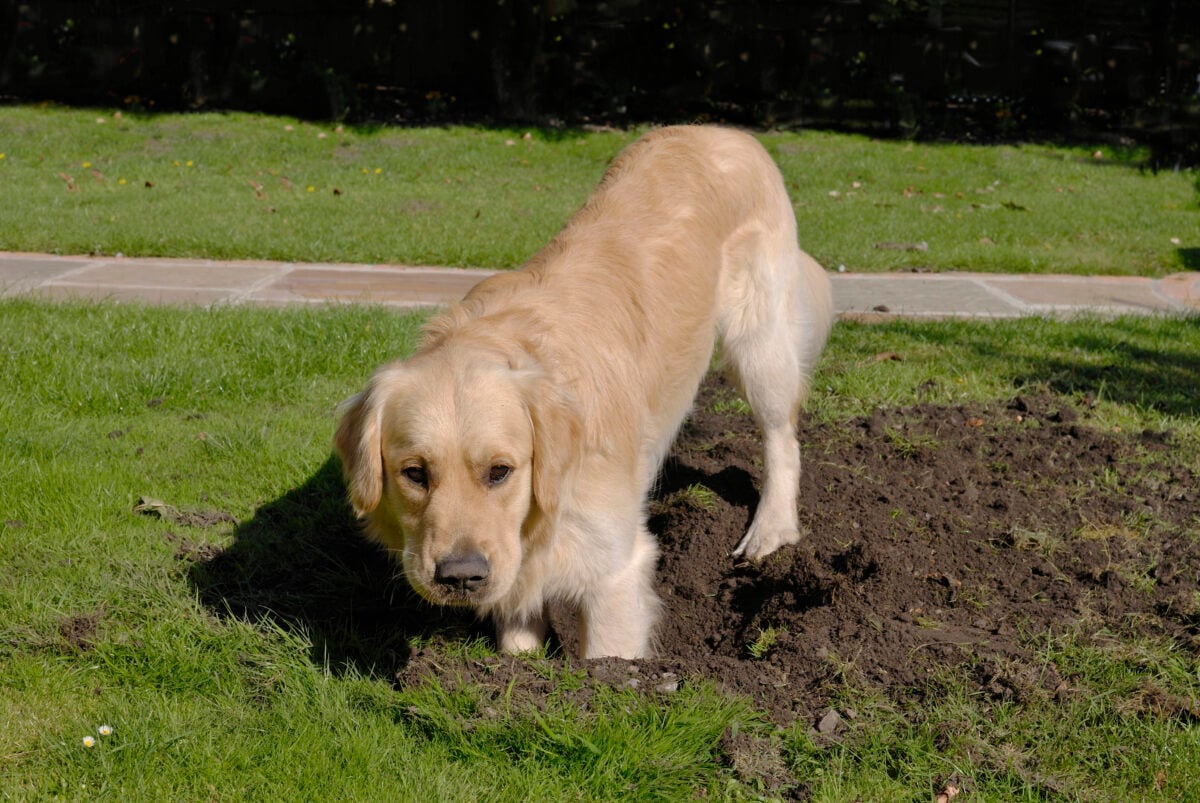
Dogs may bury everything from bones and treats to toys and household items. While instinct is usually the driving force, boredom, anxiety, and resource guarding can also influence the behavior.
Most burying behavior is normal. But frequent hiding, burying food instead of eating it, or growling when someone approaches a hidden item may indicate a behavioral problem. Below, you’ll learn why dogs bury things, when it’s normal, and when the behavior warrants attention.
Quick Answer: Why Do Dogs Bury Bones?
Dogs bury bones because of an instinct called caching, which is the behavior of saving valuable resources for later. Think of it as your dog’s savings account, except the deposits are buried instead of banked.
Wild ancestors buried surplus food to protect it from scavengers and preserve it until it was needed, and domestic dogs still retain this instinct even when food is always available.
While bones are the classic example, dogs may also bury or stash treats, chews, toys, socks, shoes, remote controls, and other prized possessions. Usually, this is normal behavior. But some dogs hide items because they’re bored, anxious, or trying to prevent people or other pets from taking something they value.
If the behavior becomes obsessive or is accompanied by growling or guarding, it may indicate an underlying behavioral issue that needs attention.
If you’re monitoring changes in your dog’s daily habits, our Queva Smart Dog Collar Review: Does Your Pet Need Health and Behavior Monitoring? explains how wearable technology can help track behavior.
Want our human-written content to rank above AI-generated garbage? Help us out by clicking this button!
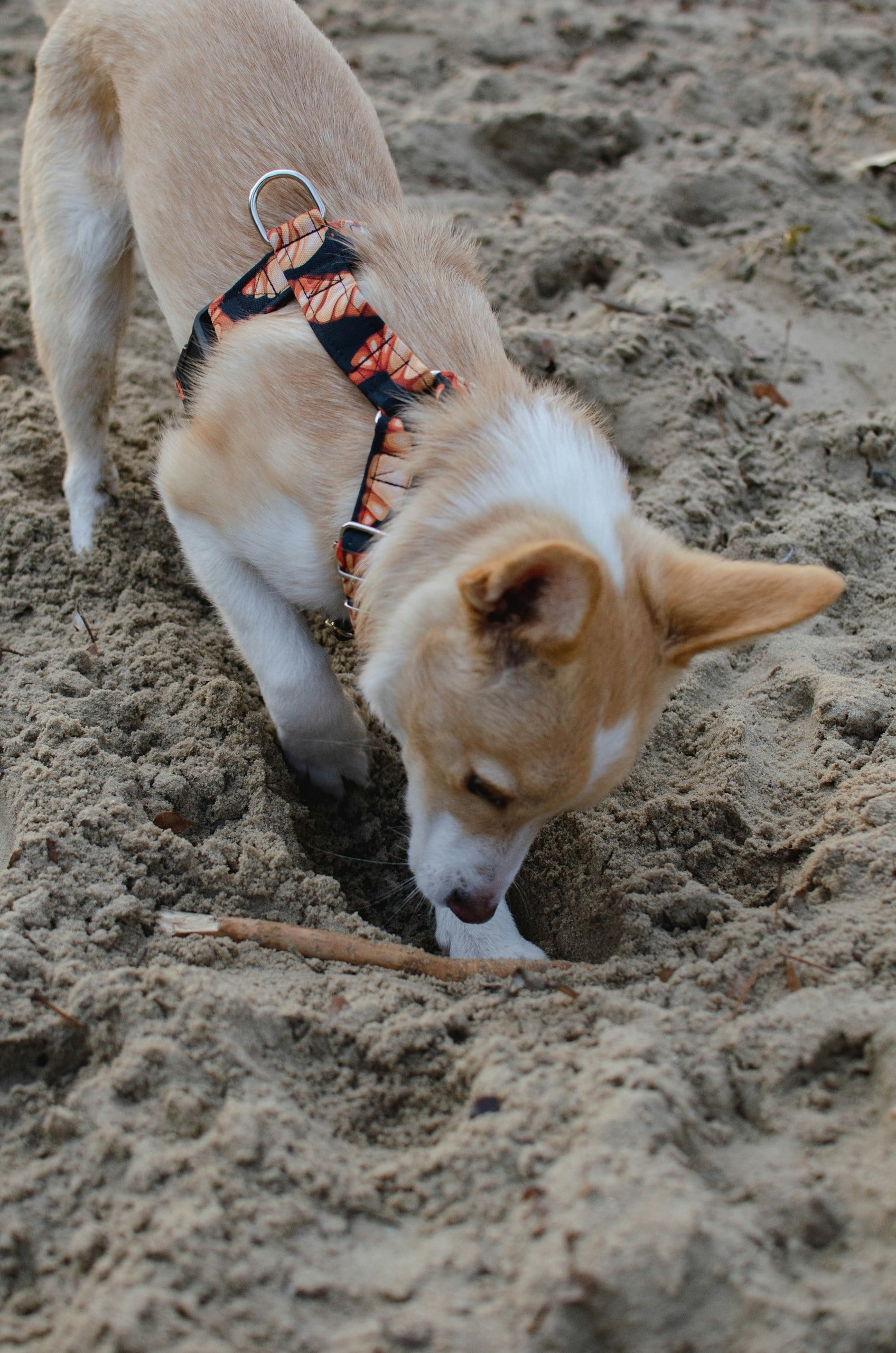
Why Do Dogs Bury Bones? 8 Common Reasons
Dogs bury bones, treats, toys, and other prized possessions for several reasons. While the behavior is rooted in instinct, a dog’s environment, routine, and emotional state can also influence when and why it happens.
1) Ancient Survival Instinct
The primary reason dogs bury bones is instinct. Wild canids cached surplus food to protect it from scavengers and returned to it later when food was scarce. Although today’s dogs rarely have to worry about their next meal, evolution never got the memo. That’s why many dogs still retain this inherited behavior, even when dinner arrives in the same bowl every day.
2) Saving It For Later
Sometimes your dog isn’t ready to eat a favorite item. Like we save the last bite of a favorite dessert, dogs sometimes “bank” their best treats for later. Instead of finishing a bully stick, dental chew, pig ear, treat, or bone immediately, they’ll hide it somewhere they consider safe and come back when the time feels right. This behavior is especially common if your dog has just eaten or receives more treats than they can consume at once.
3) Having Too Many Valuable Things
Some dogs cache items because they have more valuable resources than they can enjoy at one time. An overflowing toy basket, several chews, or multiple bones can trigger the instinct to “store” extras. Apparently, some dogs live by a simple philosophy: buy now, bury later. Rather than leaving prized items where another pet, or even a family member, might find them, they’ll stash them for future use. Rotating toys instead of leaving everything out can help reduce this behavior.
4) Boredom
Burying can also be a form of entertainment. If you’ve ever watched your dog enthusiastically dig a hole, carefully bury a toy, and then wander off as if the mission is complete, you’ve witnessed canine DIY entertainment. These repetitive behaviors often decrease when dogs receive enough physical exercise and mental enrichment through training, puzzle toys, scent games, or interactive play.
5) Seeking Your Attention
Some dogs quickly learn that stealing the right object gets an immediate reaction. A sock, shoe, TV remote, or set of keys often sends owners chasing after their dog. From your dog’s perspective, congratulations, you’ve just started the world’s least convenient game of fetch. That attention, interaction, and chase can reinforce the habit of stealing or hiding household items.
6) Feeling Anxious
Stress and insecurity can also cause dogs to hide prized possessions. Moving to a new home, adding another pet, changes in routine, or other stressful events may make a dog feel the need to protect valuable items. For some dogs, hiding food, treats, or favorite toys becomes a coping behavior that helps them feel more secure.
If your dog’s behavior changes suddenly, or if you notice other signs of stress, learn more in our Does Pet Insurance Cover Behavioral or Physical Therapy? guide, which explains when behavioral treatment may be covered.
7) Protecting Valuable Items
There’s an important difference between hiding an item and guarding it. Most dogs bury something, walk away, and return later without concern. A dog displaying resource guarding, however, actively protects the item. Warning signs include growling when someone approaches, a stiff body posture, showing the whites of the eyes (“whale eye”), and snapping or lunging when the item is touched.
Resource guarding is a behavioral issue that should be addressed with positive reinforcement training and, in more serious cases, guidance from a qualified trainer or veterinary behaviorist.
8) Some Breeds Are More Likely To Do It
Although any dog can bury things, some breeds are more likely to exhibit caching behaviors due to their breeding history. Breeds commonly associated with digging and hiding items include Beagles, terriers, Dachshunds, Huskies, and hounds.
That said, breed isn’t destiny. Individual personality, early experiences, and the home environment often play a bigger role than breed alone in determining whether a dog buries bones, toys, or other prized possessions.
Why Does My Dog Hide Things Indoors?
Not every dog has a backyard to dig in, but that doesn’t stop the instinct to cache prized possessions. No yard? No problem. Couch cushions, blankets, and piles of laundry make perfectly acceptable substitutes in your dog’s mind. Instead of using dirt, many dogs create indoor hiding spots with whatever soft materials they can find around the house.
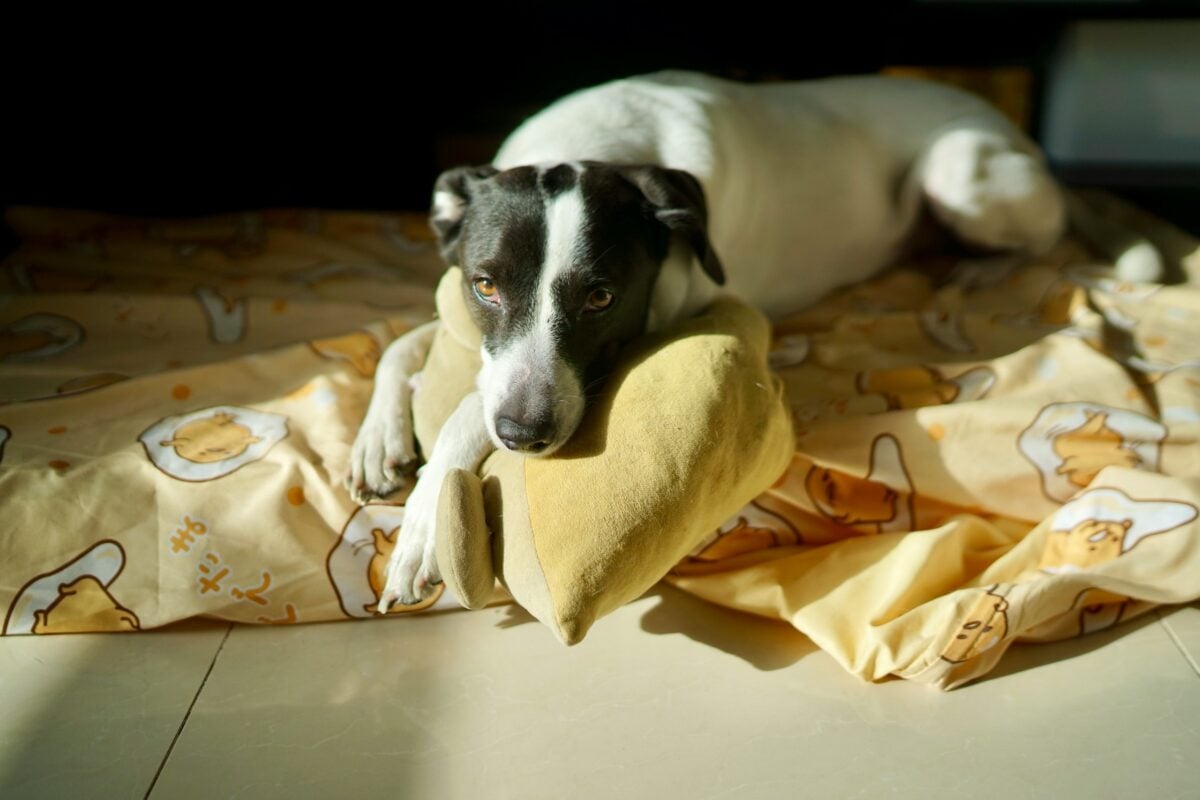
Common places dogs “bury” things include couch cushions, dog beds, pillows, blankets, laundry piles, and rugs. You may also notice your dog repeatedly pushing a blanket or pillow over a toy or chew with its nose. This behavior, often called “air burying,” mimics the motions of digging and covering an object even though there’s no soil.
Dogs may also make repeated nose-covering movements or scratch at the floor around the item before walking away. These actions are the indoor version of the same caching behavior.
Indoor burying is especially common in apartment dogs or pets with limited access to outdoor space. Rather than digging a hole, they use soft household items as substitutes to hide and protect something they consider valuable. It’s the behavior, not the location, that matters.
Most indoor hiding is completely normal. Still, if your dog suddenly begins obsessively hiding food or toys, or the behavior is accompanied by confusion, changes in sleep, pacing, or other unusual habits, it’s worth looking for other underlying causes.
Our guide, “7 Strange Behaviors That Could Mean Your Dog Has Dementia,” explains which behavior changes are a normal part of aging and which warrant a conversation with your veterinarian.
Why Does My Dog Hide My Socks, Shoes, or Remote?
If your dog ignores their toys but keeps stealing your socks or hiding the TV remote, there’s usually a reason. Dogs are drawn to items that smell familiar, feel interesting to carry, or consistently get a reaction from their owners.
- Socks: Socks are among the most frequently stolen household items because they retain your scent. A dog’s sense of smell is thousands of times more sensitive than ours, making worn socks especially appealing to dogs. Some dogs hide them simply because they associate your scent with comfort and security.
- Shoes: Shoes combine two things dogs love: a strong human scent and an easy-to-carry texture. Because they spend hours in close contact with your feet, they hold a concentrated scent that many dogs find irresistible. Some dogs stash shoes for later, while others enjoy carrying them around the house.
- Remote Controls: Unlike socks or shoes, remote controls usually aren’t attractive because of their smell. To your dog, the TV remote isn’t a remote; it’s a human summoning device. The moment they grab it, everyone suddenly pays attention. If you immediately chase after them, they’ve learned the trick works every time.
- Laundry: Dirty laundry contains the scents of the people your dog is most attached to. Shirts, pajamas, towels, and workout clothes can all become prized possessions because they carry familiar odors. Some dogs sleep with these items, while others hide them in beds, blankets, or piles of laundry as part of their inherited caching behavior.
Most dogs that hide household items are following normal instincts rather than being “naughty.” But if the behavior becomes destructive, obsessive, or difficult to manage, early training is the best approach. Our Does Pet Insurance Cover Obedience or Behavioral Training? guide explains when professional training may be worthwhile and whether some pet insurance plans may help cover the cost.
Do Dogs Remember Where They Bury Things?
Most dogs can remember where they’ve hidden prized possessions, although they don’t rely, licensed via memory the same way people do. Instead, they combine their powerful sense of smell with spatial memory and familiar landmarks to relocate buried bones, treats, and toys.
Research also suggests dogs can form “episodic-like” memories, allowing them to recall past events and actions, even when they weren’t expecting to remember them.
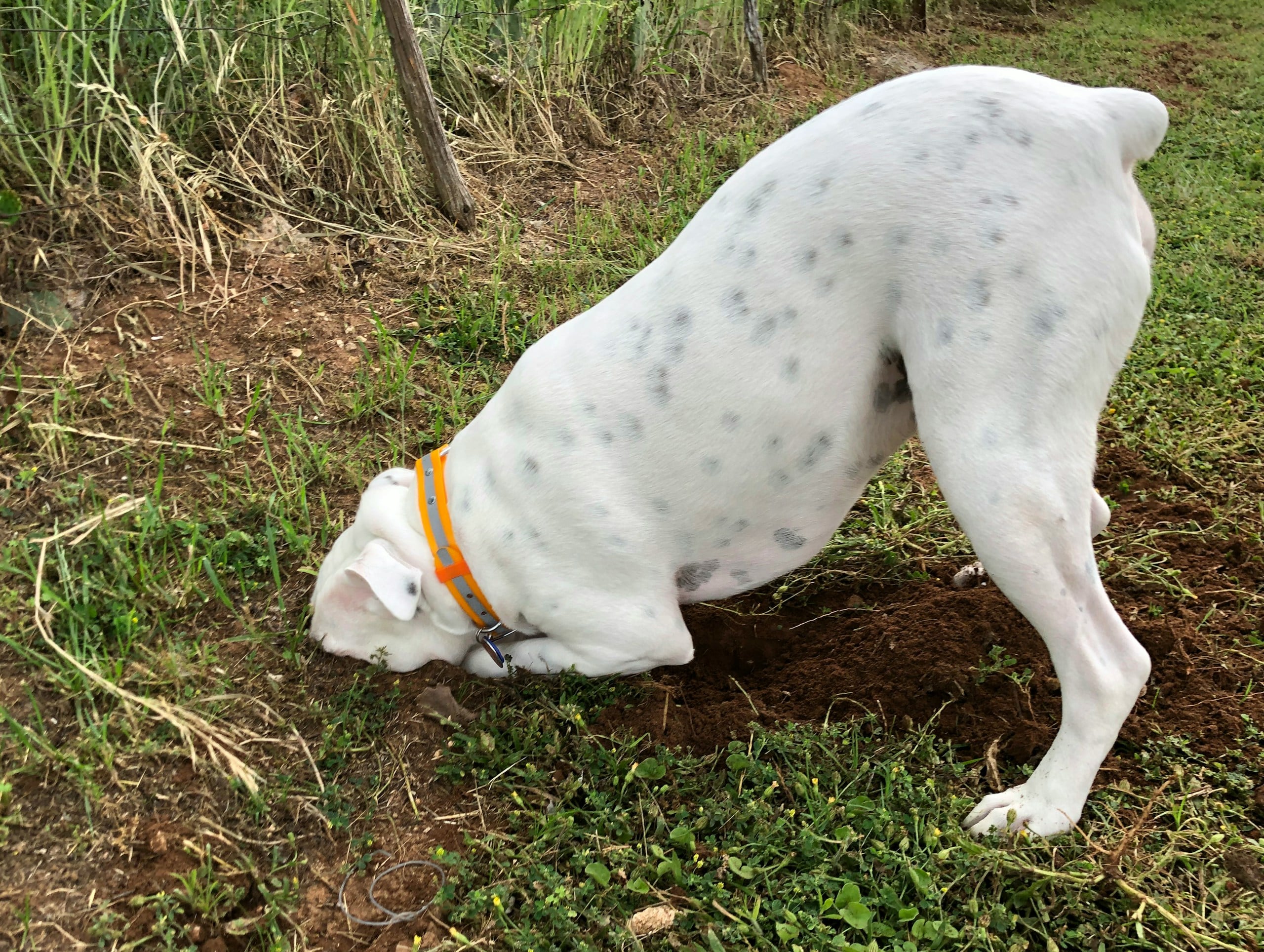
Finding a bone weeks later might look like magic, but it’s really a reminder that your dog’s nose makes ours look almost useless. Dogs typically use these cues to find their hidden treasures:
- Smell: A dog’s nose is its greatest tool, allowing it to detect the scent of buried food or toys even after they’ve been hidden for some time.
- Spatial memory: Dogs remember the general location where they buried an item.
- Environmental landmarks: Trees, rocks, furniture, fences, and other familiar objects help them relocate the hiding spot.
Sometimes owners assume their dog has forgotten where a bone or toy was buried because the item never returns to that spot. Often, that’s not true. The dog may have lost interest, found something more rewarding, or decided the hidden item is no longer worth retrieving. If the item still interests them, many dogs can relocate it using scent, memory, and familiar surroundings.
While forgetting an old hiding spot is usually nothing to worry about, noticeable changes in your dog’s memory or behavior may be. If your dog suddenly seems confused about familiar places, routines, or previously hidden objects, our “Born This Way”? What Your Dog’s Same-Sex Behavior Might Really Mean article explores another commonly misunderstood canine behavior, while other sudden cognitive changes should be discussed with your veterinarian.
Normal Or A Problem?
A backyard treasure hunt now and then is perfectly normal. What matters is how often the behavior happens and whether your dog becomes protective of hidden items. The table below can help you distinguish normal burying behavior from signs that may warrant a closer look.
| Usually Normal | Worth Investigating |
|---|---|
| Occasionally buries treats or bones | Constantly buries nearly everything it receives |
| Hides a favorite toy, then retrieves it later | Hides food instead of eating it regularly |
| Digs occasionally before moving on | Obsessively digs or hides items throughout the day |
| Appears relaxed and playful | Growls, stiffens, or gives a hard stare near hidden items |
| Shows no signs of aggression | Snaps, lunges, or bites when someone approaches a hidden object |
Most dogs never develop problems from burying items. But if your dog begins hiding food instead of eating it, spends excessive time digging or caching objects, or becomes protective of hidden items, the behavior may be linked to resource guarding, anxiety, or another behavioral issue.
Experts note that warning signs of resource guarding include freezing over an item, a stiff body posture, growling, showing the whites of the eyes (“whale eye”), baring teeth, and snapping when someone gets too close.
Behavioral changes are often easier to interpret when viewed alongside other symptoms. For example, if your dog is also restless, unable to settle, or behaving unusually around the house, our Is Your Dog Panting & Pacing? Discover 15 Possible Reasons Behind the Behavior guide can help you identify other possible causes.
Video: Travelers Insurance Commercial Dog with Bone
You might remember this adorable commercial featuring a dog hiding his bone.
Why do dogs bury bones if they don’t need to save food anymore? Understanding the reason behind the behavior makes it much easier to manage it effectively.
How To Stop Your Dog From Burying Everything
Burying is an instinctive behavior, so the goal isn’t to stop it completely. Instead, focus on reducing unwanted hiding by managing your dog’s environment and teaching alternative behaviors.
Don’t Overwhelm Them With Toys
Leaving every toy out at once can encourage some dogs to cache their favorites. Instead, rotate toys every week to keep them interesting, put away toys your dog isn’t using, and limit the number of high-value items available at one time.
Limit High-Value Chews
Some dogs hide chews simply because they have more than they can enjoy. To reduce caching, offer only one bully stick, dental chew, or bone at a time, wait until it’s finished before introducing another, and remove unfinished edible chews if your dog repeatedly buries them outdoors.
Provide More Mental Enrichment
When dogs are bored, they often engage in their own activities, such as digging or hiding their belongings. Try adding daily sniff walks, puzzle feeders, food-dispensing toys, short positive reinforcement training sessions, and interactive games like hide-and-seek. Giving your dog appropriate outlets for their energy can reduce boredom-related burying.
Don’t Chase Your Dog
If your dog steals a sock or TV remote, avoid turning it into a game. Chasing teaches many dogs that stealing household items starts a fun game, making the behavior more likely to happen again. To your dog, every chase is proof the game is worth playing. Staying calm and redirecting them is far more effective than giving chase.
Teach “Drop It”
Teaching your dog a reliable “Drop It” cue encourages them to release an item on command, rather than run away with it. Expert trainers recommend teaching this cue by trading a low-value object for a high-value reward, helping your dog learn that giving things up leads to something even better.
Teach “Leave It”
While “Drop It” is used after your dog has picked something up, “Leave It” teaches them not to take it in the first place. This cue is especially useful for preventing your dog from grabbing shoes, socks, children’s toys, remote controls, and other household objects. Teaching both cues gives you better control over everyday situations.
Trade Instead Of Grabbing
Avoid pulling objects from your dog’s mouth whenever possible. Instead, offer a high-value treat in exchange, praise your dog for releasing the item, and avoid creating a struggle over possessions. Trading keeps the interaction positive and helps prevent guarding habits from developing.
Get Professional Help If Guarding Develops
If your dog begins guarding hidden items, don’t ignore it. Seek professional guidance if your dog growls over buried treats or toys, freezes or stiffens when approached, snaps or lunges when someone reaches for an item, or frequently guards food or household objects.
Early intervention is the best way to prevent resource guarding from becoming more serious. Your veterinarian can rule out medical causes and, when needed, refer you to a certified positive reinforcement trainer or a veterinary behaviorist.
Are you unsure which professional your dog needs? Our Does My Dog Need Behavioral Therapy & How To Find A Behaviorist Near You guide explains when to seek behavioral support and how to choose the right expert.
Why Do Dogs Bury Bones and Should You Let Them?
In most cases, there’s no need to stop your dog from burying a bone. The more important question is whether that bone is still safe to eat after spending time underground.
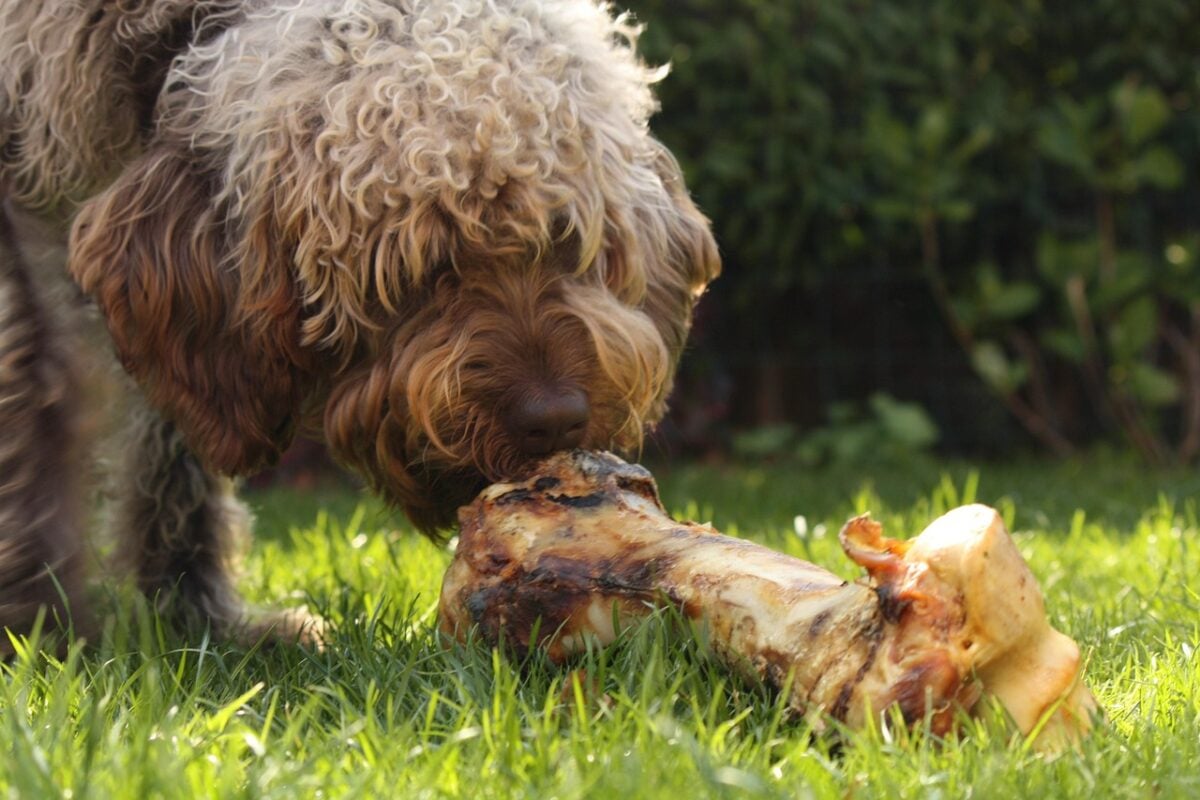
Benefits Of Letting Dogs Bury Bones
For many dogs, burying a bone is a mentally enriching activity. Sometimes the best enrichment isn’t the newest toy; it’s a little dirt and a mission worthy of a four-legged treasure hunter. Benefits include:
- Encourages natural instinctive behaviors.
- Provides mental stimulation and problem-solving opportunities.
- Gives dogs a productive outlet for digging and scent work.
- Can help reduce boredom in some dogs.
Risks Of Buried Bones
Although the behavior itself is normal, buried edible bones can become unsafe over time. Potential risks include:
- Spoilage: Bones buried outdoors for extended periods can begin to spoil.
- Bacteria: Raw bones may harbor bacteria such as Salmonella or E. coli, and bacterial growth can increase the longer they’re left outside.
- Wildlife contamination: Buried bones may attract wildlife or become contaminated by insects, rodents, or other animals.
- Broken bone pieces: Bones that splinter or break into smaller fragments can become choking hazards or cause injuries to the mouth and digestive tract. Cooked bones are particularly dangerous because they’re more likely to splinter.
If your dog enjoys burying bones, supervise the activity and inspect the bone before allowing them to chew it again. Specialists also recommend discarding bones after a few days, as bacteria can grow on their surfaces over time.
Occasional burying is perfectly normal and can be a healthy form of enrichment. However, don’t encourage your dog to eat edible bones that have been buried outdoors for long periods. Would you like to learn more about how dogs’ instincts differ from outdated dominance myths? Read STOP Trying To Be The Alpha! The Truth About Dog Pack Behavior.
Frequently Asked Questions
Still digging for answers? Here are the questions our readers ask most often about dogs burying bones and hiding prized possessions. Don’t see yours? Ask us in the comments; we’re happy to help.
Why Does My Puppy Bury Treats But My Older Dog Doesn’t?
Puppies often experiment with instinctive behaviors as they explore their environment. Some puppies bury treats because caching is a natural canine instinct, while others never develop the habit. Adult dogs may also bury items, but the behavior varies depending on personality, previous experiences, and how valuable they consider the item.
Why Does My Dog Bury Bones Only When Another Dog Is Around?
If your dog only hides bones or chews when another pet is nearby, they’re likely trying to protect a valuable resource from perceived competition. This doesn’t necessarily mean your dog is resource guarding, but it does suggest they feel the need to secure prized items before another dog can access them. Feeding dogs separately and giving them individual chew time can help reduce this behavior.
Why Does My Dog Pretend To Bury Food Without Actually Digging?
Some dogs make repeated nose-pushing or scratching motions over food, treats, or toys even when there’s no dirt available. This behavior, often called “air burying,” is a normal expression of the same instinct that causes outdoor burying. Dogs commonly do this with blankets, beds, rugs, or couch cushions when they want to hide something for later.
Can I Give My Dog A Designated Digging Area?
If your dog enjoys digging and burying toys, creating a designated digging area, such as a sandbox or a section of your yard, can provide an appropriate outlet for this natural behavior while protecting your lawn and garden. Redirecting your dog to an approved digging spot is often more effective than trying to eliminate the instinct.
Should I Dig Up My Dog’s Hidden Toys and Bones?
Not necessarily. If your dog is hiding non-edible toys, there’s usually no harm in leaving them where they are. However, edible chews and bones shouldn’t remain buried outdoors for long because exposure to moisture, bacteria, insects, and wildlife can make them unsafe to consume. Retrieving or replacing buried edible items is the safer option.
Is Burying A Sign of Anxiety?
Sometimes. While burying bones, toys, or treats is usually a normal instinct, some dogs hide prized possessions more often when they’re feeling stressed or insecure. Changes such as moving house, adding another pet, or disruptions to their routine can trigger this behavior. If burying suddenly becomes excessive or is accompanied by pacing, loss of appetite, or other signs of anxiety, it’s worth speaking with your veterinarian or a qualified behavior professional.
Learn More About Dog Behavior
Ready to dig a little deeper into dog behavior? These expert guides explore everything from solving common training challenges to understanding the fascinating ways dogs communicate with the people they trust.
- Bad Behavior In Dogs: How To Stop Chewing, Biting, Digging & More: Learn practical, positive reinforcement strategies for managing the most common unwanted dog behaviors before they become long-term habits.
- ASPCA’s CEO Matt Bershadker & Behavioral Rehab Centers for Animals: Discover how behavioral rehabilitation programs help dogs overcome fear, anxiety, and severe behavior challenges, and why compassionate, science-based training matters.
- From Chaos To Calm: Tackling 7 Common Puppy Behavior Problems: Raising a puppy? This guide covers biting, chewing, jumping, potty accidents, and other common challenges, with step-by-step solutions to help your pup become a well-mannered adult.
- 6 Dog Habits That Mean They Trust You: From following you around the house to sleeping nearby, learn the subtle behaviors that show your dog feels safe, secure, and deeply connected to you.
- Why Does My Dog Check On Me? The Sweet Reason They Keep Making Sure You’re Still There: Ever notice your dog popping into the room to look at you? Find out why this reassuring behavior is one of the many ways dogs maintain their bond with their favorite people.
The more you understand your dog’s instincts, the easier it becomes to build a happier, healthier relationship together. Understanding the motivation behind a behavior is the first step toward changing it in a positive, welfare-friendly way.
Still Have Questions About Why Dogs Bury Bones?
Every dog has its own quirks, and sometimes those quirks end up buried in the flower bed. Has your pup turned the backyard into an archaeological dig, “filed” a favorite toy under the couch, or hidden a sock in a place only they understand? We’d love to hear about it. Share your stories or questions in the comments below, and our team will do our best to help.