How To Stop A Dog From Digging Holes Under Fences, In Bed, In the Yard & More – Why Do Dogs Dig Holes?

When you purchase through links on our site, we may earn a commission at no extra cost to you. Learn more.
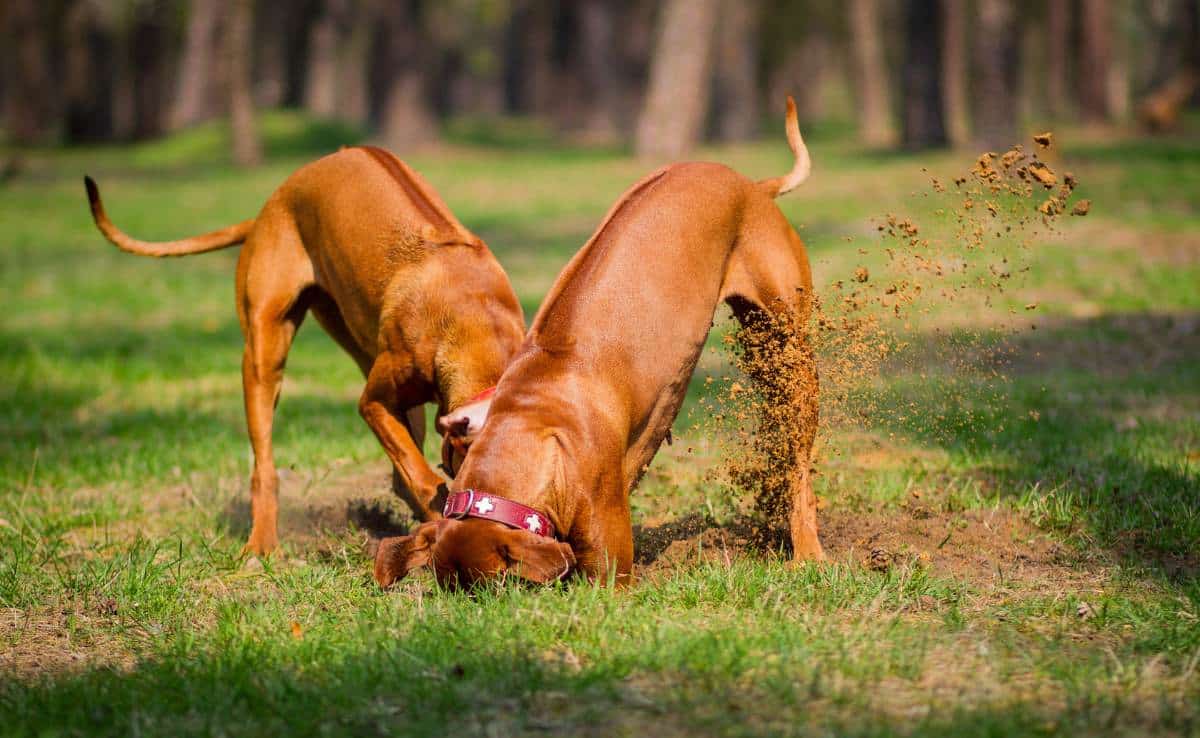
Coming outside to find a fresh hole in the yard can make you sigh, especially if you just filled another one. Then your dog trots over with dirt on their nose, looking like they’ve had the best morning ever. Dogs dig for all sorts of reasons, and noticing where and when your pup does it can help you understand what’s going on.
Table of Contents
A dog digging along the fence may be trying to get through or investigate something nearby. One who digs a hollow and curls up in it may be looking for a cool spot to rest.
If you’re wondering how to stop your dog from digging holes, start by matching the solution to the reason. We’ll help you read the clues and choose a fix that works for your dog and your yard
What To Do First When Your Dog Starts Digging
Before you try to stop the digging, keep your dog safe and look for what may be triggering it.
- Stay outside with your dog so you can see where and when the digging starts.
- Block escape routes by securing gaps under fences and gates.
- Limit access to tempting spots such as flower beds, animal burrows, or areas where your dog watches passing animals.
- Offer another outlet with a walk, play, a scent game, or an approved digging spot.
- Notice the pattern. Does your dog dig when left alone, on hot days, or after spotting wildlife? That clue can help you choose the right fix.
These steps can help manage the problem right away. The tips below address the most common reasons dogs dig and what to try for each one.
Why Do Dogs Dig Holes?
Digging is a normal dog behavior, much like barking and sniffing. The reason can depend on where your dog digs, what happens beforehand, and what they do afterward. Common causes include:
- Boredom or too little exercise and enrichment
- Fear, anxiety, or trying to get beyond the fence
- Following the sounds or scents of animals underground
- Looking for a cooler place to rest
- Burying or retrieving food and toys
- Breed tendencies, especially in dogs bred to pursue prey underground
- Nesting behavior, including in pregnant dogs
What Kind of Digging Is This?
Where, when, and how your dog digs can offer clues about the cause. Pay attention to the location of the holes, what happens immediately before the digging, and whether your dog appears relaxed or distressed.
| Type of digging | What it may indicate | What to look for |
|---|---|---|
| Fence-line digging | An escape attempt, prey, or a social trigger | Holes near gates, gaps, or places where your dog sees or hears other animals |
| Random yard holes | Boredom, enjoyment, or breed tendencies | Digging in several areas, including when you’re nearby |
| Digging, then lying in the hole | Looking for cooler soil or a comfortable resting place | Digging in sunny spots or during warm weather |
| Digging after seeing animals | Interest in or pursuit of prey | Digging near burrows, shrubs, or places where animals appear |
| Digging when left alone | Boredom or separation-related distress | Digging that mainly happens when your dog is by themselves |
| Digging in flower beds | Soft soil, interesting scents, or prey | Repeated digging in loose soil, around plants, or near roots |
While you watch for a pattern, supervise yard time and block any gap your dog could escape through. Then use the tips below to address the likely cause, from boredom and prey drive to seeking a cool place to rest.
How To Stop A Dog From Digging: 8 Practical Tips
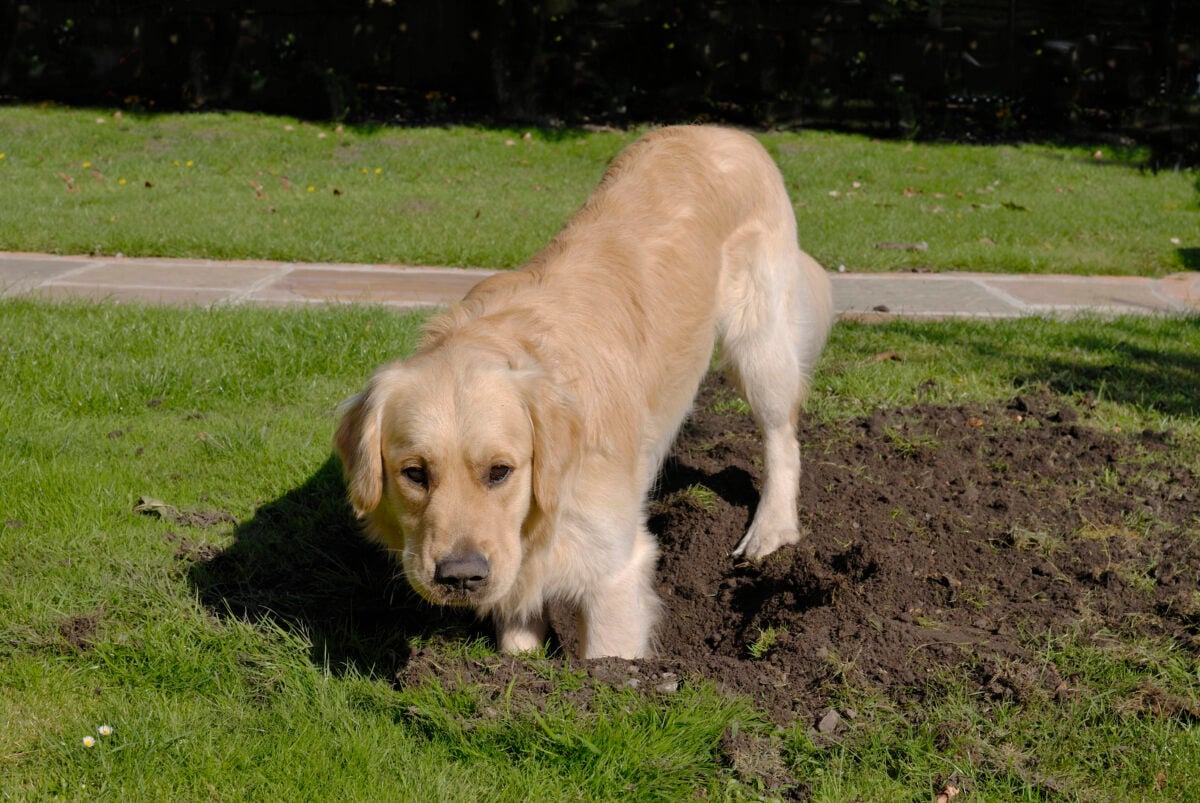
Once you have an idea why your dog is digging, choose a response that addresses that cause. Some dogs need an approved place to dig, while others may need more activity, a secure fence, or help with anxiety.
1. Create an Approved Digging Spot
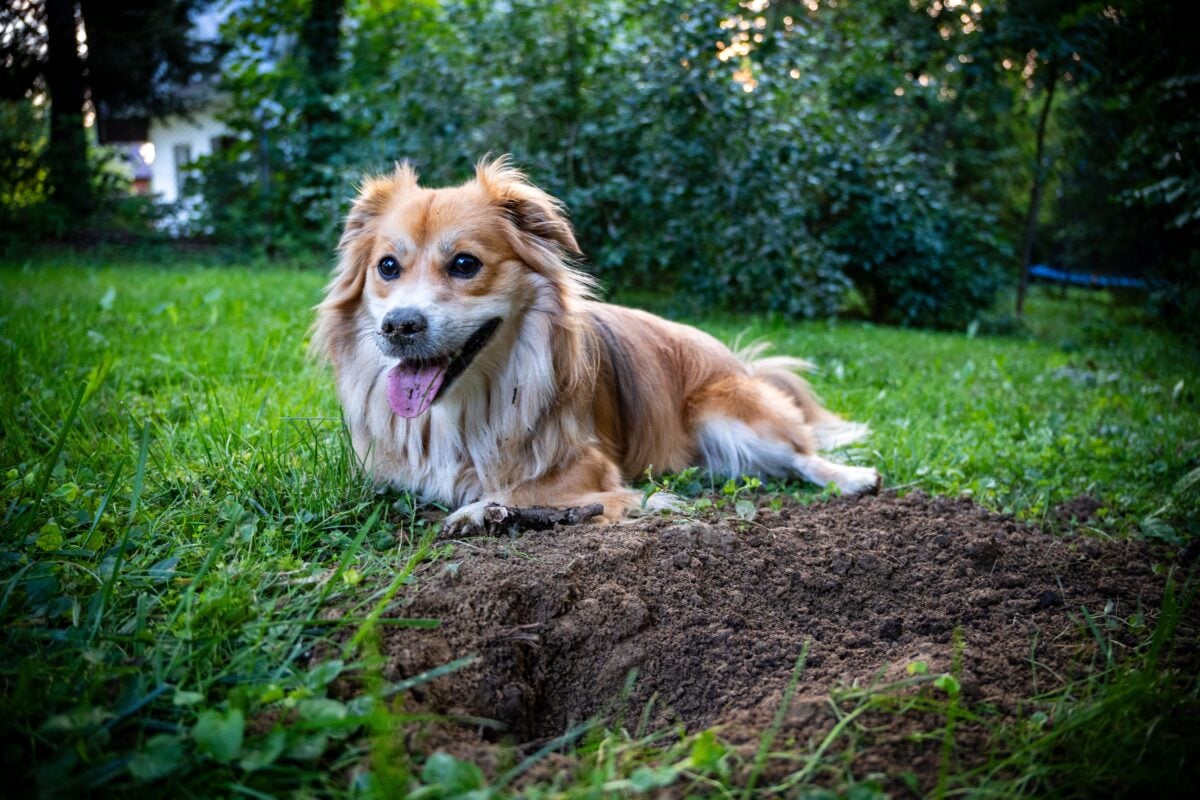
Some dogs simply enjoy digging, so giving yours a place where it’s allowed can help protect flower beds and other parts of the yard. Choose a spot away from fences, plants, and anything that could hurt your dog. A sandbox or a clearly marked patch of loose soil can work well.
Bury a favorite toy or dog-safe treat just below the surface to get your pup interested. Show them the spot, then praise and reward them when they dig there. If they start digging somewhere else, calmly guide them back. A sandbox with a cover can help keep the area cleaner when it’s not in use.
2. Add Exercise, Toys, and Brain Games
If boredom or a lack of activity seems to be contributing to the digging, add more walks, interactive play, and mental enrichment suited to your dog’s age and health. Try daily walks, scent games, puzzle feeders, or brain games.
For a food-searching game, try a snuffle mat or snuffle ball. If your dog prefers to chase and push toys, a herding ball or Babble Ball, which makes sounds as your dog bats it around, may be a better fit. Rotate activities to keep play interesting, and remember that backyard time doesn’t replace interaction with you.
Introduce brain training games to keep your pup mentally stimulated. Bored dogs look for things to do, and digging absolutely fills that void. Interactive toys engage them mentally and can greatly help deter unwanted behavior like digging. There are brain training courses online and even video games you can play with your pup.
3. Secure the Fence and Block Favorite Digging Spots
If your dog digs along the fence or in the same flower bed, supervise yard time while you work on the problem. Close gaps under fences, repair loose sections, and use temporary barriers to keep your dog away from tempting areas.
Some owners use buried mesh as a barrier, but exposed or damaged wire can injure paws. Make sure any barrier is securely installed, covered, and checked regularly. Avoid cayenne, concentrated essential oils, and other homemade mixtures.
Commercial deterrents vary, so follow the product label and confirm it is meant for the surface and setting where you plan to use it. Our guide to essential oils for dogs explains why concentrated oils warrant caution.
4. Address Anxiety and Fear
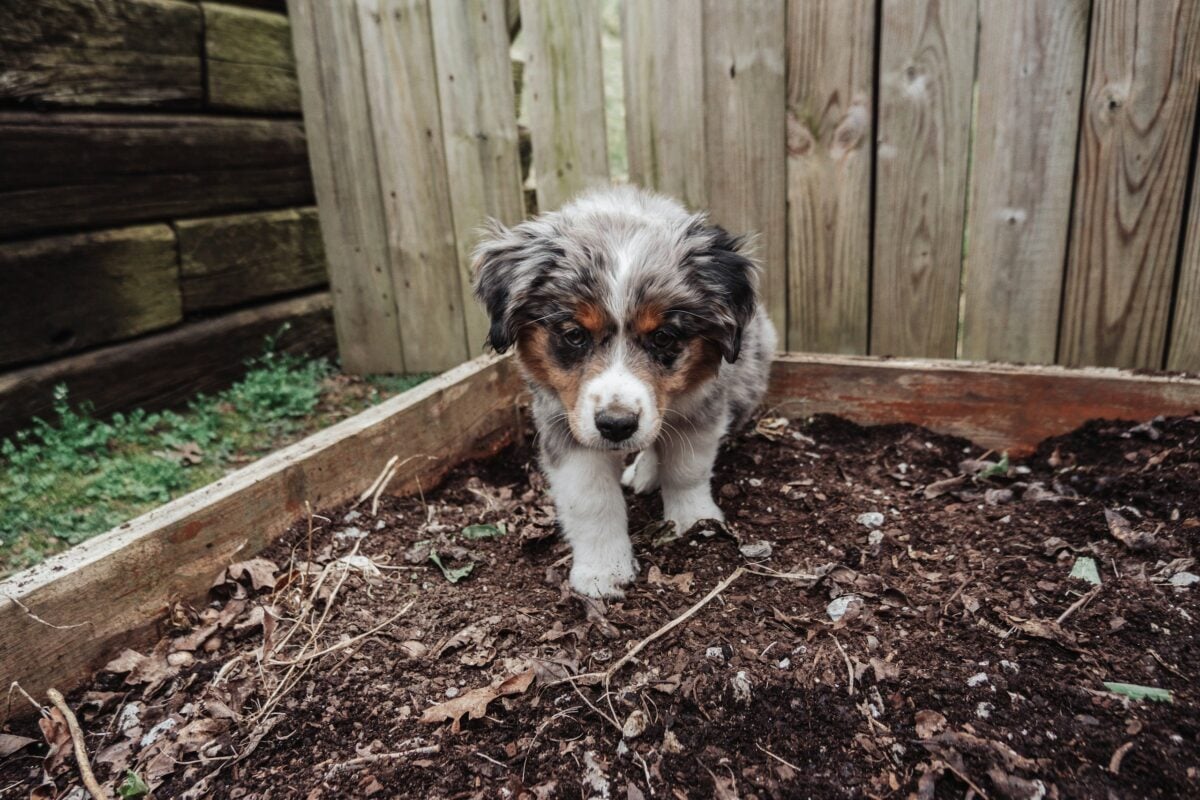
If digging happens mainly during storms, fireworks, or when your dog is left alone, look for other signs of distress. Anxiety and separation-related problems may need more support than a yard adjustment.
Reduce exposure to triggers when practical. If your dog needs to go outside during a storm, supervise them and use a leash to help prevent an escape. For persistent anxiety, talk with your veterinarian or a professional dog trainer about a behavior plan.
Check with your veterinarian before trying CBD, melatonin, or calming treats. Products and evidence vary, and some supplements can interact with medications. A calming bed may provide a comfortable resting place, but it won’t resolve the cause of anxiety by itself.
5. Provide a Cool, Comfortable Place to Rest
Some dogs dig a hollow so they can lie on cooler soil or settle into a more comfortable spot. Provide shade, fresh water, and a sheltered place to rest. A dog house may help, depending on the weather and your dog’s needs.
Bring your dog indoors during excessive heat or cold. See our guides on how cold is too cold for a dog and keeping your dog cool on a hot day for more weather-safety advice.
6. Keep Food and Toys From Becoming Buried Treasures
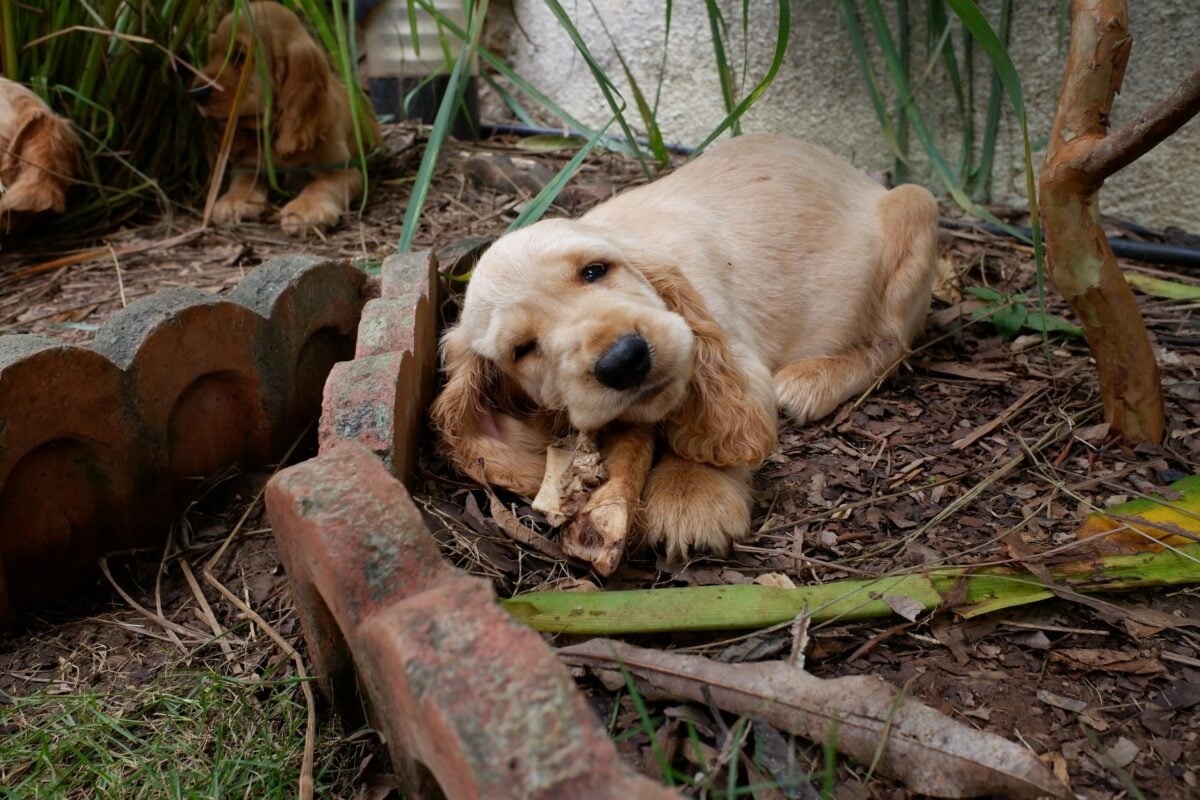
Some dogs dig to stash food, treats, or toys for later. If you find a buried stash, remove it and avoid leaving food or long-lasting chews in the yard unsupervised. You can offer dog treats indoors or in a designated area where you can keep an eye on your dog.
7. Check for Rodents and Other Prey
Repeated digging in one spot may mean your dog has picked up the scent or sound of an animal underground. Watch for burrows or other signs of wildlife, but don’t reach into holes or use poisons and traps where your dog could get to them.
If you need help addressing a pest problem, choose a method that is safe for pets. Learn more about pet-safe pest control and creating a backyard habitat that works for pets and wildlife.
8. Know When to Call Your Veterinarian
Talk with your veterinarian if digging starts suddenly, seems compulsive, or occurs along with signs that your dog may be in pain or unwell. Repeatedly eating dirt is also worth discussing. It can have several possible causes, so it doesn’t by itself show that your dog has a nutrient deficiency. Read more about pica and contact your vet if your dog frequently eats soil or other nonfood items.
My Experience With a Dog Who Loved to Dig
My mixed-breed Bear was a determined digger. At 85 pounds, he could dig under the fence fast, damaging my neighbor’s yard and creating an escape route for my smaller dog. After paying for repairs and finding that deterrent sprays weren’t working, I tried two changes.
I buried chicken wire along the fence, about two feet deep and covered with sand and rocks. Then I made Bear a large sand-filled digging pit and hid toys in it. I rewarded him for using the pit and redirected him when he dug elsewhere. After a few weeks, he was using his pit, and the fence-line holes stopped.
Buried wire can rust or develop sharp edges, so inspect any barrier regularly and make sure your dog can’t reach it.

Can You Train Your Dog Not To Dig?
You can teach your dog to leave certain spots alone and use an approved digging area, though you may not eliminate digging altogether. Practice while you’re outside together:
- Watch for early signs, such as sniffing, pawing, or circling in an off-limits spot.
- Use a familiar cue like “come” or “this way” to call your dog away. Practice the cue indoors or in a quiet area first.
- Guide your dog to the approved digging spot or another activity.
- Praise and reward them when they choose that spot or activity.
- Prevent unsupervised digging in favorite areas until the new habit is more reliable.
Keep your tone calm and repeat the routine. If the digging happens mainly when your dog is alone or frightened, work on that underlying cause too.
Tips From A Trainer On How To Stop Dogs From Digging (Video)
This quick three-minute video has more tips about why dogs dig and how to get a dog to stop digging. One of the tips mentioned is to use deer-repellent crystals.
How To Keep Dogs From Digging Under Fences
Here are some ideas to keep your dog in your yard and stop your dog from digging under the fence.
- Bury chicken wire at the base of the fence and cover it with mulch or river rock
- Partially bury larger rocks along the bottom of the fence line
- Anchor the bottom of a chain-link fence with landscape staples
- Use a wireless fence to prevent your dog from being interested in approaching the fence line
Why do Dogs Dig in Their Beds?
Wondering why dogs scratch their beds? Dogs like to dig in their beds and do circles to chase away any unwanted pests. Before dogs were domesticated, they’d lie down in the tall grass and stomp around to feel safe and comfortable. This meant they wanted to scare off any rodents, snakes, etc., to ensure the space was only theirs.
Digging and circling are also ways for them to mark their area with their paws’ scent. A dog’s paws have sweat glands that help mark their resting place with their scent.
This natural burrowing dog bed gives your dog a great way to “dig” the perfect space in its bed without wrecking it. Our dogs have tried this product out and truly adore it.
If your dog’s bed is destroyed from all the digging, consider one of these dog beds or an elevated dog bed as a replacement.
Why Do Dogs Dig In Carpets?
Similar to the answer above, dogs dig in carpets to find a comfortable place to lie down. They’re trying to create a safe place to rest and don’t care too much about the integrity of your home’s flooring.
My Dog Is Eating Dirt When He Digs. Is This Safe?
An occasional taste of soil may happen while a dog is exploring, but repeated dirt eating or swallowing more than a small amount is worth discussing with your veterinarian.
Dr. Sara Ochoa, DVM, notes that dirt eating can have several possible explanations, including anemia, pica, stomach upset, or gastrointestinal parasites. If your dog eats dirt repeatedly, talk with your veterinarian to help determine the cause.
If this is a one-off, your dog may be digging because food was spilled there, which can make the soil taste yummy. We explain this further in the video below.
Frequently Asked Questions
Dogs digging holes is sometimes just natural behavior, but it can be a problem for owners. I’ve covered some of the most often-asked questions below. I’d love to hear it in the comments if I didn’t get to yours or if you have an experience to share.
Does Burying Dog Poop Discourage Them From Digging?
Dogs can be motivated to dig things they smell under the dirt. Burying dog poop in the area they dig may discourage some pups, but it can have the opposite effect on others. Also, it’s messy and not guaranteed to work. I recommend other deterrents before buying poop.
Is Burying a Balloon a Way to Deter a Dog from Digging?
This is another method that sometimes works and sometimes doesn’t. I don’t usually recommend this one because it uses fear to discourage the behavior. The idea is to bury a balloon where the dog digs; it will pop when they get to it, scaring them and discouraging them from digging there again. It may work, but it can also be anxiety- and stress-causing for your dog.
Does Water Work To Stop Dogs Digging Holes?
It can, but only if your dog doesn’t like water. For dogs that don’t mind it, a sprinkler or hose spraying on them while digging just makes mud and doubles the fun.
Some Breeds Are Born Diggers
For some breeds of dogs, digging comes as naturally as peeing on a fire hydrant and sniffing butts. Natural-born diggers include Terriers (Yorkies, Jack Russells, Fox Terriers, etc.) and Dachshunds. These breeds are known as earth dogs and were bred to chase rats and other unwanted rodents through underground tunnels – often, they would have to dig their way in.
For these dogs, digging is in their blood, and you do not quickly train out this behavior. While owning one of these dogs doesn’t guarantee a lawn full of holes, it does raise the chances of problem digging.
More Curious Dog Behaviors
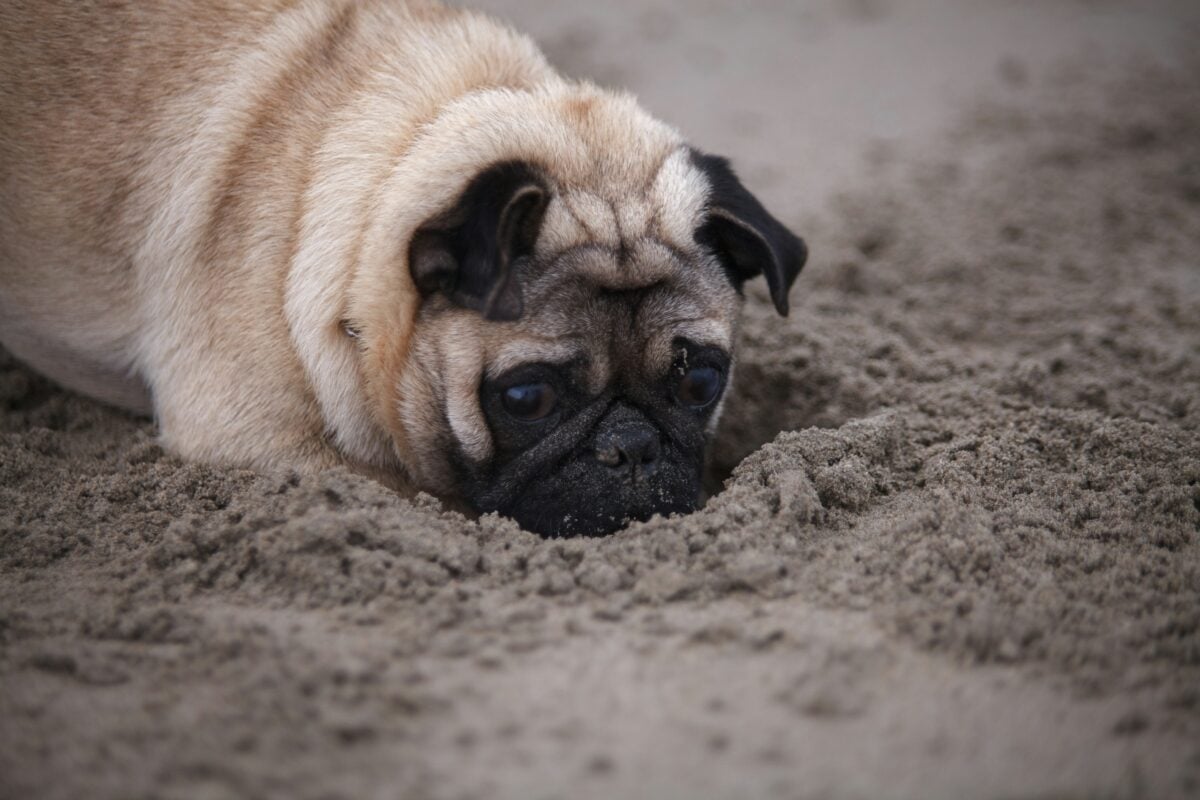
Digging is just one of those dog behaviors that can leave us wondering what’s going on. Where it happens and what your dog does before and after can offer clues, and noticing those patterns can help with other quirks, too. If your pup also eats poop, rolls in poop, or eats dirt, take a look at our guides to learn what may be behind those habits and how to respond.
Is Your Dog A Backyard Digger?
Does your dog dig along the fence, raid your flower beds, or leave surprise craters across the lawn? Tell us about your little excavator in the comments! We’d love to hear what you’ve tried, what’s helped, or what you’re still struggling with.