When you purchase through links on our site, we may earn a commission at no extra cost to you. Learn more.
Dogs don’t have words, but they do have a language. Every tail wag, head tilt, play bow, and slobbery lick tells part of the story. The mistake most of us make is assuming every lick means, “I love you.”
Table of Contents
Sometimes, that’s exactly what your dog is saying. Other times, they could be asking for attention, exploring an interesting scent, easing stress, or politely telling you they’re feeling uncomfortable. The lick may look the same, but the message behind it can be completely different.
That’s why context matters. Once you learn to read your dog’s body language alongside their licking, you’ll start seeing those everyday “kisses” for what they really are: one of the clearest ways your dog communicates with you.
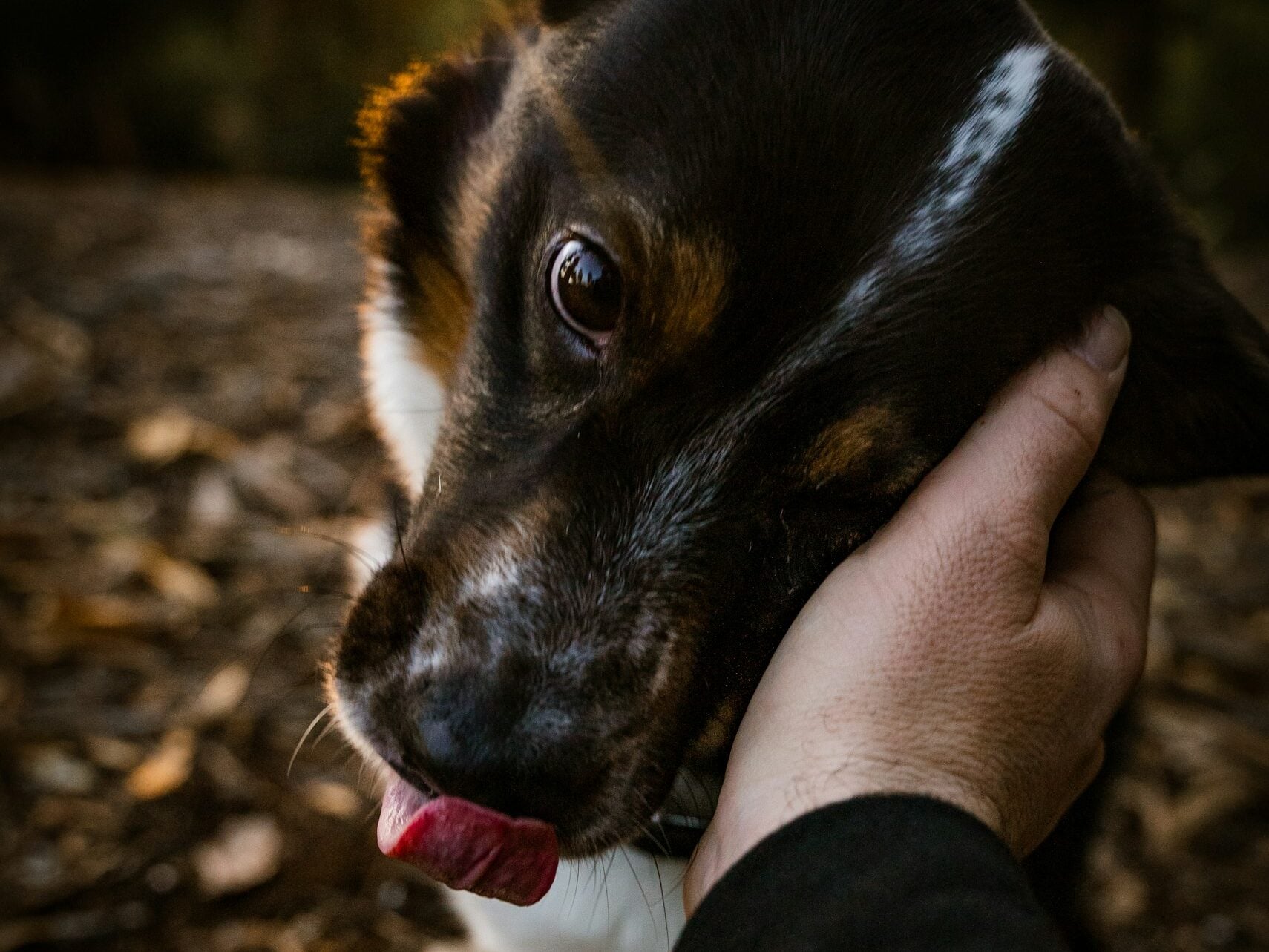
Most Common Reasons Dogs Lick People
If you’ve ever wondered why your dog licks you, the answer probably isn’t just one thing. Dogs use licking as a form of communication, and the same behavior can mean something completely different depending on the situation.
A quick lick when you walk through the door means something different than nonstop licking while you’re petting them. That’s why looking at your dog’s body language and what’s happening around them is just as important as the licking itself.
At a Glance: Why Dogs Lick People
Most dogs lick people for one or more of these reasons:
- Showing affection and strengthening social bonds
- Greeting you after time apart
- Getting your attention or encouraging interaction
- Exploring your scent or taste, especially after exercise or meals
- Seeking comfort when they’re feeling excited, anxious, or uncertain
- Defusing social tension through appeasement behavior
- Habit or learned behavior because licking has been rewarded in the past
- Underlying medical or behavioral issues when licking becomes excessive or obsessive
The tricky part is that these reasons can overlap. A dog greeting you at the door may also be excited, seeking reassurance, and hoping you’ll keep petting them.
Is Licking Really a Dog’s Version of Kissing?
Calling dog licks “kisses” isn’t entirely wrong, but it doesn’t tell the whole story. Dogs don’t kiss each other the way humans do, so they aren’t automatically using licking as a direct expression of love.
Instead, licking is a natural social behavior that begins early in puppyhood. Puppies lick their mother and littermates, while adult dogs may lick one another during greetings, grooming, or to communicate peacefully within the group.
That social behavior often carries over to humans. If your dog licks you after you’ve been apart or while you’re relaxing together, affection may absolutely be part of the message. But depending on the moment, that same lick could also mean, “Pay attention to me,” “You smell interesting,” or “I’m feeling a little unsure.”
Think of licking like a smile. A smile can express happiness, nervousness, gratitude, or even embarrassment depending on the situation. Dog licking works much the same way.
Bottom Line: Some licks are the canine version of a kiss. Your dog’s body language, environment, and timing reveal what they’re really trying to communicate.
What Your Dog Is Actually Trying to Tell You
The same lick can have several meanings depending on your dog’s body language, your relationship, and what’s happening around them.
1. “I’m So Excited!”
One of the easiest licking behaviors to recognize happens when you walk through the front door. Your dog may shower your hands or face with quick licks because they’re genuinely excited to see you after you’ve been apart.
Greeting rituals help dogs reconnect with people they trust. While some dogs jump, spin, or grab a toy, others express that excitement with a few enthusiastic licks.
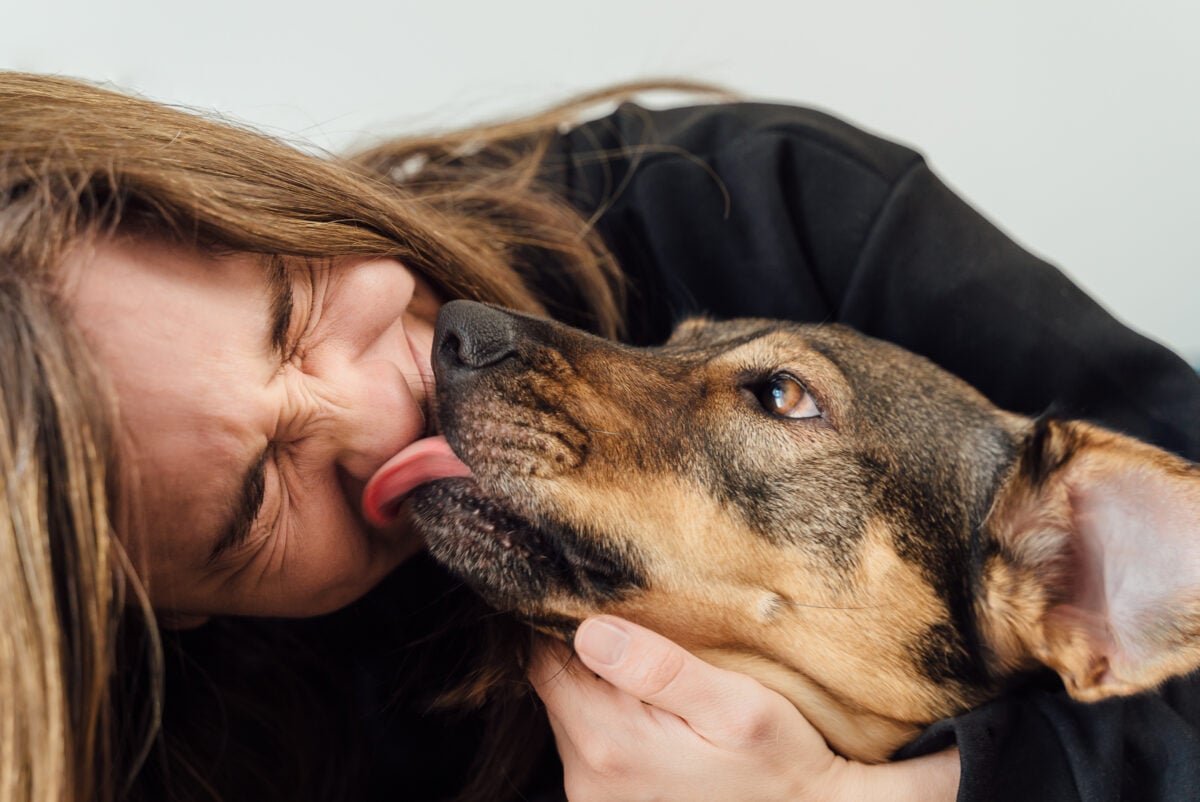
You’ll probably notice:
- Fast, sweeping tail wags
- A wiggly body
- Jumping or spinning
- Bright, relaxed eyes
- Happy vocalizations
- Play bows or zoomies
What It Usually Means: “I’m so happy you’re home.”
2. “I Love You.”
Dogs form strong social bonds with the people they trust most. During calm moments on the couch or while relaxing together, slow, gentle licking can be one way they strengthen that bond.
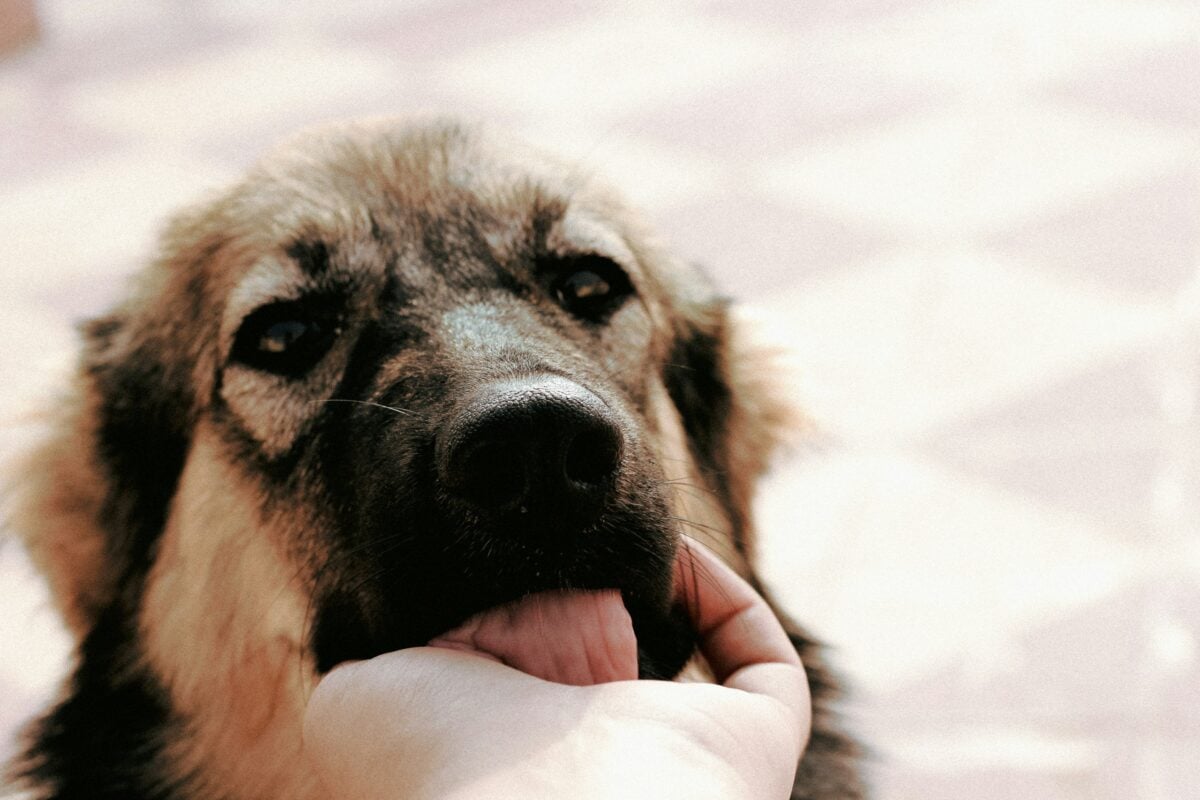
You’ll probably notice:
- Relaxed body language
- Soft eye contact
- Leaning against you
- Gentle tail wagging
- Calm, unhurried licking
What It Usually Means: “I feel safe with you.”
3. “Don’t Stop!”
Have you ever stopped petting your dog, only to have them immediately lick your hand until you started again?
Many dogs quickly learn that licking gets your attention. If every lick earns another scratch behind the ears, a kind word, or a laugh, the behavior becomes a reliable way to ask for more interaction.
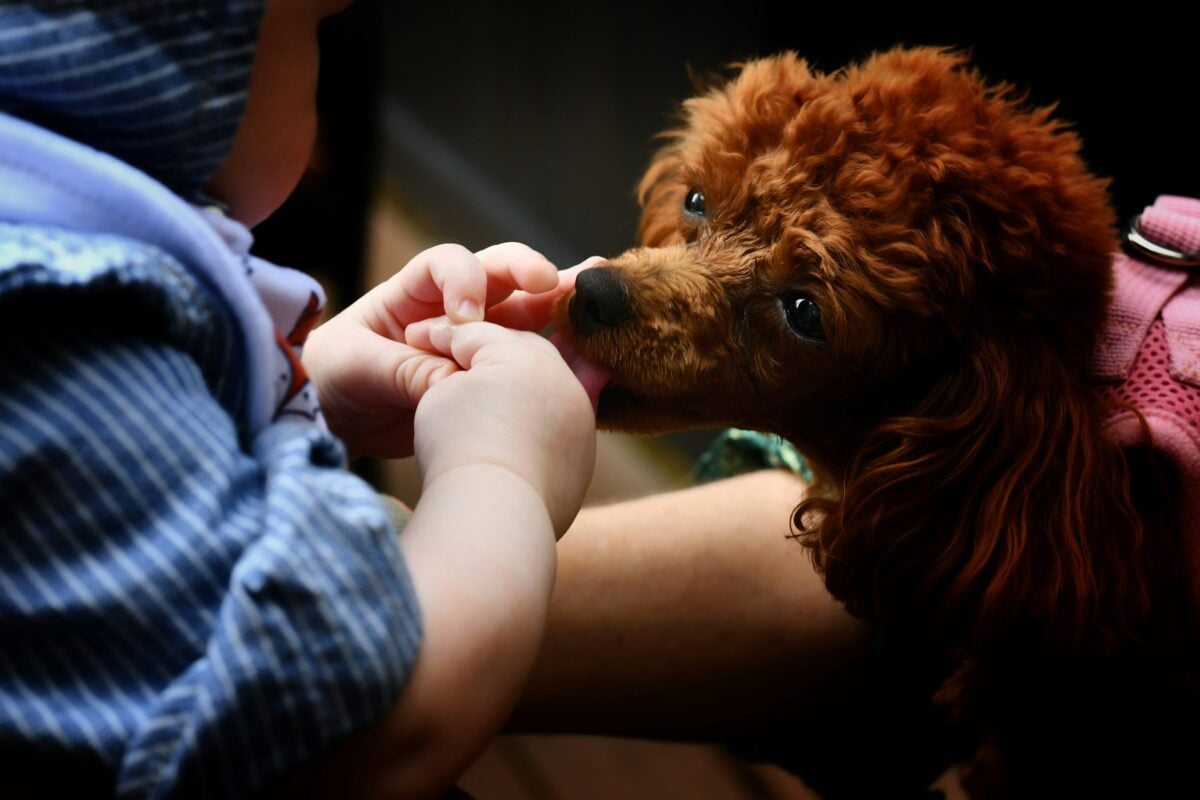
You’ll probably notice:
- Nudging your hand
- Pawing at your arm
- Leaning into you
- Relaxed body language
- Licking that stops once you resume petting
What It Usually Means: “I was enjoying that. Keep going.”
4. “You Smell… Fascinating.”
Your dog can gather an incredible amount of information through scent. Every walk, meal, handshake, and trip to the grocery store leaves clues behind that your dog finds fascinating.
A quick sniff followed by a lick may simply be your dog’s way of learning more about where you’ve been and what’s changed since they last checked.
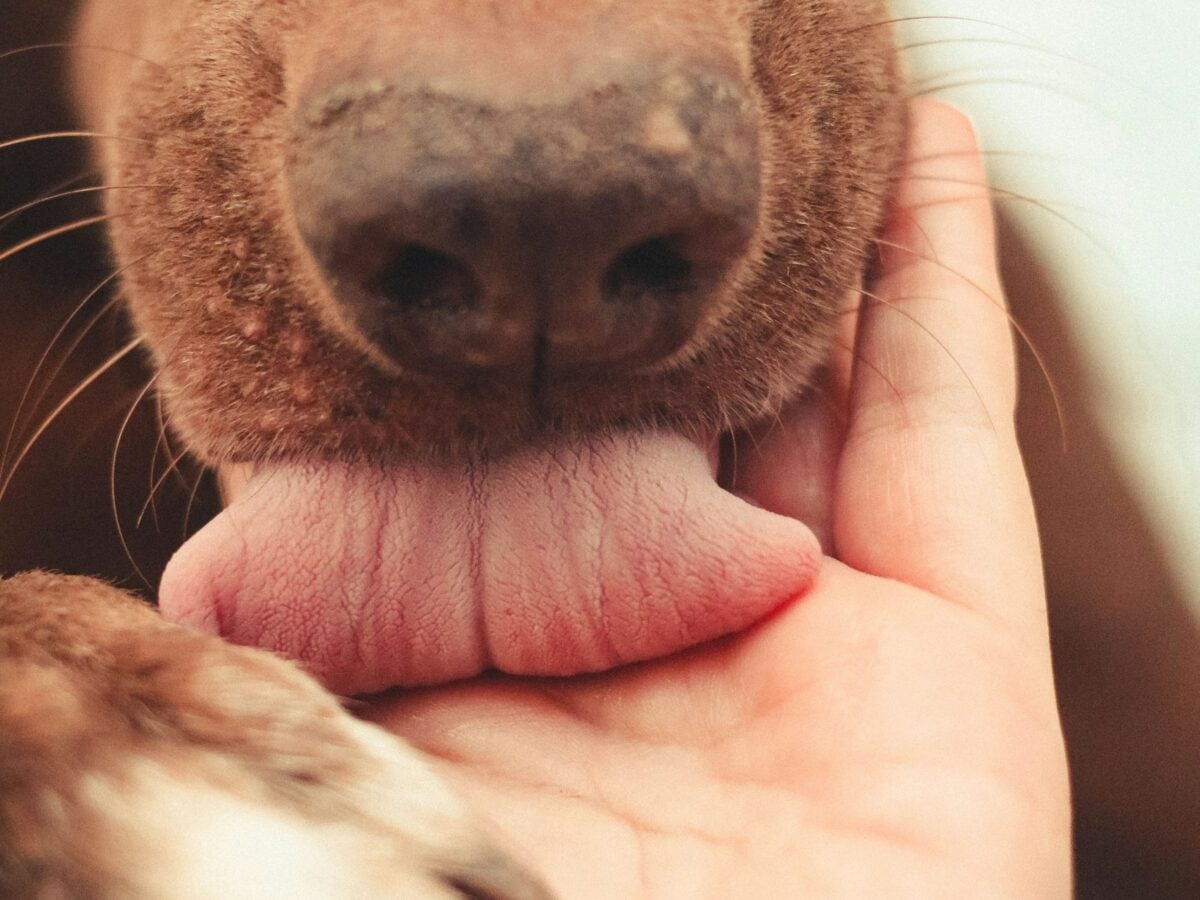
You’ll probably notice:
- Sniffing before licking
- Short, investigative licks
- Calm curiosity
- Interest in your hands, clothes, or shoes
What It Usually Means: “Tell me where you’ve been.”
5. “You Taste Pretty Good.”
Sometimes the explanation is surprisingly simple.
Sweat contains salt, your hands may have traces of food, and lotions or skin oils can all be interesting to a dog. That’s why many dogs seem especially interested in licking your hands after dinner or your legs after a workout.
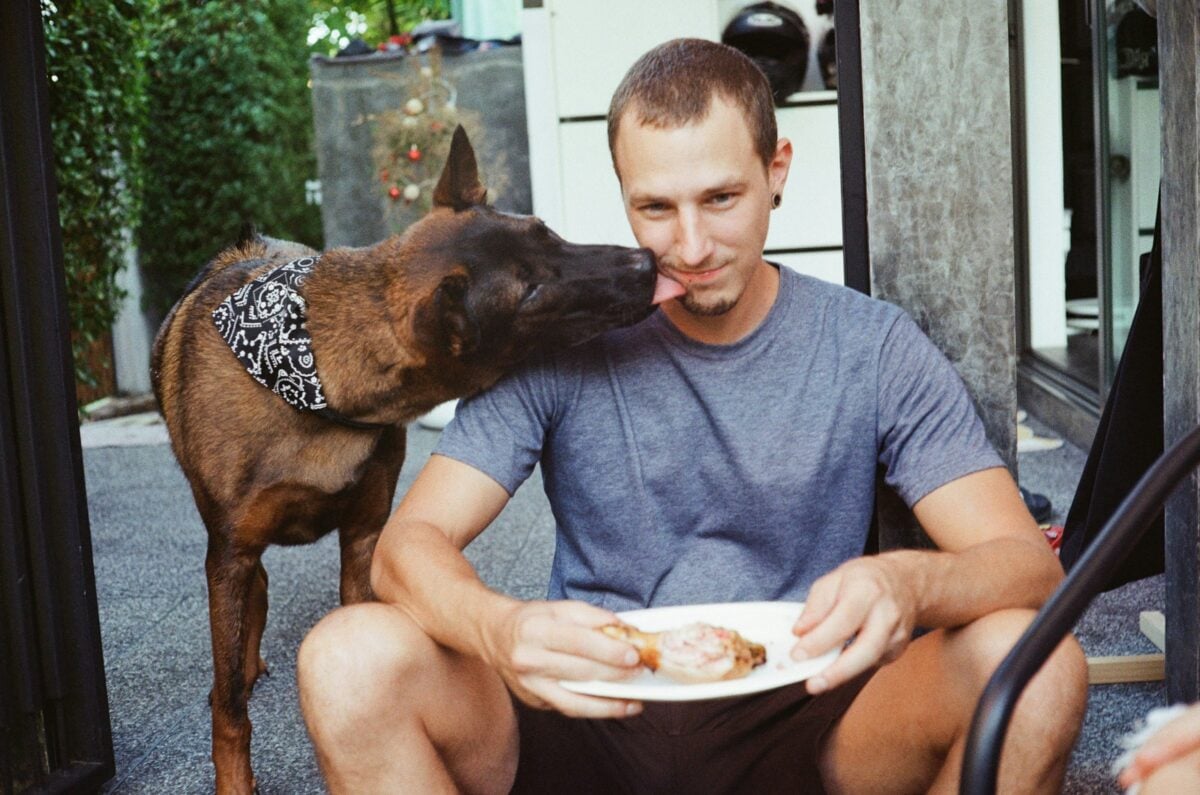
You’ll probably notice:
- Focusing on one specific area
- Returning to the same spot
- Calm, content body language
What It Usually Means: “I like the way you taste.”
6. “Please Stop.”
This is one of the most misunderstood licking behaviors.
Imagine you’re trimming your dog’s nails, cleaning their ears, hugging them tightly, or repeatedly touching a sensitive area. Then, they suddenly turn their head, and give your hand a quick lick.
It may feel like affection, but your dog could actually be trying to politely end the interaction. Rather than growling or snapping, many dogs use calming signals, including licking, to communicate discomfort while avoiding conflict.
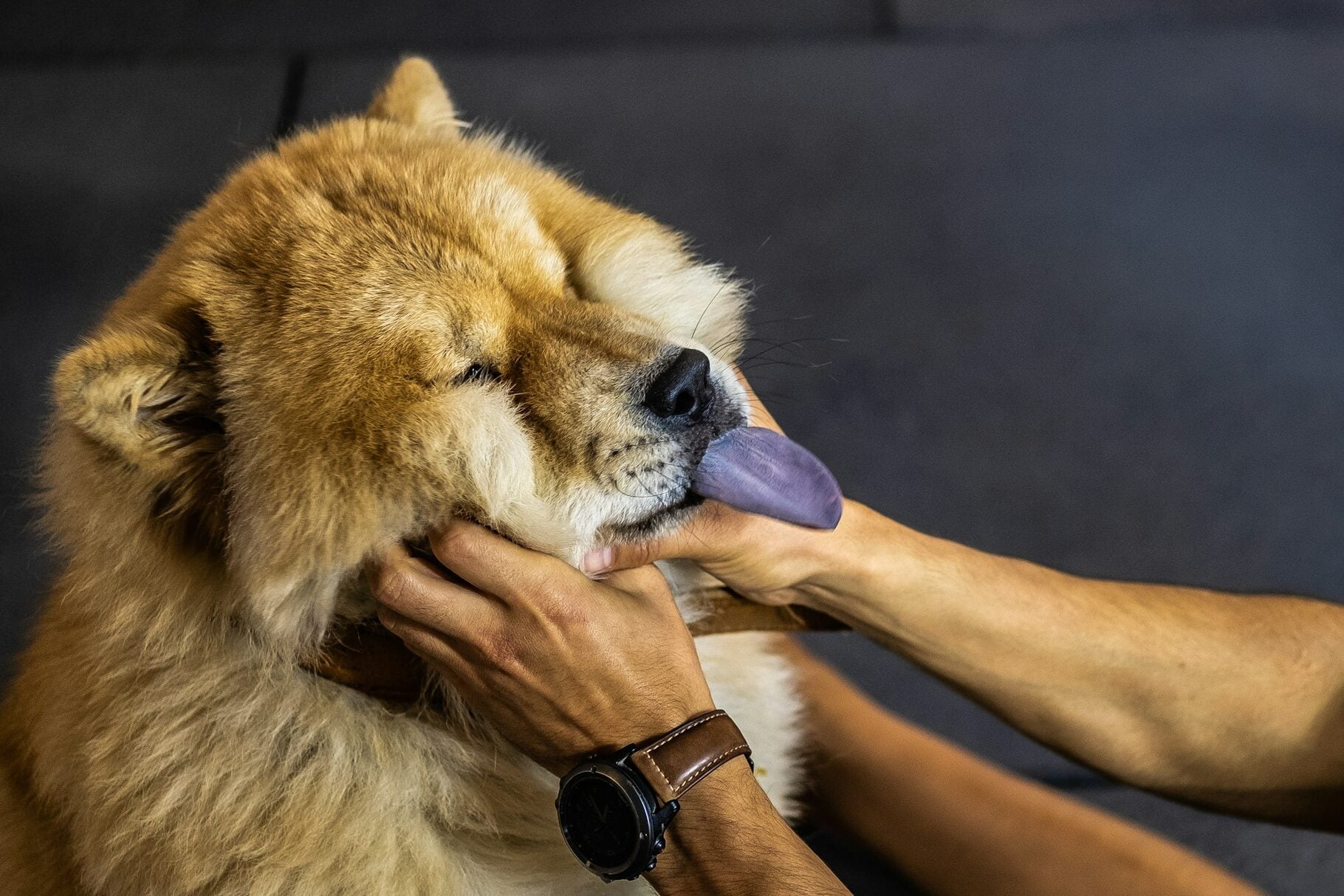
You’ll probably notice:
- Turning their head away or avoiding eye contact
- Whale eye (showing the whites of the eyes)
- Lip licking
- Yawning
- Pulling a paw away
- A stiff or tense body
- Rolling onto their back with a tense body rather than a loose, wiggly posture
What It Usually Means: “I’m uncomfortable. Can we take a break?”
Quick Tip: Don’t assume every belly-up position means your dog wants a belly rub. If they’re tense, avoiding eye contact, or repeatedly licking, they may be trying to defuse the situation instead.
7. “I’m Feeling Unsure.”
Dogs also lick when they’re trying to cope with uncertainty. You might notice this when a stranger reaches down to pet them, another dog approaches, or they’re sitting in a busy veterinary waiting room.
Instead of confronting the situation, some dogs use licking and other calming signals to help reduce social tension.
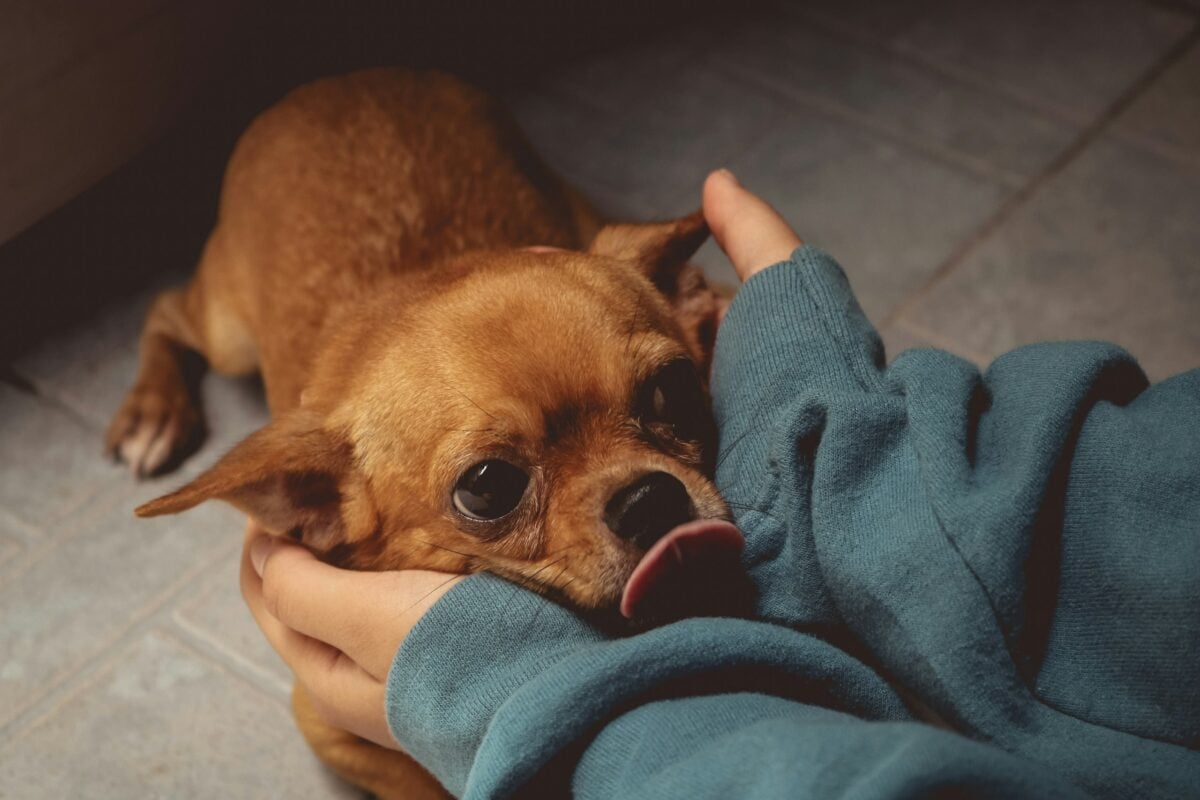
You’ll probably notice:
- Looking away
- Ears pinned slightly back
- Lip licking
- Panting when it’s not hot
- Slow movements
- Tail held low
- Staying close to you
What It Usually Means: “I’m not sure how I feel about this.”
8. “Something Is Wrong.”
Most licking is perfectly normal. But if your dog’s licking suddenly becomes frequent, obsessive, or difficult to interrupt, it may be more than communication.
Pain, allergies, nausea, anxiety, and several medical conditions can all contribute to excessive licking. The biggest clue is often a sudden change in your dog’s normal behavior.
Watch for:
- Licking that seems impossible to interrupt
- Constant licking of people, paws, furniture, or floors
- Whining or pacing
- Vomiting or appetite changes
- New or unusual behavior that appears suddenly
What It Usually Means: Your dog may be trying to tell you something is wrong. A veterinary visit is the best next step if excessive licking appears suddenly or is accompanied by other signs of illness.
When Licking Is More Than Communication
Most licking is completely normal. Dogs use it to greet people, strengthen social bonds, explore their world, and communicate their emotions.
But if your dog suddenly starts licking much more than usual, can’t seem to stop, or pairs the behavior with other unusual symptoms, it’s worth taking a closer look. Excessive licking can sometimes point to an underlying behavioral or medical issue that needs attention.
Excessive Licking Can Signal Stress or Anxiety
Just like people bite their nails or pace when they’re anxious, some dogs cope with stress by licking. The repetitive motion may help them self-soothe during situations that feel overwhelming or unpredictable.
Stress-related licking is often triggered by changes in routine, separation anxiety, loud noises, unfamiliar visitors, travel, or other disruptions to your dog’s normal environment.
Signs your dog may be licking because of stress include:
- Repetitive licking that’s difficult to interrupt
- Panting when they’re not hot
- Pacing or restlessness
- Whining or hiding
- Licking that increases during specific situations, such as thunderstorms or when you leave the house
If the behavior consistently appears alongside stressful events, reducing your dog’s anxiety often helps decrease the licking as well.
Medical Conditions That Cause Excessive Licking
Not every licking problem is behavioral. Dogs may also lick excessively because something doesn’t feel right physically.
Skin allergies, parasites, pain, nausea, dental disease, and gastrointestinal disorders can all trigger increased licking. Some dogs repeatedly lick people, while others focus on their paws, legs, or specific areas of their body.
In some cases, compulsive licking can also develop as part of canine compulsive disorder, especially if the behavior continues even after the original cause has resolved.
Common medical causes include:
- Environmental or food allergies
- Fleas and other parasites
- Skin infections
- Arthritis or joint pain
- Dental disease
- Gastrointestinal upset or nausea
- Neurological disorders
- Canine cognitive dysfunction in senior dogs
Because many conditions share similar symptoms, a veterinary exam is often the quickest way to determine what’s causing the behavior.
When To Call Your Veterinarian
Schedule an appointment if your dog:
- Suddenly begins licking far more than usual
- Licks constantly and can’t be redirected
- Develops sores, hair loss, or irritated skin
- Licks while whining, limping, or showing signs of pain
- Has vomiting, diarrhea, appetite changes, or weight loss
- Shows other unusual behavioral changes along with the licking
Finding the cause early often makes treatment simpler and helps prevent the behavior from becoming a long-term habit.
What To Do If Your Dog Won’t Stop Licking You
If your dog’s licking has become excessive, the solution depends on why they’re doing it. Instead of trying to stop the behavior immediately, focus on understanding what’s motivating it.
Start by asking yourself a few simple questions:
- Did the licking begin suddenly or has it gradually increased?
- Does it happen only during certain situations?
- What is your dog’s body language telling you?
- Have there been any recent changes to their routine or environment?
Once you’ve identified a likely trigger, you can choose the most appropriate response.
If your dog is seeking attention:
- Ignore the licking briefly instead of rewarding it.
- Ask for another behavior, such as “sit” or “touch,” before giving attention.
- Reward calm interactions instead.
If your dog is bored:
- Increase daily exercise.
- Add food puzzles or enrichment toys.
- Schedule short training sessions throughout the week.
If your dog seems stressed:
- Remove or reduce the source of stress whenever possible.
- Create a quiet place where they can relax.
- Speak with your veterinarian or a qualified behavior professional if anxiety continues.
If the licking becomes obsessive or you can’t identify a clear cause, schedule a veterinary visit before assuming it’s simply a bad habit.
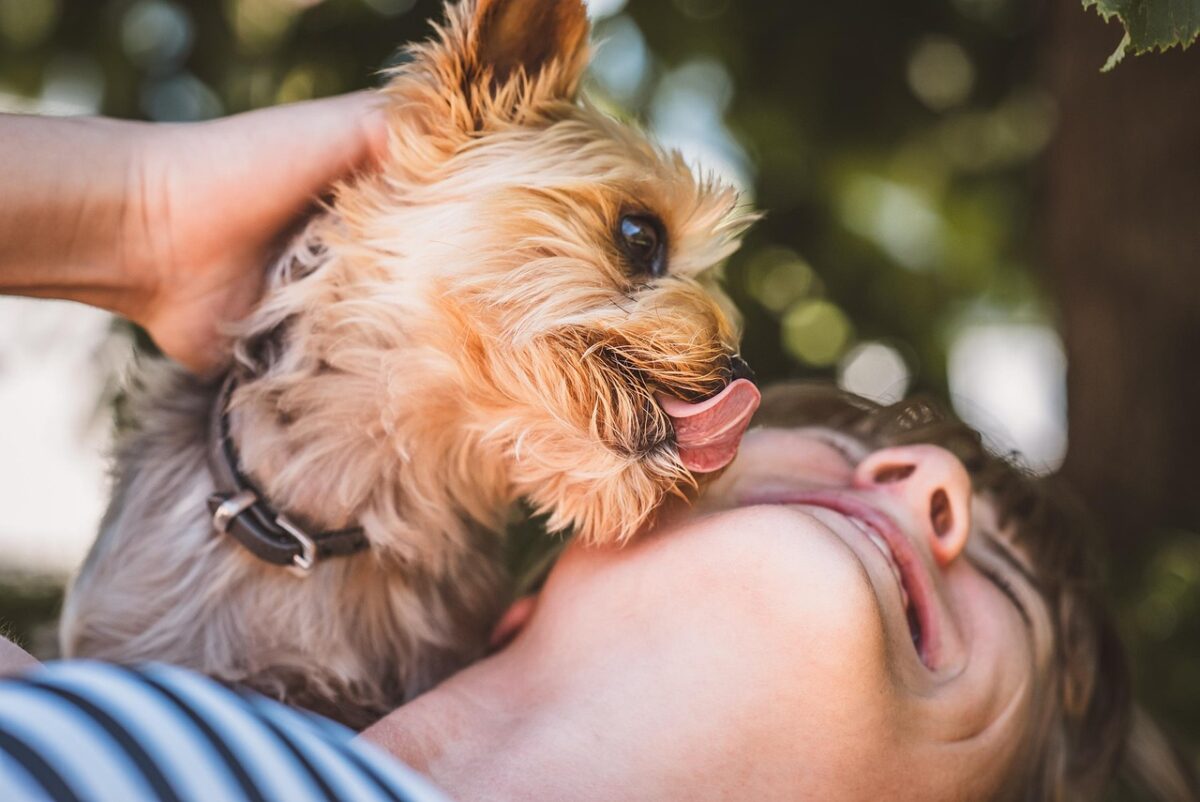
Should You Let Your Dog Lick Your Face Or Mouth?
Many dog owners don’t think twice about receiving a few sloppy kisses. Others avoid them completely. So, who’s right?
For most healthy adults, an occasional lick on intact skin carries a relatively low risk. However, allowing your dog to lick your face or mouth increases your exposure to bacteria and other microorganisms that naturally live in a dog’s mouth.
The risk is generally higher for:
- Infants and young children
- Older adults
- Pregnant people
- Anyone with a weakened immune system
- People with open cuts or wounds
While serious infections are uncommon, experts generally recommend avoiding mouth-to-mouth contact and washing your face if your dog licks near your eyes, nose, or mouth.
If your dog enjoys licking as a way to show affection, redirecting them toward your hands or offering another form of interaction can help satisfy that need without increasing unnecessary health risks.
Why Dogs Lick Themselves, Furniture & Other Objects
People aren’t the only things dogs like to lick. Depending on the object, the behavior may serve a completely different purpose.
Why Dogs Lick Themselves
Dogs naturally lick themselves to groom their coats, remove debris, and soothe minor irritation. Excessive self-licking, however, can indicate allergies, parasites, infections, pain, or anxiety.
Why Dogs Lick Furniture, Blankets & Floors
Furniture and household objects absorb food smells, body odors, and environmental scents that dogs find interesting. Some dogs also lick soft fabrics as a self-soothing behavior when they’re tired or anxious.
Persistent licking of floors or walls can occasionally be associated with gastrointestinal problems or compulsive disorders, especially if it develops suddenly or becomes difficult to interrupt.
Why Dogs Lick Other Dogs
Licking is an important part of canine social behavior. Dogs may lick another dog’s face as a greeting, groom one another to strengthen social bonds, or use licking as an appeasement signal to avoid conflict.
Watching the entire interaction, including posture, facial expressions, and tail movement, provides much more insight than the licking alone.
Frequently Asked Questions
Here are quick answers to some of the most common questions dog owners ask. Don’t see your question? Respond in the comments, and we’ll get back to you!
Why Does My Dog Lick Only Me?
Dogs often reserve licking for the people they have the strongest bond with. If you’re your dog’s primary caregiver or spend the most time with them, they may lick you more often as a way to show affection, seek attention, or greet you. Your unique scent and daily interactions also make you especially interesting to your dog.
Why Does My Puppy Lick Me So Much?
Puppies naturally explore the world with their mouths and tongues. Licking also helps them bond with people, seek attention, and communicate during social interactions. As your puppy matures, they’ll often rely less on licking and more on other learned behaviors to interact with you.
Why Does My Dog Lick Me After I Shower?
After a shower, your skin smells and tastes different than usual. Soap residue, lotion, shampoo, and moisture can all make you especially interesting to your dog’s sensitive nose and tongue. Some dogs are simply investigating the new scents, while others may enjoy the salty taste of damp skin.
Why Does My Dog Lick Me Before Bed?
Many dogs develop bedtime routines just like people do. A few gentle licks before settling down may be part of your dog’s way of relaxing, strengthening your bond, or signaling that they’re ready to wind down for the night.
Why Does My Dog Lick My Feet?
Feet are full of interesting scents, and they often become salty after you’ve been walking or exercising. Your dog may be investigating those smells, enjoying the taste of sweat, or simply seeking your attention if your feet are the closest part of you within reach.
Why Does My Dog Lick My Ears?
Earwax has a distinctive smell that many dogs find intriguing. Some dogs also lick ears as an affectionate social behavior, especially with people they’re closely bonded to.
If the licking becomes excessive or uncomfortable, redirect your dog to a more appropriate way to interact.
Why Does My Dog Lick My Hands More Than My Face?
Your hands carry an incredible amount of information about where you’ve been, what you’ve touched, and what you’ve eaten. They also tend to be easier for your dog to reach. In many cases, hand licking is simply a combination of curiosity, scent investigation, and attention-seeking.
Still Curious About Your Dog’s Licking Habits?
The more you understand why dogs lick, the easier it becomes to tell the difference between normal communication and behavior that deserves a closer look. If your dog has other licking habits you’ve been wondering about, these guides can help you decode them:
- Why Do Dogs Lick? Explore the many reasons dogs lick people, themselves, and objects.
- Why Do Dogs Lick Their Wounds? Learn when wound licking may help, when it can slow healing, and how to know when to intervene.
- Why Do Dogs Lick Each Other’s Ears? Discover what ear licking means between dogs and when it could signal a health problem.
- Why Does My Dog Lick Their Butt? Find out what’s normal, what isn’t, and when excessive licking may require a veterinary visit.