When you purchase through links on our site, we may earn a commission at no extra cost to you. Learn more.
You stand up to grab a snack, and your dog is already waiting in the kitchen. You head upstairs, and somehow they’re one step ahead of you. Close the bathroom door for 30 seconds? Suddenly, you’ve become the subject of an active missing person investigation.
Table of Contents
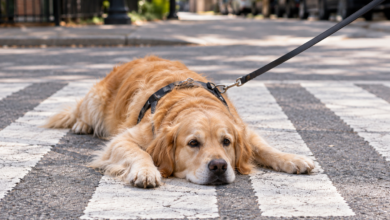
At some point, most dog owners realize their dog isn’t just following them around. They’re waiting for them.
Whether they’re parked by the front door before you get home, sitting outside the bedroom every morning, or staring out the window like they’re tracking your arrival on GPS, dogs have an uncanny way of seeming to know exactly where you’ll be next.
As it turns out, there’s a lot more going on than simple loyalty, and the reasons your pup waits for you are surprisingly sweet.
Want our human-written content to rank above AI-generated garbage? Help us out by clicking this button!
Can You Relate?
Some dogs don’t just notice when you’re gone—they spend the day waiting for the moment you come back.
This sweet pup patiently waits by the front door for a little boy to return from his first day of school. If your dog starts watching the driveway a few minutes before you get home, this video might feel very familiar.
Why Waiting Is One Of The Sweetest Things Your Dog Does
It’s easy to look at a waiting dog and think they’re simply passing the time until something more exciting happens.
But from your dog’s perspective, waiting is doing something.
Every day, your dog makes countless little decisions about where to spend their time. They could stretch out for another nap, patrol the backyard, chewon a favorite toy, or investigate the squirrel that’s been committing crimes in the bird feeder again.
Instead, they choose a spot where they’re most likely to see you.
Sometimes that’s by the front door before you get home. Sometimes it’s outside your office while you work, at the bottom of the stairs while you get dressed, or just outside the bathroom because, apparently, privacy is overrated.
The important part isn’t the location. It’s the choice.
By waiting where you’re most likely to appear, your dog is showing that reconnecting with you is one of the most rewarding parts of their day.
3 Reasons Dogs Wait For Their Favorite People
While every dog is different, most waiting behavior comes down to three core reasons. After that, it’s simply a matter of how each dog expresses those instincts.
1. Your Pup Has Learned Your Daily Routine Better Than You Have
If your dog always seems to know you’re about to leave for work, head upstairs for bed, or pull into the driveway before you even open the front door, they’re probably not guessing. They’re predicting.
Dogs are incredibly observant. Over time, they build a mental map of your daily routine by noticing hundreds of tiny details. Instead of checking the time, they pay attention to patterns. To us, these little habits barely register.
We don’t think twice about grabbing the same coffee mug every morning or putting on a certain pair of shoes before leaving the house.
To your dog, they’re all part of a predictable sequence. Every sound, movement, and routine becomes another clue about what you’re likely to do next.
Things Your Dog Notices Before You Do
- The sound of your work shoes instead of your weekend sneakers
- Your favorite coffee mug coming out of the cabinet
- The click of your laptop closing at the end of the workday
- The sound of your keys before you pick them up
- The bathroom light turning off as you get ready for bed
- The garage door opening before anyone else hears it
- Your car pulling onto the street long before you reach the front door
To you, these are ordinary moments. To your dog, they’re clues about what happens next.
None of these clues mean much on their own. Together, though, they create an incredibly reliable prediction of what happens next. To you, it’s Tuesday. To your dog, it’s Episode 1,247 of the exact same morning routine.
The more consistent your routine becomes, the easier it is for your dog to anticipate where you’ll be—and where they should wait if they want to see you again.
2. Waiting Is Your Dog’s Way Of Staying Connected To Their Favorite Person
For many dogs, waiting isn’t just about knowing where you’ll be next. It’s about staying connected to someone they genuinely enjoy being around.
Behaviorists refer to this as secure attachment. Just as young children naturally keep track of a trusted caregiver, dogs often feel most comfortable when they know where their favorite person is. That doesn’t mean they’re anxious or needy. In most cases, it reflects a strong, healthy bond.
You can see this bond in the small decisions your dog makes throughout the day. Instead of finding the most comfortable spot in the house, they often choose the place that keeps you within sight. Apparently, supervising your every move is an unpaid position they’ve happily accepted.
For example, they might:
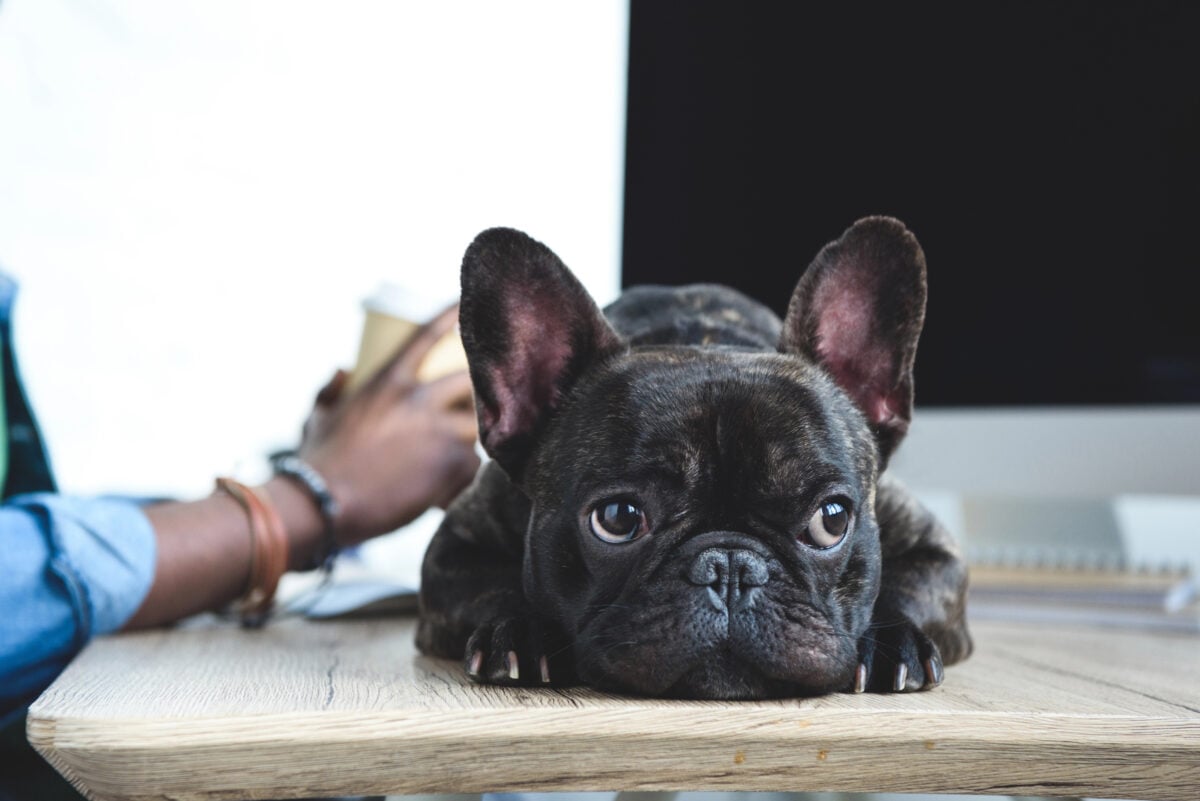
- Lie beside your desk while you work.
- Follow you upstairs to witness absolutely nothing of interest.
- Settle next to the couch because that’s suddenly the best seat in the house.
- Wait outside a closed door as though you’ve wandered into another dimension.
This behavior is known as proximity seeking—the natural tendency to stay close to someone who provides comfort, security, and social connection.
Importantly, proximity doesn’t always mean your dog wants your attention. Many dogs are perfectly happy to:
- Nap quietly at your feet.
- Watch you cook from the kitchen doorway.
- Stretch out nearby while you read or watch TV.
- Simply know where you are without interacting.
For them, sharing the same space is rewarding.
Did You Know?
Studies have shown that eye contact between dogs and their owners can trigger the release of oxytocin—often called the “bonding hormone”—in both species. That positive chemical feedback helps strengthen your relationship over time and is one reason many dogs naturally choose to stay close to the people they love.
3. Dogs Like Knowing Their Whole Family Is Together
Even if your dog has a clear favorite person, they’re often keeping tabson everyone else in the house, too.
Dogs are social animals, and living in a group means paying attention to where the other members of that group are. Many dogs naturally keep track of who’s home, who’s left, and who’s likely to walk through the door next.
You might notice your dog:
- Checking bedrooms before settling down for the night.
- Looking toward the front door when one family member is still out.
- Moving from room to room until everyone is in roughly the same place.
- Greeting each person differently as they come home.
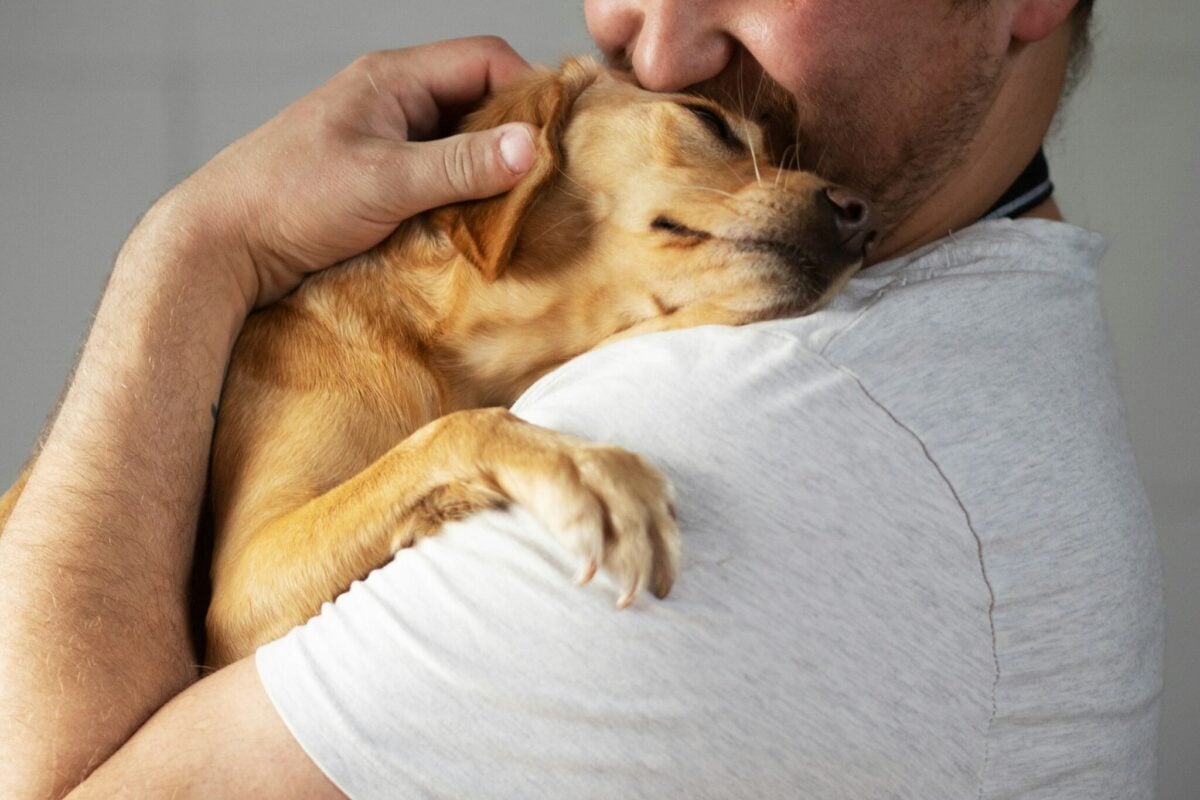
This isn’t because your dog is trying to organize the household or make sure everyone follows the schedule. They’re simply aware of the people who make up their social world.
Some dogs even seem to postpone relaxing until the whole family is back together. Once everyone is home, they finally curl up on the couch, stretch out on their favorite bed, or let out the dramatic sigh that says, attendance has been taken and everyone is accounted for.
For highly social dogs, knowing where their people are is part of feeling comfortable in their environment.
How Dogs Show They’re Waiting For You
Now that you know why dogs wait, let’s look at how that behavior shows up in everyday life. From front doors to bathroom doors, these are the places where your dog’s instincts and your daily routine come together.
Why Do Dogs Wait By Doors And Windows?
If your dog has a favorite waiting spot, there’s a good chance they didn’t choose it by accident. They’ve unknowingly claimed prime real estate.
The front door, garage entrance, living room window, or front porch all have one thing in common: they give your dog the best chance of knowing you’ve arrived before anyone else.
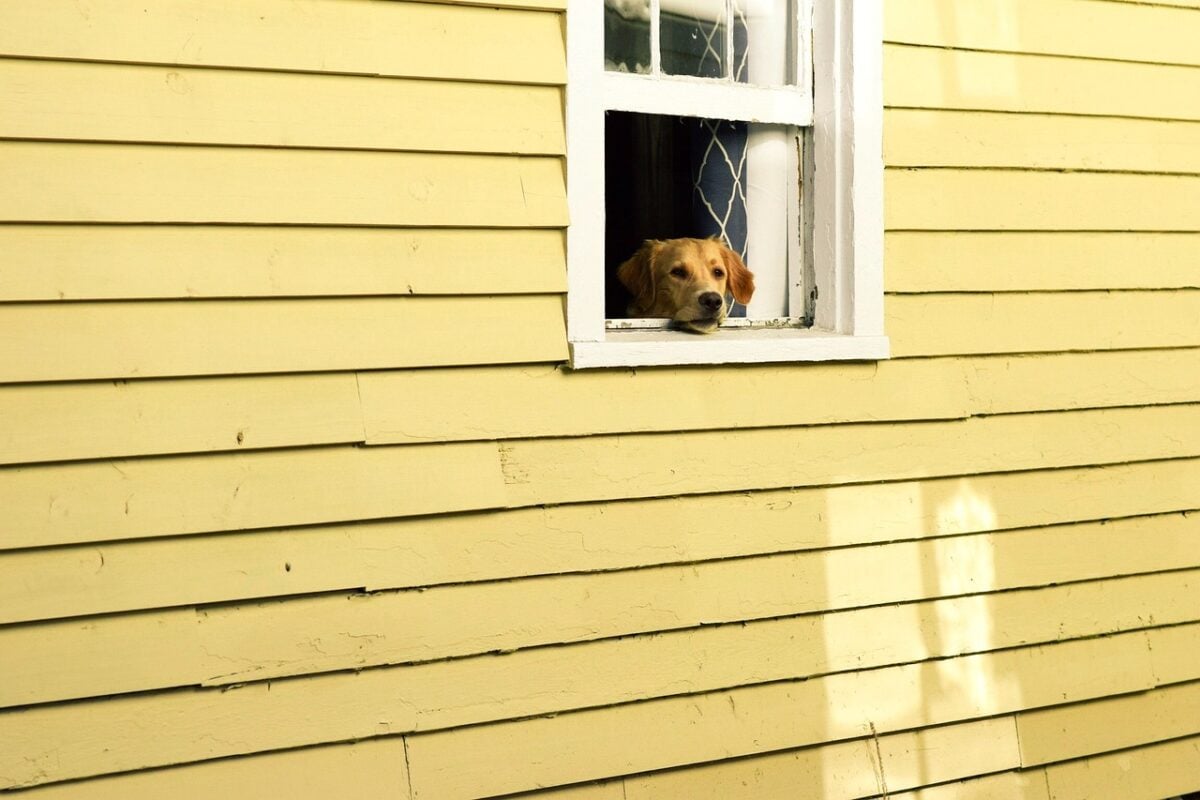
Those locations offer several advantages:
- The strongest scent trails as you come and go.
- The clearest view of the driveway, sidewalk, or street.
- The quickest route to greet you the second you walk through the door.
Dogs also experience the world very differently than we do. While you’re looking for a familiar face through the window, they’re gathering information with their nose, ears, and eyes all at once.
Long before you reach the front door, your dog may have already recognized:
- The sound of your car turning onto the street.
- Your footstepson the sidewalk or porch.
- The garage door rumbling open.
- Familiar neighborhood sounds that usually happen right before you arrive.
- Your scent drifting toward the house.
By the time you finally step inside, your dog has often known you were coming for several moments already. That’s why it sometimes feels like they were waiting for you before you even got home.
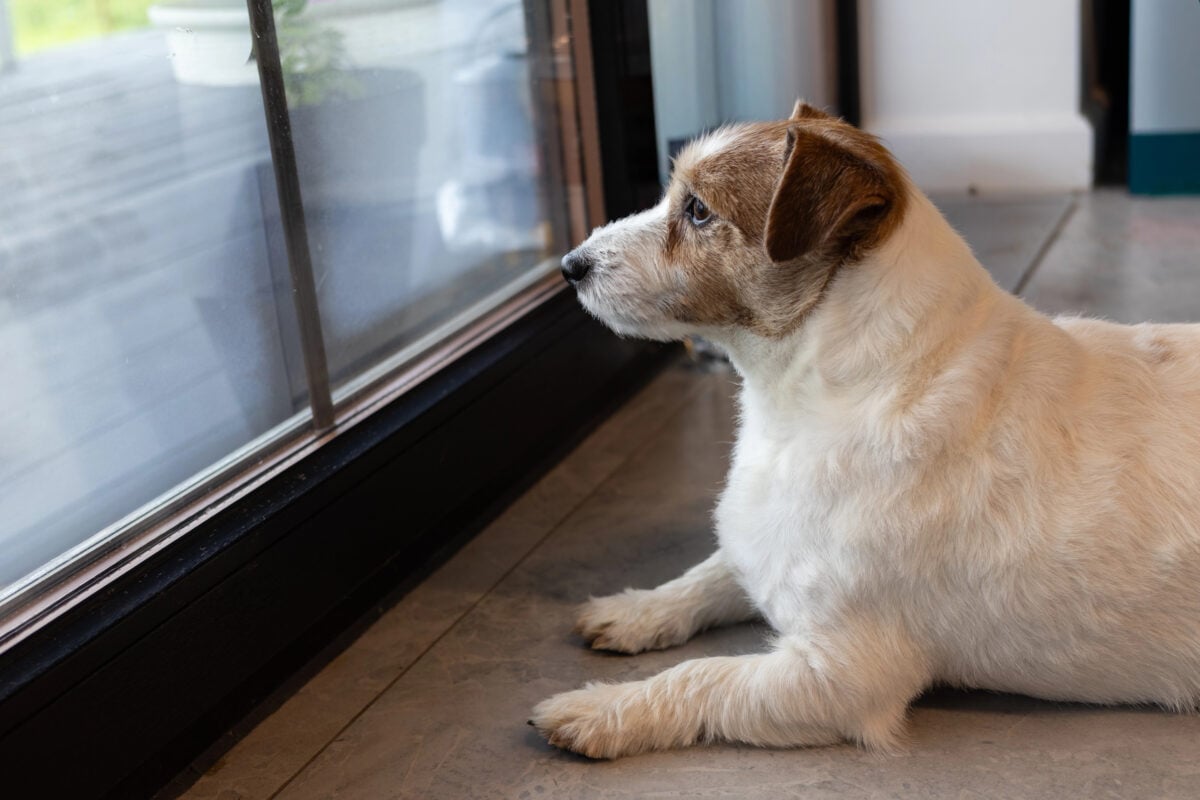
So if your dog always claims the same spot by the window or front door, it probably isn’t because it’s the comfiest seat in the house. It’s because it’s the best place to make sure they don’t miss your return, even if act like they’ve been waiting there for eight hours.
Why Do Dogs Wait Outside The Bathroom?
If there were a poll for the most confusing human behavior, closing the bathroom door would probably rank near the top of your dog’s list.
One minute you’re together. The next, you’ve disappeared behind a large wooden barrier for reasons they can’t possibly understand. Naturally, an investigation is required.
For many dogs, waiting outside the bathroom isn’t really about the bathroom at all. It’s about staying connected to you. A closed door temporarily interrupts that connection, so they simply wait for things to return to normal.
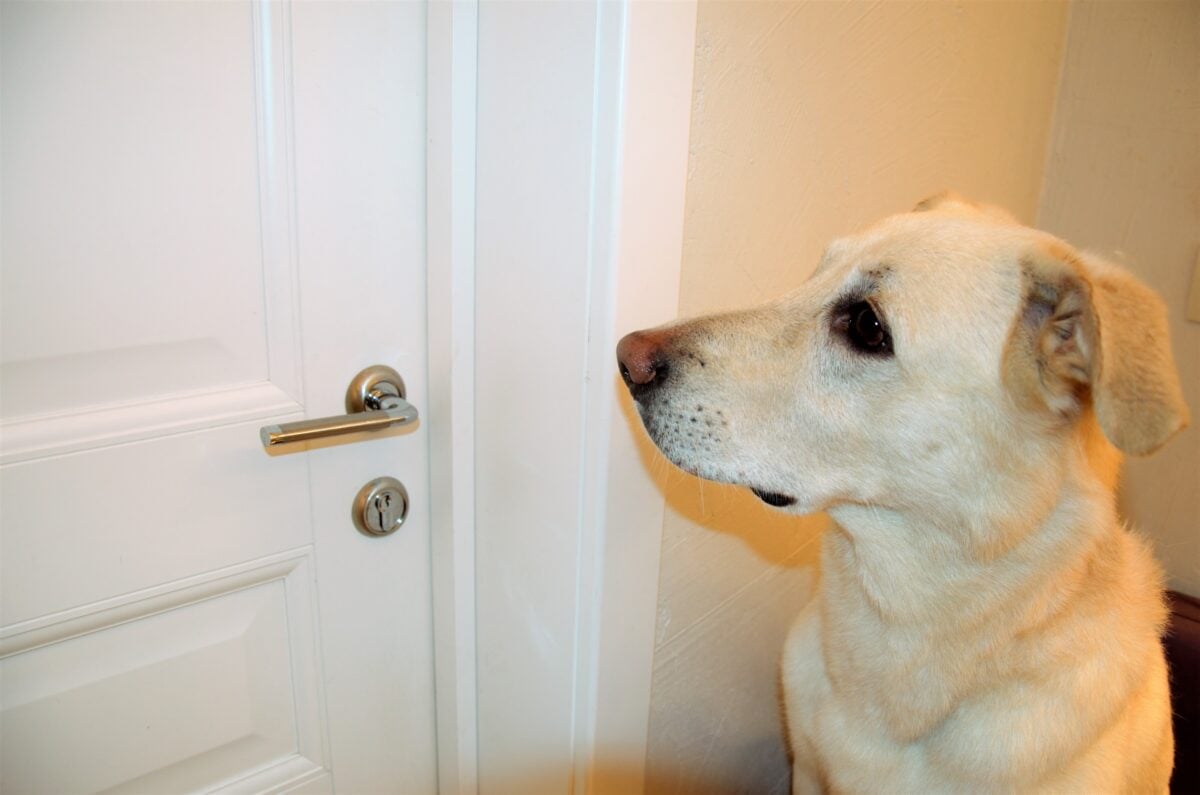
Some dogs take this job more seriously than others. Yours might:
- Flop down outside the door like they’re guarding a top-secret meeting.
- Stick a nose or paw underneath just to confirm you’re still in there.
- Sigh dramatically as though you’ve abandoned them forever.
- Leap up the second the door opens like they’ve been reunited after a long expedition.
Dogs also tend to dislike unexpected barriers. If they’re used to moving freely through the house with you, a closed door is unusual enough to grab their attention.
The same thing often happens with bedroom doors, home offices, or laundry rooms. It isn’t the room that’s interesting—it’s the fact that you went somewhere they couldn’t follow.
Fortunately, most bathroom waiting is completely normal. It’s simply another small way your dog stays connected until the two of you are back in the same room again.
Bathroom Privacy, According To Your Dog
Your dog may believe one or more of the following:
- Closed doors are optional.
- Every bathroom trip requires supervision.
- 30 seconds is an unreasonably long disappearance.
- If they can slide one paw under the door, the reunion has officially begun.
Why Some Dogs Wait More Than Others
If your dog seems to wait for you more than anyone else in the family, don’t be surprised. Many dogs naturally form a stronger attachment to one particular person, even when they love everyone in the household.
That favorite person isn’t always the one who fills the food bowl. More often, it’s the person who has become the most consistent part of the dog’s daily life.
Your dog may feel especially connected to the person who:
- Spends the most quality time with them.
- Takes them on walks or plays their favorite games.
- Provides comfort during stressful situations.
- Handles most of the training and positive interactions.
- Simply has the most predictable daily routine.
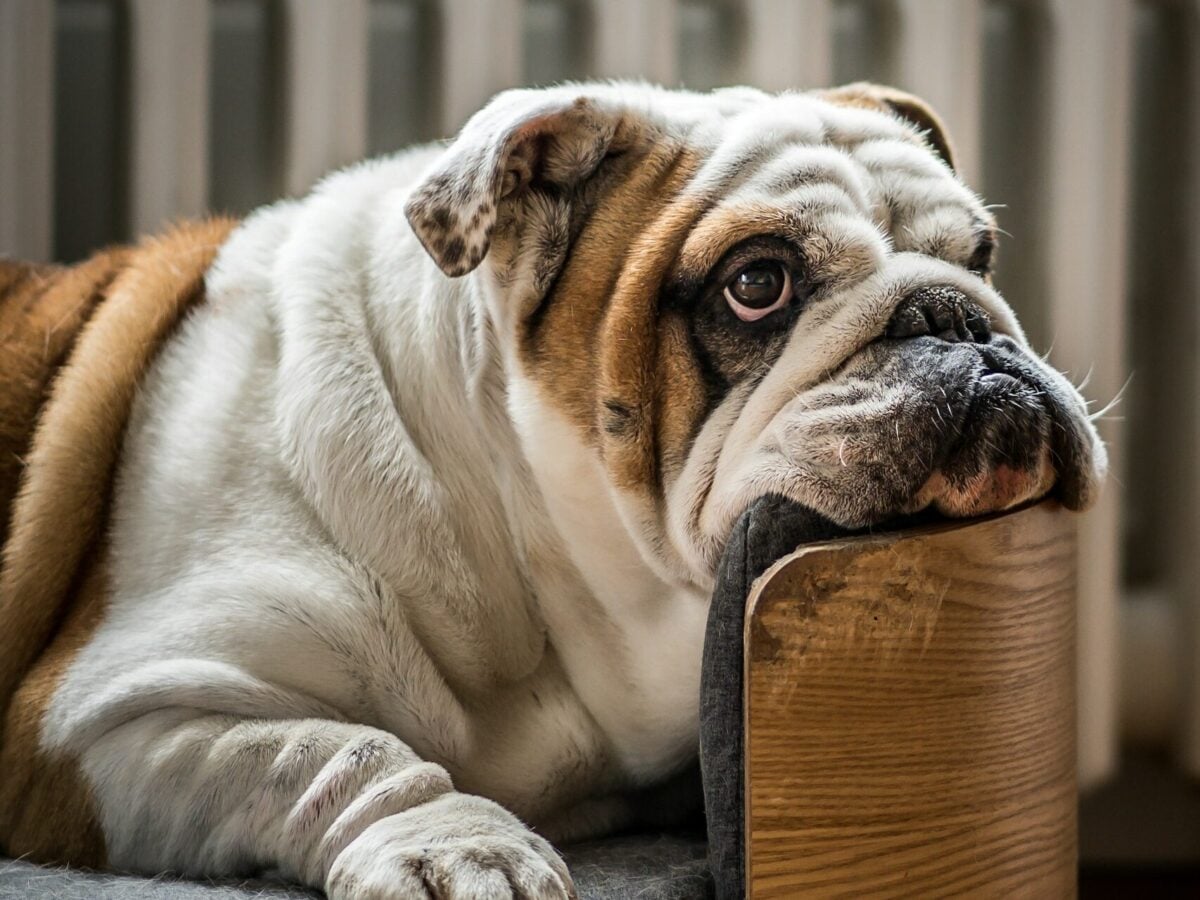
Sometimes that bond develops gradually. Other times, it forms surprisingly quickly, especially after adoption or during puppyhood, when dogs are learning who makes them feel safe.
That doesn’t mean everyone else has been demoted to “acquaintance.” It simply means your dog has chosen one person as their primary point of reference throughout the day.
So if your dog follows you from room to room but barely looks up when someone else heads to the kitchen, don’t assume they’re playing favorites out of spite. They’re responding to the relationship they’ve built with you over hundreds of ordinary moments.
Breed Tendencies Can Play A Role
While any dog can form a particularly strong bond with one person, some breeds are naturally more inclined to become “Velcro dogs” than others. They were bred to work closely with people, making them more likely to stay nearby, follow their favorite person, and patiently wait for them throughout the day.
| Dogs More Likely To Form A Strong One-Person Bond | Dogs Who Often Bond Closely With The Whole Family |
|---|---|
| Vizsla | Labrador Retriever |
| German Shepherd | Golden Retriever |
| Chihuahua | Beagle |
| Australian Shepherd | Cavalier King Charles Spaniel |
| Akita | Boxer |
| Italian Greyhound | Newfoundland |
| Doberman Pinscher | Standard Poodle |
Of course, every dog is an individual. Breed tendencies can influence how strongly dogs attach to one primary caregiver, but personality and life experiences often matter just as much.
It’s Not Just About Breed
Breed is only one piece of the puzzle. Other factors can also influence how likely your dog is to wait for you throughout the day.
- Age. Young puppies often shadow their owners because everything in the world is still new. Staying close gives them confidence as they explore unfamiliar experiences. Many dogs become a little more independent as they mature, while seniors often return to familiar people and routines for comfort.
- Personality. Some dogs are naturally independent and perfectly happy entertaining themselves. Others seem happiest when they know exactly where their humans are, even if they’re content doing nothing more than napping nearby.
- Past experiences. Rescue dogs or dogs that have experienced major life changes sometimes place extra valueon knowing where their trusted people are. Once they feel safe, waiting can become one of the many little routines that help reinforce that security.
- Daily lifestyle. Dogs who spend lots of quality time with their owners naturally have more opportunities to develop habits of checking in, following, and waiting nearby than dogs that spend long stretches of the day apart.
None of these traits are better than the others. A dog that happily naps in another room isn’t any less bonded to you than the one waiting outside every closed door. They simply express that relationship in different ways.
So if your friend’s dog spends the afternoon happily sunbathing while yours follows you from the kitchen to the laundry room like a tiny four-legged intern, that’s less about who’s loved more and more about who your dogs are as individuals.
When Waiting Can Become A Sign Of Separation Anxiety
For most dogs, waiting is simply another way of staying connected to the people they love. They wait, they relax, and they’re happy to see you when you come home.
Separation anxiety is different.
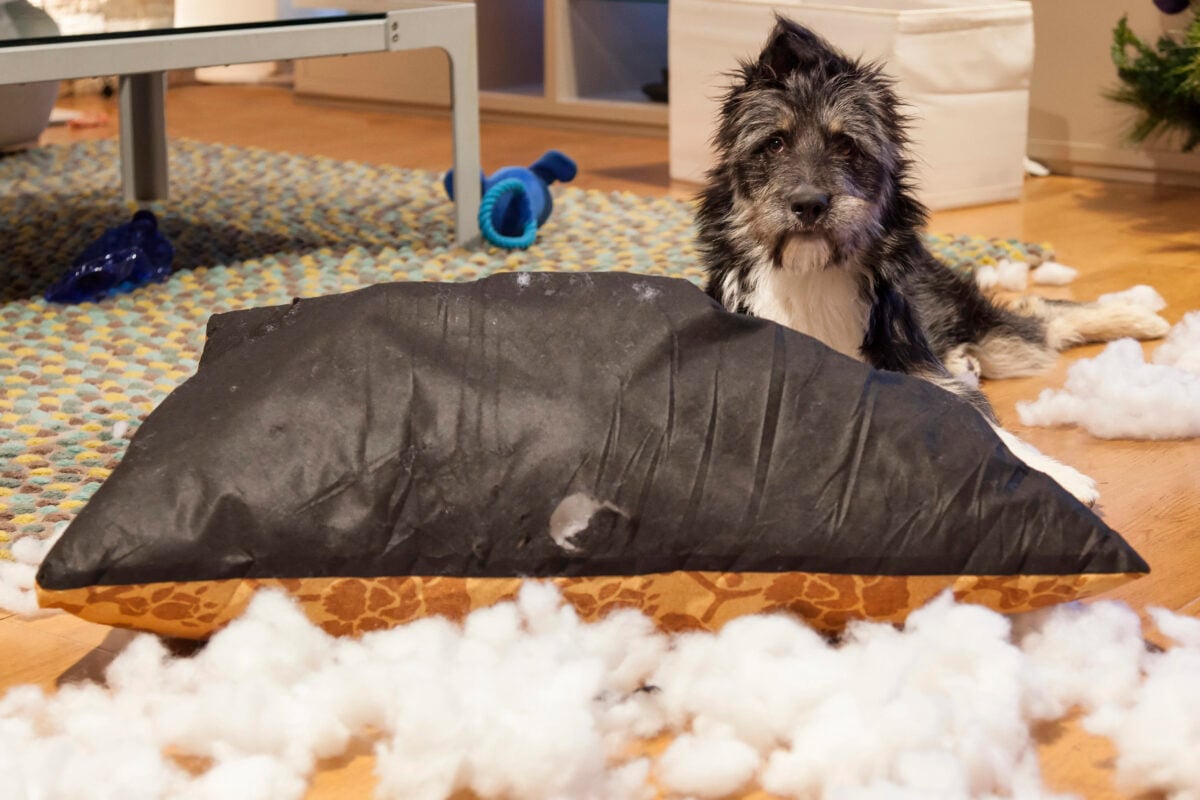
The biggest difference isn’t where your dog waits—it’s how they cope once you’re gone.
A dog with a healthy attachment can usually settle into the day after you’ve left. They might nap, chew a toy, look out the window for a while, or simply wait until they hear you come home.
A dog struggling with separation anxiety often has a much harder time relaxing. Instead, you may notice behaviors like:
- Pacing or being unable to settle after you leave.
- Constant barking, whining, or howling.
- Destructive chewing or scratching at doors and windows.
- Excessive drooling or panting that isn’t related to heat or exercise.
- Attempts to escape the house or crate.
- Ignoring food, treats, or favorite toys until you return.
These behaviors happen because your absence causes genuine distress, not because your dog is trying to punish you or “act out.”
Normal Waiting vs. Separation Anxiety
| Normal Waiting | Separation Anxiety |
|---|---|
| Waits calmly | Panics after you leave |
| Can relax or nap | Struggles to settle |
| Eats and plays normally | May refuse food or toys |
| Greets you happily | Shows signs of intense distress |
| Returns to normal once you’re gone | Remains anxious throughout your absence |
If your dog’s waiting is accompanied by panic, destruction, or an inability to cope when left alone, it’s worth talking with your veterinarian or a qualified behavior professional.
The sooner separation anxiety is recognized, the easier it is to begin helping your dog feel more comfortable and confident when you’re away.
The Little Ways Dogs Say, “I’m Waiting For You.”
By now, you’ve probably realized your dog has been saying, “I’d rather be wherever you are,” in ways you never really noticed before.
See how many of these sound familiar.
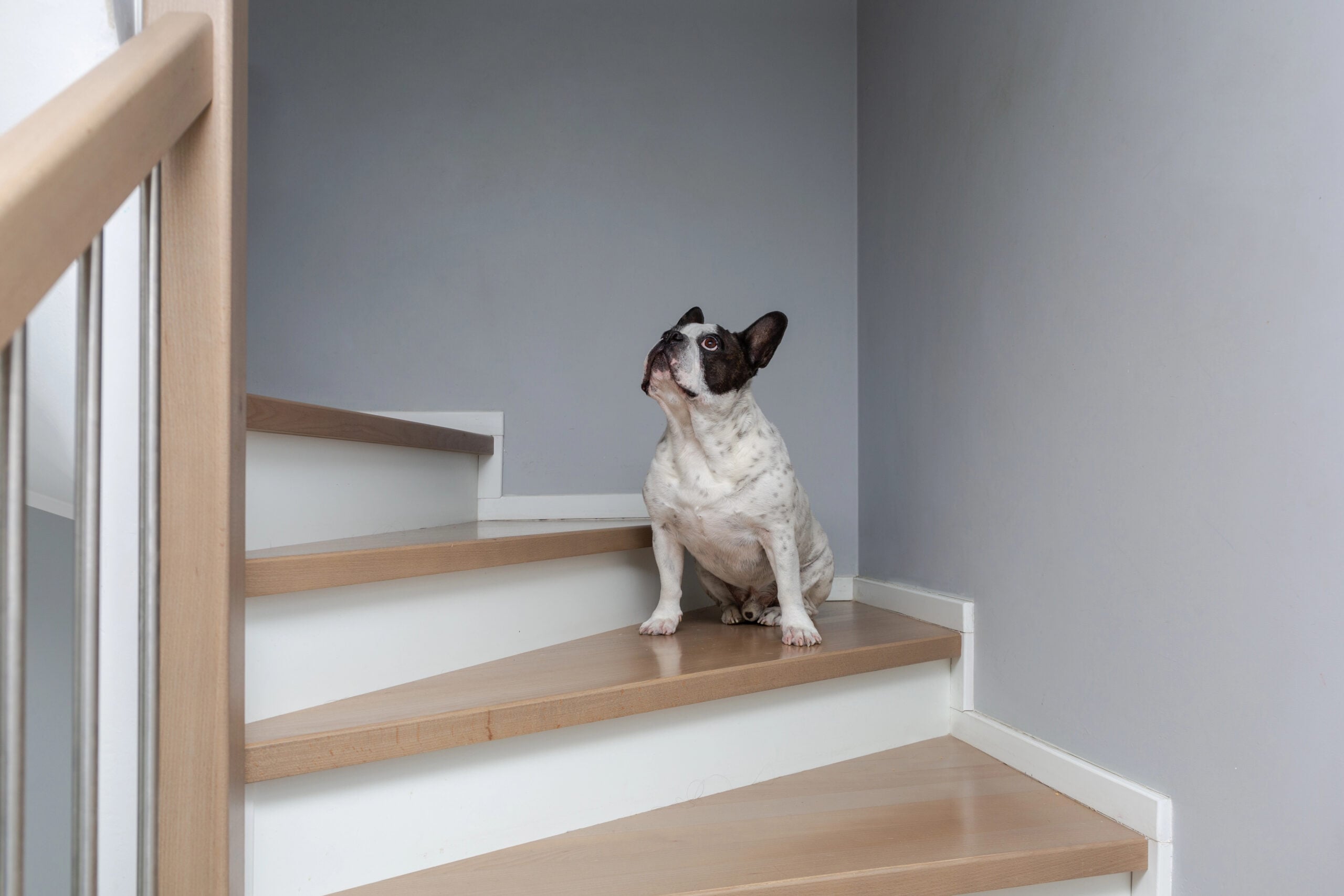
- They’re already waiting at the bottom of the stairs before you come down in the morning.
- They claim the spot outside your bedroom until you’re ready to start the day.
- They quietly follow your evening routine from the couch to the kitchen to the bedroom.
- They suddenly become very interested in the front window around the time you usually get home.
- They perk up at the sound of your car, your footsteps, or the garage door before anyone else notices.
- They move rooms every time you do, even if they were perfectly comfortable five seconds earlier.
- They wait outside the bathroom as though you’ve disappeared into a mysterious parallel universe.
- They greet you at the door with the enthusiasm of someone who hasn’t seen you in approximately 47 years.
- They seem happiest simply knowing where you are, even if you’re both doing completely different things.
Frequently Asked Questions
Every dog has their own little waiting rituals, which means owners often have lots of follow-up questions. If you don’t see yours answered below, ask us in the comments — we’d love to hear about your dog’s favorite waiting spot.
Can Dogs Really Tell What Time You’re Coming Home?
Not in the way people can. Dogs don’t understand clocks or schedules, but they become incredibly good at recognizing patterns.
They notice things like changes in light, household activity, neighborhood sounds, and even your scent becoming stronger as you get closer to home. Over time, these clues help them predict when you’re likely to walk through the door.
Do Dogs Miss Their Owners While They’re Gone?
Yes, most dogs do miss the people they’ve bonded with, although they don’t necessarily experience time the way we do.
Some dogs simply rest and wait until their owner returns, while others spend time looking out the window, listening for familiar sounds, or checking the front door. Missing you is a normal part of a healthy bond and doesn’t automatically mean your dog has separation anxiety.
Why Does My Dog Wait Outside The Shower Instead Of The Bathroom?
From your dog’s perspective, a shower is one of the stranger things humans do. You disappear behind a curtain, water starts falling from the ceiling, and then you eventually reappear smelling completely different.
Many dogs simply wait nearby because they want to stay close and keep track of where you are. Others are curious about the sounds, movement, or steam. As long as your dog seems relaxed, waiting outside the shower is usually just another quirky way they stay connected to you.
Why Does My Dog Wait For Me To Watch Them Eat?
Some dogs prefer eating when their favorite person is nearby. This often comes down to social bonding and a sense of security. In the wild, canines typically eat as part of a group, so having a trusted companion close by can make mealtime feel more comfortable.
Some dogs have also learned that people occasionally make meals more exciting by handing out treats or accidentally dropping food. If your dog eats normally once you’re nearby, this behavior is usually nothing to worry about.
Can Puppies Grow Out Of Waiting For Me Everywhere?
Often, yes. Puppies are naturally curious and tend to shadow their owners because they’re still learning about the world and building confidence. As many dogs mature, they become more independent and don’t feel the need to keep track of every move you make.
Others, however, remain enthusiastic “Velcro dogs” throughout their lives. Personality, breed tendencies, and the bond you share all play a role.
Is It Bad If My Dog Doesn’t Wait For Me?
Not at all. Dogs show affection in different ways. While some wait patiently by the front door or follow their owners from room to room, others are perfectly content to nap until they hear you come home.
An independent dog isn’t necessarily less attached than one who waits. If your dog is happy, relaxed, and excited to see you when you return, there’s no reason to worry simply because they don’t spend the day watching the window.
Understanding What Your Dog Is Telling You
Your dog isn’t counting the minutes until you come back. They don’t need a wristwatch, a wall calendar, or a tiny motivational planner labeled Important Human Arrivals.
They’re simply building their day around the person who’s become the center of their social world.
Whether they’re watching from the front window, parked outside the bathroom, or waiting at the bottom of the stairs like a very committed greeter with no formal training, your dog is doing more than passing time. They’re staying connected to you in the small, ordinary ways dogs do best.
If you’d like to learn more about the ways dogs build relationships with the people they love, check out these related guides:
- Why does your dog follow you everywhere? Learn why some pups become your shadow—and what that behavior says about your bond.
- Has your dog chosen you as their person? Discover the subtle signs your dog has formed an especially strong attachment to you.
- What is your dog trying to tell you? Understanding canine body language can help you recognize everything from affection to stress.
Every dog has their signature waiting routine. Is yours a window watcher, a bathroom guard, or your own four-legged shadow? Or does your pup have a quirky waiting ritual that we haven’t covered? Share with us in the comments.