When you purchase through links on our site, we may earn a commission at no extra cost to you. Learn more.
Help! My puppy is chewing everything: shoes, furniture, clothes, and sometimes even me. If that sounds familiar, it’s usually a normal part of puppyhood, especially during teething.
Table of Contents
Puppies chew to explore, play, burn off energy, and sometimes cope with boredom or stress. The objective isn’t to stop chewing altogether; it’s to gently teach your puppy what’s okay to chew.
Puppy-proofing, appropriate chew toys, supervision, and consistent redirection can help encourage better habits. Just keep in mind that chewing can become a safety concern if your puppy swallows pieces, damages a tooth, or gets hold of something toxic or dangerous. Here’s how to manage everyday puppy chewing and recognize when it may need extra attention.
Why Is My Puppy Chewing Everything?
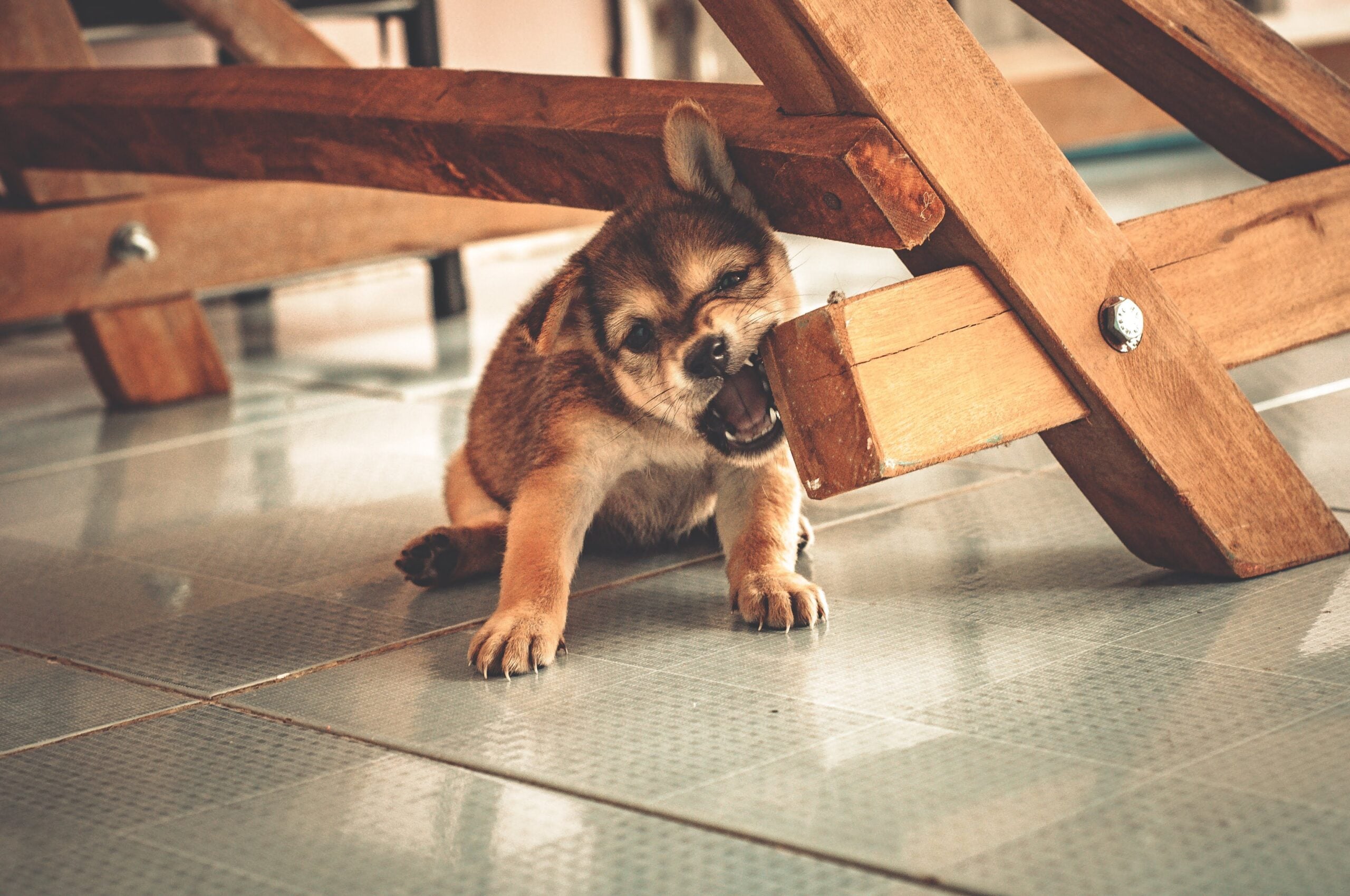
Puppies explore their surroundings with their mouths, so chewing is a normal part of development, not deliberate bad behavior.
Here are some of the most common reasons puppies chew:
- Teething: Sore gums and emerging adult teeth can create a strong urge to chew.
- Exploration: Puppies use their mouths to investigate new textures, smells, and objects.
- Boredom: A puppy without enough appropriate activity may invent their own entertainment.
- Excess Energy: Puppies may become destructive when they need more age-appropriate physical activity or mental stimulation.
- Attention: Your reaction to stealing or chewing something can accidentally make the behavior rewarding.
- Stress & Separation Anxiety: Puppies can become anxious when routines change, or they’re left alone, and chewing may become a coping behavior.
Understanding the cause can make it much easier to stop your puppy from chewing things that are unsafe or off-limits.
What your puppy chooses to chew can give you clues about why they’re doing it and what to try first. Use this quick guide, then keep reading for the step-by-step solutions.
Quick Guide: Why Is My Puppy Chewing That?
| Your puppy is chewing… | Most likely issue | Try this first |
|---|---|---|
| Shoes | Access + smell/novelty | Store shoes away; redirect |
| Furniture | Teething/exploration | Block access + offer an appropriate chew |
| Baseboards | Teething/habit/access | Block access + provide an alternative |
| Hands or clothes | Play/mouthing | Redirect; pause play if repeated |
| Only when left alone | Boredom or possible distress | Check for separation-related signs |
| Everything during teething | Teething/exploration | Appropriate chews + close supervision |
If chewing happens primarily when your puppy is alone, jump to the section below about chewing when left alone. Our guide to separation anxiety in dogs also explains the signs in more detail.
What To Do First When Your Puppy Won’t Stop Chewing
If you’re standing in your living room looking at another destroyed shoe, start with these five actions:
- Remove unsafe items. Put shoes, clothing, electrical cords, medications, trash, children’s toys, and small objects out of reach.
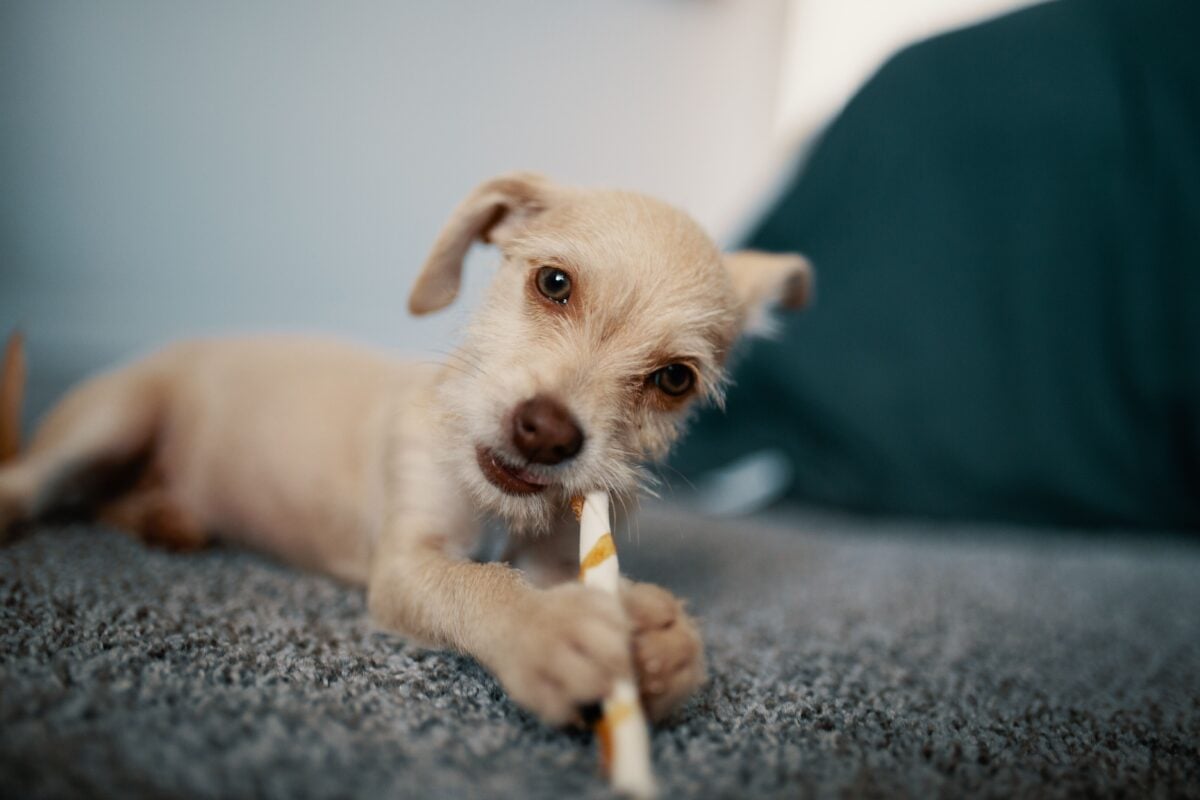
- Offer a safe chew. Give your puppy an appropriate chew that matches their age, size, and chewing style.
- Supervise closely. Limit freedom around the house until your puppy understands what belongs to them.
- Redirect calmly. If your puppy grabs something inappropriate, guide them toward an acceptable chew instead.
- Reward the right choice. Praise or reward your puppy when they choose their own toy.
These five steps can help stop your puppy from chewing inappropriate objects, while the sections below explain how to put each strategy into practice.
1. Make Sure Your Puppy Has Chew Toys
If your puppy chews something they shouldn’t, redirect them to an appropriate chew toy.
Dogs have preferences, so one chew may be far more appealing than another. Try a few safe textures and shapes until you discover what keeps your puppy interested.
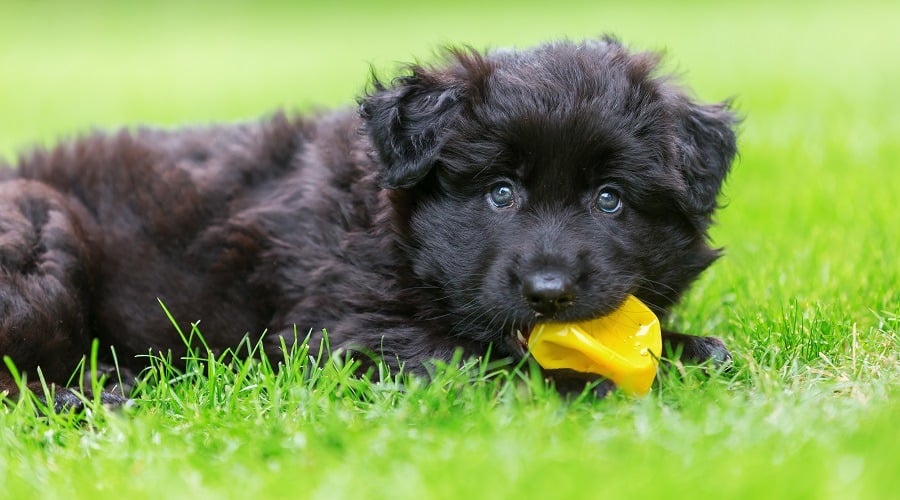
To stop your puppy from chewing household objects, make sure appropriate options are easy to reach before your puppy starts looking for something else.
Rotating toys can also help keep them interesting. A chew your puppy hasn’t seen for a few days may suddenly feel new again.
One we’ve used is the Benebone Bacon Flavored Chew Toy, a bacon-flavored wishbone-style chew.
Whatever chew you choose, select an appropriate size for your puppy and replace it when it becomes excessively worn or damaged.
Our Personal Experience With The Benebone Bacon Flavored Chew Toy
I have purchased the Benebone bacon chew for my Poodle Beagle mix, Falkor, several times. He is about two and a half years old and has been a destructive chewer since before he got his adult teeth. Despite being only 18 pounds, he quickly destroys many bones and toys labeled long-lasting.
For Falkor, it has lasted much longer than many toys we’ve tried. However, hard chews aren’t appropriate for every dog and can potentially damage teeth, so supervise your puppy and ask your veterinarian about appropriate chew materials.
–Danielle DeGroot, Poodle Beagle mix parent
A Quick Note About Chew Toy Safety
No chew toy is completely risk-free, and tougher doesn’t always mean safer. Very hard chews can potentially damage a puppy’s teeth, while toys that break into small pieces may become choking hazards or cause problems if swallowed.
Choose chews that are appropriately sized for your puppy, supervise them with new toys, and check toys regularly for cracks, sharp edges, or loose pieces. Replace anything that becomes damaged or small enough to swallow. If you’re unsure whether a particular chew is appropriate for your puppy, ask your veterinarian.
2. Puppy-Proof Your Home
One of the easiest ways to stop your puppy from chewing your belongings is to make tempting objects unavailable before chewing starts.
Puppy-proof your home by putting shoes, clothing, trash, children’s toys, medications, batteries, electrical cords, cleaning products, socks, and other unsafe items out of reach.
Use closed doors, baby gates, or a puppy pen to restrict access to rooms or surfaces you can’t protect.
Think of management as part of training. Every time you prevent your puppy from practicing destructive chewing, you make it easier to build better habits.
3. Supervise Your Puppy Closely
Your puppy doesn’t instinctively know which household items are off-limits. Close supervision allows you to intervene before chewing begins.
Watch your puppy while they’re roaming around the house. If you notice them investigating something inappropriate, redirect them before they settle in for a chewing session.
If necessary, use a leash indoors while you’re actively supervising so your puppy stays close enough for you to guide them. When you can’t supervise, use a safe puppy-proofed area instead of giving unrestricted access to the house.
Learn The Dangers: Did Your Dog Eat Something It Shouldn’t?
4. Meet Your Puppy’s Physical & Mental Needs
Sometimes the best way to stop your puppy from chewing out of boredom is to give them something more productive to do.
Use a mix of age-appropriate exercise, play, short training sessions, sniffing opportunities, food puzzles, social interaction, rest, and supervised chew time throughout the day.
The goal isn’t to exhaust your puppy. It’s to give their body and brain enough appropriate outlets that they are less likely to invent their own entertainment.
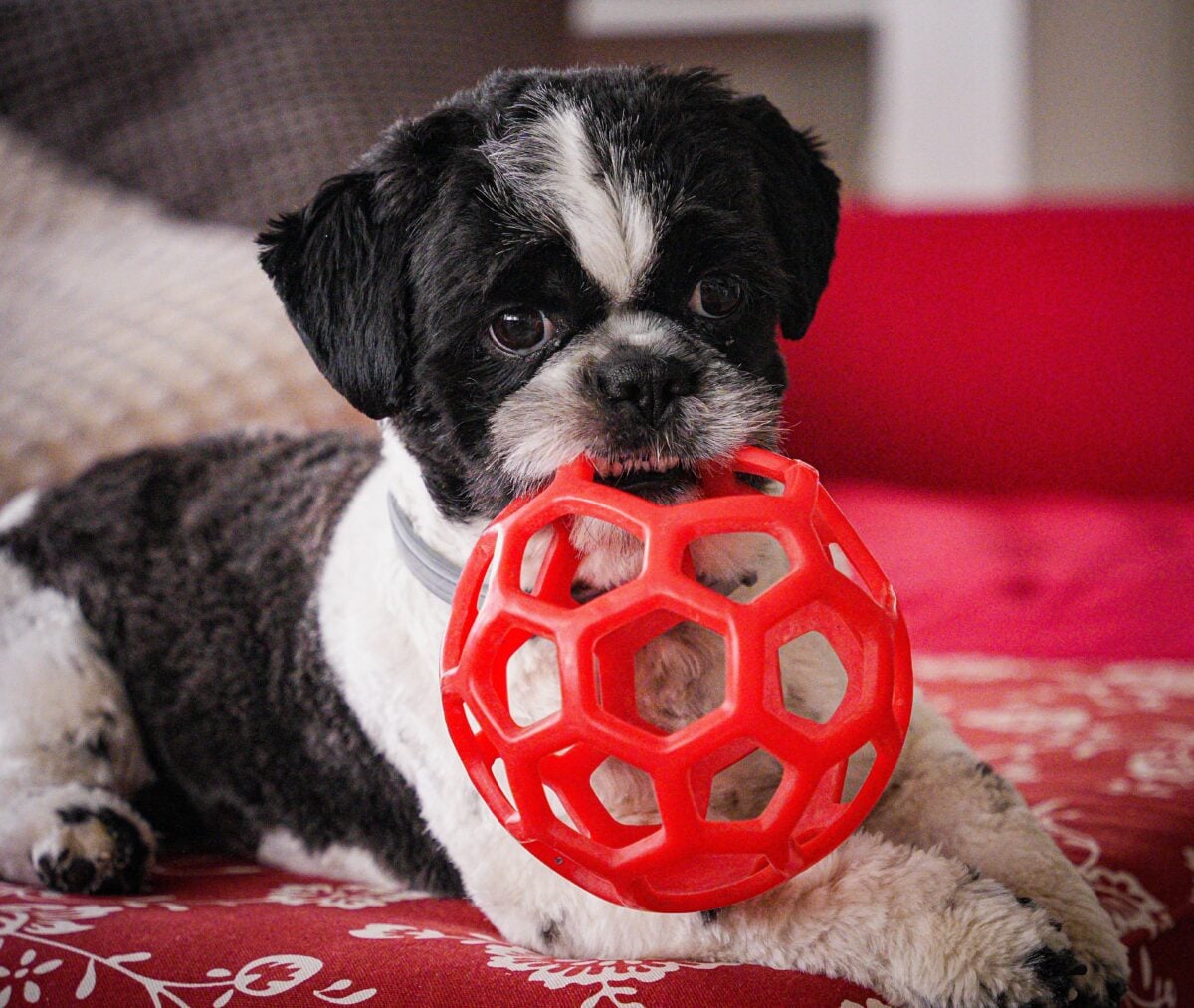
If chewing seems linked to anxiety rather than boredom, our guides to dog anxiety and separation anxiety explain what to watch for.
Some owners also consider an anti-anxiety or calming dog bed, calming treats, or CBD. Talk to your veterinarian before giving your puppy supplements or products intended to address anxiety.
5. Try A Taste Deterrent
A taste deterrent can provide extra protection for a favorite chewing target, but it works best as a backup to training and management. Learn more about taste deterrents or try a product such as Bitter Apple.
Keep in mind that anti-chew sprays don’t work for every puppy. If your dog ignores the taste, return to physical barriers, supervision, and appropriate chew alternatives rather than repeatedly applying more spray.
6. Don’t Punish Your Puppy For Chewing
If you want to stop your puppy from chewing, focus on prevention, redirection, and reinforcement rather than punishment.
If you find a destroyed shoe after the fact, scolding your puppy won’t teach them which item they should have chosen instead.
And if your puppy gives you the classic “guilty” look, don’t assume they understand what they did wrong. They may simply be reacting to your angry voice, expression, or body language.
When you catch inappropriate chewing in the act, interrupt calmly, offer an acceptable alternative, and reward your puppy for switching to it.
Puppies also go through important stages of emotional development and may experience fear periods, so harsh corrections can create unnecessary fear without clearly teaching the desired behavior.
Your goal is not to make your puppy afraid to chew around you. It’s to make appropriate chewing rewarding and inappropriate chewing harder to practice.
It is also an owner’s responsibility to provide a safe home that reduces access to objects that could injure a puppy or cause an intestinal obstruction if swallowed.
How To Stop Your Puppy From Chewing Common Household Items
Once you’ve covered the basics, the next step is adapting the strategy to whatever your puppy keeps targeting.
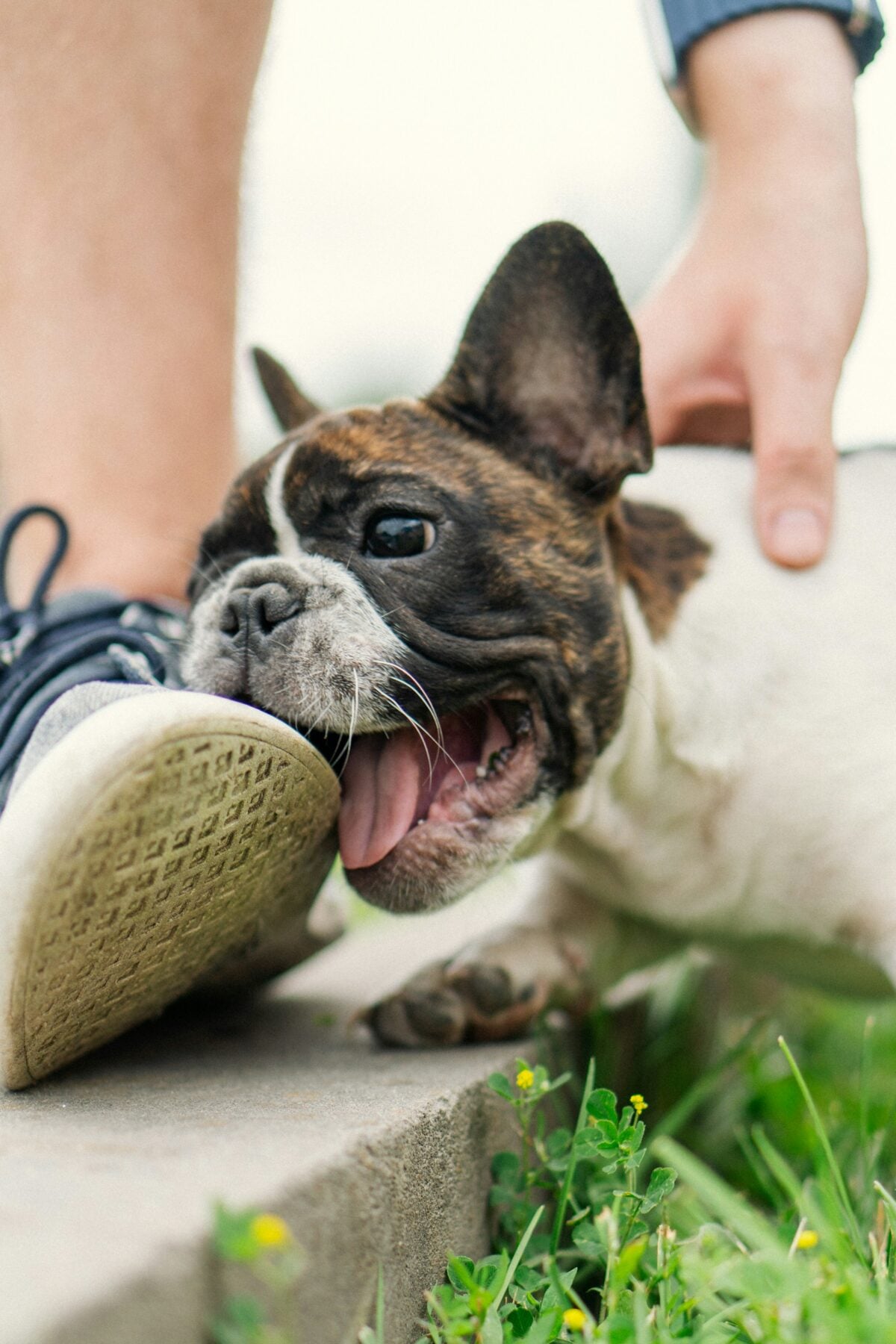
My Puppy Keeps Chewing Shoes
Shoes are easy to carry, interesting to chew, and smell strongly like the people puppies love.
Store every pair behind a closed door or somewhere your puppy cannot reach them. Avoid giving your puppy an old shoe as a toy because they may not understand why one sneaker is allowed while another isn’t.
If your puppy goes looking for shoes, guide them toward one of their own chews before they get hold of one. Watch this video for more insights.
My Puppy Is Chewing Furniture
Since you can’t put furniture away, focus on protecting the areas your puppy is most likely to target.
When possible, block access to chair legs, table legs, sofas, or favorite corners with a puppy pen, gate, or temporary barrier.
If you catch your puppy chewing furniture, interrupt calmly and offer an appropriate chew. A taste deterrent may provide extra protection for certain surfaces, but it should support, not replace, training.
My Puppy Is Chewing Baseboards
Baseboard chewing usually requires more environmental management because the target is fixed in place. Use furniture, gates, a puppy pen, or another barrier to block access to the specific section your puppy keeps returning to.
Place an appropriate chew nearby so you have an easy alternative available. If your puppy repeatedly returns to the same spot, limit access to that area until the habit fades.
My Puppy Is Chewing My Hands Or Clothes
Mouthing people needs a slightly different response because the target is part of play and interaction. Avoid encouraging your puppy to treat hands, sleeves, pant legs, or feet like toys.
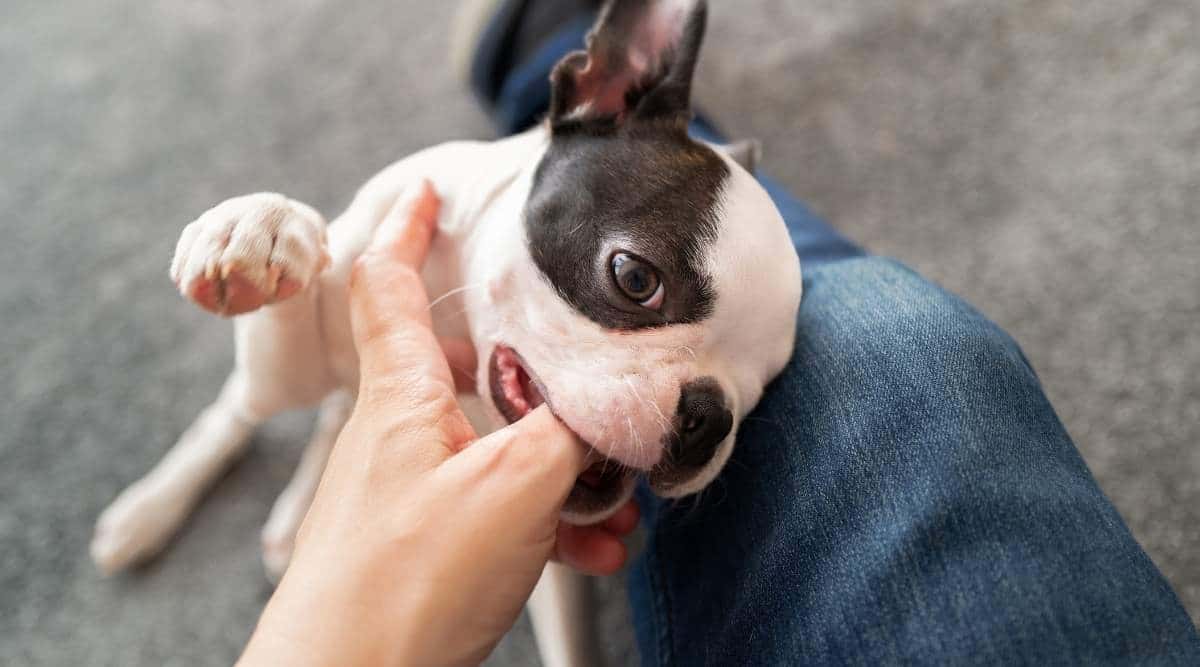
If your puppy’s teeth touch your skin or clothes, redirect it to an appropriate tug or chew toy. But if they immediately return to biting you, briefly stop the interaction.
Be consistent: biting the toy keeps play going, but biting people or clothing stops play.
My Puppy Chews When Left Alone
If chewing only happens when nobody is home, first make sure your puppy is staying in an appropriately puppy-proofed area without access to unsafe objects. Then look for signs that the problem may be more than boredom.
Chewing accompanied by persistent barking, whining, pacing, drooling, house-soiling, escape attempts, or panic around departures may point to separation-related distress.
Our guide to separation anxiety in dogs explains the signs and what owners can do.
If your puppy appears panicked when left alone, consult your veterinarian about the behavior instead of just reducing the size of the confinement area.
My Puppy Is Chewing Everything During Teething
To stop your puppy from chewing inappropriate objects during teething, focus less on eliminating the urge and more on giving that urge a safe outlet.
Keep appropriate chews easy to find, remove household objects that might tempt your puppy, and rotate chew options if your puppy starts losing interest.
If your puppy chooses an appropriate chew on their own, praise that decision. You’re teaching the habit you want to continue even after teething ends.
When Do Puppies Stop Teething & Chewing So Much?
Puppy chewing can feel endless, but the most intense teething stage doesn’t last forever.
Puppies begin losing their baby teeth and developing adult teeth during their first several months. Teething-related chewing is often particularly noticeable from roughly three to six months, and most puppies have their adult teeth by around six to seven months.
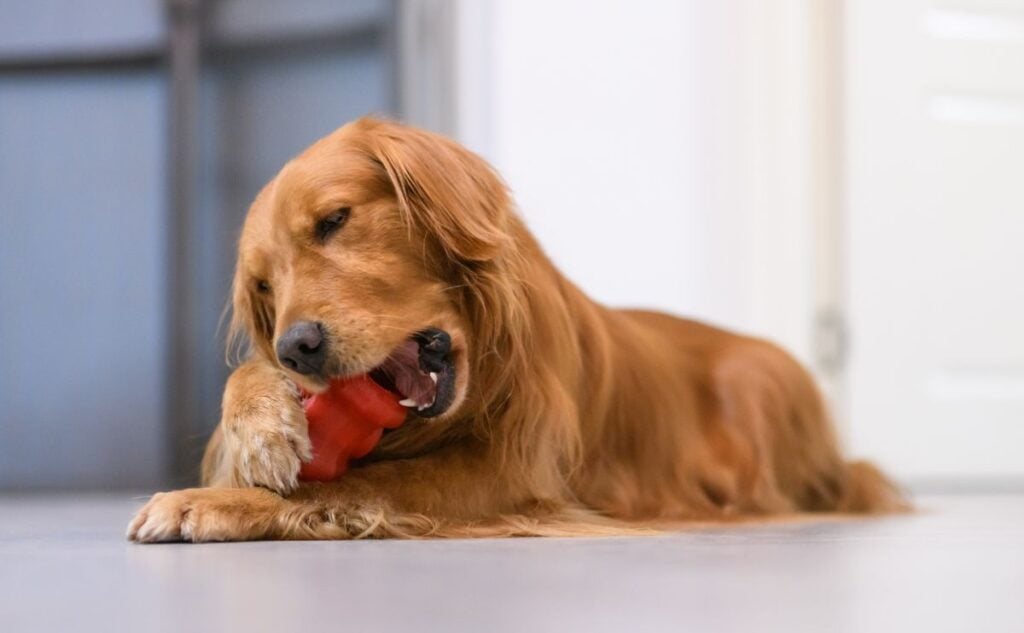
That doesn’t mean chewing disappears completely once teething ends.
Adolescent dogs may continue chewing because they enjoy it, are bored, have excess energy, or have already developed a habit.
What should gradually improve is the intense teething-driven need to put everything in their mouth. With consistent management and training, your puppy should also become better at choosing appropriate items.
If destructive chewing suddenly worsens, causes injury, or involves repeatedly swallowing non-food objects, contact your veterinarian.
Tips For Preventing & Redirecting Puppy Chewing
The most effective way to stop destructive chewing is to make appropriate choices easier than inappropriate ones.
- Remove tempting and dangerous items before your puppy can reach them.
- Keep several appropriate chew options available.
- Supervise closely or use a puppy-proofed area when you can’t watch them.
- Redirect calmly and reward your puppy for choosing the correct object.
- Provide daily age-appropriate exercise and mental enrichment.
- Contact your veterinarian if chewing becomes extreme, compulsive, suddenly worsens, causes injury, or appears alongside significant anxiety.
Consistency matters more than perfection. Every successful redirect gives your puppy another chance to practice the behavior you want.
New Toys For Heavy Chewers
Some puppies can destroy ordinary toys surprisingly fast, but tougher doesn’t always mean better. A chew that’s too hard may damage teeth, while one that breaks apart easily can become a choking or swallowing hazard.
When choosing toys for a heavy chewer, look for an appropriate size for your puppy, avoid anything excessively hard, and supervise chewing—especially with a new toy. Check toys regularly for cracks, sharp edges, or loose pieces, and replace them once they become damaged or small enough to swallow.
If your puppy goes through toys faster than you can replace them, a subscription box designed for heavy chewers can be a convenient way to keep new options in rotation. We’ve compared several popular dog subscription boxes, including options made specifically for dogs who are tough on their toys.
When Should I Ask For Professional Help?
Most ordinary puppy chewing improves with consistent management, suitable chew options, physical and mental enrichment, and training.
Consider working with a qualified trainer or behavior professional if destructive chewing remains severe despite consistent efforts.
Our guide compares professional dog training options, including online programs such as Doggy Dan, in-person dog trainers, and dog training apps.
When To Contact Your Veterinarian
Contact your veterinarian promptly if your puppy swallows part of a toy or another non-food object, breaks or injures a tooth, or repeatedly tries to eat things that aren’t food.
Vomiting, unusual lethargy, abdominal pain or swelling, loss of appetite, difficulty passing stool, or repeated unproductive attempts to vomit after swallowing something can signal a potentially serious problem. Don’t wait for chewing training to solve these symptoms—contact your veterinarian for guidance.
| Usually normal puppy behavior | May need professional attention |
|---|---|
| Chewing more while teething | Repeatedly swallowing non-food objects |
| Exploring objects with the mouth | Chewing that seems compulsive or difficult to interrupt |
| Mouthing during play | Broken teeth, bleeding, or other mouth injuries |
| An occasional destructive chewing mistake | A sudden, unexplained change in chewing behavior |
| Chewing when bored or under-stimulated | Panic or destructive behavior primarily when left alone |
Most puppy chewing is a normal part of growing up, but the pattern matters. Repeatedly eating non-food objects, injuring the mouth, or becoming extremely distressed when left alone can point to a problem that needs more than basic redirection and puppy-proofing.
If your puppy is prone to swallowing things they shouldn’t, unexpected veterinary treatment can become expensive. Our pet insurance 101 guide explains how coverage works and whether it may make sense for your puppy.
And if the trash is your puppy’s favorite target, a dog-proof trash can can also help prevent access to food scraps, packaging, and other potentially dangerous items.

Frequently Asked Questions
These are questions we often get about stopping puppies from chewing. If you can’t find yours here, drop it in the comments.
Should I Crate My Puppy To Stop Destructive Chewing?
A crate can help prevent access to dangerous household items when you cannot supervise, but don’t use it as punishment or as an all-day solution. Your puppy still needs regular bathroom breaks, exercise, play, training, social interaction, and opportunities to chew appropriate items outside the crate.
If your puppy becomes distressed in a crate, work on crate training gradually rather than using confinement to control chewing.
Can I Give My Teething Puppy Ice Cubes?
Some puppies enjoy cold items because they can feel soothing on sore gums, but very hard objects may not be appropriate for every dog. Ask your veterinarian which chilled or frozen options suit your puppy’s age, size, and dental health.
A chilled puppy-safe chew may be a better choice than offering extremely hard objects.
Are Sticks Safe For Puppies To Chew?
Sticks can splinter and may injure the mouth, throat, or digestive tract if pieces are swallowed. It’s safer to redirect your puppy toward an appropriate chew designed for dogs rather than letting them regularly chew sticks from the yard.
Why Does My Puppy Eat Things Instead Of Just Chewing Them?
Some puppies accidentally swallow pieces while exploring, while others deliberately consume non-food objects. Repeatedly eating items such as fabric, plastic, rocks, or other non-food materials can become dangerous and may sometimes be associated with a behavior called pica.
If your puppy regularly swallows non-food objects, discuss it with your veterinarian rather than treating it as ordinary chewing.
Is It Okay To Let My Puppy Destroy Stuffed Toys?
That depends on what your puppy does with the pieces. Some dogs enjoy tearing toys apart but leave the stuffing alone, while others swallow fabric, stuffing, squeakers, or plastic components.
If your puppy eats pieces of destroyed toys, remove damaged toys promptly and choose options better suited to their chewing style.
Why Does My Puppy Chew More At Night?
Evening chewing can happen when a puppy is overtired, overstimulated, bored, or still has energy to burn. A predictable evening routine that includes an appropriate bathroom break, calm enrichment, gentle interaction, and a safe chew may help your puppy settle.
If nighttime chewing changes suddenly or is accompanied by unusual restlessness, pain, or other symptoms, talk to your veterinarian.
Can Adult Dogs Still Be Destructive Chewers?
Yes. Teething ends, but the desire to chew does not. Adult dogs may chew for several reasons: they enjoy it, are bored, have excess energy, feel anxious, or developed the habit as puppies.
The skills you teach during puppyhood can therefore help prevent destructive chewing later in life.
Should Everyone In The House Use The Same Chewing Rules?
Consistency makes training much easier. If one person lets your puppy chew an old slipper while another protects every shoe, the distinction may be confusing.
Agree on which objects are off-limits, which toys are appropriate, and how everyone will respond when the puppy grabs something they shouldn’t.
Can Chewing Damage My Puppy’s Teeth?
Extremely hard objects can potentially damage teeth, particularly if your puppy is an aggressive chewer. Inspect chews regularly and choose options appropriate for your puppy’s size, age, and chewing strength.
If you notice a broken tooth, bleeding, swelling, reluctance to eat, or signs of mouth pain, contact your veterinarian.
What If Nothing Seems To Stop My Puppy From Chewing?
If you’ve consistently used puppy-proofing, supervision, appropriate chew outlets, enrichment, and reward-based training but the behavior remains unusually intense, consider getting professional help.
A veterinarian can first rule out medical concerns, and a qualified trainer or behavior professional can help identify triggers and develop a plan for your individual puppy.
Puppy chewing won’t change overnight, but consistent redirection and a little prevention can make a big difference. As your puppy learns what’s off-limits, you can start building the other good habits that will carry into adulthood.
Building Better Puppy Habits
Puppy chewing can be frustrating, but it’s also a normal part of growing up. Consistent supervision, puppy-proofing, appropriate chew toys, and calm redirection can help your puppy learn what belongs to them—and what doesn’t.
Chewing is only one of the habits puppies are learning during these early months. If you’re tackling other challenges, our guide to common puppy behavior problems covers issues like biting, jumping, and more. You can also work on crate training your puppy for times when you can’t supervise closely and learn how to socialize your puppy as they become more comfortable with the world around them.
With patience and consistency, those chaotic puppy habits can gradually give way to better choices—and hopefully fewer sacrificed shoes.
What’s Your Puppy’s Favorite Forbidden Chew?
What’s your puppy’s favorite forbidden thing to chew: shoes, furniture, baseboards, clothes, or something completely unexpected? Tell us in the comments below, and share what’s worked best for your pup.