When you purchase through links on our site, we may earn a commission at no extra cost to you. Learn more.
They were fine — that’s the part that keeps bothering you.
Table of Contents
They shared space, moved through the same routines, and you didn’t have to think about it. You could leave them together, toss a toy into the room, and not immediately wonder if you’d made a terrible decision.
But now? There’s an edge.
You notice it in small moments — one dog going still, a look that lingers, that split second where you’re not sure if you should step in or pretend you didn’t see it. How do dogs go from easy to tense like this?
Want our human-written content to rank above AI-generated garbage? Help us out by clicking this button!
As strange as it feels, this change in relationship is surprisingly common. Dogs who have lived together peacefully for years can start developing tension like this without any major, obvious trigger.
We’ll walk through what likely happened and how to deal with it without turning your living room into a full-time referee gig.
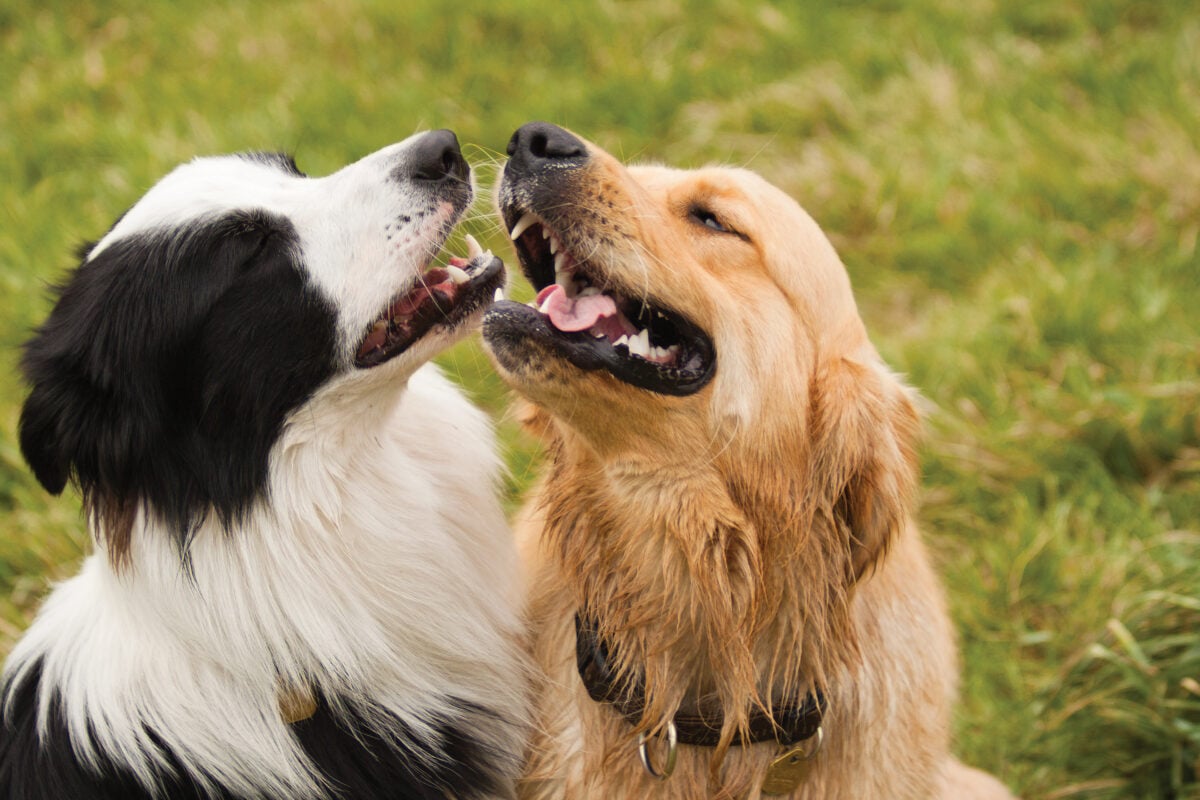
The Early Signs That Things Aren’t as “Fine” as They Used To Be
Conflict usually doesn’t start with anything dramatic. It shows up in ways that are easy to ignore until they start repeating.
You don’t sit down and think, “something is wrong.” You just start noticing things that weren’t there before.
- They stop settling near each other
One moves, the other follows, and then the first one leaves. After a while, it stops looking like a coincidence. - Play loses its rhythm
It starts and stops more, ends earlier, or one dog disengages and doesn’t come back. - There’s more staring than usual
Not playful eye contact, but the kind where you’re not sure if it means nothing or something’s about to happen. - You hear more low-level noise
A quiet growl, a sharper exhale, a quick correction that feels slightly out of proportion.
Space and access also start to matter more.
- One dog starts quietly controlling space
Standing in doorways, lingering near the water bowl, hovering when the other dog tries to move past. - Little things start to matter more
A toy, a spot, licensed via the couch, who got there first — things that never used to be a decision now feel like one.
Most of these don’t look like a problem on their own — they’re just the kind of signals that get ignored until they start to escalate.
Which One Looks Familiar?
You’ve probably seen at least one of these more than once lately.
- The Silent Starer: Says nothing, does everything with eye contact.
- The Space Invader: Gets just a little too close and stays there.
- The “I Was Here First” Dog: Suddenly very invested in who got somewhere first.
- The Toy Escalator: Didn’t care about toys until the other dog picked one up.
- The Doorway Bottleneck: Turns passing through a hallway into a slow negotiation.
- The Overreactor: Goes from zero to “absolutely not” faster than expected.
- The “I’m Done” Dog: Used to tolerate everything, now opts out early and often.
- The Instigator Who Walks Away: Starts something subtle, then acts confused when it escalates.
Chances are, you’re seeing a mix — not just one.
Why Dogs That Used To Get Along Stop Getting Along
This is usually where people start looking for the smoking gun — a move, a new dog bed, a weird Tuesday. Something.
Sometimes there is one clear trigger, but plenty of the time, the answer is less satisfying: the relationship changed because the dogs changed. Annoying, yes. But also, very dog.
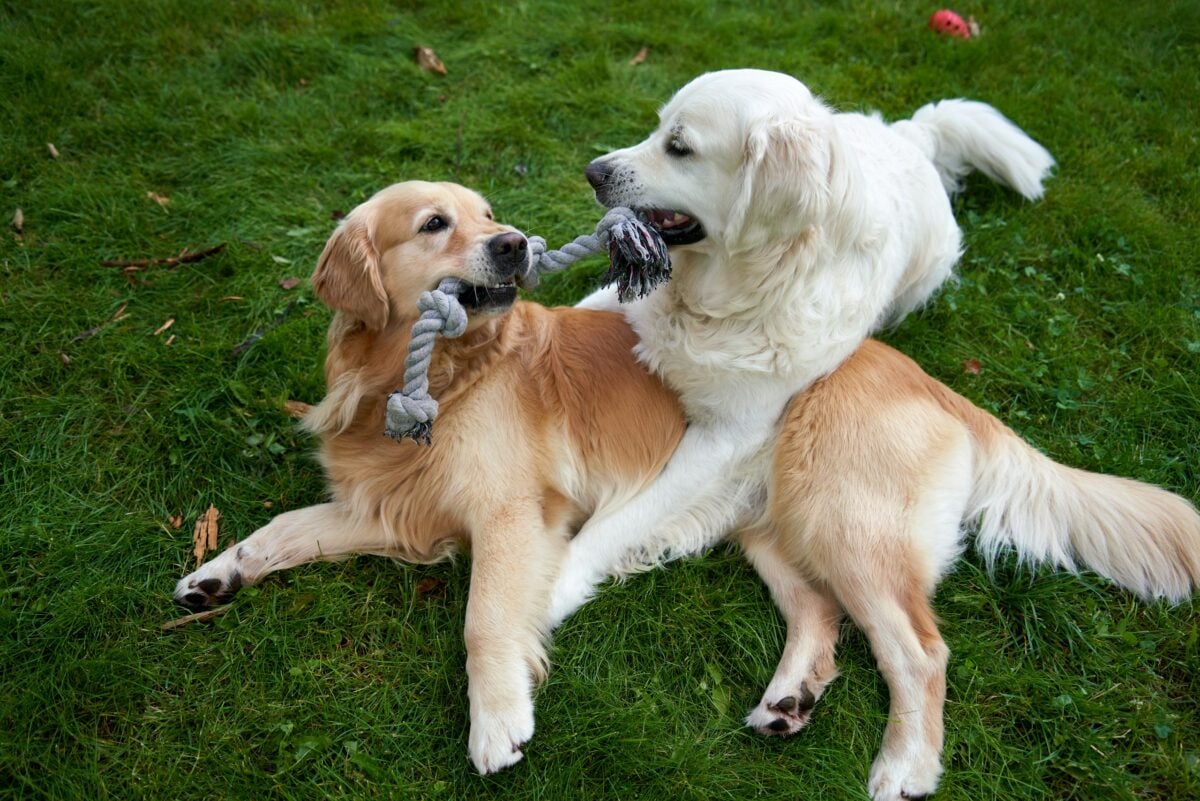
1. One Dog Grew Up
Puppies and young dogs get away with a lot. They’re goofy, rude, floppy little chaos interns, and older dogs often give them more grace than they probably deserve.
Then, that young dog socially matures (typically between 12 and 36 months).
Suddenly, the dog who used to bounce around harmlessly is bigger, stronger, more confident, and less interested in taking hints. The older dog may still see them as the annoying kid who used to trip over their own feet, while the younger dog is now walking around like they pay part of the mortgage.
That shift can show up as:
- More pushiness around space
- Less backing off when corrected
- More interest in toys, food, attention, or status-y little household moments
- A new habit of challenging boundaries that used to be accepted
This is especially common when one dog is hitting young adulthood while the other is aging into a slower, less tolerant season of life.
2. The Older Dog Isn’t The Same Dog They Used To Be
Senior dogs don’t always become fragile overnight. Sometimes they just get a little more particular.
They sleep harder. They move more slowly. Their patience gets thinner around the edges. A dog who once tolerated wrestling, crowding, pawing, licking, or full-body enthusiasm may suddenly decide, quite reasonably, that they are retired from nonsense.
And if there’s pain involved, that tolerance can drop fast.
A sore hip, stiff joints, vision changes, hearing loss, dental pain, or poor sleep can make a dog more reactive without making them look “sick.” They may still act normally until another dog bumps into them at the wrong moment.
Then you see the snap, not because they’ve become mean but because their body has less room for foolishness.
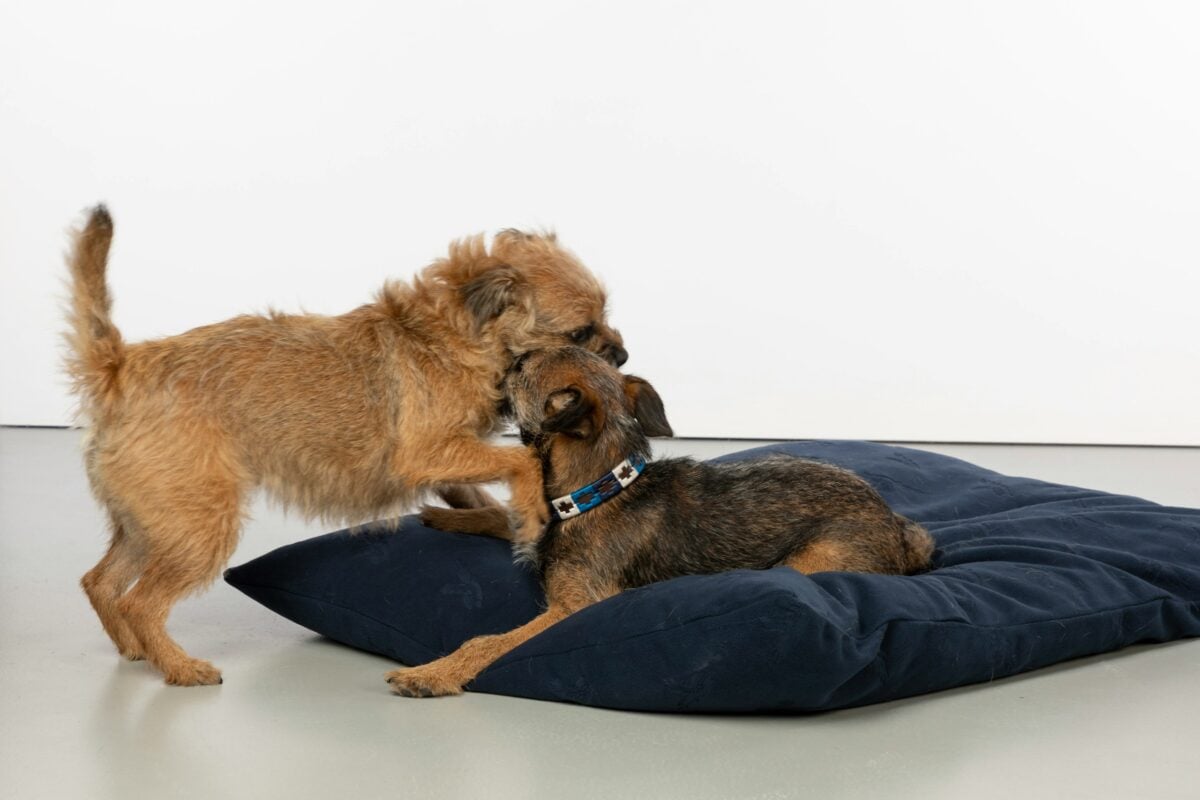
3. Resources Started Mattering More
People hear the term “resource guarding” and think of food bowls or bones. Fair enough, but in multi-dog homes, the good stuff is often much more boring.
The couch spot.
The doorway.
Your lap.
The patch of kitchen floor where snacks sometimes fall from the heavens.
Resources are anything a dog values, and that value can change. A dog who never cared about toys may suddenly care because the other dog cares. A dog who used to share attention may start hovering because your attention has become part of the equation.
Watch for tension around:
- Food, treats, chews, and toys
- Favorite resting spots
- Doorways, hallways, crates, beds, and couches
- Your attention when you come home
- Exciting routines like walks, meals, car rides, or visitors
The object usually isn’t the whole issue. It’s what the object represents — access, control, comfort, or first dibs.
Very dignified stuff, obviously worth ruining everyone’s evening.
4. One Dog Stopped Deferring
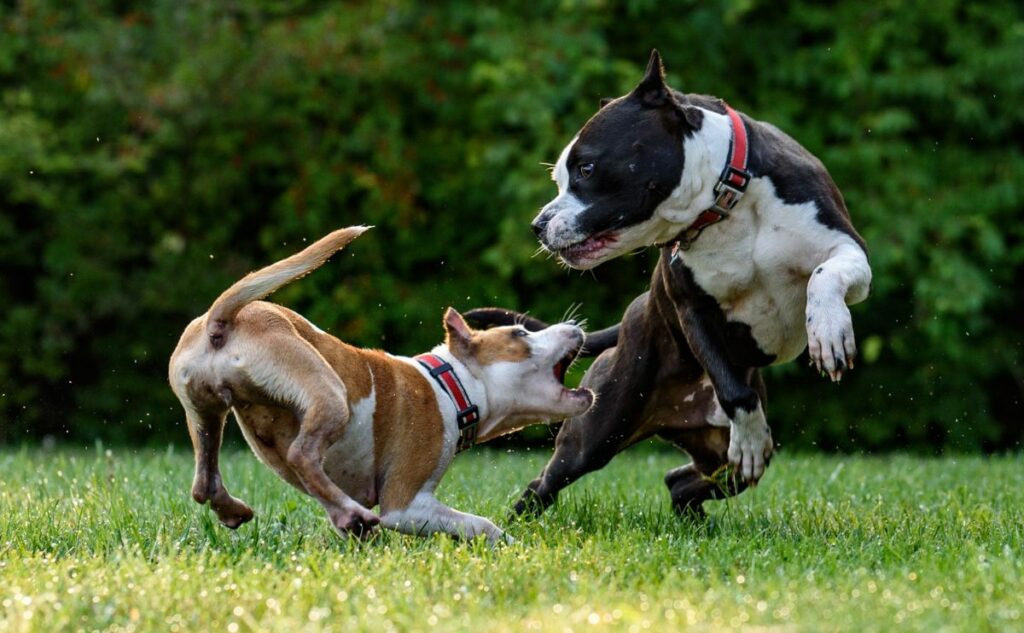
This one gets mislabeled a lot. People often say the younger dog is “being disrespectful,” but sometimes the younger dog has simply stopped giving the older dog automatic privilege. That can feel rude because, for a long time, the old arrangement worked.
- One dog got the best spot.
- One dog controlled the play.
- One dog always moved through the doorway first.
Then the quiet one opts out.
That doesn’t always mean they’re trying to take over the house. It may just mean they’re done yielding every single time. The problem is that if the other dog still expects the old arrangement, the new confidence lands badly.
5. Their Personalities Don’t Fit The Way They Used To
Some dogs age into more compatible versions of themselves. Others grow apart.
A dog who loves rough play may become too much for a dog who prefers gentle contact. A dog who wants constant closeness may irritate a dog who wants breathing room. A dog who cares deeply about every squeaky toy in the zip code may live with a dog who suddenly also cares, which is inconvenient for everyone.
Personality clashes often show up in ordinary moments:
- One dog wants contact; the other wants space
- One dog wants intense play; the other wants off the ride
- One dog is socially pushy; the other is conflict-avoidant (until they aren’t)
- One dog recovers quickly; the other holds tension longer
The dogs may not hate each other. They may just have less overlap than they used to.
6. Something In The House Changed The Pressure
Not every trigger is dramatic. Dogs are very good at absorbing household stress and then making it everyone’s problem in the least convenient room possible.
A schedule change, less exercise, a new baby, visitors, construction noise, illness, a recent vet visit, travel, or even a long stretch of bad weather can raise the baseline tension in the house. Once both dogs are carrying more stress, they have less patience for each other’s quirks.
That’s when tiny things start punching above their weight.
- A dog standing too close during dinner prep.
- A shoulder bump in the hallway.
- One dog rushing the door when the other was already wound up.
Technically, it doesn’t seem like much, but apparently, it’s enough.
How You Accidentally Add Fuel To It
Most people don’t create this problem, but it’s very easy to accidentally feed it once it’s there. Not in obvious ways, more in the “this seemed reasonable at the time” category.
When The Rules Start Changing Depending, licensed via The Day
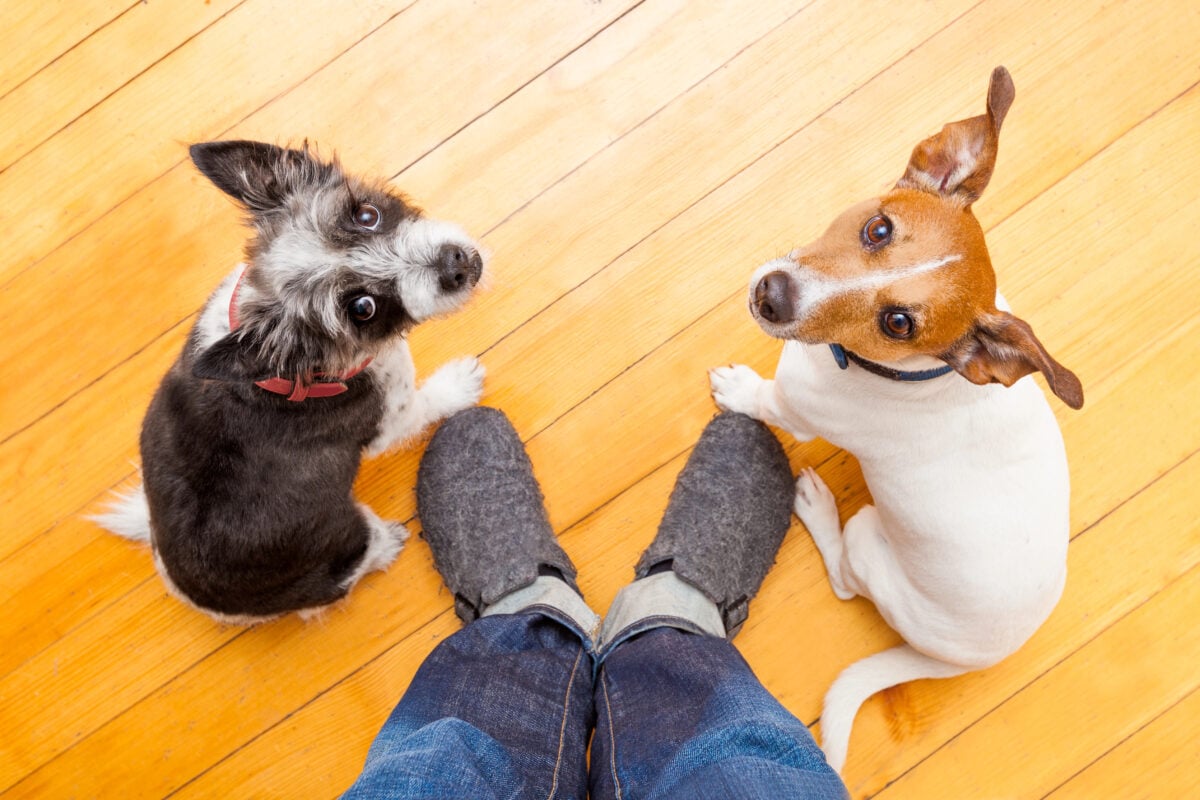
Sometimes you let things play out. Sometimes you interrupt right away. From your perspective, you’re reacting to the moment. From theirs, the rules keep shifting, which makes everything harder to predict.
That’s where inconsistency starts causing trouble. One day, a stare is ignored. The next day, it gets corrected. One dog gets moved, the other doesn’t. Nobody knows what the rules are, but everyone is annoyed. Very on-brand for dogs.
When You Shut Down The Reaction… But Miss The Setup
The growl, snap, or sharp correction gets your attention because, well, it’s hard to miss. But that doesn’t always mean it’s where the problem started.
The dog who reacts is easy to blame because they’re louder about it. The other dog may be doing quieter things — staring, crowding, blocking space, hovering near resources — that don’t look like much but keep the pressure on.
If you only correct the reaction, the buildup keeps happening untouched. And you may just be correcting the wrong dog.
When “Let Them Work It Out” Turns Into A Bad Idea
Letting dogs sort things out only works when they’re actually sorting things out.
If one dog consistently backs off, tension drops, and everyone moves on, fine. That’s a conversation. Not a pleasant one, maybe, but still a conversation.
But if neither dog wants to yield anymore, they’re not working it out. They’re rehearsing the same conflict. And dogs, unfortunately, don’t need extra practice being dramatic in doorways.
When The Pushy Dog Keeps Getting What It Wants
This one happens constantly because it looks so normal.
The dog who gets in your space first gets petted first. The dog who crowds the doorway gets through first. The dog who wedges onto the couch gets the spot because moving them feels like a whole project.
You’re not rewarding bad behavior on purpose. But the quieter dog notices the pattern: push first, get access first.
When You Keep Recreating The Same Problem
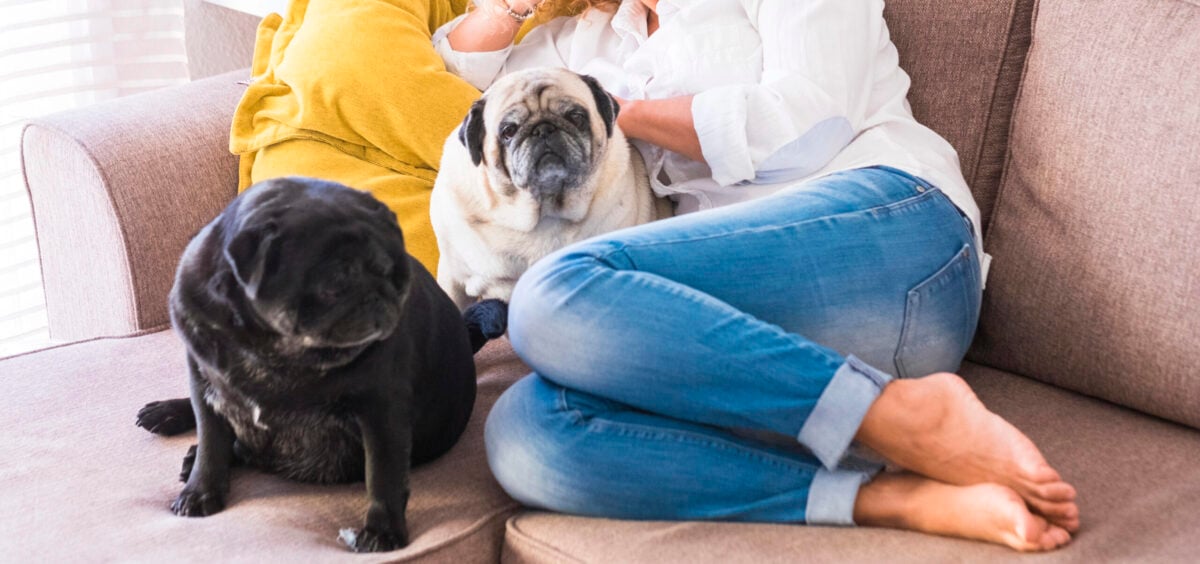
Same couch. Same bed. Same shared routines. The same toy tossed into the middle of the room because it used to be fine. That’s the problem — it used to be fine.
Forcing shared moments can add pressure to situations that aren’t resetting cleanly anymore. You don’t have to remove every shared space forever, but the spots that keep creating tension need a break from being treated like business as usual.
When You Jump In At Exactly The Wrong Moment
Reaching between dogs, grabbing collars, hovering too close, or rushing in physically can spike the tension fast. It’s completely understandable, but also not always helpful. When things are already tight, sudden movement from you can turn a tense moment into a louder one.
None of this makes you “the problem.” It just means you’re part of the environment they’re reacting to, whether you meant to be or not.
Is This Fixable, Or Is This the New Normal?
This is usually the point where people want a clear answer. Fix it or manage it?
The reality is, it depends less on what happened and more on what the dogs are doing now.
Situations That Tend To Be Fixable
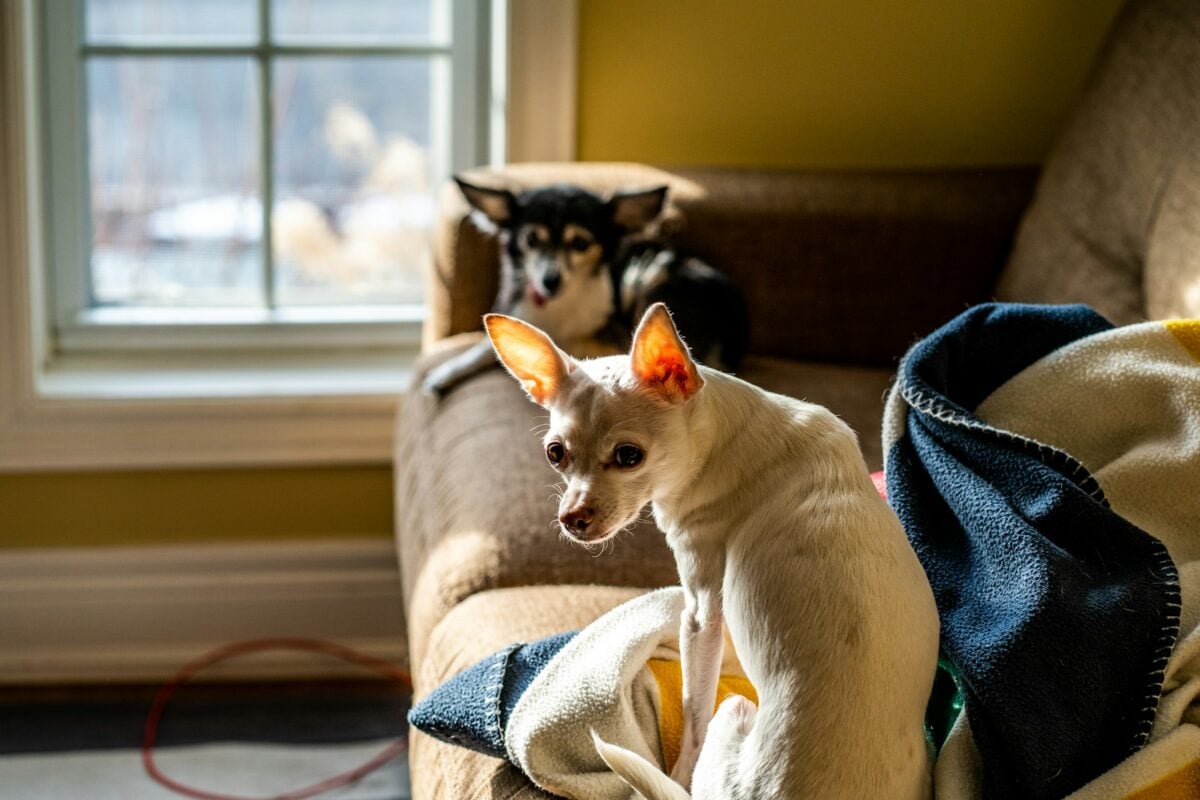
You’re still in a workable range if the tension shows up in predictable ways and doesn’t escalate past quick corrections.
- The same triggers keep showing up (doorways, toys, your attention)
- One dog will still disengage when it matters
- Nothing has crossed into injury-level fights
- They can still share space sometimes without you micromanaging it
In these cases, the issue is usually about structure and consistency—not incompatibility.
Situations That Usually Shift Into Management
This is where things stop resolving cleanly, even when you try to stay ahead of it.
- The same situations keep escalating instead of leveling out
- Neither dog reliably backs off anymore
- Tension carries over instead of resetting after interactions
- You’re actively managing them most of the time
At this point, you’re not “fixing” a dynamic—you’re controlling how much opportunity it has to keep playing out.
When It’s Time To Bring In Help
Some situations don’t improve, licensed via their own, and waiting them out tends to make things harder to unwind.
- Fights are happening more often—or getting more intense
- There’s been an injury, even a minor one
- Reactions feel faster, sharper, or less predictable
- You’re starting to feel on edge in your own house
That’s when it’s time to consult a certified vet behaviorist, not because you did something wrong, but because the margin between them is already too small to troubleshoot casually.
What You Can Do Next (Without Making It Worse)
At this point, the goal isn’t to fix the relationship in one move. It’s to stop putting them in situations where they keep getting tested.
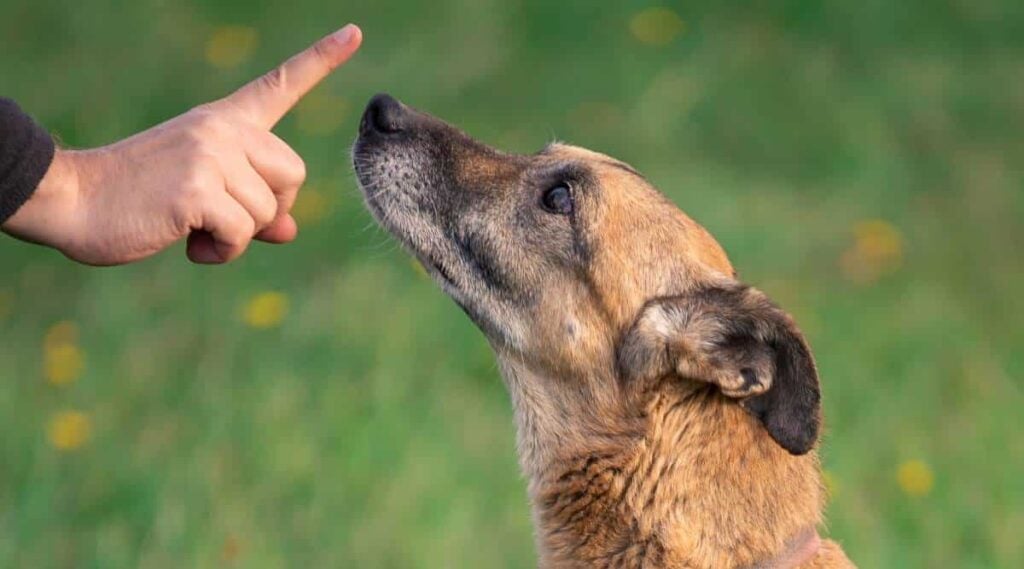
That usually means tightening things up a bit.
- Start controlling the predictable pressure points.
Doorways, greetings, feeding time, anything that already feels a little competitive — don’t leave those moments up to them right now. - Give them more structure than they technically “need.”
Clear routines, clear expectations, fewer gray areas. It takes a lot of the decision-making out of their interactions. - Separate when it makes sense, not just when things escalate.
Waiting until something happens means you’re always reacting. Getting ahead of it changes the rhythm. - Be more intentional about shared space.
If a couch, bed, or spot has been an issue, don’t force it. Let them have space without having to negotiate it. - Pay attention to patterns before jumping in.
Most of the tension shows up in the same types of moments. Spot those, and you’ll prevent more than you interrupt.
You don’t need to overhaul everything. You just need fewer moments where they’re left to work it out when it’s not working anymore.
Frequently Asked Questions
If you’ve made it this far, you’re probably running through your own version of this — what you’re seeing, what it means, and whether it’s about to get worse.
These are the questions that come up once things stop feeling easy. If you don’t see yours here, ask us in the comments.
Do Dogs That Fight Ever Actually Like Each Other Again?
Sometimes they never stopped liking each other; they just stopped agreeing on the terms.
A lot of these situations aren’t about hatred. They’re about friction. Two dogs can still choose to be near each other, still relax in the same space, still show social behavior, and also have moments where things go wrong.
What tends to come back isn’t the old “effortless” dynamic. It’s a version where they understand each other again and stay out of each other’s way a little better.
Should I Let Them Work It Out?
Only if “working it out” has a history of actually working.
That means:
- One dog consistently backs off
- Tension drops quickly
- Nobody is escalating
If what you’re seeing is:
- Staring that doesn’t break
- Corrections that keep going
- Both dogs are holding their ground
Then they’re not resolving anything. They’re practicing, not resolving it.
Why Does It Always Seem Worse When I’m Around?
Because you’re not background noise; you’re part of the situation. You bring attention, movement, routine shifts, and access to things they care about.
Even something simple like standing up, sitting down, or talking to one dog changes the dynamic. A lot of the tension shows up around you because you’re tied to resources, not because they’re behaving differently for you.
Do I Need To Separate Them All The Time Now?
Not necessarily. But you do need to be more selective about when they’re together. Think in terms of low-pressure vs high-pressure situations.
Low-pressure:
- Calm downtime
- Plenty of space
- No competition
High-pressure:
- Food, toys, greetings
- Tight spaces
- Excitement or frustration
Most issues don’t show up in the easy moments. They show up when something matters.
Is This A Dominance Thing?
Usually not in the way people mean it. There’s no grand plan to “be in charge of the house.” What you’re seeing is more about:
- Access
- Timing
- Tolerance
- Who’s willing to yield
Sometimes one dog used to yield and doesn’t anymore. That shift can look like a power struggle, but it’s usually just a change in how much each dog is willing to put up with.
Did I Cause This Somehow?
No. You’re part of the environment they’re reacting to, but that’s not the same as causing the problem.
Most of these dynamics shift because the dogs themselves changed—age, confidence, tolerance, stress—not because of one thing you did wrong.
If anything, most owners are just trying to keep things smooth without realizing how much those small interactions matter until they stop working.
Why Does It Seem To Happen Out Of Nowhere?
Because the early version of it is easy to miss. There’s a long stretch where things are slightly off, still resolving, and not worth worrying about.
Then one day, it crosses a line you can actually see. It didn’t start that day. That’s just when it stopped hiding in plain sight.
Where To Go From Here
If things have shifted between your dogs, the next step is getting clearer on which pattern you’re actually seeing. These guides can help you narrow it down without spiraling into “everyone is mad at everyone now,” which is not a useful household policy.
- Resource Guarding In Dogs – For tension around food, toys, beds, doorways, your attention, or the sacred kitchen crumb zone.
- What Is Littermate Syndrome? – If your dogs are littermates and the bond got messier as they matured, start here.
- Understanding Dog Body Language – A helpful next read if you’re seeing stiff posture, hard staring, freezing, or the “why is this room suddenly weird?” signals.
- Deciphering Dog Growling
Good for understanding growls as warning signals, especially around food, toys, beds, or space. - How To Introduce Dogs
Useful if you need to reset interactions, manage separation, or rebuild calmer routines, rather than just hoping they’ll magically remember how to be normal.
You don’t have to solve the whole relationship in one heroic weekend. Start with the pattern, remove the obvious pressure points, and stop letting the same situations audition for a sequel.
Does this all sound too familiar? If things have shifted between your dogs, what actually tipped it? One moment, or a slow build that you didn’t notice until you were suddenly refereeing your own living room? Drop it in the comments. There’s a good chance someone else is dealing with the exact same chaos.