When you purchase through links on our site, we may earn a commission at no extra cost to you. Learn more.
If your dog ate a sock, it’s important to act quickly. Socks can sometimes pass through the digestive tract, but they can also become lodged in the stomach or intestines and cause a serious blockage.
Table of Contents
Call your veterinarian as soon as possible for advice, even if your dog seems fine. Do not try to make your dog vomit unless your veterinarian specifically tells you to.
While you’re making that call, keep your dog away from any other socks or objects they could swallow. Try to note when the sock was eaten, whether it was swallowed whole or chewed into pieces, and approximately how much is missing. Your dog’s size and any symptoms they’re showing can also help your veterinarian determine the safest next step.

Below, we explain what can happen after a dog swallows a sock, the warning signs of an intestinal blockage, when the situation is an emergency, and what treatment your veterinarian may recommend.
My Dog Ate A Sock. What Now?
First of all, do not panic. You’ll need to keep a clear head to help your pup. Make sure Fido is somewhere safe where he cannot eat any more socks or other inedible objects.
Do This First
If your dog just ate a sock, take these steps before doing anything else:
- Remove access to more socks. Keep laundry, clothing, and other tempting objects out of reach.
- Note when it happened. Write down the approximate time your dog swallowed the sock.
- Estimate the sock and dog size. Note whether it was a small ankle sock or a larger sock, along with your dog’s approximate weight and size.
- Call your veterinarian. Tell them what your dog swallowed, when it happened, and how much you think they ate.
- Do not induce vomiting unless your veterinarian tells you to. Trying to make your dog vomit at home can sometimes cause more harm than good.
When To Seek Urgent Veterinary Care
Contact your veterinarian or an emergency vet promptly if your dog develops any of these signs after eating a sock:
- Repeated vomiting or retching
- Abdominal pain or a tense, swollen belly
- Lethargy or unusual weakness
- Loss of appetite
- Inability to keep food or water down
- Collapse or rapidly worsening symptoms
Even one concerning symptom can be enough to warrant a call to your vet. Signs of a blockage can vary, and some dogs may appear relatively normal at first.
A Vet’s Advice: Don’t Wait for Symptoms
Veterinarian Dr. Joanna Woodnutt, MRCVS, explains why it’s important not to assume everything is fine just because your dog isn’t showing symptoms yet:
A dog can seem completely normal after swallowing a sock, but that doesn’t mean it’s safe to wait and see. If the sock becomes lodged in the digestive tract, early veterinary treatment can make a big difference.
A dog can survive eating a sock, but the hours right after it happens are vital. Owners must observe their pups closely and contact the vet right away. Quick treatment is key. If the sock hasn’t passed or been vomited up within 24 hours, your pet may need surgery to remove it.
— Dr. Joanna Woodnutt, MRCVS
What Happens If My Dog Eats a Sock?
What happens after a dog eats a sock depends on factors such as your dog’s size, the size of the sock, and how much was swallowed. A sock may pass through the digestive tract, but it can also become lodged and cause a potentially serious blockage. Here’s what to know in some common situations.

My Puppy Ate a Sock
Puppies are curious and may swallow socks before you have a chance to stop them. Because puppies are small and their digestive tracts are narrower, a sock can pose a significant obstruction risk. Call your veterinarian for advice promptly, even if your puppy seems fine at first.
My Small Dog Ate a Sock
A sock that might be relatively small for a large dog can be much more concerning for a small dog. If your small dog swallowed an entire sock, contact your veterinarian rather than waiting for symptoms to appear.
My Large Dog Ate a Sock
A larger dog may have a better chance of passing a small sock, but size alone does not make the situation safe. A sock can still become stuck in the stomach or intestines. Contact your vet for guidance, particularly if your dog swallowed the sock whole.
My Dog Ate Part of a Sock
Don’t assume that a partial sock is harmless. A piece of fabric can still become lodged in the digestive tract, and you may not know how much your dog actually swallowed. Tell your veterinarian how much of the sock appears to be missing and when it happened.
My Dog Ate a Sock but Seems Fine
Your dog may appear completely normal after swallowing a sock. That doesn’t necessarily mean the sock has passed. Some dogs continue eating, drinking, and having bowel movements even when a foreign object is stuck in the digestive tract. Symptoms can develop later, so contact your veterinarian for advice rather than waiting for signs of a blockage.
Tip: Watch for vomiting, lethargy (less energy than usual), excessive drooling, loss of appetite, increased panting, diarrhea, constipation, or black-looking stools. If the sock was swallowed some time ago, weight loss can also occur.
My Dog Is Vomiting After Eating a Sock
Vomiting may occur soon after eating or drinking and may even be projectile. However, the absence of vomiting does not mean that a sock wasn’t ingested. Vomiting usually means the sock has become stuck somewhere in his digestive tract. If your canine companion isn’t vomiting, it may not have become stuck yet. But that doesn’t mean it won’t cause a blockage later.
— Dr. Joanna Woodnutt, MRCVS
If your dog is vomiting after eating a sock, contact your veterinarian promptly for guidance.

Keep in mind that these symptoms can have many causes and do not prove that your dog swallowed a sock. If you suspect your dog ate one—or you’re unsure but notice concerning symptoms—contact your veterinarian for an evaluation.
What Will My Veterinarian Do?
The sooner an obstruction is identified and treated, the better the chance of avoiding severe intestinal damage. Your veterinarian will determine the appropriate treatment based on your dog’s condition.
— Dr. Joanna Woodnutt, MRCVS
Once you’ve identified that you have a problem and take Fido to the veterinarian, there is a sequence of steps your veterinarian will take depending on your pup’s condition. Next, we look at each step in greater detail to help you understand what to expect.
Diagnosis
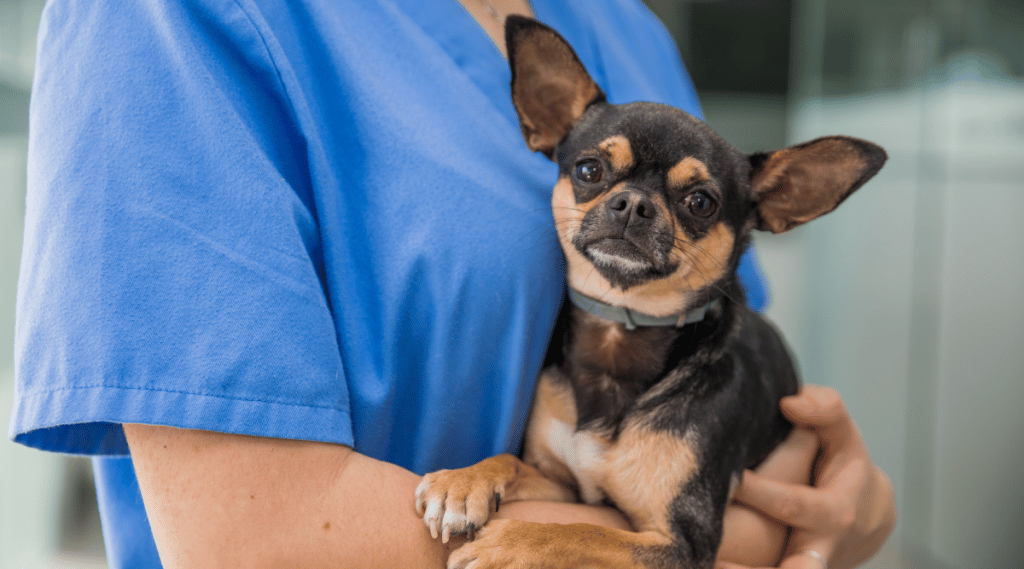
Your veterinarian will begin by completing a top-to-tail examination. Performing certain steps will help your veterinarian identify if any pain is present and what steps need to be taken right away. Usually, this examination will include the following:
Heart & Breathing Examination
One or both of these may be increased if your dog is sick or uncomfortable. Your vet can tell a lot about your dog’s health by doing a basic examination to check for their core vital signs.
Checking For Dehydration
Dehydration can occur if your pup isn’t eating or drinking or if he’s vomiting or has diarrhea. Dehydration can lead to other problems if untreated and can signify that your pup needs urgent attention.
Feeling Their Stomach
Your dog may show signs of discomfort during this part of the exam. Especially if the sock has obstructed his intestines. Sometimes, your veterinarian can feel the sock stuck in your dog’s intestines. However, this is often not possible.

Treatment & Induced Vomiting
Depending on how recently the sock was swallowed, your veterinarian may administer some medicine (an ‘emetic’) to induce vomiting. They do this hoping he will bring the sock back up. This is usually given by injection and will only be done if they suspect it’s still in their stomach (as opposed to it having traveled further down his digestive tract into his intestines).
The effects of the injection tend to wear off after about 15-20 minutes. Your pup may feel nauseous for a few hours afterward. If your pup continues to vomit, your veterinarian may give him another injection to stop the sickness (an anti-emetic).
On occasion, the injection to encourage regurgitation may not work. Or, your dog might vomit stomach contents without vomiting up the sock. If this happens, you may wonder, ‘will it pass?’. It might be that your veterinarian recommends waiting to see if it will pass on its own. This will be dependent on Fido’s size and the size of the sock that was eaten.
If it is unlikely the sock will pass through the digestive tract without it becoming stuck and causing an obstruction, then surgery will be recommended. Pet insurance may help cover the expenses of emergency care and surgery; however, only if your pup is already on an active policy.

Further Testing
If it was some time ago that the sock was ingested, then your veterinarian may suggest further tests to try and establish where in the digestive system the sock is. It’s important to establish whether or not it is causing a bowel obstruction.
The most useful tests to try to establish this are either X-rays or an ultrasound of your dog’s abdomen. Occasionally, an endoscope (a small camera that is passed down the throat) or a CT scan may be required.
Your veterinarian may also suggest a blood test to check if there has been any effect on your dog’s other organ functions. This will also help identify if there are any disturbances to his salt balance that need correcting. Your vet may start a drip to achieve this or provide him with vital fluids if he is showing signs of dehydration.

Surgery For A Bowel Obstruction
The type of surgery required will depend on where in his digestive system the sock is. It will also depend on how long it’s been there. For all types of surgery, dogs will require a full general anesthetic, and an incision will be made into their abdomen. If the sock has only recently become stuck and there is no damage to the intestines, then a cut will be made in the intestine to retrieve the sock carefully. Read more on this below.
Surgery and Cost
If the sock becomes stuck and cannot pass safely, your dog may need surgery. The type of procedure depends on where the sock is, how long it has been stuck, and whether the intestine has been damaged.
What Does Surgery Involve?
- General anesthesia: Your dog will need a full general anesthetic.
- Removing the sock: The veterinarian will make an incision into the abdomen and locate the obstruction. If the intestine is still healthy, they can make a small incision in the intestine to carefully remove the sock.
- Removing damaged intestine: If the sock has been stuck long enough to cut off the intestine’s blood supply, the affected tissue may become severely damaged. In some cases, the intestine can rupture, causing a serious, potentially life-threatening infection called peritonitis. If the intestine is damaged or has ruptured, the unhealthy section may need to be surgically removed, and the healthy ends joined together.
In uncomplicated surgeries where there is no need to remove any part of the intestines, the prognosis for a full recovery is usually very good.
— Dr. Joanna Woodnutt, MRCVS

How Much Does Sock Removal Surgery Cost?
The cost can vary considerably depending on:
- The type of procedure required
- How damaged the intestine is
- How long your dog needs to stay in the hospital
- Medications and supportive care
- Whether emergency or after-hours care is needed
As a general estimate, treatment for an intestinal obstruction may cost $700–$7,000. This is only a rough range, and actual costs can vary substantially by location and individual case. Your veterinarian can provide a more accurate estimate once they assess your dog and determine what treatment is needed.
Will My Dog Be Okay?
If a sock was eaten recently and has been vomited back up, your pup will probably make a full and almost immediate recovery. At the very most, he may have a tummy upset for a couple of days.
If surgery is required, then this does carry an element of risk. In uncomplicated surgeries where there is no need to remove any part of the intestines, the prognosis for a full recovery is usually very good.
If your dog requires the removal of part of his bowel, then there is a higher risk of postoperative complications. Your pup will be carefully monitored for these in the hospital after his surgery. Once your dog has recovered from surgery, it is unlikely that he will suffer any long-term side effects from losing part of his bowel.

The exception to this is if a large part of the intestine has been damaged and needs to be removed. If this is the case, then your canine companion may be more prone to diarrhea and other digestive issues in the future.
In the event of an obstruction leading to a rupture of the bowel, your dog has a much more guarded prognosis and a higher risk of death, although a full recovery is still possible.
What If I am Not Sure My Dog Swallowed A Sock?
If you are not sure your dog swallowed a sock (or any other foreign object) but suspect he did, it’s always best to call your vet. Most likely, the doctor will want to take a look at your dog’s stomach and perform an exam. The risk of a bowel obstruction is too great to risk it. Some dogs may vomit or even pass a sock, but it is always better to play it safe. Watch your dog for signs like excessive drooling, pain, and vomiting. A dog that is excessively vomiting needs medical attention right away.
Frequently Asked Questions
Still wondering what to do after your dog swallowed a sock? These answers cover some of the most common questions owners have, from whether a sock can pass on its own to when you should call your veterinarian.
Still have a question about your dog eating a sock? Leave it in the comments below, and we’ll do our best to help point you in the right direction.
Can a dog survive eating a sock?
A dog can survive eating a sock, but the hours right after it happens are vital. Owners must observe their pups closely and contact the vet right away. Quick treatment is key. If the sock has not passed or been vomited out in 24 hours, your pet may need surgery to remove the sock.
Should I induce vomiting at home?
It is always safer for your veterinarian to induce vomiting than for you to try and do this yourself at home. Your veterinarian will check your dog over to make sure it is safe to make him sick and will monitor him closely whilst he vomits to check he does not choke or accidentally inhale any vomit. You may find hydrogen peroxide recommended to induce vomiting on the internet; it is only recommended to give this under the instruction of your veterinarian.
— Dr. Joanna Woodnutt, MRCVS
How long does it take a dog to poop out a sock?
If your dog has swallowed a sock, there is a good chance it will become stuck somewhere in his digestive tract, so always contact your veterinarian for advice. If the sock is going to pass, it can sometimes take several days, although this will usually happen within 24-36 hours.
How do you know if there’s a blockage?
Several signs may indicate that a blockage is present. He may vomit after eating and drinking, eat less or stop eating altogether, become more lethargic, or even lose weight. Bear in mind that it is still possible for bowel movements to occur even with a blockage.
Will a dog still eat if they have an obstruction?
A dog may still eat if they have an obstruction, especially if it has happened recently. They will frequently vomit back what they do eat, however. If an obstruction has been present for a while, they are more likely to go off their food and eat much less or stop eating altogether.
Can a bowel obstruction clear on its own?
If the bowel is fully obstructed, it will not be clear. Sometimes a partial bowel obstruction may clear on its own. Still, it is always important to contact your veterinarian for advice, as any kind of bowel obstruction can result in death if left untreated.
The Bottom Line: Your Dog Ate a Sock
Remember that dogs who tend to eat foreign objects are usually repeat offenders. For dogs that require multiple surgeries, the level of risk increases with each subsequent surgery. So, every effort should be made to prevent access to objects they may try to ingest.
If you think your dog may have eaten a sock, the most important thing to do is contact your veterinarian immediately for advice. If the sock becomes stuck in his digestive tract and the problem is left untreated, your dog can quickly become very sick and could die. However, with prompt veterinary treatment, most dogs will usually recover quickly.
Keep Your Dog From Swallowing Something Else
Once the immediate sock scare is over, it’s worth thinking about why your dog went after it in the first place—and how to prevent another emergency.
If your dog is still young and seems determined to chew everything in sight, our guide on how to stop puppy chewing can help you redirect the behavior and encourage safer chewing habits.
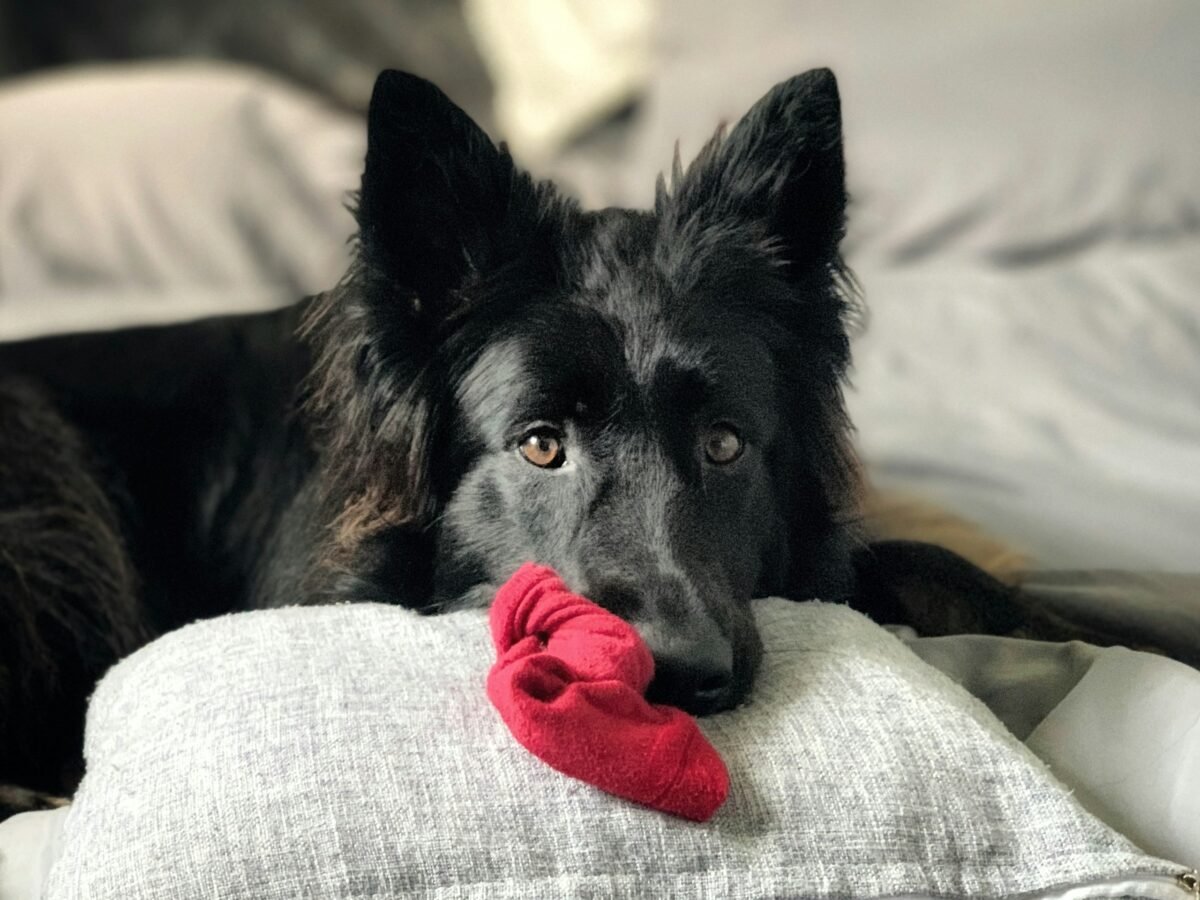
You can also reduce the chances of another swallowed sock by puppy-proofing your home. Clothing, cords, medications, trash, and other tempting objects are all worth keeping safely out of reach.
And if your dog repeatedly eats unusual things like fabric, dirt, rocks, or paper, learn more about why dogs eat dirt and other non-food items, including when this behavior may be related to pica or another underlying issue.
Has Your Dog Ever Eaten a Sock?
Has your dog swallowed a sock—or something else they definitely shouldn’t have? Share your experience in the comments below, including what happened, what symptoms you noticed, and what your veterinarian recommended. Your story may help other dog owners know what to expect.