When you purchase through links on our site, we may earn a commission at no extra cost to you. Learn more.
Your dog is having the time of their life. Meanwhile, they’re slowly toasting like a convenience-store hot dog on a roller grill.
Table of Contents
Dogs don’t exactly know when to tap out in the summertime, which is how you end up with a panting, overheated creature that’s one sunbeam away from medium-rare.
If your pup is getting a little too toasty, here’s how to cool them down fast, keep them comfortable, and avoid the whole “accidentally cooked” situation.
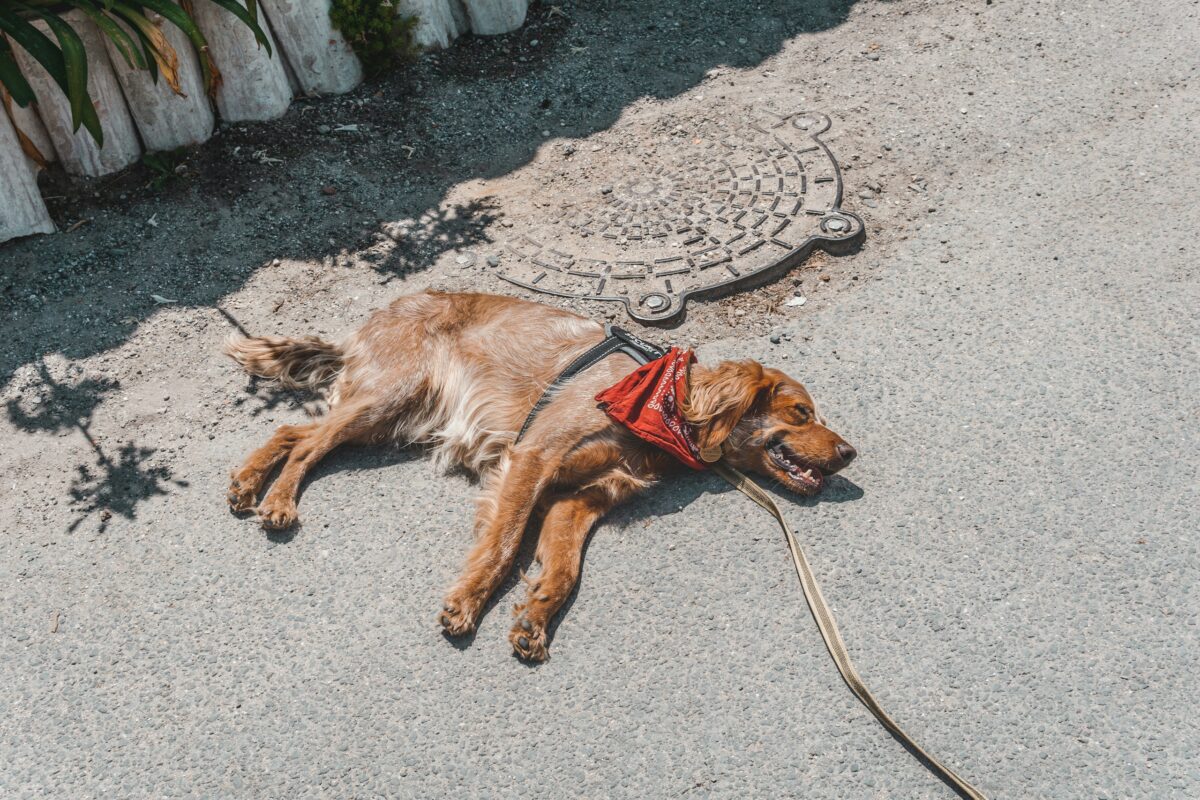
Start Here: Is Your Dog Overheating?
Your dog might look fully chilled out, stretched out in the hottest spot possible. Or, they might be zooming around like the heat doesn’t affect them, right up until they start to wilt.
Want our human-written content to rank above AI-generated garbage? Help us out by clicking this button!
Dogs are not great at knowing when to tap out in the heat. They will keep playing, keep following you around, and keep sunbathing long after their body is ready to quit. That’s how a normal summer moment turns into a problem faster than most people expect.
Early Warning Signs
This is the “too hot but easily fixable” stage. Your dog can recover quickly with a few simple adjustments.
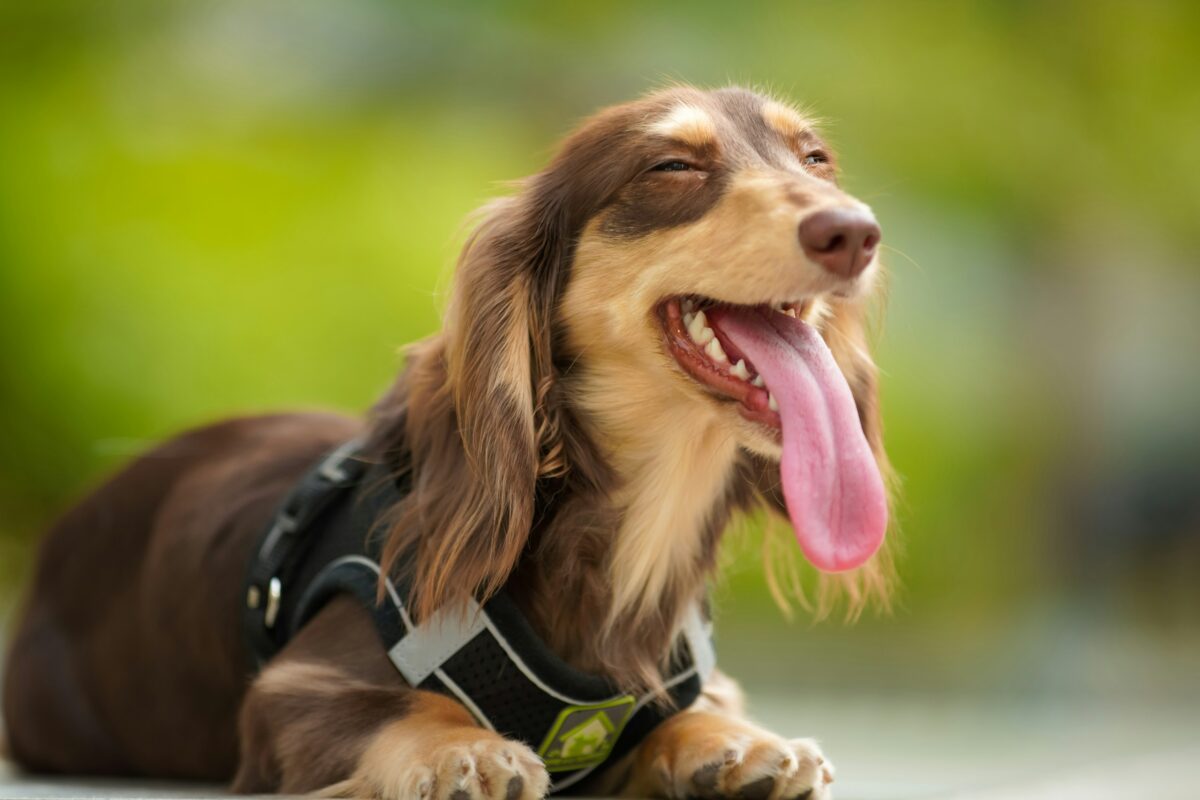
- Heavy panting that does not slow down
- Tongue fully extended and hanging low
- Slowing down or stopping during activity
- Seeking shade or lying flat on cool surfaces
- Drinking more water than usual
- Restless behavior or difficulty settling
If you are seeing these signs, your dog is already attempting to regulate their body temperature. They are trying to cool themselves down, but they may need a little help.
Danger Signs Of Heatstroke
This is when heatstroke becomes a serious concern, requiring immediate action.
- Bright red or very pale gums
- Thick drooling or foam
- Vomiting or diarrhea
- Wobbling or losing coordination
- Glazed eyes or confusion
- Refusing water
- Collapsing or refusing to get up
If you are seeing these signs, do not wait it out. Your dog needs help quickly.
Why Dogs Overheat Faster Than You Think
Dogs are not built to handle heat the same way humans handle it. They do not sweat it out after a hot walk or a long day outside. Instead, they rely on a much less efficient system that can fall behind quickly, especially in summer conditions.
Panting vs Sweating
Humans cool down by sweating across most of the body. Dogs rely mostly on panting.
Panting releases heat through the mouth and airways. Dogs do have sweat glands, but those are limited to areas like the paws and nose and do not contribute much to overall cooling.
Panting helps, but only up to a point. When the surrounding air is already warm, the process becomes less effective.
Why Humidity Makes It Worse
Panting depends on evaporation. When moisture evaporates, it pulls heat away from the body.
In humid conditions, that process slows down. The air already holds a high level of moisture, which makes it harder for your dog to release heat.
That is why a day that does not feel extreme can still be difficult. Temperature matters, but so does how easily heat escapes.
Heat From The Ground & Surroundings
Pavement, decks, patios, and sand can store heat and release it back into the air for hours. When your dog walks or lies on those surfaces, they absorb heat from below while also dealing with warm air around them.
That combination adds up quickly, especially for dogs who insist on laying directly in the sun like it is part of their personality.
How To Cool Your Dog Down Fast (Do This First)
If your dog is overheating, you do not need a complicated plan. You need to act quickly and keep things simple. The goal is to bring their body temperature down safely and steadily.
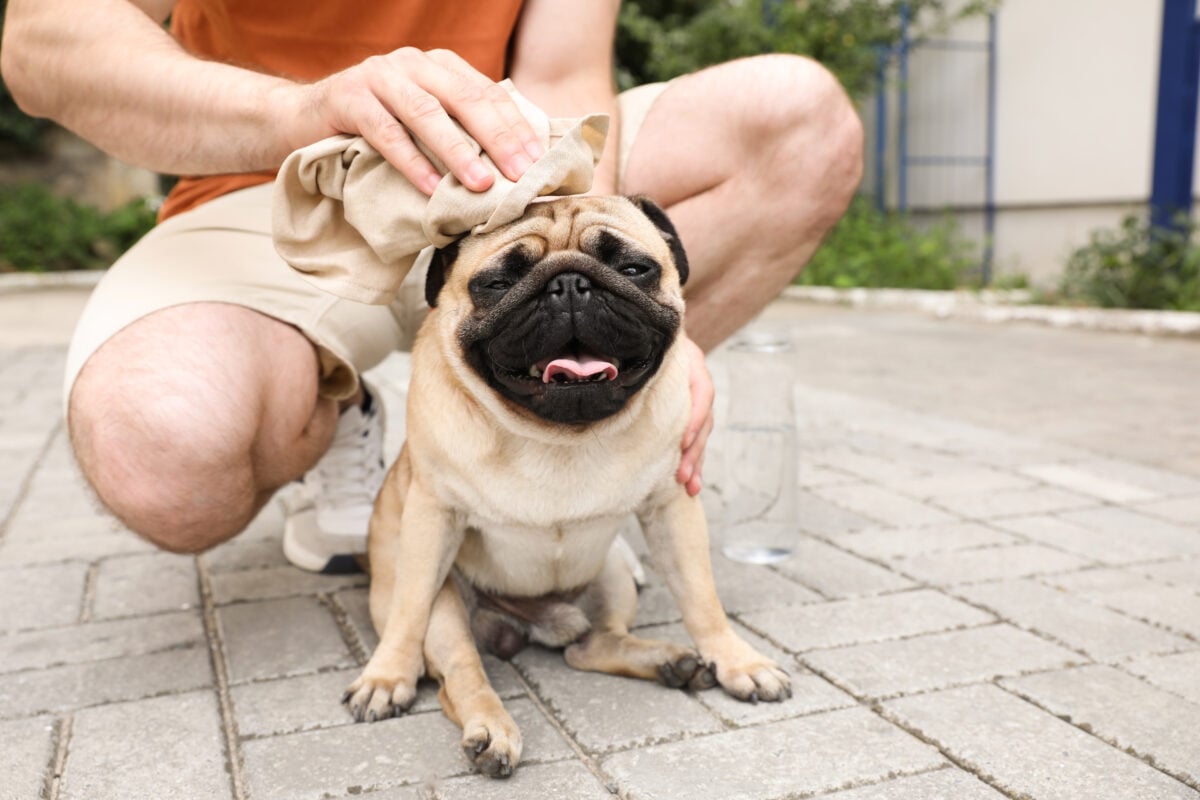
Step-By-Step: What To Do Right Away
Move through this in order. Each step helps your dog cool down without shocking their system.
- Get them out of the heat. Direct sun and hot surfaces will keep pushing their temperature higher.
- Apply cool water to the belly, inner legs, and paws. These areas help release heat more effectively than soaking their back or head.
- Add airflow. Use a fan, AC, or even natural airflow to help evaporate the moisture on their body and speed up cooling.
- Offer small amounts of water. Give cool, not ice-cold, water in small amounts. Let them drink gradually.
The Wet Towel + Fan Method (Works Fast)
If you only remember one thing, make it this.
- Wet a towel with cool water
- Lay it across your dog’s belly or drape it over their body
- Place a fan nearby
This combo works because it mimics how panting cools the body, just more efficiently.
Water Mistakes That Can Backfire
It is tempting to go all in with ice water or let your dog chug a full bowl immediately. That can actually make things worse.
Avoid:
- Ice baths or freezing-cold water
- Dumping water only on their back
- Letting them gulp large amounts of water too quickly
Cooling too fast can stress the body, and overdrinking can lead to nausea or vomiting.
Indoor Cooling (Where You Have Control)
The easiest way to keep your dog cool inside is to turn on the AC. Sunlight will quietly turn your home into a greenhouse, so when you can control the temperature, everything else becomes easier.
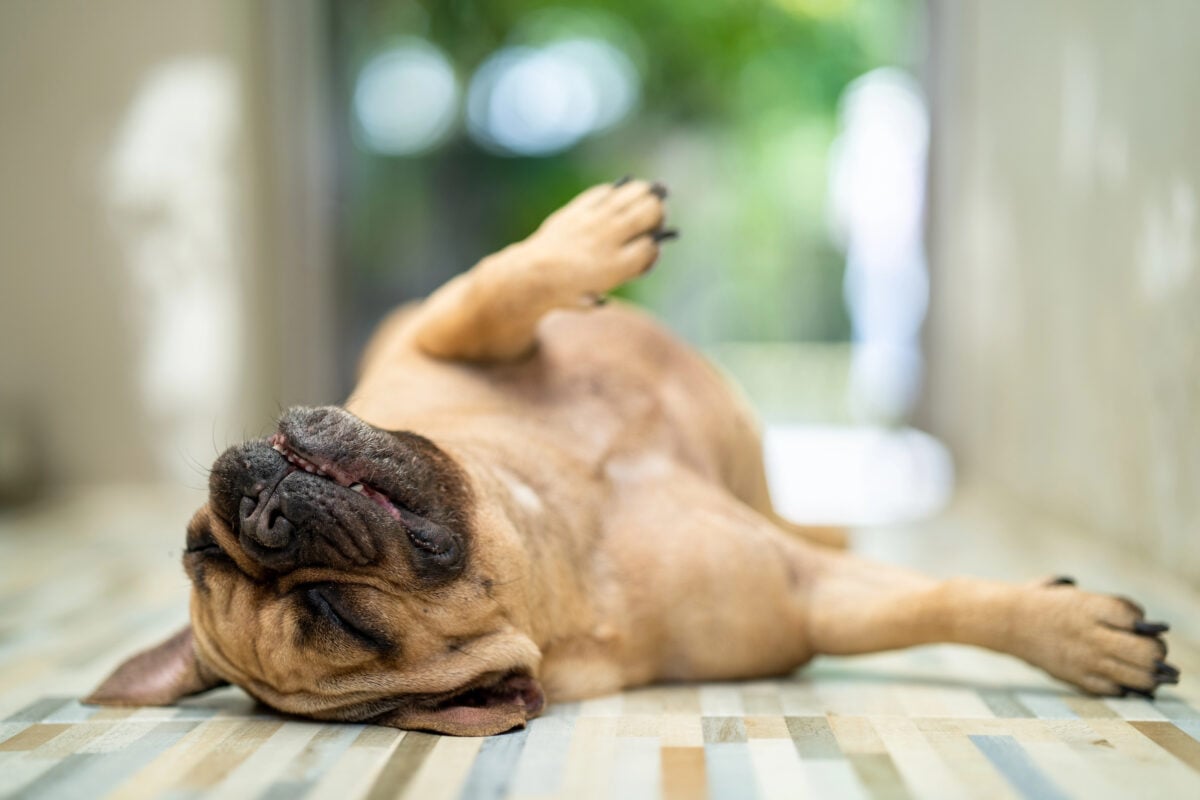
When that’s not possible — or your dog needs a little extra help staying comfortable — you need to get creative.
1. Stay Inside Strategically
Midday is not the time for ambition. Shift walks and playtime to early morning or late evening. Your dog will still get their energy out, just without cooking in the process.
2. Mist + Fan Setup
This is the closest thing to DIY air conditioning for your dog. Lightly mist your dog or a towel, then add airflow. The fan helps evaporate the moisture, which pulls heat away from their body.
3. Frozen Treats & Toys
This works especially well for dogs that cannot settle when they are hot. Frozen treats help lower body temperature while also encouraging your dog to slow down instead of pacing or panting.
Easy options include:
- Freezing a Kong toy with peanut butter or yogurt
- Offering ice cubes
- Making flavored ice cubes with coconut water or bone broth for extra hydration
Want more chill snack ideas? Check out our full guide to the best frozen treats for dogs, perfect for keeping things cool all summer long. Or the best doggy ice cream for an extra special treat.
4. Cooling Mats & Ice Packs
Cooling mats give your dog a consistent cool surface to lie on. They work best for dogs that already seek out tile or hardwood floors when they get warm.
Choose the right size for full body contact, then place it in their favorite resting spot.
Got a panting dog and zero time to waste? Grab an ice pack. It’s a great way to provide instant relief.
Dr. Sara Ochoa, DVM, a practicing veterinarian in a small animal hospital, has this to say about using ice packs to cool a dog down:
I am a big fan of using ice packs to cool down dogs. They provide instant relief from the heat.
Gunner, my German Shepherd agrees. In his old age, he struggles with the summer heat. Even in the cooler evenings, he is noticeably uncomfortable, panting loudly – it distresses me to see him like this.
But when he lays on an ice pack, the relief is immediate. Gunner instantly relaxes as the ice pack refreshes him.
You probably already have everything on hand to make a DIY ice pack. Grab a water bottle, fill it with water and place it in your freezer. Once it has frozen, place on the ground under your dog’s chin.
Alternatively, fill a zip-lock bag with ice cubes and hand it to your pup to lay on. Or if you want to sacrifice a pack of frozen peas, that will work too.
– Dr. Sara Ochoa, DVM, Veterinarian & Contributer to Canine Journal
Ice Packs, Misters & Fans: Which Works Best?
Not all cooling tools are created equal.down. Here’s how the top three stack up when your pup’s panting and needs relief fast.
| Tool | How It Works | Best For | Bonus Tip |
|---|---|---|---|
| Mister | Sprays a fine mist that evaporates fast | Walks, car rides, travel | Aim at paws and belly for max effect |
| Fan | Circulates air to enhance cooling | Indoor setups, crates | Pair with a damp towel = dog AC |
| Ice Pack | Provides cold compression to the body | Emergency overheating, resting | Wrap in a towel – never place ice directly on the skin |
Outdoor Cooling (Real-Life Setups That Work)
Outside is where dogs tend to make their worst decisions. They will stand in the sun, lie on warm concrete, and ignore perfectly good shade.
So, the goal here is not just to cool them down, but to make the better option easier than the bad one.
1. Kiddie Pools
Kiddie pools are simple, low-effort, and surprisingly effective. A shallow pool gives your dog a place to cool off without fully committing to swimming.
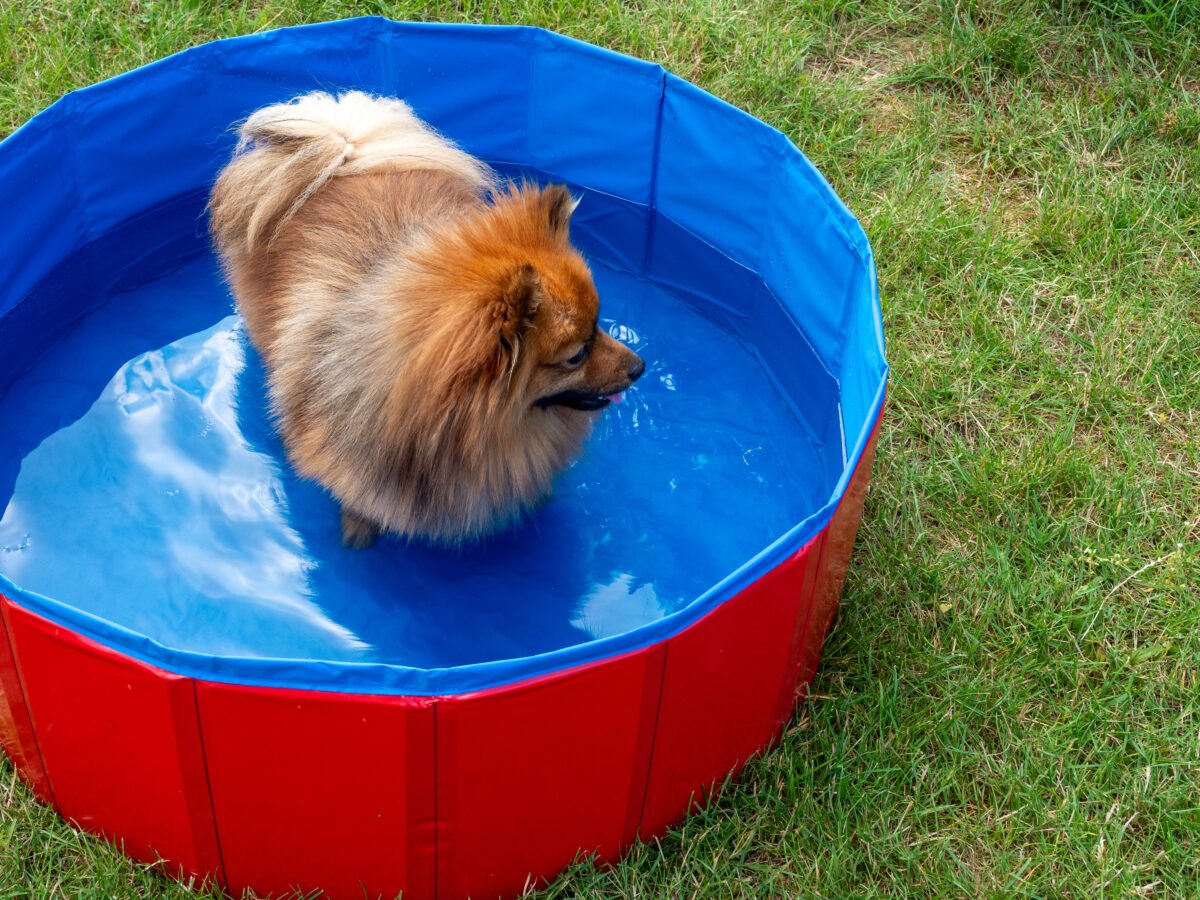
- Place it on grass, not concrete
- Keep the water shallow and refresh it often
- Add shade so it does not heat up quickly
If your dog refuses to get in, try tossing in a toy or a few ice cubes.
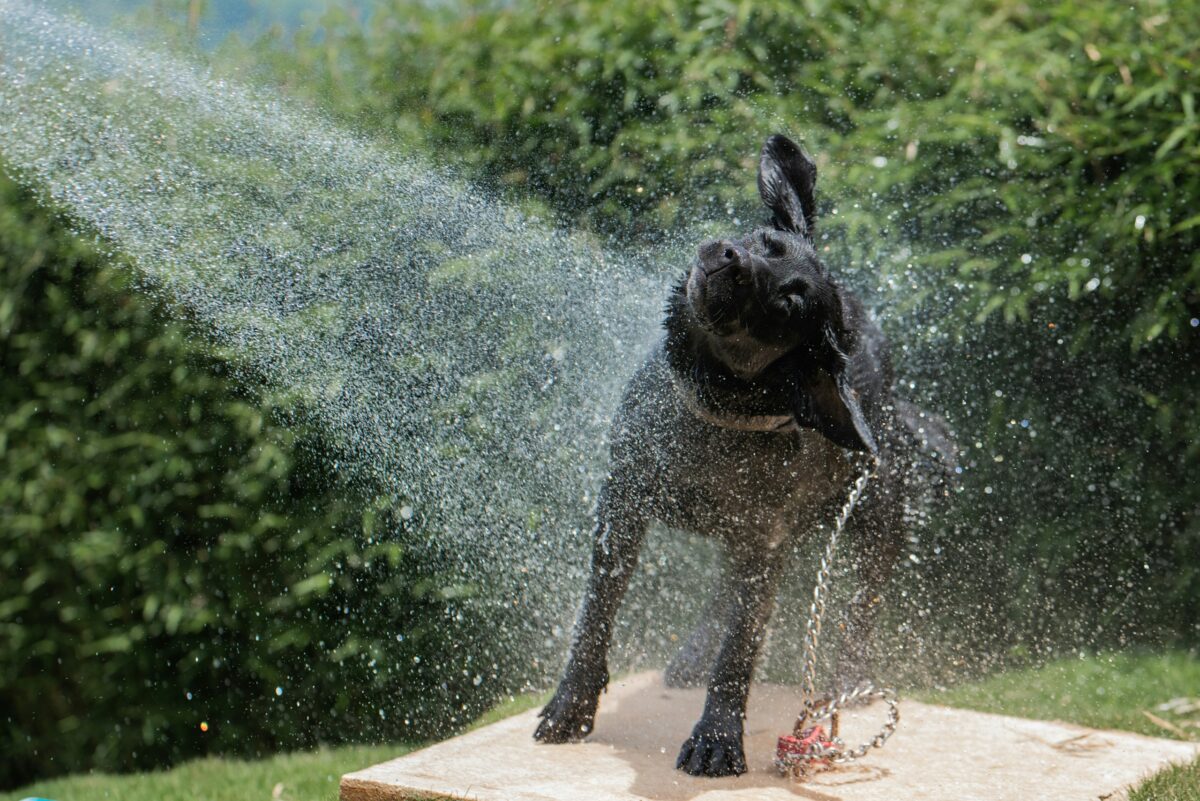
2. Sprinklers & Splash Pads
Running water stays cooler than still water, which makes this a great option for dogs that will not sit still.
- Works well for high-energy dogs
- Doubles as play and cooling
- Easy to use during yard time
- Less intimidating than a full pool
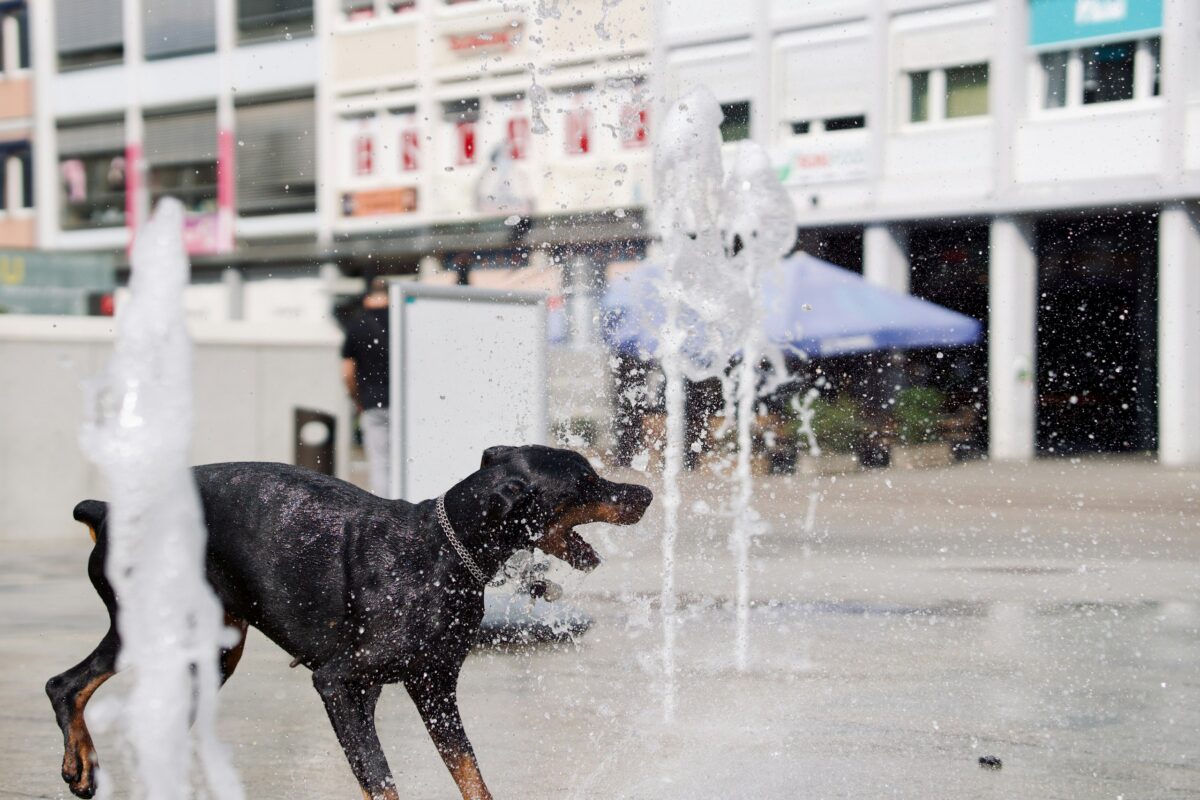
Bonus Tip: If your dog loves running water, a playground splash pad or zero-depth fountain can be a great option. Just use common sense. Make sure it’s allowed, keep things clean, and be respectful of shared spaces.
3. Swimming Pools
Swimming cools quickly, but it comes with a few things to watch.
- Make sure your dog can get out easily
- Watch for overexertion
- Discourage your dog from drinking pool water, which can upset their stomach
- Rinse off chlorine after longer swims
Not every dog is a strong swimmer. View our picks for the best dog life jackets to keep your dog safe during pool time.
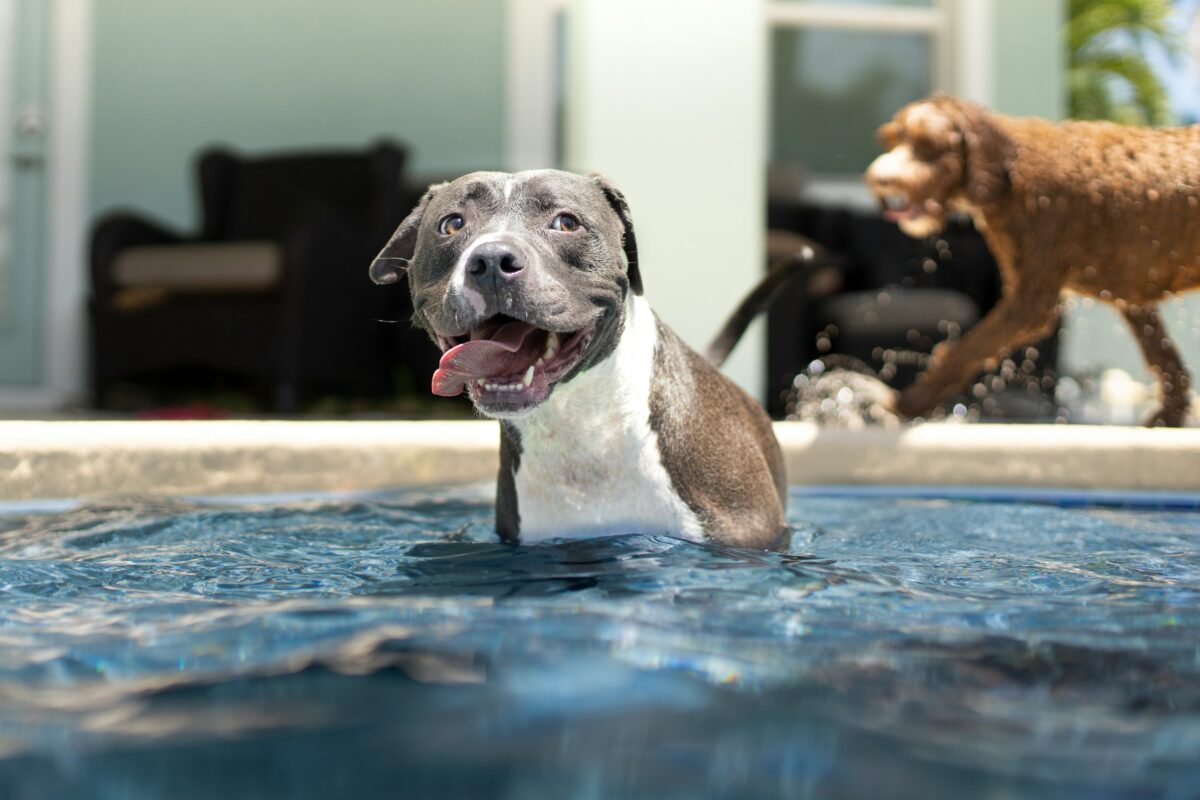
Bonus Tip: Many public pools host end-of-season “dog days” where dogs are allowed to swim. It’s usually one of the last days before the pool closes, and it can be a fun, low-stress way to let your dog cool off in a controlled environment.
4. Natural Water (Lakes, Rivers, Beaches)
Natural water, like lakes, rivers, and beaches, can be a great way to cool your dog down, but they come with a few extra risks to keep in mind.
- Watch for currents in rivers and moving water
- Avoid water with visible algae or strange coloring
- Be cautious after heavy rain when bacteria levels rise
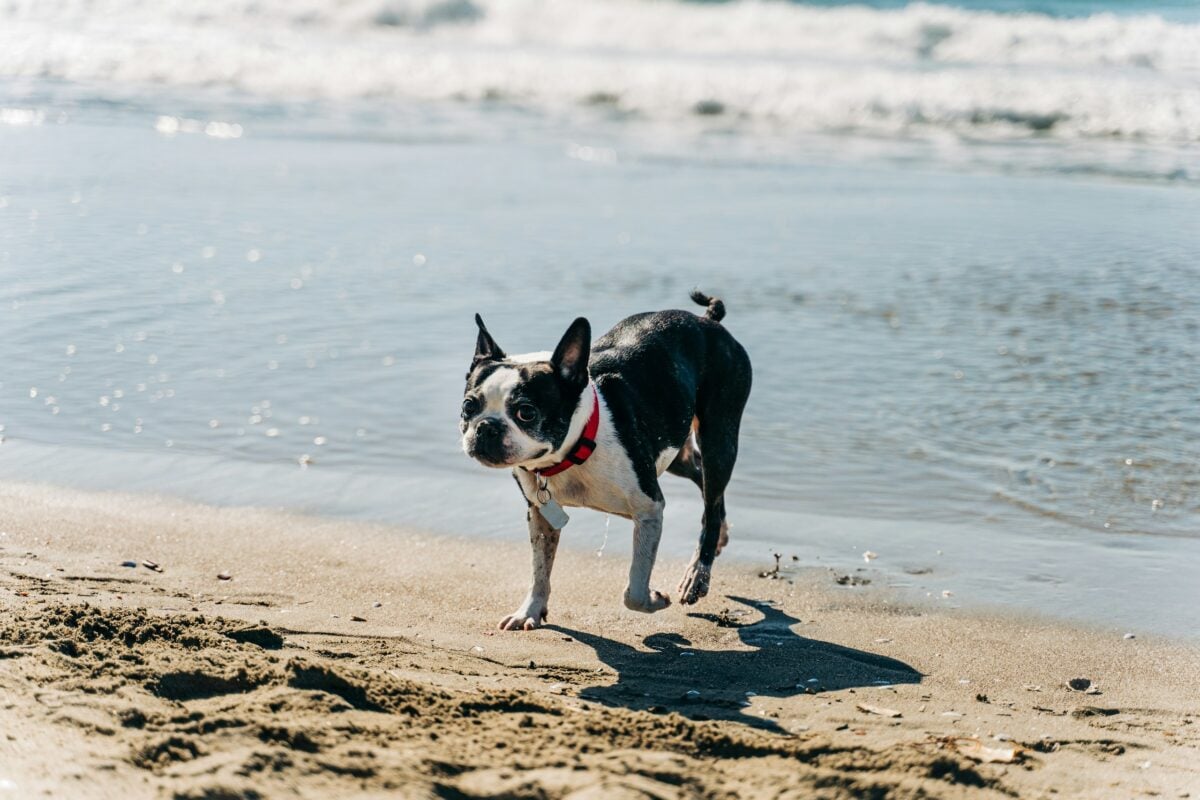
Safety Note: If your dog is not confident in the water, a life vest can make a big difference.
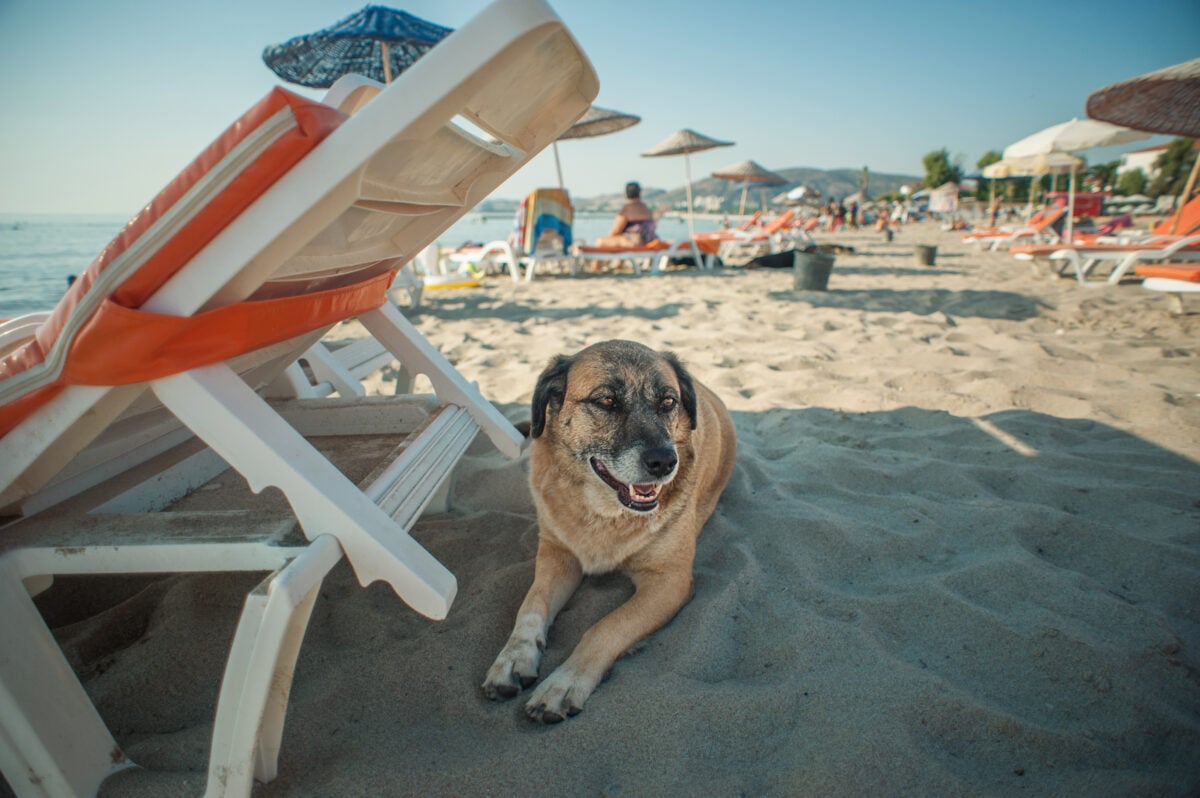
5. Create A “Cool Zone”
Think of this as your dog’s outdoor reset spot.
- Use umbrellas, tarps, or natural shade from trees
- Move resting areas out of direct sun
- Adjust as the sun shifts throughout the day
Even a small shaded area can noticeably reduce heat exposure. Once it is set up, most dogs will start choosing it on their own.
Hydration Is Not Optional
If your dog is outside, water should always be easy to find, easy to reach, and kept cool.
- Keep water visible and accessible
- Refill often, especially on hot days
- Use multiple bowls in different areas
- Place bowls in shade whenever possible
- Refresh water frequently to keep it cool
If you are leaving the house, bring water with you. Even short outings can add up quickly in the heat.
Cooling On The Go: Cars, Walks, & Travel
You are out of your routine, your dog is excited, and it is easy to underestimate how quickly heat builds, especially in cars and on pavement. A few small adjustments make a big difference here.
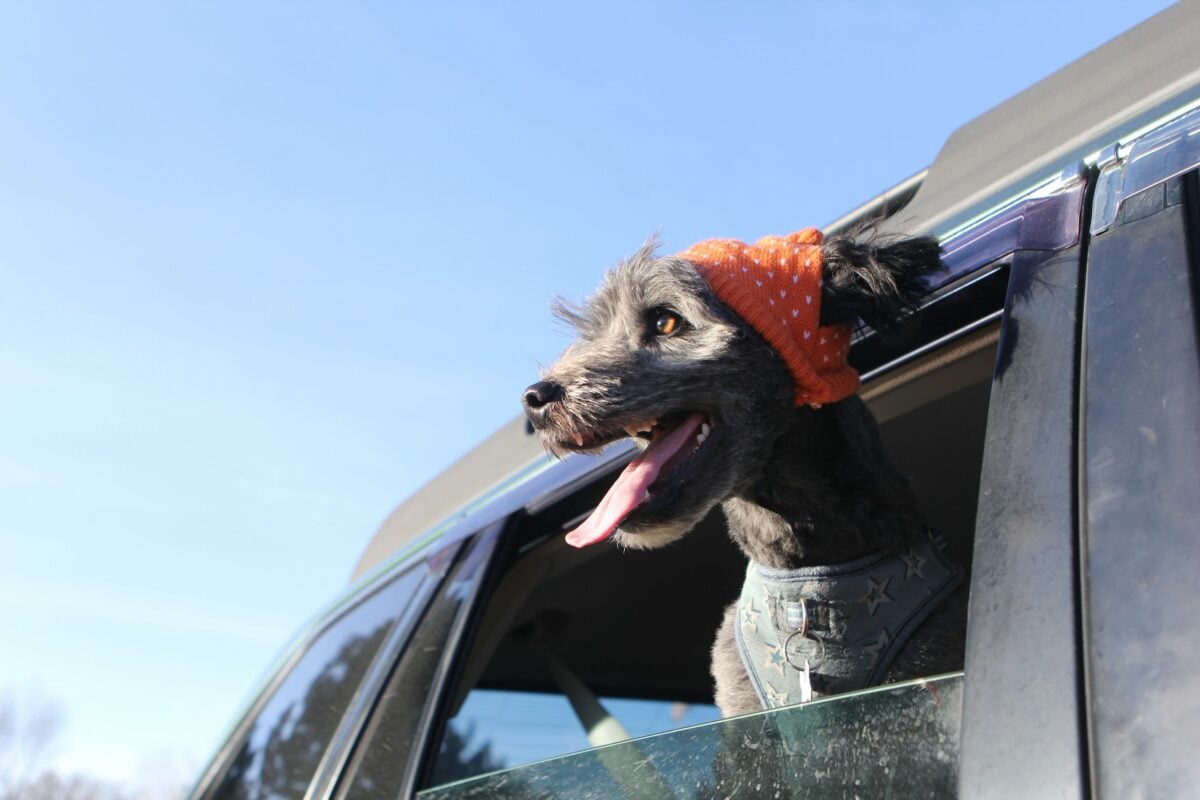
1. Keep The Car Cool Before You Even Start Driving
Cars heat up fast, even on mild days. Cracked windows do very little, and the backseat tends to stay warmer longer than you expect.
- Start the AC before driving when possible
- Check the airflow where your dog is actually sitting
- Be cautious with crates or enclosed spaces
Even a brief stop can quickly turn into a problem if the car is not actively cooled.
2. Plan Walks Around Heat, Not Your Schedule
Walk timing matters more than distance. Pavement, asphalt, and decks hold heat long after the air cools down, and that heat transfers directly through your dog’s paws.
- Walk early in the morning or later in the evening
- Avoid midday pavement when possible
- Test surfaces with your hand before heading out
Grass and shaded paths are always the better option.
3. Use Portable Cooling Gear
When you are out, simple tools go a long way.
- Cooling mats in crates or car seats
- Frozen water bottles wrapped in towels
- Travel bowls or squeeze bottles
- Portable fans for airflow
None of this is complicated, but it adds up quickly during longer outings.
4. Try Cooling Apparel For Travel & Activity
Some dogs need extra support, especially in heat or during longer activity.
Cooling Vest
These are the heavy lifters. A cooling vest covers the chest and back and uses evaporative cooling to help pull heat away from the body.
- Soak in water, then wring out before use
- Re-wet as needed
- Best for walks, hikes, and extended time outside
Cooling Bandana
A cooling bandana is a lighter option for dogs that do not tolerate full-body gear.
- Worn around the neck
- Easy to use and lightweight
- Less coverage, but still helpful for shorter outings
Heat & Sun Protection
Heat is not just about temperature. Surfaces and sun exposure also play a role.
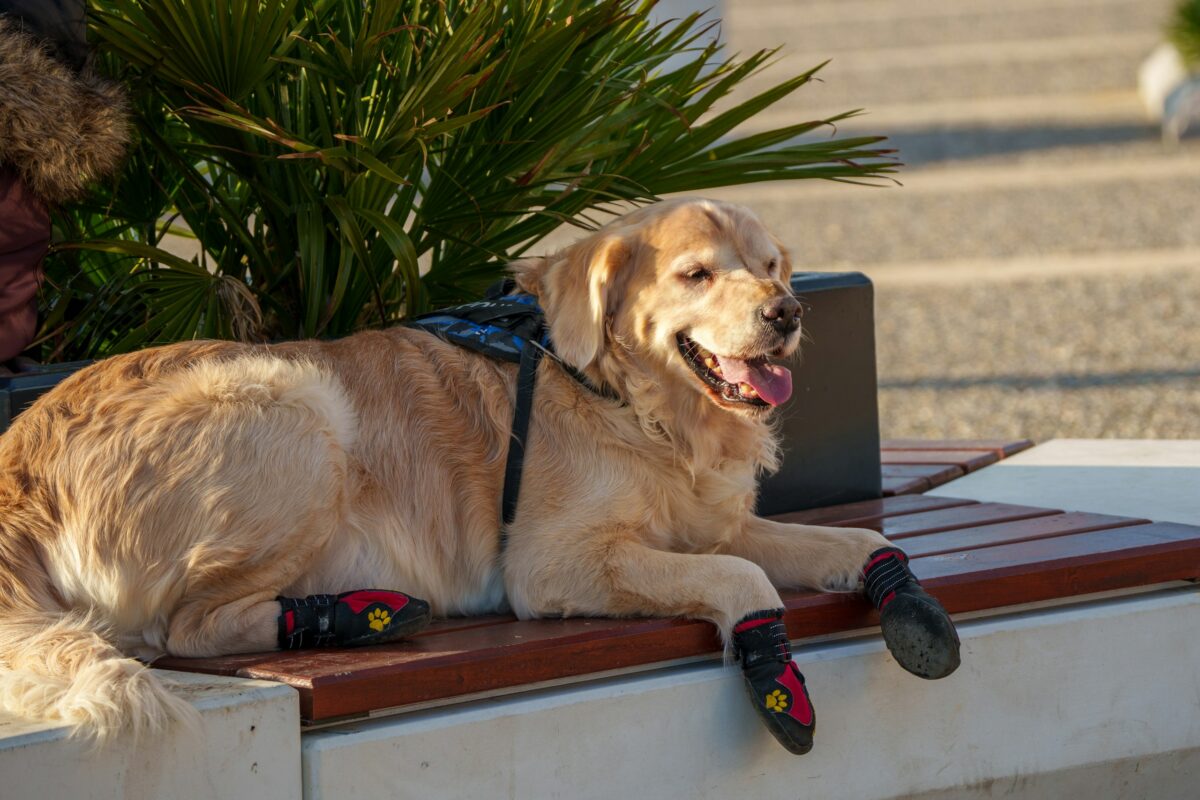
- Booties can help protect paws on hot pavement, but not all dogs tolerate them
- Walk timing is often the simpler solution
- Light-colored or short-coated dogs may benefit from pet-safe sunscreen on exposed areas
If your dog is avoiding the ground or constantly shifting, it is usually a sign that the surface is too hot.
Real-Life Situations Where Dogs Overheat Fast
Overheating rarely happens during obvious moments. It usually happens during normal ones, when no one is really thinking about it.
- Gardening or yard work: Your dog follows you around the entire time, moving between sun and shade without ever fully cooling down
- Right after walks: They come inside still hot and often settle somewhere warm instead of cooling off properly
- Playing fetch or running: High-energy dogs will keep going, even when they are overheating
- Patios and decks: These surfaces hold heat and radiate it upward, even when the air feels comfortable
- BBQs and outdoor gatherings: More time outside, more distractions, and less structure around water and rest
- Dogs that sunbathe: Some dogs will choose direct sunlight and stay there far longer than they should
Should You Shave Your Dog In Summer?
It seems like the obvious move. Your dog is hot, so you remove the fur. But for many dogs, that actually makes things worse.
Many coats are designed to regulate temperature. Removing them can take away that protection and make your dog more vulnerable to heat and sun exposure.
Not All Coats Work The Same Way
Some dogs have double coats, which act as insulation. These coats help keep heat out in the summer and warmth in during the winter.
Others have hair-like coats that continue growing and do not provide the same insulation. So, it’s ok to shave them.
Dogs You Should Not Shave
These dogs rely on their coat for temperature regulation.
- Golden Retrievers
- Siberian Huskies
- German Shepherds
- Border Collies
Shaving these breeds can:
- Disrupt natural cooling
- Increase risk of sunburn
- Lead to uneven or damaged regrowth
In many cases, it makes them hotter, not cooler.
Dogs That Can Benefit From Trims
Some breeds have hair rather than insulating fur. These coats can be trimmed to help with comfort and maintenance.
- Poodles
- Maltese
- Shih Tzus
- Yorkshire Terriers
This is not about shaving down to the skin. It is about keeping the coat manageable and preventing matting, which can trap heat.
What To Do Instead
If your dog has a thick or double coat, focus on maintenance instead of removal.
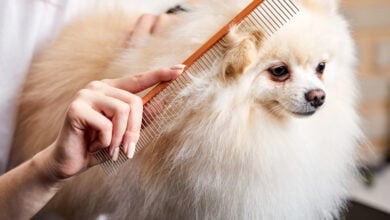
- Brush regularly to remove loose undercoat
- Prevent matting that traps heat
- Keep the coat clean and well-groomed
This allows the coat to do what it is supposed to do.
Some Dogs Overheat Way Faster Than Others
Not all dogs handle heat the same way. A lot of it comes down to body type, coat, and behavior.
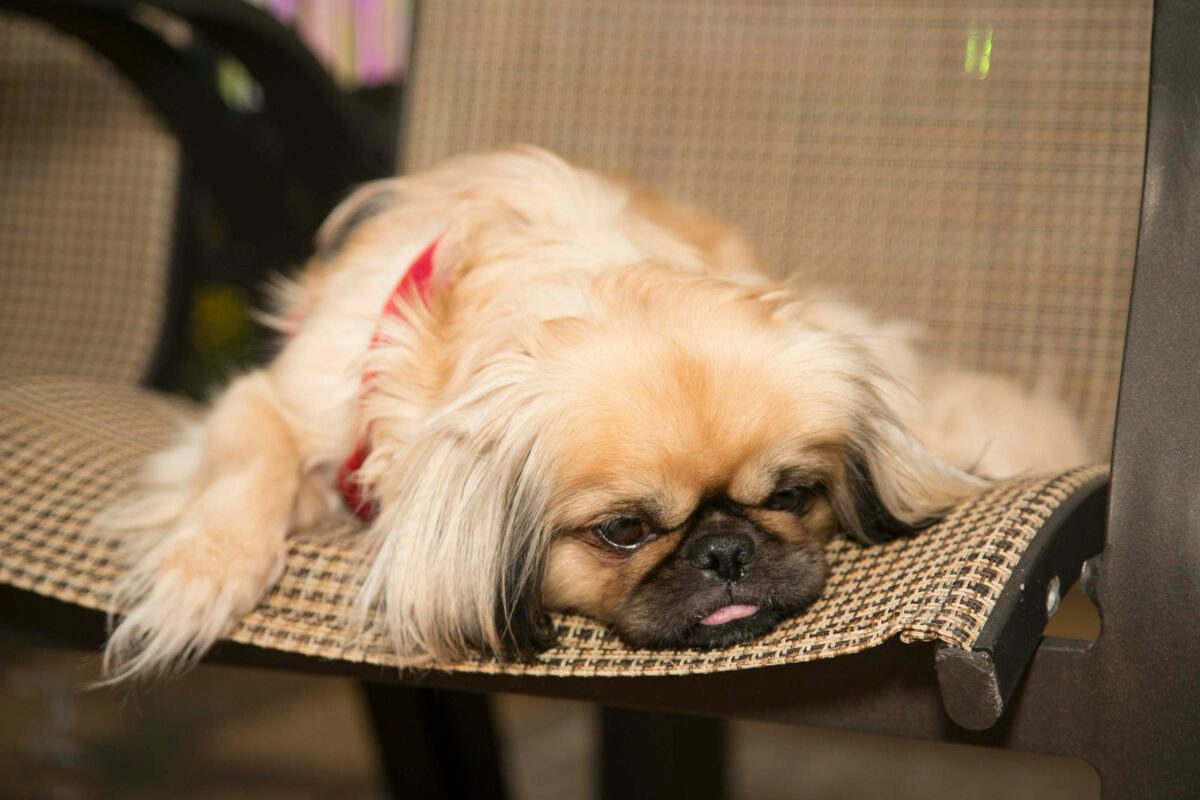
1. Flat-Faced Breeds
Brachycephalic dogs with shorter snouts have a harder time cooling themselves through panting. Their airways are more restricted, which reduces heat regulation efficiency, especially in warm or humid conditions.
2. Thick-Coated Dogs
Dogs with dense coats can hold onto heat more easily, particularly if they are not regularly brushed. Even though their coats help with insulation, they can still struggle in high heat, especially without proper grooming.
3. Puppies & Senior Dogs
Age plays a role. Puppies have not fully developed their ability to regulate temperature.
Senior dogs may have reduced tolerance for heat and exertion. They tend to fatigue faster and may not recover as quickly.
4. Overweight Dogs
Extra weight makes everything harder, including cooling down.
- More body mass retains more heat
- Movement requires more effort
- Panting becomes less efficient
Even moderate heat can feel more intense for these dogs.
5. High-Energy Dogs
Some dogs will not stop on their own. This is where a lot of overheating happens, especially during play.
Why This Matters: Understanding your dog’s risk level helps you adjust your approach. Some dogs can handle short bursts of heat with no issue. Others need more frequent breaks, more shade, and closer monitoring.
Common Cooling Mistakes That Can Make Things Worse
Most people are trying to do the right thing. The problem is that a few common habits can actually make overheating worse without realizing it.
1. Using Ice Incorrectly
Colder is not always better. Dumping ice water on your dog or using extreme cold can actually slow the cooling process.
Sudden temperature changes can cause blood vessels to constrict, which works against what you are trying to do. Gradual cooling is always more effective.
2. Assuming Water Alone Is Enough
Water helps, but it does not solve everything. A dog can still overheat even with access to water if they are in direct sunlight, lying on a hot surface, or lacking airflow.
Cooling requires a combination of shade, airflow, and hydration working together.
3. Fully Soaking Thick Coats In Humid Weather
This one is easy to miss. For dogs with dense coats, soaking the entire body can trap heat, especially in humid air.
Instead of helping, it can make them feel heavier and warmer. Focus on areas like the belly and paws, and use airflow to help with evaporation.
Frequently Asked Questions
Got questions we didn’t cover? These are the ones that come up most when the heat hits. If you don’t see your question, respond in the comments, and we’ll get back to you!
How Can I Cool Down A Panting Dog Quickly?
Move your dog to a shaded or indoor area, offer small sips of cool (not icy) water, and apply a damp towel to their belly and paws. Use a fan or mist to boost cooling.
Avoid using ice directly. If symptoms don’t improve, call your vet.
How Do I Cool Down A Dog After A Walk?
Start by getting them out of the sun. Lay them on a cool surface, mist their paws and belly, and offer water in small amounts. A cooling vest or towel can help gradually reduce body temperature.
What’s The Best Way To Cool Off A Dog Indoors?
Lowering the room temperature is the most effective step. Beyond that, focus on airflow, cool surfaces, and keeping your dog from settling in warmer areas, such as rugs or sunlit spots.
Small adjustments in environment make a noticeable difference.
Can I Take My Dog For A Walk In Hot Weather?
Yes, but timing matters. Stick to early mornings or late evenings, avoid hot pavement, and keep walks shorter than usual. If the ground feels hot to your hand, it is too hot for your dog.
What Breeds Are Most At Risk In The Heat?
Flat-faced dogs (like Pugs and Bulldogs), senior dogs, and thick-coated breeds are most vulnerable to heatstroke. Continually monitor them closely in warm weather and avoid midday heat.
How Long Does It Take For A Dog To Overheat?
In extreme heat, dogs can overheat in 10–15 minutes. Always watch for signs like excessive panting, pale or bright red gums, or weakness, and act fast.
Is It Safe To Shave My Dog In The Summer?
It depends on the coat. Dogs with double coats rely on that insulation to regulate temperature, so shaving can actually make them hotter. Dogs with hair-like coats can benefit from trims, but not a full shave.
Keep Your Pup Safe All Summer Long
If you are spending more time outside this season, it is worth thinking beyond just temperature. A safer setup starts with smart outdoor habits, like these pet-friendly garden tips, along with understanding common summer dangers for dogs and knowing how to recognize the signs of heat stroke before it becomes an emergency.