When you purchase through links on our site, we may earn a commission at no extra cost to you. Learn more.
You reach down to pet another dog, and suddenly your own dog is standing between you like they were summoned. You hug your partner, pick up the baby, or praise another pet, and a paw lands on your arm.
Table of Contents
If your dog has ever responded to divided attention with a full-body “Excuse me,” you are not imagining the timing. Research suggests dogs can show jealousy-like behavior when a valued social bond appears to be threatened by a rival.
Some reactions are funny and harmless. Others signal stress, anxiety, or guarding that deserves a more careful response. Here are 10 things dogs may do when they seem jealous, what each one can mean, and how to respond without teaching your pup that pushiness always works.
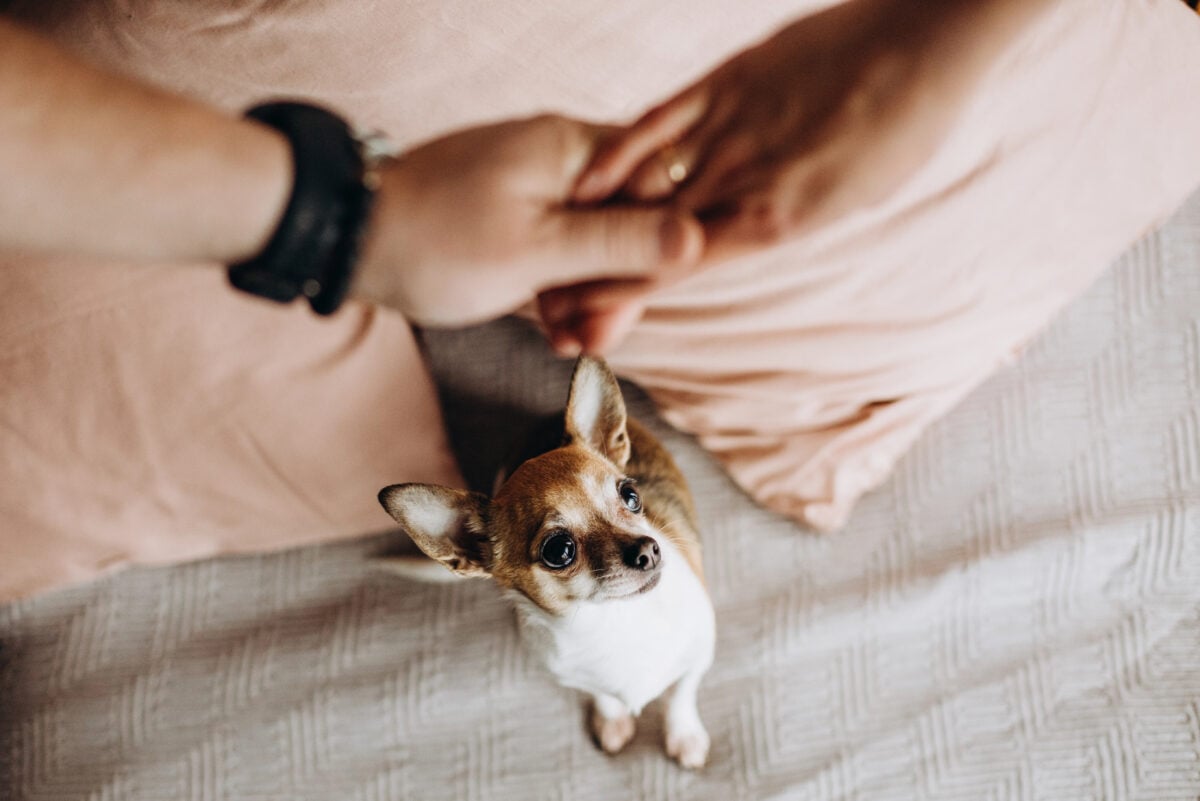
Quick Answer: What Do Dogs Do When They’re Jealous?
Dogs will often try attention-seeking behavior when they’re feeling jealous. They may:
Want our human-written content to rank above AI-generated garbage? Help us out by clicking this button!
- Push into the middle of an interaction
- Paw or nudge for attention
- Bark or whine
- Bring over a toy to initiate play
- Follow their person more closely
- Steal another pet’s spot
- Crowd treat time
Attention-Seeking Behavior vs Resource Guarding
There’s a huge difference between jealous, attention-seeking behavior and resource guarding. At its core, attention-seeking behavior is playful. It’s a request for interaction.
In contrast, resource guarding is a defensive, stress-driven response. The goal is to keep another person away from someone or something deemed valuable.
Loose, wiggly body language and a quick recovery usually point to a manageable “Hey, what about me?” moment. Stiffness, hard staring, blocking, growling, snapping, or repeatedly intimidating another pet can indicate resource guarding or another behavior problem.
1. They Push Into The Middle
You are petting another dog when suddenly your pup’s head rises between your hand and the apparent rival. Sit beside your partner, and your dog may squeeze into a gap that did not seem physically large enough to hold a dog.
Getting between you and the recipient of your attention is one of the clearest forms of jealousy-like behavior. It would be annoying if it weren’t so darn cute.
Of course, context matters. A cheerful dog who slips into the cuddle pile is different from one who blocks access with a stiff body and fixed stare.
Watch what happens next. A loose body, soft face, and easy retreat suggest your dog mainly wants to join in. Freezing, hovering over you, lifting a lip, or directing threats toward the other dog turns a funny interruption into a safety concern.
What To Do
- Calmly ask your dog to move to a nearby spot, then reward them for sitting or lying there.
- Give affection once they are settled.
This teaches them that calm participation works better than physically displacing someone else.
2. They Paw, Nudge, Or Leanon You
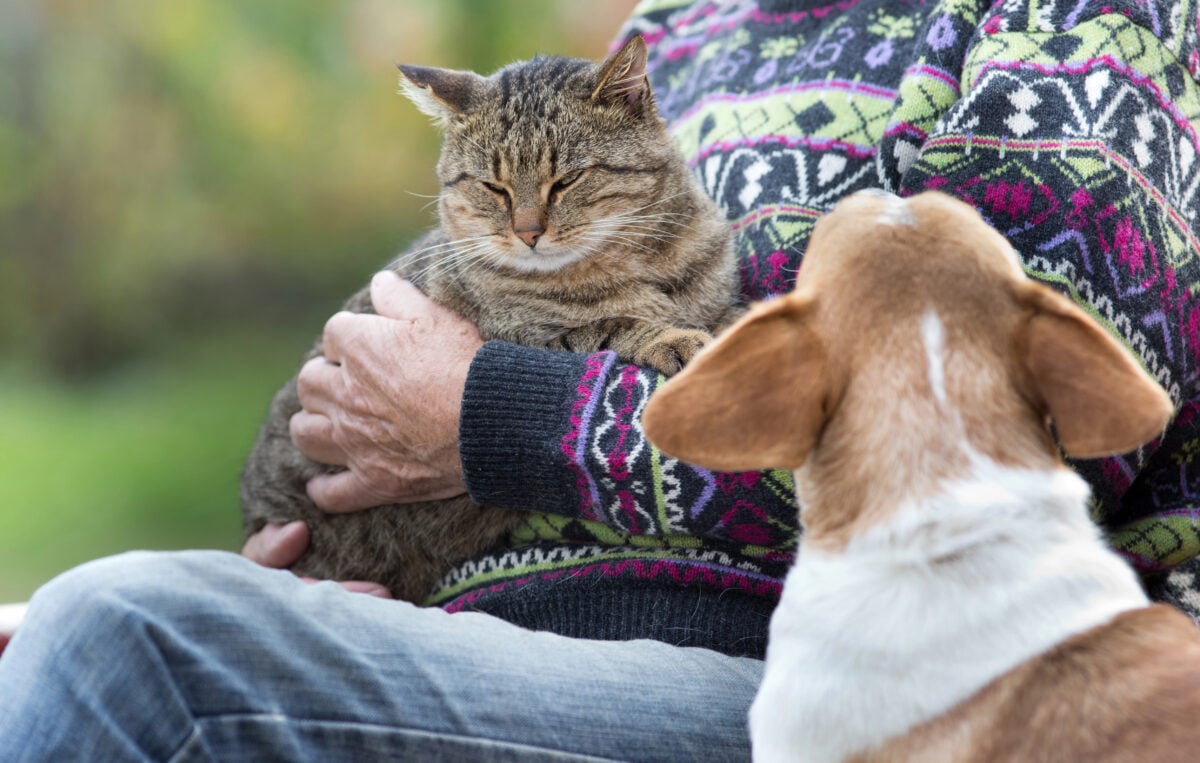
Some dogs skip subtlety and use direct contact: A paw taps your arm. A nose flips your hand away from the other pet. A 70-pound body suddenly leans against your leg with the weight of a collapsing bookshelf.
Dogs often paw, nuzzle, and rest their head on you to seek comfort or request attention. The timing can make it look like jealousy: your dog was content until someone else became the focus.
This is usually low-stakes if the contact is gentle and your dog can stop. It becomes a problem when pawing scratches people, nudging turns forceful, or the dog keeps escalating until you respond.
What To Do
- Avoid instantly petting your dog in response to the first shove.
- Ask for an easy behavior such as “sit,” wait for four paws on the floor, and then offer attention.
You are not withholding affection; you are showing your dog a less pushy way to ask for it.
3. They Bark Or Whine The Moment You Ignore Them
Your dog may tolerate your conversation, phone call, or cuddle with another pet for approximately six seconds, but then the commentary begins.
A sharp bark can function like an interruption. Whining may reflect frustration, uncertainty, or a learned strategy for getting you to look over.
Look for a clear pattern. Does the noise reliably begin when you greet the other dog, hold the baby, or sit close to your partner? Does it end as soon as you respond?
What To Do
First, make sure your dog doesn’t need to go outside and isn’t in pain or distress. In this is familiar attention-seeking:
- Keep your reaction neutral. Avoid raising your voice or yelling.
- Reward a brief pause in the noise.
- Redirect your dog to a mat, chew, or other appropriate activity.
4. They Bring You A Toy With Impeccable Timing
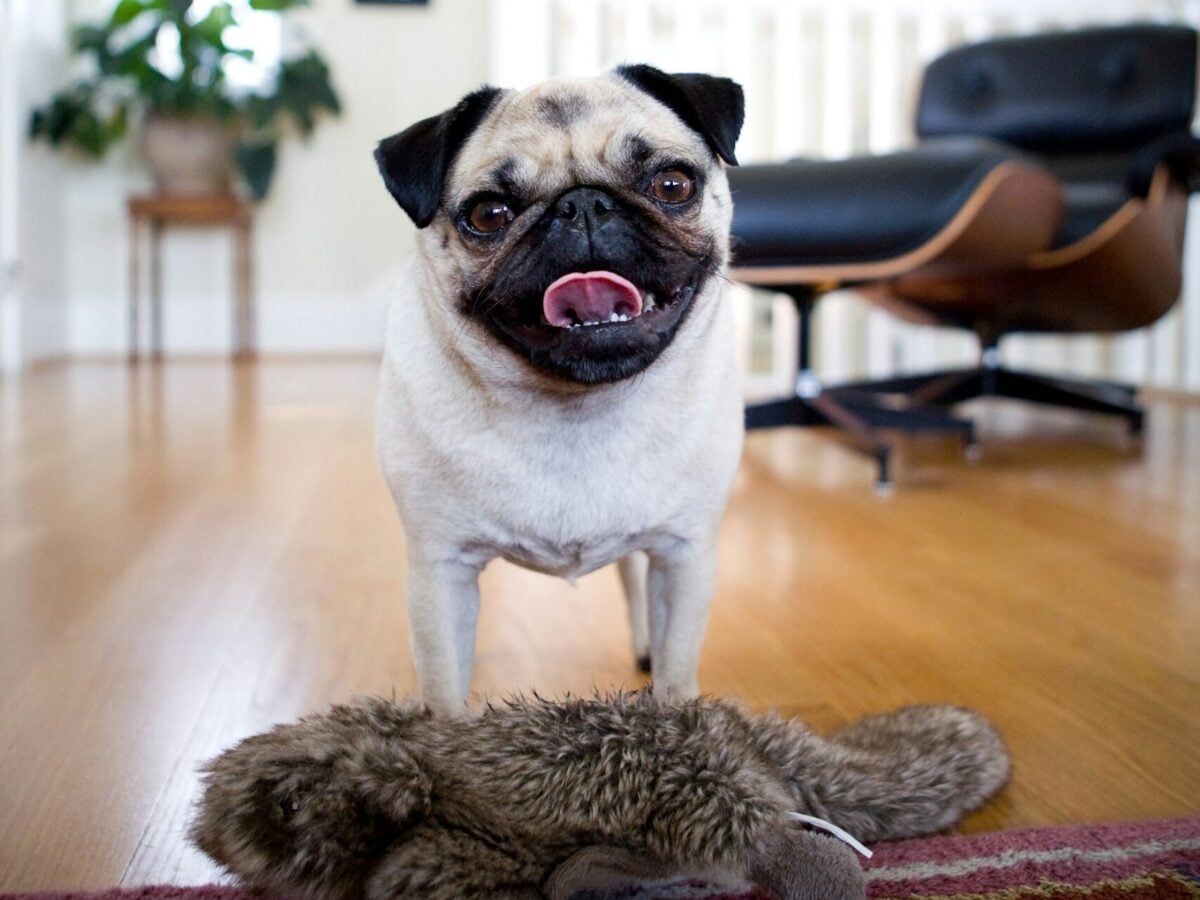
You give another pet attention, and your dog arrives carrying the squeakiest object in the house. The toy gets pushed into your hand, dropped onto your laptop, or placed directly on the other dog.
Bringing a toy can be an invitation to play, a request for interaction, or a well-practiced way to redirect your attention. In a jealousy-triggering moment, the message may simply be, “We could be doing something much better right now. Together.”
This is generally one of the more harmless interruptions, provided your dog is not guarding the toy or bullying another pet away from it.
What To Do
You do not have to reject every play request. Just avoid making interruption the guaranteed start button.
- Ask your dog to wait, and finish what you were doing.
- Initiate a short game when they are calm.
If toys create tension in a multi-dog home, put high-value ones away during shared attention time.
5. They Become Your Extra-Clingy Shadow
Your dog already follows you, but after a new partner, pet, baby, or schedule arrives, privacy officially ends. They trail you from room to room, lie against your feet, monitor every interaction, or repeatedly check your location.
Following a person everywhere can be normal for a social dog. A sudden increase may reflect uncertainty about a changing household rather than jealousy alone. Your dog may be trying to confirm that familiar access and routines still exist.
Pay attention to whether your dog can rest independently. Quiet companionship is different from pacing, panting, vocalizing, refusing food, destroying things when separated, or being unable to settle unless touching you.
What To Do
- Keep meals, walks, rest, and solo time predictable.
- Give your dog brief, intentional one-on-one attention each day, but also reward them for relaxing a few feet away.
If clinginess is sudden, intense, or paired with other behavior or health changes, talk with your veterinarian.
6. They Steal The Other Pet’s Spot
Your other dog gets up from beside you, and your pup occupies the warm space before all four paws have cleared it. A cat approaches your lap, and the dog suddenly needs to lie across it. Your partner has a favorite side of the couch; apparently, so does the dog.
Preferred resting places can provide comfort, closeness, and access to a favorite person. Concern only arises when your dog uses their body, stare, or threats to make another animal move or prevent them from returning.
In a multi-pet home, watch both animals. A quieter pet may yield without a confrontation but begin avoiding you, the couch, or an entire room.
What To Do
- Provide several comfortable resting places and never force a pet to move if the spot was originally theirs.
- Reward animals for sharing spaces instead of allowing one dog to control access.
7. They Crowd Treats, Praise, Or Greeting Time
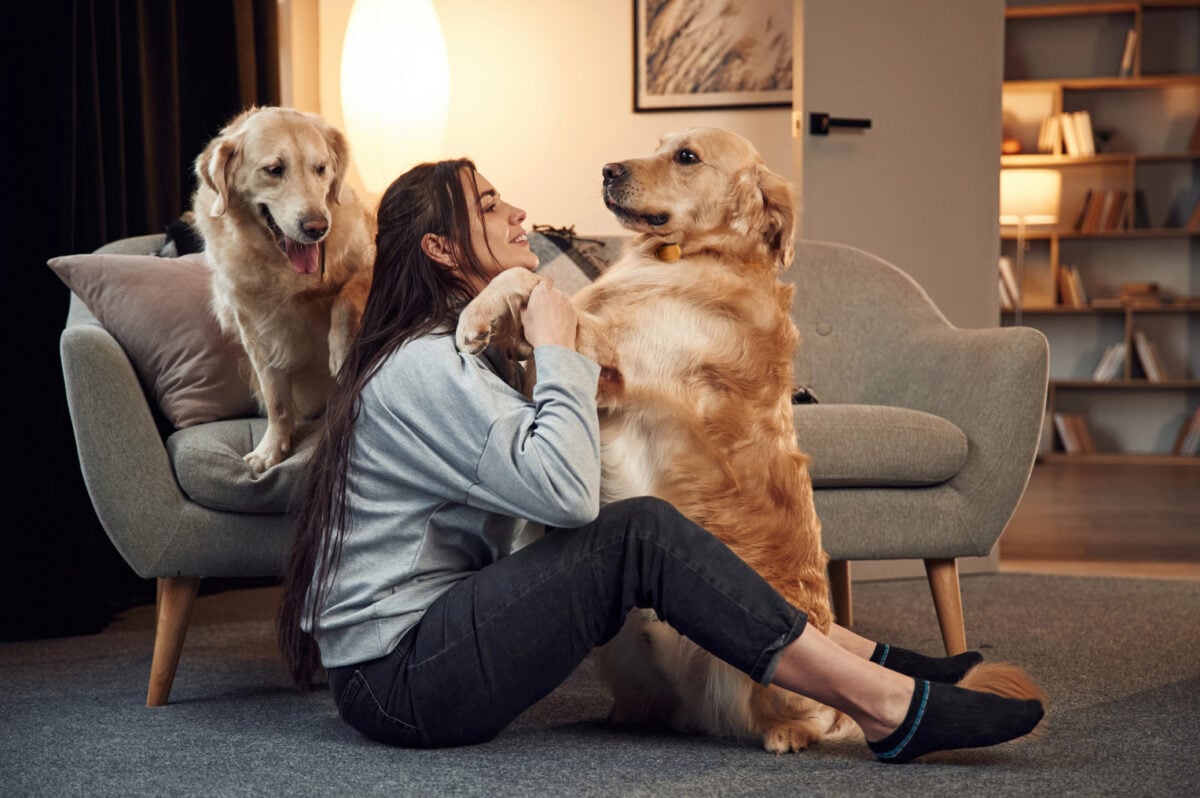
One dog hears “Good job,” and the other performs every cue they have ever learned. You walk through the door, and one dog body-checks the welcoming committee.
Competition tends to increase around valuable, predictable moments. Food matters, but so do praise, touch, door greetings, and access to you. A dog who rushes forward may simply have learned that speed wins.
Important: Crowding is not harmless if one pet repeatedly loses rewards, backs away, or looks worried. Read the entire exchange using dog body language, not just the behavior of the boldest dog.
What To Do
Add structure before excitement peaks.
- Ask each dog to wait in a separate spot, deliver treats directly rather than tossing them into a crowd, and greet pets one at a time.
- Reward the dog who waits instead of letting the one who pushes in collect all the benefits.
8. They Mouth You Or Get Physically Rowdy
When subtle bids fail, some dogs grab a sleeve, mouth a hand, jump, zoom around the room, or launch into rough play. It can feel like your dog is creating a disturbance simply because nobody was paying attention.
Mouthing is common in puppies and excitable dogs, and rowdiness can come from frustration or overstimulation. If it repeatedly happens when attention goes elsewhere, your dog may have learned that chaos brings every eye back to them.
Do not assume a playful-looking mouth is always safe. Increasing pressure, repeated grabbing, inability to disengage, or redirected biting calls for professional guidance.
What To Do
- Pause the interaction and create enough distance for arousal to drop.
- Redirect your dog to an appropriate toy or simple cue only if they can respond.
- Reward calm behavior early, before your pup reaches the point where listening is difficult.
9. They Compete With Or Police Another Pet
One dog approaches you, and the other follows. One starts playing, and the other interrupts. The bolder dog may block hallways, cut between you, hover during affection, or repeatedly force the other pet out of social interactions.
Dogs communicate with each other constantly, and not every interruption is hostile. Still, “jealousy” should not become a cute label for a one-sided pattern that leaves another animal stressed. Repeated blocking, pinning, chasing away, hard staring, or aggression deserves attention.
This is especially important when introducing a dog to a cat or adding a second dog. The resident pet may need time, space, and carefully managed positive experiences rather than immediate, unlimited access.
What To Do
- Supervise interactions, give each pet separate resources, and prevent bullying.
- Do not make pets share bowls, chews, beds, or your lap.
If tension persists, a qualified dog behaviorist can help you identify triggers and create a safer plan.
10. They Start “Acting Out” After A Routine Change
A new baby comes home, your partner moves in, or another pet joins the family. Suddenly, your previously settled dog is stealing laundry, barking during bedtime, ignoring familiar cues, or having accidents.
A major change can reduce exercise, alter sleep and bathroom schedules, introduce unfamiliar sounds, or make formerly reliable ways of getting attention less effective. Stress and unmet needs can show up as bad behavior.
House-soiling, restlessness, appetite changes, irritability, and other sudden changes can also have medical causes. Do not assume jealousy when a health issue may be involved.
What To Do
- Restore as much predictability as possible and meet your dog’s basic needs before expecting perfect behavior.
- Schedule a veterinary exam for sudden or significant changes.
- If you are expecting, begin preparing your dog for a new baby well before the baby arrives.
Is It Jealousy, Resource Guarding, Or Anxiety?
These labels can describe overlapping behaviors, but they are not interchangeable.
| What You Notice | What May Be Happening | Best First Response |
|---|---|---|
| Your dog briefly interrupts when attention goes to a possible rival, then relaxes | Jealousy or attention-seeking behavior | Reward a calm alternative and keep attention predictable |
| Your dog stiffens, blocks access, growls, snaps, or threatens when someone approaches you or another valued resource | Resource guarding | Create distance, prevent access to the trigger, and seek qualified help |
| Your dog paces, pants, trembles, hides, vocalizes, cannot settle, or struggles across many changing situations | Anxiety or stress | Reduce pressure, track triggers, and consult your veterinarian or a behavior professional |
| The behavior appears suddenly with appetite, sleep, mobility, house-training, or personality changes | Possible pain or illness | Arrange a veterinary exam |
The trigger matters. Jealousy-like behavior is especially tied to attention shifting toward a perceived rival. Resource guarding is about retaining control of something valuable, including food, toys, space, or a person. Anxiety is broader and may continue even when no rival is present.
Your dog can also experience more than one of these at once. You do not need to choose the perfect label before making the situation safer.
How To Respond Without Rewarding Pushy Behavior
The goal is not to prove to your dog that they have nothing to be jealous about, but to promote calm behavior, keep interactions predictable, and prevent competition from escalating.
1. Catch Calm Before The Interruption
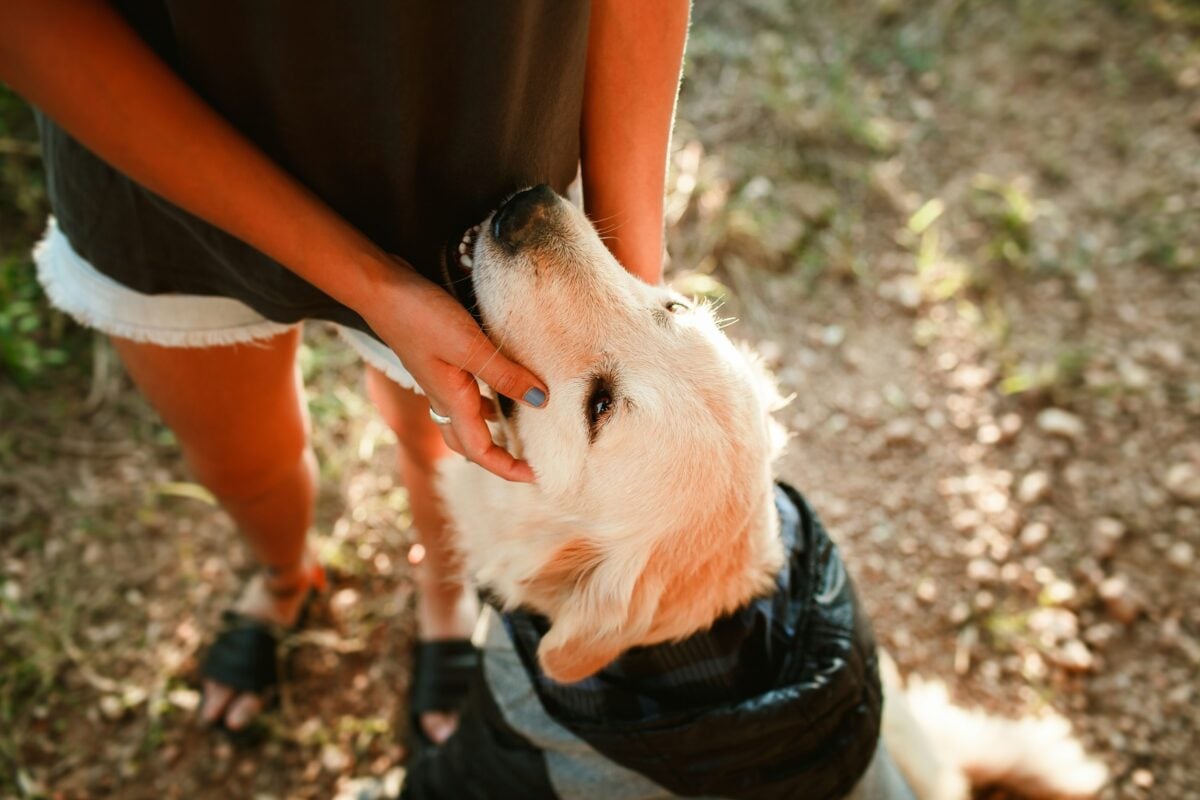
Reward your dog while they are lying quietly as you speak to your partner or pet another animal. If you wait until barking or pawing begins, you are always responding after the behavior has gained momentum.
Start with a very easy version of the trigger. Give the other pet one second of attention, then reward your dog for remaining settled. Gradually build duration.
2. Teach A Place To Be
A mat, bed, or spot beside you gives your dog a clear way to stay involved without occupying the middle. Practice when nothing exciting is happening, then use the cue around hugs, guests, treats, or another pet.
The station should not feel like exile. Reward it generously and release your dog before they become frustrated.
3. Do Not Pay The Loudest Bid First
If one dog barges in and immediately receives the treat, greeting, or affection, barging in makes sense. Pause, reset positions, and reward waiting. Make sure the quieter pet is not consistently overlooked simply because they ask more politely.
4. Give Individual Attention On Purpose
Short walks, training sessions, grooming, or cuddles with each pet can reduce frantic competition. Individual time is especially useful after adding another pet or changing the household routine.
5. Manage High-Value Moments
Separate pets for meals, chews, and other resources that create tension. Use gates, leashes, crates, or different rooms when appropriate. Management is not a training failure; it prevents animals from practicing behavior that could become dangerous.
6. Skip Punishment & Forced Sharing
Scolding may stop a visible behavior without changing the discomfort underneath it. Punishing growling is particularly risky because a growl is useful warning information.
Do not hold a dog in place while another pet approaches, force pets to share your lap, or let them “sort it out.” Increase distance and work at an intensity where everyone can stay relaxed.
When The New “Rival” Is A Partner Or Baby
A partner or baby can change where your dog sleeps, when walks happen, how much noise fills the house, and whether familiar boundaries still apply.
With a partner, agree on consistent rules and let the relationship grow through low-pressure activities. Your partner might toss treats, join walks, or cue familiar behaviors without forcing contact. Meanwhile, your dog still needs to learn that hugging or sitting together does not require intervention.
With a baby, safety comes before interpretation. Never leave a dog and baby together unsupervised, even if your dog has always been gentle. Create dog-only rest areas, pair baby-related sounds and activity with positive experiences, and preserve portions of your dog’s routine where possible.
When To Call A Professional
Seek help promptly if your dog:
- Freezes, hard-stares, growls, snarls, snaps, or bites
- Guards you, furniture, doorways, food, toys, or resting places
- Intimidates another pet or prevents them from accessing you or household spaces
- Cannot settle around a partner, child, baby, guest, or other animal
- Redirects frustration onto a person or pet
- Shows behavior that is escalating in intensity or frequency
- Develops a sudden behavior change, especially with other physical or personality changes
Start with your veterinarian to rule out pain or illness. For behavior support, look for a qualified professional who uses reward-based methods and has experience with aggression, guarding, or multi-pet households.
Frequently Asked Questions
A jealous dog can be cute — until it’s not. Below we cover the most common questions our reasons ask about jealously in dogs.
Don’t see your question? Respond in the comments, and we’ll get back to you!
Should I Pet Both Dogs At The Same Time To Prevent Jealousy?
Not necessarily. Simultaneous attention can increase crowding in some homes.
It is often easier to teach each dog to wait in a designated spot while you take turns. Reward calm waiting and make sure both dogs receive predictable attention.
Is My Dog Jealous When I Pet Another Dog?
They may be showing jealousy-like behavior, especially if they consistently try to interrupt or regain your attention around a social rival. However, pushing in can also be learned attention-seeking, excitement, or guarding. Body language and the overall pattern matter more than one isolated action.
Can Dogs Be Jealous Of A Partner?
Dogs may react when a partner changes access, physical closeness, or household routines. Give your dog appropriate one-on-one time, reward calm behavior while you and your partner interact, and avoid allowing the dog to control who can approach or touch you.
Do Dogs Get Jealous Of Babies?
Dogs can show attention-seeking, clingy, withdrawn, or stressed behavior after a baby arrives. Whether jealousy is the best label matters less than safe supervision, gradual preparation, protected rest, and predictable care.
Aggression or guarding around a baby requires immediate professional guidance.
Should I Comfort A Jealous Dog?
It is fine to support your dog, but timing matters. Calm reassurance and predictable attention can help. Immediately delivering an enthusiastic cuddle every time your dog shoves, barks, or displaces another pet may teach them to repeat that strategy.
Reward a calmer alternative whenever possible.
Your Dog Is Not Keeping Score — But They Are Paying Attention
Dogs notice who receives affection, who gets the treat, and what changes when someone new enters the picture. Their response may be a paw, a bark, an aggressively timed toy delivery, or a sudden conviction that your lap can fit one more body.
Most mild “what about me?” behavior is manageable. Your dog is communicating, experimenting with what works, and adjusting to shared attention. Respond with structure instead of guilt: notice the trigger, reward calm behavior, preserve predictable connection, and step in early if competition turns tense.
For a deeper look at what research tells us about the emotion itself, read Do Dogs Get Jealous?. If your dog’s behavior includes stiffening, threats, or control over access to you, start with our guide to resource guarding in dogs.