When you purchase through links on our site, we may earn a commission at no extra cost to you. Learn more.
If you’re deciding between a Pomeranian and a Chihuahua, you’re not just choosing a tiny dog. You’re choosing a personality, a noise level, and a lifestyle.
Table of Contents
They’re both small. They’re both confident. And they both think they’re much larger than their actual size.
Here’s how to decide which one fits your home.
Breed Comparison
- Height6-7 Inches
- Height5-8 Inches
- Weight3-7 Pounds
- Weight3-6 Pounds
- TemperamentBold, Outgoing, Attention-Loving
- TemperamentIntense, Loyal, Sometimes Wary
- EnergyAverage
- EnergyAverage
- HealthAverage
- HealthAverage
- Lifespan12-16 Years
- Lifespan14-16 Years
- Price$1,000 and Up
- Price$500 and Up
The Biggest Differences Most People Miss
People assume this is just a “fluffy vs smooth coat” choice. It’s not. The real differences show up in noise level, attachment intensity, fragility, and how much daily maintenance you’re signing up for.
1. Fragility Feels Different
Both breeds are tiny. But they’re built differently.
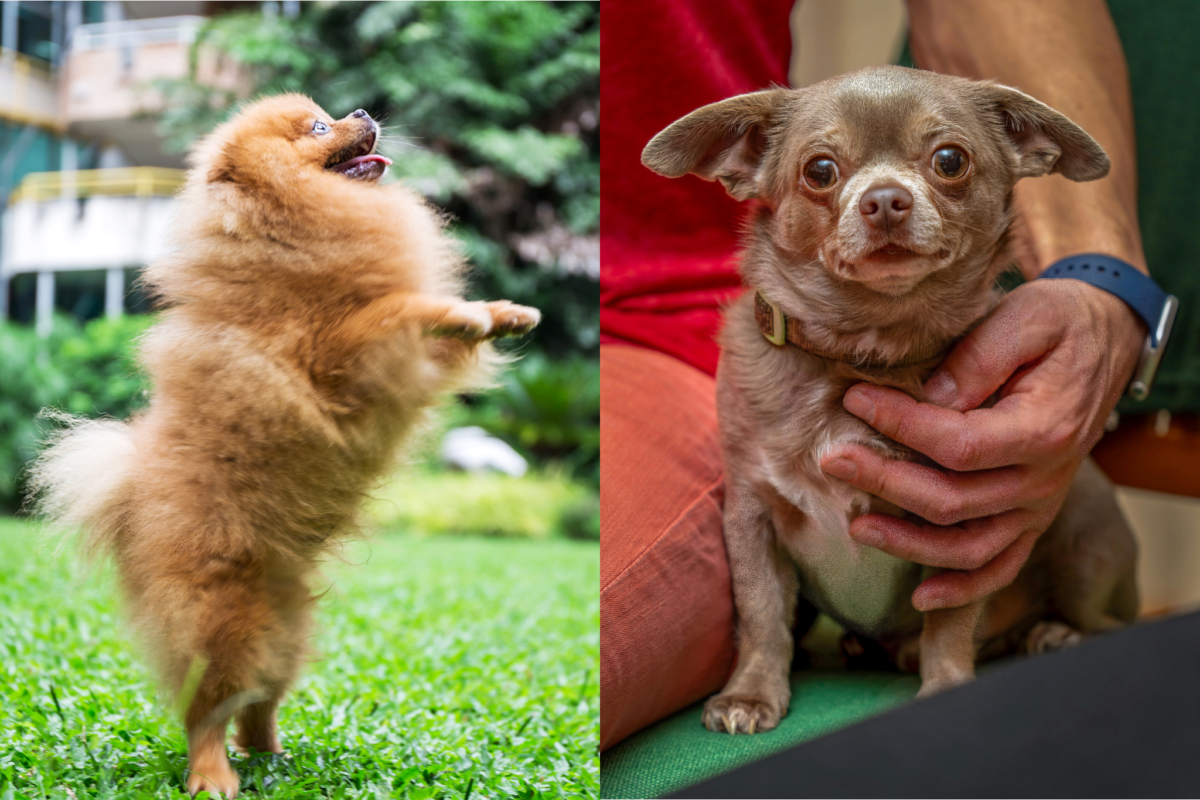
Pomeranians may look delicate, but their thicker double coat and slightly sturdier frame often give them a bit more cushioning during everyday bumps and tumbles.
Chihuahuas, especially the smaller individuals, can feel more physically fragile. Their fine bone structure means accidental drops or rough handling can lead to injuries more easily.
If you have young children or a busy household, this matters.
2. Noise Level & Alertness
Both breeds are alert. Both will tell you when something moves outside. But they alert differently.
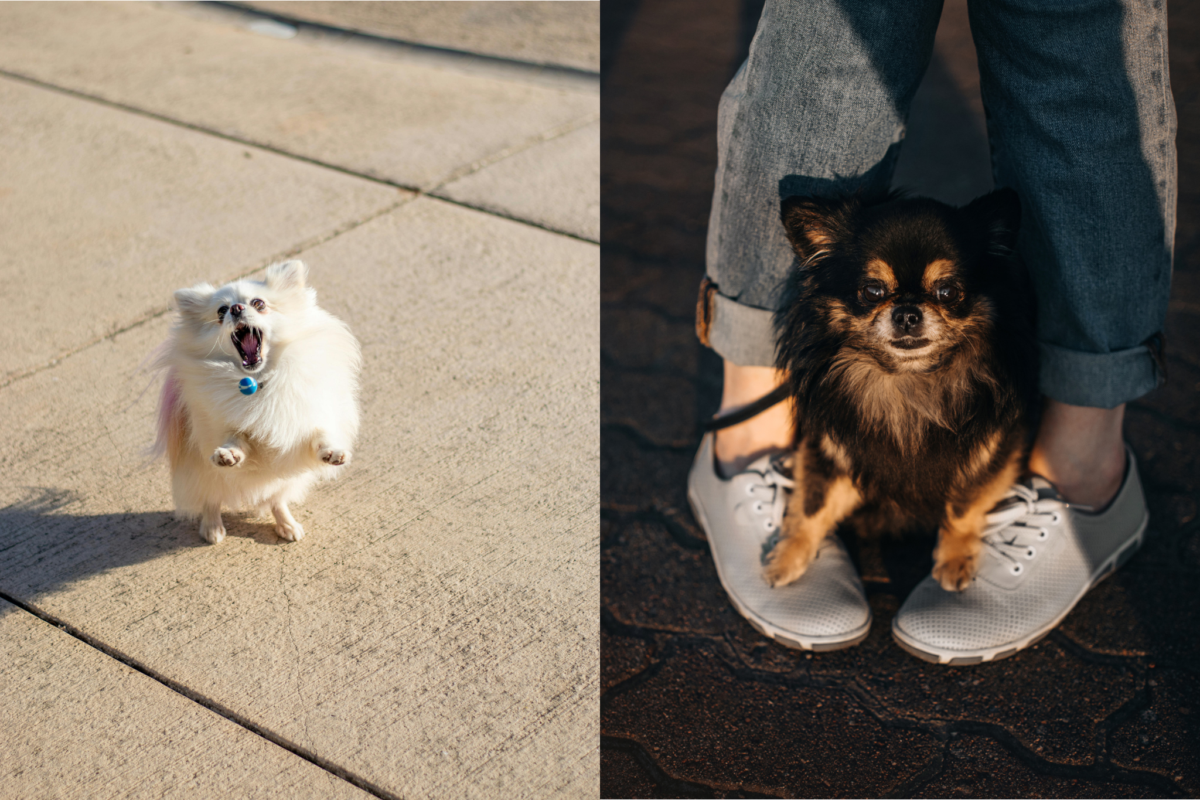
Pomeranians often bark because they’re excited, stimulated, or performing. They like being heard.
Chihuahuas tend to bark from vigilance. Their alertness can feel more intense, especially if they are strongly bonded to one person.
In apartment living, that difference can matter more than size.
3. Attachment Style: Social Butterfly vs Chosen Human
This is one of the biggest decision points.
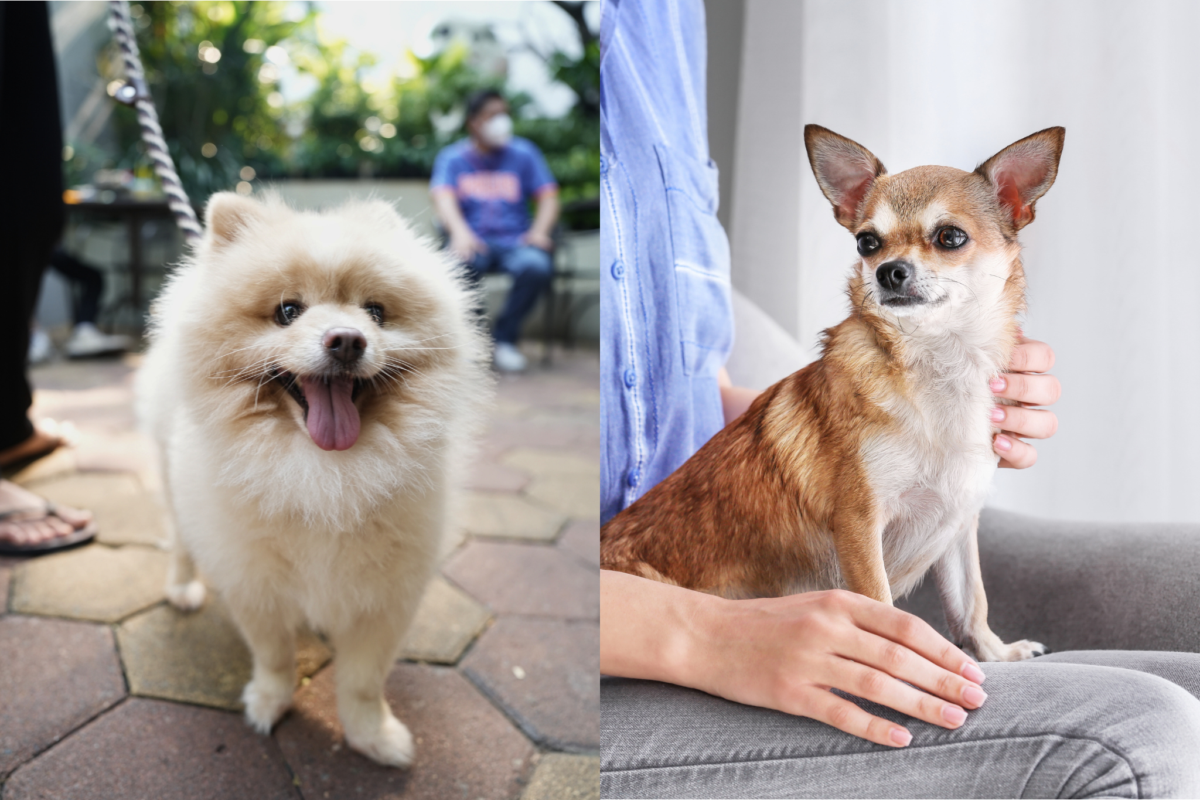
Pomeranians often enjoy multiple people. They can be charming, outgoing, and attention-seeking in a playful way.
Chihuahuas frequently form a very strong bond with one person. That bond can be beautiful, but it may also mean wariness toward strangers.
If you want a dog who happily rotates affection around the household, that leans Pomeranian. If you want a tiny dog who treats you like their person, that leans Chihuahua.
4. Grooming Commitment Is Not Equal
It may seem obvious, but this is an important reminder.
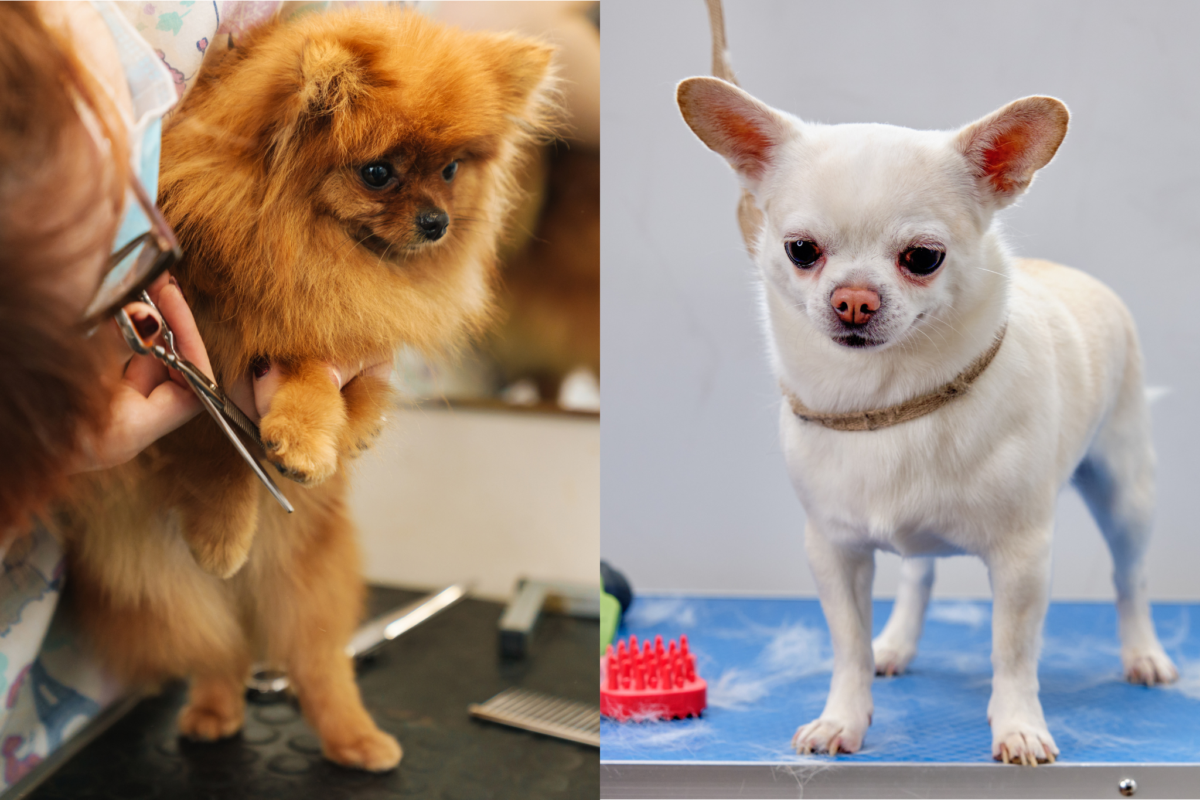
Pomeranians have a thick double coat that requires regular brushing to prevent matting and manage shedding. Professional grooming is common.
Chihuahuas, especially smooth-coated ones, are significantly lower maintenance. Even long-coated Chihuahuas typically require less intensive coat care than a Pomeranian.
If you don’t want to think about brushing schedules, that may influence your choice.
5. Cold Sensitivity
Tiny dogs lose heat quickly.
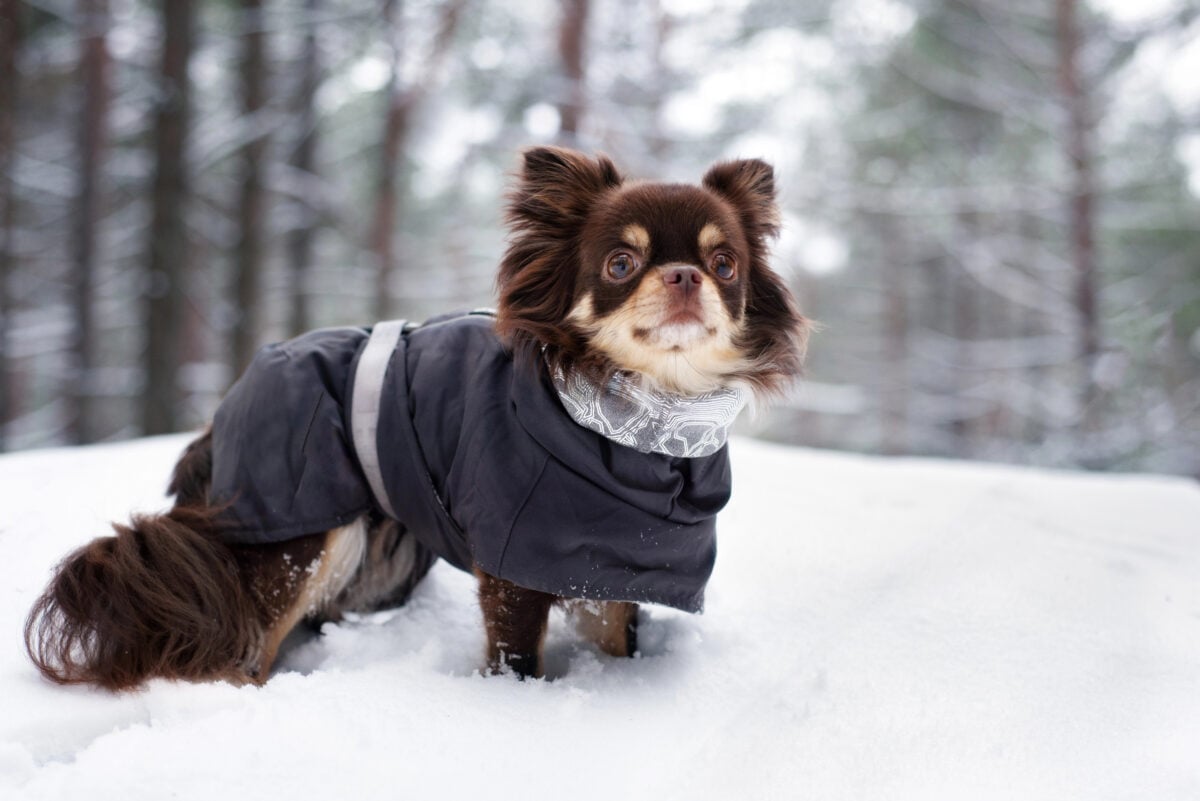
Pomeranians have natural insulation thanks to their dense undercoat. Chihuahuas, especially smooth-coated ones, often require sweaters in cooler weather and may dislike cold environments.
If you live somewhere with long winters, this matters more than people expect.
Quick Decision Guide
If you’re choosing based on:
- Lower grooming → Chihuahua
- More outgoing personality → Pomeranian
- Deep one-person bond → Chihuahua
- Fluffy presence & visual appeal → Pomeranian
- Easier first-time ownership → Pomeranian
- Apartment-living → Chihuahua
Both are confident. Both are affectionate. But the daily experience feels different.
They Look Small, But They’re Built Very Differently
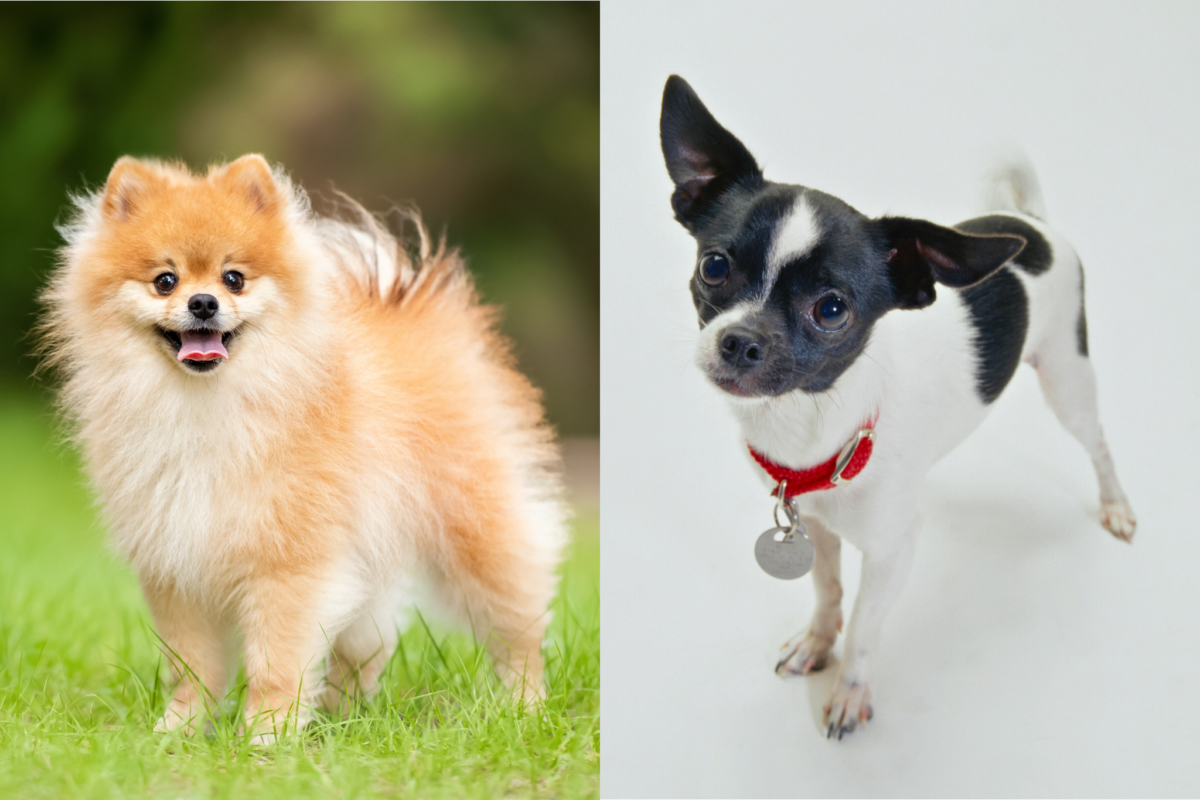
On paper, they’re both tiny. In real life? One is a walking cloud. The other is a sleek little rocket.
Fluff, color, face shape, and silhouette all change how these dogs feel in your home. If appearance matters to you — and for most people it does — here’s what separates them.
Face Shape & Expression
Their faces create very different first impressions.
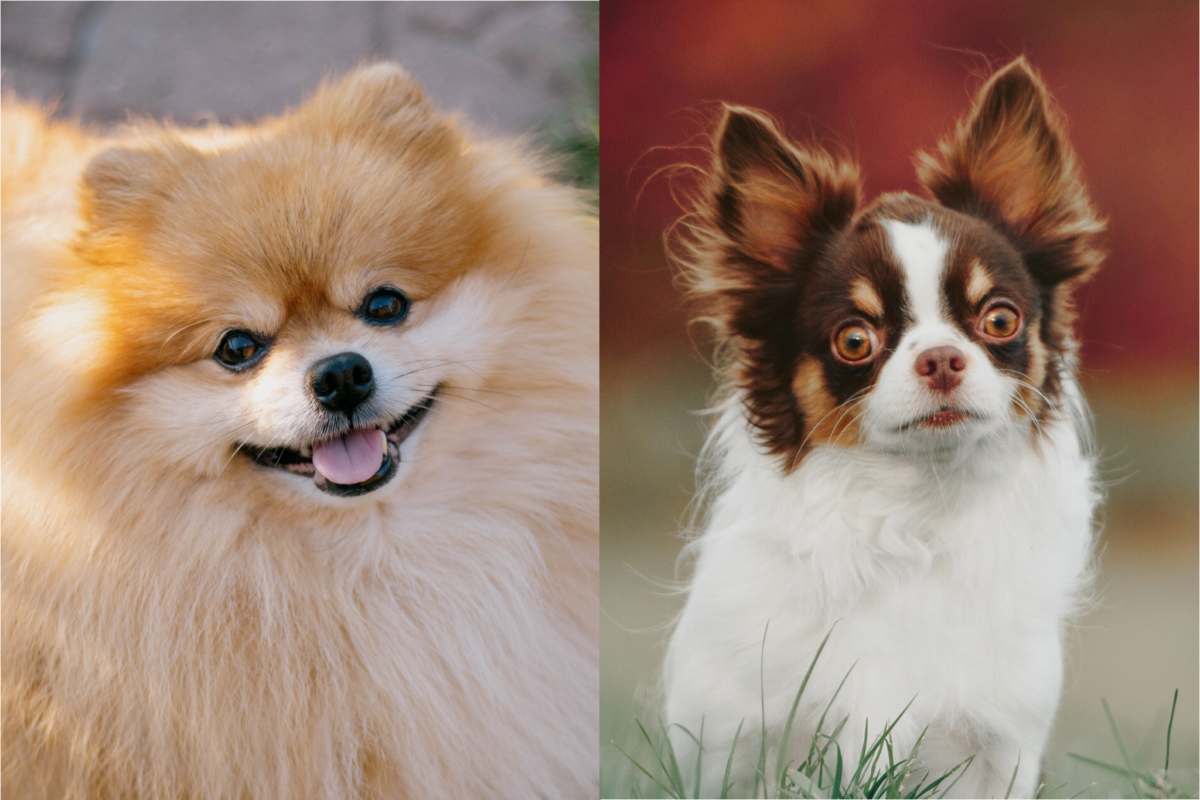
Pomeranians
- Fox-like expression
- Rounded, plush facial framing
- Shorter muzzle
- Often appear animated or cheerful
Chihuahuas
- Large, prominent eyes
- Apple head or deer head variation
- More defined facial lines
- Often appear alert and intense
Some people love the teddy-bear charm of a Pomeranian. Others are drawn to the sharp, expressive stare of a Chihuahua. You’ll likely know your preference instantly.
Size & Weight
Pomeranians and Chihuahuas overlap in weight, but they really don’t look the same size.
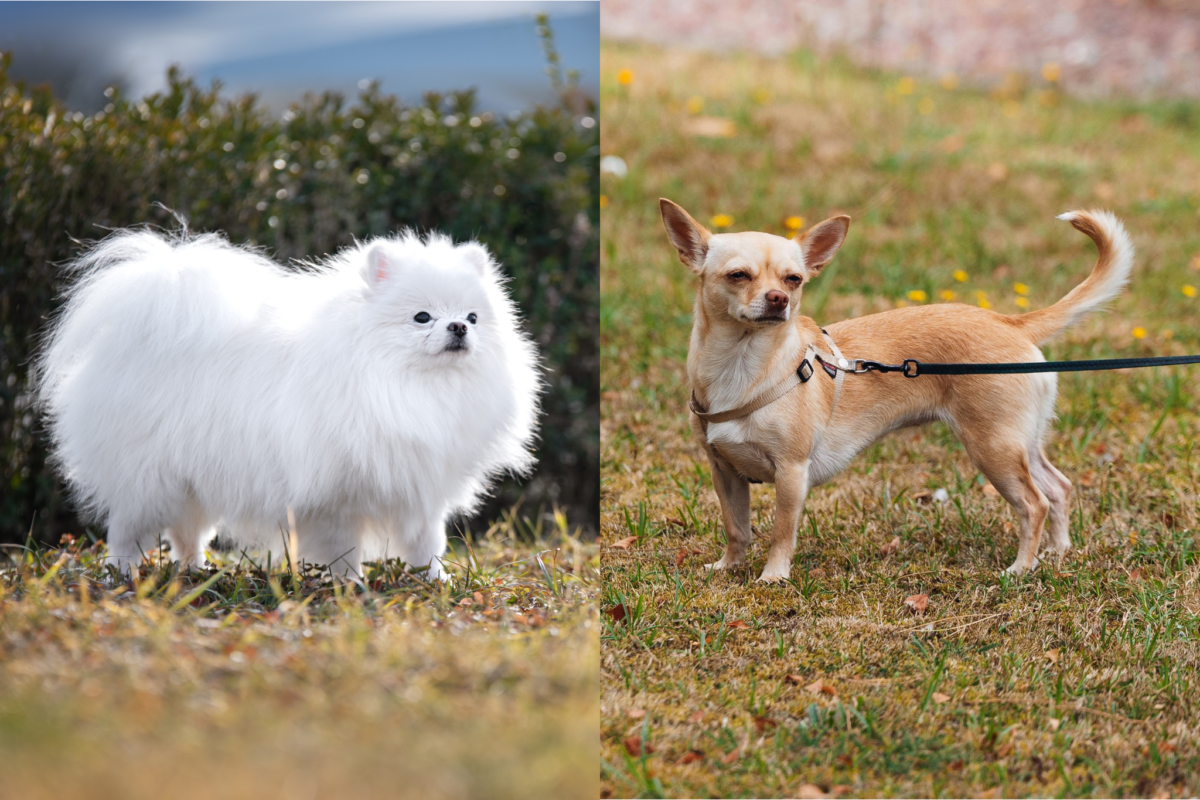
Pomeranian
- 3–7 pounds
- Thick double coat creates a rounded outline
- Often looks larger than the scale says
- Tail arches dramatically over the back
Chihuahua
- Under 6 pounds
- Narrower frame
- Looks visibly smaller due to minimal coat
- Tail varies, but silhouette stays slim
A 5-pound Pom can look almost twice the volume of a 5-pound Chihuahua. If you love a tiny dog that looks substantial, that visual difference matters.
Coat Texture & Colors
This is where the visual difference becomes unmistakable. One breed looks like a miniature show dog. The other looks sleek, sharp, and streamlined.
Pomeranian Coat Texture
Pomeranians have a thick double coat made up of:
- Dense, soft undercoat
- Longer, fluffy outer coat
- Dramatic plume tail
- Full neck ruff
The coat creates that iconic “puffball” silhouette. It adds volume, softness, and visual drama.
Seasonal shedding is heavy, and regular brushing is required to maintain the shape.
Chihuahua Coat Texture
Chihuahuas come in two coat types:
Smooth Coat
- Short, sleek, close to the body
- Minimal brushing required
- Highlights their fine frame
Long Coat
- Feathering, licensed via ears, chest, legs, and tail
- Still lighter and less dense than a Pomeranian
- Lower grooming commitment overall
Even long-coated Chihuahuas never reach the volume of a Pom. Visually, they remain more defined and angular.
Color Variety: Both Offer Range — But It Looks Different
Pomeranians are recognized in a wide variety of colors, including: orange (most iconic), cream, white, black, blue, chocolate, red, and fawn.
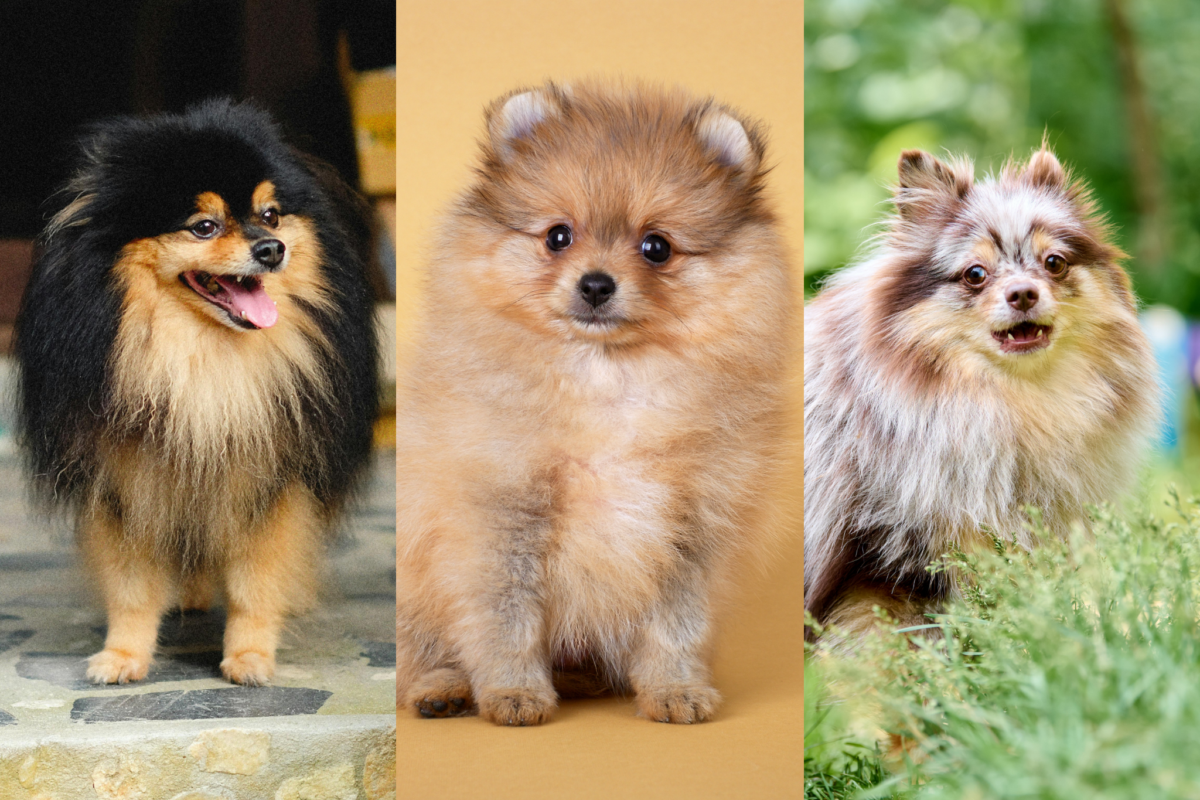
Common patterns for Pomeranian coats include:
- Brindle: Subtle striping pattern over a base color
- Parti-color: A white base coat with large patches of other color
- Merle: A marbled or mottled pattern that lightens random areas of the coat
- Sable: Dark-tipped hairs over a ligher base color
Chihuahuas coat come in virtually every color and coat pattern, including spotted, brindle, merle, and sable.
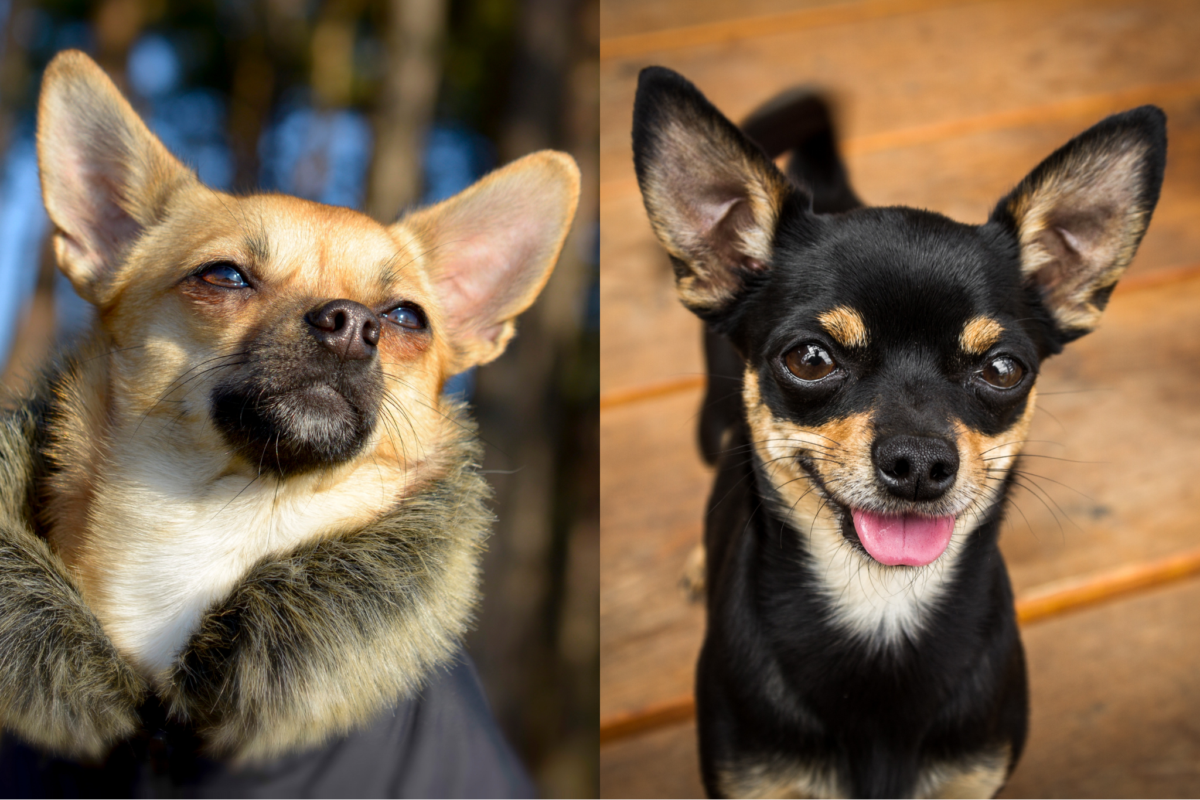
Common Chihuahua facial patterns include:
- Mask: Black or blue shading around the muzzle and sometimes the eyes. Most often seen on fawn, red, or cream Chihuahuas.
- Markings: Patches on the chest, paws, face, or tail tip. These may appear as small accents or larger, more dramatic areas depending on the pattern.
Temperament: Same Confidence, Very Different Delivery
Pomeranians tend to be outgoing, expressive, and socially aware. They enjoy attention. Many seem to lean into it.
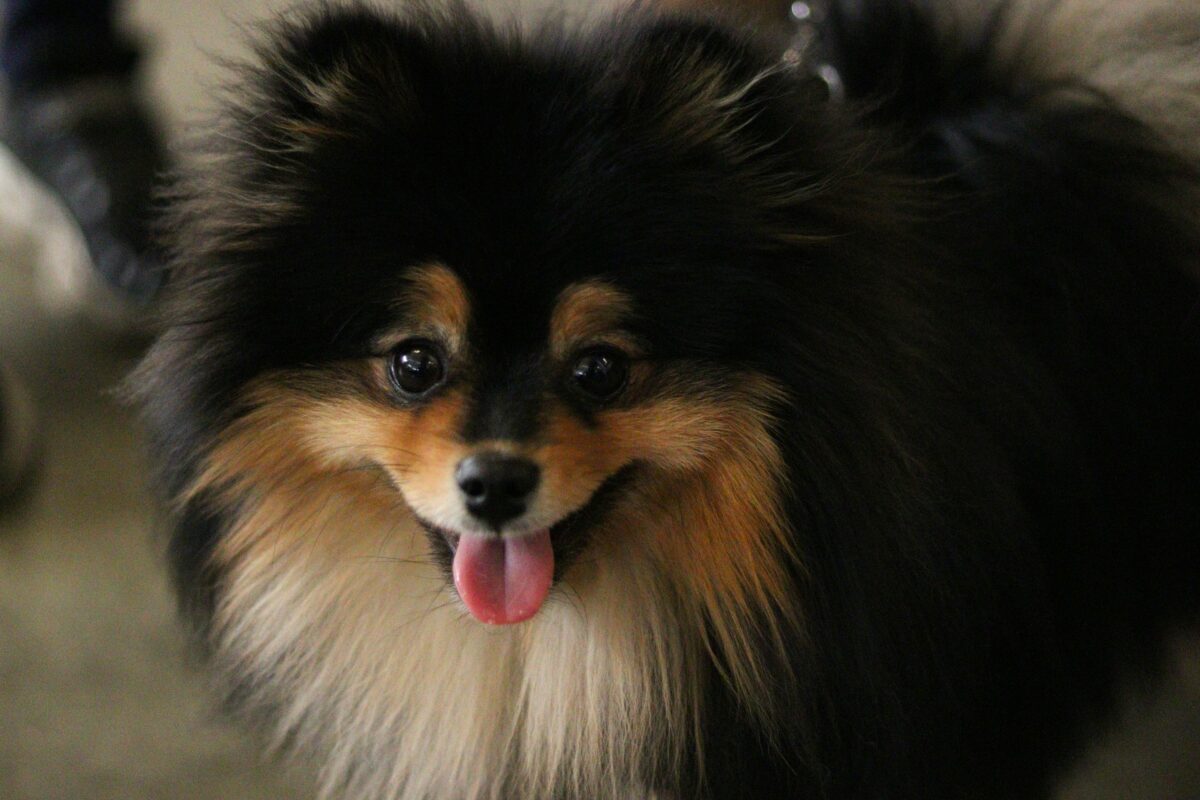
Common Pomeranian personality traits include:
- Alert and lively
- Playful and animated
- Curious about new people
- Quick to respond to stimulation
They often greet guests enthusiastically and enjoy being part of household activity. A well-socialized Pomeranian usually wants to participate in the room — not guard it.
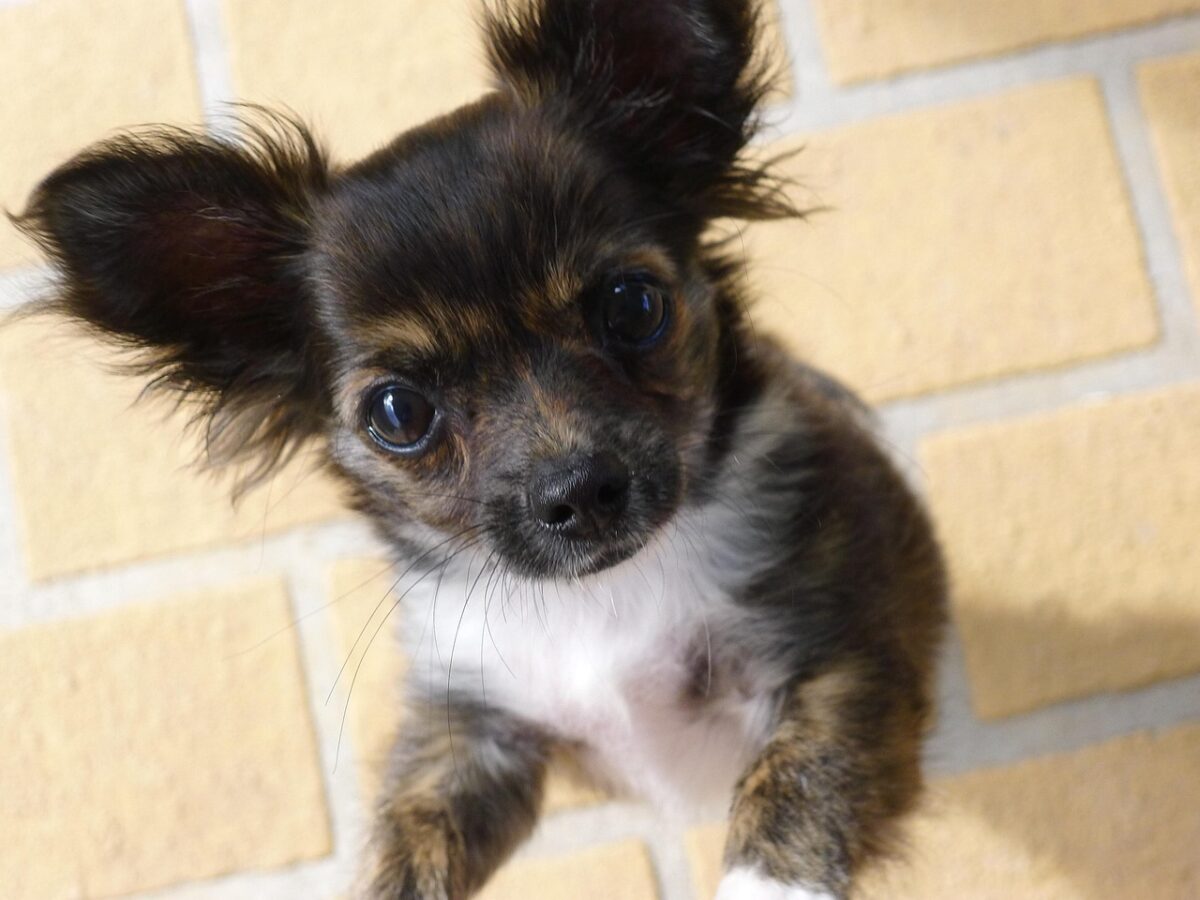
Chihuahuas are deeply bonded dogs. Many form an exceptionally strong attachment to one person in particular.
Common Chihuahua personality traits include:
- Fiercely loyal
- Watchful and protective
- Highly aware of their environment
- More selective with strangers
That bond can be incredibly rewarding. But it also means Chihuahuas may be slower to warm up to unfamiliar people or new situations without early socialization.
Quick Takeaway: Big Ego vs One-Person Bond
If you want:
- Outgoing, attention-loving personality → Pomeranian
- Deep, singular loyalty → Chihuahua
- More socially adaptable behavior → Pomeranian
- Stronger protective instinct → Chihuahua
Energy & Daily Life: What Living With One Actually Feels Like
Daily life with a Pomeranian feels different from daily life with a Chihuahua, especially when it comes to noise, stimulation, and independence.
Barking & Alertness
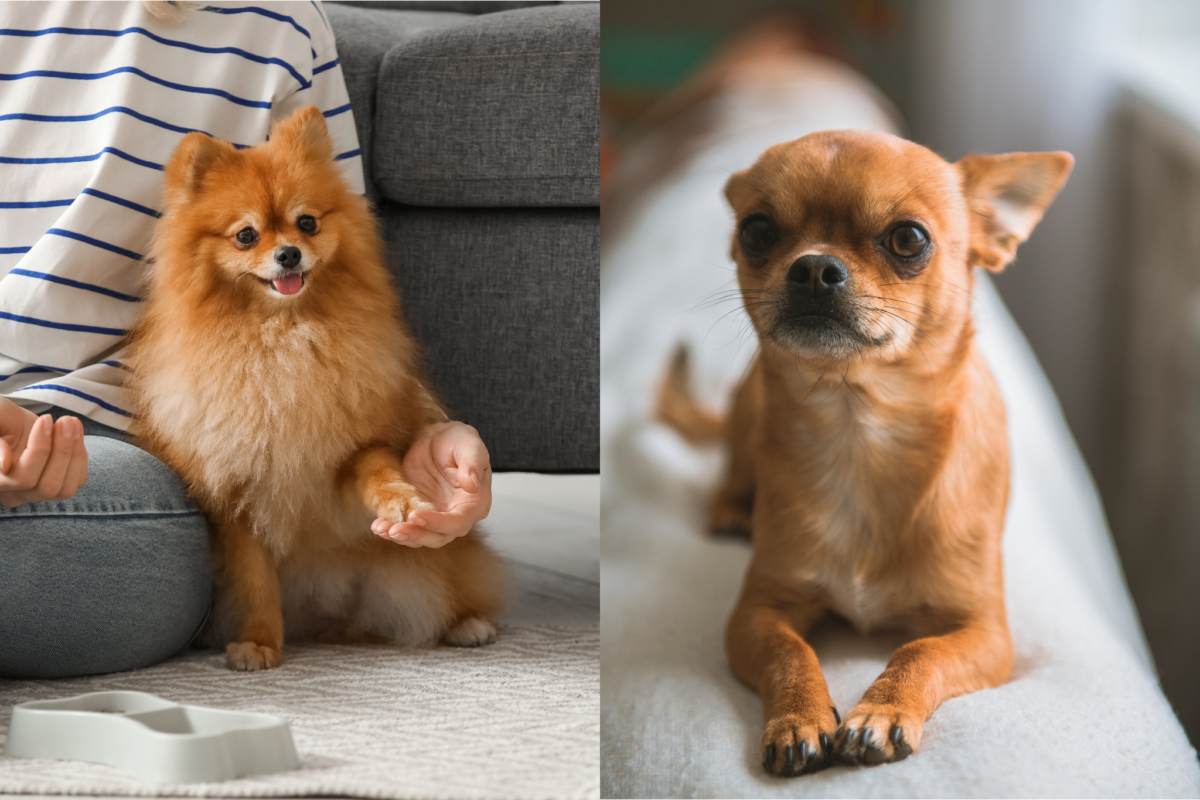
Both breeds are bold, alert, and vocal. The difference is motivation.
Pomeranians
- Often bark out of excitement or stimulation
- React to movement, visitors, or activity
- Tend to be expressive and vocal
They like to participate in what’s happening and are very vocal about it. Keep this in mind if you live somewhere with noise restrictions (of if you’re simply not a fan of vocal dogs).
Chihuahuas
- More likely to bark from vigilance
- Monitor their environment closely
- Can become reactive if under-socialized
Chihuahuas are more likely to react because they feel responsible for monitoring their surroundings. When poorly socialized, that vigilance can tip into defensiveness.
Early training and exposure matter for both breeds, but especially for Chihuahuas.
What That Feels Like At Home
With a Pomeranian, daily life often feels:
- Busy
- Entertaining
- Social
With a Chihuahua, daily life often feels:
- Intimate
- Comfortable
- Watchful
Both are velcro dogs, so expect lots of cuddles and minimal alone time.
Exercise Needs (Yes, Even Tiny Dogs)
They are small, but they are not sedentary.
Pomeranians
- Moderate energy for a toy breed
- Benefit from daily walks and mental stimulation
- Enjoy play sessions and interaction
Chihuahuas
- Short bursts of energy
- Often satisfied with shorter walks
- Thrive on lap time combined with light activity
Neither requires intense exercise, but both require consistent engagement. Boredom can increase barking in both breeds.
Separation Tolerance
Pomeranians typically tolerate short absences reasonably well when properly trained. Chihuahuas can struggle more with separation if deeply bonded to one person.
That intense attachment can translate into anxiety if routines are inconsistent.
If you work long hours away from home, early independence training is especially important with a Chihuahua.
Training: Smart vs Stubborn Isn’t The Whole Story
Both Pomeranians and Chihuahuas are intelligent. But intelligence does not always equal easy training. The difference comes down to motivation, consistency, and early boundaries.
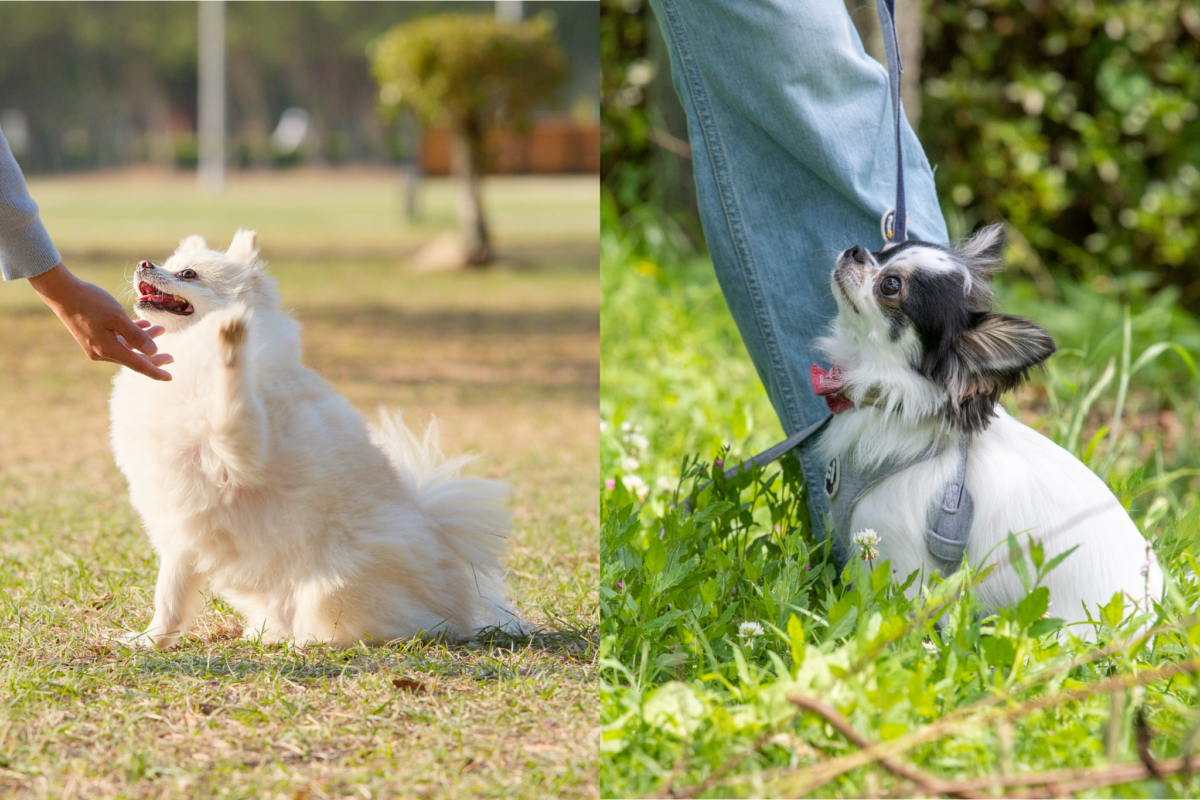
Motivation Differences
Pomeranians are often eager to engage. They tend to respond well to:
- Praise
- Attention
- Food rewards
- Interactive training sessions
Many enjoy the process itself. Training can feel like a game to them.
Chihuahuas are intelligent but more selective. They tend to respond best when:
- They trust the handler
- The bond is strong
- Training is calm and consistent
They train for their person.
Neither breed benefits from harsh correction. Both respond best to positive reinforcement.
Socialization Is Non-Negotiable
This is especially important for toy breeds. Early exposure to different people, dogs, sounds, and environments dramatically affects adult behavior.
Pomeranians without socialization may become overly vocal or attention-demanding. Chihuahuas without socialization may become wary or reactive.
Small Dog Syndrome Explained
“Small dog syndrome” isn’t a medical condition. It’s a training gap.
Because these dogs are tiny, owners sometimes:
- Excuse barking
- Avoid leash training
- Skip boundary-setting
- Carry them instead of correcting behavior
Over time, that lack of structure can lead to reactivity or defensiveness.
Both Pomeranians and Chihuahuas benefit from:
- Clear rules
- Consistent routines
- Calm leadership
When treated like capable dogs instead of accessories, both breeds can be well-mannered companions.
The Health Tradeoffs Nobody Explains Clearly
Both Pomeranians and Chihuahuas are long-lived breeds. But “long lifespan” does not mean “no health concerns.”
Pomeranian Health Patterns
Pomeranians are generally sturdy for toy dogs, but their coat and structure come with specific watch points.
Common concerns include:
- Luxating patella (slipping kneecap)
- Tracheal collapse (airway weakness common in small breeds)
- Dental disease (crowded small jaws)
- Alopecia X (coat loss in some individuals)
- Heart conditions (including mitral valve disease)
Their thick coat can also hide weight gain, so routine body condition checks are important.
Lifespan typically ranges from 12–16 years, with many living longer under good care.
Chihuahua Health Patterns
Chihuahuas are one of the longest-living dog breeds, but their delicate structure comes with its own risks.
Common concerns include:
- Dental disease (very common due to small mouth size)
- Luxating patella
- Tracheal collapse
- Hypoglycemia (especially in puppies)
- Heart disease in later years
Because of their fine bone structure, injury from falls or rough handling is also a real consideration. In homes with small children or large active dogs, supervision matters.
Lifespan typically ranges from 14–17 years, and many individuals exceed that.
Dental Reality (For Both)
Toy breeds are especially prone to dental disease. Small jaws mean crowded teeth, which can trap plaque and accelerate tartar buildup.
Daily brushing, dental chews, and regular veterinary cleanings are not optional luxuries for these breeds. They’re preventative care.
Grooming & Maintenance
The Pomeranian’s thick double coat requires significantly more upkeep. Their coat traps loose undercoat, so brushing is not optional if you want to avoid tangles and excess fur around the home.
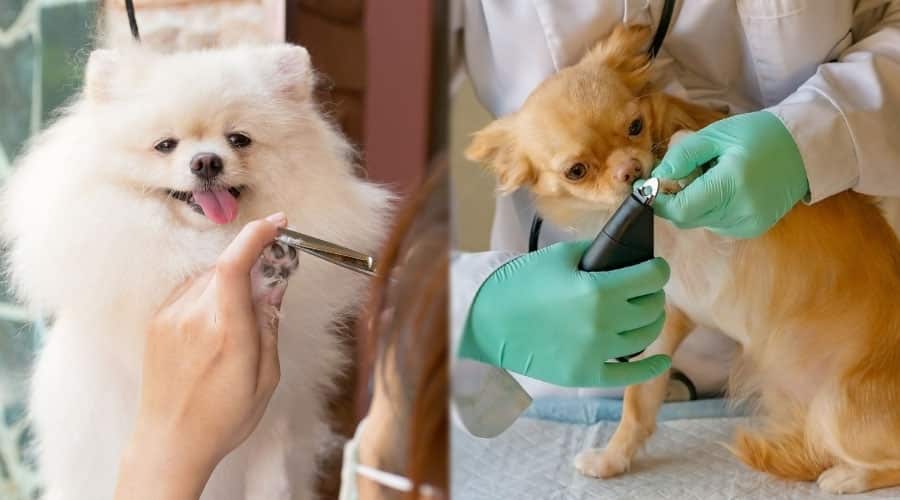
A Chihuahua’s grooming depends on coat type. Smooth coats are the lowest maintenance, but even long-coated Chihuahuas require far less overall grooming time than a Pomeranian.
Shedding Differences
Both breeds shed. The experience, however, is different.
Pomeranians
- Heavy seasonal shedding
- Undercoat “blowouts” in spring and fall
- Higher shed volume due to dense double coat
Chihuahuas
- Light year-round shedding
- Smooth coats shed visibly but in small amounts
- Significantly less total coat volume
Because of their dense undercoat, Pomeranians generally produce more noticeable fur around the home. Chihuahuas may shed consistently, but the overall volume is much lower.
Puppy Prices, Breeders & Rescue Reality
Both Pomeranians and Chihuahuas are widely available in the United States. The difference is cost, availability, and how often you’ll find them in rescue.
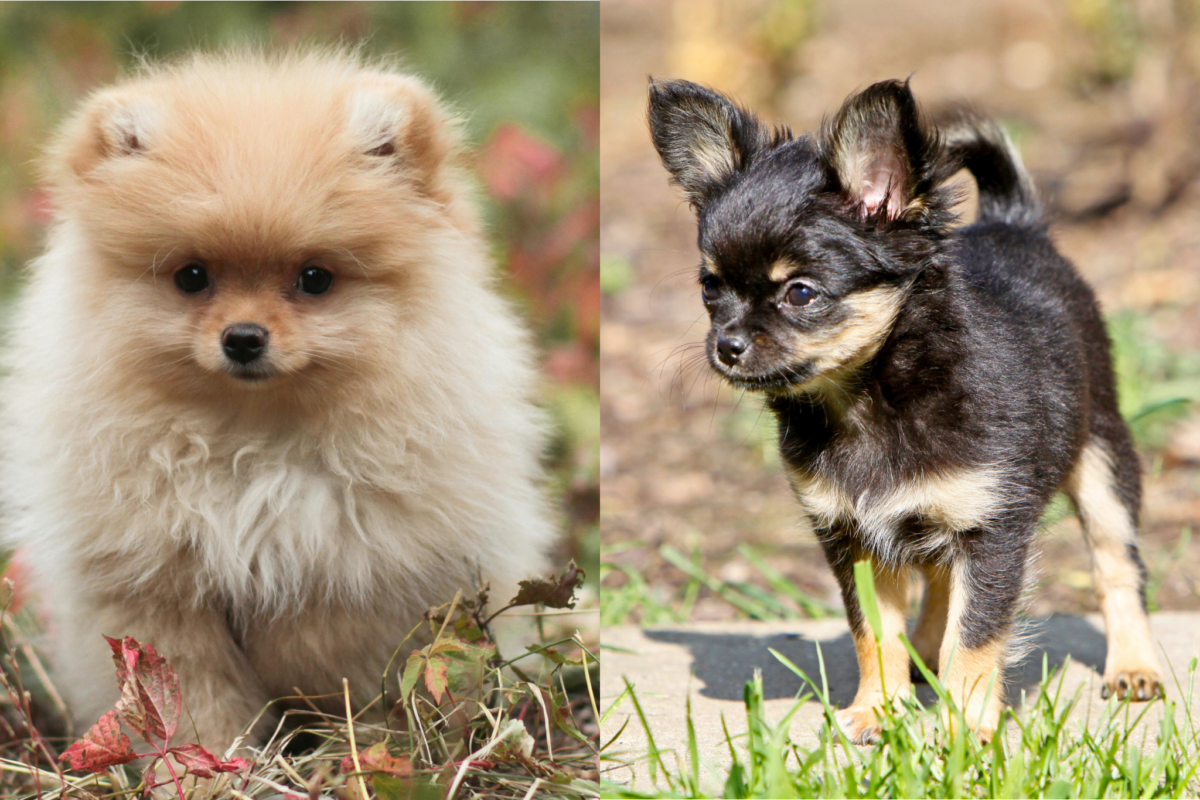
Pomeranians are consistently in demand, especially in rare colors or “teacup” sizes. The price of a Pomeranian starts at $1,000 and can be as much as $6,000, depending on factors such as color, breeder location, and lineage.
Because Pomeranians are popular but not as overbred as Chihuahuas, they are less commonly found in shelters compared to Chihuahuas.
Chihuahuas are one of the most common toy breeds in both breeders and rescues. Typical price from a reputable breeder starts at $500. Color and markings, especially merle or rare combinations, may increase breeder pricing.
Which Breed Is Right For You?
Both breeds are tiny, confident, and long-lived. The right choice comes down to the kind of personality, maintenance level, and emotional dynamic you want in your home.
A Pomeranian May Be A Better Fit If…
- You love a fluffy, dramatic look
- You enjoy an outgoing, attention-seeking personality
- You want a dog that adapts socially to multiple people
- You don’t mind regular brushing and seasonal shedding
- You prefer expressive over protective
Pomeranians bring presence. Even at five pounds, they feel like a full personality in the room.
A Chihuahua May Be A Better Fit If…
- You prefer a sleek, lower-maintenance coat
- You want an intensely loyal, one-person bond
- You appreciate a watchful, protective temperament
- You want less overall shedding volume
- You value ultra-portable size
Chihuahuas bond deeply. When they choose you, they choose you.
Frequently Asked Questions
If you’re stuck between fluff and fierce loyalty, you’re not alone. These are the most common questions future owners ask when deciding between a Pomeranian and a Chihuahua.
Don’t see your question? Respond in the comments, and we’ll get back to you!
Which Is More Aggressive, A Pomeranian Or Chihuahua?
Neither breed is inherently aggressive. Chihuahuas are often perceived as more aggressive because they form intense bonds and may be wary of strangers. Pomeranians are more likely to bark out of excitement or stimulation.
With proper training and socialization, both breeds can be well-mannered companions.
Which Breed Is Better For Families With Kids?
Pomeranians often adapt more easily to multi-person households. Chihuahuas can do well in families, but they may bond strongly to one person and require supervision with very young children due to their small size and fragility.
Do Pomeranians Shed More Than Chihuahuas?
Yes. Pomeranians have a dense double coat that sheds heavily during seasonal changes. Chihuahuas shed year-round in smaller amounts, with significantly less total coat volume.
Are Pomeranians Or Chihuahuas Easier To Train?
Consistency and positive reinforcement are key for both. Pomeranians are often more socially motivated and may engage readily in training. Chihuahuas are highly trainable but can be more selective and bond-driven.
Still Deciding? Other Small Breeds Worth Considering
If you’re drawn to toy breeds but aren’t completely sold, you might also consider:
- Yorkshire Terrier (Yorkie) — Similar bold personality with a silky, lower-shedding coat.
- Maltese — Affectionate, elegant, and lighter in personality intensity.
- Toy Poodle — Highly intelligent with a low-shedding coat.
- Papillon — Alert, agile, and surprisingly athletic for their size.
Each brings a slightly different balance of coat care, energy, and temperament.