When you purchase through links on our site, we may earn a commission at no extra cost to you. Learn more.
Poodles and Labradoodles can look surprisingly alike. Both are smart, affectionate, and popular with families. So why might one be a much better fit for your lifestyle than the other?
Table of Contents
At first glance, choosing between them might seem like splitting hairs. But differences in shedding, grooming needs, energy levels, and temperament can make a big difference in everyday life. And some of those differences might surprise you.
From unpredictable Labradoodle coats to the different sizes and personalities of Poodles, we’ll break down what it’s really like to live with each dog, including grooming costs, exercise needs, family compatibility, and which might be easier to manage.
Breed Comparison
- HeightToy: up to 10″; Miniature: 10–15″; Standard: over 15″
- HeightVaries by parent breeds and size
- WeightApproximately 4–70 lbs, depending on size
- WeightVaries widely; often 30–65+ lbs for larger crosses
- TemperamentIntelligent, affectionate, alert
- TemperamentFriendly, intelligent, often outgoing
- EnergyModerate to high; varies by size and individual
- EnergyModerate to high; often playful and active
- HealthBreed-specific inherited health risks
- HealthInherited risks from both parent breeds
- LifespanApproximately 10–18 years
- LifespanOften approximately 12–15 years
- Puppy Prices$1,000+
- Puppy Prices$1,000+
What Most People Get Wrong About Poodles and Labradoodles
One of the biggest misconceptions is that Labradoodles are simply Poodles with a little Labrador personality mixed in. But combining two breeds doesn’t guarantee the best traits of both.
A Labradoodle might inherit a low-shedding, curly coat or one that sheds considerably more than expected. And while Poodles are often seen as fancy, high-maintenance dogs, they’re athletic, intelligent companions that need plenty of mental and physical activity.
The biggest differences aren’t always obvious from appearance alone. What matters is how each dog’s grooming needs, energy, temperament, and personality fit into your everyday routine.
Poodle vs Labradoodle: At a Glance
The biggest differences between Poodles and Labradoodles aren’t just about size or appearance. Coat predictability, grooming needs, and lifestyle compatibility can make one a much better fit for your household.
Poodle
Poodles are smart, athletic, and affectionate companions. Available in Toy, Miniature, and Standard sizes, they offer more predictable physical characteristics, although their daily needs vary.
- Coat: Very low shedding, but requires consistent grooming.
- Training: Highly intelligent and responsive to training.
- Activity: Needs daily exercise and mental stimulation.
- Best fit: Owners who want more predictability in size and coat type.
Labradoodle
Labradoodles are often friendly, playful, and eager to spend time with their families. However, their size, coat, and temperament can vary considerably.
- Coat: Shedding and grooming needs can be unpredictable.
- Training: Typically eager to learn, though some are easily distracted.
- Activity: Often energetic and needs regular exercise and interaction.
- Best fit: Active households comfortable with a wider range of potential traits.
Breed Origins & Purpose
A dog’s history can reveal a lot about its behavior today. Both Poodles and Labradoodles have working-dog roots, but they were developed for different purposes, which helps explain some of their traits and care needs.
Poodle Breed History
Despite their strong association with France, Poodles have roots in Germany, where they were developed as skilled water retrievers. Their name comes from the German word pudel, meaning “to splash,” a nod to their original role retrieving waterfowl.
Poodles rank among the smartest dog breeds and excel in obedience, agility, and other canine sports. That working heritage helps explain why they thrive on training, physical activity, and mental challenges.

Today, Poodles come in three sizes: Standard, Miniature, and Toy. All three share the breed’s signature intelligence and trainability, although their size and individual personalities can create very different ownership experiences.
Labradoodle Breed History
The Labradoodle has a much more recent history. In 1989, Australian guide dog breeder Wally Conron crossed a Labrador Retriever with a Poodle in hopes of producing a guide dog for a visually impaired woman whose husband had dog allergies.
The goal was to combine the Labrador Retriever’s working temperament with the Poodle’s intelligence and low-shedding coat. One puppy from the original litter, Sultan, successfully became a guide dog, and the Labradoodle soon gained popularity as a family companion.
Today, Labradoodles are among the most recognizable Poodle mixes, although their appearance, temperament, and grooming needs can vary considerably.
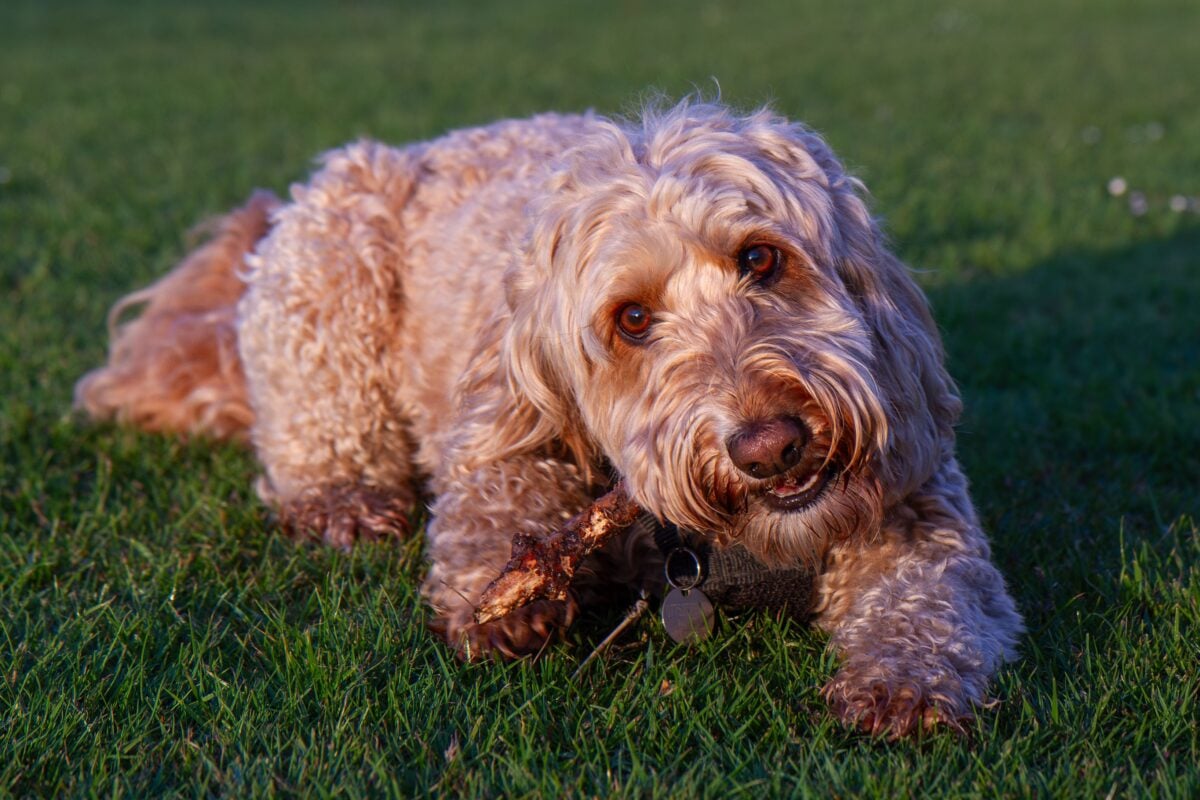
Labradoodles are commonly described by generations based on their parentage:
- F1: First-generation cross between a purebred Labrador Retriever and a purebred Poodle, approximately 50% of each.
- F1B: Typically an F1 Labradoodle bred back to a purebred Poodle, producing puppies with approximately 75% Poodle ancestry.
- F2: A second-generation cross, typically between two F1 Labradoodles, with potentially wide variation in inherited traits.
These labels describe ancestry, not guarantees. Even Labradoodles with more Poodle ancestry may shed, and their coat type, grooming needs, and temperament can vary.
Unlike Poodles, Labradoodles are not recognized as a standardized breed by major kennel clubs such as the American Kennel Club. This makes understanding the individual dog’s parents, breeding history, and health testing especially important.
Size, Appearance & Coat Differences
Poodles and Labradoodles can look surprisingly similar, but their size, coat texture, and grooming needs can be quite different. Knowing what to expect can help you choose a dog that fits your home, lifestyle, and maintenance budget.
Height & Weight Differences
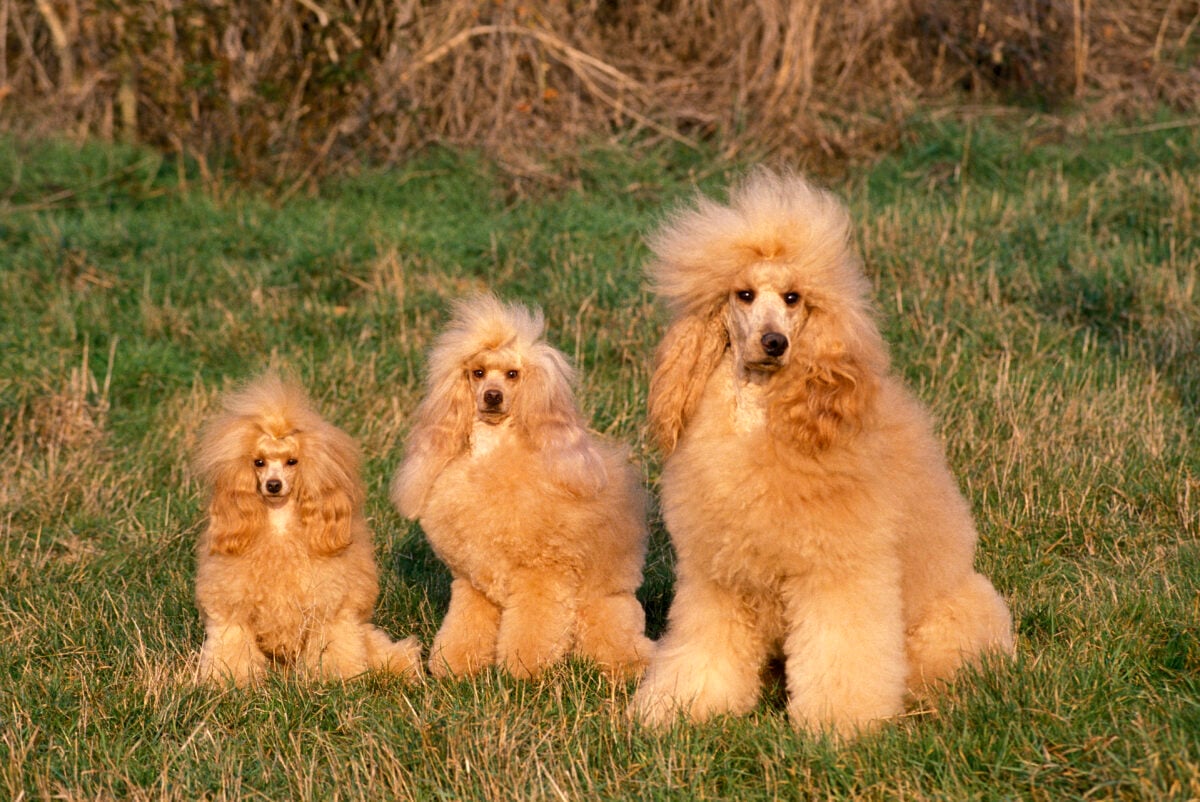
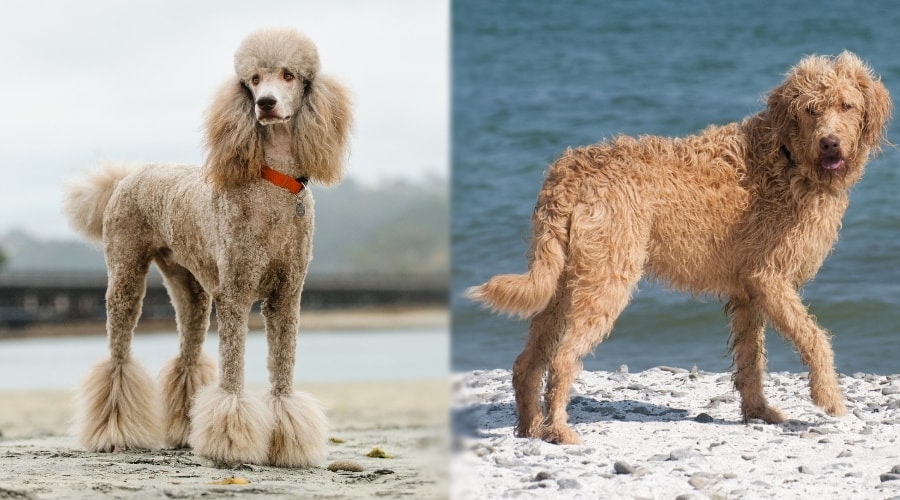
Poodles come in three recognized sizes, making their adult size generally more predictable than that of a Labradoodle.
- Toy Poodle: 10 inches or under; typically 4–6 pounds. Their small size makes them easier to accommodate in compact homes, but they need gentle handling, especially around young children.
- Miniature Poodle: Over 10 to 15 inches; typically 10–15 pounds. A middle-ground option for owners who want a smaller, active companion without the size of a Standard.
- Standard Poodle: Over 15 inches; typically 40–70 pounds. These larger, athletic dogs need regular exercise, and their size can mean higher food and grooming expenses.
Labradoodles come in a wider range of sizes, depending on their Poodle parent and breeding history. Smaller Labradoodles may weigh under 30 pounds, while larger ones can exceed 65 pounds. Even puppies from the same litter may mature into noticeably different sizes.
Miniature Labradoodles appeal to owners looking for a smaller companion, while larger Labradoodles are often compared to Goldendoodles because of their similar appearance.
If adult size is a major deciding factor, Poodles generally offer more predictability. With a Labradoodle, it’s especially important to ask about the parents’ sizes and previous litters.
Coat Textures Explained: Curly, Wavy, and Straight
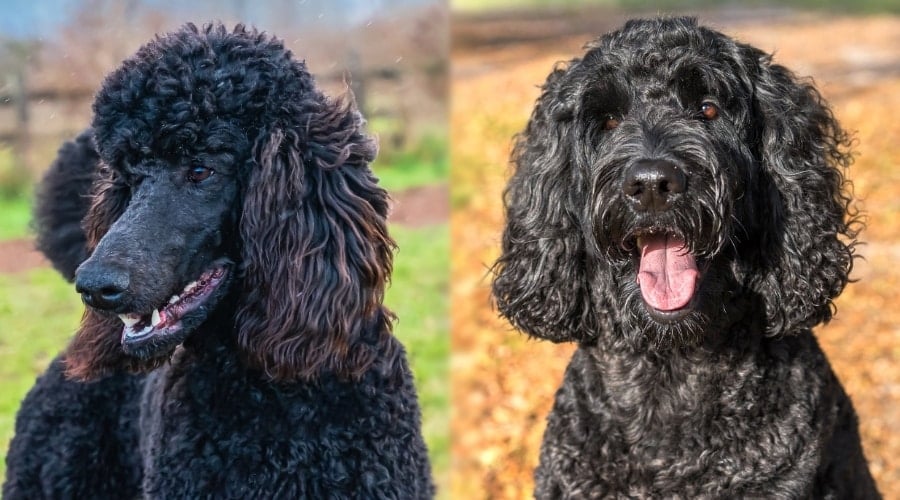
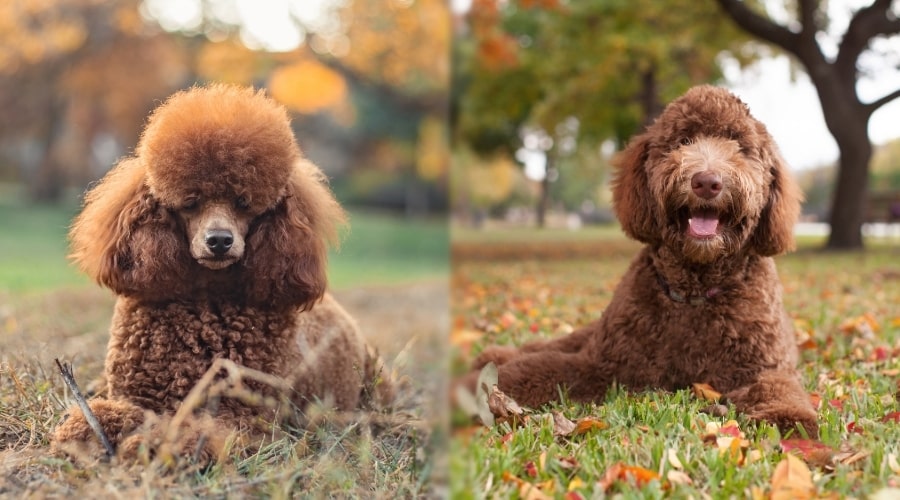
Poodles have dense, curly coats that shed very little. Labradoodles can inherit a much wider range of coat textures, and those differences affect both shedding and grooming.
- Curly coats: Closest to the traditional Poodle coat. They tend to shed less visibly but need frequent brushing and regular trimming to prevent tangles and mats.
- Wavy coats: Often called fleece coats, these have loose waves and the classic shaggy doodle appearance. Shedding varies, and the coat can still mat easily, especially as it grows longer.
- Straight coats: More similar to a Labrador’s coat. They generally shed more noticeably but may need less intensive detangling and trimming than curly or wavy coats.
Less shedding doesn’t mean less grooming. Some of the lowest-shedding coats require the most maintenance.
Why Labradoodle Coats Are So Unpredictable
A Labradoodle’s puppy coat isn’t always a reliable preview of its adult coat. As the dog matures, its fur may become thicker, curlier, or more prone to tangling. Coat characteristics can also differ significantly between littermates.
Breeders may use backcrosses, such as F1B Labradoodles, to increase the likelihood of certain coat characteristics. However, having more Poodle ancestry doesn’t guarantee a low-shedding or hypoallergenic dog.
If shedding or allergies are a major concern, don’t rely on appearance or generation labels alone. Ask about the parents’ coats, grooming requirements, and shedding history, and spend time around the individual dog when possible.
Color Variations
Both Poodles and Labradoodles come in a wide range of colors. Labradoodles are commonly seen in cream, apricot, chocolate, black, and charcoal, while Poodles also come in recognized shades such as white, silver, blue, gray, and café-au-lait.
Coat color doesn’t determine a dog’s personality or grooming needs, although lighter coats may show dirt and stains more easily. Texture, length, and density matter much more than color when it comes to brushing and maintenance.
Temperament & Personality Differences
Poodles and Labradoodles are both intelligent, affectionate dogs, but their personalities can differ in ways that affect everyday life. Understanding their typical traits can help you choose a companion that matches your household and routine.
Poodle Temperament Traits
Poodles are known for their intelligence, attentiveness, and strong connection with their owners. They’re quick learners who thrive on mental challenges, consistent training, and plenty of interaction.
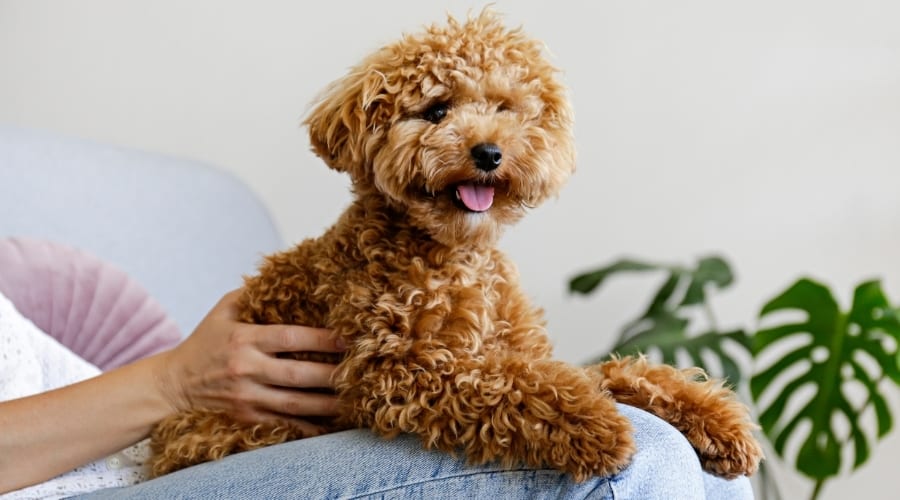
Common Poodle temperament traits include:
- Highly intelligent and quick to learn
- Attentive and responsive during training
- Loyal and affectionate with family members
- Sometimes reserved or cautious around strangers
- Sensitive to harsh tones and training methods
Poodles are playful, athletic companions that enjoy being involved in family life. Despite their elegant reputation, they’re active dogs that need more than a comfortable spot on the couch to stay happy.
Labradoodle Temperament Traits
Labradoodles are often outgoing, affectionate, and enthusiastic companions. Many inherit the Labrador’s playful nature and the Poodle’s intelligence, although individual personalities can vary considerably.

Common Labradoodle temperament traits include:
- Friendly and social with familiar people and dogs
- Affectionate and eager for attention
- Playful, energetic, and sometimes exuberant
- Intelligent and responsive to positive training
- Often happiest when included in family activities
Their enthusiasm can be a wonderful match for active households, but younger Labradoodles may need help learning to settle down and greet people calmly. Early socialization, consistent training, and regular exercise can make a big difference.
Which Dog Handles Being Home Alone Better?
Both breeds can form strong bonds with their owners, and neither is naturally guaranteed to be more independent.
Poodles are highly people-oriented dogs. Although some are comfortable relaxing on their own, others prefer staying close to their families and may struggle when left alone for extended periods.
Labradoodles are often equally attached to their people. Their sociable nature can make long stretches without interaction challenging, particularly for young dogs that haven’t learned to settle independently.
For either breed, gradually practicing short absences, providing appropriate enrichment, and establishing a consistent routine can help build confidence. If you work long hours away from home, plan for exercise, companionship, and breaks rather than assuming one breed will automatically cope better.
Poodle vs Labradoodle: Which Fits Your Lifestyle?
Both Poodles and Labradoodles can make wonderful family dogs, but the best match depends on your household’s activity level, available time, and expectations. Neither breed is automatically better with children or easier for busy owners.

Which Is Better For Families With Kids?
Labradoodles are often playful, affectionate, and enthusiastic about family activities. Many enjoy active households with children, but their excitement can lead to jumping, rough play, or accidentally knocking over smaller kids.
Poodles can be equally loving family companions. However, size makes a big difference. Toy Poodles need gentle handling, while Miniature and Standard Poodles may be better suited to families looking for a sturdier, active playmate. Individual temperament and socialization matter more than breed stereotypes.
For either dog, early training, respectful interactions, and supervision around young children are essential.
Are Poodles Or Labradoodles Better For First-Time Owners?
Both can be excellent choices for first-time dog owners who are prepared for an active, intelligent companion. Poodles generally offer more predictability in adult size and coat type, which can make planning for grooming, exercise, and living arrangements easier.
Labradoodles are often eager to please and enjoy learning, but their size, energy, and temperament can be less predictable. Some are relatively easygoing, while others need considerable training and activity to manage their enthusiasm.
Neither is a low-maintenance breed. First-time owners should be ready for consistent training, regular grooming, and daily physical and mental exercise.
Which Fits A Busy Household Or Apartment?
Your schedule and ability to meet a dog’s needs matter more than whether you choose a Poodle or Labradoodle. Both enjoy companionship and may struggle with extended periods alone, particularly without appropriate training and enrichment.
Toy and Miniature Poodles can adapt well to apartment life, provided they receive enough activity and mental stimulation. Standard Poodles and larger Labradoodles can also live in smaller spaces, but their size and exercise needs require more planning.
For singles, seniors, and busy families, consider the individual dog’s energy level, size, and care requirements. A smaller or calmer adult dog may be easier to manage than an energetic puppy, regardless of breed.
The bottom line: Choose based on the dog’s individual personality and your ability to provide training, exercise, grooming, and companionship, not simply which breed has a reputation for being more family-friendly.
Exercise & Mental Stimulation Needs
Both Poodles and Labradoodles are active, intelligent dogs. Meeting their exercise and enrichment needs isn’t just about preventing restlessness—it’s also key for healthy behavior, confidence, and overall well-being.

Daily Physical Exercise Requirements
Poodles are active, athletic dogs that enjoy brisk walks, fetch, swimming, and activities that challenge their minds. Standard Poodles often have the stamina for longer outings, while Toy and Miniature Poodles benefit from exercise suited to their size and abilities.
Labradoodles are often energetic, playful companions that enjoy walks, games of fetch, swimming, and outdoor adventures. Larger, athletic Labradoodles may need substantial daily activity, but their exercise requirements vary with size, age, and individual temperament.
As a general starting point:
- Poodles: Many healthy adults benefit from around 30–60 minutes or more of daily physical activity, adjusted for size, age, and fitness.
- Labradoodles: Many healthy adults need approximately 60 minutes of daily exercise, although some require more and others less.
Watch your dog’s behavior rather than relying on the clock alone. A dog that struggles to settle may need more enrichment or an adjustment to its routine, while excessive panting, lagging behind, or reluctance to exercise can signal that an activity is too demanding.
Mental Enrichment & Boredom Prevention
Physical exercise is only part of the equation. Both Poodles and Labradoodles are clever dogs that benefit from activities that challenge their brains. Without enough enrichment, some dogs find their own entertainment, often involving your shoes, furniture, or backyard.
- Training refreshers: Short daily sessions (5–10 minutes) practicing cues or learning a new trick
- Food puzzles: Puzzle feeders, snuffle mats, or scatter-feeding to slow down meals
- Scent work: Hide-and-seek games with treats or toys
- Interactive play: Tug, fetch, or structured games with rules and breaks
Both breeds benefit from a mix of physical play and problem-solving activities. Rotate games and toys to keep things interesting, and pay attention to what motivates your individual dog. Some love scent games, while others would happily play fetch all afternoon.
Consequences of Under-Exercise
When either breed doesn’t get enough activity or enrichment, the results are usually predictable—and avoidable.
- Destructive chewing or digging
- Excessive barking or attention-seeking behavior
- Restlessness, pacing, or difficulty settling indoors
- Jumping, mouthing, or “wild” behavior during greetings
- Difficulty settling when left alone, although separation-related anxiety can occur in either breed and isn’t necessarily caused by insufficient exercise.
The goal isn’t to exhaust your dog every day. It’s to provide a healthy balance of movement, mental challenges, and downtime. Both breeds need opportunities to exercise and learn, but teaching them to relax is just as important as keeping them busy.
Trainability & Intelligence
Both Poodles and Labradoodles are highly intelligent dogs, but intelligence doesn’t always translate to ease of training in the same way. How each breed learns, stays motivated, and responds to structure can feel very different in day-to-day training.
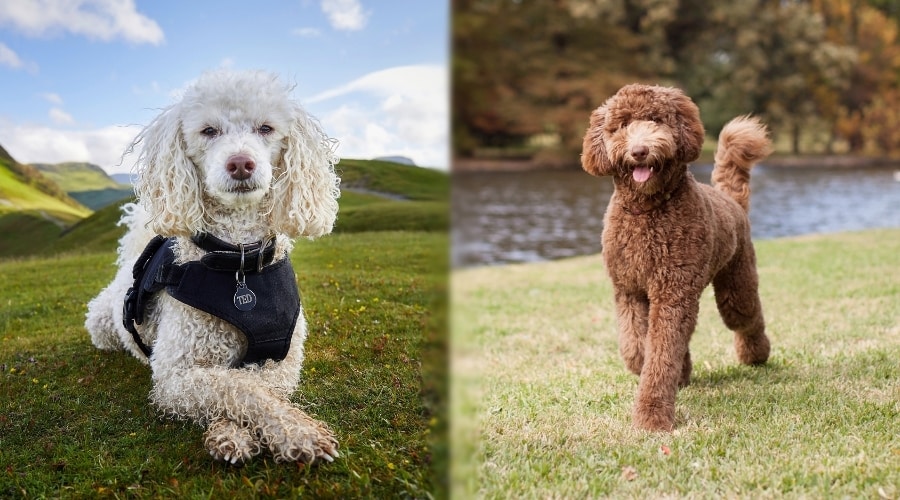
Ease of Training Comparison
Poodles are often considered one of the easiest breeds to train. They pick up commands quickly, retain information well, and tend to enjoy learning for its own sake. However, their intelligence can work against them if training becomes repetitive or unengaging.
Labradoodles are typically intelligent, eager learners, although their enthusiasm can sometimes make training sessions a little chaotic. Some need extra practice with impulse control, especially during adolescence. Like Poodles, they benefit from consistent expectations and positive reinforcement.
Best Training Methods for Each Breed
Both breeds respond best to positive reinforcement, but the emphasis differs slightly.
- Poodles: Respond well to consistent, reward-based training and mentally challenging activities. Short, varied sessions help maintain their interest and enthusiasm.
- Labradoodles: Benefit from upbeat, reward-based training with plenty of praise and play. Consistency and clear boundaries are key to managing excitement.
Harsh corrections can backfire with both breeds, leading to anxiety or resistance rather than progress.
Socialization Needs
Early and ongoing socialization is important for both breeds, but for different reasons.
- Poodles can be naturally reserved, so positive exposure to new people, environments, and dogs helps prevent shyness or aloofness.
- Labradoodles are usually eager to socialize but may become overly excitable without guidance. Teaching calm greetings and polite behavior early helps prevent jumping and overstimulation.
Socialization should focus on building confidence and teaching calm behavior, not forcing your dog to greet everyone. Positive, controlled experiences are more valuable than overwhelming encounters with unfamiliar people or dogs.
Crate Training Considerations
Crate training can help either breed develop a comfortable, secure resting space. The key is to introduce the crate gradually and create positive associations, rather than assuming one breed will adjust faster than the other. Start with short, rewarding sessions and increase the duration as your dog becomes comfortable. Our puppy crate training guide walks through the process step by step.
Choose an appropriately sized crate that allows your dog to stand, turn around, and lie down comfortably. For growing puppies, an adjustable divider can help manage excess space during house training. Never use the crate as punishment or force a distressed dog to remain inside.
Health, Lifespan & Genetic Risks
Both Poodles and Labradoodles can live long, healthy lives, but neither is free from inherited health risks. Understanding their potential health problems and the importance of responsible breeding can help you make a more informed decision and prepare for future veterinary expenses.
Common Health Issues in Poodles
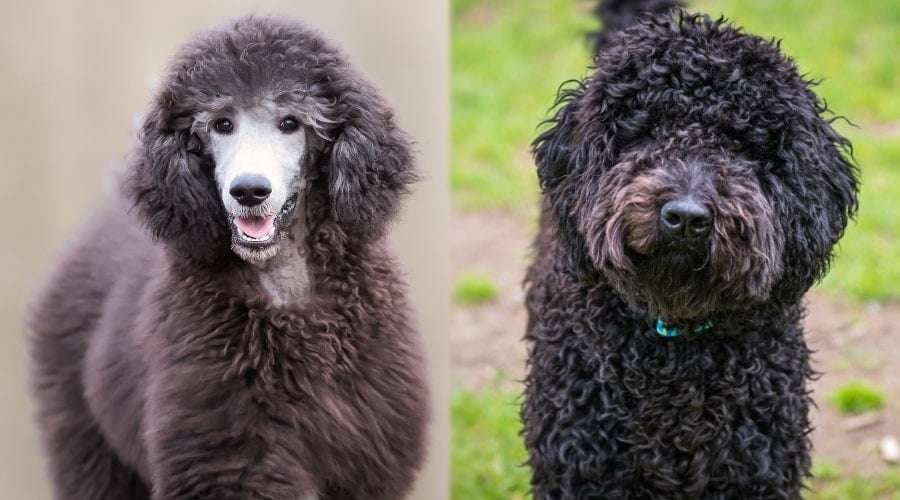
Poodles are a long-lived breed, but like all purebred dogs, they can be prone to certain inherited health conditions. Many of these risks can be reduced through responsible breeding and early health screening.
- Hip dysplasia (more common in Standard Poodles)
- Progressive retinal atrophy (PRA)
- Epilepsy
- Thyroid disorders
- Addison’s disease
- Bloat (gastric dilatation-volvulus), especially relevant to Standard-sized Poodles
- Patellar luxation (kneecap displacement)
Health risks can differ by Poodle size. Toy and Miniature Poodles may be more susceptible to kneecap problems, while Standard Poodles face additional concerns such as hip dysplasia, bloat, and certain autoimmune conditions. Not every Poodle will develop these problems, but knowing the risks helps owners recognize potential warning signs and plan appropriate veterinary care.
Common Health Issues in Labradoodles
Labradoodles can inherit health conditions from both parent breeds, meaning they are not immune to genetic disease simply because they are mixed-breed dogs.
- Hip and elbow dysplasia
- Ear infections (due to floppy ears and hair growth)
- Progressive retinal atrophy (PRA)
- Allergies and skin conditions
- Epilepsy
- Hypothyroidism
- Exercise-induced collapse (EIC), an inherited condition associated with Labrador Retrievers
Because Labradoodles inherit genes from both parent breeds, their health risks can overlap with those of Poodles and Labrador Retrievers. Their lifespan is often estimated at around 12–16 years, although larger dogs may have shorter lifespans, and individual health outcomes vary considerably.
Hybrid Vigor: Myth vs. Reality
Are Labradoodles healthier than Poodles because of hybrid vigor? Not necessarily. Although greater genetic diversity can reduce the risk of some inherited conditions, mixing two breeds doesn’t automatically produce a healthier dog.
A 2024 Royal Veterinary College study found that the overall health of Labradoodles and two other popular designer crosses was largely similar to their purebred parent breeds.
The takeaway: Labradoodles can inherit health problems from both Labrador Retrievers and Poodles. Responsible breeding, appropriate health screening, and ongoing veterinary care matter more than the designer-dog label.
What Health Tests Should You Ask Breeders About?
Whether you’re buying a Poodle or Labradoodle puppy, ask for documented health testing on both parents. A routine veterinary checkup or commercial DNA panel alone isn’t the same as comprehensive breeding health screening.
Recommended testing depends on the parent breeds and Poodle size, but important examples include:
- Hip and elbow evaluations: Especially relevant for Labrador Retrievers, Standard Poodles, and larger Labradoodles.
- Eye examinations: Screening by a veterinary ophthalmologist for inherited eye conditions.
- DNA testing: For relevant inherited disorders such as progressive retinal atrophy (PRA) and exercise-induced collapse (EIC).
- Additional Poodle-specific screening: Patellar evaluations for Toy and Miniature Poodles and other tests appropriate to the Poodle variety.
Ask breeders to share results from the Orthopedic Foundation for Animals (OFA) or equivalent recognized screening programs. A responsible breeder should be willing to discuss both parents’ results, explain any known health risks, and answer questions about the puppy’s family history.
Health testing cannot guarantee a disease-free dog, but it helps breeders make informed decisions and allows prospective owners to evaluate potential inherited risks.
Pet Insurance Considerations
Even with responsible breeding and excellent care, unexpected health issues can arise. Many owners choose pet insurance to help manage the cost of accidents, hereditary conditions, and long-term care, especially for active breeds like Poodles and Labradoodles.
Enrolling early, before health issues develop, can provide broader coverage options and help reduce financial stress over your dog’s lifetime.
Allergies, Shedding & Hypoallergenic Claims
Are Poodles or Labradoodles better for people with allergies? It’s one of the biggest questions prospective owners ask, and the answer isn’t as straightforward as breeders sometimes suggest.
Both dogs can have low-shedding coats, but low shedding doesn’t mean allergy-free. Dog allergies are triggered by proteins found in dander (skin flakes), saliva, and urine, not simply by loose fur. That distinction matters when choosing between these two dogs.
Are Poodles Hypoallergenic?
Poodles are known for their tightly curled, low-shedding coats, making them a popular choice for people who want less loose hair around the house. Their coat characteristics are also more predictable than those of a Labradoodle.
However, Poodles still shed some hair and produce allergens, even when their coats trap much of the loose fur.
According to the American Academy of Allergy, Asthma & Immunology, no dog breed is truly hypoallergenic. Research has also found that homes with so-called hypoallergenic dogs don’t consistently contain lower levels of dog allergens.
The takeaway: A Poodle is a more predictable choice for low shedding, but not necessarily a safer choice for someone with dog allergies.
Are Labradoodles Hypoallergenic?
Labradoodles are frequently marketed as hypoallergenic, but there’s no guarantee they’ll shed less or trigger fewer allergy symptoms.
Some inherit curly, Poodle-like coats that shed very little. Others have wavy or straighter coats that shed more like a Labrador Retriever. Even puppies from the same litter can develop different coat textures and shedding patterns.
A Labradoodle with more Poodle ancestry, such as an F1B, may be more likely to develop certain coat characteristics, but generation labels cannot predict how an allergic person will react.
For owners concerned about loose hair, Labradoodles offer less coat predictability than purebred Poodles. When it comes to allergies, however, neither dog is a reliable hypoallergenic option.

What Allergy Sufferers Should Know Before Choosing
If someone in your household has dog allergies, don’t rely on breed labels or shedding claims alone. Consider these precautions before bringing home a Poodle or Labradoodle:
- Consult an allergist: Allergy testing and professional guidance can help you understand your triggers, particularly if you have asthma or significant reactions.
- Meet the individual dog: Spending time together may reveal an immediate reaction, although a symptom-free visit doesn’t guarantee long-term tolerance.
- Consider an adult dog: Adult coat characteristics are generally easier to assess than a puppy’s, especially with Labradoodles.
- Manage allergens at home: Regular cleaning, HEPA air filtration, and keeping dogs out of bedrooms may help reduce exposure.
- Maintain a grooming routine: Regular brushing and appropriate bathing can help manage loose hair and dander, although grooming cannot eliminate allergens.
Which is the better choice? If your main concern is shedding, Poodles generally offer more predictable coats. But if allergies are the deciding factor, neither breed can guarantee fewer symptoms. Your individual sensitivity matters far more than a dog’s reputation for being hypoallergenic.
Nutrition & Feeding Requirements
Poodles and Labradoodles have similar nutritional needs, but their size, age, and activity levels can make a big difference in how much they should eat. The goal for either dog is a complete, balanced diet that supports a healthy weight and meets their individual needs.
Daily Calorie & Portion Needs
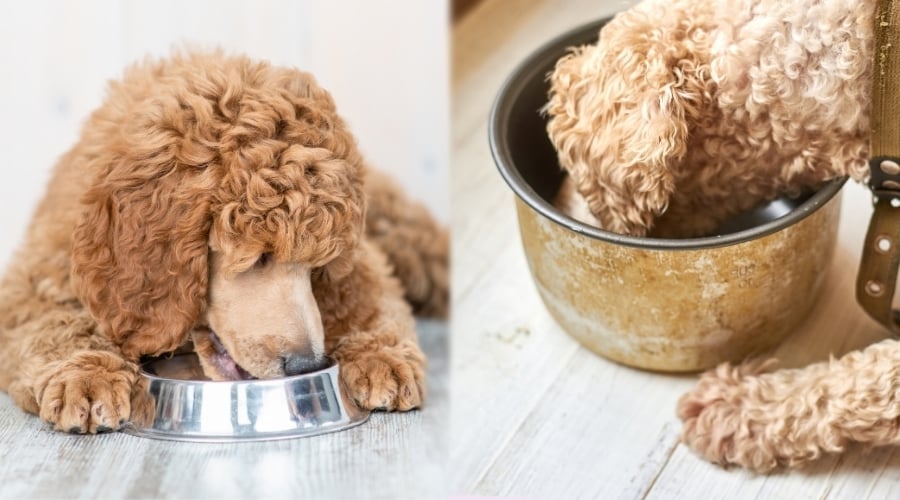
There’s no one-size-fits-all feeding recommendation for either breed. A Toy Poodle needs considerably less food than a Standard Poodle or large Labradoodle, while growing puppies and highly active dogs have different nutritional requirements than less active adults.
Use the feeding guidelines on your dog’s food as a starting point, then adjust portions based on weight, body condition, and activity level. Your veterinarian can help determine an appropriate daily calorie target.
Remember to account for treats and training rewards, which can add more calories than you might expect.
Sensitive Stomachs & Food Allergies
Both Poodles and Labradoodles can experience digestive upset or food-related allergies, but neither breed should automatically be considered food-sensitive.
Symptoms such as recurring diarrhea, vomiting, itching, or ear infections can have several causes. Don’t assume food is responsible without consulting your veterinarian.
If a food allergy is suspected, your vet may recommend a controlled elimination diet using a prescription hydrolyzed or novel-protein food. Simply switching to chicken-free food or a commercial limited-ingredient formula isn’t a reliable way to diagnose an allergy.
Feeding Tips for Each Breed
- Poodles: Choose portions and kibble sizes appropriate for your dog’s size, whether Toy, Miniature, or Standard. Monitor weight and adjust feeding as activity levels change.
- Labradoodles: Base portions on your dog’s actual adult size, body condition, and energy expenditure. Don’t assume a Labradoodle needs extra calories simply because it’s an active breed.
For both dogs, maintaining a healthy body condition matters more than choosing a breed-specific diet. Regular weight checks and appropriate portions can help prevent obesity-related health problems.
Grooming, Shedding & Maintenance Costs
Low shedding doesn’t mean low maintenance. Both Poodles and Labradoodles need regular grooming, and the time and expense can surprise first-time owners. Poodle coats are more predictable, while Labradoodle grooming requirements vary considerably.
Grooming Frequency Comparison
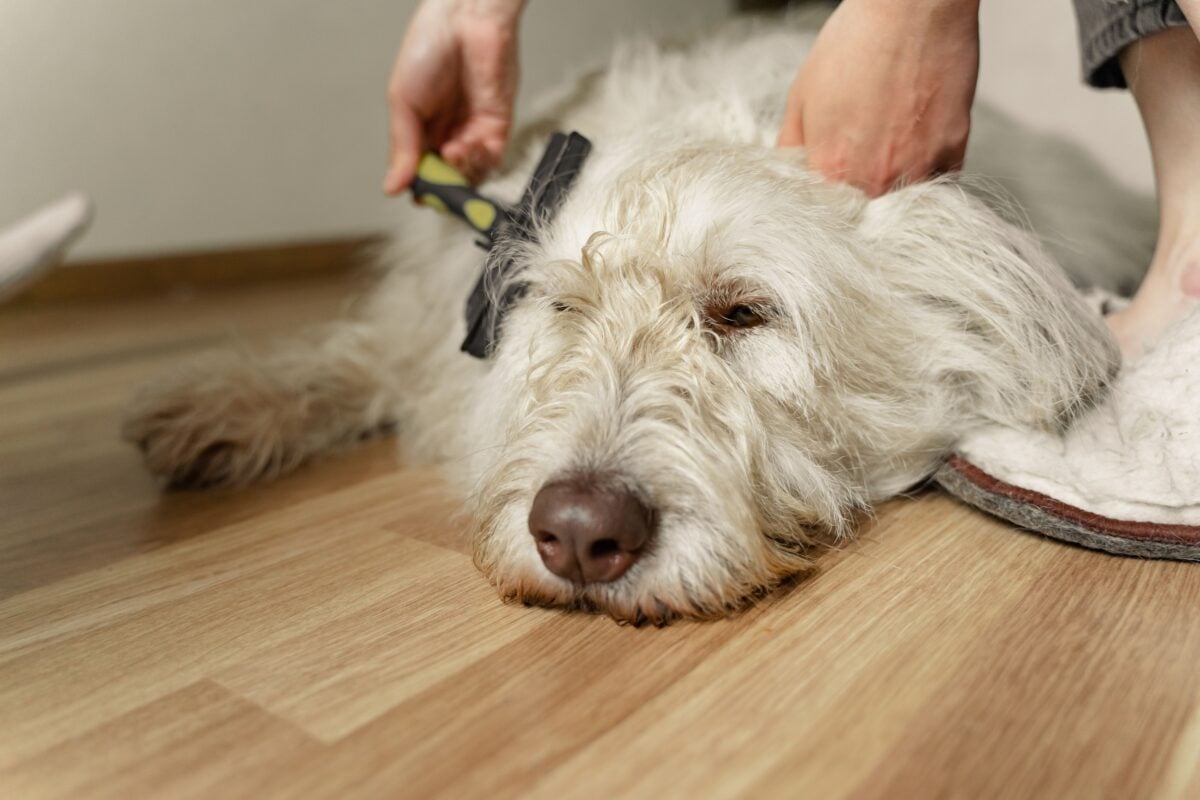
Poodles have dense, curly coats that require regular brushing and trimming to prevent painful mats. Labradoodles can have curly, wavy, or straighter coats, with grooming needs that range from moderate to intensive.
- Poodles: Brush several times weekly or daily for longer coats. Professional grooming is often needed every 4–6 weeks.
- Labradoodles: Curly or wavy coats may require daily brushing, especially when kept long. Professional appointments are often scheduled every 4–8 weeks.
A Labradoodle isn’t necessarily easier or cheaper to groom than a Poodle. Coat length, density, and matting risk matter more than the breed label.
At-Home vs. Professional Grooming
At-home care includes brushing, bathing, nail trimming, and checking for mats, especially behind the ears, under the legs, and around the collar. The right grooming tools can make maintenance easier, but severe matting should be handled by a professional.
Regular grooming appointments help keep coats clean, trimmed, and comfortable. For bathing, choose a gentle, dog-specific shampoo, such as an oatmeal formula or one designed for sensitive skin, when appropriate.
Annual Grooming Cost Expectations
Professional grooming is a recurring expense for both breeds. Toy and Miniature Poodles may cost less per appointment than Standards, while large Labradoodles with dense, mat-prone coats can be equally expensive or more.
Prices vary by location, dog size, coat condition, and grooming frequency. To estimate your annual budget, ask local groomers for their rates and multiply by the number of expected appointments, then account for at-home supplies.
Bottom line: If you’re looking for a dog that needs minimal brushing or professional grooming, neither breed is an especially low-maintenance choice.
Puppy Prices & Lifetime Cost Comparison
The purchase price is just the beginning of what you’ll spend on a Poodle or Labradoodle. Food, grooming, veterinary care, training, and unexpected expenses can add up to thousands of dollars over your dog’s lifetime.
Upfront Puppy Costs
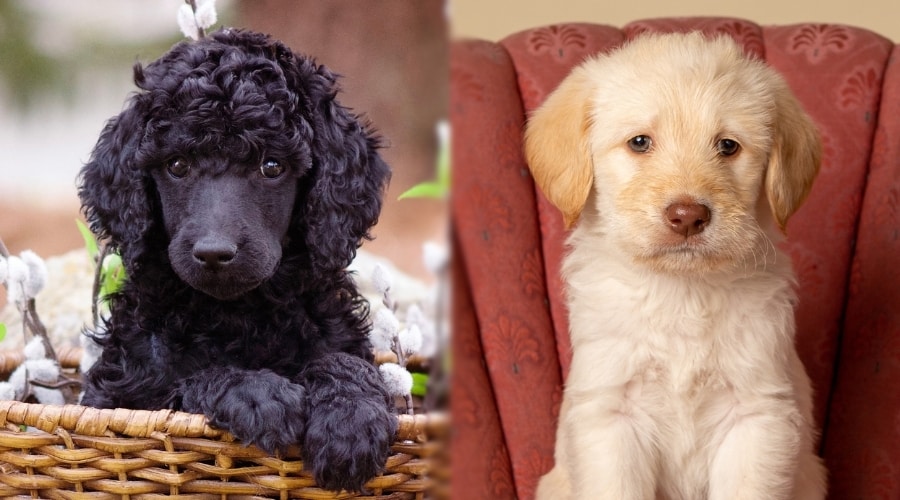
Poodle puppies often cost between $1,000 and $5,000+, depending on size, pedigree, breeder, and location. Show-quality dogs and those from champion bloodlines may cost considerably more. Our Poodle price guide explains these expenses in greater detail.
Labradoodle puppies commonly cost around $1,000 to $3,000, although prices can be higher depending on the breeder, location, and demand.
Don’t choose a breeder based on price alone. Ask about parental health testing, veterinary records, early socialization, and health guarantees. A higher price doesn’t automatically mean a healthier puppy.
Monthly & Annual Ownership Costs
Both breeds come with ongoing expenses, and size, individual health, and grooming needs often affect costs more than breed alone.
- Food: Larger dogs generally eat more, regardless of breed.
- Grooming: Both can require frequent professional appointments, with costs depending on size and coat condition.
- Veterinary care: Budget for routine exams, vaccinations, parasite prevention, and dental care, plus unexpected illnesses or injuries.
- Training & enrichment: Puppy classes, toys, and activities are important for both intelligent, active dogs.
- Additional expenses: Pet insurance, boarding, daycare, or dog walking can significantly increase your budget.
Annual ownership costs can easily reach several thousand dollars, particularly for larger dogs requiring professional grooming. Emergency veterinary treatment or chronic health conditions can add substantial unexpected expenses.
Adoption & Rescue Alternatives
Adoption can be a more affordable way to welcome a Poodle or Labradoodle into your family. Breed-specific rescues and general animal shelters sometimes have Poodles, Labradoodles, and other Poodle mixes available.
Adoption fees are generally lower than breeder prices and may include vaccinations, microchipping, or spay/neuter surgery.
An adult rescue dog also has an advantage: Its mature size, coat characteristics, and temperament are easier to evaluate before bringing it home. Regardless of where your dog comes from, be prepared for the same long-term care and financial responsibilities.
Poodle vs Labradoodle: Quick Decision Guide
If you’re deciding between these two breeds, the comparison below highlights the most important differences at a glance.
| Best If You Want… | Poodle | Labradoodle |
|---|---|---|
| More predictable adult size | ✓ | — |
| More predictable low-shedding coat | ✓ | — |
| Highly intelligent, trainable companion | ✓ | ✓ |
| Playful, affectionate family dog | ✓ | ✓ |
| Active companion for outdoor adventures | ✓ | ✓ |
| Comfortable with variable size and coat traits | — | ✓ |
| Minimal grooming requirements | Neither | Neither |
Bottom line: Choose a Poodle if you value more predictability in size and coat type, along with an intelligent, active companion. A Labradoodle may appeal if you enjoy a playful, social dog and are comfortable with greater variation in size, shedding, and grooming needs. Neither is automatically easier to own, so consider the individual dog’s temperament and your daily routine before deciding.
Poodle vs Labradoodle FAQs
Still torn between a Poodle and a Labradoodle? You’re probably wondering about everything from shedding and training to which dog will fit into your daily routine. Let’s tackle a few more common questions to help you decide.
Have a question we haven’t answered? Drop it in the comments below! We’d love to help you figure out which furry companion might be the best fit for your family.
Are Poodles Or Labradoodles Better For People With Allergies?
Neither breed is truly hypoallergenic. Poodles have more predictable low-shedding coats, while Labradoodle coats vary considerably. However, shedding doesn’t reliably predict how someone with dog allergies will react. If allergies are a concern, consult an allergist before bringing either dog home.
Which Sheds More, A Poodle Or A Labradoodle?
Labradoodles generally have less predictable shedding. Some inherit curly, low-shedding coats, while others shed considerably more. Poodles consistently shed very little, although their curls require regular brushing and professional grooming to prevent matting.
Which Is Easier To Train, A Poodle Or A Labradoodle?
Both are intelligent and highly trainable. Poodles are often particularly attentive and responsive to structured training, while Labradoodles may be enthusiastic learners who need extra practice with impulse control. Individual temperament, consistency, and positive reinforcement matter more than breed alone.
Are Poodles Or Labradoodles Better With Kids?
Both can be wonderful family companions. Labradoodles are often playful and outgoing, while Poodles come in three sizes that suit different households. A dog’s size, temperament, training, and socialization matter more than breed labels. Always supervise interactions between dogs and young children.
Can Poodles And Labradoodles Live In Apartments?
Yes, provided their exercise, enrichment, and companionship needs are met. Toy and Miniature Poodles may be easier to accommodate in smaller spaces, but Standard Poodles and Labradoodles can also adapt to apartment living. A daily routine and appropriate activity matter more than having a large yard.
Which Is Better For First-Time Owners Or Busy Households?
Both breeds can suit first-time owners willing to commit to training, exercise, and grooming. Poodles offer more predictable size and coat characteristics, while Labradoodles may require greater flexibility. Neither is particularly low-maintenance or ideal for being left alone all day without appropriate care and support.
Before You Decide
Choosing between a Poodle and a Labradoodle is about more than appearance or personality. Think about the time, training, grooming, and financial commitment you’re ready to make.
Not sure you’re prepared? Start with our guide to whether you’re ready for a dog. Once you’ve welcomed your new companion, learn how to show your dog you love them and recognize the signs your dog has bonded with you.
A little preparation now can make life with your new pup much easier and more rewarding.
Your Turn: Poodle or Labradoodle?
Are you firmly team Poodle, team Labradoodle, or still on the fence? Every dog and every household is different, and real-life experiences can be incredibly helpful. Share your experience, tips, or questions in the comments below. Your insight could help other readers make a more confident decision.