When you purchase through links on our site, we may earn a commission at no extra cost to you. Learn more.
If you’ve ever owned a dog, you’ve probably seen this before. Your dog brings you a tennis ball, only to abandon it the moment you reach for it and return with a squeaky duck instead.
Table of Contents
You acknowledge the duck, and suddenly, a rope toy appears. Then a stuffed squirrel. Then, somehow, the tennis ball is back in rotation as if the entire exchange has completed a full lap and returned to where it started.
At some point, you start wondering whether your dog wants to play fetch or if you’ve accidentally been drafted into a toy-based negotiation you don’t understand.
The strange thing is that many dogs do this. They proudly deliver one toy, only to swap it for another the second you engage.
So what’s actually going on here? Is your dog changing their mind every 30 seconds, or is there a method behind the madness?
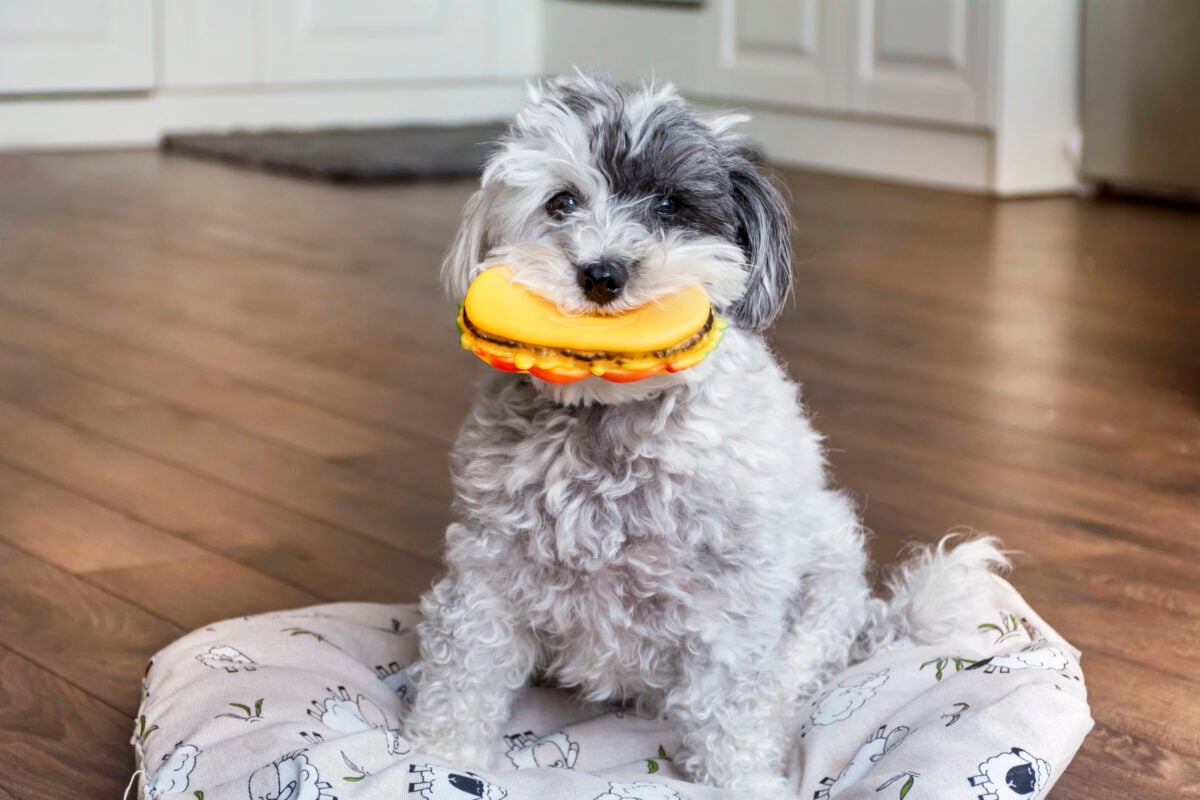
The Part That Confuses Owners: The First Toy Was Never The Whole Plan
The reason this behavior feels so strange is that humans tend to focus on the object.
Your dog brings a tennis ball, so naturally, you assume the tennis ball is the entire point of the interaction. Then, your dog immediately abandons it and runs off to find something else.
From our perspective, that looks irrational. Why bring the first toy if you didn’t want it?
The reality is that many dogs aren’t nearly as attached to the original toy as we think they are. The tennis ball may simply be one step in a much larger interaction. Let’s explore what’s going on.
What Your Dog Thinks Is Happening
Dog: “I have presented the ceremonial tennis ball.”
Human: “Great. Let’s play with the tennis ball.”
Dog: “The tennis ball was merely how I got this meeting scheduled.”
Reason #1: The Initial Toy Was Just Your Dog’s Opening Move
Many dogs aren’t merely trying to start a game of fetch. They’re trying to initiate a more sophisticated game.
The moment you respond, the mission is accomplished. The tennis ball worked. You looked, spoke, and stood up. The interaction is now underway.
That’s why things can suddenly take some unexpected turns.
You thought you were agreeing to fetch. Your dog thought you were agreeing to whatever this becomes.
A perfectly normal toy exchange can quickly evolve into:
- Fetch
- Tug-of-war
- Chase me around the kitchen island
- Sprint down the hallway carrying a stuffed squirrel
- Drop stuffed squirrel
- Retrieve rope toy
- Return with rope toy
- Forget rope toy exists
- Resume carrying the stuffed squirrel
At no point will your dog explain the rules.
From a human perspective, it can look like your dog keeps changing their mind. In reality, many dogs enjoy keeping play active, unpredictable, and constantly evolving.
Others are essentially tiny game show hosts who keep introducing new challenges before anyone has finished the previous one.
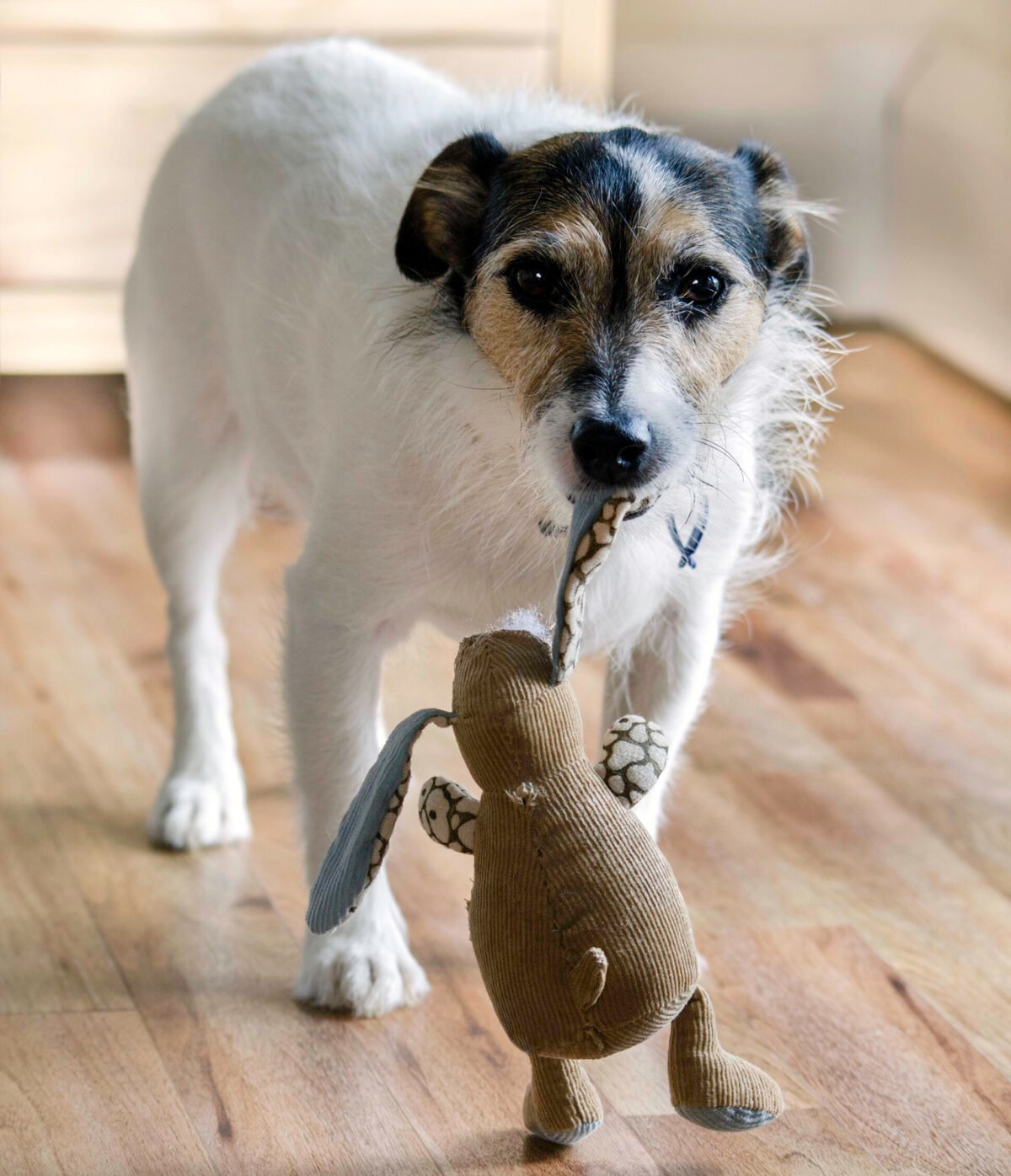
Reason #2: Your Dog May Be Activating Ancient Hunting Instincts
Long before dogs had squeaky hedgehogs and plush tacos, their ancestors spent a lot of time finding, grabbing, carrying, and moving things.
Modern dogs still retain pieces of those instincts, even when the “prey” is a stuffed raccoon that’s missing both ears and most of its stuffing.
For some dogs, the toy shuffle resembles a simplified version of the hunting sequence:
- Grab
- Carry
- Present
- Trade
- Reacquire
This is especially easy to spot in dogs that seem determined to redistribute toys throughout the house.
- The tennis ball ends up in the hallway.
- The rope toy appears in the kitchen.
- The stuffed squirrel somehow migrates upstairs.
- The plush duck is now under the dining room table.
- The toy basket sits completely ignored.
By evening, the living room looks less like a play area and more like investigators are about to arrive and place numbered evidence markers next to 27 different toys.
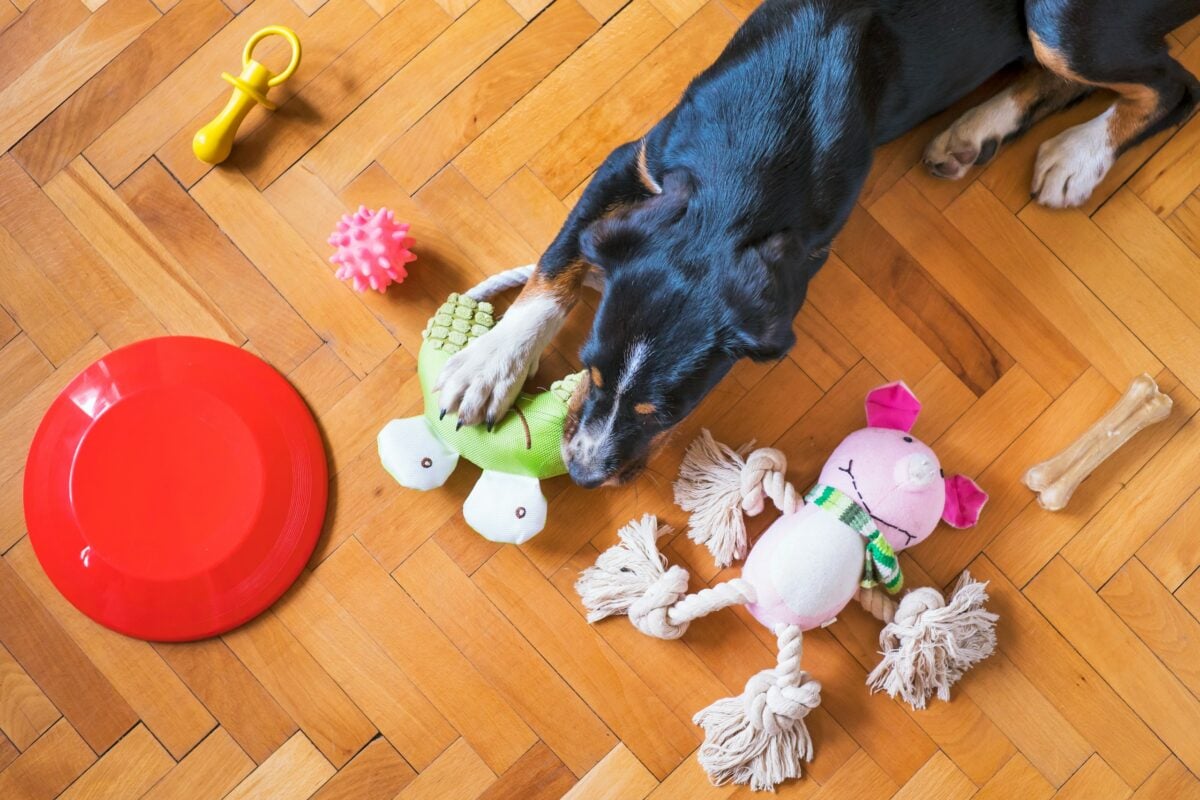
Reason #3: Some Dogs Care More About Your Reaction Than The Toy
For some dogs, the toy is only half the equation. The other half is you.
Dogs are excellent observers of human behavior and quickly learn which actions get a response. And bringing you a toy often gets a response.
That reaction can take a lot of forms:
- Eye contact
- Stopping what you’re doing to pay attention
- Talking
- Laughing
- Getting up from the couch
- Following your dog
This is especially obvious with dogs that present a toy and then stare at you expectantly, as if waiting for your official opinion.
Sometimes the reaction doesn’t even have to be positive.
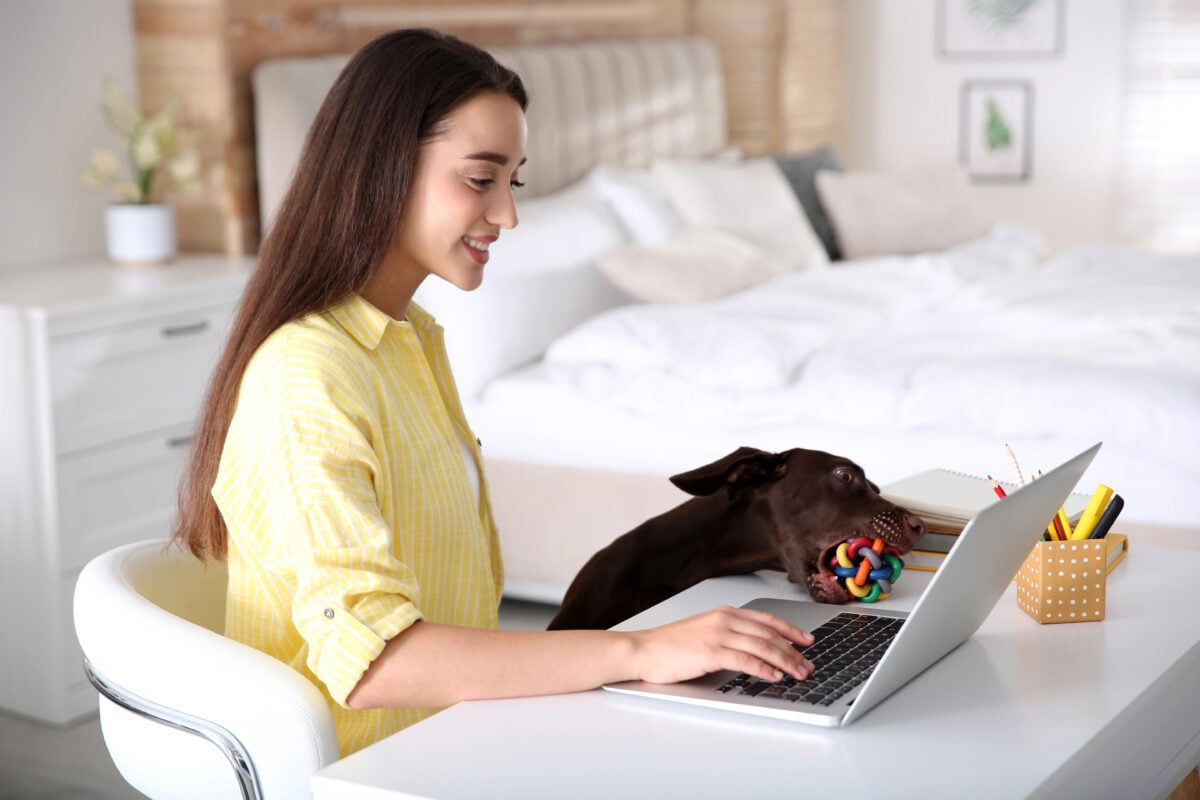
Maybe you’re answering an email when suddenly a damp tennis ball lands on the keyboard. Maybe you’re carrying groceries, and a rope toy gets deposited directly in your walking path.
Or maybe you’re on an important video call, and your dog chooses that exact moment to repeatedly throw a squeaky toy against your office chair as if they’re trying to send a message in Morse code.
Your response is usually immediate:
- “Not now.”
- “Seriously?”
- “Please move.”
- “Why are you like this?”
Some dogs become surprisingly skilled at identifying the exact object most likely to interrupt whatever you’re doing at that moment.
Reason #4: You May Have Accidentally Taught Your Dog To Trade Up
Dogs are excellent students, especially when they’re learning something that benefits them.
If you’ve ever used a second toy to get your dog to drop the first one, you’ve probably used a version of the classic two-toy method.
The setup is simple:
- Dog has Toy A
- You introduce Toy B
- Dog drops Toy A
- Play continues
For training purposes, it can work beautifully.
Over time, some dogs discover that bringing an object to a human can lead to something better. Maybe it’s another toy or praise. Whatever the reward, they start connecting the dots.
Then, the strategy expands. A sock appears. A shoe appears. A dish towel mysteriously emerges from another room. Your dog presents the item and waits.
Items Dogs Somehow Decide Are Better Than Actual Toys
- The sock you just folded
- The shoe you’re actively looking for
- The TV remote
- The dish towel hanging on the oven
- The cardboard tube from the paper towels
- The one object you’re currently using
- Whatever item would create the most inconvenience if stolen right now
If your dog has started treating household objects as bargaining chips, teaching a reliable “drop it” or “trade” cue can make those negotiations considerably less stressful.
Reason #5: Your Dog May Be Running A Toy Rotation Program
Some dogs don’t seem to have a favorite toy. They seem to have favorite toys of the moment.
That’s why a dog can spend 15 minutes obsessing over a squeaky duck, abandon it completely, and then act as though a rope toy is the most important object ever created.
A few minutes later, the rope toy is forgotten, too.
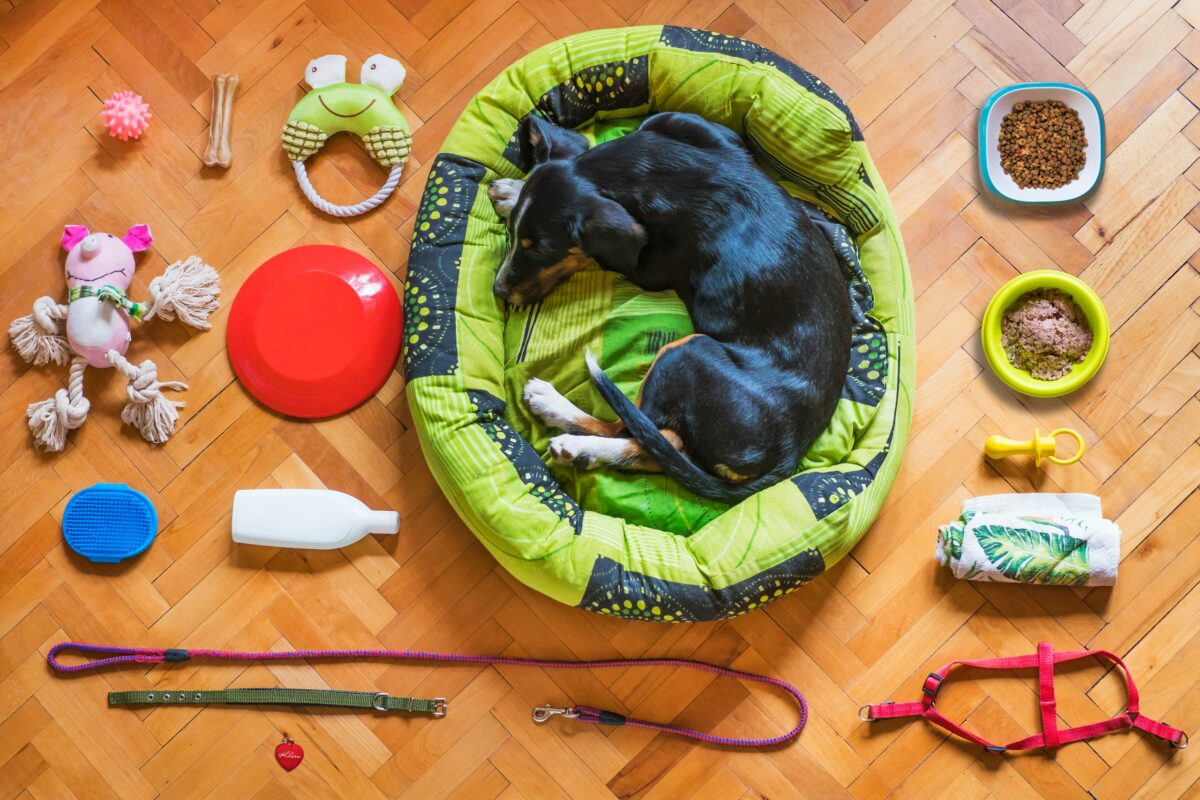
For some dogs, part of the fun is variety. After all:
- A tennis ball bounces.
- A rope toy tugs.
- A plush squirrel squeaks.
- A certain beloved toy apparently exists solely to be carried around like a prized possession.
Faced with an overflowing toy basket, some dogs seem determined to sample every available experience before committing to any of them.
Their process may look something like this:
- Squeak toy
- Carry toy
- Drop toy
- Inspect another toy
- Carry second toy
- Remember first toy exists
- Return to first toy
- Repeat indefinitely
Some dogs treat a toy basket the way people treat streaming services. They spend more time browsing options than committing to one.
Which Toy Personality Sounds Most Like Your Dog?
Every dog has their own approach to toy management. Which one sounds familiar?
- The Curator: Owns 37 toys. Actively plays with 2. The remaining 35 are apparently part of a permanent collection.
- The Archaeologist: Suddenly becomes obsessed with a toy they haven’t touched in 8 months and acts as though they’ve discovered a priceless artifact.
- The Negotiator: Arrives carrying a sock. Refuses to explain where it came from. Waits patiently for trade offers.
- The Sentimentalist: Has one beloved toy that’s survived years of abuse. Missing eyes. Missing stuffing. Possibly haunted. Still treasured above all others.
- The Entertainment Director: Brings you one toy. Then another. Then another. By the end of the interaction, the living room looks like a toy store exploded.
- The Attention Economist: Has an uncanny ability to identify the exact object most likely to interrupt whatever you’re doing. Especially effective during Zoom calls.
- The Acoustic Engineer: Owns dozens of toys. Only cares about the loudest one, usually at 2:00 AM.
- The Collector: Doesn’t actually play with toys. Just relocates them. Nobody knows why.
Which one is your dog? Tell us in the comments before you keep reading, especially if you live with The Negotiator, The Acoustic Engineer, or a dog who has promoted socks into the official toy rotation.
Why Some Dogs Do This More Than Others
Not every dog treats toys the same way.
Some dogs seem perfectly content entertaining themselves with a single tennis ball for years. Others behave as though every toy in the house requires active management, regular relocation, and the occasional emergency meeting.
Part of that difference comes down to genetics.
Dogs bred to retrieve often have a strong instinct to pick up, carry, and present objects. It’s one reason many Labrador Retrievers, Golden Retrievers, and Flat-Coated Retrievers seem perfectly happy wandering through the house with something in their mouths at all times.
Herding breeds often turn toys into a group activity. Dogs like Border Collies and Australian Shepherds frequently thrive on interaction and may recruit their humans into increasingly elaborate games involving multiple toys, revised rules, and very little warning.
Terriers tend to bring an impressive level of enthusiasm to anything they consider worth chasing, carrying, or possessing. A Jack Russell Terrier with a favorite toy rarely approaches the situation casually.
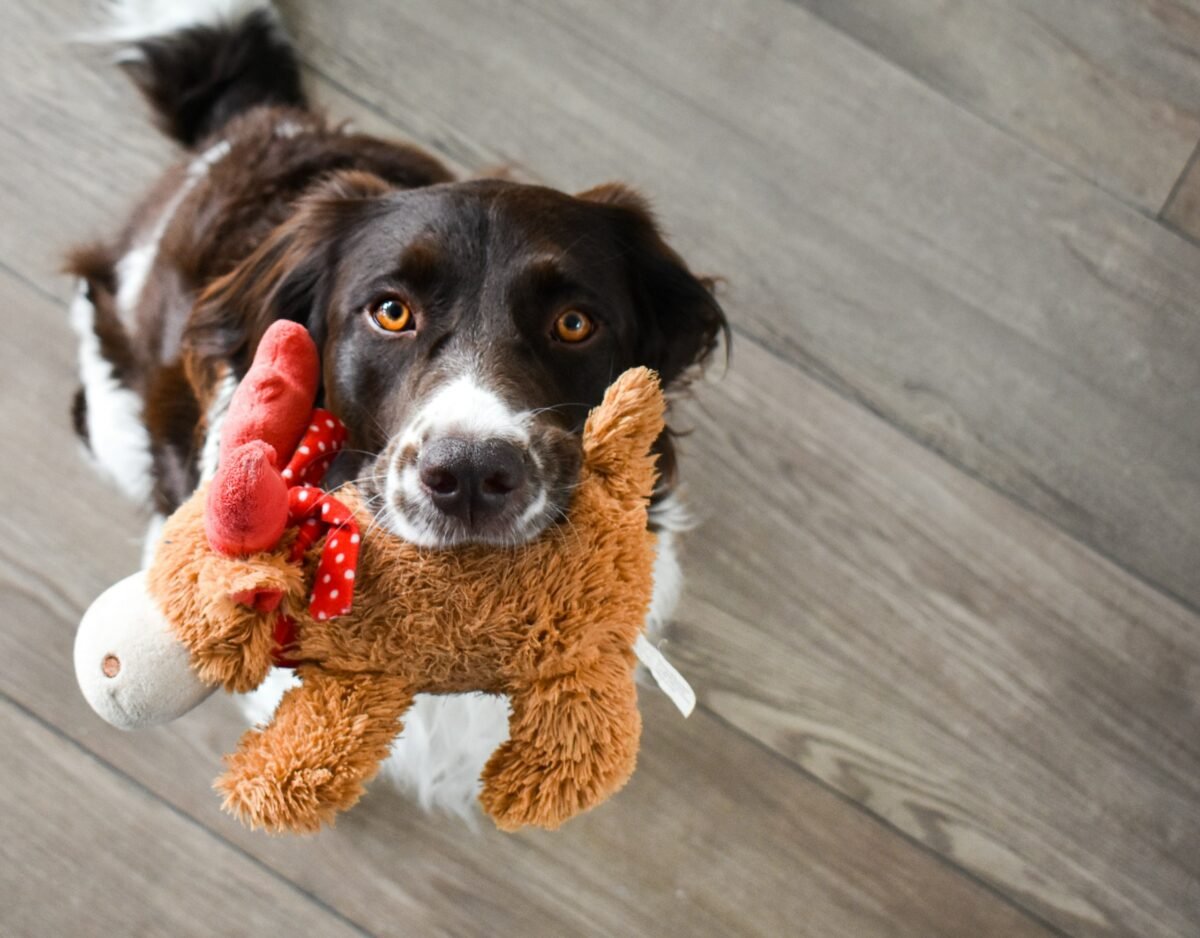
Even within the same breed, though, personality matters.
Some dogs are naturally:
- Highly social
- Easily excited
- Constantly seeking interaction
- Deeply invested in their toy collection
Others are far more selective about when, why, and how they play.
That’s why two dogs living in the same house can have completely different relationships with their toy baskets.
One dog chooses a favorite toy, carries it around for years, and somehow keeps track of its exact location at all times.
The other appears to treat the toy basket like a department requiring full-time supervision, active inventory management, and routine quality-control inspections.
Why Do Dogs Grab Toys When They’re Overexcited?
Have you ever come home and been greeted by a dog carrying a toy they seem to have absolutely no intention of playing with?
They grab it, pace around with it, wiggle-whine, and drop it. Then they pick it back up, drop it again, and briefly seem to forget what their original plan was.
Meanwhile, their entire rear half seems to be operating at a different frame rate than the rest of their body.
In situations like these, the toy may not be about play at all. For some dogs, carrying an object helps channel intense emotions into a specific behavior.
This is often called displacement behavior—a normal behavior that can appear when a dog is feeling overwhelmed, conflicted, or simply too excited to contain themselves.
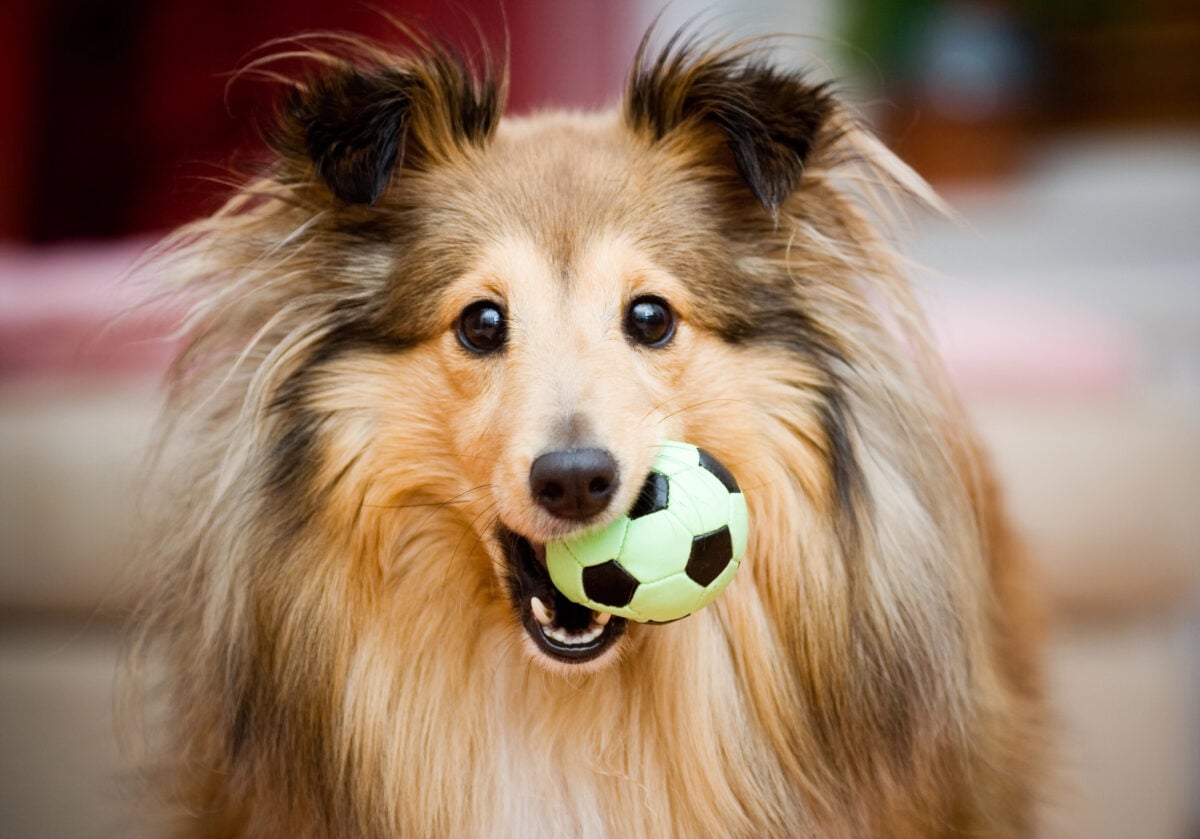
Common triggers include:
- You arriving home
- Visitors coming through the door
- Anticipation of a walk
- Seeing a favorite person
- Other highly exciting events
Instead of launching straight into full-speed zoomies, some dogs instinctively grab the nearest toy and carry it around while they process what’s happening.
Others parade through the house with a toy in their mouth while making sounds that seem only loosely connected to reality.
You may recognize the sequence:
- Grab tennis ball
- Drop tennis ball
- Retrieve stuffed duck
- Wiggle intensely
- Lose track of stuffed duck
- Rediscover stuffed duck
- Pick up rope toy instead
- Accidentally body-slam your shins while turning around
- Resume celebrating
The toy becomes part of their excitement ritual. It’s something to do with all of that emotional energy.
That’s why some dogs appear determined to show you a tennis ball, a stuffed duck, and a rope toy within the first 30 seconds of your arrival.
They’re not necessarily asking you to do something with those objects. In many cases, they’re simply trying to figure out what to do with themselves while their brain catches up with the fact that:
OH MY GOD, YOU’RE HOME.
The result can look chaotic to us. To your dog, it may be the canine equivalent of pacing around the kitchen because you’re excited, overstimulated, and suddenly unsure where to put all that energy.
Why Some Dogs Bring Toys But Won’t Let You Have Them
Some dogs will proudly march over with a toy, place it directly in front of you, and then immediately snatch it back the second you reach for it.
Others take things a step further. They’ll approach with the toy, pause dramatically, wait for your hand to move, and then sprint away as though they’ve just committed a crime.
If this sounds familiar, your dog isn’t necessarily being rude or indecisive. They may simply have a different game in mind.
Many owners assume that bringing a toy means, “Here, you can have this.” But for some dogs, the exchange itself is the fun.
The approach, retreat, and re-engagement become part of the experience, especially in dogs that enjoy highly interactive games where possession keeps changing hands.
You’ve probably seen the routine before:
- Bring toy
- Drop toy
- Human reaches
- Immediate retrieval
- Retreat to a safe distance
- Repeat as necessary
At some point, many owners realize they are not actually playing fetch. They’re participating in a game that appears to be called “Almost Fetch.”
The rules remain largely theoretical, but your dog seems very confident about them.
It’s also different from true resource guarding.
Dogs playing “Almost Fetch” are usually loose, playful, and eager to keep you engaged in the interaction. A dog that’s resource guarding is trying to create distance around the object and may become tense, freeze, growl, or snap if someone approaches.
Most dogs who steal the toy back aren’t trying to keep it away from you forever. They just seem deeply committed to a game they forgot to explain.
When Toy Love Starts Looking Like Obsession
For most dogs, bringing, swapping, hiding, and carrying toys around the house is completely normal behavior. Some dogs simply enjoy toys more than others.
Occasionally, however, toy interest can cross the line into something more intense.
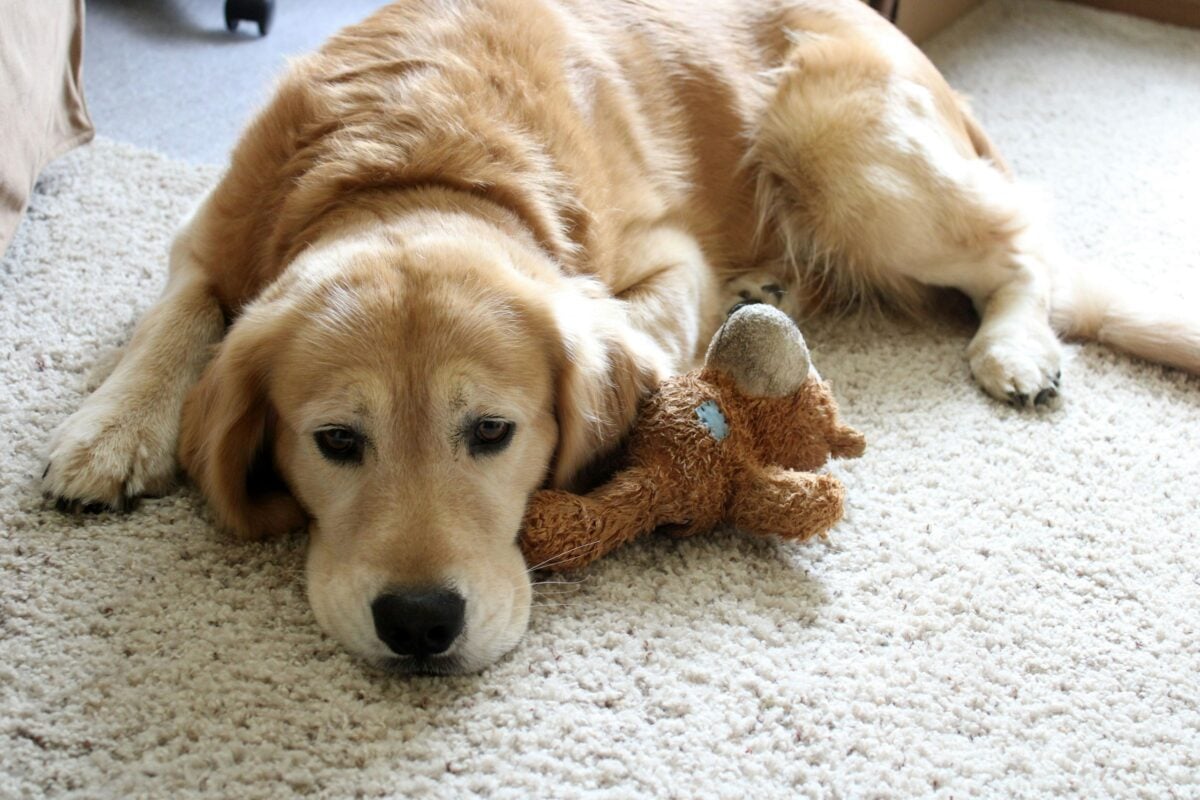
A dog may be becoming overly fixated on a toy if they:
- Become distressed when the toy is unavailable
- Struggle to relax without constant access to it
- Guard the toy from people or other pets
- Ignore other activities in favor of the toy
- Engage in repetitive toy-related behaviors that seem difficult to interrupt
The difference is flexibility. Dogs that simply love toys can still move on to meals, naps, walks, and other activities. Dogs that have become fixated often struggle to do so.
If your dog’s attachment to a particular toy is causing stress, conflict, or significant behavioral changes, it’s worth discussing the situation with your veterinarian or a qualified behavior professional.
Fortunately, most toy-swapping dogs aren’t showing signs of obsession.
Frequently Asked Questions
Dogs have an impressive ability to turn simple toy habits into household mysteries. Here are answers to a few questions we haven’t covered yet. If you don’t see your question here, ask us in the comments.
Is It Normal For Dogs To Keep Switching Between Toys?
Absolutely. Many dogs rotate through toys as part of play, excitement, exploration, or social interaction. Some seem to enjoy novelty, while others simply haven’t settled on the exact game they want to play yet.
The bigger question is whether the behavior interferes with daily life. If your dog eventually settles down, eats, sleeps, and engages normally, rapid cycling through toys is usually just another example of dogs being delightfully strange.
Why Does My Dog Have One Toy They Refuse To Destroy?
While some dogs treat toys like disposable confetti cannons, others form surprisingly strong attachments to a specific object. Often, these “special” toys have a familiar scent, texture, or history attached to them.
They may have been present during puppyhood, periods of stress, or comforting routines. Many owners are amazed that the same dog capable of dismantling dozens of plush toys can gently carry around one battered stuffed animal for years.
Should I Let My Dog Bring Me Toys All The Time?
In most cases, yes. Bringing toys to people is usually a harmless way for dogs to initiate interaction, express excitement, or invite participation.
However, if your dog becomes frantic when you don’t engage, struggles to settle without presenting toys, or escalates into obsessive behavior, it’s worth setting boundaries by teaching cues like “all done,” “drop it,” or “place.”
The goal isn’t to stop the behavior entirely. It’s to make sure both you and your dog can move in and out of play comfortably.
Why Does My Dog Bring Toys To Guests?
Many dogs use toys as social tools. When visitors arrive, bringing a toy can be a way to initiate an interaction, relieve excitement, or simply announce their presence.
Some dogs greet guests with enthusiastic jumping. Others prefer to introduce themselves while carrying a stuffed duck that appears to have survived several major conflicts.
Why Does My Dog Bring Me Toys When I’m Working?
Your dog may have noticed that laptops, paperwork, and important phone calls are excellent opportunities to secure immediate attention.
Many owners discover that toy presentations become significantly more frequent when they’re trying to focus on something else. From your dog’s perspective, interrupting a meeting with a squeaky toy may be a surprisingly effective communication strategy.
When Does Toy Love Become A Problem?
Enthusiasm isn’t the same thing as obsession.
A dog that enjoys carrying toys around the house, greeting visitors with a stuffed duck, or cycling through their toy basket isn’t necessarily displaying concerning behavior.
You may want to talk with your veterinarian or a qualified behavior professional if your dog:
- Seems unable to settle without a toy
- Guards toys aggressively from people or other pets
- Skips meals, sleep, or normal activities because of toys
- Becomes distressed if access to toys is limited
- Fixates on toys to the point that daily life is disrupted
For most dogs, though, toy-related chaos falls comfortably within the range of normal canine behavior.
Decoding Your Dog’s Other Weird Little Messages
Toy swapping is just one of the many oddly specific ways dogs try to pull us into their world.
Once you start noticing how often your dog uses toys, body language, eye contact, and dramatic household entrances to communicate, their daily behavior starts looking a little less random and a lot more intentional.
If your dog’s toy routine has made you curious about the other strange ways they interact with you, check out these related guides next:
- Why Dogs Get Obsessed With Certain Toys
- What Your Dog’s Favorite Toy Says About Them
- Why Do Dogs Love Tennis Balls?
- Why Is My Dog Following Me Everywhere?
- 12 Signs Your Dog Has Chosen You As Their Person
What does your dog’s toy routine look like? Do they carefully treasure one beloved stuffed animal for years, rotate through every toy they own like an overcaffeinated event planner, or insist on playing an intense round of “Almost Fetch” every single day? Tell us in the comments. Bonus points if your dog has ever promoted a random household object into the toy rotation.