When you purchase through links on our site, we may earn a commission at no extra cost to you. Learn more.
Does your dog greet visitors like they’ve just returned from a five-year expedition? One minute, you’re opening the front door. The next, your pup is airborne, your guest is stumbling backward, and you’re apologizing.
Table of Contents
Jumping is a normal dog behavior, but it can become frustrating or even dangerous. The solution? Prevent the jumping while teaching your dog that keeping four paws on the floor earns them the attention they’re after.
Here’s how to stop your dog’s enthusiastic leaps and teach calmer greetings at home and out in public.
Why Do Dogs Jump On People?
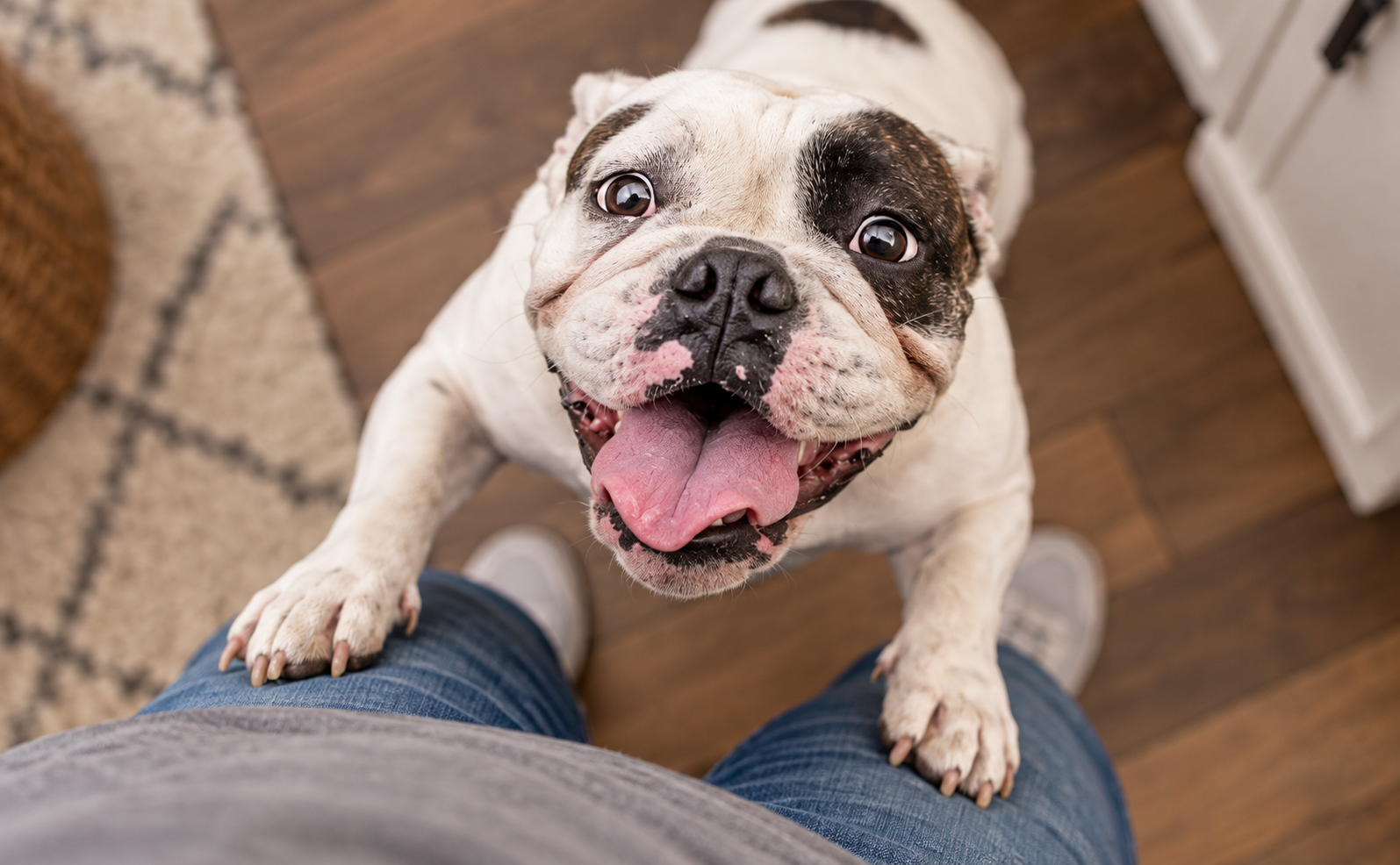
Most dogs aren’t jumping to be naughty, dominant, or deliberately disobedient. They’re usually trying to interact with someone, and jumping happens to be one of the most direct ways to get noticed.
Dogs may jump for several overlapping reasons:
- Greeting and social contact: Dogs naturally investigate faces, and jumping brings them closer to ours.
- Excitement: Some dogs become so enthusiastic about seeing someone that keeping their feet planted is apparently beyond their current skill set.
- Attention: Talking, petting, laughing, and even pushing a dog away can give them the interaction they’re seeking.
- Learned behavior: If jumping earned attention as a puppy, your dog may keep doing it long after they’ve become considerably heavier.
But here’s where humans complicate things.
Imagine your dog jumps up, and someone responds with an enthusiastic, “Oh, hello, sweetheart!” while scratching behind their ears. From your dog’s perspective, the experiment was a complete success.
Puppies may become less excitable as they mature, but don’t count on age alone to eliminate jumping. Dogs of any breed or size can develop the habit, especially when it keeps getting rewarded.
Why Jumping Can Become A Serious Problem
Not everyone appreciates an enthusiastic canine welcome. Some people are nervous around dogs, others dislike muddy paw prints, and many simply don’t want an animal climbing on them.
More importantly, jumping can cause injuries, particularly to young children, older adults, and anyone with balance or mobility difficulties.
A dog doesn’t have to be aggressive to hurt someone. A perfectly friendly Labrador can accidentally send Grandma backward into the furniture simply by being delighted to see her.
How To Stop Your Dog From Jumping On People
Stopping jumping takes two things: preventing the unwanted behavior and teaching your dog a better way to greet people.
These four steps show you how to put both into practice.
1. Prevent Jumping With A Leash, Gate, Or Distance
Every successful jumping greeting gives your dog another opportunity to practice the habit. If they also receive attention, the behavior becomes even more worthwhile.
That’s why management is the first training step, not an admission that training has failed.
There are several ways to prevent jumping while your dog learns better manners:
- Use a leash and properly fitted harness to prevent your dog from reaching someone’s upper body. Avoid jerking or yanking the leash.
- Set up a baby gate or playpen to separate your dog from visitors until they’re ready for a greeting.
- Increase the distance between your dog and approaching people, especially during walks.
- Use a separate room when a greeting would be unsafe or overwhelming.
The goal isn’t to physically force your dog to remain still. It’s to give them enough space and control to succeed.
Using An Indoor Leash
A house-line is a lightweight indoor leash that allows you to guide your dog without repeatedly grabbing their collar. It can be useful when practicing greetings at home.
Attach it to a comfortable harness and use it only during supervised training. Never leave your dog unattended wearing a dragging leash, since it could become caught on furniture or other objects.
When visitors arrive, take hold of the leash before bringing your dog near them. Maintain enough distance to prevent jumping while rewarding appropriate behavior.
2. Reward Four Paws On The Floor
This is the foundation of polite greetings: teach your dog that keeping all four paws on the ground makes good things happen.
You don’t necessarily need a perfect sit. Standing calmly is fine, especially for dogs who find sitting difficult or become more excited when repeatedly asked to perform commands.
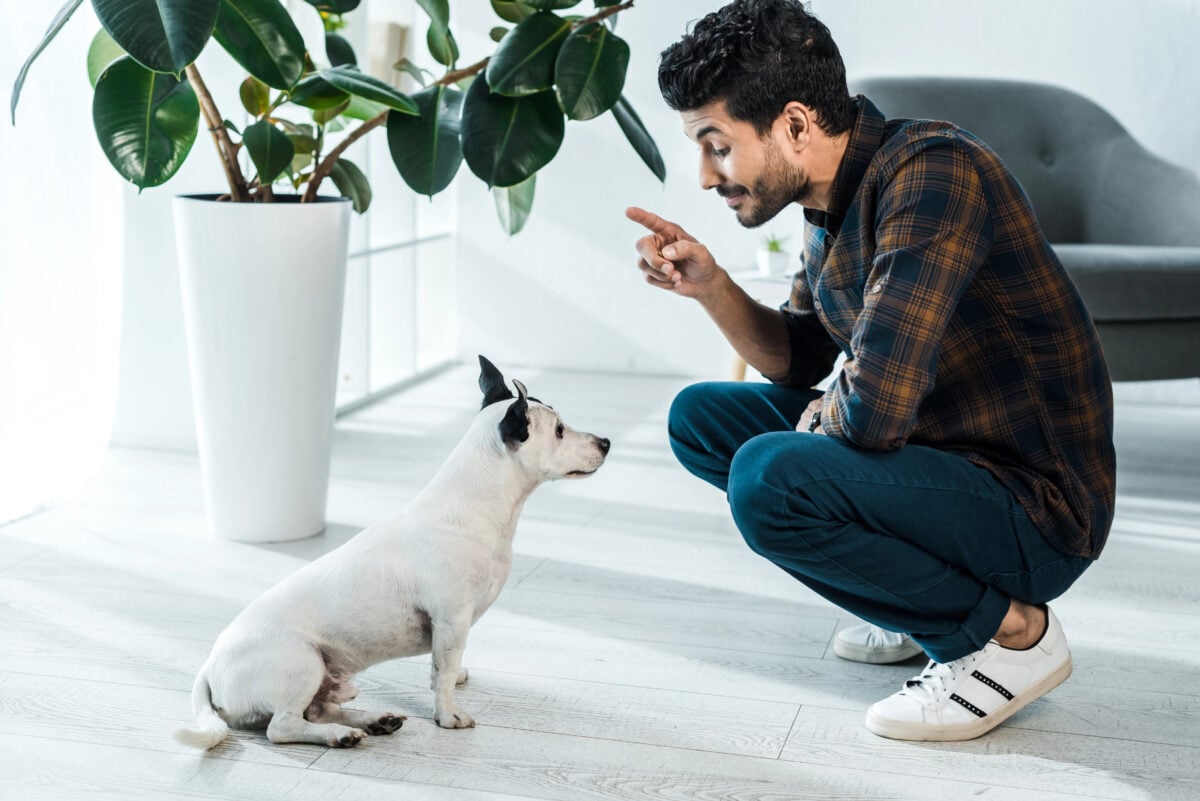
Start somewhere relatively boring, without visitors:
- Have a supply of small treats ready.
- Stand near your dog and wait for all four paws to remain on the floor.
- Say “Yes!” or “Good!” to mark the behavior.
- Place a treat on the floor for your dog.
- Repeat until your dog begins expecting rewards for staying grounded.
Why put the treat on the floor? Because offering it near your chest or face can encourage your dog to reach upward, which is exactly what you’re trying to avoid.
When teaching a new skill, reward frequently. You can gradually reduce food rewards as your dog’s behavior becomes more reliable, while continuing to reinforce polite greetings with attention and affection.
If you’re interested in using a clicker, it serves the same purpose as your marker word: identifying the exact moment your dog gets something right.
3. Practice Calm Greetings Before The Doorbell Rings
Your dog may understand how to sit in the kitchen but completely forget that sitting exists when their favorite neighbor appears.
That’s normal. Dogs don’t automatically apply a learned skill to every new situation, especially when distractions become more exciting.
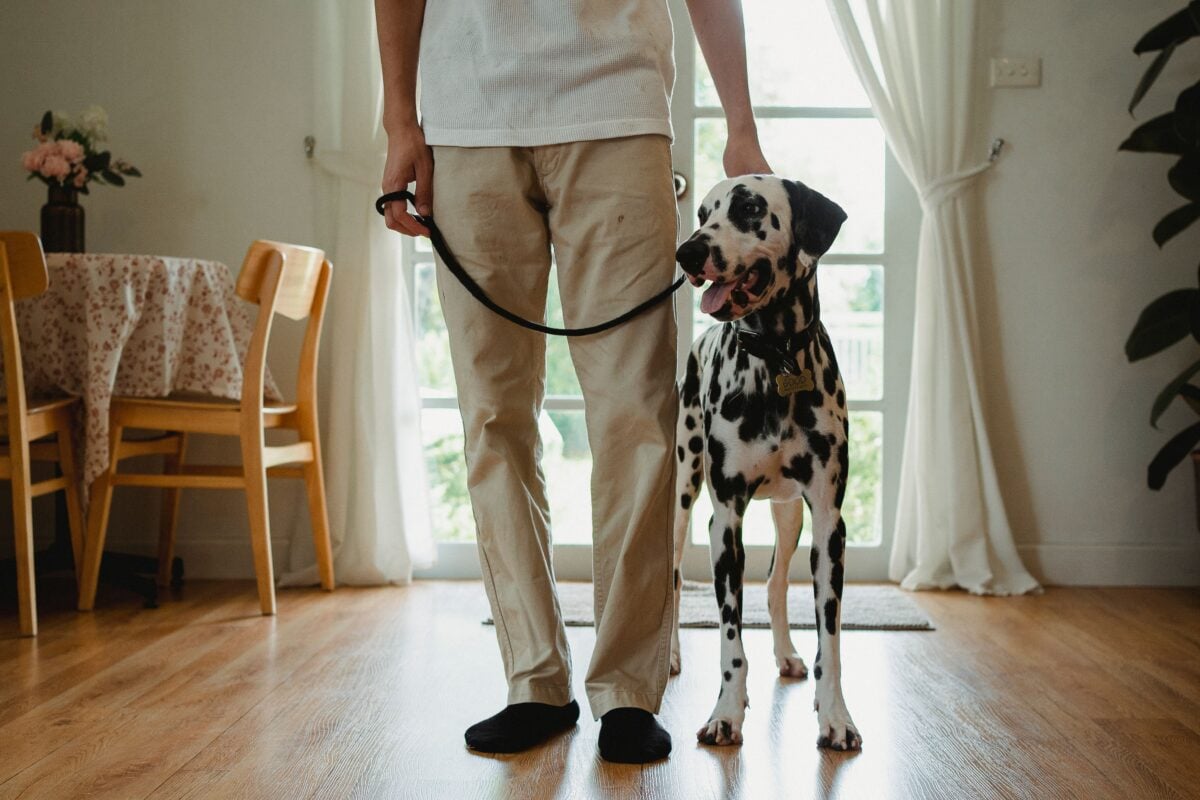
Start with someone familiar who is willing to help you practice.
- Put your dog on a leash and have your helper stand several feet away.
- Ask the helper to approach slowly.
- Reward your dog for keeping their paws on the floor.
- If your dog jumps or becomes too excited, have the helper stop or step away.
- Repeat, allowing a brief greeting only when your dog can stay grounded.
Keep early greetings short. You want your dog to succeed before excitement builds to the point where they’re bouncing off the furniture.
Gradually make the situation more challenging by practicing with different people, at the front door, or in new environments.
Don’t change everything at once. A calm greeting with a familiar neighbor in your living room is much easier than greeting six excited relatives carrying groceries and talking over one another.
What If Your Dog Jumps During Practice?
Don’t turn it into a wrestling match. Calmly interrupt the greeting by having the helper step back or creating distance with the leash. Once your dog can keep their paws down, reward that behavior and try again at an easier level.
If they’re repeatedly jumping, the situation is probably too exciting for their current training level. Increase the distance or reduce the intensity before continuing.
4. Make Sure Everyone Follows The Same Rules
Consistency is where many otherwise excellent training plans fall apart.
You spend a week rewarding four paws on the floor. Then Uncle Bob arrives, throws his arms open, and announces, “It’s okay! I love dogs!” Your dog jumps. Uncle Bob laughs and scratches both ears.
And just like that, your dog receives compelling evidence that jumping remains a perfectly reasonable greeting strategy.
Everyone who interacts with your dog should follow the same basic rules:
- Don’t encourage jumping, even when it’s cute.
- Give attention when paws are on the floor.
- Pause greetings when jumping starts.
- Use the same general expectations, even if different people use slightly different reward words.
This doesn’t mean visitors have to become professional dog trainers. They simply need to avoid rewarding the behavior you’re trying to change.
Occasional Rewards Can Make Jumping Harder To Stop
Behaviorists call this intermittent reinforcement. When a behavior only sometimes earns a reward, it can become surprisingly persistent. It’s a little like a slot machine: your dog doesn’t know which attempt will pay off, so they keep trying.
That’s why the occasional enthusiastic jumping greeting can make training harder, even when everyone follows the rules most of the time.
What To Do Before Guests Arrive
Trying to manage an excited dog, open the door, greet visitors, and explain your training rules simultaneously is a lot to ask. Especially when your pup has decided the entire situation is a celebration in their honor.
A little preparation makes those first few minutes much easier:
- Keep treats near the entrance. Store small, high-value rewards somewhere you can reach them quickly.
- Have your dog’s equipment ready. Set up the leash, harness, or barrier you plan to use before anyone arrives.
- Give your dog a chance to settle. A short sniffing walk, bathroom break, or relaxing activity beforehand may help take the edge off their excitement.
- Let your visitors know the plan. Ask them to wait until you give the go-ahead before greeting your dog.
- Don’t rush introductions. Let guests enter, put down their belongings, and get comfortable before bringing your dog over.
For dogs who become especially excited, it’s perfectly fine to skip the immediate greeting altogether. Your dog can say hello once everyone has settled.
When Someone Knocks, Do This:
- Secure your dog with a leash or barrier.
- Open the door and let your guest enter.
- Wait for your dog’s paws to remain on the floor.
- Mark and reward the calm behavior.
- Allow a brief greeting if your dog can manage it.
If jumping starts again, calmly create distance and try later.
How To Handle Jumping In Real-Life Situations
Training rarely happens under perfect conditions. Your dog might behave beautifully during practice and then abandon the entire concept of gravity when an exciting person appears.
Here’s what to consider when jumping happens in different situations.
When Your Dog Jumps On Guests At The Door
For some dogs, the excitement starts long before the guest enters. The doorbell rings, footsteps approach, and your pup is already preparing for takeoff.
If your dog struggles to settle, try giving them something else to do while visitors arrive.
Some dogs love carrying a favorite toy when greeting people. Keep one near the entrance and offer it before your guest comes inside. Others may do better with a stuffed food toy or chew in a separate, comfortable area.
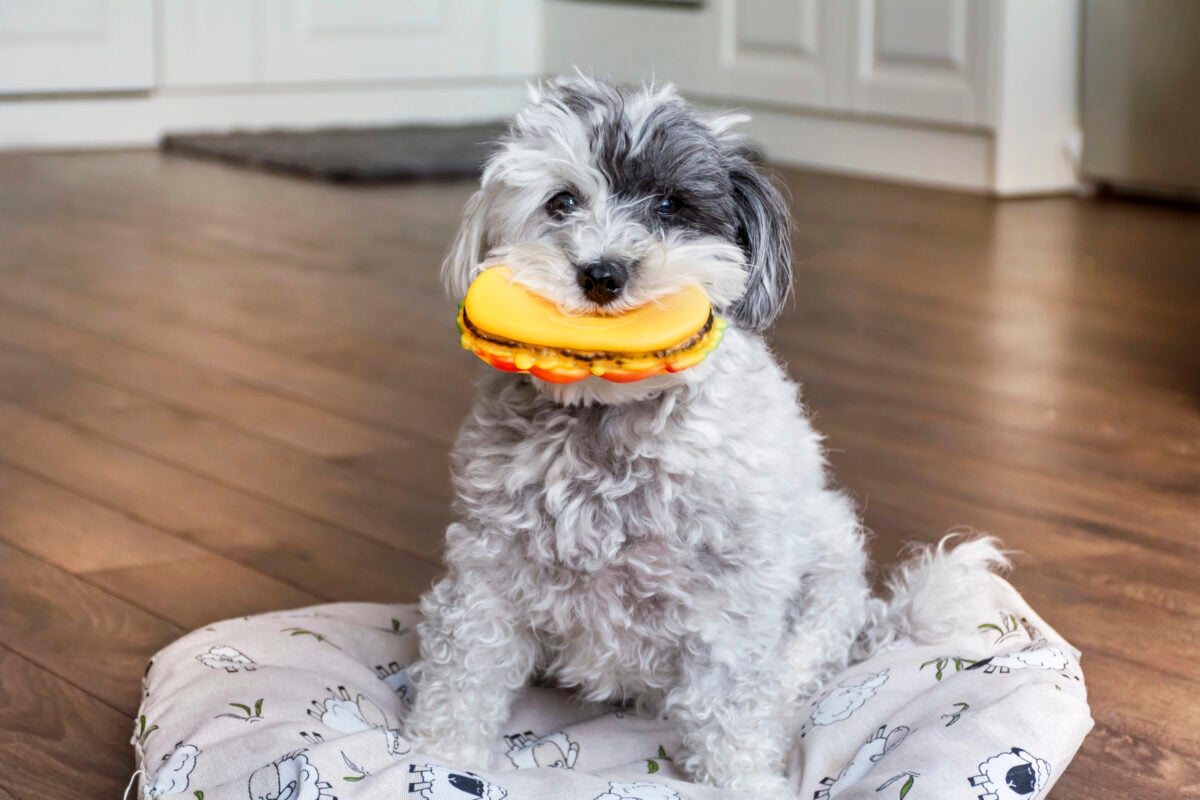
You can also teach your dog a “go to your mat” cue, giving them a familiar place to wait while you answer the door. Practice this separately before expecting it to work during an exciting arrival.
When Your Dog Jumps On Strangers During Walks
It’s one thing to ask family members to follow your training rules. Convincing random pedestrians to participate is another matter entirely.
Until your dog can greet people reliably, don’t allow every interested stranger to approach. If someone asks to pet your pup, it’s perfectly fine to say, “We’re working on greetings right now.”
Be cautious about letting strangers offer treats directly. If your dog is already pulling, jumping, or crowding them, the interaction may encourage more excitement. You can provide rewards yourself while maintaining a comfortable distance.
And remember, your dog doesn’t need to greet everyone you pass. Walking past someone without interacting is a valuable skill of its own.
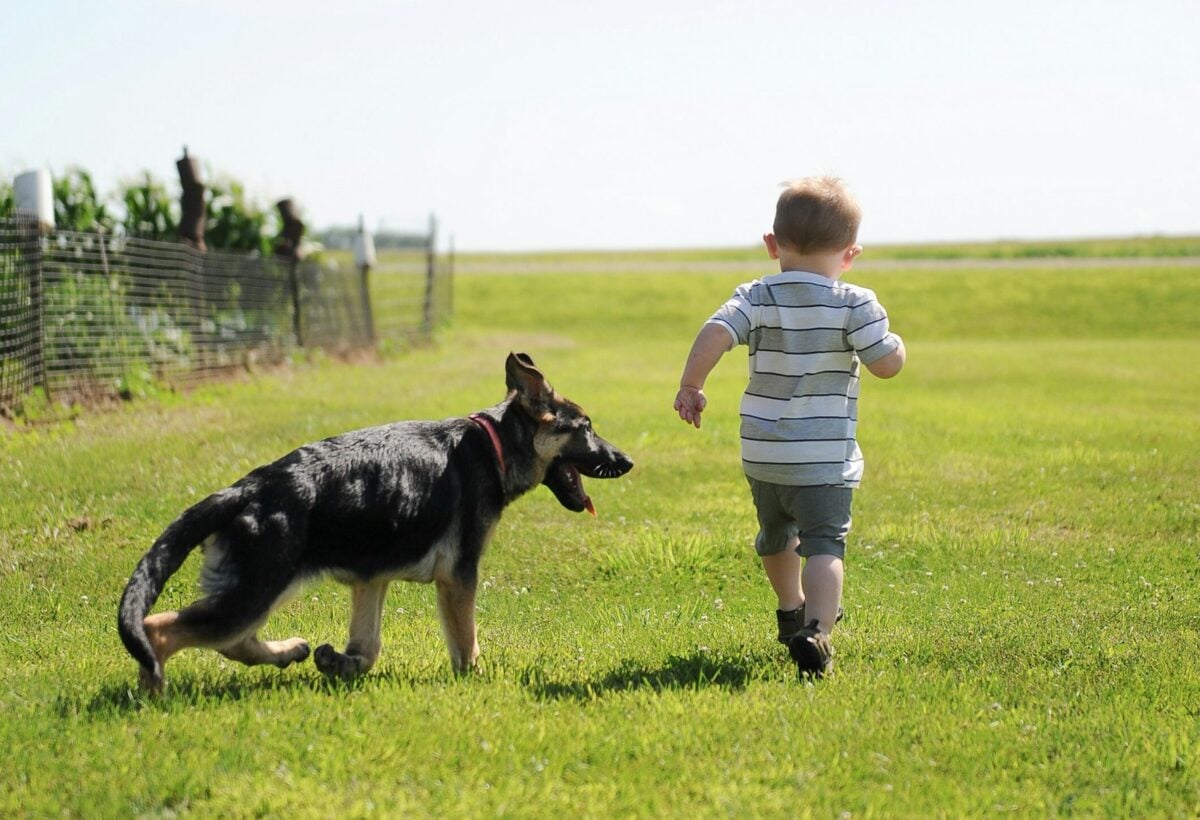
When Your Dog Jumps On Kids
Kids move quickly, speak excitedly, and sometimes respond to jumping by squealing, waving their arms, or running away. From an excited dog’s perspective, that can make the interaction even more stimulating.
However, even friendly jumping can frighten or injure a child.
For safer greetings:
- Have an adult manage the dog, using a barrier or leash when necessary.
- Don’t ask children to physically correct or restrain the dog.
- Practice calm behavior around children from a safe distance.
- Supervise interactions closely, even with familiar dogs.
- Separate the dog and child when either becomes overwhelmed.
Don’t use children as training partners for a dog who cannot reliably keep their paws on the ground. Practice with adults first and introduce child interactions only when they can be managed safely.
When Your Dog Jumps On Seniors
A jumping dog can pose a particular danger to older adults, especially those with balance difficulties, limited mobility, or fragile bones.
In these situations, preventing contact takes priority over practicing greetings. Use a gate, leash, or separate room rather than risking an unexpected leap.
Once your dog has a reliable history of calm greetings, you can arrange brief, supervised interactions if everyone is comfortable.
And there’s nothing wrong with deciding that certain visitors will interact with your dog from behind a barrier. Not every successful visit needs to include physical contact.
When Your Dog Jumps On Family Members
Sometimes the dog who behaves perfectly for visitors saves their most enthusiastic performances for the people they live with.
Think about what happens when someone comes home. Does your dog jump, receive an excited greeting, and immediately get scratched behind the ears?
That routine may have taught them that jumping is part of the welcome-home ceremony.
Try making homecomings a little less eventful. Put your belongings down, give your dog a moment to settle, and offer affection when they’re ready to greet you without jumping.
For dogs who get especially worked up, a predictable routine can help. You might give them a favorite toy to carry or scatter a few treats on the floor before saying hello.
The tricky part is getting everyone on board, including the family member who insists the dog only jumps because they love him so much.
When Your Dog Jumps Because They’re Overexcited
Some dogs don’t limit their jumping to greetings. The leash comes out, dinner preparation begins, a favorite toy appears, and suddenly they’re auditioning for a role in a trampoline commercial.
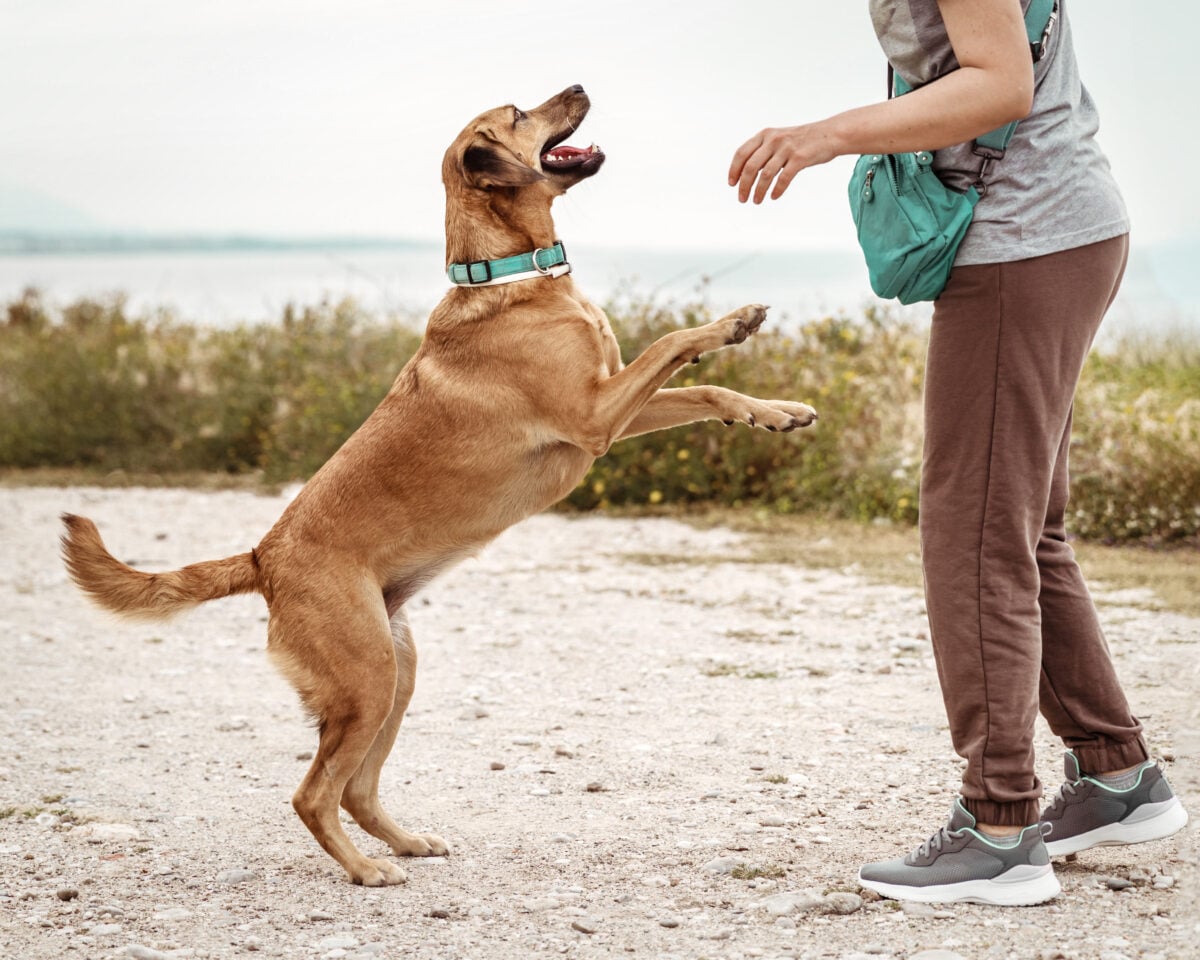
These dogs may struggle with managing excitement more generally, not just with greeting people.
The trick is to recognize what happens right before the jumping starts. Your dog might begin pacing when you reach for the leash or bouncing when they realize playtime is coming.
For example, if your dog jumps when you pick up the leash, practice reaching for it, then reward paws on the floor. Build toward clipping it on without the usual chaos.
For particularly excitable dogs, shorter training sessions, appropriate exercise, sniffing opportunities, and predictable routines can help make these situations more manageable.
What NOT To Do When Your Dog Jumps
When a dog launches themselves at you, reacting instinctively is understandable. Unfortunately, some common responses can make jumping worse or put someone at risk.
1. Don’t Lift Your Knee Into Your Dog
Some traditional training advice recommends raising your knee when a dog jumps. Don’t use this technique.
You could injure your dog, especially if they’re small. A large dog could also knock you off balance, potentially injuring both of you.
2. Don’t Push Or Shove Your Dog Away
Pushing can become part of an exciting physical game for some dogs. Others may find it frightening or uncomfortable.
Reward-based training is a safer, more effective approach, as recommended by the American Veterinary Society of Animal Behavior.
3. Don’t Rely On Ignoring Jumping Alone
Withholding attention can help when attention is what motivates the jumping. But ignoring your dog isn’t always practical or safe, particularly when they’re large enough to knock someone over.
More importantly, ignoring doesn’t teach your dog what you want instead. Combine reduced attention for jumping with active rewards for appropriate behavior.
Why Isn’t My Dog Getting Better At Not Jumping?
If you’ve been practicing and your dog still treats visitors like human climbing equipment, don’t automatically assume they’re stubborn. Something in the training setup may be making the behavior difficult to change.
| What’s Happening | What To Try |
|---|---|
| Your dog jumps before you can reward them. | Increase distance or start rewarding sooner. |
| They’re calm during practice but jump on guests. | Practice with more people and gradually increase excitement. |
| They jump only on certain family members. | Make sure everyone follows the same greeting rules. |
| They ignore treats when visitors arrive. | Use a barrier and start farther away, before excitement builds. |
| They’re good for a minute, then start jumping. | Keep greetings shorter and end them before excitement escalates. |
One behavior worth watching is jumping when petting stops. Some dogs learn that leaping up gets the attention started again, even when their initial greeting was polite.
Practice briefly pausing affection and rewarding your dog for staying grounded. Gradually increase the pause so they learn that attention can stop and start without having to jump for more.
When Can You Stop Using The Leash Or Gate?
Once your dog can reliably greet familiar people without jumping, you can begin reducing management gradually. Start with an easy situation, such as greeting a familiar helper while you hold a loose leash in a secure environment.
Look for consistent success across several greetings, not just one impressive performance. Your dog should be able to receive attention without jumping, respond to familiar cues, and recover when excitement increases.
As your dog improves, try a supervised greeting without the leash in a secure setting. If jumping returns, go back to using the leash or barrier and practice under easier conditions.
When Should You Get Help From A Professional Dog Trainer?
Some dogs need extra help learning to control their excitement, particularly when jumping has become a long-standing habit or is difficult to manage safely.
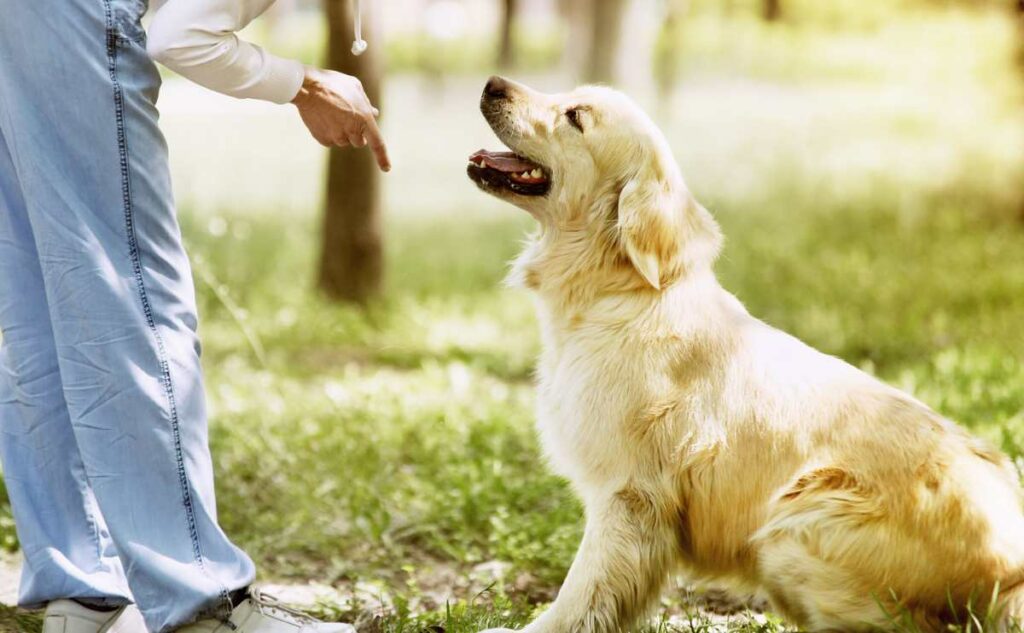
Consider working with a qualified, reward-based trainer if:
- Your dog is large or difficult to manage physically.
- Jumping regularly puts children, seniors, or visitors at risk.
- Your dog becomes increasingly frantic during greetings.
- Jumping includes hard mouthing, grabbing clothing, or other difficult behaviors.
- You’ve been practicing consistently but aren’t making meaningful progress.
If the jumping occurs alongside growling, snapping, fearful body language, or aggressive behavior, seek guidance from your veterinarian or a qualified behavior professional rather than treating it as ordinary overenthusiasm.
Look for a professional trainer or behaviorist who uses reward-based methods and can help adjust your dog’s training without physical punishment or intimidation.
Frequently Asked Questions
Still struggling with your dog’s enthusiastic greetings? Here are answers to common questions about jumping, training, and setbacks. Have a question we haven’t covered? Ask us in the comments below!
How Long Does It Take To Stop A Dog From Jumping On People?
There’s no universal timeline. Some dogs improve within a few practice sessions, while others need weeks or months of consistent work.
Progress depends on your dog’s age, excitement level, history of being rewarded for jumping, and how reliably people follow the training rules.
Don’t judge progress by whether your dog ever jumps again. Look for more successful greetings, quicker recovery from excitement, and fewer situations requiring physical management.
Should I Teach My Dog To Sit Instead Of Jumping?
You can, but sitting isn’t required. Four paws on the floor is a perfectly acceptable greeting behavior.
For some dogs, standing calmly is easier than holding a sit while an exciting person approaches. If you prefer a sit, teach it separately and gradually practice it during greetings.
Why Does My Dog Only Jump On Certain People?
Dogs learn different expectations with different people. Your dog may jump on someone who frequently gives enthusiastic attention while greeting other people calmly.
Certain voices, movements, scents, and past interactions can also make some people more exciting than others. Pay attention to how those individuals respond when your dog approaches.
Should Guests Give My Dog Treats?
They can, once your dog is ready. Start by providing the rewards yourself so your dog learns to remain calm around visitors without rushing toward their hands or pockets.
Later, willing guests can offer treats low to the ground during successful greetings. Never ask a child or someone uncomfortable around dogs to distribute treats during an uncontrolled greeting.
Can Dogs Grow Out Of Jumping On People?
Some dogs become less excitable as they mature, but jumping can persist when it continues earning attention or other rewards.
Don’t depend on your puppy eventually becoming too old to bother. Teaching appropriate greetings early can prevent a small, cute habit from becoming a much bigger problem.
Can I Let My Dog Jump On Me But Not On Other People?
It’s not a good idea. Dogs can learn different cues for different behaviors, but inconsistent greeting rules make training harder.
If you enjoy a special jumping hug, teach it as a separate behavior that happens only when invited.
Make four paws on the floor the default greeting first, so your dog doesn’t assume every visitor is requesting a full-body embrace.
What Should You Teach Your Dog Next?
Once your dog starts getting the hang of polite greetings, you may notice a few other manners that could use some work. Maybe they still drag you toward every stranger on walks, ignore you when something exciting happens, or treat the doorbell like a personal emergency.
Here are a few skills worth tackling next:
- Teach your dog to sit on command for a simple alternative to jumping when greeting people.
- Build better obedience skills with essential commands like stay, come, leave it, and off.
- Improve your dog’s socialization so meeting new people and encountering unfamiliar situations becomes more manageable.
- Teach your dog to come when called even when visitors, other dogs, or exciting distractions compete for their attention.
- Figure out why your dog ignores you when they seem to forget everything they’ve learned the moment something interesting happens.
Now, we’re curious: Who gets your dog’s most enthusiastic greeting? Is it you, visitors, or that one family member who insists they don’t mind being jumped on? Tell us in the comments!