When you purchase through links on our site, we may earn a commission. Here’s how it works.
If I so much as scratch another dog behind the ears, my own pup, Tiny, materializes out of nowhere and wedges himself between us like a furry nightclub bouncer. His body goes stiff. His eyes narrow. One paw lands squarely on my arm — polite, but certainly not subtle. Message received: Excuse me, that’s my human.
Table of Contents
Most dog parents have lived some version of this scene. You laugh. You feel a flicker of guilt. And then the question creeps in: Can dogs get jealous… or am I reading too much into it? Does your little canine companion consider you a serial cheater?
Here’s the short answer: yes, dogs can get jealous. But it’s not the dramatic, scheming kind we associate with humans. It’s usually quieter, weirder, and often funny, and sometimes more meaningful than we realize. Understanding what that jealousy looks like and when it matters is where things get interesting.
Do Dogs Get Jealous, Or Are We Projecting Human Feelings?
Dogs don’t sit around replaying social slights or spiraling into insecurity. They’re not stewing or keeping score. And they’re definitely not crafting a long-term grudge.
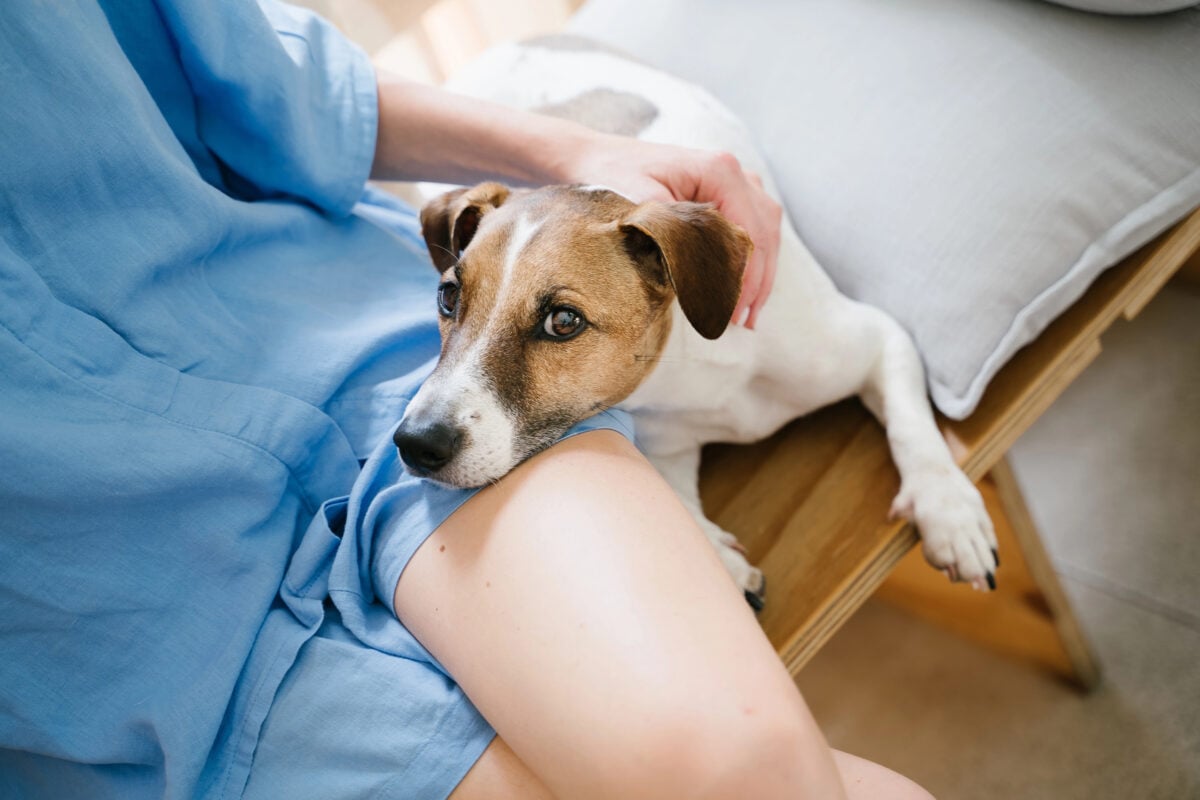
But they do form strong social bonds, and they absolutely notice when something important to them, like your attention, suddenly shifts. That’s where jealousy enters the picture.
Researchers have found that dogs show clear, jealousy-like reactions in social situations involving their owners. In one well-known study, dogs watched as their person showed affection to a very realistic fake dog. Many reacted immediately, wedging themselves in, whining, barking, even snapping. When that same attention went to an inanimate object instead, those behaviors dropped off fast.
That difference matters. It tells us dogs weren’t just upset about being ignored. They were reacting to who was getting the attention.
So when people ask, Do dogs feel jealousy? The most accurate answer is: dogs experience emotional reactions that function a lot like jealousy, even if they don’t experience it the same way humans do. The label isn’t perfect, but it’s close enough to be useful.
What matters more than the word “jealousy” is what those reactions look like in real life and how easily they can sneak past us before we realize what’s happening.
Yes, Your Dog Is Absolutely Aware When You’re “Cheating” On Them
It turns out dogs don’t just react in the moment. In some cases, they anticipate what’s about to happen.
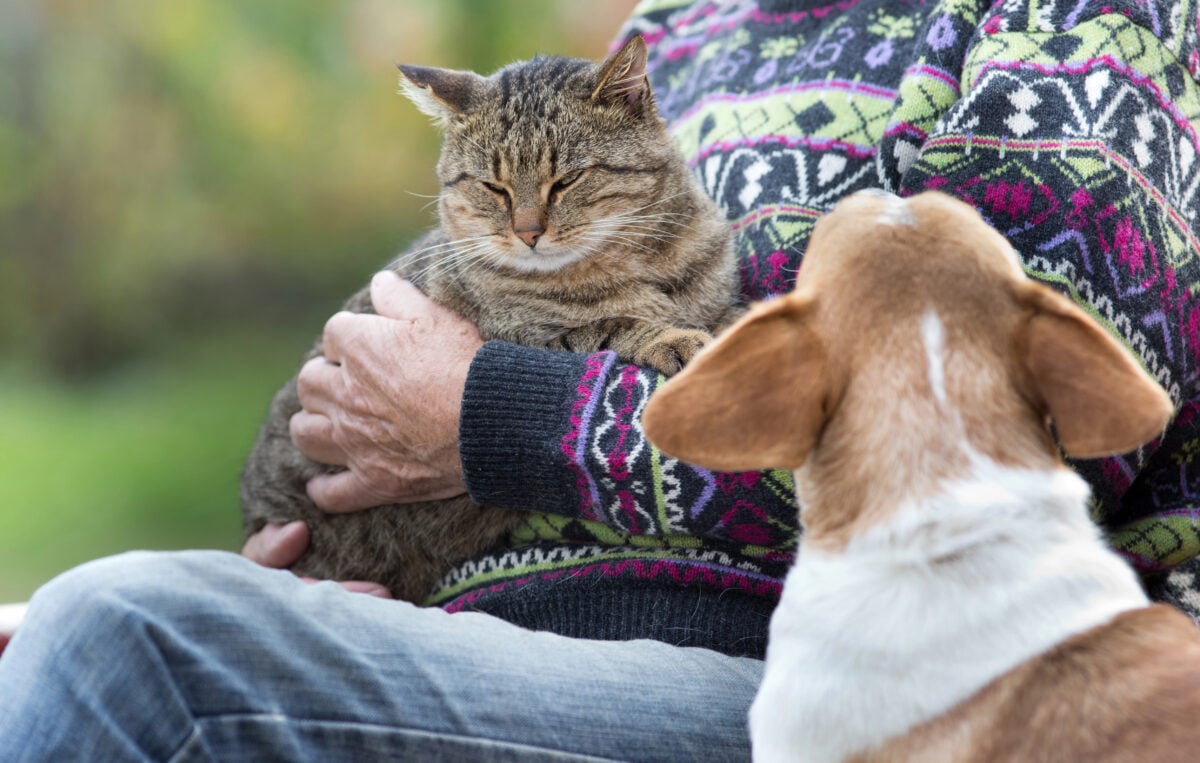
A study published in Psychological Science found that dogs responded differently when their owner showed affection to a realistic artificial dog versus an inanimate object. When a social “rival” was involved, dogs pulled harder to reach their owner — even after the interaction was hidden behind a barrier.
That detail is fascinating. The dogs weren’t reacting to movement, noise, or chaos they could see. They were tracking a social situation they knew was happening. And when that attention shift involved another dog rather than a neutral object, the response ramped up. In other words, dogs don’t need a front-row seat to feel left out.
What Dog Jealousy Looks Like In Real Life
Dog jealousy rarely kicks the door down. With many pups, it sneaks in quietly and politely. And then suddenly, your dog is right there.
Tiny doesn’t growl or snap when he’s feeling left out. He escalates his presence by inching closer and leaning in harder. And before I know it, his body is perfectly positioned between the other dog and me, like he’s just discovered the concept of personal boundaries and decided they’re optional.
Many dogs do the same thing, just with their own flair. Instead of turning the situation into a scene worthy of the Jerry Springer show, they get involved in their own chosen way.
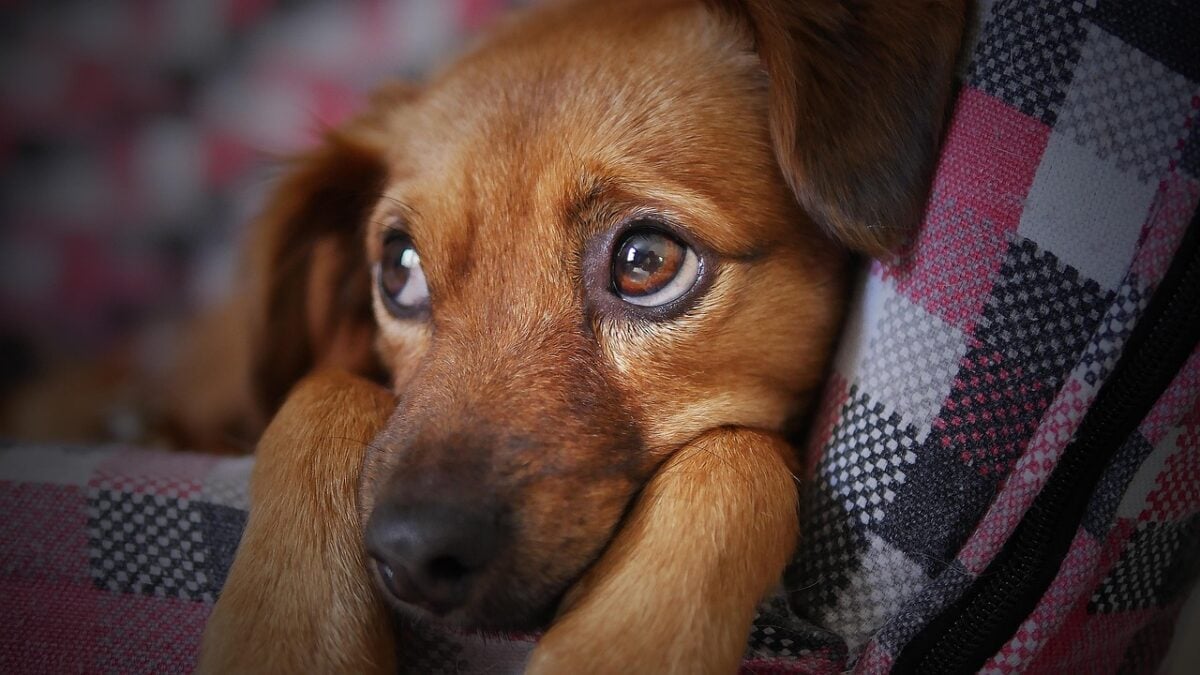
You might notice your dog nudging your hand away mid-pet, slipping between you and someone else, or inserting themselves into cuddles with impeccable timing. If you’re nodding along, rest assured, you’re certainly not alone.
These behaviors are widespread in dogs who bond closely with their people, and they’re rarely about being dominant, spoiled, or “bad.” Most of the time, they’re about attention, attachment, and social awareness.
Dogs are wired to notice who gets touched, who gets praised, and who has access to you. When that changes, some dogs feel the urge to say, “Hey. I’m still part of this.” And the ways they say it? Subtlety is not always their strong suit.
The Jealousy Behaviors That Are Mostly Just… Dog Stuff
Not every jealous moment is a warning sign. Some are just about your dog expressing opinions, loudly with their body.
These behaviors can look dramatic, even calculated, but they’re usually harmless, especially when they’re brief, don’t escalate, and dissolve as quickly as they appear.
1. The Strategic Body Block
Your dog calmly steps between you and another dog, person, or object like they’re on a private security detail. There’s no growling or barking. Just a perfectly placed torso.
This isn’t usually about confrontation. It’s about proximity. Your dog wants access to you and chooses the most efficient path: occupying the space where attention lives.
2. The Sudden, Urgent Need For Touch
You’ve gone days without your dog caring about lap time. Then you pet someone else and — boom —they’re touching you in at least three places. Head on knee. Paw on arm. And full-body lean. This behavior is a gentle reminder that physical closeness remains an option.
3. The Very Loud, Deeply Meaningful Sigh
Some dogs bark. Others communicate through exaggerated breathing. While that long, theatrical sigh when attention shifts seems like heartbreak, it’s just commentary. If it ends there, it’s usually just mild frustration expressed with Oscar-worthy timing.
4. The Impeccable-Timing Interruption
Your dog was asleep across the room. Or so you thought. The second you sit down and pet another dog, they wake up with purpose.
This doesn’t mean they were watching the whole time. It just means they’re extremely good at reading patterns and suspiciously good at showing up right on cue.
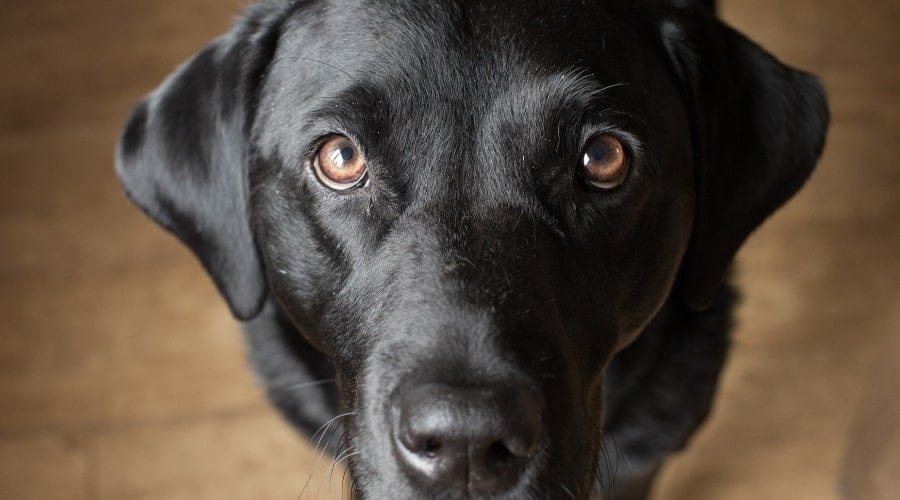
5. The Silent Stare
We’ve all seen this in our pups for various reasons. There’s no movement or sound — just eye contact that says, I see what’s happening here.
As long as the body stays loose and the moment passes, this is usually harmless social monitoring, not a challenge.
When These Behaviors Stay In The Safe Zone
These moments are generally not a concern when they stay brief and self-resolving. As long as your dog isn’t escalating, growling, snapping, or preventing others from moving freely (and everyone involved stays comfortable), you’re likely still in normal territory.
Many dogs soften these habits as routines settle and trust builds. Tiny still body-blocks now and then. He just does it with less urgency. Progress in my house comes in baby steps.
The Moment You Realize This Isn’t Just A Phase
There’s usually a point when jealousy stops being funny and starts feeling specific.
Maybe it’s the way your dog only reacts when one particular person or pet gets attention. Or how the behavior never shows up randomly — it always appears in the same situations, the same way, every time.
That’s when most dog parents pause and think, Okay. This isn’t a coincidence.
With Tiny, it wasn’t the behavior itself. It was the consistency. He didn’t interrupt every interaction. He interrupted very particular ones with identical precision. That’s often the giveaway.
Jealousy doesn’t pop up at random. It can follow patterns. And once you spot those patterns, the behavior suddenly makes a lot more sense.
Do Dogs See Us As Family?
If jealousy feels personal, it’s usually because it is. Dogs don’t just see you as a food dispenser or walking buddy. They see you as part of their social group and their inner circle. You’re the being they eat with, rest near, follow, and feel safest around.
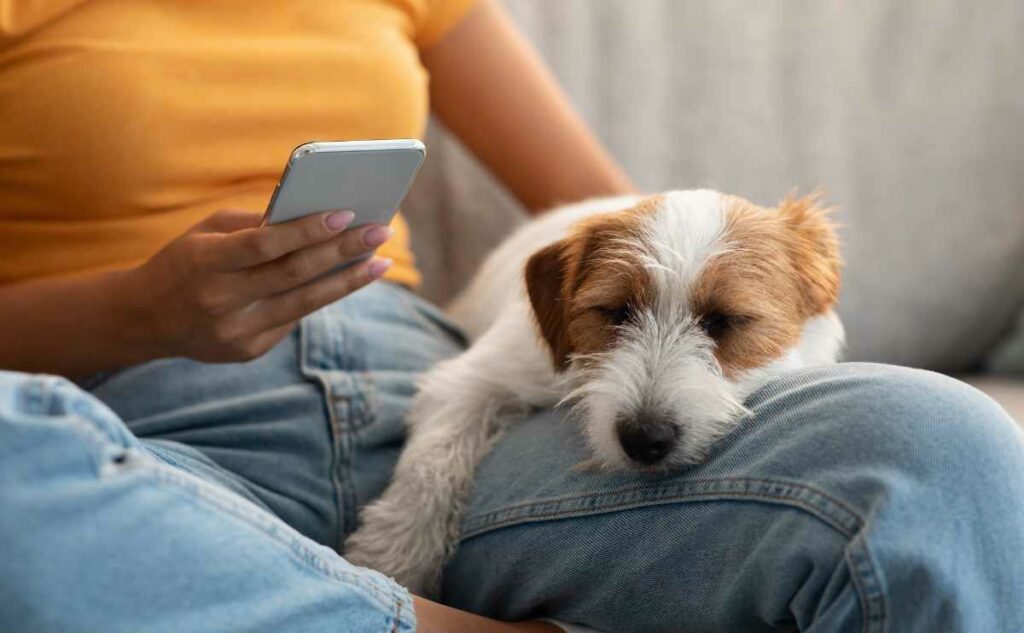
That’s why jealousy shows up. When your attention shifts, it can feel like a change in the relationship itself. Dogs are wired to track closeness, access, and connection because in social species, those things matter.
Research backs this up. Studies have shown that dogs form attachment bonds to their humans that closely resemble the bonds young children form with caregivers. They seek proximity when stressed, use us as a secure base, and show distress when that connection feels threatened.
So when your dog wedges themselves between you and someone else, they’re not being possessive in a human sense. They’re responding to a perceived disruption in a relationship they depend on. In other words, jealousy isn’t a flaw in the bond; it’s a side effect of it.
And once you understand that, a lot of “jealous” behavior starts to look less like attitude and more like communication.
Do Dogs Get Jealous Of Each Other? Ask Anyone With Two Dogs And One Couch
If you’ve ever tried to pet two dogs at once and somehow offended both of them, you already have your answer. Yes, dogs get jealous of each other.
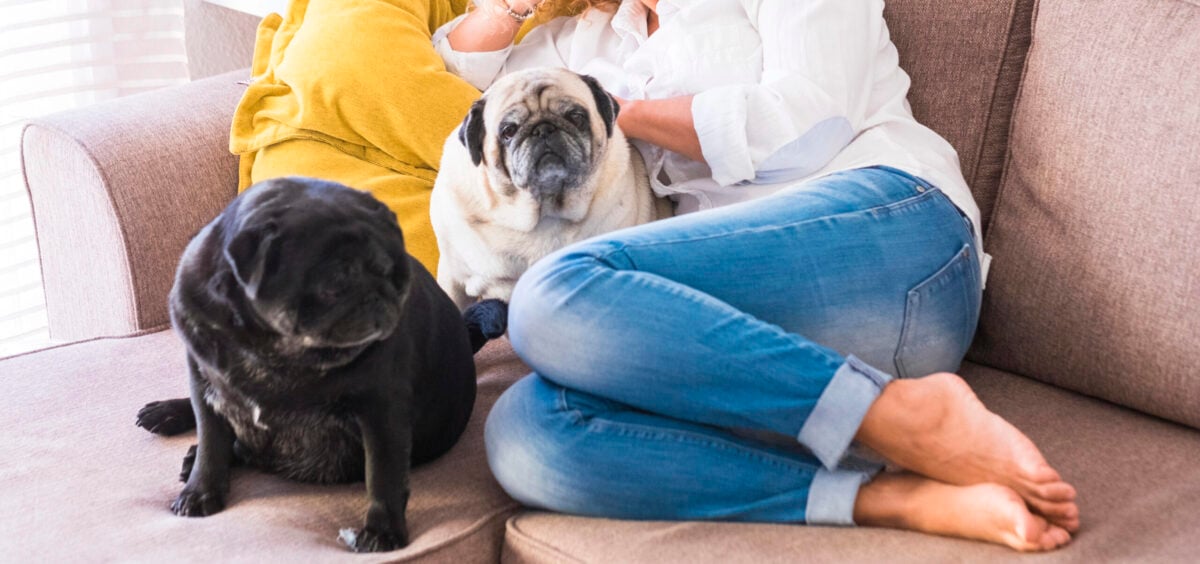
Tiny is usually polite around other dogs until another one starts getting what he considers exclusive attention. Then, he simply appears quietly directly in the middle. A furry body where there wasn’t one a moment ago and a paw on my arm like a well-placed bookmark.
Other multi-dog households see the same patterns:
- One dog physically blocks the other
- Competition for lap space
- Tension during greeting time
- One dog becomes clingier when the other is praised
- Subtle body stiffening or staring
In multi-dog homes, jealousy often looks less like fighting and more like choreography. One dog blocks access. Another hovers closer. Someone suddenly needs affection right now, the moment the other gets praised.
In fact, sibling rivalry, aka resource guarding of owner attention, is one of the most common triggers for tension in multi-dog households.
Dogs notice who gets greeted first, petted longer, or talked to like the favorite. And when that balance feels off, they adjust. Most of the time, it’s not aggression. It’s just dogs trying to stay close to what matters most, and that’s you.
The Subtle Signs of Jealousy Many People Miss
Not all jealousy is obvious. Some dogs don’t wedge, whine, or interrupt. They go quiet instead. You might notice:
- Hovering without touching
- Suddenly lying nearby but not engaging
- Watching interactions closely from a distance
- Becoming extra obedient when attention shifts
- Withdrawing slightly instead of competing
These pups aren’t less affected. They’re just quieter about it.
Quiet jealousy often gets overlooked because it doesn’t demand attention. But it still deserves consideration, especially in multi-dog homes where one dog consistently steps back while another steps forward. Dogs cope in various ways.
Why Jealousy Seems To Show Up At The Worst Possible Times
Jealousy often rears its head when you’re distracted, overwhelmed, or absolutely not in the mood to manage dog politics.
New partner? Suddenly, your dog needs to sit between you.
New baby? Your fur bundle has opinions about where your hands should be.
Houseguests? Your dog would like to personally supervise every hug.
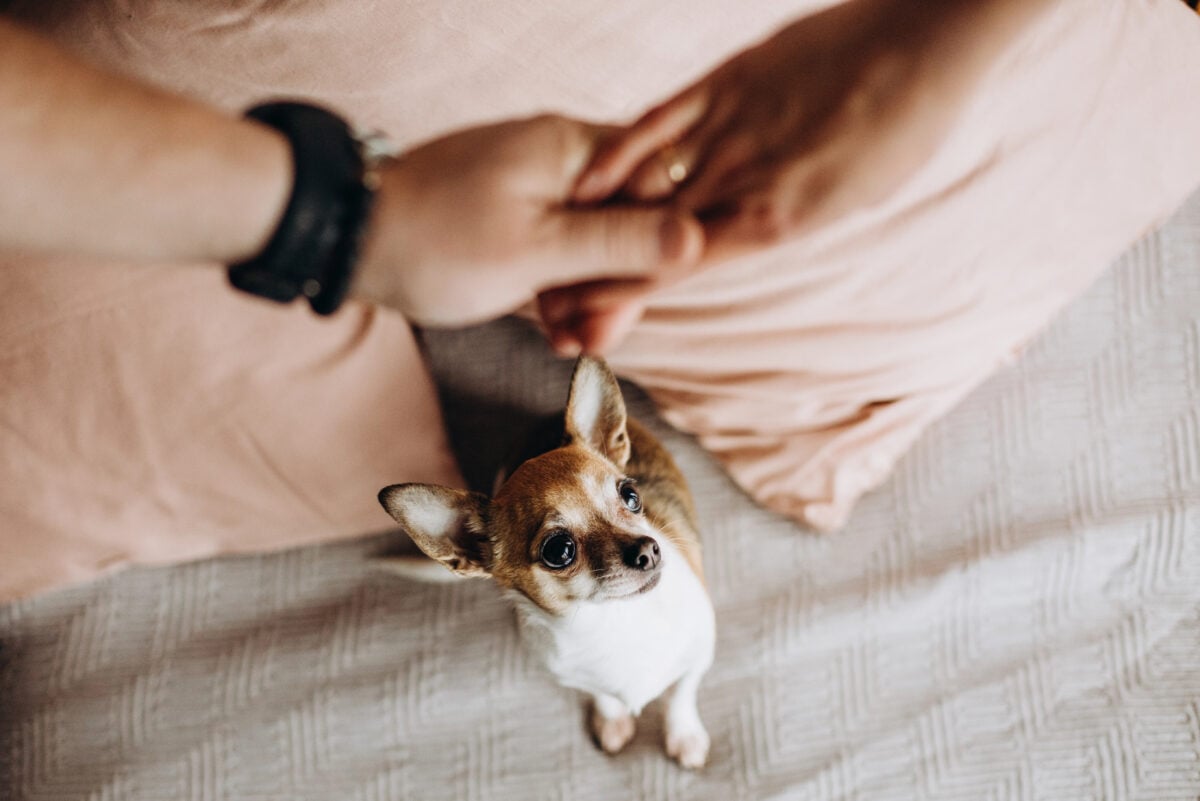
That timing isn’t accidental. Dogs are pattern-spotters. When something new enters their world (another person, another pet, a significant life change, etc.), it often comes with one major side effect: your attention shifts.
From your dog’s perspective, that’s not a small change. Attention equals access. Access equals connection. And connection is kind of a big deal.
So jealousy tends to flare during moments of transition, when routines change, energy shifts, and your dog isn’t quite sure where they fit. It’s less about the new thing itself and more about what it changes.
This is why jealousy often fades once routines settle and expectations become clear again. Until then, your dog may run a few experiments. Nothing dramatic; just little check-ins to see if they’re still part of the inner circle.
Which Situation Brings Out Your Dog’s Inner Drama Most Often?
- Another dog existing nearby
- Your partner receiving unauthorized affection
- A baby or child stealing the spotlight
- Guests who make the mistake of sitting too close
- Honestly, they don’t care at all
Share your pup’s reactions in our comments!
When Jealousy Is Normal & When It’s Not
Here’s the reassuring part most dog parents need to hear. Mild jealousy is normal. A little “Hey, remember me?” energy is usually just a dog checking in on their place in the social order.
Tiny’s version of jealousy is annoying at worst and mildly hilarious at best. He’s not distressed or aggressive. He just wants to be included, preferably front and center.
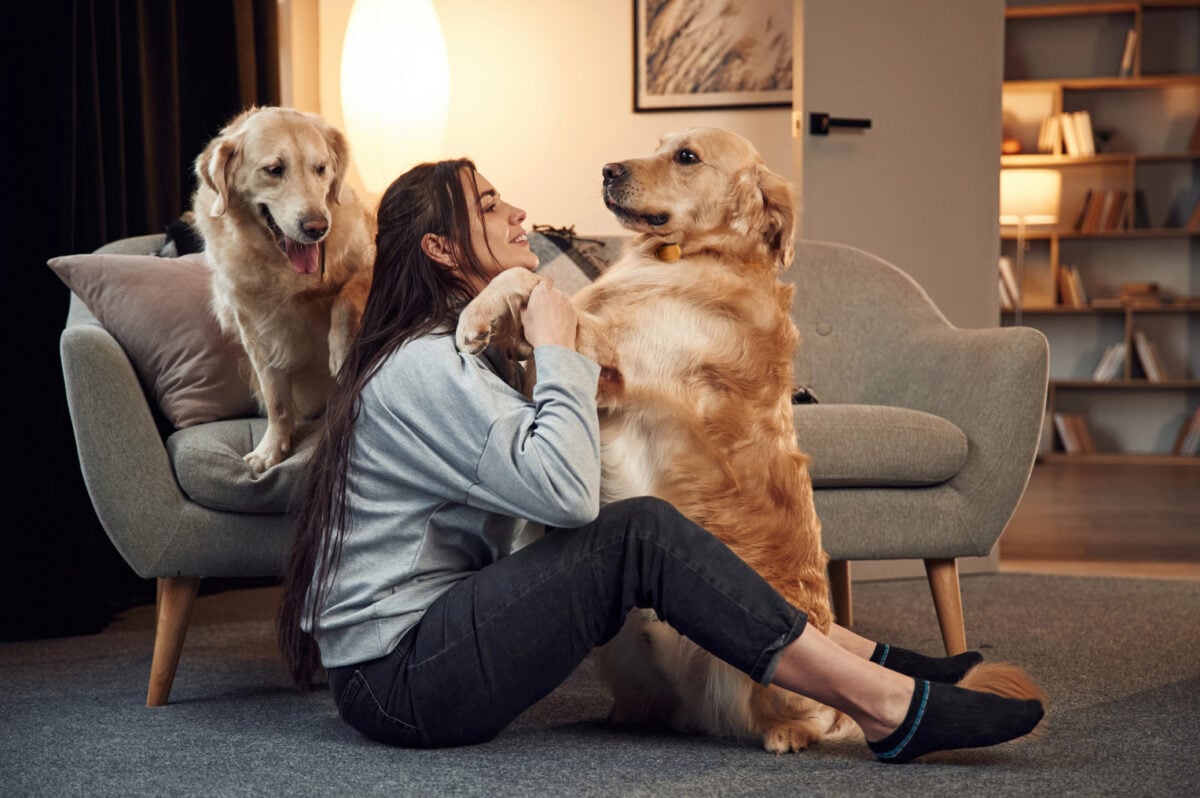
But jealousy becomes a problem when it starts causing stress or safety concerns. Pay closer attention if you see:
- Growling or snapping that escalates
- One dog consistently intimidates another
- Guarding behavior around you
- Anxiety signs like pacing, trembling, or avoidance
- Jealousy that worsens instead of easing over time
At that point, it’s no longer just a personality quirk. It’s information, and it’s worth addressing before it becomes harder to manage.
Why Some Dogs Are More Dramatic About It
If you’re reading this thinking, “Okay, but my dog takes this to another level,” you’re not wrong, and you’re not alone.
Just like people, dogs bring their own personalities, histories, and attachment styles into every relationship. Some dogs notice a shift in attention and shrug it off. Others feel it deeply and make sure everyone else notices too. Nothing captures this better than social media…
The “You’re My Person” Effect
Dogs who form strong bonds with their humans tend to react more when that bond feels disrupted. Tiny lives here. He doesn’t want attention from everyone. He wants it from me. Preferably uninterrupted and preferably forever.
Big Feelings, No Filter
Some dogs are naturally easygoing. Others feel things deeply and show it immediately. Neither is wrong. Think of it like people. Some folks shrug when plans suddenly change. Others need a moment, a sigh, and maybe a cup of coffee. Dogs are no different.
If It Worked Once, It’s Worth Trying Again
Dogs repeat what gets results. If nudging, whining, or inserting themselves has earned extra attention in the past, that behavior sticks — not because your dog is manipulative, but because it’s effective. This is how jealousy behaviors sometimes grow louder over time.
Are Some Breeds More Jealous Than Others?
While there’s no scientific evidence that some dog breeds get more green with envy than others, many pup parents may disagree.
Check out this top 3 most jealous breed video. Do you agree?
What Not To Do When Your Dog Acts Jealous
When jealousy pops up, we tend to think our instincts make sense, but they can accidentally make things worse. A few well-meaning reactions can reinforce the behavior or increase tension without solving the underlying issue.
1. Don’t Scold or Punish
Jealous behavior in dogs is a form of communication.
Those who wedge, hover, or interrupt are expressing uncertainty about access and attention. Responding with scolding or punishment adds pressure to an already emotional moment and often intensifies stress-related behaviors over time.
2. Don’t Dramatically Reassure
Overblown emotional responses amplify behavior.
It’s tempting to shower your dog with affection, such as extra cuddling, dramatic baby talk, or immediate attention, the moment they act jealous. Unfortunately, that can backfire by teaching them that their behavior works.
Your dog learns, “This is how I get my person back.” A calm, neutral response keeps the situation grounded.
3. Don’t Let Dogs “Sort It Out”
Human guidance maintains social balance.
When dogs compete for attention, clear structure prevents escalation. Leaving dogs to negotiate access independently often increases uncertainty and stress, particularly in multi-dog households.
Most jealousy-related issues ease when expectations are consistent, and attention is managed intentionally.
What Actually Helps Jealous Dogs Feel Secure
Security grows from predictability. Dogs settle fastest when they understand how attention works and what earns it. Small, consistent choices tend to matter more than big training moments.
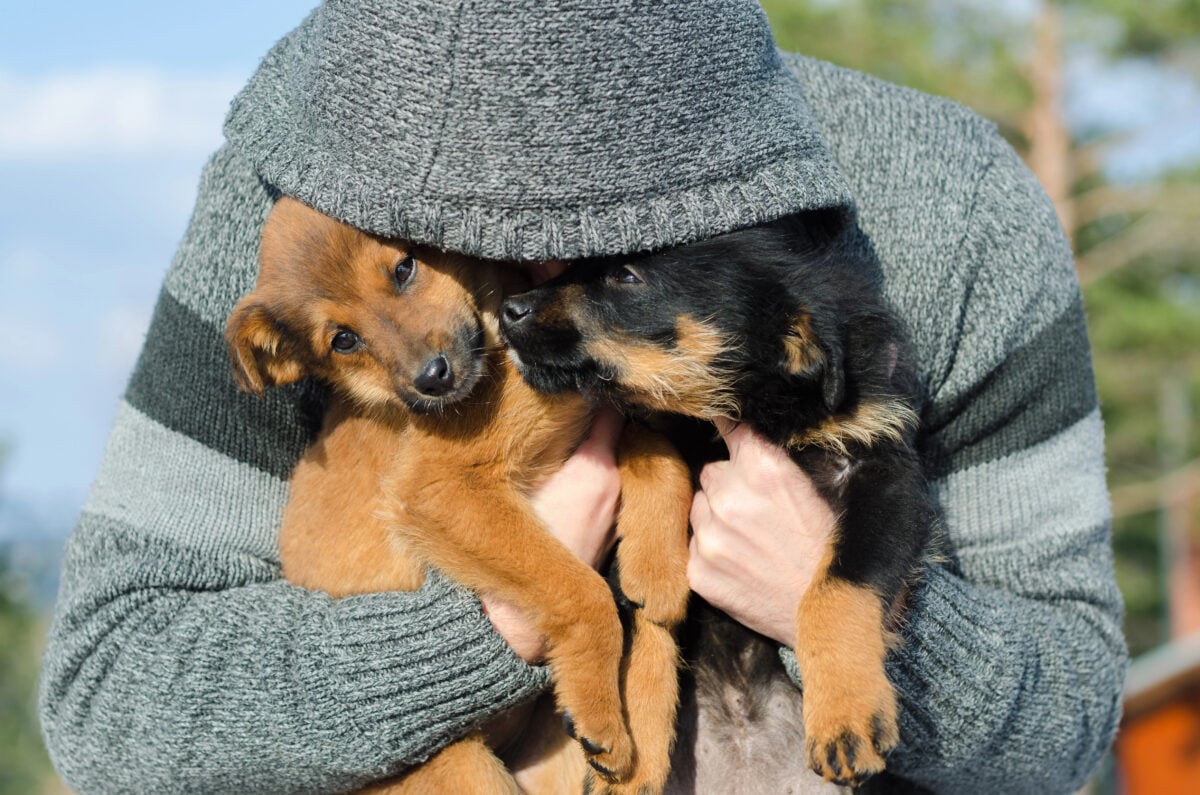
1. Predictable Routines Build Trust
Consistency lowers emotional intensity.
When daily rhythms, such as walks, meals, quiet time, and attention, stay reliable, dogs spend less energy monitoring change. Predictable routines reduce the need for check-ins because your dog already knows when connection is coming.
2. One-On-One Time Counts
Dedicated attention helps prevent competition.
Short, intentional moments of individual focus often ease jealousy more than constant shared interaction. Even a few minutes of solo play, training, or calm affection helps reinforce security, especially in multi-dog homes.
3. Calm Behavior Earns Access
Dogs repeat what gets rewarded.
When attention flows toward relaxed, patient behavior, dogs learn that calm involvement works. Waiting quietly, lying nearby, or choosing proximity without interruption becomes a reliable strategy. Positive reinforcement training helps dogs regulate emotions instead of reacting impulsively.
4. Teach An “Involved But Calm” Option
Participation doesn’t require interruption.
Many dogs benefit from learning a clear alternative, such as lying at your feet, resting on a mat, or sitting beside you, when attention shifts elsewhere. This gives them a role without escalating the moment.
Over time, these patterns replace urgency with confidence. Jealousy rarely disappears overnight. It softens as dogs learn what to expect—and trust that their place in the relationship is steady.
What Jealousy Says About Your Dog (And Your Relationship)
This is the part I always come back to with Tiny. I don’t see his jealousy as a problem to fix. I see it as information.
Jealousy shows that your dog is connected to you and tuned in to your relationship. It reflects awareness, attachment, and a desire to stay close — not a flaw in training or temperament. That doesn’t mean every behavior gets a pass. It simply means there’s no need for guilt or defensiveness when it shows up.
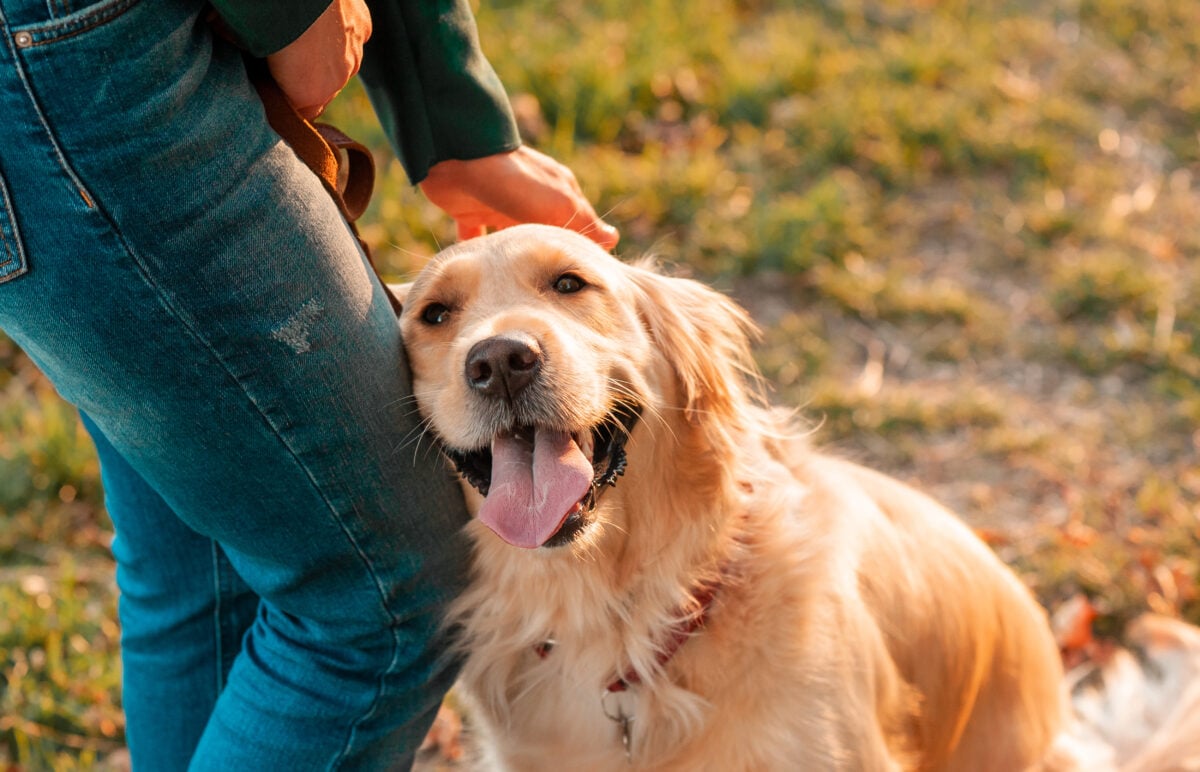
Dogs are emotional beings navigating a very human world. They’re learning our rules, our rhythms, and our ever-changing definitions of “normal.” With consistency, patience, and a sense of humor on your part, most dogs figure out that attention can be shared, and that their place is secure — even if they occasionally test that theory by standing directly on your chest while you pet someone else.
Frequently Asked Questions
These are the questions dog parents ask most often. If your pup’s behavior doesn’t fit neatly into any of them, that’s normal, too. Real dogs don’t read rulebooks. And chances are, someone else is navigating the exact same thing you are. Drop your question in the comments.
Can Dogs Get Jealous Of Their Owners’ Partners?
Yes. New relationships often change routines, affection patterns, and physical closeness. Dogs notice those shifts immediately. With time, predictability, and consistent attention, most dogs adjust without issue.
Can Dogs Get Jealous of Babies?
Yes. From your dog’s perspective, a baby is loud, unpredictable, and suddenly receiving round-the-clock attention. Some dogs withdraw. Others become clingier. Some show jealousy-like behaviors when attention shifts to the baby. This reflects adjustment, not danger or failure.
Veterinary behavior experts emphasize gradual introductions, supervision, and building positive associations when dogs and babies share a home.
Do Dogs Feel Jealousy The Same Way Humans Do?
No. Dogs don’t ruminate or compare themselves socially the way humans do. Their jealousy is tied to attachment, access, and awareness of attention, not resentment or insecurity.
Can Dogs Grow Out Of Jealousy?
Often, yes. With maturity, training, and predictable routines, many dogs become more relaxed about shared attention.
Is Jealousy A Sign My Dog Is Insecure?
Not necessarily. It often means your dog is bonded and socially aware. It becomes a concern only if it causes stress or aggression.
Should I Stop Petting One Dog If Another Gets Jealous?
No. Instead, manage the situation by rewarding calm behavior and giving each dog individual attention at other times.
Understanding Your Dog’s Emotions
If you’re navigating multi-dog dynamics, new routines, or big household changes, it helps to understand how dogs communicate stress, affection, and social signals in everyday life.
You may find these helpful:
What does doggy jealousy look like in your house? Is it subtle, dramatic, or impressively strategic? Share in our comments what your furry friend does when attention shifts.