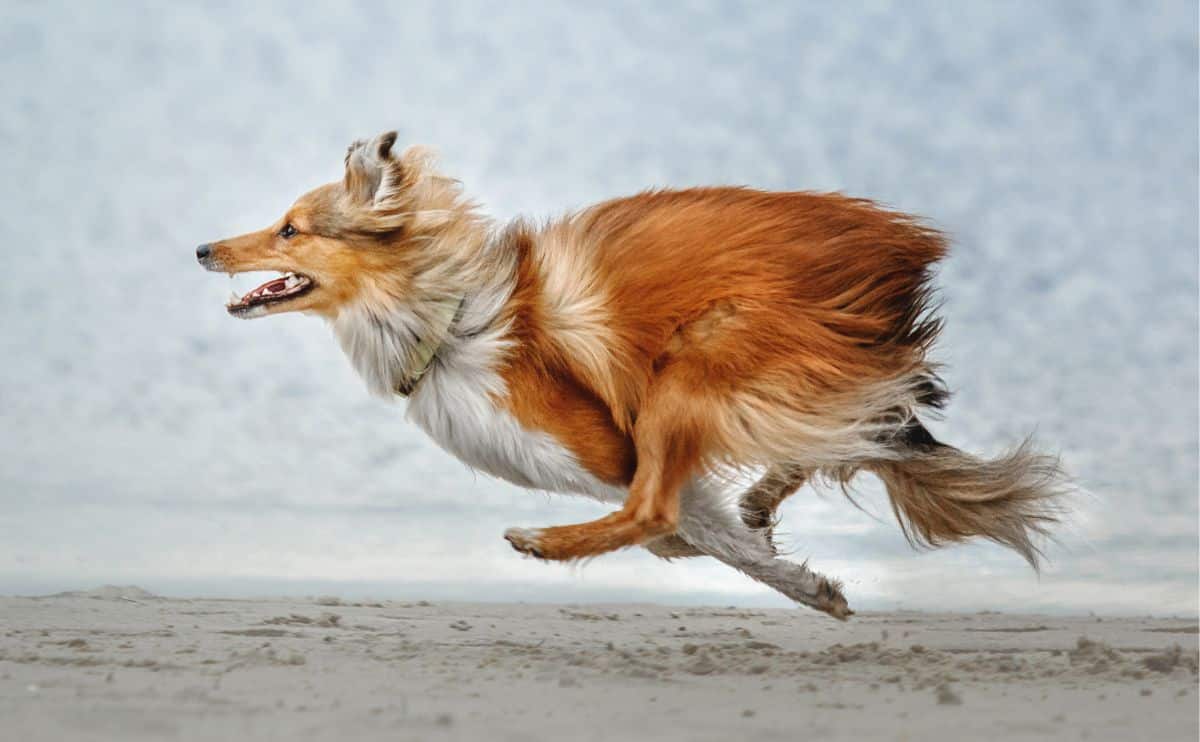
When you purchase through links on our site, we may earn a commission at no extra cost to you. Learn more.
Sound familiar? Your dog ignores commands they clearly understand, pushes past you through doorways, guards the couch, food, or even you, and seems perfectly comfortable deciding how things are going to go.
Table of Contents
It’s easy to look at those behaviors and wonder if your dog thinks they’re the “alpha.” But what looks like dominance is usually something else entirely. Once you understand what’s actually driving it, you can stop worrying about who’s in charge and start changing the patterns that are causing problems.

Is This Really Alpha Behavior?
When people describe a dog as acting “alpha,” they’re usually talking about behavior that makes them wonder who’s really running the show.
That might look like a dog who:
Want our human-written content to rank above AI-generated garbage? Help us out by clicking this button!
- Ignores cues they clearly understand
- Rushes through doors or pushes past people
- Refuses to give up a favorite couch, bed, or resting spot
- Guards food, toys, spaces, or even a favorite person
- Demands attention and keeps escalating until they get it
Those behaviors can feel surprisingly deliberate. But most dogs aren’t evaluating their status in the household or trying to move above you in some invisible ranking.
What looks like dominance is more often a mix of learned behavior, reinforcement, excitement, stress, fear, and unclear expectations.
If ignoring a cue has worked before, your dog may keep ignoring it. If refusing to leave the couch means they get to stay there, staying put pays off. If they guard a favorite toy because they’re worried it will disappear, that behavior may be rooted in insecurity rather than a desire to control you.
The behavior itself is real. The “alpha” explanation is usually where things go wrong. Figuring out what your dog is getting from the behavior — or what they’re struggling with when it happens — gives you a much better starting point for changing it.
Why Do Dogs Show Behaviors We Call “Dominant?”
When a dog keeps repeating the same frustrating behavior, it’s easy to assume they’re doing it on purpose. From your side, it can feel like they’re pushing boundaries just to see what they can get away with. But it helps to understand what’s actually going on in their minds. This is the “why” behind the behavior.
1. Learned Behaviors That Keep Paying Off
Dogs repeat what works. If pulling on the leash gets your dog where they want to go, pulling becomes the default. If ignoring a cue doesn’t change anything, ignoring it feels safe.
This is why some behaviors feel stubborn. They aren’t emotional decisions. Their habits were built on consistency, even when the consistency wasn’t intentional.
2. Inconsistent Boundaries Feel Like Permission
Dogs are excellent at spotting patterns, including the ones you don’t realize you’re creating. Rules that apply sometimes, but not others, tend to disappear entirely from a dog’s mental rulebook.
One day, the couch is off-limits. The next day, it’s fine because everyone’s tired. From your dog’s point of view, the rule didn’t change. It dissolved.

3. Stress, Arousal, And Overstimulation
Some dogs get labeled as dominant simply because they struggle to slow down. High energy, constant motion, and difficulty settling can look bold or pushy when it’s really a sign that your dog is running a little too hot.
When arousal stays high, impulse control drops. Your dog isn’t choosing to ignore you. They’re having trouble filtering out everything else.
4. Fear And Resource Insecurity
Growling, guarding, or snapping behaviors often scare owners the most, and they’re frequently mistaken for power plays. In reality, these behaviors are usually rooted in uncertainty or fear, not confidence.
Dogs guard things they think might be taken away. That includes food, toys, spaces, and sometimes people. The behavior is protective, not dominant, even if it looks confrontational on the surface.
5. Breed Traits That Get Misread
Some breeds are naturally more independent, vocal, or persistent. That doesn’t make them dominant. It makes them dogs with strong opinions and specific wiring.
When those traits meet unclear boundaries, the behavior can look intentional. It isn’t. It’s just a dog being very good at being themselves.
Breeds Commonly Labeled As “Alpha” (But Rarely Are)
Some breeds get called “alpha” more often than others, usually because they’re confident, independent, or less eager to please. That label sticks fast, even when the behavior is really about personality, energy level, or breed wiring.
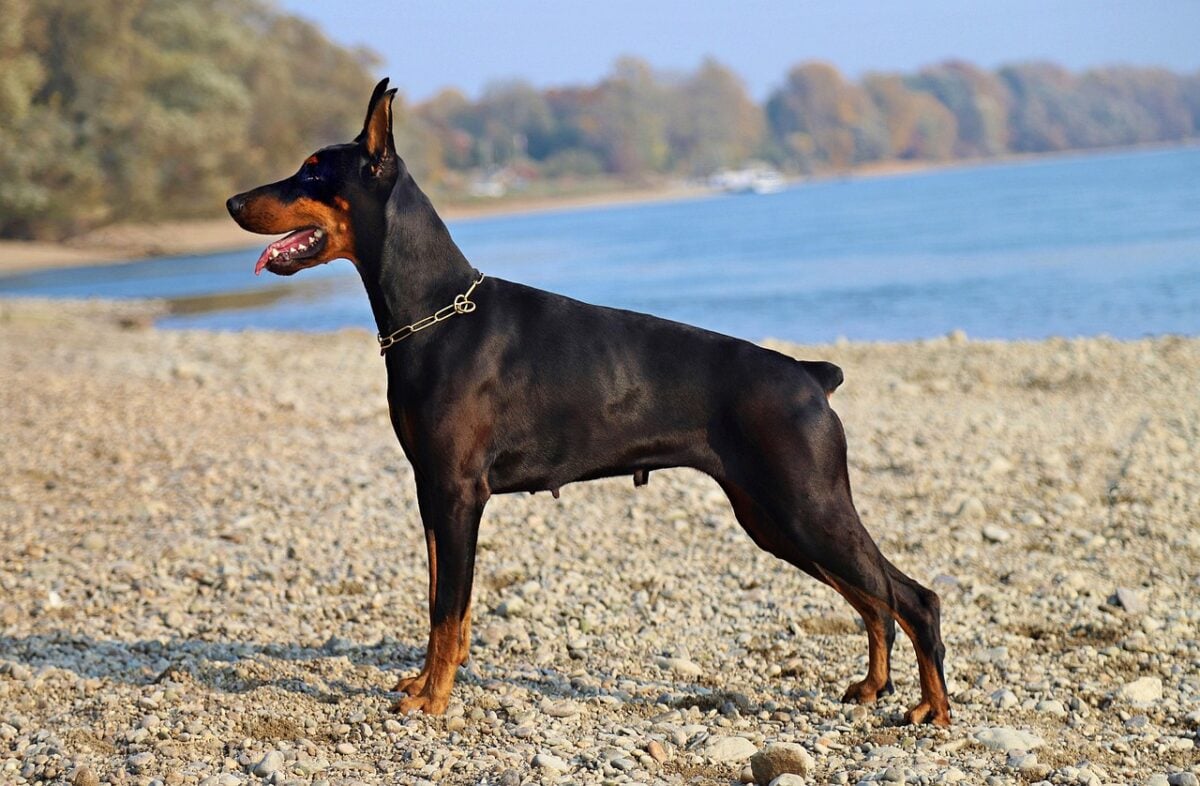
Some breeds most often described this way include:
These dogs aren’t dominant by default. They tend to be intelligent, persistent, and comfortable making decisions, especially when boundaries are inconsistent or unclear. With structure and consistency, they’re often some of the most reliable dogs to live with.
10 Signs Your Dog Thinks They Are The Alpha
Many of the behaviors below are commonly interpreted as signs of dog dominance over humans. But the same behavior can have very different causes, which is why what’s happening around it matters just as much as the behavior itself.
1. Your Dog Ignores Commands That They Clearly Know
You give a cue that your dog has followed countless times. They pause, make eye contact, and then continue doing whatever they were already doing, as if you’ve just offered a suggestion.
A familiar cue can lose its reliability when responding hasn’t consistently mattered. If your dog learns that “come” really means “come after I’ve called you four times,” waiting becomes part of the routine.
Distractions matter, too. A dog who listens beautifully in the kitchen may struggle outside, where smells, movement, other dogs, and squirrels are competing with you for attention.
What it may really mean: Your dog may need clearer follow-through or more practice with the cue around gradually increasing distractions — not a reminder of who’s in charge.
2. Your Dog Pushes Past You Through Doors Or Stairs
Few behaviors get labeled as dominance faster than a dog charging through doorways. It feels symbolic, like your dog is announcing they’re going first because they can.
But doors predict exciting things: walks, car rides, the backyard, visitors, or simply getting to whatever is on the other side. For most dogs, rushing through is about anticipation and impulse control, not leadership. If nothing has ever required them to pause, going full speed ahead becomes the routine.
What it may really mean: Your dog probably hasn’t learned that an open door is a cue to wait. Practice a brief pause or “wait” before opening the door fully, then release them to go through. The reward is getting exactly what they wanted — access to the other side.
3. Your Dog Refuses To Move From Furniture Or Beds
You ask your dog to move, and they respond by becoming mysteriously heavier than physics allows. This is when many owners feel like they’re losing a silent standoff.
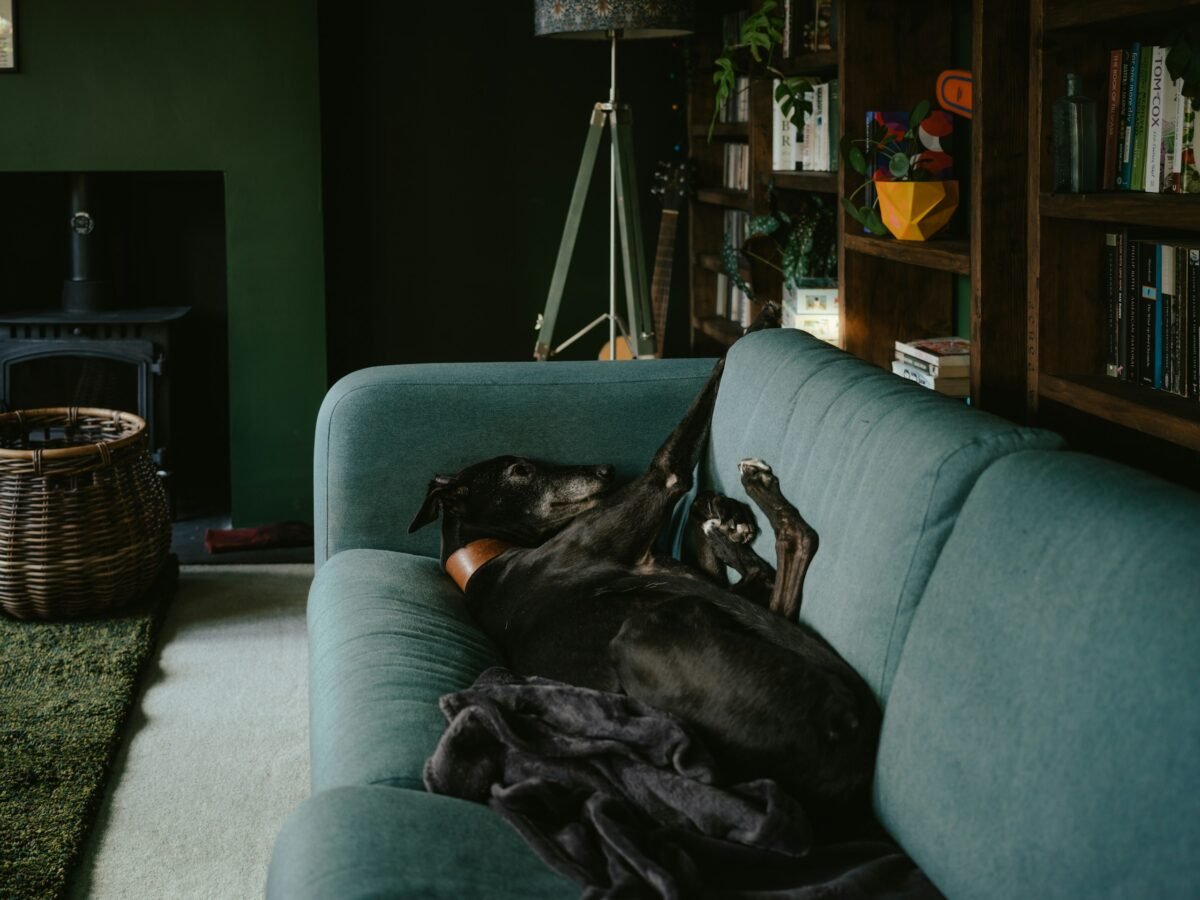
However, to your dog, the couch, bed, or favorite chair is warm, comfortable, and smells like their people. Giving all that up isn’t exactly an exciting proposition.
If moving has never been consistently reinforced, your dog may have learned that staying put works. Teaching an “off” cue and rewarding them for moving to another comfortable spot gives them a reason to cooperate rather than turning it into a battle of wills.
There is one important distinction: refusing to move isn’t the same as guarding the furniture.
If your dog stiffens, freezes, growls, snaps, or otherwise warns you away when approached, don’t physically drag or force them off. Those behaviors point to a different issue — and one that deserves more careful handling.
4. Your Dog Growls When You Try to Move or Handle Them
A growl can feel like a challenge, especially when it happens because you asked your dog to move or reached toward them. But in most cases growling is communication, not confrontation, and it’s worth paying attention to what your dog is trying to tell you.
Your dog may be frightened, uncomfortable with being physically moved, worried about losing a valued resting spot, or reacting to pain.
If the growling is new, suddenly more frequent, or happens when you touch a particular area, a veterinary checkup is a smart first step. Dogs can’t tell us their hip hurts or their back is sore, and behavior changes can sometimes be the first clue.
If fear or handling sensitivity is behind the behavior, forcing your dog to comply can make the situation more tense. And punishing a growl can suppress an important warning signal without changing how your dog feels.
What it may really mean: Your dog is asking for distance because something about the interaction feels uncomfortable or threatening. Look for the reason behind the warning rather than trying to punish the warning itself.
5. Your Dog Guards Food, Toys, Or People
Resource guarding is one of the behaviors most often labeled as dominance, especially when it involves growling or snapping. It can feel intentional and personal.
In reality, guarding comes from fear of loss, not a desire for control. Dogs guard things they believe might disappear, whether that’s food, toys, resting spots, or even attention from a favorite person.
Many dogs show subtle signs long before it escalates. Stiffening, freezing, or hovering often get missed. By the time growling appears, the dog is already stressed.
What it may really mean: Your dog is worried about losing something they value. Avoid forcibly taking guarded items away; trading for something better can help prevent a confrontation. If guarding involves growling, snapping, biting, or guarding a person, bring in a qualified trainer or behavior professional.
6. Your Dog Mounts People or Other Dogs
Mounting is one of the most misunderstood behaviors in dogs. It’s frequently labeled as dominance, especially when it happens to humans.
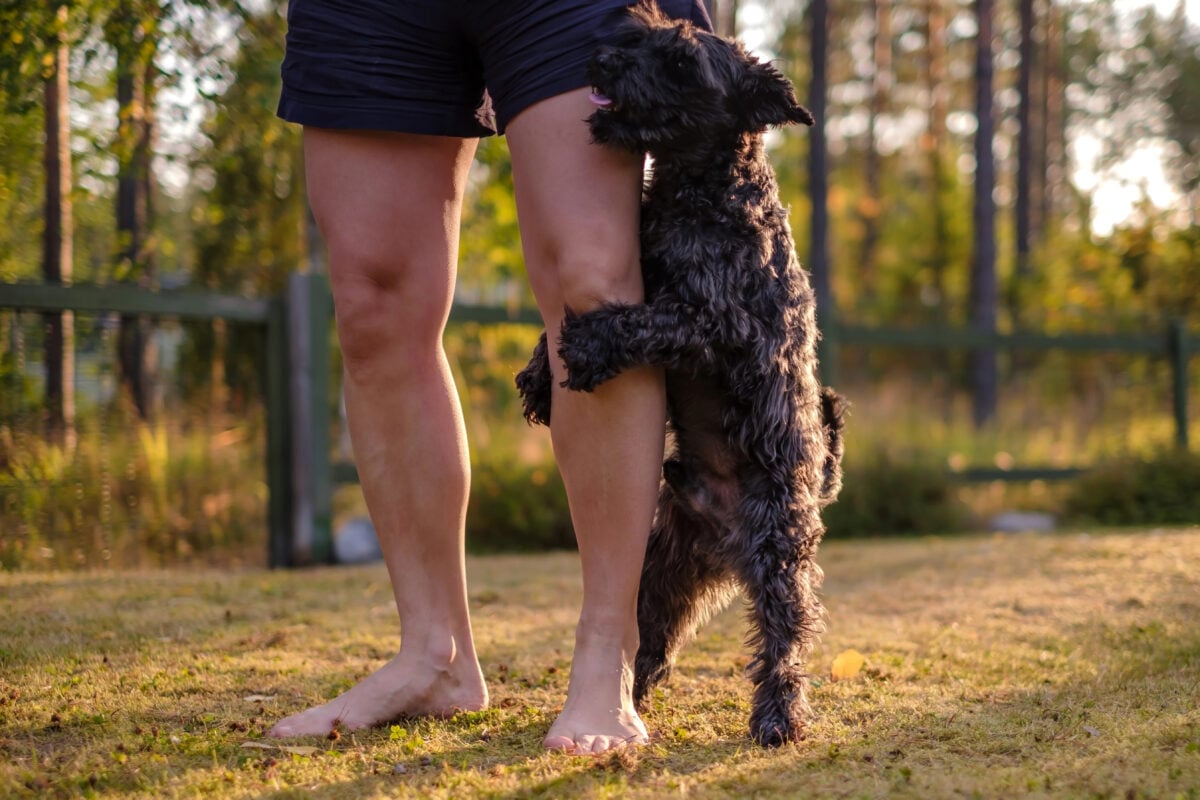
Most mounting has nothing to do with social status. It’s usually driven by overstimulation, excitement, stress, or poor impulse control. Dogs mount when they don’t know what else to do with all that energy.
This is why mounting often shows up during play, greetings, or chaotic moments. It looks assertive, but it’s usually disorganized rather than confident.
Rather than punishing your dog, calmly interrupt the behavior and redirect them to another activity. If mounting tends to happen when play gets wild, a short break can give your dog a chance to settle before jumping back in.
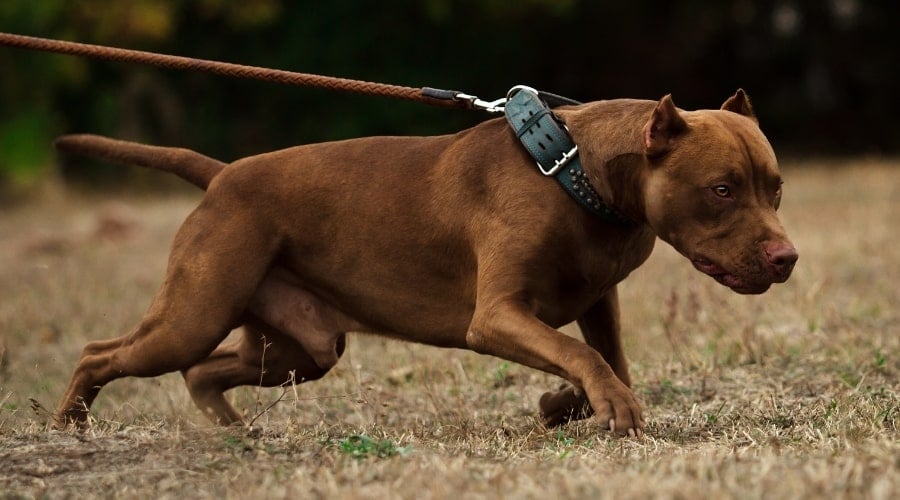
7. Your Dog Pulls on The Leash And Sets The Pace
Leash pulling can feel like your dog has taken over navigation duties without consulting you.
What’s happening is simple. Pulling works. Your dog moves forward, the environment is interesting, and stopping hasn’t been reinforced enough to matter yet.
Dogs also naturally walk faster than humans. Add smells, and suddenly the leash becomes less of a partnership and more of a suggestion.
Instead of letting pulling move the walk forward, reward your dog when the leash is loose and pause or change direction when it tightens. The goal is to teach them that a loose leash gets them where they want to go.
8. Your Dog Ignores Boundaries With Guests
Jumping, crowding, or hovering around guests can feel pushy and embarrassing, especially when your dog seems unfazed by polite requests.
Most of the time, this behavior comes from overexcitement and mixed signals. Guests bring novelty and unpredictable reactions, which makes boundaries harder for dogs to read.
If jumping or crowding has ever resulted in attention, even negative attention, the behavior sticks. Dogs don’t distinguish between praise and correction as clearly as we think in those moments.
Before guests arrive, decide what you want your dog to do instead, such as sitting for greetings or settling on a mat, and reward that behavior consistently.
Asking guests to follow the same routine helps prevent an excited dog from getting a completely different set of rules every time the doorbell rings.
9. Your Dog Demands Attention on Their Terms
Pawing, barking, nudging, or sitting directly in your space can feel bossy, especially when it happens on a loop.
This behavior is often reinforced without anyone realizing it. A quick pet, a laugh, or even a verbal response teaches the dog that persistence pays off.
Dogs that demand attention aren’t trying to control people. They’ve simply learned a reliable way to get interaction. From their perspective, it’s efficient.
To change the pattern, avoid rewarding the pushiest bids for attention and look for quieter moments to give your dog what they want.
If pawing gets nowhere but sitting calmly beside you earns a scratch behind the ears, your dog starts learning which approach works better.
10. Your Dog Reacts Strongly When Rules or Routines Change
Behavior that suddenly feels stubborn or pushy often shows up when routines shift. New schedules, new people, or new expectations can all throw your dog off balance.
Dogs rely heavily on predictability. When that structure disappears, you may see more barking, clinginess, restlessness, ignored cues, or other behaviors that seem to come out of nowhere.
When routines have to change, keep the parts of your dog’s day you can control, such as meals, walks, training, and downtime, as predictable as possible. If you’re introducing a new rule or expectation, give your dog time and consistent practice to learn what’s changed.
Why Dominant Training Advice Often Makes Things Worse
Many well-meaning owners turn to dominance-based advice because they want clarity. When behavior feels chaotic, the idea of “being the alpha” promises structure and control.
The problem is that many of these methods address the symptom rather than the cause and often make things worse. In fact, studies show that alpha-based training is outdated, unnecessary, and can damage your bond with your pup.
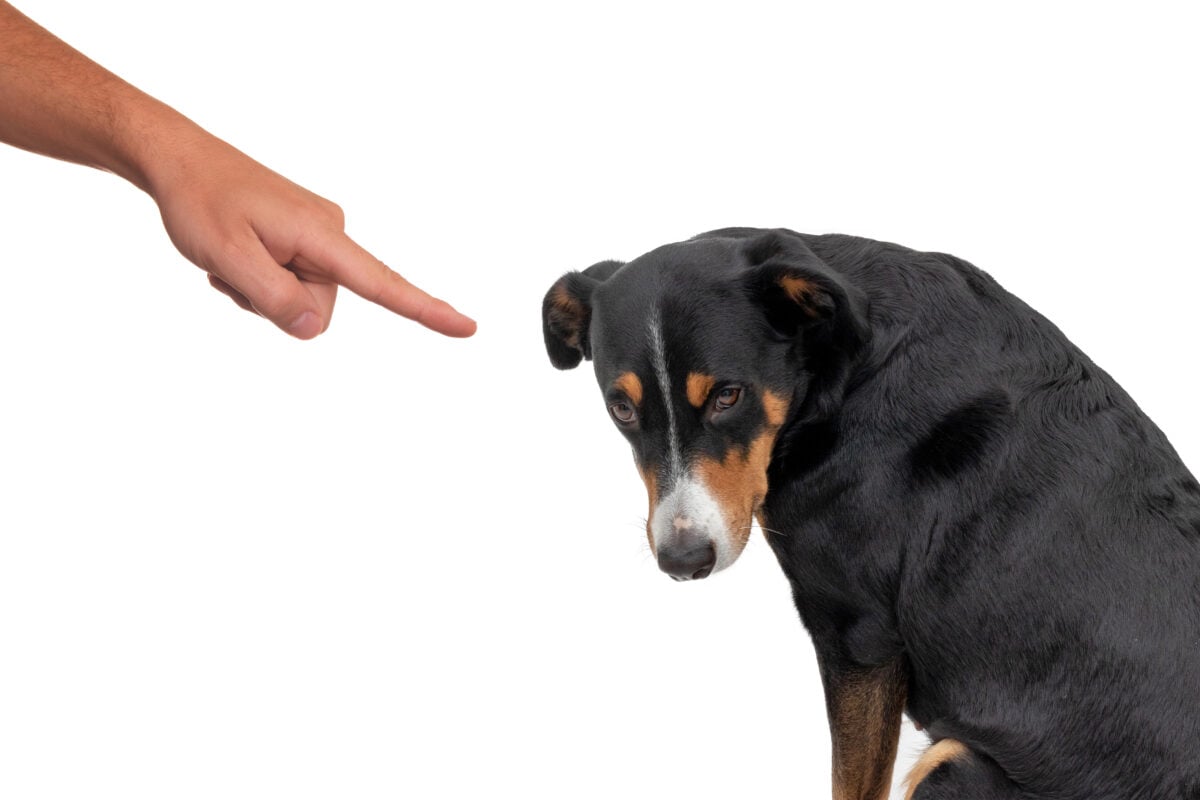
Dominance-based or aversive training approaches can lead to dogs becoming:
- Anxious, because they’re never sure when a correction is coming
- Fearful, after learning to associate people or training with discomfort
- Defensive or reactive, especially when they feel cornered or threatened
Because of these risks, professional organizations like the American Veterinary Society of Animal Behavior (AVSAB) and the Association for Professional Dog Training (APDT) advise against dominance-based methods and techniques that cause physical or emotional discomfort, including:
- Physical force or forceful handling
- Intimidating body language or confrontational staring
- Pain- or discomfort-based tools like shock collars, choke chains, or prong collars
- Loud corrections, yelling, or startling punishments
- Techniques designed to overpower a dog rather than guide them
Stopping a behavior isn’t the same as changing it. When fear is used as a training tool, warning signals often disappear before the underlying stress does. That’s why these approaches can increase long-term risk instead of reducing it. Fear suppresses behavior. It doesn’t teach better behavior.
Dogs don’t need someone to dominate them. The better alternative focuses on clarity, consistency, and positive reinforcement. These methods help dogs understand expectations, build trust, and change behavior in ways that actually last.
Common Reactions That Tend To Backfire
- Trying to “out-stubborn” your dog in the moment
- Correcting behavior without changing the pattern behind it
- Assuming calm behavior means the issue is resolved
What To Do If Your Dog Shows Dominant Behaviors
Once you stop viewing these behaviors as a battle for control, things get simpler fast. You’re not trying to win an argument with your dog. You’re trying to change patterns that quietly took root over time. This is where clear structure and positive reinforcement start doing the heavy lifting.
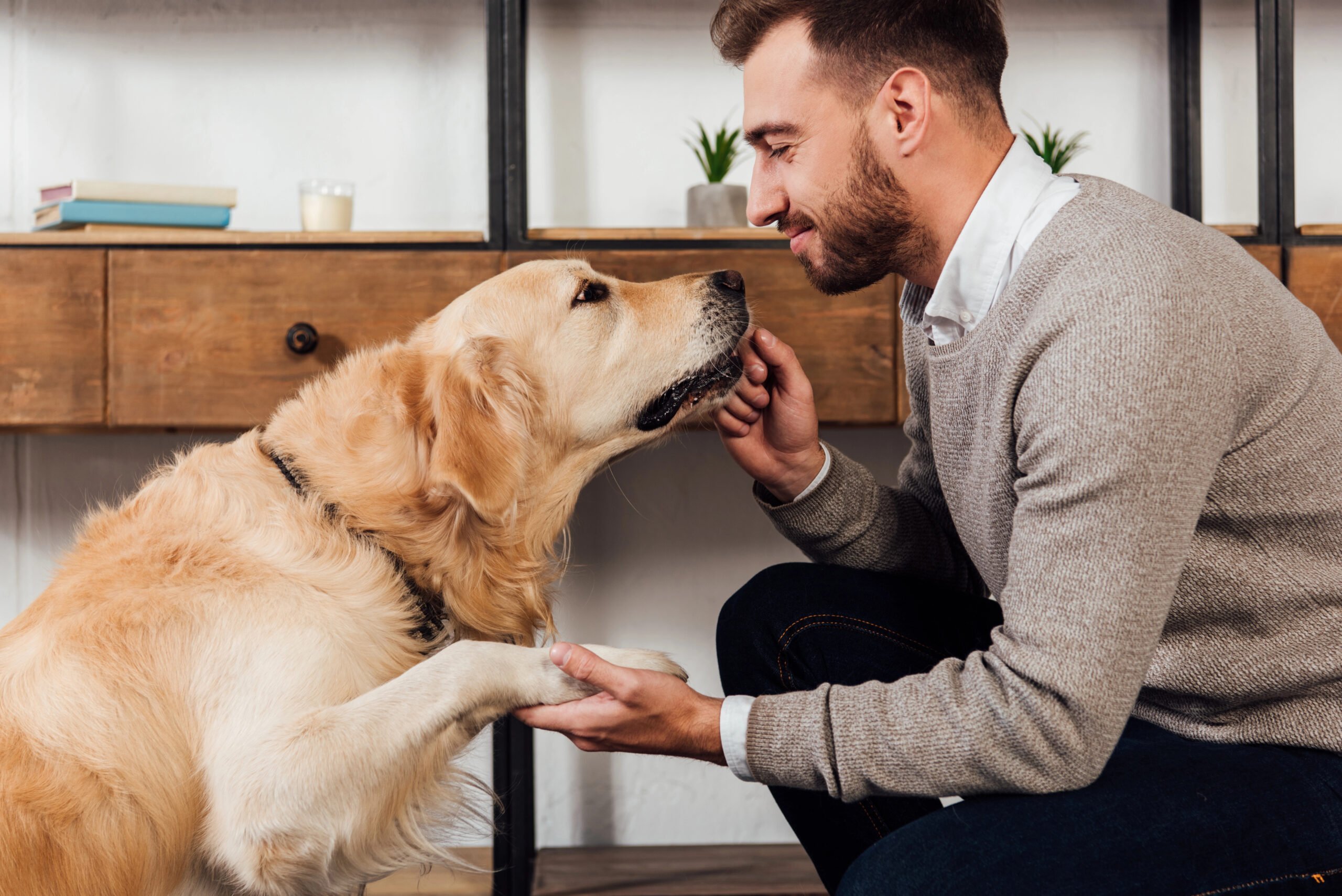
1. Make Expectations Predictable
Dogs do best when the rules feel steady. If something matters, it needs to matter every time, not just when it’s convenient.
For example:
If your dog ignores a cue they already know, avoid repeating it over and over until they eventually respond. Start somewhere with fewer distractions, give the cue once, and reward them when they follow through. Then gradually practice around more tempting distractions. The goal is to make responding to you more reliable, not louder.
2. Control Access Without Turning It Into A Standoff
Control matters most around things your dog really wants, like food, walks, toys, and attention. These moments are opportunities for structure, not confrontation.
For example:
If your dog barrels through the door every time it opens, pause before opening it. Ask for a simple sit or brief wait, then open the door. You’re not blocking access forever. You’re showing that good things happen after calm behavior, not before it.
3. Reinforce What You Want To See More Of
Dogs repeat what works. If calm behavior leads to good outcomes, calm behavior becomes more reliable.
For example:
If your dog settles quietly while you’re working or watching TV, that moment matters. A quick, calm acknowledgment or treat teaches them that doing nothing is sometimes the right choice. Over time, those quiet moments add up.
4. Lower Arousal Before Fixing the Behavior
Many behaviors labeled as dominant improve dramatically when a dog’s overall arousal level comes down. A dog that’s constantly overstimulated isn’t being defiant. They’re overloaded.
For example:
If your dog pulls, ignores cues, or seems restless by evening, they may need more structured outlets earlier in the day. A combination of physical exercise, mental enrichment, and predictable downtime often does more than adding stricter rules ever will.
5. Get Help Before Frustration Turns Into Fear
If growling, snapping, or guarding behaviors are involved, it’s worth bringing in professional support sooner rather than later. Early guidance can prevent these patterns from becoming harder — and potentially less safe — to manage.
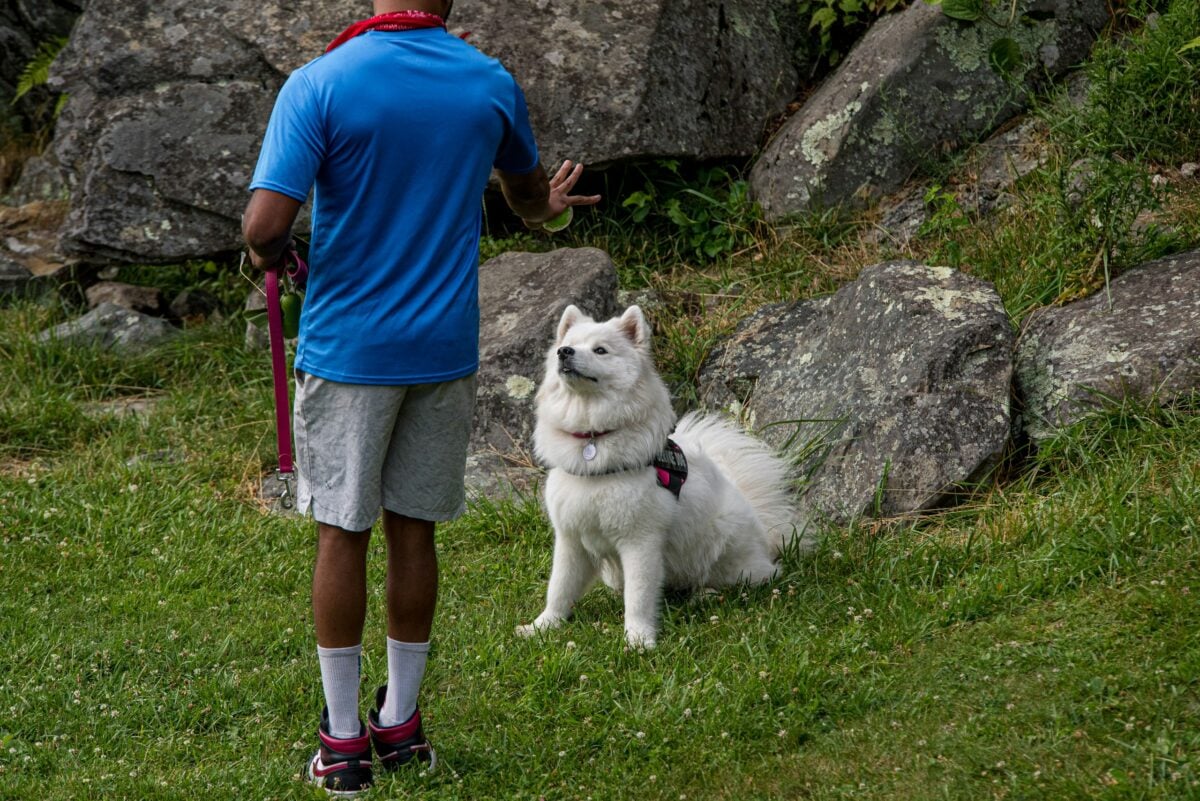
In the meantime, don’t deliberately test your dog by taking away food, toys, or other guarded items, and don’t punish growling. Give your dog space around known triggers and avoid situations that repeatedly lead to confrontation while you work on a safer plan.
For everyday training struggles, an online dog training program focused on challenging behaviors may be enough.
But if your dog is guarding resources or people, snapping, biting, or behaving aggressively, a qualified trainer or professional dog behaviorist can help identify what’s driving the behavior and develop a plan around your specific situation.
When fear, anxiety, or stress is contributing to the behavior, a professional dog behaviorist can also address the underlying cause rather than focusing only on stopping the behavior you can see.
Can Pet Insurance Help With Behavioral Issues?
Behavior consultations, training plans, and follow-up sessions can add up, especially when anxiety or reactivity is involved. Some pet insurance plans include coverage for behavioral therapy when recommended by a veterinarian, which may include consultations with credentialed behaviorists or treatments for previously undiagnosed anxiety-related conditions.
Coverage varies by provider and policy, so it’s important to check the details. Having pet insurance in place before the need arises can make it easier to get help, hopefully before stress-driven behaviors become long-term patterns.
Frequently Asked Questions
Below are answers to the most common questions dog owners ask about alpha behavior and dominance. If something about your dog’s behavior isn’t covered here, or you’re still unsure how it fits into your situation, drop your question in the comments.

Can Dogs Really Think They’re The Alpha?
Dogs don’t think in terms of social rank with humans. They aren’t trying to “be in charge” or challenge your position in the household. What people interpret as signs your dog thinks they are the alpha are usually behaviors shaped by habit, reinforcement, or stress.
From a dog’s point of view, behavior is practical. If something works, they repeat it. If it doesn’t, they drop it. There’s no broader social agenda behind it.
Why Does My Dog Act Like They Are In Charge?
Dogs can look surprisingly bossy when they ignore cues, demand attention, guard favorite spots, or seem determined to do things their own way. But that doesn’t necessarily mean your dog believes they’re in charge.
Often, the behavior has simply worked before. If persistence gets attention, pulling gets them where they want to go, or ignoring a cue has no consequence, those patterns can become habits. Excitement, stress, fear, and inconsistent expectations can also contribute.
Is Alpha Dog Behavior A Myth?
The idea that dogs are constantly trying to establish themselves as “alpha” over humans is outdated. However, the behaviors people label as alpha dog behavior are very real. They’re just misunderstood.
Ignoring cues, guarding resources, or pushing boundaries doesn’t mean a dog is dominant. It means something in the environment or routine is reinforcing that behavior. Once that changes, the behavior often changes with it.
Is My Dog Being Dominant Or Just Anxious?
Some behaviors that look dominant can actually be driven by fear, anxiety, or stress. An anxious dog may guard resources, become protective of personal space, react strongly to changes, or struggle to respond to cues when overwhelmed.
Look at what happens alongside the behavior. Freezing, pacing, panting, avoidance, a tucked posture, or difficulty settling can point toward stress or anxiety.
If these behaviors are frequent, worsening, or interfering with your dog’s daily life, talk with your veterinarian or a qualified behavior professional.
Why Does My Dog Only Act This Way With Me?
This is a common and frustrating experience. Dogs often behave differently with different people because each relationship has its own patterns.
If one person is more consistent, calmer, or clearer with expectations, the dog may respond differently to them. That doesn’t mean the dog respects one person more. It means the rules feel easier to understand in that relationship.
Can Punishment Stop Dominant Behavior?
Punishment may temporarily stop a behavior, but it rarely addresses the reason the behavior exists. In many cases, it increases anxiety or suppresses warning signs, which can make situations less safe over time. Long-term improvement comes from clarity, not control.
What Are The Signs Your Dog Sees You As The Alpha?
When people ask about the signs your dog sees you as the alpha, they’re usually wondering whether their dog feels secure, responsive, and comfortable with their guidance. Dogs don’t relate to humans through rank or submission. They respond to consistency, predictability, and trust.
In everyday life, that often looks like:
- Your dog checks in with you in new or uncertain situations, especially before moving forward.
- Your dog settles more easily when you stay calm, even in busy or stressful environments.
- Your dog responds to cues more often than not, even in the presence of distractions.
- Your dog is comfortable when you manage resources like food, toys, or space, without tension.
- Your dog recovers more quickly from stressful moments, rather than staying escalated.
These behaviors don’t mean your dog views you as “alpha.” They suggest that your dog finds your guidance predictable and worth paying attention to, which is what a healthy relationship actually looks like.
When Should I Get Professional Help?
If your dog is growling, snapping, guarding resources, or exhibiting unpredictable behavior, it’s a good idea to seek help early. Not because your dog is “bad,” but because those patterns are easier to change before they become deeply ingrained.
A qualified trainer or behavior consultant can help identify what’s driving the behavior and guide you toward safer, more effective solutions.
Still Curious About Your Dog’s Behavior?
If you’re still untangling whether your dog’s behavior is really about dominance, our guide to why the alpha idea persists and how dogs actually think about pack behavior is a helpful next read. And if growling is part of what you’re seeing, this breakdown of what dog growling actually means and how to respond safely can help you understand what your dog is trying to communicate.
If you’ve ever been told your dog was “dominant,” or you recognized one of these behaviors immediately, share what that looked like for you in the comments. You’re almost certainly not the only one who’s been there.