When you purchase through links on our site, we may earn a commission at no extra cost to you. Learn more.
You’re out for a peaceful walk, latte in hand, when your dog spots another pup and suddenly turns into a furry air-raid siren. The other owner stares, your dog pulls, and you wonder whether everyone thinks you have the neighborhood’s loudest dog.
Table of Contents
If your dog barks at other dogs, the behavior can be embarrassing, frustrating, or even stressful to manage. However, barking is a form of communication, and understanding why is important. A dog who barks because they desperately want to play is different from one who barks because they’re scared.

The good news is that you can learn to recognize the difference.
In this guide, we’ll explain six common reasons why dogs bark at other dogs, describe how this behavior appears in real life, show you how to interpret your dog’s body language, and offer tips to prevent barking episodes on your next walk.
Who This Guide Is For
This article is especially helpful if your dog:
- Barks at other dogs on leash but seems fine off leash.
- Reacts to some dogs but ignores others.
- Gets louder when another dog suddenly appears or gets too close.
- Barks from windows, yards, or behind fences.
- Seems excited, frustrated, nervous, or overwhelmed rather than simply aggressive.
- Has started reacting more strongly over time.
Before We Jump In: What Your Dog’s Bark Is Really Saying
Before we dive into the reasons, it helps to understand one key thing: barking is normal. It might be loud, inconvenient, or downright embarrassing, but it’s also one of the main ways dogs communicate.
The same bark can mean very different things depending on the situation. Your dog may be saying “Come play,” “Give me space,” “I want to get over there,” or “I don’t know what to do.”
Context matters as much as the sound. A dog who barks only when another dog approaches while on leash may be frustrated, whereas a dog who barks through the living room window at every passing dog may be reacting to a territorial trigger.
Once you know what you’re looking at, it becomes much easier to choose the right response.
6 Common Reasons Dogs Bark at Other Dogs (And What They Mean)
Ever find yourself thinking, “Why does my dog lose it every time we pass another pup?”
One minute you’re enjoying a walk, the next it’s a circus of barking, pulling, and pretending not to notice the other dog parent watching the chaos unfold. I’ve been there with my own dog, Tiny; he has some very strong opinions about other dogs.
Barking isn’t automatically bad behavior. It’s communication, and when that barking is aimed at other dogs, it usually comes from one or more emotional triggers.
1. Playfulness: “Hey, Friend! Come Play!”
Not every bark is aggressive. Sometimes your dog is simply trying to initiate play.
You might see a wagging tail, a loose, bouncy body, a play bow with the front end lowered and the rear end raised, or your dog looking between you and the other dog.

What It Can Look Like in Real Life
- Your dog barks when another dog comes close enough to play.
- They bounce forward rather than moving stiffly.
- They drop into a play bow and quickly pop back up.
- Their tail moves loosely rather than staying tightly tucked.
- They might bark, glance back at you, and then focus their attention on the other dog again.
A playful dog can still look intense on a leash. If they can’t reach the other dog, excitement can turn into frustration and produce much louder barking.
How to Respond
- Keep calm and use a cheerful tone.
- Redirect your dog’s attention with a treat or cue such as “Watch me.”
- Reward your dog for noticing another dog and then checking back with you.
- Use controlled greetings with appropriate dogs rather than allowing every sidewalk encounter to become a greeting.
If your dog is playful but becomes dramatically louder when restrained, frustration may be part of the picture.
2. Frustration: “I Want to Say Hi, But I Can’t!”
This is especially common when dogs bark at other dogs on leash.
Your dog sees another pup and wants to approach, but the leash keeps them from getting there. That restriction can turn excitement into barking, pulling, whining, and agitation.

What It Can Look Like in Real Life
- Your dog is relatively calm until another dog appears.
- The leash suddenly becomes tight.
- Your dog pulls toward the other dog while barking.
- They whine between barks or make high-pitched sounds.
- They seem eager to greet rather than trying to make the other dog leave.
- Your dog is calm around other dogs when off leash but reacts intensely when on a leash.
Imagine spotting someone you’re eager to greet, but another person physically stops you from approaching them. For some dogs, that frustration comes out as barking.
If your dog barks mostly on leash but not off leash, frustration is a strong possibility.
3. Attention-Seeking: “Look At Me, Not Them!”
Sometimes the other dog isn’t really the focus.
Your dog may have learned that barking gets a reaction from you. You look over, talk to them, give them a treat, or immediately start managing the situation. From your dog’s perspective, barking worked.
Signs it may be attention-related include:
- Your dog barks and immediately looks back at you.
- The barking stops when you engage.
- It happens more often when you’re distracted.
- Your dog seems more interested in your reaction than the other dog.
What It Can Look Like in Real Life
While you’re talking to another dog owner, your dog notices their dog, barks a few times sharply, then turns to stare directly at you as if waiting for your response.
The important clue is what happens immediately after the bark. If your dog consistently checks your reaction, you may have accidentally reinforced the behavior.
Quick check: Does your dog look at you right after barking? That’s a big clue that this behavior has been reinforced, even accidentally.
4. Fear or Anxiety: “That Dog Scares Me!”
Fear-based barking is different from playful or frustrated barking.
Your dog may be trying to create distance from something they perceive as threatening. That could be a particular size, posture, movement pattern, or type of dog.

What It Can Look Like in Real Life
- Your dog barks at large dogs but ignores small dogs.
- Energetic puppies trigger a stronger response because their movements are unpredictable.
- Your dog freezes or leans away before barking.
- Their tail is tucked rather than loosely wagging.
- Their body becomes stiff or tense.
- They may growl or snap when the other dog gets too close.
A dog can wag their tail while frightened, so don’t use tail movement alone to decide whether a dog is comfortable.
A relaxed body and gentle movements signal a completely different emotional state than a stiff posture, a fixed stare, a tucked tail, or a sudden lunge. These dogs aren’t necessarily trying to pick a fight; they may be asking for space.
According to Certified Applied Animal Behaviorist Dr. Patricia McConnell, fear barking is a coping mechanism, not an act of dominance.
If your dog appears frightened, don’t force an interaction. Give them space and consider professional guidance if the reactions are difficult to manage.
5. Territorial: “This Is My Turf!”
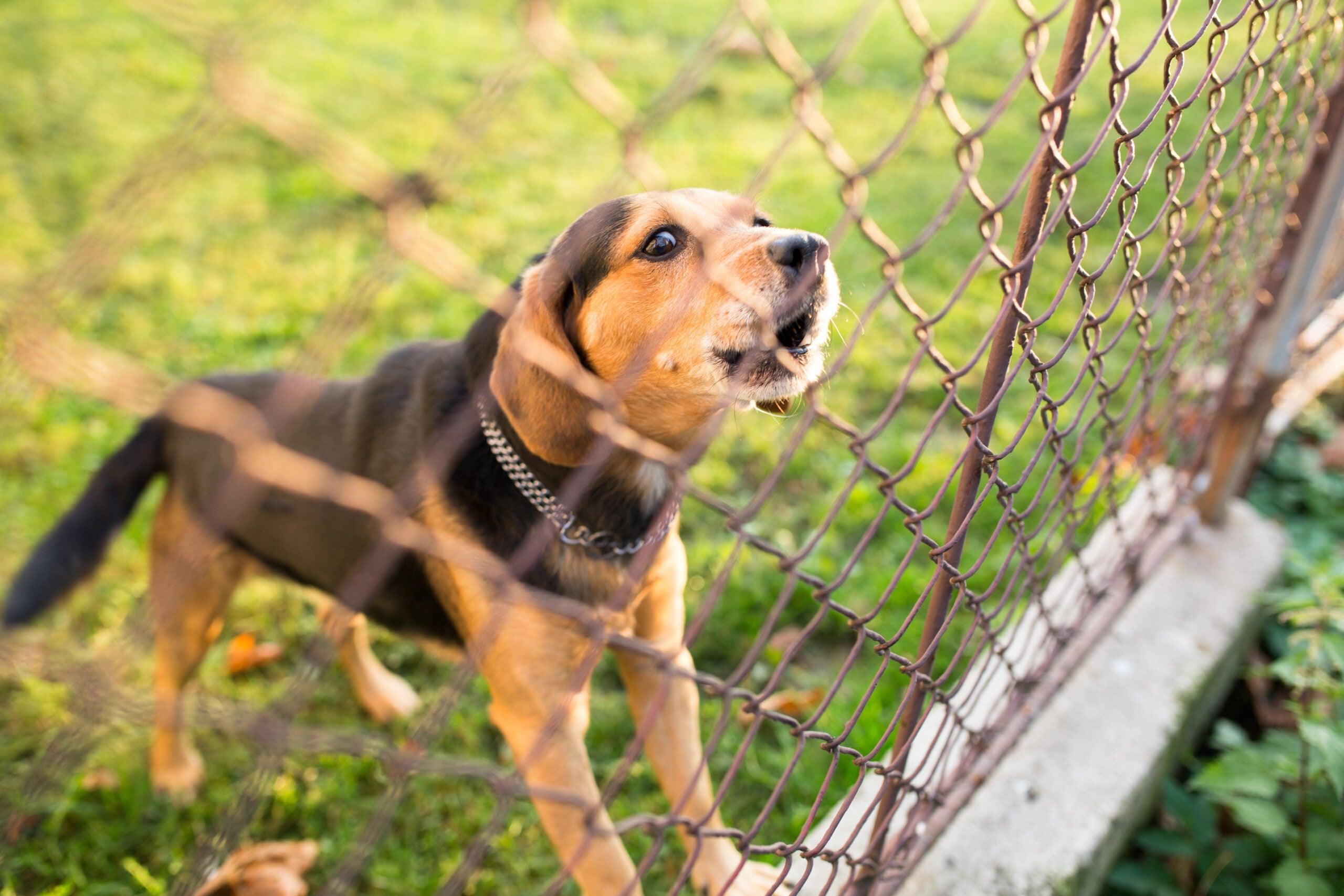
Some dogs bark most intensely when another dog approaches their home, yard, window, or fence.
What It Can Look Like in Real Life
- Your dog ignores dogs while walking but barks through the front window.
- They rush to the fence when another dog passes.
- They bark from the yard but are calmer away from home.
- They continue barking until the other dog disappears.
- Their bodies become tense, and they may raise their hackles or stare intensely.
According to the American Society for the Prevention of Cruelty to Animals (ASPCA), a dog’s perceived territory can extend beyond the immediate home environment.
The location is an important clue. If your dog is calm on walks but repeatedly erupts at dogs passing the house, window, or fence, the environment may be contributing to the behavior.
6. Undersocialization: “I Don’t Know What To Do Around Other Dogs.”
Dogs who had limited or difficult early experiences with other dogs may react with confusion, fear, or overexcitement.
They may not know how to calmly process another dog approaching, particularly when that dog moves quickly or behaves unpredictably.
What It Can Look Like in Real Life
- Your dog reacts to almost every unfamiliar dog.
- They become overwhelmed when another dog moves quickly toward them.
- Puppies or highly energetic dogs trigger a stronger response.
- Your dog seems interested but doesn’t know how to interact appropriately.
- Their response changes dramatically depending on the other dog’s behavior.
According to the American Veterinary Society of Animal Behavior (AVSAB), the critical puppy socialization period occurs early in life, but adult dogs can still learn better ways to respond.
The goal isn’t to make your dog love every dog they meet. It’s to help them remain comfortable enough to pass other dogs without feeling overwhelmed.
The good news: Even adult dogs can learn better social skills. Progress may be slower, but it’s absolutely possible with the right setup.
Did You Know?
Early experiences can have a lasting effect on how dogs respond to other dogs. Positive, well-managed socialization during puppyhood may reduce the risk of fear, anxiety, and reactive barking later in life.
Why It Gets Worse Over Time
Sometimes owners notice that their dog’s barking at other dogs becomes more intense, even when they try to manage it.
One reason is rehearsal.
Every time your dog sees another dog, barks, lunges, and eventually watches that dog disappear, they get another opportunity to practice the behavior. If the other dog walks away immediately afterward, your dog may learn that barking successfully makes the trigger go away.
Your own behavior can unintentionally add to the cycle, too. If you see another dog and immediately tighten the leash, your dog may notice the sudden tension and become more alert.
Other common patterns include:
- Your dog barks and the other dog moves away.
- You reward barking inconsistently because you are trying to calm your dog.
- Your dog gets repeatedly exposed to triggers at distances they can’t handle.
- Your dog learns that lunging makes people create space.
- Walks repeatedly end in stressful encounters.
This doesn’t mean you caused the problem. It means the behavior can become practiced and predictable.
The goal is to interrupt that pattern before your dog reaches the point where barking is their automatic response.
Decoding The Types Of Barks
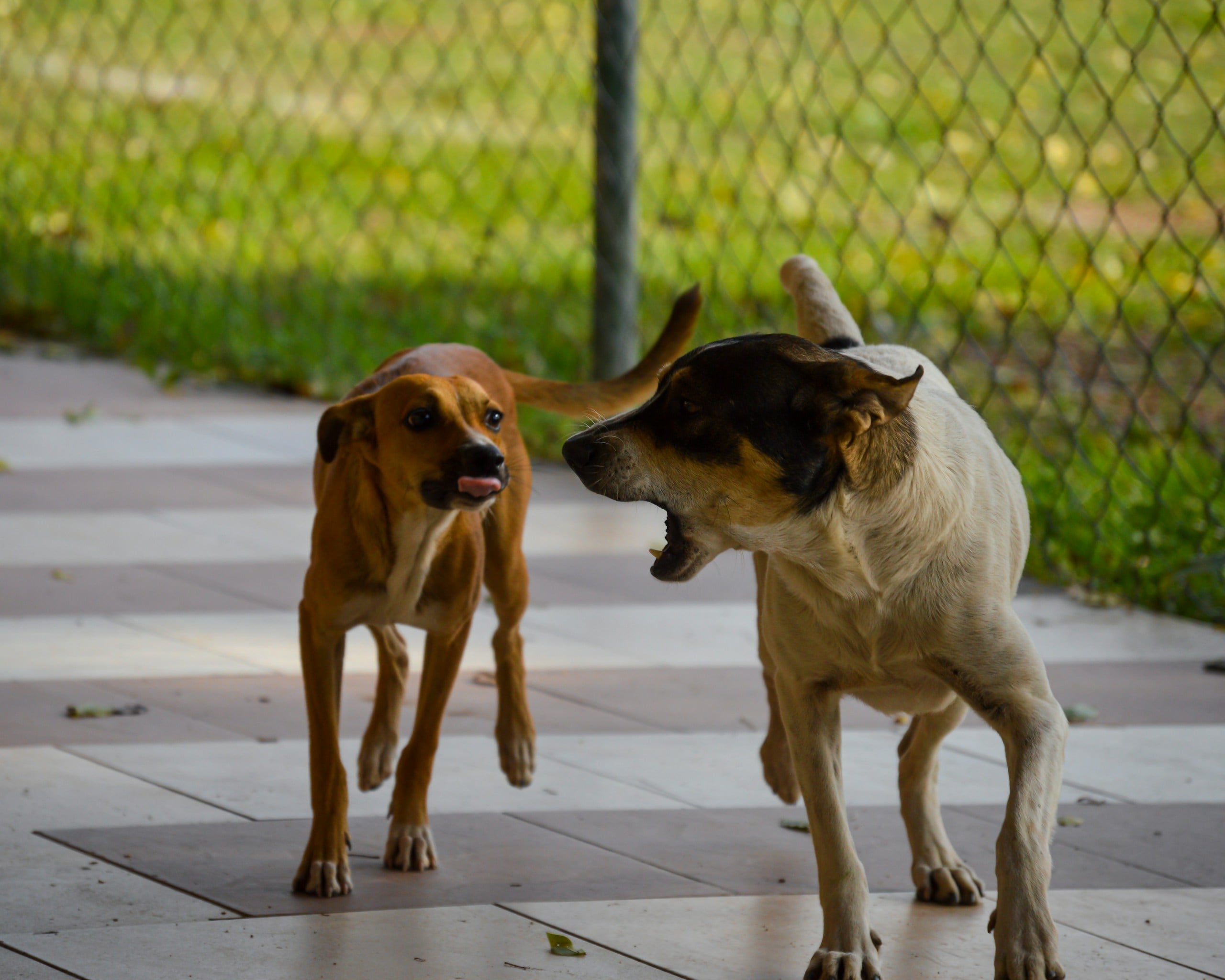
If your dog’s barking feels unpredictable, don’t listen to the bark alone. Watch the entire dog.
Loose Body vs. Stiff Body
A loose, wiggly body generally matches excitement or play. Approach a stiff body, frozen posture, or sudden stillness with caution, as these signals can indicate that your dog feels uncomfortable or threatened.
Wagging Tail vs. Tucked Tail
A loose, sweeping tail can accompany excitement or social interest. A tightly tucked tail is more consistent with fear or discomfort.
A wagging tail by itself does not mean a dog is happy.
Play Bow vs. Lunging
A play bow, front end lowered, rear end raised, can signal an invitation to play. A hard lunge, stiff body, and locked-on stare paint a different picture and may indicate that your dog is overwhelmed.
Looking Back at You vs. Locked-On Staring
If your dog notices another dog and then checks in with you, that’s an excellent training opportunity.
However, if your dog becomes completely locked onto the other dog and stops responding to you, don’t keep asking for obedience. Increase distance first.
Here’s a quick cheat sheet:
| Type of Bark | Body Language | Possible Meaning |
|---|---|---|
| Playful | Loose body, play bow, relaxed wag | “Let’s play!” |
| Frustrated | Pulling forward, bouncing, high-pitched vocalizing | “I want to get over there!” |
| Fearful | Tucked tail, leaning away, tense body | “Give me space.” |
| Territorial | Stiff posture, fixed attention, persistent barking | “Stay away from my space.” |
| Overstimulated | Stiff or frantic movement, poor response to cues | “I’m overwhelmed.” |
| Attention-seeking | Barking followed by looking at owner | “Pay attention to me.” |
What Is Reactive Barking?
You’ve probably seen it: your dog spots another pup and suddenly starts barking, lunging, or pulling.
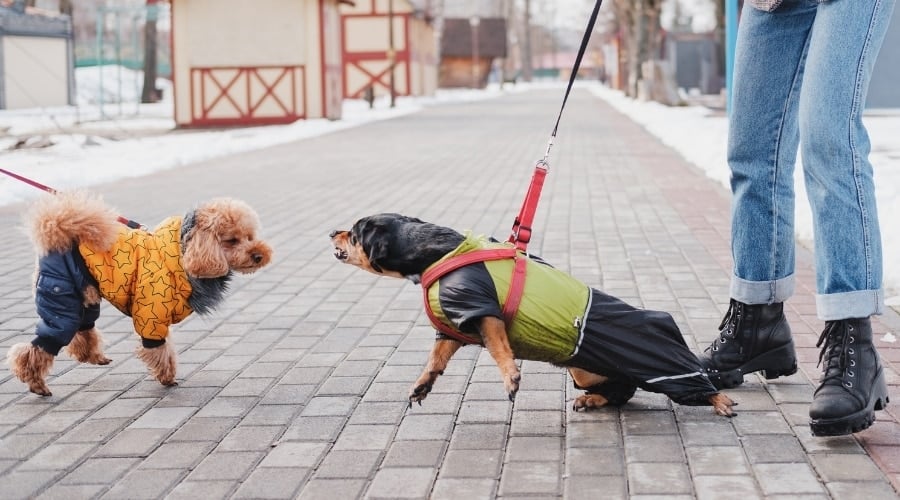
That can look aggressive, but reactive barking isn’t automatically aggression. Reactivity is an exaggerated response to a trigger, often driven by fear, frustration, or overexcitement.
Why It Happens
Reactivity can become a learned cycle:
Trigger >> Bark or lunge >> Other dog moves away >> Relief
If barking repeatedly makes the other dog disappear, your dog may learn that the behavior works. Repeated exposure can strengthen the pattern, especially when your dog encounters triggers at distances they can’t comfortably handle.
Your goal isn’t to punish the reaction. It’s to prevent repeated rehearsals while teaching your dog a calmer response.
According to veterinary behaviorist Dr. Karen Overall, reactivity is not dominance or disobedience. It’s a learned response that can change with appropriate training and confidence-building.
Reactive Dog Checklist
Use this quick check before or during a difficult encounter.
Signs Your Dog Is Reacting
- Barking or lunging at the sight of another dog
- Pulling hard toward or away from the trigger
- Difficulty responding to familiar cues
- Tense body, wide eyes, or sudden stillness
- Difficulty recovering after the other dog leaves
Do This Instead
- Create distance early.
- Use a parked car, hedge, or other visual barrier when needed.
- Reward your dog for noticing another dog and disengaging.
- Keep your movements and voice steady.
- End the encounter or walk if your dog isn’t recovering.
Avoid These Common Mistakes
- Punishing barking or pulling.
- Forcing close greetings.
- Waiting until your dog is already over threshold.
- Tightening the leash suddenly every time another dog appears.
- Expecting your dog to “work it out” face-to-face.
A successful walk doesn’t require your dog to greet every dog they see. Sometimes the best outcome is simply passing another dog calmly.
A Real-Life Example: When Barking Isn’t Aggression
My colleague shared what it’s like living with a reactive senior dog, and what’s actually helping.
Daisy is almost 15, gray around the muzzle, slower on walks, and still convinced she’s in charge of neighborhood security.
She’s always barked at other dogs, but lately it’s gotten intense enough that we walk her late at night, when the sidewalks are quiet, and surprises are easier to avoid.
It isn’t aggression. It’s more like she’s saying, “I see you — stay back.” Once she starts, my younger dog joins in, and suddenly a calm walk turns into a barking duet aimed at a confused five-pound Pomeranian.
Senior dogs often get more reactive as their world changes. For Daisy, what’s helping is simple: quieter routes, calm cues, and rewarding the moments she chooses not to bark.
Progress isn’t perfect, but it’s real.
– Danielle DeGroot, Rescue Dog Mom & Canine Journal Writer
Why this matters: Daisy’s story is a good reminder that barking doesn’t always mean a dog is getting worse; sometimes it means their needs have changed. Creating more distance, lowering expectations, and rewarding calm moments can make a real difference, even for senior dogs.
Short on time?
If you do nothing else, focus on distance, calm rewards, and ending walks early when stress rises. Those three changes alone reduce barking for many dogs.
10 Practical Ways to Stop Your Dog From Barking at Other Dogs
Stopping your dog’s barking isn’t about silencing them. It’s about helping them stay calm enough to make a different choice.
The most effective approach combines proactive management, building positive associations, and gradual training that keeps your dog below their stress threshold.
1. Stay Cool — Your Dog Feeds Off You
If you tense up or yank the leash when another dog appears, your dog may become even more alert.
Instead, take a breath before reacting, keep your voice calm, move away smoothly, and avoid suddenly tightening the leash unless safety requires it.
Your goal is to make your movements predictable rather than adding more tension to the encounter.
2. Track Triggers and Progress
Keep track of which dogs trigger your dog, how far away they were, whether your dog was on leash, where the encounter happened, whether the other dog was moving toward or away from you, and how quickly your dog recovered.
Patterns can reveal whether your dog reacts primarily to large dogs, puppies, fast-moving dogs, direct approaches, or particular environments.
A simple trigger log can make your training more targeted and help you recognize progress that might otherwise be easy to miss.

Bookmark this: These simple basics can make calm walks much easier, especially while you’re working on reactivity. Tools like high-value treats and a front-clip harness can make a noticeable difference, particularly on busy walks.
3. Build Positive Associations
Teach your dog that seeing another dog predicts something positive.
Try this:
- Your dog spots another dog.
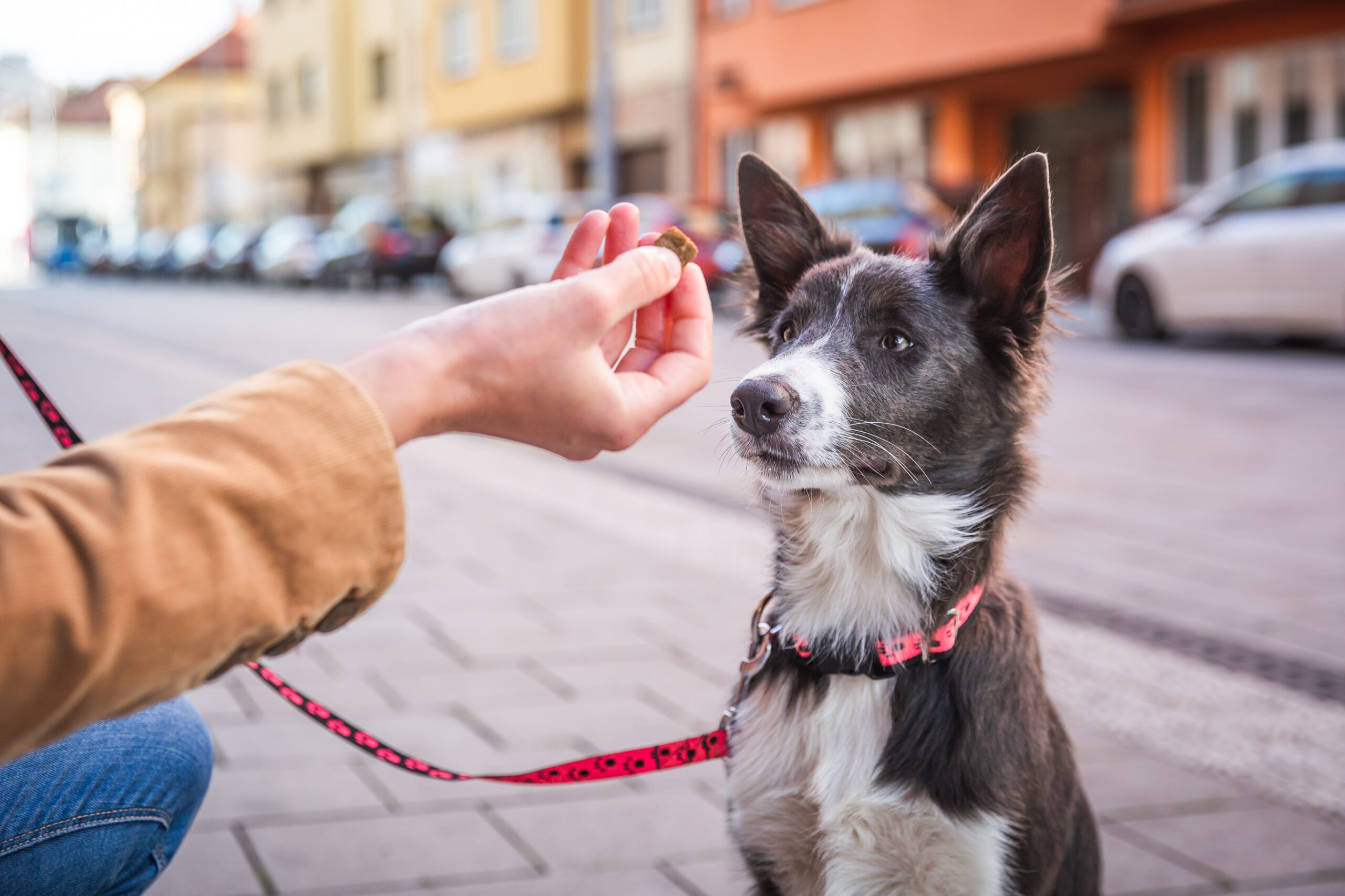
- Before barking begins, say “Yes!” and offer a high-value treat.
- Reward again while your dog remains calm.
- When the other dog passes, continue walking.
The goal isn’t to make your dog stare at the trigger. You’re teaching them to notice another dog and then disengage.
This process, called counter-conditioning, changes the emotional association with the trigger rather than simply suppressing the bark. Trainers such as Victoria Stilwell use reward-based approaches built around changing a dog’s response to challenging situations.
4. Practice “Look at That” Training
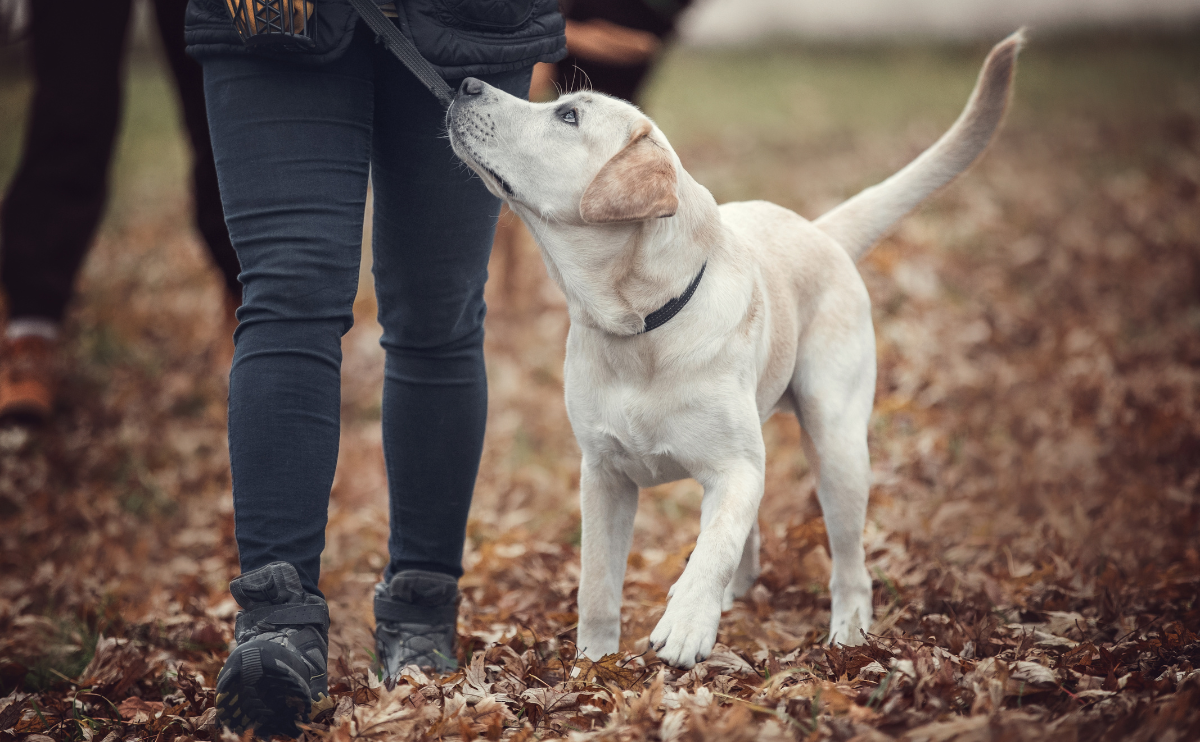
From Leslie McDevitt’s book Control Unleashed, this exercise gives your dog a predictable response when another dog appears:
- Your dog looks at another dog.
- You mark the behavior with “Yes!” or a click.
- Your dog looks back at you.
- You reward your dog.
Start far enough away that your dog can still eat, think, and respond. If they lock onto the other dog or begin barking, increase distance instead of repeating the cue.
5. Increase Distance and Add Distractions
Don’t wait until your dog is fully reacting. If another dog approaches, cross the street when it’s safe, step into a driveway, move behind a parked car, use a hedge as a visual barrier, or turn around.
However, if your dog is already barking or lunging, create more distance first. Wait until they can think and respond again before asking for training behaviors.
Helpful distractions include treat scatter, “find it”, simple cues your dog already knows, sniffing opportunities, and brief engagement with you.
Creating distance isn’t giving up. It prevents another overwhelming rehearsal while you teach your dog a better response.
6. Use Physical Aids Wisely
Equipment can make walks safer and easier, but tools should support training rather than punish your dog.
Good options include:
- Front-clip harnesses, such as Pet Safe Easy Walk or Ruffwear Front Range, to help manage pulling
- Head halters for experienced handlers who know how to introduce them appropriately
- Calming aids such as pheromone calming collars or ThunderShirts for some anxious dogs
Avoid choke, prong, or shock collars for reactivity because adding pain or fear can worsen the emotional response.
See our reviews of the best harnesses for dogs that pull.
7. Tire Out the Brain, Not Just the Body
Mental enrichment gives your dog appropriate ways to use energy and process their environment.
Try sniff walks, interactive toys, puzzle feeders, training games, “Find it” scent games, and hide-and-seek with treats.
Enrichment can support your dog’s ability to cope with triggers, but it shouldn’t replace behavior training.
8. Keep Greetings Short & Sweet
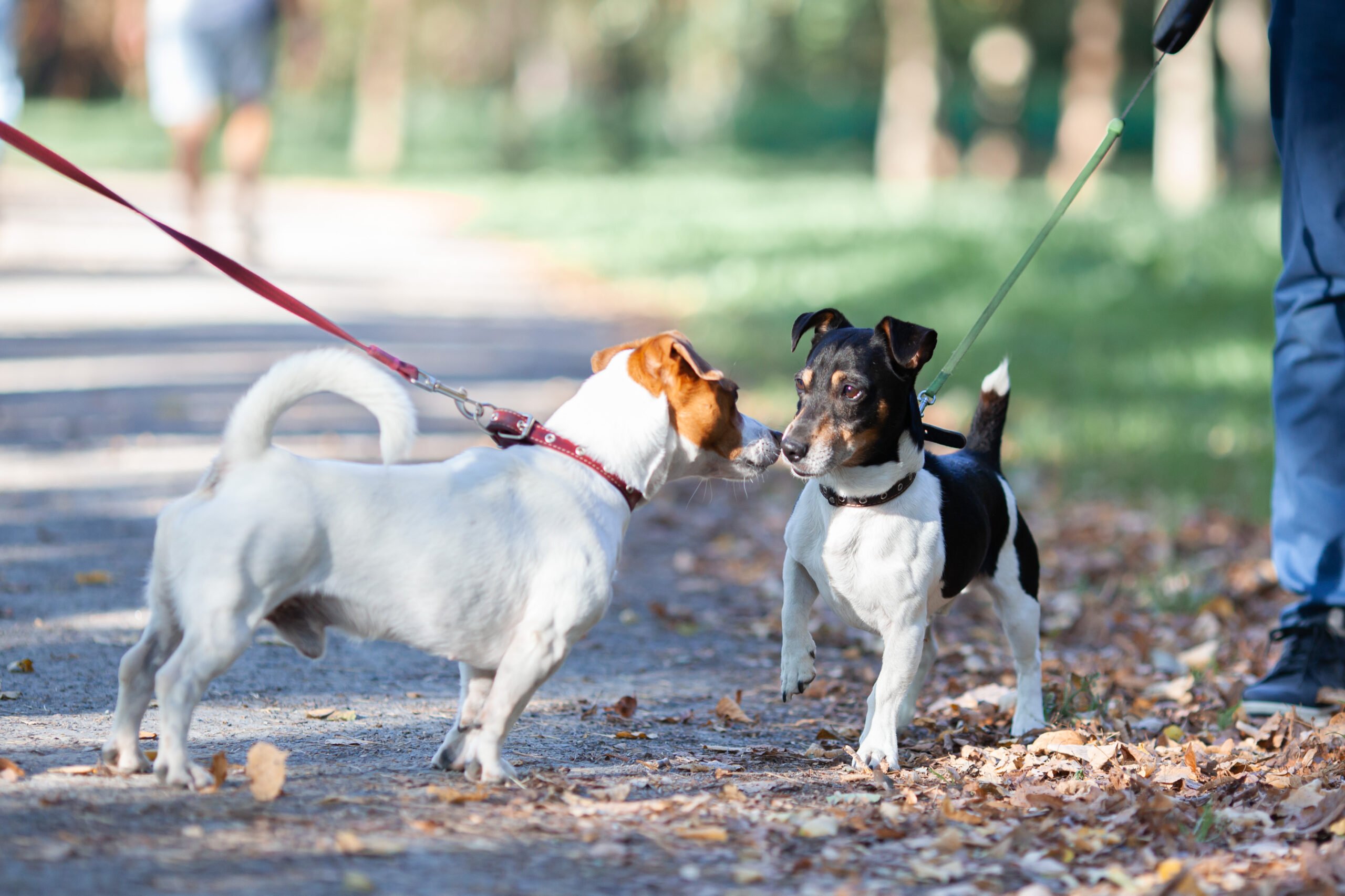
Not every dog needs to say hello. If you allow a greeting:
- Ask the other owner first.
- Watch both dogs’ body language.
- Allow a brief sniff.
- Call your dog away before either dog becomes uncomfortable.
- Don’t force face-to-face greetings.
A calm sidewalk pass is often a better training opportunity than a prolonged greeting.
9. Reward What You Want, Ignore What You Don’t
Instead of focusing only on stopping barking, look for the behavior you want:
- Your dog notices another dog.
- Your dog stays quiet.
- Your dog looks away.
- Your dog checks in with you.
- Your dog keeps walking with a loose leash.
Those are the moments to reward. The more consistently you reinforce calm observation and disengagement, the more useful those behaviors become when another dog appears.
10. Know When to Quit
If a walk turns into one stressful encounter after another, you don’t have to finish the planned route.
Turn around, take a quieter route, or head home when your dog is struggling to recover.
It’s better to end with a manageable experience than repeatedly push your dog through overwhelming encounters. Progress may look like fewer outbursts, greater distance tolerance, or faster recovery, not instant silence.
Need Extra Help With Training?
Online training programs can make a big difference if your dog’s barking feels out of control. See our expert reviews of the best online dog training courses, from personalized coaching to reactive-dog support, and find one that fits your pup’s needs.
5 Common Mistakes That Can Make Barking Worse
Even with the best intentions, a few common missteps can accidentally reinforce barking or make reactivity harder to manage.
1. Waiting Until Your Dog Is Already Barking
Once barking starts, your dog is often too overwhelmed to learn. Training works best before things escalate, when your dog can still think and respond.
2. Training Too Close to Triggers
If your dog can’t take treats or respond to cues, you’re probably too close. Creating more distance isn’t giving up; it’s setting your dog up for success.
3. Trying to “Push Through” Stressful Walks
Long walks packed with triggers can do more harm than good. Shorter, calmer outings build confidence faster than forcing your dog to cope when they’re already stressed.
4. Accidentally Rewarding the Barking
Talking, pulling the leash, or rushing to soothe your dog can still count as attention. When possible, reward quiet moments instead, even brief ones.
5. Expecting Quick Fixes
Reactivity rarely disappears overnight. Progress usually looks like fewer outbursts, faster recovery, or calmer body language, not instant silence.
Important Note: If barking seems to be getting worse, it doesn’t mean you’re failing. It usually means your pup needs more space, less pressure, or a slower pace.
Many owners notice improvements just by consistently avoiding these mistakes.
When It’s Time For Professional Help
Sometimes barking needs more than home training. We recommend professional help if your dog’s reactions are becoming more intense, unpredictable, or difficult to control.
Reactivity and fear-based barking can stem from deep emotional roots that need an expert’s eye. A professional dog behaviorist can help identify triggers, adjust your training plan, and teach you handling skills to keep both you and your dog safe.
Signs You Need Extra Support
Seek professional guidance if:
- Your dog repeatedly lunges or snaps at other dogs.
- Your dog has attempted to bite or has redirected a bite toward you or another person.
- Your dog cannot recover even after the other dog has left.
- You feel unsafe walking your dog.
- Training progress has stalled despite consistent work.
You’re not failing your dog by asking for help; you’re giving them the best chance to succeed. A professional dog behaviorist can help identify the underlying trigger, create a safer management plan, and teach you how to handle difficult encounters.
Who To Turn To
- Certified Dog Trainer (CPDT-KA) — specializes in positive reinforcement and behavior shaping.
- Veterinary Behaviorist (DACVB) — a licensed vet who can assess anxiety, prescribe medications if necessary, and design a customized behavior plan.
- Fear-Free Certified Trainer — trained to reduce stress in anxious or reactive dogs.
You can find credentialed help through:
- Certification Council for Professional Dog Trainers (CCPDT)
- American College of Veterinary Behaviorists
- Fear Free Pets Directory
Many owners find that combining behavioral training with anti-anxiety medications or supplements can dramatically reduce reactivity. Talk with your veterinarian before starting medication or supplements for anxiety.
Covering Behavioral & Other Veterinary Costs
Vet diagnostics, behavioral training consults, and behavioral treatments can add up. A good pet insurance plan can help cover unexpected costs for many different health and behavioral problems.
Explore our best pet insurance providers to see which plans fit your dog and budget. Keep in mind that securing a policy while your dog is still healthy and young is key because most insurers don’t cover pre-existing conditions.

Still Wondering Why Your Dog Barks?
Wondering why your pup still barks at other dogs? You’re in good company! Check out these quick answers, and if your question’s not here, ask us in the comments below.

Why Does My Dog Bark At Some Dogs But Not Others?
Dogs can react differently depending on another dog’s size, movement, posture, energy level, sex, proximity, or past experiences.
For example, a dog who ignores calm adult dogs but barks at puppies may be overwhelmed by unpredictable movement. A dog who barks only at large dogs may be responding to their size or posture. Keep track of the patterns rather than assuming your dog “doesn’t like dogs.”
Why Do Dogs Bark At Other Dogs Through Windows Or Fences?
This is usually territorial barking. Barriers can increase frustration because your dog can see another dog but can’t interact or retreat, which intensifies the reaction.
Closing blinds, adding frosted window film, or using white-noise machines can cut down visual and auditory triggers. You can also teach a “quiet” cue by rewarding silence when the other dog passes.

Is It Normal For Puppies To Bark At Other Dogs?
Absolutely normal. Puppies are still learning canine manners! Early socialization is crucial, ideally between 3 and 14 weeks old. Introduce your puppy to calm, vaccinated dogs in controlled settings so they learn that other pups are friendly, not frightening.
Should I Let My Dog “Work It Out” With Another Dog?
No. If barking, stiff body language, lunging, or snapping begins, create distance rather than forcing the dogs to resolve the interaction themselves. Controlled setups with appropriate dogs are safer than allowing a stressful encounter to escalate.
Can Bark Collars Help Stop This Behavior?
Bark collars may interrupt or reduce barking, but they don’t address why your dog is barking at other dogs. If the behavior stems from fear, frustration, anxiety, or reactivity, suppressing the bark can leave the underlying emotion unchanged—and some aversive methods may increase stress.
Instead, focus on reward-based training, creating enough distance from triggers for your dog to stay calm, and gradually building positive associations with other dogs. If the barking involves intense lunging, snapping, or escalating fear, consider working with a qualified trainer, behavior consultant, or veterinary behaviorist.
What’s The Difference Between Barking And Aggression?
Barking and lunging can occur during reactivity without an attempt to bite. Aggressive behavior can include threatening, snapping, or biting, and the motivation may involve creating distance rather than simply ‘wanting to hurt’ another dog.
Understanding Dog Communication
Dogs have entire conversations without saying a word — a bark, a glance, a tail flick all mean something.
When we learn to read those cues, we stop guessing and start connecting. Learn more about the ways dogs communicate with each other and their body language when communicating with us.
What Worked for Your Dog?
Every dog is different. If you’ve dealt with barking on walks or around other dogs, we’d love to hear what helped, or what didn’t.
Did crossing the street make walks easier? Did your dog respond better to treats, distance, visual barriers, or a particular training cue?
Share your experience in the comments and help another dog parent feel a little less stuck.