When you purchase through links on our site, we may earn a commission at no extra cost to you. Learn more.
Think that’s a German Shepherd? Look again.
Table of Contents
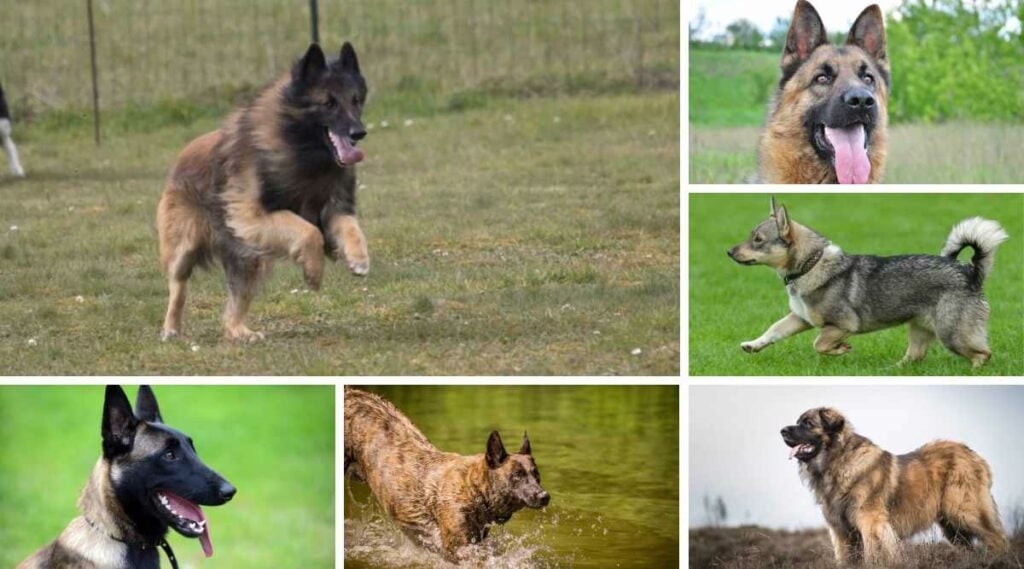
Several dog breeds share the German Shepherd’s unmistakable silhouette—upright ears, long muzzle, athletic build, thick coat, and alert expression. Some are so similar that they’re regularly mistaken for GSDs, while others look like miniature, oversized, white, or even wolf-like versions of the breed.
But looks can be deceiving. A Belgian Malinois may resemble a German Shepherd while having different physical and behavioral characteristics, and breeds such as the White Swiss Shepherd have their own distinct histories and breed standards.
Below, we explore 18 dogs that look like German Shepherds, from close shepherd lookalikes to lesser-known breeds with a similar appearance. We’ll also highlight the important differences in size, coat, temperament, activity level, and ancestry so you can see where the resemblance ends.
What Makes A Dog Look Like A German Shepherd?
German Shepherds (aka GSD) have a distinctive appearance, but several other breeds share many of the same physical traits. Upright, pointed ears, a long muzzle, an athletic or muscular frame, a bushy tail, and familiar black, tan, sable, or wolf-like coloring can all create that recognizable shepherd look.
Some of the dogs below are closely related to German Shepherds or were developed using GSDs in their breeding history. Others simply share similar features because they were bred for herding, guarding, or other working roles.
Appearance is only part of the picture, though. Two breeds that look remarkably alike can differ considerably in size, energy level, trainability, temperament, grooming needs, and suitability for inexperienced owners. As you explore these German Shepherd lookalikes, pay attention to those differences as well as the resemblance.
18 Dogs That Look Like German Shepherds
From close lookalikes like the Belgian Malinois to oversized shepherds and striking wolf-like breeds, these dogs share some of the German Shepherd’s most recognizable features. We’ve grouped them by type so you can easily compare their appearance, size, energy, trainability, and overall fit for different households.
Let’s start with the breeds you’re most likely to mistake for a German Shepherd.
Dogs That Look Most Like German Shepherds
These breeds have some of the strongest visual similarities to German Shepherds, including upright ears, long muzzles, athletic builds, and classic shepherd features. But their personalities, exercise needs, and ideal homes can be quite different.
1. Belgian Malinois
Belgian Malinois are super similar to German Shepherds, and they are often confused for one another. But there are a few subtle differences to look out for.
Mals are usually leaner than German Sheps, weighing between 40 and 80 pounds but the same height. They typically have a shorter coat that is fawn in color with a black mask. Belgian Malinois need a seriously active and experienced family to get the best out of them.

Like German Shepherds, Belgian Malinois work with the police and military for their confident, hardworking, and protective nature. Mals are less common than GSDs, but according to the AKC, their popularity is increasing yearly.
They form an unbreakable bond with their primary caregiver and are more intense workaholics than the German Shepherd. Malinois are one of four closely related Belgian breeds.
Quick Fit
- Size: Medium to large
- Energy: Very high
- Trainability: Very high
- Family fit: Best for highly active households committed to training and daily exercise
- Experience: Experienced owners recommended
2. Dutch Shepherd
Dutch Shepherds look almost identical to Belgian Malinois and similar to German Shepherds. They were recorded in the AKC’s Foundation Stock Service in 2012, and breeders continue to work towards complete recognition.
Dutch Shepherds took the sheep out to their fields every morning and returned them to the barn single-handedly without their master. They have tons of energy but are playful and affectionate with their favorite humans.
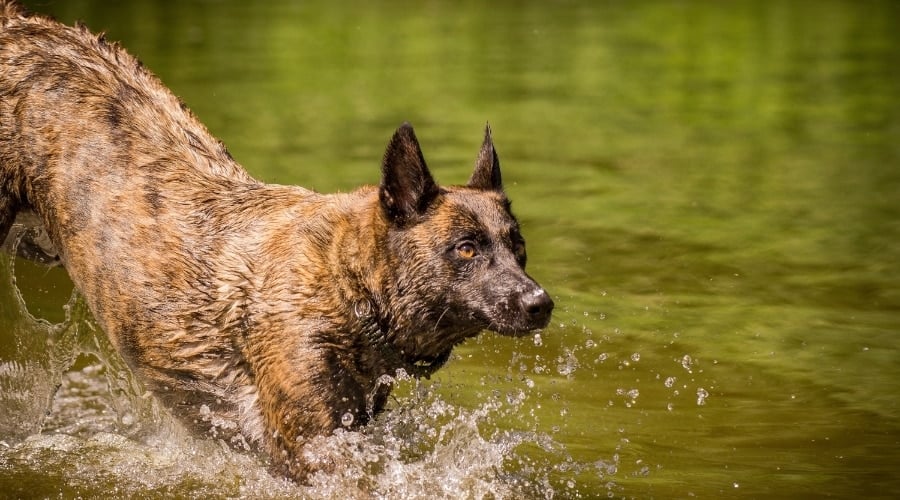
Dutch Shepherds weigh between 42 and 75 pounds and measure between 21.5 and 24.5 inches tall. They have three coat types, which are short, long, and rough-haired.
They all have a rough texture, and the rough-haired dogs have a tousled appearance. There are only two standard colors, gold brindle and silver brindle, although the brindle pattern can be difficult to distinguish in rough-coat dogs.
Quick Fit
- Size: Medium to large
- Energy: Very high
- Trainability: High
- Family fit: Best for active households that enjoy training and outdoor activities
- Experience: Intermediate to experienced
3. White Swiss Shepherd Dog
At first glance, the White Swiss Shepherd Dog can look like a white German Shepherd, and the resemblance isn’t coincidental. Also called the Berger Blanc Suisse, the breed developed from white shepherd dogs with German Shepherd ancestry. White shepherds exported from North America helped establish the breed in Switzerland.
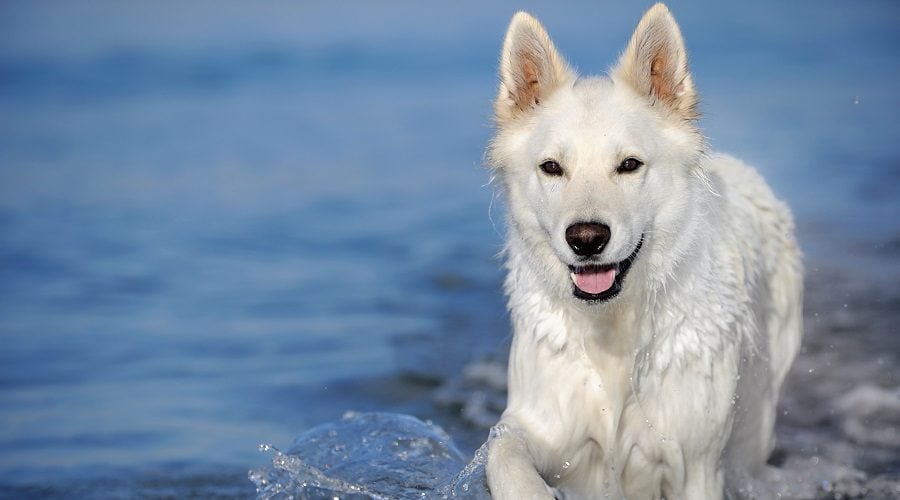
White Swiss Shepherds generally stand around 21 to 26 inches tall and have medium-length or long double coats that should be white. Their erect triangular ears, long muzzle, body shape, and expression make the German Shepherd resemblance especially obvious.
These intelligent, active shepherds need daily exercise, training, and plenty of interaction with their families. Their striking white coats may set them apart, but structurally, they’re among the closest German Shepherd lookalikes on this list.
Quick Fit
- Size: Large
- Energy: High
- Trainability: High
- Family fit: Can suit active families prepared for the needs of a large shepherd
- Experience: Intermediate
4. Bohemian Shepherd
The Bohemian Shepherd, or Chodský Pes, might make you do a double take. With a black-and-tan coat, erect ears, long muzzle, and thick fur around the neck, this Czech herding breed can resemble a smaller, fluffier German Shepherd.
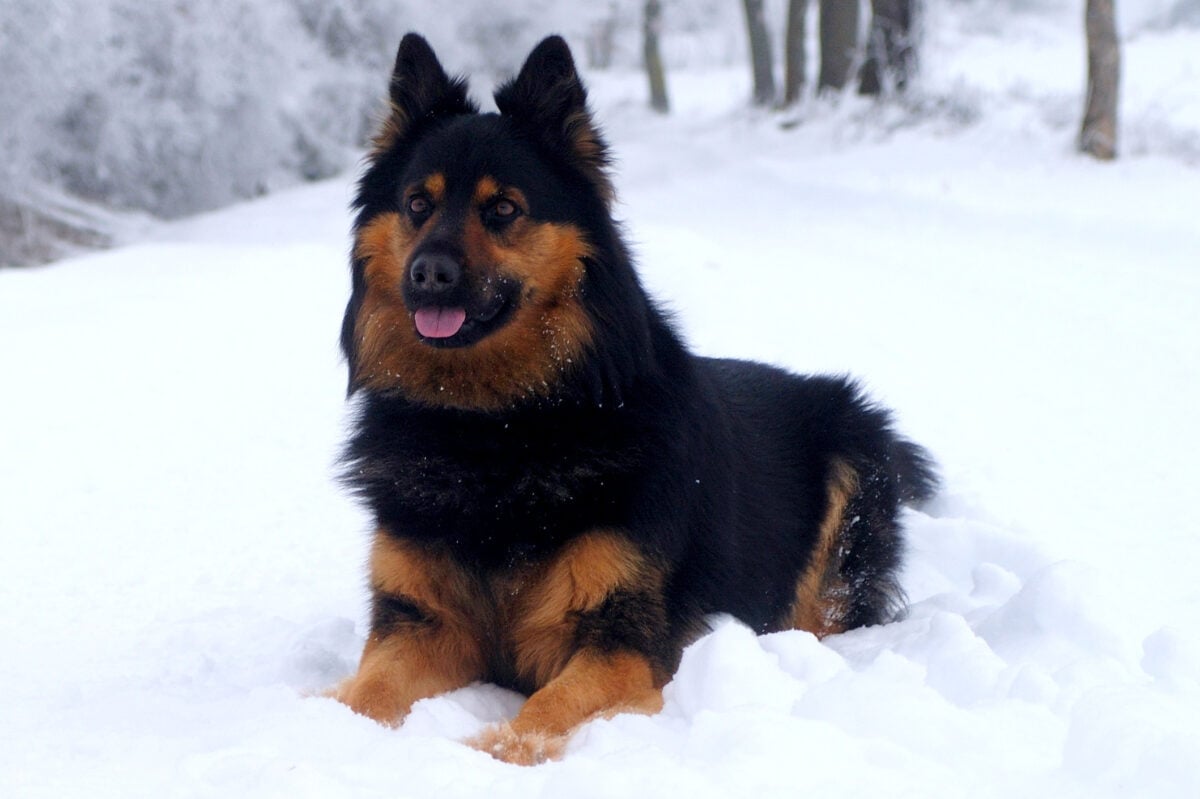
Bohemian Shepherds generally stand around 19 to 22 inches tall and weigh roughly 37 to 60 pounds, making them noticeably more compact than German Shepherds. Their accepted coloring is black and tan, and their longer coat contributes to that familiar shepherd appearance.
They were developed as versatile working dogs and remain active, intelligent, and eager to have something to do. Their smaller size can appeal to someone who likes the GSD look but doesn’t necessarily want such a large dog. However, smaller doesn’t mean low-energy.
Quick Fit
- Size: Medium
- Energy: High
- Trainability: High
- Family fit: Can be a good match for active families able to provide regular exercise and training
- Experience: Intermediate
5. East European Shepherd
The East European Shepherd, also known as the Vostochno Evropeiskaya Ovcharka, is one of the most convincing German Shepherd lookalikes because German Shepherds played a central role in the breed’s development. The breed was developed in the former Soviet Union as a larger, robust working shepherd suited to demanding service work and harsh conditions.
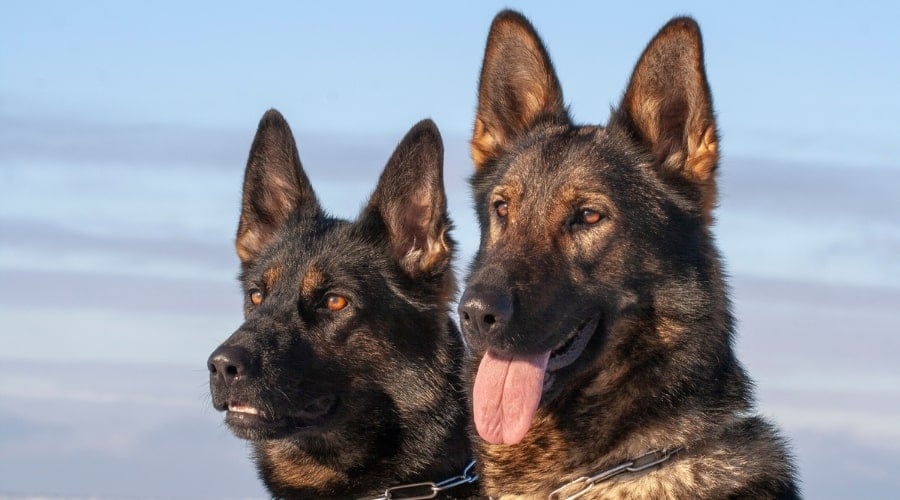
East European Shepherds have erect ears, a long muzzle, a muscular body, and familiar black-and-tan, black, or wolf-gray coloring associated with German Shepherds. They tend to be larger and more substantial, generally standing about 24 to 28 inches tall.
These are serious working dogs rather than simply oversized German Shepherd alternatives. Their size, strength, guarding instincts, and working background make early socialization and consistent training particularly important.
Quick Fit
- Size: Large to very large
- Energy: High
- Trainability: High
- Family fit: Best for structured, active households comfortable with a large working dog
- Experience: Experienced owners recommended
6. Belgian Tervuren
The Belgian Tervuren combines the athletic outline of a Belgian Malinois with a longer, fuller coat that can make the German Shepherd resemblance even stronger. Tervurens stand roughly 22 to 26 inches tall and typically weigh 45 to 75 pounds. Their long double coats range from fawn to mahogany with black overlay and commonly include a dark facial mask.
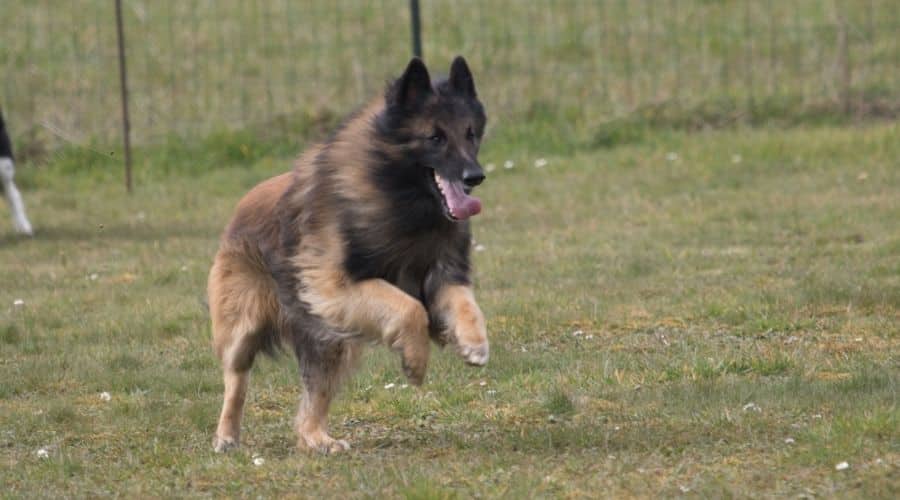
Tervurens share their history with the other Belgian herding dogs. They are intelligent, alert, athletic working dogs that tend to thrive when given challenging activities.
Like German Shepherds, Tervurens are highly trainable and need plenty of physical and mental stimulation. Their lighter, square build and fuller coat are two of the easiest ways to distinguish them from a typical German Shepherd.
Quick Fit
- Size: Medium to large
- Energy: Very high
- Trainability: Very high
- Family fit: Best for active households that enjoy training, dog sports, and outdoor activities
- Experience: Intermediate to experienced
German Shepherd-Derived & GSD-Inspired Dogs
For these dogs, the German Shepherd resemblance goes deeper than appearance. German Shepherds played a role in their development, or breeders deliberately sought some of the GSD’s recognizable characteristics while creating a different type of companion.
7. Shiloh Shepherd
Shiloh Shepherds can easily be mistaken for oversized, long-haired German Shepherds, and there’s a good reason for the resemblance. Breed founder Tina Barber began developing the Shiloh in New York in the 1970s using German Shepherd lines along with other breeds, with the goal of producing a larger companion shepherd with a calmer temperament.
Shilohs are significantly larger than most German Shepherds, with a substantial build and thick double coat. Their coats come in several colors and patterns, and the popular plush-coated variety can give them an especially striking, almost wolf-like appearance.
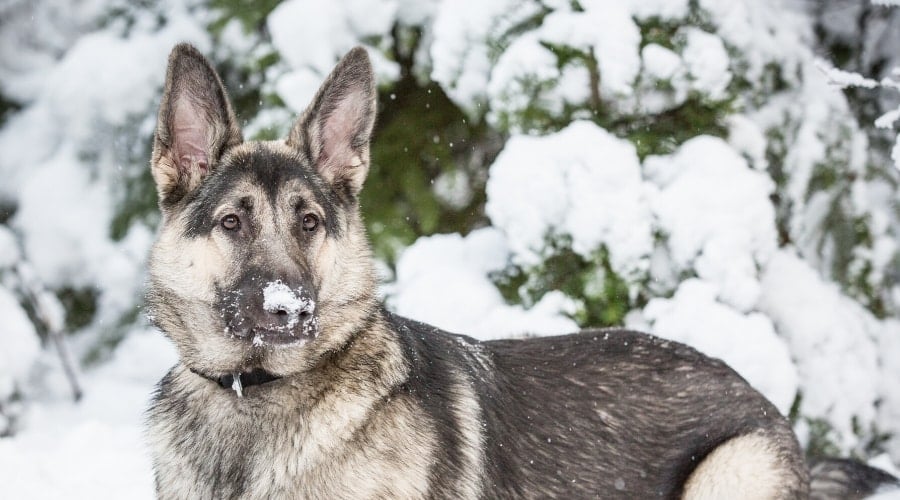
Compared with many working shepherd breeds, Shilohs are generally bred to be calmer and more companion-oriented. They are intelligent and trainable, but their enormous size makes early training, socialization, and good manners especially important. Their breed organization also notes that energy and temperament can vary between individual dogs.
Quick Fit
- Size: Giant
- Energy: Moderate
- Trainability: High
- Family fit: Often well suited to families prepared for a very large dog
- Experience: Intermediate; size and socialization require confident handling.
8. King Shepherd
King Shepherds are another large shepherd developed from German Shepherd ancestry, which explains their strong resemblance to the GSD. Shiloh Shepherds also contributed to their development, along with other breeds. The result is an imposing shepherd that can look like a supersized, heavier German Shepherd.
King Shepherds generally weigh around 90 to 140 pounds and stand 25 to 30 inches tall. They have powerful frames, broad heads, erect ears, and thick double coats that can come in familiar shepherd colors, including black and tan, sable, red, gold, and cream.
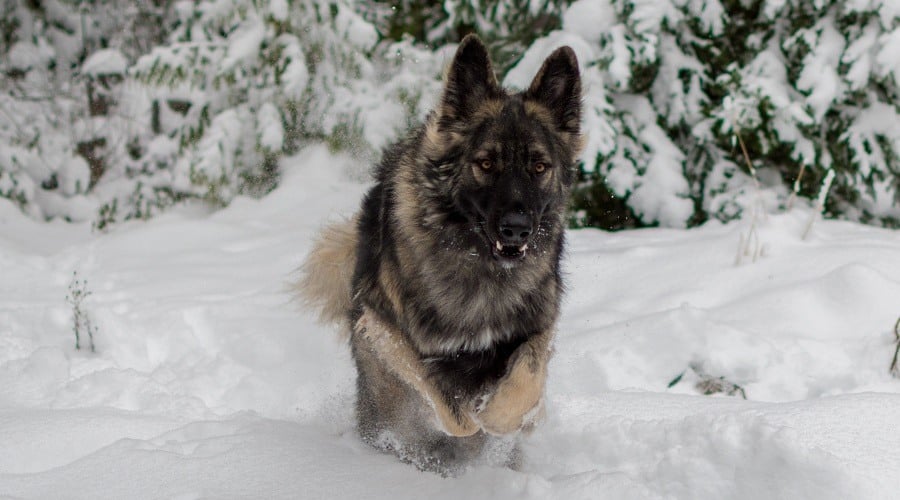
Their size is the most obvious difference from a German Shepherd. King Shepherds need plenty of room, early socialization, and consistent training. Their intelligence can make training rewarding, but this is still a very large, powerful dog that needs an owner prepared to manage one responsibly.
Quick Fit
- Size: Giant
- Energy: Moderate to high
- Trainability: High
- Family fit: Potentially good for active families with space for a giant dog
- Experience: Intermediate to experienced
9. Miniature German Shepherd
Despite the name, the Miniature German Shepherd isn’t simply a smaller purebred German Shepherd. The name typically refers to a mixed-breed dog with a German Shepherd parent and a smaller breed. Because there’s no single breed standard, their appearance, size, and temperament can vary considerably depending on their parents.
They are not recognized by kennel clubs like the American Kennel Club (AKC). But they are becoming an increasingly popular German Shepherd mix breed.

Many weigh around 30 to 50 pounds and stand roughly 15 to 20 inches tall, although individual dogs can fall outside that range. Some inherit the German Shepherd’s pointed ears, long muzzle, coloring, and athletic appearance in a more compact package.
They may also inherit GSD-like intelligence, energy, or protective tendencies, but there’s no guarantee that a Miniature German Shepherd will look or behave like a scaled-down GSD. Prospective owners should pay close attention to both parent breeds when considering one.
Quick Fit
- Size: Medium
- Energy: Moderate to high
- Trainability: Moderate to high, depending on the mix
- Family fit: Varies considerably according to the parent breeds and individual dog
- Experience: Intermediate
10. American Alsatian
If you love the look of German Shepherds but prefer a more wolfy appearance, the American Alsatian could be a top contender.
Its development began in the United States in the late 20th century, with German Shepherds and Alaskan Malamutes among the dogs used in its foundation. Other breeds were subsequently introduced as breeders worked toward a large companion dog with a prehistoric, wolf-like appearance.
They were initially named the North American Shepalute and are sometimes called Schwarz Dogs.
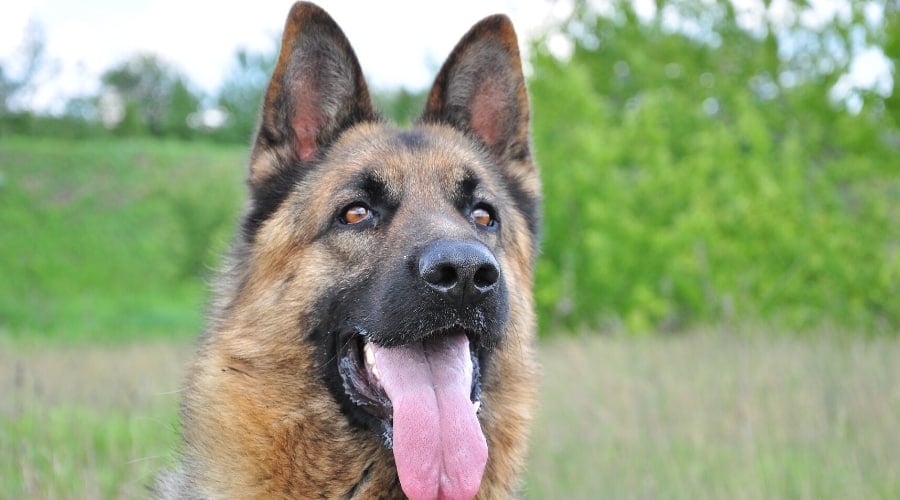
American Alsatians are big dogs, generally standing about 25 to 32 inches tall and weighing 85 pounds or more. Their broad frames, substantial heads, erect ears, long muzzles, and wolf-like coloring give them several familiar German Shepherd characteristics, although they are typically much heavier.
Unlike working German Shepherds, American Alsatians have been developed primarily as companion dogs rather than high-drive working dogs. Their considerable size still means prospective owners need enough room and should prioritize early training and socialization.
Quick Fit
- Size: Giant
- Energy: Low to moderate
- Trainability: Moderate
- Family fit: Companion-oriented but requires room for a very large dog
- Experience: Intermediate
Wolf-Like Dogs That Resemble German Shepherds
Some German Shepherd lookalikes take the resemblance in a much wilder direction. These breeds and developing dog types combine erect ears, long muzzles, athletic bodies, thick coats, and wolf-like coloring.
A Note About Wolfdog Ownership
A wolf-like appearance doesn’t necessarily mean recent wolf ancestry, and the dogs in this group can have very different backgrounds and ownership needs. Breeds with documented wolf ancestry, such as the Czechoslovakian Wolfdog and Saarloos Wolfdog, can be especially challenging due to their independence, exercise needs, socialization requirements, and need for secure containment.
Laws and regulations involving wolfdogs can also vary by state and local jurisdiction. Before considering one, research the specific breed carefully and check your local ownership rules, housing restrictions, and insurance requirements.
11. Czechoslovakian Wolfdog
The Czechoslovakian Wolfdog is another wolf-dog hybrid known as the Czechoslovakian Vlack. They were created in the 1950s by the Czech military to be a vicious patrol dog during the Cold War. They mixed a German Shepherd with a Carpathian wolf, and experts estimate them to be 94% German Shepherd, which is why they look so similar. Thankfully, the result produced a vigilant patrol dog, but very affectionate with humans.
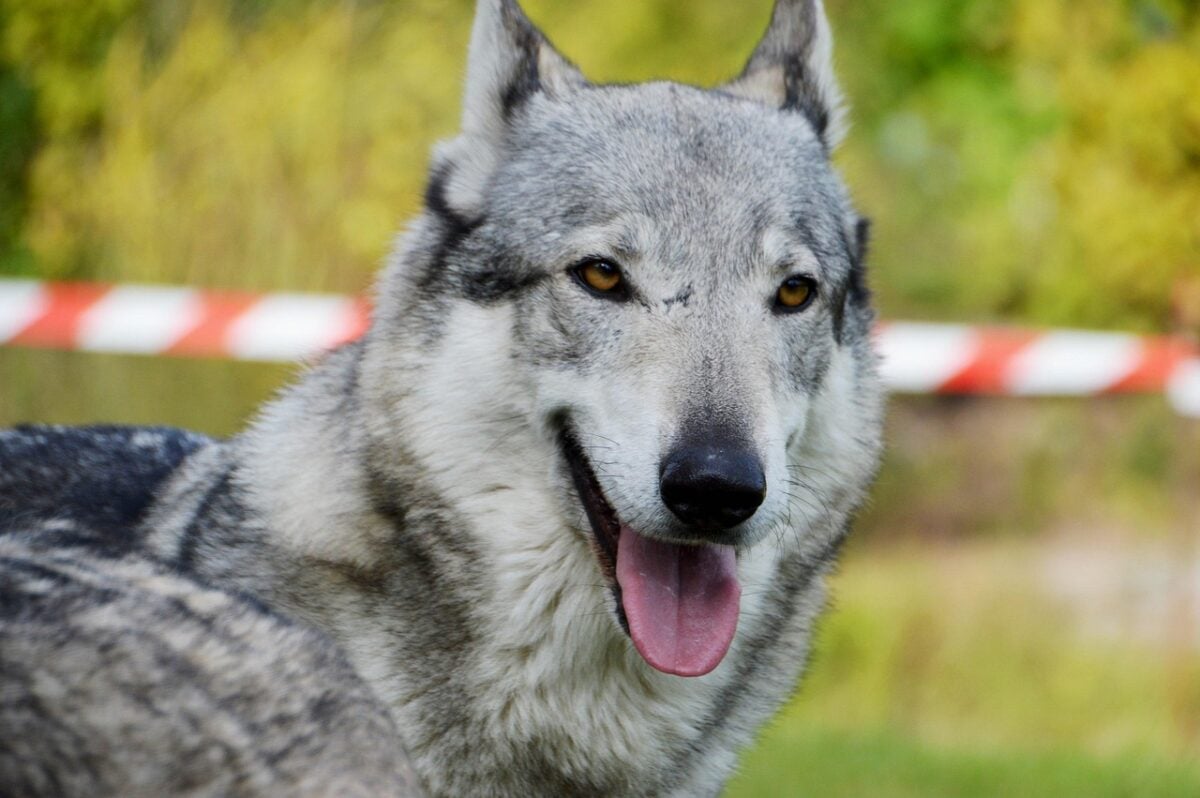
Czechoslovakian Wolfdogs are lean, athletic, and unmistakably wolf-like, with erect ears, amber-colored eyes, a thick coat, and gray coloring. Adults stand at least about 23.5 to 25.5 inches tall, depending on sex, with no upper height limit specified by the FCI standard.
These intelligent, energetic dogs can be very different from conventional companion breeds. Independence, stamina, social needs, and challenging behaviors can make ownership demanding. They need extensive socialization, training, secure containment, and an owner who understands what they’re taking on.
Quick Fit
- Size: Large
- Energy: Very high
- Trainability: Moderate; intelligent but independent
- Family fit: Not a typical family-dog choice and requires extensive research
- Experience: Experienced owners strongly recommended
12. Saarloos Wolfdog
The Saarloos Wolfdog is another established breed with historical wolf ancestry and a striking resemblance to a wild wolf. Dutch breeder Leendert Saarloos began its development by crossing a German Shepherd with a European wolf and continuing a breeding program from their descendants.
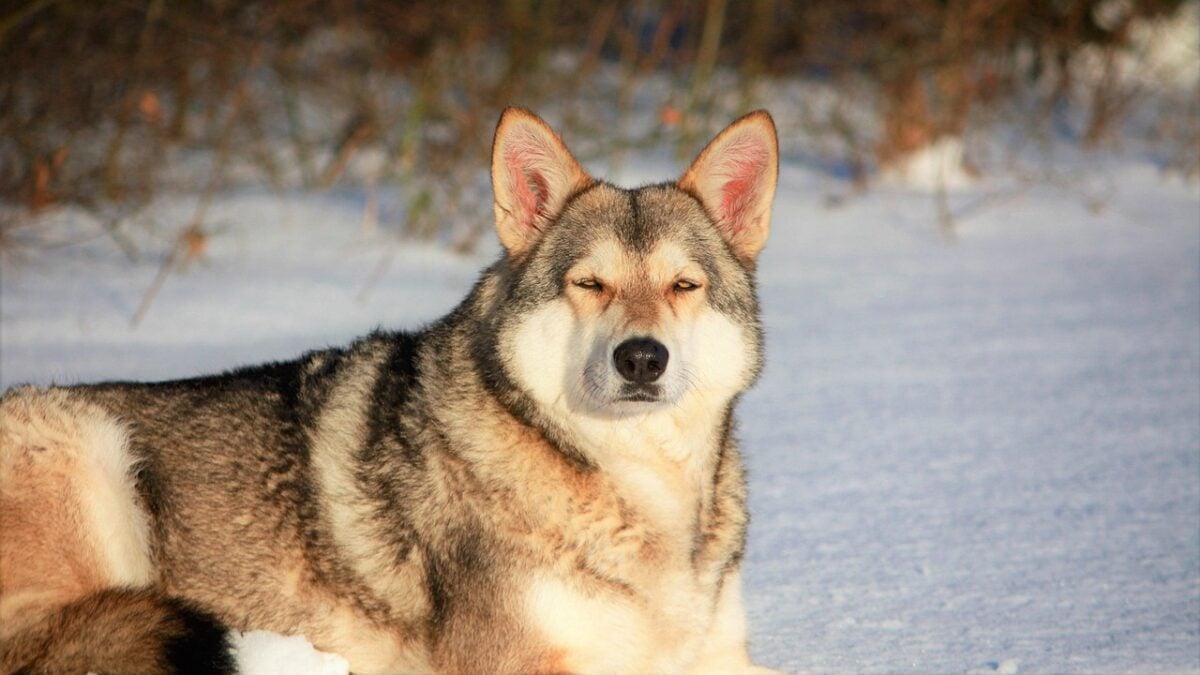
Saarloos Wolfdogs are generally large, athletic dogs with long legs, erect ears, wolf-like heads, and thick coats. The resemblance to a German Shepherd is clearest in their overall shepherd structure and ancestry, but their wolf-like characteristics are usually much more pronounced.
Temperament is an especially important consideration. Saarloos Wolfdogs can be independent and reserved, and they are not simply exotic-looking German Shepherds. Anyone considering one should research breed-specific behavior, secure containment, breeder practices, and applicable local laws before bringing one home.
Quick Fit
- Size: Large
- Energy: High
- Trainability: Moderate to challenging
- Family fit: Best suited to carefully researched, highly prepared homes
- Experience: Experienced owners strongly recommended
13. Utonagan
The Utonagan is another wolf-look dog developed from domestic breeds rather than as a contemporary wolf hybrid. German Shepherds, Siberian Huskies, and Alaskan Malamutes are associated with the breed’s early development, helping explain its combination of shepherd and northern-breed features.
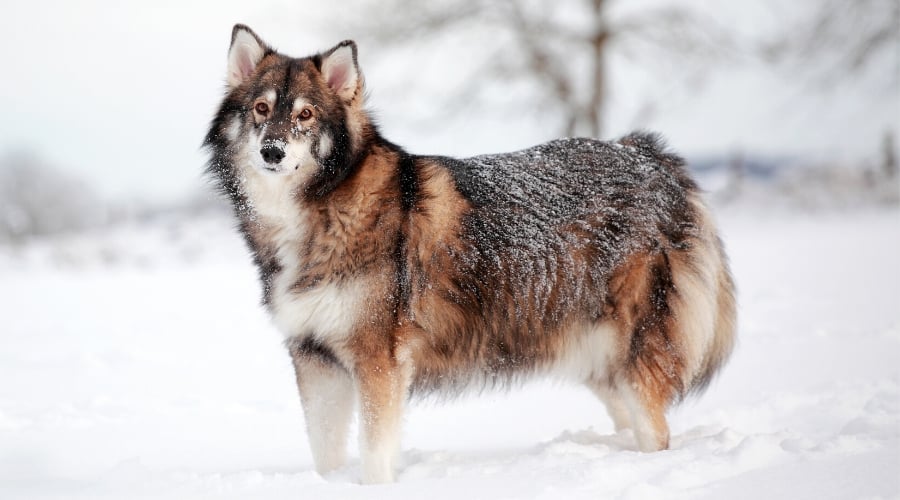
Utonagans are large, athletic dogs with erect ears, long muzzles, bushy tails, and thick double coats. Gray, sable, and other wolf-like coloring can make them particularly striking.
Their northern and working-dog background means they shouldn’t be chosen for appearance alone. Utonagans need regular physical activity, mental stimulation, companionship, training, and enough room to live comfortably.
Quick Fit
- Size: Large
- Energy: High
- Trainability: Moderate
- Family fit: Better for active households able to provide plenty of exercise and companionship
- Experience: Intermediate to experienced
14. Tamaskan
The Tamaskan is another dog breed that resembles the German Shepherd and wolf, but they have neither breed in their bloodline. Instead, they are a mix between the Alaskan Malamute and the Siberian Husky, and a few unknown sled dogs thrown into the mix. The first Tamaskan litter was born in 2002. “Tamaska” translates to “mighty wolf” in several Northern American Indian languages.
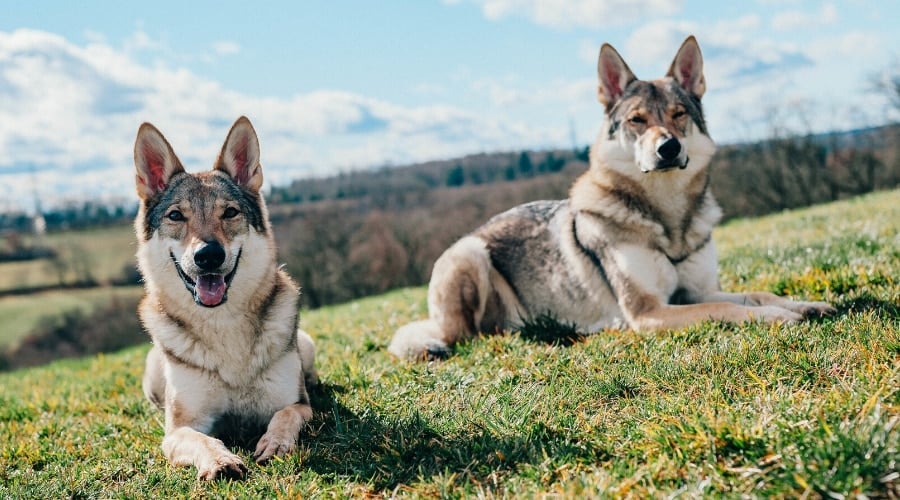
Tamaskans generally stand around 24 to 29 inches or more, depending on sex and breed standard, and have an athletic rather than heavy build. Their northern-breed influence contributes to their thick coats and wolfish appearance.
They are active dogs that need substantial daily exercise and mental stimulation. They can also be social and strongly attached to their people, making sufficient companionship an important part of ownership.
Quick Fit
- Size: Large
- Energy: High
- Trainability: Moderate to high
- Family fit: Best for active households prepared for significant exercise and companionship needs
- Experience: Intermediate to experienced
15. Northern Inuit Dog
The Northern Inuit Dog was developed in the United Kingdom to resemble a wolf while retaining domestic-dog ancestry. Its development involved northern breeds and shepherd-type dogs, resulting in the long muzzle, erect ears, thick coat, and athletic outline that earn it a place among German Shepherd lookalikes.
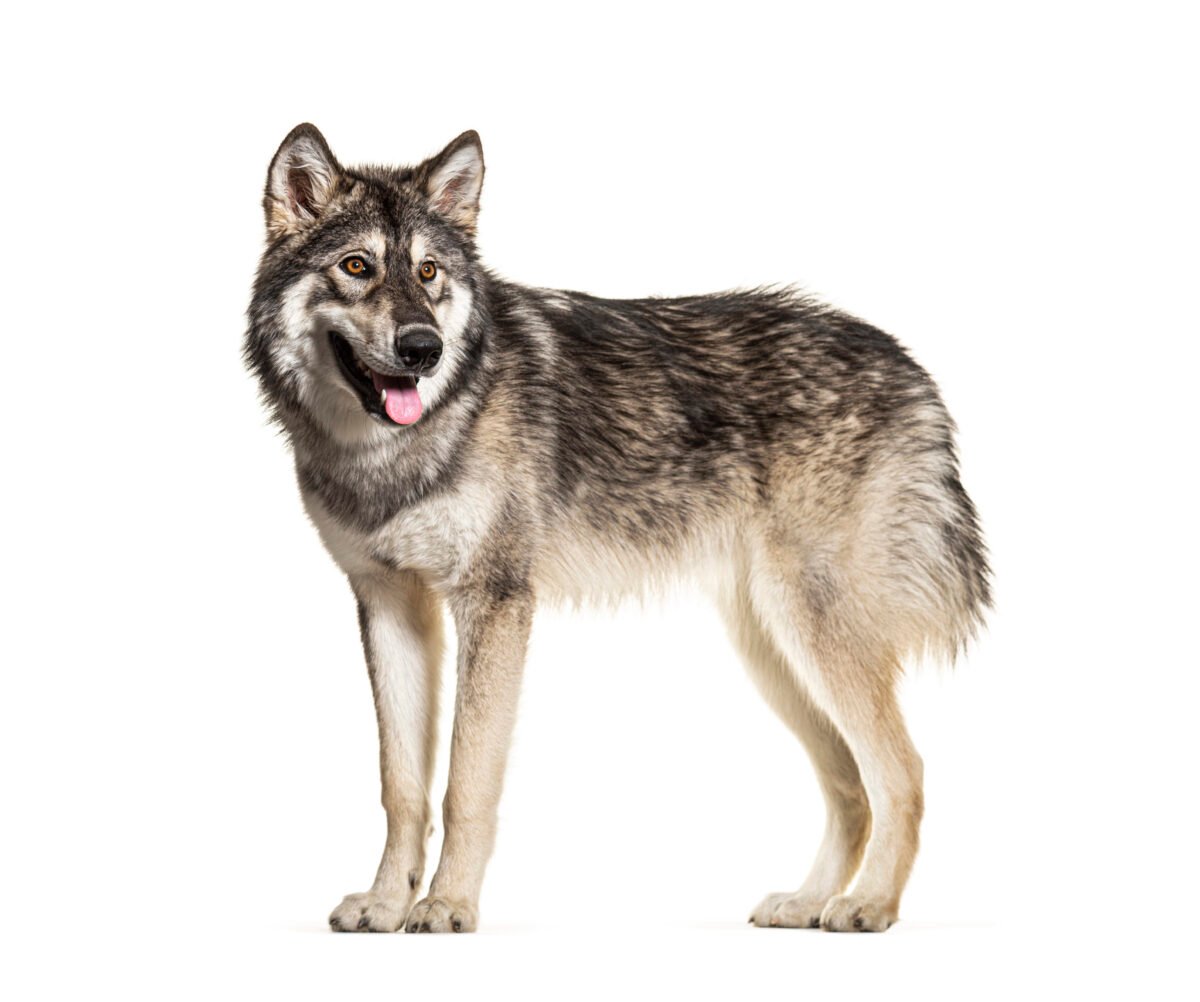
Northern Inuit Dogs are large, powerful dogs with thick double coats and a range of wolf-like colors. Their appearance helped bring this type of dog considerable attention in film and television, where wolf-looking domestic dogs can be used in place of actual wolves.
Despite the wild appearance, the Northern Inuit is a domestic dog. However, prospective owners still need to consider its size, exercise needs, independence, training, and strong need for companionship rather than choosing one primarily for its looks.
Quick Fit
- Size: Large
- Energy: High
- Trainability: Moderate
- Family fit: Can suit active households prepared for a large, social, energetic dog
- Experience: Intermediate to experienced
Other Shepherds That Look Like German Shepherds
Our final group shares the GSD’s working-dog silhouette, upright ears, long muzzle, or shepherd heritage, but each has characteristics that make it easier to tell apart once you know what to look for.
16. Belgian Sheepdog (Groenendael)
The Belgian Sheepdog, also known as the Groenendael, shares the elegant, athletic build of the other Belgian herding breeds. Its long, predominantly black coat is the biggest giveaway, but beneath all that fur are the erect ears, long muzzle, and shepherd structure that can remind you of a German Shepherd.
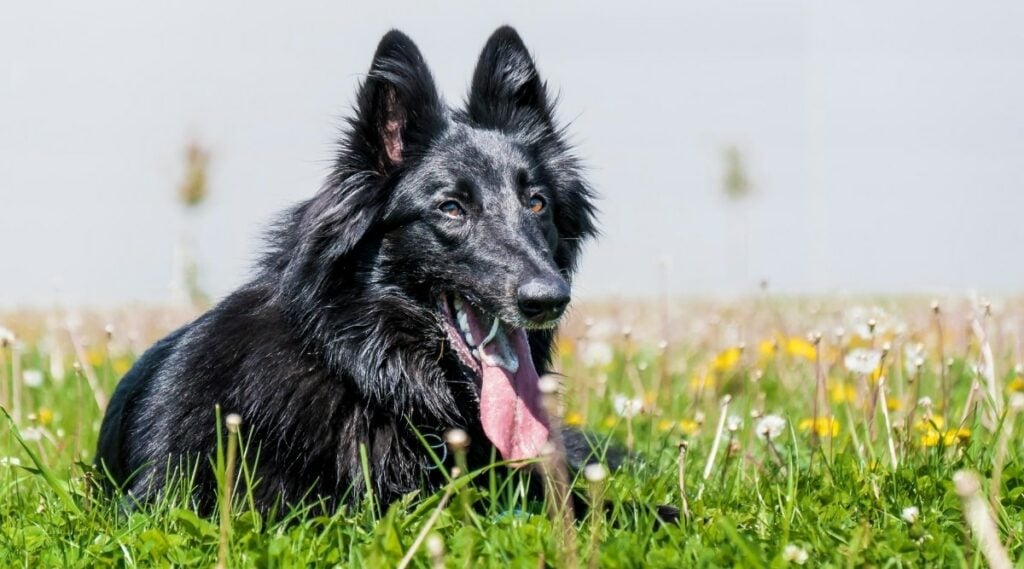
Belgian Sheepdogs generally weigh around 45 to 75 pounds and stand 22 to 26 inches tall. They were developed as versatile farm dogs and have a long history of herding, guarding, and other working roles.
These are intelligent, highly trainable dogs with plenty of energy and a strong desire to work with their people. They generally need much more than a walk around the block to stay physically and mentally satisfied.
Quick Fit
- Size: Medium to large
- Energy: Very high
- Trainability: Very high
- Family fit: Best for active families committed to exercise, training, and mental stimulation
- Experience: Intermediate to experienced
17. Beauceron
The Beauceron is a large French herding breed that shares several visual traits with the German Shepherd, particularly its muscular working-dog build, long muzzle, erect-looking profile, and common black-and-tan coloring. However, its shorter coat and distinctive double rear dewclaws help set it apart.
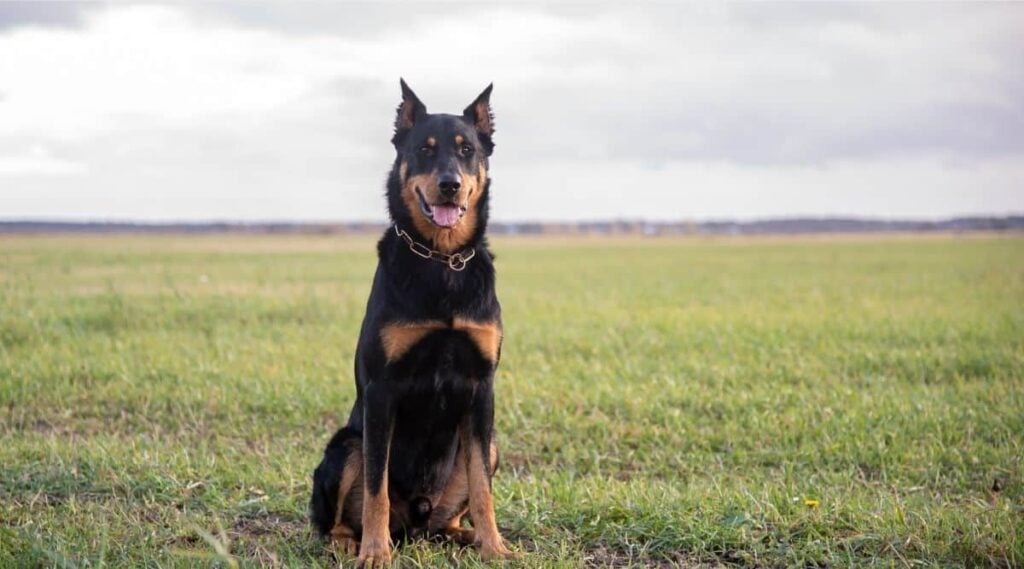
Beaucerons are powerful dogs, with males reaching up to about 27.5 inches at the shoulder. They were developed as versatile herders and guardians and remain intelligent, athletic dogs that need both physical activity and mental challenges.
Their size, strength, confidence, and working instincts make training and early socialization especially important. For an experienced owner looking for a capable working companion, the Beauceron offers many of the qualities that draw people to German Shepherds while remaining a very distinct breed.
Quick Fit
- Size: Large
- Energy: High
- Trainability: High
- Family fit: Best for active, structured households prepared for a powerful working breed
- Experience: Experienced owners recommended
18. Romanian Carpathian Shepherd
The Romanian Carpathian Shepherd is a large livestock guardian from Romania’s Carpathian region. Its wolf-gray coloring, erect ears, long muzzle, thick coat, and sturdy outline can create a noticeable German Shepherd resemblance, although this breed was developed for a very different kind of work.
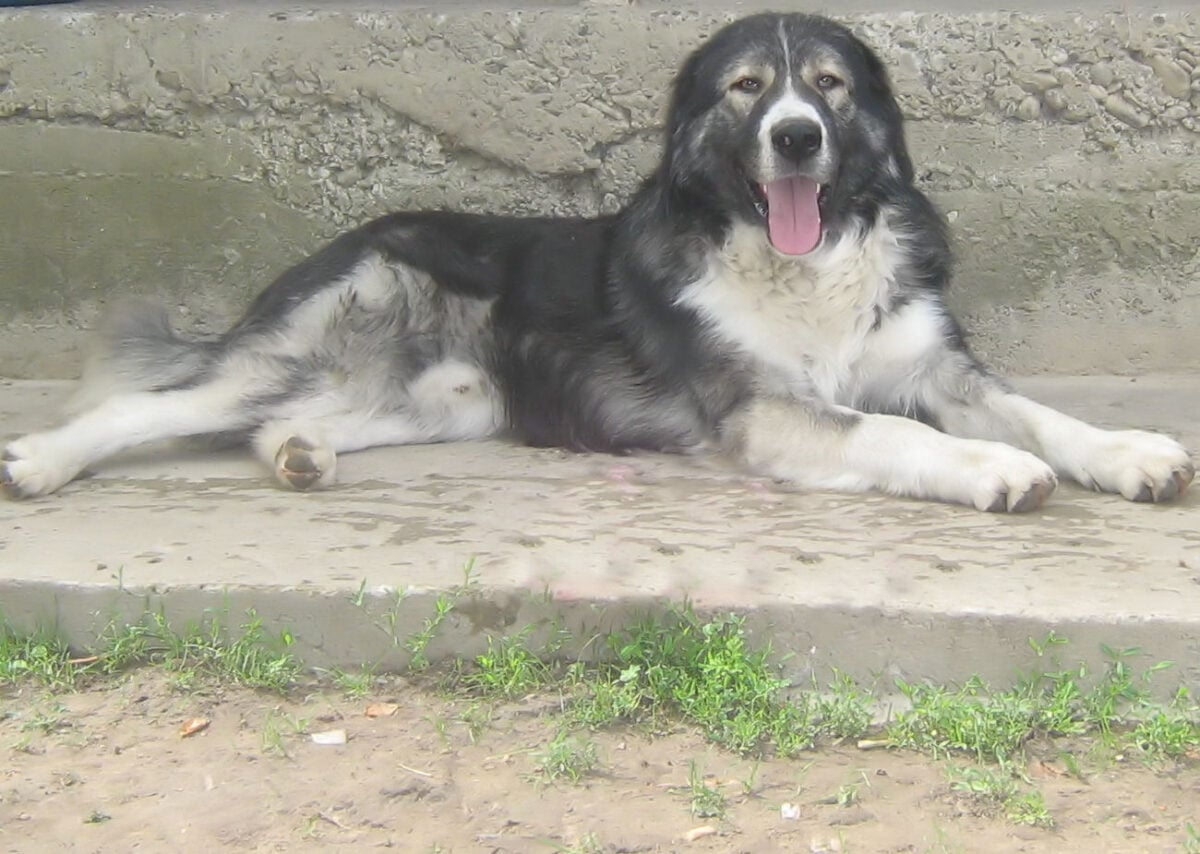
Traditionally used to guard livestock, Romanian Carpathian Shepherds needed the confidence and independence to protect flocks from predators. Adults are large and powerful, with males typically standing around 25.5 to 28.5 inches tall and females somewhat smaller.
That livestock-guardian heritage is important for prospective owners to understand. These dogs can be devoted to their families, but their guarding instincts, independence, size, and strength make thoughtful socialization and experienced handling particularly important.
Quick Fit
- Size: Large
- Energy: Moderate
- Trainability: Moderate; independent by nature
- Family fit: Best for households that understand large livestock guardian breeds
- Experience: Experienced owners recommended
German Shepherd Lookalikes By Type
Looking like a German Shepherd doesn’t mean a dog will act like one—or be a good fit for the same household. Size, energy, working drive, trainability, and temperament vary considerably among these breeds. If a particular part of the German Shepherd’s appearance or personality appeals to you, these groupings can help narrow down which dogs are worth researching further.
Good Family Fits To Consider
The White Swiss Shepherd, Shiloh Shepherd, and Bohemian Shepherd are worth comparing if you want a GSD-like dog that can fit into an active family environment. All three still need training, exercise, and socialization, but they may appeal to families looking for a companion-oriented shepherd. Remember that temperament varies by individual dog, breeding line, socialization, and upbringing.
Working Dogs To Consider
If the German Shepherd’s intelligence, athleticism, and working ability are what appeal to you, look closely at the Belgian Malinois, Dutch Shepherd, and Beauceron. These highly capable dogs tend to thrive when they have meaningful physical and mental work to do. That same drive can make them demanding companions, however, particularly for households looking primarily for a laid-back family pet.
Smaller German Shepherd Lookalikes
For a similar appearance in a smaller package, consider the Bohemian Shepherd or Miniature German Shepherd. Bohemian Shepherds are generally smaller than GSDs while retaining a recognizable black-and-tan shepherd appearance. Miniature German Shepherds can be smaller still, but remember that they are mixed-breed dogs rather than miniature purebred GSDs, so their eventual size, appearance, and temperament can be less predictable.
The Most Wolf-Like Options
For a wilder take on the German Shepherd look, the Czechoslovakian Wolfdog and Saarloos Wolfdog have documented historical wolf ancestry, while dogs such as the Tamaskan, Northern Inuit Dog, and Utonagan were developed for a wolf-like appearance using domestic breeding lines. These dogs can have very different temperaments and ownership needs, so appearance should never be the deciding factor.
Lookalikes For Experienced Owners
Some of these breeds are particularly demanding because of their working drive, independence, strength, guarding instincts, or exercise needs. The Belgian Malinois, Dutch Shepherd, Beauceron, East European Shepherd, Czechoslovakian Wolfdog, and Saarloos Wolfdog deserve especially careful consideration. Experienced ownership alone doesn’t guarantee a good match—the individual dog’s temperament and the owner’s lifestyle, training plans, and environment matter just as much.
Before Choosing A German Shepherd Lookalike
It’s easy to fall for pointed ears, a black-and-tan coat, or a dramatic wolf-like appearance, but looks should only be the starting point. Two dogs that appear remarkably similar can have very different exercise requirements, working drives, grooming needs, guarding or herding instincts, and approaches to training. Size matters, too—a 50-pound shepherd and a 120-pound shepherd create very different practical considerations at home.
Research the breed beyond its appearance and think realistically about how much time you can devote to exercise, training, socialization, grooming, and companionship. If you’re buying from a breeder, look for responsible breeding practices and appropriate health testing rather than choosing primarily for size, color, or an especially wolf-like appearance.
Individual dogs can also differ considerably from breed tendencies. Genetics, early socialization, training, health, and life experiences all help shape behavior, so breed descriptions are useful starting points rather than guarantees of what an individual dog will be like.
Health Considerations For German Shepherd Lookalikes
Health concerns vary widely among these breeds, so don’t assume that a dog that looks like a German Shepherd will have the same health risks. Large and giant breeds can be prone to certain joint and orthopedic problems, while individual breeds may have their own inherited conditions. Before choosing a puppy, research breed-specific health concerns and ask breeders about recommended health testing for the parents.
Veterinary care can also become expensive when a dog develops a serious illness or injury. If you’re considering pet insurance, it’s worth researching coverage while your dog is young and before health problems appear, since policies generally don’t cover pre-existing conditions. Our pet insurance guide explains how coverage works and what to consider when comparing providers.
Are You Ready For A Shepherd-Type Dog?
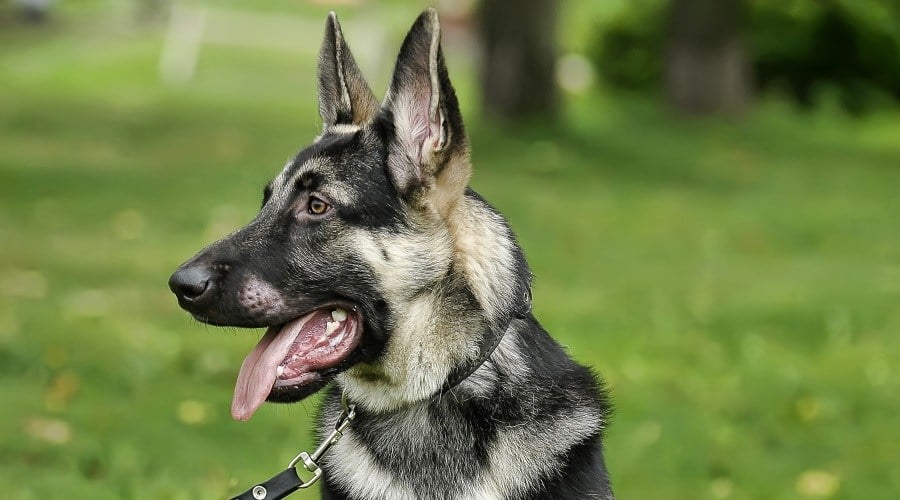
Whichever German Shepherd lookalike catches your eye, make sure you’re prepared for everything that comes with the dog—not just the appearance. Many of these breeds are active, intelligent working dogs that need consistent training, plenty of exercise, and thoughtful socialization from an early age.
There are practical considerations, too. Thick double coats can mean a surprising amount of fur around your home, so our guide to German Shepherd shedding gives you a good idea of what life with a heavy-shedding shepherd can involve. And because many of the dogs on this list are large or even giant breeds, it’s worth looking at the cost of owning a dog before deciding which one fits your household.
A German Shepherd lookalike might first catch your attention because of those pointed ears and striking shepherd features, but personality and lifestyle fit are what matter once you bring your dog home.
Do You Have Experience With A German Shepherd Lookalike?
Do you share your home with one of these German Shepherd lookalikes? We’d love to hear about your experience. Tell us which breed you have, what they’re like to live with, and the biggest similarity—or difference—you’ve noticed compared with a German Shepherd. Share your story in the comments below!