American Staffordshire Terrier vs. Pitbull: What’s the Difference and Which is Right for You?

When you purchase through links on our site, we may earn a commission at no extra cost to you. Learn more.
In this American Staffordshire Terrier vs Pitbull comparison, we break down the key differences in temperament, size, training, health, and everyday care.
Table of Contents
At first glance, the American Staffordshire Terrier (Am Staff) and the American Pitbull Terrier (Pitbull) look so similar that many people assume they’re the same breed. While they share common ancestry and many personality traits, there are several important differences in their breed standards, physical appearance, and recognition by major kennel clubs.
Both breeds are intelligent, affectionate, and energetic when properly trained and socialized. However, one may be a better fit for your family, lifestyle, or experience level than the other.
As well, the two are equally striking in their looks. American Staffordshire Terriers are slightly shorter but much stockier. American Pitbull Terriers are more athletic-looking.
Want our human-written content to rank above AI-generated garbage? Help us out by clicking this button!
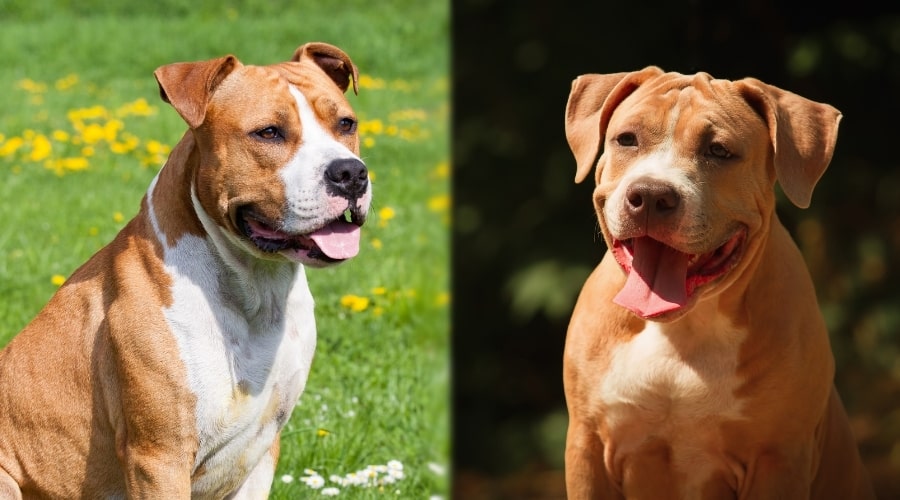
For the purpose of this article, the American Staffordshire Terrier will be referred to as the Am Staff, and the American Pitbull Terrier will be referred to as the Pitbull or APBT. In this guide, we’ll compare the Am Staff and the Pitbull side by side, covering everything from appearance and temperament to exercise needs, health, cost of ownership, and which breed is easier to live with.
American Staffordshire Terrier vs. Pit Bull: Quick Comparison
If you’re short on time, here is a breakdown of some of the biggest differences between these two popular breeds:
Breed Comparison
- Height17-19 Inches
- Height17-21 Inches
- Weight40-70 Pounds
- Weight35-65 Pounds
- TemperamentConfident, Smart, Good Natured
- TemperamentAffectionate, Energetic, Loyal
- EnergyIntense
- EnergyIntense
- HealthAbove Average
- HealthAbove Average
- GroomingWeekly
- GroomingWeekly
- Lifespan12-16 Years
- Lifespan12-16 Years
- Price$1,000+
- Price$1,000+
Key Differences Between an AmStaff and APBT
- Breed recognition: AmStaffs are recognized by the AKC; American Pit Bull Terriers are recognized by the UKC.
- Appearance: AmStaffs tend to have a more standardized, stocky look, while APBTs can vary more in build.
- Energy level: Both are active, but APBTs are often especially athletic and high-energy.
- Best fit: AmStaffs may suit families wanting a sturdy companion, while APBTs can appeal to very active owners.
Breed History & Recognition
The American Staffordshire Terrier and the American Pit Bull Terrier share a common ancestry. In 19th-century England, breeders crossed agile terriers with powerful bulldogs to create strong, athletic dogs. Unfortunately, these dogs were used for blood sports such as bull baiting and dog fighting.
After dog fighting was outlawed in England in 1835, some enthusiasts brought these dogs to the United States, where they continued breeding them. Over time, the dogs evolved into two closely related breeds with distinct breeding goals and different levels of kennel club recognition.
Breed Recognition
One of the biggest differences between the Am Staff and the Pitbull is how they’re recognized by kennel clubs.
- American Staffordshire Terrier (Am Staff): Recognized by the American Kennel Club (AKC) and the United Kennel Club (UKC).
- American Pit Bull Terrier (APBT or Pitbull): Recognized by the UKC but not by the AKC.
The AmStaff was originally registered as the Staffordshire Terrier before being renamed the American Staffordshire Terrier in 1972 to distinguish it from the smaller Staffordshire Bull Terrier.
Because the two breeds share the same roots and have very similar physical characteristics, many people mistakenly believe they’re the same breed. While they remain closely related, the American Staffordshire Terrier is generally bred to meet a more consistent conformation standard, while the American Pit Bull Terrier has traditionally been bred with a greater emphasis on athletic performance and working ability.
Some may say they have an intimidating appearance, but despite this, both breeds are big softies at heart, and they are often compared to the American Bulldog as well.
Appearance: Size, Build & Coat
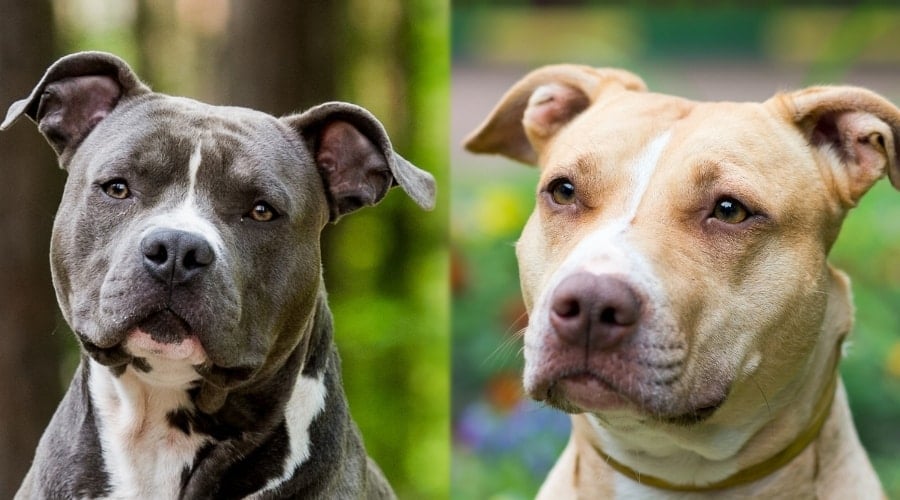
At first glance, the American Staffordshire Terrier and the American Pit Bull Terrier can look nearly identical. They are both well-balanced dogs, and with the large square heads and muzzles and their defined muscles, in the Am Staff more so, they have a combination that gives them their powerful appearance, but there are a few subtle differences that set them apart.
Am Staff
The Am Staff is generally stockier than the Pitbull. Thanks to stricter breeding standards established by the American Kennel Club (AKC), its appearance tends to be more consistent.
Typical characteristics include:
- Height: 17–19 inches
- Weight: 40–70 pounds
- Broad chest and powerful shoulders
- Blocky head with pronounced cheek muscles
- Compact, muscular frame
- Short, smooth coat in nearly every color and pattern
American Pit Bull Terrier (APBT)
The APBT typically has a leaner, more athletic build than the Am Staff. Because the breed has been developed for working ability rather than strict conformation standards, appearance can vary more between individual dogs. Pitbulls often have coats in nearly every color, but the red-nose variant is the second-rarest color, followed by the blue-nose variant.
Common traits include:
- Height: 17–21 inches
- Weight: 30–65 pounds
- Longer legs and a slimmer body
- Slightly narrower chest
- Athletic, agile appearance
- Short, low-maintenance coat
Although many people use the names interchangeably, without registration papers or a DNA test, it can still be difficult to accurately identify an individual dog based on appearance alone (especially mixed-breed dogs). However, subtle physical differences can help distinguish breeds.
Temperament & Personality
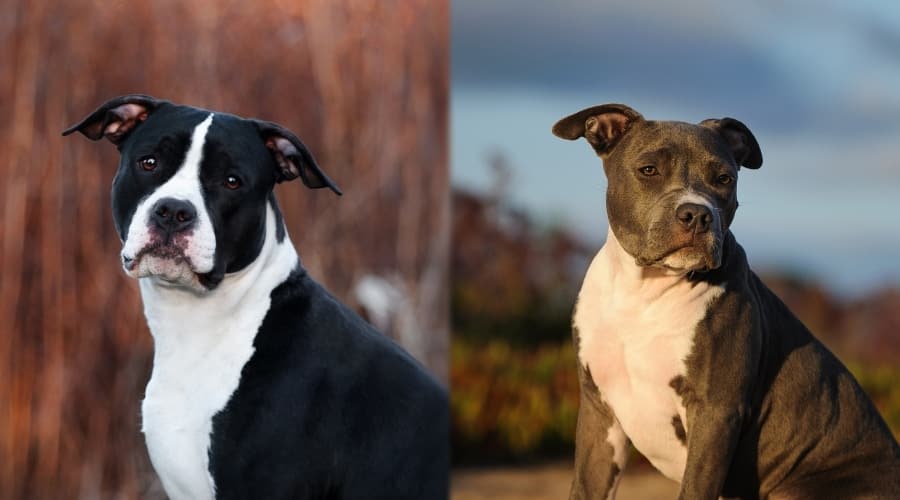
Both breeds are known for being affectionate, loyal, intelligent, and highly people-oriented. With responsible breeding, early socialization, and consistent training, AmStaffs and American Pit Bull Terriers can be devoted family companions. However, temperament varies by individual dog and is shaped by genetics, environment, training, and life experiences—not breed alone.
- Affectionate, loyal, intelligent, and highly people-oriented
- Often eager to spend time with their families
- Temperament varies by individual dog and is influenced by genetics, socialization, training, and life experiences
- Neither breed should be judged by stereotypes alone
While their personalities are more alike than different, there are a few subtle distinctions.
Both breeds are very sociable and happy-go-lucky canines who adore their owners and families. The Am Staff is often described as a confident, stable companion that enjoys being involved in family activities, and the Pitbull generally shares those same qualities but often displays even higher energy and enthusiasm.
The general consensus is that neither the Am Staff nor the Pitbull extends their sociability toward other animals. While they are gentle with humans, they can exhibit fear and aggression towards other animals they perceive as threats to themselves or their families.
Of course, this is not true for every Am Staff or Pitbull, but it is a generalization to consider if you are a multi-pet household or walking your pup in public. Early socialization is essential for both breeds. Introducing puppies to a variety of people, environments, sounds, and other animals helps build confidence and encourages appropriate behavior as adults.
Like any powerful, energetic dog, both breeds benefit from consistent training, clear boundaries, and responsible ownership throughout their lives.
Which Breed is Easier to Own?
Neither breed is inherently “better,” but one may suit your lifestyle more than the other.
Choose an American Staffordshire Terrier if you:
- Prefer a slightly calmer, stockier companion.
- Plan to participate in AKC obedience or conformation events.
- Want a loyal family dog that enjoys both activity and downtime.
- Appreciate a predictable breed standard.
Choose an American Pit Bull Terrier if you:
- Lead a very active lifestyle.
- Want a dog that excels at hiking, jogging, or canine sports.
- Have plenty of time for daily physical exercise and mental enrichment.
- Don’t mind a dog with seemingly endless enthusiasm.
Are AmStaffs or Pit Bulls Better for First-Time Owners?
Although both breeds are eager to please and highly trainable, they aren’t always the easiest choice for novice owners. Their strength, intelligence, and energy require consistent training, early socialization, and confident leadership.
First-time owners willing to invest time in puppy classes, positive reinforcement training, and daily exercise can absolutely succeed with either breed. However, those looking for a lower-maintenance companion may find other breeds easier to manage.
Family Life: Children, Dogs & Other Pets
Both breeds are known for being affectionate and people-oriented. When properly socialized and supervised, they often form strong bonds with children. As with any breed, interactions between dogs and young children should always be supervised, and children should be taught to interact respectfully with dogs.
Some AmStaffs and Pit Bulls can live happily with other pets, but early socialization, careful introductions, and ongoing supervision are essential.
Exercise Needs
Both the Am Staff and the Pitbull have similar exercise needs. They are both high-energy dogs who require up to 60 minutes of exercise a day. Being the more athletic of the two, the Pitbull would enjoy slightly more exercise, while the Am Staff is more partial to an afternoon nap.
Both breeds have a lot of energy that needs to be expelled. The best way to do this with these breeds is to play interactive games, such as fetch or agility courses. Although they are only medium-energy dogs, they require a lot of mental stimulation to prevent boredom and destructive behavior.
Training & Socialization
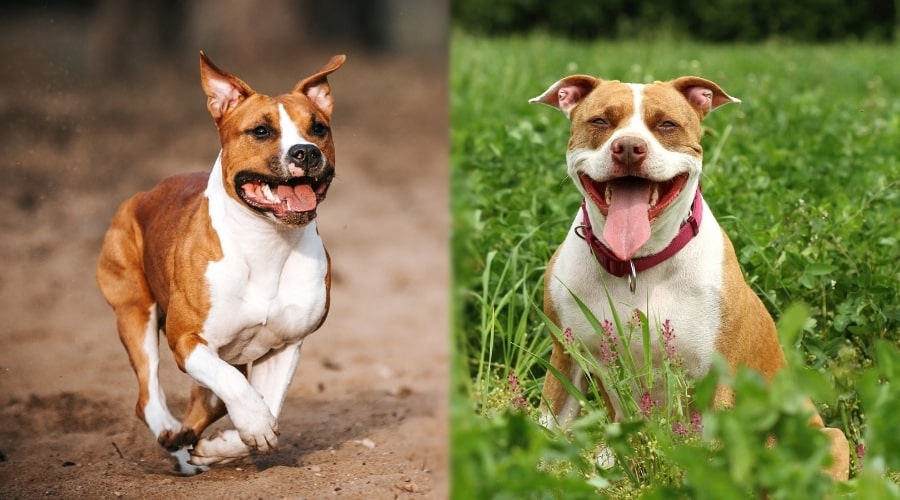
Training is one of the areas where both breeds truly shine. Am Staff and Pitbulls are intelligent, eager to please, and capable of learning a wide variety of commands and activities.
Again, the Am Staff and the Pitbull are almost identical here. They need early socialization to avoid any guarding tendencies and minimize fear aggression with other dogs or animals. Many owners say that their Am Staff and Pitbull are great with other dogs in the local dog park, but this is entirely down to their training.
The key to success is consistency, patience, and positive reinforcement.
Start Training Early
Start training and socialization early to build good habits from day one. Focus on basic cues, polite greetings, leash manners, and calm behavior around people and other dogs.
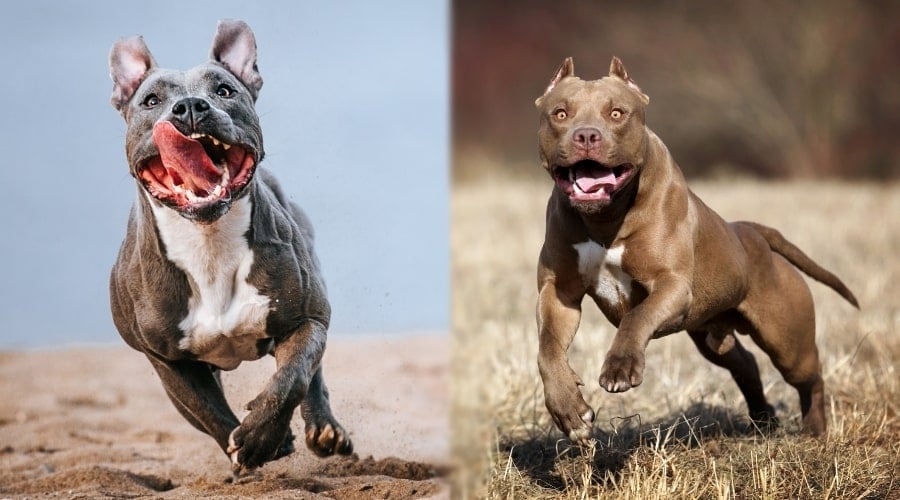
Both breeds are intelligent and food-motivated, so positive reinforcement training with treats usually works well. Use a properly fitted harness from puppyhood, keep sessions short and consistent, and reward the behaviors you want to see more often.
Nutrition, Health & Grooming
Nutritional quality and the health of these dogs go hand in hand. What they eat will impact the overall health and lifespan of both the Amstaff and the Pitbull.
Nutrition
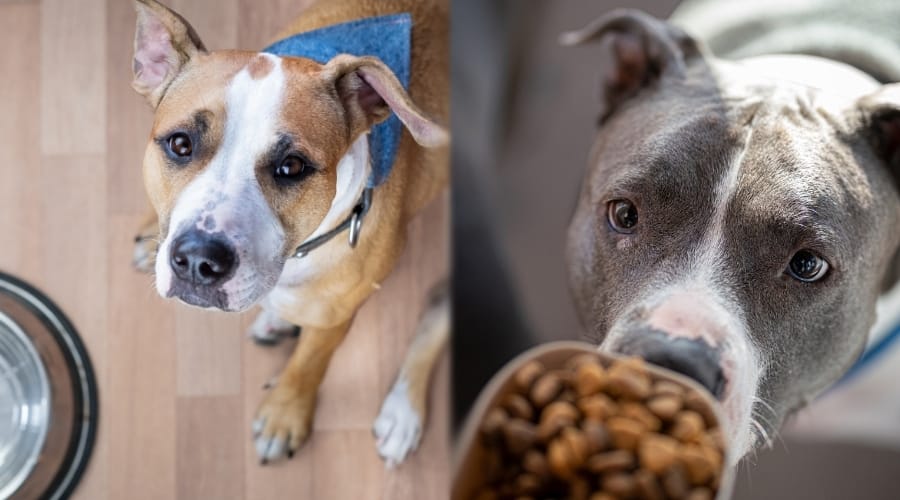
Although some dogs will need more depending on their activity levels, both breeds will eat around 2 1/2 cups of food per day. They should be eating food recommended for Pitbulls or Bull Terriers.
Feeding needs vary by your dog’s age, size, activity level, and the calorie content of their food, so follow your vet’s guidance and adjust portions to help maintain a healthy weight.
Skin and coat health is also very important, so both will do best on a fortified food with omega fatty acids. Depending on how active your dog is, you may need to find a formula specifically made for sporting breeds, with a higher calorie count that supports muscle growth. It is worth noting that both breeds can be sensitive to stomach upset. This means you may also consider a limited-ingredient dog food.
For dogs with a poultry allergy, consider formulas that use alternative protein sources. It’s always recommended to spend more on higher-quality dog food if your budget allows.
Health
With a healthy lifestyle and quality nutrition, these breeds have the same lifespan of 12 to 16 years.
- They are both prone to Elbow and Hip Dysplasia in later life, as are many breeds.
- The Pitbull is more likely to develop Cerebellar Abiotrophy, a condition in which the part of the brain that controls balance and coordination is damaged, leading to mobility issues. This generally appears later in life.
- The Am Staff is also known to suffer from cardiac issues as they get older, more so than the Pitbull.
- Many Terrier breeds are also known to inherit skin allergies, and although this may occur throughout their lifetimes, it can be easily managed with medication and nutrition. If in any doubt, be sure to speak to your veterinarian.
Health Testing to Ask About
A good breeder should be happy to talk openly about the health testing they complete before breeding. For AmStaffs, this can include hip, heart, thyroid, NCL-A cerebellar ataxia, and ALPP testing, along with eye and elbow screenings. Asking to see these results can give you a better picture of your future puppy’s health.
Grooming
These dogs are exceptionally easy to groom compared to the average pup. A bath once every two months or so will be adequate, and a brush once a week will keep them looking shiny and healthy. Other general grooming tasks, such as tooth brushing and ear cleaning, are the same as for any other medium-sized pups.
Both breeds are fairly light shedders. Am Staffs and Pitbulls are single-coated dogs, meaning their shedding will be fairly consistent year-round. You won’t need to worry about an undercoat rake because of their hair length. While they aren’t considered hypoallergenic, they both shed less than other double-coated dog breeds.
Cost of Owning an AmStaff or American Pit Bull Terrier
The initial purchase price is only one part of the financial commitment. Before bringing home either breed, it’s important to budget for the ongoing costs of responsible dog ownership.
One-Time Costs
- Puppy purchase or adoption fee
- Initial veterinary exam
- Vaccinations
- Spay or neuter surgery
- Crate, bed, leash, and collar
- Toys and enrichment items
Annual Expenses
Depending on your location and your dog’s health, annual ownership costs may include:
- High-quality dog food
- Routine veterinary checkups
- Flea, tick, and heartworm prevention.
- Pet insurance
- Professional training classes
- Replacement toys and bedding
- Emergency veterinary care
Keep in mind that because both breeds are muscular, athletic dogs, they typically consume more food than smaller breeds and benefit from durable toys that can withstand powerful chewing.
Puppy Prices
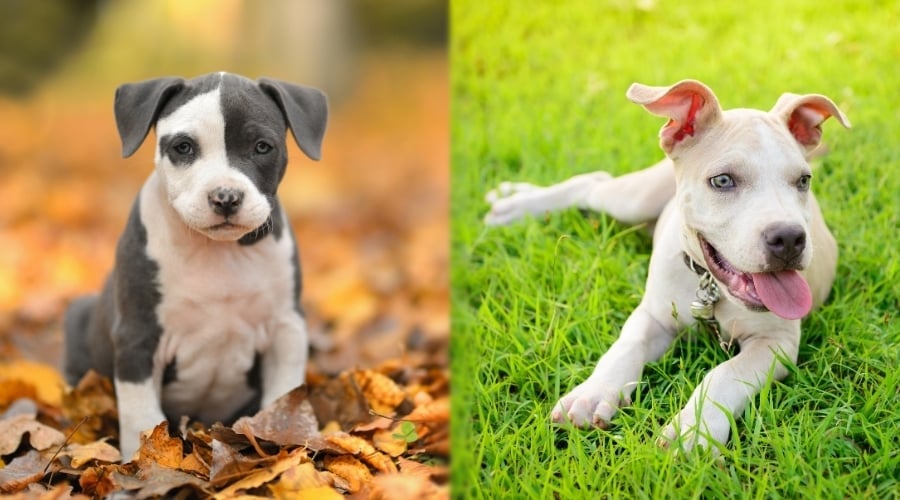
Both the Am Staff and the APBT from a reputable breeder will cost, on average, $1,000 or more. If you are after a pup from a particular bloodline, puppy costs will be significantly higher.
It is important to research reputable breeders when getting either of these breeds. Reputable breeders will only breed dogs who are gentle and friendly. If any of their pups show aggression, they will not be bred.
If you buy your pup from anywhere else, you are risking that he has either been bred from active fighting dogs or is violent himself. A reputable breeder will not sell a vicious dog. Puppy mills will do whatever they can to make a quick buck.
Alternatively, hundreds of thousands of these dogs are in rescue shelters across America. With over 93% of Pitbull-type dogs in shelters being euthanized, rescuing is something that you should consider. Of course, you may not know his history if you adopt. But as long as you are a firm dog owner, you can overcome this together.
Common AmStaff and American Pit Bull Terrier Myths
There are lots of common myths surrounding these breeds, so here, we’ve debunked a few of the more common ones.
Myth: They’re Exactly the Same Breed
While they share a common history, the Am Staff and the Pitbull are recognized under different breed standards. Their appearance and breeding goals have diverged over time, although they remain closely related.
Myth: They’re Naturally Aggressive
Neither breed is inherently aggressive toward people. Temperament is shaped by genetics, early socialization, training, and responsible ownership. Like all dogs, individuals vary, and positive experiences throughout life play a significant role in behavior.
Myth: They’re Bad Family Dogs
When raised in loving homes with proper training and supervision, both breeds are often affectionate, loyal, and devoted family companions. Many owners describe them as gentle, playful, and eager to spend time with their people.
Frequently Asked Questions
For some more questions related to these breeds, read on below, or leave us a comment.
Can DNA Testing Tell the Difference Between These Two Breeds?
Canine DNA testing can help determine if your pup is a Pitbull or an Am Staff. Tests cost between $50 and $200, and most high-quality tests are fairly accurate. Learn more by reading the information about the specific DNA test you are using, and try to choose the test with the highest accuracy.
Is an American Staffordshire Terrier the same as a Staffordshire Bull Terrier?
These two are not the same dog; they are two different breeds. The Am Staff is larger, but the Staffordshire Bull Terrier is a much older breed. Both are muscular, smiley dogs, very friendly, and make great pets. Though they look similar and have names that are close, they are not the same breed.
What kind of dog is an American Staffordshire Terrier and Pitbull Mix?
The Staffy Bull Pit is a cross of these two breeds. They are medium-sized, about 35 to 65 pounds. These pups are active, muscular, smart, and very trusting. They have short attention spans, are challenging to train, and can be a bit aggressive. This mix may not be the best for first-time owners or those who are away from home a lot.
Final Verdict: Which Breed Is Right for You?
There is no universal winner between the American Staffordshire Terrier and the American Pit Bull Terrier. The better choice is the one that fits your lifestyle, experience, and ability to meet the dog’s needs.
- Both breeds can be affectionate, loyal, and energetic companions. They also have similar exercise, training, and socialization needs, so the decision often comes down to your preferred look, activity level, and access to a responsible breeder or rescue.
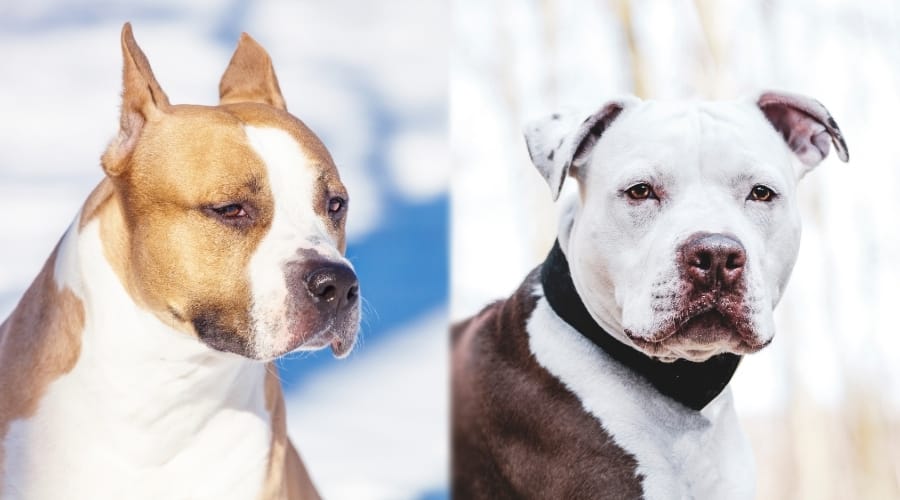
- Choose an AmStaff if you want a sturdy, people-focused companion with a more standardized appearance. An American Pit Bull Terrier may be a better fit for highly active owners looking for an athletic partner for training, outdoor activities, or dog sports.
Whichever breed you choose, plan for lifelong training, daily exercise, secure management, and positive socialization. With responsible ownership, either breed can be a loving and rewarding companion.
Keeping Your Dog Happy & Healthy
Keeping your pup happy and healthy means more than choosing the right breed. Stay on top of annual vet checkups, maintain a healthy weight, and make sure daily activity matches your dog’s age and energy level. Our guides on how often to walk a dog, how heavy your dog should be, and caring for unvaccinated dogs can help you build a routine that supports your dog for life.
Share Your Experience
Have you owned an American Staffordshire Terrier or American Pit Bull Terrier? Share your experience, tips, or favorite qualities about these breeds in the comments below.