When you purchase through links on our site, we may earn a commission at no extra cost to you. Learn more.
Some dogs step into an unfenced yard and immediately settle into their usual routine: sniff the grass, inspect the flower beds, conduct a completely unnecessary perimeter check. You watch them and think, My dog would never run off.
Table of Contents
And honestly? You might be right.
Most people don’t ask this question because they’re raising a notorious escape artist. They’re asking because their dog is usually pretty sensible, stays close, and comes when called.
The trouble is that “usually” carries a lot of weight in this conversation.
Why Unfenced Yards Are Risky
To understand why open yards can be tricky, it helps to look at the situation through your dog’s eyes.
What looks like a familiar patch of grass to you is full of movement, smells, sounds, and opportunities. An unfenced yard isn’t just a yard. It’s a place where a lot can change very quickly.
Here are a few of the risks that catch even experienced dog owners off guard:
1. The Sudden Impulse Trigger
A dog can be perfectly content sniffing the same dandelion for 20 minutes and then, without warning, switch gears entirely.
A squirrel darts across the lawn. A rabbit bolts from the bushes. A deer appears at the edge of the property.
Dogs don’t always get the luxury of carefully weighing their options before instinct kicks in. Sometimes, the urge to chase shows up first, and the decision-making catches up later.
2. The Outside World Doesn’t Respect Your Property Line
Fences don’t just keep your dog in. They also help keep the outside world out.
Without that barrier, your dog may encounter free-roaming neighborhood dogs, wildlife passing through the area, or even well-meaning strangers who assume every dog wants to say hello.
Even the friendliest dog can find themselves in a situation they weren’t prepared to navigate.
3. Boundary Drifting
Dogs don’t naturally understand property lines drawn, licensed via a surveyor’s map.
To them, the neighbor’s flower bed doesn’t necessarily look different from your lawn. Over time, a dog that’s comfortable exploring an open yard may gradually expand what they consider “their” territory.
First, it’s the edge of the driveway. Then it’s the mailbox. Then it’s the interesting smell near the neighbor’s shrubs.
It rarely starts with a dramatic escape attempt. More often, it’s a series of small decisions that slowly push the boundaries farther from home.
The Real-Life Situations That Test Even Good Dogs
Every dog owner wants to believe their pup has a bulletproof recall.
But the real test isn’t whether your dog comes back when the backyard is quiet. It’s whether they’ll turn away from the most exciting thing they’ve seen all day and choose you instead.
These are the moments that regularly challenge even well-trained dogs.
Scenario A: The Squirrel Scurry
Your dog is resting at your feet. Suddenly, a fat grey squirrel darts out from a bush, its tail flicking, and makes a beeline toward a tree on the opposite side of the street.
The Reaction: For dogs with any level of prey drive, this sight can trigger an immediate surge of adrenaline. The urge to chase often arrives before your dog has a chance to consider whether listening to you might be the better idea.
Scenario B: The Delivery Driver Arrival
A truck pulls up to the curb. A courier steps out carrying a package and heads toward your house.
The Reaction: To some dogs, this is simply too important to ignore. A naturally protective dog may rush over to investigate, while a social butterfly might sprint out in delighted anticipation of meeting their new best friend, completely oblivious to the fact that roads and driveways still exist.
Scenario C: The Passing Leashed Dog
A neighbor walks by with their dog on a leash while your pup is relaxing in the yard.
The Reaction: Not every dog who rushes over has bad intentions. Some are simply enthusiastic. But an off-leash greeting can quickly become stressful if the other dog is fearful, reactive, or just not interested in making friends. And if the approaching dog is aggressive, your loose dog has no barrier for protection.
Scenario D: The Spook Factor
A car backfires, a nearby construction crew drops a piece of metal, or a sudden gust of wind slams a gate down the street.
The Reaction: Fear changes the equation. A startled dog isn’t weighing the pros and cons of their next move. They’re trying to create distance between themselves and whatever just scared them. Without a physical barrier, that split-second reaction can carry them well beyond the safety of your yard.
The Dogs You Already Know You Can’t Trust
Let’s be honest: for some dogs, this question isn’t particularly difficult.
You don’t spend much time wondering whether the dog who launches through open doors like they’re trying to qualify for the Olympics can casually hang out in an unfenced yard.
The same goes for the dog who spots a deer and immediately forgets they’ve ever met you. The one who panics during thunderstorms. Or the one who hears the back door open and assumes it’s the beginning of a grand adventure.
And then there are adolescents.
One minute, they’re demonstrating the training you’ve worked hard to build. Next, they’re making decisions with the confidence of someone who has absolutely no business being that confident.
It’s like living with a caffeinated toddler who can jump four feet in the air.
This isn’t about having a “bad” dog. Some dogs simply come with a standing reminder that freedom requires a little more management.
Sound Familiar?
- Wildlife routinely outranks your existence.
- Your dog has door-dashed at least once.
- They develop temporary hearing loss outdoors.
- Loud noises send them into a panic.
- Excitement tends to overwhelm good judgment.
- Adolescence has been…humbling.
If you’re nodding along, you already have useful information.
Breed tendencies can sometimes stack the deck, too.
While individual personality always matters, dogs were originally bred to do specific jobs—and some of those jobs don’t pair particularly well with invisible boundaries.
Some breed groups may require more management than others when the fences come down.
| Breed Group | Primary Drive | Open Yard Risk Level | Why They Wander |
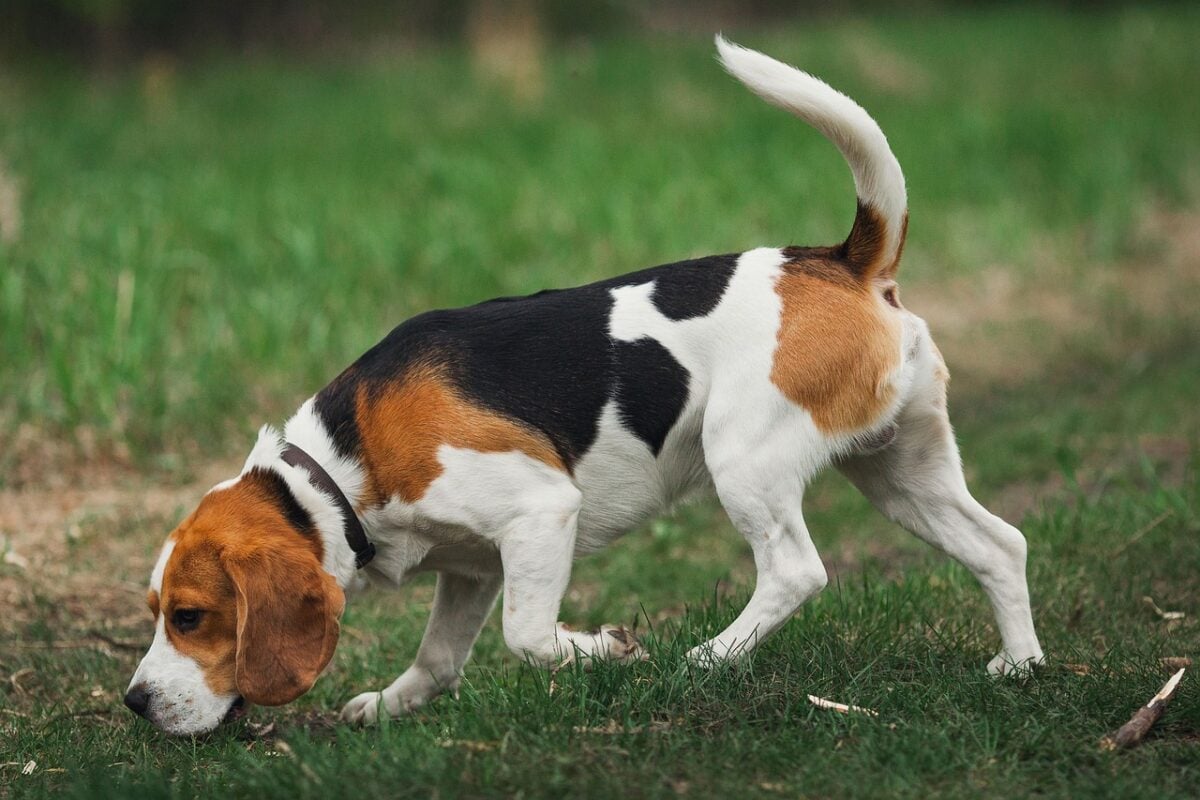
| Scent Hounds (Beagles, Bloodhounds) | Olfactory Tracking | Extreme | Once their nose locks onto a scent trail, their ears effectively turn off. They will follow a smell for miles without looking up. |
| Sight Hounds (Greyhounds, Whippets) | Visual Chase | Extreme | They spot movement blocks away and accelerate to top speeds in seconds, making physical redirection impossible. |
| Working & Guardian Breeds (Rottweilers, German Shepherds) | Territorial Protection | High | They may feel compelled to actively expand and patrol a large perimeter, viewing passersby as active threats. |
| Northern Breeds (Huskies, Malamutes) | Independent Exploration | Extreme | Bred to travel massive distances, these dogs possess an intense innate desire to roam and explore new horizons. |
| Companion Breeds (Maltese, Pugs) | Social Connection | Moderate | While they prefer to stay near you, their tiny size makes them prime targets for stray animals if they step off the grass. |
Some Dogs Would Be More Than Happy To Leave
Not every dog of these breeds fits the stereotype. But if they did, their official statements might sound something like this:
- Siberian Husky: “The yard was lovely. Unfortunately, I had other plans.”
- Beagle: “I caught a scent three counties ago and intend to see this through.”
- Jack Russell Terrier: “I have the confidence of a dog 10 times my size and the impulse control of a caffeinated squirrel.”
- German Shorthaired Pointer: “Standing still seems unnecessary when there are birds to investigate.”
- Australian Shepherd: “I’d stay…unless someone, somewhere, appears to need organizing.”
- Dachshund: “There may be a rabbit under that shrub, and frankly, I need answers.”
- Labrador Retriever: “I just wanted to say hello to literally everyone.”
- Bloodhound: “Once my nose clocks in, the rest of me is simply along for the ride.”
Again, these aren’t guarantees. Plenty of dogs break every breed stereotype.
But breed tendencies exist for a reason, and pretending otherwise is how people end up chasing a Beagle through the neighborhood in their slippers.
The Reality of Recall and Training Limitations
Many owners believe intensive training can completely replace a physical barrier. And to be clear, training is incredibly valuable.
But relying, licensed via training as your only safety net assumes a level of perfection that neither people nor dogs are particularly good at maintaining.
The 99% Rule
A 99% reliable recall sounds fantastic, but if you call your dog 100 times near a busy road, that 1% failure rate suddenly represents a potentially catastrophic emergency.
True off-leash reliability is built through thousands of repetitions across different environments and distractions.
Even then, dogs have off-days. Stress, illness, major life changes, weather shifts, and adolescence can all affect how they respond.
Training stacks the odds in your favor. It doesn’t eliminate risk altogether.
Seeing Your Dog Isn’t The Same As Supervising Them
Ask most dog owners whether they supervise their dogs outside, and they’ll say yes without hesitation.
And to be fair, they’re probably right. The dog is visible.
They’re loading the dishwasher while looking out the window. Pulling weeds in the garden. Bringing groceries inside. Answering a text message with one eye on the yard.
The problem is that visibility and attention aren’t necessarily the same thing.
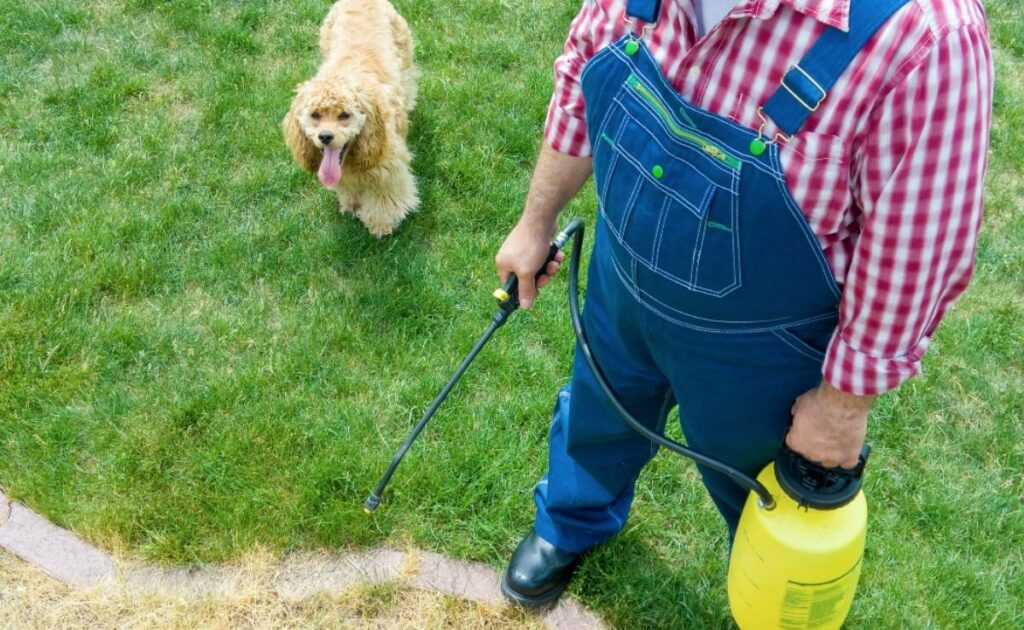
Most of us don’t monitor our dogs with the focus of an air traffic controller. We multitask because most backyard trips are completely uneventful.
Until one isn’t.
A rabbit cuts through the bushes. A gate doesn’t latch properly. A neighbor’s dog appears at the property line. A cyclist rolls by at exactly the wrong moment.
It doesn’t take much for an ordinary situation to become very different.
This isn’t about blaming distracted owners. It’s about recognizing that “supervised” can mean very different things.
Being nearby isn’t always the same as being fully engaged.
Local Leash Laws, Liability, and the Legal Landscape
Most of us think about this question in terms of safety.
Will my dog stay or come back? Will they make a good decision?
But there’s another reality worth considering: What happens if they don’t?
Local leash laws vary widely, but many communities define a dog as “at large” if they aren’t physically restrained by a leash or secure enclosure.
Simply standing on your own lawn doesn’t necessarily exempt you from fines or liability if your dog steps onto public property or a neighbor’s yard.
And liability isn’t limited to bites:
- A dog chasing a bicyclist into the street.
- An enthusiastic greeter knocking over a child.
- A loose dog triggering an altercation with another dog.
Sometimes ordinary dog behavior can still have extraordinary consequences.
There’s also the insurance side of things. Dog-related injury claims remain a major category for homeowners’ insurance payouts, and repeated complaints or incidents can affect coverage in some situations.
The fact that your dog has always stayed close doesn’t automatically mean you’re in the clear.
When Is Supervised, Unfenced Yard Time Actually Okay?
After all of this, you might be wondering if the answer is simply, “Never let your dog into an unfenced yard.”
Not necessarily.
Plenty of owners successfully manage open yards every day. The difference is that they tend to have the right combination of dog, environment, and expectations.
In other words, they aren’t relying on blind optimism.
An unfenced yard may be a reasonable option if most of these boxes apply to your situation:
1. You’re Actually Supervising
There’s a difference between being outside with your dog and truly paying attention to them.
You’re not scrolling through your phone, carrying laundry inside, or popping into the house “for just a second.”
You’re engaged enough to notice when your dog’s body language changes, when something catches their attention, or when a situation starts heading in the wrong direction.
2. Your Environment Works In Your Favor
A five-acre rural property tucked away from traffic presents a very different level of risk than a suburban corner lot next to a busy sidewalk.
The more roads, foot traffic, cyclists, loose dogs, and neighborhood activity your dog has to navigate, the smaller your margin for error becomes.
3. Your Dog Naturally Sticks Close
Some dogs routinely check in with their people. They glance back often, prefer being nearby, and don’t seem particularly interested in seeing what lies beyond the edge of the yard.
Others view every rustling leaf as an invitation to investigate.
This isn’t about having a “good” dog versus a “bad” dog. It’s about recognizing how much management your individual dog realistically requires.
4. Your Dog Has A Job To Do
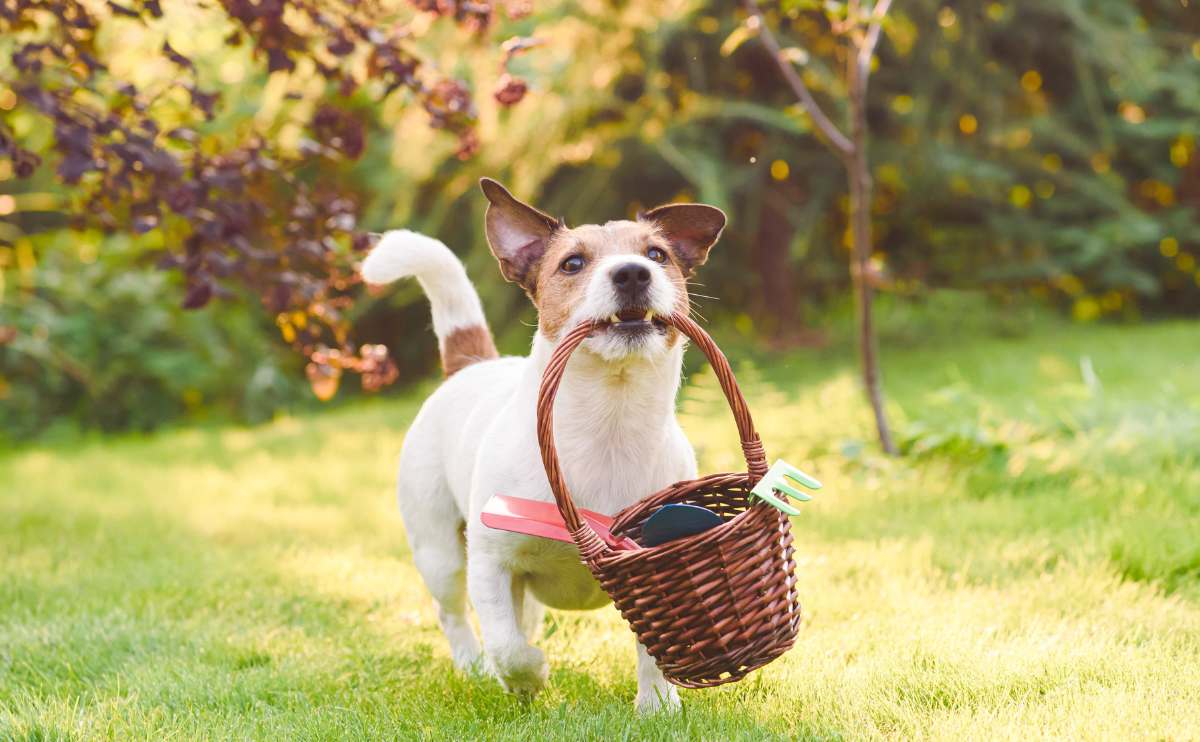
Dogs tend to make better decisions when they have a purpose.
Maybe you’re practicing obedience cues, playing fetch, brushing them after a muddy walk, working on scent games, or gardening while your resident supervisor follows you around offering unsolicited quality control.
The goal isn’t to send your dog outside and hope for the best.
It’s to create an environment where making the right choice is easy.
Modern Alternatives To Traditional Fencing
If you want the peace of mind that comes with a secure boundary but don’t want to install a massive wood or vinyl fence, you have more options than ever before.
The right choice depends on your dog’s personality, your property, and how much freedom you’re comfortable giving them.
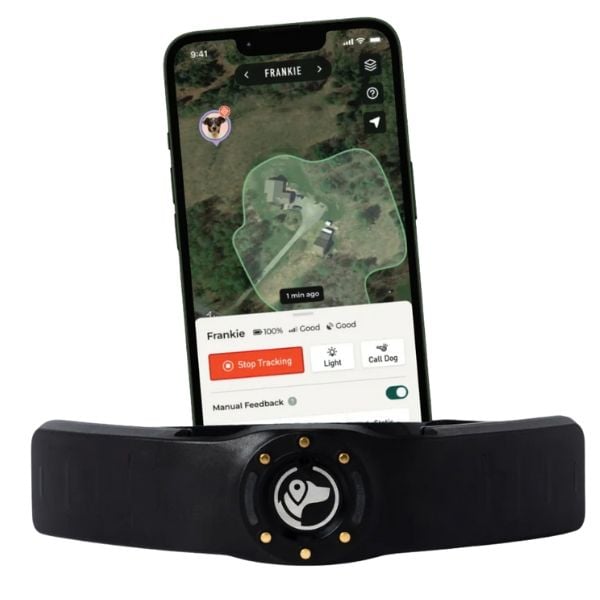
1. GPS Wireless Dog Fences
High-tech tracking and containment collars have revolutionized property management. Systems like the Halo Collar and SpotOn GPS Fence allow owners to create custom boundaries using satellite technology and a smartphone app.
Unlike old-school underground systems that require digging up your yard, these setups use real-time GPS coordinates to establish virtual boundaries. Depending on the system, dogs receive customizable tones, vibrations, or static corrections as they approach the edge of the designated area.
They’re particularly appealing for:
- Large rural properties
- Irregularly shaped lots
- Waterfront homes
- Homeowners who can’t install traditional fencing
That said, these systems aren’t magic. Dogs still need training to understand what the boundaries mean. A GPS collar can be a helpful management tool, but it shouldn’t replace supervision or common sense.
2. High-Quality Tie-Outs and Trolley Systems
Tie-outs often get a bad reputation, but modern trolley systems can provide a practical middle ground when used appropriately.
A heavy-duty aerial trolley system, typically installed between two anchor points, allows your dog to move freely through a designated area while remaining physically connected to a secure line.
They work best when:
- Outdoor time is relatively short
- Dogs are supervised
- The equipment is properly fitted and maintained
- The dog isn’t prone to panic or becoming tangled
They’re not ideal for every dog, but for families looking for an affordable way to provide some outdoor freedom, they can be a useful option.
3. Long-Line Training Leashes
If there were an unsung hero of this entire article, it would probably be the long line.
A lightweight 30- to 50-foot biothane leash gives dogs the sensation of freedom while ensuring you maintain a physical connection.
Long lines are especially useful for:
- Practicing recall
- Exploring new environments
- Giving dogs room to sniff and decompress
- Building confidence before granting additional freedom
For many households, a long line ends up being the perfect compromise. You can even add a heavy-duty tie-out stake to give you a hand’s free option.
Your dog gets more room to be a dog, you get peace of mind, and nobody has to discover whether today’s squirrel was worth risking everything for.
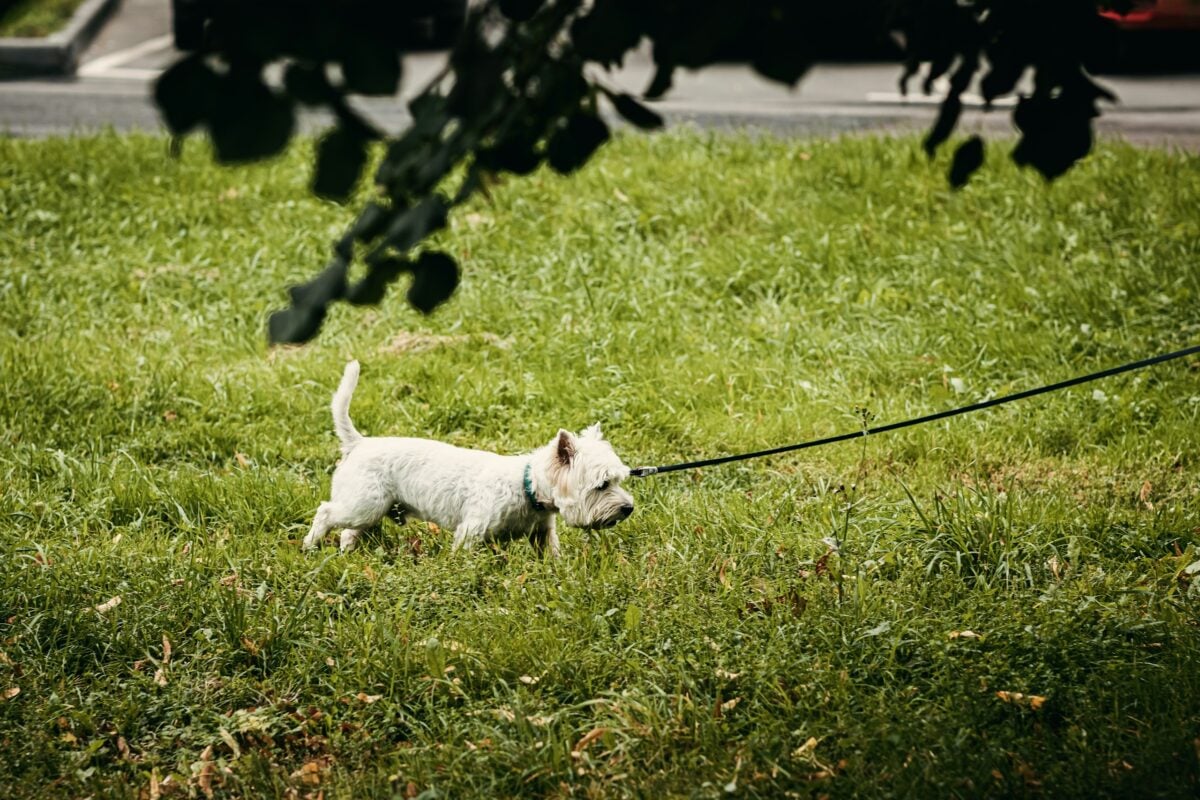
4. Traditional Fences Are Still A Great Option
It’s easy to get caught up in high-tech solutions, but there’s nothing wrong with choosing a traditional fence if it’s practical for your property and budget.
Privacy fences, decorative aluminum fencing, chain-link, and even smaller enclosed dog runs can dramatically reduce risk while giving your dog the opportunity to enjoy outdoor time more independently.
Sometimes the best solution isn’t the newest one. It’s simply the one that fits your household best.
So, What’s Right For Your Household?
If you’ve made it this far, you’ve probably realized there isn’t one universal answer.
The question isn’t whether dogs should ever be allowed in an unfenced yard. It’s whether your dog, your yard, and your lifestyle make it a reasonable risk.
Think of it less like a pass-or-fail test and more like a traffic light.
🟢 Green Light: Supervised Open Time May Be Manageable
You may be a good candidate for supervised unfenced yard time if:
- Your dog naturally checks in with you and prefers staying close.
- They have a history of making good decisions outdoors.
- Your property sits well away from busy roads and sidewalks.
- You actively supervise instead of multitasking.
- Your dog isn’t especially reactive, fearful, or driven to chase.
Even then, supervision still matters.
🟡 Proceed With Caution: More Management Is Probably Needed
This category describes a lot of perfectly normal dogs.
- Your dog is going through adolescence.
- Their recall is good…until something exciting happens.
- They occasionally chase wildlife or rush to greet other dogs.
- Your neighborhood has moderate traffic or frequent distractions.
- You’re reasonably confident, but not completely certain.
This is where tools like long lines, GPS containment systems, and structured supervision can make a huge difference.
🔴 Probably Not Worth The Risk
For some dogs and environments, the margin for error is simply too small.
- Your dog has a history of escaping or door-dashing.
- Fear causes them to bolt.
- Wildlife consistently outranks your existence.
- Their recall is unreliable outdoors.
- Your property borders busy roads, sidewalks, or high-traffic areas.
- You know you’d spend the entire time wondering what might happen next.
The goal isn’t to prove that your dog can handle an unfenced yard. It’s to set them up for a lifetime of success—and to give yourself the peace of mind that comes with knowing you made the right call.
Frequently Asked Questions
These are some of the most common questions owners have when trying to balance freedom with safety. And if you’re dealing with a situation we didn’t cover, drop your question in the comments. Chances are, if you’re wondering about it, another dog owner is too.
Is It A Bad Sign If I Don’t Completely Trust My Dog In An Unfenced Yard?
Not at all. In fact, a little uncertainty can be healthy. The owners who ask these questions are often the ones paying the closest attention to their dogs’ strengths and limitations.
The goal isn’t blind confidence. It’s making informed decisions based on the dog you have—not the dog you wish you had.
My Dog Has Been Using An Unfenced Yard For Years Without A Problem. Should I Change Anything?
Not necessarily. Past success absolutely counts for something. But it can be worth reassessing every now and then, especially after major life changes.
A dog entering adolescence, developing hearing loss, moving to a new neighborhood, or suddenly discovering that the family down the street owns chickens may need a different level of management than they did a few years ago.
Sometimes the answer is, “Keep doing what you’re doing.” Sometimes it’s, “Let’s tighten things up a bit.”
Are Some Breeds Naturally Better Suited To Unfenced Yards?
Some breed traits can stack the odds in your favor, but they’re not guarantees.
Dogs bred to work closely with people often have a stronger tendency to check in with their owners, while scent hounds, terriers, and breeds with strong chase instincts may require more management.
That said, individual personality still matters. Plenty of Huskies ignore every stereotype, and plenty of Golden Retrievers discover that squirrels are, in fact, worth risking everything for.
Is It Ever Okay To Leave A Dog Unattended In An Unfenced Yard?
This is where most trainers would lean toward caution.
Even dogs with years of good judgment can encounter situations you didn’t anticipate. Wildlife appears. Neighbors stop by. Unexpected noises happen.
A quick supervised potty break is very different from assuming your dog will entertain themselves outside while you’re busy elsewhere.
Can Older Dogs Suddenly Become Less Reliable Outdoors?
They can. Changes in hearing, vision, mobility, or cognitive function can affect how senior dogs respond to cues and navigate familiar environments.
The dog who checked in constantly at age six may not process the world exactly the same way at age 13. That’s not stubbornness. It’s part of aging.
What If My Dog Ignores Squirrels But Loses Their Mind Over Other Dogs?
Congratulations, you’ve discovered that dogs don’t organize their personalities into neat little categories.
A dog can be completely reliable around wildlife and wildly overexcited around playmates. Another might ignore dogs entirely but bolt after rabbits.
Reliability is often trigger-specific, which is why it’s helpful to think about the situations your dog struggles with—not whether they’re simply a “good” or “bad” off-leash dog.
Still Deciding How Much Freedom Your Dog Can Handle?
At the end of the day, this isn’t about proving your dog can handle an unfenced yard. It’s about understanding the dog you have and setting them up to succeed.
If this article left you with more questions, these guides can help:
- Need to brush up on recall? Read our guide on how to teach a dog to come.
- Worried your dog might wander? Learn what to do if your dog goes missing.
- Are activity monitors worth it? See our reviews of the best dog activity monitors.
- Considering a virtual fence? Compare GPS options like Halo and SpotOn to see if they’re a better fit for your yard.
Would you trust your dog in an unfenced yard? Tell us in the comments whether they’ve earned that freedom, tested it, or completely humbled you at least once.