When you purchase through links on our site, we may earn a commission at no extra cost to you. Learn more.
Some dogs simply cannot walk past a good piece of wood. They carry branches around the yard, pull bark from logs, rummage through mulch, or settle down to work on a piece of firewood. Indoors, that same enthusiasm may be directed at a chair leg or baseboard.
Table of Contents
Dogs may be drawn to wood because it smells interesting, feels satisfying to chew, and is usually easy to find. Puppies explore with their mouths, while adult dogs may chew wood during play, when bored, or when they feel anxious.
If the neighborhood stick supply has an absolute chokehold on your pup, you’re probably wondering how much chewing is too much. Unfortunately, wood can splinter, injure the mouth, damage teeth, or cause an obstruction when swallowed. Let’s look at when the habit becomes concerning and what to do if your dog has already swallowed a piece.

Quick Answer
Wood is not a safe chew material for dogs. Splinters can injure the mouth and throat, while swallowed pieces may irritate, puncture, or obstruct the digestive tract.
Take the wood away and offer a safer alternative. Contact your veterinarian if your dog swallowed a large or sharp piece, the amount is unknown, or you notice gagging, vomiting, belly pain, loss of appetite, lethargy, blood in the vomit or stool, or difficulty pooping.
Chewing Wood vs. Eating Wood
Neither habit is ideal, but ingestion is the bigger concern. Chewing allows dogs to investigate objects, helps puppies cope with teething discomfort, and can provide a satisfying outlet for energy or stress. However, a stick may break apart in the process, leaving splinters in the mouth or fragments that are swallowed accidentally.
Notice what happens after your dog bites off a piece. Some dogs spit out most of the debris. Others deliberately swallow it or gulp pieces when someone approaches. Wood chips accumulating on the ground suggest chewing and shredding, while a disappearing stick points toward ingestion.
Repeatedly consuming wood or other nonfood objects may be a form of pica, which describes the persistent eating of items with no nutritional value. Dogs with pica may target wood, fabric, rocks, or plastic, or consume several different materials.
Pica can be associated with anxiety, compulsive behavior, increased hunger, nutritional problems, or certain medical conditions. Schedule a veterinary appointment if your dog actively searches for wood to eat, regularly swallows pieces, or has started consuming other nonfood objects.
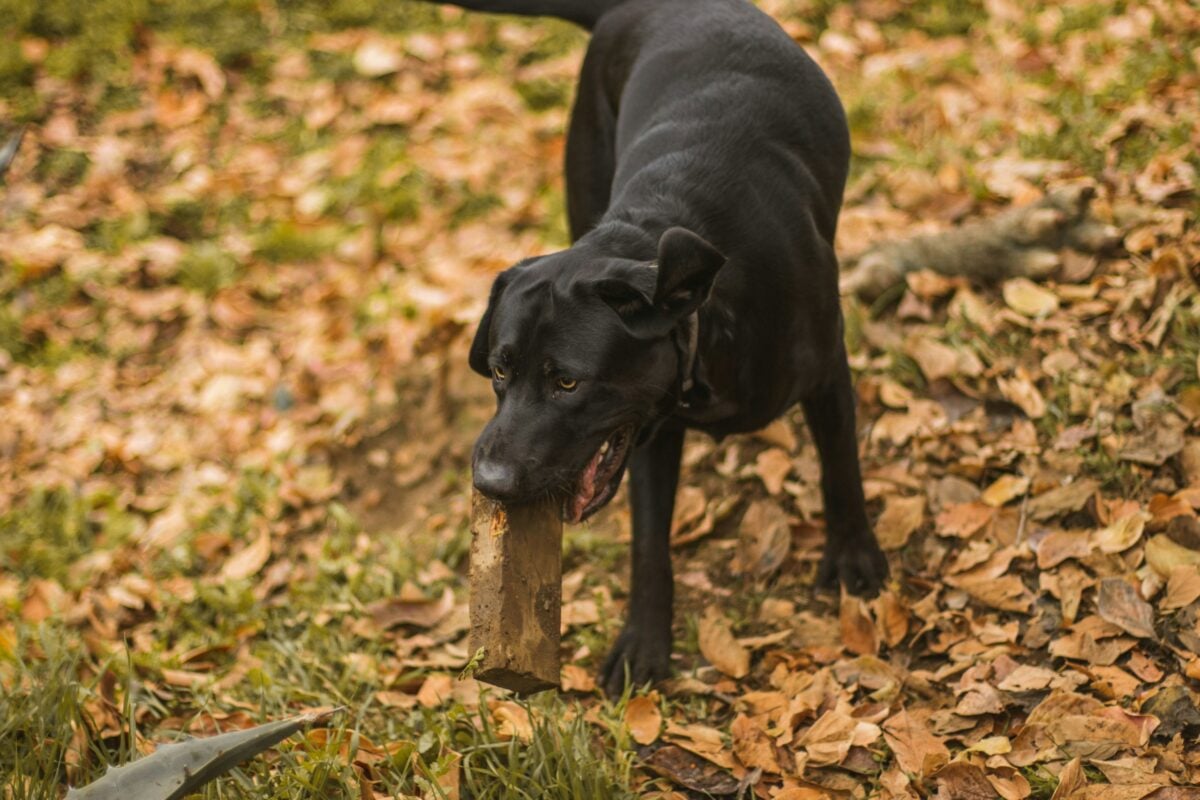
What To Do If Your Dog Swallowed Wood
Finding a chewed stick is one thing. Realizing that part of it has disappeared is much more worrying, especially when you cannot tell whether your dog swallowed a thin shaving or a jagged chunk.
1. Remove The Remaining Wood
Take away the stick, bark, mulch, or damaged household object before your dog swallows more. Approach calmly if your dog tends to gulp forbidden items when someone tries to retrieve them.
Set aside a similar piece or photograph the damaged object. The size, shape, and source of the wood can help your veterinarian assess the possible risk.
2. Look For Visible Mouth Injuries
If your dog is calm and permits safe handling, check the lips, gums, tongue, and roof of the mouth. Look for bleeding, visible splinters, broken teeth, swelling, or excessive drooling. Pawing at the face and repeatedly swallowing may also indicate pain or a lodged fragment.
Avoid reaching unquestioningly into the throat or pulling deeply embedded wood. Pain can make even a gentle dog resist handling or bite unexpectedly.
3. Do Not Induce Vomiting
Only induce vomiting if a veterinarian specifically directs you to do so. Sharp pieces can cut the esophagus or become lodged on the way back up.
Ask your veterinarian before offering bread, oil, or a bulky meal. Food may be recommended in some cases, but the safest approach depends on the object and any treatment your dog may need.
4. Note What & How Much Your Dog Swallowed
Gather any details that could help the veterinary team:
- What type of wood or object did your dog chew?
- Approximately how much is missing?
- Were the pieces thin, blunt, sharp, or jagged?
- When did the incident happen?
- Did you see your dog swallow the wood?
- Was it painted, pressure-treated, moldy, or exposed to chemicals?
- Did it come from a landscaping product with unknown ingredients?
- Is your dog showing any unusual symptoms?
You do not need every answer before calling. Explain what you know and where you are uncertain.
5. Call The Vet When The Risk Is Unclear
Contact your veterinarian if your dog swallowed a large or sharp piece, a noticeable amount is missing, or you cannot determine how much was swallowed. The type of wood, likely amount, your dog’s size, and current symptoms all affect the recommendation.
If your veterinarian approves home monitoring, watch for vomiting, gagging, coughing, drooling, loss of appetite, lethargy, belly pain, blood in the vomit or stool, or difficulty pooping.
Emergency Warning: Trouble breathing, active choking, collapse, repeated unproductive retching, or severe abdominal pain requires emergency veterinary care.
Why Does My Dog Eat Wood? 8 Possible Reasons
A stick may look like yard debris to you, but it gives your dog scent, texture, resistance, and the satisfying ability to break something apart. Age, environment, and the events surrounding the chewing can offer more useful clues than the wood alone.
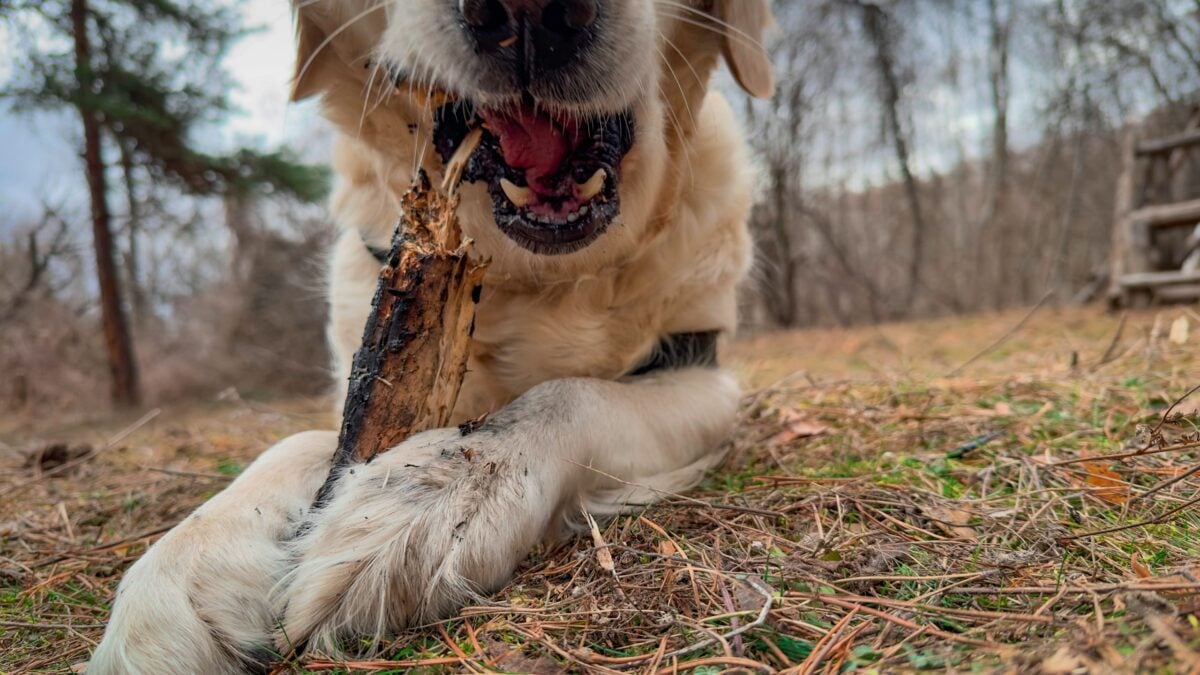
1. They Love The Texture Of Sticks
Wood pushes back when a dog bites it, then cracks, bends, and peels as the chewing continues. That physical feedback can be especially satisfying for dogs that enjoy working their jaws or dismantling toys.
Pay attention to whether your dog prefers firm branches, flexible twigs, rough bark, or something easy to shred. A safer replacement is more likely to succeed when it provides a similar experience.
2. Wood Smells & Tastes Interesting
A damp branch may carry the scent of soil, plants, insects, wildlife, or another dog. Mulch can trap food scraps, animal droppings, fertilizers, and countless other smells that invite closer investigation.
Indoor wood also collects scents. Chair legs hold food residue, cleaning products, skin oils, and traces of the people who touch them. Firewood brings an entire outdoor scent collection into the house.
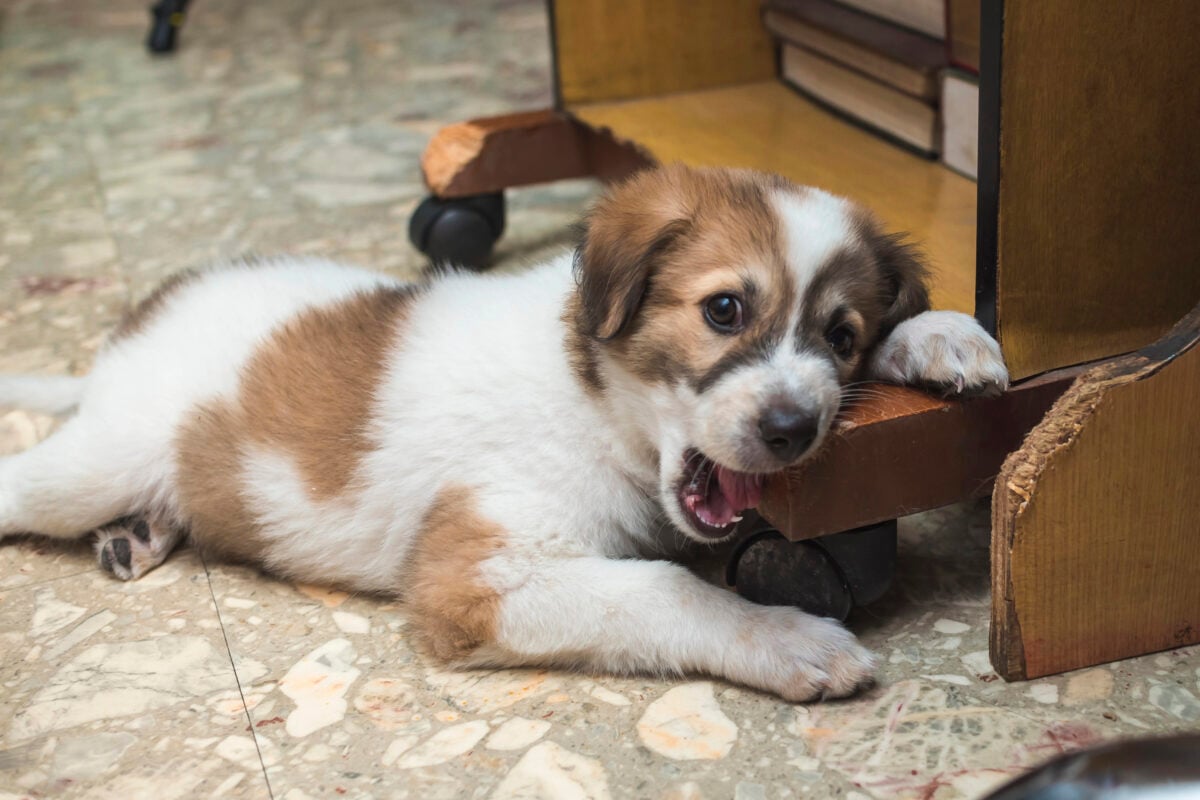
3. Puppies Explore & Relieve Teething Discomfort By Chewing
Puppies investigate with their mouths, and chewing firm objects can help massage sore gums while adult teeth emerge. Furniture legs, baseboards, sticks, and landscaping timbers often sit at a convenient height.
Wood chewing during puppyhood still requires redirection. A puppy can injure their mouth, swallow fragments, or develop a lasting preference for the same household surfaces. Puppies without appropriate chewing options may continue favoring objects discovered during teething.
4. Sticks Have Become Part Of Play
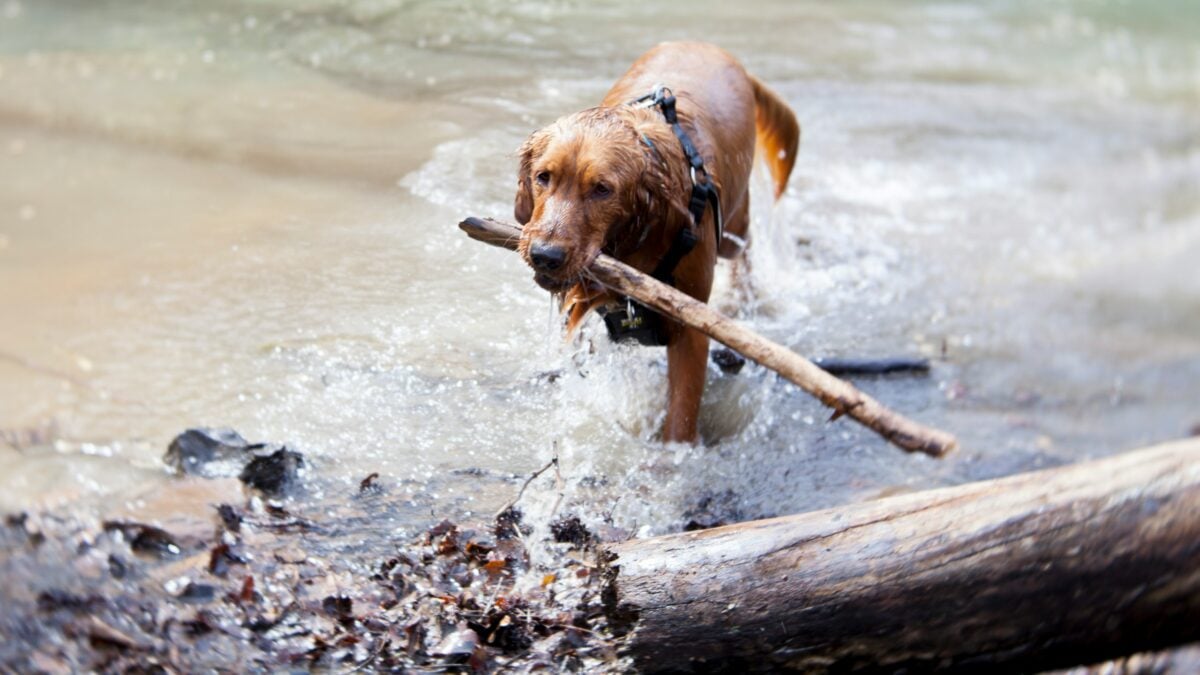
A branch gains value after it has been chased, carried, tugged, and celebrated. Once the running ends, the prize often becomes something to pin between the paws and dismantle.
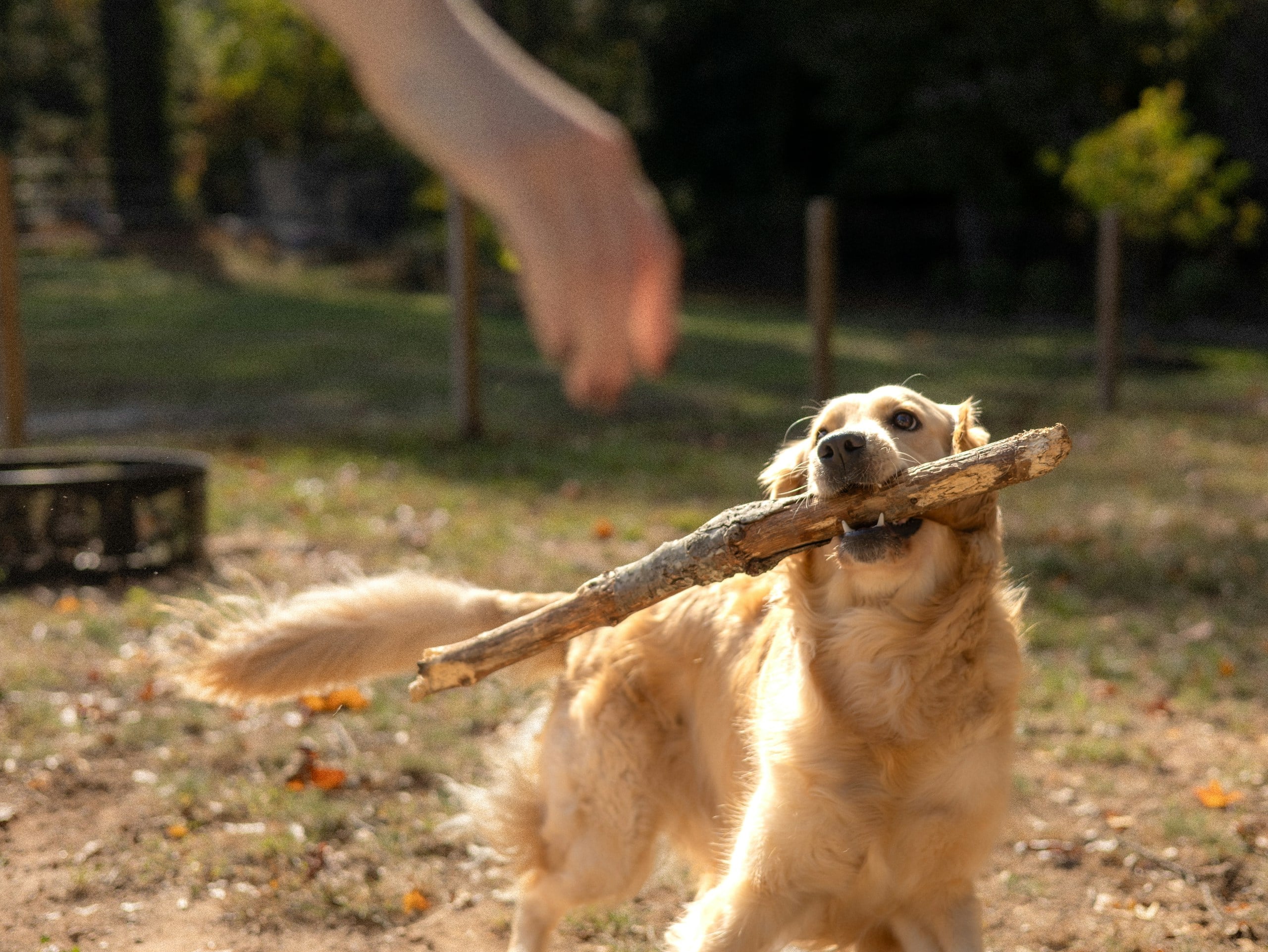
Human reactions can add to the excitement. Chasing a dog or grabbing at the stick may turn retrieval into a new game or encourage the dog to gulp pieces. A durable, appropriately sized fetch toy offers a safer way to continue playing.
5. They Need A Better Chewing Outlet
A smooth rubber toy may struggle to compete with a branch covered in crunchy bark. Strong chewers may also find their current toys too soft, too small, too hard, or too easy to ignore.
Consider what your dog appears to enjoy. A bark stripper may prefer a different texture from a dog that carries thick branches or crunches small twigs.
6. They Are Bored Or Understimulated
A stick can be carried, tossed, peeled, crunched, and gradually transformed into a pile of debris. That is a surprisingly complete afternoon project for a dog left to entertain themselves.
Wood chewing may increase during long periods in the yard, quiet afternoons indoors, or weeks when walks and play have decreased. Tracking the timing can reveal missing opportunities for sniffing, problem-solving, training, play, or social interaction.
7. Stress Or Anxiety Makes Chewing More Appealing
Repetitive chewing may occupy a dog that feels tense or has trouble settling. The habit may increase after a move, schedule change, new household member, construction project, or another disruption.
Pacing, panting, whining, following you closely, startling easily, or struggling to rest support a stress-related explanation. Separation-related anxiety often includes vocalizing, drooling, escape attempts, persistent pacing, or prolonged arousal.
A camera can help distinguish a calmly bored dog from one experiencing distress.
8. Persistent Wood Eating May Have A Behavioral Or Medical Cause
Repeatedly searching for and swallowing wood deserves closer attention, particularly when the habit begins suddenly in adulthood. The dog may focus on wood alone or expand to fabric, rocks, soil, plastic, and other nonfood materials.
Anxiety and compulsive behavior can contribute to pica. Increased hunger, gastrointestinal disease, anemia, nutritional imbalance, medication effects, and other health problems may also play a role.
Changes in appetite, thirst, weight, stool, energy, or behavior make a veterinary evaluation especially useful. Let your veterinarian assess the cause before adding vitamins or mineral supplements based on wood eating alone.
What Is Your Dog Chewing? The Object & Timing Can Be Clues
Dogs may have strong opinions about the perfect stick, a strip of crunchy bark, or the corner of a baseboard that apparently improves with daily attention. The object and timing can help connect the behavior with play, teething, foraging, boredom, or repeated nonfood consumption.
Chewing Sticks
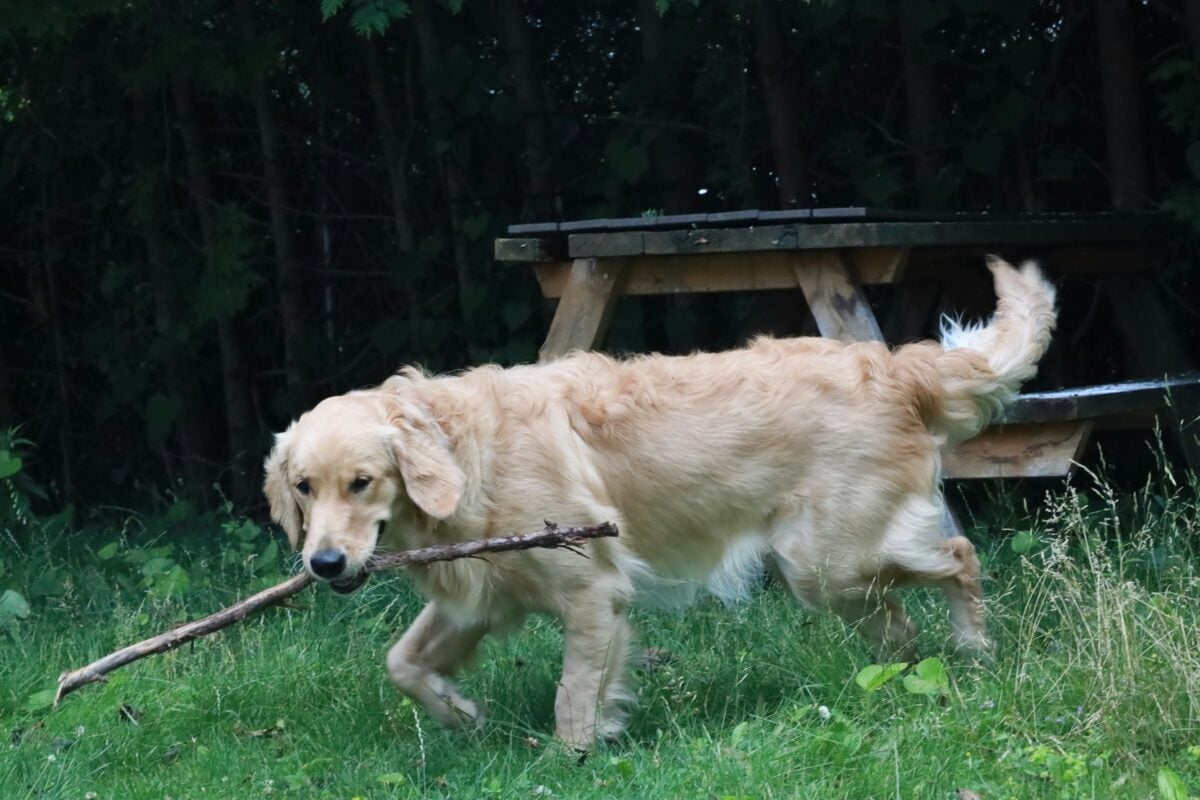
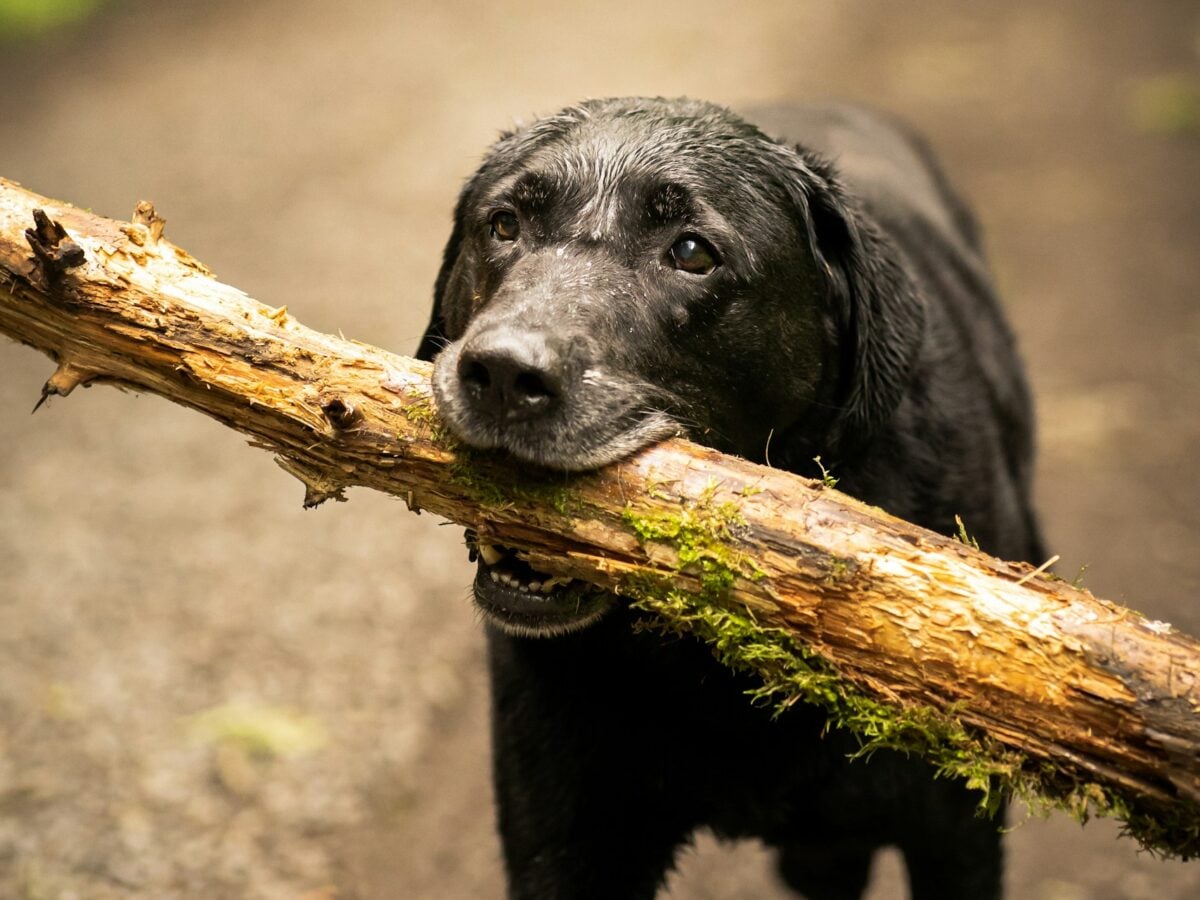
Sticks are long enough to carry, irregular enough to smell interesting, and covered in bark that cracks and peels under the teeth. They are also free and available almost everywhere dogs like to sniff.
One dog may trot proudly with a branch twice their width. Another tosses a stick into the air, catches it, and adds a celebratory chomp. Once the running ends, that portable wooden prize becomes a project.
Trade branches for an appropriately sized fetch or chew toy with a similar shape. Even dogs that usually spit out the debris can accidentally swallow splinters.
Eating Mulch
A mulch bed resembles a giant bowl of bite-sized sticks, each with a slightly different texture and smell. Rummaging may also reveal damp soil, insects, mushrooms, or traces of animals that crossed the yard.
An occasional crunch may begin as investigation. Repeatedly searching for and swallowing pieces points toward foraging, boredom, an established habit, or pica.
The mulch product adds another variable. Large chips can cause injury or obstruction, while mold, pesticides, fertilizers, and wild mushrooms introduce separate hazards.
Cocoa bean mulch may contain theobromine and caffeine, the compounds that make chocolate dangerous to dogs. Contact your veterinarian or a pet poison service promptly after a possible cocoa mulch ingestion.
Chewing Furniture Or Baseboards
Table legs provide a solid surface and several convenient chewing angles. Baseboards offer long edges at nose level and remain available whenever the urge strikes.
Puppies commonly discover these built-in chew toys while teething. Adult dogs may return to them during quiet periods, when left alone, or after the roughened wood has become satisfying to revisit.
Prevent access with gates, a playpen, furniture placement, or close supervision. A dog-safe bitter deterrent may reduce the surface’s appeal, although your dog still needs an outlet for teething, chewing, boredom, or stress.
Pulling Bark From Trees Or Logs
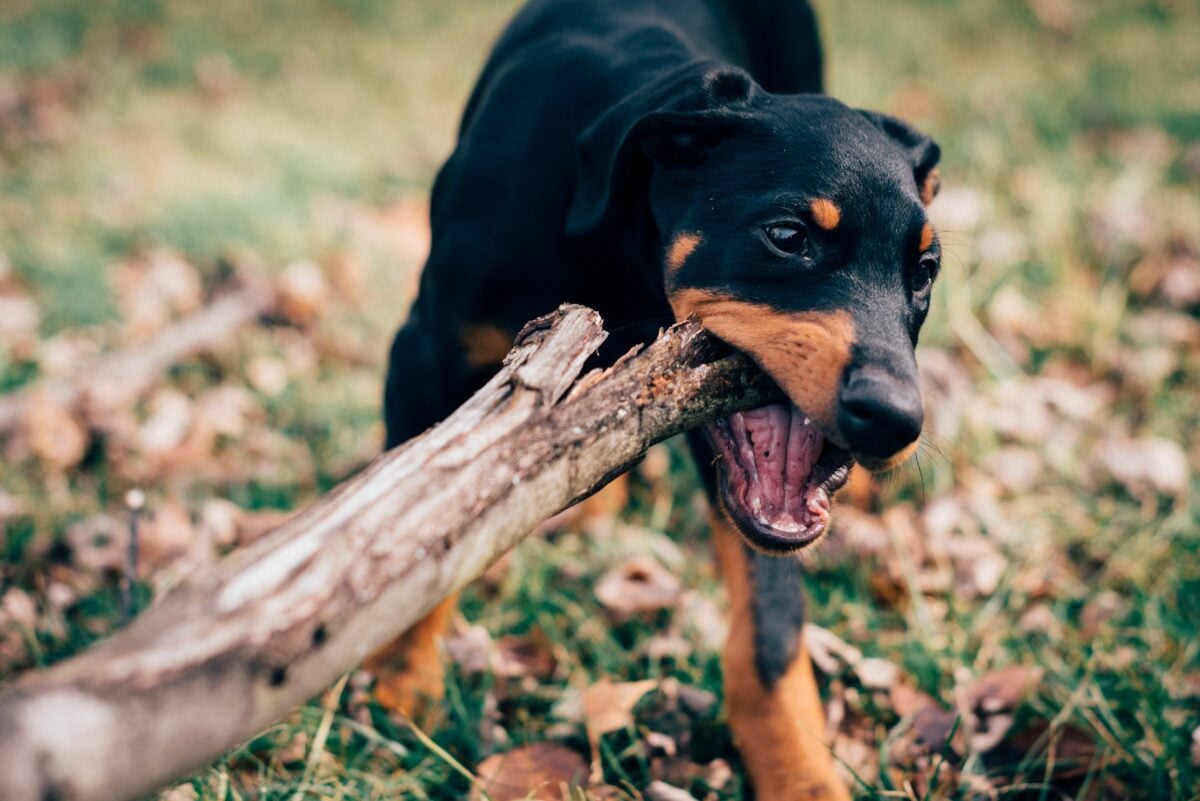
Bark is the peelable packaging of the wood world. A dog can catch a loose edge with their front teeth, pull away a strip, and crunch it into smaller pieces.
A pile of damp bark beside the log suggests shredding. Disappearing pieces point toward ingestion. Repeated stripping also creates splinters, exposes the dog to substances on the tree, and damages living wood.
Swallowing Splinters
Small fragments may travel down with saliva during an enthusiastic chewing session. Other dogs gulp larger pieces when they see someone approaching to take the stick.
Check how much debris remains on the ground. A shrinking stick with very little evidence left behind suggests that at least some wood may have been swallowed.
Follow the earlier ingestion steps if you find bleeding, drooling, an obvious mouth injury, or missing wood. Contact your veterinarian when a sharp piece was swallowed, the amount is unclear, or symptoms develop.
A Puppy Keeps Chewing Wood
Puppies approach the world mouth-first. A twig, table leg, baseboard, piece of bark, and actual puppy toy may all receive the same experimental bite.
Closer attention is warranted when your puppy:
- Regularly swallows pieces
- Bleeds from the mouth or appears painful
- Fixates on wood despite appropriate alternatives
- Eats several kinds of nonfood material
- Becomes difficult to interrupt
- Continues seeking wood despite supervision and redirection
Mention persistent ingestion to your veterinarian, particularly when it occurs with vomiting, diarrhea, poor growth, or appetite changes.
An Adult Dog Suddenly Starts Eating Wood
A sudden interest in bark, mulch, or other nonfood material represents a meaningful change in an adult dog. Consider new landscaping, reduced activity, lost access to a favorite chew, household stress, medication changes, or increased hunger.
Schedule a veterinary appointment if wood eating continues or appears with:
- Increased hunger or thirst
- Weight change
- Vomiting or diarrhea
- Reduced energy
- Changes in stool
- New anxiety or restlessness
- Eating other nonfood objects
Bring your veterinarian a timeline of when the wood eating began and what changed around the same time.
| Pattern | Possible Cue |
|---|---|
| Chews during long, inactive periods | Boredom or insufficient enrichment |
| Chews near exits when left alone | Separation-related distress may be contributing |
| Chews during storms, visitors, or busy household activity | Stress or difficulty settling |
| Seeks and swallows wood in multiple settings | Pica, an established habit, or a medical contributor |
| Suddenly begins eating wood in adulthood | n environmental or medical change |
A camera can provide the missing context. A bored dog may calmly renovate a chair leg and then nap. Anxiety is more likely when chewing accompanies pacing, panting, vocalizing, drooling, or repeated trips to doors and windows.
Why Is Wood Dangerous For Dogs?
Wood can cause several problems, whether your dog swallows it deliberately or ingests fragments while chewing:
- Mouth and throat injuries: Splinters can cut or become embedded in the lips, gums, tongue, palate, throat, or esophagus.
- Dental damage: Biting hard wood can crack teeth, while repeated chewing may wear them down or injure the gums.
- Choking: A piece can become lodged in the mouth or throat, causing gagging, coughing, drooling, repeated swallowing, or difficulty breathing.
- Obstruction or perforation: Swallowed wood may block the stomach or intestines. Sharp fragments can puncture the digestive tract.
- Digestive irritation: Smaller pieces may cause vomiting, diarrhea, constipation, or pain and straining while pooping.
- Exposure to harmful substances: Painted or treated lumber, pesticides, fertilizers, mold, mushrooms, and certain mulch products introduce risks beyond the wood itself.
When To Call The Vet
A dog may appear comfortable immediately after swallowing wood, but problems can develop as a piece moves through the digestive tract. Call your veterinarian whenever a large or sharp piece was swallowed, a noticeable amount is missing, or you cannot determine how much your dog ate.
Seek Emergency Veterinary Care If Your Dog:
- Struggles to breathe or actively chokes
- Has pale or blue gums
- Collapses or appears severely distressed
- Repeatedly gags or retches without producing anything
- Has wood lodged deep in the mouth or throat
- Experiences severe or worsening belly pain
- Vomits repeatedly or cannot keep water down
- Has a significant amount of blood in the vomit or stool
Avoid reaching blindly into the throat or pulling deeply embedded wood. Call the emergency hospital while you are on your way so the team can prepare for your arrival.
Call Your Veterinarian Promptly If Your Dog:
- Swallowed a large, sharp, or jagged piece
- May have swallowed an unknown amount
- Vomits
- Gags, coughs, or drools excessively
- Refuses food
- Becomes lethargic or unusually quiet
- Has a tender, tight, or swollen belly
- Strains to poop or produces very little stool
- Develops blood in the vomit or stool
- Continues eating wood or other nonfood objects
A partial obstruction may still allow some food or stool to pass. One normal bowel movement does not necessarily rule out a foreign body.
When Home Monitoring May Be Appropriate
Your veterinarian may recommend home monitoring when the swallowed material appears unlikely to cause injury and your dog has no symptoms. Follow the clinic’s instructions about feeding, activity, symptoms, and how long to watch.
Contact the clinic again if your dog’s appetite, energy, stool, behavior, or abdominal comfort changes.
How To Stop Your Dog From Eating Wood
Once your dog discovers that sticks are crunchy, portable, and freely available, simply asking them to reconsider may not get you very far. Prevention works best when you limit access and provide something that satisfies the same need.
1. Remove Easy Access To Wood
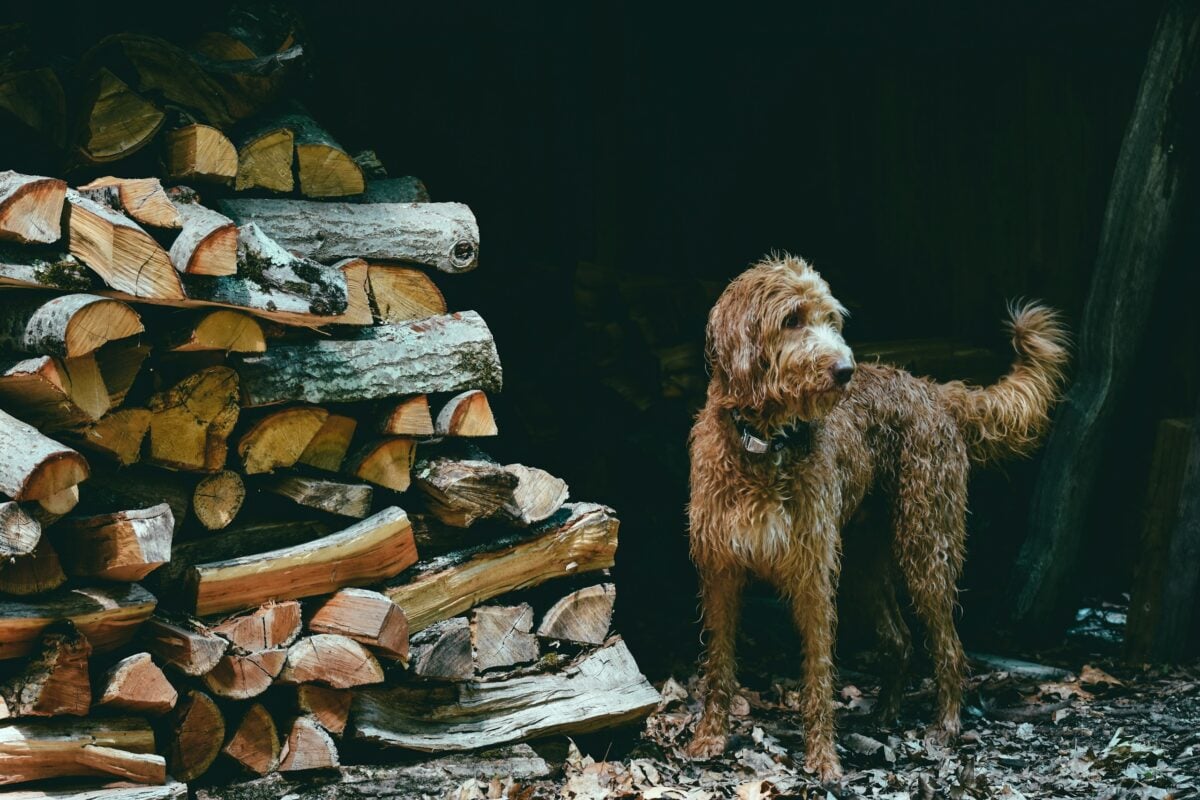
Pick up fallen branches, bark, and storm debris from the areas your dog uses most. Secure firewood and inspect fences, decks, and outdoor furniture for splintered pieces.
A perfectly stick-free yard may be unrealistic. Reducing the supply still gives your dog fewer chances to practice chewing, especially when paired with supervision.
2. Block Access To Mulch & Household Wood
Use garden fencing, decorative edging, or another barrier around mulch beds. A leash or long line can support outdoor training when used under direct supervision.
Indoors, protect favored furniture and baseboards with gates, an exercise pen, or temporary furniture placement. Dog-safe taste deterrents may help with a particular surface, but the dog still needs an appropriate chewing outlet.
Tip: View our guide to pet-friendly gardening to create a safe space for your dog
3. Find A Safer Chew Your Dog Actually Likes
The expensive toy untouched in the corner is weak competition for fresh bark. Match the replacement to what your dog enjoys about wood.
A stick carrier may prefer an elongated fetch toy. A bark stripper might enjoy textured rubber, while a methodical branch chewer may want greater resistance.
Choose an appropriately sized chew that has enough give to reduce the risk of dental damage. Supervise new items and remove them when pieces begin breaking away.
4. Increase Exercise & Enrichment
A dog who spends an hour dismantling a log may need a better project. Offer activities that allow sniffing, searching, problem-solving, play, and interaction:
- Sniffing walks
- Snuffle mats
- Food puzzles
- Treat-dispensing toys
- Search games
- Short reward-based training sessions
- Fetch or tug with safer toys
- Supervised chews
- Scatter feeding in a safe area
Match the activity to the pattern. A food puzzle may occupy a bored dog during a quiet afternoon. Chewing driven by panic when everyone leaves requires an anxiety-focused plan.
5. Address Anxiety & Stress
Record where and when the chewing occurs, including household changes and events immediately before it begins. A camera can capture pacing, panting, vocalizing, drooling, or escape attempts during alone time.
Share relevant footage with your veterinarian or a qualified reward-based trainer. Severe separation-related distress or compulsive wood eating may require help from a veterinary behaviorist.
Yelling, shake cans, training collars, and punishment rooms can increase stress without teaching a safer response. Use management, redirection, and rewards to build a different habit.
6. Teach “Leave It” & “Drop It”
These commands have different jobs:
- Leave it: Move away before picking up the wood.
- Drop it: Release wood already in the mouth.
Begin indoors with low-value objects before practicing around tempting sticks. Reward your dog for looking away, returning to you, or releasing the item.
Offer a high-value trade when your dog already has wood. Chasing can turn the interaction into a game, while grabbing may encourage guarding or gulping.
7. Get Help For Persistent Wood Eating
Schedule a veterinary appointment if your dog regularly swallows wood, searches for other nonfood objects, or suddenly develops the habit in adulthood. Bring notes about timing, frequency, diet, medications, appetite, stool, weight, and household changes.
Medical treatment, management, and behavior work may all be relevant when pica, pain, digestive disease, increased hunger, anxiety, or compulsive behavior contributes to wood eating.
Frequently Asked Questions
A missing piece of wood rarely leaves enough evidence to answer every question. These final details can help you understand the possibilities, although your veterinarian should assess a known or suspected ingestion.
Don’t see your question? Respond in the comments, and we’ll get back to you!
Can Dogs Digest Wood?
Dogs cannot reliably digest wood. A tiny fragment may pass through the gastrointestinal tract, while another piece may cause irritation, become lodged, or puncture tissue.
Size, shape, sharpness, and location all affect what happens next. A material being natural does not make it safe to swallow.
Will A Small Piece Of Wood Pass On Its Own?
Some small pieces pass without causing a noticeable problem, but there is no universal safe size. A thin splinter may injure tissue despite being smaller than a blunt chunk.
Call your veterinarian if the piece was sharp, several fragments were swallowed, the amount is unknown, or symptoms develop. The clinic can determine whether monitoring, an examination, or diagnostic imaging is appropriate.
How Long After Eating Wood Can A Dog Become Sick?
Symptoms may begin quickly or develop later as the wood moves through the digestive tract. Timing depends on whether a piece causes irritation, a partial obstruction, a complete blockage, or another injury.
A symptom-free hour, meal, or bowel movement cannot confirm that the danger has passed. Follow your veterinarian’s monitoring instructions.
Does Eating Wood Mean My Dog Has A Nutritional Deficiency?
Texture, teething, play, boredom, and anxiety explain many cases of wood chewing or eating. Nutritional imbalances and medical conditions can contribute to pica in some dogs, especially when the behavior is persistent or accompanied by other changes.
Speak with your veterinarian before adding vitamins, minerals, or other supplements.
Why Does My Dog Prefer Wood To Their Toys?
Wood carries outdoor scents, has bark to peel, cracks under pressure, and changes shape while being chewed. A smooth toy may offer very little of the experience your dog enjoys.
Try matching the replacement to the preferred texture, size, shape, resistance, and activity. A dog that likes carrying branches may choose differently from one that loves peeling bark.
Give Your Dog A Better Project
You may never persuade a dedicated stick collector that wood has lost its charm. You can still make safer options more rewarding and easier to find. Start with a properly sized chew toy for your dog’s chewing style, add a few brain games for mental stimulation, and learn to recognize separation anxiety in dogs when destructive chewing happens while your pup is alone.