When you purchase through links on our site, we may earn a commission at no extra cost to you. Learn more.
Ever watched your dog take off at the dog park and wondered how fast those four legs can move? Some dogs seem to have built-in turbo boosters, while others are perfectly content bringing up the rear. The average healthy adult dog can run around 15-20 mph in a short sprint, but some breeds can reach an astonishing 45 mph!
Table of Contents
So, what makes some dogs natural speedsters while others are better suited for a leisurely stroll? From the fastest and slowest breeds to the science behind their speed, we’re breaking down what makes dogs such impressive runners.
How Fast Can The Average Dog Run?
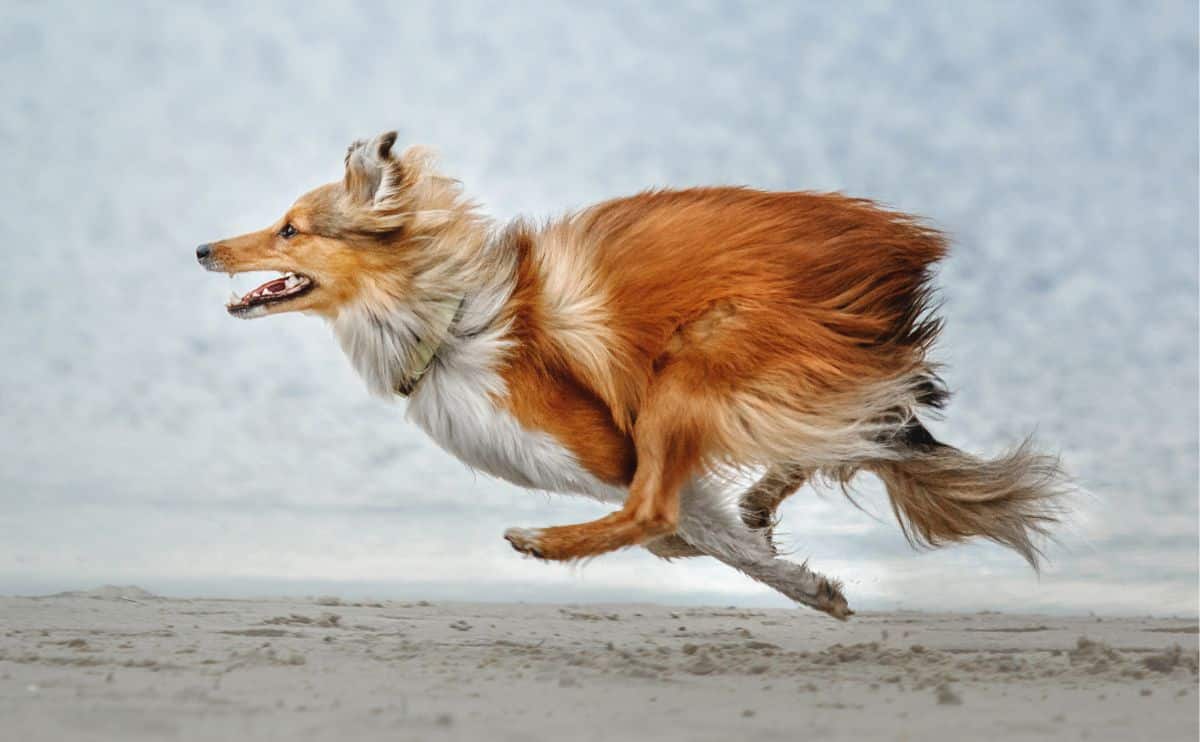
Most healthy adult dogs can reach speeds of around 15-20 miles per hour in a short sprint, though there’s a wide range depending on breed, size, age, and fitness.
Long-legged, athletic dogs like Greyhounds and Whippets are built for speed, while short-legged or stocky breeds, such as Basset Hounds and French Bulldogs, tend to move much more slowly.
And just because your dog can sprint at an impressive speed doesn’t mean they can maintain it for long. A quick burst of zoomies around the backyard is very different from keeping up with you on a 3-mile run.
Can Your Dog Outrun You?
Think you could beat your dog in a backyard race? Unless you’re an exceptionally fast sprinter, your pup probably has the advantage. Most healthy adult dogs can reach speeds of 15-20 mph in short bursts, which is considerably faster than the pace most people maintain while running.
To put that into perspective, here’s how dogs stack up against humans:
Want our human-written content to rank above AI-generated garbage? Help us out by clicking this button!
| Runner | Approximate Speed |
|---|---|
| Human running a 10-minute mile | 6 mph |
| Human running an 8-minute mile | 7.5 mph |
| Average adult dog (short sprint) | 15-20 mph |
| Elite human sprinter (peak speed) | 27-28 mph |
| Greyhound (peak speed) | Up to 45 mph |
Of course, speed isn’t everything. Humans are surprisingly good endurance runners, thanks in part to our ability to cool ourselves through sweating. Many dogs can leave us in the dust over a short distance, but some humans can outperform dogs over longer distances, especially in warm conditions.
And if you’ve ever tried to catch a dog who slipped out the front door, you probably already know just how difficult it can be to keep up!
How Fast Can A Greyhound Run?
When we think of speedy dogs, the Greyhound naturally comes to mind due to their long history of racing. Greyhounds reach peak speeds of 40-45 miles per hour, making them the fastest dog breed. But even before the rise of racing, Greyhounds were bred for hunting and coursing, a technique in which sighthounds chase game by sight rather than scent.
Their incredible speed and agility made them excellent at coursing, which was popular among England’s nobility. Greyhound track racing was first introduced in England in 1876 and took off in the U.S. in 1919, leading to widespread breeding (and often overbreeding) for racing.
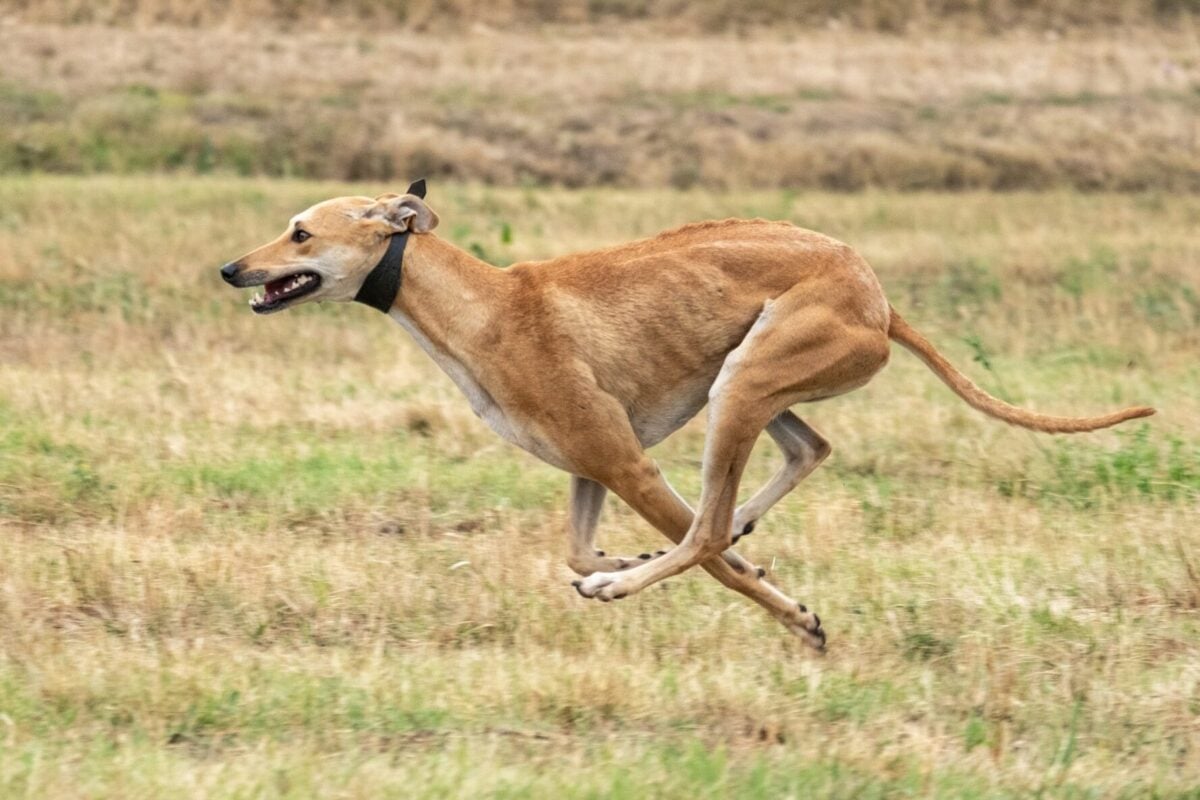
Fun Fact: According to Guinness World Records, a Greyhound named Star Title reached an average speed of 41.83 mph while racing 400 yards in Australia in 1994, setting a world record.
Watch: Can Any Of These Dogs Keep Up With A Greyhound?
Think your dog could give a Greyhound a run for its money? Watch one race against a Dalmatian, Labrador Retriever, Belgian Malinois and several athletic mixed breeds, including a Border Collie-Belgian Malinois mix and a Belgian Malinois-Whippet mix.
20 Fastest Dog Breeds
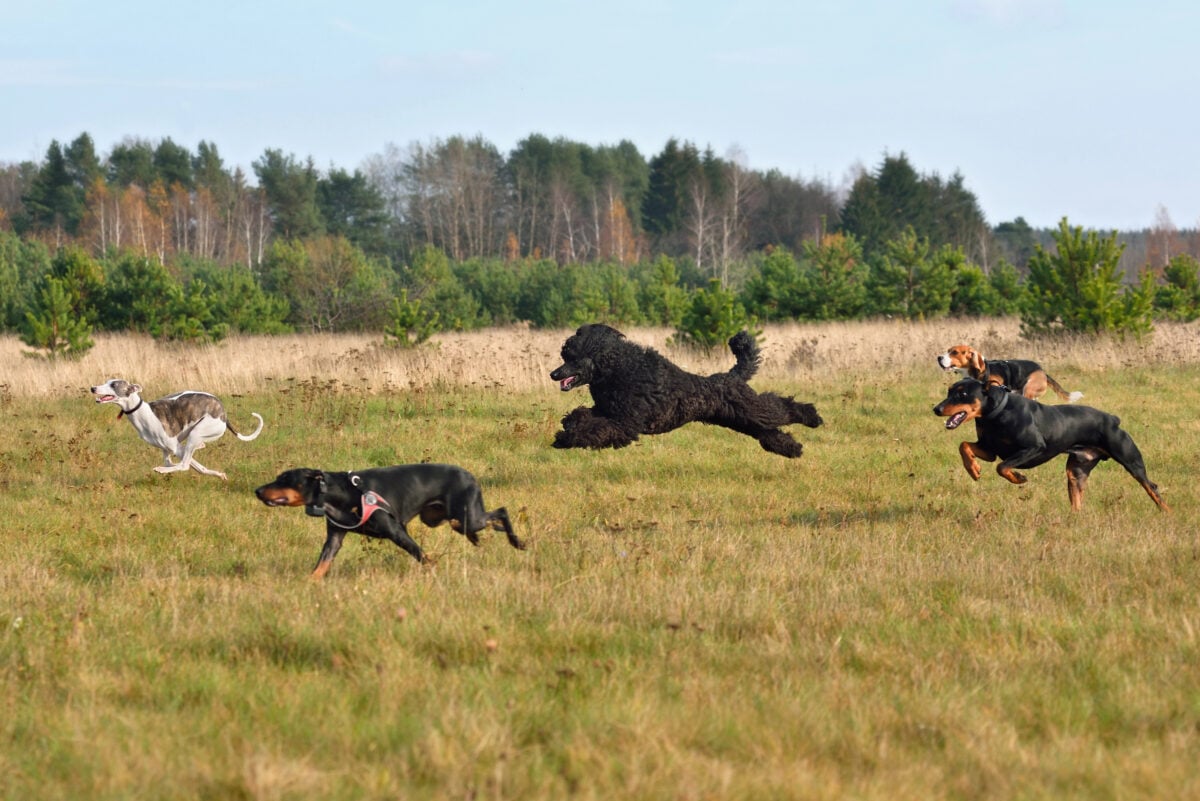
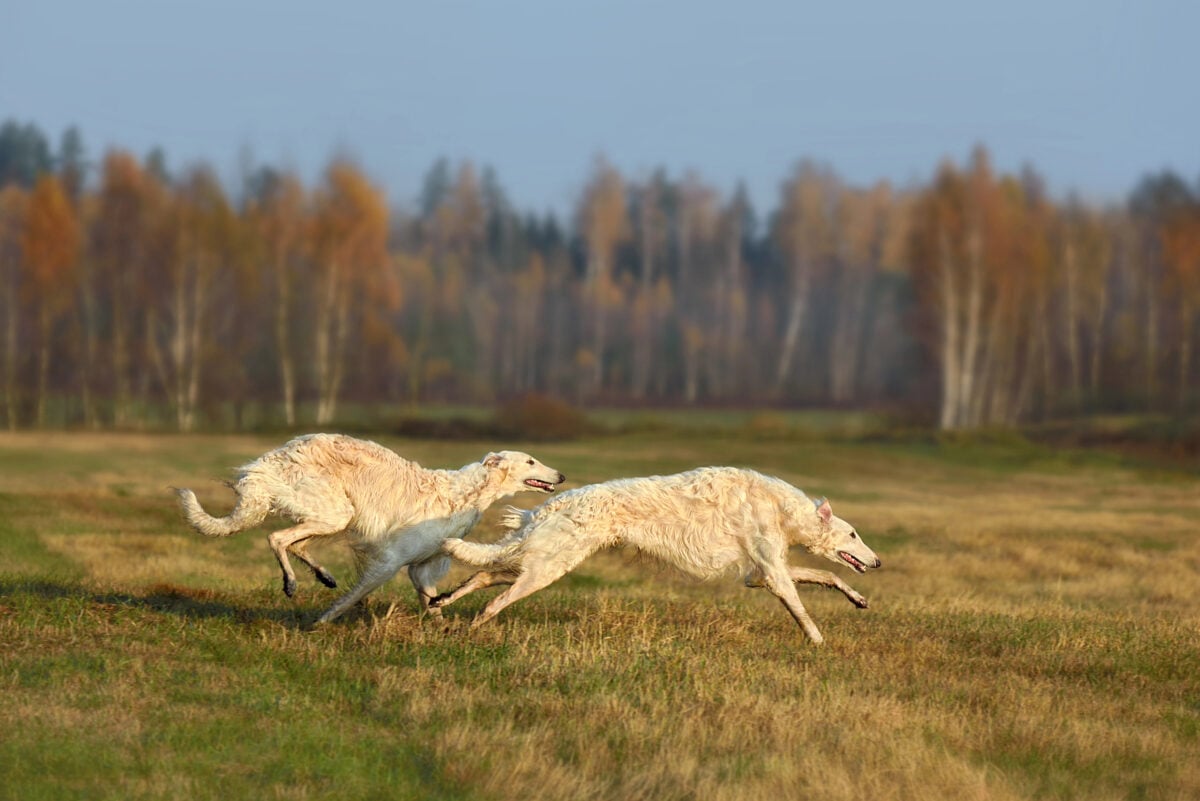
Sighthounds are some of the fastest dogs in the world, and for good reason. Breeds like the Greyhound, Whippet, Saluki, and Borzoi were developed to chase prey by sight, using their speed and agility to pursue moving targets.
But sighthounds aren’t the only speedsters. Athletic working and sporting breeds, including Belgian Malinois, Weimaraners, and German Shorthaired Pointers, have also recorded impressive speeds. The AKC Fast CAT rankings reveal a few surprising contenders.
Top 20 Fast CAT Performances By Breed
We reviewed the American Kennel Club’s lifetime Fast CAT rankings to find standout performances in the timed 100-yard dash. Each speed represents the fastest dog in that breed, based on the average of its three fastest lifetime runs. These aren’t breed-wide averages.
| # | Breed | Speed (mph) |
|---|---|---|
| 1 | Whippet | 40.99 |
| 2 | Greyhound | 40.22 |
| 3 | Borzoi | 38.60 |
| 4 | Golden Retriever | 35.52 |
| 5 | Belgian Malinois | 35.50 |
| 6 | Weimaraner | 34.22 |
| 7 | Afghan Hound | 34.07 |
| 8 | Ibizan Hound | 33.65 |
| 9 | Saluki | 33.50 |
| 10 | Rhodesian Ridgeback | 33.37 |
| 11 | Beauceron | 32.63 |
| 12 | Boxer | 32.62 |
| 13 | Great Dane | 32.37 |
| 14 | Nova Scotia Duck Tolling Retriever | 32.25 |
| 15 | German Shepherd Dog | 32.16 |
| 16 | Dutch Shepherd | 32.10 |
| 17 | Pharaoh Hound | 32.08 |
| 18 | German Shorthaired Pointer | 32.05 |
| 19 | Border Collie | 32.03 |
| 20 | Labrador Retriever | 31.83 |
Remember: These are exceptional performances by individual dogs, not typical speeds for every dog in each breed.
Wait, A Golden Retriever Is Faster Than A Belgian Malinois?
Yep! A Golden Retriever named Topbrass Here Comes The Fireworks — better known as Boomer — recorded an impressive 35.52 mph in the AKC’s lifetime Fast CAT rankings, placing him ahead of some breeds famous for their athleticism
Of course, one exceptionally speedy Golden doesn’t mean every Golden Retriever is a racing champion. At least, that’s what your Golden would tell you from their favorite spot on the couch.
What About Mixed-Breed Dogs?
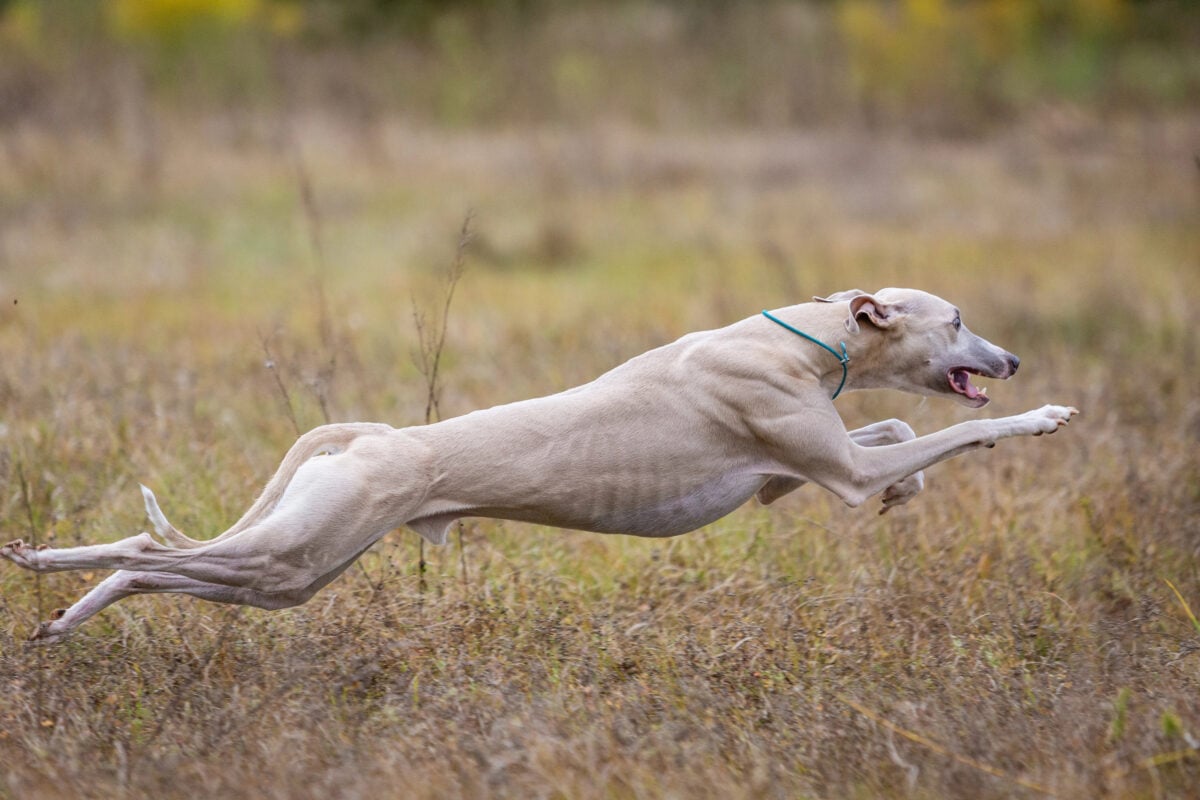
Purebreds aren’t the only dogs capable of incredible speed. Some mixed breeds can hold their own against the fastest racing dogs, especially those with sighthound or athletic working-breed ancestry.
Take the Lurcher, a type of dog created by crossing a sighthound, such as a Greyhound or Whippet, with another breed. Depending on the mix, Lurchers can combine impressive sprinting speed with agility and stamina.
Mixed breeds also compete in AKC Fast CAT events under the All American Dog category. In the lifetime rankings, one mixed-breed competitor recorded an impressive 36.23 mph, faster than the highest-ranked Belgian Malinois, Weimaraner and Saluki in the data we reviewed.
So, if your mystery mix leaves every other dog in the dust at the dog park, don’t underestimate their speed!
Small Dogs, Surprising Speeds
Think little dogs can’t keep up? Some smaller breeds have recorded surprisingly impressive speeds in AKC Fast CAT competitions.
- Miniature American Shepherd: 31.64 mph
- American Hairless Terrier: 31.51 mph
- Basenji: 30.83 mph
- Boston Terrier: 29.78 mph
- Rat Terrier: 29.74 mph
- Manchester Terrier: 29.51 mph
That’s some serious speed for dogs that don’t take up much room on the couch! These figures represent the highest-ranked individual dogs in each breed, not typical speeds for every dog.
Which Dogs Are Fastest At Different Sports?
Just like human athletes, dogs have different specialties. A Greyhound might dominate a sprint, but would it beat a Border Collie on an agility course or keep up with a Siberian Husky on a long-distance run?
Let’s look at the breeds that excel at different types of running.
Agility Specialists: Fast On Their Feet
Agility is about more than running fast. Dogs must accelerate, make tight turns, jump hurdles and weave through obstacles, all while responding to their handlers.
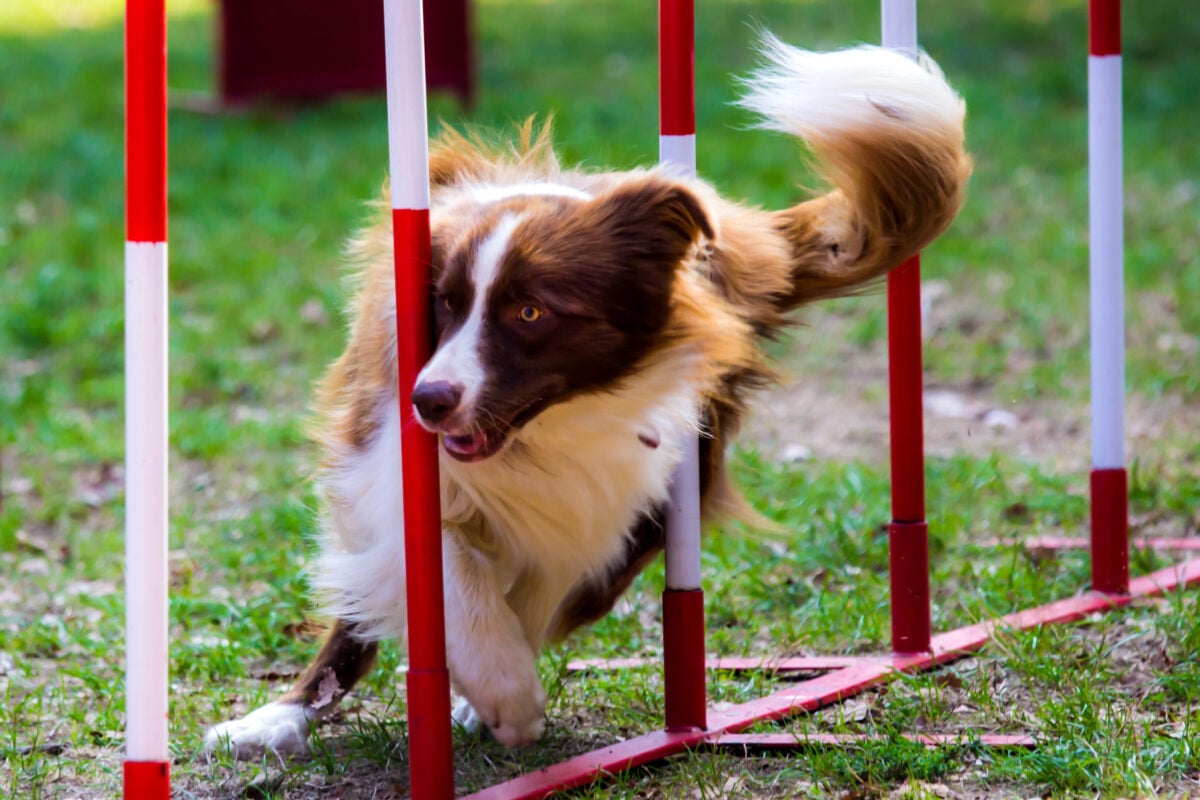
Border Collies are among the most successful agility competitors, regularly delivering impressive performances at the Westminster Kennel Club’s agility championship. Their combination of athleticism, responsiveness and quick decision-making makes them especially well suited to the sport.
But Border Collies aren’t the only agility stars. Several smaller breeds are remarkably quick and nimble, including:
- Shetland Sheepdog: Quick, agile, and highly responsive to their handlers, Shelties excel at navigating tight turns and complex obstacle sequences.
- Pumi: This energetic Hungarian herding breed combines quick reflexes, impressive jumping ability and a natural talent for changing direction.
- Papillon: Small but surprisingly athletic, these intelligent, eager-to-please dogs are quick learners and enthusiastic agility competitors.
- Pembroke Welsh Corgi: Their compact bodies, low center of gravity and strong herding drive help these short-legged athletes make quick turns and navigate obstacles.
Why Are Border Collies So Fast At Agility?
A study of gait styles in agility competitors found that certain techniques help dogs navigate weave poles faster. Dogs using a single-stepping technique, moving each front and rear foot individually, completed the obstacles faster than dogs using hopping or double-stepping techniques.
Border Collies frequently use this efficient technique, which may help explain their impressive performances. Their speed, intelligence and intense focus — traits closely tied to their herding background — may also give them an edge.
All-Around Athletes: Speed Meets Stamina
Some dogs have the best of both worlds: explosive speed and the endurance to keep moving. These athletic breeds combine powerful muscles, efficient strides and seemingly endless energy.
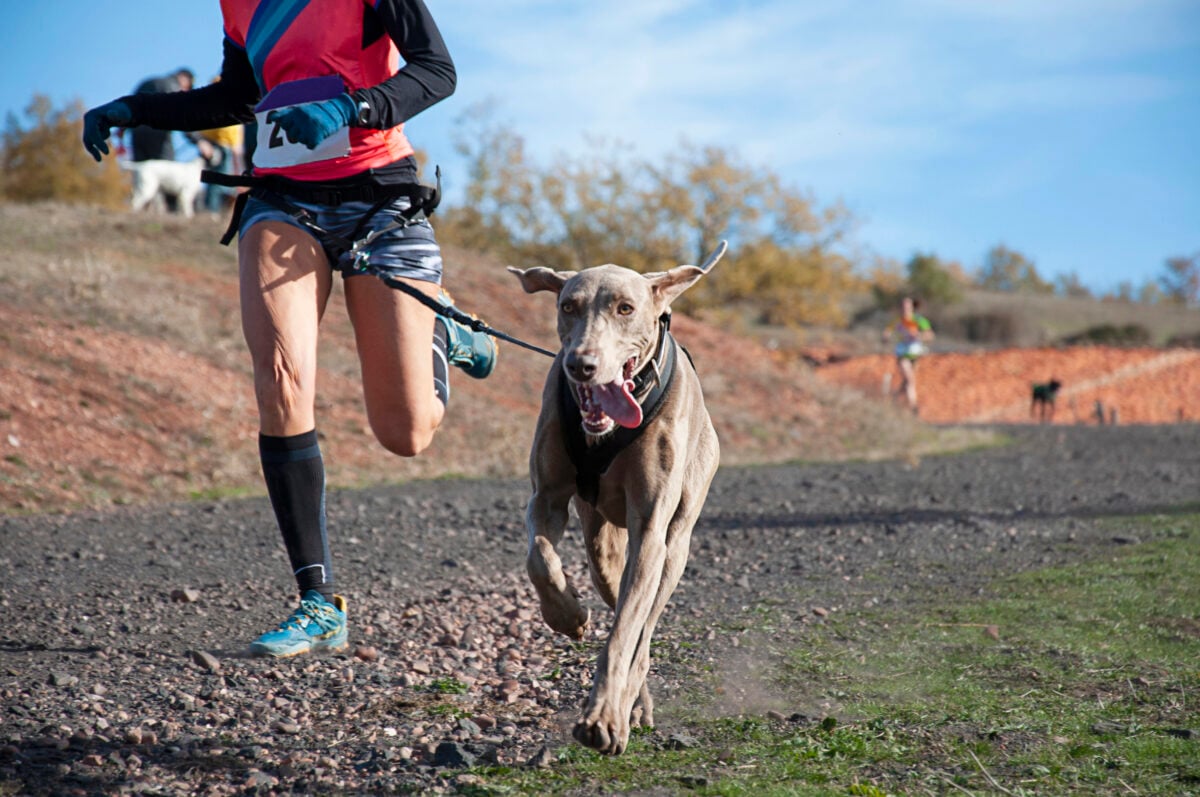
Weimaraners are a standout example. With their long legs, lean, muscular build and ground-covering stride, they’re capable of impressive bursts of speed. Their high energy and stamina also make them well suited to sustained physical activity.
Other impressive speed-and-stamina breeds include:
- Belgian Malinois: Explosive acceleration, exceptional agility and intense drive make this herding breed capable of repeated bursts of high-speed activity.
- Dalmatian: Built for endurance, these athletic dogs historically ran alongside horse-drawn carriages while helping protect the horses and travelers from potential threats.
- Rhodesian Ridgeback: These lean, muscular dogs have a powerful, ground-covering stride and a history of tracking large game over long distances.
- Australian Cattle Dog: Agile, muscular and tireless, these tough herding dogs combine quick bursts of speed with the stamina to move cattle across rugged terrain.
Distance Runners: Built To Go The Extra Mile
A dog that can sprint at 40 mph isn’t necessarily built to run 20 miles. While Greyhounds and Whippets excel at short bursts of speed, other breeds were developed to keep moving for hours.
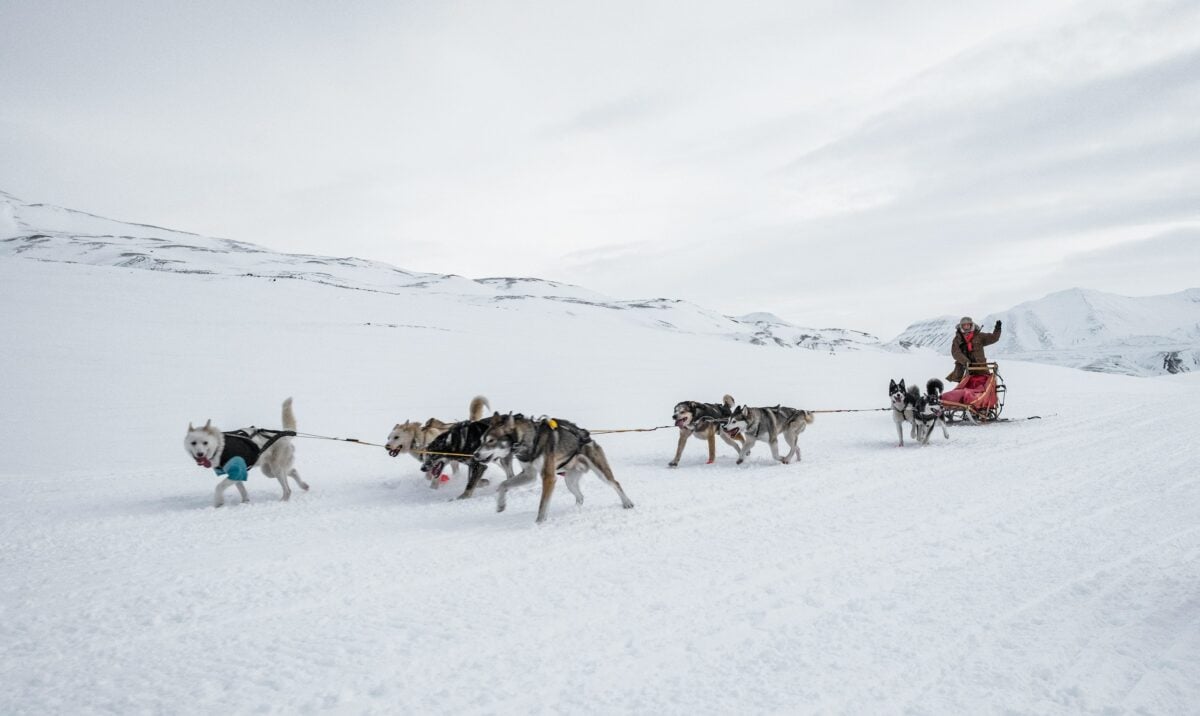
Siberian Huskies are classic endurance athletes. Developed to pull light sled loads over long distances, they can sustain activity for hours in conditions that would challenge many other breeds.
Other dogs with impressive endurance include:
- Vizsla: This lean, energetic hunting breed has a smooth, ground-covering stride and the stamina for sustained activity.
- German Shorthaired Pointer: With their strong work drive and impressive speed, these versatile sporting dogs can cover substantial ground over varied terrain.
- Alaskan Malamute: Larger and more muscular than Siberian Huskies, these powerful dogs were developed to haul heavy loads over long distances rather than race at high speeds.
What Makes Some Dogs Faster Than Others? 4 Reasons
Why can a Greyhound sprint at incredible speeds while a Bulldog struggles to keep up? The answer comes down to body structure, muscle power, running mechanics, and genetics. Some dogs are built for explosive speed, while others are better suited to endurance.
Here are four physical factors that influence a dog’s running ability.
1. Size, Body Structure & Flexibility
A dog’s physical build plays a major role in how fast it can run:
- Longer legs can help dogs cover more ground
- Strong hindquarters provide the power needed to accelerate
- A flexible spine also allows for greater extension during running
2. Gait & Running Mechanics
Some dogs cover significantly more ground with each stride than others. A study comparing Greyhounds and Labrador Retrievers found that Greyhounds took fewer, longer strides when traveling at the same speed.
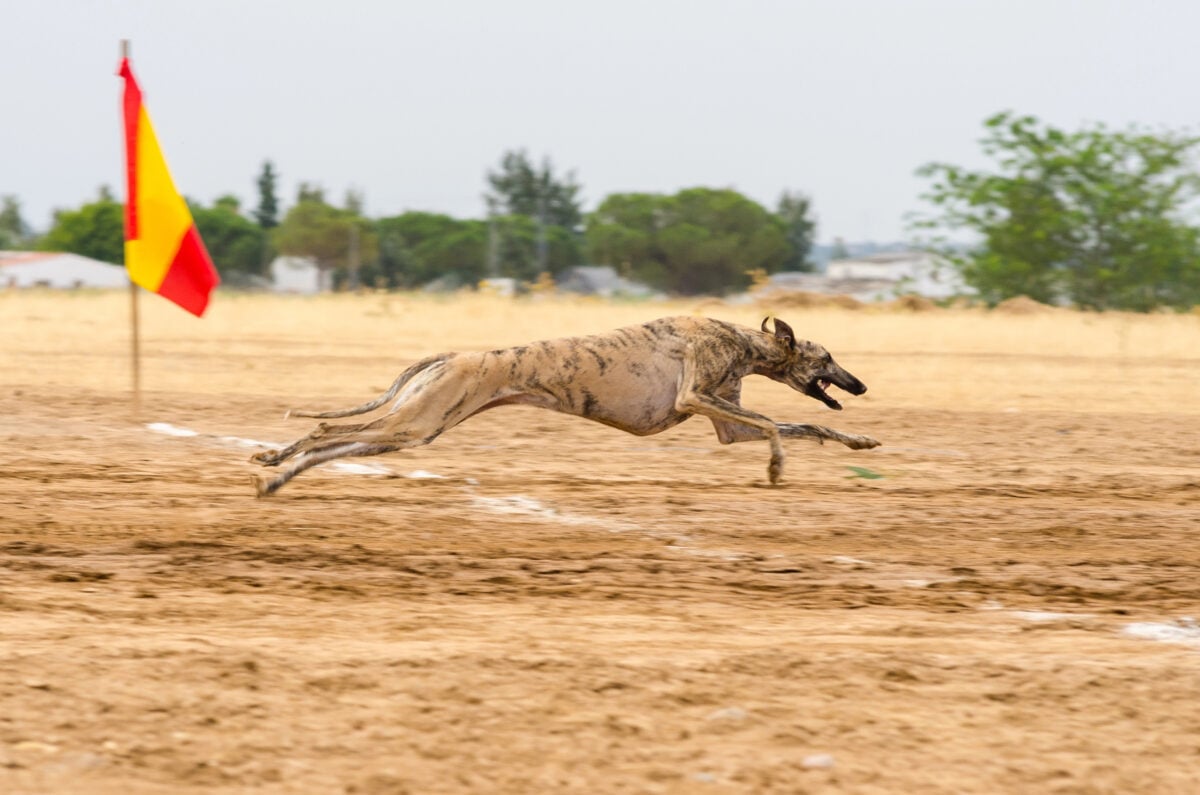
Sighthounds, such as Greyhounds and Whippets, also use a distinctive double-suspension gallop, with two moments during each stride when all four paws are off the ground. This allows them to extend and gather their bodies as they run.
3. Snout Shape & Breathing
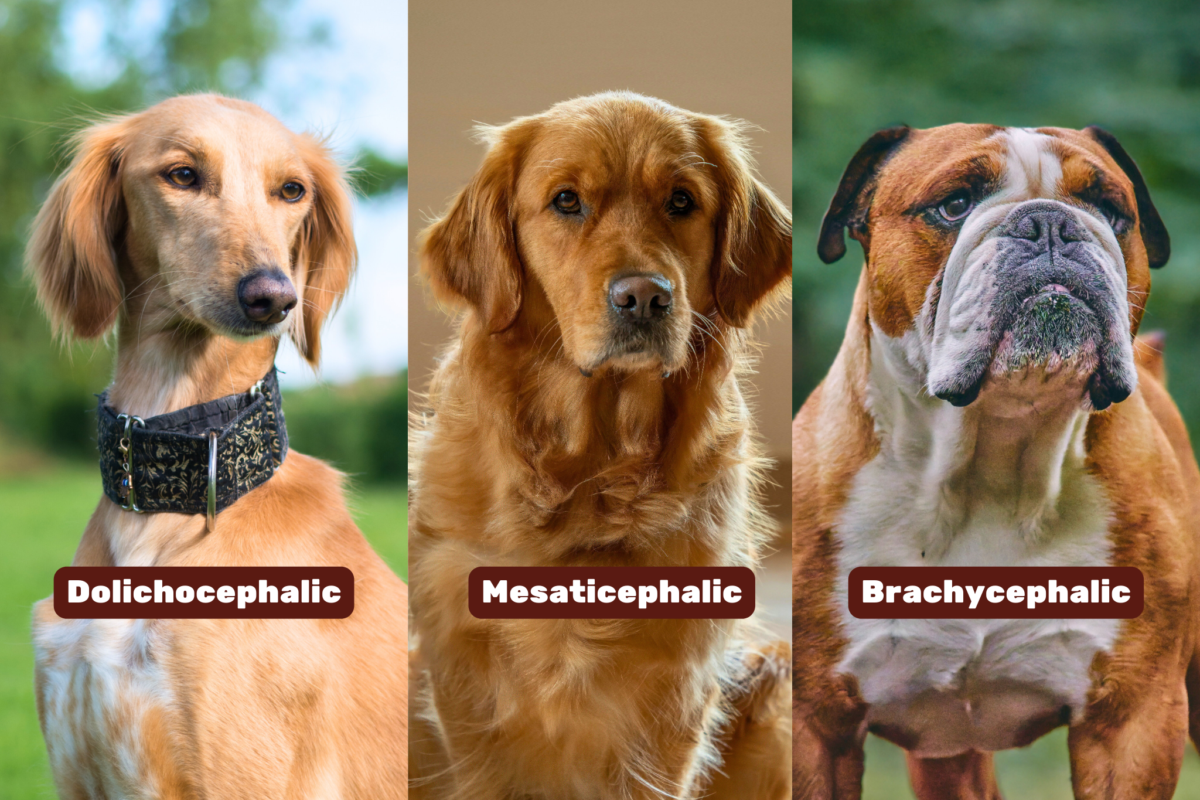
A dog’s skull shape can affect how well it breathes and cools itself during exercise. Dolichocephalic (long-nosed) dogs have longer airyways to support more effective panting and thermoregulation.
In contrast, flat-faced breeds are more likely to have difficulty breathing and regulating their body temperature during strenuous activity, limiting their exercise tolerance.
Breathing efficiency plays a greater role in exercise tolerance and endurance than in determining a dog’s maximum sprinting speed.
Can Genetics Make A Dog Faster?
Yes, and Whippets provide a fascinating example. A study of Whippet genetics found that some Whippets inherit a genetic mutation that increases muscle mass and can improve racing performance. The mutation affects myostatin, a protein that normally limits muscle growth.
10 Slowest Dog Breeds
Not every dog is built to break speed records, and some seem perfectly happy letting the faster pups do all the running. Based on the AKC’s lifetime Fast CAT rankings, these breeds aren’t exactly in a hurry to cross the finish line.
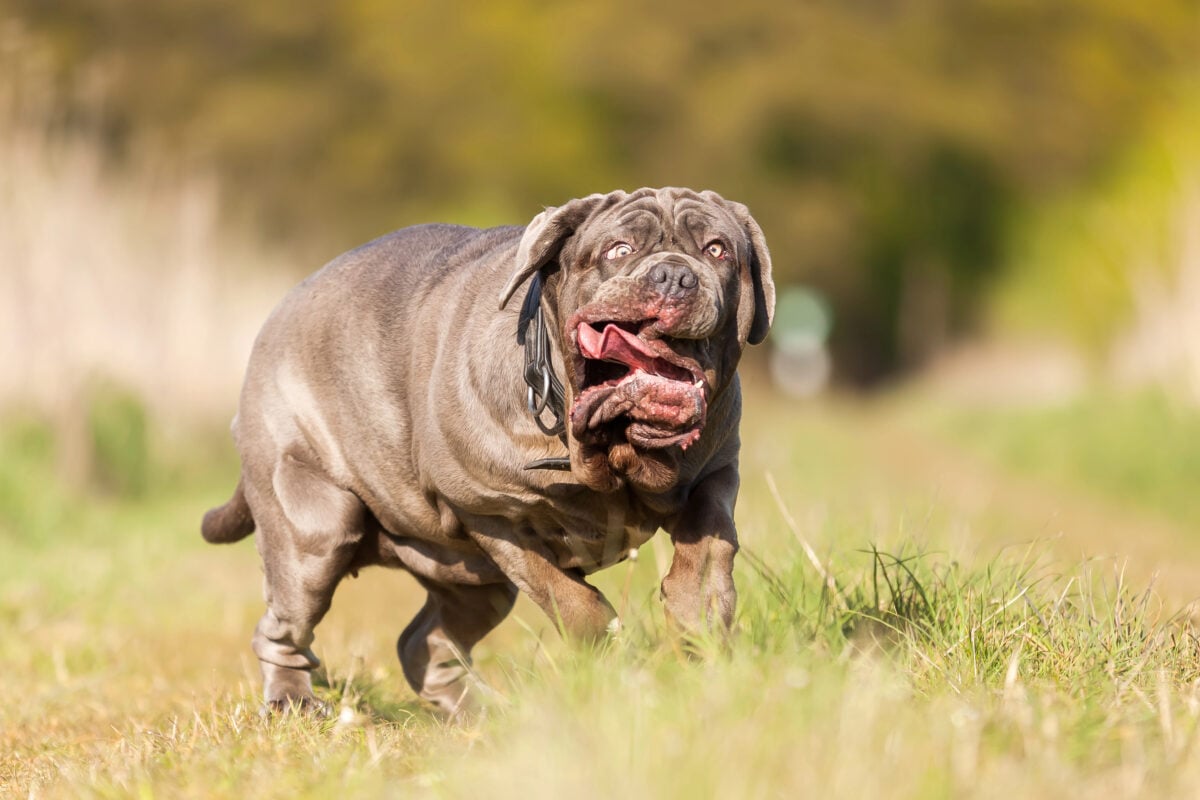
- Neapolitan Mastiff
- English Toy Spaniel
- Japanese Chin
- Pekingese
- Bolognese
- Skye Terrier
- Spanish Mastiff
- Affenpinscher
- Sealyham Terrier
- Cesky Terrier
Notice anything these breeds have in common? Many have short legs, compact bodies or flat faces, while others are massive, heavy-built dogs.
Shorter strides, extra body weight, and breathing limitations can all make high-speed running more challenging.
Should I Run With My Dog?
If your dog loves to run, you might have a great jogging partner on your hands. But being fast doesn’t necessarily mean a dog is suited for long-distance running. Breed, age, fitness and overall health all play a role.
Some dogs, particularly athletic breeds like Vizslas and German Shorthaired Pointers, may enjoy regular runs. Others need a more cautious approach.
- Puppies: Their bones and joints are still developing, so avoid repetitive, strenuous running until they’re physically mature. Your vet can help determine when it’s safe to start.
- Flat-faced breeds: Bulldogs, Pugs and French Bulldogs can have difficulty breathing and cooling themselves during exercise, making strenuous running especially risky.
- Senior dogs: Arthritis, reduced stamina and other age-related conditions may make running uncomfortable. Some older dogs can still enjoy gentle exercise, depending on their health.
- Overweight or out-of-shape dogs: Start with short walks and gradually build fitness before attempting longer runs.
For healthy adult dogs, begin with short, easy jogs and gradually increase the distance. Bring water, avoid hot pavement and pay attention to signs of fatigue.
If your dog starts lagging behind, limping or panting heavily, it’s time to stop. Difficulty breathing, weakness, confusion or collapse can indicate a medical emergency and require immediate veterinary attention.
Frequently Asked Questions
Still curious about how fast dogs can run? Here are answers to a few more common questions about canine speed, sprinting, and how running ability changes with age.
Don’t see your question? Respond in the comments, and we’ll get back to you!
Are Puppies Slower Than Adult Dogs?
Puppies can be surprisingly quick, especially when they’re racing around the house during a case of the zoomies. However, their growing muscles, bones, and joints aren’t ready for the same speed or endurance as a fully developed adult dog.
Most dogs become stronger and more coordinated as they mature, although the timeline varies by breed and size. Puppies should stick to age-appropriate play and short bursts of activity rather than long runs or intense exercise sessions.
Are Small Dogs Faster Than Big Dogs?
You might expect bigger dogs to be faster because they have longer legs, but size alone doesn’t determine speed. Body proportions, muscle development, and breed history all play important roles.
Small, athletic breeds can be remarkably fast, while some much larger dogs aren’t built for sprinting. The fastest runners tend to combine efficient movement with a build suited to speed.
How Long Can A Dog Run At Full Speed?
Most dogs can only maintain their maximum sprinting speed for a short distance. Sprinting requires intense bursts of energy, and dogs naturally slow down as they tire.
How long a dog can keep running depends on its breed, conditioning, age, and the weather. Endurance breeds can travel much farther at a moderate pace than sprinting breeds can at top speed.
Can Dogs Run Faster Than Cats?
It depends on the dog! Domestic cats can reach roughly 30 mph in short bursts, making them faster than many dog breeds.
However, the fastest dogs, including Greyhounds and Whippets, can outrun a typical house cat. Both animals are built for quick bursts of speed rather than maintaining their maximum pace over long distances.
At What Age Are Dogs The Fastest?
Dogs generally reach their greatest athletic potential after physical maturity, but there’s no single peak age for every breed.
Smaller breeds tend to mature earlier than larger breeds, and individual fitness, health and training also influence performance. As dogs age, their speed and stamina may gradually decline, although many healthy seniors remain surprisingly active.
Can You Train A Dog To Run Faster?
Regular exercise and appropriate conditioning can improve a dog’s fitness, strength, and running performance, but genetics and body structure still influence its natural speed potential.
Is Your Pup A Speed Runner & Escape Artist?
A dog who loves to sprint can cover a surprising amount of ground in seconds, especially if they spot a squirrel or find an opening in the backyard fence.
If your pup has a habit of taking off, understanding why dogs run away can help you prevent future escapes. A secure yard, reliable recall training and proper identification are also essential. You may also want to consider a GPS dog tracker to help locate your dog if they get loose.