When you purchase through links on our site, we may earn a commission. Here’s how it works.
The best hunting dog isn’t the most popular breed. It’s the one built for the job you actually hunt.
Table of Contents
From bird dogs that hold point to hounds that trail wounded game and retrievers that work icy water, hunting dogs are specialists first, though there are some excellent versatile breeds. This guide cuts through the noise and helps you choose the right dog for your quarry, terrain, and experience level.
Start Here: How To Choose The Right Hunting Dog
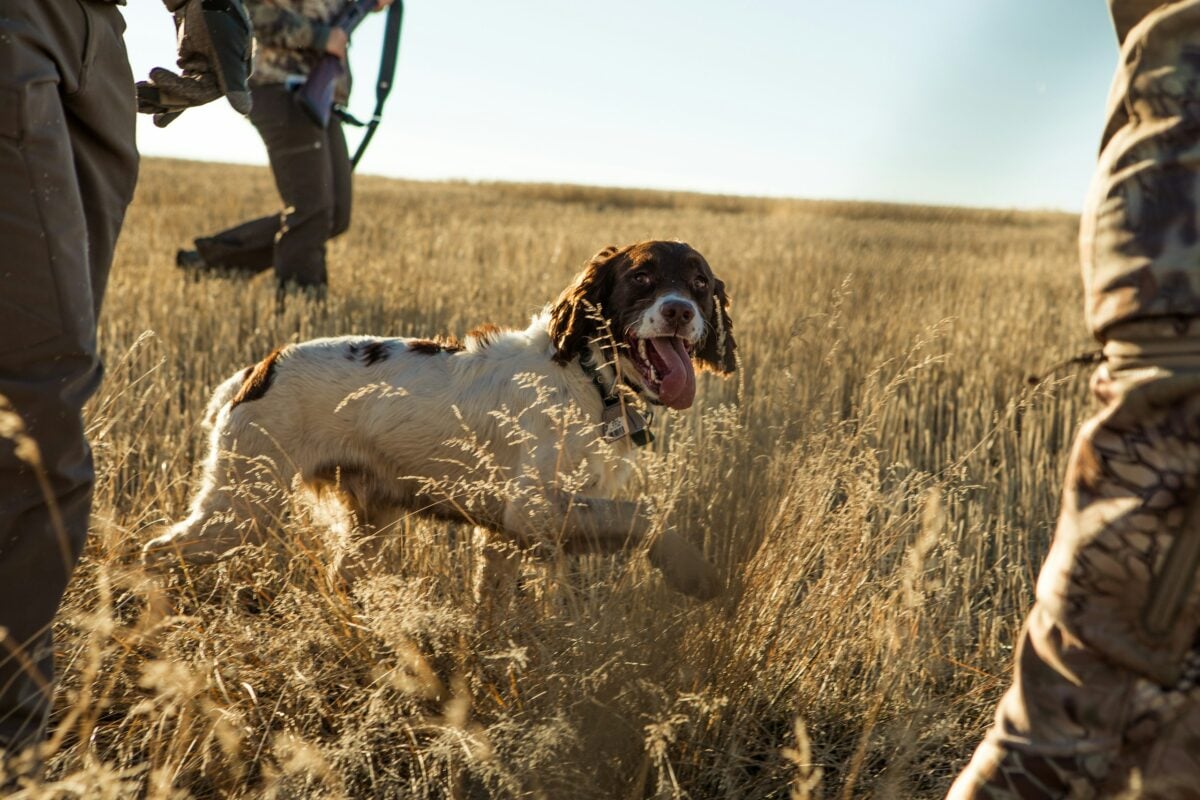
Choosing a hunting dog starts with the hunt itself, not the breed name. The right dog depends on what you hunt, where you hunt, and how you expect the dog to work in the field.
Before looking at specific breeds, get clear on these basics.
- What are you hunting? Birds, small game, and large game require very different skills.
- Where do you hunt? Open fields, dense brush, swamps, mountains, and cold water all favor different body types, coats, and working styles.
- How does the dog work? Some hunting dogs range far and work independently. Others stay close, take direction, and work within shotgun range.
- How much time can you commit? High-drive hunting dogs need regular work, training, and conditioning. A versatile or family-friendly breed may be a better fit if hunting is seasonal rather than constant.
- What is your experience level? Some breeds are more forgiving for first-time handlers.
Once you know these answers, choosing the right hunting dog becomes far simpler. The sections below break down the best breeds by the jobs they were bred to do.
The Five Main Types Of Hunting Dogs
Most hunting dogs fall into a handful of broad categories based on how they locate, pursue, and recover game. Understanding these groups makes it much easier to choose the right dog and understand why certain breeds show up in multiple sections.
- Pointers: Locate game birds and freeze in place once they catch scent, allowing hunters to approach before the bird flushes.
- Retrievers: Recover downed game after the shot, often from water or difficult terrain, using a soft mouth and strong handler focus.
- Spaniels: Work close to the hunter to flush birds from thick cover and retrieve them once downed.
- Hounds: Track or pursue game using scent or sight, often working independently to trail, tree, or bay animals over long distances.
- Terriers: Hunt vermin and small quarry up close, relying on grit and persistence to work in tight or underground spaces.
Many modern hunting breeds blur these lines, which is why some dogs appear in multiple sections throughout this guide.
12 Versatile Hunting Dogs That Do It All
These hunting dogs are built for hunters who don’t want to juggle multiple dogs for different jobs. They can point, retrieve on land or water, track wounded game, and adjust how they hunt based on terrain and conditions.
What really sets them apart is balance. They’re dependable across a wide range of hunts, making them a solid choice if your seasons, quarry, or locations change throughout the year.
1. German Shorthaired Pointer
The German Shorthaired Pointer is the gold standard for versatile hunting dogs. Bred to point, retrieve, track, and work both land and water, the GSP combines speed, stamina, and intelligence in a single, highly adaptable package.
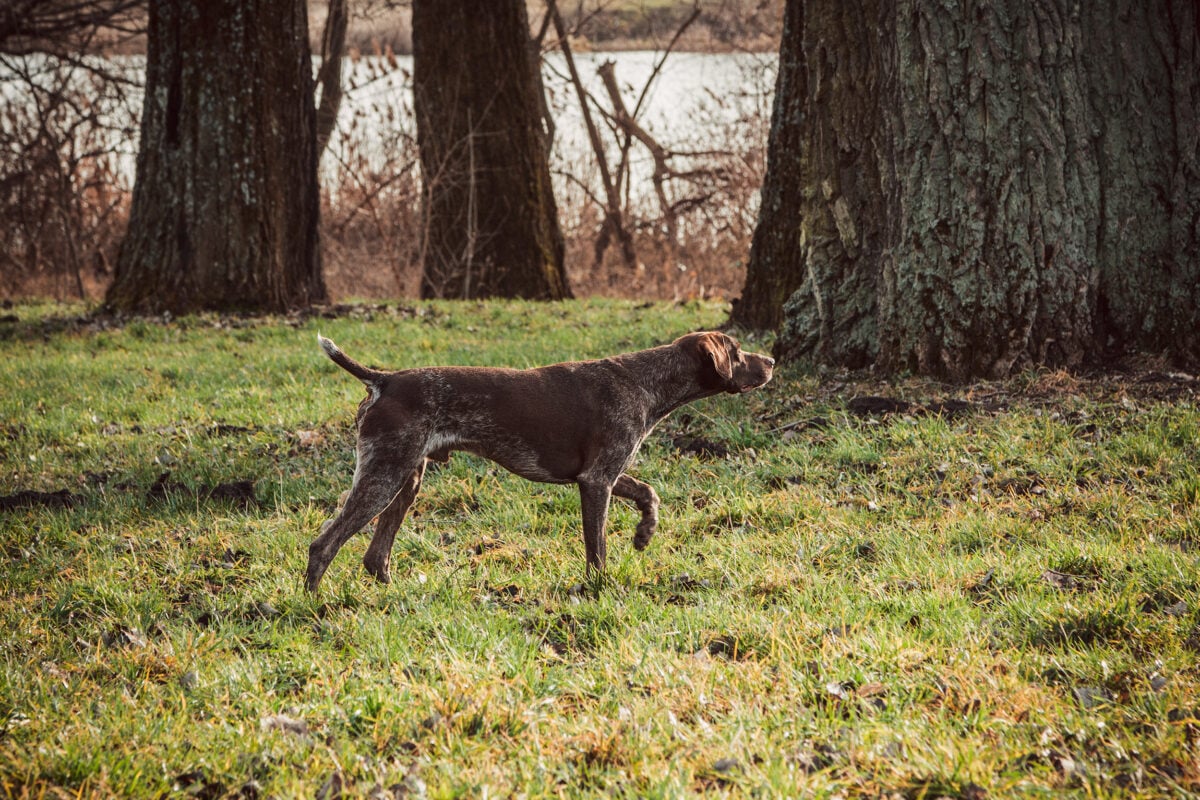
They cover ground efficiently, learn quickly, and transition easily between upland birds, waterfowl, and even blood tracking when trained properly. Their short coat makes them fast and athletic, though it offers less protection in extreme cold compared to wirehaired breeds.
Best For: Hunters who want one fast, athletic dog that can do nearly everything
2. Brittany
The Brittany is smaller and lighter than many versatile breeds, but don’t let the size fool you. These dogs are intense, quick, and highly bird-focused, excelling at upland hunting while remaining capable retrievers.
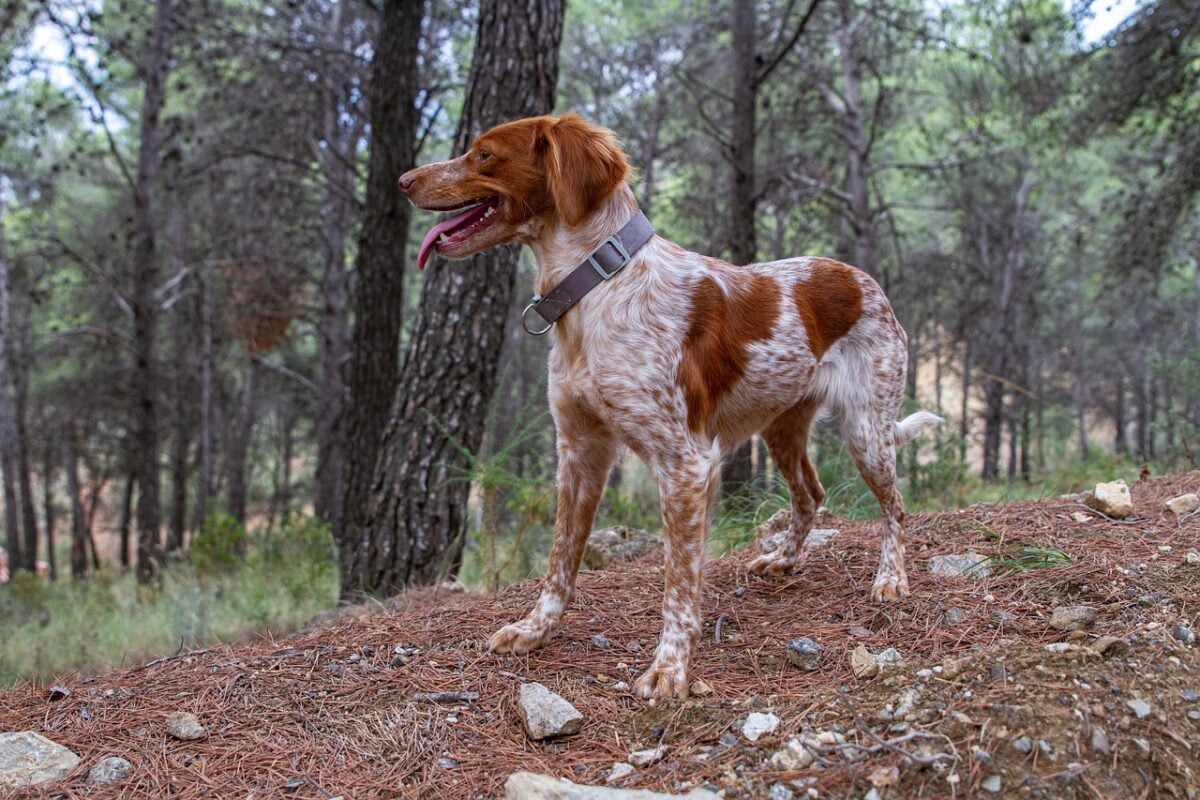
They tend to hunt closer than big-ranging pointers and are extremely responsive to their handlers. This makes them especially popular with hunters who value control, agility, and a dog that adapts easily to different terrain.
Best For: Hunters who want a compact, fast upland dog with versatility and strong handler connection
Did You Know? The Brittany was originally known as the Brittany Spaniel, but the “spaniel” was officially dropped as the breed’s pointing ability became widely recognized. Today, the Brittany primarily viewed as a pointing dog, not a flushing spaniel.
3. Spinone Italiano
The Spinone Italiano brings a very different style to the field. Instead of speed, this breed relies on an exceptional nose, methodical pace, and steady, deliberate work that shines in thick cover and difficult conditions.
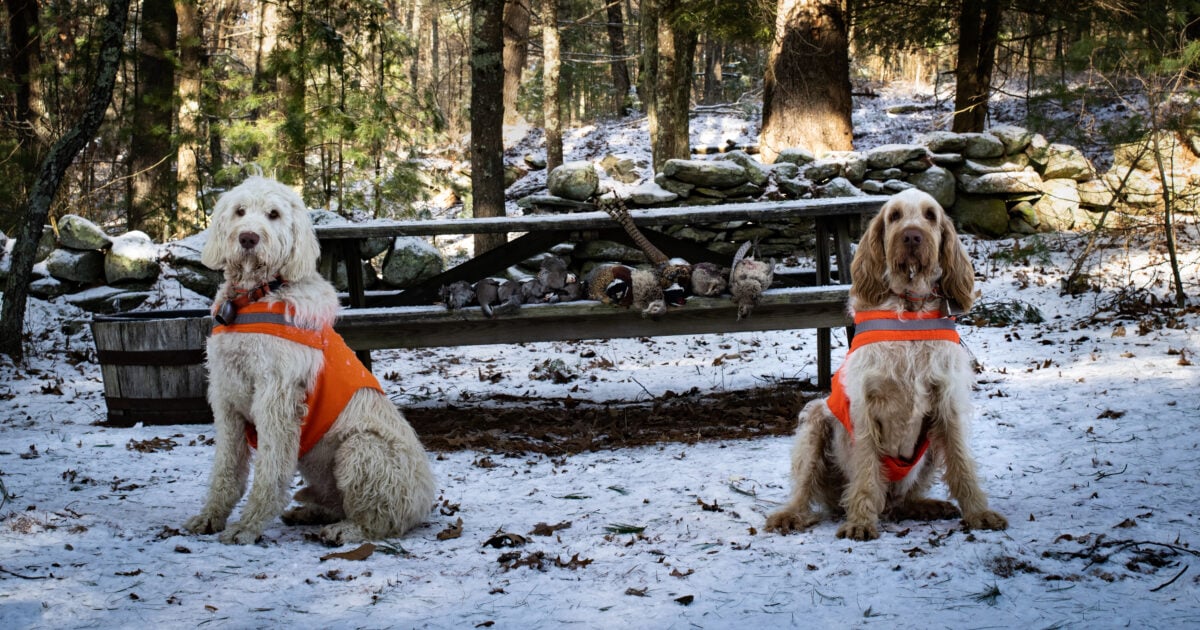
Spinoni are tough, patient, and highly cooperative. They excel at tracking wounded game and working cold weather or rough terrain, making them a favorite for hunters who prioritize reliability over flash.
Best For: Hunters who value nose, endurance, and methodical all-day performance
4. Wirehaired Pointing Griffon
Often described as one of the most versatile hunting dogs ever developed, the Wirehaired Pointing Griffon is built for all conditions. Its dense, harsh coat offers excellent protection, while its natural pointing and retrieving instincts translate well across upland and waterfowl work.
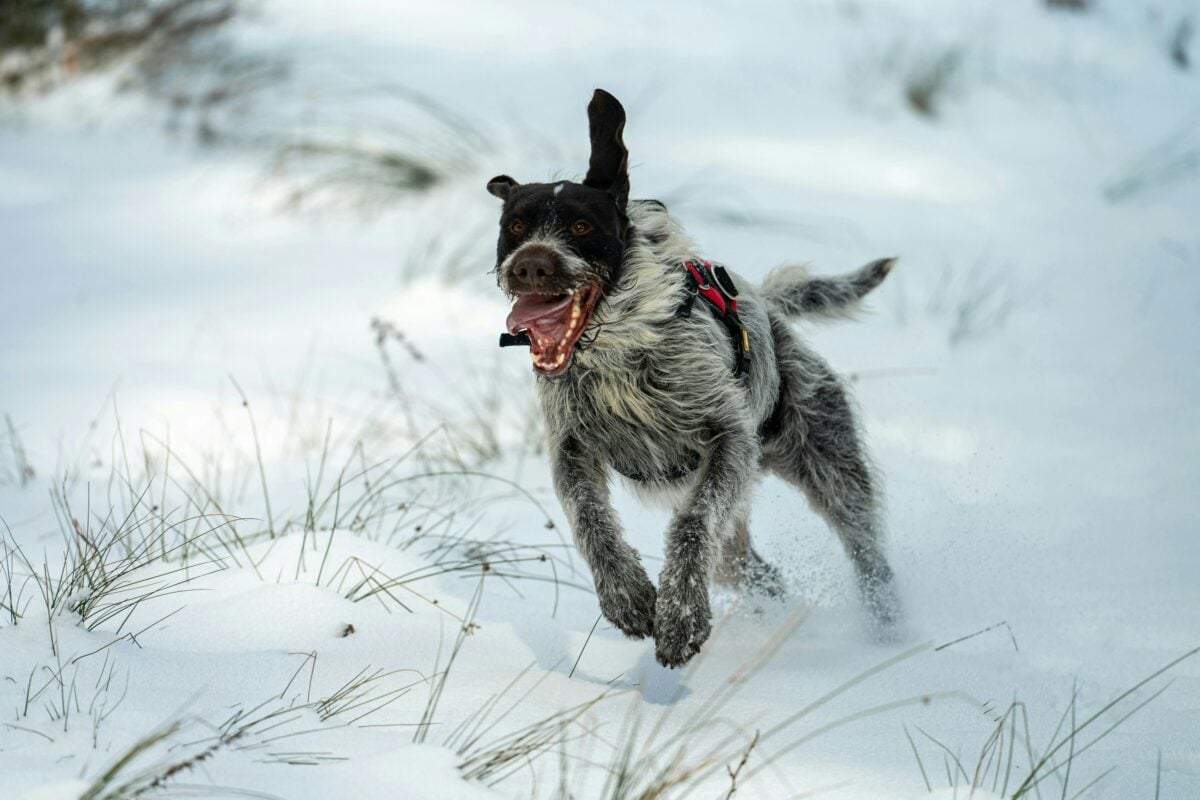
Griffons typically hunt at a moderate range and maintain close communication with their handler. They are known for consistency, intelligence, and strong problem-solving ability in the field.
Best For: Hunters who want a true all-weather, all-purpose hunting companion
Closer Worker: The Wirehaired Pointing Griffon is often considered versatile, but it naturally works closer than many pointing breeds. That tighter range makes it popular with hunters who want a cooperative dog.
5. Pudelpointer
The Pudelpointer was intentionally bred to combine strong pointing ability with superior water work and tracking. This results in a rugged, focused dog that performs exceptionally well in mixed hunting environments.
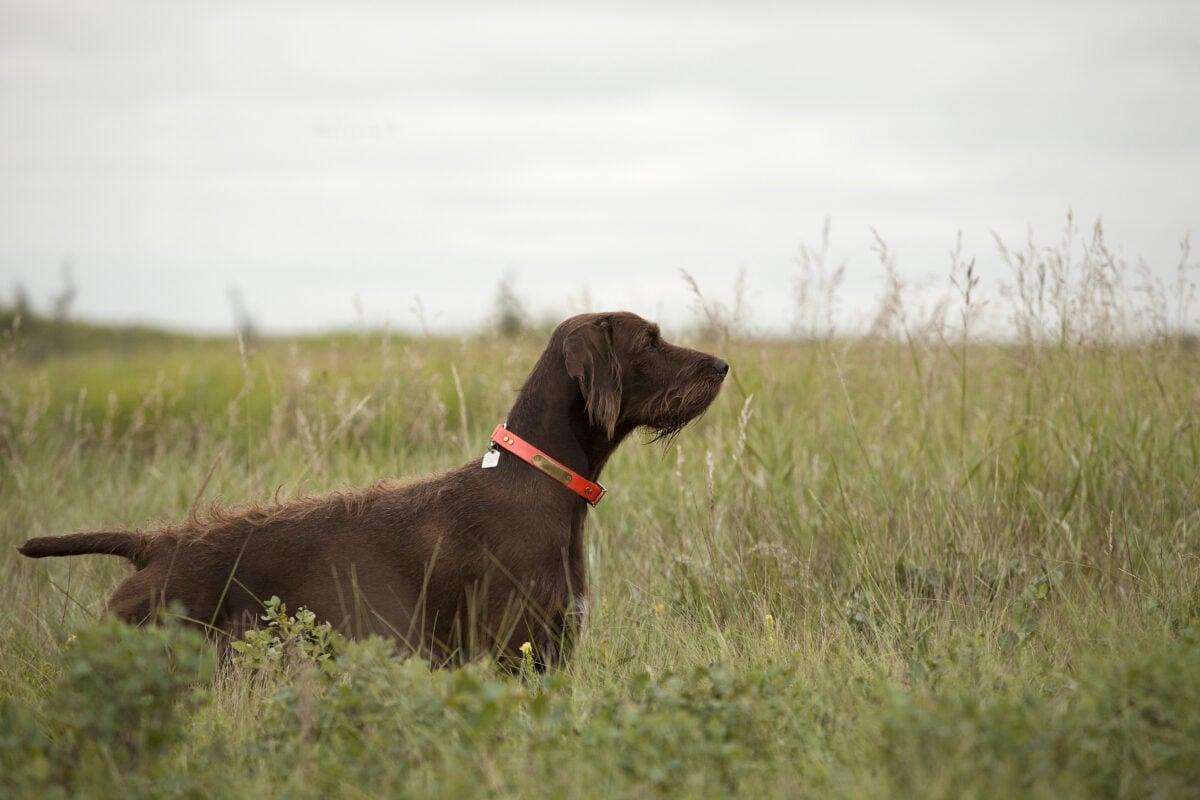
They tend to be more intense and driven than some other versatile breeds, with a strong work ethic and excellent trainability. Their wire coat offers protection without excessive grooming needs.
Best For: Serious hunters who want strong pointing, water retrieves, and tracking in one dog
6. Small Munsterlander
The Small Munsterlander is a highly capable European versatile dog that excels at pointing, retrieving, and tracking. Though less common in North America, it has earned a reputation for precision and intelligence in the field.
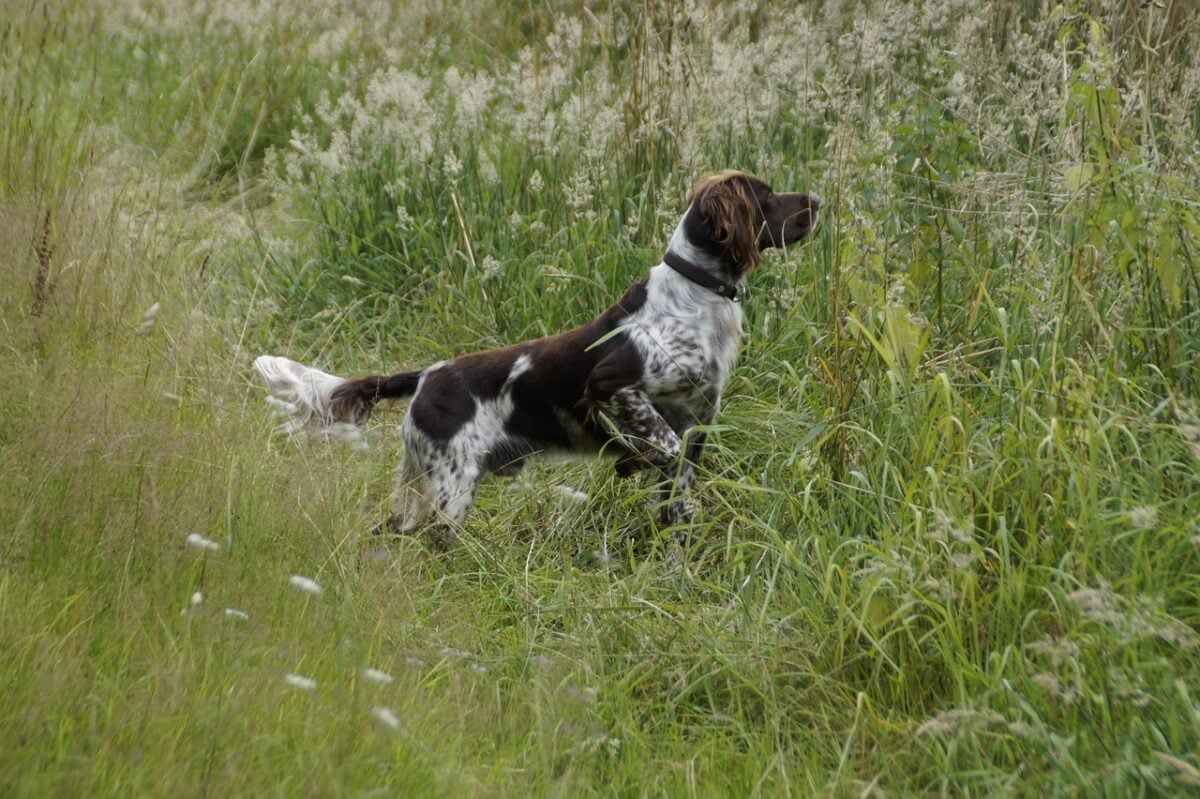
These dogs typically work at a medium range and show excellent bird handling and cooperation. Their longer coat provides moderate weather protection without significantly slowing them down.
Best For: Hunters who want a balanced, highly trainable versatile dog with strong tracking ability
7. Large Munsterlander
The Large Munsterlander offers similar versatility to its smaller counterpart but in a larger, more powerful frame. Known for strong pointing instincts and dependable retrieves, this breed performs well across upland and water work.
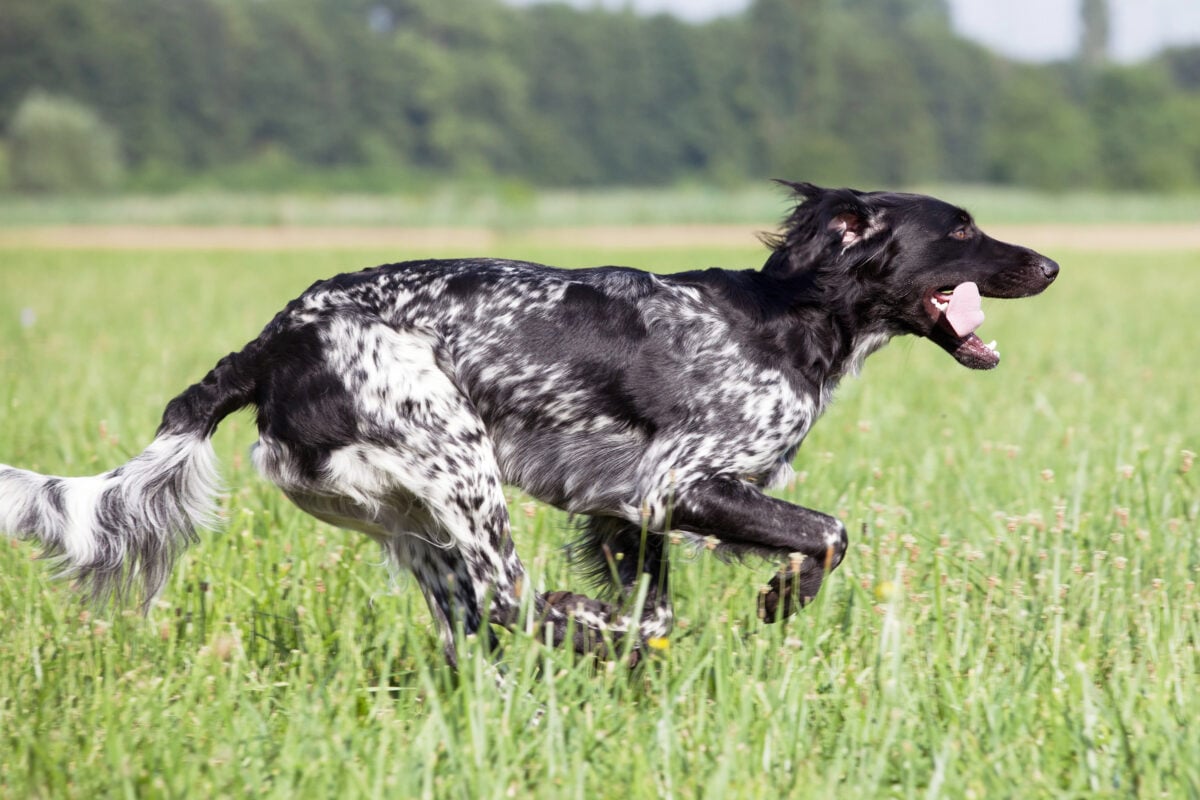
They tend to have a slightly wider range and greater physical presence, making them well-suited for open terrain and longer hunts. Their temperament is steady and cooperative when properly trained.
Best For: Hunters who want Munsterlander versatility in a larger, more powerful dog
8. Vizsla
The Vizsla is a sleek, athletic hunter known for speed, responsiveness, and style. Originally bred as an all-around hunting dog, it excels at upland work and is a capable retriever when properly trained.
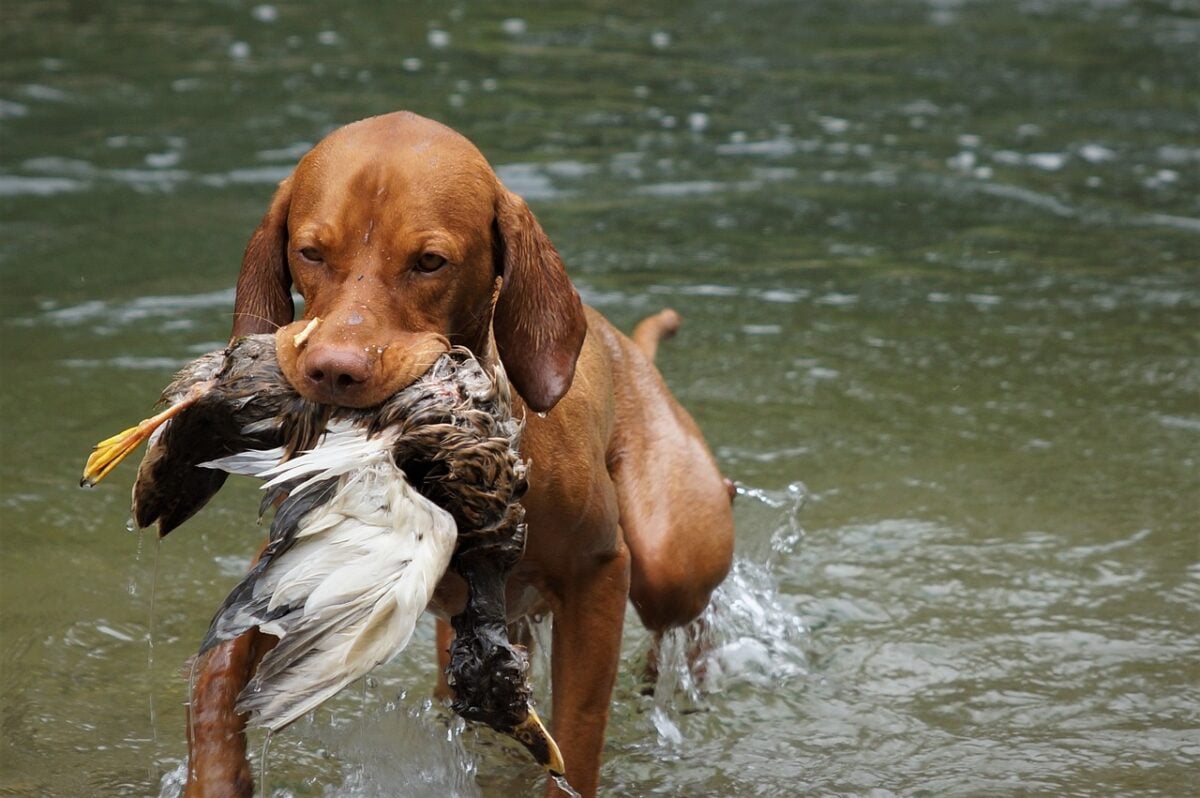
Vizslas often hunt close to medium range and form very strong bonds with their handlers. Their short coat limits cold tolerance, but their intelligence and drive make them adaptable across many hunting situations.
Best For: Hunters who want a fast, close-working versatile dog with strong handler focus
9. Weimaraner
Weimaraners are powerful, wide-ranging hunters with strong pointing instincts and impressive endurance. Historically used for both upland birds and larger game, they bring intensity and presence to the field.
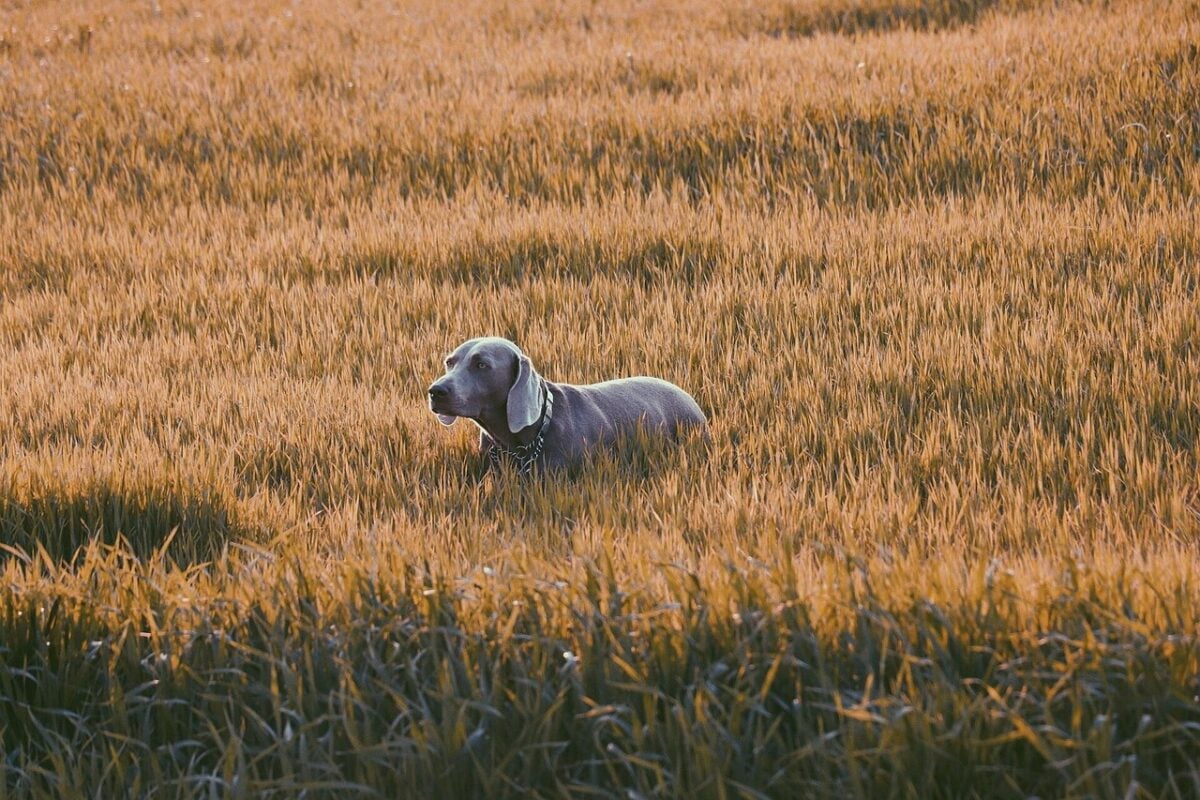
When trained well, they are capable retrievers and adaptable hunters, though their size and energy level require experienced handling. They excel in open terrain where their range and speed can shine.
Best For: Hunters who want a big-running, high-energy versatile dog
Originally A Big Game Dog: Weimaraners were originally bred for large game hunting before transitioning to birds. That history explains their speed, independence, and strong prey drive in the field.
10. Stabyhoun
The Stabyhoun is one of the rarest versatile hunting breeds, but it is highly respected where it is known. This Dutch breed was developed to hunt, retrieve, track, and even serve as a farm dog.
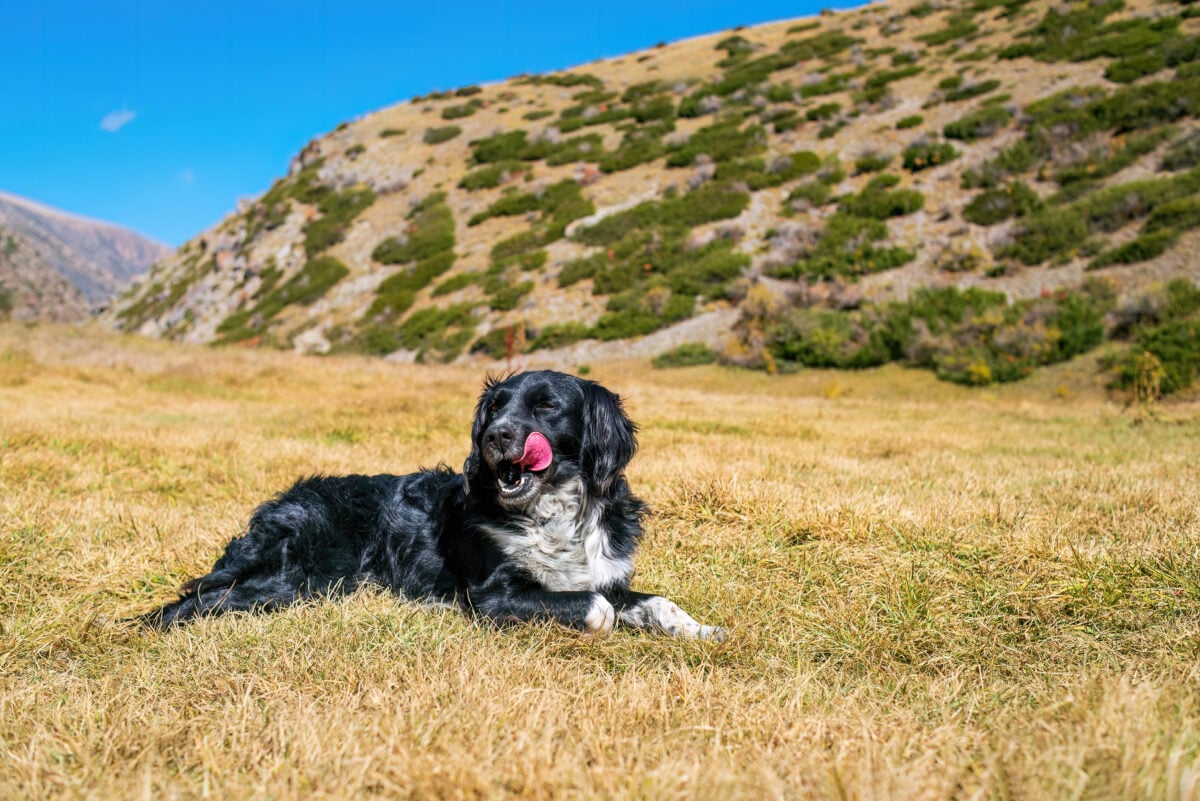
They are methodical, intelligent, and extremely cooperative, with strong natural tracking ability. While not flashy, they are dependable and adaptable in a wide range of hunting scenarios.
Best For: Farmers who want a dog that hunts independently, moles and rabbits
11. Irish Setter
The Irish Setter is known for speed, elegance, and range. While often associated with upland bird hunting, properly trained Irish Setters can retrieve and adapt to varied hunting roles.
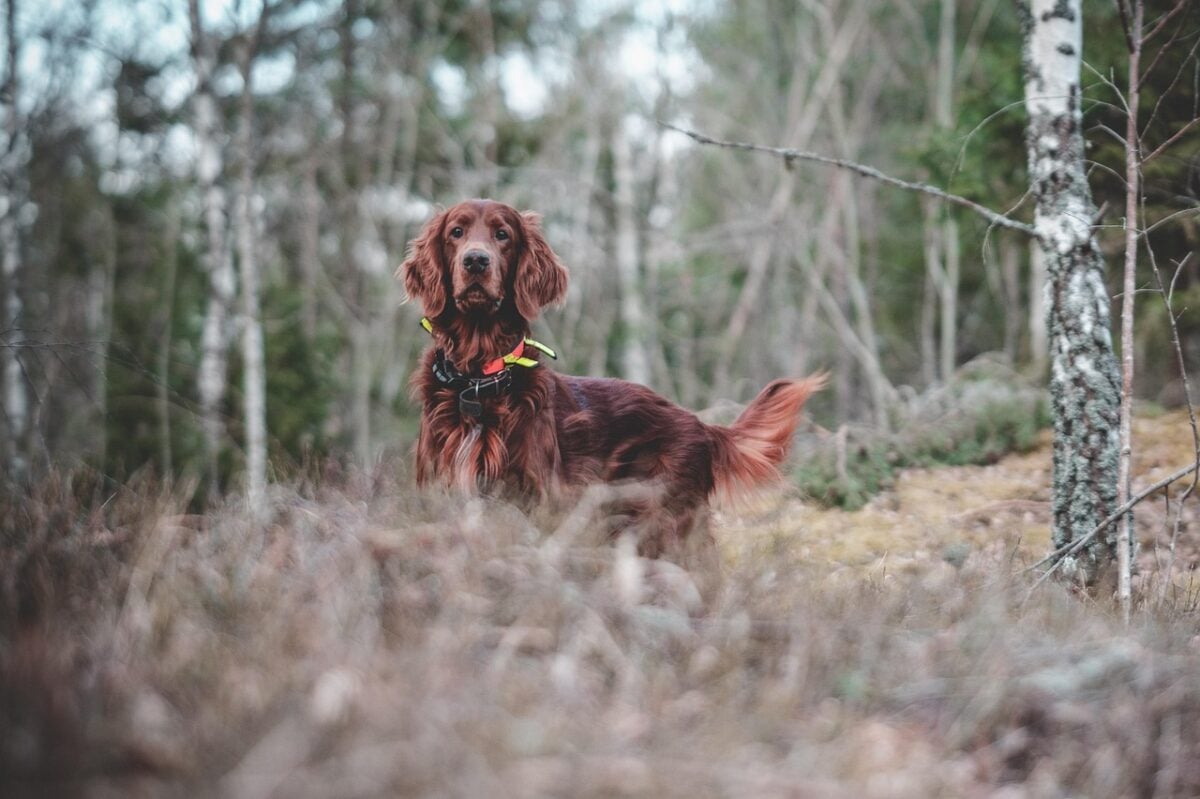
They excel in open fields and large tracts of land, covering ground quickly and locating birds with enthusiasm. Their long coat requires more maintenance but offers some protection in cooler weather.
Best For: Hunters who want speed, range, and classic upland style
12. Irish Red & White Setter
The Irish Red & White Setter is generally more hunting-focused than the modern Irish Setter. It offers strong pointing instincts, solid retrieving ability, and a slightly more methodical pace.
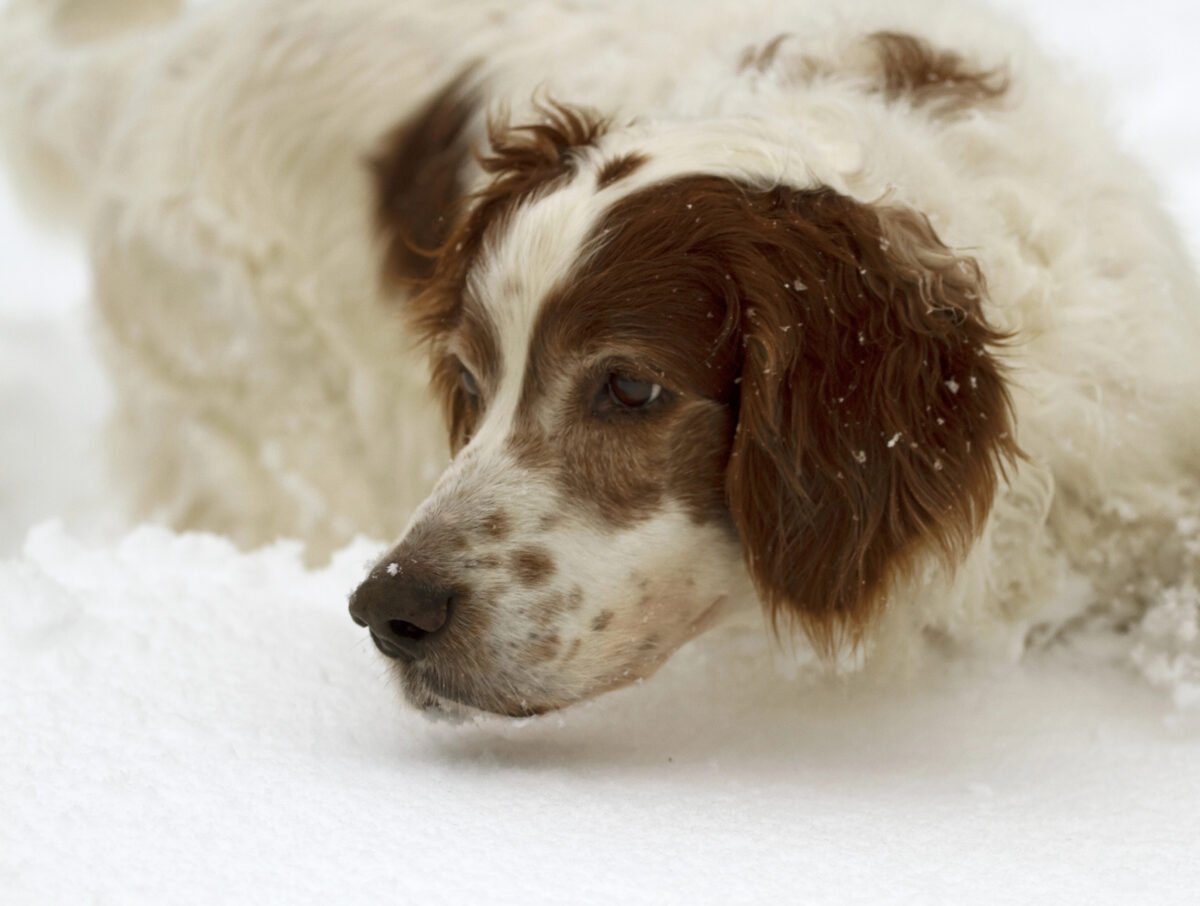
These dogs balance speed with control and tend to work well with their handlers. Their versatility and steadier temperament have made them increasingly popular among serious upland hunters.
Best For: Hunters who want setter speed with a more traditional, versatile
More Versatile Hunting Dogs
The North American Versatile Hunting Dog Association (NAVHDA) recognizes 35 different versatile hunting dog breeds, including these less common breeds:
- Auvergne Pointer
- Blue Picardy Spaniel
- Bracco Italiano
- Braque du Bourbonnais
- Braque Francais Pyrenean
- Braque Saint-Germain
- Cesky Fousek
- Drentse Patrijshond
- Pont-Audemer Spaniel
- Saint-Usuge Spaniel
- French Spaniel
- German Longhaired Pointer
- Spanish Pointer
- Picardy Spaniel
- Portuguese Pointer
- Slovakian Wirehaired Pointer
- Stichelhaar
- Wirehaired Vizsla
Popular Hunting Dog Comparison Chart (Quick Field Reference)
This chart compares popular hunting breeds based on how they typically hunt in real-world conditions. Use it to spot differences in range, speed, and tracking strength rather than to “rank” one breed over another.
| Breed | Primary Role | Typical Range | Speed | Tracking Strength | Best Terrain |
|---|---|---|---|---|---|
| American Foxhound | Trail | Very wide | Fast | Strong | Open woods, rolling farmland, mixed forest |
| Beagle | Trail | Close | Moderate | Strong | Thick brush, briars, dense cover, small woodlots |
| Bluetick Coonhound | Trail/Tree | Wide | Moderate | Strong | Forests, swamps, rugged wooded terrain |
| Boykin Spaniel | Flush/Retrieve | Close | Moderate | Moderate | Swamps, marshes, tight cover, flooded timber |
| Brittany | Point | Medium | Fast | Moderate | Mixed fields, light brush, farmland edges |
| English Setter | Point | Wide | Fast | Moderate | Open fields, grasslands, rolling upland terrain |
| English Springer Spaniel | Flush/Retrieve | Close | Fast | Moderate | Dense cover, hedgerows, wetlands |
| German Shorthaired Pointer | Point / Retrieve | Wide | Fast | Moderate | Open fields, farmland, mixed terrain |
| German Wirehaired Pointer | Point / Retrieve | Wide | Moderate | Strong | Rough cover, brush, cold or harsh terrain |
| Labrador Retriever | Retrieve | Close-Medium | Moderate | Moderate | Water, marshes, flooded fields, mixed cover |
| Treeing Walker Coonhound | Trail/Tree | Wide | Fast | Strong | Forests, hills, mixed woodland |
| Vizsla | Point | Medium | Fast | Moderate | Open fields, light cover, rolling terrain |
| Weimaraner | Point / Track | Wide | Fast | Moderate | Open woods, large fields, big running ground |
| Wirehaired Pointing Griffon | Wire / Harsh | Medium | Moderate | Strong | Dense brush, wetlands, cold or wet terrain |
Bird Hunting Dogs (Upland & Waterfowl)
Bird hunting dogs are bred to find birds efficiently and work as part of a coordinated hunt. Depending on the job, they may locate birds and hold point, flush birds from dense cover, or retrieve downed game from land or water.
While many bird dogs fall under the “gun dog” umbrella, how they work in the field varies significantly. The sections below break down the three main types of bird-hunting dogs and the breeds that excel at each role.
5 Best Pointing Dogs For Upland Birds
Pointing dogs are bred to locate upland birds and freeze in place once they catch scent, allowing the hunter to approach before the bird flushes. This controlled style makes timing and positioning far more deliberate, especially in open fields and upland terrain.
These dogs typically range wider than flushing or retrieving breeds and work more independently in the field.
While they’re best known for upland bird work, many pointing breeds are also highly versatile hunters. Several of the dogs below can retrieve waterfowl, track wounded game, and adapt to different terrain, making them strong all-around options beyond just pointing.
1. English Pointer
The Pointer is built to cover ground and find birds fast. When it hits scent, it locks up hard and holds point with intensity until you get there.
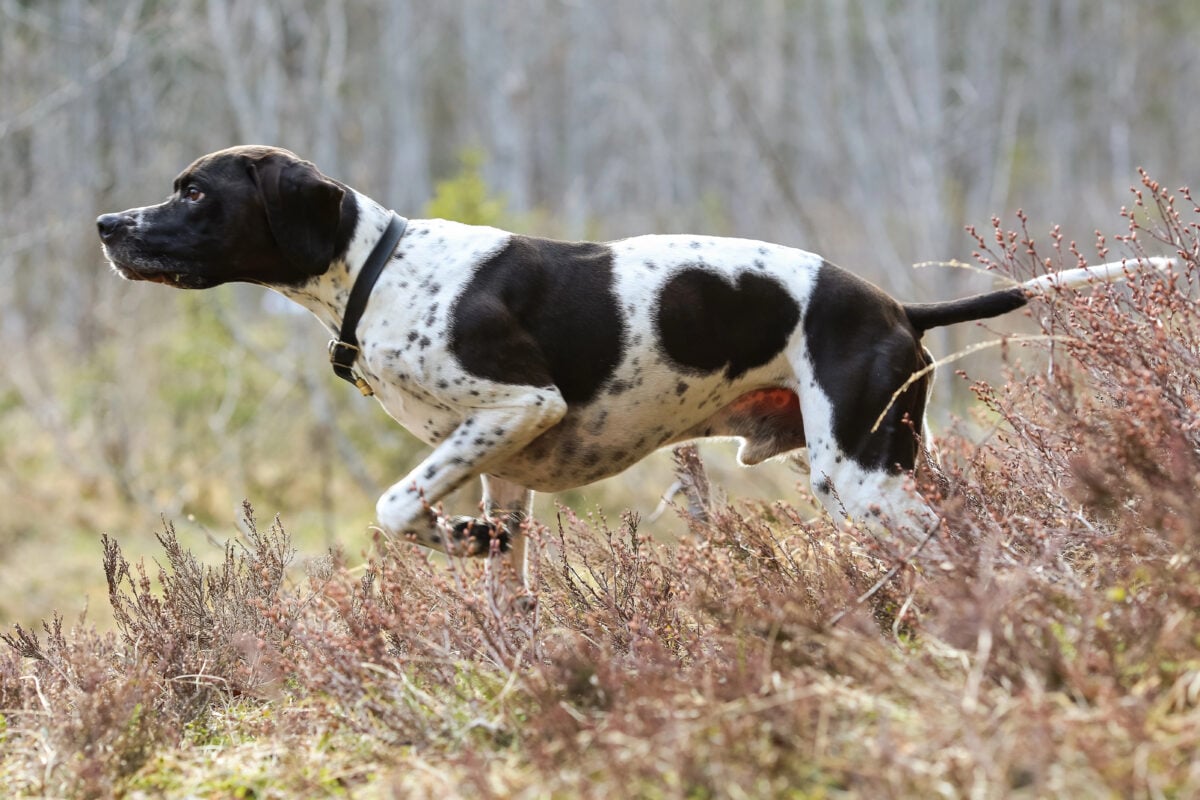
This is a wide-ranging dog that likes room to work and doesn’t need constant direction. If you’re comfortable letting a dog hunt ahead, few breeds do open upland better.
Best for: Open upland terrain, pheasant and quail hunting, experienced handlers
2. German Wirehaired Pointer
The German Wirehaired Pointer is a tough, all-weather bird dog that doesn’t mind cold, water, or rough cover. Its dense coat and strong build let it keep working when conditions push other dogs out of the field.
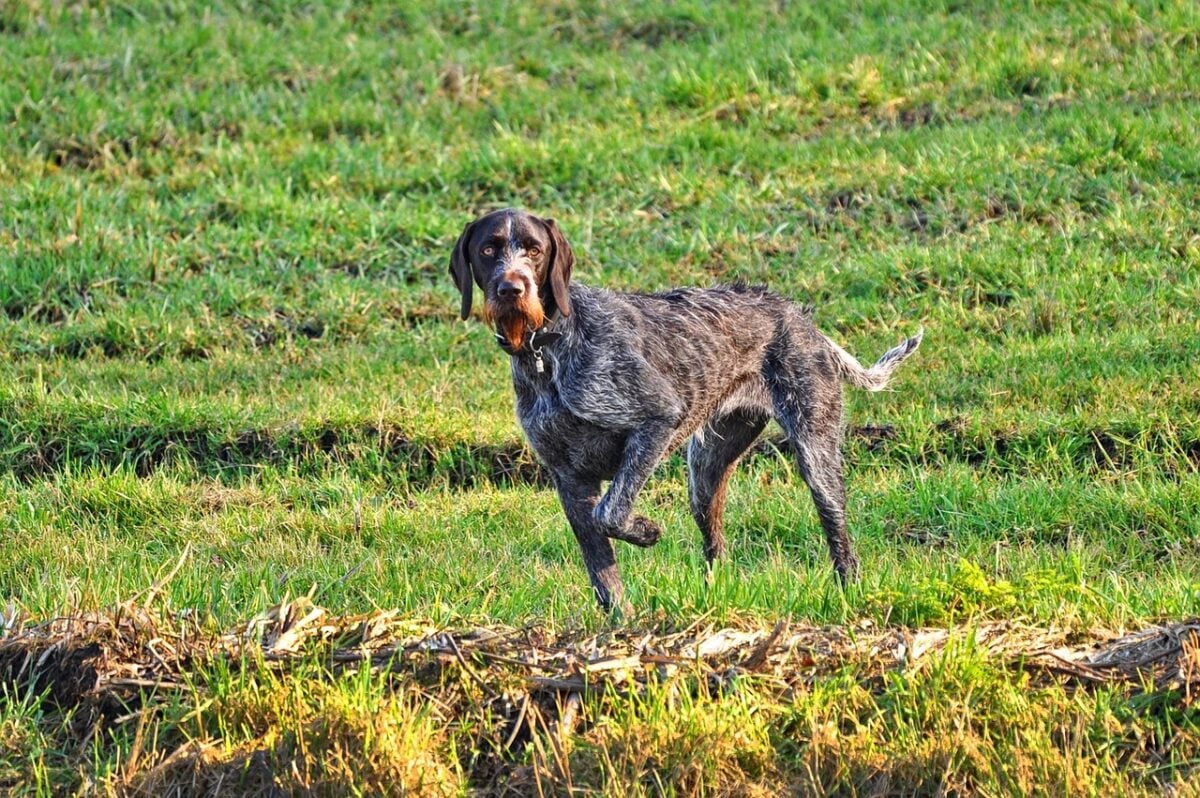
This breed has a lot of drive and needs regular work to stay sharp. When trained and handled well, it’s reliable across a wide range of upland conditions.
Best for: Cold weather, rough terrain, hunters who want durability and versatility
Pointer First: The German Wirehaired Pointer is often considered one of the best versatile hunting dogs in the world. At its core, it is an exceptional pointer first — with the range, intensity, and scenting ability that upland hunters expect.
3. Bracco Italiano
The Bracco Italiano is a big, powerful pointing dog that works at a measured pace. Instead of racing across the field, it hunts methodically, using its nose and endurance to wear down large covers.
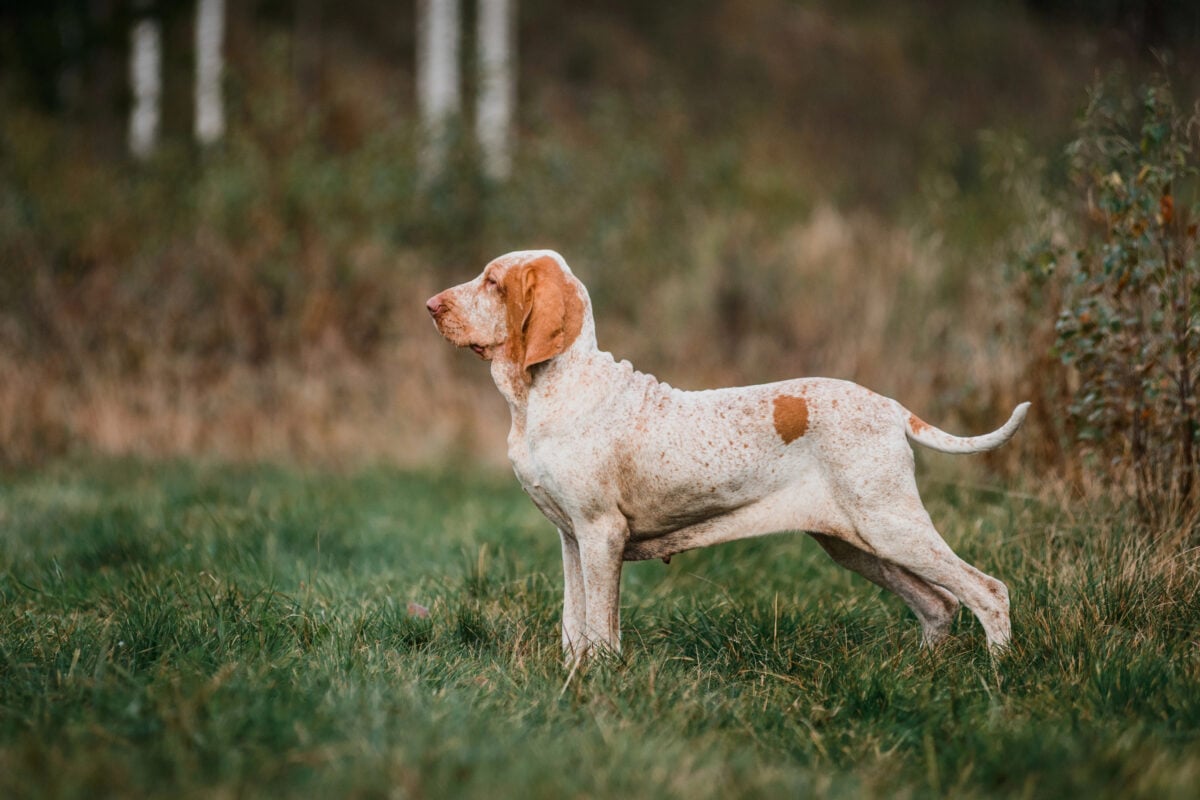
This breed stays more connected to the handler than many pointers and suits hunters who prefer a slower, more deliberate hunt rather than all-out speed.
Best for: Mixed terrain, methodical upland hunts, hunters who like a steady-working dog
4. English Setter
The English Setter is a classic upland bird dog with a smooth, flowing hunting style. It moves with purpose rather than speed, relying on a strong nose and steady pace to locate birds.
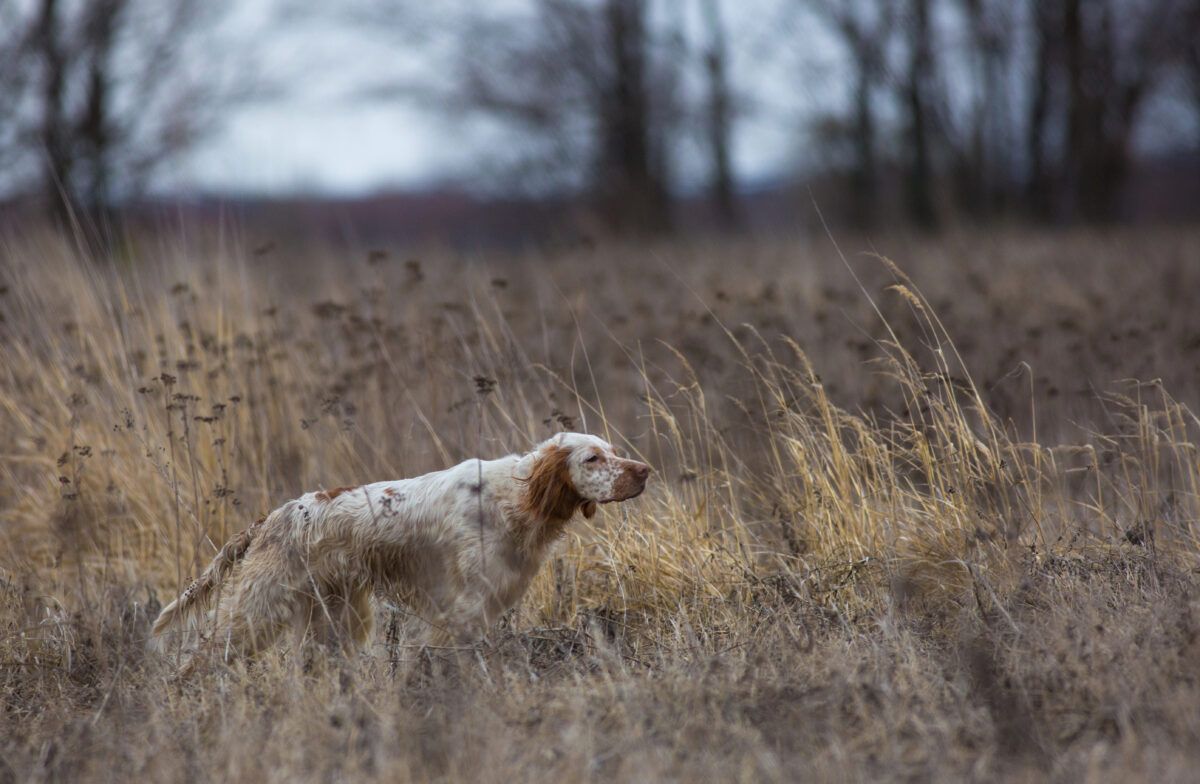
This breed tends to range more moderately than faster pointers, making it a good fit for hunters who want control without sacrificing effectiveness.
Best for: Upland birds, rolling fields, hunters who prefer a controlled range
5. Gordon Setter
The Gordon Setter is heavier and more deliberate than other setters, trading speed for strength and stamina. It handles rough ground and cooler temperatures well and keeps working when conditions get demanding.
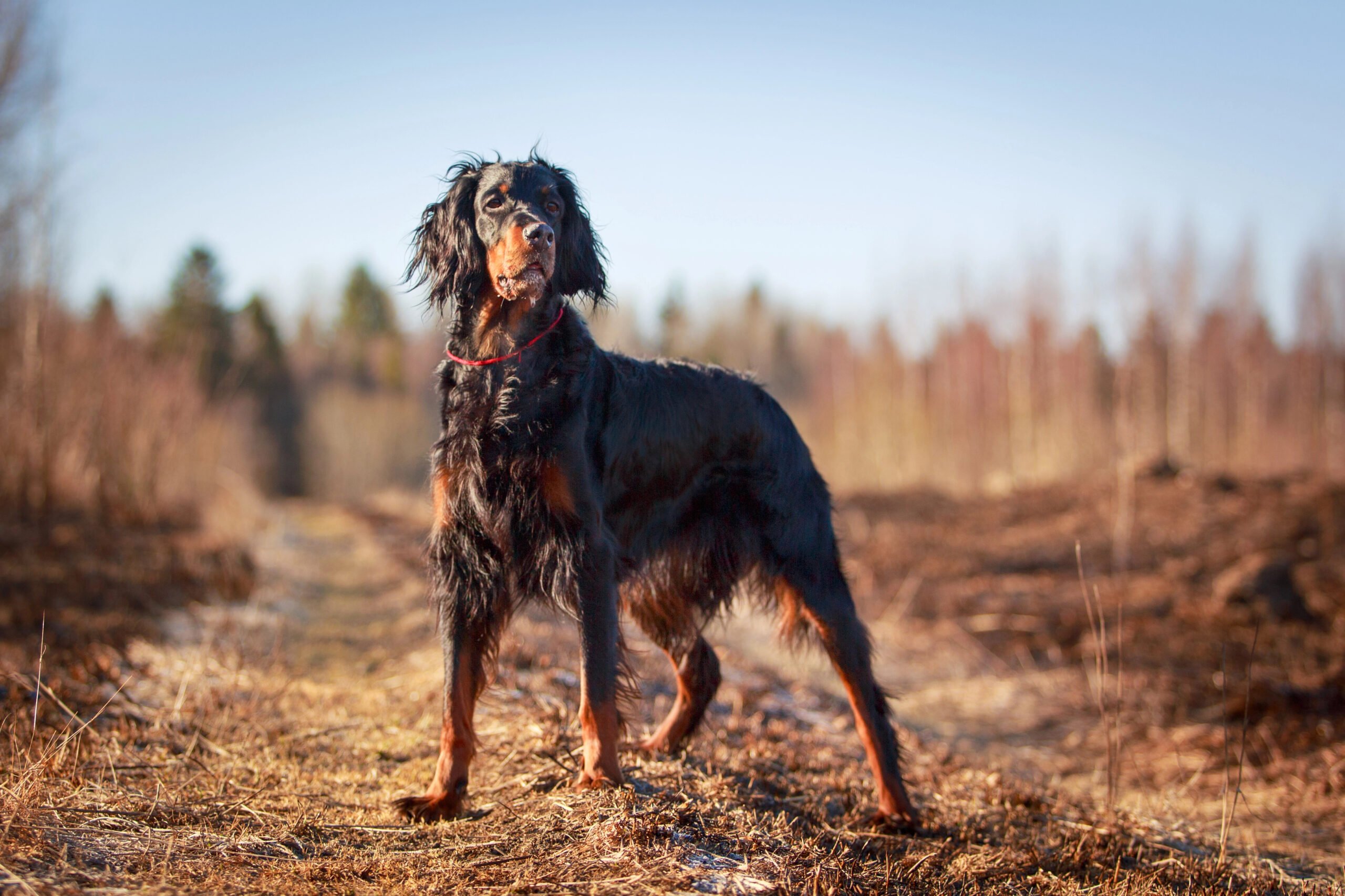
This breed usually works closer than high-ranging pointers, which appeals to hunters who like to stay more connected to their dog in the field.
Best for: Rugged upland terrain, cooler climates, closer-working hunts
5 Best Dog Breeds For Flushing Birds & Waterfowl
Flushing dogs work close to the hunter and are bred to push birds out of dense brush, grass, or cover. Their job is to force birds into flight within shotgun range.
Spaniels tend to excel in this category, though other high-prey-drive breeds can perform well under the right conditions.
1. English Springer Spaniel
The English Springer Spaniel is a classic flusher that works close and hits cover hard. Its job is simple: push birds into the air within gun range, then stay steady for the shot.
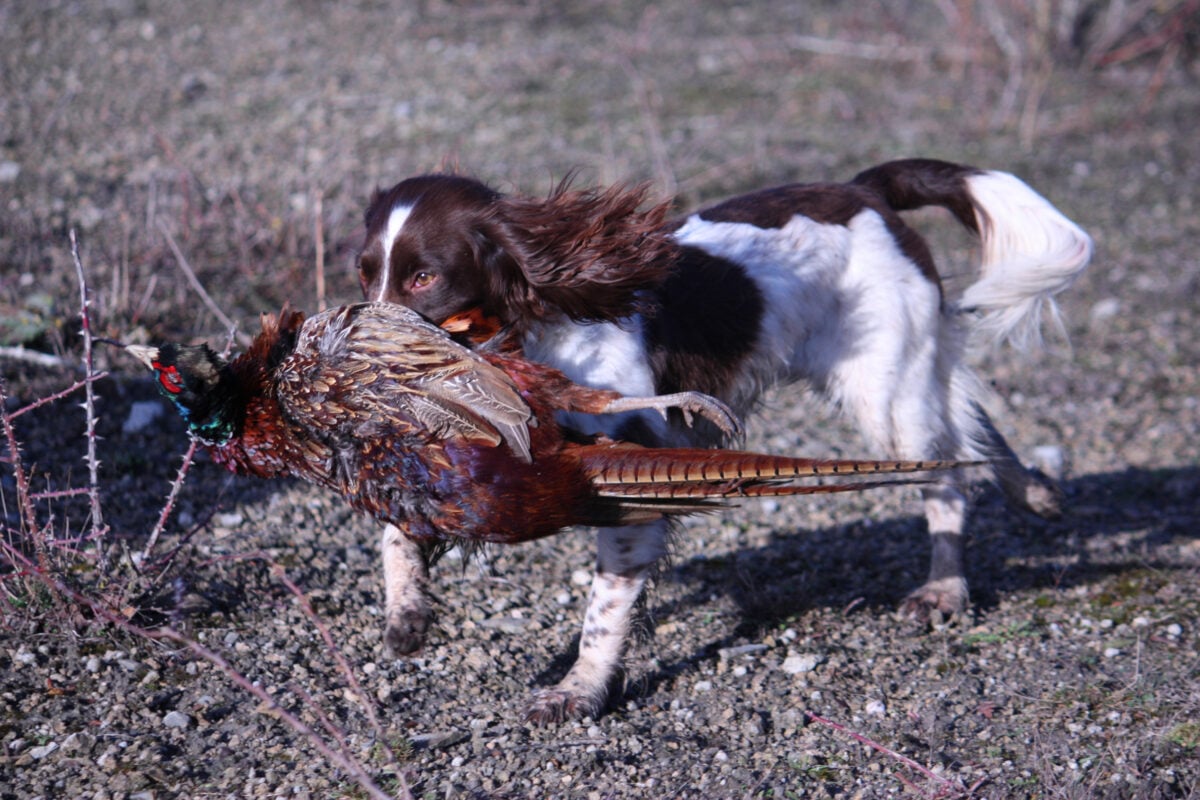
Springers hunt with enthusiasm and stay naturally connected to their handler. They shine in thick grass, brush, and mixed terrain where control matters as much as drive.
Best for: Upland birds, mixed cover, hunters who want a close-working dog
Flusher By Design: Despite occasionally holding point, English Springer Spaniels are true flushing dogs. They’re bred to work close, push birds from cover, and retrieve, not to hold birds on point.
2. Boykin Spaniel
The Boykin Spaniel was developed for swampy Southern terrain and excels where water and brush overlap. It flushes tight, retrieves confidently, and handles changing conditions with ease.
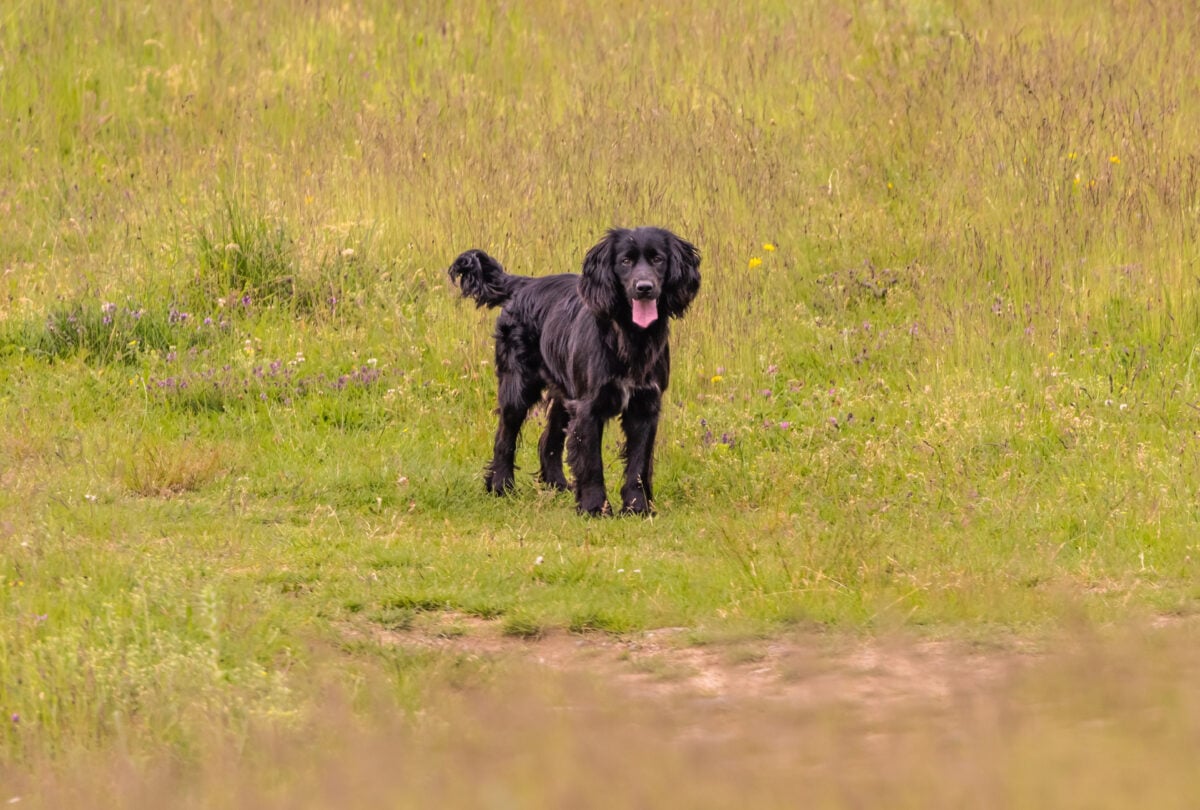
This is a compact, versatile dog that stays focused without ranging too far. It’s especially popular with hunters who split time between upland birds and waterfowl.
Best for: Waterfowl, dense cover, smaller hunting areas
American-Bred: The Boykin Spaniel was developed in the U.S. specifically for Southern swamps and tight cover, making it one of the few American-origin flushing breeds.
3. American Water Spaniel
The American Water Spaniel is a tough, all-weather flusher built for cold water and rough footing. It pushes birds out of cover and transitions naturally into retrieving once the shot is fired.
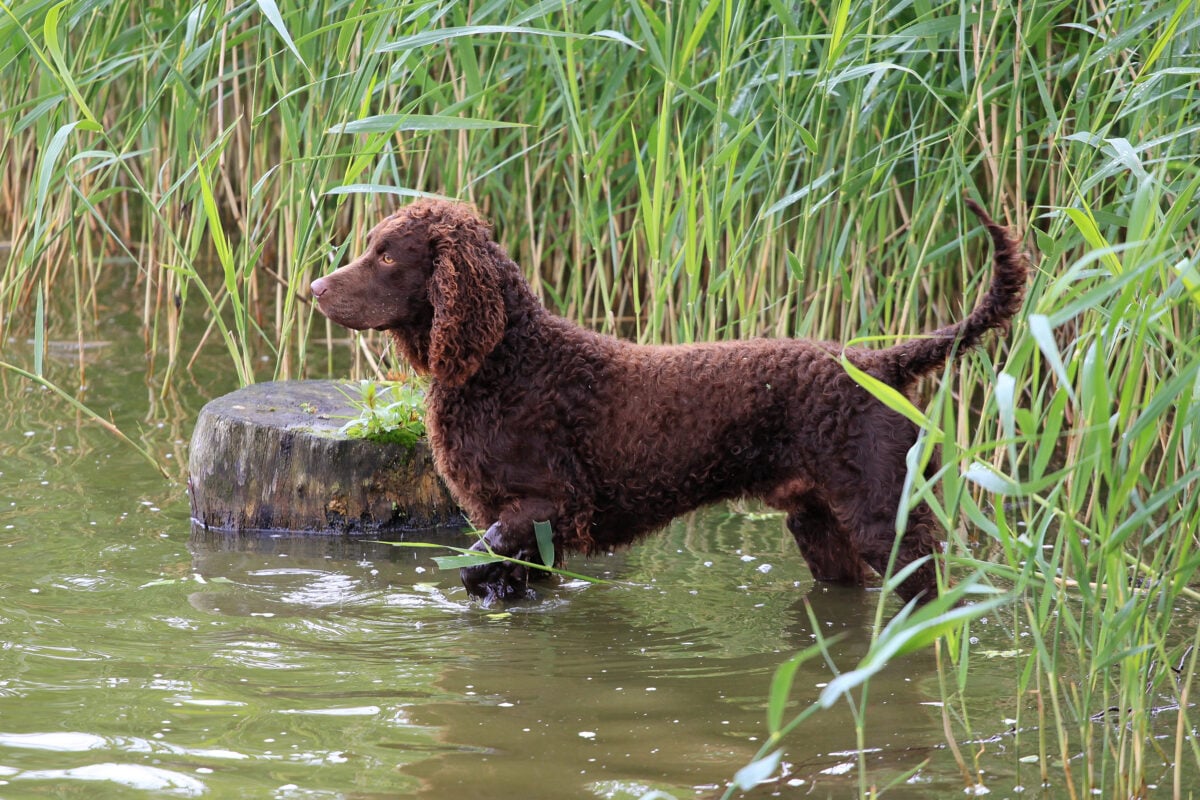
This breed works close and doesn’t waste energy, making it well-suited for long days in marshes or along rivers. It’s less common, but highly capable in the right hands.
Best for: Waterfowl hunting, cold climates, marsh and river terrain
4. English Cocker Spaniel
The English Cocker Spaniel is small, fast, and relentless in the field. It flushes aggressively, dives into thick cover, and keeps pressure on birds that try to run.
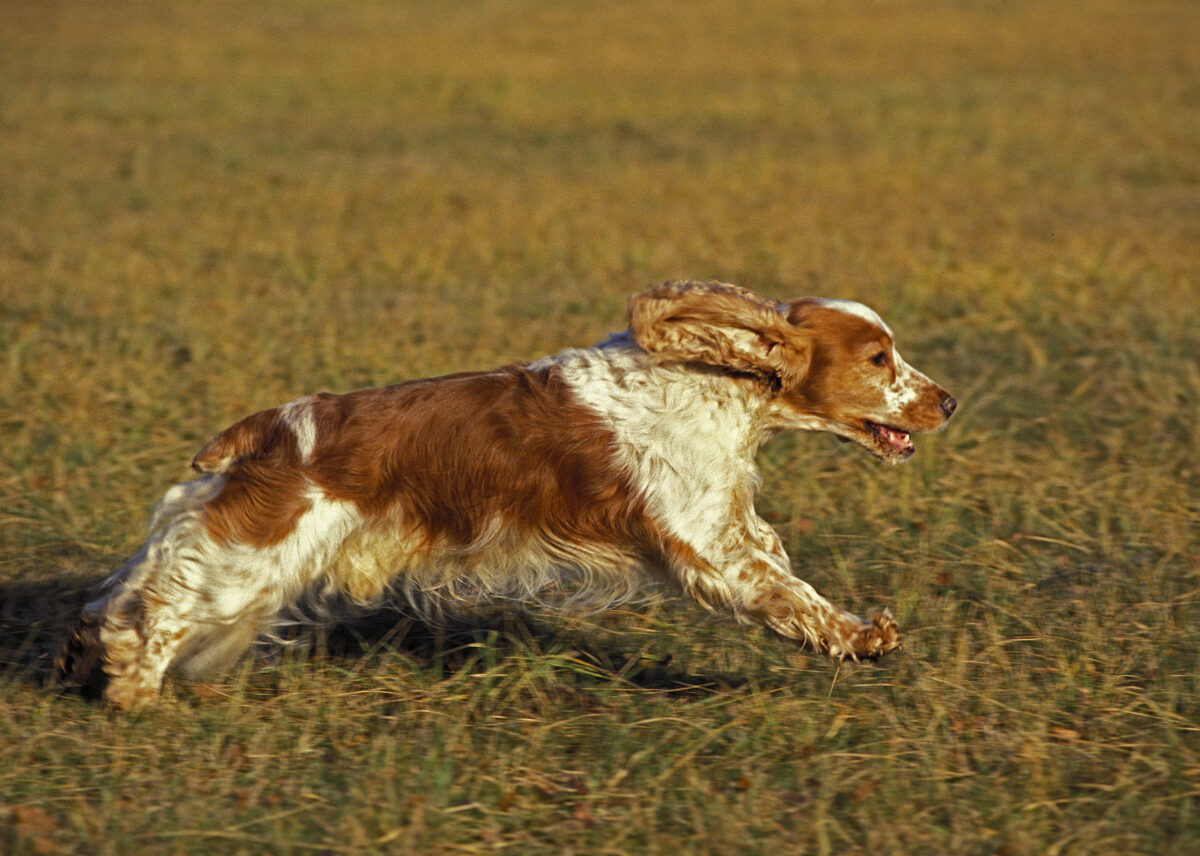
Despite its size, this is a high-drive hunting dog that brings intensity to upland hunts. It works best with handlers who enjoy a fast-paced style.
Best for: Upland birds, heavy brush, hunters who like a high-energy dog
5. Clumber Spaniel
The Clumber Spaniel is a powerful, ground-focused flusher built to push birds through thick cover. It moves steadily and uses strength rather than speed to get the job done.
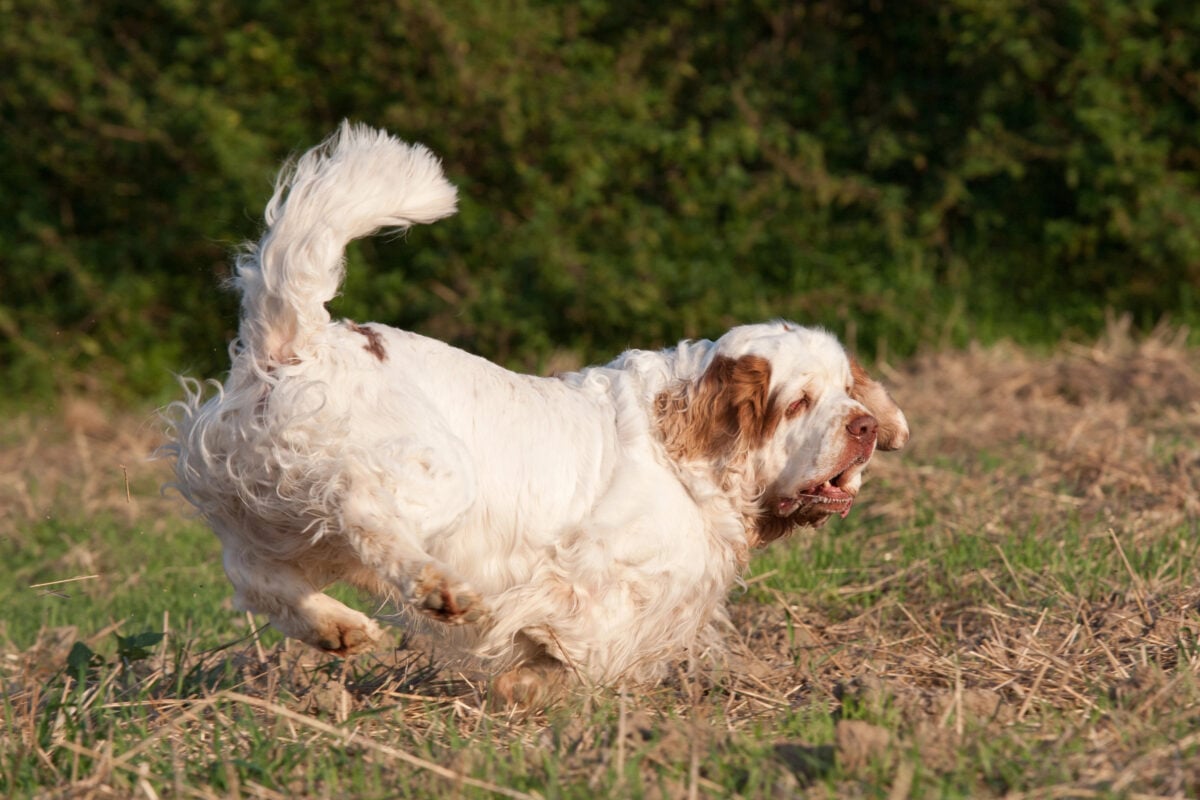
Clumbers work very close and excel where birds tend to sit tight. They’re not built for distance, but few breeds are as effective in heavy, tangled terrain.
Best for: Dense brush, cooler climates, deliberate hunting styles
6 Popular Retrievers For Waterfowl Hunting
Retrievers are bred to recover downed birds after the shot, often from cold water, mud, or rough terrain. A soft mouth, strong swimming ability, and responsiveness to handler direction are critical traits.
Unlike pointing or flushing dogs, retrievers usually wait quietly until sent, then work with precision rather than independence.
1. Labrador Retriever
The Labrador Retriever is the gold standard for waterfowl hunting, combining strong swimming ability with an easy-to-train temperament. Labs mark fallen birds well and handle long retrieves across water, mud, and ice without hesitation.
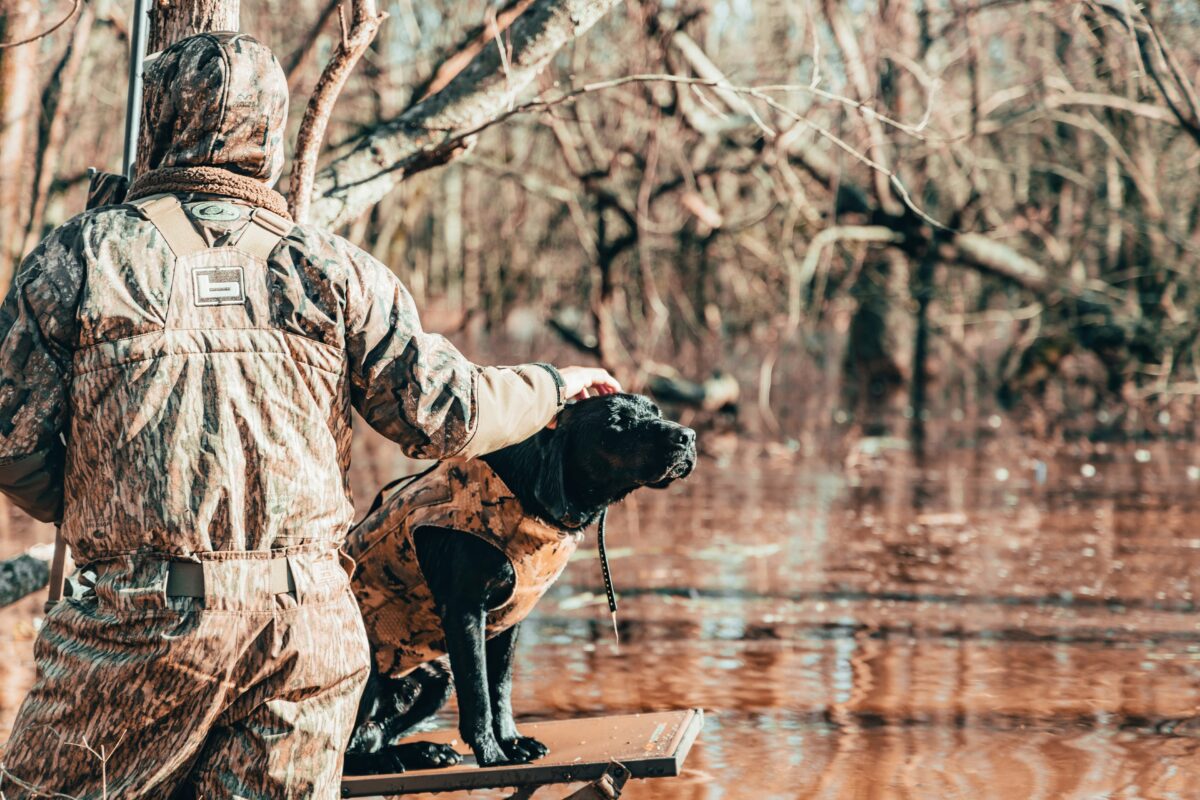
This breed works comfortably from boats, blinds, and shorelines and adapts to both novice and experienced handlers. Their balance of drive and cooperation is why they dominate duck camps nationwide.
Best for: Ducks and geese, cold water retrieves, hunters of all experience levels
Retriever First: Labradors are often described as versatile hunting dogs, but their core strength is retrieving. They’re bred to wait, mark falls, and recover birds from land and water with precision rather than hunt independently.
2. Chesapeake Bay Retriever
The Chesapeake Bay Retriever was built for punishing water conditions and heavy birds. Dense coats, powerful bodies, and serious determination make this dog excel where others start to fade.
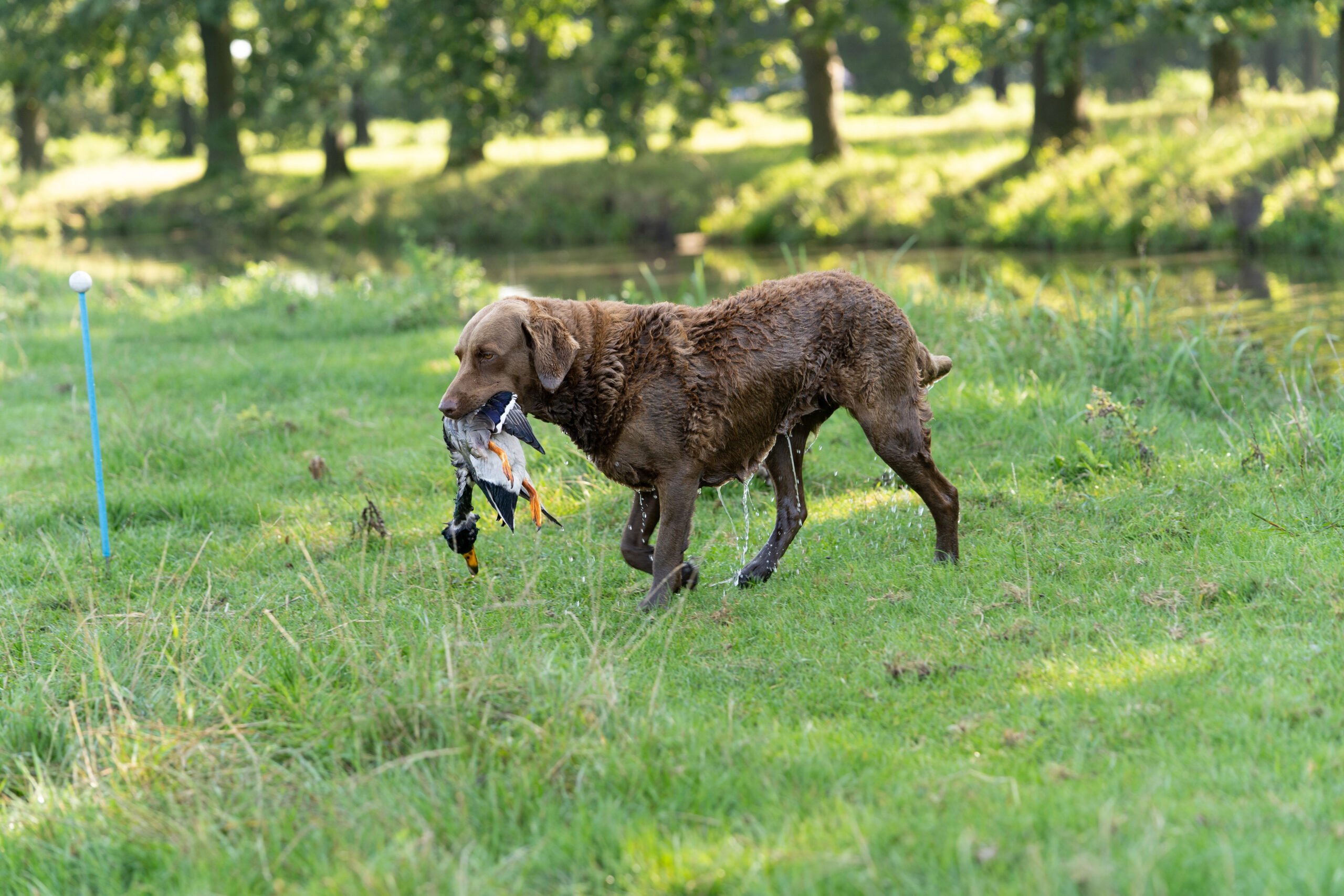
Chessies are more independent than Labs and don’t need constant direction to work effectively. They shine with handlers who appreciate a tougher, more self-reliant retriever.
Best for: Cold water, rough weather, geese, experienced handlers
3. Nova Scotia Duck Tolling Retriever
The Nova Scotia Duck Tolling Retriever uses movement and play to lure birds closer before the shot, then switches seamlessly into a focused retriever. Small but intense, this breed brings a lot of energy into compact water setups.
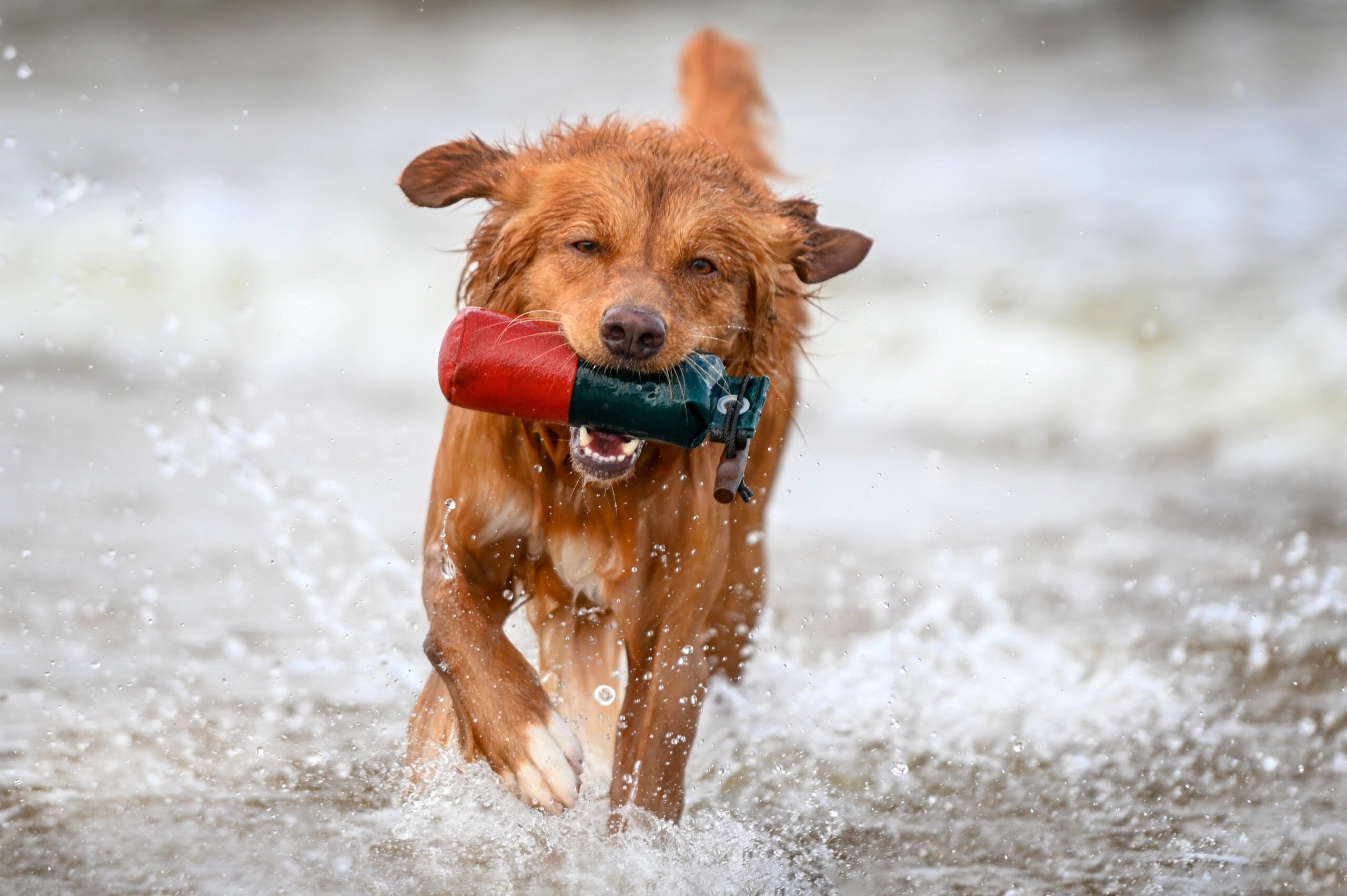
Tollers thrive in marshes, ponds, and tight hunting areas where precision matters. They’re driven dogs that do best with structured training and active handlers.
Best for: Marshes and ponds, ducks, experienced and hands-on hunters
4. Flat-Coated Retriever
The Flat-Coated Retriever is an enthusiastic water dog with strong retrieving instincts and excellent endurance. It moves confidently through water and maintains focus even during long hunting days.
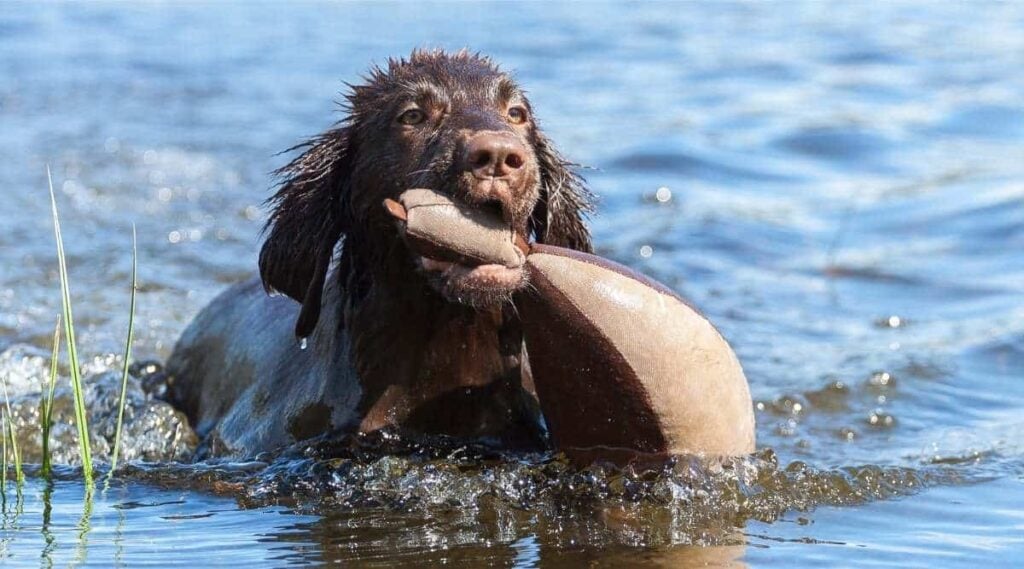
This breed tends to work with a lighter, more upbeat style than Labs or Chessies. Flat-Coats suit hunters who want a capable retriever with a little extra personality.
Best for: Water retrieves, moderate climates, hunters who value enthusiasm and cooperation
5. Curly-Coated Retriever
The Curly-Coated Retriever is a durable, independent water dog with one of the most weather-resistant coats of any retriever. It handles cold water well and stays efficient during repeated retrieves.
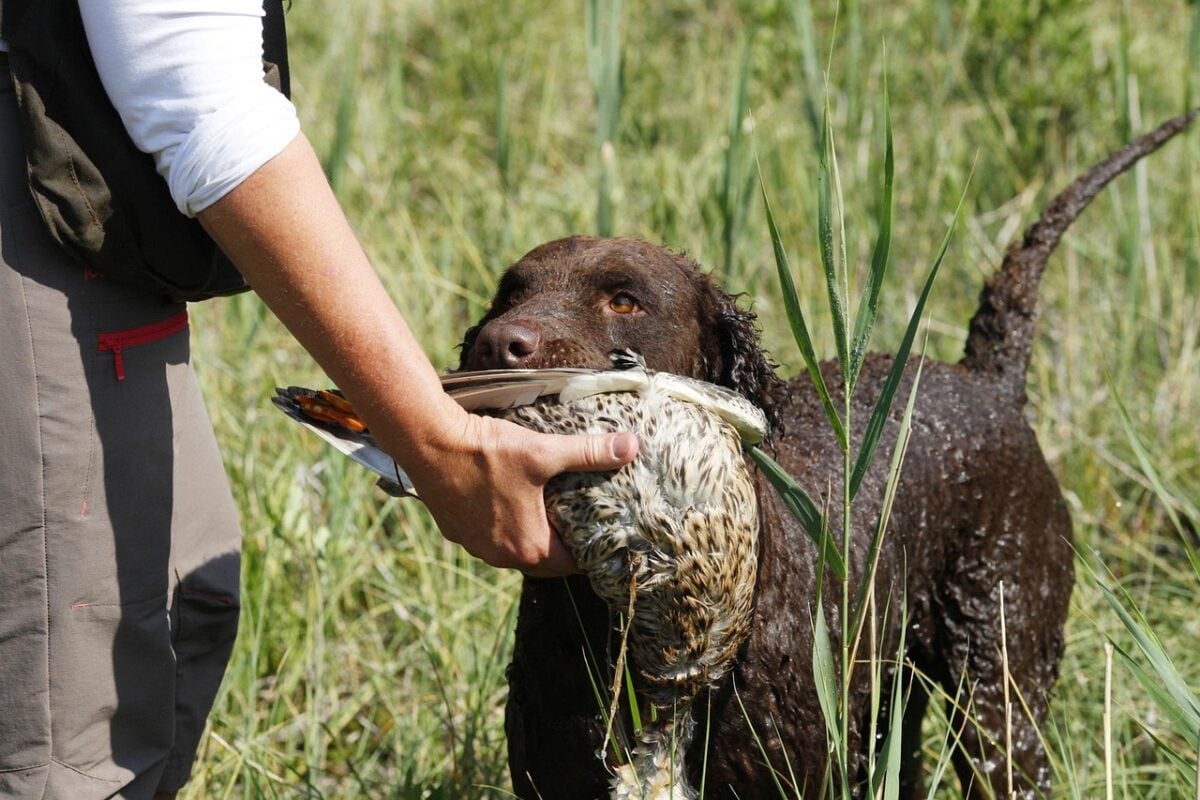
Curlies are less common and more reserved than other retrievers, but they work methodically and confidently. They’re a strong match for hunters who prefer a thinking dog over a people-pleaser.
Best for: Cold water, longer retrieves, experienced handlers
6. Golden Retriever
The Golden Retriever is a capable waterfowl dog when bred from working lines, offering a soft mouth and reliable retrieving instincts. They swim well and handle water retrieves with consistency rather than intensity.
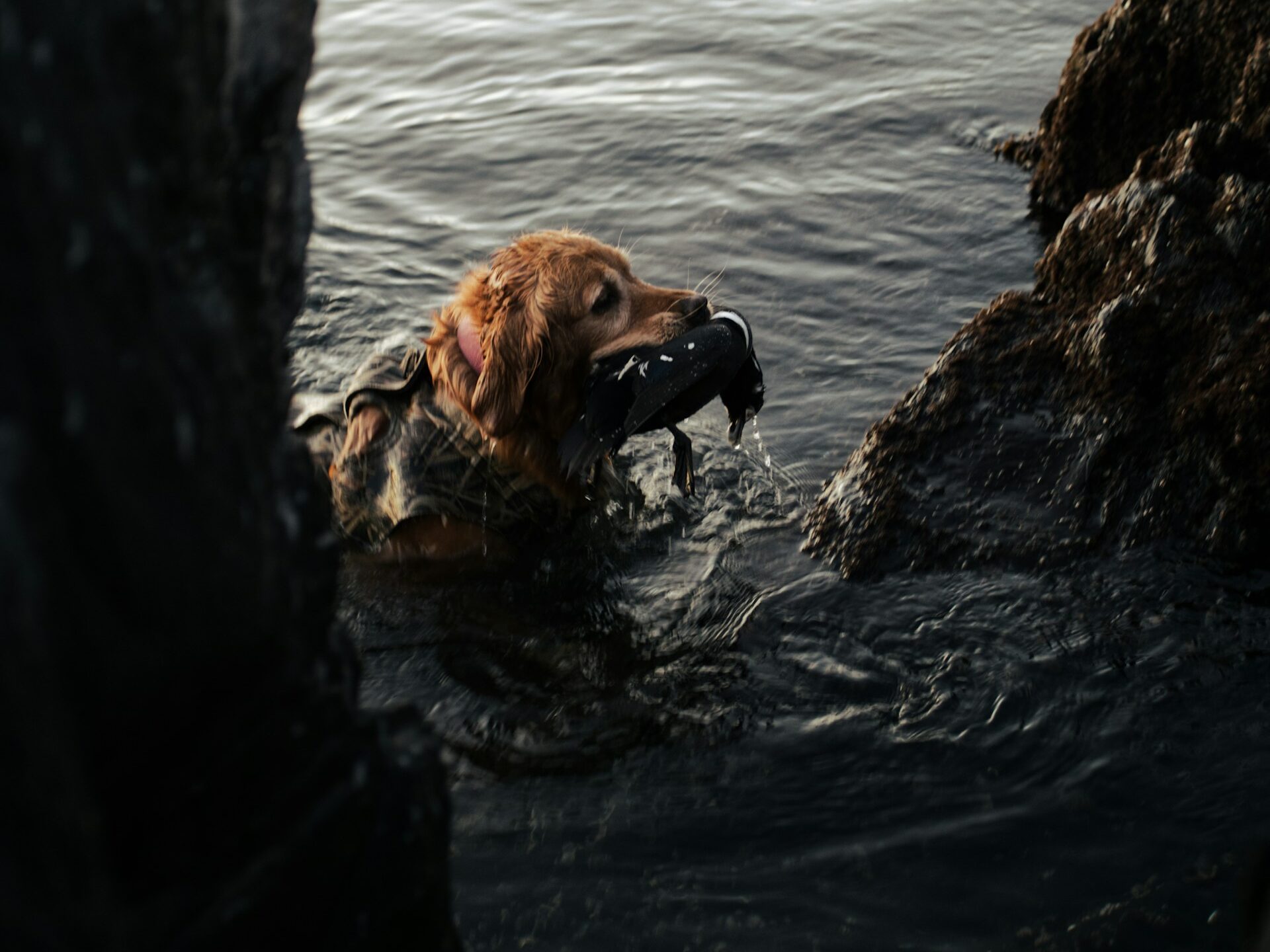
Goldens tend to work closer and rely more on direction than some retrievers. They’re a good fit for hunters who want a steady, cooperative dog that transitions easily into family life.
Best for: Ducks, moderate conditions, hunters wanting a dual-purpose companion
Small Game Hunting Dogs
Small game and furbearer hunting puts very different demands on a dog than upland or waterfowl work. These dogs are asked to follow scent trails, work independently, push game from cover, or pursue fast-moving animals through brush, woods, and uneven terrain.
Success here depends less on polish and more on instinct, drive, and a dog’s natural hunting style. Hounds, particularly scent hounds, tend to perform the best here, though terriers and spaniels can also be effective depending on the quarry and terrain.
3 Hounds For Tracking & Trails
Scent hounds excel at tracking and trailing game over long distances, relying primarily on ground scent rather than sight. These dogs are built to stay locked onto a trail, work methodically through thick cover, and keep going even when the scent is faint, broken, or hours old.
They often work in packs, use vocalizations to communicate while hunting, and are well-suited to low-visibility conditions, including dense woods and night hunts.
1. Beagle
Compact, persistent, and highly scent-driven, Beagles are classic small game hounds, especially for rabbits and hares.
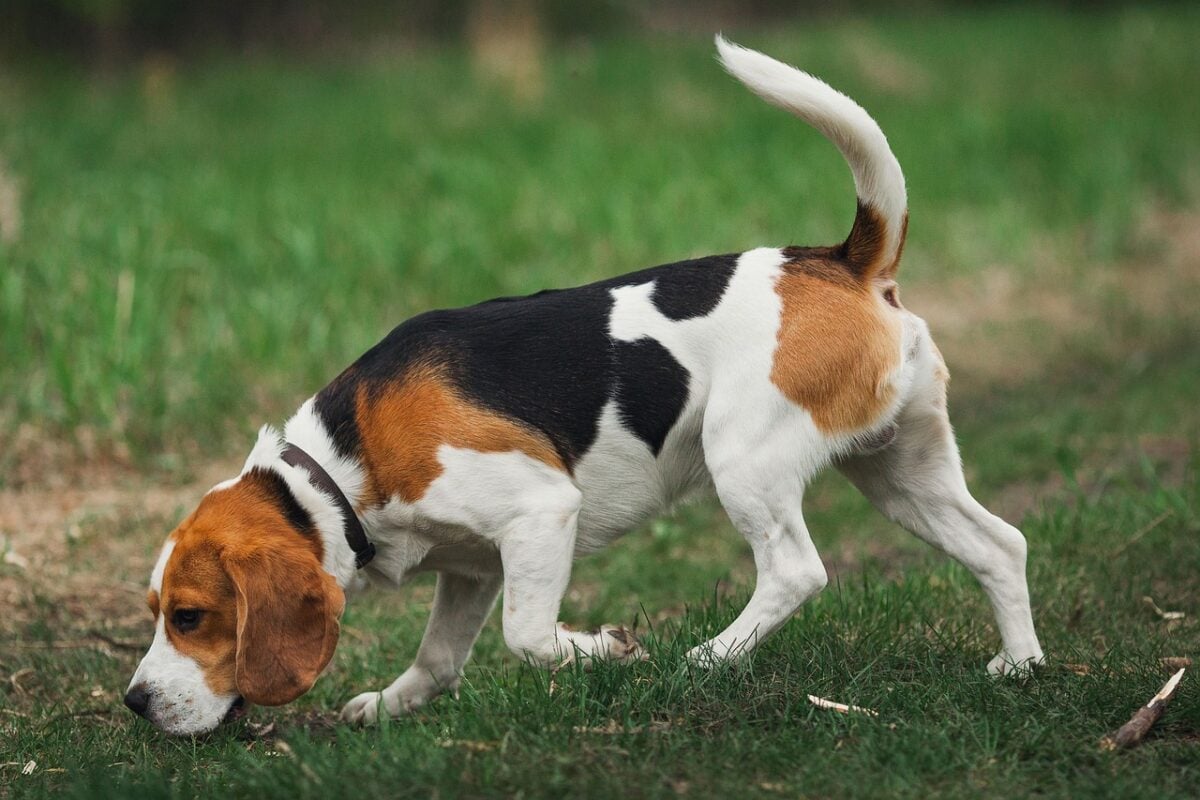
While small in size, they punch well above their weight when it comes to scenting ability. Their size allows them to work tight cover effectively, and their strong noses keep them engaged even on twisting or backtracking scent lines.
Best for: Rabbit, hare, close-range small game in thick cover
Pack Hunter: Beagles are traditionally hunted in packs, which is why their vocal tracking style and persistence matter more than speed or range.
2. Coonhounds
Coonhounds are defined by their powerful noses and natural instinct to trail and tree game. While they’re most commonly associated with raccoon hunting, many coonhound varieties are versatile trackers capable of working a range of small game and furbearers.
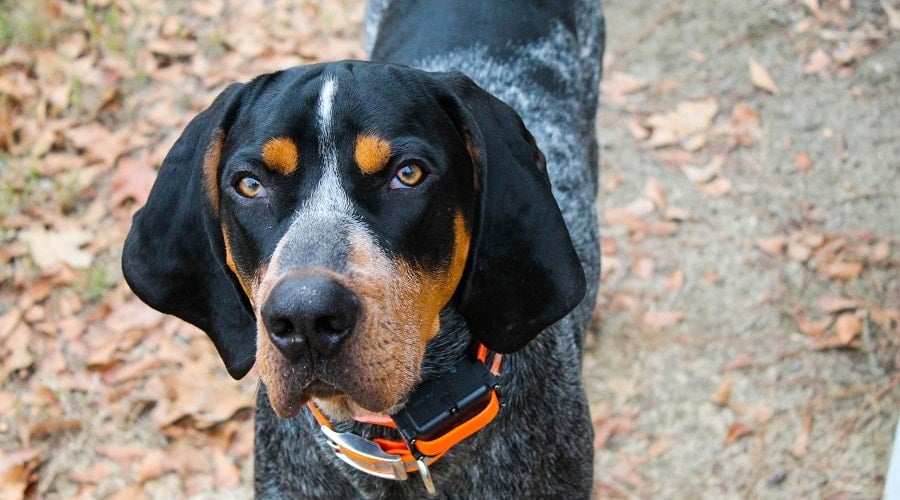
Their stamina, vocal tracking style, and ability to work independently make them reliable trail dogs in wooded and mixed terrain, especially when hunts stretch long or conditions are less than ideal.
Best for: Raccoon, fox, wide-ranging night hunts
3. Foxhounds
Foxhounds are endurance hunters built to follow scent over long distances at a steady pace.
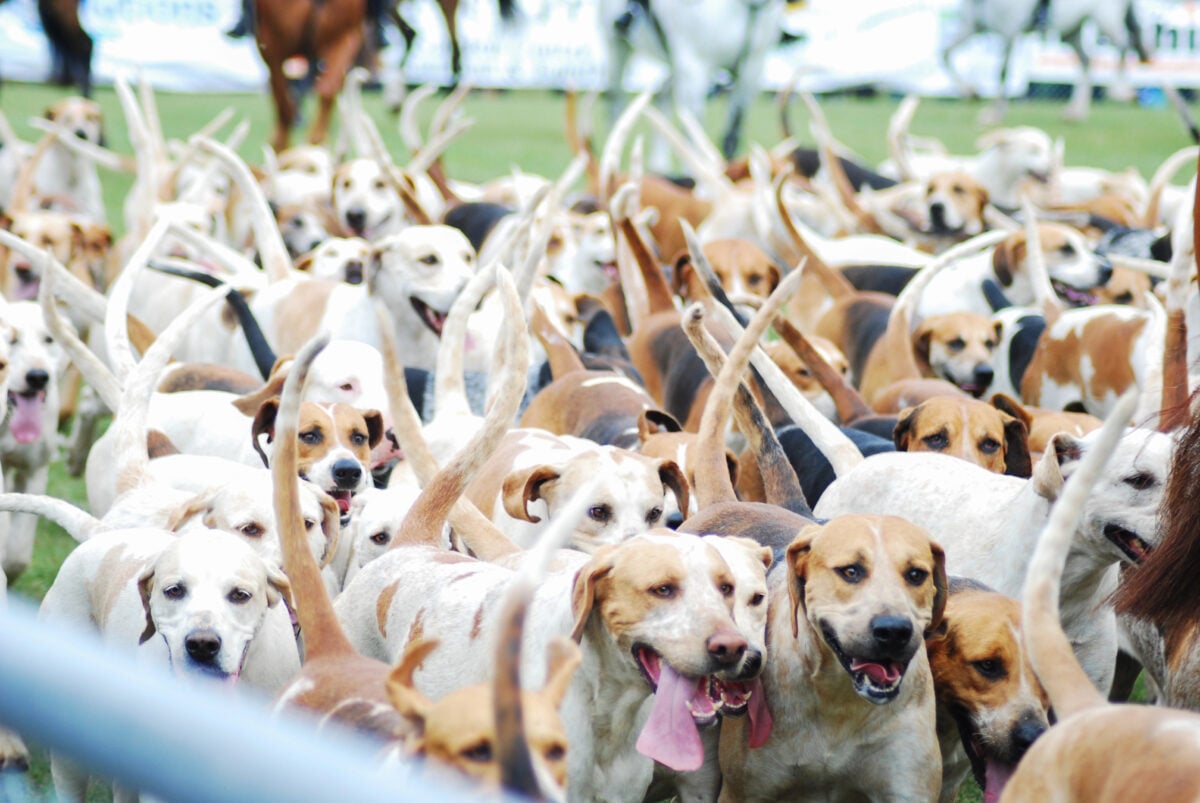
Traditionally used in group hunts, they excel when working alongside other hounds, maintaining pressure on game through sustained trailing rather than quick pursuit.
Best for: Fox, hare, long-distance trailing, group hunts in open or mixed terrain
Foxhound vs. Beagle: Learn more about how the Foxhound and Beagle compare.
Big Game Hunting Dogs
Big game hunting places serious physical and mental demands on a dog. These hunts often involve dangerous quarry, long trails, and difficult terrain, requiring dogs that can work independently, stay engaged for hours, and apply steady pressure without reckless aggression.
Hounds and curs are most commonly used for big game work, relying on scent, endurance, and grit rather than precision or finesse. Depending on the quarry, these dogs may trail, bay, or tree game until the hunter arrives.
7 Large Game Dogs Built For Power
This group includes dogs used for deer, coyotes, bear, and wild boar, as well as breeds that play a role in predator control and livestock protection in certain regions.
1. Norwegian Elkhound
The Norwegian Elkhound is a cold-hardy hunting dog bred to track and hold large game such as moose and elk. Rather than chasing outright, the Elkhound works by locating game and keeping it engaged through persistent barking until the hunter arrives.
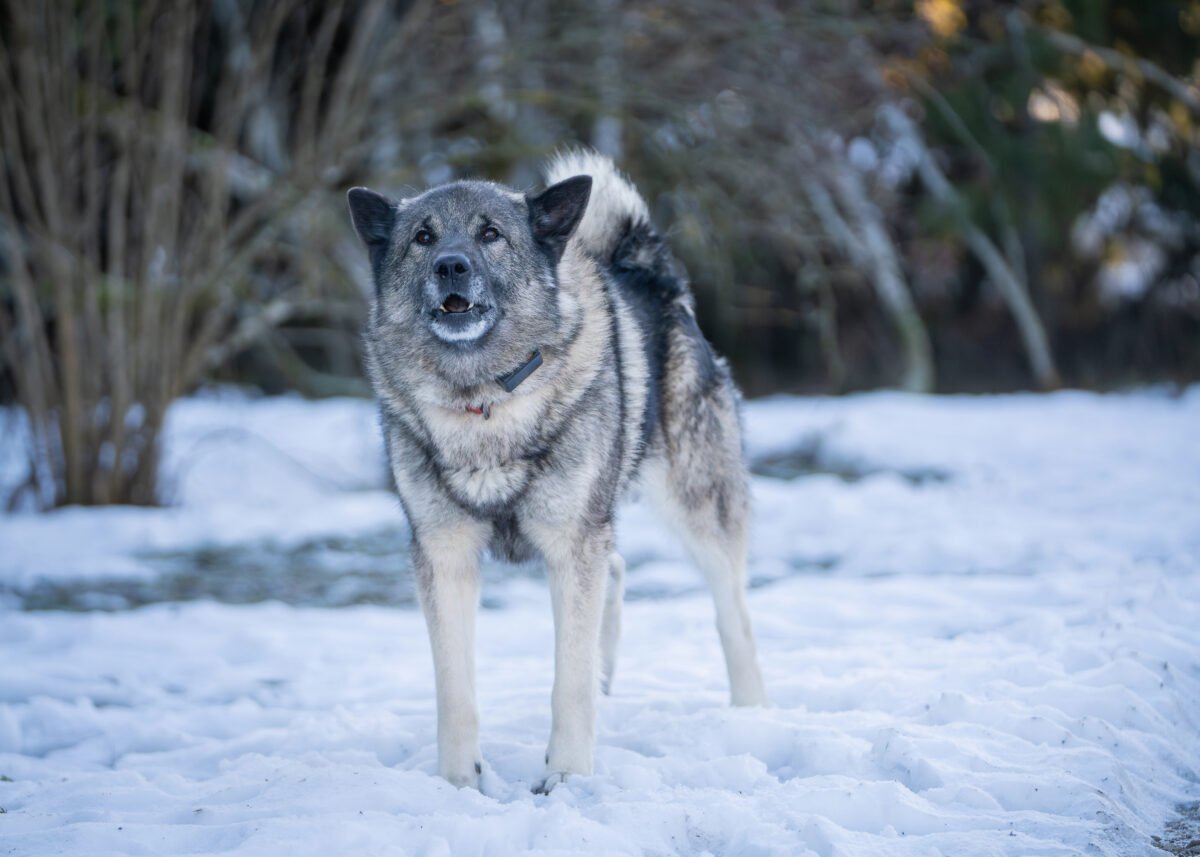
They’re known for stamina, confidence, and the ability to work rough terrain in harsh weather. Elkhounds tend to think for themselves and do best with experienced handlers.
Best for: Moose and elk, cold climates, rugged terrain
2. Karelian Bear Dog
The Karelian Bear Dog is known for its fearless approach to dangerous game. Originally bred to hunt large, aggressive game independently, this breed works by tracking, pressuring, and holding game at bay rather than engaging directly.
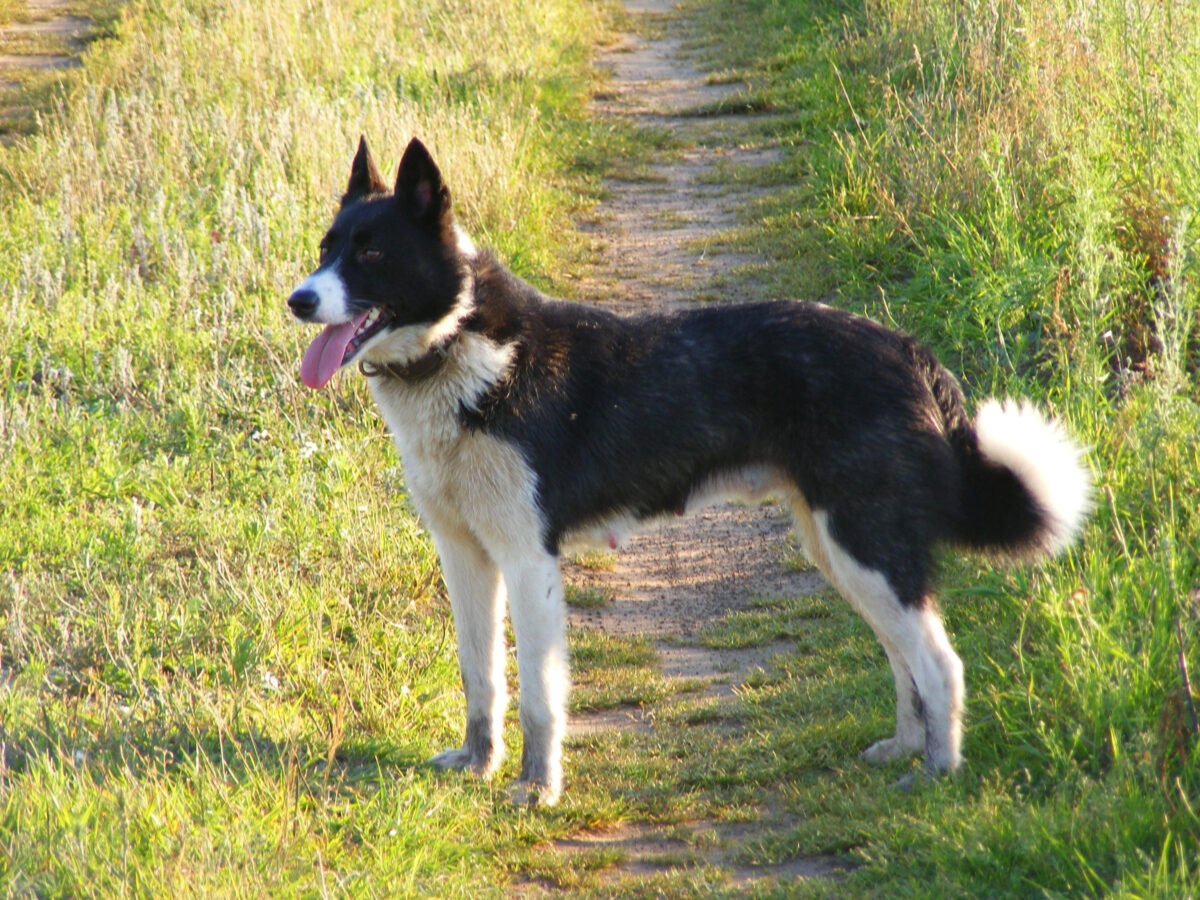
They’re intense, highly driven dogs that require firm handling and clear boundaries. In the field, their courage and focus are undeniable.
Best for: Bear, large predators, experienced handlers only
3. Plott Hound
The Plott Hound was developed specifically for hunting large game, particularly wild boar and bear. Unlike some hounds, Plotts are known for their grit and willingness to stay engaged with tough quarry.
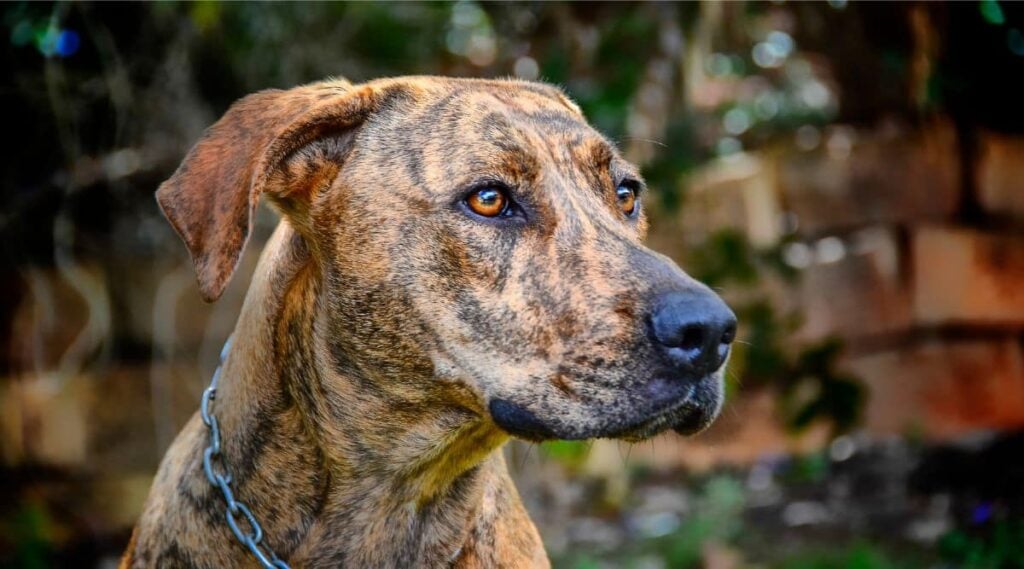
They’re determined, athletic dogs that excel at trailing and baying in steep or heavily wooded terrain.
Best for: Wild boar, bear, large game trailing and baying
4. Black Mouth Cur
Black Mouth Curs are versatile working dogs commonly used for big game hunting and predator control. They rely on scent, grit, and intelligence to trail and bay animals like hogs and coyotes.
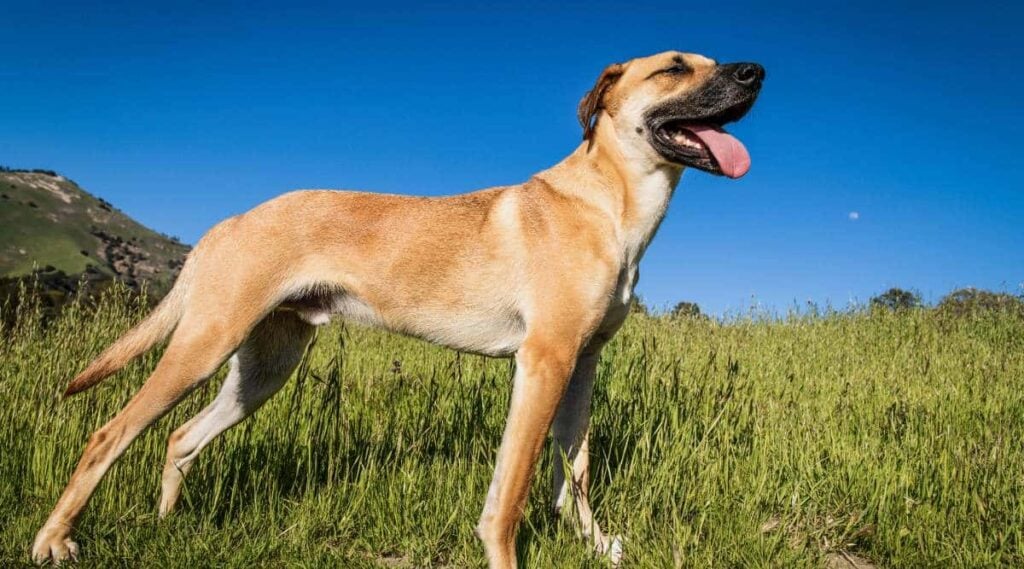
In addition to hunting, they’re often used to protect livestock, making them a practical choice for hunters in rural or working environments.
Best for: Hogs, coyotes, predator control, mixed terrain
5. Lurcher
Lurchers are purpose-bred hunting crosses, typically combining a sight hound with a working or herding breed. The result is a fast, agile dog with sharp visual awareness and enough grit to handle real field work.
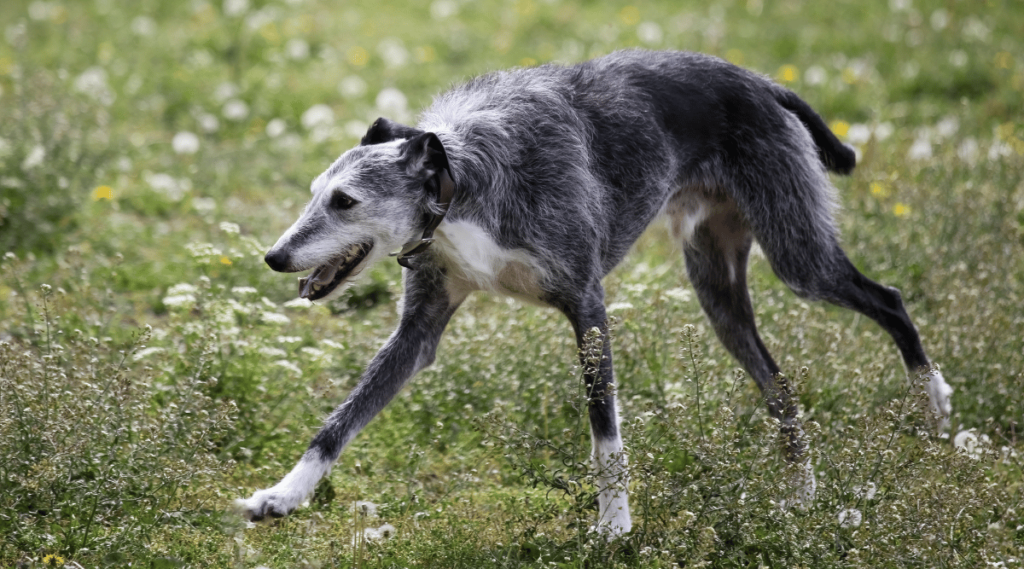
They excel at open-ground pursuit and quick strikes, making them effective for small game when speed matters more than scent.
Best for: Rabbits and coyotes (crop and livestock protection), open field coursing
6. Catahoula Leopard Dog
The Catahoula Leopard Dog is an intense multi-purpose working dog used for herding cattle, guarding livestock, hunting wild boar, and treeing game.
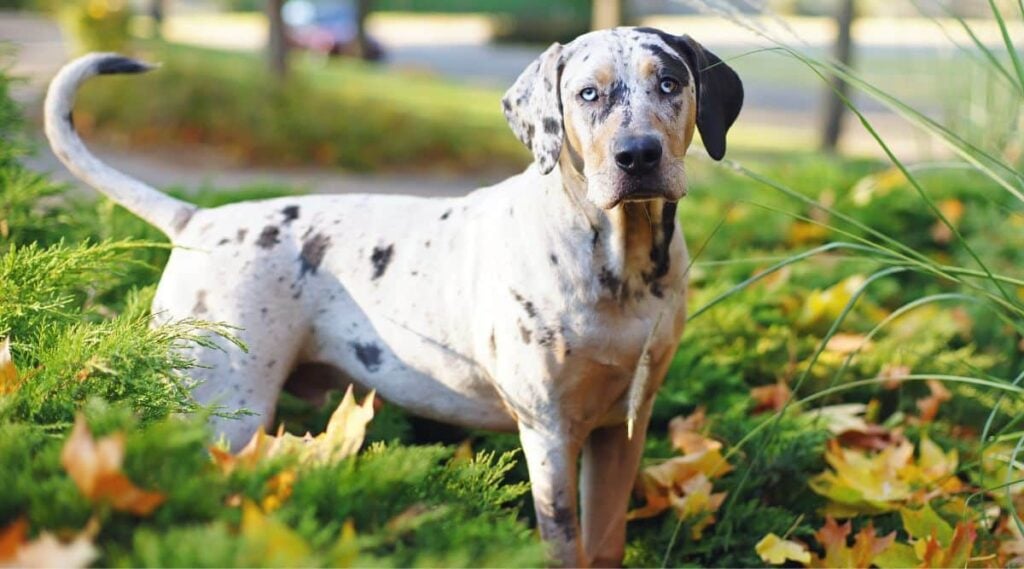
They’re territorial, intelligent dogs that require firm handling and plenty of work to stay balanced.
Best for: Wild boar, bay work, experienced handlers
7. Bloodhound
Bloodhounds possess arguably the most powerful nose of any dog breed. In big game hunting, they’re most often used for trailing wounded animals rather than pursuit or baying.
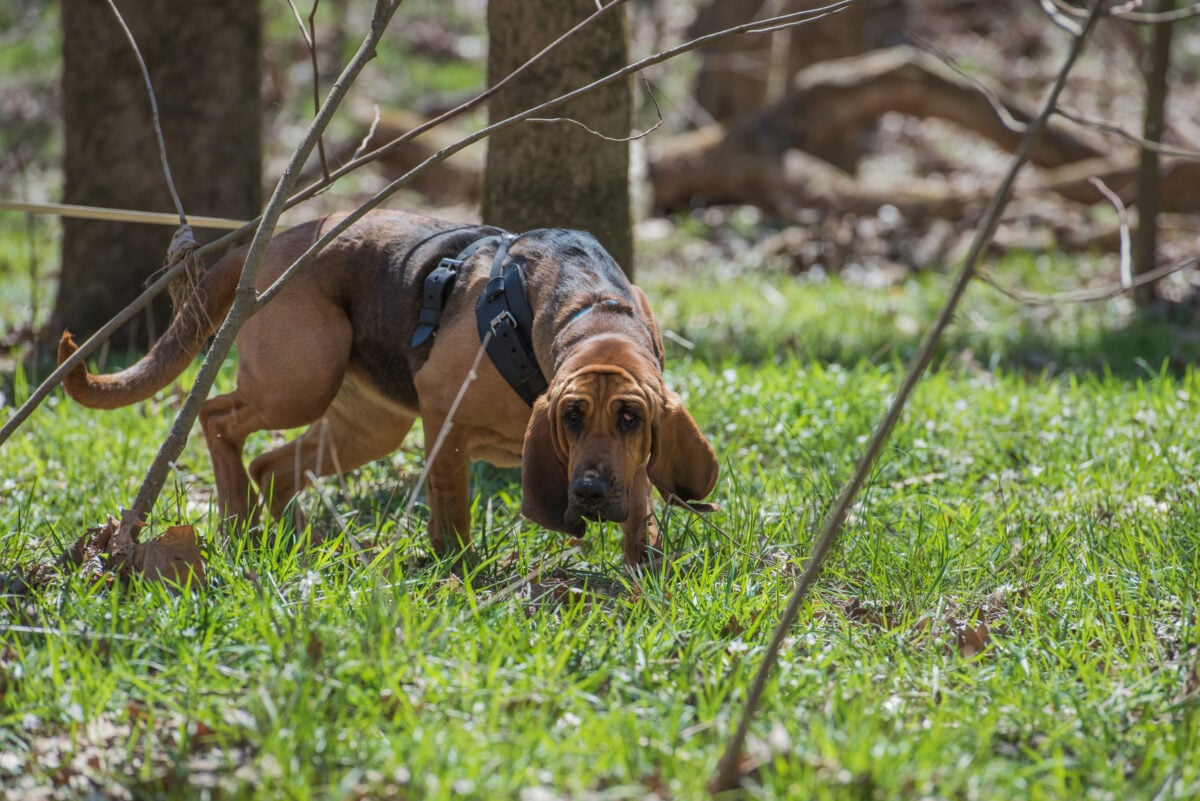
Their focus, persistence, and ability to follow old scent trails make them invaluable recovery dogs when precision matters more than speed.
Best for: Long-distance tracking, wounded game recovery, cold trails
Vermin & Underground Hunting Dogs
Vermin and underground hunting dogs were bred for one purpose: to go where other dogs won’t. These breeds work close, hunt independently, and aren’t afraid to dig, squeeze, or confront quarry in tight spaces.
Traditionally, this group includes terriers as well as other purpose-built breeds like Dachshunds, which were developed specifically for underground work.
3 Best Terrier Breeds For Vermin & Farm Work
Terriers in particular are valued for their grit, persistence, and willingness to stay engaged even when the job gets uncomfortable. They’re not wide-ranging hunters, but when it comes to pest control and farm work, few dogs are more effective.
1. Jack Russell Terrier
The Jack Russell Terrier is fast, fearless, and relentless, with an intense prey drive that makes it a natural vermin hunter. Bred to bolt foxes and dispatch rodents, this breed excels at working both above and below ground.
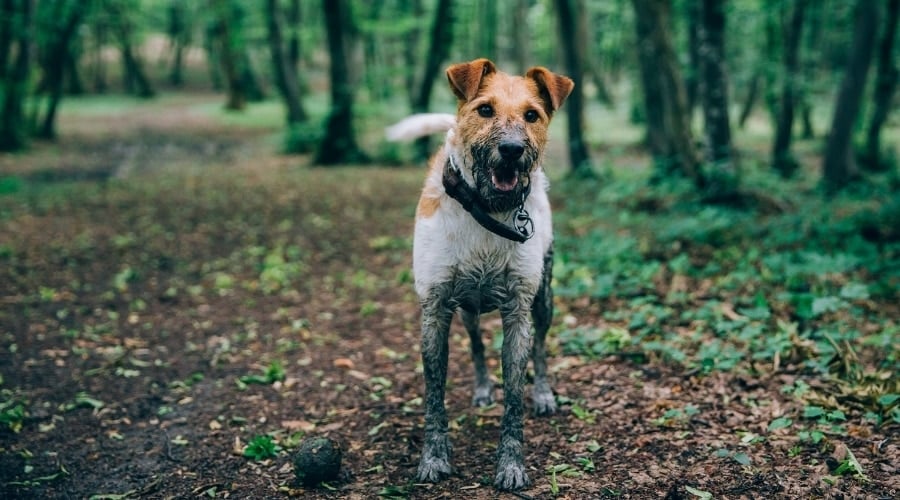
They’re highly energetic and independent, which makes them effective hunters but demanding companions. In the field, their confidence and determination are exactly what you want when dealing with stubborn quarry.
Best for: Rats, ground vermin, farm pest control, experienced handlers
2. Patterdale Terrier
Patterdale Terriers are tough, no-frills working dogs bred for harsh terrain and underground work. Compact and powerful, they’re known for their grit and willingness to stay on task until the job is finished.
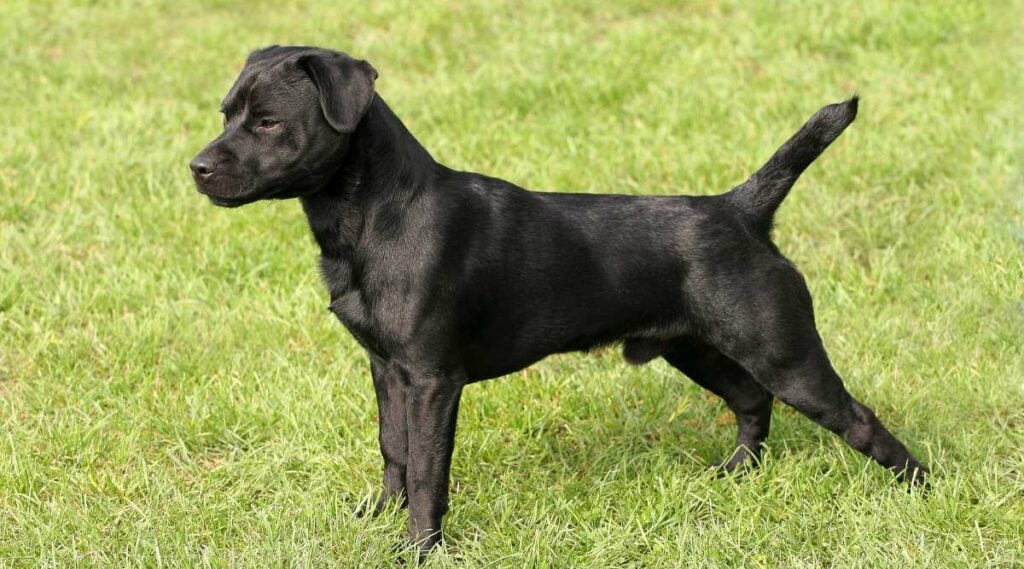
They’re less flashy than some terriers, but extremely effective in real-world hunting and pest control scenarios. Patterdales are best suited to handlers who understand working terrier drive and boundaries.
Best for: Fox, rats, underground work, rugged farm environments
3. Border Terrier
Border Terriers combine working ability with a slightly more cooperative temperament than some other terriers. Originally bred to flush foxes from underground, they’re agile, durable, and capable of working long days alongside other hunting dogs.
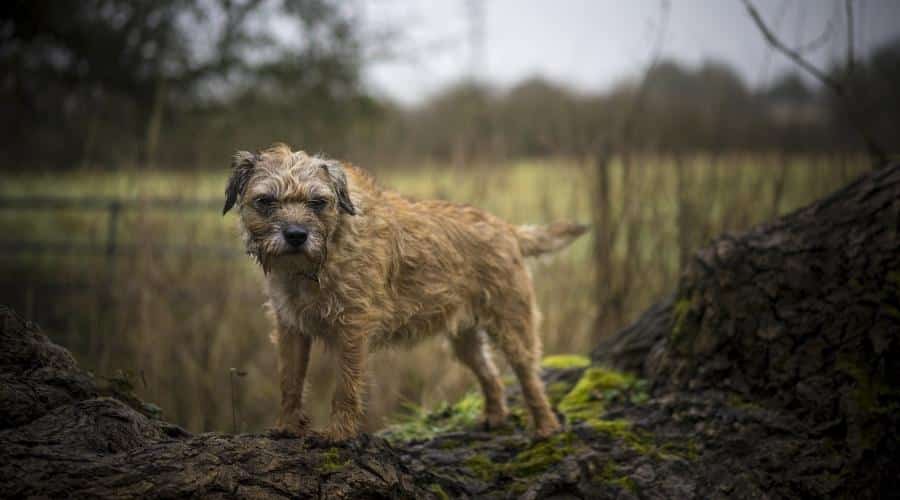
They tend to be more adaptable off the hunt, which makes them popular with hunters who want a working dog that also fits into family life.
Best for: Fox, vermin, mixed farm work, hunters wanting a steadier terrier
10 Specialty & Unusual Hunting Dogs
Not every hunting dog fits neatly into the classic categories. Some breeds were developed for very specific jobs, regional terrain, or niche game, and they still excel at those roles today. These dogs may be less common in the U.S., but they bring highly specialized skills that make them invaluable in the right hands.
From truffle hunting to decoy work and tight-cover pursuit, these breeds prove that hunting ability doesn’t always look traditional.
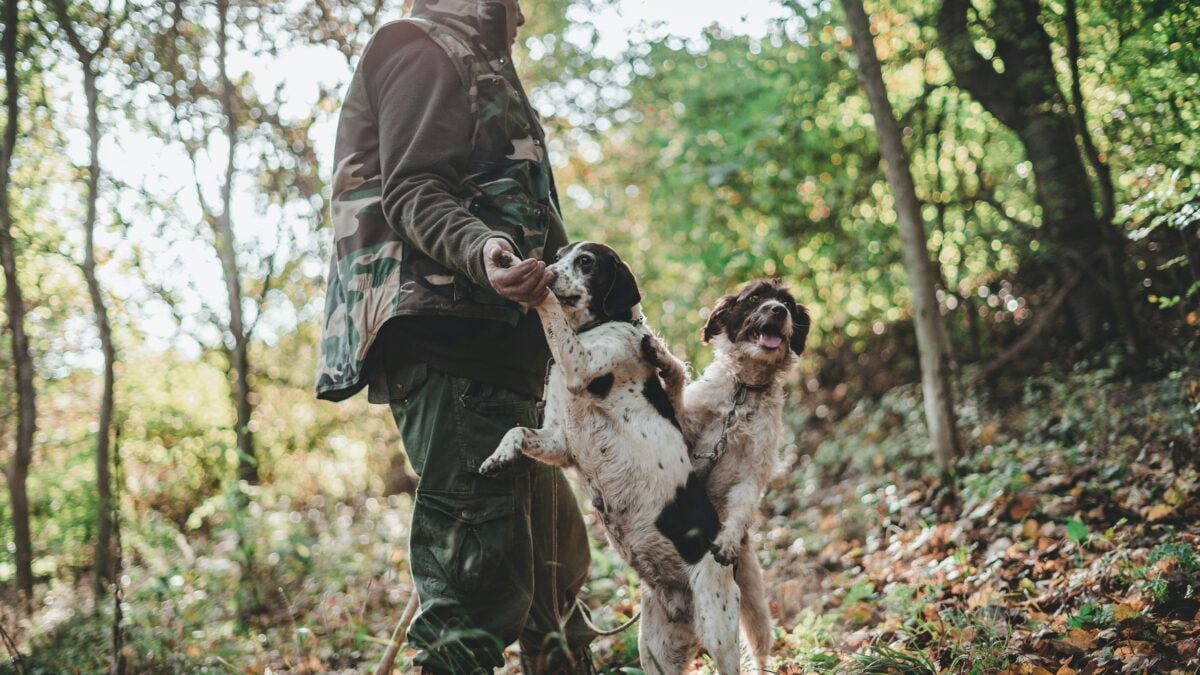
- Lagotto Romagnolo – Best known as truffle dogs, Lagotti use an exceptional nose and close-working style to locate underground fungi with remarkable precision.
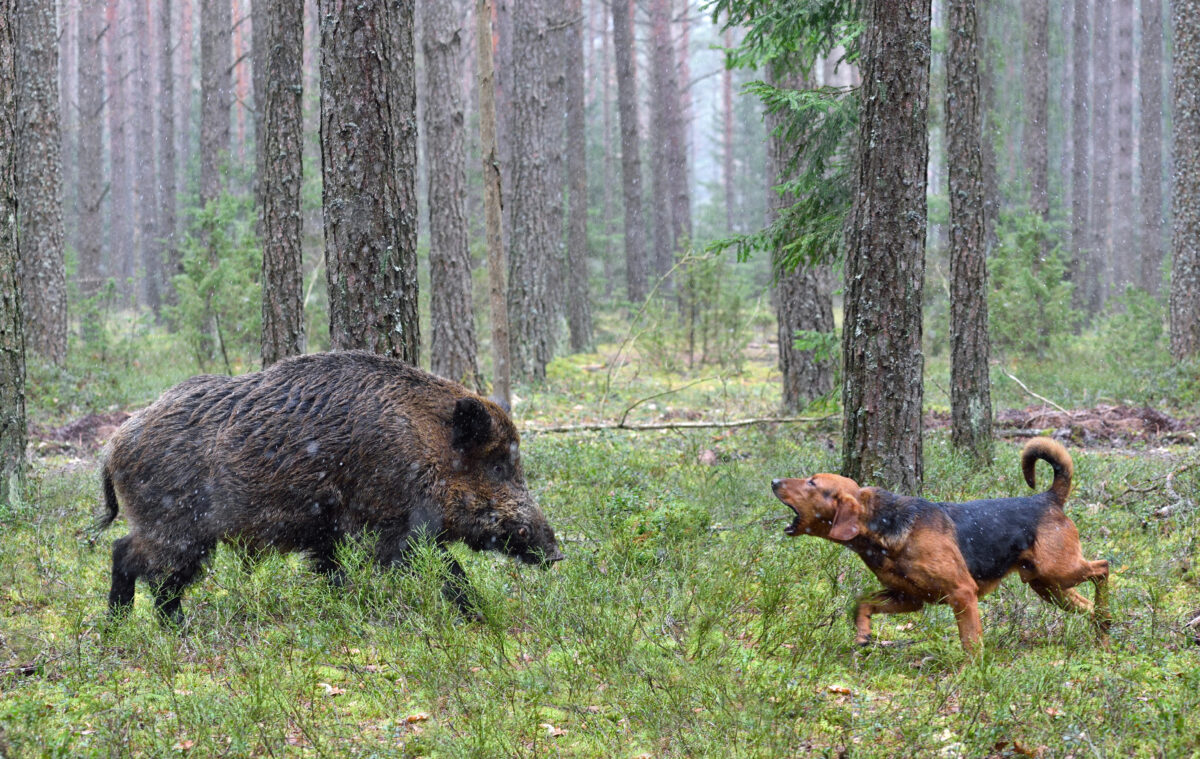
- Belarusian Gonchak – A powerful scent hound developed for hunting wild boar and other large game across dense Eastern European forests.
- Nederlandse Kooikerhondje – Developed in the Netherlands for duck decoy work, using movement and tail action to lure waterfowl into traps.
- Portuguese Podengo Pequeno – Bred to hunt rabbits in rocky, tight terrain where larger dogs couldn’t maneuver, relying on speed and agility.
- Dachshund – Originally bred to hunt badgers underground, with a long body and fearless temperament suited for tight burrows.
- Otterhound – Developed in Britain to hunt otters, combining a powerful nose with strong swimming ability and endurance.
- Scottish Deerhound – Bred for the pursuit of deer across open Highland terrain, relying on speed and sight rather than scent.
- Irish Wolfhound – Historically used to hunt wolves and protect livestock, valued for size, strength, and deterrence rather than speed.
- Cocker Spaniel – Named for their original role flushing and retrieving woodcock, combining close-working drive with strong bird instincts.
- Rhodesian Ridgeback – Bred in southern Africa to pursue and hold lions at bay, working in packs to pressure dangerous game.
Best Hunting Dogs By Scenario
Not every hunting dog is right for every job. Terrain, quarry, regulations, and experience level all play a role in which breeds perform best. The lists below highlight reliable choices based on how these dogs are actually used in the field.
Best Dogs For Deer Tracking
These breeds excel at following scent trails, especially when tracking wounded deer over long distances or difficult terrain.
- Bloodhound – Exceptional nose and unmatched ability to follow old or broken scent trails
- Beagle – Compact, persistent tracker well-suited to close-range deer trailing where legal
- Plott Hound – Strong scenting ability combined with grit and endurance
- Redbone Coonhound – Reliable trailing dog with stamina for long, wooded tracks
Best Dogs For Wild Turkey Hunting
Turkey dogs must locate birds without flushing them prematurely, making scent control and steady behavior critical.
- German Shorthaired Pointer – Versatile, obedient, and capable of controlled bird work
- Brittany – Close-to-medium range dog with strong bird sense and responsiveness
- English Setter – Excellent nose and steady presence in upland terrain
- Wirehaired Pointing Griffon – Methodical hunter well-suited to mixed cover and conditions
Best Dogs For Pheasant & Quail Hunting
These breeds shine in classic upland bird scenarios, whether holding point, flushing, or retrieving.
- English Pointer – Wide-ranging dog built to locate birds quickly and hold solid point
- German Shorthaired Pointer – Adaptable and athletic, handles both open fields and cover
- Brittany – Efficient, fast, and well-suited to varied upland terrain
- English Springer Spaniel – Excellent flusher for thick cover and close-working hunts
- Wirehaired Pointing Griffon – Steady, versatile bird dog with strong endurance
Best Dogs For Rabbit Hunting
Rabbit hunting favors dogs with strong noses, persistence, and the ability to work dense cover.
- Beagle – Classic rabbit hound known for relentless scent tracking
- Treeing Walker Coonhound – Fast-moving hound that excels at pushing game
- Bluetick Coonhound – Methodical tracker suited to longer or colder trails
- Jack Russell Terrier – Gritty, close-working dog effective in tight cover and burrows
Best Hunting Dogs That Double as Family Pets
These breeds balance strong hunting instincts with adaptable, people-friendly temperaments.
- Labrador Retriever – Reliable hunter with a calm, family-oriented personality
- Golden Retriever – Gentle, trainable, and well-suited to both field and home life
- Brittany – Energetic but manageable, thrives with active families
- English Springer Spaniel – Affectionate, versatile, and comfortable in family settings
Best Hunting Dogs For Beginners
For new hunters, these breeds are known for trainability, adaptability, and forgiving learning curves.
- Labrador Retriever – Eager to please and easy to train across multiple hunting styles
- Brittany – Intuitive bird dog that responds well to consistent handling
- Golden Retriever – Patient, steady, and highly cooperative
- English Springer Spaniel – Close-working dog that builds confidence quickly
- Beagle – Simple, instinct-driven hunter for small game
What Actually Matters When Choosing a Hunting Dog
Choosing the right hunting dog isn’t about picking the most popular breed. It’s about matching the dog to your quarry, terrain, experience level, and lifestyle.
Key factors to consider include:
- Hunting style: Do you want a wide-ranging dog, a close-working partner, or a trail-focused hound?
- Terrain and climate: Thick brush, open fields, mountains, cold water, and heat all favor different builds and coat types.
- Drive vs. control: Some dogs are intensely independent, while others thrive on constant handler direction.
- Time and training commitment: High-drive working dogs need consistent work, structure, and outlets.
- Life off the hunt: Some breeds transition easily into family life, while others stay very work-focused year-round.
The best hunting dog is the one that fits your reality, not the one that looks best on paper.
Frequently Asked Questions
Choosing a hunting dog comes with a lot of questions, especially when different breeds can excel at similar jobs. These answers address the most common concerns hunters have when deciding which type of dog fits their hunting style, experience level, and day-to-day life.
Don’t see your question? Respond in the comments, and we’ll get back to you!
What Is The Most Versatile Hunting Dog?
Versatility depends on how you hunt, but breeds like the German Shorthaired Pointer, Brittany, and Labrador Retriever are often considered among the most adaptable for mixed upland and waterfowl work.
Are Hunting Dogs Good Family Pets?
Many hunting dogs make excellent family companions, especially retrievers, spaniels, and some pointing breeds. However, they still need regular exercise and mental stimulation to stay balanced.
Do I Need A Hunting Dog To Hunt Successfully?
No. Many hunters are successful without dogs. A hunting dog enhances certain types of hunting, especially bird hunting, tracking, and recovery work, but it isn’t required.
Can Small Dogs Be Effective Hunters?
Yes. Beagles, terriers, and Dachshunds are all examples of small dogs bred specifically for hunting small game and vermin.
Are All Hunting Dogs High Energy?
Most working-line hunting dogs are energetic, but energy levels vary by breed and job. Some dogs work hard in the field and settle easily at home, while others need daily outlets year-round.
Is It Better To Get A Puppy Or A Trained Adult Dog?
Both can work. Puppies allow you to shape training from the start, while trained or started dogs can shorten the learning curve, especially for first-time hunters.
Looking Beyond Hunting
Many hunting breeds are also exceptional working dogs, valued for their intelligence, stamina, and drive beyond the field. If you’re curious how hunting dogs compare to other purpose-driven breeds, explore our guide to working dog breeds or learn how some hunting and working dogs overlap with roles in protection and property defense in our roundup of the best guard dogs.