When you purchase through links on our site, we may earn a commission at no extra cost to you. Learn more.
Yesterday, your puppy happily greeted the neighbors. Today, they’re hiding behind your legs or barking at a trash can they’ve walked past all week. Sudden uncertainty can be part of a puppy fear period, a developmental stage when familiar people, objects, or places seem more intimidating. For now, give your puppy space from whatever worries them rather than pushing them closer.
Table of Contents
A fear period is one possible explanation, but not every sudden behavior change is developmental. Pain, illness, or a frightening experience can also affect your puppy’s confidence. Below, I explain the two common fear periods, how to help without forcing interactions, and when to contact your vet or a qualified trainer.
What Are Puppy Fear Periods?
Puppy fear periods are stages in a puppy’s development when they can become especially sensitive or frightened by new experiences, people, or environments. These periods are a normal part of a puppy’s growth and typically occur in the first year of life, although the exact timing can vary between individual puppies. During these phases, a puppy may seem more skittish, anxious, or reactive to things that wouldn’t normally bother them. Here are the common signs of puppy fear stages:
- Sudden fear of people, objects, or environments they were previously comfortable with
- Cowering, hiding, or trying to avoid certain situations
- Increased barking, growling, or reactivity towards perceived threats
- Hesitation or refusal to walk in specific areas
- Seeking reassurance from their owner more than usual
During puppy fear periods, they may react strongly to unfamiliar stimuli, such as loud noises, new people, or even novel environments. These episodes of fear can be triggered by things as simple as a sudden change in their routine, a new object appearing in the house, or an unexpected loud sound like a door slamming or thunder.
Want our human-written content to rank above AI-generated garbage? Help us out by clicking this button!
While this behavior can be alarming for pet owners, it’s a normal developmental phase. The reason for these fear periods is that puppies are still learning how to navigate the world around them, and their brains are highly impressionable during this time.
Is This A Fear Period?
Your puppy suddenly seems unsure of things they previously handled comfortably. Could a fear period explain the change? Look for a shift from your puppy’s usual behavior, such as:
- Suddenly scared of people: Backing away from visitors or hiding behind you when someone approaches.
- Refusing walks: Freezing at the door, stopping on a familiar route, or trying to turn home.
- Barking at new objects: Sounding the alarm over a trash can, garden decoration, or unfamiliar item in the house.
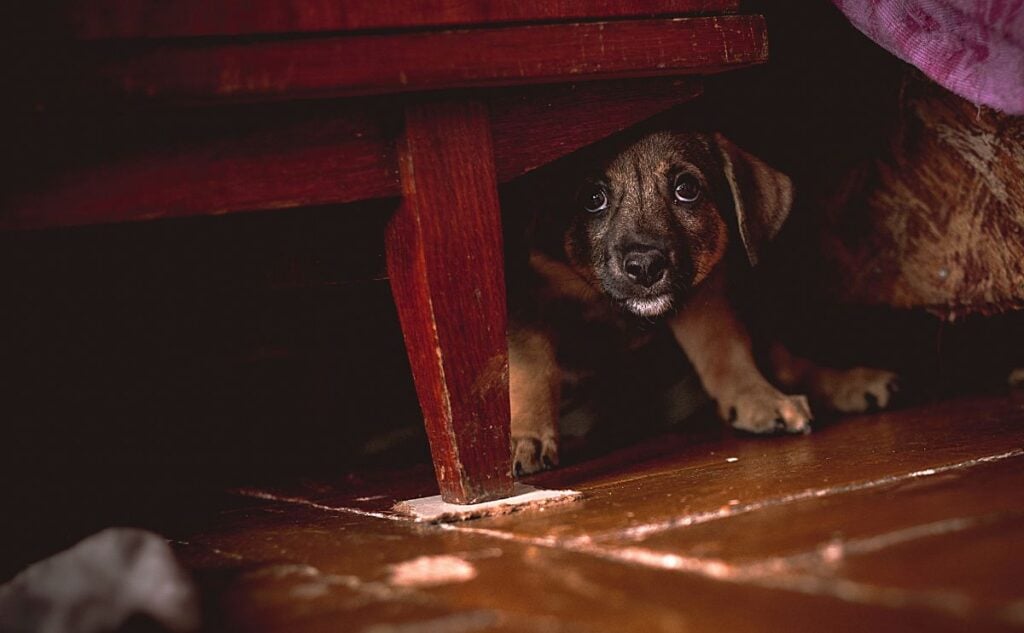
- Hiding or cowering: Retreating under furniture, lowering their body, or tucking their tail when something worries them.
- Nervous around sounds, dogs, or places: Startling at everyday noises, avoiding other dogs, or hesitating somewhere they previously explored happily.
These signs can fit a fear period, but they don’t confirm one. Your puppy’s age, recent experiences, and overall health also matter. Give them room to retreat, and contact your vet if the change is sudden and unexplained, comes with signs of illness or pain, or disrupts normal daily activities.

What To Do Right Now If Your Puppy Seems Scared
Whether your puppy is going through a fear period or reacting to a particular experience, the immediate goal is to help them feel safe, not make them confront the fear.
- Stay calm. Use a relaxed voice and give your puppy time to respond. You can offer gentle reassurance if they seek it, but avoid holding or petting them if they’re trying to move away.
- Do not force interaction. Skip greetings, reaching hands, and close encounters your puppy is avoiding. Watching someone from a comfortable distance can be a successful experience.
- Create distance. Cross the street, step away from the unfamiliar object, or move somewhere quieter. If your puppy freezes on a walk, avoid dragging them forward.
- Reward curiosity. Offer a treat or quiet praise when your puppy comfortably observes, sniffs, or checks in with you. Let them decide whether to approach, and avoid using food to lure them closer than they want to go.
- Keep sessions short. A brief, comfortable experience is enough. If your puppy starts freezing, hiding, or trying to escape, stop and make the situation easier. You do not need to wait for a “successful” approach before leaving.
- Avoid punishment. Scolding, leash corrections, or punishing growling can increase distress. Treat those reactions as information that your puppy needs more space.
Safe exposure does not require direct contact. Your puppy can watch a calm dog across the street or hear a household sound at a lower volume without approaching it. Choose manageable experiences, allow an exit, and follow your vet’s guidance about safe socialization while vaccinations are underway.
Build Confidence Between Scary Moments
Practice easy, reward-based games in familiar surroundings, offer opportunities to sniff and explore, and maintain predictable routines. Confidence grows through small experiences your puppy can handle, rather than repeated encounters that overwhelm them.
2 Common Puppy Fear Stages
Puppy fear periods are commonly described in two age windows. These ages are approximate, and the second window does not mean your puppy will remain fearful for months.
| First Fear Period | Second Fear Period | |
|---|---|---|
| Approximate age | 8–11 weeks | 6–14 months |
| Life stage | Early puppyhood, often while settling into a new home | Adolescence, even when your puppy looks almost grown |
| What you might notice | Hesitation around new people, sounds, objects, or surroundings | Renewed uncertainty around things they previously handled confidently |
| How to help | Introduce experiences gently, with room to retreat | Make familiar activities easier and let your puppy set the pace |
Understanding these critical stages can help you support your puppy with patience and reassurance, ensuring they grow into confident and well-adjusted adult dogs.

1. First Fear Period In Dogs: 8-11 Weeks
The early fear period typically occurs during the latter part of a puppy’s critical socialization window, which spans from about 3 to 14 weeks. By the time they reach 8 to 11 weeks, puppies are beginning to develop their own sense of the world around them, and their brains are actively absorbing information. This stage is marked by the onset of fear responses to ordinary or familiar things, such as new sounds, people, or objects.
Negative experiences during this period can have long-lasting effects. For instance, if a puppy is startled by a loud noise or a sudden movement, they may form a negative association with that sound or situation. This can lead to a lasting fear of certain objects, situations, or even people.
This period is vital for socialization. During this time, positive experiences and gentle exposure to different environments, people, and animals can help prevent future fears. For example, calmly introducing your puppy to new situations can help them build confidence.
Watch this short video showing how this puppy was initially fearful of a new toy but quickly became comfortable with it with patience.
2. Second Fear Period In Dogs: 6-14 Months
The second fear period in dogs typically occurs when puppies reach adolescence, around 6 to 14 months of age. This is a time of significant hormonal changes as they begin to mature physically and emotionally.
The second fear period often coincides with physical development; the puppy may feel unsure about their place in the world. During this stage, puppies may experience a resurgence of fearful or anxious behavior, even if they previously seemed well-adjusted to certain situations.
Puppies that were previously confident may suddenly become fearful of things they weren’t scared of before. For example, they might become anxious about meeting new people, encountering larger dogs, or being in unfamiliar environments.
Fear of certain situations, such as car rides, walking in public spaces, or encountering other dogs, may re-emerge. This can happen even if the puppy has had positive experiences with these things in the past.
How Long Do Puppy Fear Periods Last?
A temporary increase in fearfulness may settle over days or a few weeks, but there is no fixed timetable for every puppy. Their temperament, previous experiences, and current surroundings can influence how they respond.
The commonly cited ages of 8–11 weeks and 6–14 months describe when fear periods may occur, not how long they last. Your adolescent puppy is not expected to remain continuously frightened throughout that second window.
Rather than counting days alone, watch how your puppy copes. Can they observe something unfamiliar from a comfortable distance? Do they recover after a surprise and return to exploring, playing, or resting? These observations are more useful than expecting confidence to return by a particular date.

Why Does The Length Of A Fear Period Vary?
- Individual temperament: Some puppies approach unfamiliar things readily, while others need more time and space.
- Previous experiences: Early socialization and frightening encounters can influence a puppy’s response. However, a well-socialized puppy can still become temporarily unsure.
- Repeated stress: Frequent overwhelming encounters can make it harder for a puppy to feel safe. Manageable exposure and opportunities to rest help keep confidence-building comfortable.
Do not assume persistent or worsening fear is simply a phase. If your puppy struggles with everyday activities, shows signs of pain or illness, or becomes increasingly distressed, contact your vet. A qualified, reward-based trainer can also help you plan suitable next steps.
Understanding & Training Through Fear Periods
Let your puppy’s comfort level guide the pace of training. Some days, they may choose to investigate something unfamiliar. On others, watching from a distance is enough. Progress does not have to mean getting closer.
The steps below build on the immediate guidance above, helping you introduce manageable experiences and recognize when to pause or make things easier.
Turning Fear Into A Positive Learning Experience
Fearful moments can be unsettling for both puppies and their owners, but with patience and the right approach, these situations can become valuable learning experiences. How you respond to your puppy’s fear can shape their confidence and resilience in the long run. Instead of forcing them to face their fears head-on, focus on gradual exposure, positive reinforcement, and allowing them to move at their own pace.

Here’s a step-by-step guide to helping your puppy work through their fears in a healthy way:
1. Give Your Puppy Space To Retreat
When your puppy encounters something that frightens them, their first instinct may be to move away. Allow them to do so without forcing them to confront the object too soon. Giving your puppy control over the situation helps them feel safer and prevents their fear from escalating into panic. Watch their body language – signs like tucked tails, pinned ears, or backing away indicate discomfort. If they choose to observe the scary object from a distance, that’s perfectly okay.
2. Reward Engagement & Reassurance-Seeking
Reward your puppy for comfortable curiosity and checking in with you. If they notice something unfamiliar from a distance without becoming overwhelmed, offer a treat or quiet praise. You can reward a glance toward you, too, helping them associate the situation with something positive.
If your puppy seeks comfort, offer gentle reassurance or petting if they welcome it. There’s no need to withhold comfort when they’re frightened. If they freeze, retreat, or become more distressed, give them additional space rather than encouraging a closer approach.
3. Allow Your Puppy To Control Their Approach
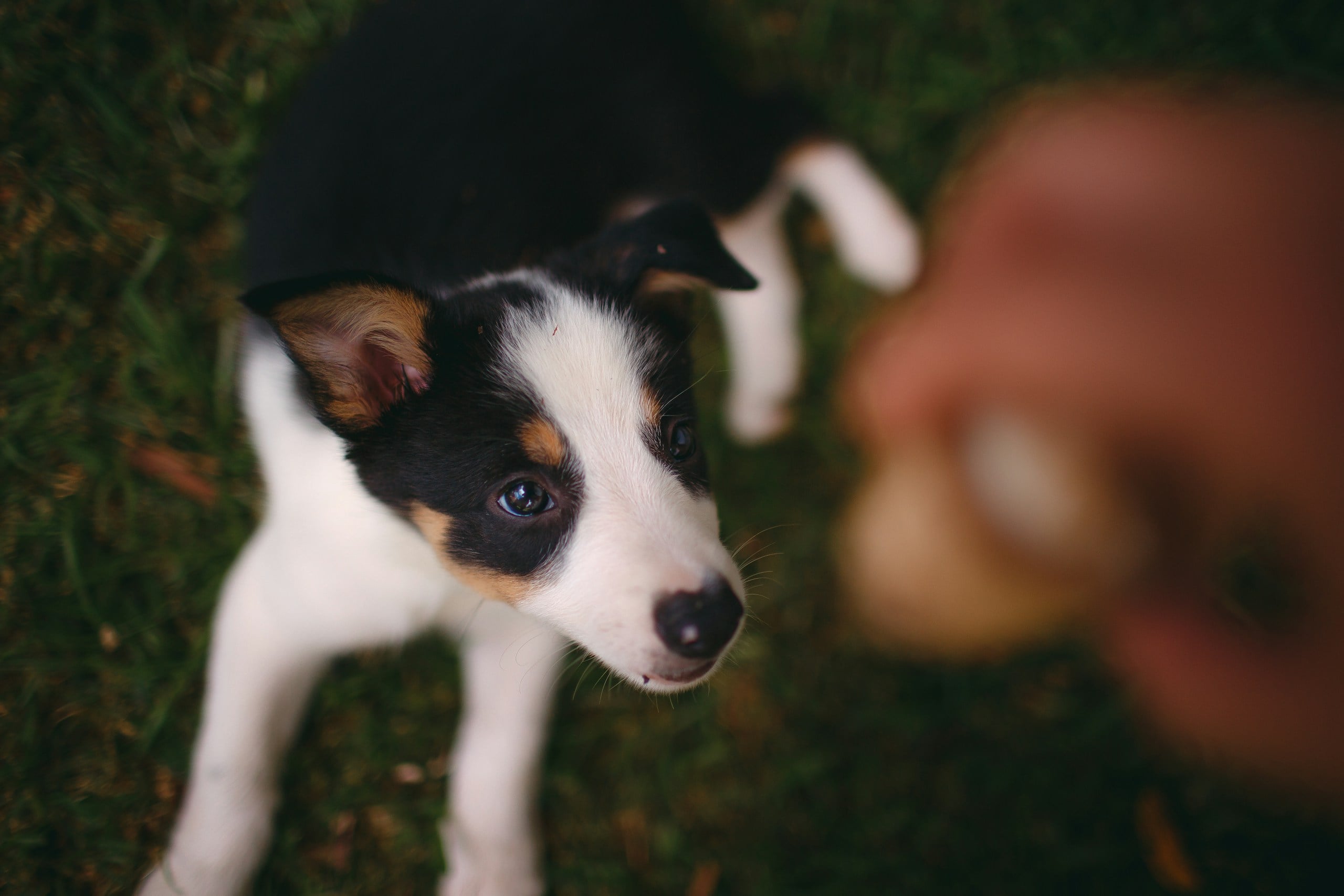
Never force your puppy closer to the thing that scared them, and avoid luring them forward with treats. This can backfire, as it puts pressure on them and may increase their anxiety. Instead, let them decide if and when they want to get closer. Reward any small signs of curiosity, such as looking at the object, stepping towards it, sniffing, or wagging their tail. This gradual, pressure-free approach helps build confidence over time.
4. Keep Training Sessions Short & Positive
Patience is key when working through fear. If your puppy doesn’t completely overcome their fear in one session, don’t worry – it’s completely normal. Keep interactions brief, fun, and stress-free. Even small bits of progress, like a hesitant sniff or a relaxed posture, are a step in the right direction.
Try to end on a positive note by rewarding your puppy with training treats, praise, or playtime to reinforce good experiences.
If your puppy becomes overwhelmed, end the session calmly and move somewhere they feel safe. You do not need to wait for a successful approach, a sniff, or a moment of calm before leaving. Next time, make the experience easier by increasing the distance or reducing its intensity.
5. Maintain A Calm, Casual Attitude In Future Sessions
Dogs take emotional cues from their owners, so they may become even more anxious if you make a big deal out of their fear. Instead, act as though the scary object is no big deal and continue to incorporate it into everyday life. Use a toy or fun activity to redirect their attention and help them engage with the object in a relaxed way. Let them explore at their own pace and remain at a comfortable distance.
When To Call Your Vet Or A Trainer
A developmental fear stage is one possible explanation for new uncertainty, but you do not have to wait for your puppy to “grow out of it” before asking for help.
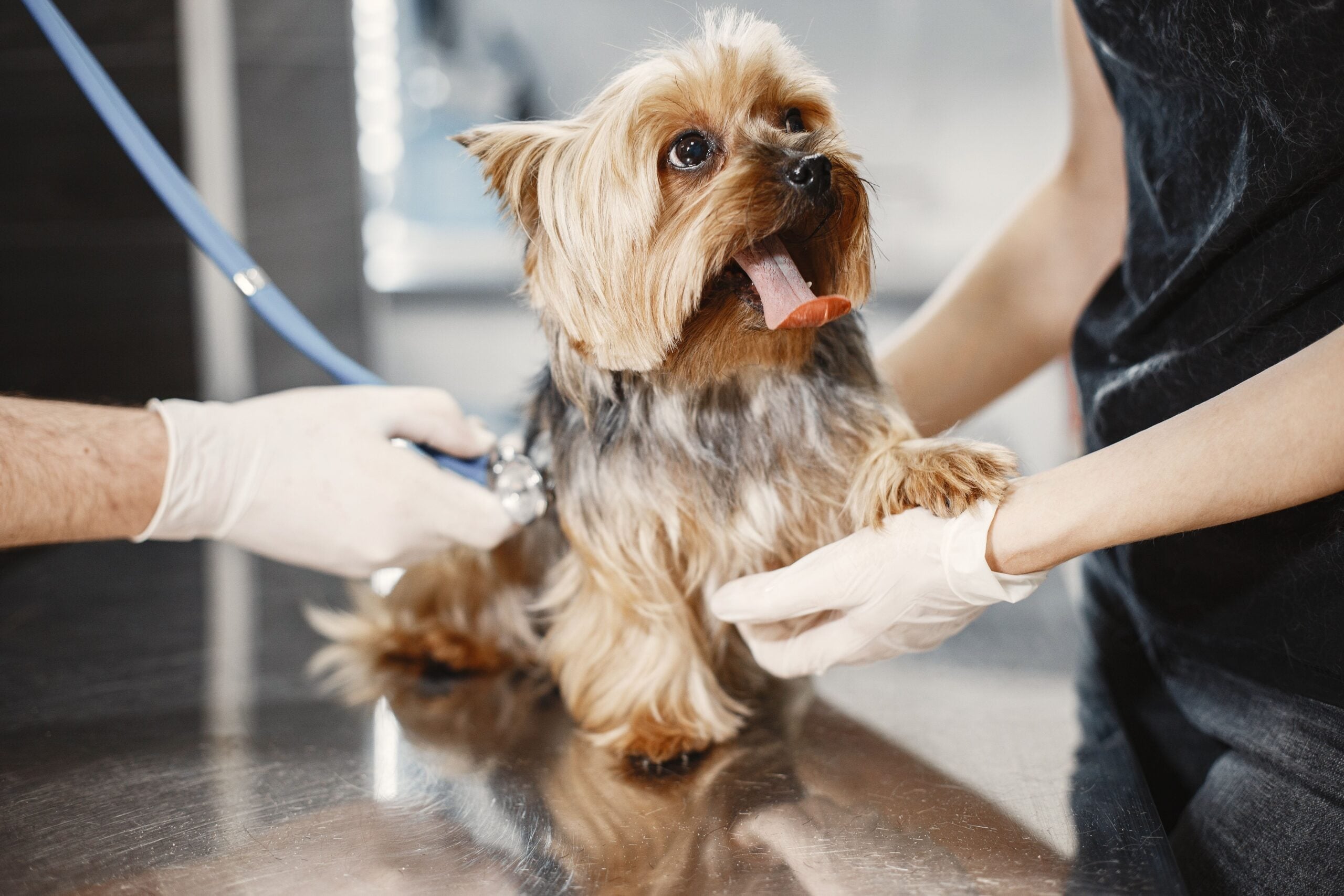
Contact your vet if:
- The behavior change is sudden, unexplained, or follows an injury.
- Your puppy also seems painful, limps, resists touch, eats less, or becomes unusually tired.
- Fear interferes with eating, sleeping, toileting, or normal daily activities.
- Their reactions are severe, worsening, or taking longer to settle after each encounter.
Contact a qualified, reward-based trainer if:
- Walks, visitors, or everyday sounds repeatedly trigger fear.
- Your puppy regularly freezes, hides, barks, or lunges despite gentler exposure and more distance.
- You need help reading their body language or planning manageable confidence-building exercises.
If your puppy snaps, bites, panics, or risks injuring themselves while escaping, contact your vet promptly and prevent further close encounters while you arrange support. Your vet may recommend a veterinary behaviorist for more complex concerns.
A short video, taken without provoking the reaction, and notes about triggers and recovery can help the professional understand what is happening.
Are Fear Periods The Same For All Breeds?
Your puppy’s breed cannot tell you exactly when a fear period will happen, how intense it will be, or how long it will last. Genetics, individual temperament, health, and previous experiences all contribute to how a puppy responds to unfamiliar situations.
Even two puppies of the same breed can react differently. One may bark at an unfamiliar object, while another freezes or backs away. An outgoing puppy can become temporarily cautious, and a quieter puppy may investigate comfortably when given enough space.
Watch the puppy in front of you rather than relying on breed expectations. A Labrador who usually loves visitors still needs an escape route when overwhelmed. A small puppy should have the same choice about greetings rather than being held in place for someone to pet.
Whatever their breed or size, adjust the distance, intensity, and pace of new experiences to their comfort level. If fear becomes persistent or disrupts daily life, seek help rather than assuming it is typical for their breed.
Most Important Canine Fear Period Takeaways
- Be Patient & Don’t Panic. Keep a calm and reassuring attitude, as puppies can pick up on their owner’s anxiety and may become more scared if they sense distress.
- Individual Variability. Even within a breed, each puppy is unique. Genetics, early socialization, and previous experiences greatly influence how fear periods manifest. Two puppies of the same breed may react differently. One might breeze through fear periods with little issue, while another might need extra reassurance and training.

Frequently Asked Questions
We understand that puppy fear periods can be a confusing and sometimes stressful part of raising a young dog. Every puppy is different, and their experiences during these developmental stages can vary. That’s why we’re here to help! If you don’t see your question answered in our FAQ section,
I encourage you to ask us in the comments. Your experiences and questions can also help other puppy owners facing the same challenges. So don’t hesitate to share your concerns, and let’s navigate this critical stage of puppyhood together!
Should I Pick Up My Puppy When They’re Scared?
Picking your puppy up can be appropriate if you need to move them out of danger or they are comfortable being carried. Avoid scooping them up if being lifted frightens them further, and never hold them in place so someone can pet them. When it’s safe, let them retreat on their own or calmly guide them away. The goal is to provide safety and choice.
Can A Bad Experience During A Fear Period Have Long-Term Effects?
A frightening experience can contribute to lasting fear, but one upsetting encounter does not mean your puppy will develop lifelong anxiety. Give them time to recover, avoid repeating an overwhelming situation, and make future exposure gentler. Seek support if their fear persists or worsens.
Should I Socialize My Puppy During A Fear Period?
Yes, but focus on comfortable experiences rather than meeting everyone or exploring everything. Watching people from a distance can be enough; your puppy does not need to greet them. Allow retreat, avoid crowded or overwhelming settings, and follow your vet’s guidance on safe socialization while vaccinations are underway.
Will My Puppy Grow Out Of Their Fears?
Most puppies naturally move past fear periods. However, fears that are reinforced through negative experiences or lack of exposure may persist into adulthood. Consistent, positive reinforcement can help prevent long-term issues.
When Should I Seek Professional Help For Fear Periods In Dogs?
If your puppy’s fear is extreme, persistent, or worsens over time, consult a professional trainer or behaviorist. Early intervention can help prevent fear from turning into lasting anxiety or aggression. We have reviewed the best dog training apps to help you train your pup at any time, as well as professional help from trainers such as DIYK9.
Other Puppy Must-Haves
Bringing home a new puppy is an exciting adventure, and having the right essentials can set them up for a happy, healthy start. A high-quality puppy diet tailored to their nutritional needs is crucial for proper growth and development, providing essential vitamins, minerals, and protein. Puppy teething toys are a must to soothe sore gums and prevent destructive chewing on furniture or shoes. A puppy checklist can help ensure you don’t forget essential items. Additionally, setting up a safe space with a puppy playpen can give your pooch a sense of security as they adjust to their new home. With the right supplies and preparation, you’ll be ready to welcome your furry friend and help them thrive through their fear periods!
Do you have a puppy going through canine fear periods? Perhaps you’re unsure whether your puppy is going through a puppy fear stage and need some advice. Get in touch with us in the comments section below.