When you purchase through links on our site, we may earn a commission at no extra cost to you. Learn more.
If you’re choosing between a Poodle and a Goldendoodle, chances are you’re stuck on the same questions. Which one sheds less, triggers fewer allergies, and is easier to live with long term?
Table of Contents
Poodles and Goldendoodles look similar on the surface. But once you get past appearances, they can fit into daily life very differently.
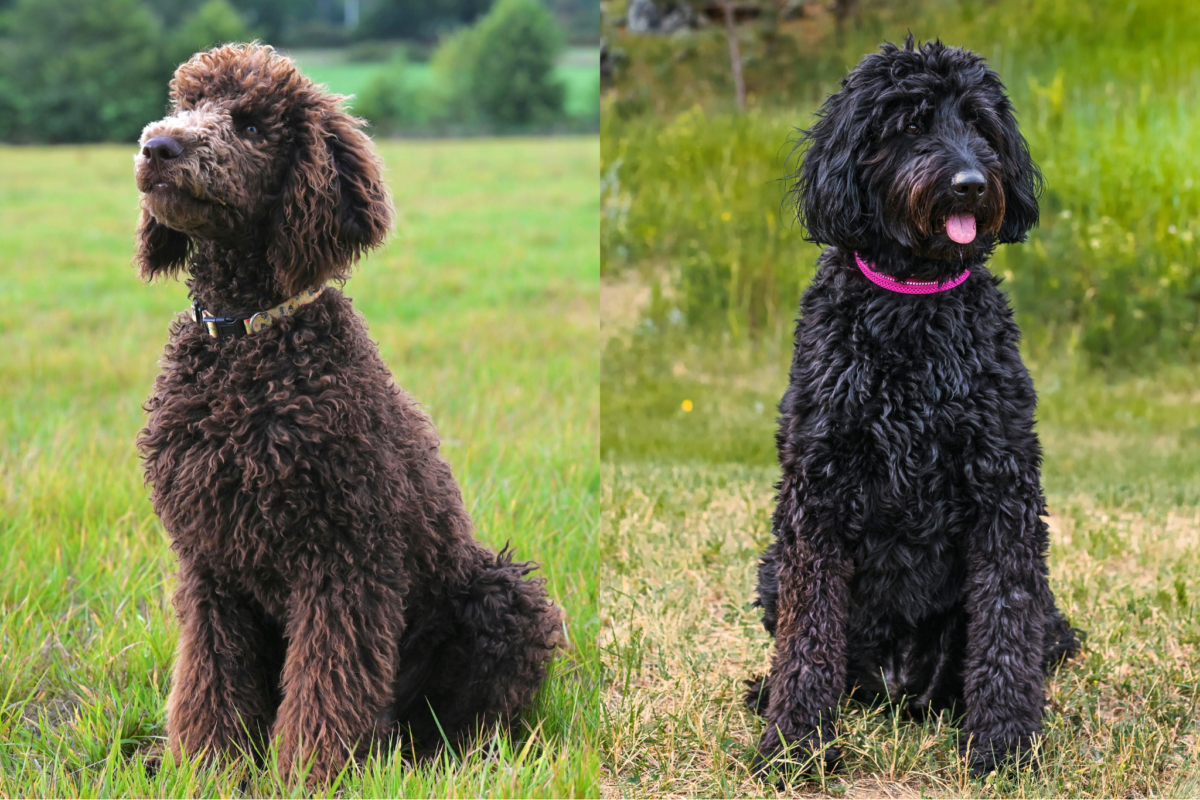
Breed Comparison
- SizeSmall → Large (Toy → Standard)
- SizeUsually Larger
- CoatCurly, low shedding
- CoatWavy/curly, may shed more
- TemperamentSmart, alert, sometimes serious
- TemperamentFriendly, playful, retriever-like
- EnergyHigh
- EnergyHigh
- GroomingHigh
- GroomingHigh
- Lifespan12-15 Years
- Lifespan10-15 Years
- Puppy Prices$1,000+
- Puppy Prices$1,000+
Start Here: The Assumption Almost Everyone Gets Wrong
Most people assume Goldendoodles are the safe choice for allergy sufferers and those with shedding concerns. That assumption alone drives a considerable number of doodle purchases.
Here’s the reality. Goldendoodles are less predictable than Poodles, especially when it comes to coats, shedding, and grooming needs.
When you choose a Poodle, you’re choosing consistency. When you select a Goldendoodle, you’re choosing a range of outcomes, and not all of them match what people expect.
If allergies, shedding, or maintenance matter to you, this difference changes everything.
The Coat Question (Shedding, Allergies & The Hypoallergenic Myth)
This is the decision point most people care about, even if they don’t realize it yet.
Neither Poodles nor Goldendoodles are truly hypoallergenic. That said, Poodles are far more predictable for allergy-sensitive homes.
Why Poodles Are More Consistent
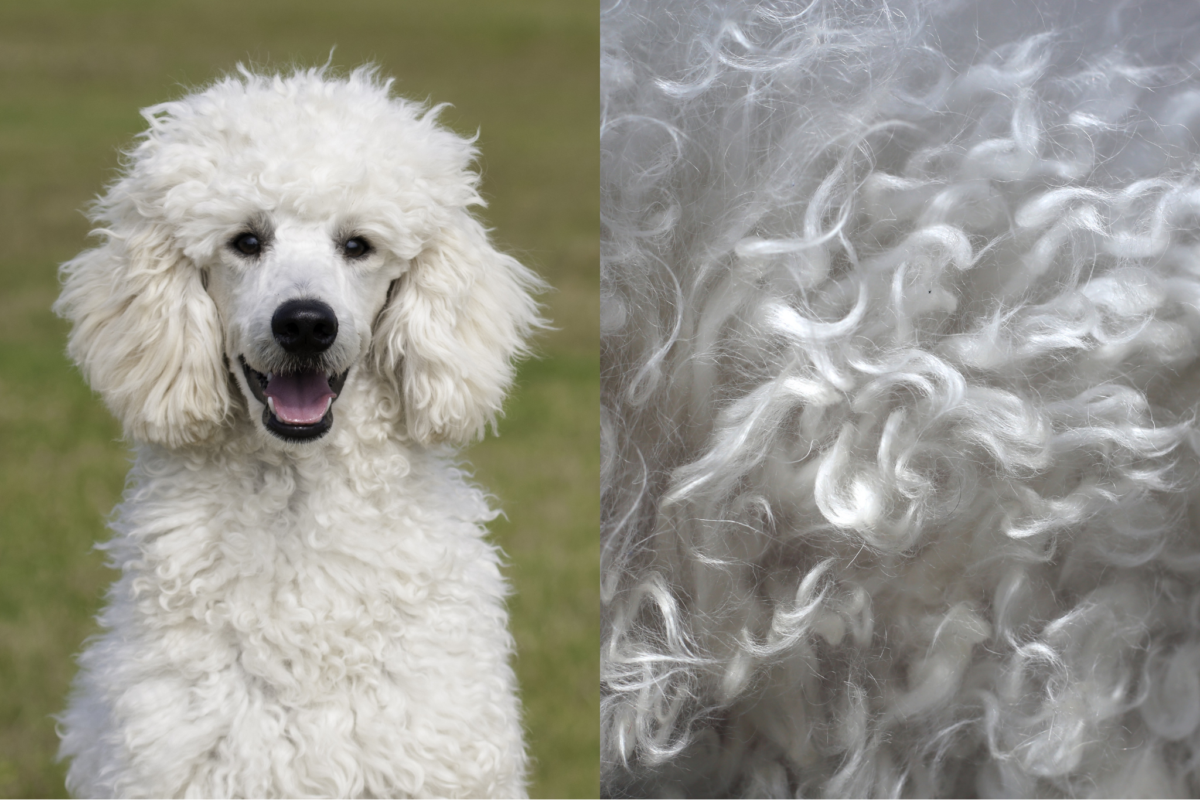
- Poodles have a single coat with dense, uniform curls
- They shed very little compared to most breeds
- Dander stays trapped in the coat instead of spreading around the home
This consistency is why Poodles are often recommended for people with mild to moderate allergies.
Why Goldendoodles Are A Gamble
Goldendoodles inherit traits from both Poodles and Golden Retrievers. That includes coat texture, shedding level, and dander production.
Depending on genetics, a Goldendoodle’s coat may be:
- Curly and low shedding
- Wavy with moderate shedding
- Straighter and closer to a Golden Retriever coat
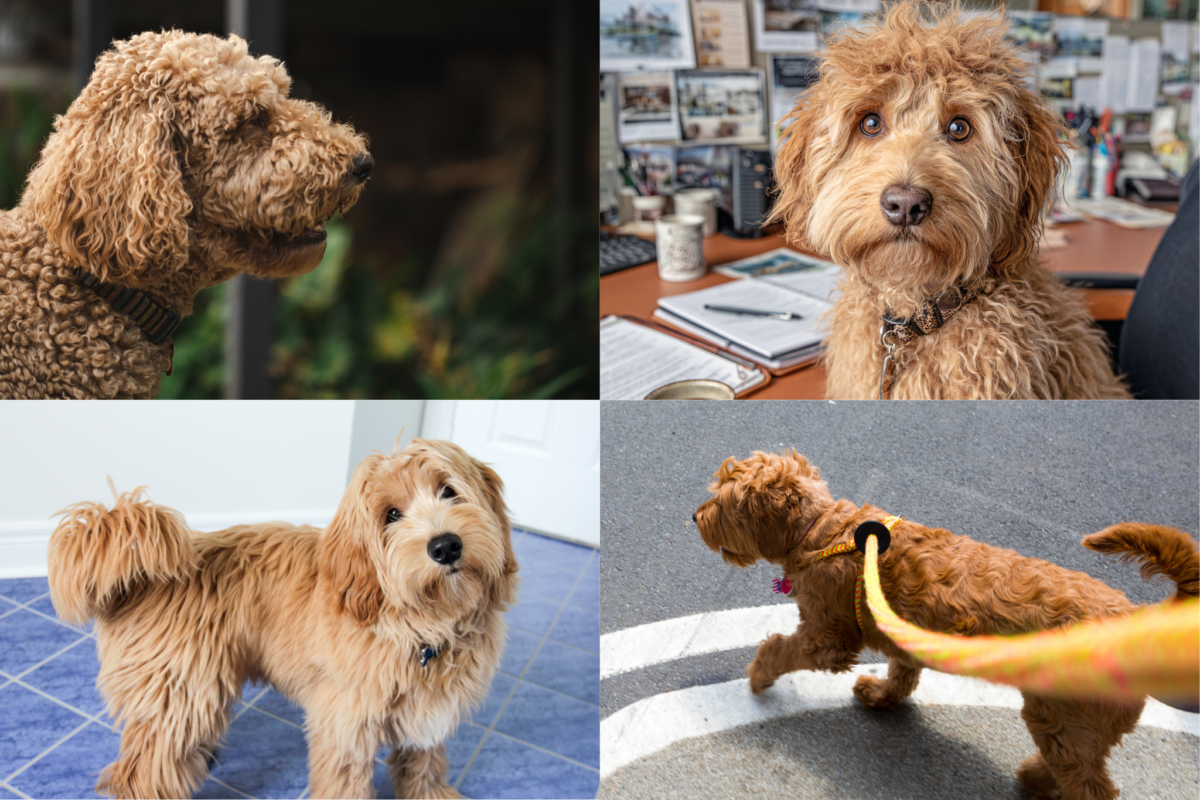
Two Goldendoodles from the same litter can shed very differently. This unpredictability is where many allergy-sensitive owners get caught off guard.
Why Goldendoodle Generation Matters So Much
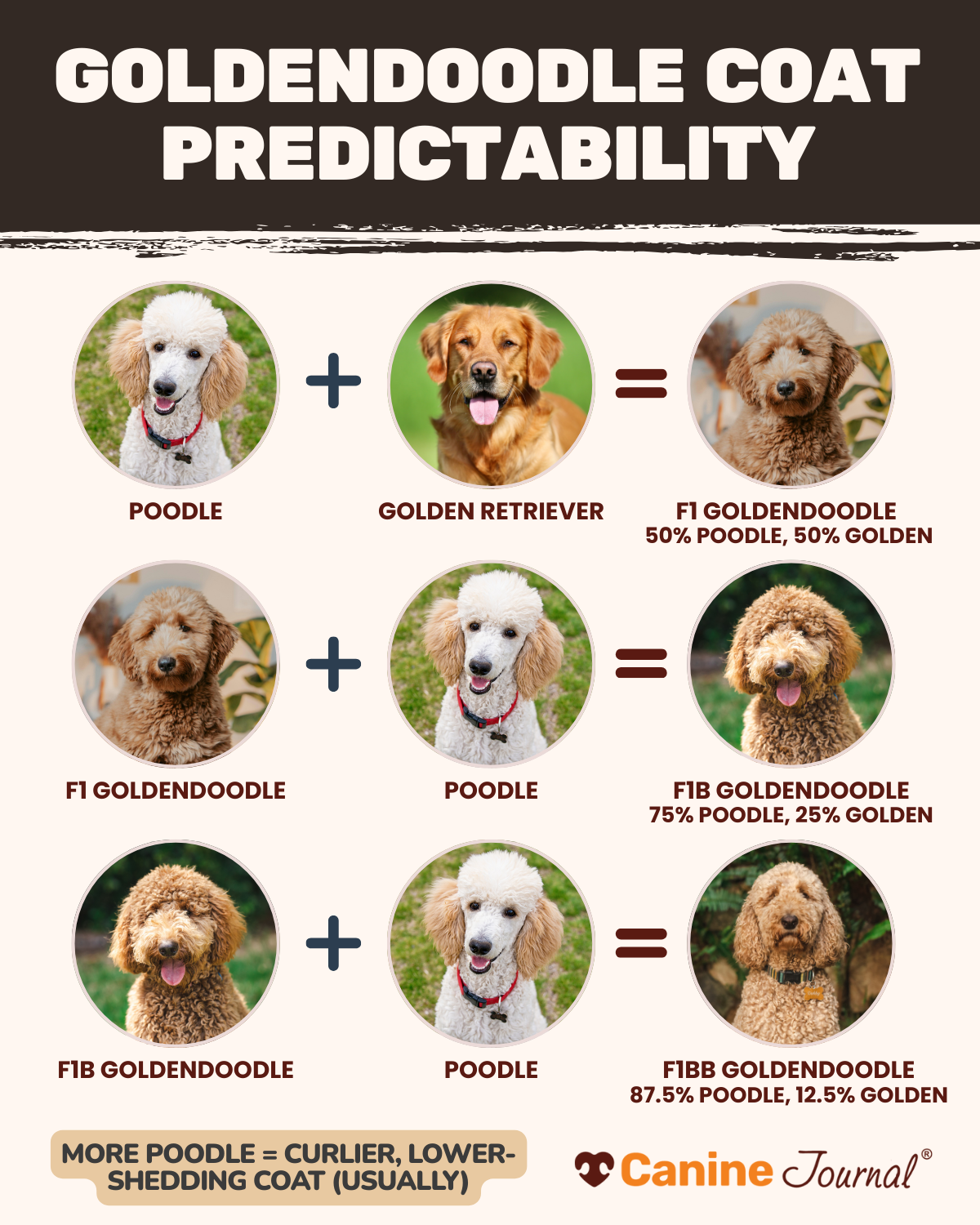
Not all Goldendoodles are bred the same, and generation plays a major role in coat predictability.
- F1 Goldendoodles (50% Golden Retriever, 50% Poodle) are the most unpredictable
- F1B Goldendoodles (75% Poodle) are typically fluffier and lower shedding
- F1BB Goldendoodles (87.5% Poodle) offer the best odds for a virtually non-shedding dog and allergy-friendly homes
They Look Similar, But They’re Built Very Differently
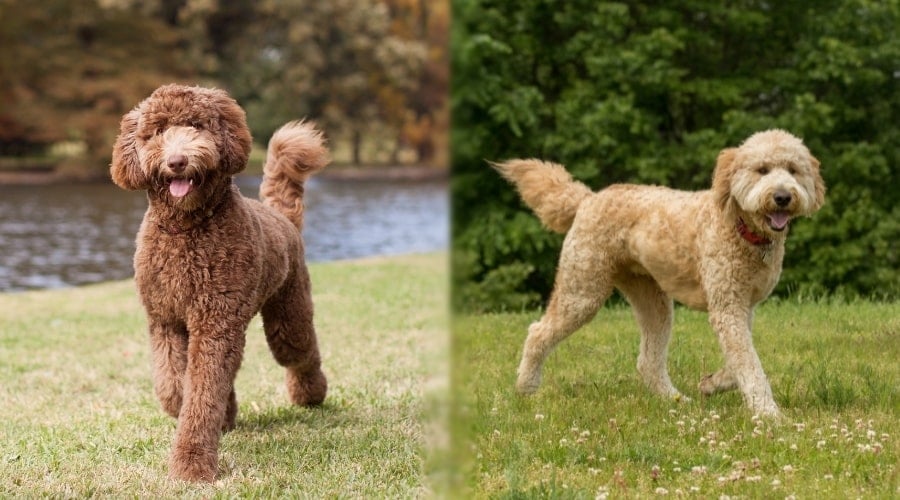
At first glance, Poodles and Goldendoodles can look nearly identical. In practice, their size, weight, and overall build often diverge more than people expect.
Size & Weight
Poodles come in established size categories, which makes adult height and weight easier to anticipate. Goldendoodles, including miniatures, may grow larger or heavier than expected depending on parentage. This difference matters when planning for space, food costs, and long-term care.
| Dog | Height | Weight |
|---|---|---|
| Standard Poodle | 15+ in. | 40-50 lbs. (female), 60-70 lbs. (male) |
| Miniature Poodle | 10-15 in. | 10-15 lbs. |
| Toy Poodle | Under 10 in. | 4-6 lbs. |
| Goldendoodle | 20+ in. | 50-90 lbs. |
| Miniature Goldendoodle | 13-20 in. | 15-35 lbs. |
Body Shape & Build
Poodles have a lean, athletic frame with long legs, a defined waist, and a square, balanced stance. They’re built for movement and endurance.
Goldendoodles often have a broader chest and heavier body, especially when Golden Retriever traits dominate. Some lean athletic, while others take on a stockier, more retriever-like build.
Face & Expression
Poodles typically have a longer, narrower muzzle and a more refined head shape. Their expression often reads alert and focused.
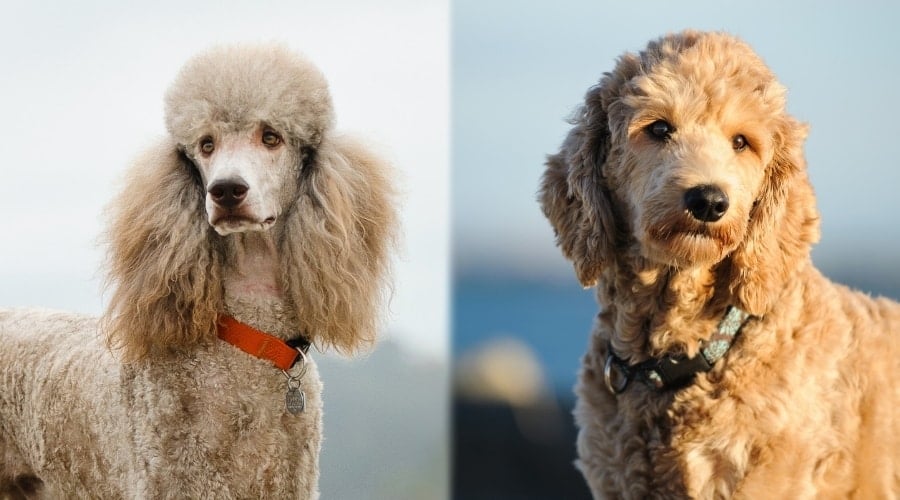
Goldendoodles usually have a rounder face and wider muzzle, giving them a softer, teddy-bear appearance. This varies significantly by generation and coat type.
Coat Texture & Color Variety
Both breeds are known for their curls, but the similarities often stop there. Poodles have long coats with tight, uniform curls, while Goldendoodles may have curly, wavy, or loose coats depending on their genetics.

Poodles come in a wide range of solid colors, including apricot, black, brown, red, cream, white, silver, and blue. Goldendoodles also come in many colors thanks to their Poodle parentage, but they’re more likely to display mixed colors or patterns.
Common Goldendoodle coat patterns include:
- Abstract (Mismarks): A solid base color with white markings on the chest, paws, or face
- Parti: A mostly white coat with large patches of another color
- Phantom: Defined cream, golden, or red markings on a solid black or brown base, often around the eyes, chest, and legs
- Merle: A marbled or mottled pattern that lightens random sections of the coat, creating a speckled appearance
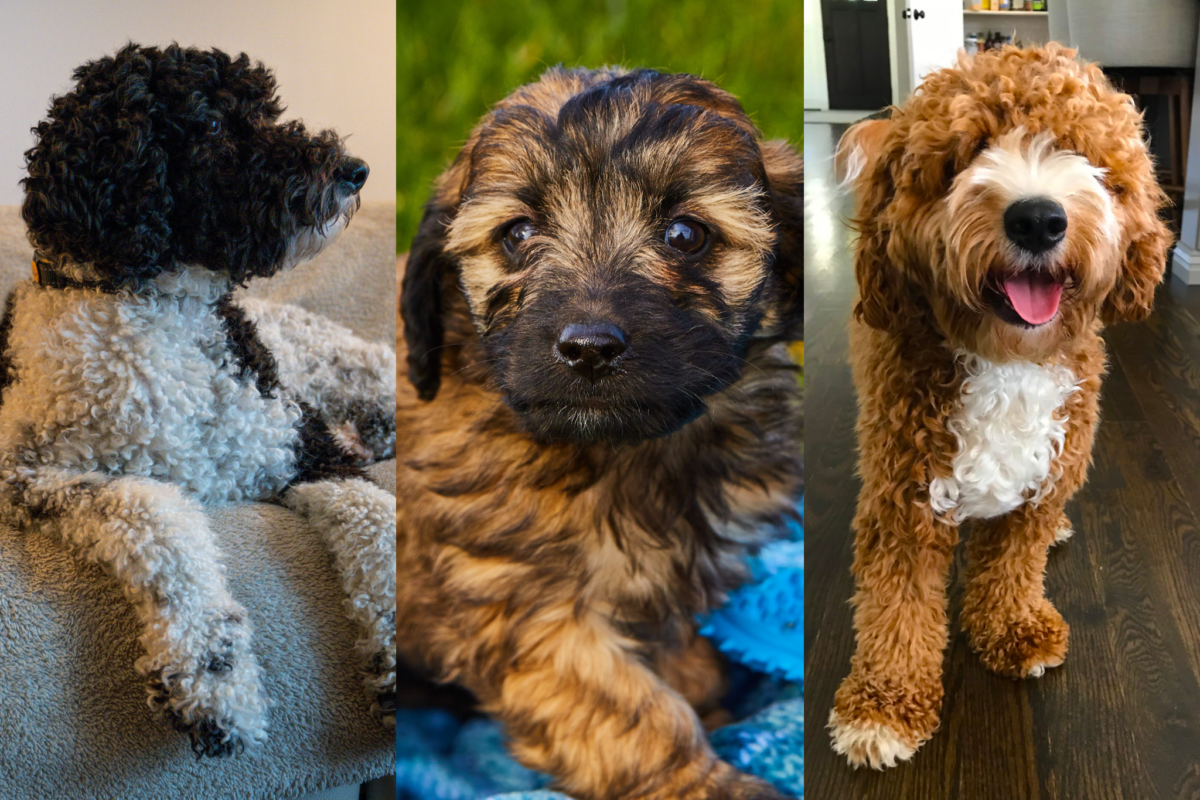
Important Merle Safety Note: The merle gene is linked to an increased risk of blindness and deafness when two merle-carrying dogs are bred together. For this reason, merle coats should only be produced by highly knowledgeable breeders who genetic-test parents and understand merle inheritance.
Same Smarts, Different Energy (Temperament & Personality)
Both Poodles and Goldendoodles are highly intelligent. Where they differ is how that intelligence shows up in everyday life.
Poodles are extremely smart, focused, and alert. They thrive on structure, stimulation, and having a job, even if that job is learning tricks or following routines.
Poodles are also notorious for being stubborn. They often use their intelligence to test boundaries or find loopholes in commands, which can be funny and impressive at first, but frustrating without consistent training.
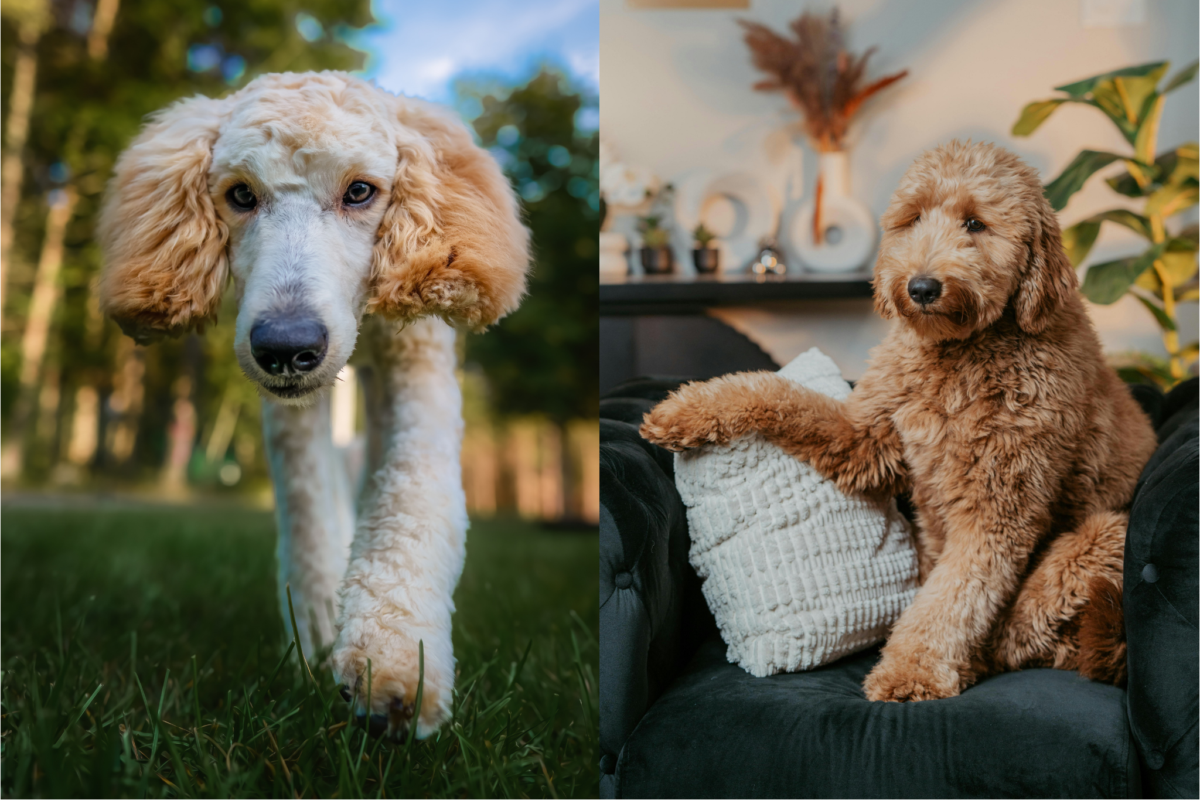
Goldendoodles were intentionally bred to combine the Golden Retriever’s friendly, eager-to-please nature with the Poodle’s low-shedding coat. As a result, they tend to be more go-with-the-flow and forgiving of imperfect training.
Their playful and sometimes goofy nature is often mistaken for lower intelligence. In reality, Goldendoodles are highly trainable and eager to please.
What That Feels Like At Home
- Poodles notice everything and respond quickly
- Goldendoodles are more likely to roll with the routine
- Poodles get bored faster without mental work
- Goldendoodles tolerate downtime more easily
Neither temperament is better. They simply demand different levels of structure and engagement from their owners.

Quick Takeaway: Type A vs Type B Personalities
Poodles often resemble Type A personalities.
They’re driven, alert, detail-oriented, and always two steps ahead. They love structure, notice inconsistencies immediately, and will absolutely exploit a loophole if you leave one open.
Goldendoodles lean more Type B.
They’re relaxed, adaptable, patient, and happy to go along with the plan, even if the plan changes five minutes later. They’re less likely to stress over perfection and more likely to roll with daily life.
This difference doesn’t affect the dog’s intelligence. It affects how much structure the dog expects from you.
Which One Fits Your Life Better?
This is where the decision usually becomes clear. Both dogs can thrive in many homes, but one will usually feel easier depending on your lifestyle, schedule, and expectations.
A Poodle may be a better fit if:
- You want predictability in coat and shedding
- You enjoy training, structure, or dog sports
- You’re home often and like active engagement
A Goldendoodle may be a better fit if:
- You want a laid-back family companion
- You want an affectionate, adaptable dog
- You’re okay with coat variability
Neither choice is wrong. Problems usually happen when expectations don’t match reality.
Training, Energy & Living With Them Day To Day
Both breeds are easy to train compared to many dogs. They’re eager to please and respond well to positive reinforcement.
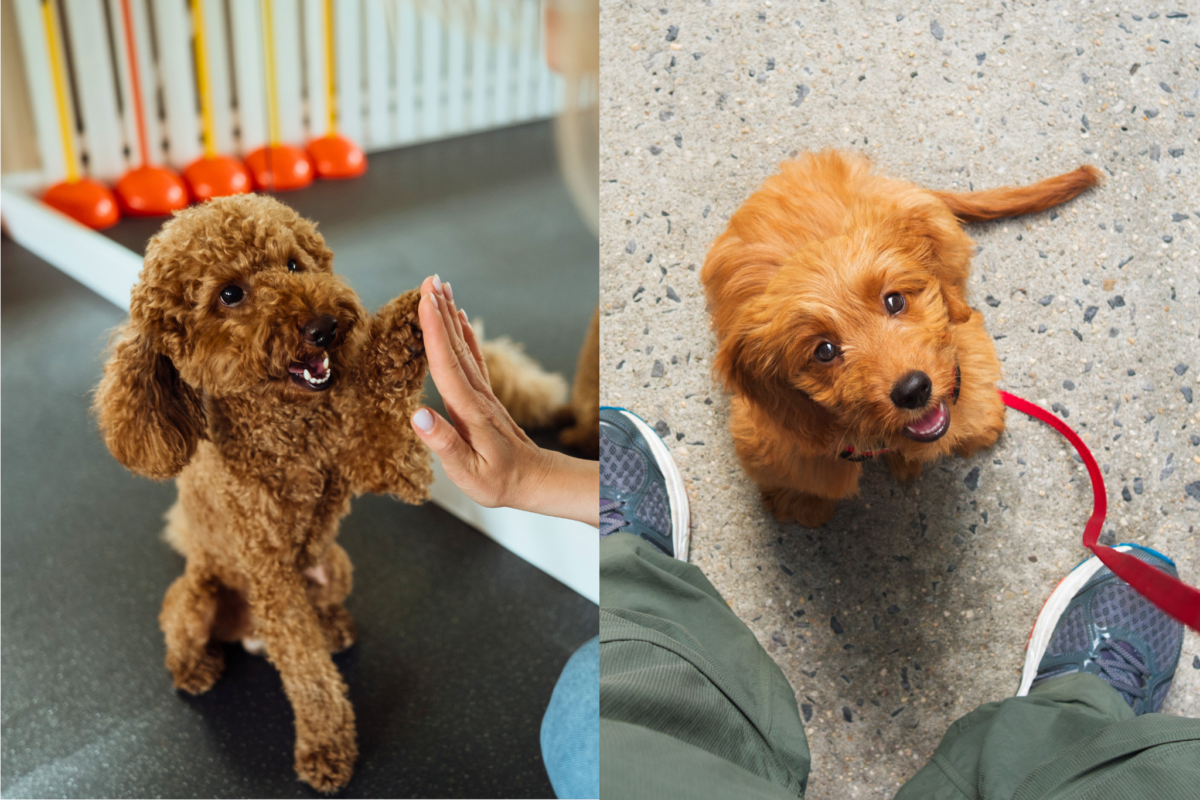
That said, Poodles tend to learn faster and retain more consistently. It’s no wonder they always seem to be a prime choice for show dogs!
Energy Management Matters
Poodles need both physical and mental exercise. Without it, they can become restless or destructive.
Goldendoodles still need daily activity, but they’re more likely to relax once their basic needs are met.

What Daily Life Usually Looks Like
- Poodles thrive on routines and challenges
- Goldendoodles thrive on companionship and consistency
- Both benefit from daily walks and play
- Both can struggle with anxiety if under-stimulated
If you enjoy teaching, refining, and engaging, Poodles shine. If you want a dog that fits into family rhythms with less intensity, Goldendoodles often feel easier.
The Health Tradeoffs Nobody Explains Clearly
Both Poodles and Goldendoodles are generally healthy dogs. The difference lies in the sources of their health risks.
What Poodles Are More Prone To
Poodles are purebred, which means their potential issues are well documented and relatively predictable:
- Addison’s disease
- Progressive retinal atrophy
- Hip dysplasia
- Thyroid disorders
- Certain skin conditions
Responsible breeding helps reduce these risks, but they’re still part of the breed’s genetic profile. Read more about Poodle health issues.
What Goldendoodles Can Inherit
Goldendoodles are a mixed breed, which can reduce some risks but introduce others. They can inherit health issues from both parent breeds, including:
- Hip and elbow dysplasia
- Cancer risks associated with Golden Retrievers
- Allergies and chronic skin issues
- Eye and heart conditions
Hybrid vigor is possible, but it’s not guaranteed. Health outcomes still depend heavily on breeder quality. Learn more about Goldendoodle health issues.
Grooming Is The Hidden Cost (Time, Money & Commitment)
Both Poodles and Goldendoodles require regular grooming. In practice, Goldendoodles often take more effort and flexibility than people expect, while Poodles require consistent upkeep that doesn’t change much over time.

Grooming A Poodle
Poodles have a dense, single coat that gives them a uniform, fluffy appearance. Coat texture can range from looser curls to tight curls, but it’s typically thick and wool-like rather than shedding.
- Daily or near-daily brushing for non-shaved coats
- Professional grooming every 4–8 weeks
- Low shedding, but matting can occur in high-friction areas like the ears, collar line, and armpits.
Grooming A Goldendoodle
Some Goldendoodles inherit tight, low-shedding curls similar to a Poodle. Others have wavier, mixed coats that mat more easily and require frequent brushing and professional care. Learn more about Goldendoodle shedding.
- Coat texture varies widely
- Professional grooming every 6–8 weeks is typical
- Matting is common with wavy or “in-between” coats
The Fun Part: Styling
Grooming isn’t just maintenance. For many owners, it’s part of the appeal.
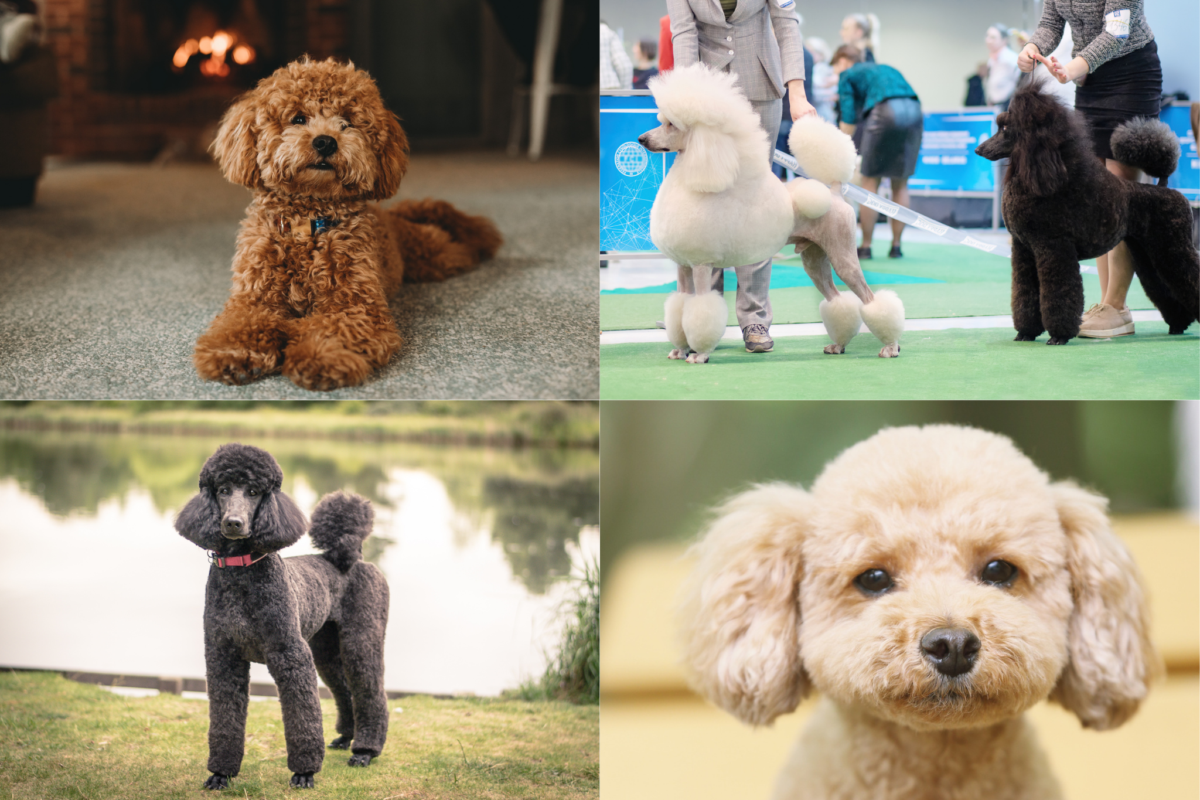
Poodles are exceptionally versatile because their coat holds volume and structure. Popular styles include:
- Puppy cut
- Teddy bear cut
- Lamb cut
- Miami cut
- German cut
- Modern or Scandinavian cut
- Continental cut
Can choose a cut based on how much brushing, shaping, and upkeep you’re willing to commit to for maintenance.
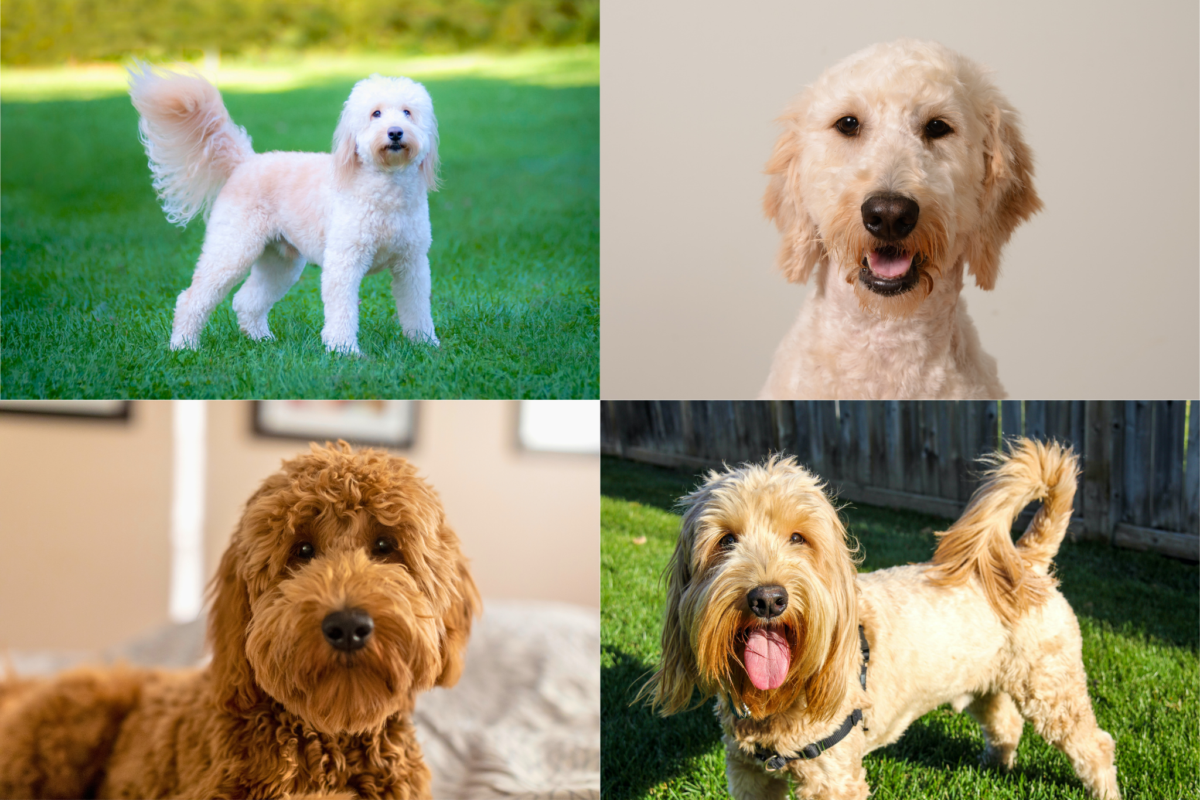
Goldendoodles can wear many of the same styles, with a few extras like the bearded cut and mullet cut.
The Teddy Bear Cut is especially common for Goldendoodles. It features a rounded face and a shorter, even body coat, giving a soft, plush look while making maintenance more manageable.
Nutrition
Both breeds do best on a high-quality, age-appropriate diet. Portion size depends more on size and activity level than breed.
Standard Poodles and standard Goldendoodles eat similar amounts. Smaller versions of either breed require significantly less food. For more guidance, view our Goldendoodle and Poodle feeding charts.
What Matters Most
- Consistent feeding schedule
- Proper portion control
- Weight monitoring, especially in less active dogs
Both breeds can gain weight easily if overfed. Treats and table scraps add up faster than most owners realize.
A Quick Look At Where These Dogs Came From (And Why It Matters)
Poodles were originally bred as a working dog breed, primarily as a water retriever for hunters. Intelligence, athleticism, and responsiveness were essential traits.
Goldendoodles were intentionally bred as companion dogs. The goal was to combine friendliness with lower shedding.
That difference still shows up today. Poodles often crave purpose, while Goldendoodles tend to prioritize connection and adaptability.
Other Poodle Mixes People Often Consider
If you’re drawn to Goldendoodles, you may also see these mixes during your search:
- Labradoodle – Typically more athletic and high-energy than Goldendoodles, with stronger working-dog drive and similar grooming demands.
- Bernedoodle – Known for a calmer, more cuddly temperament, but often larger, heavier, and higher-maintenance in both grooming and health.
- Cockapoo – Smaller, more compact, and often easier to manage in apartments, though still prone to matting and separation anxiety.
- Cavapoo – A very affectionate, people-oriented companion with lower exercise needs, but often more sensitive and dependent than other doodle mixes.
Each comes with its own mix of predictability, grooming needs, and temperament tradeoffs. View our full guide to 60+ Poodle mixes.
Quick Verdict: Poodle Or Goldendoodle?
Choose a Poodle if you want:
- Predictable coat and shedding
- Strong trainability
- Structure and mental challenge
- Better allergy consistency
Choose a Goldendoodle if you want:
- A relaxed family companion
- Social flexibility
- A softer energy level
- Willingness to accept coat variability
The best choice isn’t about trends. It’s about which dog fits your life without forcing compromises you didn’t expect.
Frequently Asked Questions
If you’re still deciding between a Poodle and a Goldendoodle, these are the questions most future owners ask right before committing. The answers below focus on real-world ownership, not just breed descriptions.
Don’t see your question? Respond in the comments, and we’ll get back to you!
Are Goldendoodles Hypoallergenic?
No dog is truly hypoallergenic. Some Goldendoodles shed very little, but others shed more, depending on which parent’s coat they inherit.
Do Goldendoodles Shed More Than Poodles?
Often, yes. Poodles have consistently low-shedding coats, while Goldendoodles can shed anywhere from very little to moderate amounts.
Which Is Easier To Train, A Poodle Or Goldendoodle?
Poodles tend to learn faster and retain training more consistently, while Goldendoodles are still easy to train but often more relaxed about precision. That said, Poodles can be stubborn, so training takes patience.
Which Breed Is Better For Families With Kids?
Both can be excellent family dogs. Goldendoodles are often more laid-back, while Poodles do best with families who enjoy training and structured activity.
Are Goldendoodles Healthier Than Poodles?
Not necessarily. Goldendoodles may benefit from hybrid vigor, but they can also inherit health issues from both parent breeds.
Still Deciding Between A Poodle & A Goldendoodle?
If you’re narrowing down your choice, a few deeper dives can help clarify what daily life really looks like with each breed. These guides break down grooming needs, health considerations, and long-term care so there are no surprises later.
- Common Poodle health issues and what to watch for over time
- How Goldendoodle shedding can vary
- Get tips on choosing a reputable breeder or adoption path
Taking a little extra time to research now can make the difference between a dog that fits your life and one that constantly feels like a compromise.