Bernedoodle vs Goldendoodle: Two Doodles, Two Very Different Dogs — Here’s How To Choose

When you purchase through links on our site, we may earn a commission. Here’s how it works.
Choosing between a Bernedoodle and a Goldendoodle can feel like choosing between two versions of the same dog.
Table of Contents
They’re both doodles. Both fluffy. Both marketed as family-friendly, intelligent, and low-shedding.
That’s where a lot of people get stuck — and where many end up with a dog that technically fits the description, but doesn’t actually fit the way they live.
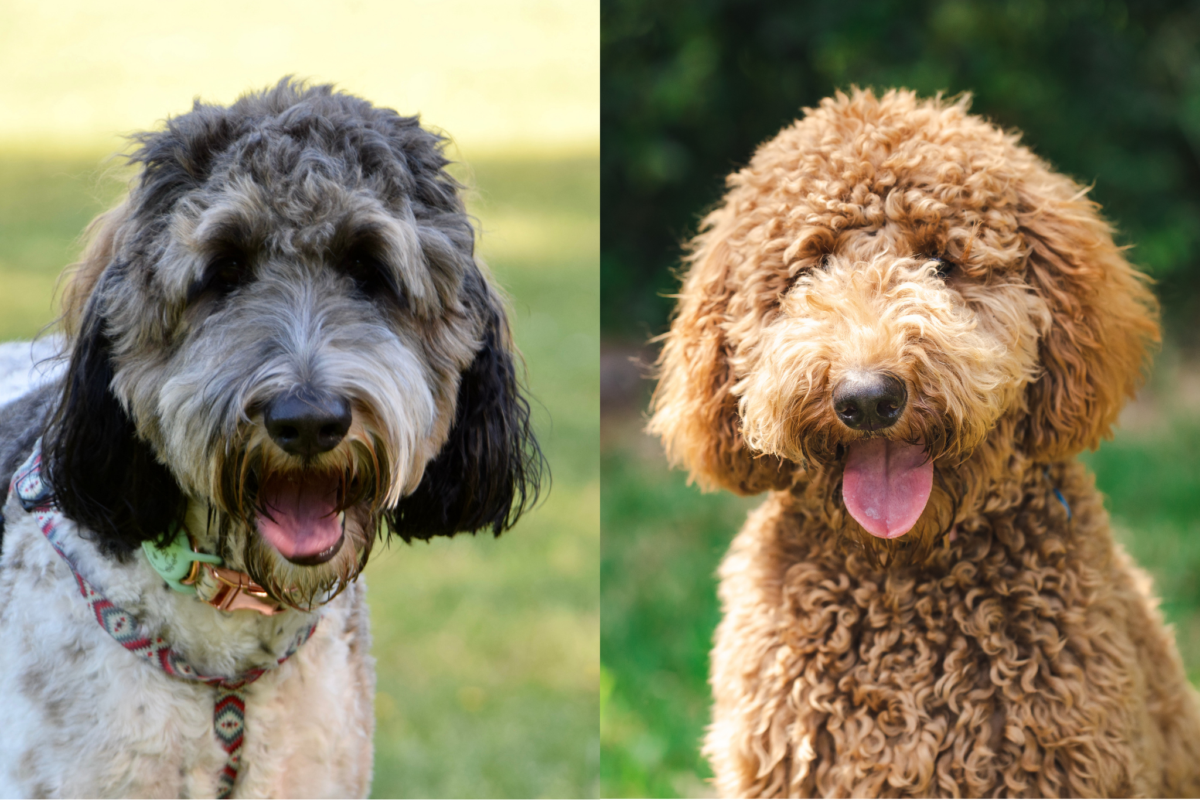
Breed Comparison
- Height22–27 in.
- Height20–24 in.
- Weight55-100+ lbs
- Weight50-90 lbs
- TemperamentGood-Natured, Affectionate, Protective
- TemperamentFriendly, Playful, Affectionate
- EnergyHigh
- EnergyHigh
- HealthAverage
- HealthAverage
- Lifespan9-14 Years
- Lifespan10-15 Years
- Price$2,000 and Up
- Price$1,000 and Up
Same Doodle Label, Very Different Dogs
Bernedoodles and Goldendoodles share the doodle label, but they were created for different reasons.
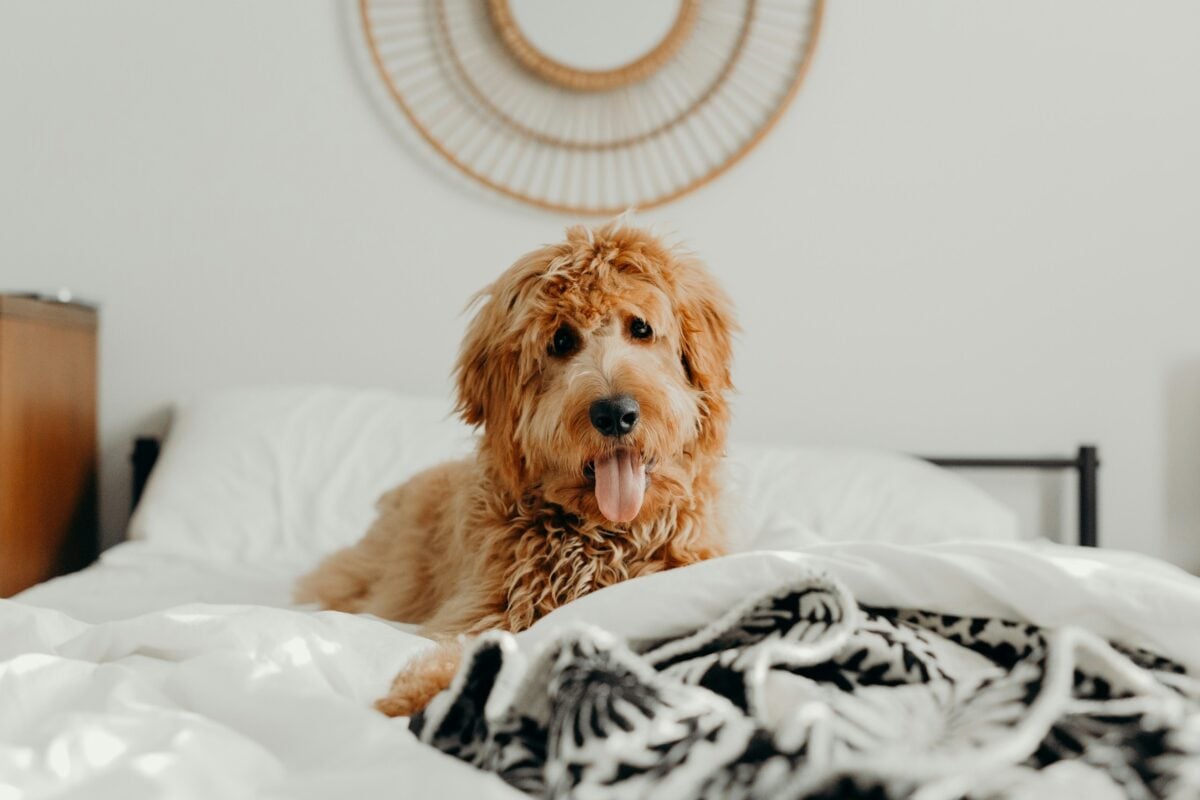
Goldendoodles appeared in the early 1990s as breeders looked to combine the Poodle’s intelligence and lower-shedding coat with the Golden Retriever’s famously friendly temperament. The goal was a social, forgiving family dog that fit easily into busy homes.
That design focus shows up in how Goldendoodles often interact with people. They tend to be outwardly social, quick to engage, and comfortable being part of constant activity.
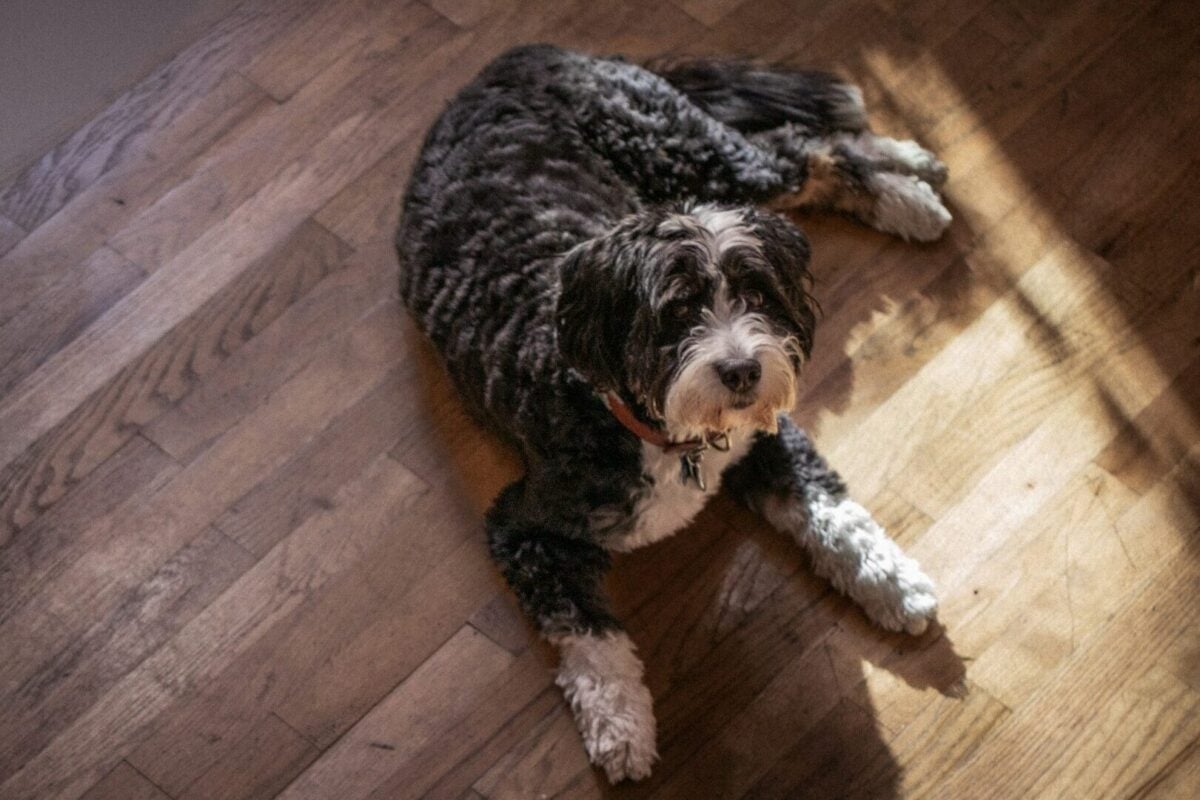
Bernedoodles were developed later by mixing the Poodle with the Bernese Mountain Dog. The goal was a dog with a calmer presence and steadier emotional tone, while still being intelligent and trainable.
The Bernese influence often brings a more observant, grounded feel. Many Bernedoodles are content to stay close without needing constant interaction.
Both mixes were bred with families in mind. But they were never meant to feel the same inside a home.
Goldendoodle vs Bernedoodle: Head To Tail
Bernedoodles and Goldendoodles can look very similar at a glance. The differences become clearer when you break them down head to tail, especially when it comes to size, structure, and overall build.
Size & Weight Differences (Standard, Mini, Micro Reality)
Both Bernedoodles and Goldendoodles come in a wide range of sizes depending on the Poodle parent. In practice, Bernedoodles often feel heavier and more substantial at the same height.
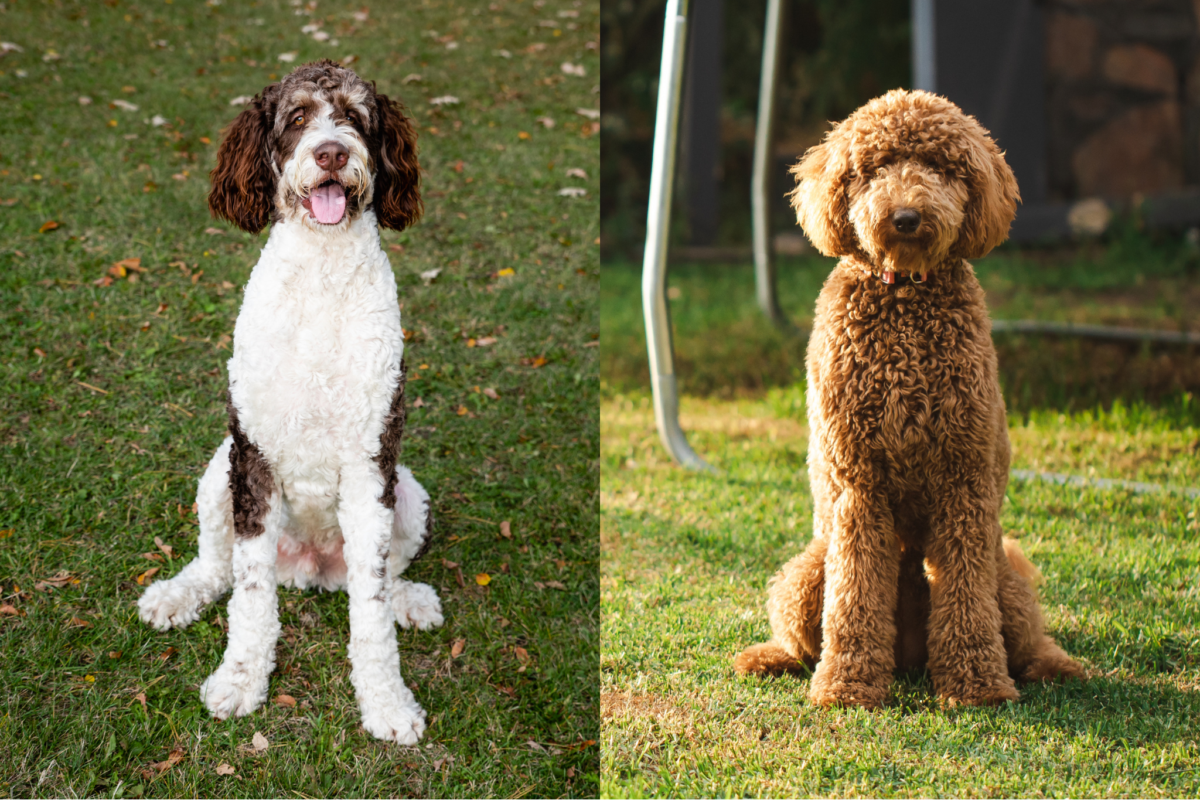
Standard Bernedoodles typically weigh more than standard Goldendoodles, even when their height is similar. Mini and smaller versions can overlap in size, but Bernedoodles still tend to carry more mass.
| Dog | Height | Weight |
|---|---|---|
| Standard Goldendoodle | 20–24 in. | 50–90 lbs. |
| Mini Goldendoodle | 13-20 in. | 15-35 lbs. |
| Standard Bernedoodle | 22–27 in. | 70–100+ lbs. |
| Mini Bernedoodle | 18–22 in. | 25–50 lbs. |
| Micro Bernedoodle | 12–17 in. | 10–24 lbs. |
Face & Expression
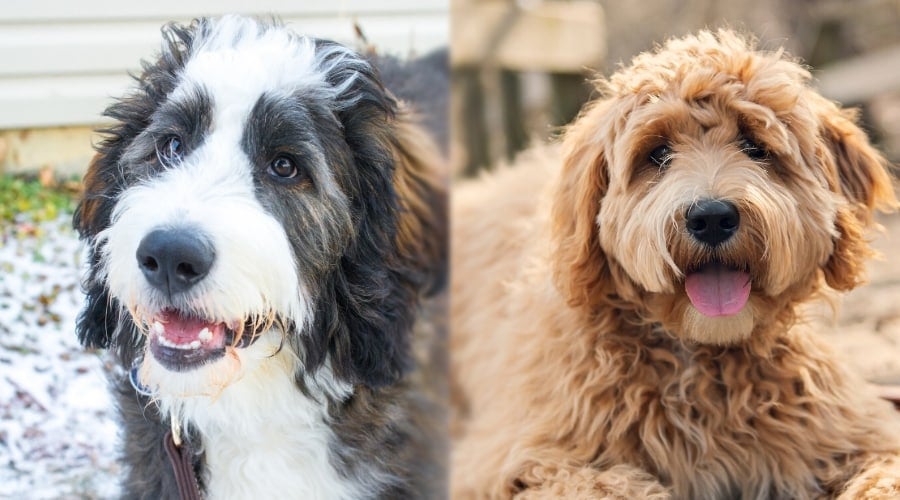
Goldendoodles tend to have a bright, animated expression. Their faces often read as more open and eager, even at rest.
Bernedoodles often have a softer, more serious expression. Their features can look heavier, with wider heads and a calmer resting face.
Coat Texture & Color Variety
Goldendoodles can have curly, wavy, or even straighter coats depending on their genetics. Coat predictability is strongly influenced by generation, with higher Poodle content increasing the likelihood of curl and reduced shedding.
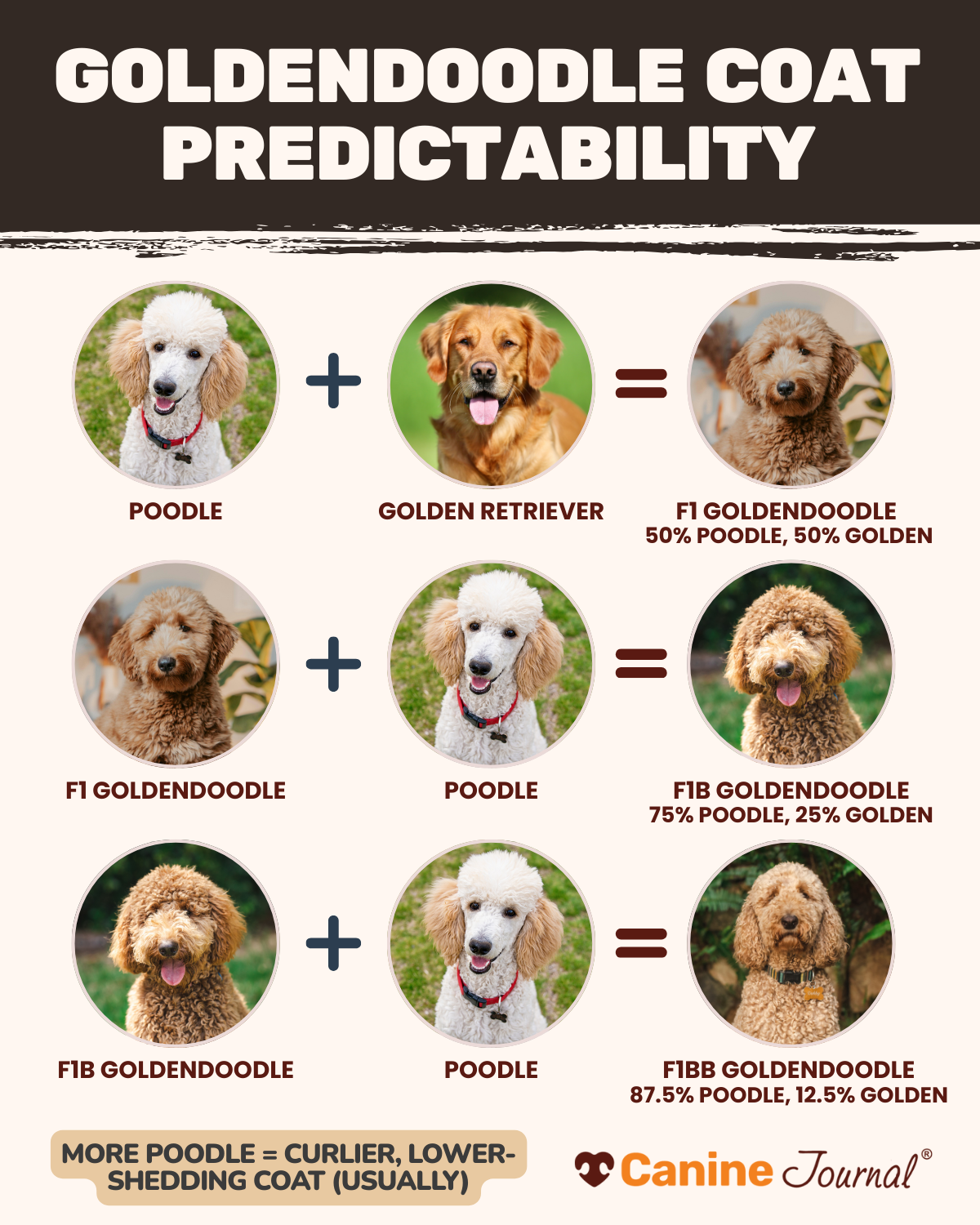
First-generation Goldendoodles (F1) often show more variation in coat texture. Backcrosses like F1B and F1BB are more likely to have curls, while second-generation Goldendoodles (F2) may have straighter coats due to inheriting fewer copies of the curl gene (KRT71).
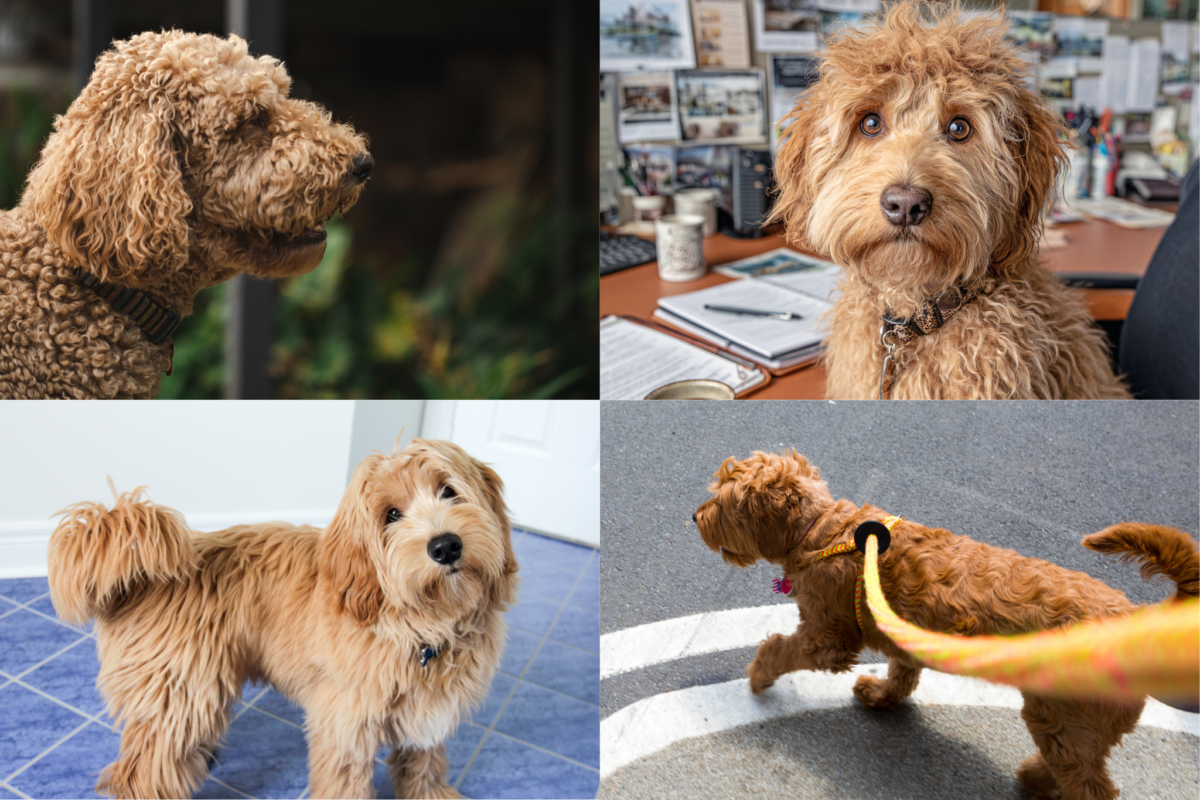
Goldendoodles appear in a wide range of solid colors thanks to their Poodle parentage. Common colors include apricot, black, brown, red, cream, white, silver, and blue.
Common Goldendoodle coat patterns include:
- Abstract (mismarks): A solid base color with white markings on the chest, paws, or face
- Parti: A mostly white coat with large patches of another color
- Phantom: Defined cream, golden, or red markings on a solid black or brown base, often around the eyes, chest, and legs
- Merle: A marbled or mottled pattern that creates a speckled appearance
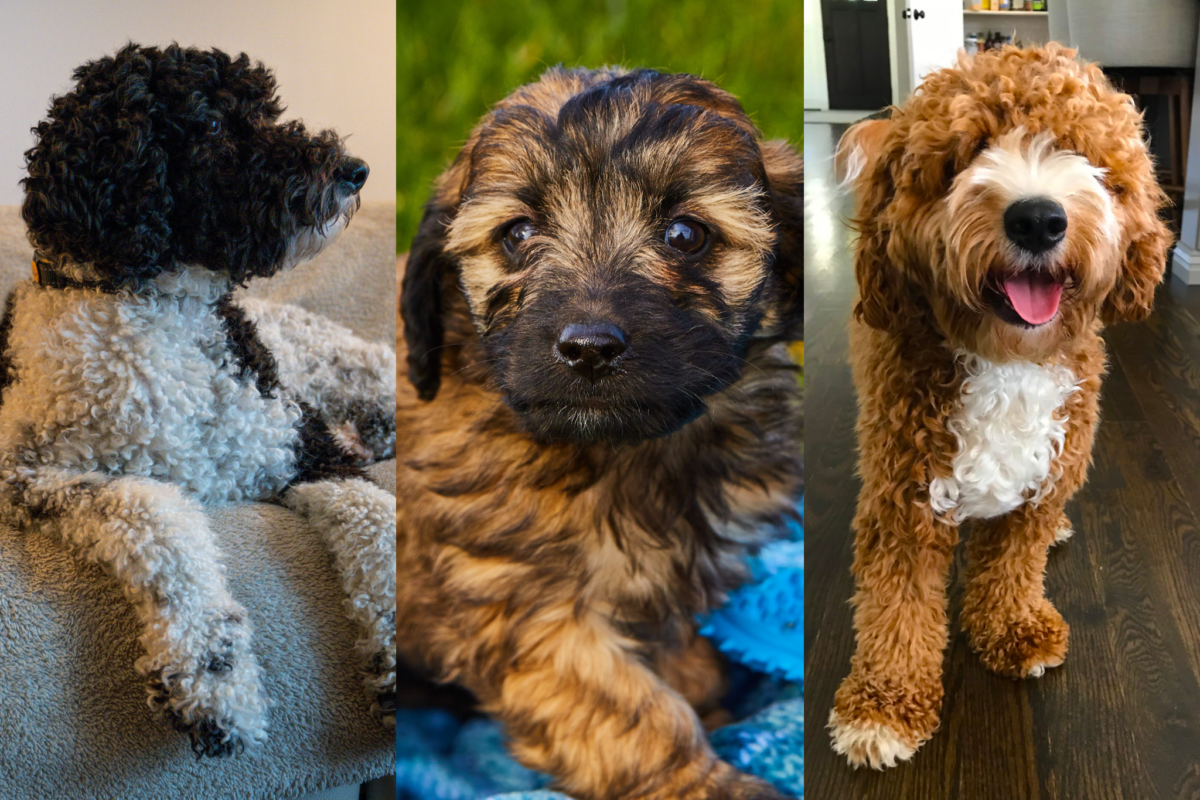
Bernedoodles also show wide variation in coat texture and color. Many have wavy or curly coats that may thicken, loosen, or change appearance as they mature.
Like Goldendoodles, Bernedoodles with higher Poodle content tend to have more consistent coat traits.
- F1B and F1BB Bernedoodles are more likely to have curly coats, lower shedding, and better allergy-friendliness.
- Second-generation Bernedoodles (F2) are usually produced by two F1 parents or an F1 and an F1B, which introduces much more variation in appearance and coat type.
- Multigen Bernedoodles come from parents that are both Bernedoodles, typically from the F2 generation or later. The goal is a more predictable Bernedoodle with a consistently low-shedding coat and a temperament that is easier to anticipate.
With F2 and early multigen Bernedoodles, you may see a wide range of outcomes. Some puppies look very Bernese, others resemble Poodles, and many fall somewhere in between.
The most recognizable Bernedoodle pattern is traditional tri-color, featuring black, white, and rust markings. Other common patterns include phantom, red, sable, merle in tri or phantom variations, chocolate, and parti.
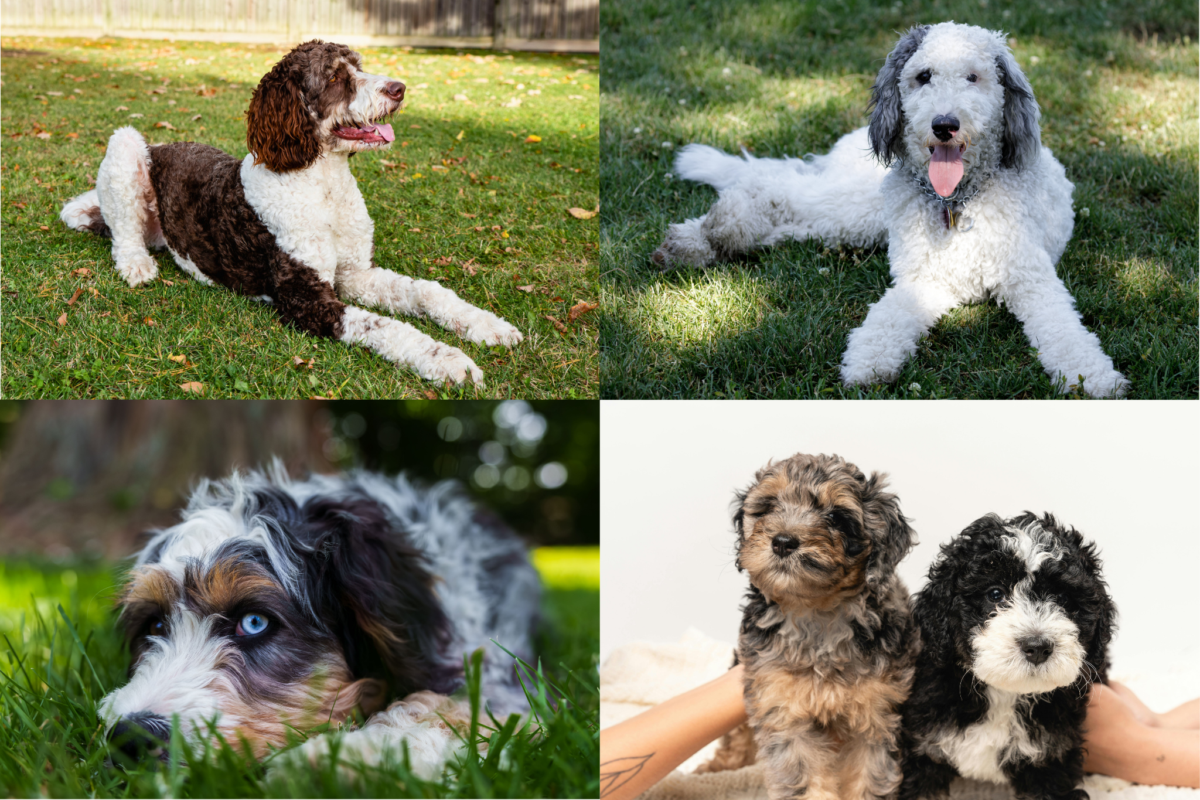
Color changes are especially common in Bernedoodles. Puppies may lighten, darken, or develop new tones as their adult coat comes in.
Temperament: Same Intelligence, Very Different Emotional Energy
Both Goldendoodles and Bernedoodles are intelligent, affectionate dogs that bond closely with their families. The biggest differences show up in how they respond to people, change, and time alone.
What Living With Each Breed Feels Like
Goldendoodles tend to be openly friendly and happy to engage with just about anyone. Many greet strangers with enthusiasm and are more focused on social connection than guarding the home.
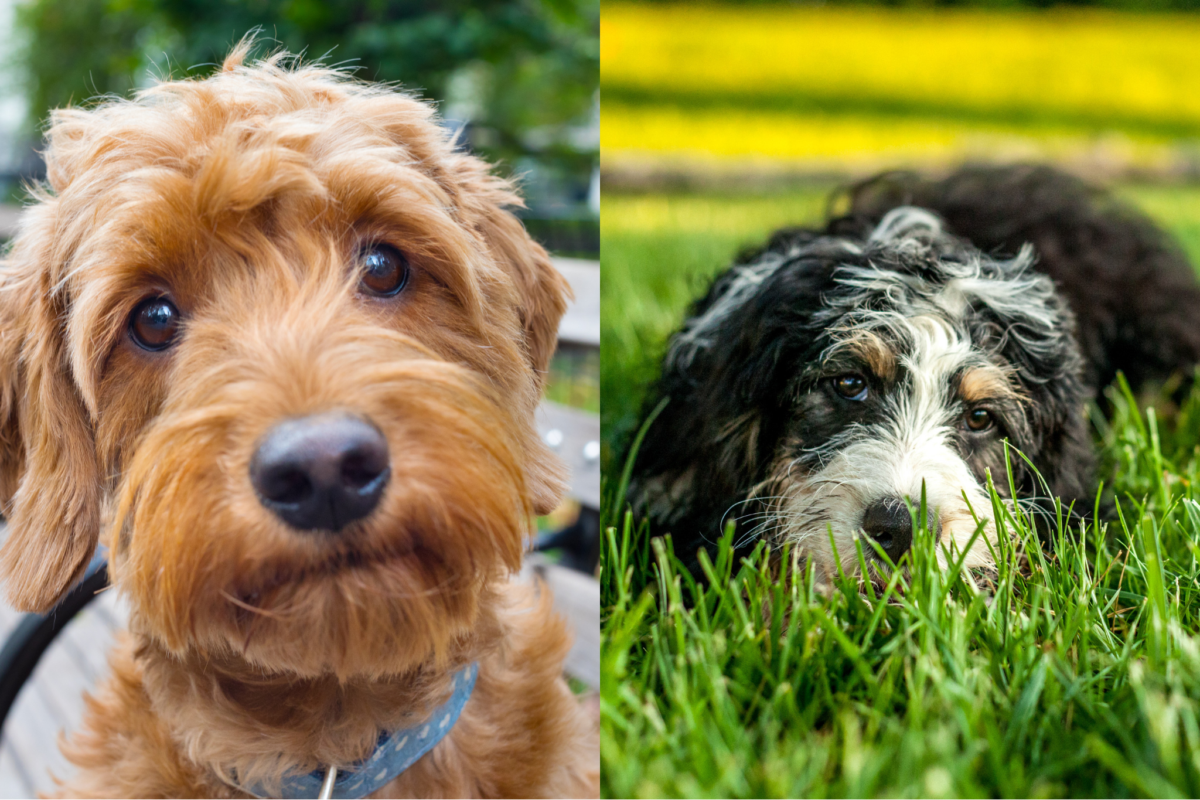
Bernedoodles are often more reserved around unfamiliar people. They usually stay alert and observant, especially when someone new approaches their family or home.
Confidence vs Sensitivity
Goldendoodles often move through the world with an easygoing confidence. They are typically forgiving of imperfect training and adaptable to busy or changing environments.
Bernedoodles can be more emotionally sensitive, especially to changes in routine or long periods alone. Their strong attachment to family can sometimes translate into separation anxiety.
Independence vs People-Focused Behavior
Goldendoodles are often more comfortable spending short periods on their own. This can make them easier to manage for owners who are away during the day.
Bernedoodles usually crave close human companionship. Without enough interaction, they may become anxious or stressed.
Family Life & Children
Both breeds are known for being gentle and affectionate with children. Their size means supervision is still important, especially with standard-sized dogs.
Quick Takeaway: Social Optimist vs Calm Observer
Goldendoodles bring bright, welcoming energy into a home and tend to thrive on social interaction. Bernedoodles offer a steadier, more watchful presence and often bond deeply with their people.
Training, Energy & Daily Life With Each Breed
Both Goldendoodles and Bernedoodles are intelligent, active dogs that need structure and engagement. Where they differ is how that energy shows up day to day and how much guidance they need from you.
Energy Management Matters
Goldendoodles tend to carry their energy outward. They often want frequent interaction, play, and engagement throughout the day.
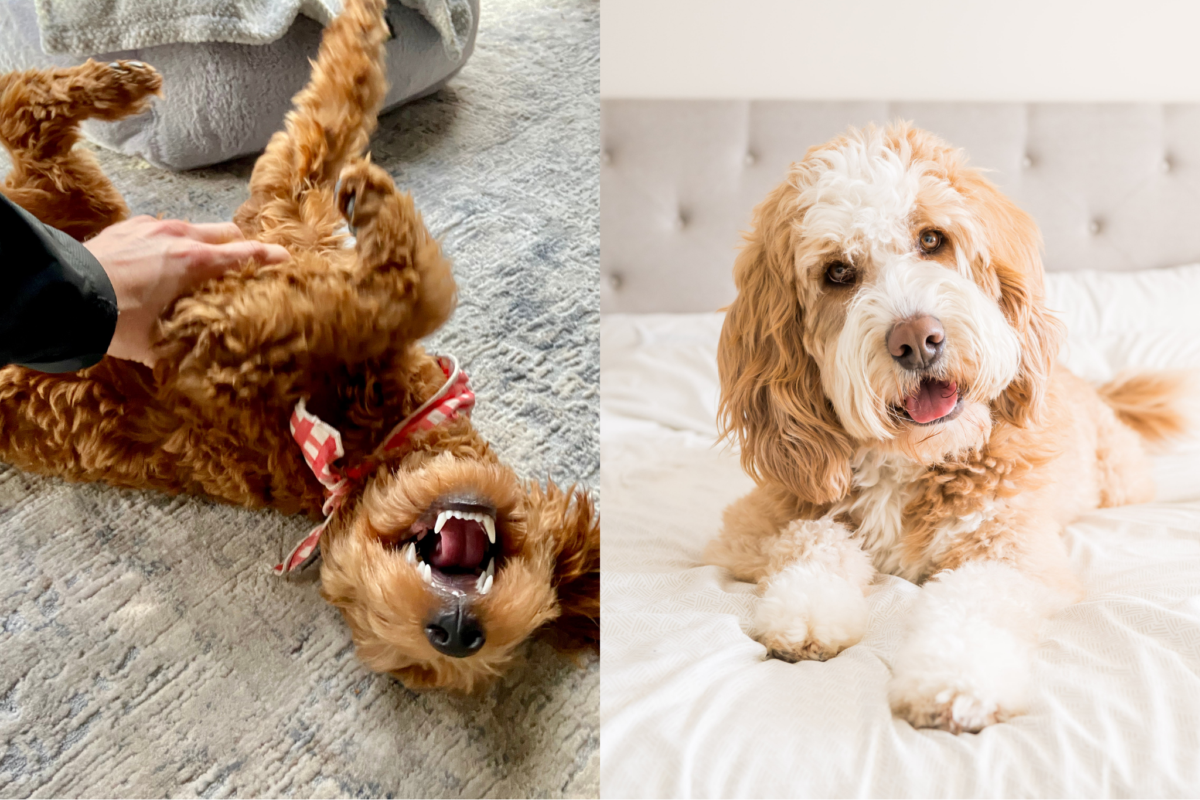
Bernedoodles usually have a steadier rhythm. Many enjoy activity but are more content with downtime once their needs are met.
Exercise Expectations Compared
Both breeds typically need about an hour of exercise per day to stay healthy and balanced. This can include walks, playtime, and mentally engaging activities.
Goldendoodles often love water and excel as swimming or boating companions. Bernedoodles are more likely to enjoy strength-based activities that use stamina and power.
Because Bernedoodles are usually larger, some need less high-intensity exercise as adults. This varies widely by individual dog and should not be assumed during puppyhood.
How Mental Stimulation Shows Up At Home
Bernedoodles are more likely to relax once their basic needs are met. Many are happy to nap or quietly observe their surroundings.
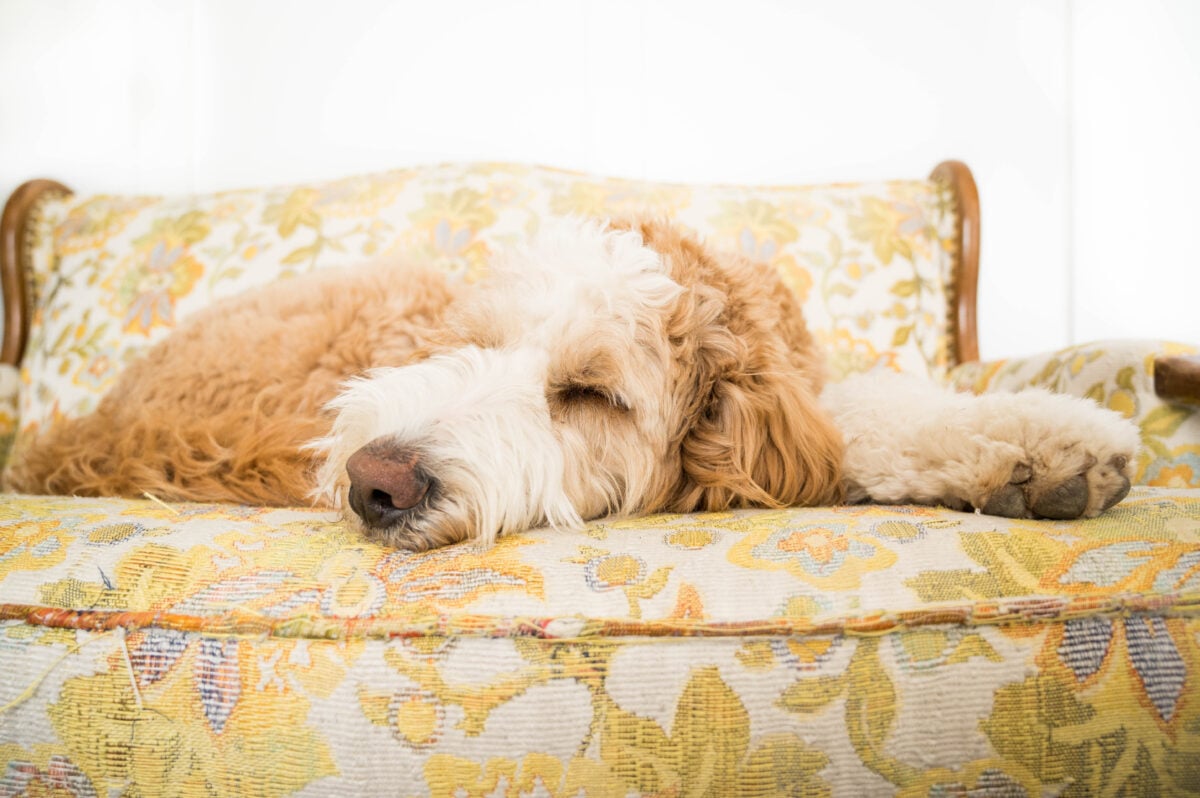
Goldendoodles often need more frequent mental engagement. Without it, they can become restless or seek attention in unproductive ways.
Both breeds benefit from interactive toys, puzzle feeders, and games that challenge their brains. A variety of toys helps prevent boredom-related behavior.
Training Style & Learning Curve
Goldendoodles are typically eager to please and quick to learn. This often makes them a good choice for first-time dog owners.
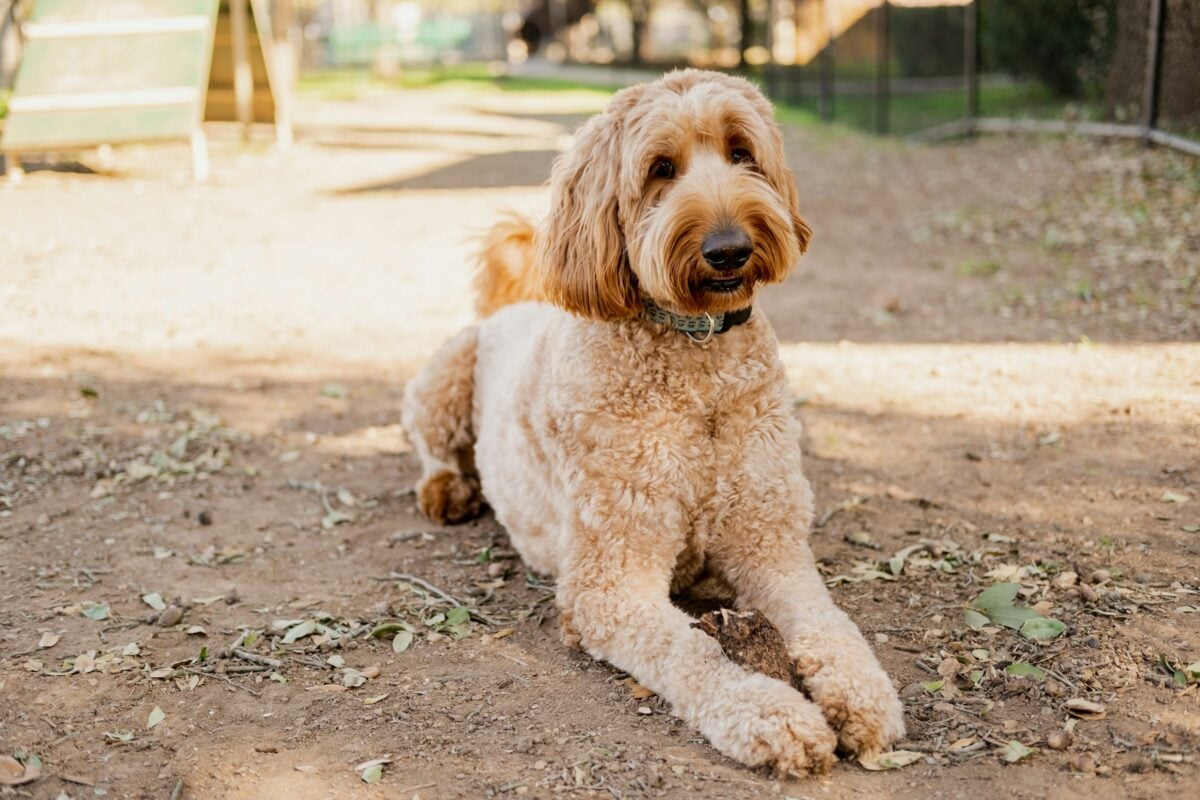
Bernedoodles can be more independent and occasionally stubborn. They tend to do best with patient, consistent training and clear expectations.
Both breeds require early and ongoing socialization. This is especially important for Bernedoodles, who can become overly protective if not regularly exposed to new people and environments.
Leash Skills, Crates & Daily Structure
Leash training is important for both breeds but especially critical for Bernedoodles due to their size and strength. Poor leash manners can quickly become unmanageable.
Bernedoodles are more prone to anxiety and often benefit from crate training. A crate can provide a sense of security and help prevent destructive behaviors when left alone.
Goldendoodles also enjoy having a designated resting space. While crate training is not always essential, it can still support routine and calm behavior.
Which One Fits Your Life Better?
This is where the decision usually becomes clear. Both dogs can thrive in many homes, but one often feels easier depending on your schedule, energy level, and expectations.

Best For Busy Families
Goldendoodles tend to be a better fit if:
- You want a social, easygoing family dog
- Your home has frequent visitors or activity
- You prefer a dog that adapts quickly to change
Bernedoodles may be a better fit if:
- You want a calmer presence at home
- Your family keeps a more predictable routine
- You appreciate a watchful, loyal companion
Best For First-Time Owners
Goldendoodles are often easier for first-time owners because they are:
- Highly trainable and eager to please
- More forgiving of inconsistent training
- Naturally social and approachable
Bernedoodles can be rewarding, but are better suited to owners who:
- Are comfortable with stubborn or independent dogs
- Can commit to consistent training and structure
- Understand anxiety-prone behaviors
Best For Owners Who Work From Home
Bernedoodles often thrive when:
- Their people are nearby most of the day
- They can maintain a steady routine
- They receive regular reassurance and interaction
Goldendoodles tend to handle alone time more easily, especially when properly exercised and mentally stimulated.
Best For Quieter Or More Active Households
- Goldendoodles fit naturally into active, social households
- Bernedoodles often suit quieter homes that value calm and consistency
Neither dog is low energy. The difference is how much stimulation they expect throughout the day.
The Health Tradeoffs Most Doodle Buyers Aren’t Told About
Both Bernedoodles and Goldendoodles are generally healthy dogs with good lifespans. Smaller dogs in either mix tend to live longer, but individual genetics matter more than labels.
Health Issues Bernedoodles Can Inherit
Bernedoodles may inherit conditions associated with Bernese Mountain Dogs and Poodles, including:
Larger Bernedoodles may also experience joint stress as they age.
Health Issues Goldendoodles Can Inherit
Goldendoodles can inherit health concerns from both parent breeds, including:
- Hip and elbow dysplasia
- Allergies and skin problems
- Increased cancer risk linked to Golden Retrievers
Smaller Goldendoodles may also be prone to patella luxation.
Grooming Is The Hidden Cost (Time, Money & Commitment)
Both breeds require regular grooming and ongoing coat care. Grooming needs often surprise new owners more than exercise requirements.
Grooming A Bernedoodle
Bernedoodles tend to have thick, dense coats that require:
- Frequent brushing to prevent matting
- Regular professional grooming
- Special attention during seasonal coat changes
Their coats may be less feathered but can mat deeply if neglected.
Grooming A Goldendoodle
Goldendoodles often have longer fur around the ears, belly, tail, and neck. These areas are especially prone to tangles and require consistent brushing.
Some Goldendoodles have mixed coats that mat more easily than tight curls.
Coat Maintenance Reality Check: Neither breed is guaranteed to be hypoallergenic, though most shed less than purebred Golden Retrievers or Bernese Mountain Dogs.
Nutrition: What Matters Most For Large Doodle Mixes
Both breeds do best on high-quality, protein-rich kibble that supports active lifestyles. Portion size depends more on size and activity level than breed.
Growth Rate & Joint Support
- Goldendoodles typically eat around 3 to 4 cups per day
- Bernedoodles often eat slightly more at 4 to 4.5 cups per day
Look for formulas with joint-supporting nutrients and controlled calcium levels, especially for large dogs.
Weight Management Considerations: Both breeds are known to overeat if given the chance. Monitoring treats and table scraps is critical.
Puppy Prices
On average, the Bernedoodle is the more expensive of the two dogs. Prices start at $2,500, and the Goldendoodle generally starts at $1,000. This is quite expensive for a mixed breed pup, but considering the popularity of all doodle breeds, this is common.
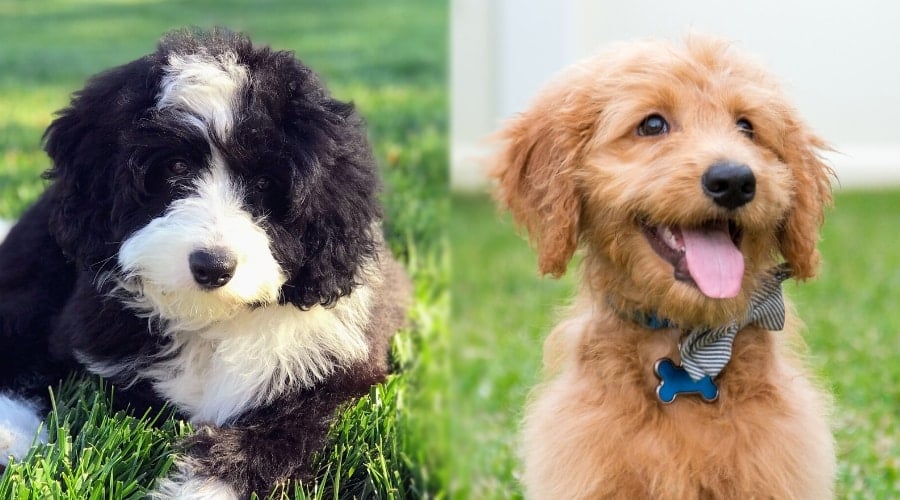
Expect the price to rise for the desirable golden color of the Goldendoodle and the tri-color of the Bernedoodle. If the breeders are considered to be the best in your state, then this also increases the price.
3 Common Myths About Bernedoodles & Goldendoodles
Doodles are everywhere, which means a lot of confident-sounding advice gets repeated without much context. These are some of the most common assumptions buyers make when comparing Bernedoodles and Goldendoodles, and where reality tends to differ from the hype.
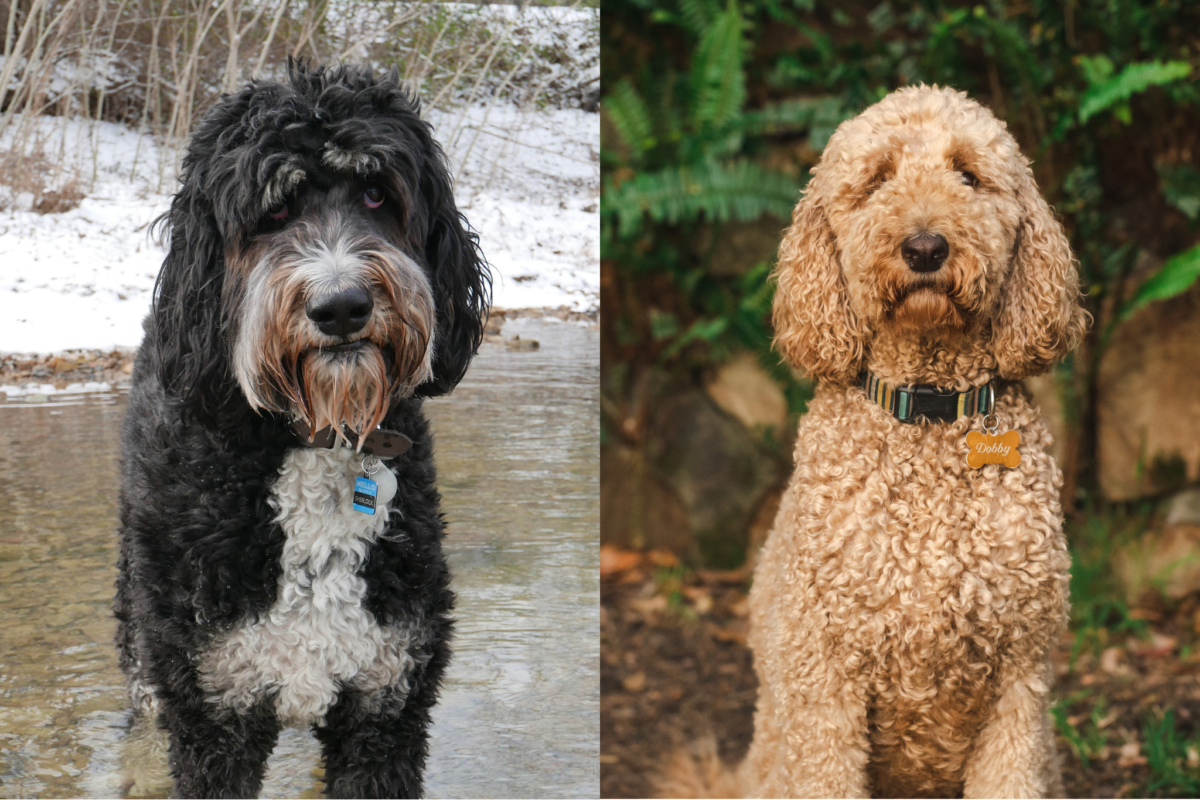
1. Bernedoodles Are Always Calm Family Dogs
Bernedoodles are often calmer than Goldendoodles, but that does not mean low energy. Many still need daily exercise, structure, and mental stimulation to stay balanced.
Personality varies widely based on genetics, training, and environment. A bored Bernedoodle can be just as restless as any other active breed.
2. Goldendoodles Are Predictable And Hypoallergenic
Goldendoodles are not guaranteed to be hypoallergenic. Coat type, shedding, and allergy-friendliness vary significantly depending on generation and individual genetics.
Some Goldendoodles are virtually non-shedding, while others shed more than expected. Predictability improves with certain breeding choices, but it is never absolute.
3. Bigger Doodles Are Always Healthier
Larger doodles are not inherently healthier than smaller ones. In fact, larger dogs are often more prone to joint stress and may have shorter lifespans overall.
Health outcomes depend far more on responsible breeding, genetic testing, and proper care than size alone.
Frequently Asked Questions
If you’re still weighing Bernedoodle vs Goldendoodle, you’re not alone. These are the questions readers ask most often when deciding which doodle fits their home, lifestyle, and expectations.
Don’t see your question? Respond in the comments, and we’ll get back to you!
Do Bernedoodles Shed Less Than Goldendoodles?
Neither breed is guaranteed to be low shedding. Shedding depends more on coat genetics and generation than on whether the dog is a Bernedoodle or Goldendoodle.
Are Bernedoodles Calmer Than Goldendoodles?
Bernedoodles are often calmer in the home and more reserved with strangers. Goldendoodles tend to be more socially energetic and outwardly engaged.
Which Breed Is Easier To Train?
Goldendoodles are usually easier to train due to their eagerness to please. Bernedoodles can be more independent and may require greater consistency and patience.
Which Is Better For Families With Kids?
Both breeds are generally excellent with children when properly trained and socialized. Supervision is important, especially with larger dogs, due to size and strength.
Are Bernedoodles Or Goldendoodles Healthier?
Neither breed is universally healthier than the other. Health depends on genetics, breeder practices, size, and long-term care rather than the mix itself.
Other Poodle Mixes To Consider
If you’re drawn to Goldendoodles and Bernedoodles, you may also come across these mixes during your search:
- Labradoodle – Typically very athletic and higher energy, with a stronger working-dog drive and similar grooming demands.
- Sheepadoodle – Often larger and heavier than Goldendoodles, with a calmer indoor presence but very high grooming needs and a thick, fast-matting coat.
- Cockapoo – Smaller and more compact, making them easier to manage in apartments, though still prone to matting and separation anxiety.
- Cavapoo – Highly affectionate and people-oriented with lower exercise needs, but often more sensitive and emotionally dependent than larger doodle mixes.
Each comes with its own balance of predictability, grooming commitment, and temperament tradeoffs. View our full guide to 60+ Poodle mixes for a broader comparison.