How Intelligent Are Dogs, Really? The Truth About Canine Smarts — And Which Type Fits Your Lifestyle

When you purchase through links on our site, we may earn a commission at no extra cost to you. Learn more.
Some dogs can learn hundreds of words. Others excel at impulse control, scent detection, or reading human cues. And the type of intelligence that makes a Border Collie brilliant might not be the same kind of “smart” that fits your lifestyle.
Table of Contents
So how intelligent are dogs, really? And which kind of smarts actually matter for you?
What Does “Dog Intelligence” Really Mean?
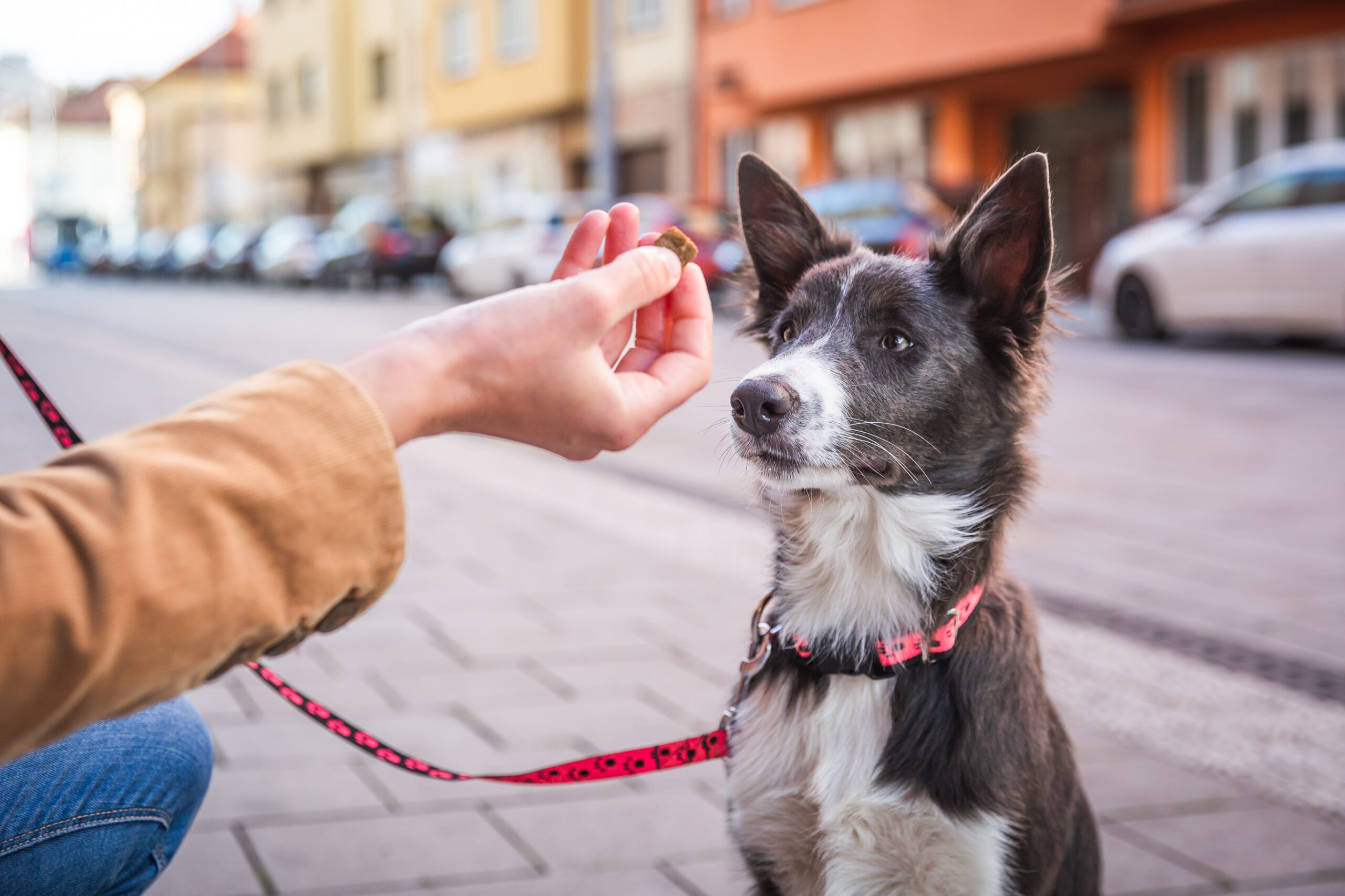
When people talk about the most intelligent dogs, they’re often thinking about obedience — how quickly a dog learns a new command and how reliably they follow it. But obedience is just one piece of the puzzle.
3 Core Types Of Canine Intelligence
Researchers generally break canine intelligence into three categories: instinctive intelligence, adaptive intelligence, and working and obedience intelligence. Each measures a different kind of “smart.”
1. Instinctive Intelligence
This is what a breed was originally developed to do. Herding dogs control livestock. Retrievers carry game gently. Scent hounds follow trails for miles.
These abilities are built into the breed’s genetic blueprint.
2. Adaptive Intelligence
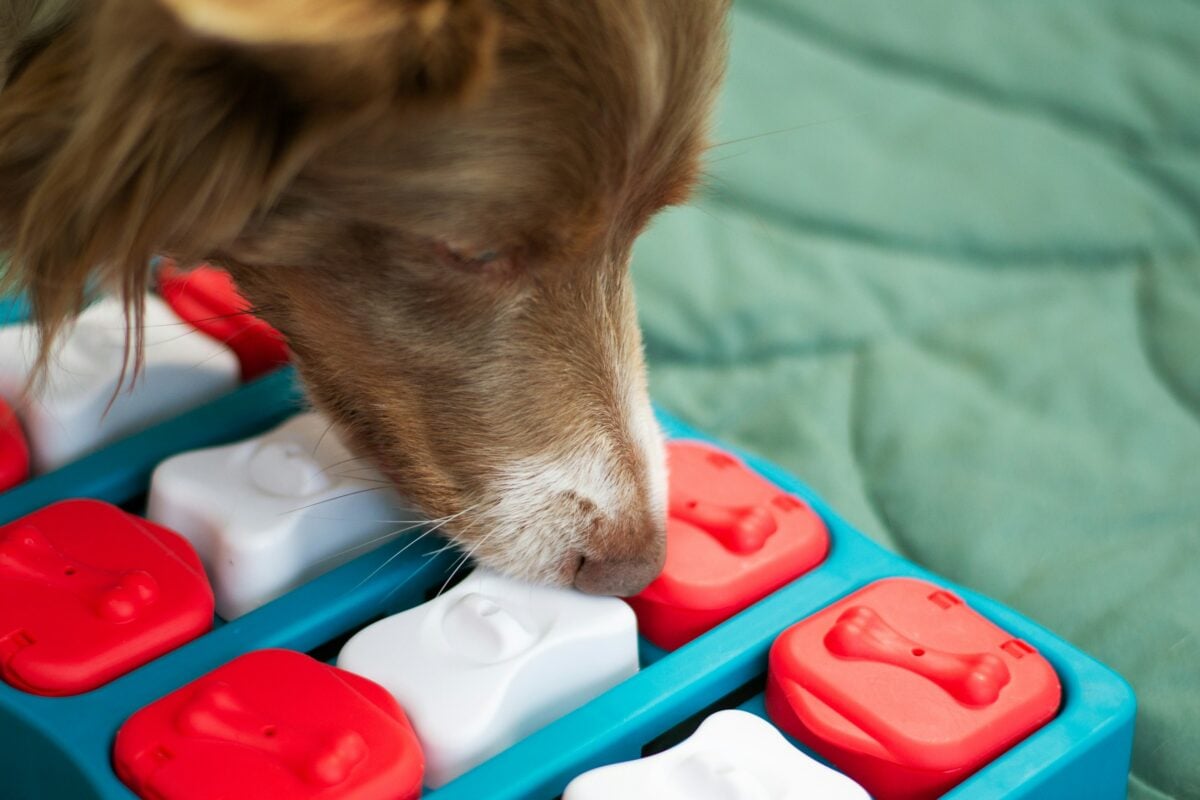
This refers to problem-solving ability. Can a dog figure out how to open a gate? Navigate around an obstacle? Learn from past mistakes?
Adaptive intelligence shows up when a dog solves problems on its own.
3. Working & Obedience Intelligence
This measures how well a dog learns from humans. How many repetitions does it take to learn a new command? How consistently do they obey it?
This is the type of intelligence used in most ranked smartest dog breeds lists.
The Traditional Ranking: 5 Smartest Dogs Based On Trainability
For decades, the most widely shared rankings of “the most intelligent dogs” have focused on one specific measure: trainability. In this model, intelligence is defined by how quickly a dog learns a new command and how reliably they obey it the first time. The faster a breed learns — and the more consistently it performs — the higher it ranks.
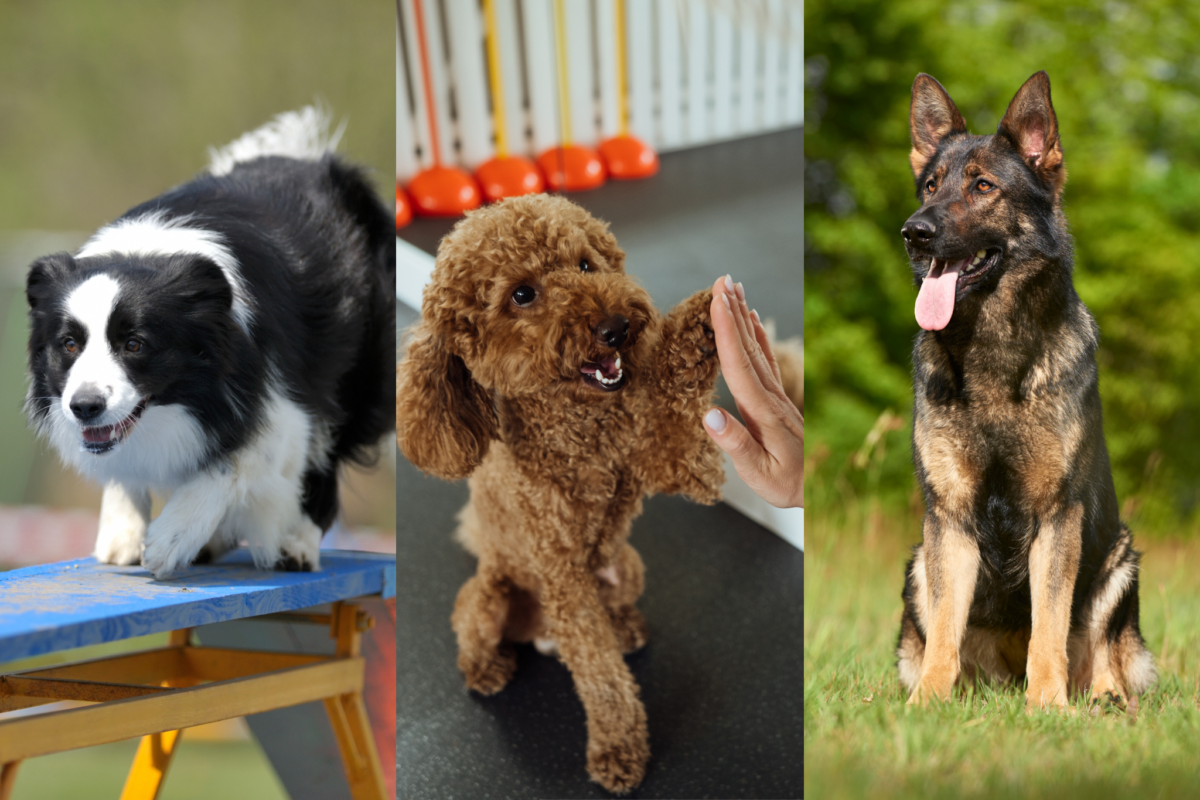
Using this obedience-based model, the breeds that consistently rise to the top are:
- Border Collie
- Poodle (Standard, Miniature, and Toy)
- German Shepherd
- Golden Retriever
- Doberman Pinscher
These breeds stand out for rapid learning, strong memory for commands, and high reliability under direction.
It’s important to understand what this ranking reflects. It measures working and obedience intelligence — how efficiently a dog learns from humans.
But obedience is only one type of intelligence. And while it’s incredibly valuable in training and working environments, it doesn’t capture the full cognitive picture.
Why Obedience Isn’t The Whole Story
A dog that doesn’t respond instantly to commands isn’t necessarily less intelligent. Some breeds were developed to work independently and make decisions without constant human direction. That independence can look like stubbornness, but in the right context, it’s a form of intelligence.
Understanding these differences is key to choosing the right type of “smart” for your life.
What Modern Research Reveals About Smart Breeds
Recent research shows that intelligence in dogs is more nuanced than obedience alone. A large study published in Scientific Reports tested over 1,000 dogs across 13 breeds using standardized cognitive tasks. Researchers measured traits considered indicators of intelligence, including self-control, problem-solving ability, and how closely dogs look to humans for guidance.
They found measurable differences between breeds in several key areas.
1. Inhibitory Control (Self-Control)
Inhibitory control refers to a dog’s ability to pause and resist acting on impulse. In a research setting, the classic cylinder test measures inhibitory control.
A dog sees a treat inside a clear tube. The catch is they can’t grab it straight through the plastic. They have to pause, think, and go around to the open end.
Dogs that repeatedly nose-bonk the tube instead of detouring are showing lower inhibitory control (basically: “I want it now”), which researchers linked with higher impulsivity.
Breeds that showed stronger impulse control include Border Collies and Australian Shepherds.
For herding dogs, this kind of self-control is critical. They must suppress the instinct to chase livestock while still responding to human commands.
Breeds that scored lower on average in this test were Labrador Retrievers, Belgian Malinois, and German Shepherds. Lower inhibitory control does not mean lower intelligence. In fact, in protection or guarding roles, quick responsiveness can be more valuable than hesitation.
Try It At Home: Wait & Watch Cup Test
Here’s a fun version you can try at home with your dog:
- Sit with your dog and three clear or opaque cups.
- Give your dog a strict “Wait” or “Stay” cue.
- Show the treat, place it under one cup.
- After the treat is hidden, gently slide the cups around.
- Say “OK” and release.
What to watch for:
- Does your dog wait without swatting or lunging?
- Do they go immediately to the original location or adjust to the swapped location?
- Multiple correct choices in a row suggest good inhibitory control.
Quick Tip: If your dog gets frustrated or knocks cups over impulsively, reduce the difficulty and reinforce the “wait” cue before shuffling.
Quick Takeaway: Inhibitory control isn’t about how many tricks a dog knows. It’s about can your dog resist the obvious move and choose the correct one after thinking through the problem? Games like this make the science feel accessible — and they’re fun for both of you.
2. Problem-Solving Ability
Researchers also measured spatial problem-solving — essentially, how efficiently a dog could navigate around a barrier to reach a visible reward.
Breeds with the highest overall solve rates included:
- Belgian Malinois
- Australian Shepherd
- German Shepherd
- Hovawart
Belgian Malinois had the highest solve rate overall, and Border Collies were the fastest among successful solvers.
Breeds that were slower on average to solve the detour task were Golden Retrievers, English Cocker Spaniels, and Labrador Retrievers. Again, this does not show a lack of intelligence. Rather, it suggests that some breeds may rely more on social cooperation than independent spatial reasoning when faced with a challenge.
Real World Example: Problem-Solving Meets Human-Directed Behavior
In this video example, a dog has a Kong stuck under a table. Instead of giving up immediately or resorting to random behaviors:
- The dog tries to problem-solve using paws and body movement.
- The dog looks back at their human repeatedly — not out of confusion, but as part of a natural interaction loop.
This is exactly the kind of behavior researchers look for in lab settings: persistence and human-directed checking when the problem is challenging.
3. Human-Directed Behavior
Another trait researchers examined was how often a dog turned to a human for help when faced with an unsolvable problem. Breeds more likely to seek human guidance included:
- Australian Kelpie
- Golden Retriever
- Australian Shepherd
- Border Collie
This tendency reflects strong social intelligence and cooperative behavior — traits highly valued in companion and service roles.
Breeds more likely to work independently without checking in included the Hovawart, German Shepherd, and Belgian Malinois. Independence can be extremely valuable in detection, protection, and tactical work where dogs must operate confidently without constant feedback.
Try It At Home: Unsolvable Task
Here’s a great real-world demonstration of how to test your dog’s problem solving abilities and cooperative behavior.
- Show your dog the open container and let them see a treat placed inside.
- Set the lid loosely on top (so they can easily lift it), and let them remove the lid on their own.
- Repeat this 3–4 times so your dog learns the action → reward connection.
- On the final trial, secure the lid so it’s impossible to lift.
What to watch for:
- Does your dog keep trying?
- Do they look at you for help or eye contact?
- How long before they shift strategy?
What you’re measuring:
- Early persistence = problem-solving drive
- Looking to you = human-directed behavior
- A mix of both suggests flexible social intelligence
Quick Takeaway: Human-directed behavior isn’t “asking for help” because the dog failed. It’s a flexible, adaptive intelligence — recognizing when collaboration with a human is the smarter choice.
Social & Emotional Intelligence
Dogs are also highly attuned to human behavior. This type of intelligence isn’t always reflected in ranked scores, but for many households, it may be the most important kind.
Research shows many dogs can:
- Follow pointing gestures
- Interpret facial expressions
- Detect tone shifts in voice
- Respond to human stress or emotion
Some breeds are especially sensitive to subtle cues, which is why they excel as therapy dogs, service dogs, and emotional support animals.
What Dogs Can Actually Understand
So if intelligence isn’t just obedience scores, what can dogs actually understand?
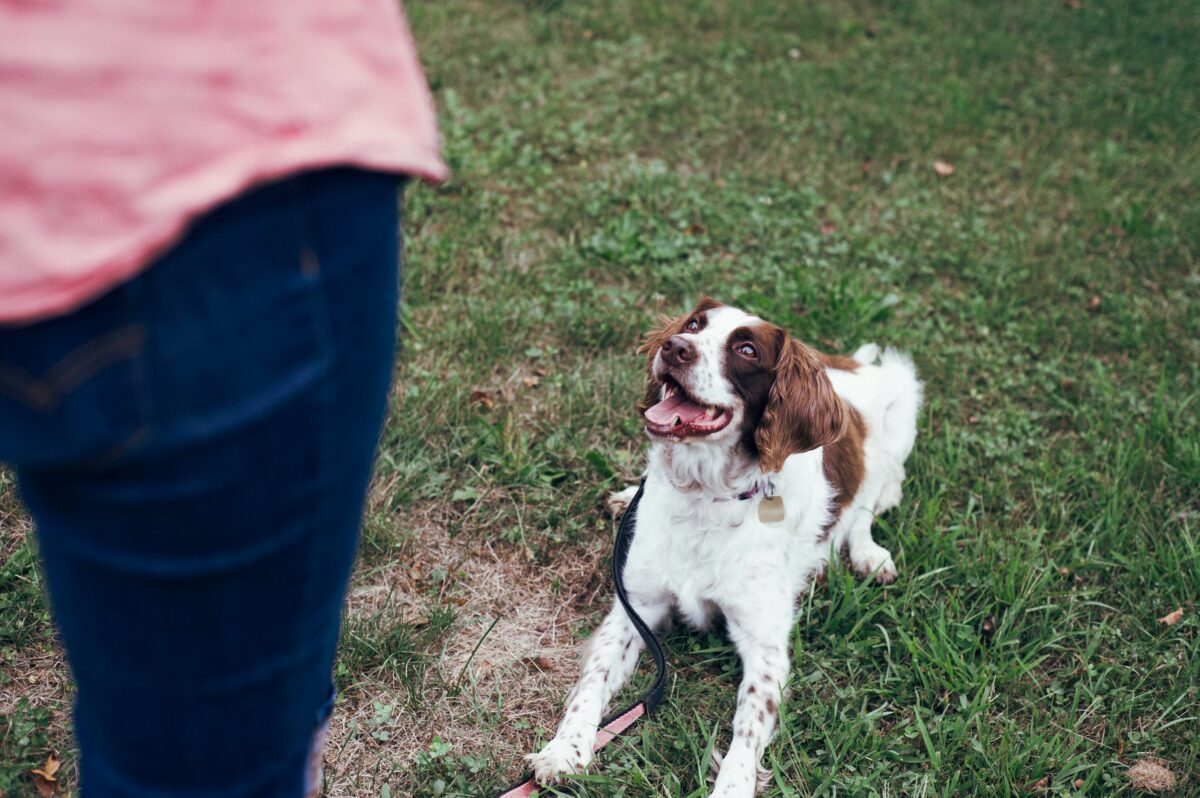
Dogs can learn words, interpret gestures, and remember patterns over time. Their understanding isn’t language in the human sense, but it’s far more sophisticated than many people realize.
Can Dogs Understand Words Like We Do?
Dogs aren’t parsing grammar or forming sentences in their heads, but they can form strong mental links between specific sounds and specific objects, actions, or routines.
Research suggests the average family dog reliably understands dozens of words, often tied to daily life: “sit,” “treat,” “walk,” toy names, or family members’ names. Highly trained dogs can learn far more.
Watch: In this example, a dog correctly taps the object that matches the spoken word.
Dogs also rely heavily on:
- Tone of voice
- Facial expressions
- Body posture
- Context and routine
Communication isn’t just vocabulary. It’s a combination of sound, pattern recognition, and social cues.
How Many Words Can Dogs Learn?
For most household dogs, vocabulary tends to stay under 100 consistently recognized words. Owner-reported data says dogs respond to an average of 89 words, with variations based on training and breed.
Exceptional cases demonstrate what’s possible under intensive training. Chaser, a Border Collie trained in structured conditions, learned over 1,000 object names. That level of vocabulary isn’t typical, but it shows the upper limits of canine word learning.
Do Dogs Understand Phrases — Or Just Tone?
Some people assume their dog only reacts to emotion in their voice. If you say “walk” in an excited tone, your dog perks up. But what happens if you say it in a completely neutral voice?
Brain imaging research suggests dogs process tone and word meaning in different areas of the brain, similar to humans. That means many dogs can recognize familiar words even when spoken without emotional emphasis.
They aren’t just reacting to excitement. They’re recognizing sound patterns they’ve learned to associate with outcomes.
Hand Signals & Human Gestures
Dogs are especially skilled at interpreting human gestures, including pointing and gaze direction.
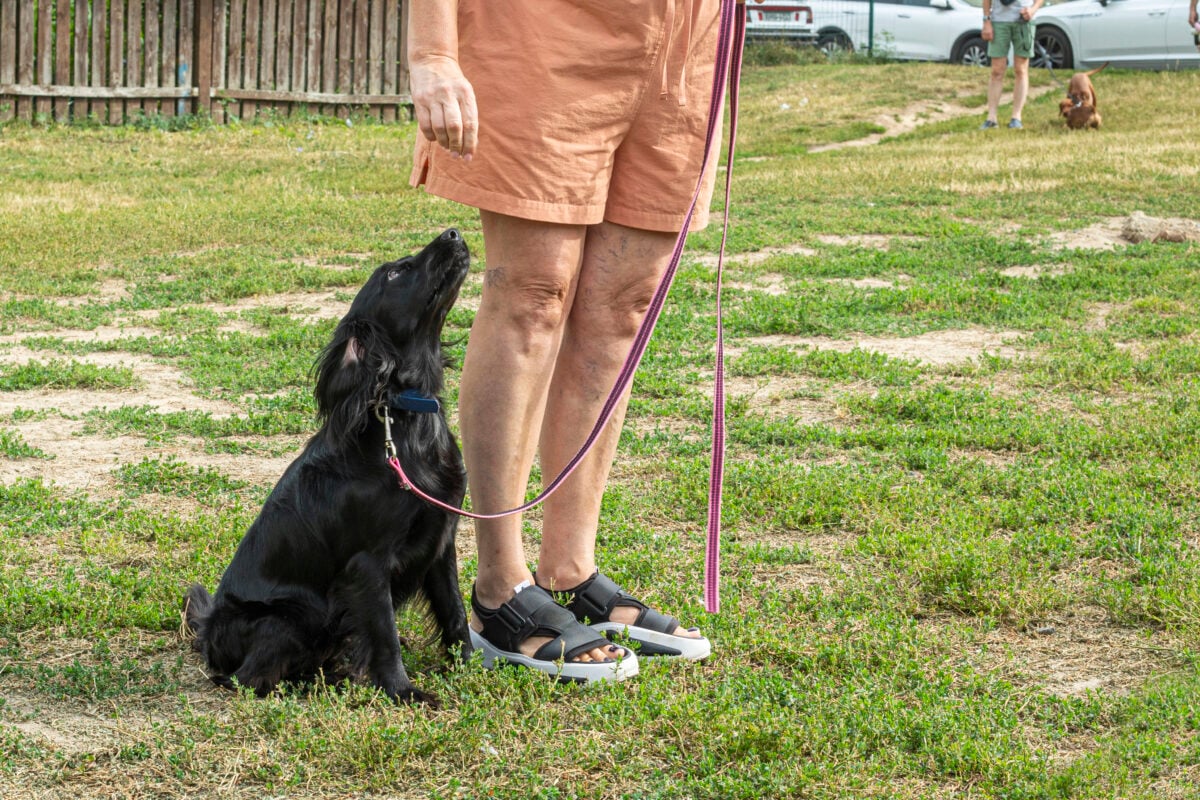
Research on cooperation and attention in dogs suggests that cooperative working breeds — such as Golden Retrievers and Shetland Sheepdogs — and some brachycephalic breeds — including French Bulldogs and Pugs — may establish eye contact more quickly with unfamiliar humans and perform strongly in tasks involving human gestures.
This ability is thought to be shaped by both genetics and experience, reflecting thousands of years of cooperation between dogs and humans.
For cooperative working breeds, sensitivity to human cues is practical. Herding and retrieving dogs often rely on subtle direction from handlers to perform their jobs effectively.
Many brachycephalic breeds, on the other hand, were historically developed as companion dogs. Selection for close human interaction may have strengthened their attentiveness to facial expressions and social signals.
How Good Is A Dog’s Memory?
Dogs rely heavily on memory to navigate daily life. They remember commands, routines, locations, people, and patterns of cause and effect.

Like humans, dogs have both short-term (working) memory and long-term memory. Short-term memory allows them to briefly hold information while completing a task, such as remembering where a treat was just placed. Long-term memory stores associations built through repetition and experience — like knowing the sound of the treat jar or the route to the park.
Do some dogs have better memories than others? According to research, no. While breeds may differ in social cognition, impulse control, or problem-solving style, basic memory ability appears relatively consistent across breeds.
So if your dog “forgets” the rule about staying off the counter — but perfectly remembers where the snacks are stored — that likely isn’t a memory deficit.
Intelligence In Action: How Smart Shows Up In Real Life
Intelligence isn’t just about learning commands quickly. It shows up in how dogs work, cooperate, problem-solve, and respond under pressure. Different types of “smart” shine in different roles.
Companion, Therapy & Service Roles
Some intelligence is deeply social.
Companion-focused breeds often excel at reading human expression and are eager to please. This form of intelligence centers on cooperation, attentiveness, and emotional attunement.
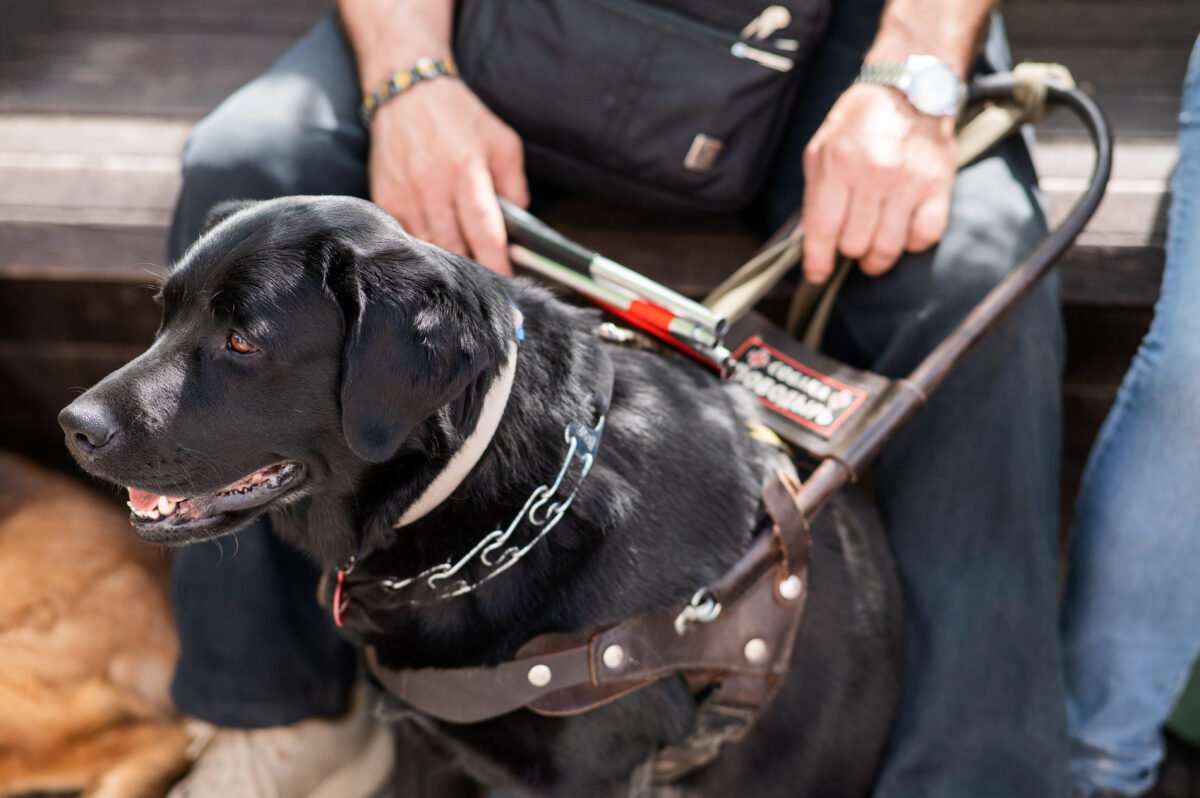
Service and therapy dogs must interpret subtle cues, ignore distractions, and maintain emotional steadiness in unpredictable environments. They’re trained not just to perform tasks, but to respond consistently under pressure.
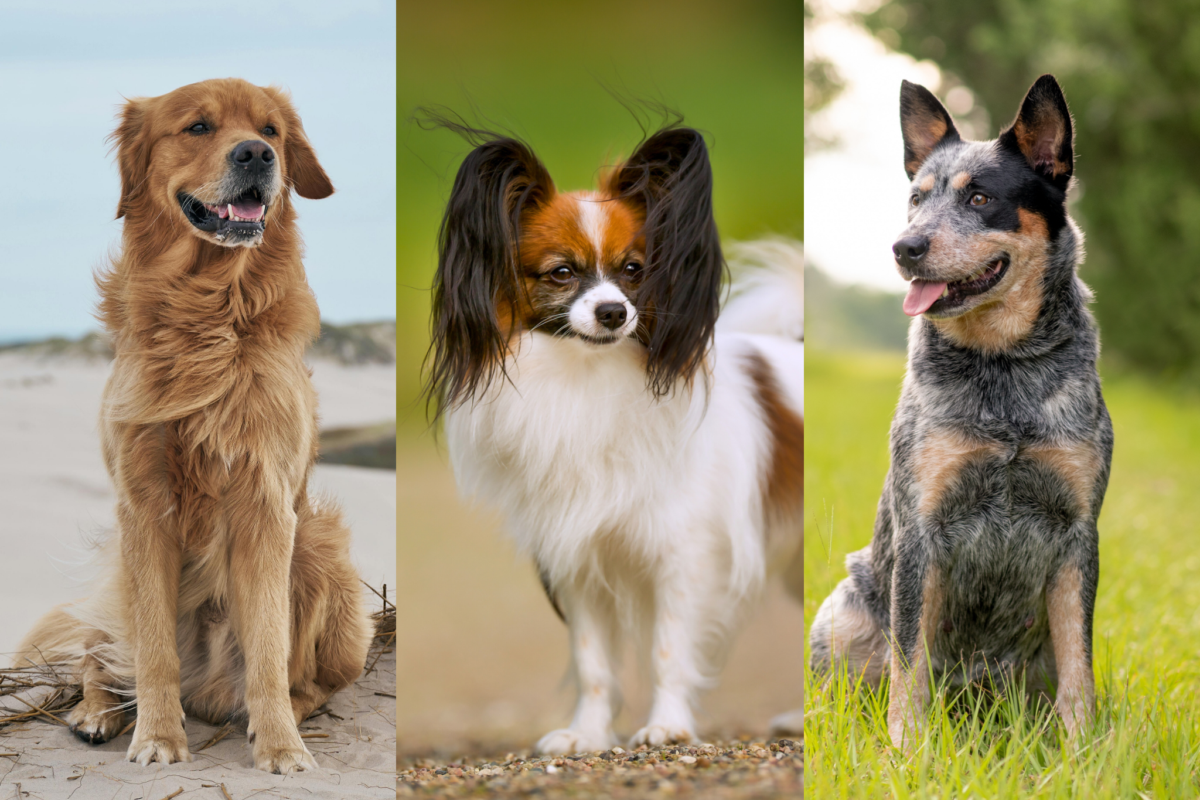
7 Intelligent Breeds For Companionship & Service
- Alaskan Klee Kai
- Golden Retriever
- Labrador Retriever
- Kai Ken
- Poodle (Toy, Miniature, Standard)
- Papillon
- Russian Tsvetnaya Bolonka
Herding & Livestock Work
Herding breeds are often praised for their intelligence. They need to control movement, respond instantly to handlers, and suppress the instinct to chase.
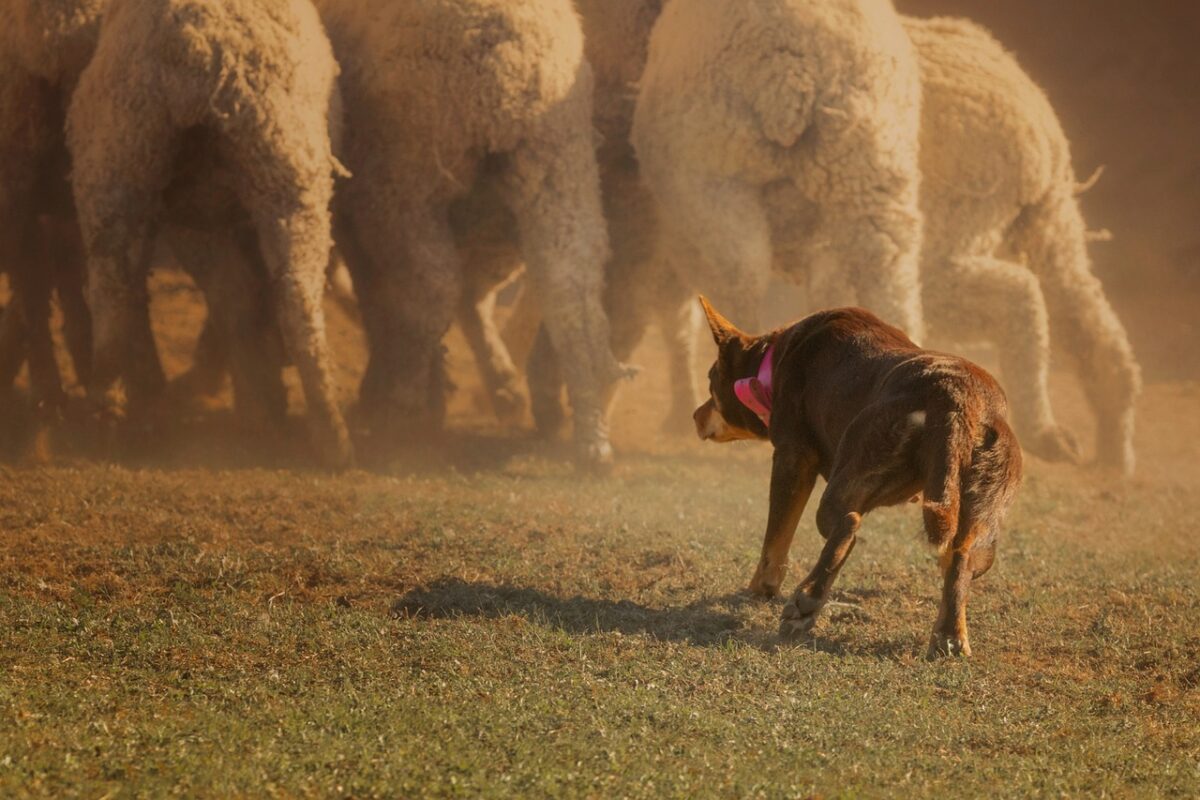
This combination of impulse control and human attentiveness is why herding breeds often score highly in obedience and cognitive testing.
9 Intelligent Herding Breeds
- Australian Cattle Dog (Blue Heeler)
- Australian Kelpie
- Australian Shepherd
- Barbado da Terceira
- Belgian Tervuren
- Border Collie
- Briard
- Puli
- Shetland Sheepdog
If you’re interested in breeds developed for this kind of focused cooperation, explore our guide to herding dog breeds.
Detection & Scent Intelligence
Scent work is one of the most cognitively demanding tasks a dog can perform. It requires focus, persistence, memory for scent patterns, and environmental filtering. This type of intelligence often appears in hunting and field breeds.
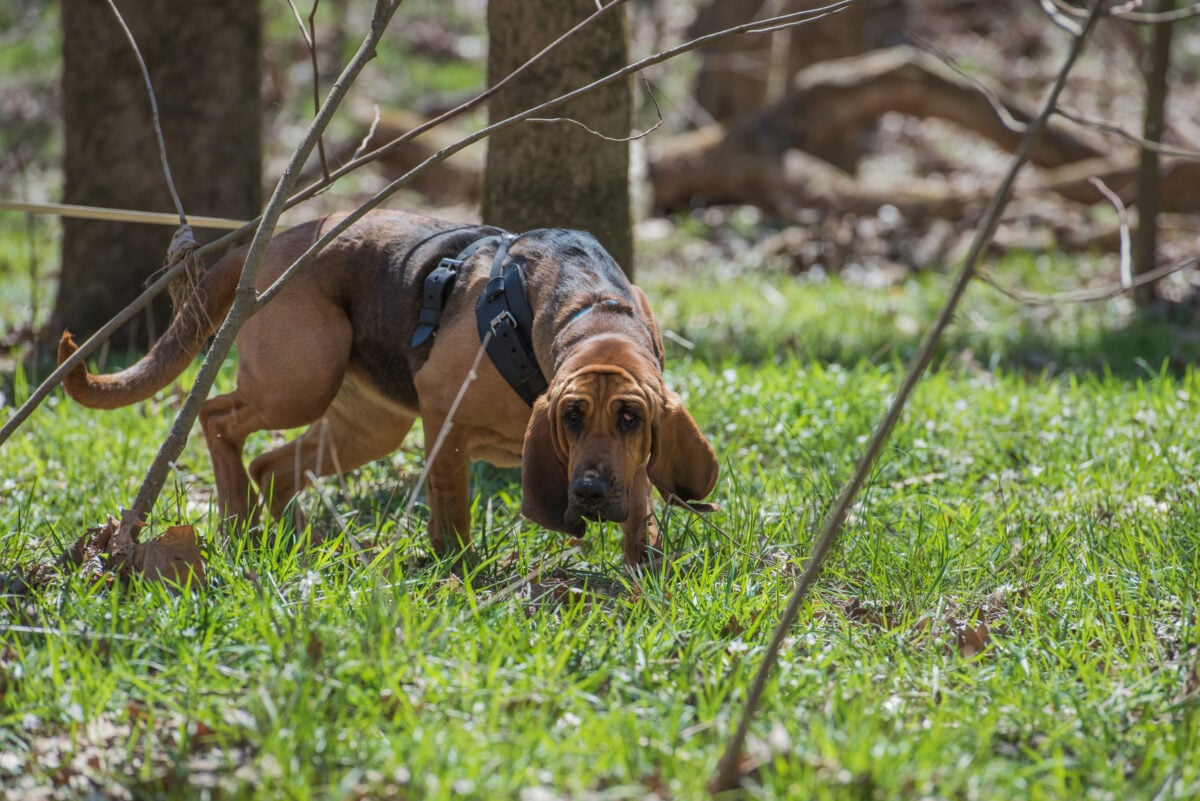
4 Intelligent Scent & Field Breeds
Protection & Guard Work
Protection and tactical dogs must think independently under pressure. They combine confidence, problem-solving, environmental awareness, and rapid response.
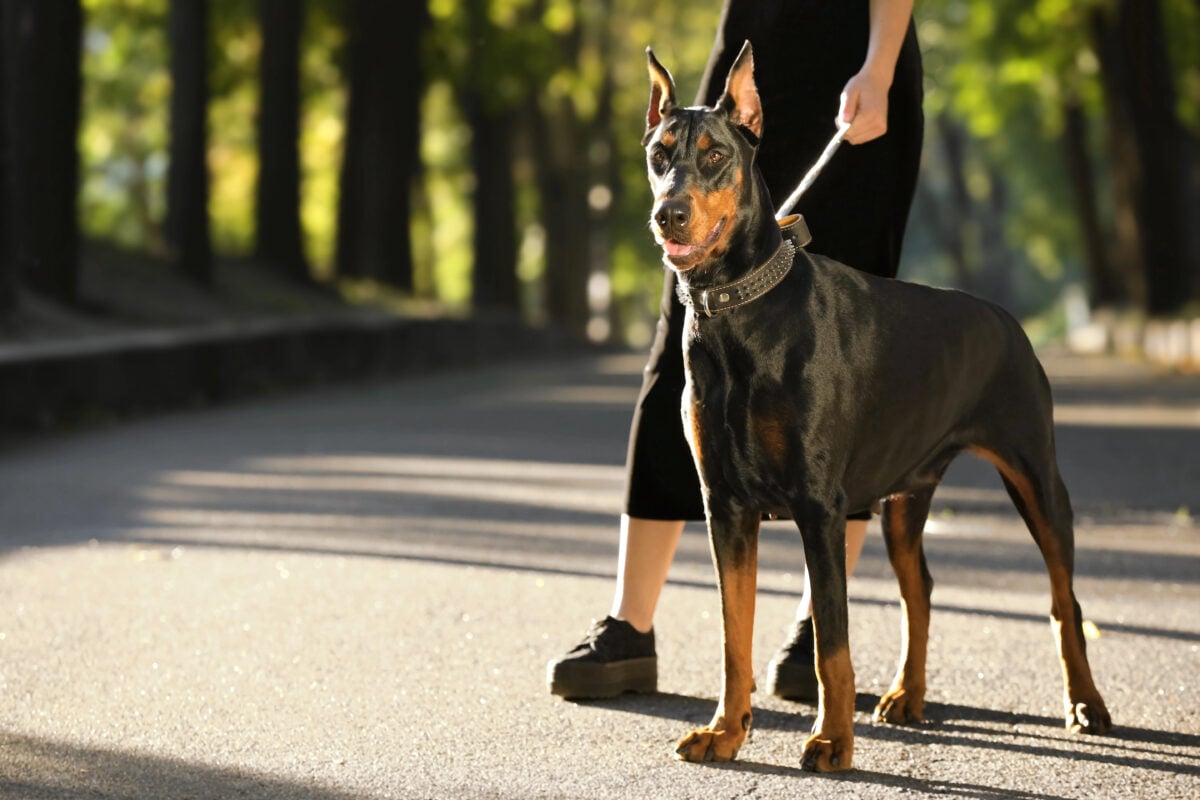
5 Intelligent Working Breeds
- American Staffordshire Terrier
- Belgian Malinois
- Doberman Pinscher
- German Shepherd
- Rottweiler
If you’re considering a protection-oriented breed, explore more in our guides to working dog breeds and best guard dogs.
What Kind Of “Smart” Fits Your Lifestyle?
Intelligence only matters if it works for your life.
A dog that thrives in police work may not be the easiest fit for a first-time owner. A highly independent thinker may frustrate someone who wants quick obedience. And a sensitive, people-focused breed may struggle in a chaotic household.
Here’s how different types of “smart” align with real-world needs.
Want A Smart Dog That’s Easy To Train?
If you want a dog that picks up commands quickly, is eager to please, and enjoys structured training, strong candidates include:
- Poodle (Standard, Miniature, or Toy)
- Labrador Retriever
- Golden Retriever
- Papillon
- Shetland Sheepdog
These breeds tend to respond well to positive reinforcement and are often forgiving of beginner mistakes.
Reality Check: Even easy-to-train dogs still need mental stimulation. Smart dogs get bored faster than average ones.
Want A Smart Dog That Thrives In Family Life?
If you want a social and adaptable dog that bonds with multiple family members, is kid-friendly, and responds well to household routines, consider these breeds:
- Labrador Retriever
- Golden Retriever
- Standard Poodle
- Rough Collie
- Barbet
Reality Check: A reputation for being family-friendly doesn’t replace supervision, training, and structure. Any dog — regardless of breed — can develop behavior issues without guidance and consistency.
Want A Small Dog With Big Brains?
If you want intelligence in a compact size — a dog that learns quickly, bonds closely, and fits comfortably into smaller living spaces — several small breeds stand out:
- Toy Poodle
- Papillon
- Biewer Terrier
- Russian Tsvetnaya Bolonka
- Havanese
These breeds often combine quick learning with strong social awareness. Many are responsive to training while remaining size-friendly for apartments and urban living. Smaller intelligent breeds can also be easier to manage physically, even if they’re mentally sharp.
Reality Check: Small does not mean simple. Intelligent small dogs still need mental stimulation, clear structure, and consistent boundaries.
Want A Smart Adventure Buddy?
If you run, hike, camp, or want a dog that can physically and mentally keep up with you, look for breeds that combine stamina with adaptive intelligence:
- Border Collie
- Australian Shepherd
- German Shorthaired Pointer
- Labrador Retriever
- Weimaraner
These breeds tend to thrive in active households and enjoy navigating new terrain and environments.
Reality Check: High-energy intelligence can turn into frustration or destructive behavior if daily exercise and mental stimulation aren’t consistent.
Do You Enjoy Training & Love A Challenge?
If you enjoy advanced training, problem-solving games, dog sports, or pushing cognitive limits, you may thrive with a highly driven, intensely intelligent breed:
- Border Collie
- Australian Cattle Dog (Blue Heeler)
- German Shepherd
- Australian Kelpie
- Belgian Shepherds (Malinois, Tervuren, Laekenois, Groenendael)
These dogs excel in agility, advanced obedience, and precision work. They anticipate patterns quickly and often require structured outlets for their intelligence.
Reality Check: These breeds are rarely “casual pets.” Without consistent structure and advanced training, their intelligence can become challenging to manage.
Want A Smart Dog That Offers Protection?
If you value confidence, alertness, and a sense of security on night walks or at home, consider breeds known for situational awareness and decisive thinking:
- German Shepherd
- Belgian Malinois
- Rottweiler
- Doberman Pinscher
- American Staffordshire Terrier
These dogs combine intelligence with protective instinct and require experienced, consistent leadership.
Reality Check: Protection ability is influenced as much by training, environment, and temperament as breed. High-drive protection breeds require experienced handling and structured socialization.
3 Real-World Genius Dogs
We’ve talked about how different breeds tend to show different kinds of intelligence — but here’s something fascinating: intelligence isn’t just about breed. Even dogs within the same breed can differ widely in how they solve problems, make decisions, and think through challenges.
In fact, scientific research suggests dogs may possess a form of general intelligence — similar in structure to human cognition — where individuals that do well on one type of mental task often do well on others. That means one Border Collie might breeze through problem-solving tests while another struggles, even though they’re the same breed.
That’s where real-world genius dogs come in — individual canines whose abilities go far beyond what you’d expect on average.
1. Rico (Border Collie)
Before Chaser became widely known, another Border Collie named Rico impressed researchers with his ability to learn the names of over 200 different objects. Even more remarkably, he could retrieve a new item after hearing its name just once using a process called fast mapping.
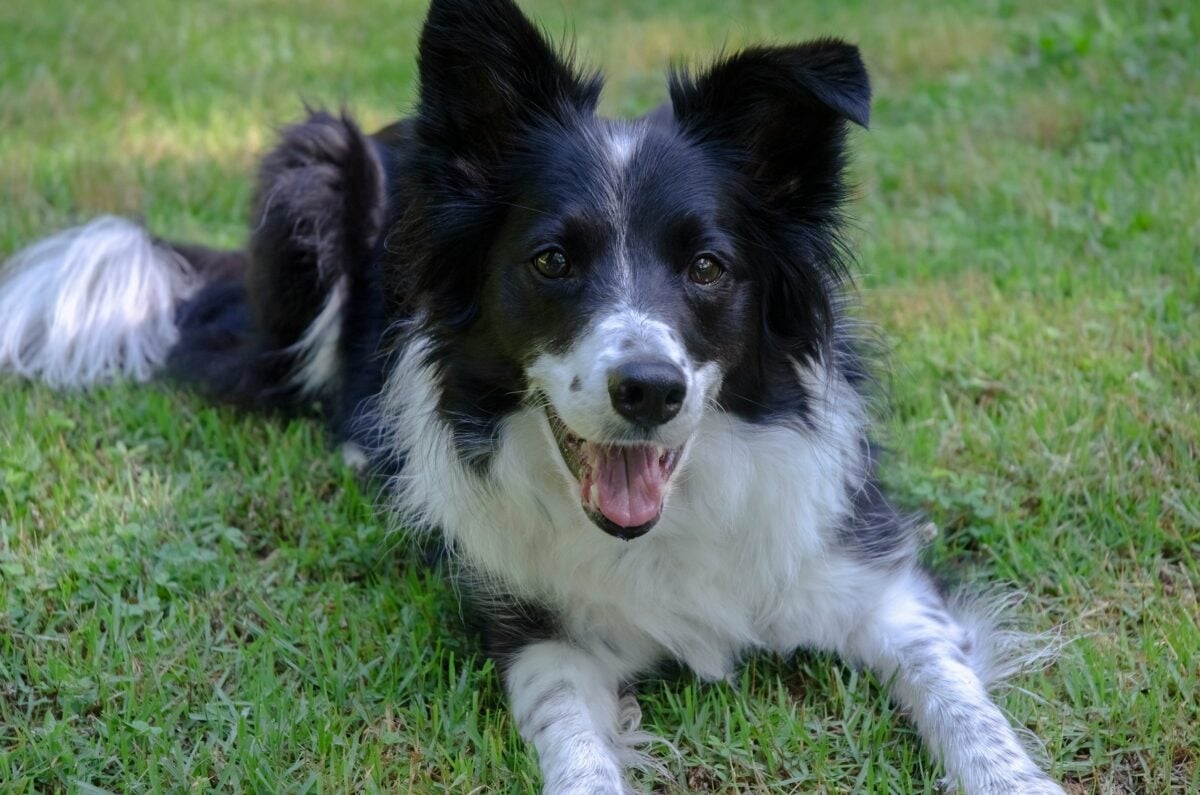
For example, if Rico was asked to fetch a “doll” among a group of familiar toys, he could infer which object was new by recognizing that all the other toys already had known names. By process of elimination, he correctly selected the unfamiliar item.
Researchers found that Rico could immediately retrieve newly named objects and still remember them weeks later. This type of exclusion learning mirrors the way human toddlers build vocabulary.
2. Chaser (Border Collie)
Chaser holds the title for the largest tested vocabulary of any non-human animal. Trained by Professor John W. Pilley, she reportedly learned over 1,000 proper nouns and could retrieve items on command.
3. The Record-Breaking Medical Detection Dog Team (Golden Retriever & Labrador Retrievers)
In 2023, five trained medical detection dogs set a Guinness World Record for the most consecutive medical samples correctly identified by dogs. Working together with two trainers, the dogs accurately identified 24 samples in a row, each trained to detect a different condition.
The team included:
- Bumper, a Golden Retriever trained to detect Parkinson’s disease
- Jodie, a Labrador trained to identify Pseudomonas infections
- Jude, a Labrador trained to detect PoTS (postural tachycardia syndrome)
- Florin, a Labrador trained to detect prostate cancer
- Lexi, a Labrador trained to identify COVID-19
During the simulation, each dog had to ignore four incorrect diseases and only indicate when their specific target scent was present. That required precision, impulse control, discrimination, and sustained focus — not just enthusiasm.
Frequently Asked Questions
Here are answers to some of the most common questions people ask when trying to understand how smart their dog really is — and what that means for everyday life. Don’t see your question? Respond in the comments, and we’ll get back to you!
Are Mixed-Breed Dogs As Intelligent As Purebreds?
Yes. Intelligence varies by individual dog, not just breed.
While certain breeds may show tendencies toward specific cognitive strengths, mixed-breed dogs can be just as trainable, perceptive, and capable as purebreds.
Are Small Dogs Less Intelligent Than Large Dogs?
No. Size does not determine intelligence.
Some small breeds, such as Poodles and Papillons, consistently rank high in trainability and problem-solving ability. Intelligence is more closely tied to breed purpose and individual variation than body size.
Can A Dog Be “Too Smart”?
In practical terms, yes. Highly intelligent dogs often require more mental stimulation and structure. Without consistent training and enrichment, their intelligence can show up as boredom-driven behaviors like excessive barking, digging, or escaping.
Are Wolves Smarter Than Dogs?
Wolves tend to outperform dogs in certain independent problem-solving tasks. Dogs, however, excel in social cognition and cooperation with humans. Each species shows strength in different cognitive domains shaped by their evolutionary history.
How Can I Tell If My Dog Is Intelligent?
Look for problem-solving persistence, responsiveness to cues, adaptability in new situations, and the ability to learn from repetition. Intelligence often shows up in everyday behaviors — not just in formal training sessions.
Can You Train Your Dog’s Brain?
While genetics influence a dog’s natural strengths, cognitive stimulation plays a major role in mental sharpness. Just like people, dogs improve with practice.
If you’re looking for structured mental stimulation, explore:
Intelligence isn’t just something your dog is born with. It’s something you build together.