When you purchase through links on our site, we may earn a commission at no extra cost to you. Learn more.
In polite society, it’s considered rude to stick your nose into someone else’s business. Your dog clearly never got that memo.
Table of Contents
One enthusiastic sniff can reveal traces of where you’ve been, what you’ve eaten, whether you’ve been around other animals, and even changes in your stress levels and body chemistry. Your dog may be privy to secrets that even you yourself have yet to discover.
And if you’ve been secretly petting another dog? Well, some scandals are simply impossible to conceal.
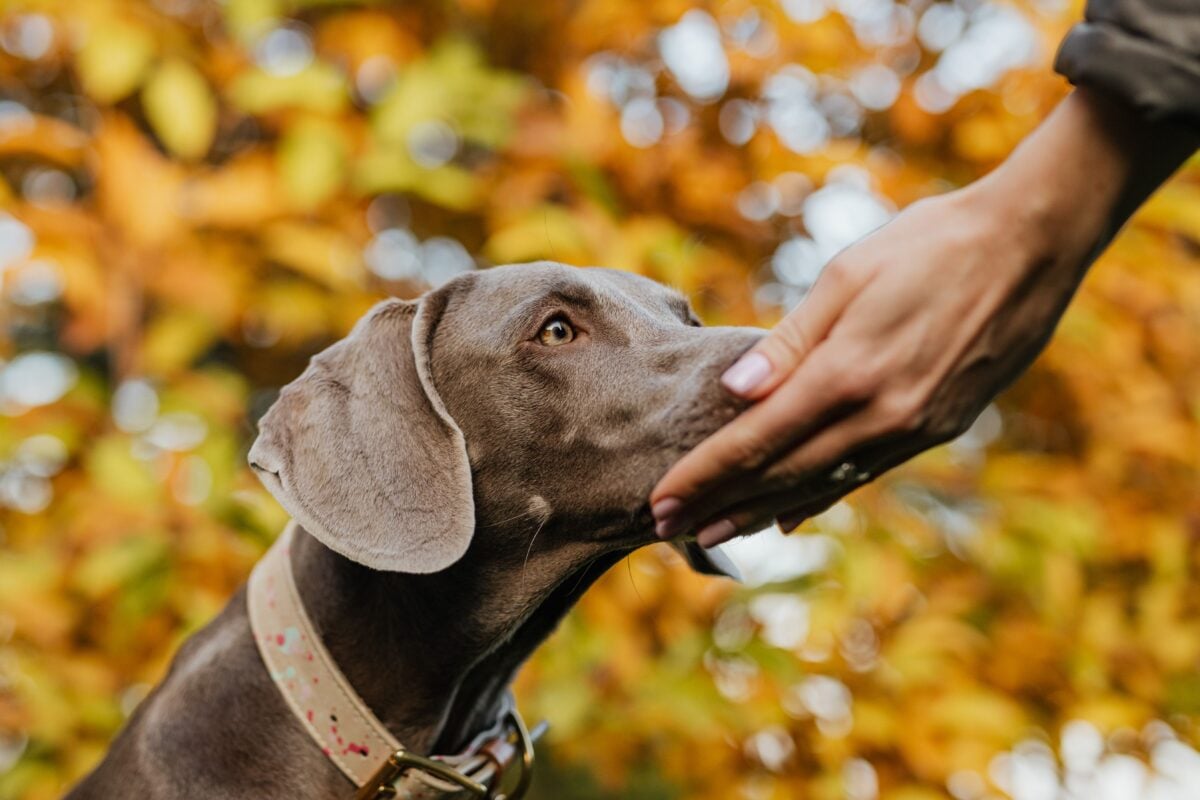
Start Here: Your Dog’s Nose Is Keeping Tabs On You
You may believe your daily affairs are your own business. But in a household with a dog, even the most carefully guarded secrets have a way of coming to light.
Every outing leaves behind a trail of scent clues on your skin, clothes, and shoes. And when you return home? Your four-legged gossip hound is eager for the latest scoop.
Dogs have hundreds of millions of scent receptors, compared to roughly 5 million to 6 million in humans. Their remarkable noses can distinguish individual odors within a mixture of smells that we might barely notice.
Meanwhile, your body is constantly releasing chemical compounds through your skin, sweat, and breath. These scents can shift with exercise, stress, hormonal changes, and certain health conditions.
So, while you’re busy greeting your dog, they’re uncovering the details of your latest adventures — and possible indiscretions. And, as you’re about to discover, very little escapes that inquisitive nose.
7 Things Your Dog Can Tell About You Just By Smelling You
Your dog may never know exactly what you did today, but your scent can reveal some surprisingly personal details. From questionable social encounters to changes in your emotional state, here are seven things that might escape your notice but rarely escape your dog’s nose.
1. You’ve Been Cheating On Them With Another Dog
You stopped to pet a friendly Golden Retriever on your morning walk. It seemed like an innocent encounter, but you’ve returned home carrying the unmistakable scent of another dog.
Your own pup may immediately investigate your hands, clothes, and shoes, gathering information about your mysterious new acquaintance. Dogs can distinguish odors from different animals, including traces left behind on your skin and clothing.
And if your dog gives you an especially thorough sniff-down? Consider your little indiscretion discovered.
Of course, recognizing another dog’s scent doesn’t necessarily mean your pup feels jealous or betrayed. They may simply be curious about the unfamiliar animal whose scent you’ve brought into their territory.
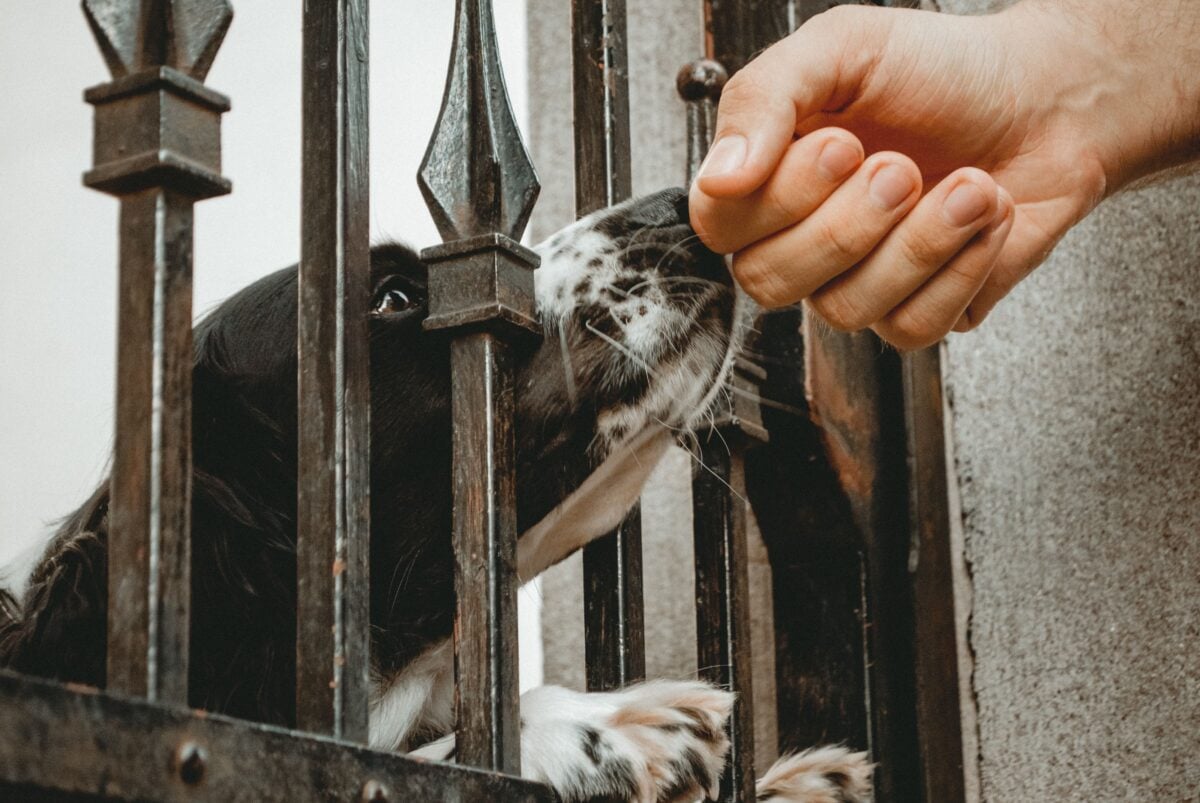
2. Where You’ve Been (And Who You’ve Been With)
Think your afternoon errands are of no interest to your dog? Your shoes and clothing may tell a different story.
A trip to the park can leave traces of grass, soil, and other animals. A visit to a friend’s house might introduce unfamiliar human and pet scents, while a walk through the neighborhood brings home an assortment of outdoor odors.
Dogs use these scent clues to gather information about their surroundings and the individuals they’ve encountered. Your pup may recognize familiar odors and notice when you’ve been somewhere new.
They can’t reconstruct your entire afternoon from a single sniff, but they can detect traces of encounters that would otherwise remain your little secret.
3. You’re Stressed (Even When You’re Hiding It)
You might put on a brave face after a difficult day, but your body isn’t nearly as skilled at keeping up appearances. Even when you’re smiling, your scent may be telling a different story.
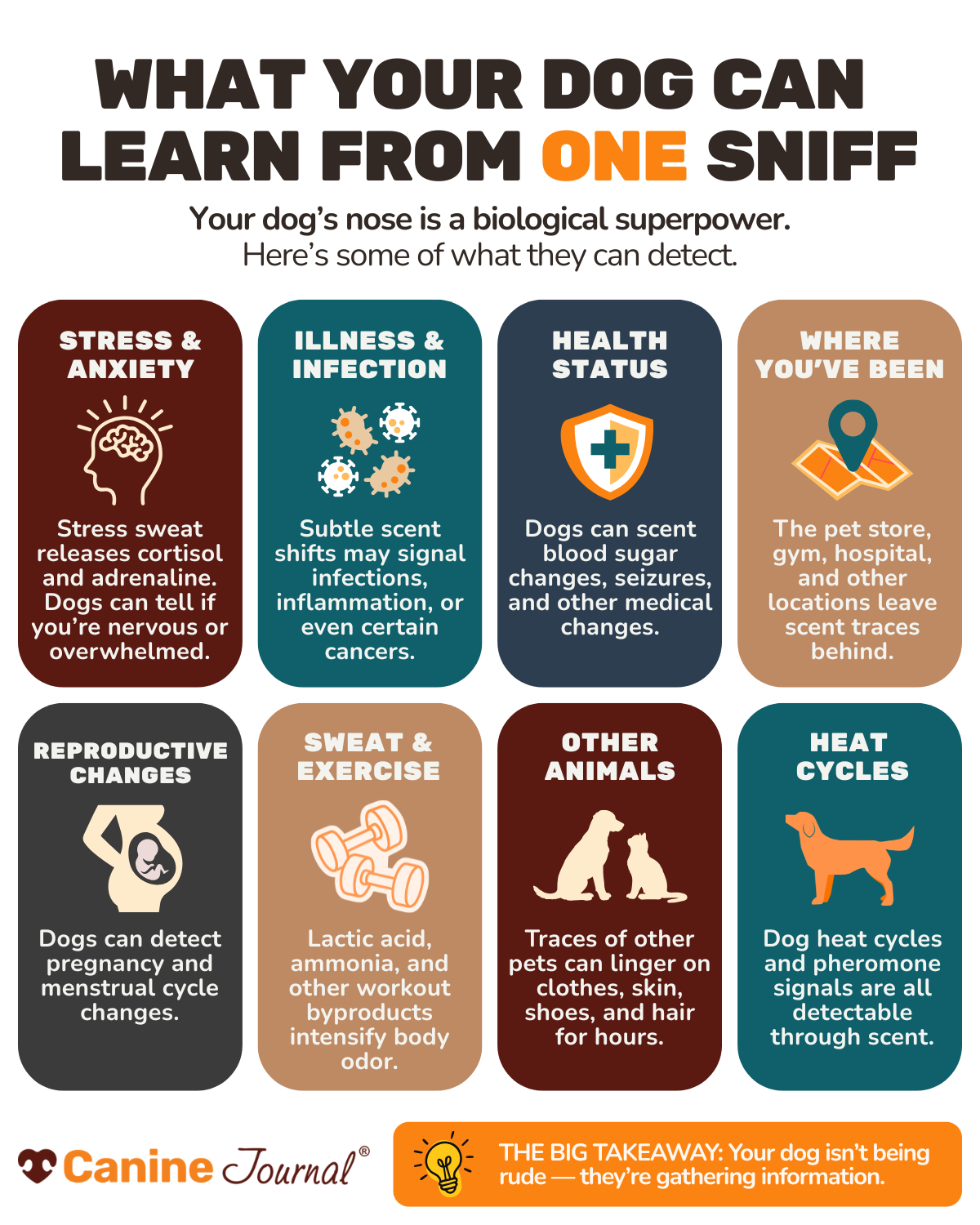
When you’re stressed or afraid, your body releases hormones like adrenaline and cortisol. These hormonal and metabolic changes can alter the chemical compounds in your sweat and breath, creating scent clues your dog can detect.
Research has shown that dogs can not only detect when humans are stressed or fearful, but also react to those emotional scents.
In one study, dogs exposed to human “fear sweat” showed more signs of stress, increased heart rates, and a greater tendency to seek comfort from their owners. In contrast, those exposed to “happy sweat” were more sociable toward strangers.
So, even when you’re resolute to keep up appearances, your dog may sense that something is amiss.
4. You’ve Been Working Up A Sweat
Just finished a workout? Your dog may know you’ve been breaking a sweat before you’ve even kicked off your sneakers.
Exercise changes your body’s scent as you sweat, heat up, and release chemical compounds through your skin and breath. Your dog can pick up on these subtle differences, even after you’ve cooled down.
And if your pup seems especially interested in your gym clothes or sweaty socks, there’s a reason. Those well-worn garments are practically overflowing with information about you.
5. What You’ve Been Eating (And Not Sharing)
Thought you could sneak a snack without your dog noticing? That secret afternoon cheeseburger may have left behind more clues than you realize.
Food odors can linger on your hands, breath, and clothing long after you’ve finished eating. Certain foods, including fish and cruciferous vegetables, can even affect your breath and body odor as your body processes them.
So, if your dog suddenly takes a keen interest in your hands after lunch, your little indulgence may have been discovered. Whether they’ll forgive you for failing to share is another matter entirely.
6. Your Hormones Are Up To Something
Some of your most closely guarded secrets aren’t hiding in your pockets or on your clothes; they’re unfolding inside your body.
Hormones help regulate everything from metabolism and blood sugar to stress responses and reproduction. As your body chemistry changes, so can the compounds released through your skin, sweat, and breath.
These shifts may offer your dog clues about changes associated with menstrual cycles, pregnancy, and certain metabolic conditions. Of course, noticing a different scent doesn’t mean your pup understands the reason behind it.
Pregnancy is especially intriguing because it brings significant hormonal changes. Some owners report that their dogs become unusually affectionate, clingy, or curious, although scientists haven’t established that pet dogs can reliably detect pregnancy through scent alone.
Still, your body may be revealing more than you realize. And your dog’s inquisitive nose might be among the first to notice.
7. Something About Your Health Has Changed
Of all the secrets your dog might uncover, this one could be the most surprising. Certain illnesses and medical conditions can alter the chemical compounds released through your breath, skin, sweat, and bodily fluids.
Research suggests that specially trained dogs can detect scent changes associated with:
- Certain cancers
- Low blood sugar episodes
- Some seizure-related changes
- Infections, including COVID-19
Of course, your family dog isn’t a substitute for a medical professional. Unusual sniffing or sudden changes in your dog’s behavior aren’t reliable signs of an undiagnosed illness.
Still, the possibility that dogs can detect certain physiological changes through scent offers a fascinating glimpse into their extraordinary abilities. Who knows what subtle clues your own dog might be noticing?
Why Your Dog Gives You The Full Sniff-Down When You Get Home
You walk through the door, and before you’ve even put down your keys, your dog is giving you the once-over. Your pants, shoes, and hands receive a thorough inspection, as though you’ve returned from a particularly scandalous outing.
For dogs, sniffing is a natural way to gather information. Your clothing and skin carry traces of the places you’ve visited, the people you’ve encountered, and the animals you’ve crossed paths with.
And after several hours apart, your dog may be especially curious about any changes to your familiar scent. After all, there’s quite a bit of gossip to catch up on, and your pup prefers to hear it straight from the source.
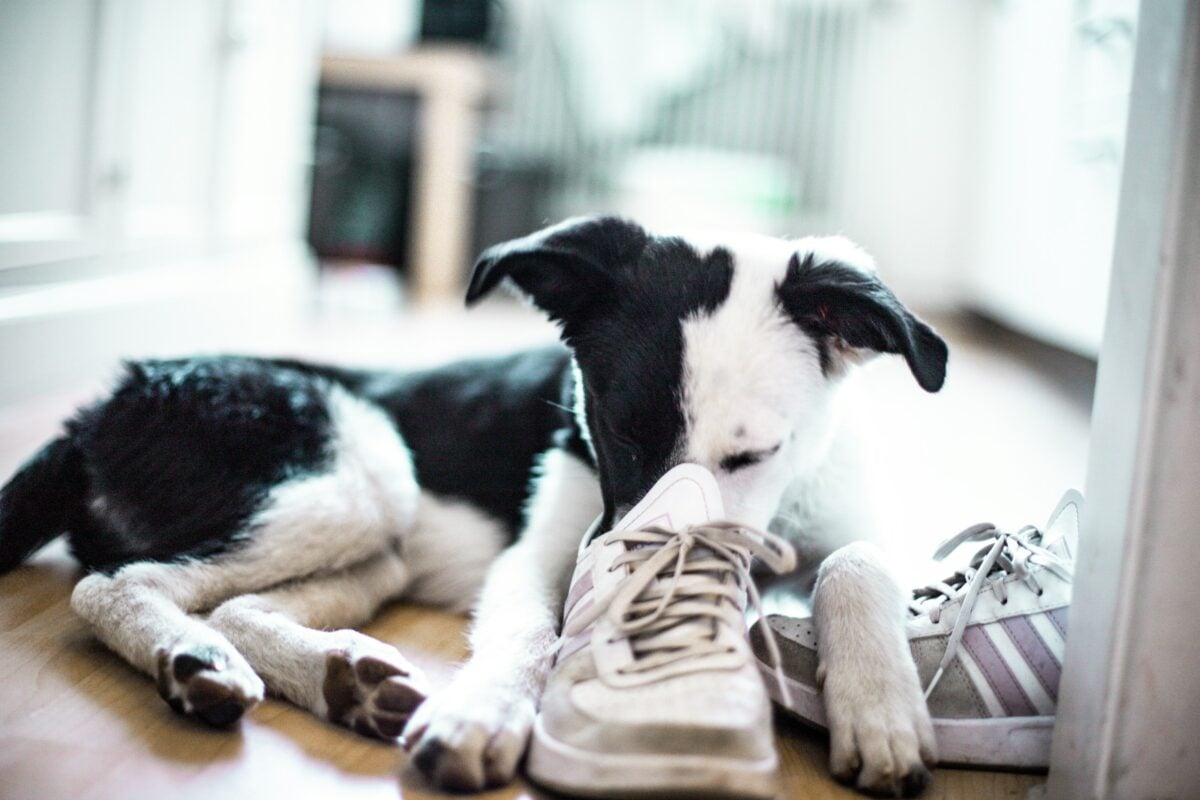
Why The Shoes, Hands & Crotch?
Some parts of your body seem to attract more attention than others. And your dog, being entirely unconcerned with the rules of polite society, has no reservations about investigating them.
- Shoes: Your footwear collects odors from sidewalks, grass, soil, and countless other surfaces. Think of them as a travel diary of your latest adventures.
- Hands: From preparing dinner to petting another animal, your hands encounter all sorts of interesting smells. Your dog may be particularly curious about any unfamiliar scents.
- Crotch: The groin contains apocrine sweat glands that contribute to your individual body odor. These concentrated scents make the area especially tempting for an inquisitive nose.
While sniffing is perfectly normal canine behavior, such an intimate greeting isn’t always appreciated by guests. A little gentle redirection can help your dog practice more socially acceptable manners.
For more on this rather embarrassing habit, discover why dogs smell your crotch and what their noses are actually investigating.
Your Dog Knows Your Scent Anywhere
Of all the fascinating scents in the world, your dog knows one especially well: yours.
Every person has a distinctive scent shaped by genetics, skin chemistry, and other factors. Your dog learns to recognize your familiar odor, helping them distinguish you from other people, even without seeing your face.
But here’s where the story takes a rather heartwarming turn. Research using brain scans found that dogs showed a particularly strong response in a region associated with positive expectations when they smelled a familiar human.
That familiar scent may help explain why some dogs love curling up with their owner’s worn T-shirt or claiming their favorite spot on the bed. Your lingering scent can serve as a comforting reminder of someone they know and trust.
So, while your dog may be fascinated by every little secret your scent reveals, there’s something rather sweet beneath all that snooping. In a world overflowing with interesting smells, yours is one they’ve learned to know by heart.
Why Some Dogs Are Nosier Than Others
Every social circle has its notorious gossip, and the canine world is no exception. Some dogs simply can’t resist investigating every scent, while others are content to mind their own business.
Genetics plays a role. Scent hounds like Bloodhounds, Beagles, and Basset Hounds were bred to follow odor trails, making them particularly enthusiastic about putting their noses to work.
But breed isn’t the whole story. Age, training, personality, and past experiences can also influence how much time a dog spends sniffing.
And don’t underestimate the family lapdog. Even a pampered pup with no hunting pedigree can become remarkably inquisitive when an unfamiliar scent catches their attention.
Curious which breeds have the most impressive sniffing credentials? Explore our guide to dogs with the best sense of smell.
3 Ways To Put Your Dog’s Superpowered Nose To Work
Your dog has a remarkable talent for uncovering secrets, so why not put those investigative skills to good use? Scent games provide mental stimulation, encourage natural sniffing behaviors, and can help keep boredom at bay.
Best of all, you don’t need fancy equipment or a professionally trained scent hound. A few treats and a little creativity are enough to get started.
1. Play Find The Treat
Start by letting your dog watch you hide a treat somewhere easy, such as behind a chair leg or beneath the edge of a towel. Then give them a cheerful “Find it!” and let their nose take the lead.
As your pup gains confidence, make the hiding spots more challenging. Before long, your living room may become the setting for some rather serious detective work.
2. Turn Mealtime Into A Sniffing Adventure
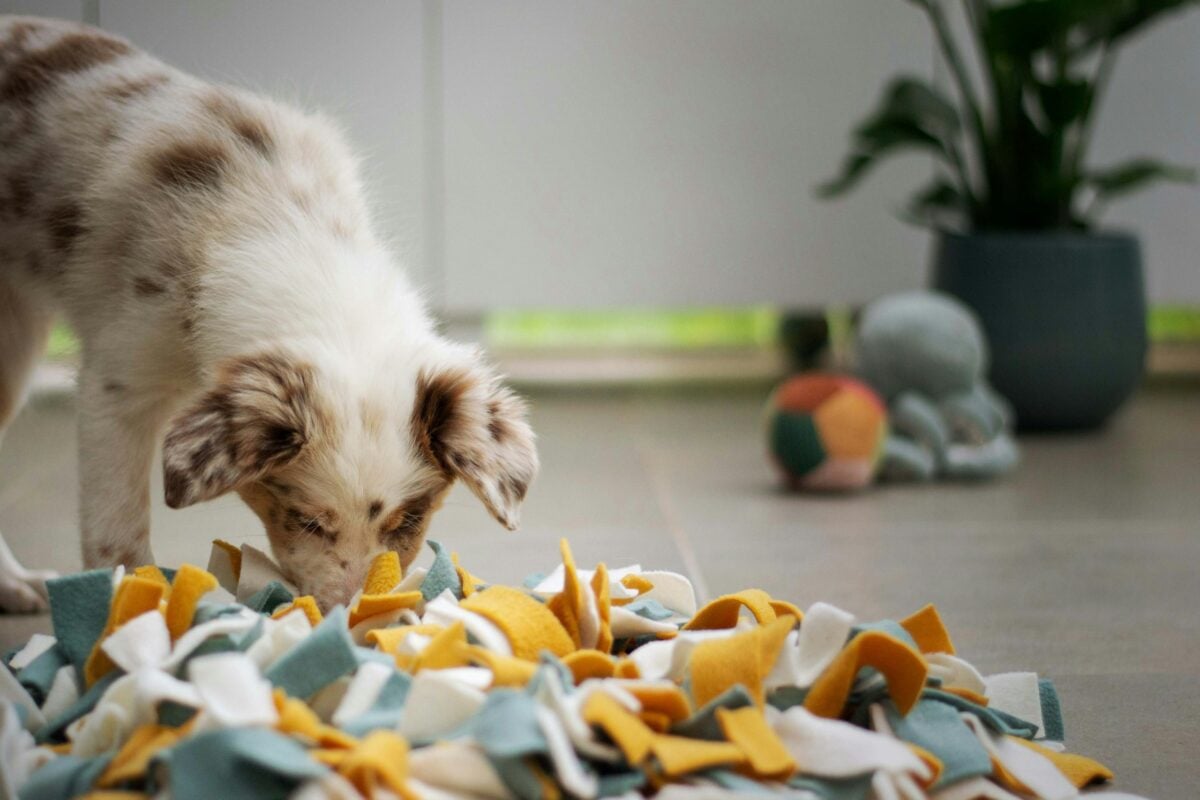
Why serve every meal in a bowl when your dog could enjoy a little treasure hunt? Scatter some kibble across a clean patch of grass or tuck it into a snuffle mat.
Searching for food encourages your dog to slow down and use their natural scenting abilities. Just supervise the activity and make sure your pup isn’t swallowing grass, fabric, or other unwanted treasures.
3. Let Your Dog Lead A Sniff Walk
Not every walk needs to be a brisk march around the neighborhood. Sometimes, the most rewarding outing is one where your dog gets to investigate every interesting scent along the way.
Choose a safe, familiar route and give your pup extra time to sniff trees, bushes, and patches of grass. Think of it as allowing them to catch up on the neighborhood gossip.
And while your dog is busy discovering who passed through earlier, you might enjoy a more leisurely stroll yourself.
Looking for more ways to entertain your inquisitive companion? Explore our favorite brain games for dogs to keep those clever minds busy.
Frequently Asked Questions
Your dog’s nose may be remarkably revealing, but it also raises a few questions. Here are some answers to common curiosities about what dogs can learn from your scent.
Don’t see your question? Respond in the comments, and we’ll get back to you!
Can Dogs Smell When You’re Sad?
Dogs may detect changes in your body odor associated with stress, but research hasn’t established that they can identify sadness through scent alone. They also notice your voice, facial expressions, and body language.
So, if your dog seems especially attentive when you’re feeling down, they may be responding to several clues rather than a single smell.
Can Dogs Tell If You’ve Been Around Another Person?
Yes, dogs can detect unfamiliar human scents lingering on your skin and clothing. They may also recognize the scent of someone they’ve encountered before.
That doesn’t mean your dog knows the details of your social engagements. But an unfamiliar perfume or another person’s lingering scent may certainly pique their curiosity.
Can Dogs Smell Fear In Strangers?
Research suggests that dogs can detect chemical changes associated with human fear. These scents may also influence their behavior and stress responses.
However, a dog’s reaction to a stranger depends on more than smell. Body language, previous experiences, and the surrounding environment can also play important roles.
Learn more about whether dogs can smell fear and how they respond to human emotions.
Can Dogs Recognize Their Owners After Years Apart?
Dogs have excellent scent memories and can recognize familiar human odors. It’s possible for a dog to recognize someone after a long separation, although there isn’t a scientifically established time limit for this ability.
Your scent, voice, appearance, and shared experiences may all contribute to that recognition.
What Else Does Your Dog Know About You?
For a creature with so little regard for personal privacy, your dog certainly knows how to make you feel loved. They may notice your secret snacks, questionable social encounters, and mood changes, but your familiar scent is also part of the bond you share.
And your dog’s nose is only one piece of the mystery. Ever wondered why dogs dislike certain people, why their noses are always wet, or which smells dogs absolutely hate? There’s plenty more to discover about the wonderfully peculiar world of canine senses.
In the meantime, don’t be surprised if your next homecoming involves a particularly thorough inspection. After all, a dog with a nose for gossip is unlikely to let a good secret go unnoticed.