Olde English Bulldogge vs English Bulldog: They Look Alike, But Living With Them Isn’t

When you purchase through links on our site, we may earn a commission at no extra cost to you. Learn more.
They share the same blocky silhouette, the same wrinkled faces, and the same unmistakable bulldog presence. Online photos make them feel interchangeable, and their names only add to the confusion.
Table of Contents
While these two breeds share distant roots, they were shaped by very different priorities, and those choices still show up in ways you’ll feel every single day at home. Here’s what photos don’t tell you.
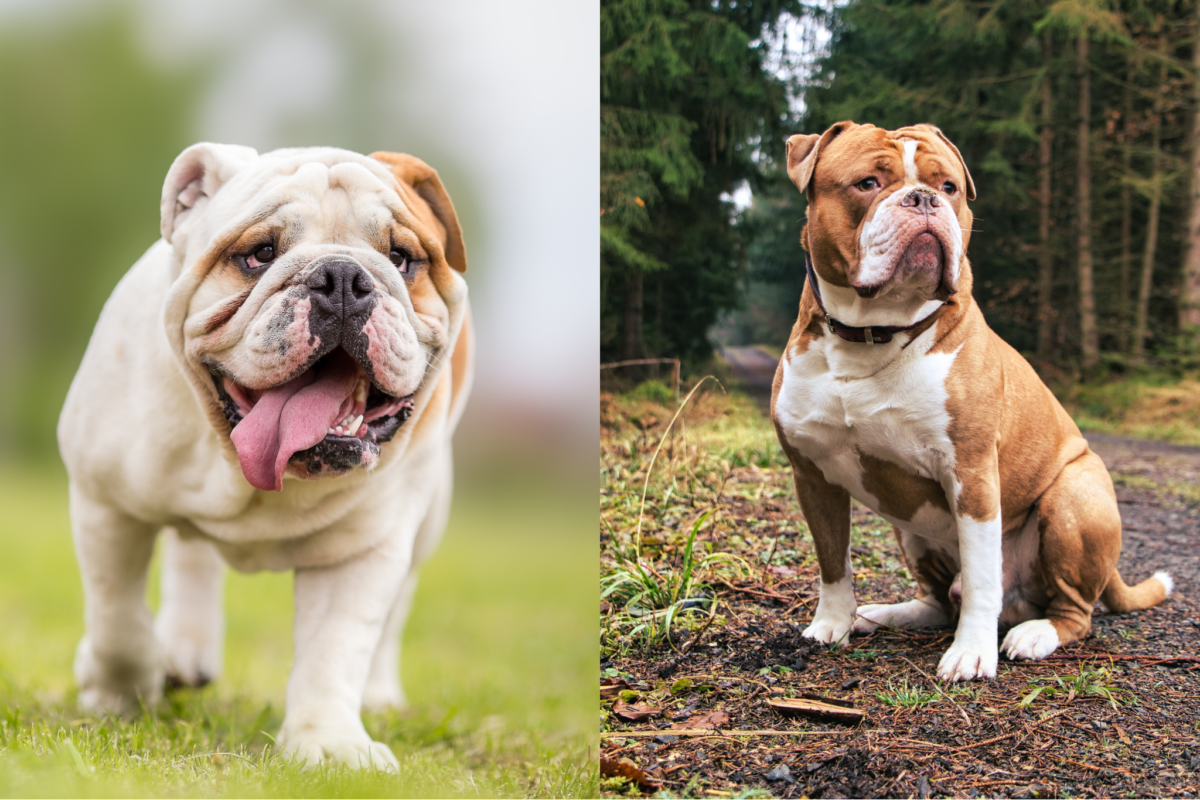
Breed Comparison
- Height16 – 20 inches
- Height14-15 inches
- Weight70 – 85 pounds
- Weight40-60 pounds
- Coat ColorBrindle, Red, White, or Black
- Coat ColorWhite, Red, Gray, or Brindle
- TemperamentFriendly, outgoing, agreeable
- TemperamentStubborn, friendly, outgoing
- EnergyModerate
- EnergyLow
- HealthAverage
- HealthBelow Average
- Lifespan11-13 years
- Lifespan8-10 years
- Puppy Prices$1,000+
- Puppy Prices$1,000+
Start Here: The Biggest Differences Most People Miss
Before diving into history, health, and training, it helps to zoom out. On paper, these two dogs share a lot in common.
They’re both muscular, people-focused, and instantly recognizable as bulldogs.
In real life, though, they occupy space in your home very differently.
- Energy and pace: One dog tends to move through the day with a steadier, more capable engine, while the other often prefers short bursts of activity followed by serious downtime. Both enjoy companionship, but they express it differently through motion.
- Size and presence: Both are solid, muscular dogs, yet one usually feels more balanced and athletic, while the other can feel like a lot of dog compressed into a smaller footprint. This affects everything from walking through doorways to how much space they claim on the couch.
- Attitude toward training: Both are intelligent and capable, but one is more likely to meet you halfway and say, “What’s next?” The other may understand the request perfectly and still ask you to convince them it’s worth their time.
- Impact on your budget: Either breed can be affordable or expensive depending on breeding and care, but one tends to accumulate higher food, veterinary, and long-term health costs that catch new owners off guard.
- Everyday vibe in your home: One often fits best with people who enjoy staying active and engaged, while the other tends to suit owners who imagine slower evenings with a heavy, warm dog pressed close.
None of these differences make one breed better. They just make them better — or worse — for different people.
How Did These Bulldogs Start, And Why Does That Still Matter?
Most people choose a dog based on how it looks or behaves today. What’s easy to forget is that every breed carries a story, and that story still shapes how the dog uses its body, brain, and energy.
Bulldogs didn’t appear out of nowhere. They were created for specific purposes, then reshaped as society changed. The English Bulldog and the Olde English Bulldogge took very different paths from that shared origin.
When you understand what each breed was bred to do, their quirks stop feeling random and start making sense.
English Bulldog History & How Form Took Over Function
The English Bulldog traces its roots back to 13th-century England, where early bulldogs were bred for bull baiting. These dogs needed to be strong, fearless, and capable of gripping large animals while enduring extreme physical stress.
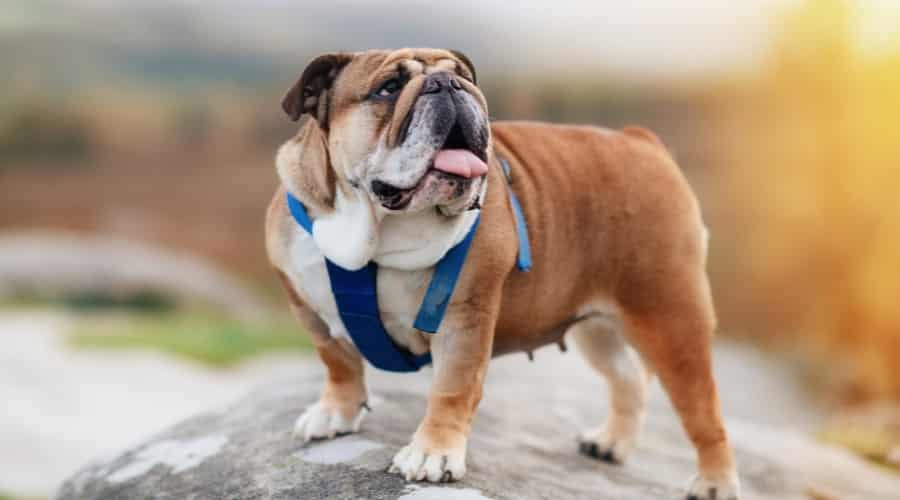
When blood sports were outlawed, the breed faced extinction. What saved it was reinvention.
Over time, breeders shifted focus from working to companionship. Temperament softened. The bulldog became calmer, friendlier, and more suited to life indoors.
At the same time, physical traits that looked distinctive in the show ring became increasingly emphasized.
Shorter snouts. Wider heads. Heavier, more compact bodies.
Those changes created the iconic English Bulldog look we recognize today. They also introduced a cascade of structural challenges that still define the breed.
Many English Bulldogs now:
- Struggle with efficient breathing
- Overheat easily
- Carry disproportionate weight on short frames
- Experience joint, spine, and skin issues
- Require cesarean sections to give birth safely
Despite these challenges, the English Bulldog’s personality won people over. Behind the grumpy expression is a deeply social, affectionate dog that often wants nothing more than to be near its people.
The modern English Bulldog is, above all, a companion-first breed. That focus shaped everything that followed.
Olde English Bulldogge History & The Intentional Reset
The Olde English Bulldogge is not the same as the extinct Old English Bulldog, despite the confusing name.
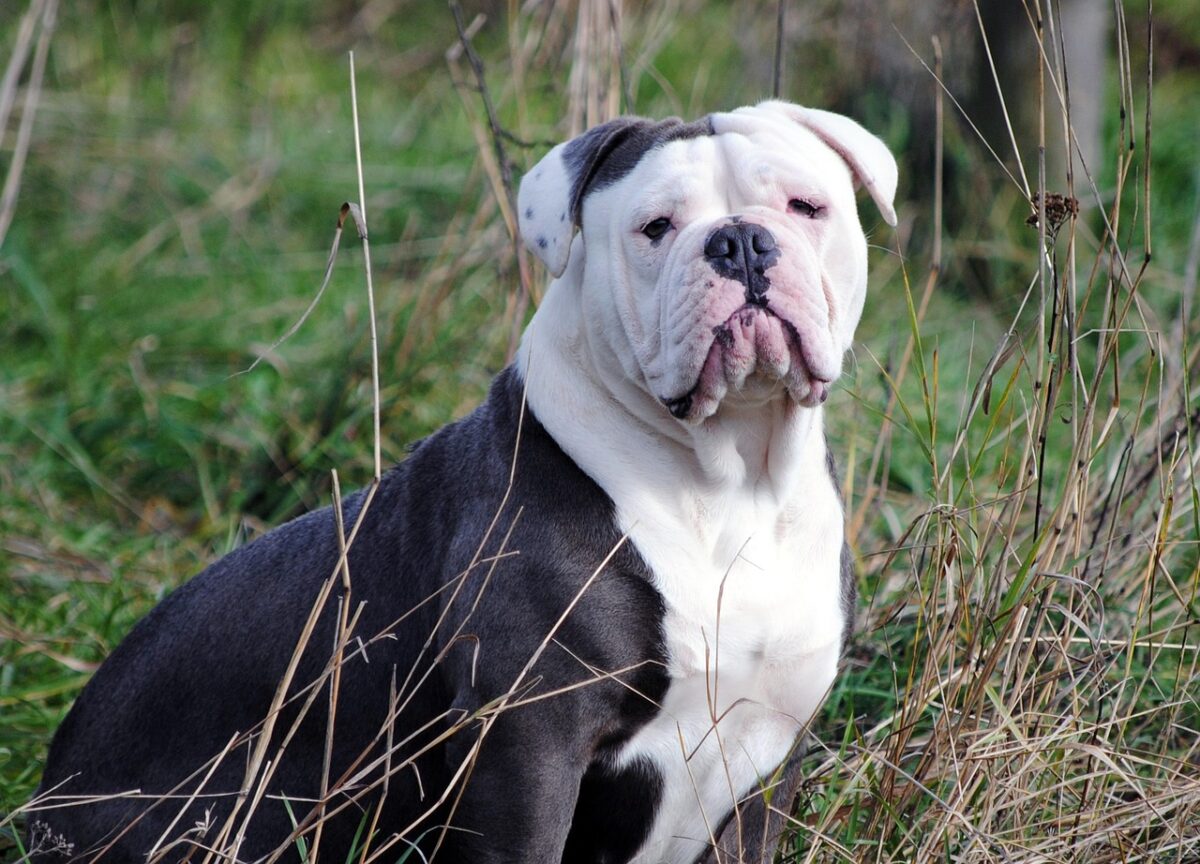
Instead, it’s a modern breed created in the 1970s by breeder David Leavitt, who wanted to address the growing health and functional limitations of the English Bulldog without losing the breed’s core temperament.
Rather than continuing down the same path, the OEB was intentionally rebuilt.
English Bulldogs were crossed with American Bulldogs, Bullmastiffs, and other working-type bulldogs to restore traits that had been bred out over time:
- Longer muzzles
- Better airway structure
- More balanced proportions
- Greater stamina
- Improved reproductive health
This wasn’t nostalgia breeding. It was functional breeding.
The result was a bulldog that still looks unmistakably like a bulldog, but one that moves differently, tolerates activity better, and generally carries fewer severe structural limitations.
That original goal still defines the Olde English Bulldogge today.
Why This History Still Shows Up At Home
These breeding decisions weren’t abstract. They affect:
- How predictable daily life feels
- How long your dog can walk before tiring
- How well your dog handles heat
- How resilient their joints are over time
- How much medical intervention they may need
They Look Similar Online But Are Built Very Differently
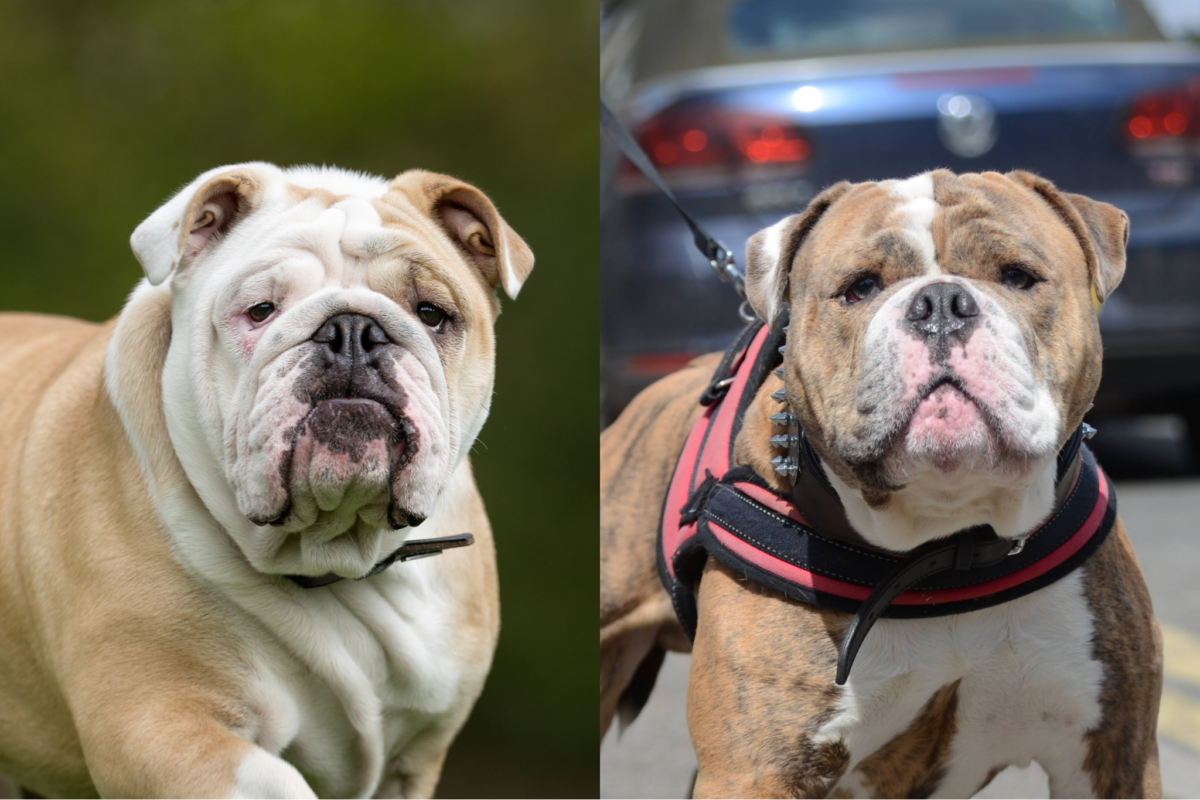
Side-by-side photos of English Bulldogs and Olde English Bulldogges can be misleading. In still images, both dogs look solid, muscular, and unmistakably bulldog-shaped.
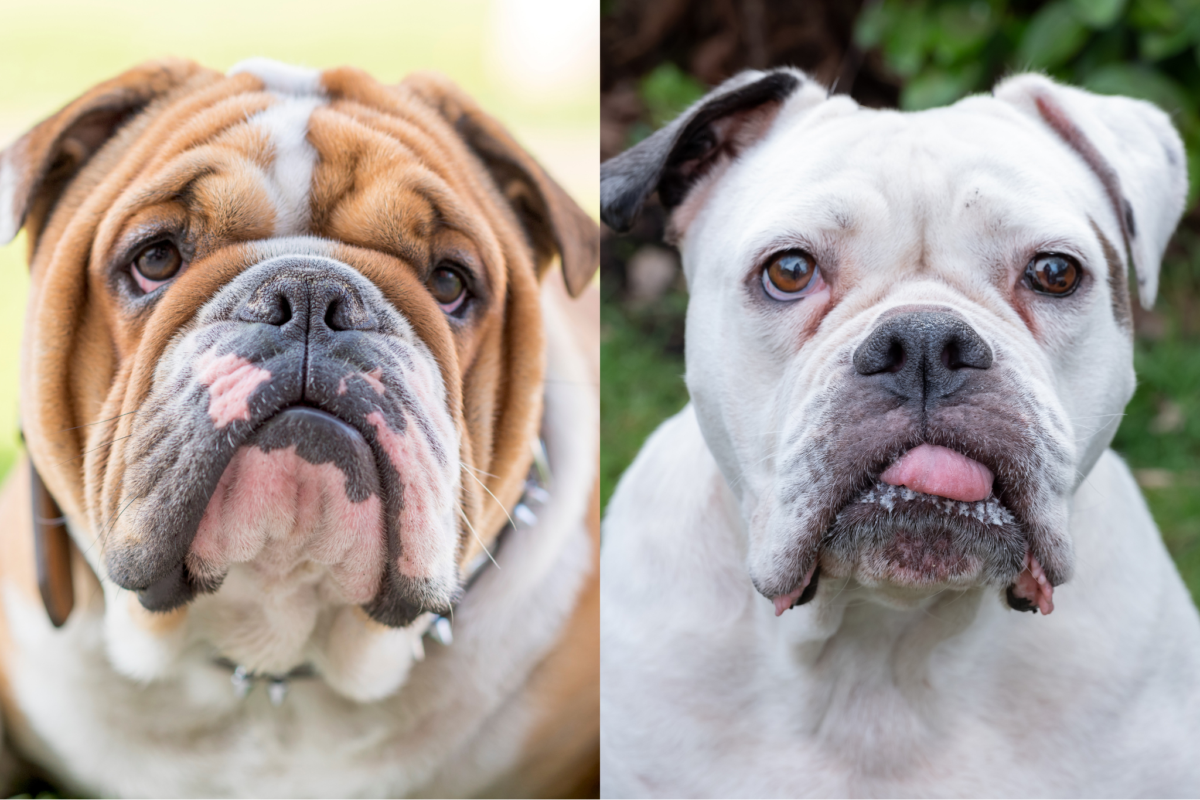
Broad chests. Thick necks. Square heads.
That visual similarity is why so many people assume the differences are minor. You don’t really notice how different they are until you watch them move through space.
Size & Weight: Similar Muscle, Very Different Distribution
English Bulldogs are deceptively heavy for their size. Most adult English Bulldogs weigh between 40 and 60 pounds, yet stand only about 14 to 15 inches tall at the shoulder.
That weight is packed into a short, dense frame with a wide chest and short legs. The result is a dog that feels solid and powerful when you lift or handle them, but also one that carries a lot of stress through its joints.
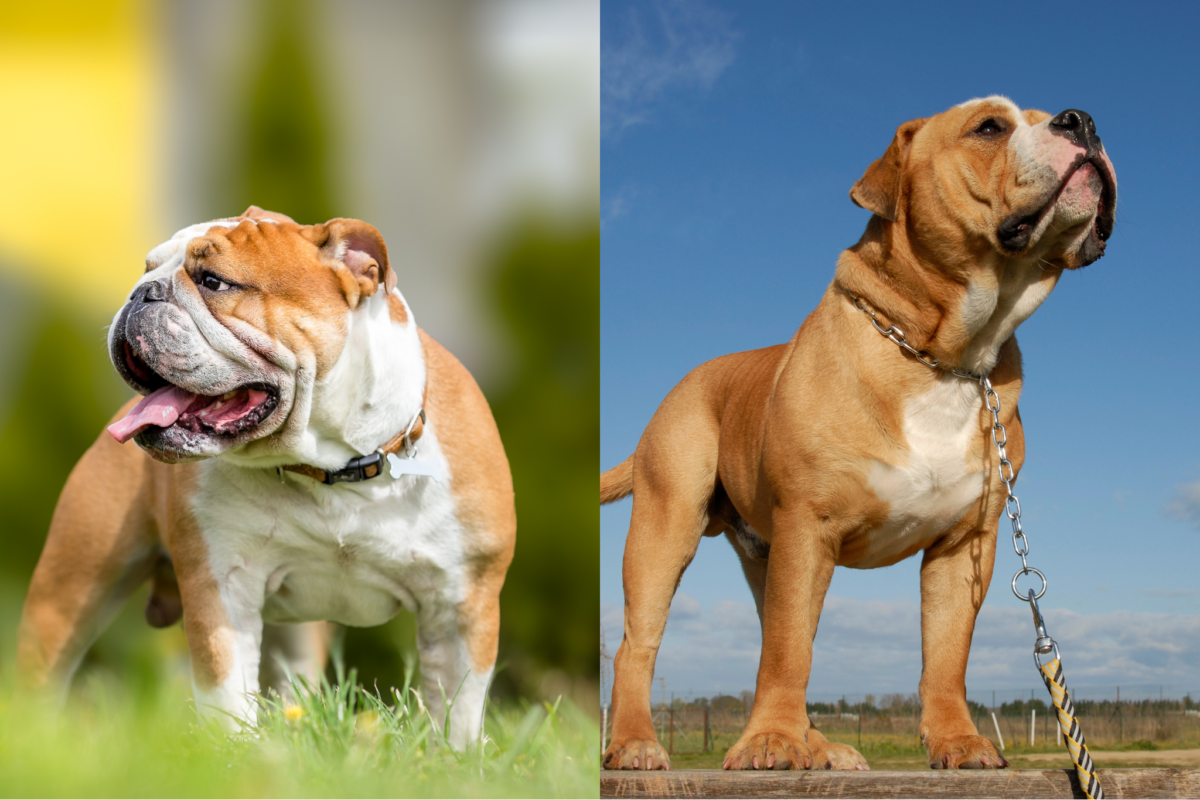
Olde English Bulldogges are typically larger and taller, often weighing 60 to 85 pounds or more and standing 16 to 20 inches tall.
While heavier overall, their weight is spread more evenly across a taller, more athletic frame.
In practice, this means:
- The English Bulldog often feels heavier than expected when you pick them up
- The OEB feels bigger, but less compressed
That difference matters when it comes to joint health, mobility, and how to care for your dog as they age.
Body Shape & Muscle: Compact Power vs Athletic Strength
English Bulldogs are built like tanks. They have extremely broad shoulders, thick necks, and a low center of gravity.
Their bodies are designed more for stability than movement, which is part of their charm.
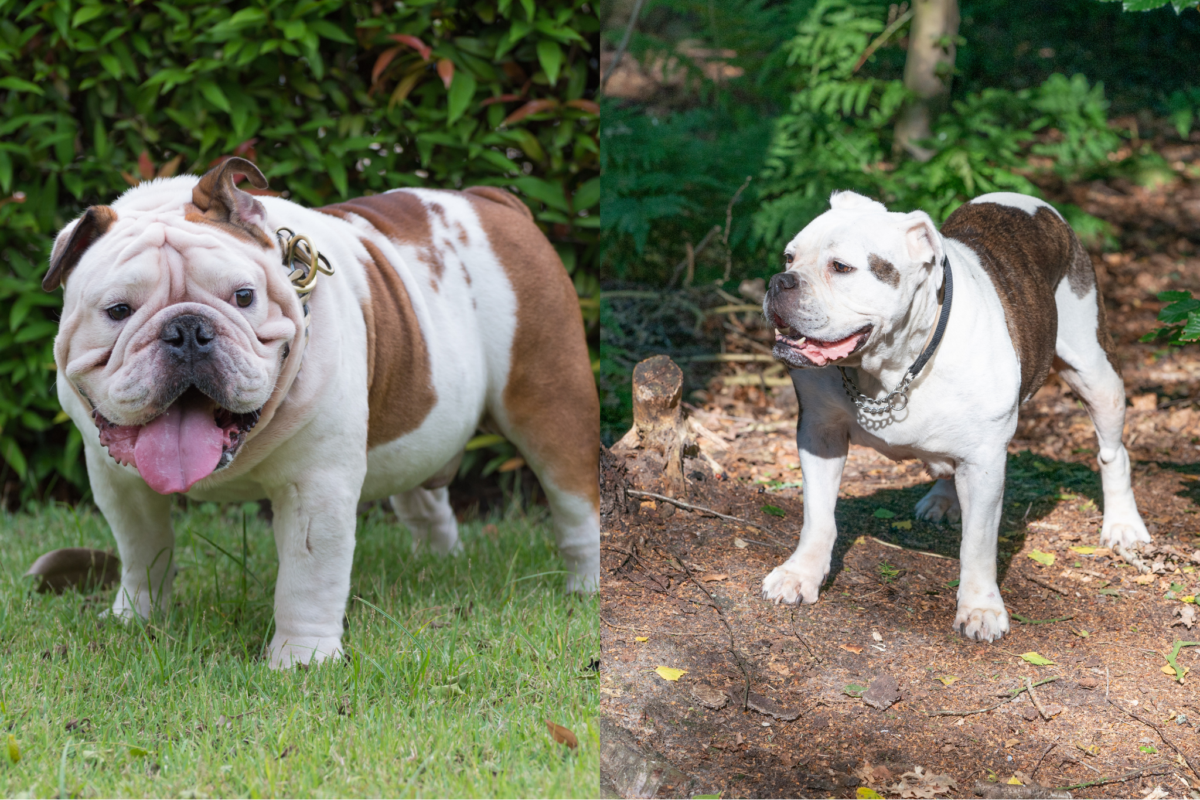
The Olde English Bulldogge still has plenty of muscle, but the shape is different. The chest is broad without being exaggerated, the legs are longer, and the back is more level.
The proportions allow for a smoother gait and less strain during movement.
Over time, this difference affects:
- How easily the dog gets up from the floor
- How long joints stay comfortable
- How willing the dog is to move later in life
Many owners don’t notice these contrasts until the dog reaches middle age, when mobility starts to matter even more.
Head, Face, And Breathing: Where Function Really Diverges
This is the most important physical difference between the two breeds, and the one that impacts daily life the most.
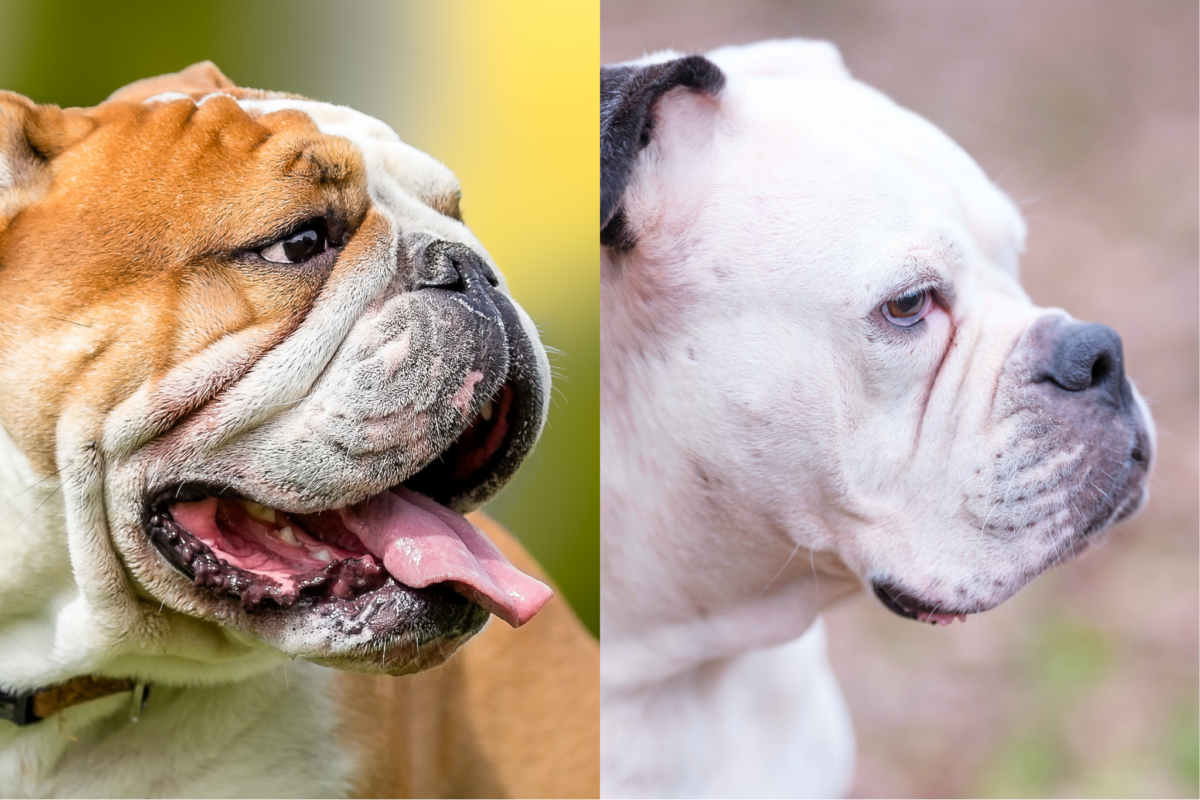
English Bulldogs are a classic brachycephalic breed. Their faces are extremely flat, with short muzzles, narrow nostrils, and crowded airways. While that flattened face is iconic, it comes at a cost.
Many English Bulldogs:
- Snore loudly
- Breathe noisily even at rest
- Overheat quickly
- Struggle during exercise
- Require surgical intervention to improve airflow
Olde English Bulldogges were specifically bred to reduce these issues. Their muzzles are still short compared to non-brachycephalic dogs, but noticeably longer than those of English Bulldogs.
Their nostrils are often wider, and their airway structure allows for better oxygen flow.
That doesn’t mean OEBs are endurance athletes. It does mean they’re less likely to hit their physical ceiling as quickly during normal activity.
In everyday life, this can look like:
- Longer walks without stopping
- Better tolerance of warm weather
- Less anxiety during physical exertion
For many owners, this difference alone changes how restrictive daily routines feel.
Wrinkles, Skin, And Maintenance
Both breeds have wrinkles. That’s part of the bulldog look.
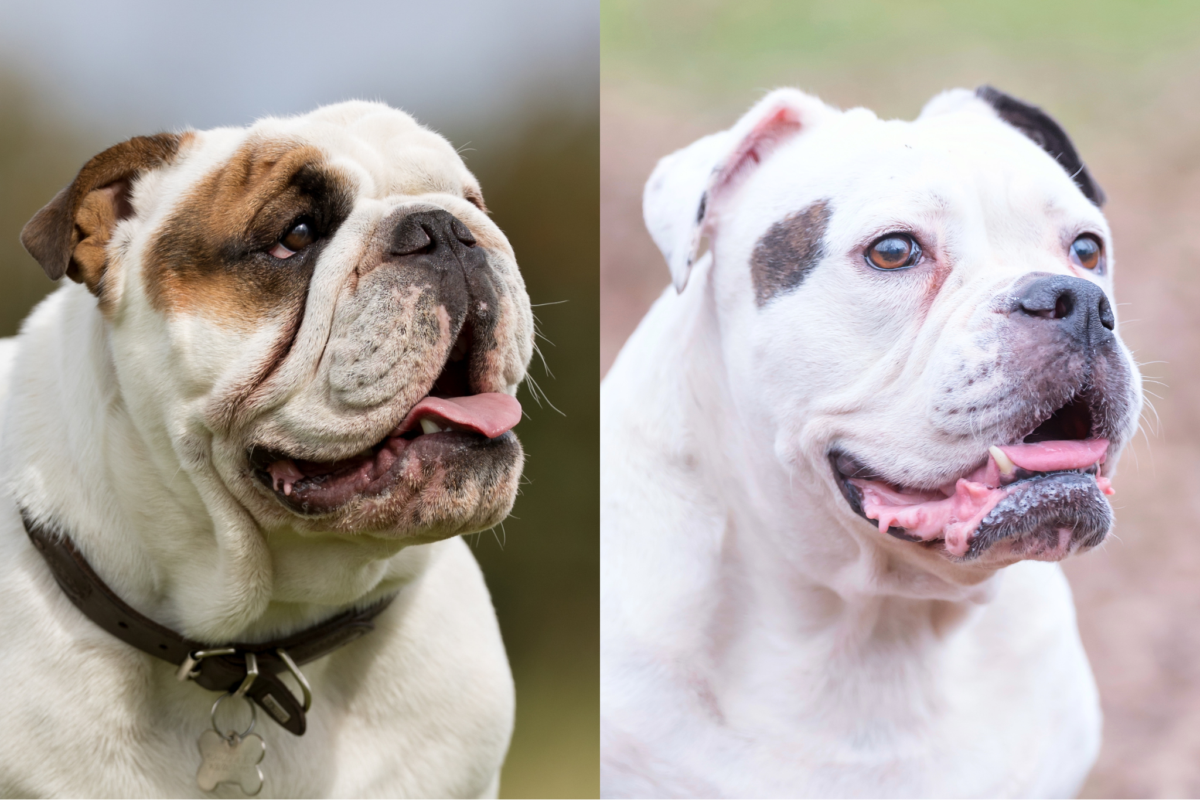
English Bulldogs tend to have deeper, more numerous skin folds, especially around the face and neck. Those folds require consistent cleaning to prevent moisture buildup, irritation, and infection.
Olde English Bulldogges usually have fewer and shallower wrinkles, which can make skin care slightly easier, though still necessary.
Wrinkle care isn’t optional with either breed. It’s simply more time-intensive with English Bulldogs, particularly for owners who live in humid climates or whose dogs have sensitive skin.
Coat Texture & Color
Both breeds have short coats, but there are subtle differences.
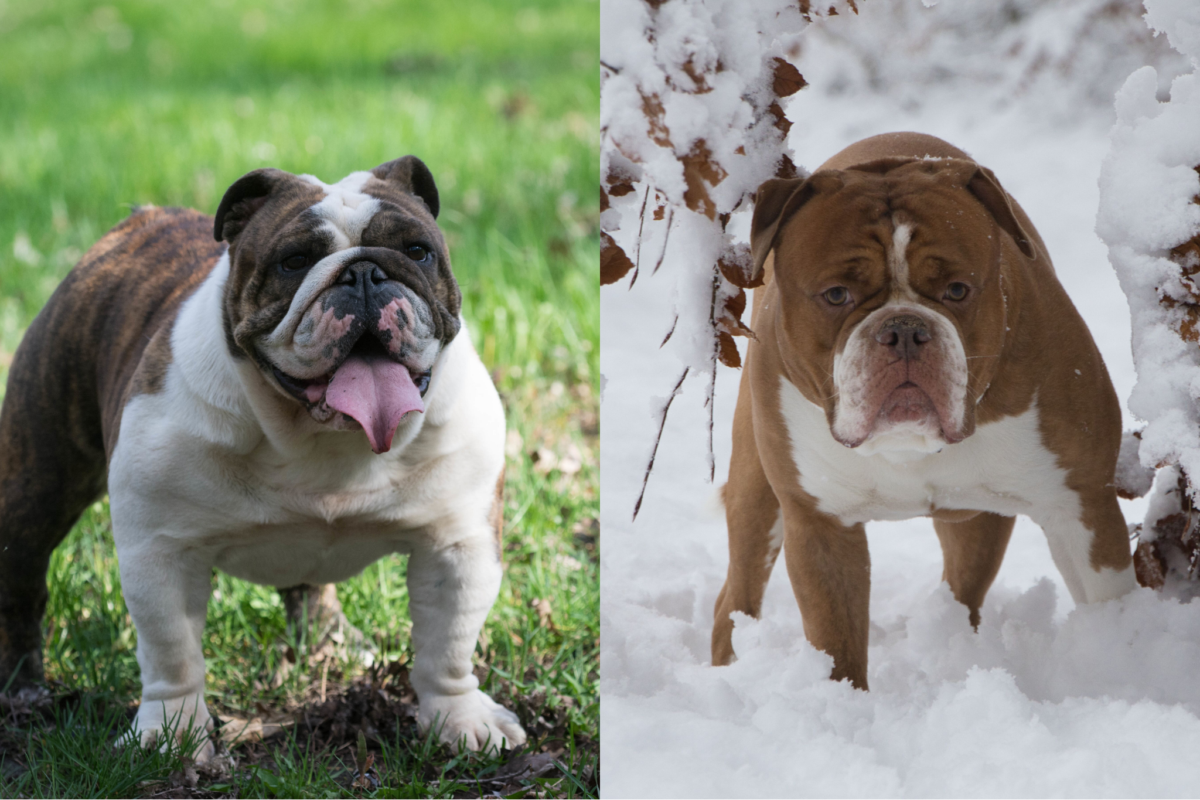
English Bulldogs typically have:
- Smooth, fine coats
- Less variation in texture
Olde English Bulldogges often have:
- Slightly coarser coats
- A bit more weather resistance
Color-wise, both breeds come in a wide range of bulldog-standard colors, including brindle, red, fawn, and white. Solid black is uncommon in English Bulldogs but more accepted in OEB lines.
While coat differences are mostly cosmetic, they do play a small role in grooming frequency and how much debris the coat holds after outdoor activity.
Temperament: Same Affection, Different Social Energy
Most people fall in love with bulldogs for their personalities.
Despite their tough appearance, both English Bulldogs and Olde English Bulldogges are deeply people-oriented dogs. They tend to bond closely with their families and want to be wherever the action is happening, even if that action is just you moving from the couch to the kitchen.
The difference isn’t whether they love you. It’s how they express that love throughout the day.
Around Family & Visitors
English Bulldogs are often described as calm, steady companions. They enjoy being near their people but don’t usually demand constant interaction.
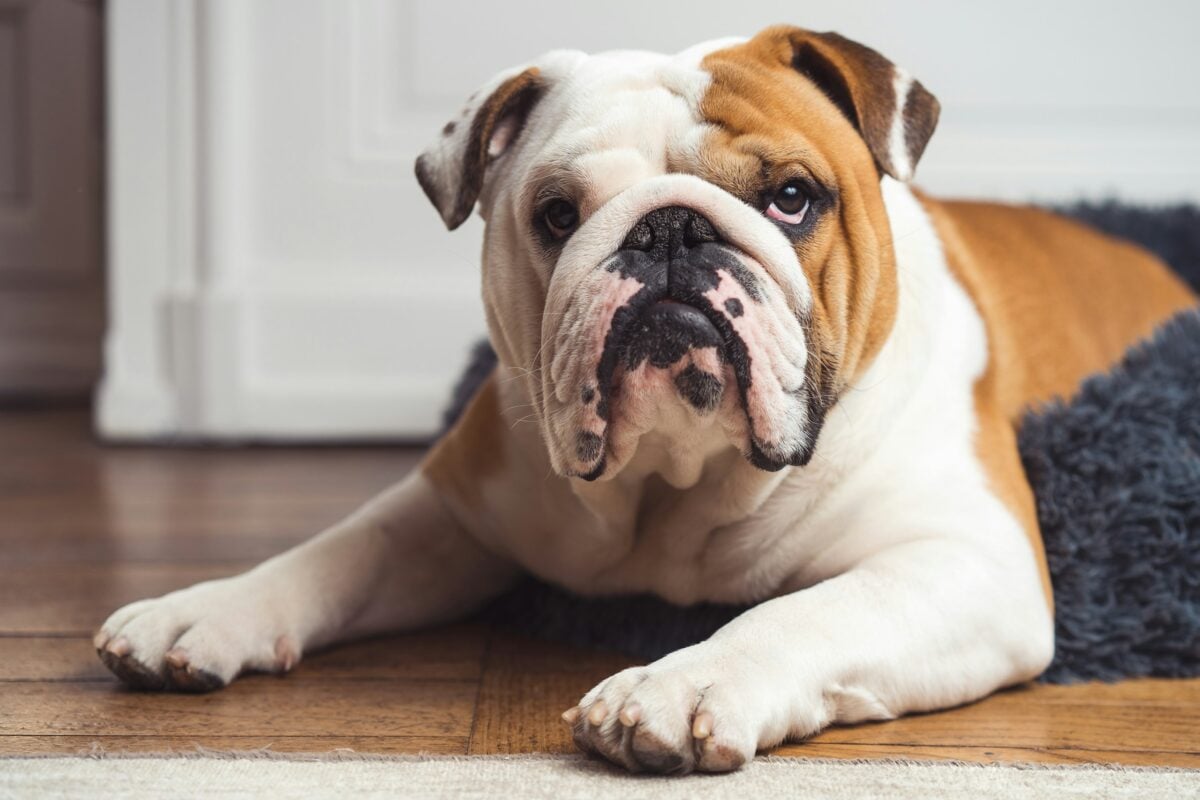
Many are content to follow you from room to room, settle nearby, and keep an eye on things without inserting themselves into every moment.
Olde English Bulldogges tend to be more outwardly social. They’re more likely to greet visitors enthusiastically, check in frequently, and actively seek engagement.
In busy households, this can feel lively and fun. In quieter homes, it can feel like a lot of presence.
Neither approach is better. They just create different household dynamics.
With Children and Other Pets
Both breeds can do very well with children when properly socialized.
English Bulldogs are often more tolerant of slower-paced interactions. They tend to be patient and less reactive, which can make them good companions for families with younger children, provided boundaries are respected.
Olde English Bulldogges usually enjoy play more actively. Their larger size and higher energy mean supervision matters, especially around small children.
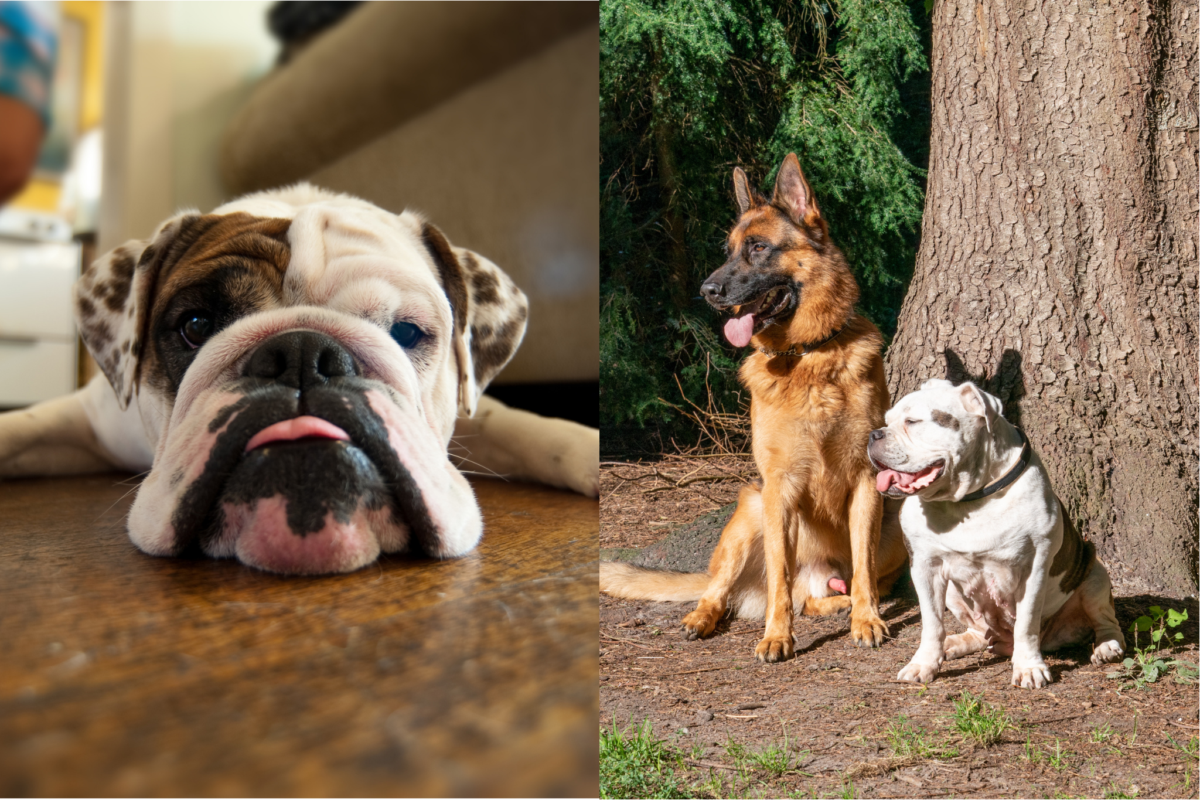
When it comes to other pets:
- English Bulldogs are generally less prey-driven
- OEBs may have a stronger chase instinct
Early socialization matters for both, but especially for OEBs in multi-pet homes.
Confidence, Independence, And Emotional Tone
English Bulldogs are famously independent. They’re intelligent dogs, but they don’t always feel compelled to prove it. Many owners describe them as quietly confident, occasionally stubborn, and emotionally steady.
Olde English Bulldogges tend to be more eager to engage. They’re often described as confident but more responsive, more expressive, and more visibly invested in what’s happening around them.
That emotional tone influences training, exercise, and how demanding the dog feels day to day.
Energy & Exercise: What These Dogs Ask Of You
Energy is one of those traits people think they understand until they live with it.
Most future bulldog owners assume both breeds are low-energy, couch-loving dogs who need little more than a short walk and a soft place to sleep. While that’s not entirely wrong, it’s also not the full picture.
The difference between these two breeds isn’t about how much energy they have. It’s about how that energy shows up, how predictable it is, and how forgiving the dog is when plans change.
This distinction matters more than most people expect.
The English Bulldog’s Rhythm
English Bulldogs operate in short, deliberate bursts. They enjoy movement, but they don’t crave it.

A brief walk, a few minutes of play, and some exploratory sniffing are often enough to satisfy them for hours. After that, they’re perfectly happy settling back into rest.
This rhythm makes English Bulldogs appealing to people who prefer slower days. They fit well into routines that include:
- Short walks
- Calm indoor environments
- Plenty of downtime
- Minimal pressure to “do more”
However, this same rhythm comes with limits.
English Bulldogs fatigue quickly. Heat affects them significantly.
Overexertion can happen faster than many owners expect, especially in warm weather or during excitement. A dog that seems eager at the start of a walk may suddenly need to stop, sit, or lie down.
Living with an English Bulldog means learning to read subtle signs of fatigue and adjusting expectations accordingly. Owners who push too hard often end up managing preventable health crises later.
The Olde English Bulldogge’s Engine
Olde English Bulldogges have a noticeably steadier pace. They don’t have endless stamina, but they’re more capable of sustained movement.

Daily walks feel less like a negotiation and more like a shared activity. Many OEBs enjoy structured play, longer strolls, and interactive games that engage both body and brain.
This extra capacity doesn’t turn them into high-energy dogs. It simply gives them more margin.
That margin shows up when:
- Walks run longer than planned
- Weather conditions fluctuate
- Schedules change
- Family members want to engage more actively
For owners who enjoy daily routines that involve movement, the OEB often feels less restrictive.
Exercise Isn’t Just Physical for Bulldogs
For both breeds, mental stimulation matters just as much as physical activity.
Bulldogs are intelligent dogs, even when they don’t advertise it. Puzzle toys, scent work, and interactive feeding routines help satisfy their need for engagement without stressing their bodies.
Without mental outlets:
- English Bulldogs may become stubborn or withdrawn
- OEBs may become restless or pushy
The difference is that English Bulldogs usually express boredom by disengaging, while OEBs are more likely to seek stimulation from their environment.
Heat, Weather, And Reality Checks
Neither breed tolerates heat well.
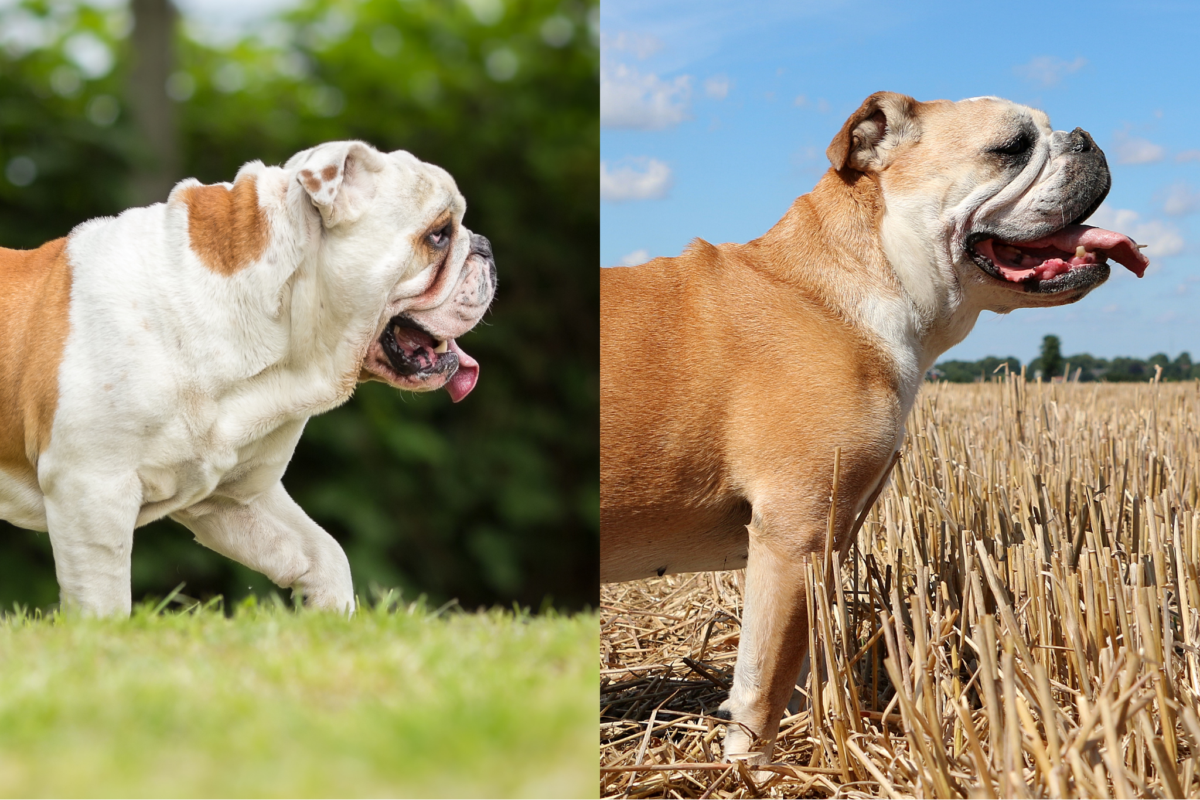
English Bulldogs are particularly vulnerable due to their airway structure. Hot, humid conditions can become dangerous quickly, even during mild activity.
Olde English Bulldogges handle heat slightly better, but they are still not warm-weather dogs.
For both breeds, responsible ownership includes:
- Early morning or evening walks
- Climate-controlled environments
- Avoiding strenuous activity during heat
- Constant access to water
This isn’t a lifestyle suggestion. It’s a non-negotiable.
Training: Obedience Is Easy. Cooperation Is the Real Work.
Training bulldogs isn’t about teaching commands. It’s about building cooperation.
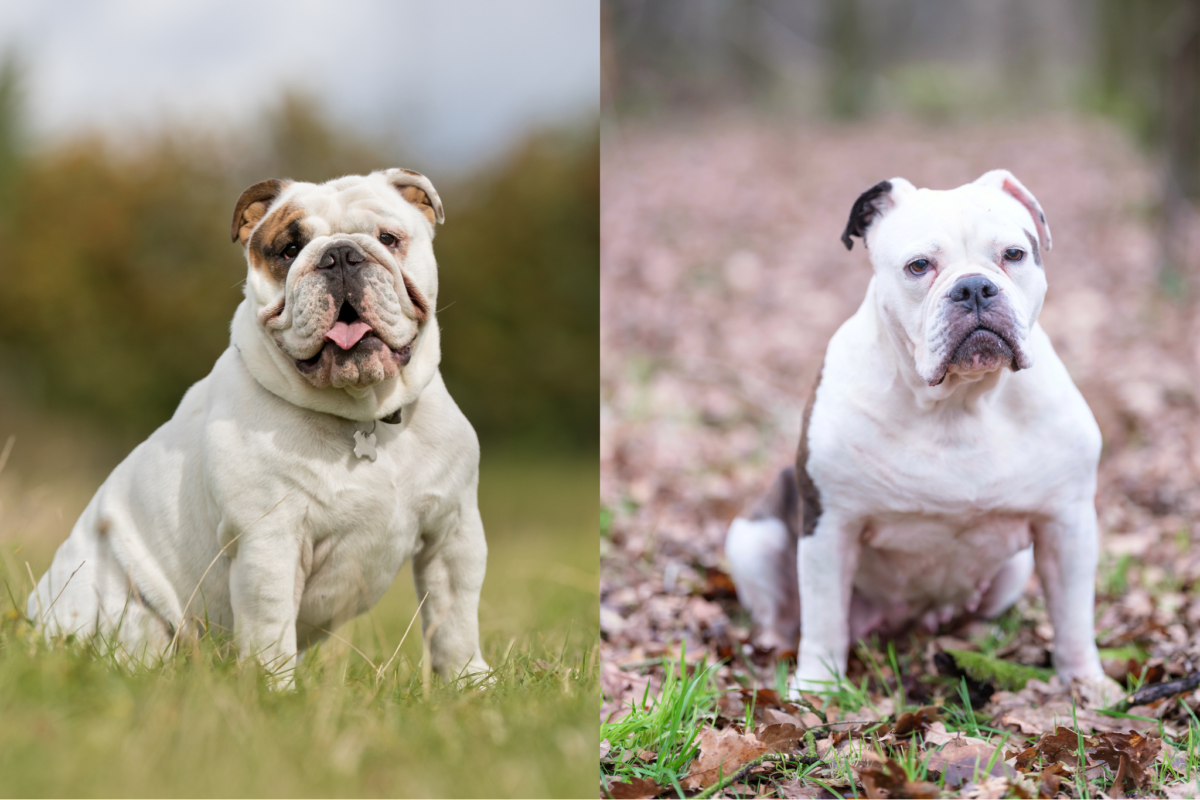
Both English Bulldogs and Olde English Bulldogges are capable learners. The challenge isn’t intelligence. It’s motivation.
English Bulldogs & Selective Participation
English Bulldogs are famous for their stubbornness, but that label is incomplete.
They’re not untrainable. They’re selective.
An English Bulldog often understands exactly what you’re asking. The pause that follows isn’t confusion. It’s consideration.
These dogs tend to ask themselves whether the request benefits them in that moment.
This can frustrate owners who expect immediate compliance. It can also charm those who appreciate a dog with a sense of autonomy.
Training an English Bulldog requires:
- Patience
- Humor
- Consistency
- Short, focused sessions
Repetition without reward quickly leads to disengagement. Positive reinforcement isn’t optional with this breed. It’s the only method that works reliably.
Olde English Bulldogges & Willing Engagement
Olde English Bulldogges tend to meet training with more enthusiasm. They’re more likely to lean into tasks, enjoy learning, and seek approval from their people. This makes early training feel smoother for many owners, especially those new to bulldog-type dogs.
That said, OEBs are not robotic. They retain an independent streak and will push boundaries if structure disappears.
The difference is that OEBs are more forgiving when mistakes happen. Missed training sessions or inconsistent cues are less likely to derail progress completely.
Socialization Shapes Everything
Early socialization is critical for both breeds. Exposure to different people, other dogs, and various environments helps prevent fear-based behaviors later in life.
English Bulldogs who miss early socialization may become overly cautious or resistant to change. OEBs who lack it may develop reactivity or overconfidence.
In both cases, socialization is less about obedience and more about emotional resilience.
Separation Anxiety & Attachment
Both breeds are deeply attached to their people.
English Bulldogs, in particular, may struggle with separation anxiety. Their calm demeanor can mask distress that only shows up when they’re left alone. Crate training, gradual departures, and predictable routines help mitigate this risk.
Olde English Bulldogges also form strong bonds but often cope better with brief separations, especially when mentally stimulated and physically satisfied.
Neither breed thrives in homes where they’re left alone for long hours without engagement.
Health & Lifespan: The Tradeoffs Nobody Explains Clearly
Most people researching bulldogs know there are health concerns. What they don’t always understand is how those concerns unfold over time, or how differently they can shape the ownership experience depending on the breed.
Health isn’t just about vet visits. It affects routines, travel, finances, emotional stress, and how much flexibility you have when life gets busy. The English Bulldog and the Olde English Bulldogge both come with risks, but those risks tend to show up in different ways.
The English Bulldog’s Reality Over Time
English Bulldogs are one of the most medically managed companion breeds.

That doesn’t mean every English Bulldog is constantly sick. Many live happy, comfortable lives. It does mean that health considerations are rarely hypothetical. They tend to be ongoing, cumulative, and closely tied to the breed’s physical structure.
Common challenges include:
- Breathing difficulties related to shortened airways
- Heat intolerance that limits outdoor activity
- Joint and spine issues caused by compact build and weight distribution
- Chronic skin infections in deep folds
- Eye conditions that require monitoring or surgery
What surprises many owners is not the existence of these issues, but how early they can begin. Problems often appear gradually, sometimes as early as two or three years old, and then require lifelong management.
This is where expectations matter.
Owning an English Bulldog often means:
- More frequent veterinary visits
- Higher likelihood of medical interventions
- Lifestyle adjustments to protect breathing and joints
- Financial planning beyond routine care
For some owners, this feels manageable and worth it. For others, it becomes overwhelming.
The Olde English Bulldogge’s Health Outlook
Olde English Bulldogges were intentionally bred to reduce many of the most severe health issues seen in English Bulldogs. They are generally less prone to:
- Severe breathing obstruction
- Extreme heat intolerance
- Reproductive complications
However, they are still bulldogs.
OEBs commonly face:
- Hip dysplasia
- Joint wear related to size
- Bloat
- Skin sensitivities
The difference is often one of degree rather than category. Issues may appear later, progress more slowly, or be easier to manage with preventative care.
Many OEB owners describe feeling less restricted by health concerns, even if vet visits are still part of life.
Lifespan Expectations & Emotional Weight
On average:
- English Bulldogs live 8 to 10 years
- Olde English Bulldogges live 11 to 13 years
Those numbers aren’t guarantees, but they do shape emotional expectations.
For many families, the difference between losing a dog at eight versus twelve years old feels enormous. It influences how people bond, plan, and emotionally invest.
This is one reason pet insurance is so commonly recommended for both breeds. Not because problems are inevitable, but because when they do arise, decisions become easier when cost isn’t the primary barrier.
Nutrition: Feeding & Managing Health
Feeding a bulldog isn’t just about choosing a brand of dog food. It’s about managing weight, digestion, inflammation, and long-term strain on the body.
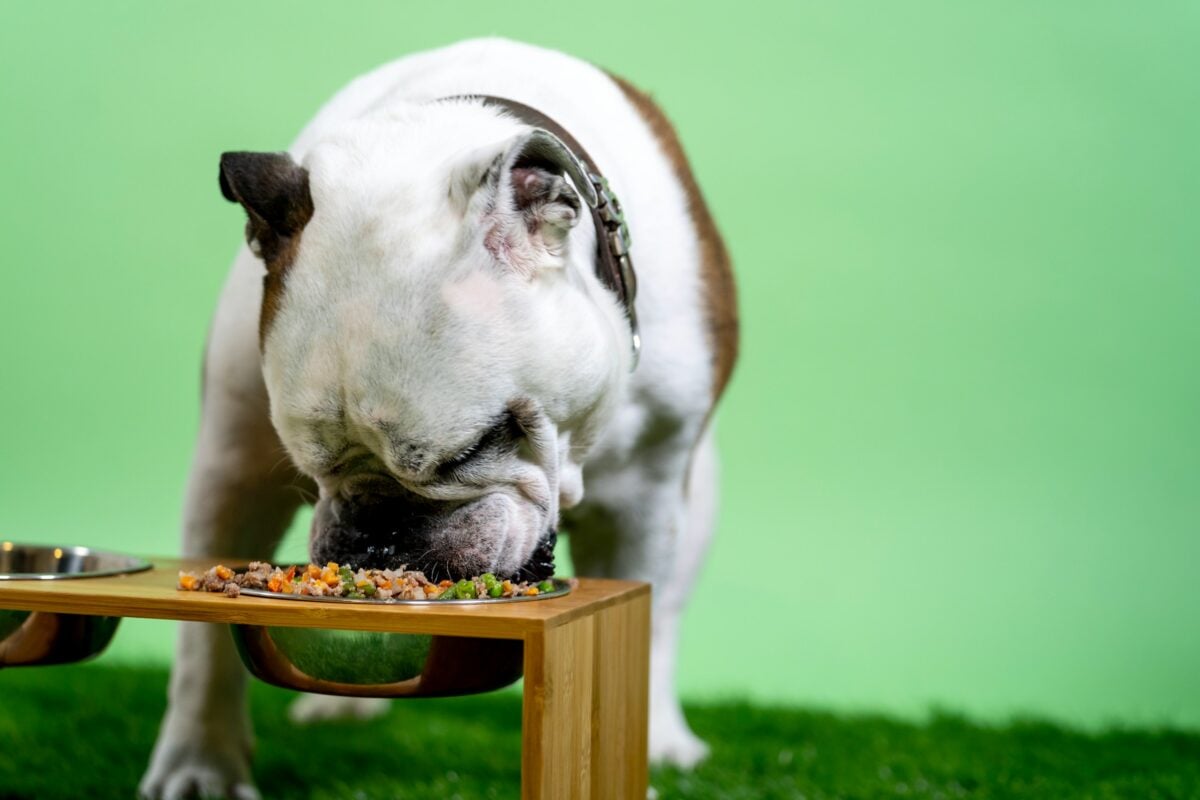
Both English Bulldogs and Olde English Bulldogges love food. They are highly food-motivated and rarely self-regulate. This makes portion control non-negotiable.
Weight Is A Health Factor
Extra weight amplifies nearly every bulldog health issue.
In English Bulldogs, even a few extra pounds can worsen:
- Breathing difficulty
- Joint pain
- Heat intolerance
In OEBs, excess weight increases:
- Joint stress
- Risk of bloat
- Mobility decline later in life
For both breeds, maintaining a lean body condition is one of the most powerful tools owners have.
Food Sensitivities & Allergies
Bulldogs are prone to food sensitivities, particularly English Bulldogs. Common triggers include:
- Chicken
- Beef
- Dairy
- Wheat
- Corn
- Artificial additives
Symptoms often show up as skin irritation, ear infections, or digestive upset rather than obvious allergic reactions.
Many owners find success with:
- Limited-ingredient diets
- Novel protein sources
- High-quality, minimally processed foods
Some incorporate fresh or gently cooked foods to improve digestion and coat condition
Feeding Routines Matter
Both breeds are at risk for gastric torsion, or bloat, particularly OEBs due to their size. Preventative strategies include:
- Smaller, more frequent meals
- Slow feeders or puzzle bowls
- Avoiding vigorous activity right after eating
These adjustments are simple but effective.
Nutrition As Ongoing Adjustment
What works at one life stage may not work at another.
Puppies, adults, and seniors all have different nutritional needs. Bulldogs, in particular, benefit from periodic reassessment rather than sticking rigidly to a single plan for life.
Owners who view feeding as a flexible tool rather than a fixed rule tend to see better long-term outcomes.
Grooming & Day-To-Day Care
At first glance, bulldogs look like low-maintenance dogs. What new owners often don’t realize is that bulldog care isn’t about grooming sessions. It’s about daily habits.
Coat Care Is The Easy Part
Both English Bulldogs and Olde English Bulldogges have short coats that are simple to maintain.
A few brushings per week are usually enough to:
- Remove loose hair
- Keep the coat healthy
- Reduce shedding around the house
Seasonal shedding still happens, but it’s rarely overwhelming. This is where the “easy” part of bulldog ownership ends.
Wrinkles, Skin, And Moisture Management
Wrinkle care is not optional for either breed.
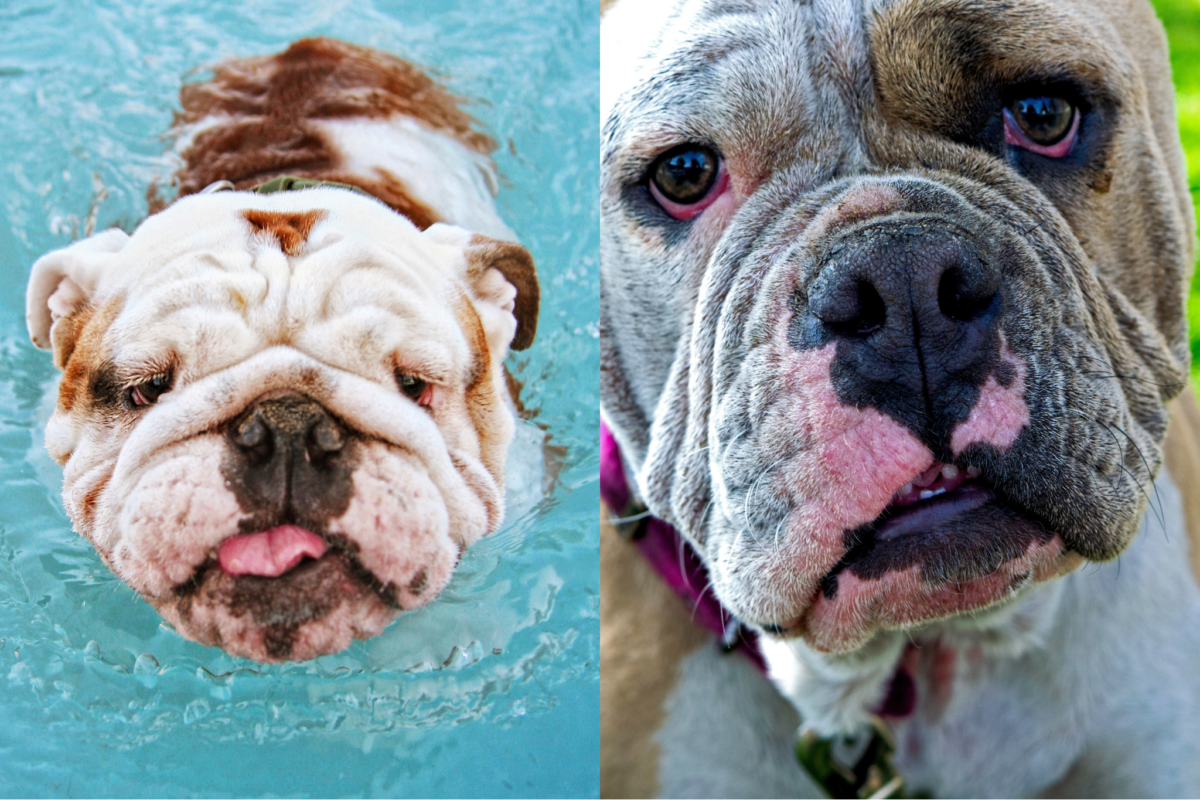
English Bulldogs tend to have deeper, more numerous skin folds, especially around the face and neck. Those folds trap moisture, food particles, and bacteria. Without consistent cleaning, irritation and infection follow.
Olde English Bulldogges usually have fewer folds, but the care routine is still necessary.
For both breeds, responsible care includes:
- Gently cleaning folds several times per week
- Drying thoroughly after cleaning
- Monitoring for redness, odor, or irritation
Owners who skip this step often end up managing chronic skin problems that could have been prevented with minutes of daily care.
Drool, Slobber, And Realistic Expectations
Bulldogs drool. Some drool more than others, but both breeds produce enough saliva that wiping faces becomes routine. Furniture, clothing, and floors occasionally pay the price.
This isn’t a flaw. It’s a lifestyle consideration.
People who love bulldogs tend to shrug this off. People who don’t often find it frustrating.
Dental Care & Long-Term Health
Dental disease is common in bulldogs and often underestimated. Regular brushing and dental checkups matter because dental infections can:
- Affect heart health
- Worsen inflammation
- Contribute to chronic pain
This is one of those “small effort, big payoff” areas of care that shapes long-term quality of life.
Puppy Prices, Breeders, And Why Cheap Bulldogs Rarely Are
Bulldogs are expensive dogs to acquire, and that price reflects more than popularity.
Why English Bulldogs Cost What They Do
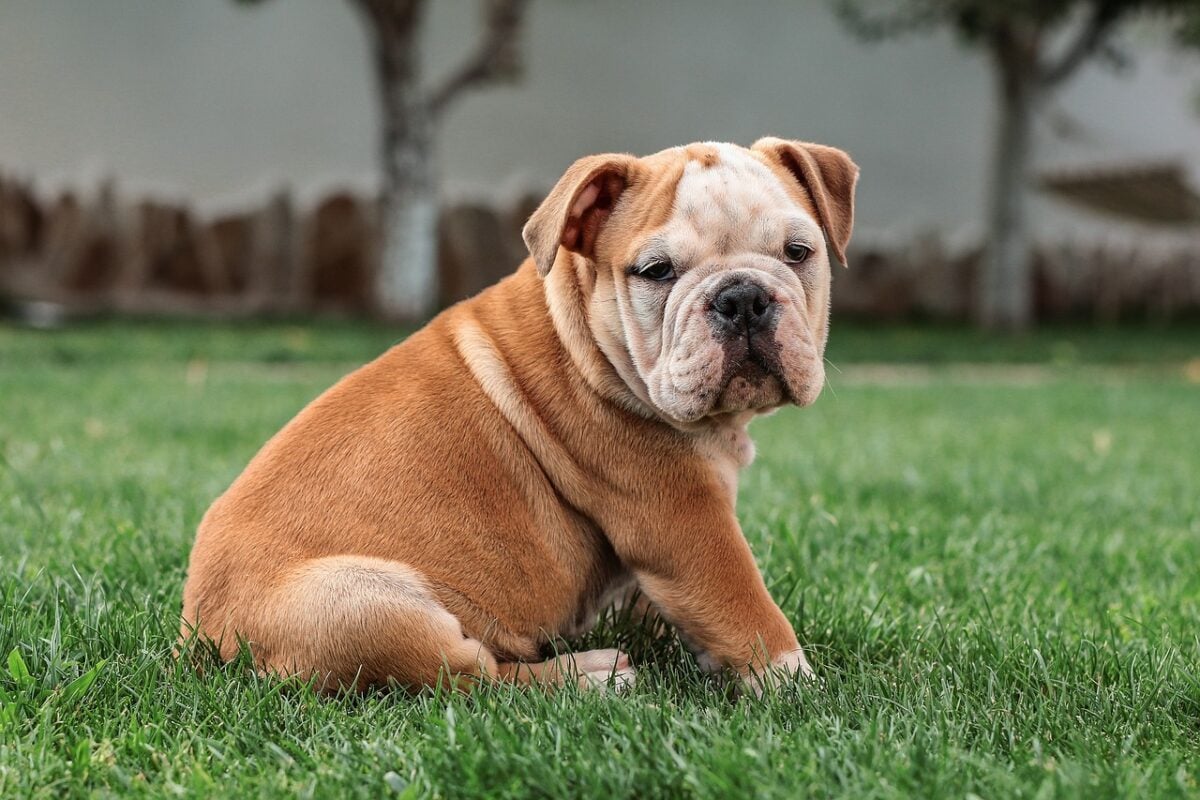
English Bulldog breeding is complicated. Many puppies must be delivered via cesarean section due to the breed’s narrow hips and large head size. This alone adds significant cost before the puppy ever comes home.
Reputable breeders also invest heavily in:
- Health testing
- Veterinary oversight
- Early socialization
As a result, English Bulldog puppies commonly cost $1,500 to $5,000 or more.
Lower-priced puppies may seem appealing, but they often come without:
- Adequate health screenings
- Genetic testing
- Proper early care
Those savings tend to disappear quickly once health issues emerge.
Olde English Bulldogge Pricing & Availability
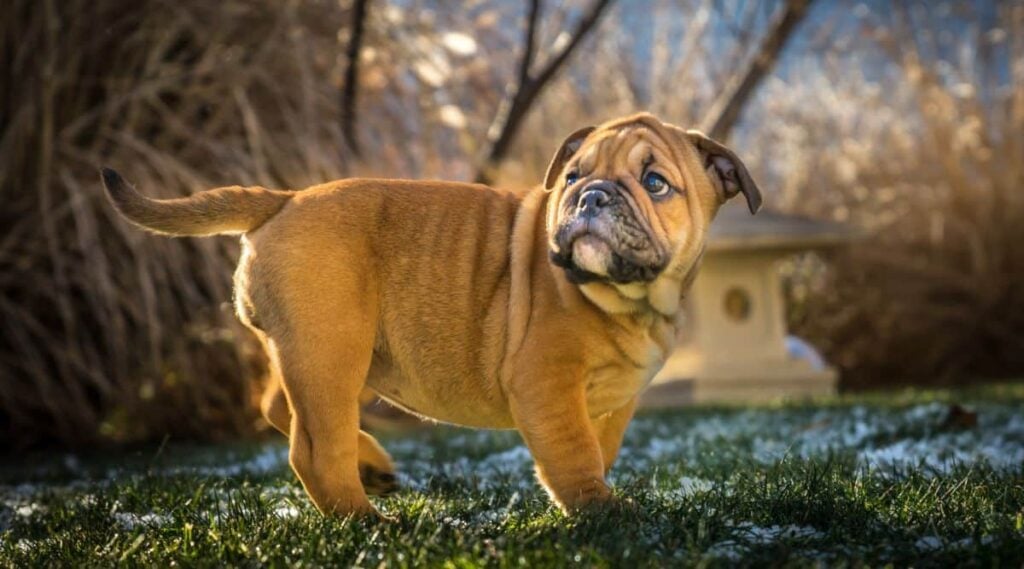
Olde English Bulldogges are rarer and often cost more upfront. Their higher price reflects:
- Selective breeding programs
- Lower availability
- Emphasis on health and structure
While initial costs may be higher, some owners find that long-term veterinary expenses are more predictable.
Rescue & Adoption Reality
Bulldog mixes are common in shelters. Adopting a rescue bulldog can be rewarding, but it requires:
- Patience
- Willingness to manage unknown health histories
- Openness to behavioral quirks
For families who don’t want the puppy stage, rescue can be a meaningful option.
Which Bulldog Is Right For You?
Both breeds can thrive in many homes. Problems arise when expectations don’t match reality.
Rather than asking which breed is “better,” it helps to ask which one fits your life without constant compromise.
An English Bulldog May Be A Better Fit If…
- You value calm companionship over activity.
- You enjoy slow mornings and quiet evenings.
- You’re comfortable adapting routines around physical limitations.
- You’re prepared for higher medical involvement.
English Bulldogs tend to fit best with people who appreciate presence over performance.
An Olde English Bulldogge May Be a Better Fit If…
- You want a sturdier bulldog with more stamina.
- You enjoy daily walks and light activity.
- You want fewer breathing-related restrictions.
- You’re willing to manage size and strength responsibly.
OEBs often suit families who want a bulldog that feels more physically capable without losing affection.
A Quick Reality Check For Both Breeds
Neither breed is ideal if:
- You live in a hot climate without climate control
- You’re gone for long hours daily
- You want a highly athletic dog
- You’re uncomfortable with long-term health management
These dogs ask for commitment, not perfection.
Frequently Asked Questions
Trying to clear up any lingering questions? There are the most common questions that come up after people understand the basics.
Don’t see your question? Respond in the comments, and we’ll get back to you!
Is The Olde English Bulldogge Healthier Than The English Bulldog?
In general, yes — but “healthier” needs context.
Olde English Bulldogges were intentionally bred to reduce some of the most severe structural health problems seen in modern English Bulldogs, particularly those related to breathing, stamina, and reproduction. As a result, many OEBs experience fewer airway issues and have greater tolerance for everyday activity.
That said, no bulldog is a low-risk breed. OEBs can still develop joint issues, skin sensitivities, and bloat, and responsible breeding matters just as much as breed type. A well-bred English Bulldog may fare better than a poorly bred OEB.
Do Olde English Bulldogges Have Breathing Problems?
They can, but typically to a lesser degree.
Olde English Bulldogges usually have longer muzzles and wider nostrils than English Bulldogs, which improves airflow and reduces the severity of brachycephalic airway issues. Most still snore and breathe audibly, but fewer require surgical correction to live comfortably.
English Bulldogs, by contrast, are far more likely to struggle with breathing during exercise, excitement, or warm weather due to their extremely shortened facial structure.
Which Breed Is Better For Families With Children?
Both breeds can do well in family homes, but they interact with children differently.
English Bulldogs tend to be calmer and more tolerant of slower, quieter interaction. They’re often content to be near children without needing constant engagement, which can work well for households with younger kids.
Olde English Bulldogges are generally more energetic and physically capable. They often enjoy play more actively, which can be great for older children, but their size and strength mean supervision is important.
In both cases, early socialization and clear boundaries matter far more than breed choice alone.
Which Breed Is Easier To Train?
Olde English Bulldogges are usually easier for first-time owners.
They tend to be more eager to engage, more responsive to praise, and more willing to repeat behaviors during training sessions. English Bulldogs are intelligent but famously selective, which can make training feel slower or more frustrating for inexperienced owners.
Neither breed responds well to harsh training methods. Consistency, positive reinforcement, and patience are essential for both.
Which Bulldog Lives Longer?
On average, Olde English Bulldogges live longer.
Most English Bulldogs have a lifespan of around eight to ten years. Olde English Bulldogges often live closer to eleven to thirteen years, though individual outcomes vary widely depending on genetics, care, and lifestyle.
Are Olde English Bulldogges Recognized By The AKC?
No. English Bulldogs are recognized by the American Kennel Club. Olde English Bulldogges are recognized by other registries, such as the UKC, but not the AKC.
This distinction matters mainly for show participation, not companionship or quality of life.
Still Deciding? Other Breeds Worth Considering
If you’re drawn to bulldogs but find yourself hesitating after reading this comparison, that’s not a bad sign. It usually means you’re thinking realistically instead of emotionally.
The English Bulldog and the Olde English Bulldogge aren’t the only options, and depending on your lifestyle, another bulldog-type breed may fit you better.
Some people prefer:
- A bulldog with more athletic ability and endurance, like the American Bulldog
- A smaller bulldog with lower space requirements, like the French Bulldog
- Other adorable flat-faced dog breeds, such as the Pug, Boxer, and Dogue de Bordeaux
Exploring related breeds can help clarify what traits matter most to you and where you’re willing to compromise.