Doberman Pinscher vs Rottweiler: Your Guide To The Best Breed For “Scary Dog Privilege”

When you purchase through links on our site, we may earn a commission at no extra cost to you. Learn more.
There’s a different kind of confidence that comes with walking beside a powerful dog. Heads turn, people give you space, and the world feels a little safer.
Table of Contents
Dobermans and Rottweilers both command that reaction. And yes, the appeal is real.
These two breeds may project the same intimidation from a distance, yet they live very differently inside your home. If you’re choosing between a Doberman Pinscher and a Rottweiler, the key is deciding which breed fits your lifestyle, your family, and your energy.
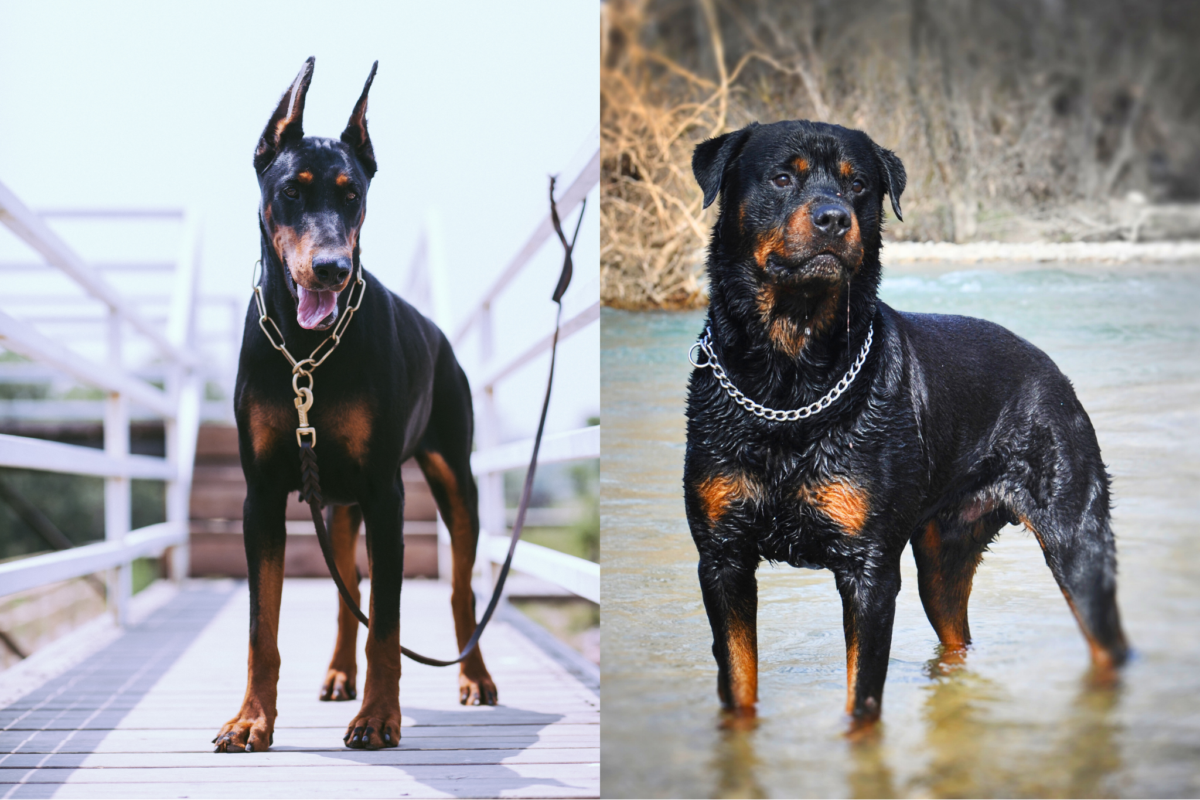
Breed Comparison
- Height24-28 Inches
- Height22-27 Inches
- Weight60-100 Pounds
- Weight80-135 Pounds
- TemperamentAlert, Fearless, Loyal
- TemperamentLoving, Confident, Loyal
- EnergyVery High
- EnergyAverage
- HealthAverage
- HealthAverage
- Lifespan10-12 Years
- Lifespan9-10 Years
- Price$1,500 and Up
- Price$1,500 and Up
Start Here: The Truth About “Scary Dog Privilege”
Let’s be honest about the appeal. For many people, there’s a real difference between walking alone, especially at night, and walking beside a dog that commands respect.
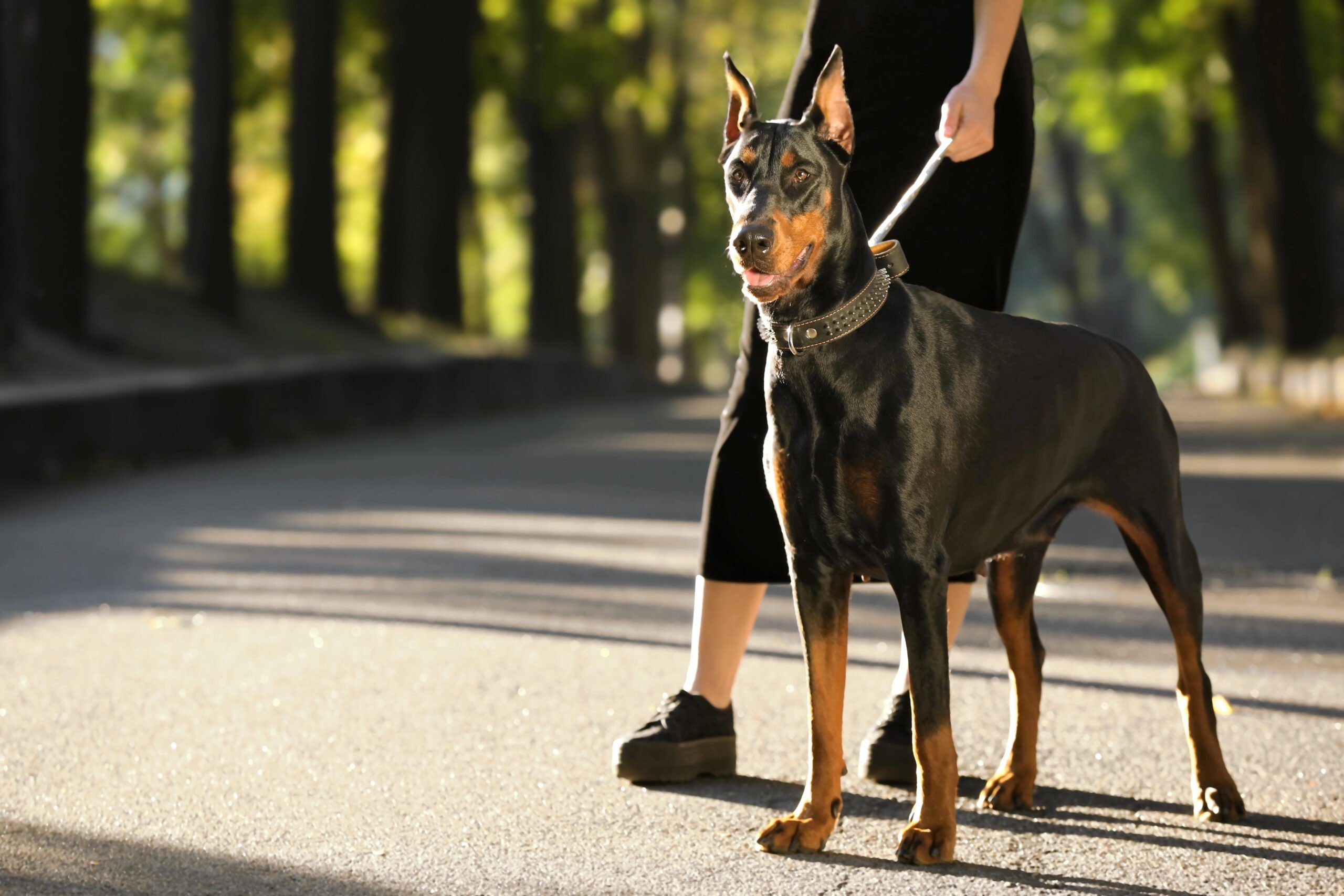
Fewer comments. More space. A quiet sense that you’re not an easy target.
That’s the core of what people call “scary dog privilege.” And Dobermans and Rottweilers both deliver it effortlessly.
For many owners, that presence matters just as much at home. These are dogs people trust around their children. Dogs that stay alert when something feels off.
Both breeds are deeply loyal and genuinely affectionate with their people. They’re not cold, reactive guard dogs pacing the fence line. Truthfully, they’re often tuned in to their families in a way that smaller or less driven breeds often aren’t.

Historically, this makes sense. Dobermans were developed as personal protection dogs, bred to stay close, react quickly, and defend decisively. Rottweilers trace back to working guardian roles, protecting livestock, property, and families with steady confidence rather than constant alertness.
A Doberman expresses protection through constant awareness and proximity. A Rottweiler expresses it through confidence and physical presence.
One is sharp and fast. The other is steady and immovable.
Both breeds will protect you. The difference is how that protection shows up day to day.
Understanding that difference is the key to choosing the right kind of “scary dog privilege” for your life.
Same Colors. Very Different Builds.
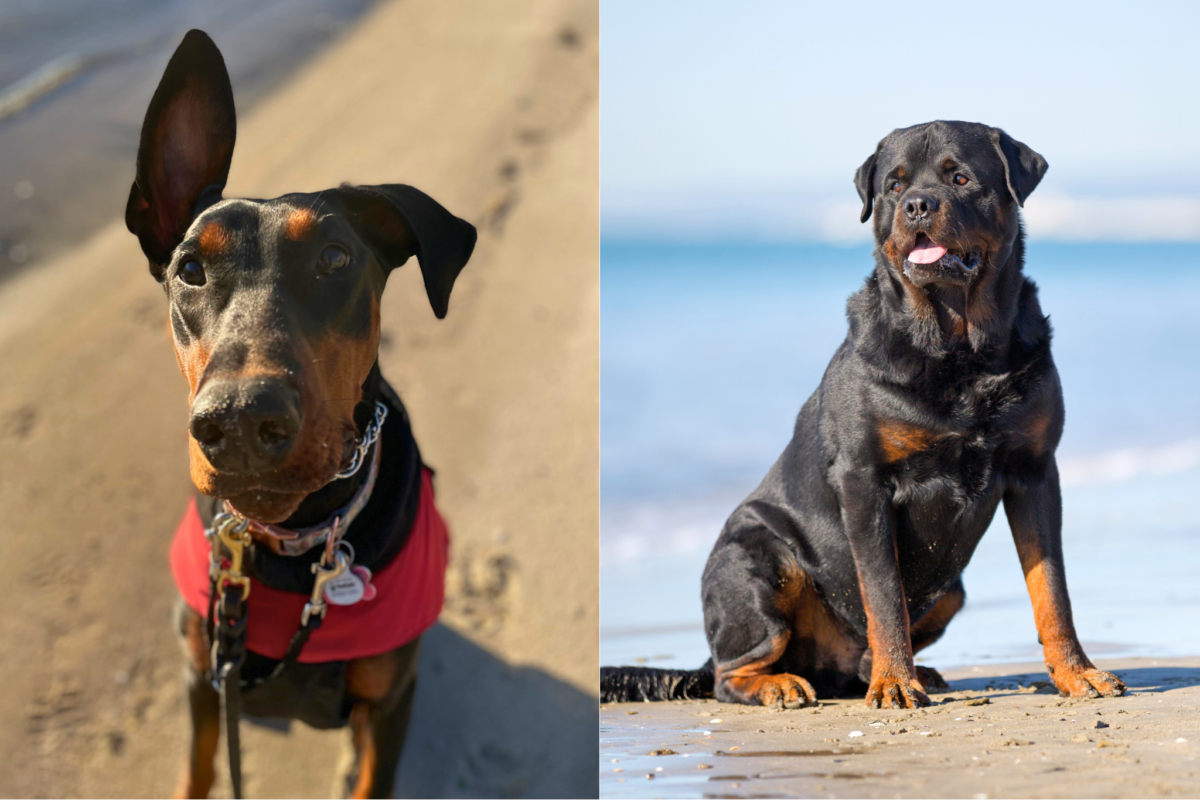
From a distance, Dobermans and Rottweilers somewhat similar. Black coats. Rust markings. A confident, upright stance.
But once you look past the shared coloring, their structure tells a different story. And that structure shapes everything from how they move to how they guard.
Size, Weight & Physical Power
Dobermans are typically taller but lighter. They carry lean, tight muscle over a narrow, athletic frame. Most males stand 26–28 inches tall and weigh between 75–100 pounds, with females slightly smaller.
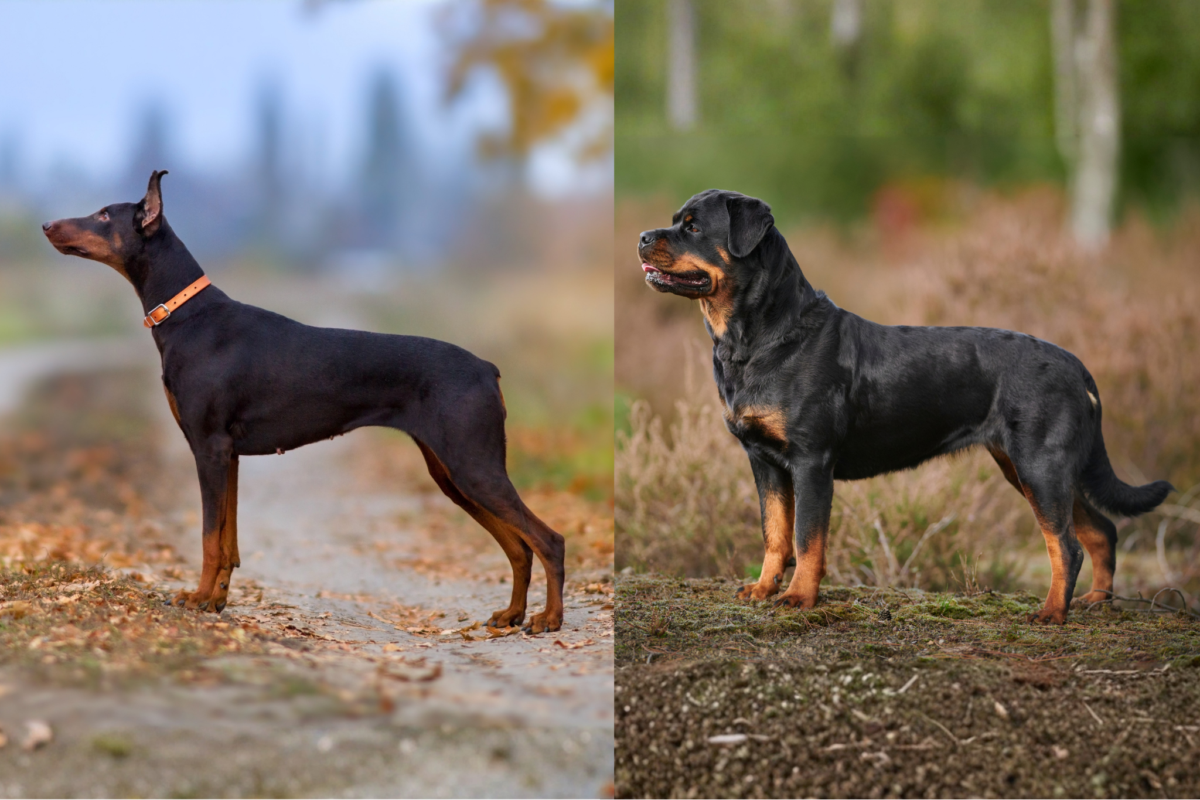
Rottweilers are shorter but heavier. They have broader chests, thicker bone, and more overall mass. Males usually stand 24–27 inches tall and can weigh 95–135 pounds.
The height difference isn’t dramatic, but in person, the weight distribution is significant. A Doberman feels like controlled velocity. A Rottweiler feels like grounded force.
Muscle, Movement & Endurance
Dobermans move like athletes. Long strides, quick directional changes, high responsiveness. Their build supports sprinting, fast reaction, and sustained alertness.
Rottweilers move with heavier momentum. Their gait is powerful and deliberate. They are capable of impressive bursts of strength, but their mass gives them a different kind of authority.
In protection work, that distinction matters. The Doberman closes distance quickly. The Rottweiler holds ground confidently.
Head, Expression & Visual Presence
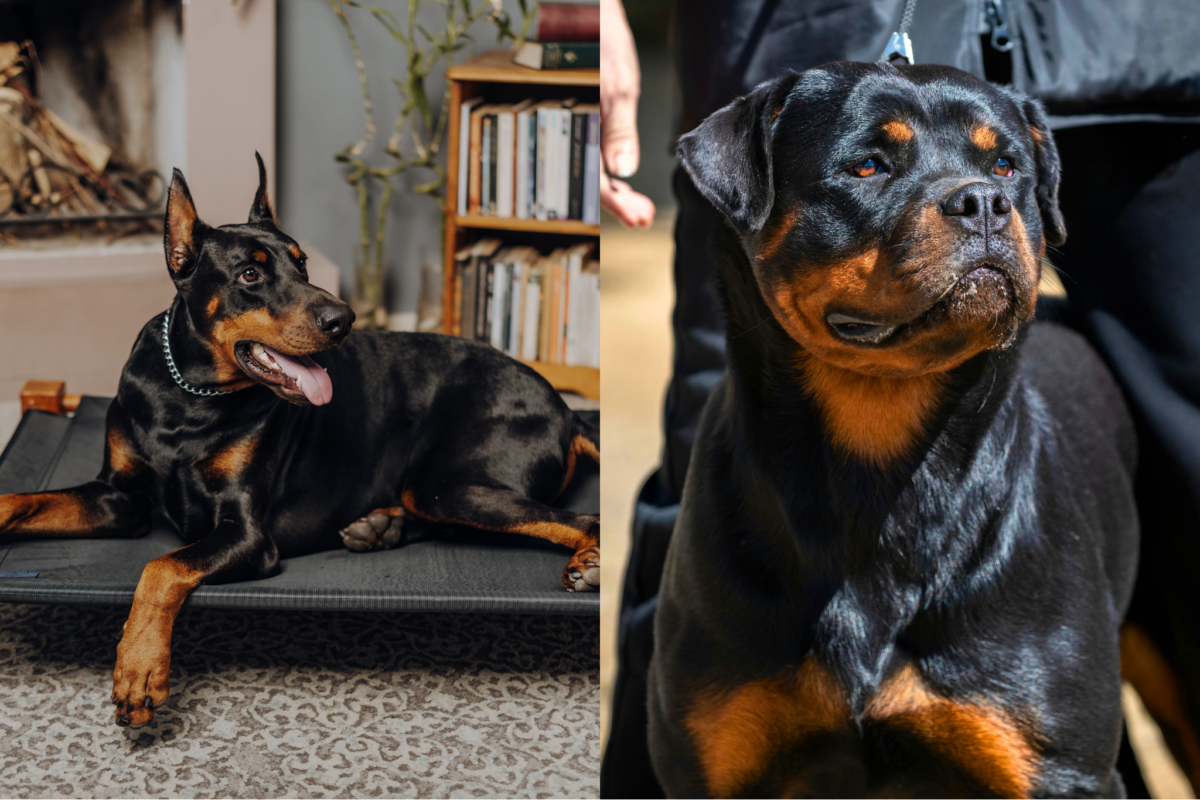
A Doberman’s head is long and refined, with a tight jawline and alert expression. Even at rest, they look focused.
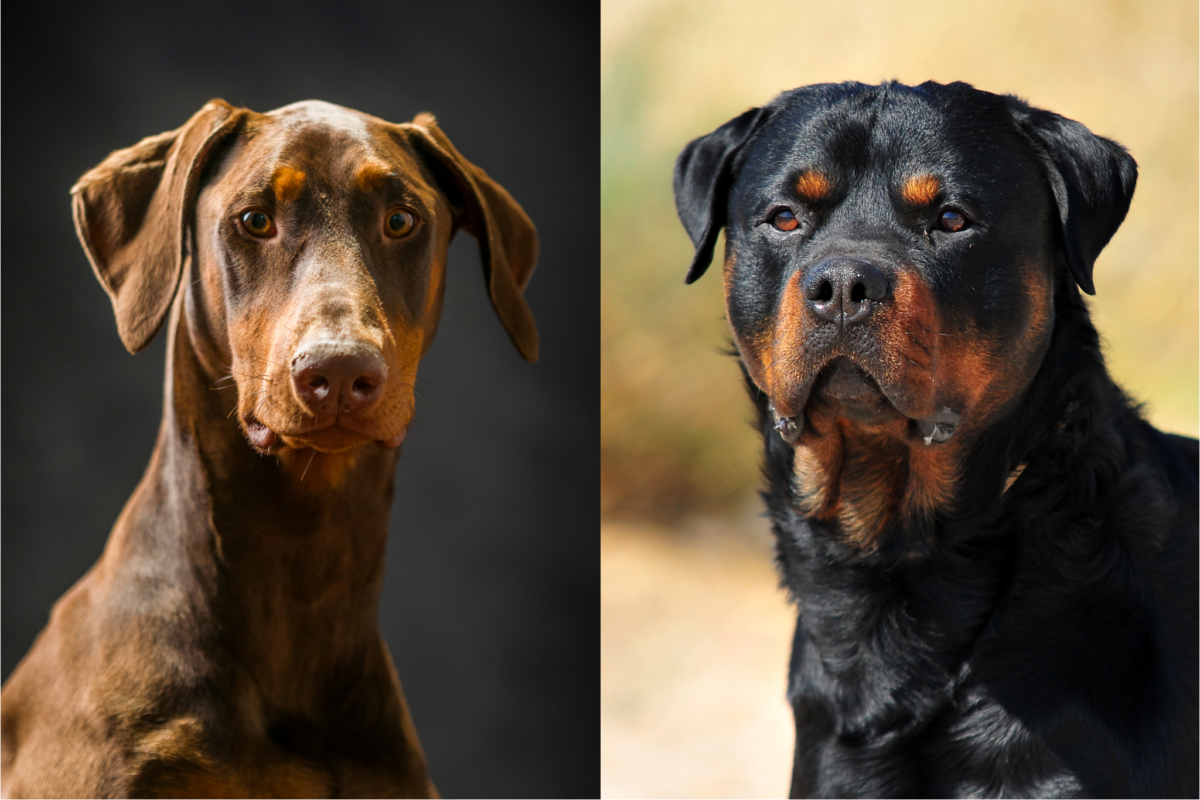
A Rottweiler’s head is broader, with a stronger jaw and deeper muzzle. Their expression tends to read calm and assessing rather than sharp.
That difference subtly changes how people react. Dobermans project alert intensity. Rottweilers project steady authority.
Ears, Tails & The Docking Conversation
Both Dobermans and Rottweilers are often seen with docked tails and, in the Doberman’s case, cropped ears. Naturally, Dobermans have long tails and floppy ears. Rottweilers have triangular drop ears and long, expressive tails.
Why Rottweilers Were Docked
Rottweilers historically worked as cattle drovers and farm guardians. Their tails were considered vulnerable during livestock movement and physical work. Docking became common as a preventative measure to reduce tail injuries, fractures, and infections in working environments.
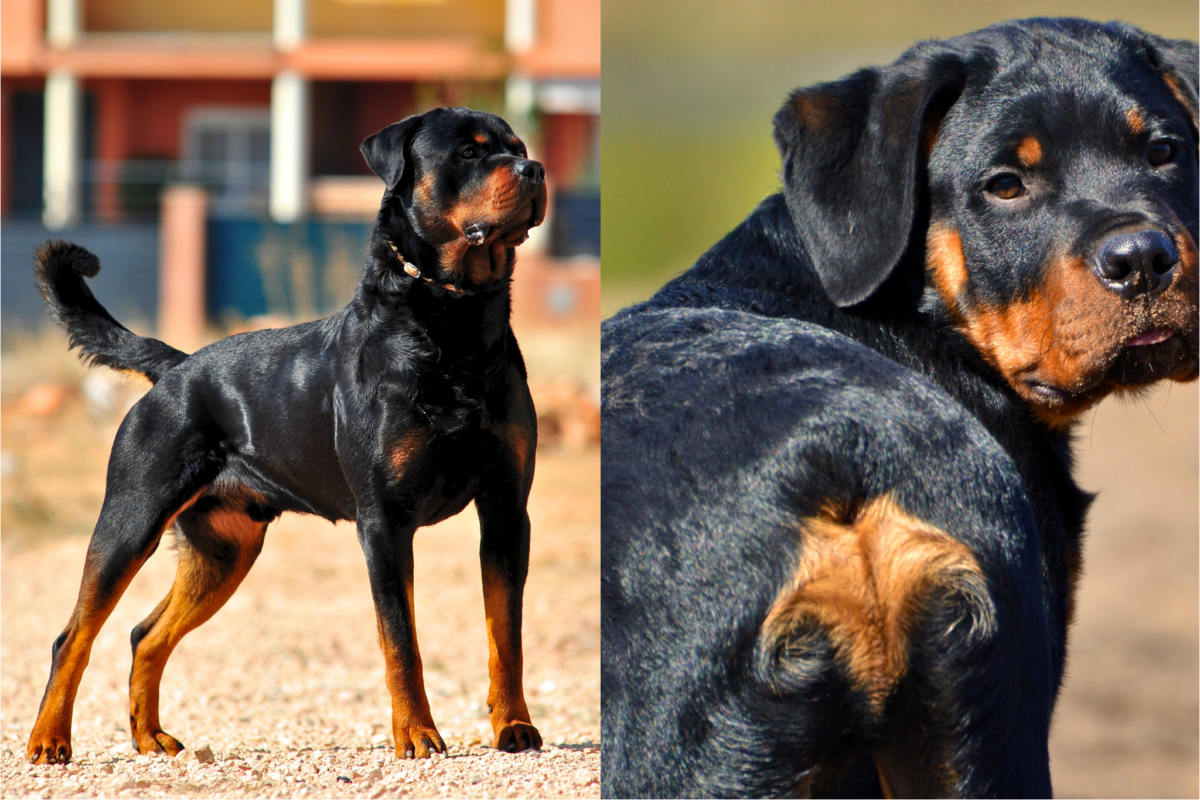
Over time, the docked tail became part of the breed’s traditional presentation.
Why Dobermans Were Docked
Dobermans were developed in the late 1800s as personal protection dogs. Tail docking became standard early in the breed’s history. Supporters believed shorter tails reduced the risk of injury during protection work and confrontations.
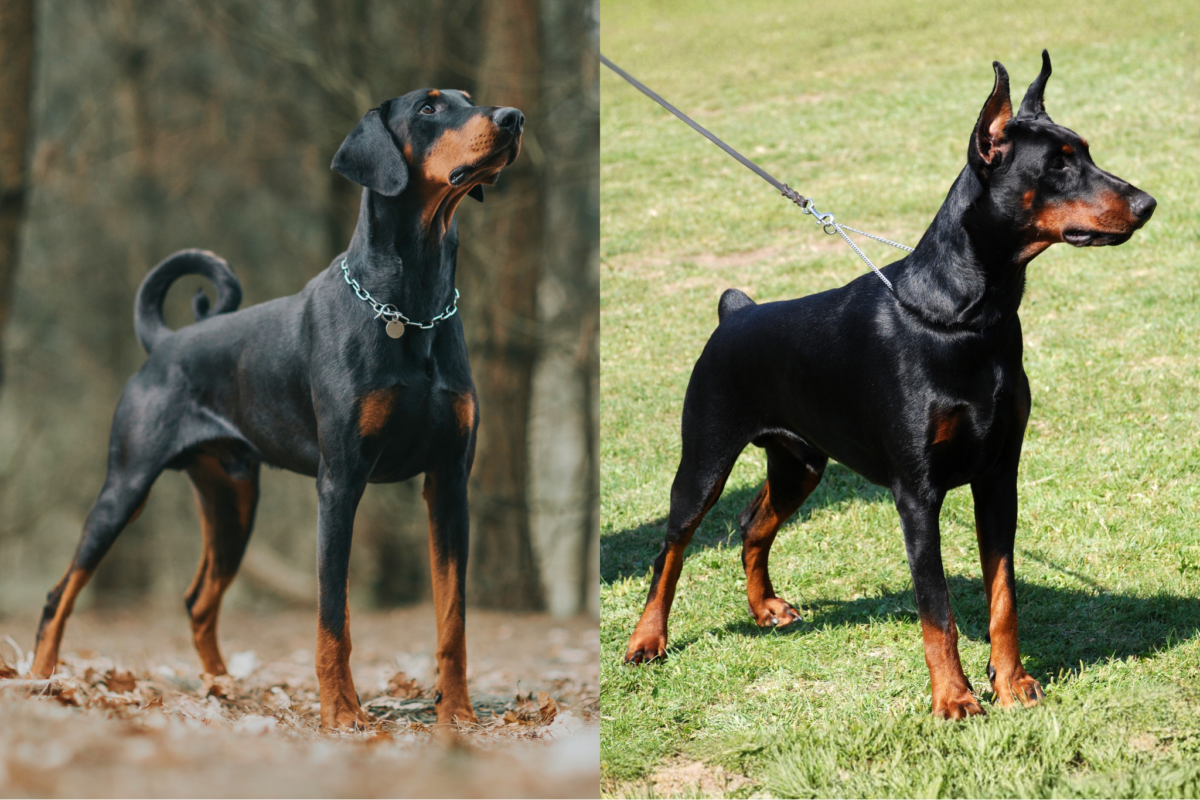
Unlike Rottweilers, whose docking was tied to farm and drover roles, Doberman docking was more closely associated with maintaining a streamlined, defensive silhouette.
Ear cropping in Dobermans followed similar logic. Erect ears were thought to reduce tearing during altercations and create a more alert, imposing appearance.
Today
In many countries, cropping and docking are restricted or banned. In others, they remain legal and part of traditional breed standards.
The American Kennel Club (AKC) still considers docked tails and cropped ears part of breed standard for Doberman Pinschers, while the AKC Rottie standard now includes natural tails.
Coat Texture & Colors
Both Doberman Pinscher and Rottweiler breeds are known for their classic black-and-rust markings. But Dobermans come in more officially recognized color variations.
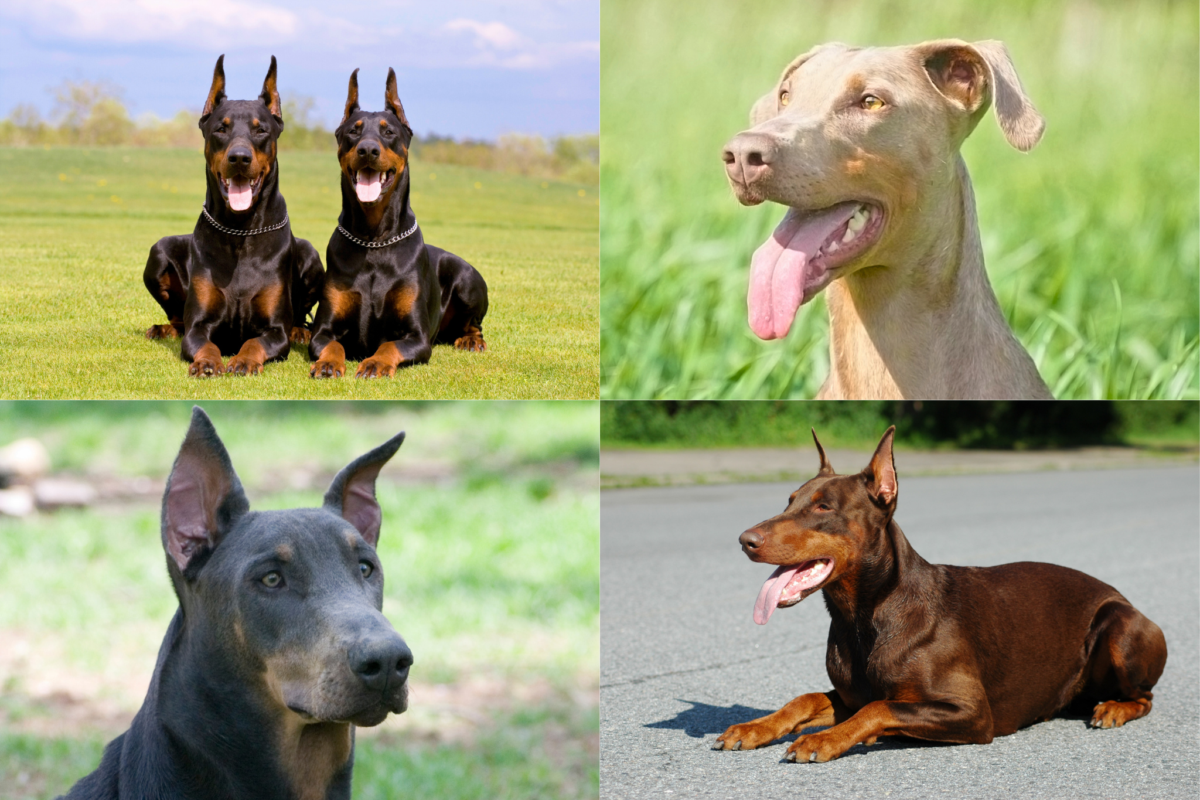
- Black & Rust
- Fawn (Isabella) & Rust
- Blue & Rust
- Red (brown) & Rust
Rottweilers are more uniform in appearance. They are traditionally seen in black with tan, rust, or mahogany marking. You won’t find standard brown, blue, or fawn Rottweilers within breed standards.
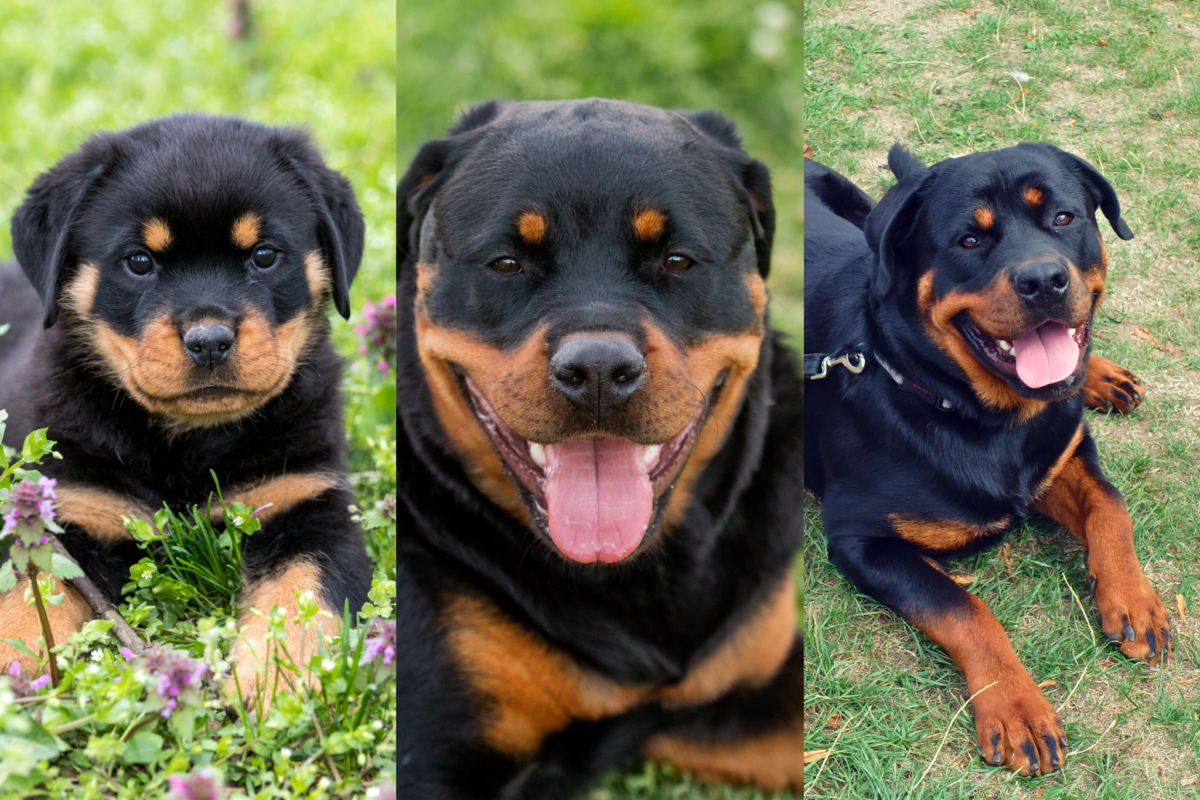
Visually, that means Dobermans offer slightly more variety in tone, while Rottweilers lean into a consistent, classic black-and-tan presence.
Texture Differences
Dobermans have a sleek, tight, single-layer coat that lies close to the body. It highlights their muscle definition and gives them that “cut” athletic look.
Rottweilers have a short but denser double coat. It still appears smooth, but it has more substance and seasonal shedding.
That difference adds to the visual contrast: Dobermans look sharp and streamlined. Rottweilers look thicker and more substantial.
Personality & Temperament: Same Loyalty, Different Energy
Both Dobermans and Rottweilers are intensely loyal.
Where they differ? A Doberman tends to attach closely and stay highly aware of everything around you. A Rottweiler tends to settle in and observe, stepping forward when needed rather than scanning constantly.
Socialability & Attention Needs
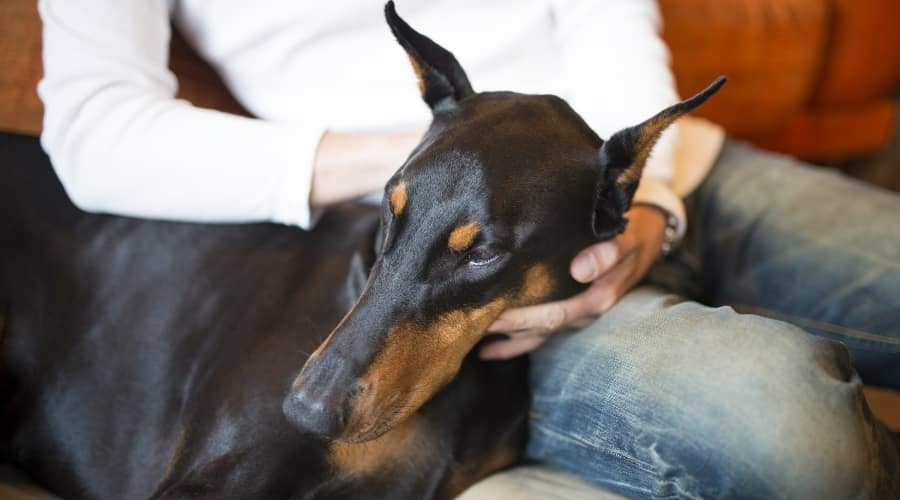
Dobermans are often described as “velcro dogs.” They prefer to stay physically close to their people and can struggle if left alone for long periods. They thrive on involvement and tend to shadow their owners from room to room.
At home, Rottweilers are often playful, goofy, and surprisingly cuddly with their families. They may lean against you, flop dramatically for belly rubs, or follow you around the house.
Both breeds are prone to separation anxiety, which can result in destructive behavior (e.g., destroying furniture, toileting inside) if they are left alone for too long.
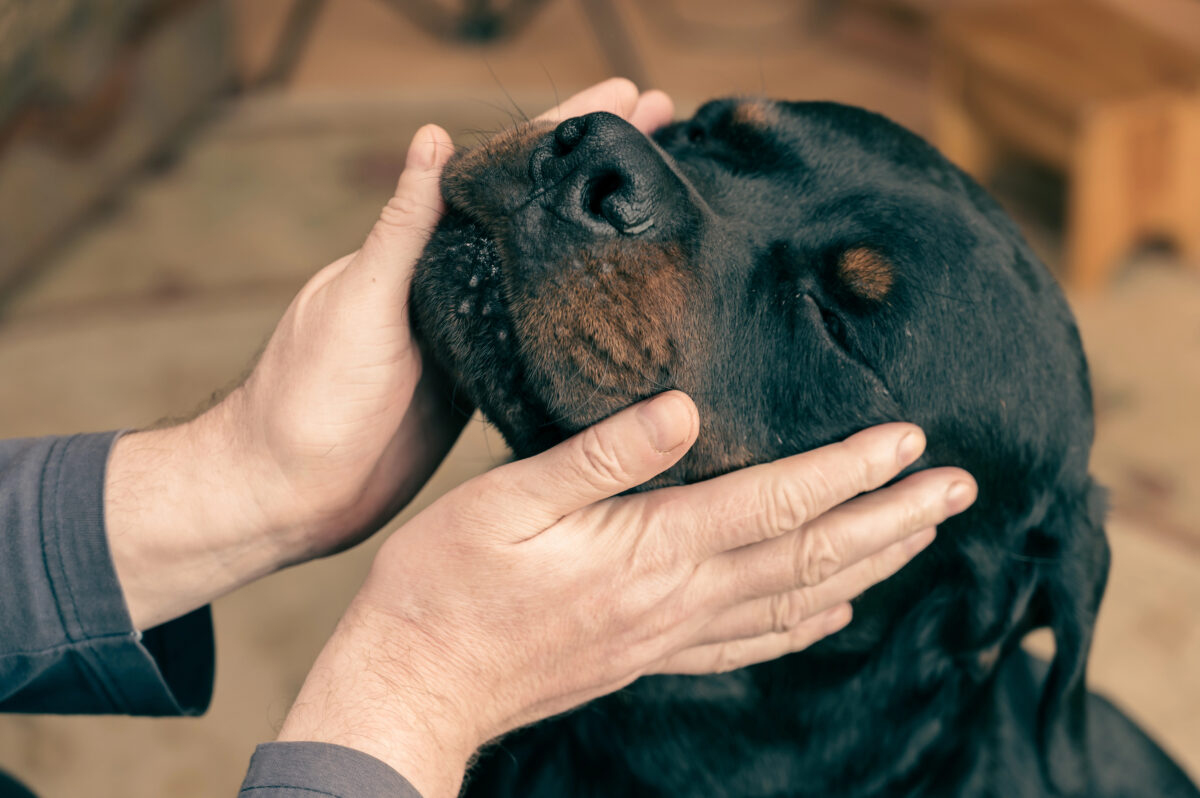
Quick Takeaway: If you want a dog that shadows you, Dobermans often lean that way. If you prefer steady companionship without constant proximity, Rottweilers may feel more balanced. Both breeds tend to be more reserved with strangers
Playfulness, Working Drive & Energy Levels
Dobermans are high-drive, high-energy, and playful. They require structured exercise, mental stimulation, and consistent engagement. Without it, they can become restless or destructive.
Rottweilers tend to be more laid-back and calm. They’ll happily sleep all day while you’re working, but expect lots of interaction when you get home. See our picks for best toys for Rottweilers.
Quick Takeaway: If your lifestyle includes regular training, advanced obedience, or high-energy activity, a Doberman may match that intensity. If you want working ability with slightly less constant motion, a Rottweiler may fit more comfortably.
Affection & Bonding Style
Despite their calm authority in public, both breeds are affectionate at home.
Dobermans tend to show affection through constant proximity and contact. They lean in. They press against you. They want to be involved.
Rottweilers often show affection through protective positioning. Many are affectionate and enjoy physical closeness; however, their strength and natural guarding instinct mean boundaries should be established early, especially in homes with young children.
With their families, many Rottweilers are big, affectionate softies. With strangers, they shift into a more watchful role. That contrast is part of what makes them compelling.
Quick Takeaway: Dobermans are very affectionate and want constant closeness. Rottweilers bond deeply but balance affection with protective awareness.
Intelligence & Trainability
Dobermans are extremely intelligent and quick learners. They respond rapidly to training and thrive on structure. Their responsiveness makes them highly capable in advanced obedience, sport work, and protection training.
Rottweilers are also intelligent but can be very stubborn. They respond well to firm, consistent leadership. Their strength means training and early socialization are especially important. This is especially true when it comes to resource guarding.
Quick Recap
Choose Doberman If:
- You want high responsiveness and constant awareness
- You enjoy active training and engagement
- You prefer close physical bonding
Choose Rottweiler If:
- You want steady confidence and physical presence
- You prefer slightly more emotional independence
- You’re comfortable managing strength and setting early boundaries
Reminder: In homes with young children, both breeds require supervision, early socialization, and clear boundaries — for the dog and the kids.
Day-To-Day Life: What Living With Each Breed Actually Requires
Dobermans and Rottweilers are both capable, intelligent working dogs. But daily life with a powerful breed is built on structure, routine, and leadership.
Exercise & Mental Stimulation Needs
Both Dobermans and Rottweilers are working breeds. Neither is a low-maintenance dog when it comes to exercise and mental stimulation.
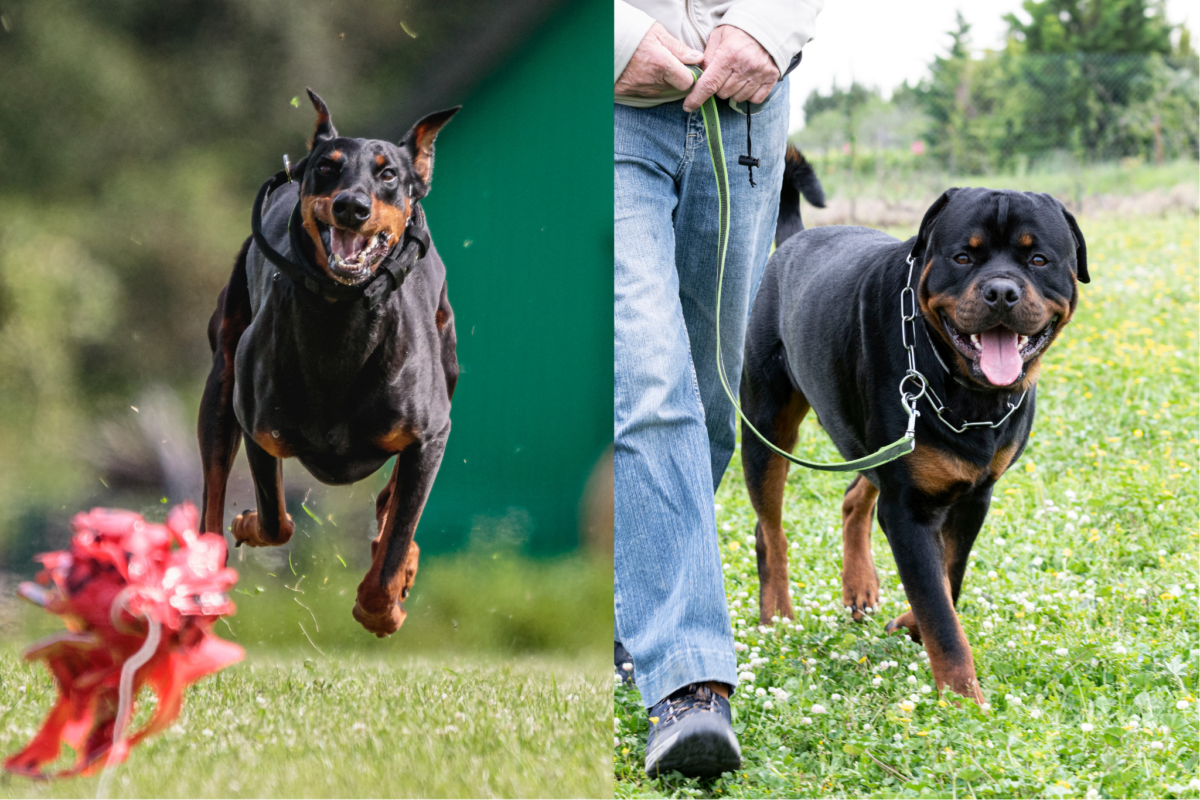
Dobermans typically require more daily structured activity. Long walks alone are not enough. They thrive on training sessions, advanced obedience, scent work, agility, or task-based engagement.
Rottweilers also need consistent exercise and training, but their energy often comes in waves. They can switch from playful bursts to calm downtime more easily once mature.
Home Setup & Space Needs
Dobermans are highly sensitive to their environment. They tend to be more reactive to movement, noise, and change. Apartment living is possible with strong leadership and consistent exercise, but it requires commitment.
Rottweilers are often slightly more adaptable indoors once exercised. Their heavier build means they don’t require constant motion inside the home, but they still need daily physical and mental outlets. Without it, expect some well-chewed furniture.
Yard space is helpful for both. Structure is essential for both.
Feeding & Nutrition Differences
Dobermans typically maintain a leaner physique and require careful monitoring to avoid becoming underweight during growth phases.
Rottweilers are prone to gaining excess weight if overfed. Their heavier bone structure and joint stress make proper weight management especially important. For more guidance, view our Rottweiler feeding chart.
Both breeds benefit from:
- High-quality large breed formulas
- Joint support
- Controlled growth during puppyhood (see our Doberman and Rottweiler growth charts)
Grooming
Dobermans:
- Short, single coat
- Minimal brushing
- Lower visible shedding
Rottweilers:
- Short but denser double coat
- Moderate seasonal shedding
- Slightly more noticeable hair around the home
Neither breed requires intensive grooming, but Rottweilers tend to shed more consistently.
First-Time Owner Reality
Neither Dobermans nor Rottweilers are beginner-level breeds in the traditional sense.
Dobermans require:
- Consistent engagement
- Early socialization
- Confident leadership
- Emotional awareness
Rottweilers require:
- Firm but fair training
- Early boundaries
- Strength management
- Structured socialization
These dogs are not dangerous by default. But they are powerful. That power requires direction.
Health & Lifespan: Which Breed Is Healthier?
Dobermans and Rottweilers both face different long-term health risks. Understanding those risks helps you plan realistically for care, screening, and potential costs.
Doberman Health Overview
Average lifespan: 10–13 years
Dobermans are particularly known for one serious concern: Dilated Cardiomyopathy (DCM). DCM is a heart condition that can develop silently and progress quickly. Regular cardiac screening is strongly recommended for the breed.
Other common Doberman health concerns include:
- Von Willebrand’s disease (a clotting disorder)
- Hip dysplasia
- Bloat (gastric dilatation-volvulus)
- Wobbler syndrome (cervical spine instability)
The key takeaway with Dobermans is vigilance. Responsible breeders screen heavily for heart disease, and proactive owners stay on top of cardiac testing.
Rottweiler Health Overview
Average lifespan: 8–10 years
Rottweilers are powerful and sturdy, but statistically have a slightly shorter lifespan than Dobermans.
Rottweiler health issues include:
- Higher rates of certain cancers (particularly osteosarcoma)
- Hip and elbow dysplasia
- Bloat
- Cruciate ligament injuries
Because of their size and bone mass, joint health and weight management are especially important.
Bloat Risk In Both Breeds
Both Dobermans and Rottweilers are deep-chested breeds, which increases their risk of gastric dilatation-volvulus (GDV), commonly called bloat. This is a medical emergency and one that responsible owners of both breeds should understand.
Preventative gastropexy is sometimes discussed with veterinarians for high-risk dogs.
So Which Breed Is Healthier?
There isn’t a simple winner.
Dobermans:
- Slightly longer average lifespan
- Higher risk of serious cardiac disease
Rottweilers:
- Slightly shorter average lifespan
- Higher risk of certain cancers and orthopedic issues
The deciding factor often comes down to:
- Breeder quality
- Early screening
- Weight management
- Ongoing veterinary care
Cost Comparison: Upfront & Long-Term
Dobermans and Rottweilers are similar in upfront price if you’re purchasing from a reputable breeder. For a well-bred puppy of either breed, expect to pay $1,500+. Show-quality lines or highly titled parents can push that closer to $4,000 or more.
If you see significantly lower prices, proceed carefully. Reputable breeders invest in health testing, temperament screening, and early socialization. Skipping those safeguards often leads to higher veterinary costs later.
Insurance Considerations
Both Dobermans and Rottweilers may face higher insurance premiums compared to lower-risk breeds.
- Dobermans may be flagged for cardiac risk.
- Rottweilers may be flagged for orthopedic or cancer-related risk.
- Some policies include breed-specific exclusions.
Always compare providers and read fine print before committing.
Food Costs
Rottweilers are typically heavier and consume more food overall. A 110-pound Rottweiler will generally cost more per month to feed than an 85-pound Doberman, especially on high-quality large-breed formulas. Over 8–10 years, that weight difference adds up.
Training Investment
Professional training, early socialization, and structured obedience are strongly recommended. Expect to invest in:
- Puppy classes
- Ongoing obedience work
- Possible advanced training
Dobermans may require more consistent mental engagement. Rottweilers may require more strength management.
A Quick Word On “White” Dobermans
Occasionally, you may see “white” Dobermans advertised at premium prices. This coloring is not a recognized standard variation. It is associated with albinism, a genetic mutation linked to significant health concerns, including vision issues and increased sun sensitivity.
3 Common Myths About Dobermans & Rottweilers
These breeds carry strong reputations. If you’re choosing between them, it helps to separate image from reality.
1. They’re Naturally Aggressive
Both Dobermans and Rottweilers were bred for protection work. That does not mean they are unstable or inherently aggressive.
Well-bred, well-socialized individuals are typically confident, controlled, and highly attuned to their families. True protection dogs are not reactive or chaotic. They are measured.
Dobermans, in particular, are often surprisingly sensitive. Many owners describe them as “big babies” who crave affection and constant connection. They may look intense in public, but at home they want reassurance, interaction, and closeness.
Protection instinct is not the same as aggression.
2. They Aren’t Good Family Dogs
Both Dobermans and Rottweilers can live successfully in family homes — but neither is a plug-and-play pet.
These are powerful, intelligent working breeds. Structure and clear boundaries are essential. That applies to the dog and to the children in the household.
Dobermans tend to bond deeply and thrive on emotional closeness. They often enjoy being involved in everything the family is doing.
Rottweilers can also be family dogs, but boundaries should be established early. They can be physically rougher and have a strong guarding instinct. Around young children, interactions should always be supervised.
But both require socialization, supervision, and responsible ownership.
3. Bigger Means More Protection
It’s easy to assume that a heavier dog means stronger protection.
In reality, protection style matters more than size.
Dobermans rely on speed, responsiveness, and precision. Rottweilers rely on mass, steadiness, and physical strength.
Both are capable. The question isn’t which is bigger. It’s which style fits your comfort and environment.
5 Facts You Probably Didn’t Know
Dobermans and Rottweilers may project serious energy, but their history and modern roles are more layered than most people realize.
1. Doberman Wins Best In Show
In 2026, the Westminster Kennel Club Dog Show crowned a Doberman Pinscher named Penny its Best in Show winner during the event’s 150th year. She beat out more than 2,500 dogs representing nearly 200 breeds.
Even more interesting? Penny is now working toward becoming a certified therapy dog.
That contrast says a lot about the breed. The same composure, attentiveness, and responsiveness that define a top show Doberman also make the breed well-suited for structured emotional support roles.
2. Yes, Some Dobermans Work As Emotional Support Dogs
Despite their intense appearance, Dobermans are often described by owners as deeply sensitive and emotionally intuitive.
Their strong attachment and responsiveness make some individuals well-suited for therapy and emotional support roles. The same vigilance that reads as “intimidating” in public often translates to attentiveness and loyalty at home.
3. Rottweilers Have One Of The Strongest Measured Bite Forces
Bite-force numbers online are often exaggerated or misreported. But we do have real mechanical testing data.
A study published in the Journal of Experimental Biology found that skull shape is the strongest predictor of bite force in domestic dogs. Large, block-headed breeds with shorter muzzles — like Rottweilers — have a structural advantage due to jaw width and leverage.
Independent testing from Rogue1K9, who developed a custom bite-measuring sleeve and recorded force from trained working dogs, provides some of the most transparent real-world measurements available. Measured bite forces (in pounds):
- Cane Corso — 456 lb
- Rottweiler — 403 lb
- Presa Canario — 390 lb
- Rottweiler — 385 lb
- Bandogge — 372 lb
These numbers reflect individual trained dogs, not breed-wide averages. But they offer insight into the physical capability of large guardian breeds.
With greater bite force comes greater potential for injury. That’s why responsible breeding, socialization, and training are critical for powerful working breeds.
Additional Resources
For broader context, see our articles covering:
4. Rottweilers Were Originally Cattle Drovers
Rottweilers trace back to Roman drover dogs used to move and protect livestock. They later guarded butcher carts and property in the German town of Rottweil, where the breed developed its modern name.
At that time, dogs like Rottweilers were valued for their strength and steady guard instinct — traits that made them excellent at moving heavy animals and protecting stock on the road.
Eventually, other breeds became specialized for herding and managing livestock movement, including:
These breeds developed intense herding behaviors focused on control and direction, rather than physical strength and guarding.
In the broader world of protective and guardian breeds, Rottweilers share traits with dogs such as the Great Pyrenees and Anatolian Shepherd — breeds whose jobs prioritize watching over stock and property.
5. Both Breeds Have Served In Military & Police Work
Dobermans were famously used during World War II for scouting and alert work. Rottweilers have served in police, search-and-rescue, and protection roles worldwide. Their reputation for capability is rooted in history, not just aesthetics.
Which One Fits Your Life Better?
Both Dobermans and Rottweilers are powerful, intelligent working breeds. The better choice isn’t about image. It’s about lifestyle, experience, and structure. Here’s how they compare in real-world scenarios.
Best For First-Time Owners
Neither breed is ideal for a truly inexperienced, hands-off owner.
That said, Dobermans are often slightly more responsive to structured training and may feel easier to guide for motivated first-time owners who are committed to obedience work and socialization.
Rottweilers, due to their physical strength and guarding instinct, can be more challenging without prior experience or professional support.
If this is your first large working breed, strong mentorship and early training matter either way.
Slight edge: Doberman
Best For Families With Kids
Both breeds can live in family homes, but neither is a casual choice.
Dobermans tend to be highly bonded and emotionally engaged. They often enjoy being involved in family activity and can be attentive companions for older children.
Rottweilers are affectionate and often playful at home, but they are physically powerful and can be rougher in movement. Early boundaries, supervision, and socialization are essential, especially with young children.
In homes with toddlers, careful management is critical regardless of breed.
Slight edge: Doberman
Best For Apartment Living
Neither Dobermans nor Rottweilers are naturally suited to sedentary apartment life.
Dobermans typically require more daily engagement and mental stimulation. Without consistent structure and outlets, they can become restless or vocal.
Rottweilers, while still large and powerful, often mature into a more settled indoor rhythm once their exercise needs are met. They are generally less reactive to environmental noise and movement compared to highly alert Dobermans.
Apartment living is possible for either breed with serious commitment to daily activity and training.
Slight edge: Rottweiler
Best For Owners Seeking Visible Deterrence
Both breeds command attention. Dobermans project alert intensity and quick responsiveness. Rottweilers project physical mass and grounded authority.
If your priority is sheer physical presence, many people perceive Rottweilers as more imposing.
Slight edge: Rottweiler
Still Comparing Working Breeds?
Dobermans and Rottweilers both bring presence, loyalty, and serious capability. The right choice depends on your lifestyle, your experience, and the kind of protection style that fits your home.
If you’re still weighing your options, explore more:
Strength looks different in every breed. The best one is the one you’re prepared to lead.