When you purchase through links on our site, we may earn a commission at no extra cost to you. Learn more.
You see a photo of a Cavalier mix and instantly think, “That’s it. That’s my dog.” And honestly, it might be.
Table of Contents
But what many people don’t realize is that behind that adorable face could be a very different personality, coat type, energy level, or set of health needs than they expected.
Not every Cavalier King Charles Spaniel mix is the same kind of “cute.” Some are calm lapdogs, some are energetic little shadows, and some can inherit grooming or health needs that surprise first-time owners.
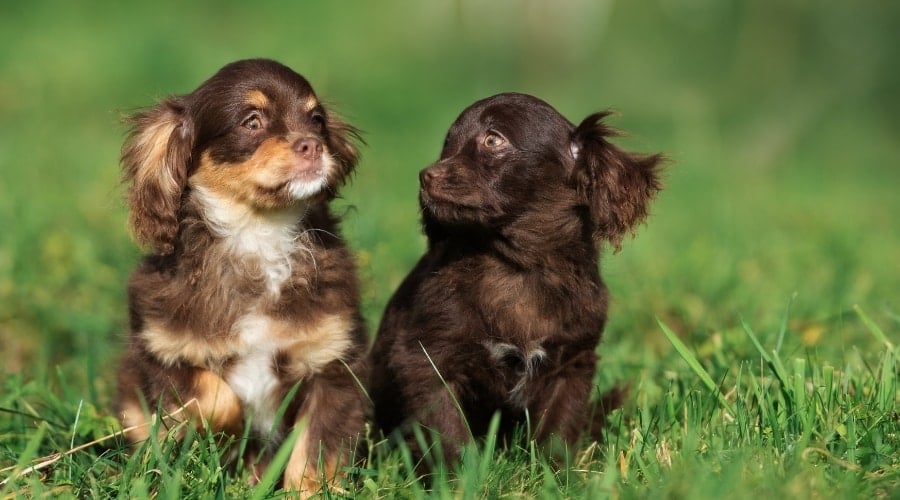
If you’re thinking about bringing home a Cavalier mix, looking at photos is the easy part, but choosing the right one for your lifestyle is where it gets serious. In this guide, we break down 20 popular Cavalier mixes, what they’re typically like to live with, and which ones may be a better fit for families, apartment dwellers, or active homes.
Before You Pick a Cavalier King Charles Spaniel Mix
According to the American Kennel Club, Cavalier King Charles Spaniels are known for their affectionate, people-oriented temperament, one reason their mixes are such popular companion dogs.
Choosing a Cavalier mix can feel easy when you’re scrolling through adorable photos, but what you don’t see matters just as much as what you do. Before you fall in love with a specific crossbreed, there are three important realities every future owner should understand.
1. Mixed-breed traits are never guaranteed
It’s a common myth that mixed-breed dogs are a perfect 50/50 blend of each parent. In reality, genetics doesn’t work that way.
A Cavalier mix might strongly resemble one parent in appearance, temperament, or energy level, or be a completely unpredictable combination of both. Even puppies from the same litter can turn out very different.
For example:
- A Cavapoo could inherit the low-shedding coat of a Poodle or the higher-shedding coat of a Cavalier
- A Cavajack might be calm like a Cavalier or high-energy like a Jack Russell
- Size, coat type, and even personality traits can vary widely
What this means for you: Don’t choose a mix based on assumptions. Always research both parent breeds in depth and be prepared for either side to dominate.
2. Temperament isn’t a perfect blend
Many people assume mixing two breeds “balances out” personality traits, but that’s not guaranteed.
Cavalier King Charles Spaniels are known for being affectionate, gentle, and people-oriented. But when paired with another breed, those traits can shift depending on the other parent.
For instance:
- Mixing with a working breed, like an Australian Shepherd, can increase energy and mental stimulation needs
- Mixing with a terrier can introduce stubbornness or a stronger prey drive
- Mixing with a brachycephalic breed, like a Pug or French Bulldog, may affect breathing tolerance and activity levels
What this means for you: Don’t assume you’re getting a calmer or “easier” version of a breed. You could just as easily get the more challenging traits.
3. Health risks can come from either parent
Mixed breeds are often described as “healthier,” but that’s only partially true. While genetic diversity can sometimes reduce certain risks, a Cavalier mix can still inherit serious conditions from either side.
Cavaliers, in particular, are known to be prone to:
- Mitral valve disease (a serious heart condition)
- Patellar luxation (knee issues)
- Eye conditions
- Hip dysplasia
When you combine two breeds, you’re combining two sets of potential health risks, not eliminating them. The American Cavalier King Charles Spaniel Club also emphasizes that Cavaliers are prone to inherited conditions like heart disease, which is why health testing is so important when choosing any mix.
What this means for you: Responsible breeders should test both parent dogs, not just one, for known genetic conditions. Ask for proof of:
- Cardiac (heart) screening
- Eye exams
- Joint evaluations (hips and knees)
If a breeder can’t provide this, consider it a major red flag.
The bottom line
A Cavalier mix can be an incredible companion, but only if you go in with clear expectations. Instead of choosing based on looks or a catchy mix name, focus on:
- The traits of both parent breeds
- Your lifestyle and activity level
- The health history and testing of the parents
That extra research upfront can make the difference between a perfect match and a difficult surprise.
Which Cavalier Mix Is Right for You?
These quick picks can help you narrow down the best Cavalier King Charles Spaniel mix for your lifestyle. Some are better suited for families, apartments, active homes, or lower-shedding coats, while others may need a little extra research.
- Best for families with kids
Golden Cavvy, Cavachon, Cava-Tzu, Cavajack, Cavador - Best for apartment living
Chilier, King Charles Yorkie, Cavapom, Cavachin, French Cavalier - Best for active owners
Cockalier, Aussalier, Cava-Corgi, Beaglier, Cavalon - Best low-shedding options
Cavapoo, Cav-a-Mo, Cava-Malt, King Schnauzer - Mixes that need extra health research
Pugalier, Dashalier
Quick reminder: Every Cavalier mix can vary. Research both parent breeds and ask about health testing before bringing one home.
Meet 20 Cavalier King Charles Spaniel Mixes That Are Almost Too Cute To Be Real
Now that you’ve seen the quick picks by lifestyle, here’s a closer look at 20 adorable Cavalier mixes and what makes each one unique.
Best Cavalier Mixes for Families With Kids
If you’re looking for a dog that can keep up with family life, temperament matters just as much as cuteness. These Cavalier mixes are often known for being affectionate, adaptable, and more patient with children, making them popular picks for busy households.
1. Golden Cavvy (Cavalier King Charles Spaniel + Golden Retriever)
Gentle, social, and family-oriented.
- Size: 25–45 lbs
- Care needs: Medium-High exercise; medium grooming
- Personality: Trainable, affectionate, usually not ideal alone for long
- Best fit: Active families; watch for heart and joint issues

Everyone knows the Golden Retriever and the Cavalier for their family-friendly nature, meaning you can almost be guaranteed an excellent option for most families. Plus, they are intelligent, gentle, eager to please, and have an outstanding balance of energy and calmness.
Golden Cavvy’s are usually light to golden in color, typically one shade, but sometimes with splashes of a second color. Their hair is generally medium length and needs a bit more grooming than a standard Cavalier, especially if they like to roll around in the mud and swim in the local lake.
2. Cavachon (Cavalier King Charles Spaniel + Bichon Frise)
Frequently described as a friendly, adaptable companion that does well with children and families.
- Size: 15–25 lbs
- Care needs: Medium exercise; medium-high grooming
- Personality: Easygoing, fairly trainable, usually family-friendly
- Best fit: Families and first-time owners; watch for joint, skin, and Cavalier-related issues
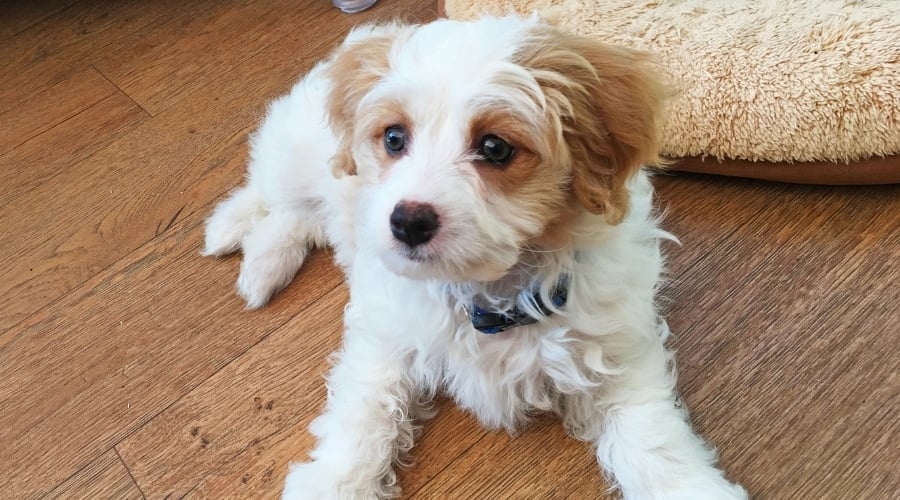
The Cavachon is a friendly pup who makes an ideal canine candidate for a young family with children. They are also relatively adaptable to different living conditions, making them versatile additions to most families.
Cavachons are fun, intelligent, and eager to please, so they are also ideal for novice dog owners looking for a simple introduction to the world of doggy ownership.
They have a wavy coat that is soft and fluffy, thanks to the Bichon Frise family. It’s common for them to be light-colored, sometimes with splashes of tan from the Cavalier family. They are lower shedders than others on this list, allowing you to keep your home as tidy as possible.
3. Cava-Tzu (Cavalier King Charles Spaniel + Shih Tzu)
Affectionate and playful, often enjoys being around children and thrives on companionship.
- Size: 10–16 lbs
- Care needs: Low-Medium exercise; high grooming
- Personality: Loving and playful, but can be clingy or a little stubborn
- Best fit: Homes with lots of attention; watch for eye, dental, and breathing concerns
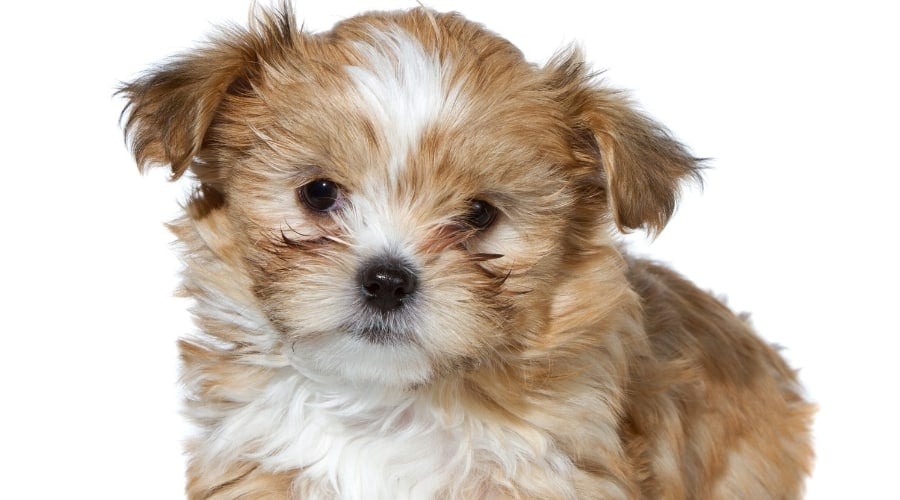
Unlike many mixed breeds on this list, the Cava-Tzu usually looks more like the Shih Tzu parent, with a hint of Cavalier. There’s something to be said about the Tzu genes here. But you should instantly recognize the longer, wavy ears of the Cavalier to add an extra layer of cuteness. This pup might be short, measuring up to 12 inches, but they are full of sass and attitude.
With a history of living in impressive Chinese palaces and grand English estates, nothing is too good for the noble Cava-Tzu. They are renowned for their cheeky ways, leading to entertainment for the whole family. They are relatively sturdy despite being small and have a fondness for children.
4. Cavajack (Cavalier King Charles Spaniel + Jack Russell Terrier)
A more energetic but still affectionate mix that can do well with active families.
- Size: 13–18 lbs
- Care needs: High exercise; low-medium grooming
- Personality: Smart and fun, but more intense and vocal than some Cavalier mixes
- Best fit: Active families; watch for joint issues and high-drive behavior

The Cavajack is more elegant than a pure Jack Russell Terrier but more feisty than a Cavalier Spaniel. They are a well-balanced mixed-breed that families and singletons alike adore. They have a high prey drive and chase most things that enter their yard. Cavajacks are mischievous and often find themselves in sticky situations. But thankfully, their calmer Cavalier side makes for a less intense pup.
Cavajacks typically weigh up to 18 pounds and are commonly white and tan. Their coats are relatively short, with a kinky wave, especially around their long-ish ears. Their stocky body provides the power needed to chase things while still managing to be graceful at the same time.
Charming with a hint of stubbornness describes this pup best.
5. Cavador (Cavalier King Charles Spaniel + Labrador Retriever)
Combines two famously family-friendly breeds, often resulting in a social, outgoing dog.
- Size: 40–55 lbs
- Care needs: High exercise; medium grooming
- Personality: Trainable, outgoing, and people-focused
- Best fit: Active homes with space; watch for hips, weight gain, and heart issues
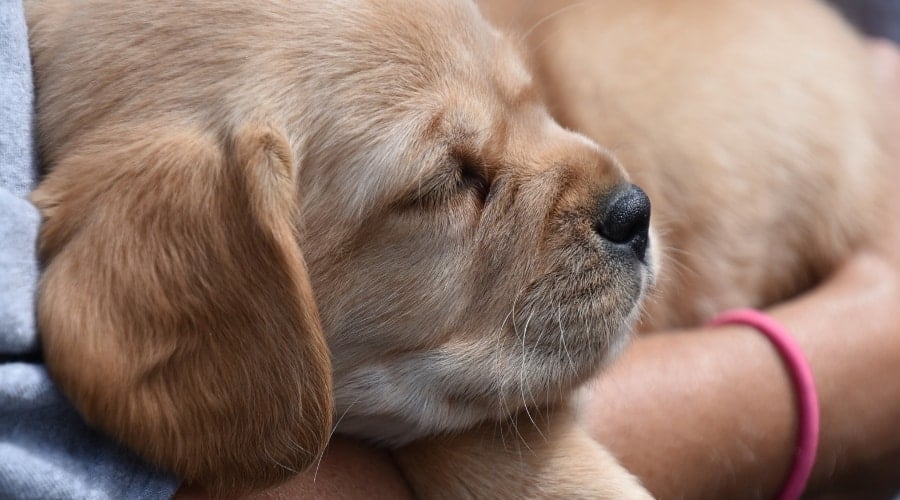
What do you get if you mix the Cavalier King Charles Spaniel with America’s number one dog? A Cavador, of course.
They are one of the largest mixed breeds on this list, making them a top choice for large dog lovers. They are medium-sized, depending on the size of their Lab parent, but rarely exceed 50 pounds in weight. Their coat is usually a shade of gold, but thankfully, they require less grooming than a Labrador.
They are energetic, like to chase smaller creatures, and are almost always water babies. They need much more exercise than your standard Cavalier, making these ideal picks for more active families. Cavadors are pretty simple to teach when giving early insight into training, meaning they are obedient companions.
Best Cavalier Mixes for Apartment Dwellers
Living in a smaller space doesn’t mean you can’t have the perfect pup. These Cavalier mixes tend to be more compact and adaptable, making them a better fit for apartments or homes without a lot of extra room—as long as their daily needs are met.
6. Chilier (Cavalier King Charles Spaniel + Chihuahua)
Small, portable, and often adaptable to smaller living spaces.
- Size: 6–12 lbs
- Care needs: Low-Medium exercise; low grooming
- Personality: Loyal, alert, can be vocal or clingy
- Best fit: Apartment living; watch for barking and separation anxiety
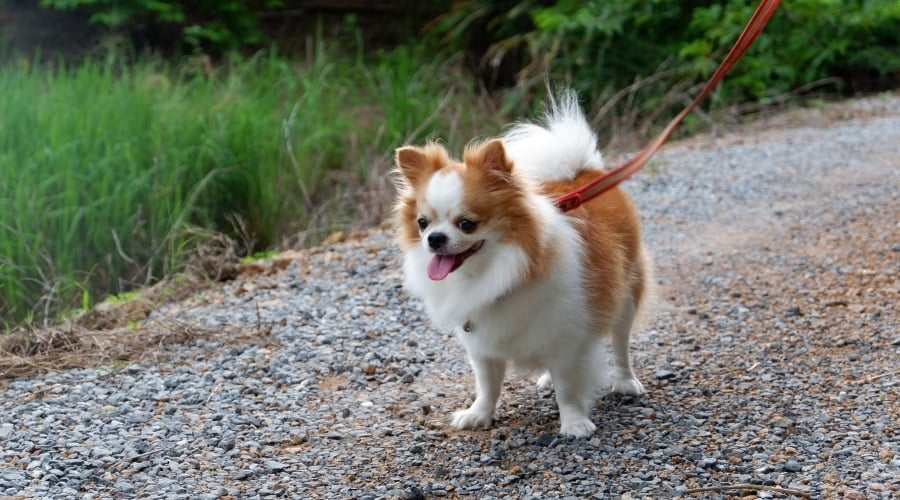
Thanks to the teeny weeny Chihuahua influence, the Chilier is one of the smaller mixes on this list. So, if you’re looking for a pocket-sized pup not exceeding more than 12 pounds, this could be the best option for you. Whether they have a deer or an apple Chihuahua head, they have soft, silky hair that doesn’t take too long to groom.
Be sure not to give in to their intense puppy dog eyes. They are fun and lively pups who want to have a good time, but they also relish cuddles on the sofa. They are likely to be vocal pups who take their role of family guardian seriously, no matter how unthreatening they look.
7. King Charles Yorkie (Cavalier King Charles Spaniel + Yorkshire Terrier)
Compact and affectionate, making it a popular small-space companion.
- Size: 8–14 lbs
- Care needs: Low-Medium exercise; medium-high grooming
- Personality: Affectionate, sometimes stubborn, can be vocal
- Best fit: Small homes; watch for barking and dental issues
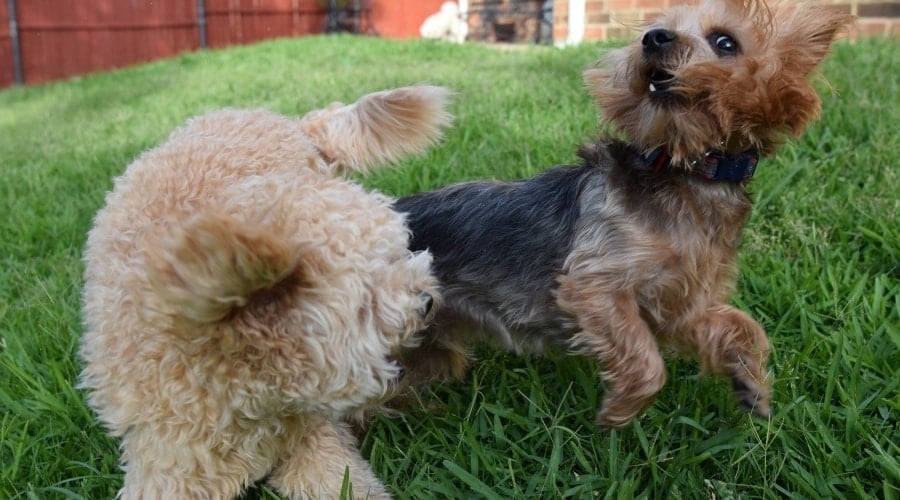
The King Charles Yorkie is just as vibrant as its name sounds. They are full of feisty terrier characters packed into a small, fluffy package. Be sure not to spoil this pooch too much. Otherwise, you might find an overprotective pup on your hands.
They have a high prey drive and a tomboyish streak while still being elegant. They also hate to be left alone and insist on accompanying you everywhere you go.
The King Charles Yorkie is another small mixed breed that weighs in under 10 pounds. But don’t let their tininess fool you. They have a loud bark, making them ideal alarm systems for any home. King Charles Yorkies are likely to be a mixture of white, tan, and black, and they often sport a scruffy appearance.
8. Cavapom (Cavalier King Charles Spaniel + Pomeranian)
Why it’s here: Small size with a lively personality suited for apartment life.
- Size: 10–18 lbs
- Care needs: Medium exercise; high grooming
- Personality: Playful, alert, can be vocal
- Best fit: Apartments; watch for barking and coat maintenance
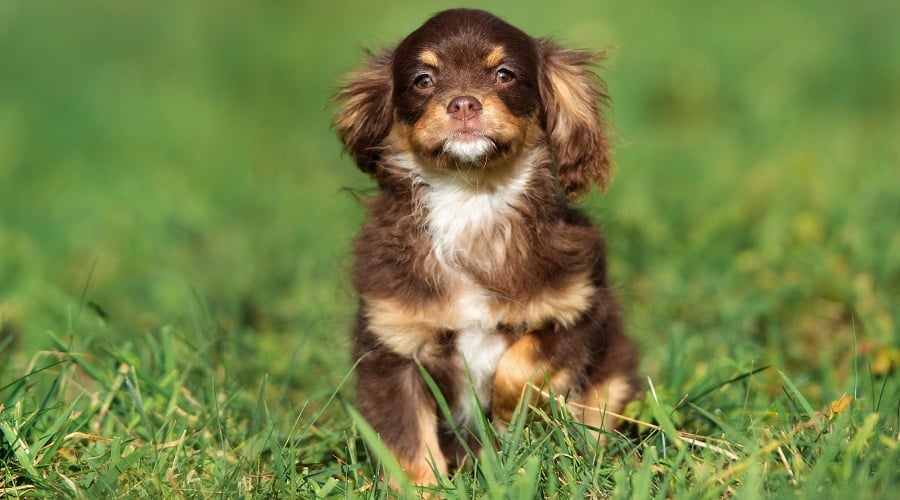
The Cavapom might be the fluffiest on this list due to its Pomeranian parent. So if you’re a fluff-seeking Cavalier enthusiast, look no further than this pooch. Their coat sports an array of their parent’s colors, and their coats need thorough grooming to keep them looking their best.
This pup is one of the most miniature designer dogs in our Cavalier list. Weighing no more than 12 pounds, you need to train your kiddos to handle them correctly to avoid injury.
The Cavapom is a bold and lively pooch who usually has more gusto than the average Cavalier. Combining their curiosity with their relatively high prey drive, they are sure to disappear into the bushes when on walkies. So you need to keep a close eye on these spunky canines. This toy pooch is a happy-go-lucky mix that is sure to brighten any family’s day.
9. French Cavalier (Cavalier King Charles Spaniel + French Bulldog)
Compact and lower-energy, often suited for smaller homes.
- Size: 15–25 lbs
- Care needs: Low-Medium exercise; low grooming
- Personality: Playful, affectionate, sometimes stubborn
- Best fit: Apartments; watch for breathing issues and heat sensitivity
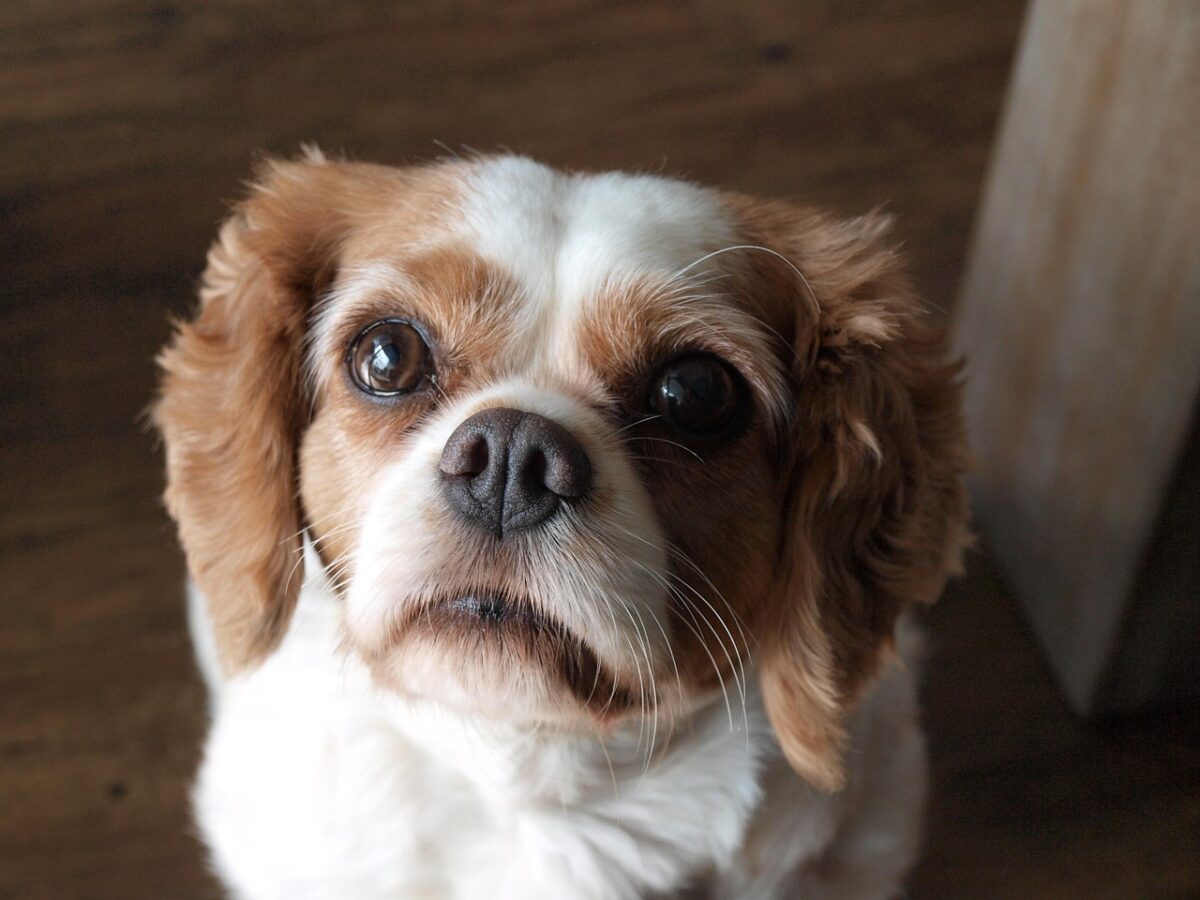
The French Cavalier is a small dog who usually weighs less than 23 pounds. Still, they are relatively stocky and pack power in their body. They are a surprisingly rare mixed breed despite both parents being popular purebreds. Again, like the Cavalon, there is no guarantee as to whether they inherit the bat ears of the Frenchie or the low-hanging Spaniel ears.
The French Cavalier’s personality is the show-stealer here. They are insanely sweet and hilariously funny. They are laidback dogs who have regular outbursts of zoomie energy. These pups are happy to accompany you on walks or sunbathing in the yard. As long as they are with you, they are content canines.
When adopting any French Bulldog mix, it is wise to learn about the specific health and care needs of this brachycephalic breed.
Best Cavalier Mixes for Active Owners
Not all Cavalier mixes are lapdogs. If you want a dog that can keep up with walks, playtime, and a more active routine, these mixes are typically higher-energy and may need more exercise and mental stimulation than the average Cavalier.
10. Cockalier (Cavalier King Charles Spaniel + Cocker Spaniel)
Energetic and playful, with higher activity needs than a typical Cavalier.
- Size: 20–30 lbs
- Care needs: Medium-High exercise; medium grooming
- Personality: Friendly, eager, sometimes excitable
- Best fit: Active homes; watch for ear issues and grooming upkeep
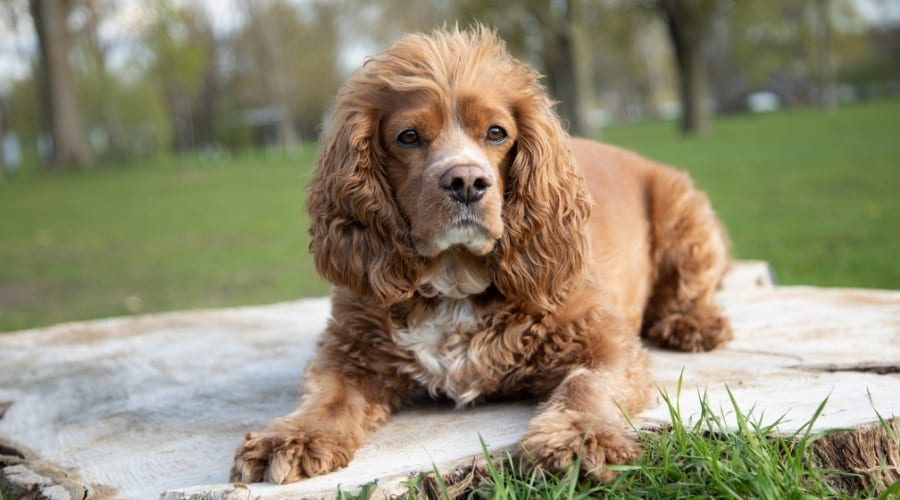
The Cockalier is likely to be much more energetic than the Cavalier, so expect a fitness buddy for sure. But thanks to their Cava influence, they are bound to be a little more relaxed than a Cocker Spaniel. Cockaliers are gentle, affectionate, and love nothing more than to be with their favorite humans.
They are a small mixed pup who measures between 13 and 15 inches tall and weighs between 15 and 25 pounds. Their coat usually takes on the traditional tan and white colors of the Cavalier, with the occasional appearance of other colors known to both parents. The hair on their ears remains curly, and their round button eyes make them just as irresistible.
11. Aussalier (Cavalier King Charles Spaniel + Australian Shepherd)
A high-energy mix that thrives with activity and mental stimulation.
- Size: 20–40 lbs
- Care needs: High exercise; medium grooming
- Personality: Intelligent, driven, needs stimulation
- Best fit: Very active owners; watch for herding behavior and anxiety

If you’re looking for a Cavalier with an appearance twist, the Aussalier might offer you the perfect option. Aussaliers typically look like Cavalier Spaniels, with the Australian Shepherd merle coat and extra fluffiness. They usually weigh up to 40 pounds, making them a substantial canine choice.
The Aussalier is likely to be a work-oriented breed, meaning that they need an active family. They are not lapdogs by any stretch of the imagination. The Cavalier influence means that they are not as intense as purebred Aussies, making them suited to more families.
12. Cava-Corgi (Cavalier King Charles Spaniel + Corgi)
Playful and sturdy, often needing regular activity.
- Size: 20–30 lbs
- Care needs: Medium exercise; medium grooming
- Personality: Loyal, alert, sometimes stubborn
- Best fit: Active homes; watch for back and joint issues

As the most popular Corgi breed, the Pembroke Corgi is most likely the parent (not the Cardigan Corgi). This is a headstrong pup with natural intuition to herd people and other pets.
The Cava Corgi is always on the go, looking for their next adventure, so you need to make training short and fun to keep them interested. They might be small, but they’ve got tons of energy that needs an outlet. The Cava Corgi is usually affectionate without being overly needy.
The Cava Corgi is a short and long dog, but thankfully, they are less likely to suffer from IVDD than purebred Corgis. Their coat is usually white with a splash of tan or dark coloring.
Depending on which parent they look like, they might inherit the erect foxy ears of the Corgi or the floppy ears of the Cavalier. Or perhaps one of each for a quirky look. Cheeky and cute describe this pup best.
13. Beaglier (Cavalier King Charles Spaniel + Beagle)
Curious and energetic, with a strong need for exercise and stimulation.
- Size: 20–30 lbs
- Care needs: Medium-High exercise; low grooming
- Personality: Friendly, curious, can be vocal
- Best fit: Active families; watch for wandering and barking

Beagliers need regular exercise to burn their higher-than-average energy. But both parents love to nap throughout the day, meaning you are in for an awesome boxset buddy with the Beaglier. Be sure to keep snacks under lock and key with this greedy pup around. Sweet and adorably needy describes this pooch well.
Beagliers usually weigh no more than 25 pounds. But you need to watch their weight as they are more likely to become overweight than most, thanks to the Beagle’s gluttonous genes.
Their coat is usually an equal blend of both parents. It is short but slightly wavy and sports traditional white, tan, and sometimes black hunting colors. Their gorgeous, large eyes are sure to make you melt.
14. Cavalon (Cavalier King Charles Spaniel + Papillon)
Agile and energetic, often needing regular activity and engagement.
- Size: 10–20 lbs
- Care needs: Medium exercise; medium grooming
- Personality: Smart, alert, playful
- Best fit: Active homes; watch for barking and mental stimulation needs
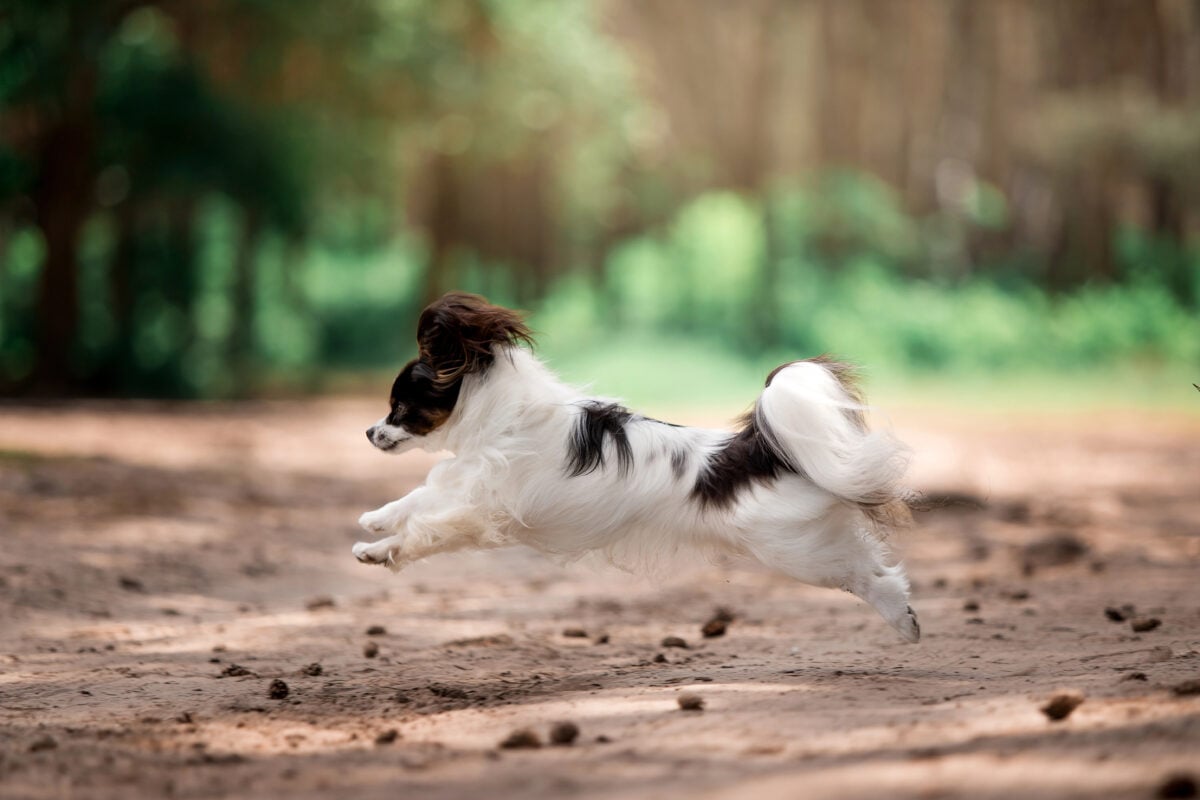
The Cavalon is a delightful doggy mixture of two happy-go-lucky breeds. If you’re looking for a pup that never runs out of cheer, look no further than the Cavalon. They are friendly and sociable, meaning that you can take them anywhere without worrying about their manners.
The Cavalon might inherit the wonderful butterfly-shaped ears of the Papillon breed. Still, they could also inherit the floppier, curly-haired ears of the Cavalier. Either way, they are sweet-looking pups. They typically weigh no more than 14 pounds, and despite their delicate appearance, they are energetic and athletic.
Best Low-Shedding Cavalier Mixes
If shedding is a concern, some Cavalier mixes may be easier to manage than others. While no dog is truly hypoallergenic, these mixes are often chosen for their lower-shedding coats—though they may require more grooming in return.
15. Cavapoo (Cavalier King Charles Spaniel + Poodle)
Often chosen for its lower-shedding coat and friendly personality.
- Size: 10–25 lbs
- Care needs: Medium exercise; high grooming
- Personality: Intelligent, affectionate, trainable
- Best fit: Allergy-conscious homes; watch for grooming upkeep

The Cavapoo is possibly one of the most popular Cavalier mixes on this list, just like most Poodle mixes out there. They are slightly more energetic than a pure Cavalier, meaning you can count on this canine mixture to play games and have lots of fun. They have a high prey drive and usually love the water.
The Cavapoo is likely to be easier on allergy sufferers thanks to its Poodle genes. Just don’t count on them being hypoallergenic because the Cavalier isn’t. Their coat is usually wavy and can inherit any color combination from both parents. Cavapoos do not usually top the scales over 20 pounds.
They are prone to separation anxiety because both parents are super sensitive. So they need a family who can stay at home for most of the day.
16. Cav-a-Mo (Cavalier King Charles Spaniel + American Eskimo)
May shed less than some mixes, depending on coat type.
- Size: 15–30 lbs
- Care needs: Medium exercise; medium grooming
- Personality: Smart, alert, affectionate
- Best fit: Active homes; watch for shedding variation

The American Eskimo usually selected for this mix is a toy or a miniature-sized pup rather than a Standard. But stranger things have happened. Weighing up to 19 pounds and measuring up to 14 inches, they are a small breed that can join you on almost any adventure.
Cava-Mos are loyal and versatile dogs who are less sensitive than purebred Cavaliers. Still, they love to be around their favorite humans for most of the day. Thanks to their eagerness to please, they are bright and relatively simple to train. Cava-Mos are spunky and full of cheeky energy, sure to keep you on your toes.
17. King Schnauzer (Cavalier King Charles Spaniel + Mini Schnauzer)
May shed less and offers a more structured coat type.
- Size: 12–20 lbs
- Care needs: Medium exercise; medium grooming
- Personality: Alert, loyal, sometimes vocal
- Best fit: Families; watch for barking and grooming needs
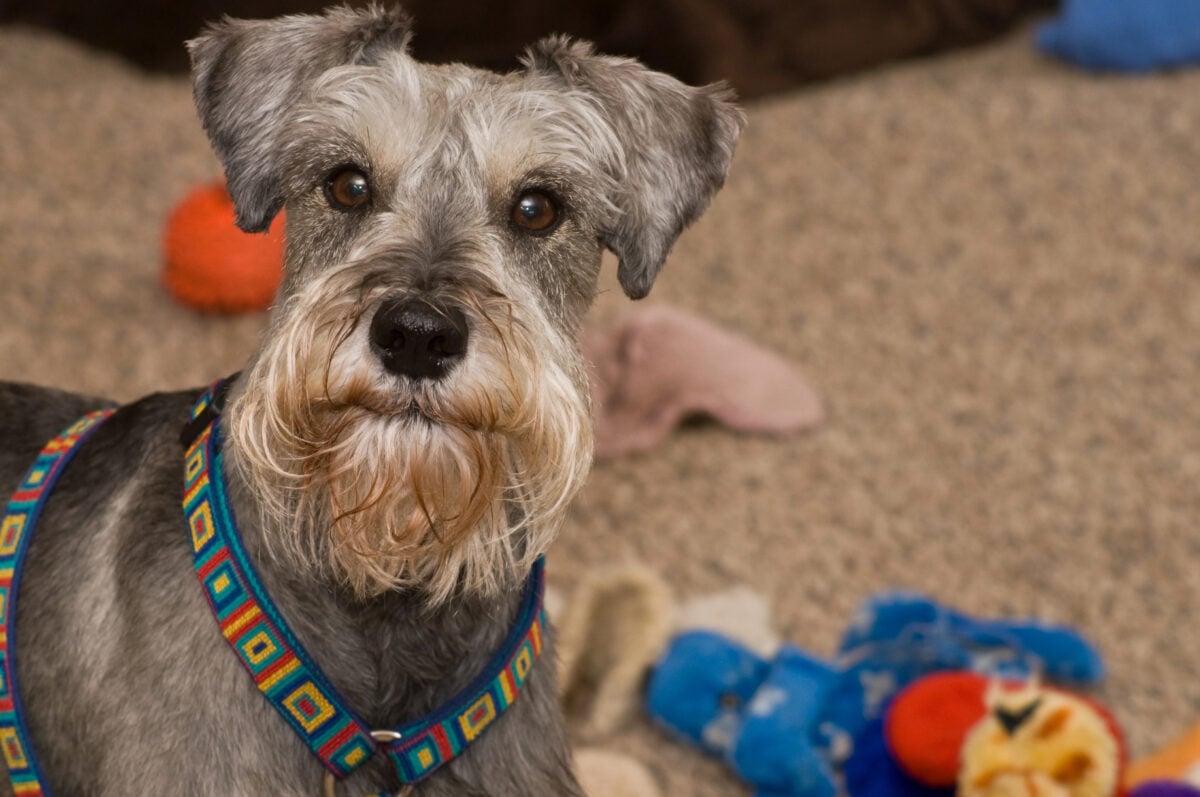
The King Schnauzer is a regal pup who knows that they deserve the best. They are likely to be a little bit bossy, but don’t let that put you off them. With regular training, you should find an amenable pup on your hands. They are vocal but friendly and affectionate dogs.
They are likely to be the product of a miniature Schnauzer rather than a standard or giant-sized Schnauzer, which means they only weigh 20 pounds or less. If the size is an essential factor for you, be sure to double-check with the breeder what size Schnauzer parent they have.
18. Cava-Malt (Cavalier King Charles Spaniel + Maltese)
Often lower-shedding with a soft, companion-friendly coat.
- Size: 10–15 lbs
- Care needs: Low-Medium exercise; high grooming
- Personality: Gentle, affectionate, people-focused
- Best fit: Companion homes; watch for coat care and dental issues
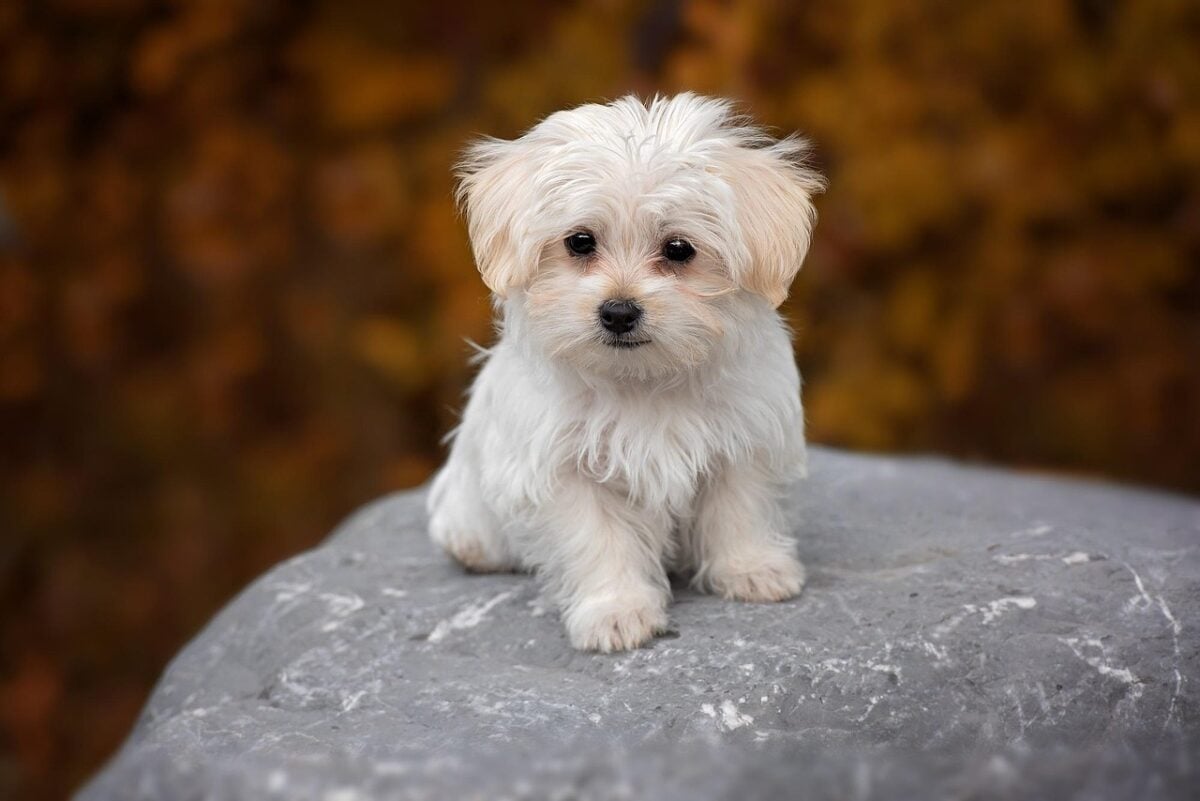
The Cava-Malt is an affectionate hybrid that is always ready to put a smile on your face. They are bright and charming, making friends with everyone they meet. They are fearless and vocal roommates thanks to the Maltese influence. And they quickly let you know that someone is approaching the family home.
They respond well to positive training methods and thrive when spoiled with a life of luxury.
Cava-Malts typically weigh between 10 and 15 pounds, sometimes smaller. Despite their long flowing coats, they are also low shedders compared to a purebred Cavalier. They are usually light in color, with cute button eyes poking through their glamorous hair.
Cavalier Mixes That Need Extra Health Research
Some Cavalier mixes can come with additional considerations, especially when it comes to structure, breathing, or inherited conditions from either parent breed. These mixes aren’t necessarily bad choices—but they do require a little more research before bringing one home.
19. Pugalier (Cavalier King Charles Spaniel + Pug)
May inherit flat-face traits that can affect breathing and activity.
- Size: 10–20 lbs
- Care needs: Low-Medium exercise; low grooming
- Personality: Loving, playful, can be stubborn
- Best fit: Moderate activity homes; watch for breathing and heat issues
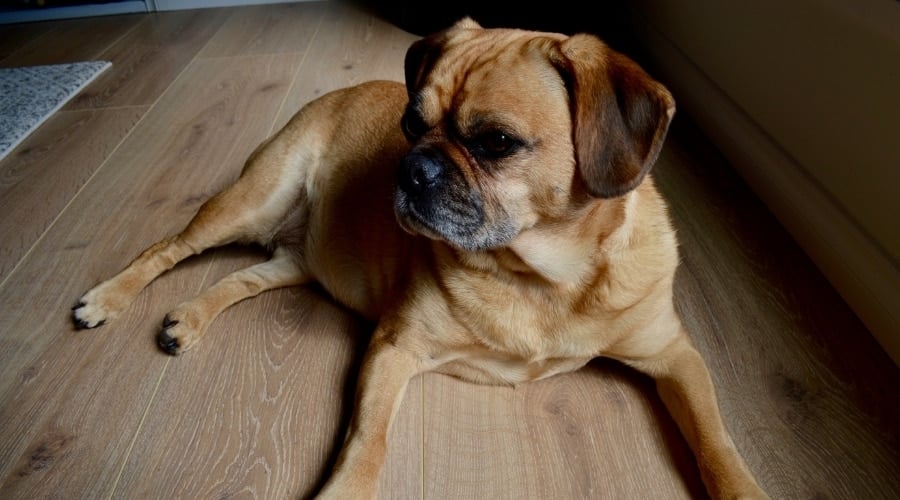
With the Pug influence, you can be sure to find a dog that loves sleeping just as much as playing. Pugaliers are simple creatures who tend to wear out compared to a pure Cavalier.
But they also know how to have a good time and have energetic, comical outbursts to entertain the family. They probably feel anxious when left alone too long and are sure to stick to you like glue when you’re home.
Be wary of the brachycephalic syndrome and the associated health problems that sometimes come from the flatter face. They typically inherit a hint of skin rolls and a possible curly tail. Depending on the parents’ color, Pugaliers can be light or dark-colored.
20. Dashalier (Cavalier King Charles Spaniel + Dachshund)
Body structure can vary, especially with long-back traits.
- Size: 10–20 lbs
- Care needs: Medium exercise; low grooming
- Personality: Loyal, curious, sometimes stubborn
- Best fit: Homes aware of handling needs; watch for back issues
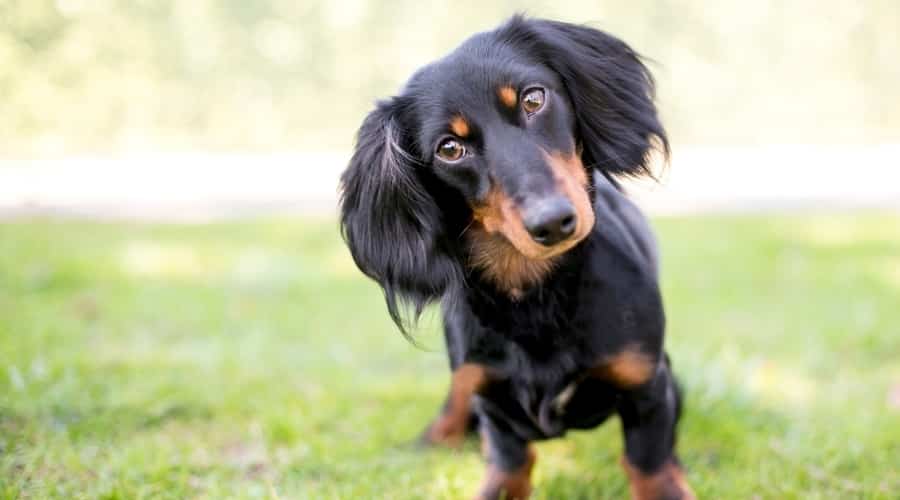
The Dashalier is one of those mixed breeds that usually inherit a set look. They typically look like long sausage dogs with elegant Spaniel ears, coats, and sweet faces. Because there are two Dachshund sizes, you need to ask your breeder which size parent they have, which determines their size.
The Dashalier typically inherits the prey drive for animals above and under the ground, leading to double the trouble. Consider keeping these spunky pups on a leash if you don’t want them to disappear regularly, but you can be sure they make great walkie partners. Thankfully, their Cavalier influence means they are easier to train and less sassy than purebred Dachshunds.
5 Other Rare Cavalier Mixes to Know
While the mixes above are some of the most popular and widely recognized, there are a few rarer Cavalier King Charles Spaniel crosses you might still come across. These tend to be less common, but can offer some unique personality and appearance combinations.
1. Cavottish (Cavalier King Charles Spaniel + Scottish Terrier)
A more independent and strong-willed mix, often combining the Scottish Terrier’s bold personality with the Cavalier’s affectionate side. Expect a dog that may be less eager to please than other Cavalier mixes.
2. King Pin (Cavalier King Charles Spaniel + Miniature Pinscher)
A small but energetic mix with a big personality. The Cavalier Mini-Pinscher cross can be more intense and alert, making it a better fit for experienced owners rather than first-time dog parents.
3. Cavachin (Cavalier King Charles Spaniel + Japanese Chin)
Typically, a gentle, companion-focused Japanese Chin Cavalier mix that leans toward a quieter, more relaxed temperament. Often best suited for calm households.
4. Pekalier (Cavalier King Charles Spaniel + Pekingese)
A laid-back, affectionate mix that may inherit a flatter face and a more relaxed energy level. Grooming and breathing considerations are important with this Pekingese-Cavalier cross.
5. Cava Inu (Cavalier King Charles Spaniel + Shiba Inu)
A less predictable mix that can combine the Cavalier’s friendliness with the Shiba Inu’s independence. Often better suited for owners with dog experience.
Health Issues & Screening Tests to Ask About
Before bringing home any Cavalier King Charles Spaniel mix, it’s important to understand that you’re not just getting one breed—you’re getting a combination of two genetic backgrounds. That means health risks can come from either parent.
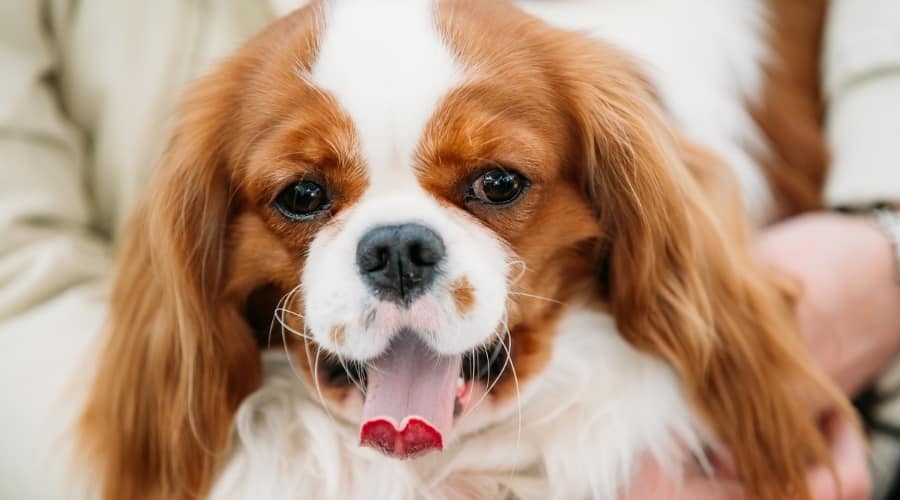
Cavaliers, in particular, are known for a few serious inherited conditions, so choosing a responsible breeder (or rescue) matters more than many people realize.
Common health concerns in Cavalier mixes
Some of the most important issues to be aware of include:
- Heart disease (mitral valve disease): One of the most common and serious conditions in Cavaliers
- Joint issues: Including hip dysplasia and patellar luxation
- Eye conditions: Such as cataracts or retinal problems
- Ear infections: Especially in dogs with long, floppy ears
- Breathing issues: In mixes with flatter-faced (brachycephalic) breeds
Health tests to ask about
If you’re buying from a breeder, ask for proof of health testing on both parent dogs, not just one.
Look for:
- Cardiac (heart) screening
- Eye exams
- Hip and joint evaluations
- Patella (knee) checks
If a breeder can’t provide documentation, that’s a red flag.
Why this matters
Even though mixed-breed dogs can sometimes benefit from genetic diversity, they are not automatically healthier. The best way to improve your chances of getting a healthy dog is to choose a breeder (or rescue) that prioritizes health and transparency.
Adoption vs Breeder: How To Find a Healthy Puppy or Rescue
Whether you adopt or buy from a breeder, the goal is the same: finding a healthy dog that fits your lifestyle.
Adopting a Cavalier mix
Adoption can be a great option if you’re open to a wider range of ages and backgrounds.
Pros:
- Often more affordable
- Gives a dog a second chance
- Many adult dogs already have established temperaments
Things to consider:
- History may be unknown
- Some dogs may need training or adjustment time
Check:
- Local shelters
- Breed-specific rescues
- Small dog rescue organizations
Buying from a breeder
If you’re set on a puppy, choosing the right breeder is critical.
A responsible breeder will:
- Provide health testing for both parents
- Be transparent about lineage and risks
- Allow you to ask questions and see the environment
Red flags to avoid:
- No health records
- Multiple litters always available
- Pressure to buy quickly
Bottom line
Adoption is often the more affordable route, but a responsible breeder can also be a good option if you do your research. The key is avoiding impulse decisions and focusing on long-term fit and health.
FAQs About Cavalier King Charles Spaniel Mixes
Still have questions about Cavalier King Charles Spaniel mixes? We’ve answered some of the most common ones below, but if there’s something we didn’t cover, drop your question in the comments, and we will get you an answer!
Which Cavalier mix sheds the least?
Mixes with Poodle, Maltese, or Bichon Frise, like the Cavapoo, Cava-Malt, and Cavachon, tend to shed less than many other Cavalier mixes. That said, no dog is truly hypoallergenic, and lower shedding often comes with higher grooming needs.
Which Cavalier mix is best for first-time owners?
Cavachons, Cavapoos, and Cava-Tzus are often good choices for first-time owners because they tend to be affectionate, adaptable, and easier to manage than some higher-energy mixes.
Which Cavalier mix is healthiest?
There’s no single healthiest Cavalier mix. Health depends on genetics, breeding practices, and lifelong care. Choosing a breeder who performs health testing, or adopting from a reputable rescue, matters more than choosing one specific mix.
How much does a Cavalier mix cost?
Prices can vary widely depending on the mix, breeder, and location, but many Cavalier mix puppies cost anywhere from $800 to $3,000 or more. Adoption is usually much more affordable, often ranging from $100 to $500.
Can Cavalier mixes be left alone?
Many Cavalier mixes are very people-oriented and may struggle with being left alone for long periods. Some are more prone to separation anxiety, so they usually do best in homes where someone is around often or where they can be gradually trained to handle alone time.
Are Cavalier mixes good with cats?
Many Cavalier mixes can do well with cats, especially if they inherit the Cavalier’s gentle, social nature. However, mixes with stronger prey drive, such as terrier- or hound-influenced crosses, may need slower introductions and closer supervision.
Raising a Happy, Healthy Cavalier Mix
Choosing the right Cavalier King Charles Spaniel mix is only the beginning. Like all mixed breeds, these dogs can inherit traits and health concerns from either parent, so lifelong care matters just as much as breed choice.
Start with the basics: follow a proper puppy vaccine schedule, stay on top of annual checkups, and learn how often your dog should see the vet at every life stage.
It’s also smart to understand common Cavalier health problems, since some mixes may inherit breed-related issues along with that sweet Cavalier personality.
With regular vet care, daily exercise, proper grooming, and plenty of attention, your Cavalier mix has the best chance to grow into a happy, healthy companion.
What’s Your Favorite Cavalier Mix?
Do you have a favorite Cavalier King Charles Spaniel mix from this list? Or do you already share your home with one of these adorable pups? Tell us in the comments which mix you love most—and why. We’d love to hear about your dog’s personality, looks, and what makes them such a great companion.