When you purchase through links on our site, we may earn a commission. Here’s how it works.
Some dogs guard their prized possessions the way a toddler guards a favorite toy, except this toddler has done the math, locked in eye contact, and is on alert to escalate emotionally. Initially, nothing dramatic happens. No sound. Just a full-body pause that says, I see you, and I would prefer if you reconsidered.
Table of Contents
Sharing is currently under serious review.
If your dog stiffens around food, toys, or favorite spaces, you’re not dealing with stubbornness or dominance. You’re watching a stress response kick in — fear quietly activating internal protocols while the rest of the body goes still.
That’s resource guarding in dogs. And for pups who guard, proximity matters more than intent. In your dog’s mind, if access might change, the internal review is already underway.
What Dogs Actually Guard (And Why The List Keeps Growing)
At its core, resource guarding is about access. Dogs protect things that feel valuable, especially when when free access to them feels uncertain. That part is normal.
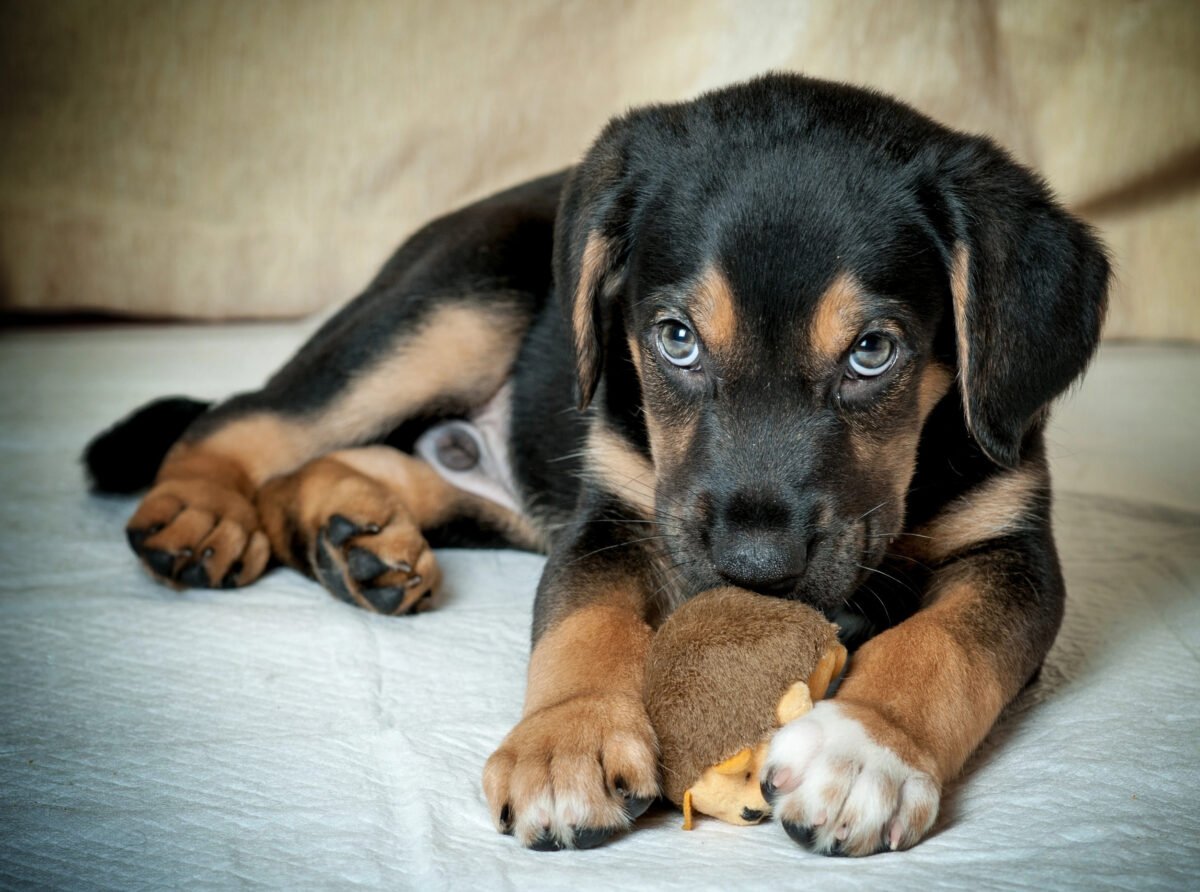
What changes is how intensely a dog feels the need to protect their “asset.” Sometimes it’s predictable. Other times, it’s whatever they claimed five minutes ago and have now decided matters deeply.
Commonly guarded resources include:
- Food and treats, especially chews that take time and focus (often called “food aggression”)
- Toys, particularly the ones that became interesting once someone else noticed them
- Resting spots, like couches, beds, sunny patches, or recently occupied floor space
- Found objects, like a sock that becomes invaluable the moment you notice it’s missing
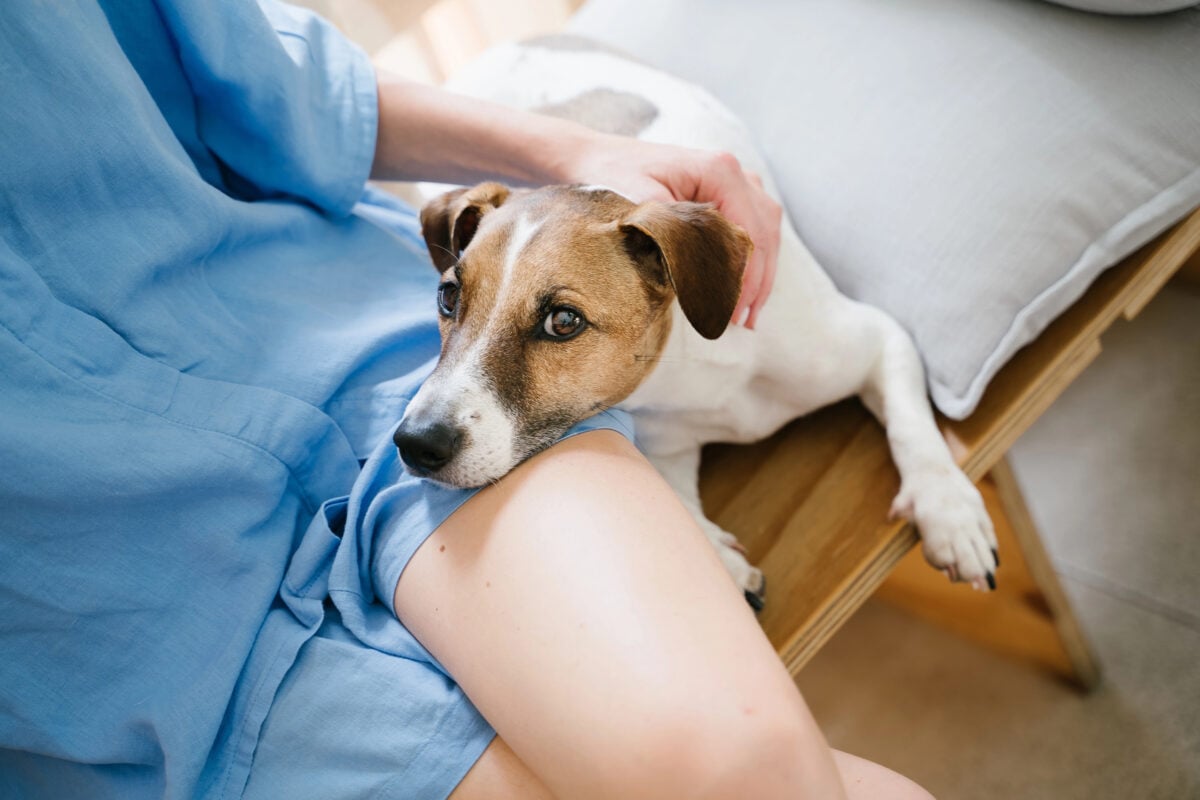
- People, often one specific person, lap, or shared space
What links all of these isn’t logic. It’s perceived access. When something feels valuable and potentially at risk, resource guarding steps in to keep that access from changing.
Did You Know?
Resource guarding is often selective. A dog may guard one item, in one location, with one person, and be perfectly relaxed everywhere else.
Why Proximity Alone Can Trigger A Reaction
For dogs who resource guard, how close you are matters more than what you plan to do. Someone moving closer changes the picture, even if no one intends to touch anything.
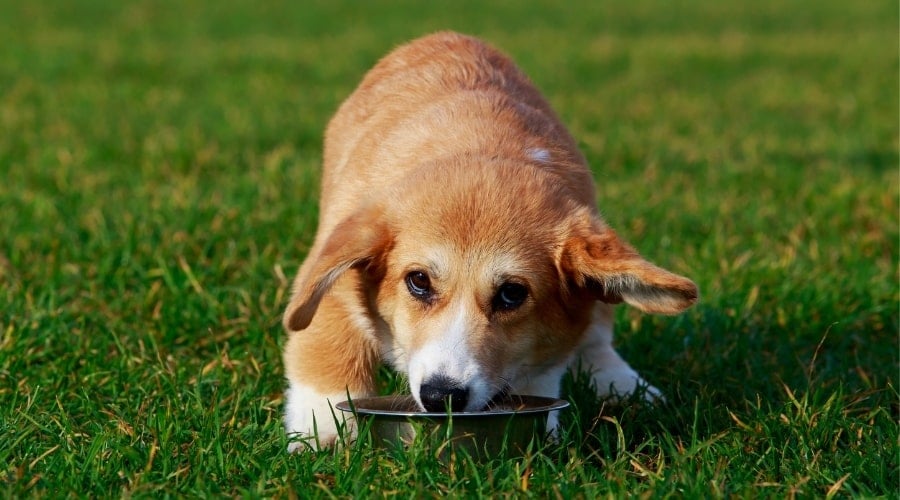
Your dog isn’t weighing motives in that moment. They’re noticing movement and recalling patterns. If closeness once ended with something disappearing, proximity itself becomes meaningful. The brain flags it early, before there’s time to sort out what’s actually happening.
That’s why the trigger can feel confusing. A person walking through the room. A child shifting position. Another pet passing by on the way to something else. None of it is aimed at the dog, but all of it changes the situation from their point of view.
When access feels uncertain, waiting to see how it plays out isn’t a great strategy. Responding early keeps things predictable — and from the dog’s perspective, predictable is safety.
Early Signs You’re Seeing Tension Build
Resource guarding rarely starts with a growl. Most dogs signal uneasiness earlier, often in ways that are easy to miss if you’re not looking for them.
You might notice:
- A sudden stillness when someone enters the room
- Hard eye tracking instead of relaxed glances
- Eating faster when people or pets move nearby
- Hovering over an item or space
- Subtle stiffening, especially around the shoulders or jaw
- Ears pinned slightly back
These signals show up when a dog is deciding whether proximity feels safe. The body tightens first, long before the situation turns obvious.
Because resource guarding can escalate to air snaps or bites, catching these signs early matters. Not to correct the dog, but to change the setup before tension escalates.
What Does Your Dog Guard?
Most dogs don’t guard everything. They guard one thing at one time, for reasons that make perfect sense to them.
- The Speed-Up Eater – Calm until someone walks by. Then it’s a race.
- The Silent Hoverer – No growl. Just extremely deliberate body placement.
- The Couch Claimer – Fine until someone sits too close.
- The Opportunist – That sock was worthless until you noticed it.
- The One-Person Rule – Only one person’s lap is acceptable, and it’s mine.
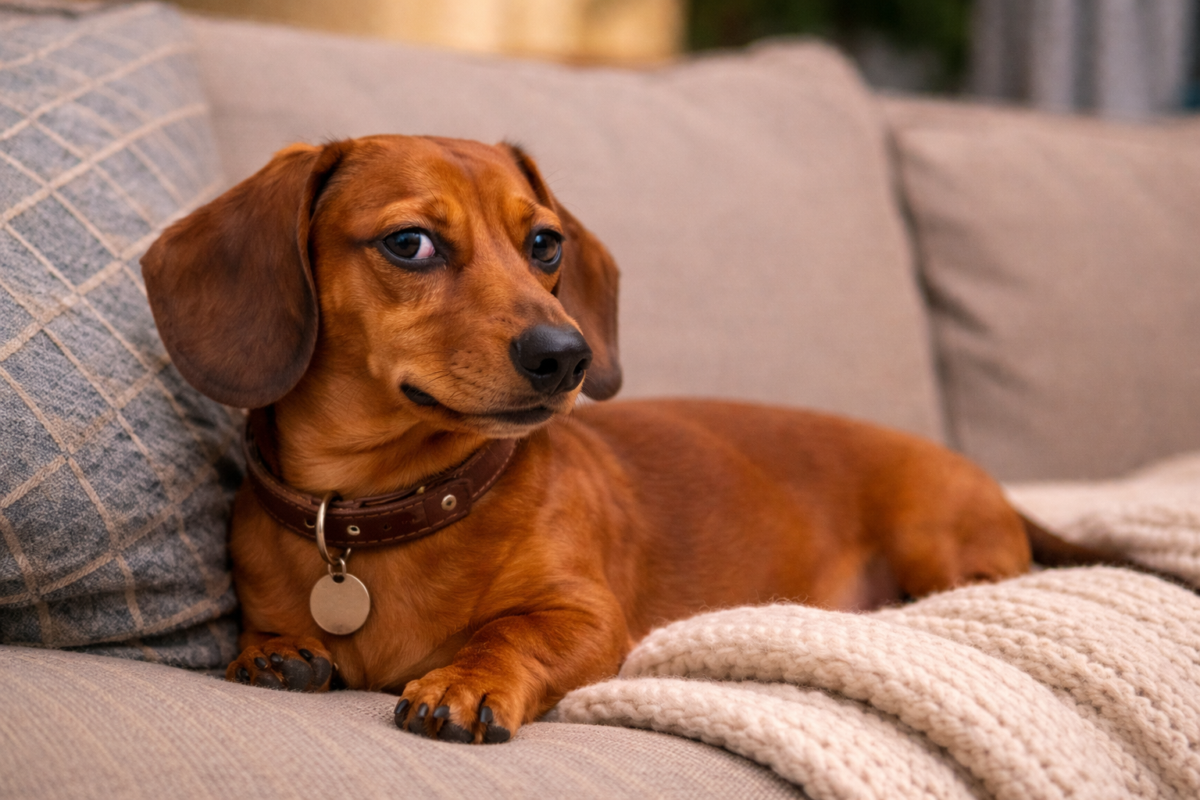
What Causes Resource Guarding In The First Place?
By this point, most owners start asking the same question: why this dog, and why now?
Even well-socialized dogs or those who’ve always had plenty of “assets” can guard. When it shows up, it’s usually shaped by a few overlapping influences rather than one single cause.
UC Davis Veterinary Medicine notes that aggression is often misunderstood as dominance, when it’s more commonly driven by fear, anxiety, or possession — the same ingredients that tend to fuel resource guarding.
The factors that tend to matter most include:
- How valuable the resource feels
Food often tops the list because it’s tied to survival, but many dogs guard chews, toys, resting spots, or even people just as intensely. - What the dog has learned about access
Guarding isn’t always about scarcity. It’s about what tends to happen when someone comes close. If access has felt unpredictable in the past, tension makes sense. - Stress in the background
A busy house, guests, new pets, routine changes, or noise can all shrink a dog’s tolerance around valued items. - Extra value created without realizing it
The sock you chase. The toy you hype up. The chew that’s always taken “for a second.” Attention adds weight, even when it’s accidental. - Individual sensitivity
Some dogs are simply more reactive around resources. That’s temperament, not a training failure. - Physical or mental depletion
Hunger, exhaustion, understimulation, or pain reduce flexibility and increase the likelihood of guarding.
Any dog can develop resource guarding, regardless of breed or background. What matters most is noticing the early warning signs — and how they’re handled once they appear.
Why Punishing Warning Signs Makes Guarding Worse
A growl, freeze, or sudden stiffness can feel like the problem.
But those signals are communication. Essentially, your dog is saying, I’m uncomfortable, and I’m trying to handle this without it escalating. When a warning works, space increases, and nothing else happens. From the dog’s perspective, that’s a successful outcome.
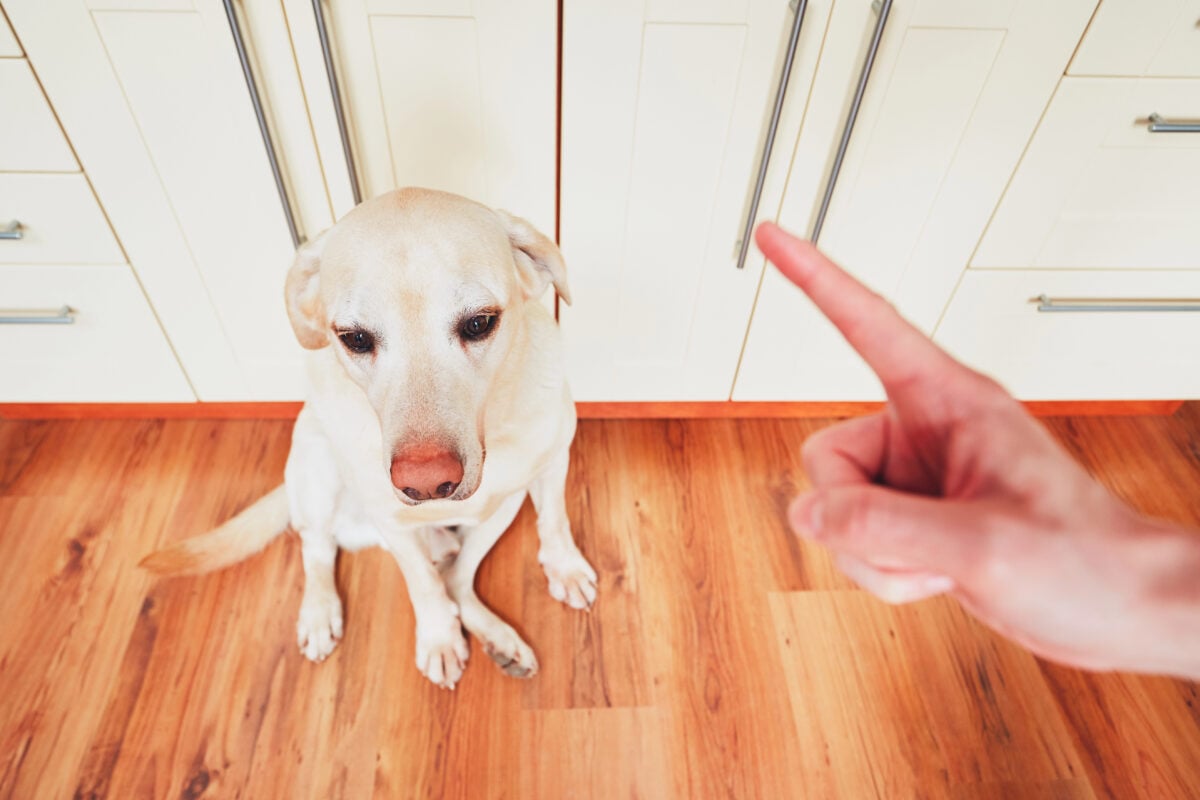
Punishing those signals changes the lesson. Instead of learning that communication keeps things predictable, the dog learns that discomfort shows up without warning. The approach still feels risky, but the early signals no longer feel safe to use.
This isn’t a fringe concern. Veterinary behaviorists with the American Humane Society and many similar organizations have long cautioned that punishment can create fallout and worsen fear-based behavior problems, particularly when warnings are suppressed instead of addressed.
That’s where risk grows. The behavior may look improved because the growl disappears, but the fear doesn’t.
Did You Know?
Animal behaviorists consider growling and freezing as distance-increasing signals — ways dogs try to keep situations from escalating without using force.
Before Training: Manage Your Pup’s Environment
Before you try to change how your dog feels about a resource, it helps to change what they’re being asked to handle. Management isn’t avoidance or a delay. It’s how you stop tense situations from rehearsing themselves while everything else catches up.
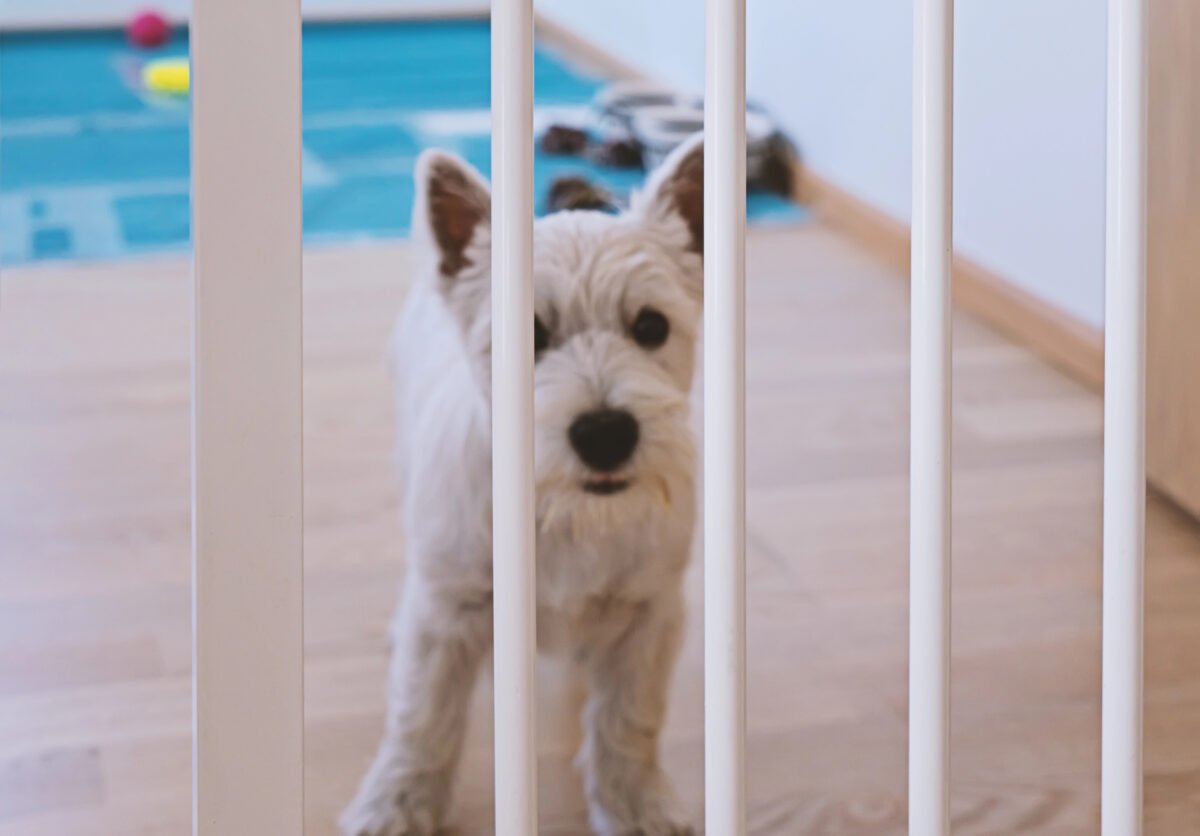
Good management lowers pressure. When fewer moments feel charged, both you and your dog have more room to think rather than react.
With people, that often means:
- Avoiding reaching into bowls, mouths, or resting spaces
- Giving physical space while eating or chewing
- Setting clear household rules about who interacts and when
- Using gates or barriers during high-value moments
Between dogs, it usually means being proactive about setup — feeding separately, picking up high-value items, and creating resting areas that don’t require negotiation. The goal is to remove unnecessary pressure.
Resource Guarding Training: How Change Actually Happens
Once things feel calmer day to day, training can finally start doing what it’s supposed to do. This part isn’t about proving your dog will give things up. It’s about helping them feel safe when access changes, even briefly.
If you’re wondering what progress looks like, it’s usually subtle. Fewer tense moments. Faster recovery when something does feel off. A dog who isn’t tracking every movement the second something valuable is involved. Those small shifts are usually the first sign you’re headed in the right direction.
When Guarding Is Directed At You Or Other People
When people are part of the guarding picture, predictability matters more than anything else. Dogs settle when they learn that a human’s approach reliably leads to good outcomes, and that letting go of something doesn’t mean it’s gone forever.
What tends to help most:
- Trading instead of taking, so your approach doesn’t feel like a threat
- Walking up, delivering something good, then leaving
- Teaching drop or leave without pressure or urgency
- Keeping interactions short enough that tension never has time to build
You’ll often notice the change in body language before anything else. Less stiffness. Easier movement. A dog who stays engaged instead of locking down a space.
How Desensitization & Counter-Conditioning Fit In
At the heart of this work is changing how your approach feels to your dog. Instead of bracing for loss, they start expecting that something good might happen when you move closer.
A few things consistently matter:
- Distance, so your dog stays comfortable
- Timing, so good things arrive before tension shows up
- Value, because the reward has to matter more than the worry
If your dog starts eating faster, stiffening, or freezing, that’s usually a sign you’ve pushed a little too close. Backing up isn’t failing. It’s part of keeping the process working.
Veterinary Partner, a trusted resource written by veterinary professionals, describes resource guarding as a common behavior issue and explains that changing the emotional response — not testing tolerance — is what leads to improvement.
A Simple Desensitization Routine You Can Actually Use
The goal with resource guarding is to change what movement nearby predicts in your dog’s mind. You want your approach to start meaning, “something good is coming,” not “here we go again.”
Step 1: Pick A Treat That Beats The Resource
Choose something your dog loves more than what they’re guarding. For most dogs, soft and smelly wins. Think tiny pieces of chicken, turkey, or hot dog. Keep portions small, so you’re not creating a new problem.
Step 2: Identify Your Dog’s “Too Close” Distance
This is the point where your dog starts to tense up. It might be:
- Eating faster
- Going still
- Hovering harder over the item
- Giving that fixed, watchful look
Some dogs don’t care until you’re a couple of feet away. Others start reacting when you’re simply in the room. You’re not judging it. You’re just noticing where the line is.
Quick example: If your dog speeds up a subtle warning sign when you’re three feet away, start at four feet.
Step 3: Set It Up Like Normal
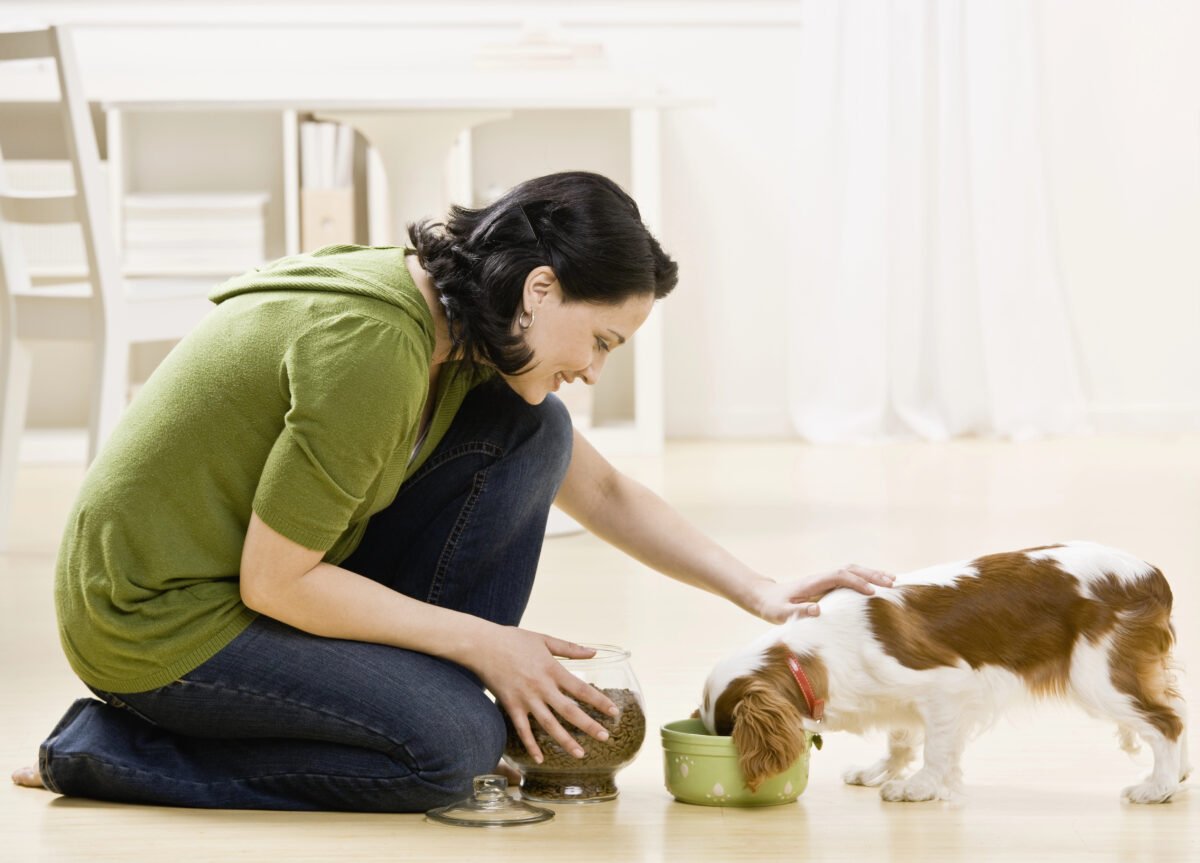
Give your dog the meal or chew they usually guard. Then walk away like you normally would. No hovering. No staring. Keep it boring.
Step 4: Approach, Stop Early, And Toss The Treat
Walk toward your dog, but stop outside that “too close” distance. Toss one treat. When they finish it, toss another. Do that a few times.
Then leave. Don’t linger. The pattern you’re building is: approach → good stuff appears → you leave.
Step 5: Repeat Across Multiple Sessions
Do this regularly when your dog has the resource. You’re not looking for a dramatic reaction. You’re looking for a dog who stays looser because they’re starting to expect the treat.
Step 6: Shrink The Distance Slowly
After a few successful sessions, take one extra step closer, toss the treat, then step back and leave. That’s it. One step is plenty.
If your dog gets tense, you went too fast. Back up to the last distance where they stayed relaxed and rebuild from there. The fastest way to progress is to keep the dog under threshold.
How Do You Know This Is Working?
Progress with resource guarding is subtle at first. You’re not looking for enthusiasm or compliance. You’re watching for ease.
Signs things are moving in the right direction:
- Your dog keeps eating (or playing) at a normal pace when you approach
- Body tension softens instead of increasing
- They glance up briefly, then return to what they’re doing
- The distance where guarding shows up slowly shrinks over time
If you’re seeing those changes, even inconsistently, the emotional response is shifting. That’s the part that matters most.
When Guarding Occurs Between Dogs
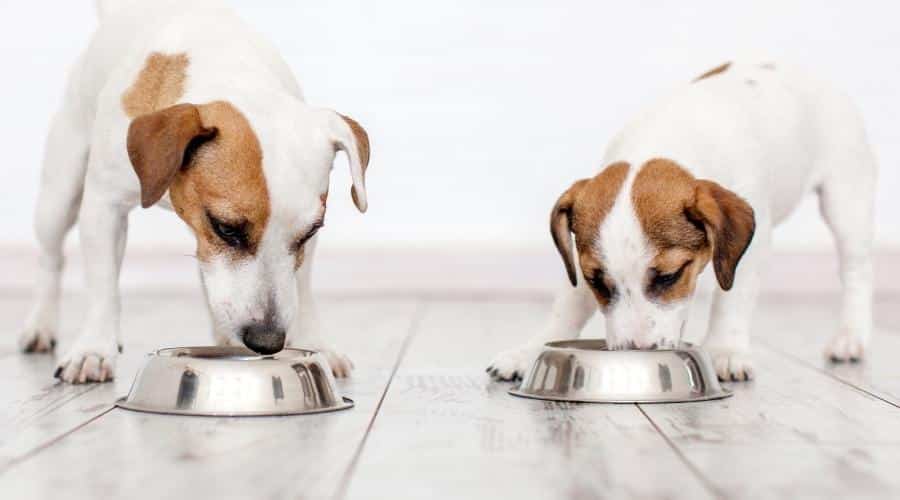
Between dogs, training looks a little different. This isn’t about teaching them to share. It’s about reducing competition and removing the feeling that they need to manage the situation themselves.
What usually helps:
- Preventing unsupervised access to high-value items
- Rewarding dogs for choosing distance
- Reinforcing calm disengagement
- Keeping routines predictable so access doesn’t feel random
When this works, things don’t look dramatic. They just feel calmer. The dogs stop treating those moments like they’re on their own.
What Not To Do During Training
Most training doesn’t fall apart during planned sessions. It unravels in the everyday moments that feel harmless because nothing went wrong last time.
Common slip-ups include:
- Reaching in “just to check”
- Taking something without a trade because you’re in a hurry
- Being consistent most of the time, but not all of it
- Letting new people or pets interact without setup
- Ignoring stiffness because there was no growl
Those moments teach your dog that predictability comes and goes. When that happens, old guarding habits tend to creep back in.
Helpful Training Skills For Dogs Who Resource Guard
These obedience skills don’t “fix” resource guarding on their own. What they do is give you safer options in everyday moments, so you’re not relying on reaching in, crowding your dog, or pushing through tension.
Think of them as pressure-reducers. They create space when things might otherwise get uncomfortable.
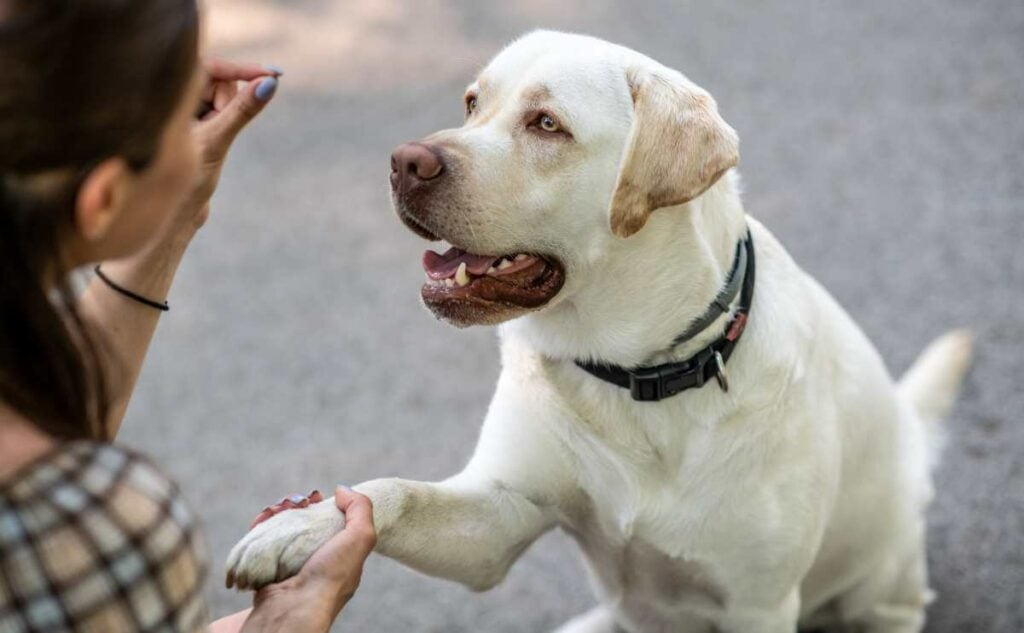
1. Drop It & Leave It
Both cues matter, especially for dogs who guard. Drop it asks your dog to let go of something they already have. Leave it asks them to disengage before possession even happens.
The key is how you practice them.
Start with low-value items. Toys are usually easier than food. When your dog drops something, immediately follow it with a reward that’s clearly better. The message you’re building is simple: letting go doesn’t mean losing out.
As your dog gets comfortable, you can work up to higher-value trades. If they drop a basic chew and get something better in return, you’re reinforcing the idea that cooperation pays off. That expectation carries over when guarding is part of the picture.
With leave it, the goal isn’t perfection. It’s teaching your dog that turning away from something can be just as rewarding as getting it. Equal or higher-value rewards make that lesson land faster.
2. Come When Called
A solid recall gives you an option that doesn’t involve approaching your dog when they’re guarding something. That alone can lower risk.
Instead of walking toward a chew toy or food bowl, you can call your dog away from it. That shift matters. It keeps distance in play and avoids turning the approach into a trigger.
Recall training works best when it’s first practiced away from guarding situations. Build it in calm, low-pressure moments. When it’s reliable, it becomes a valuable tool.
3. Go To Place
If your dog guards a specific spot, like the couch or your bed, a go-to-place cue can be a game-changer. It gives your dog a clear alternative that doesn’t involve physical guidance.
This works best when the designated spot is genuinely comfortable and predictable. You’re not sending your dog away as a punishment. You’re giving them a place where they won’t be disturbed.
Having this behavior on cue means you don’t need to crowd your dog or push them off a space. That keeps everyone safer and reduces the chances of guarding being rehearsed again.
When It’s Time To Get Professional Help
Some situations move beyond what careful management and basic training can safely handle. Knowing when to bring in help isn’t about giving up. It’s about recognizing risk.
Extra support matters most when:
- There have been bites or close calls
- Guarding escalates quickly or without warning
- Children or vulnerable pets are part of the household
- Management alone isn’t preventing tense moments
A good professional helps slow things down, spot details you might miss, and guide changes without increasing risk. That kind of support often prevents bigger problems later.
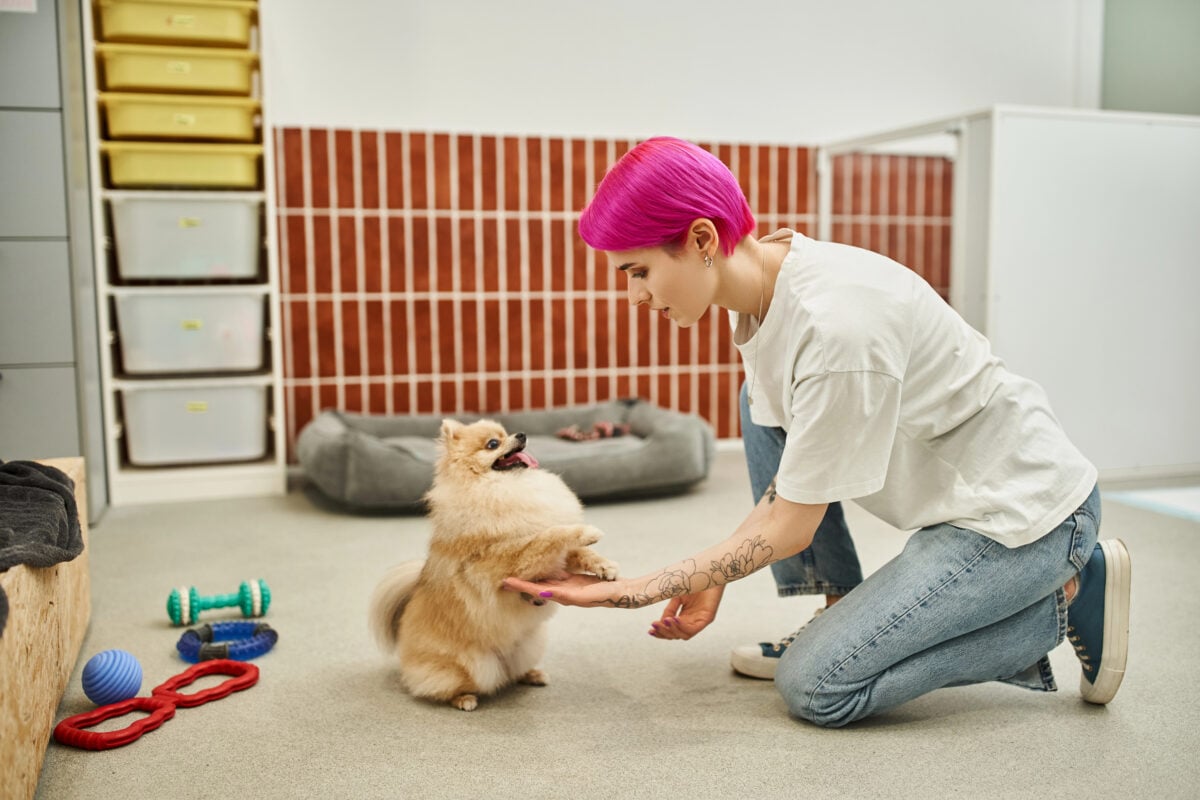
How To Find The Right Professional
Not all trainers are equipped to work with resource guarding, and the difference matters. Because guarding is driven by fear and uncertainty, methods that rely on punishment, intimidation, or “proofing” can make the behavior worse, even if they seem to quiet it temporarily.
When you’re looking for help, prioritize professionals who:
- Focus on behavior change, not compliance
- Use positive reinforcement and behavior modification
- Are comfortable working below threshold, not pushing through warnings
- Can explain why they’re doing something, not just what to do
If in-person help isn’t accessible or affordable, or you want to learn at your own pace, online training can be an excellent option. We’ve reviewed and compared popular programs in our guide to the best online dog training courses, including what to look for, what to avoid, and which approaches are appropriate for behavior issues like resource guarding.
Frequently Asked Questions
Pup owners have a lot of questions about resource guarding, and here are some of the most common we see. If you have other questions, don’t hesitate to ask us in the comments.
Is Resource Guarding A Sign Of Aggression?
Not always. Resource guarding is about protecting access, not seeking conflict. Aggression is the tool a dog may use if earlier signals don’t work, but the motivation is usually defensive rather than hostile.
Can A Dog Guard From One Person But Not Others?
Yes. Dogs track patterns closely. Guarding often shows up with specific people, movements, or routines that feel less predictable to the dog.
Does Resource Guarding Mean My Dog Doesn’t Trust Me?
Not necessarily. Guarding often reflects uncertainty around outcomes, not the quality of the relationship as a whole. Many dogs who guard are otherwise deeply bonded to their owners.
Will Training Ever Make My Dog Stop Guarding Completely?
It depends on the dog. For some dogs, the behavior fades into the background. For others, it becomes manageable and predictable rather than entirely gone. Progress is measured by safety and emotional ease, not perfection.
Should I Remove All High-Value Items To Prevent Guarding?
Short-term management can help, but long-term avoidance doesn’t change how a dog feels. The goal is structured access, not permanent restriction.
When Resource Guarding Isn’t The Only Thing Going On
Resource guarding rarely exists in isolation. It often shows up alongside stress, communication gaps, or situations where dogs are asked to cope without enough clarity or space.
If you’re seeing guarding behaviors, these guides can help you zoom out and spot patterns that aren’t always obvious in the moment.
- Do Dogs Get Jealous? — Especially relevant when guarding seems tied to people, attention, or shared space.
- How Dogs Communicate With Each Other — Great context for spotting early signals before tension escalates.
- Why Does My Dog Ignore Me? — Explores how stress, distraction, and emotional states affect responsiveness.
- Does Your Dog Act Like They’re In Charge? — A helpful reframing of dominance myths that often come up when guarding is involved.
Which situations tend to trigger guarding in your home, and when do you notice your dog relaxing again on their own? Share what you’re seeing in the comments. Your experience may help another dog owner connect the dots sooner.