When you purchase through links on our site, we may earn a commission. Here’s how it works.
We don’t buy toys to learn anything about our dogs. We buy them to keep our dogs occupied for five minutes (if we’re lucky).
Table of Contents
Your pup, however, has other plans. They evaluate all the options, make a fine-tuned selection, and commit to one. Eventually, your dog promotes this particular toy to a different category entirely. And the rest tend to exist as background clutter.
If you’ve ever wondered why your dog fixates on one toy, there’s a reason. Consider this guide an unofficial personality assessment of your furry friend, conducted entirely in your living room.
Why Do Dogs Have Favorite Toys?
Dogs don’t end up with favorite toys by accident. In a human household, dogs have limited outlets for instinct, control, and novelty, and toys step in to fill that gap. They move, resist, squeak, and respond — and in a world full of rules, toys reliably say “yes” and never ask why.
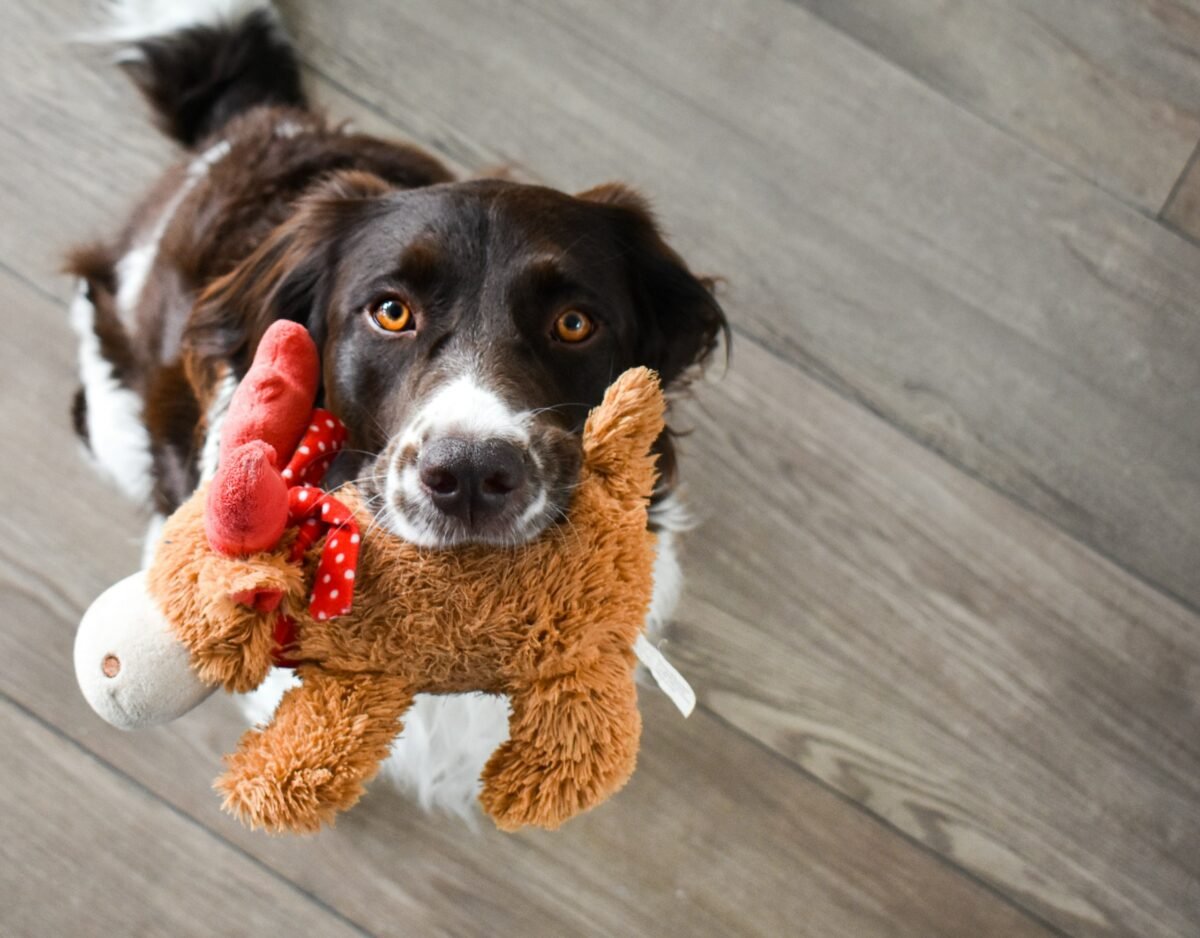
When a toy consistently delivers that level of satisfaction, dogs take note. It becomes the object that works every time, even when other toys are nearby, newer, or more expensive. Over time, preference is about reliability.
Most favorite toys earn their status for a few overlapping reasons:
1. Instinct Comes First
Squeaky, crinkly, shakeable toys mimic prey. Dogs get to chase, grab, and “win” without leaving the house. It’s efficient, and no cleanup is required.
2. Scent Makes It Personal
A well-used toy quickly smells like your dog, their people, or both. At that point, it’s no longer just a toy. It’s a familiar object with credentials, which makes it calming and reliable during rest or transitions.
3. Texture & Sound Narrow Down The Field Fast
Some dogs want soft and pliable. Others want hard resistance. Many want a very specific noise that confirms something exciting is happening. These aren’t preferences in the casual sense. They’re requirements. If a toy meets them, it stays in rotation. If it doesn’t, it gets demoted.
4. Mental Stimulation Keeps It In Rotation
A favorite toy is one your pup appreciates on a mental and physical level. It burns energy, reduces boredom, and gives them something productive to focus on when they’re deciding what to do with themselves (instead of dismantling your couch).
5. Novelty Is A Brief Audition
Of course, dogs thoroughly investigate new toys because, why not? But once the novelty fades, many dogs return to what already works best. Familiarity usually wins.
Science supports this level of selectiveness. A 2022 study found that dogs use multiple senses, including smell and vision, to recognize preferred toys. That’s why your dog can locate that toy even when it’s buried, mixed in with others, or slightly out of place.
Over time, the golden toy checks all the right boxes, fits a dog’s emotional wiring, and becomes the one they carry from room to room, reposition before lying down, or monitor quietly while pretending to nap.
That preference often mirrors personality. Some dogs use toys to burn energy. Others use them for comfort, focus, or regulation. The prized toy matches the dog.
What Research Says About Dogs And Toy Fixation
This research is telling, but not altogether surprising for those of us who have toy-obsessed pups.
A 2025 Scientific Reports study examined over 100 pet dogs whose owners described them as highly toy-motivated and tested whether they showed addiction-like patterns about their toys.
Researchers used a combination of owner questionnaires and a behavior test battery designed to measure four criteria often used in behavioral addiction research: craving, salience (how much the toy dominates attention), mood modification, and loss of self-control.
About one-third of the dogs showed notably stronger “toy-first, everything-else-second” behavior, such as persistently trying to access the toy when it wasn’t available, struggling to disengage, and prioritizing the toy even when other activities were offered.
This doesn’t mean your dog is “addicted” in a clinical sense, but it does support what many owners already know: some dogs don’t just love toys — they treat them like a core life priority.
Here’s A Highly Scientific Breakdown Of Favorite Toy Personalities
Based on Long-Term Observation and Questionable Methodology
Most dogs settle into a primary toy preference, even if they occasionally dabble in others. The key isn’t how many toys they own, but which one consistently survives, travels, or reappears when no one asked for it.
That choice tends to align with a dog’s temperament, coping style, and how they handle excitement, boredom, or control.
1. The Tennis Ball Dog
There Is Only One Ball, and It Is This One
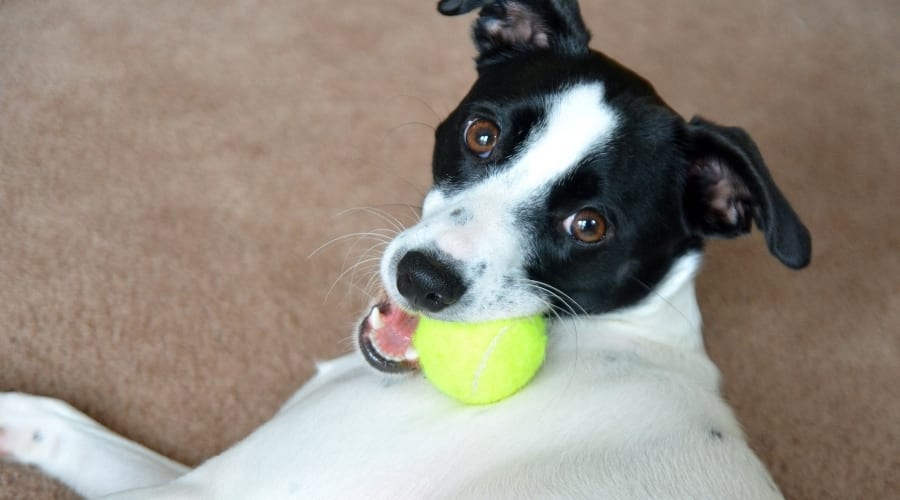
If your dog has a tennis ball fixation, you already know this isn’t casual enjoyment. Your pup is a single-issue voter with a clear platform.
Tennis Ball Dogs are drawn to movement, predictability, and repetition. The ball behaves the same way every time. It bounces, it rolls, it returns. There are no surprises, only outcomes. For dogs who like clear cause-and-effect, this object is highly efficient.
These dogs tend to be confidently focused and, at times, enthusiastically misaligned when stimulation escalates. Once the ball is in play, everything else drops in priority. Commands are heard but tabled. Other toys are ignored. The ball has been promoted.
You’ll often notice a few consistent behaviors:
- Delivering the ball repeatedly, regardless of whether you’re prepared to throw it
- Increased eye contact, along with expectations
- Monitoring the ball closely, even when it’s not in motion
It’s about control over a reliable system. The Tennis Ball Dog knows how this works and would like to keep it that way. Variety is unnecessary, and substitutes are unacceptable.
2. The Squeaky Toy Dog
Requires Immediate Auditory Confirmation
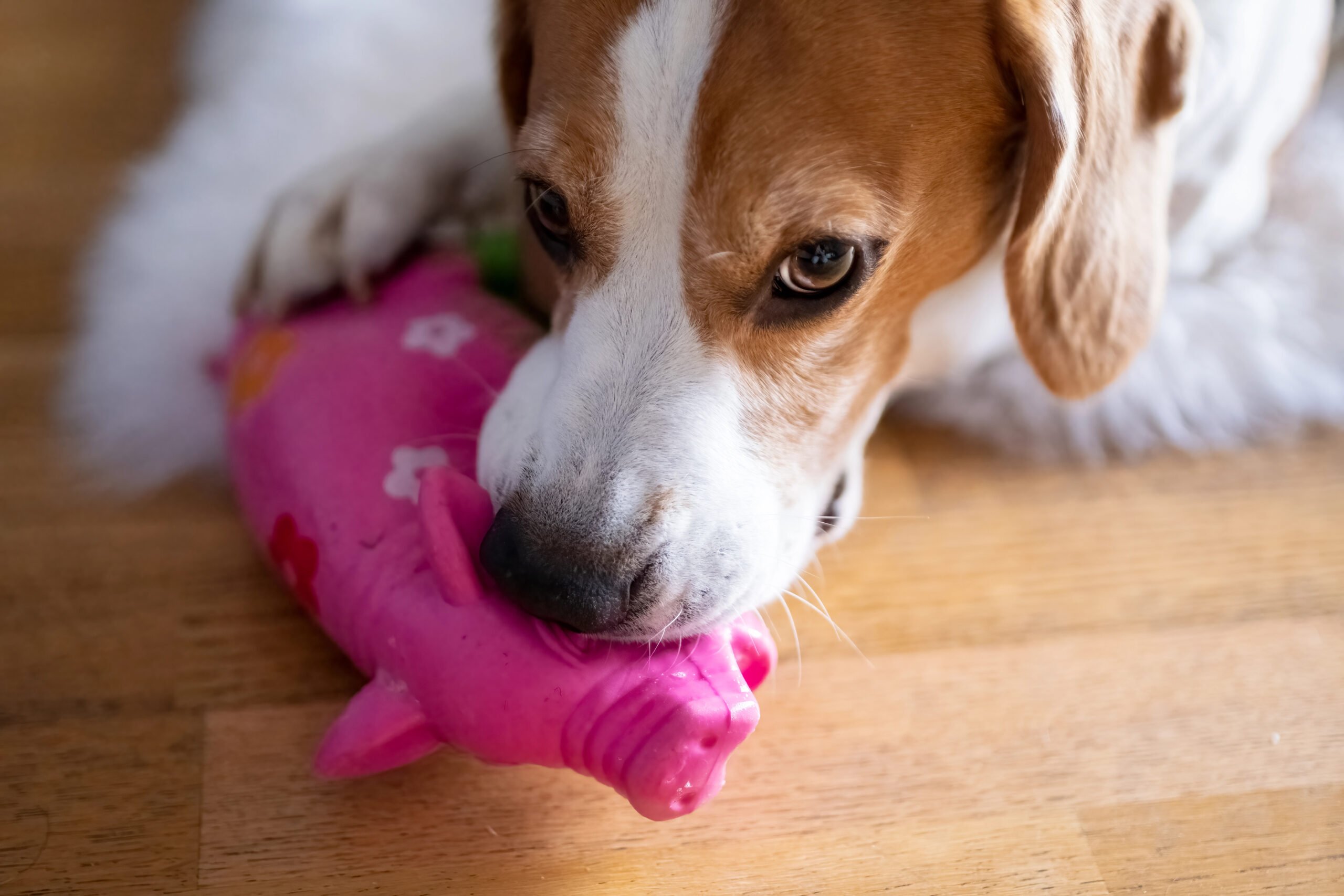
If your dog prefers toys that make noise, silence is not part of the plan.
Squeaky Toy Dogs are motivated by feedback. They want a response to their effort, and they want it now. When pressure is applied, something happens. The toy reacts. The squeak isn’t just fun. It’s proof that the system is working. No sound usually means something has gone wrong.
These dogs tend to be alert, highly engaged, and occasionally poorly regulated when excitement builds faster than self-control.
You’ll often see a familiar pattern:
- Testing the toy immediately for functionality
- Squeaking long past the point of novelty
- Visible disappointment when the squeaker fails
Once the sound is gone, interest often drops. The object has failed to perform its primary function. And your dog does an extensive internal review of the situation.
3. The Plush Toy Baby
Gentle Mouth. Serious Attachment.
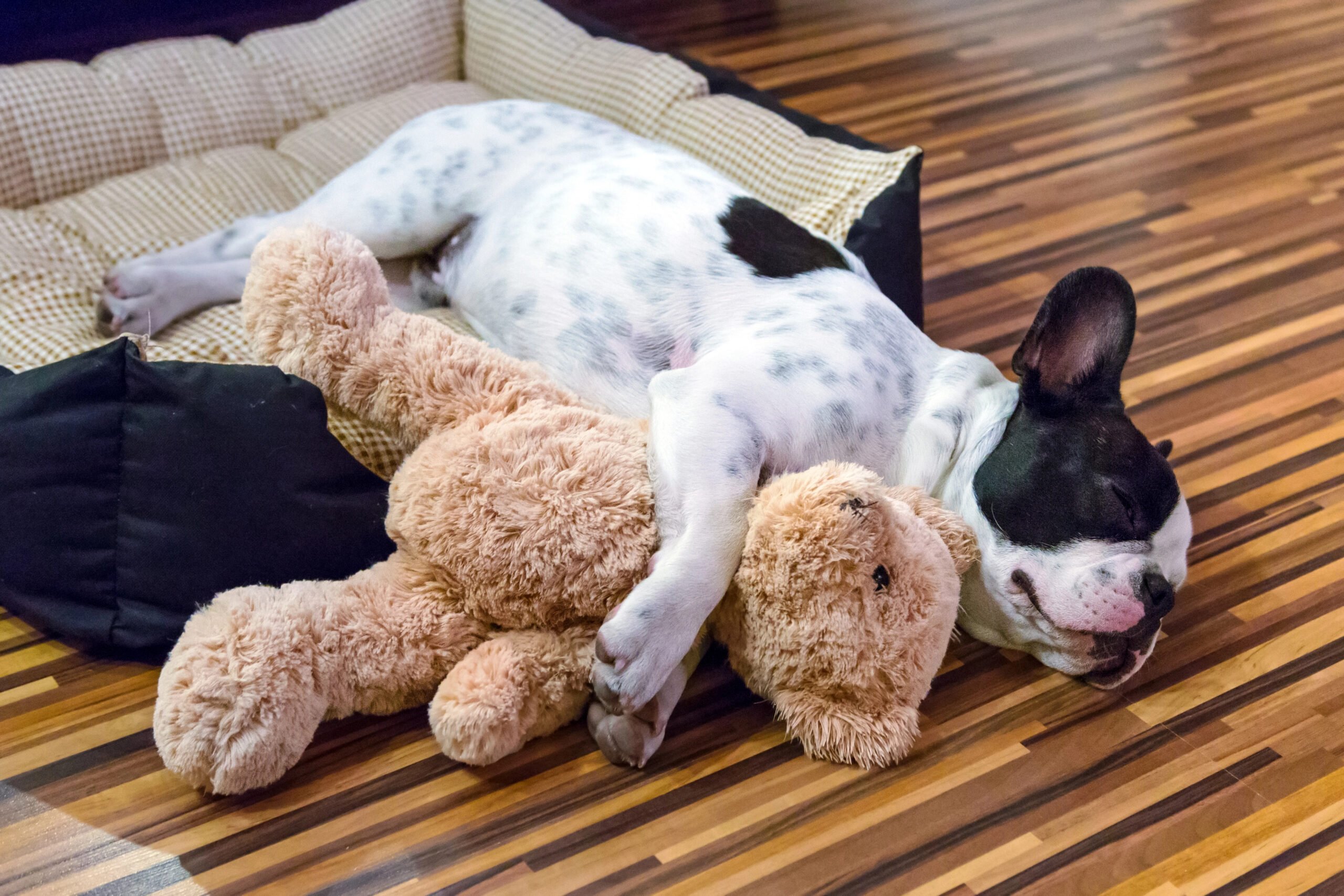
If your dog prefers plush toys and somehow keeps them intact, you’re living with a dog who is emotionally invested.
Plush Toy Babies don’t treat toys as challenges or systems to be solved. They treat them as companions. The toy is carried carefully, positioned thoughtfully, and often brought along for rest periods without much fanfare.
These dogs tend to interact deliberately with objects. There’s restraint in how they hold the toy and patience in how long they keep it close. Chewing, if it happens at all, is slow and selective. The goal is preservation, not discovery.
Common signs include:
- Carrying the toy to sleeping areas or quiet rooms
- Holding it gently without applying pressure
- Visible disappointment if it’s moved or removed
This attachment often shows up in dogs who value predictability and routine. The plush toy becomes a familiar constant in a day full of changes they didn’t approve of.
4. The Rope Toy Traditionalist
Prefers Structure, Rules, and Mutual Agreement

If your dog gravitates toward rope toys, play is rarely a solo activity.
Rope Toy Traditionalists enjoy interaction with clear parameters. Tug has a beginning, a middle, and an end, and everyone involved is expected to understand the rules. This dog isn’t looking for chaos or improvisation. They want engagement that feels fair and predictable.
These dogs often show good impulse control during play, at least relative to the situation. They wait for cues, adjust pressure, and release when the interaction concludes. The rope isn’t just an object; it’s a shared tool that makes cooperation possible.
You’ll usually notice a few consistent traits:
- Bringing the toy directly to a person rather than using it alone
- Pausing play if participation stops
- Disengaging without protest when the session ends
This dog wants the game to function properly. The rope provides resistance, feedback, and a clear role for everyone involved.
5. The Destroyer
Committed to Discovery. Unmoved by Consequences.
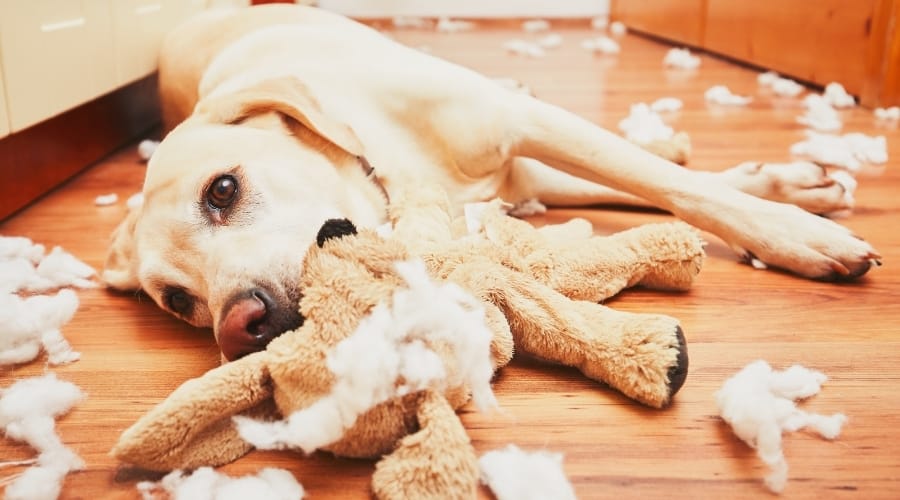
If your dog reliably disassembles toys, you’re not dealing with aggression or poor taste. You’re living with a dog who is committed to discovery.
Destroyers aren’t interested in how a toy looks or how long it lasts. They want to know what’s inside, how it’s put together, and whether it can be defeated. Texture matters. Resistance matters. Integrity is optional.
These dogs tend to approach toys with focus and patience. There’s often very little chaos involved. The work is methodical. Seams are identified. Weak points are exploited. Stuffing is removed and set aside like evidence.
Common behaviors include:
- Ignoring toys that don’t offer resistance
- Targeting seams, tags, or structural flaws first
- Losing interest once the interior has been exposed
Many Destroyers are otherwise calm dogs who use toys as an outlet for problem-solving, stress relief, or boredom management. Once the object has given up its secrets, it no longer serves a purpose.
6. The Puzzle Toy Overachiever
Would Like to Speak to the Manager of Boredom
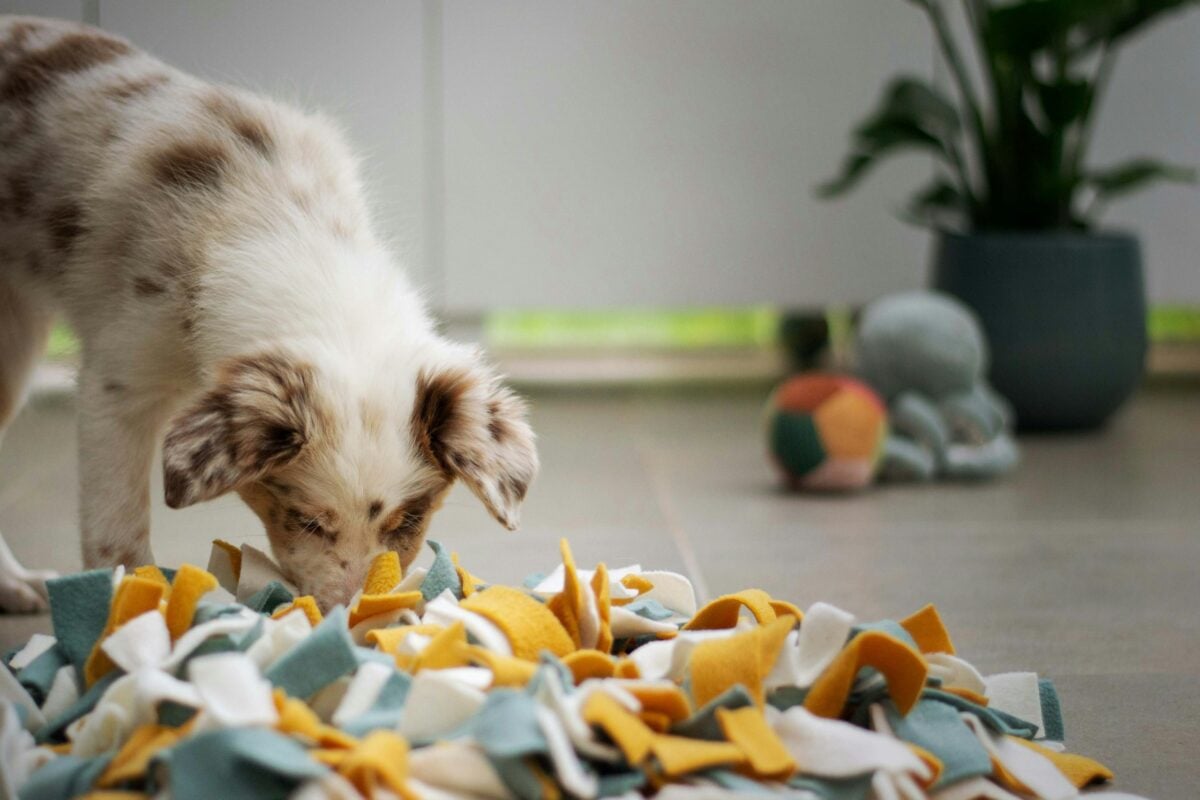
If your dog prefers puzzle toys, they are not interested in chaos. They are interested in outcomes.
Puzzle Toy Overachievers enjoy effort that leads somewhere. They want a system that rewards persistence and attention. The slower the payoff, the more satisfying the result.
These dogs tend to be observant and patient, especially once they understand how a toy works. They pause, reassess, and adjust their approach rather than escalating. Trial and error is part of the process, but repetition is purposeful.
You’ll often see a familiar pattern:
- Initial inspection, followed by quiet concentration
- Minor adjustments rather than dramatic movements
- Clear satisfaction once the reward is accessed
This type of dog often disengages once the puzzle is solved. There’s no need to repeat the task endlessly. The challenge has been met and the objective achieved.
7. The One-Toy Loyalist
Brand Loyalty Runs Deep
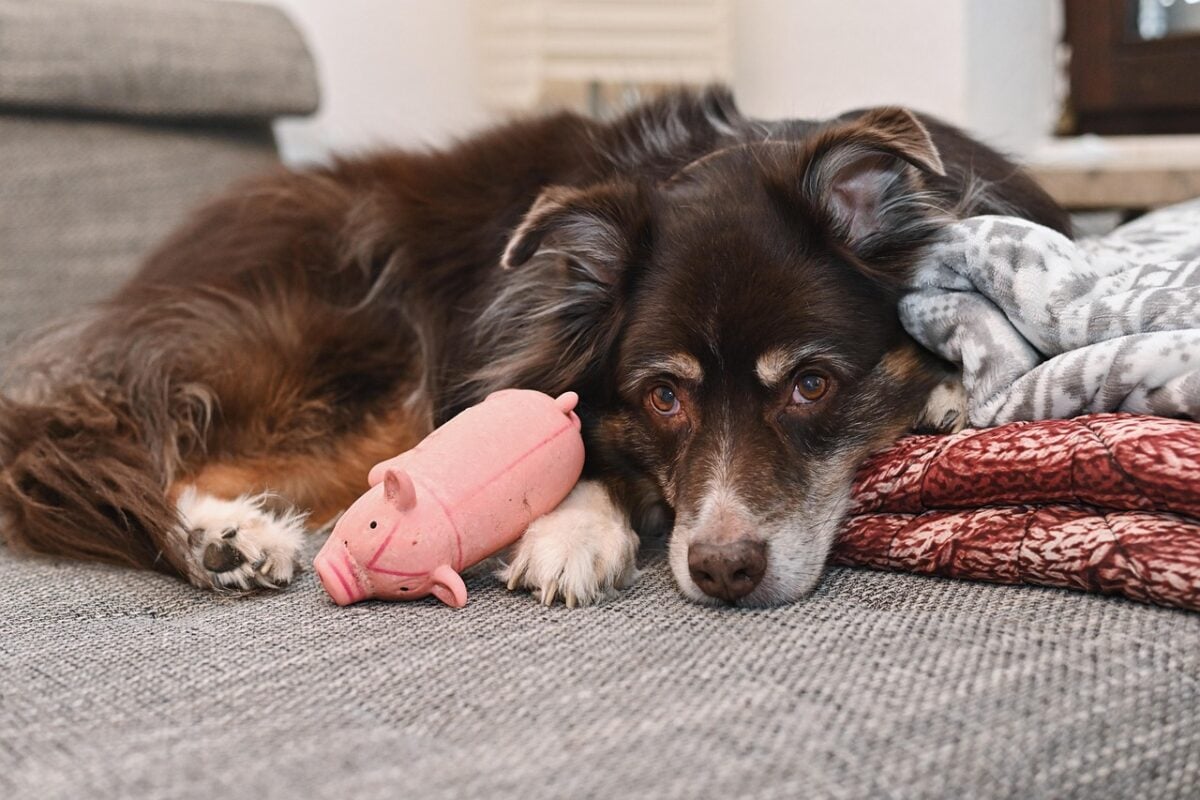
If your dog has chosen one toy and ignored ALL others since, you’re living with a dog who does not browse.
One-Toy Loyalists make a selection and stick with it. The chosen object is carried, stored, and retrieved with consistency. New toys may be acknowledged briefly — if only to confirm they are not correct — before attention returns to the approved item.
This isn’t stubbornness. It’s commitment. The toy meets the dog’s requirements, and no further research is needed.
You’ll often notice a few patterns:
- The same toy appears in every room the dog occupies
- Other toys remain untouched, even when offered directly
- Visible disappointment if the preferred item is removed
The decision was made. The loyalty is genuine. And the rest of the toy basket is decorative.
8. The “I Don’t Like Toys” Dog
But Has Strong Opinions About Socks
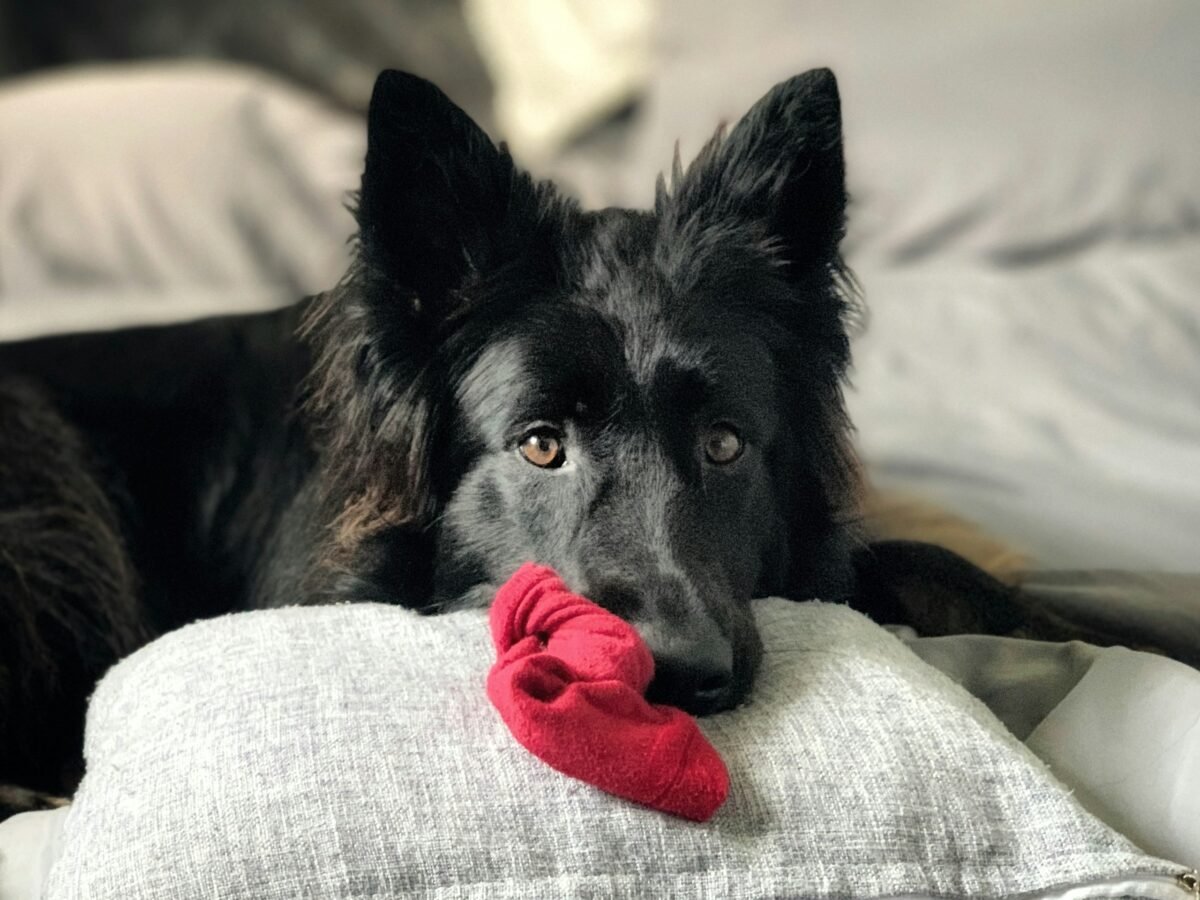
If your dog ignores toys entirely, this isn’t a lack of interest. It’s a preference.
These dogs look at the toy basket with indifference and move on with their day. Balls, ropes, puzzles are all declined. And yet, the same dog will show intense interest in objects that were never offered: socks, shoes, dish towels. Items that carry scent, history, and mild disapproval from owners.
This type of dog tends to value familiarity over novelty. Manufactured toys feel unnecessary or unconvincing. Personal items, on the other hand, are rich with information. They smell like people, belong somewhere else, and are portable.
Common patterns include:
- Ignoring toys, even when encouraged
- Carrying off household items with quiet confidence
- Mild resentment when those items are reclaimed
The toy basket failed to meet expectations. The sock, however, remains under consideration.
Why Do Dogs Carry Toys Around?
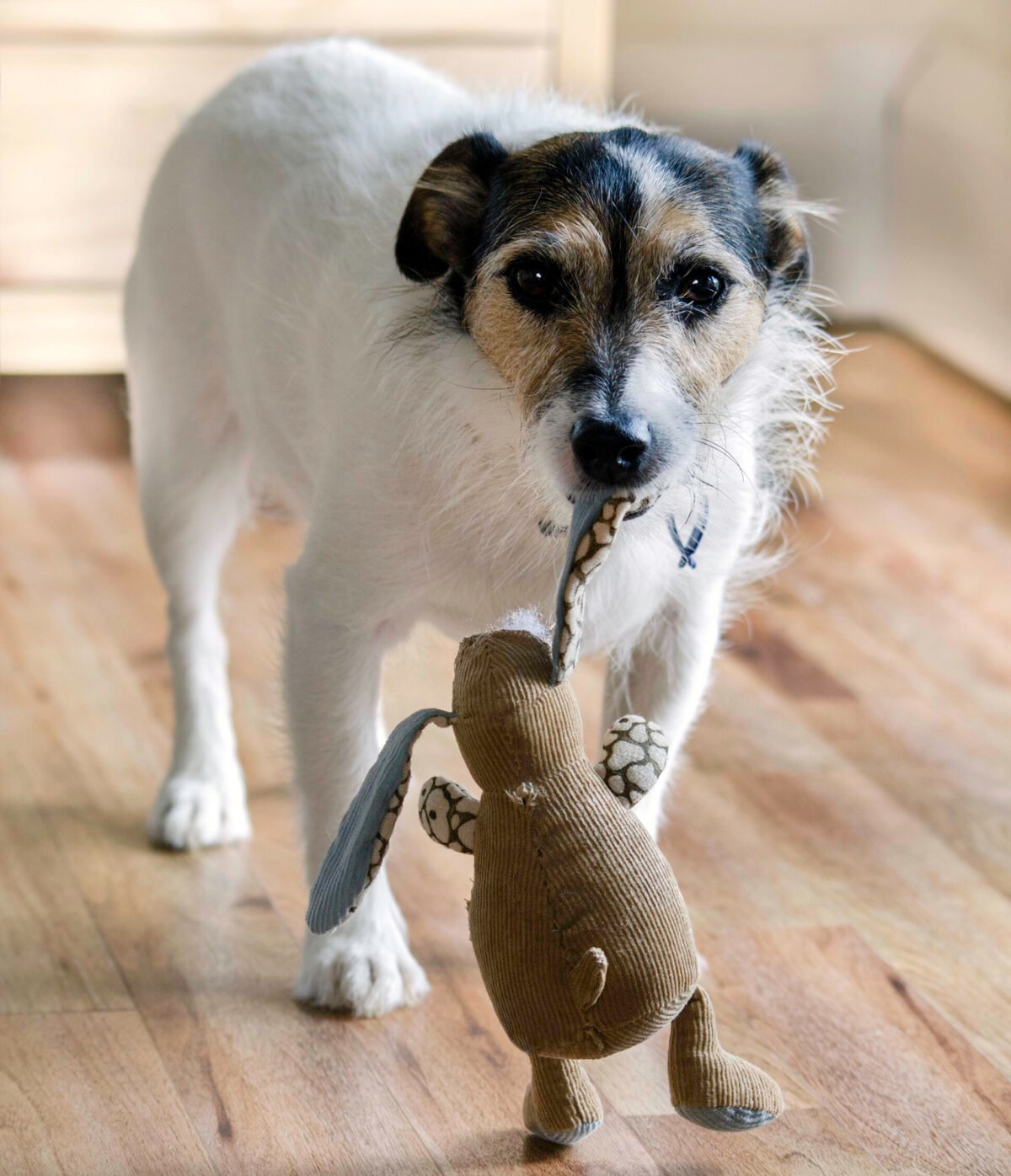
Some dogs take the favorite-toy situation a step further. When a dog carries a toy from room to room, it’s rarely about play. There’s no squeaking or thrashing, just deliberate transport.
At its simplest, the toy is something your dog wants close. More often, it functions as a stabilizing object during downtime or transitions. Dogs don’t have pockets, so this is the workaround.
Most carrying behavior falls into three overlapping categories:
- Control: keeping track of something that matters
- Comfort: reassurance during rest or change
- Communication: quietly signaling that this item is important
In all cases, the toy is being used rather than enjoyed. You’ll often see this during mild stress or anticipation, such as when guests arrive, routines shift, or even when nothing happens at all. The dog picks up the toy, keeps it nearby, and settles.
Two Common Reasons Dogs Carry Toys
They want it acknowledged.
If your dog walks into the room holding a toy and then just stands there, you’ve seen this version. The toy isn’t for play, and it’s not an invitation. It’s meant to be present and accounted for.
The toy is familiar, predictable, and under supervision, especially when people are watching.
They need something to focus on.
Other dogs grab a toy when excitement or uncertainty spikes. In these moments, the toy isn’t about ownership. It’s about regulation.
The toy appears, the intensity drops, and the dog settles without help. The toy did its job.
When Your Pup Rotates Favorite Toys
Some pups move between toys based on mood, energy level, or what they’re trying to do in that moment. When one toy stops working, they switch without ceremony.
You’ll usually notice:
- Different toys show up at different times of day
- Interest shifts with activity level or context
- Old toys resurface later, without urgency
If you live with this dog, you’ve probably noticed how little drama surrounds their choices. Nothing feels urgent. The attachment is light.
That adaptability is often a strength. These dogs adjust well to change and novelty, and they’re far less likely to fixate.
Tomorrow’s favorite is still under review.
When A Favorite Toy Stops Being Cute & Starts Being A Situation
Most strong toy preferences are harmless.
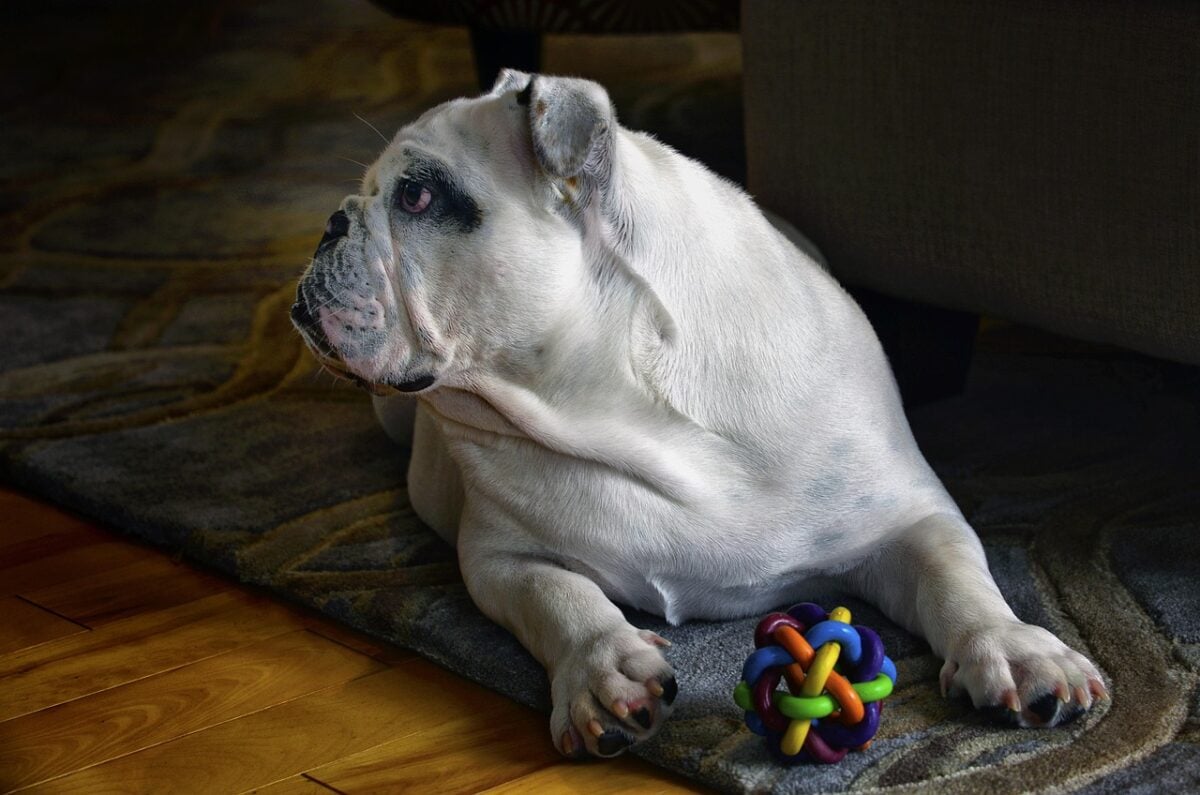
That said, there’s a point at which a favorite toy stops functioning as enrichment and becomes a requirement. When that happens, behavior tightens and flexibility drops. The dog’s focus narrows in ways that feel different from simple enthusiasm.
You’ll usually notice it in tone, not drama:
- Increased tension when the toy is nearby
- Difficulty disengaging, even when nothing is happening
- Visible frustration if access is delayed
In most cases, this doesn’t mean the dog is “possessive” in the scary sense. More often, it means the toy has taken on too much responsibility. It’s doing emotional or regulatory work that hasn’t been balanced elsewhere.
This is usually the point where minor adjustments help, such as rotating toys more deliberately and ensuring your dog has other outlets for energy, control, or comfort.
When A Toy Stops Being Just A Toy
According to the Merck Veterinary Manual, toys can sometimes function as high-value resources, meaning a favorite toy may trigger tension or guarding behavior in certain dogs.
In some cases, that tension can turn into possessive aggression directed toward another pet or person who approaches or attempts to take the toy. (See our guide on resource guarding to learn more.)
Is This A Breed Thing, Or Did You Just Get This Model Of Dog?
The unsatisfying answer is usually both.
Breed tendencies can influence toy preferences. Hunting breeds, like Retrievers, often favor objects that move and return. Herding breeds tend to lean toward toys that allow for control and repetition. Terriers tend to enjoy toys that can be challenged or dismantled.
What’s more interesting is how quickly an individual’s personality takes over.
Two dogs from the same litter can show completely different toy preferences. One becomes emotionally invested in a plush toy. The other commits to systematic destruction. Same genetics. Different priorities.
Toy preference is shaped by a mix of:
- Instinct and breed tendency
- Early experiences with play
- How a dog handles excitement, boredom, and uncertainty
If you live with multiple dogs, you’ve seen this firsthand. Same house. Same toy basket. Completely different opinions.
How To Choose Better Toys Based On What Your Dog Has Already Decided
By the time a dog shows a clear toy preference, the decision has already been made. Your job isn’t to change their mind; it’s to respond to it.
Look at what the favorite toy actually does. Does it move? Offer resistance? Provide comfort? Does it work best alone or during interaction?
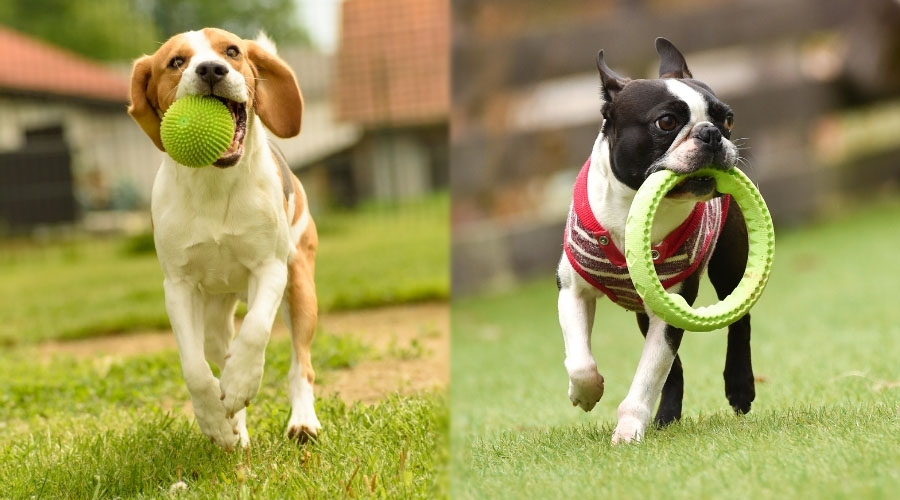
If you’re choosing new toys, replicate the function, not the exact object. A Tennis Ball Dog needs durability and consistency. A Plush Toy Baby benefits from soft, familiar textures. A Destroyer needs tougher toys that can survive investigation.
When It’s Time To Retire A Beloved Toy
Some toys eventually need to be retired, especially when wear and tear create safety risks.
Fraying seams, exposed stuffing, loose squeakers, or sharp edges are clear signs a toy has reached the end of its usable life. Even well-loved toys can become choking hazards or cause mouth or digestive injuries as they start to break down.
If the toy is a favorite, removal doesn’t have to be sudden (unless it’s already become unsafe). Gradual transitions often work best —introducing similar toys with comparable size or texture, limiting access rather than removing it outright, or redirecting your dog’s attention during high-use moments.
This is one of those routine judgment calls dog owners make to balance attachment with safety. The goal isn’t to take something away unnecessarily, but to prevent avoidable injuries before they happen.
A Quick Toy Personality Cheat Sheet
If you just want the highlights, here’s the condensed version:
- Tennis Ball Dog: Focused, repetitive, thrives on predictability
- Squeaky Toy Dog: Feedback-driven, alert, emotionally responsive
- Plush Toy Baby: Comfort-seeking, deliberate, attachment-oriented
- Rope Toy Traditionalist: Social, rule-aware, interaction-focused
- The Destroyer: Curious, methodical, committed to discovery
- Puzzle Toy Overachiever: Patient, observant, mentally motivated
- One-Toy Loyalist: Routine-driven, selective, deeply committed
- “I Don’t Like Toys” Dog: Selective, scent-oriented, quietly opinionated
Frequently Asked Questions
We’ve rounded up the most common questions dog owners ask about favorite toys, carrying behavior, and attachment. If you’re wondering about something we didn’t cover, drop it in the comments. Chances are someone else is thinking the same thing.
Why Do Dogs Love Toys So Much?
Dogs love toys because they provide reliable outlets for instinct, stimulation, and comfort in a human-controlled environment. Toys move, respond, or offer familiarity in ways that help dogs manage energy, boredom, and mild stress without needing constant interaction, which is why dogs tend to form strong preferences for the toys that consistently “work” for them.
Do Dogs Have Favorite Toys?
Yes. Most dogs form clear preferences based on how a toy feels, sounds, moves, or fits into their routines. When a toy consistently meets a dog’s needs—comfort, stimulation, control—it tends to earn favored status and stay there.
Why Do Dogs Carry Around Toys Instead Of Playing With Them?
Carrying is often about comfort, control, or communication rather than play. For some dogs, having the object nearby helps them manage excitement, transitions, or uncertainty without escalating behavior.
Is It Bad If My Dog Gets Too Attached To A Toy?
Not usually. Strong attachment becomes a concern only if flexibility disappears—such as visible stress when the toy isn’t available or difficulty disengaging. In most cases, small adjustments solve the issue without removing the toy entirely.
Do Puppies Have Favorite Toys, Or Does That Come Later?
Puppies experiment first and specialize later. Early “favorites” tend to change quickly. Clear, lasting preferences usually form as dogs mature and their needs become more predictable.
Why Does My Dog Destroy Toys But Treat One Very Carefully?
Different toys serve different purposes. Destruction often satisfies curiosity or stress relief, while careful handling signals emotional investment. Both behaviors can coexist in the same dog without conflict.
Should I Replace My Dog’s Favorite Toy If It Wears Out?
Yes, when safety becomes an issue. Gradual replacement with similar textures and shapes works better than sudden removal, especially for dogs who are emotionally invested in a single object.
Can Toy Preference Change Over Time?
Absolutely. Age, health, energy level, and routine all influence what a dog wants from a toy. What worked at one stage may quietly lose relevance later.
There’s More Your Dog Is Telling You
Your dog’s favorite toy reveals how they think, cope, and move through the day, but it’s only part of the story. The way your dog sleeps can be just as revealing. Sleeping positions offer clues about comfort, confidence, and emotional state. If you’re curious what your dog’s sleep habits say about them, check out our guide to dog sleeping positions. Chances are, you’ll recognize your pup immediately.
If one of these toy personalities felt all too familiar, tell us which one you’re dealing with in the comments. You’re absolutely not the only person negotiating with a stuffed animal.