When you purchase through links on our site, we may earn a commission at no extra cost to you. Learn more.
You know exactly how this goes.
Table of Contents
Your dog jumps onto the bed, spins around three times, backs into position like a furry dump truck, and then carefully positions their butt pointed directly at your face.
Not the foot of the bed. Not the empty pillow. Not literally anywhere else. Your face.
You’ve fed them, walked them, paid their vet bills, and purchased at least one expensive dog bed they’re using primarily as decorative furniture. And somehow this is how they choose to show their appreciation.
If you’ve ever found yourself lying awake wondering why your dog insists on sleeping in a position that feels both deeply affectionate and mildly insulting, you’re not alone.
As strange as it seems, this habit is usually a sign of trust, comfort, and a dog who feels completely safe around you. In other words, the butt-in-face routine may actually be one of the nicest things your dog does.
Let’s talk about why.
Can You Relate?
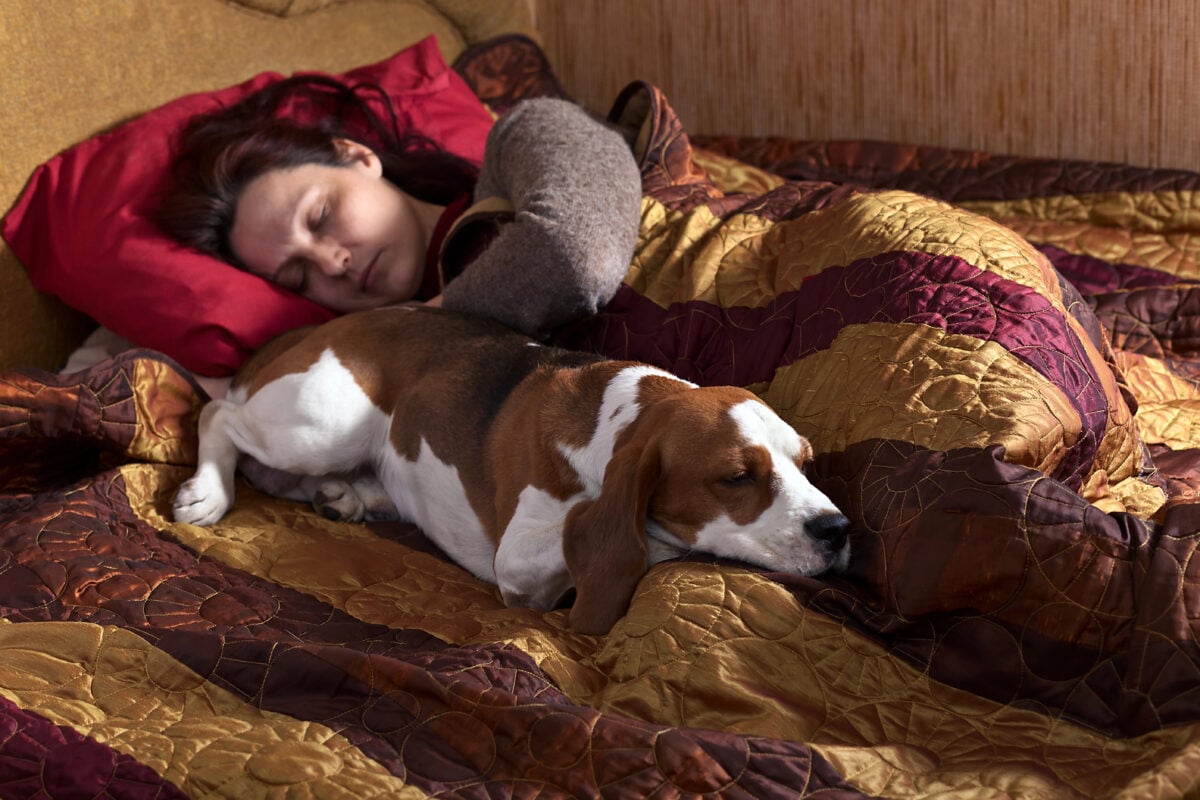
This dog looks completely relaxed. Their owner, meanwhile, has been assigned the traditional role of “person staring directly at a dog butt” and appears to have accepted their fate.
Why Does My Dog Sleep With Their Butt Facing Me?
In most cases, dogs sleep with their butt facing you because they trust you, feel safe around you, and are following instincts that have been around for thousands of years.
As strange as it may seem, your dog isn’t trying to insult you. In fact, this oddly specific sleeping position is often associated with comfort, security, and strong social bonds.
But trust is only part of the story.
1. Your Dog Trusts You Completely
This is the primary reason dogs sleep with their butt facing their owners.
Dogs pay surprisingly close attention to the people and things around them.
Dogs Somehow Know:
- The difference between you picking up your car keys and picking up literally anything else
- The sound of a cheese wrapper from three rooms away
- Exactly when you’re about to leave the house
- That you’ve opened a bag of snacks, even if they’re currently asleep
- When the delivery driver is still three houses away
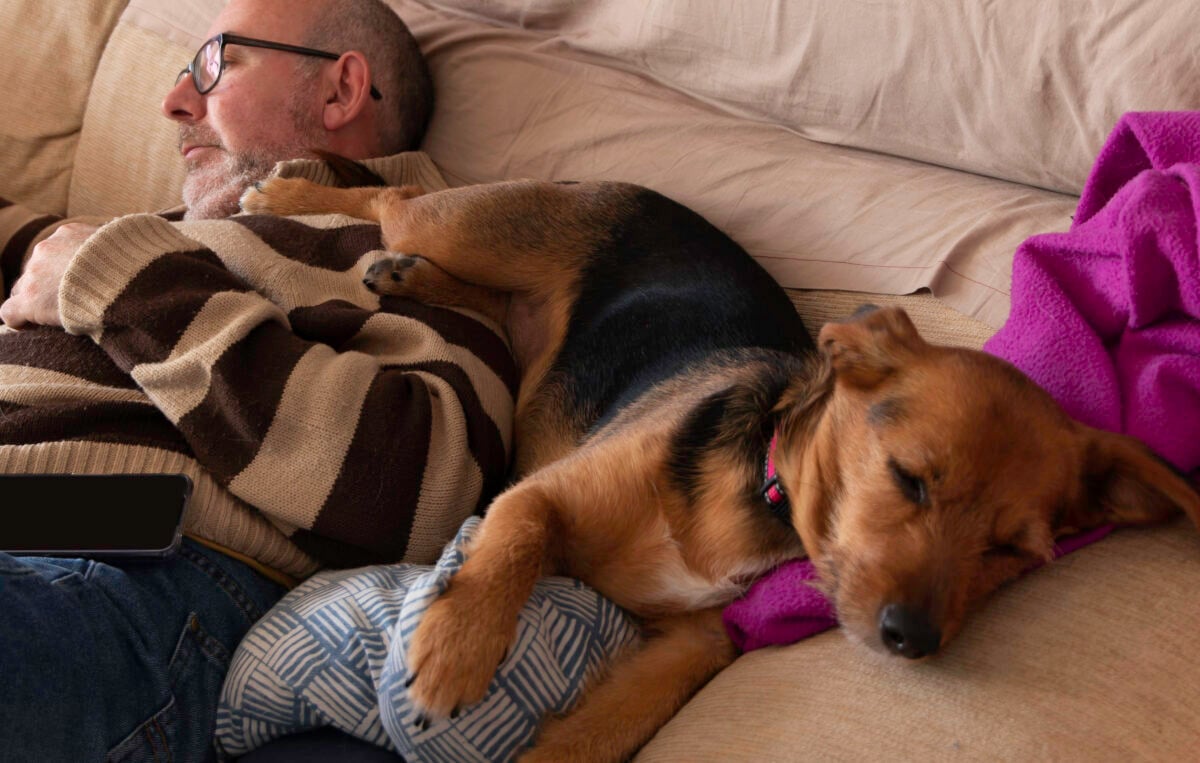
In other words, dogs notice things. That’s what makes this sleeping position so interesting.
When your dog turns around, points their rear end toward you, and falls asleep, they’re placing themselves in a vulnerable position around someone they’ve already decided is safe.
They’re not worried about what you’re doing because they’ve already made up their mind about you.
For an animal that routinely investigates squirrels, neighborhood cats, and suspicious plastic bags blowing across the yard, that’s a meaningful vote of confidence.
Your dog isn’t turning away because they don’t trust you. They’re turning away because they do. show.
Other Signs Your Dog Trusts You
- Sleeps touching you
Because apparently, personal space is a concept that applies only to humans. - Shows you their belly
One of the most vulnerable positions a dog can put themselves in. - Follows you from room to room
Even when your destination is as exciting as folding laundry. - Makes relaxed eye contact
Not the intense “are you eating something?” stare. The calm, comfortable kind. - Greets you like you’ve returned from a decade-long sea voyage
Even if you were only gone long enough to take out the trash.
2. They’re Following Ancient Pack Sleeping Instincts
Some of your dog’s sleeping habits may be rooted in instincts that go back thousands of years.
Wild dogs and wolves don’t all sleep facing the same direction. When a group settles down together, different animals naturally orient themselves toward different areas of their surroundings, creating broader awareness of what’s happening around them.
In a Sleeping Pack, Different Dogs Often:
- Face different directions
- Monitor different parts of the environment
- Help alert one another to potential danger
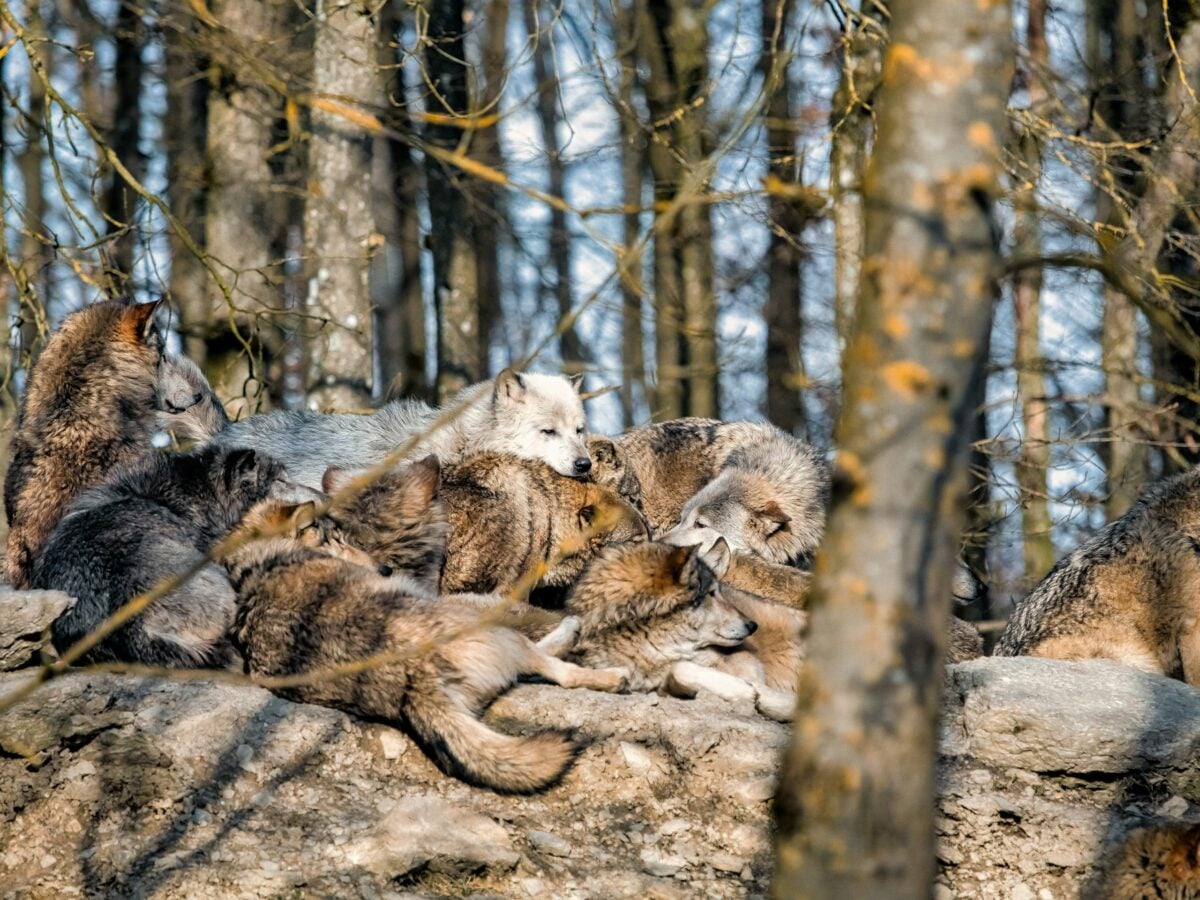
Your dog may not be sleeping in the wilderness, but some of those instincts haven’t completely disappeared.
When your dog curls up beside you and faces away, they may be doing a modern version of that ancient behavior. You’ve got one direction covered. They’ve got another.
In your dog’s mind, the two of you may be working as a team.
Of course, your dog’s version of “protecting the pack” may involve sleeping on a memory foam mattress, under a fleece blanket, in a climate-controlled house while someone else pays for the food.
But instincts aren’t always logical. Your dog sees you as part of their group.
3. They’re Keeping Watch While You Rest
Dogs may spend a lot of time sleeping, but they don’t completely switch off the way humans do.
Even during a nap, dogs are still processing sounds, scents, and movement around them. That’s why a dog who appears completely asleep can somehow hear a refrigerator door open from three rooms away.
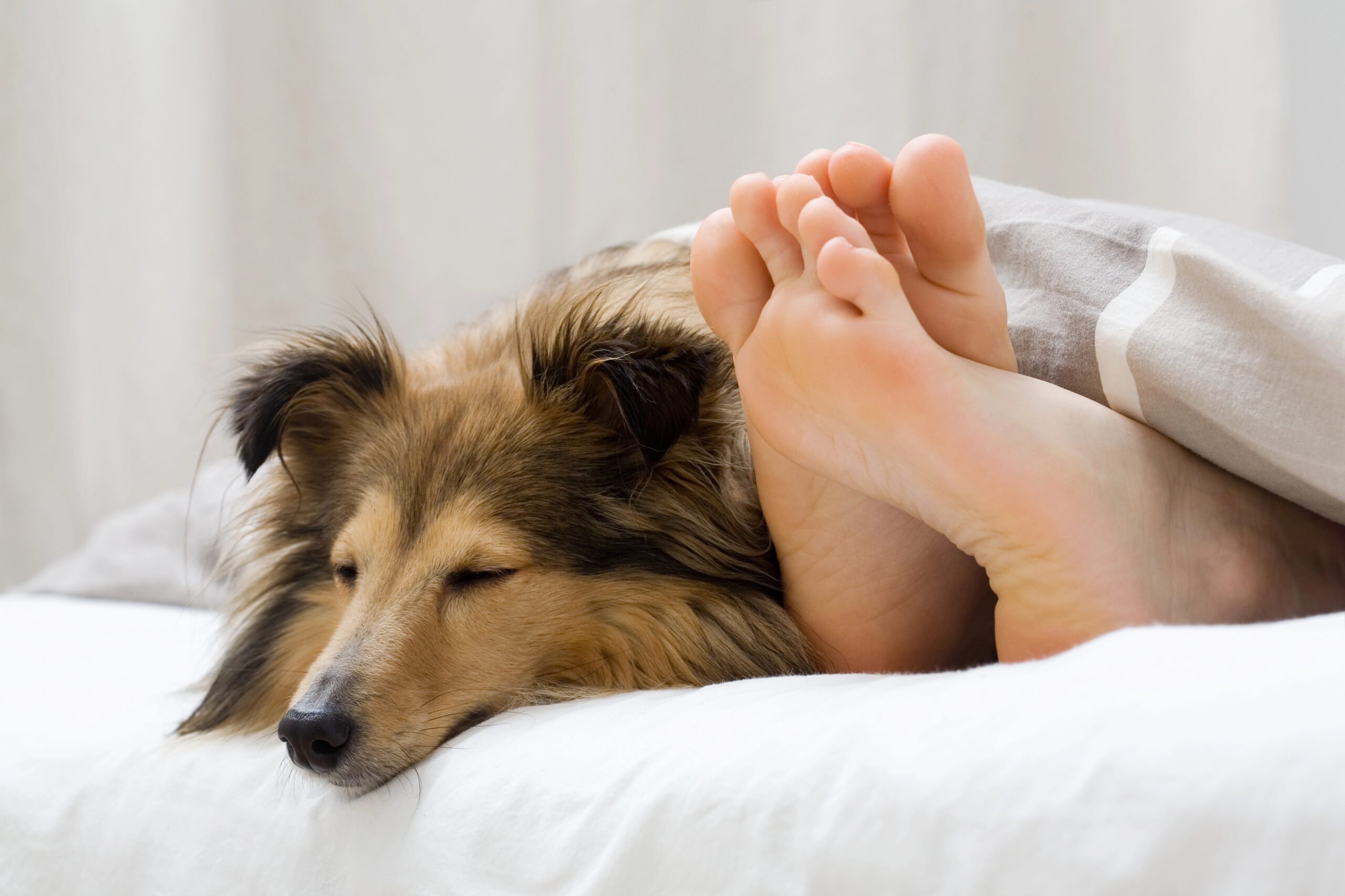
Even While Resting, Dogs Are Still Monitoring:
- Sounds in their environment
- New scents
- Movement around the home
- Changes in routine or activity
This is one reason some dogs prefer to sleep facing a doorway, hallway, staircase, or other area where activity is most likely to happen.
From that position, they can keep an eye on the room while you sleep.
This tendency is especially common in breeds that were developed to guard, herd, or watch over people and property.
German Shepherds, Rottweilers, Belgian Malinois, and Border Collies are all known for maintaining awareness of their surroundings, even when they’re supposed to be relaxing.
Of course, protective instincts don’t always align with actual threats.
Your dog may require emotional support during thunderstorms, yet still considers themselves fully qualified to handle home security.
And honestly, that’s part of what makes dogs so lovable.
Whether your dog is a working breed or a 6-pound Chihuahua who sounds the alarm every time a squirrel enters the zip code, they may feel more comfortable sleeping in a position that lets them keep tabs on the world while you rest.
Signs Your Dog Has Appointed Themselves Head of Home Security
- Sleeps facing the door like they’re working the night shift
- Investigates mysterious hallway noises immediately
- Conducts routine 2 AM perimeter inspections
- Alerts the household to dangerous threats, including absolutely nothing
- Chooses resting spots with a strategic view of the room
4. It’s Simply the Most Comfortable Position
Not every sleeping position has a deep emotional meaning. Sometimes your dog isn’t expressing trust, acting as a pack member, or standing guard against imaginary intruders.
Sometimes they’re just trying to get comfortable.
Like people, dogs have preferred sleeping positions, and those preferences can be influenced by everything from body shape to temperature.
A Comfortable Position Might Help Your Dog:
- Stay cooler while sleeping
- Reduce pressure on aching joints
- Support their body shape
- Relax more deeply
For example, a dog’s hindquarters are often cooler than their head and chest area. If your dog is warm—or if you’re generating plenty of body heat under the blankets—they may simply orient themselves in the way that feels best.
Breed differences can also play a role.
A Dachshund‘s sleep logistics look very different from a Great Dane‘s. Dogs with long backs, deep chests, shorter legs, or aging joints often develop favorite sleeping positions based on what feels most comfortable for their bodies.
Of course, dogs aren’t always the best judges of what looks comfortable.
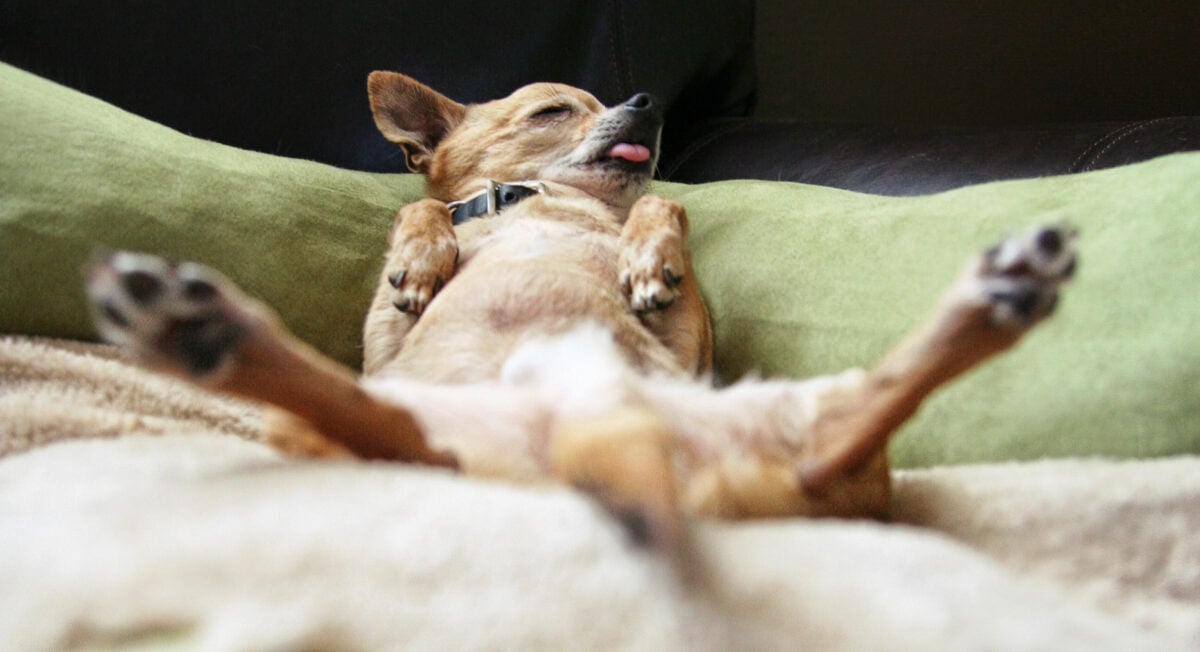
Many will happily sleep with their head hanging off the couch, their legs pointed in three different directions, and their spine arranged in a way that would send most chiropractors into immediate retirement.
The point is that comfort is personal. What looks completely ridiculous to you may feel perfectly normal to your dog.
Sometimes the butt-facing position isn’t a message at all. It’s just the canine equivalent of flipping a pillow over to the cool side.
5. Your Scent May Be Part of the Equation
Dogs experience the world very differently from how we do.
While humans rely heavily on sight, dogs gather enormous amounts of information through their noses. Scent helps them identify people, understand their surroundings, and recognize the individuals who matter most to them.
That’s one reason many dogs enjoy sleeping close to their favorite humans.
Your Scent Tells Your Dog:
- Who you are
- Whether you’re nearby
- That they’re in a familiar environment
- They’re somewhere safe and comfortable
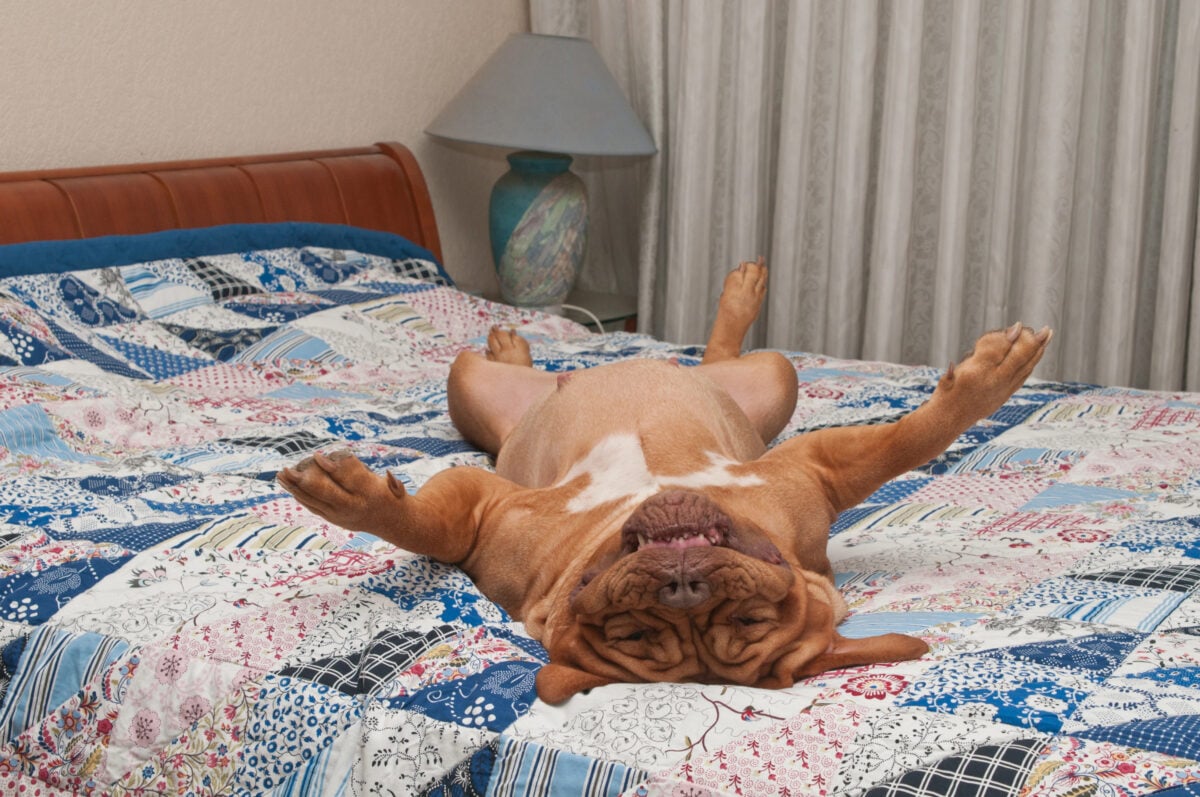
If you’ve ever found your dog sleeping on your clothes, stealing your spot on the couch, or claiming your side of the bed the second you stand up, you’ve already seen this instinct in action.
Dogs are often drawn to places and objects that smell strongly like the people they love.
To your dog, your scent is familiar, reassuring, and comforting.
That’s why many dogs choose to sleep near their owners even when there are plenty of other comfortable places available.
And sometimes they take that commitment a little too far.
Many dogs have access to multiple beds, blankets, couches, and perfectly acceptable sleeping locations. Yet they still choose to wedge themselves between your legs, steal your pillow, or occupy the exact spot you were sitting thirty seconds ago.
When A Change in Sleeping Position Might Mean Something Else
For most dogs, sleeping with their butt facing you is completely normal behavior that doesn’t require any intervention—other than perhaps a strategically placed pillow.
That said, it’s worth paying attention if your dog’s sleeping habits suddenly change.
A dog who has always slept one way and abruptly starts choosing different positions may be trying to get comfortable for a reason.
Contact Your Veterinarian If You Notice:
- Difficulty lying down or getting up
- Whimpering, groaning, or signs of pain
- Restlessness that makes it hard to settle
- Sudden changes in sleeping positions or routines
- Signs of gastrointestinal discomfort or abdominal pain
Conditions such as arthritis, joint pain, injuries, and digestive issues can sometimes affect how a dog positions themselves while resting.
The important thing isn’t the sleeping position itself—it’s a noticeable change in behavior combined with signs of discomfort.
A dog that suddenly can’t get comfortable is often more concerning than a dog that simply prefers an unusual sleeping position.
If your dog has been parking their rear end in your face for years and seems perfectly happy doing it, there’s usually no reason for concern.
That’s not a warning sign. That’s just your dog being your dog.
Do All Dogs Do This?
Most dogs sleep with their butt facing their owners at least some of the time.
For many, it becomes a favorite sleeping position around the people they trust most. That doesn’t mean every dog does it constantly, though.

It’s More Common In:
- Guardian breeds
German Shepherds, Rottweilers, Dobermans, and other protective breeds often prefer positions that allow them to keep an eye on their surroundings while resting. - Herding breeds
Border Collies, Australian Shepherds, and Cattle Dogs are naturally wired to stay aware of what’s happening around their “flock,” which usually means you. - Velcro dogs
Some dogs, like Labrador Retrievers, Cavalier King Charles Spaniels, and Vizslas, simply want to be near their people at all times. If your dog follows you from room to room, there’s a good chance they’ll also choose a sleeping position close to you.
What About Puppies?
Young puppies sometimes do this less consistently because they’re still developing social bonds and learning how to navigate relationships with their people.
As trust and familiarity grow, many puppies naturally become more relaxed about where and how they sleep.
Personality Matters, Too
Some dogs are natural snugglers. Others prefer a little personal space.
Some sleep curled into a neat little ball. Others somehow manage to occupy an entire king-size mattress despite contributing neither rent nor utilities.
The exact position matters less than the overall message.
What If My Dog Sleeps Facing Me Instead?
Not every dog sleeps with their butt facing their owner. Some prefer to sleep facing the people they love most, and that’s perfectly normal too.
In fact, if you’ve spent the entire article thinking, “That’s great, but my dog stares directly at me while they sleep,” you can relax.
Dogs have individual preferences when it comes to sleeping positions, just like people do.
Some enjoy maintaining visual contact with their owners. Others simply find certain positions more comfortable. A dog that sleeps facing you isn’t necessarily more affectionate than one that sleeps facing away.
They’re just expressing comfort differently.
Some dogs like to keep one eye on their favorite person.
Others prefer physical contact, sleeping pressed against you, draping themselves across your legs, or positioning themselves so that you’re left with only six inches of mattress.
And then there are the dogs that insist on sleeping face-to-face, breathing directly into your soul until morning.
A Dog That Sleeps Facing You May Be:
- Checking in with their favorite person
- Seeking physical closeness
- Following a personal sleeping preference
- Choosing the position that feels most comfortable
The exact position matters less than the overall picture.
Why Does My Dog Change Positions Throughout The Night?
If you’ve ever gone to bed with your dog sleeping peacefully at your feet and woken up with them occupying your pillow, you’re not imagining things.
Many dogs change sleeping positions throughout the night.
Just like humans, dogs cycle through different sleep stages and naturally adjust their position.
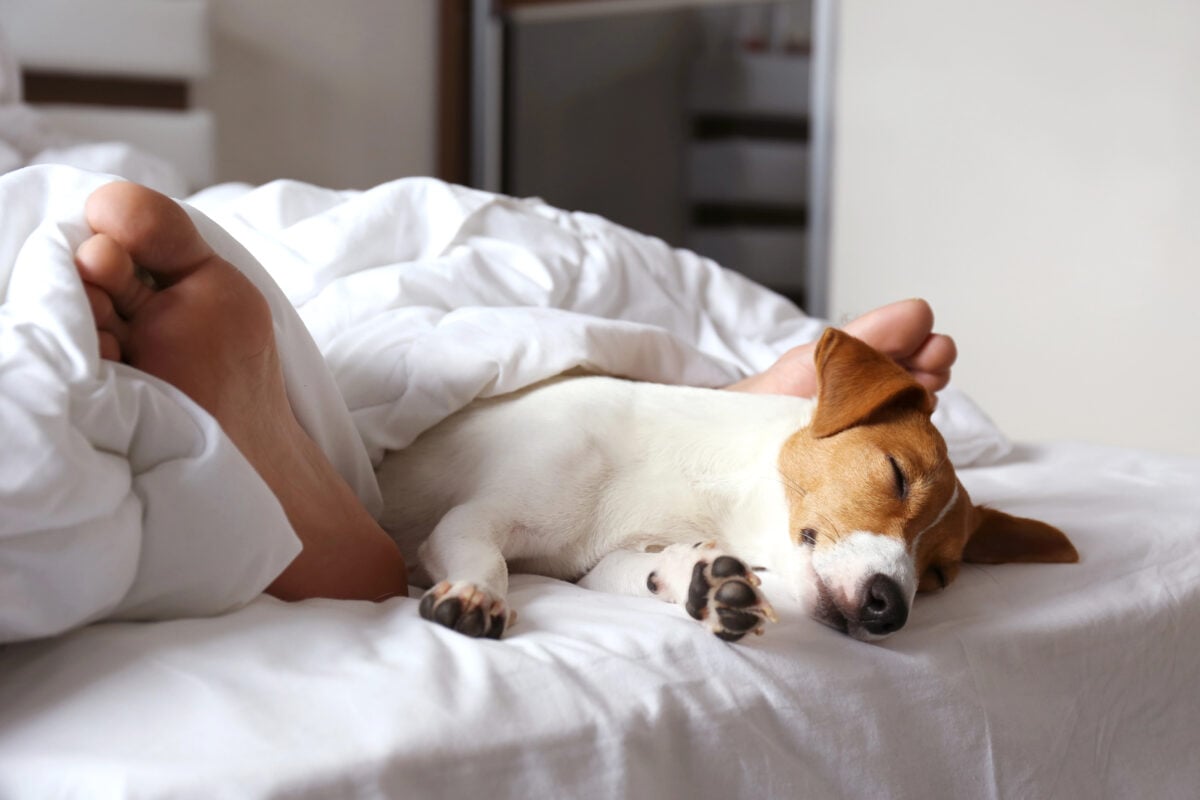
A Dog Might Reposition During The Night To:
- Get more comfortable
- Adjust to temperature changes
- Stretch out
- Move closer to their favorite person
- Find a better view of the room
Some dogs are particularly enthusiastic about these adjustments.
They begin the night curled into a neat little ball and gradually expand until they’re somehow occupying three times their original size.
Others seem to treat bedtime like an ongoing home renovation project, making small adjustments every hour until sunrise.
Many dogs don’t pick one sleeping position and stick with it. Instead, they rotate through several positions throughout the night.
If you share a bed with your dog, you’ve probably witnessed this progression firsthand:
- Starts at your feet
- Moves beside your legs
- Claims half the mattress
- Takes your pillow
- Somehow ends up facing the opposite direction entirely
The butt-in-your-face situation isn’t always a carefully planned decision.
Sometimes it’s simply the final destination in a long series of midnight relocations.
How Can You Stop Your Pup From Inserting Their Butt Directly In Your Face?
Let’s be honest.
Understanding why your dog does this doesn’t automatically make you enjoy waking up nose-to-nose with their rear end.
If you’ve ever wondered whether you’re the only person dealing with this problem, the answer is a resounding no. Dogs everywhere seem remarkably confident that this is a perfectly reasonable sleeping arrangement.
Fortunately, if you’d prefer a little more personal space, there are a few things you can try.
1. Redirect Them Before They Settle In
Most dogs have a bedtime routine.
They jump onto the bed, spin a few circles, evaluate their options, and eventually commit to a sleeping position.
If you catch your dog preparing for their usual butt-first parking maneuver, gently encourage them toward a different spot before they fully settle down.
It’s much easier to redirect a dog that’s still deciding than one that’s already asleep.
2. Reward The Position You Prefer
Dogs repeat behaviors that work.
If your dog settles beside you in a position you like, offer praise, petting, or attention. Over time, some dogs begin choosing those spots more often because they’ve learned good things happen there.
3. Create A Designated Sleeping Spot
If bed-sharing is non-negotiable but face-sharing is not, consider giving your dog a preferred place to sleep.
Some owners have success encouraging their dogs to settle at the foot of the bed, on a favorite blanket, or in a nearby dog bed.
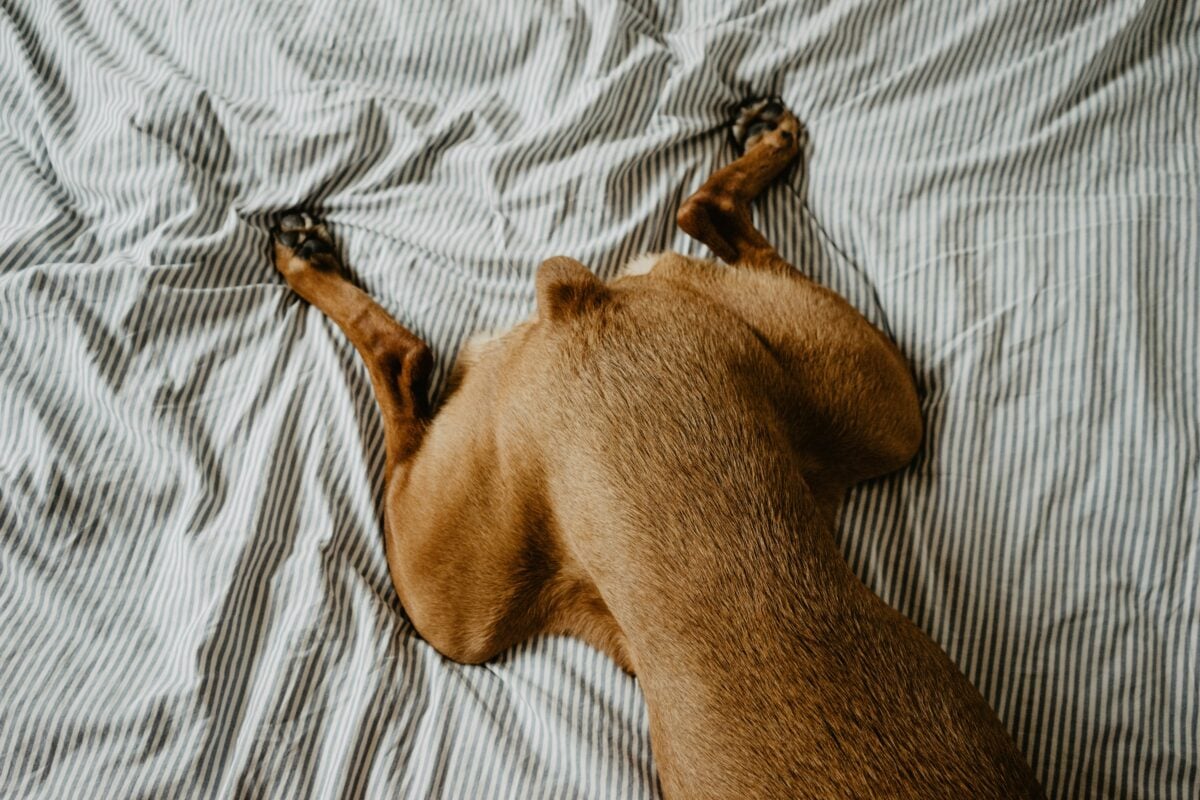
4. Accept That You May Not Win
This may be the most realistic strategy of all.
Dogs have spent thousands of years evolving alongside humans, learning our routines, reading our emotions, and becoming remarkably good companions.
And yet an astonishing number of them still look at an entire bed full of available space and decide the best place to sleep is perpendicular to a human face.
In other words, you may not win this battle.
At some point, many dog owners simply accept that being loved by a dog occasionally involves surrendering part of the mattress, a little personal space, and whatever dignity remained after explaining this situation to non-dog owners.
Be Honest: Which One Does Your Dog Do?
☐ Butt facing you
☐ Head on your pillow
☐ Sleeps across your legs
☐ Steals your entire side of the bed
☐ All of the above
Tell us in the comments. We’re fairly convinced some dogs view a king-size bed as a personal challenge rather than a sleeping space.
Frequently Asked Questions
Still curious about your dog’s sleeping habits? Here are answers to some of the most common questions dog owners ask.
And if your dog has a particularly strange bedtime routine we didn’t cover, ask your question in the comments — we’re always interested in hearing what weird sleeping position they’ve invented this week.
Why Do Dogs Turn Around Before Lying Down?
Most dogs perform a little bedtime routine before settling down. Circling, scratching at blankets, and repositioning are inherited behaviors that helped their ancestors flatten grass, check their surroundings, and create a comfortable resting spot.
Modern dogs may be sleeping on memory foam beds instead of the ground, but many still follow the same instinctive routine before finally settling in for the night.
Why Does My Dog Always Sleep With Their Back Pressed Against Me?
Some dogs like contact without face-to-face attention. Pressing their back against you lets them feel close while still facing outward or staying relaxed.
Why Does My Dog Put Their Butt On Me When They’re Awake?
If your dog backs into you during the day, they may be asking for scratches, seeking contact, or showing comfort around you. It’s usually social, not rude.
Why Does My Dog Sleep At My Feet Instead Of Beside Me?
Sleeping at your feet can still be affectionate. Some dogs like being close while keeping a little space, staying cooler, or positioning themselves where they can notice movement.
Why Does My Dog Sleep With Their Head Away From Me But Their Body Touching Me?
That combination usually means your dog wants closeness without needing constant interaction. It’s a very “I love you, but I’m off duty” sleeping position.
Why Does My Dog Sleep In My Spot When I’m Gone?
Your spot smells familiar and comforting. It may also be warm, soft, and associated with you, which makes it especially appealing.
Why Does My Dog Face The Door When Sleeping?
Some dogs prefer a position where they can notice movement or sound more easily. It may be habit, instinct, or simply the spot that feels most secure.
Why Does My Dog Sleep Upside Down?
Sleeping belly-up usually means a dog feels relaxed and safe. It can also help them cool off, since the belly has less fur and releases heat more easily.
What Other Weird Things Does Your Dog Do?
If your dog has ever parked their butt in your face, stolen your pillow, or somehow expanded to fill an entire king-size mattress overnight, you’ve already learned an important lesson: dogs have some very unusual ways of showing affection.
The good news? Most of those quirky behaviors are actually forms of communication. Want to understand what your dog is trying to tell you next? Check out these guides:
- Why does my dog lean against me?
- Why does my dog sleep between my legs?
- Why does my dog follow me everywhere?
- Why do dogs cover their face?
And now we’re curious: Does your dog sleep with their butt facing you, or have they come up with an even stranger sleeping arrangement? Let us know in the comments!