When you purchase through links on our site, we may earn a commission at no extra cost to you. Learn more.
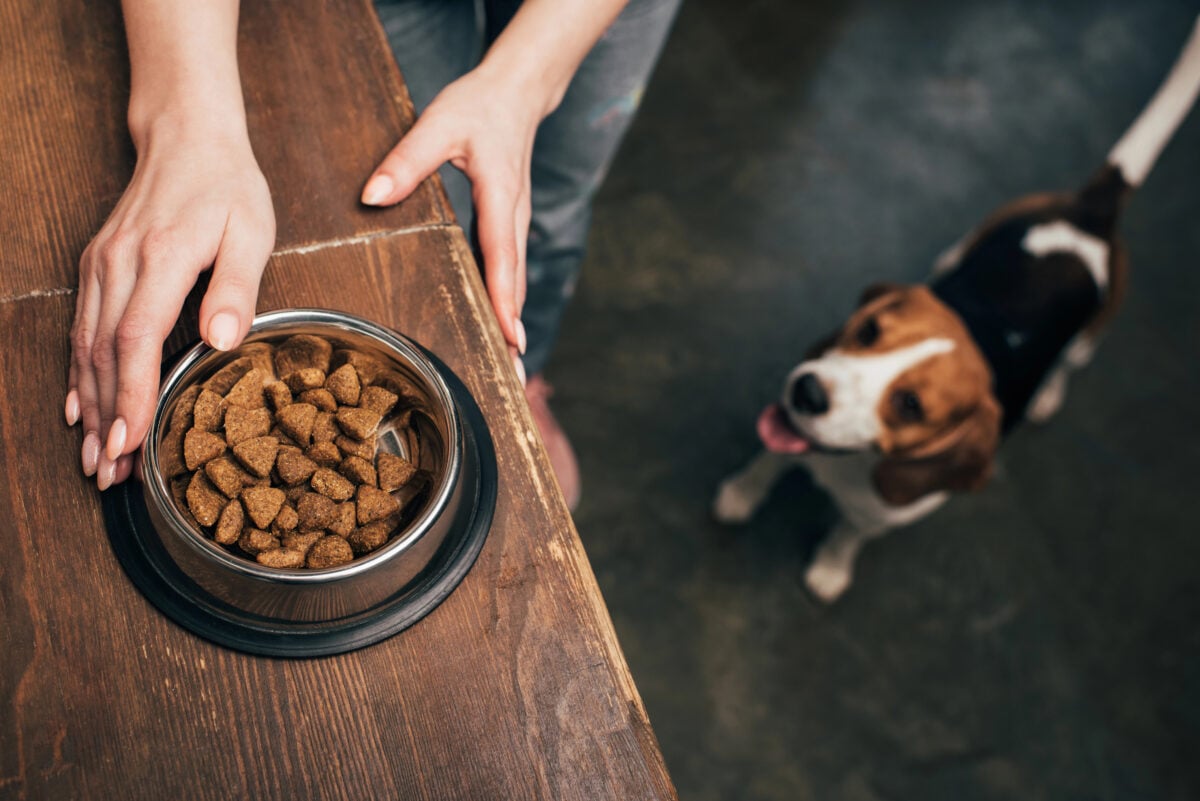
One day, your puppy is inhaling food as if they’re preparing for a long winter in the wilderness.
Table of Contents
Then, suddenly, they leave kibble in the bowl, stop growing at warp speed, and somehow look more like an actual dog than the tiny chaos goblin you brought home months ago.
That’s usually when the questions start.
Are they still supposed to be eating puppy food? Did you miss the right time to switch? What if you change too early or too late?
The good news: most dogs give you plenty of clues when they’re ready to move to adult food. The tricky part is knowing which changes are normal and which ones mean it’s time to rethink what’s in the bowl.
Why Puppies Need Different Food In The First Place
Puppies aren’t just smaller versions of adult dogs. They’re dogs growing an absurd amount in a very short period of time.
In less than two years — and often much faster than that — your puppy goes from a tiny fur missile crashing into furniture to an actual adult-sized dog.
That kind of rapid development requires very different nutrition than an adult dog simply maintaining their weight.
During puppyhood, your dog’s body is building:
- Muscle mass & growing bones
- Brain function
- Joint support
- Immune health
That growth takes enormous amounts of energy, which is why puppies burn through calories so aggressively compared to adult dogs.
What’s Actually Different About Puppy Food?
According to the Association of American Feed Control Officials (AAFCO), puppy foods are formulated with higher levels of protein, fat, calcium, and phosphorus to support rapid growth and development.
That usually means it contains:
- More calories to fuel rapid development
- Higher protein levels for growing muscles and tissues
- More fat for energy and development
- Carefully balanced calcium and phosphorus for healthy bone growth
- DHA and other nutrients that support brain and vision development
Why Switching Too Early Can Be A Problem
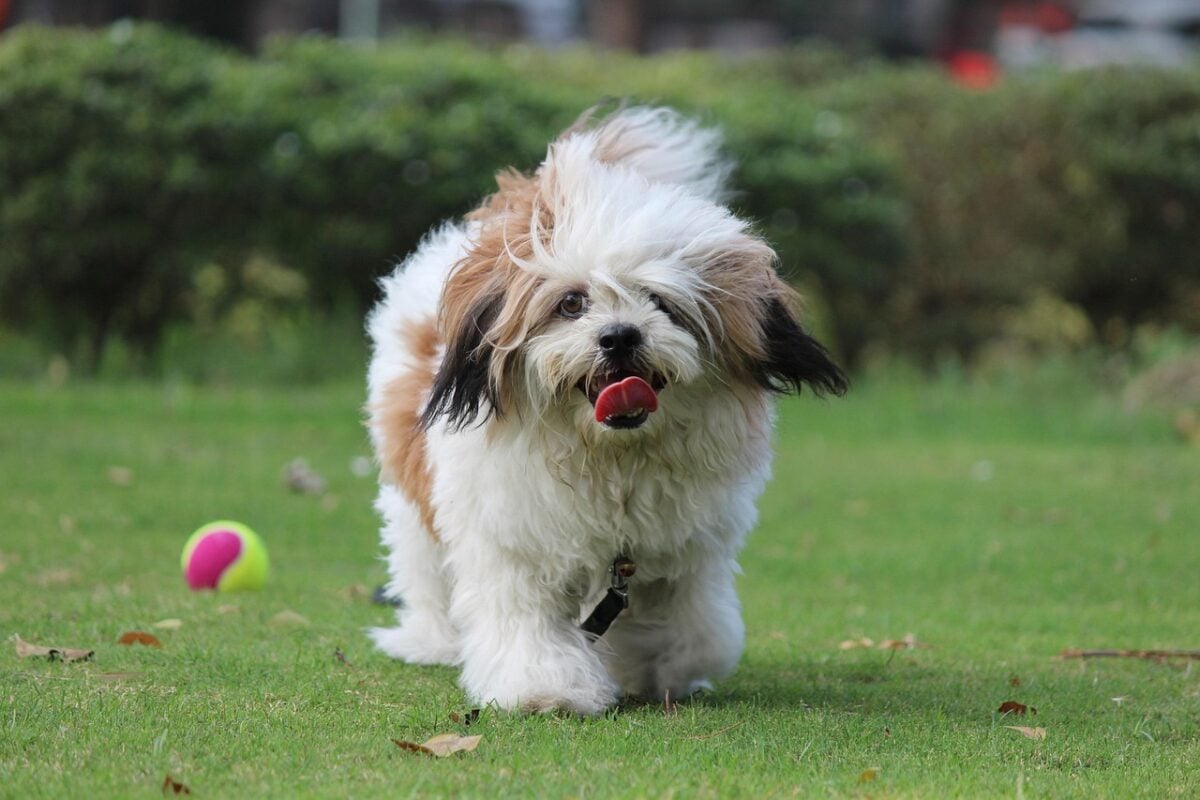
If a puppy switches to adult food before growth is finished, they may stop getting the calories and nutrients their body still needs.
This matters especially for large and giant breeds, which continue developing much longer than many owners realize.
That’s one reason large-breed puppy formulas exist in the first place. They’re designed to support slower, steadier growth and help reduce stresson developing joints and bones.
Why Staying On Puppy Food Too Long Can Also Backfire
Puppy food is calorie-dense by design. That’s helpful when your dog is growing nonstop.
But once growth starts slowing down, those extra calories can turn into excess weight surprisingly fast, especially if portions never adjust after peak puppyhood.
That’s why staying on puppy food too long can become just as problematic as switching too early.
The Age Most Dogs Switch To Adult Food
Most puppies are ready to transition once they’ve reached roughly 80% of their expected adult size, but the timeline varies enormously by breed.
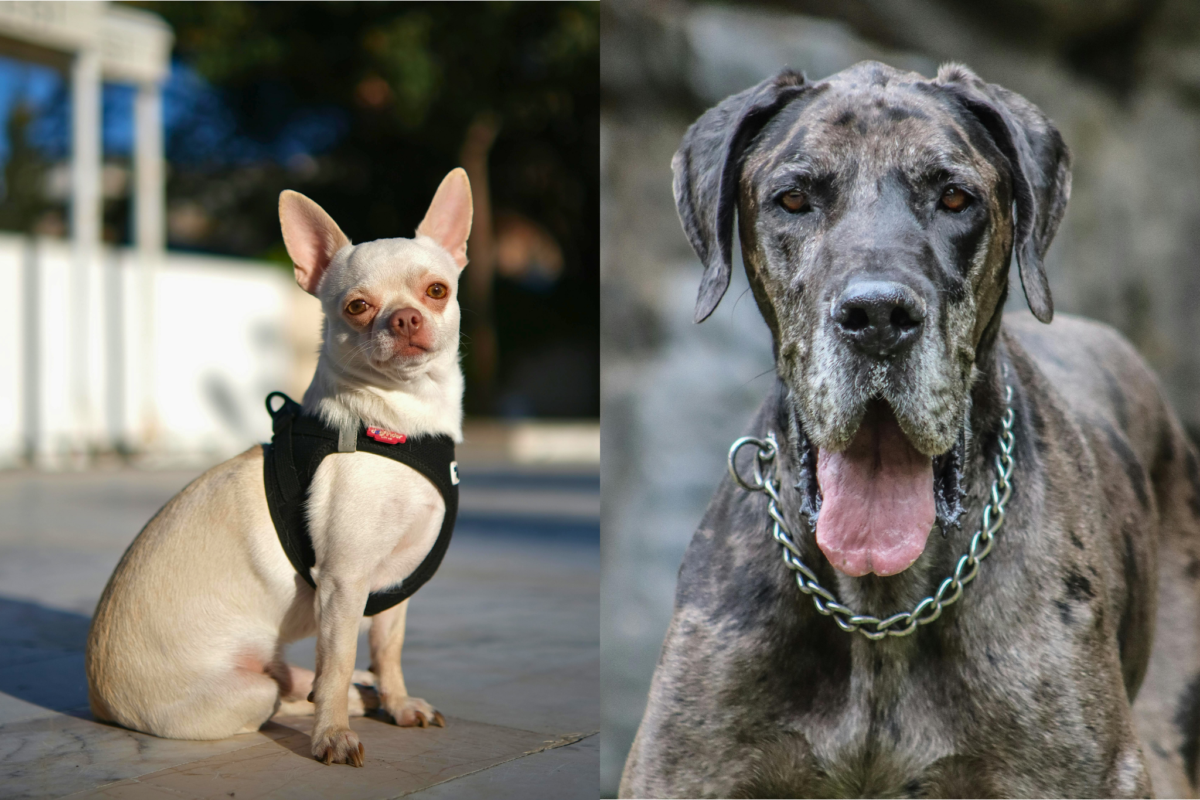
A Chihuahua and a Great Dane may both be dogs, but nutritionally, they’re operating on completely different schedules during puppyhood.
That’s why the “right” time to switch depends much more on size and growth rate than on an exact birthday.
Highly active or athletic dogs may also benefit from staying on puppy formulas a little longer if they’re still building lean muscle and burning large amounts of energy.
Small & Toy Breeds (under 25 pounds when fully grown)
Typical transition age: around 9–12 months
Examples include:
- Chihuahuas
- Yorkshire Terriers
- Maltese
- Toy Poodles
- Shih Tzus
Small dogs mature quickly. Their growth plates close earlier, their bodies finish developing faster, and many can safely transition off puppy food before their first birthday.
Of course, “mature” is doing a lot of work here because many tiny dogs somehow become technically adult while still behaving like emotionally unstable squirrels with no sense of self-preservation.
But physically, they’re usually done growing much sooner than larger breeds.
Medium Breeds (25-50 pounds when fully grown)
Typical transition age: around 12–14 months
Examples include:
This is the range most people think of when they hear: “Dogs switch to adult food around one year old.”
For many medium-sized breeds, that’s roughly true. Growth usually slows significantly by the first birthday, which is why many veterinarians recommend beginning the transition around this time.
Large Breeds
Typical transition age: around 14–18 months
Examples include:

Large breeds need more patience.
Large-breed puppy foods are intentionally formulated with more controlled calcium, phosphorus, and fat levels to support slower, steadier growth and help reduce the risk of skeletal problems later on.
One of the biggest mistakes owners make is assuming a dog is finished growing just because they look adult-sized.
In reality, large-breed dogs often continue developing long after they stop looking like puppies.
And honestly, many large breeds spend months in a very confusing in-between phase where they’re physically enormous, mentally chaotic, and somehow still tripping over their own feet daily.
Giant Breeds
Typical transition age: around 18–24 months
Examples include:
- Great Danes
- Mastiffs
- Newfoundlands
- Saint Bernards
Giant breeds operate on an entirely different timeline.
These dogs mature very slowly compared to smaller breeds, and many continue developing well into their second year of life. That means they often need puppy food much longer than owners expect.
And this is where appearances become especially misleading.
A Great Dane may already look the size of a small horse at 12 months old, but that doesn’t mean development is finished. Their skeletal growth and joint maturation can continue for many more months.
What If You Have A Mixed-Breed Puppy?
Mixed-breed puppies make this entire timeline a little less predictable.
Sometimes you know exactly what your dog will grow into. Other times, you adopt a “medium-sized puppy” who suddenly develops enormous paws, suspiciously long legs, and the physical proportions of a small deer halfway through adolescence.
In those cases, transition timing gets trickier because breed size heavily affects how long dogs should stay on puppy food.

Signs Your Mixed-Breed Puppy May Still Be Growing
Owners often consider the following factors to estimate adult size and the maturity timeline.
- Paw size
- Growth rate
- Body proportions
- Recent height changes
- Parent size (if known)
If your puppy still looks lanky, keeps gaining height, seems physically awkward, or appears headed toward a larger-breed size, they may benefit from staying on puppy food longer than a smaller dog would.
When Your Vet Can Help Estimate Adult Size
If you genuinely aren’t sure whether your dog is still actively growing, your veterinarian can help evaluate:
- Body condition
- Growth trends
- Bone structure
- And likely adult size range
This is especially helpful for rescue puppies where the parent breed history is unknown.
Curious What Your “Medium-Sized Mystery Puppy” Actually Is?
If your puppy’s growth trajectory currently feels like a biology experiment with paws, a dog DNA test can sometimes help estimate expected adult size and breed mix more accurately.
If you’re curious about the best options, our guide to the best dog DNA tests compares accuracy, health screening features, and breed databases.
Signs Your Dog Might Be Ready To Transition
Following a strict timeline doesn’t work for every dog. But most dogs naturally start giving clues when they’re moving out of full-time growth mode.
The changes are often subtle at first, which is why many people second-guess themselves during this stage.
1. They’re Not Growing Like They Were Before
Early puppyhood feels like owning a dog that physically changes shape every 48 hours.
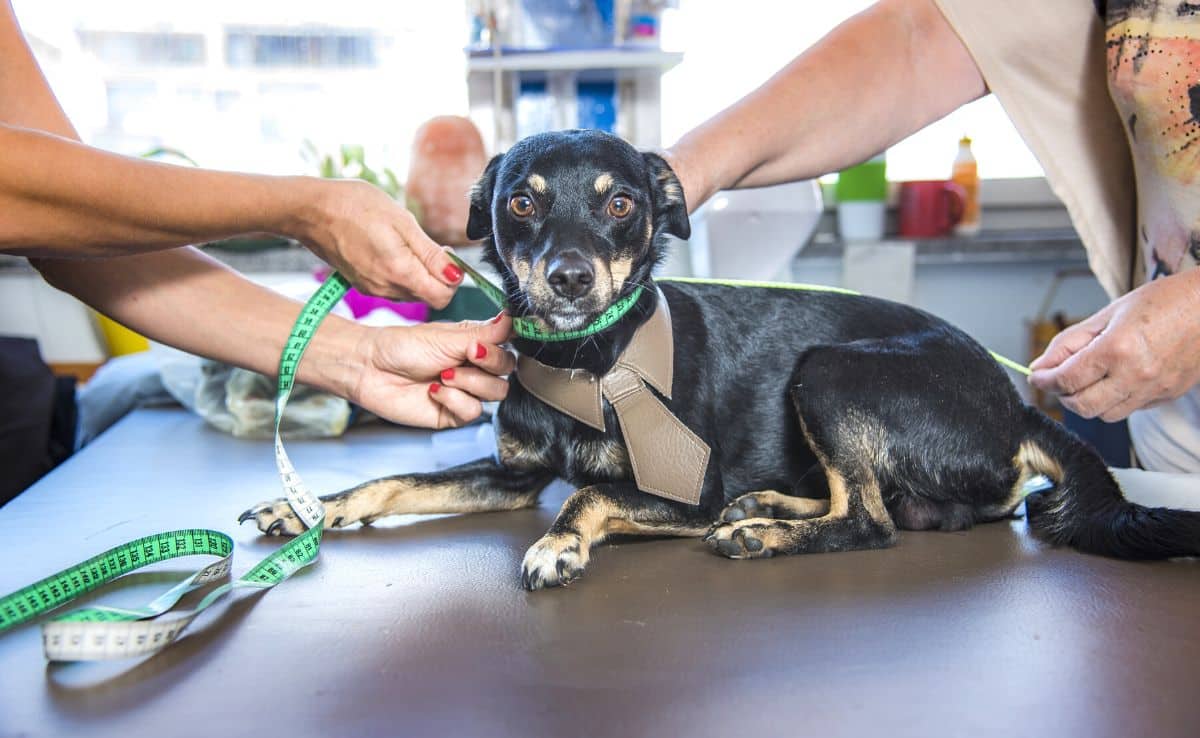
One week, the harness fits perfectly. The next week, they somehow resemble a stretched-out version of themselves, with giant feet and absolutely no coordination.
But eventually, that constant growth starts slowing down.
You may notice:
- Their weight stabilizing
- Fewer sudden growth spurts
- Their collar finally fitting for more than three weeks
- They stop looking visibly bigger every time relatives visit
This slowing growth is one of the clearest signs your dog may be approaching transition age.
Especially in small and medium breeds, many owners realize something has changed when they suddenly stop buying new gear every month.
2. They Suddenly Don’t Seem As Obsessed With Food
This one panics people constantly.
For months, your puppy may have acted as if every meal were the most emotionally important event of their life. Then suddenly:
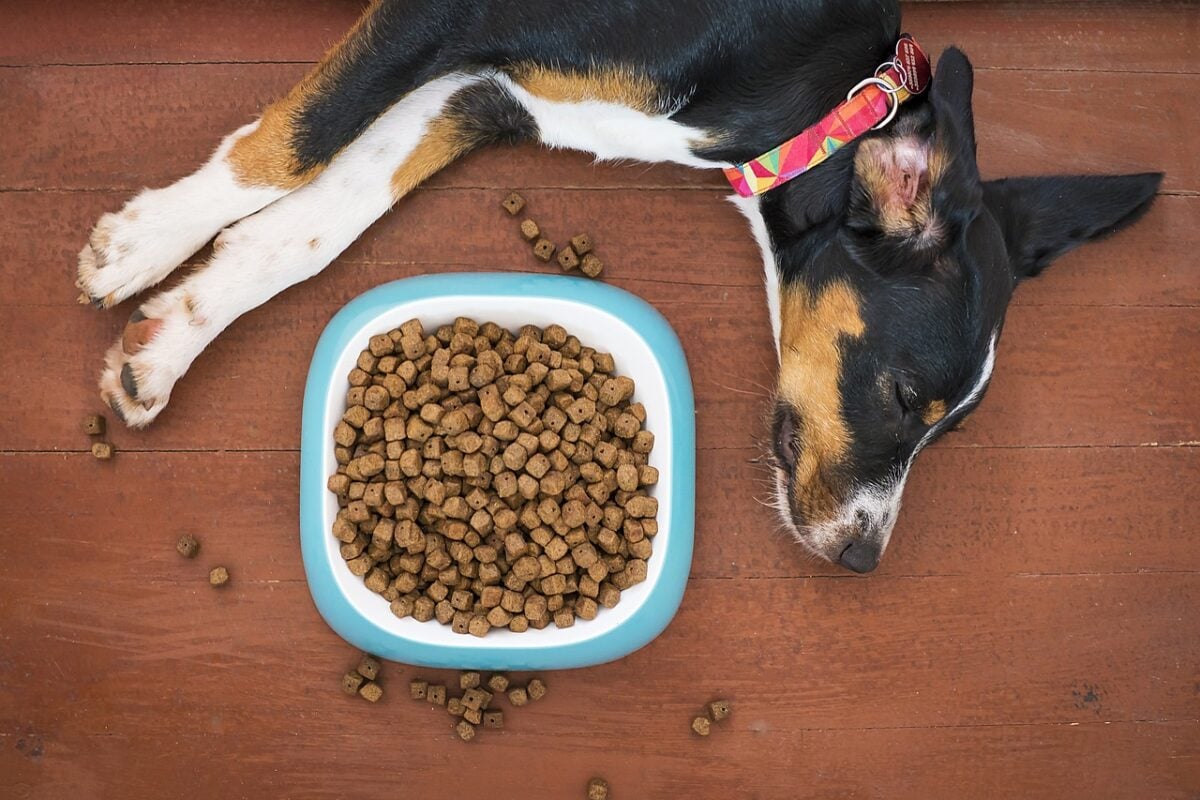
- They leave kibble behind
- Eat more slowly
- Skip part of a meal (or a whole meal)
- Stop acting personally betrayed while waiting for dinner
And owners immediately assume: “Something must be wrong.” But in many cases, nothing is wrong at all.
As growth slows, metabolism and calorie requirements naturally change, too. Your dog simply may not need the same nonstop calorie intake they needed during peak puppy growth.
A puppy who once would have eaten drywall, a paper towel roll, and half the couch cushion if given the opportunity may suddenly start inspecting kibble like a tiny food critic evaluating texture notes.
3. Their Energy Levels Start Changing, Too
You may also notice energy shifts around this stage.
The nonstop “awake = chaos” puppy energy often starts to settle into more predictable, adult-like activity patterns.
Not calm, necessarily. Just slightly less committed to treating the entire house like a parkour course.
4. They’re Starting To Look A Little Rotund
Sometimes the biggest clue is physical.
Puppy food is calorie-dense on purpose. But once growth starts slowing down, those extra calories can add up surprisingly fast, especially if feeding habits are never adjusted after the “constant growth machine” phase ended.
You may notice:
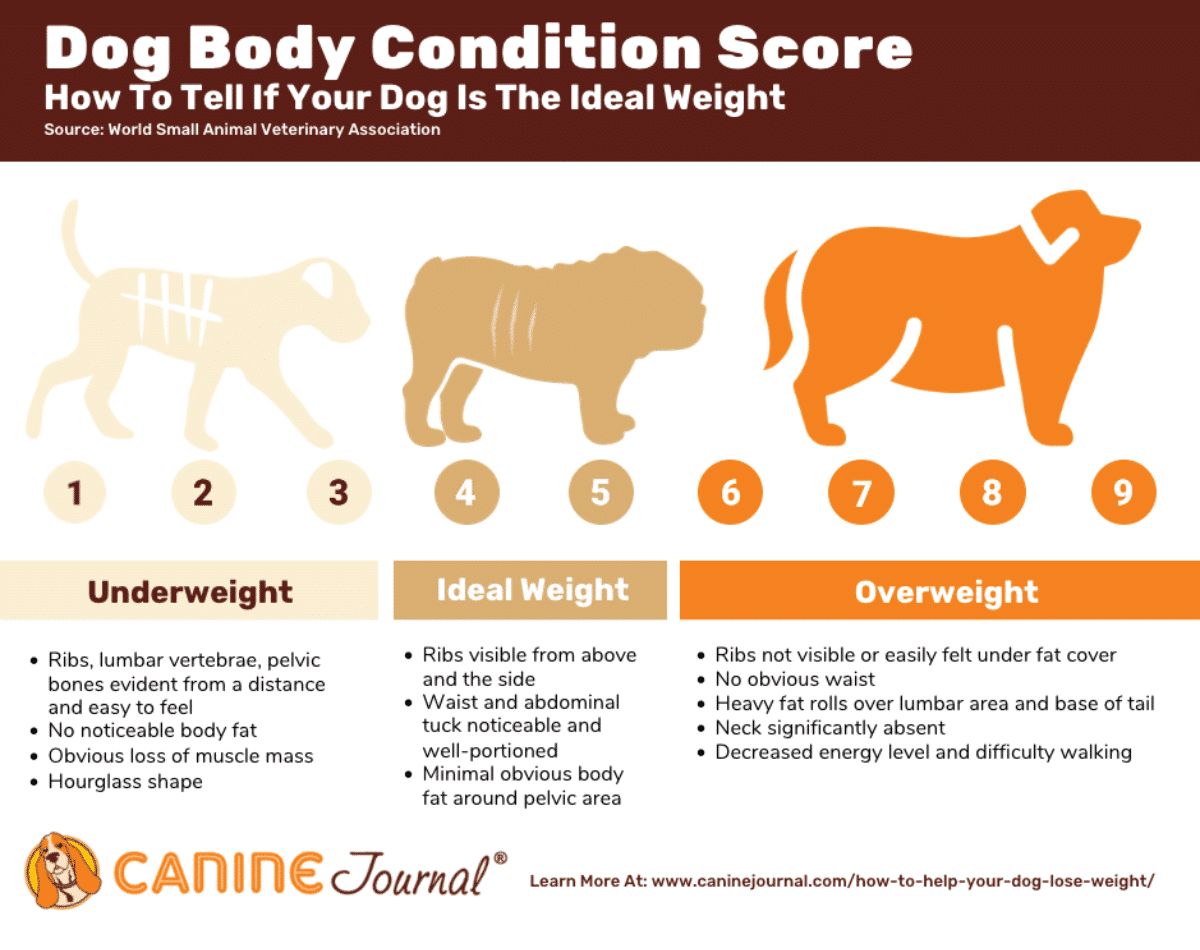
- Your dog’s waistline becoming less visible
- Ribs becoming harder to feel
- A softer, rounder body shape
- Weight creeping up without obvious overeating
And because the change happens gradually, many people don’t notice it immediately.
This is one reason veterinarians focus on body condition score rather than weight alone.
Choosing Adult Food Without Losing Your Mind In The Pet Store
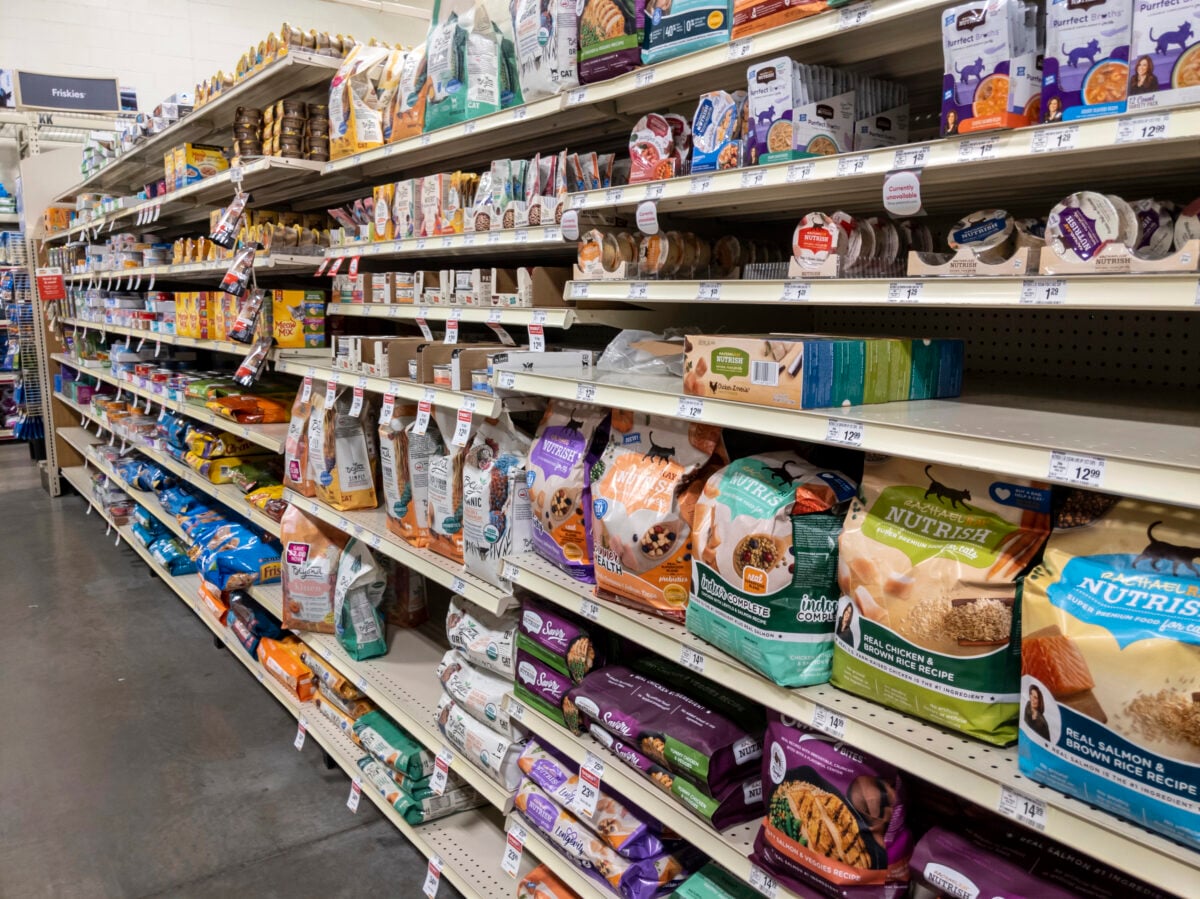
At some point during this transition, you may find yourself standing in the dog food aisle staring at bags that all claim to support:
- Optimal vitality
- Whole-body wellness
- Peak ancestral instincts
- And apparently, the emotional journey of free-range wolves
Meanwhile, you’re just trying to figure out which one is best for your pup.
The good news is that choosing adult food usually doesn’t need to be overly complicated.
What To Actually Look For On The Label
You don’t need to become a canine nutritionist in the middle of PetSmart. But there are a few practical things worth checking before you throw a random bag into your cart.
Look for:
- An AAFCO statement showing the food is complete and balanced for adult maintenance
- A protein source your dog already tolerates well
- Moderate calorie and fat levels compared to puppy formulas
- Formulas designed for your dog’s size, especially if you have a large or giant breed
Some owners also choose foods with:
- Omega-3 fatty acids for skin and joint support
- Probiotics for digestive health
- Glucosamine for larger dogs
And if your dog tends to have stomach issues or food sensitivities, this is usually not the ideal time for dramatic ingredient experiments.
Large-Breed Dogs Benefit From Large-Breed Adult Food
For larger dogs, breed size still matters even after puppyhood ends.
Large-breed adult foods are often designed with:
- More controlled calorie density
- Joint-support ingredients
- Formulas aimed at healthier long-term weight management
That can be helpful because large dogs tend to put more stresson their joints over time, especially if they gain excess weight.
Not every large dog requires a large-breed adult formula forever. But many owners and veterinarians prefer them because they’re designed specifically for bigger bodies and slower metabolisms.
Small Dogs Sometimes Benefit From Small Breed Adult Food Too
Small-breed adult foods aren’t usually as medically critical as large-breed formulas, but they can still help some dogs.
These foods are often designed with:
- Smaller kibble size
- Higher calorie density for tiny bodies
- Formulas tailored for faster metabolisms*
That can make eating easier and more comfortable for very small dogs, especially toy breeds with tiny mouths or selective eating habits. Some little dogs approach regular-sized kibble as if you’d handed them decorative gravel.
* Some smaller dogs tend to burn through energy faster relative to their body size. Tiny dogs lose heat more quickly, have faster heart rates, and generally run their little bodies at a much higher speed than larger dogs do. That faster metabolism is also one reason toy breeds can be more prone to hypoglycemia (low blood sugar) if they go too long without eating, especially when they’re very young.
Don’t Overcomplicate The Food Switch
This isn’t the ideal time to completely reinvent your diet.
For most dogs, simpler is usually better, especially if your dog already has a sensitive stomach.
For example, if your puppy already does well on chicken, a specific brand, or a particular formula, there’s often no reason to suddenly overhaul everything at once.
In many cases, the easiest transition is simply moving from the puppy version to the adult version of a food your dog already tolerates well.
How To Switch Foods Without Destroying Your Dog’s Stomach
Once you decide it’s time to transition off puppy food, the next goal is simple: avoid turning your living room into a gastrointestinal crime scene.
Most dogs do perfectly fine during food transitions, as long as the change happens gradually. The problems usually start when owners switch foods too quickly.
When you suddenly change ingredients, fat levels, protein sources, fiber content, or even calorie density, their digestive system may need time to adjust.
That’s why abrupt food changes can lead to:
- Diarrhea
- Vomiting
- Gas
- Stomach upset
- Or the deeply humbling experience of emergency carpet cleaning at 2 AM
Part of this comes down to the gut microbiome — the bacteria and microorganisms living in your dog’s digestive system. Those microbes adapt to the food your dog regularly eats, and sudden changes can temporarily throw things off balance.
The Easy 7-Day Transition Schedule
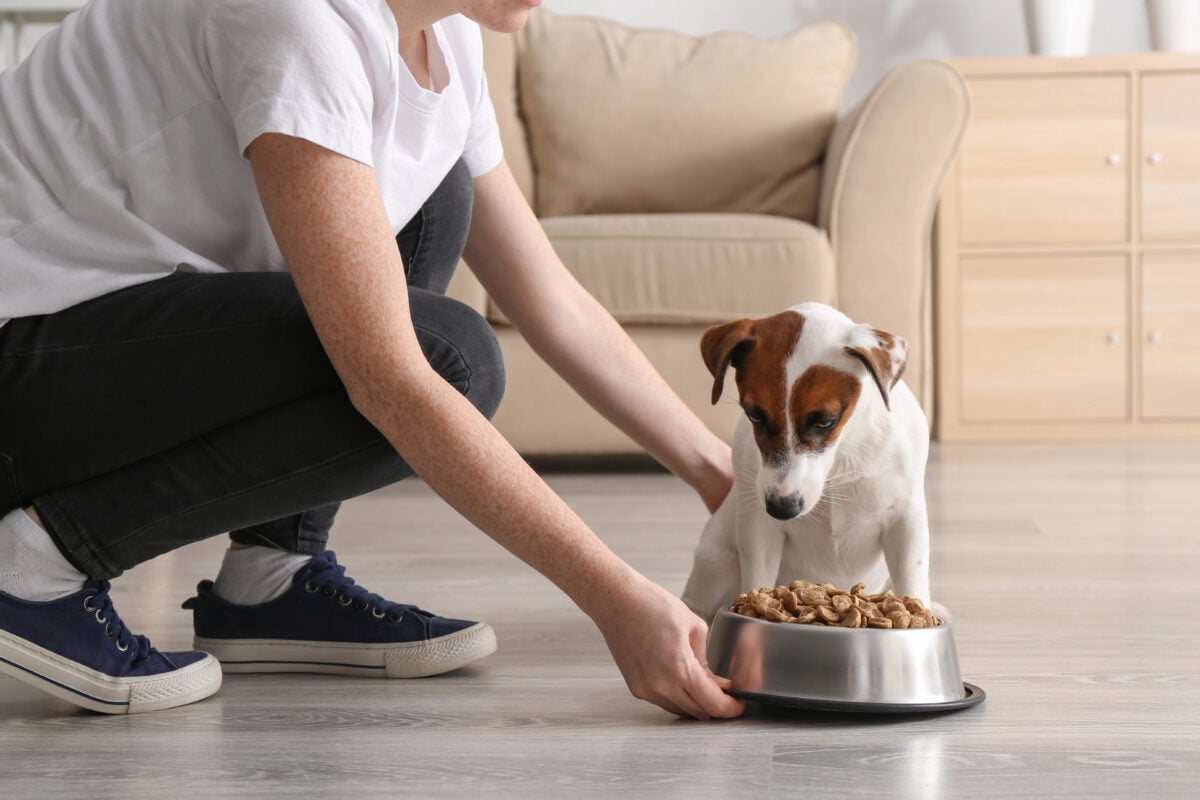
For most dogs, a slow 7-day transition works well.
Days 1–2
- 75% puppy food
- 25% adult food
Days 3–4
- 50% puppy food
- 50% adult food
Days 5–6
- 25% puppy food
- 75% adult food
Day 7
- 100% adult food
Simple, gradual transitions are usually the easiest on your dog’s stomach.
What If Their Stomach Gets Funky During The Switch?
Minor digestive upset during a careful transition can happen. You might notice:
- Slightly softer stool
- Temporary gas
- Mild appetite changes
- A day or two of mild digestive adjustment
That doesn’t automatically mean the new food is a disaster.
In many cases, the fix is simply to slow the transition down for a few more days to give the digestive system more time to adjust. Some dogs benefit from a slower 10-to-14-day transition instead of a full switch in one week.
During your transition (if stomach upset is mild), you can add a small amount of plain canned pumpkin to their meal to help things settle.
The important thing is paying attention to severity. Mild, temporary changes in stool can occur during transitions. But repeated vomiting, severe diarrhea, lethargy, refusal to eat, or symptoms lasting more than a couple of days deserve a call to your veterinarian.
The Most Common Puppy Food Transition Mistakes
Most owners don’t mess this transition up because they’re careless.
They mess it up because puppy growth is weirdly gradual, dogs mature at different speeds, and half the internet acts like there’s a single magical “correct” day to change foods.
In reality, this stage is usually much less about perfection and much more about paying attention to what your dog is actually doing.
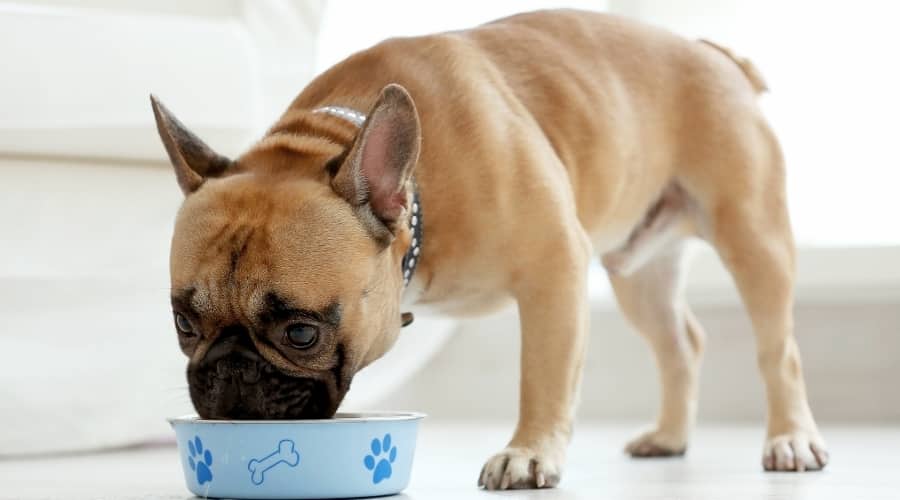
1. Treating The First Birthday Like A Nutritional Deadline
A surprising number of owners treat their dog’s first birthday like some kind of nutritional cutoff point. But dogs don’t mature overnight.
Growth timelines vary enormously depending on:
- Breed size
- Genetics
- Body condition
- Developmental rate
Some small dogs are ready before their first birthday. Many large and giant breeds absolutely are not.
And honestly, being a little early or a little late usually is not catastrophic for healthy dogs.
The bigger concern is making a major switch wildly too early in large breeds or continuing high-calorie puppy feeding long after growth has slowed significantly.
2. Assuming A Suddenly “Picky” Puppy Hates Their Food
This is one of the most common transition-age misunderstandings.
For months, your puppy may have eaten like a creature operating under the assumption that food could disappear from Earth at any moment.
Then, suddenly, they eat more slowly, leave kibble behind, skip part of breakfast, and seem dramatically less enthusiastic.
And owners immediately assume: “They must hate this food now.” But often, the simpler explanation is that their caloric demand is finally slowing down.
Of course, major appetite changes should always be discussed with your vet if they’re sudden, extreme, or accompanied by illness symptoms. But mild appetite normalization during adolescence is incredibly common.
3. Switching Everything At Once
One reason veterinarians recommend simple, gradual food transitions is that it’s much easier to identify problems when only one thing changes at a time.
If you switch the food, the protein, the treats, and the feeding routine all at once, it becomes very difficult to tell what actually triggered stomach upset if your dog reacts poorly.
4. Accidentally Overfeeding During The Transition
One sneaky problem during adolescence is that owners often keep feeding like their dog is still growing at peak puppy speed.
But eventually, the “eat everything in sight and somehow remain skinny” phase starts slowing down.
And the weight gain happens gradually enough that many people don’t notice it immediately.
This is especially common after:
- Spaying or neutering
- Growth slowing
- Activity changes
- The end of intense puppy growth spurts
That’s why monitoring body condition matters just as much as monitoring the food bowl itself.
When It’s Smart To Ask Your Vet
Many food transitions are pretty straightforward.
But there are some situations where it’s helpful to get your veterinarian involved — not because something is necessarily wrong, but because your dog may need a more individualized plan.
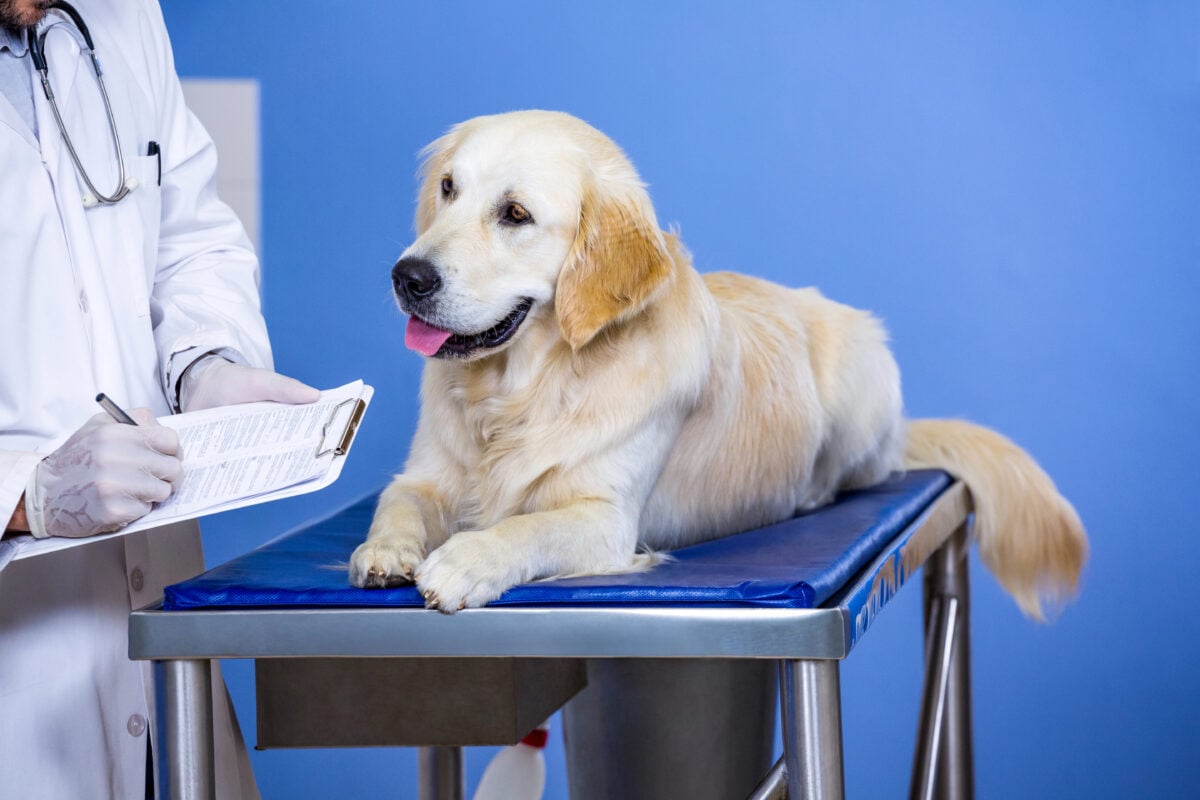
This is especially true if your dog has:
- Chronic stomach issues
- Food allergies or sensitivities
- Frequent diarrhea or vomiting
- Obesity concerns
- Unusual growth patterns
- Or belongs to a large or giant breed
Mixed-breed puppies can also make timing harder because growth expectations are less predictable. Sometimes a dog who looked like they’d stay medium-sized suddenly enters their “actually I might become a horse” phase around 8 months old.
Your vet can help evaluate:
- Body condition
- Growth rate
- Weight trends
- Calorie needs
- And whether your dog’s current food still makes sense for their development stage
This is usually less of a dramatic medical situation and more of a helpful nutritional check-in.
Frequently Asked Questions
Every puppy seems to hit this stage a little differently, which means owners tend to have a lot of questions before and during the food transition.
These are some of the most common ones veterinarians hear, but if your dog is currently doing something weird, confusing, or dramatically food-related, share your question in the comments.
My Dog Just Got Fixed. Does That Mean I Should Switch Foods Immediately?
No. While a spay or neuter surgery drops a dog’s metabolic rate within a matter of weeks, it doesn’t speed up their skeletal maturity.
A large breed dog fixed at six months still needs the specific bone-building mineral ratios found in puppy food for several more months.
Instead of rushing the switch to adult food, the safer approach is to strictly practice portion control by slightly reducing the daily amount of puppy food they receive to prevent weight gain while their bones finish growing.
Can Adult Dogs Eat Puppy Food?
Occasionally? Usually not a big deal.
If your adult dog steals a few bites of puppy food, that’s generally fine. The issue is long-term feeding.
Puppy food is higher in calories, richer in fat, and designed for growth. Over time, regularly eating it can contribute to weight gain, excess calorie intake, and extra joint strain in larger dogs.
My Puppy Suddenly Eats Less — Is That Normal?
Usually, yes. Many puppies naturally become less food-obsessed as growth slows down.
Owners often panic when a puppy who once inhaled meals suddenly starts leaving kibble behind, but mild appetite normalization during adolescence is extremely common.
The key difference is whether your dog otherwise seems healthy, energetic, and is maintaining weight normally.
What If My Puppy Refuses Adult Food During The Switch?
Some dogs transition without caring at all. Others act personally offended by the menu change.
If your puppy resists the new food, it often helps to slow the transition down, mix the foods more gradually, add a little warm water or bone broth, or use a simple topper they already tolerate well.
Many dogs simply need time to adjust to new smells, textures, or calorie density. And honestly, some puppies just object to change on principle.
Can I Switch Straight To “All Life Stages” Food?
In many cases, yes — as long as the formula meets appropriate nutritional standards for your dog’s size and development stage.
That said, many owners and veterinarians still prefer dedicated adult formulas once growth slows because they’re:
- Often less calorie-dense
- Better suited for maintenance
- Easier for long-term weight management.
For large and giant breeds, it’s important to make sure any all-life-stages formula is appropriate for large-breed growth if your dog is still developing.
The Puppy Appetite Slows Down. The Personality Usually Doesn’t.
Switching off puppy food is one of those moments where you suddenly realize your dog isn’t really a tiny puppy anymore, even if they still occasionally make deeply questionable life decisions at full speed.
And honestly, the next phase comes with its own weird changes too. Many owners start noticing shifts in behavior, energy, sleep habits, and bonding around the same time growth begins slowing down.
If that sounds familiar, our guides to why dogs sleep against you, signs your dog has imprinted on you, and why dogs follow you everywhere are good next reads for understanding what changes as puppies grow into adult dogs.
How old was your dog when you finally switched off puppy food? And did they suddenly stop inhaling meals overnight, or are they still eating like there’s a kibble shortage? Share your dog’s age, breed, and “food personality” in the comments.