When you purchase through links on our site, we may earn a commission at no extra cost to you. Learn more.
Your dog has already walked, played, and followed you through a busy day. Yet instead of curling up, they are racing across the room, biting your sleeves, barking at every sound, and acting as though they have endless energy.
Table of Contents
Some dogs look more energetic when they are actually exhausted. Once overtired, they may become faster, louder, rougher, and less responsive, causing owners to offer even more stimulation when what the dog really needs is rest.
The timing and surrounding behavior can help you tell the difference. Here are nine surprising things dogs do when they are overtired, how to distinguish exhaustion from boredom or anxiety, and what can help them finally settle.
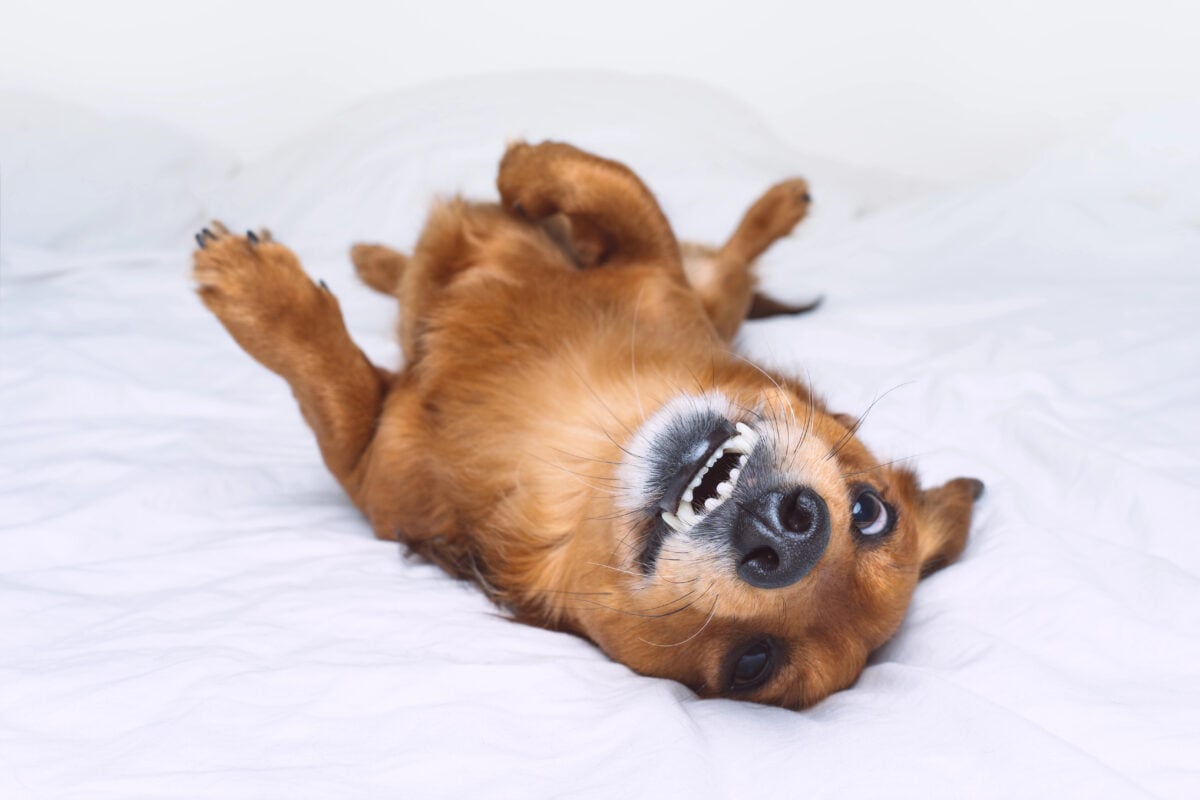
Quick Answer: What Do Dogs Do When They’re Overtired?
Overtired dogs often act hyper instead of sleepy. They may race around, nip harder, play too roughly, ignore familiar commands, bark or whine, pace, demand attention, chew things, or become unusually cranky.
Tiredness moves higheron the list when the behavior starts after a busy day, missed nap, long play session, daycare visit, or exciting outing. If your dog gets even wilder when you add more activity, they may need help settling rather than another round of exercise.
No single behavior proves that your dog is overtired. Boredom, anxiety, pain, overheating, and illness can look similar, so pay attention to when the behavior started and what else is happening.
What Does “Overtired” Mean For A Dog?
An overtired dog needs sleep but is having trouble switching off. Instead of finding a comfortable spot and drifting off, they may follow you around, react to every sound, or bounce from one chaotic behavior to another.
A tired dog can usually settle once the fun ends. An overtired dog may keep restarting the fun even though their self-control is rapidly disappearing.
| A Tired Dog May: | An Overtired Dog May: |
|---|---|
| Find a bed or quiet place | Follow you and demand attention |
| Respond normally before settling | Ignore familiar cues |
| Lie down and stay comfortable | Pace, repeatedly get up, or change positions |
| Slow down or lose interest in play | Become faster, louder, or rougher |
| Fall asleep when activity ends | Keep restarting play despite appearing exhausted |
| Wake up behaving normally | Remain wild until helped to settle |
Puppies are especially prone to this. The world is far too interesting for a young dog to voluntarily admit they need a nap, so they may continue biting, chasing, and investigating everything around them.
Adult dogs can become overtired, too. Daycare, visitors, travel, long outings, training classes, or an unusually busy household can leave a grown dog exhausted but still too wound up to relax.
Why Do Overtired Dogs Act More Energetic?
The more tired some dogs become, the less self-control they seem to have. They may run faster but listen less, play harder but enjoy it less, and react to things they would normally ignore.
This is where owners can accidentally make the situation worse. The dog looks full of energy, so out comes the ball, leash, or another exciting toy.
More activity might redirect the chaos for a few minutes, but it can also wind the dog up even further. Now they are still exhausted, only with another burst of excitement keeping them awake.
The Overtired Loop
- Your dog becomes wild or restless.
- You assume they need more exercise or entertainment.
- The activity makes them even more excited.
- They become harder to redirect or settle.
- You add another activity because they still look energetic.
The goal isn’t to exercise your dog less, but to recognize when their needs have already been met.
Look At What Happened Before The Behavior
Timing is one of the best clues that your dog may be overtired. Think about what they have done and how long they have been awake.
Did they:
- Miss a normal nap?
- Spend the day at daycare or boarding?
- Stay awake while visitors were over?
- Take a longer walk or hike than usual?
- Play intensely with another dog?
- Attend a training class?
- Travel or visit an unfamiliar place?
- Go to a family gathering or outdoor event?
- Have a grooming or veterinary appointment?
- Stay up because the household was unusually busy?
- Remain awake much later than usual?
Dogs do not have to run for hours to become exhausted. Meeting unfamiliar people, visiting a new place, learning during training, or spending a day around other dogs can be tiring even when the physical activity seems moderate.
If the chaos regularly appears after busy days or around the same time each evening, tiredness moves higher on the list. If it starts without an obvious reason, continues after rest, or comes with pain, weakness, vomiting, difficulty breathing, or other physical symptoms, something else may be going on.
9 Things Dogs Do When They’re Overtired
An overtired dog rarely holds up a sign asking for a nap. More often, they communicate through wild, frustrating, or completely out-of-character behavior.
One sign alone does not confirm that your dog is exhausted. Look for several behaviors appearing together, especially after a long, exciting, or unusually busy day.
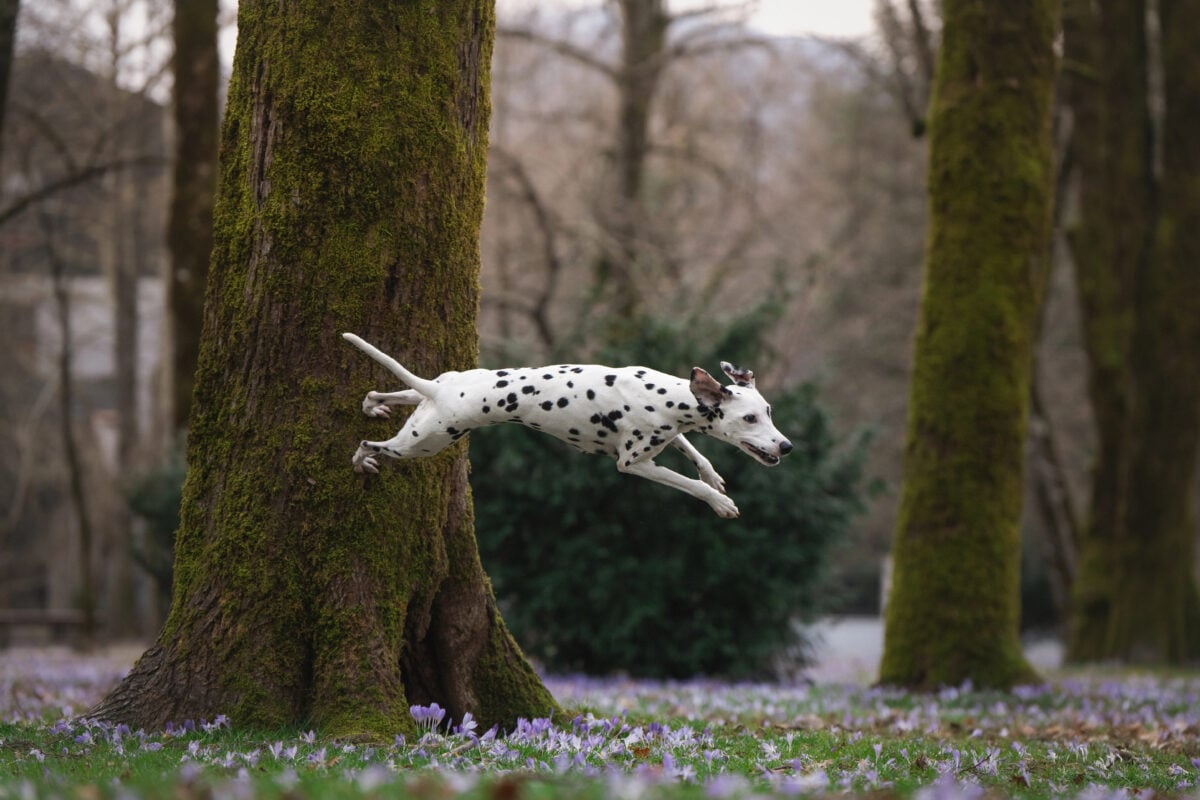
1. They Get A Sudden Case Of The Zoomies
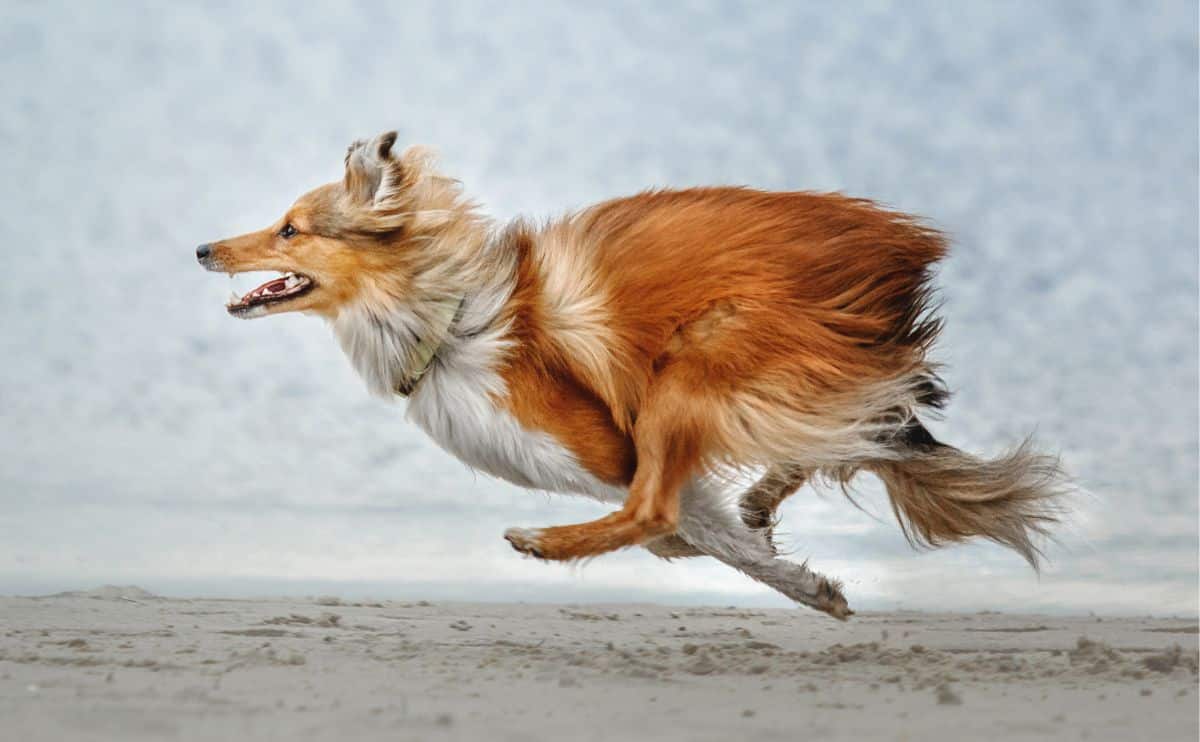
One minute your dog is slowing down, and the next they are sprinting through the house, skidding around corners, bouncing off furniture, and grabbing things as they pass.
These sudden bursts of energy are commonly called dog zoomies. You may also hear them called frenetic random activity periods, or FRAPs.
Zoomies are often harmless. Dogs may race around because they are excited, releasing tension after a bath, or finally getting a chance to move after being inactive.
Overtired zoomies tend to appear near the end of a busy day or after a dog has stayed awake too long. The running may look frantic rather than playful, and the dog may be difficult to interrupt or unable to settle when the burst ends.
Keep your dog away from stairs, slippery floors, sharp corners, and breakable objects. Once they slow down, resist immediately starting another exciting game.
Evening Zoomies Do Not Always Mean More Exercise
If your dog has spent most of the day resting, evening zoomies may indicate unused energy. But if they have already walked, played, trained, socialized, or attended daycare, another intense workout may wind them up further.
Look at the entire day before deciding what the behavior means.
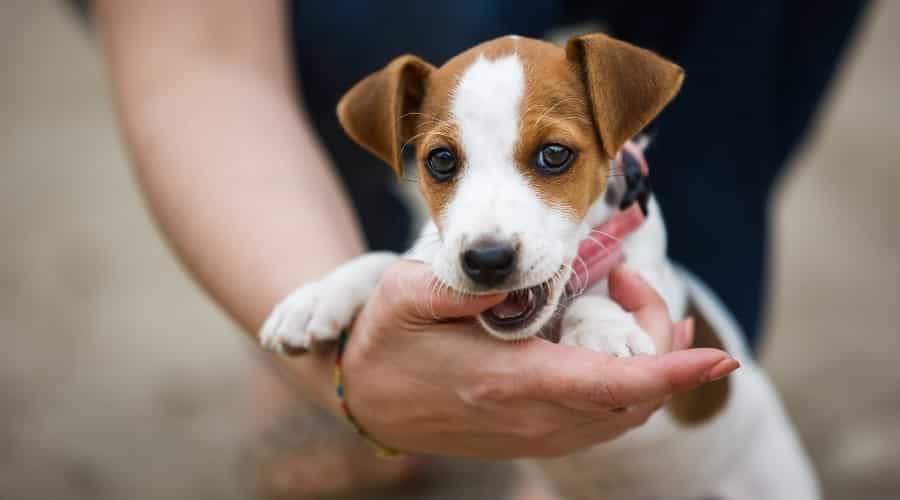
2. They Become Mouthier Or Start Nipping
An overtired dog may suddenly grab hands, sleeves, pant legs, shoelaces, or the leash. Puppies can become especially bitey when they have been awake too long.
The biting may feel harder and less controlled than it did earlier in the day. Your dog might ignore a toy offered in place of your hand or immediately return to nipping after you stop the interaction.
Mouthing is normal during puppy play and exploration, and teething gives young dogs another reason to chew. Adult dogs may also mouth people during play or when seeking attention.
Timing helps determine the cause. If the biting gets much worse in the evening, after prolonged play, or near the end of a stimulating outing, tiredness may be contributing.
Stop moving your hands and clothes in ways that encourage chasing and grabbing. Calmly end rough play, offer an appropriate chew, and begin transitioning your dog toward rest.
Avoid shouting or squealing if noise makes your dog more excited. What begins as an attempt to discourage biting can quickly turn into another stimulating game.
3. Their Play Gets Wild Or Too Rough
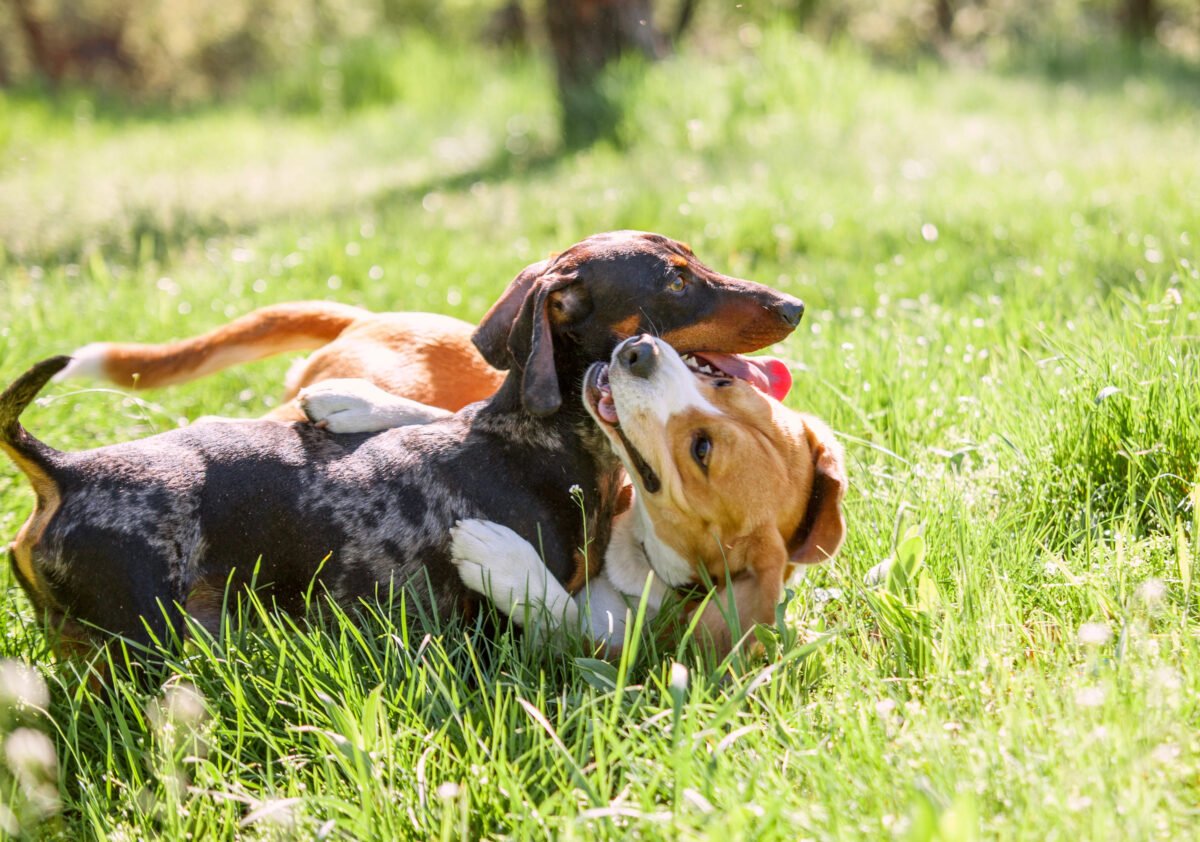
Play can deteriorate as an overtired dog loses self-control. They may body-slam, grab too hard, bark in another dog’s face, ignore requests for space, or repeatedly restart a game that should have ended.
Normal dog play often includes chasing, wrestling, mouthing, and play growling. The dogs should take turns, pause occasionally, and willingly return to the interaction.
Watch more closely when one dog keeps trying to leave, hide, or rest while the other refuses to stop. Repeated pinning, escalating vocalization, stiff body language, or an inability to interrupt the interaction means the dogs need a break.
Do not wait for the tired dog to make a good decision. Calmly separate the dogs and give each one a quiet place to decompress.
This is especially important after daycare, dog-park visits, or extended playdates. A dog may still chase a playmate even though they are no longer interacting thoughtfully or safely.
4. They “Forget” Commands They Normally Know
Your dog responded to their name, “sit,” and “leave it” all afternoon. Now they seem to have forgotten every bit of training they have ever received.
They may stare past you, respond slowly, break position immediately, or return to the unwanted behavior as soon as you redirect them.
This does not necessarily mean your dog is stubborn or deliberately ignoring you. They may be too excited, distracted, or tired to process what you are asking.
Repeating the cue more loudly usually does not restore their focus. It may only frustrate both of you.
Ask for something simple once. If your dog cannot respond to a cue they usually know well, reduce the stimulation instead of turning the moment into an obedience session.
Move to a quieter area, offer a bathroom break, and help them settle. Training is more productive when your dog has recovered enough to think clearly.
5. They Whine, Pace, Or Struggle To Settle
Some overtired dogs wander from room to room as though they cannot find the right place to land. They may circle, lie down briefly, get up again, follow you, or repeatedly change resting spots.
Others whine even after their usual needs seem met. The sound may stop when you interact with them and begin again as soon as the attention ends.
This can easily look like a request for another walk. Before reaching for the leash, consider whether your dog has already exercised, when they last slept, and whether the day included unusual excitement.
Take them out for a calm bathroom break if needed. Then reduce household activity and guide them to a familiar place to rest.
Pacing and whining do not always come from tiredness. Anxiety, pain, nausea, bathroom urgency, overheating, and other physical problems can also make dogs restless.
Watch for panting, trembling, a hunched posture, repeated stretching, vomiting, diarrhea, reluctance to move, or other changes. Persistent panting and pacing without an obvious explanation warrants veterinary advice.
6. They Become Clingy Or Demand Constant Attention
An overtired dog may suddenly behave as though they cannot manage without your constant involvement. They might paw at you, climb into your lap, nudge your hands, or follow you closely from room to room.
Some bring toy after toy but never settle into a real game. Others bark or whine the moment you stop looking at them.
It is easy to assume the dog is asking for entertainment. Sometimes, they are looking for help making the transition from activity to rest.
Respond calmly rather than launching into another exciting interaction. A quiet bathroom break, familiar chew, dimmer room, or predictable bedtime routine may be more useful than a new game.
Clinginess can also accompany fear, anxiety, pain, and illness. If this is a sudden personality change or appears with physical symptoms, do not assume your dog simply missed a nap.

7. They Bark At Everything And Nothing
The neighbor closes a car door. Someone walks across the kitchen. Another dog shifts on the couch. Suddenly, every tiny event deserves a full announcement.
Overtired dogs may have less patience for ordinary sounds and movement. Puppies can become particularly noisy during the evening hours when the household is active, but they are running out of self-control.
Your dog might also bark directly at you, especially if barking has previously earned attention, play, or access to something exciting.
Barking has many possible explanations, including fear, alarm, frustration, boredom, excitement, and learned attention-seeking. The overtired pattern is more likely when the barking follows a packed day and appears alongside zoomies, nipping, pacing, or rough play.
Avoid shouting over your dog. Additional noise can turn an already overstimulating situation into a louder one.
Instead, reduce what is happening around them. Close the curtains, lower the television, separate them from active pets or children, and help them move toward rest.
Learn more about why dogs bark and whether dogs get tired of barking.
8. They Chew Or Destroy Whatever Is Nearby
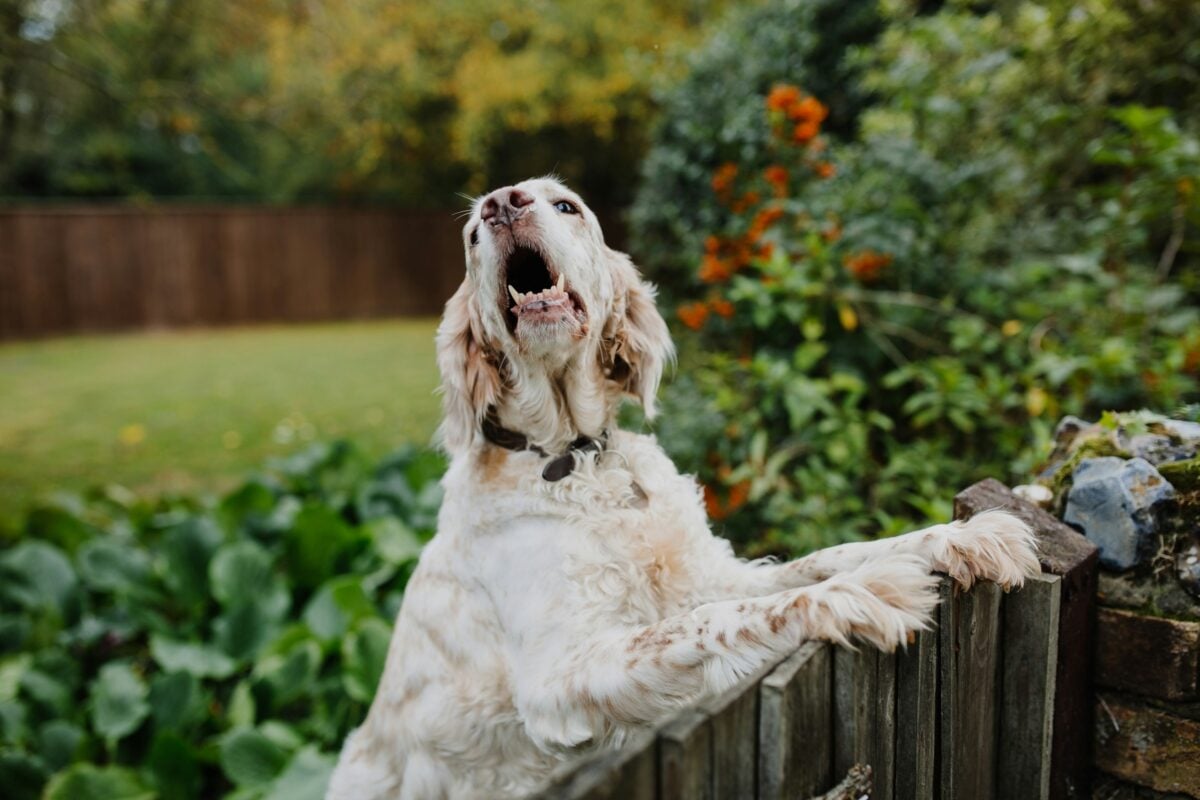
Cushions, blankets, rugs, shoes, table legs, and remote controls can all become targets when a dog is too wound up to settle.
Chewing gives the dog something repetitive to do and may briefly hold their attention. An overtired puppy may also grab household items because every attempt to retrieve the object creates another exciting chase.
Do not run after your dog unless they have something dangerous. Calmly trade for an appropriate item and make tempting objects unavailable.
A familiar, safe chew toy may help some dogs wind down. Depending on your dog, an appropriately sized dental chew can also provide a quieter outlet.
Tiredness is only one possible explanation. Puppies chew while teething and exploring, while dogs of any age may become destructive because of boredom, anxiety, hunger, or insufficient exercise.
Again, look at the pattern. Destruction that erupts after a packed day points in a different direction from chewing that starts after your dog has spent hours with nothing to do.
9. They Become Cranky Or Lose Patience
A dog who cheerfully tolerated handling and play earlier may begin walking away, grumbling, guarding a resting spot, or snapping when another dog will not leave them alone.
They might startle more easily or react strongly to sounds and movement that would not normally bother them. Some become less tolerant of children, visitors, grooming, or physical affection.
Growling is valuable communication. It tells you that your dog needs something to change.
Do not punish the warning. Stop the interaction, create space, and allow your dog to decompress somewhere they will not be disturbed.
A dog who becomes irritable only at the end of busy days may be running out of patience along with energy. However, sudden or repeated irritability can also indicate pain, fear, resource guarding, or illness.
Pay particular attention if your dog reacts when touched in one area, hesitates to move, guards part of their body, or becomes irritable without a clear connection to activity or missed rest. Those changes deserve a conversation with your veterinarian.
The Puppy “Witching Hour”
Many puppies have a predictable time each evening when their good manners disappear. They race around the house, attack pant legs, bark, grab the leash, chew the rug, and seem completely unable to hear the word “no.”
Tiredness is a common contributor, but it is not the only possibility. Several needs may collide at the end of the day:
- Your puppy missed an afternoon nap
- They need to go outside
- They are hungry or thirsty
- Their mouth hurts from teething
- The household has become noisy or active
- They have unused energy after a quiet day
- They have had so much activity that they cannot switch off
- Evening attention has unintentionally rewarded wild behavior
Start with the basics. Take your puppy outside for a calm bathroom break, offer water, and think about how much activity and sleep they have had.
If they spent most of the day resting, they may need an appropriate outlet for their energy. If they have already played, walked, trained, explored, and socialized, another high-energy game may push them further into meltdown mode.
Your Puppy May Need A Nap, Not Another Game
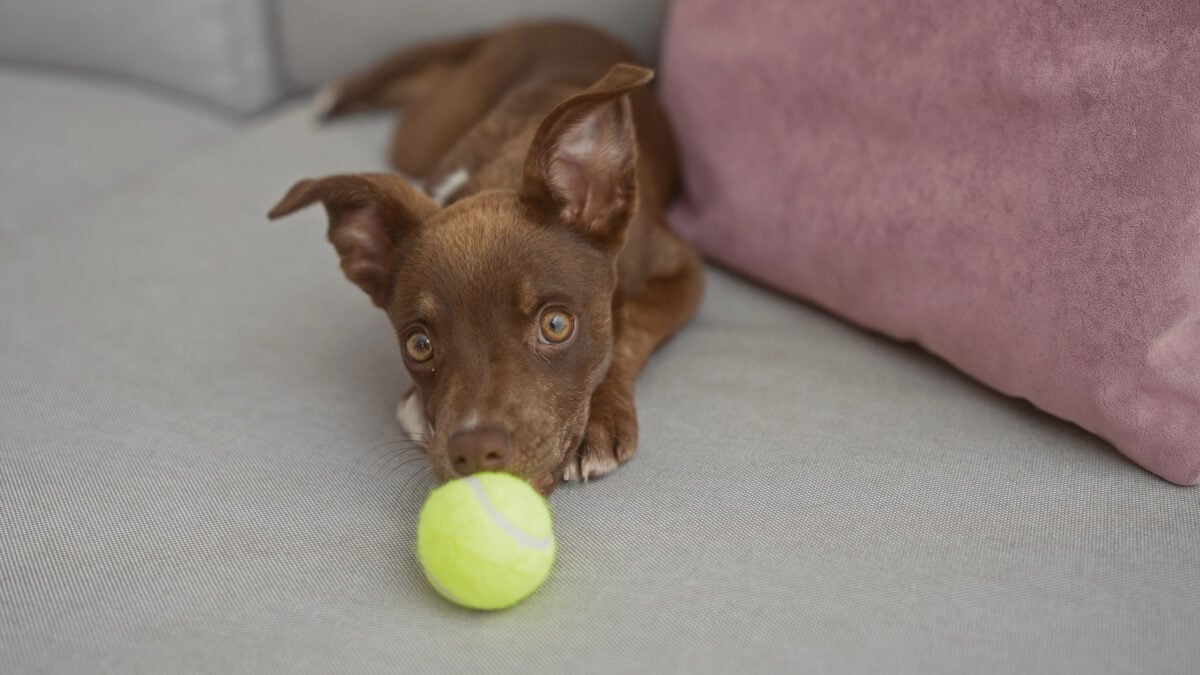
Puppies commonly need approximately 18 to 20 hours of sleep over 24 hours. However, many puppies will continue playing and exploring instead of putting themselves to bed.
Regular naps can help prevent the point when playful mouthing turns into nonstop biting and ordinary puppy energy becomes evening chaos.
Overtired Puppies vs Adult Dogs
Dogs of any age can become overtired, but puppies often show it more dramatically. They have limited self-control, tire quickly, and may not recognize when they need to stop.
An adult dog is more likely to settle independently when their normal routine is intact. Overtired behavior may appear after an unusually demanding experience, such as daycare, boarding, travel, visitors, or a long day outdoors.
| Overtired Puppies May: | Overtired Adult Dogs May: |
|---|---|
| Nip hands, clothes, and feet | Pace, bark, or become irritable |
| Have a predictable evening meltdown | Struggle after an unusually busy day |
| Need naps built into the schedule | Seek a familiar resting place |
| Continue playing until they lose control | Keep reacting to household activity |
| Become distracted very quickly | Respond less reliably than usual |
| Need help ending play | Withdraw or demand more attention |
These are common patterns, not rigid rules. An adult dog may become mouthy, and an overtired puppy may quietly withdraw. Senior dogs may also tire more quickly than they once did.
If an older dog suddenly struggles to settle, becomes unusually irritable, or needs much more recovery after ordinary activity, mention the change to your veterinarian. Pain and age-related health problems can look like simple tiredness.
Is My Dog Overtired, Bored, Or Anxious?
Overtiredness, boredom, and anxiety can all produce a restless dog, but the behavior usually begins for different reasons. Look at what happened before it started and what helps it improve.
| Clue | Overtired | Bored | Anxious |
|---|---|---|---|
| Typical timing | After prolonged activity, excitement, or missed rest | After too little activity or extended inactivity | After too little activity or extended inactivity |
| Energy | Frantic and poorly controlled | Available and looking for an outlet | Tense, restless, or avoidant |
| Response to activity | May become even wilder | Usually improves with suitable engagement | Dependson the trigger |
| Body language | Loose but chaotic or impulsive | Generally relaxed and attention-seeking | May pant, tremble, hide, freeze, or remain vigilant |
| Ability to settle | Struggles even though they appear exhausted | Often settles after physical and mental needs are met | May remain unable to relax while the trigger is present |
| Common pattern | Follows busy days or missed naps | Follows long periods with little to do | Repeats around separation, noises, places, people, or other triggers |
Signs Your Dog May Be Overtired
Overtiredness moves higher on the list when:
- Your dog has already had an active or stimulating day
- The behavior starts near the end of that activity
- They become less coordinated or responsive
- Play becomes rougher rather than more enjoyable
- Adding activity makes the behavior worse
- A calm environment and adequate sleep restore their normal behavior
- The same meltdown happens after missed naps or late nights
Signs Your Dog May Be Bored
A bored dog has energy available and too little opportunity to use it. They may follow you, bring toys, bark for attention, steal objects, dig, chew, or invent their own entertainment.
Unlike an overtired dog, a bored dog often becomes calmer and more satisfied after an appropriate walk, training session, sniffing activity, or game.
Consider boredom when your dog has spent much of the day alone or inactive and becomes restless as soon as someone is available. Our guide to things dogs do when they are bored
covers other clues.
Signs Your Dog May Be Anxious
An anxious dog is responding to a real or anticipated threat. The trigger may be obvious, such as thunder, fireworks, visitors, travel, or being left alone.
Look for:
- Panting without exercise or heat
- Trembling
- Pinned-back ears
- A tucked tail
- Hiding
- Freezing
- Repeated lip licking
- Refusing food
- Trying to escape
- Remaining alert even when the room is quiet
Anxiety can also exhaust a dog. A stressful event may leave them tired but still unable to relax, meaning more than one explanation can be true at once.
Learn more about general dog anxiety and separation anxiety in dogs.
Try Changing The Environment, Not Adding Activity
Move your dog to a quiet, familiar space and reduce noise, light, movement, and interaction.
An overtired dog may begin slowing down once stimulation disappears. A bored dog may remain alert and ready to engage, while an anxious dog may continue watching for the trigger.
What Makes A Dog Overtired?
Dogs can become overtired from much more than physical exercise. Social interaction, unfamiliar environments, disrupted routines, and hours spent monitoring household activity can all make it difficult to settle.
Common causes include:
- Missing normal naps
- Staying awake during a busy household day
- Going to bed later than usual
- Daycare or boarding
- Visitors, parties, or family gatherings
- Travel
- Long walks or hikes
- Repetitive fetch
- Extended play with another dog
- Dog parks
- Training classes
- Grooming or veterinary visits
- Moving or visiting a new place
- A sudden schedule change
- Heat or physically demanding activity
A dog doesn’t have to participate constantly to get tired. They may spend an entire gathering watching unfamiliar people, reacting to noises, and following movement instead of resting.
Daycare can be particularly tiring because dogs may remain socially alert even during breaks. A dog who comes home wild, mouthy, or unable to settle may be overstimulated rather than ready for another long walk.
Can Too Much Exercise Make A Dog Restless?
Yes. A long or unusually intense workout may leave some dogs physically exhausted but still highly aroused.
Repetitive, exciting activities such as fetch can be especially difficult to stop because the dog remains focused on the next throw. Their continued enthusiasm does not necessarily mean their body needs more repetitions.
Exercise should match your dog’s age, health, conditioning, breed, and the weather. A puppy with developing joints, a senior dog, and a conditioned adult athlete do not have the same limits.
Stop activity if your dog shows physical distress, weakness, poor coordination, excessive panting, or difficulty breathing. Those signs require a different response than ordinary overtired behavior.
How To Help An Overtired Dog Settle
The goal is to make resting easier, not to force your dog to sleep. Start by checking basic needs, then remove the activity and attention that may be keeping them wound up.
1. Start With A Calm Bathroom Break
Take your dog outside before settling them, especially if they have been playing, traveling, or awake for several hours. A dog who needs to urinate or have a bowel movement may pace, whine, follow you, or repeatedly get up when they try to rest.
Keep the trip quiet and uneventful rather than turning it into another walk or backyard game.
Return inside once they have finished. This is not the moment for running, fetch, or an exciting neighborhood adventure.
2. Offer Fresh Water
Make sure your dog can access clean water, particularly after exercise or time outdoors. Do not force them to drink.
A dog who has been playing intensely may gulp water and immediately return to the action. Ending the game and moving toward a calmer environment gives them a chance to drink and recover without another burst of activity.
Excessive thirst, repeated vomiting after drinking, or an inability to keep water down warrants veterinary advice.
3. End High-Energy Activity
Put away the ball, stop wrestling, and separate dogs who keep restarting play. Use calm movements and a neutral voice so ending the activity does not become another exciting event.
If your dog repeatedly shoves a toy into your hand, avoid throwing it “one last time.” One more throw has a way of becoming 20, particularly for dogs who struggle to stop a favorite game.
4. Lower The Stimulation
Look at the environment from your dog’s perspective. The television is playing, people are moving around, children are laughing, another pet is carrying a toy, and activity is visible through the window.
An exhausted dog may continue monitoring all of it instead of sleeping.
Try:
- Dimming the lights
- Lowering the television or music
- Closing curtains or blinds
- Asking children to give the dog space
- Separating active pets
- Reducing conversation and movement nearby
- Moving away from doors and windows
- Turning off noisy toys
You do not need complete silence. The goal is to make the resting area less interesting than everything that came before it.
5. Guide Them To A Familiar Resting Place
Encourage your dog toward a bed, crate, pen, gated room, or other place they already associate with calm behavior.
The space should be comfortable, appropriately sized, and away from heavy household traffic. Some dogs settle better near their family, while others need more distance from movement and noise.
A crate can help a crate-trained dog switch off, but it should not appear suddenly only when the dog becomes difficult. Build a positive association with the space during calm moments, too.
Never drag, shove, or angrily lock your dog away. The resting area should feel safe, not like punishment for losing control.
6. Offer A Quiet, Familiar Activity
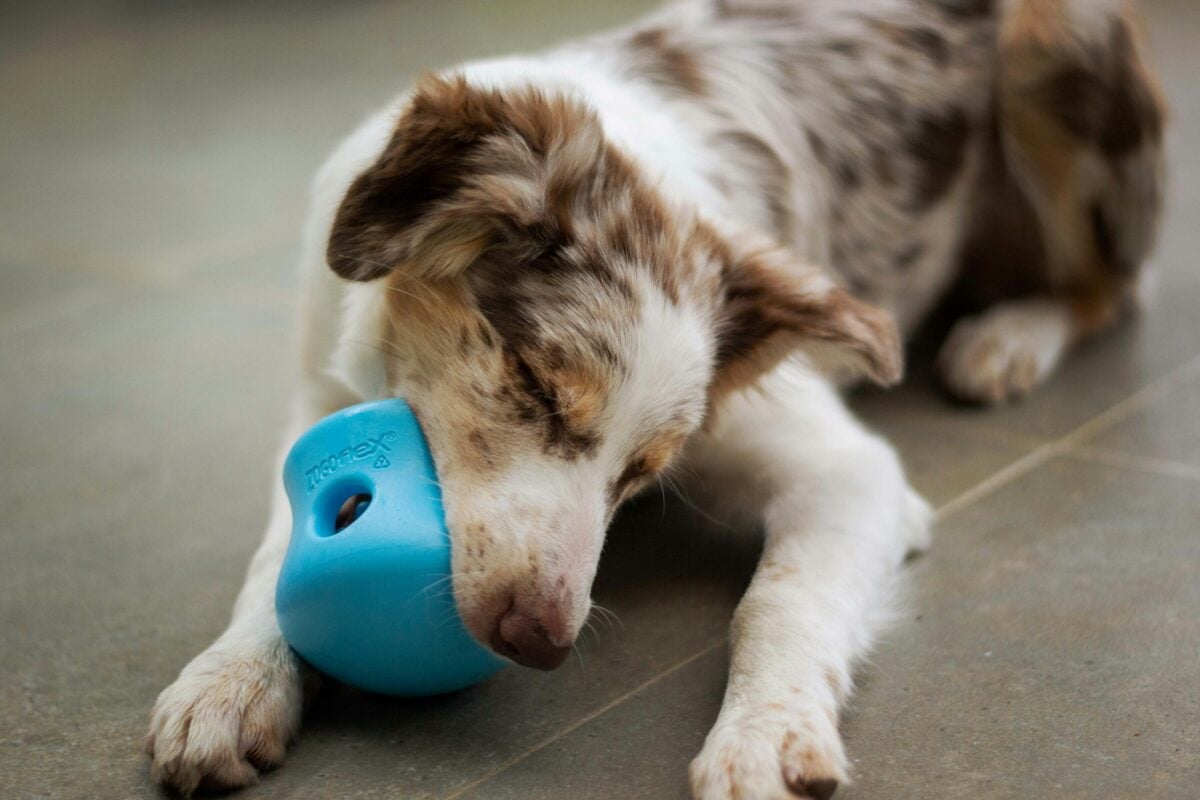
Some dogs settle more easily with something safe to chew or lick. The repetitive activity can provide a bridge between excitement and sleep.
Choose an option your dog already knows how to use calmly, such as:
- A familiar chew toy
- An appropriately sized edible chew
- A stuffed rubber toy
- A lick mat
- A small portion of their regular food in a simple feeder
Skip complicated new puzzles when your dog is already frustrated and impulsive. A challenging activity may wake them up further instead of helping them wind down.
7. Give Them A Chance To Fall Asleep
Once your dog’s basic needs have been met, stop trying to manage every second. Repeatedly speaking to them, petting them, repositioning their bed, or checking whether they are asleep can keep them engaged.
Sit quietly or leave the immediate area if your dog is comfortable being alone. Allow them to circle, sigh, change positions, and settle without constant intervention.
If touching makes them mouthier, more excited, or more restless, give them additional space. Not every dog finds petting relaxing when overtired.
8. Build Rest Into Tomorrow’s Schedule
If the meltdown happens around the same time each day, don’t wait for the chaos to begin. Add a quiet period before your dog normally loses control.
That might mean:
- Scheduling a puppy nap before dinner
- Ending daycare earlier
- Shortening an intense playdate
- Following training class with a quiet evening
- Avoiding several major outings in one day
- Giving your dog a calm room while visitors are present
- Ending fetch while your dog can still respond and disengage
The goal is to prevent predictable exhaustion from becoming a nightly battle.
Create A Simple Wind-Down Routine
Dogs often settle more easily when the same calm events happen in the same order.
Try: quiet bathroom break → water → lower lights → familiar chew → resting area.
Keep the routine short and uneventful. With repetition, those cues may begin signaling that the busy part of the day is over.
What Should You Avoid Doing?
When a dog is acting wild, the natural response is to match that energy with louder instructions, faster redirection, or more exercise. That can keep the cycle going.
Avoid:
- Starting another intense game automatically
- Repeatedly throwing a ball until your dog collapses
- Shouting over barking or whining
- Chasing a dog who grabs household objects
- Wrestling with a mouthy puppy
- Drilling commands when your dog can no longer focus
- Introducing a difficult new puzzle
- Using the crate angrily
- Forcing physical affection
- Punishing growling or other requests for space
- Assuming every restless dog only needs a nap
Overtired behavior is frustrating, but punishment does not teach a dog how to relax. A predictable routine, reduced stimulation, and reinforcement for calm behavior are more useful over time.
How Long Does It Take An Overtired Dog To Settle?
There is no universal timeline. Some dogs fall asleep within minutes once the room becomes calm, while others need longer to come down from an exciting day.
The dog’s age, temperament, routine, and level of stimulation all matter. Puppies may fight sleep until the environment becomes very boring, while an adult dog may settle quickly once visitors leave or another pet stops initiating play.
Look for gradual signs that your dog is winding down:
- Movements become slower
- Barking or mouthing stops
- Their eyes begin to look heavy
- They remain lying down
- Their breathing becomes slower and steadier
- Their body looks loose rather than tense
- They stop reacting to minor sounds
A dog who remains distressed, pants heavily, repeatedly gets up, cries, or cannot become comfortable may not simply be overtired.

When Wild Behavior Is Not Just Overtiredness
Overtiredness should improve with reduced stimulation and adequate rest. Behavior that appears suddenly, continues despite rest, or comes with physical symptoms deserves a closer look.
Contact your veterinarian if your dog:
- Develops a sudden or unexplained behavior change
- Cannot settle despite repeated opportunities to rest
- Seems painful or reluctant to move
- Becomes unusually aggressive or sensitive to touch
- Stops eating or drinking
- Vomits or develops diarrhea
- Coughs, gags, or has difficulty breathing
- Appears confused or poorly coordinated
- Continues pacing or panting in a calm, cool room
- Sleeps much more or less than usual
- Regularly struggles to sleep
- Does not return to normal after resting
Anxiety can also keep dogs awake and restless. If the behavior repeatedly occurs around separation, noises, visitors, travel, or another identifiable trigger, discuss it with your veterinarian or a qualified behavior professional.
Watch For Overheating
A dog who becomes frantic, weak, or poorly coordinated during or after exercise may need urgent medical attention, not simply a nap.
Warning signs of heat stroke in dogs can include:
- Heavy or distressed panting
- Excessive drooling
- Very red or pale gums
- Vomiting or diarrhea
- Weakness
- Confusion
- Poor coordination
- Collapse
- Seizures
Move your dog out of the heat, begin appropriate cooling, and contact a veterinarian immediately. Do not wait to see whether sleep fixes the problem.
Learn more about why dogs pant excessively and when it may signal something more serious.
Exercise-Induced Collapse Is Different From Tiredness
Some dogs develop weakness, poor coordination, or collapse during intense activity because of exercise-induced collapse. Labrador Retrievers are commonly associated with the inherited condition, although other breeds can be affected.
If a dog collapses, stop activity immediately and seek veterinary guidance. Do not encourage them to “push through” or assume they will recover with an ordinary nap.
Seek emergency veterinary care for collapse, difficulty breathing, blue or gray gums, seizures, severe weakness, or loss of responsiveness.
Frequently Asked Questions
Overtired behavior can be confusing because an exhausted dog may look anything but ready for sleep. Here are answers to common questions about wild evenings, fighting naps, puppy biting, and dogs who cannot seem to switch off.
Don’t see your question? Respond in the comments, and we’ll get back to you!
How Can I Tell If My Dog Is Overtired?
Look at what happened before the behavior began. Overtiredness becomes more likely when your dog has been awake for a long time, missed a normal nap, or had an unusually active or stimulating day.
You may notice several signs together, such as frantic zoomies, harder mouthing, rough play, poor responses to familiar cues, pacing, barking, chewing, or irritability. If a calm environment and adequate sleep restore your dog’s normal behavior, tiredness was likely contributing.
No single behavior confirms overtiredness. Consider anxiety, boredom, pain, overheating, and illness when the change is unexplained or does not improve after rest.
Why Does My Dog Get Hyper When Tired?
Some dogs lose self-control as they become more tired. Instead of slowing down, they run faster, react more strongly, and jump from one impulsive behavior to another.
Owners may then offer more play because the dog appears energetic. That extra excitement can keep an exhausted dog awake even longer.
Why Does My Puppy Bite More At Night?
Your puppy may be tired after processing an entire day of play, training, household activity, and new experiences. As their self-control fades, ordinary mouthing can become harder, faster, and more difficult to redirect.
Teething, hunger, a bathroom need, unused energy, and learned attention-seeking can also contribute to nighttime biting. Check those needs before assuming your puppy only needs sleep.
Should I Put An Overtired Puppy In A Crate?
A crate can help a crate-trained puppy settle if they already view it as a safe, comfortable resting place. Take your puppy outside first, provide water, and calmly guide them into the crate as part of a familiar nap or bedtime routine.
Do not angrily place your puppy in the crate because they are biting or acting wild. The crate should not feel like punishment, and puppies still need age-appropriate bathroom breaks, exercise, social interaction, and time outside confinement.
Do Adult Dogs Get Overtired?
Yes. Adult dogs may become overtired after daycare, boarding, travel, visitors, training, extended play, a long outing, or any major disruption to their normal rest.
They may show it less dramatically than puppies. An overtired adult might pace, bark, become clingy or irritable, struggle to settle, or react to minor household activity.
How Long Should An Overtired Dog Rest?
There is no exact amount that works for every dog. When possible, let your dog sleep until they wake naturally, then watch for a return to normal focus, coordination, and behavior.
Puppies typically need much more total sleep than adult dogs and may require several naps throughout the day. Dogs recovering from an unusually demanding experience may also sleep more than usual.
Contact your veterinarian if your dog is difficult to wake, remains weak or disoriented, refuses food, or does not return to normal after resting.
Can Too Much Exercise Make A Dog Restless?
Yes. Intense exercise can leave a dog physically tired but still too excited to settle, particularly after repetitive fetch, prolonged social play, or an unfamiliar activity.
Restlessness after exercise can also signal pain, overheating, digestive discomfort, or another medical problem. Watch for heavy panting, weakness, vomiting, poor coordination, reluctance to move, or difficulty breathing.
Why Does My Dog Fight Sleep?
Your dog may remain interested in people, pets, noises, and movement even when they are tired. Some dogs also learn that staying awake earns more play, attention, or access to household activity.
Make the environment less stimulating and follow a predictable wind-down routine. If your dog regularly cannot sleep despite a calm, comfortable setting, talk with your veterinarian about pain, anxiety, breathing problems, or other possible causes.
Is Panting A Sign That My Dog Is Overtired?
Mild panting may continue briefly after exercise or excitement; however, panting alone does not mean a dog is overtired.
Heavy, persistent, or unexplained panting can accompany heat, anxiety, pain, breathing problems, or illness. Seek veterinary help if panting continues in a cool, calm environment or appears with weakness, vomiting, discolored gums, poor coordination, collapse, or difficulty breathing.
Better Days Often Begin With Better Rest
A dog racing around the living room at bedtime may look ready for another workout. But if they have already had a full day, the kindest response may be a bathroom break, a quieter room, and permission to stop.
Pay attention to your dog’s daily pattern. Once you recognize the point when playful energy turns into overtired chaos, you can build in rest before the evening meltdown begins.
And once your dog finally falls asleep, you may notice a few more curious behaviors. Learn what your dog’s sleeping position may reveal, why dogs twitch in their sleep, and when snoring or sleep apnea deserves a closer look.