When you purchase through links on our site, we may earn a commission at no extra cost to you. Learn more.
If your dog has a favorite toy, you’ve probably seen the signs: carrying it around the house, sleeping with it, or proudly bringing it to you when asked. Some dogs even seem to guard certain toys like prized possessions. But what’s really going on in their minds?
Table of Contents
Do dogs actually think about their toys the way we think about our favorite objects?
Recent research suggests they might. Studies on canine cognition show that dogs can form multisensory memories of objects, using smell, sight, and sound to recognize specific toys. Some dogs can even learn the names of toys and retrieve them on command.
So when your dog grabs their favorite squeaky toy, it’s not random. In many cases, they truly recognize and prefer certain toys over others.
Want our human-written content to rank above AI-generated garbage? Help us out by clicking this button!
Let’s explore what science says about how dogs recognize, remember, and form attachments to their toys.

Do Dogs Have Favorite Toys?
Yes, and most dog owners have seen this firsthand.
Some toys are ignored completely, while others become prized possessions.
My youngest dog, Falkor, is obsessed with one particular pink stuffed animal we call his “baby.” If I ask him to bring it to me, he’ll proudly retrieve it from wherever he’s hidden it.
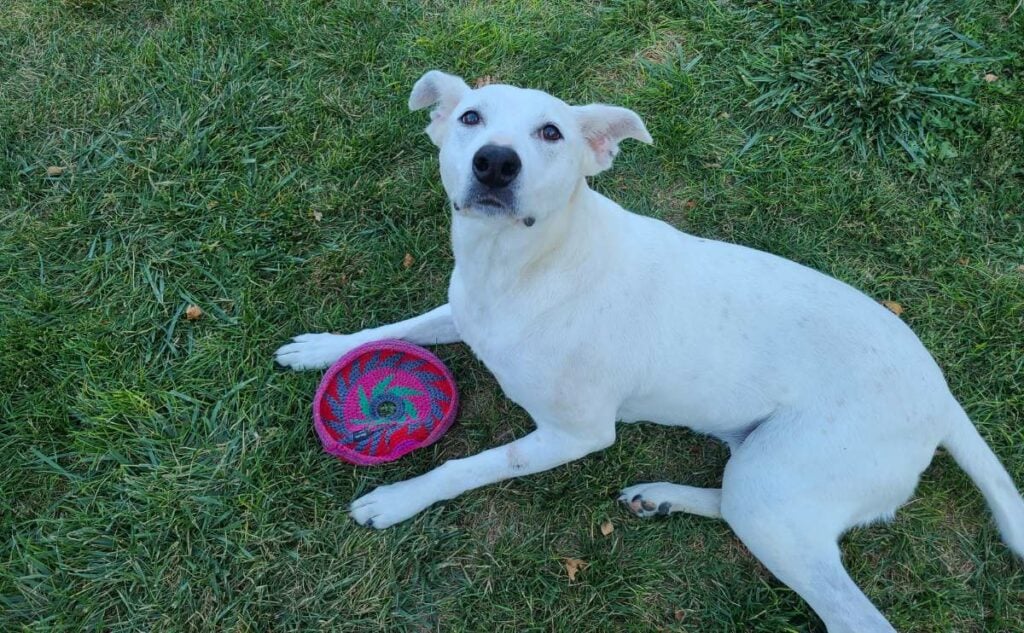
My older dog, Daisy, has a cloth frisbee she hides, sleeps with, and refuses to share.
This kind of behavior isn’t unusual. Dogs often develop preferences based on:
- scent familiarity
- texture and chewability
- sound (like squeakers)
- emotional association
This Is What a Dog’s Favorite Toy Looks Like
Sometimes the easiest way to understand dog behavior is to see it for yourself.
When a dog has a favorite toy, it can become more than just something to play with — it can be a source of comfort, security, and pure happiness.
This clip is a perfect example.
7 Signs Your Dog Has a Favorite Toy
Dogs often show clear signs when they’ve chosen a favorite toy. If you’re not sure whether your pup has a preferred toy, these behaviors can give you strong clues.
- Always Chooses the Same Toy
When given multiple options, your dog consistently picks one specific toy over the others. - Sleeps With It
Dogs that bring a toy to bed or rest with it nearby may be using it as a comfort object. - Carries It Around the House
If your dog frequently walks around with the same toy, it’s a strong sign of attachment and familiarity. - Bring It to You to Greet You
Many dogs present their favorite toy when they’re excited to see you as a way to share something they value. - Protects It From Other Dogs
Some dogs will guard or hide a favorite toy to keep it away from other pets. - Gets More Excited About It Than Other Toys
Your dog may show noticeably higher energy, enthusiasm, or focus when playing with one specific toy. - Returns to It Again and Again
Even after playing with other toys, your dog repeatedly goes back to the same one.
These behaviors suggest your dog doesn’t just enjoy the toy — they recognize it, remember it, and may even form a meaningful attachment to it.
What Science Says About Dogs and Their Toys
Research into canine cognition shows that dogs don’t just play with toys — they can actually recognize, remember, and differentiate between specific objects.
Scientists have found that dogs form multisensory mental representations, meaning they use a combination of smell, sight, and even sound to identify a particular toy. This helps explain why your dog can pick out their favorite toy from a pile, even when it looks similar to others.
How Do Dogs Recognize Their Toys? (Sight vs Smell)
In a study from Eötvös Loránd University in Budapest, researchers tested how dogs identify familiar toys under different conditions.
Dogs were first trained to recognize a specific “target” toy and rewarded for interacting with it. They were then asked to retrieve that toy from a group of other toys in both well-lit and completely dark rooms.
The results revealed something fascinating:
- In lighted conditions, dogs relied more on visual cues
- In darkness, they relied heavily on their sense of smell
- In both cases, dogs were still able to correctly identify and retrieve the target toy
Researchers also observed that dogs spent more time sniffing in the dark, confirming that olfaction plays a major role in how dogs recognize objects.
This shows that dogs don’t rely on just one sense; they build a combined sensory “image” of their toys. Dogs use their senses, just like humans, to identify specific objects and distinguish them from others.
Can Dogs Learn the Names of Toys?
Some dogs can go even further and associate specific words with specific objects.
In a separate study published in Current Biology in March 2024, researchers used a non-invasive EEG device to measure dogs’ brain activity while they were shown objects and heard different words.
Sometimes the spoken word matched the object (for example, “ball” when a ball was present). Other times, it didn’t.
The dogs’ brain activity changed depending on whether the word matched the object, suggesting they could detect when something was “off.” This provides evidence that dogs have a basic referential understanding of language: meaning they can connect words to objects.
On average, dogs can learn around 89 words, according to researchers from Dalhousie University, Canada. Some highly trainable dogs, often called “Gifted Word Learners,” can learn over 200, though this is relatively rare.
This helps explain why many dogs can fetch specific toys on command. They’re not just guessing; they’re recognizing and responding to learned object-word associations.

Do Some Dog Breeds Learn Toy Names Better Than Others?
Certain breeds are known to be more responsive to word recognition and training. These often include:
- Border Collies
- Australian Shepherds
- Poodles
- German Shepherds
- Bichon Frise
- Cavalier King Charles Spaniels
- Chihuahuas
On the other hand, some breeds may be less likely to learn a large vocabulary of object names, including:
That said, every dog is different. Training consistency, environment, and individual personality often play a bigger role than breed alone.
Why Do Dogs Get Attached To Certain Toys?
Dogs don’t randomly choose favorite toys; their preferences are driven by instinct, experience, and how a toy engages their senses.
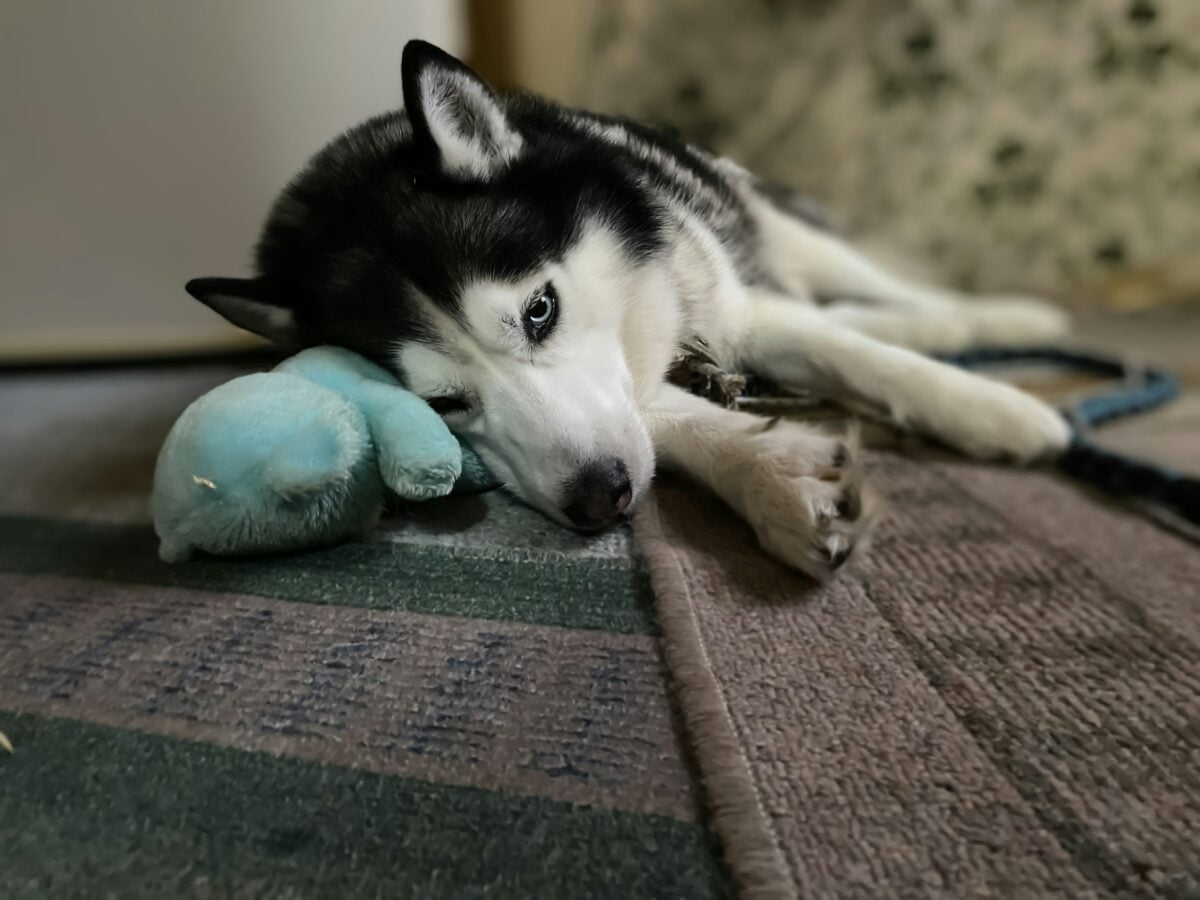
If your dog consistently chooses one toy over others, there’s usually a reason behind it.
Scent Familiarity
Dogs rely heavily on their sense of smell. Toys that carry familiar scents — like their own, their owner’s, or even a specific environment — can quickly become favorites. Over time, these scents create a sense of comfort and recognition.
Texture Preference
Some dogs prefer soft plush toys they can carry and cuddle, while others are drawn to rubber or rope toys they can chew. The texture of a toy plays a big role in how satisfying it feels during play.
Prey Drive
Many toys are designed to mimic prey animals. Squeaky toys, toys that move unpredictably, or items that can be shaken all trigger a dog’s natural hunting instincts. These toys are often the most exciting and rewarding.
Comfort and Security
For some dogs, especially puppies or anxious pets, certain toys act as comfort objects. They may sleep with them, carry them around, or seek them out during stressful situations.
Over time, these factors can combine to create a strong preference, which is why your dog may treat one toy as more special than all the others.
Why Do Dogs Destroy Their Favorite Toys?
It might seem frustrating, but dogs often destroy toys because they love them, not because they don’t.
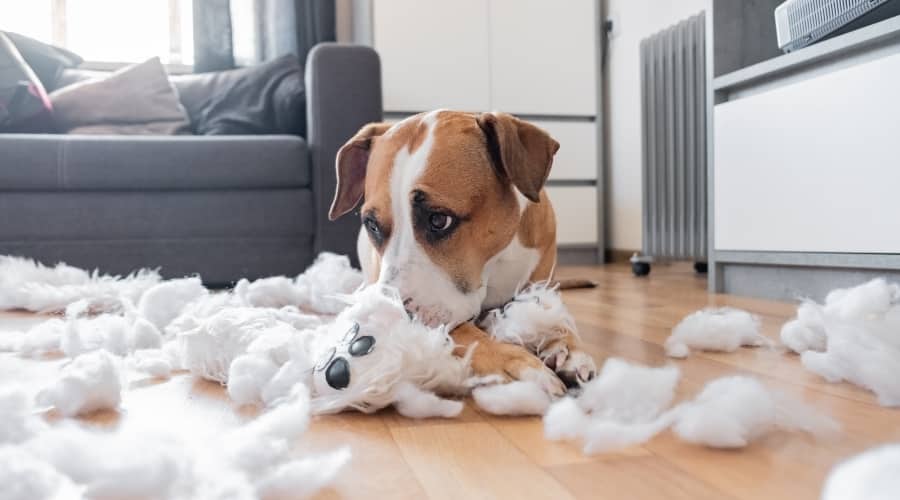
This behavior is rooted in natural instincts and can actually be a sign that the toy is highly engaging.
Prey Instinct
Dogs are natural hunters. Many toys are designed to mimic prey, especially plush toys with stuffing. When dogs tear them apart, they’re acting out the instinct to “dissect” prey — a behavior seen in wild canines.
Squeaker Reward
Squeaky toys provide instant feedback that excites dogs. The sound can mimic a prey animal, and each squeak reinforces the behavior, encouraging dogs to keep chewing and biting.
Natural Chewing Behavior
Chewing is a normal and necessary activity for dogs. It helps relieve stress, keeps their jaws strong, and can even support dental health. Some dogs simply have a stronger need to chew than others.
Boredom or Excess Energy
Dogs that aren’t getting enough mental or physical stimulation may turn to destructive play. Tearing apart toys can become a way to release pent-up energy.
If your dog consistently destroys toys, it may be a sign that they need more durable options or additional enrichment activities and interactive toys.
Why Do Dogs Carry Toys Around?
If your dog proudly walks around with a toy in their mouth, they’re not just playing — they’re communicating.
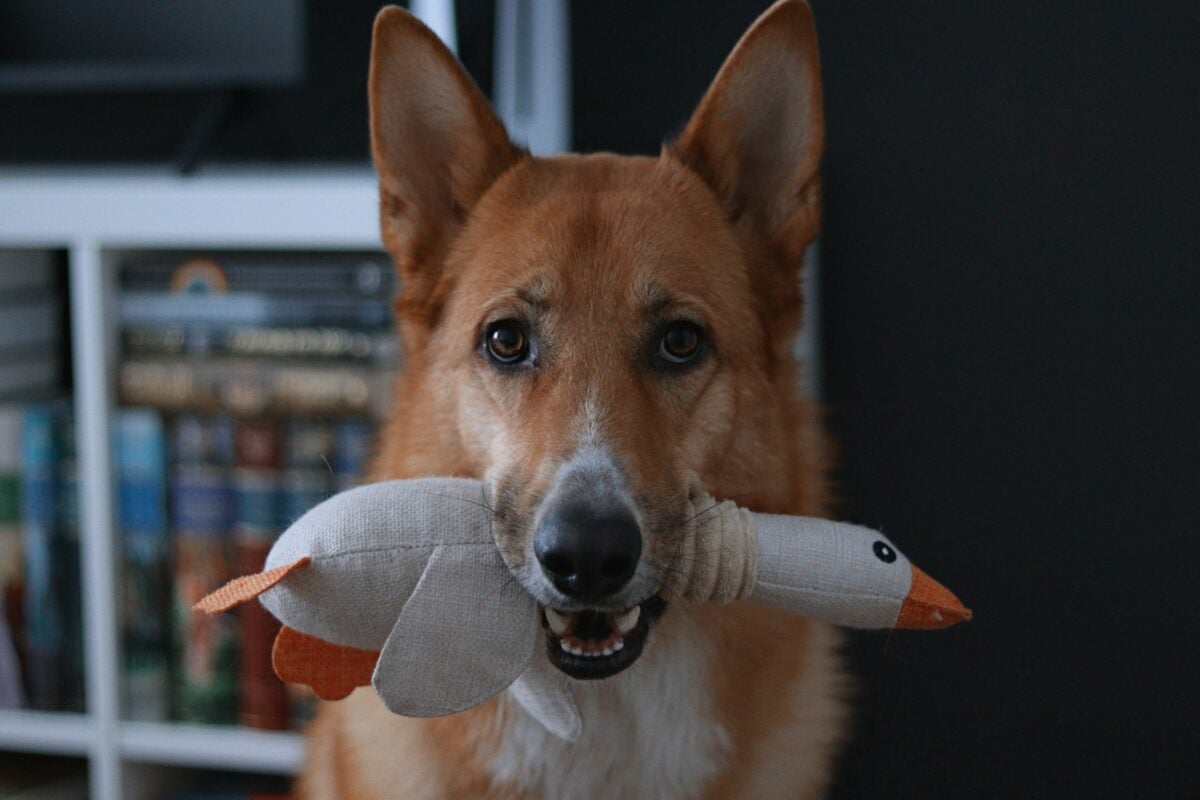
This behavior is surprisingly common and can have several meanings.
Social Bonding
Many dogs bring toys to their owners as an invitation to play. It’s their way of initiating interaction and sharing something they value.
Excitement and Greeting Behavior
Some dogs carry toys when they’re excited, especially when greeting their owners. The toy becomes an outlet for their energy and enthusiasm.
Comfort Behavior
Soft toys can act as comfort objects. Dogs may carry them when they feel relaxed, tired, or even slightly anxious.
Possession and Security
In multi-pet households, dogs may carry toys to keep them away from other animals. It’s a way of protecting something they consider valuable.
In most cases, carrying toys is a positive behavior that reflects attachment, excitement, or a desire to interact.
Looking For The Best Dog Toys?
Now that you understand how dogs think about and choose their toys, picking the right one becomes even more important. The best toys don’t just entertain your dog — they support healthy chewing, reduce boredom, and match your dog’s natural instincts.
Whether you have a teething puppy, an aggressive chewer, or a dog that loves plush comfort toys, we’ve tested and reviewed top options for every type of play style.
- Best Dog Toys Overall
- Best Indestructible Dog Toys
- Best Chew Toys For Teething Puppies
- Best Chew Toys For Dogs
- Best Stick-Style Dog Toys
- Best Plush Dog Toys
Tip: Choosing the right toy based on your dog’s behavior can help reduce destructive habits and keep them mentally engaged.
Our Dogs’ Favorite Toys Based On Personal Experience
This Jolly Pet Teaser Ball within a ball has been the perfect combo of difficult-to-destroy and a ball. Our Barley just loves balls of all kinds, so trying this out was a no-brainer, but his passion for it has surprised all of us, and so has its durability. We would definitely recommend this product and the video below shows you exactly how much Barley adores it.
–Michelle Schenker, Co-Founder and Dog Parent
What Does This Mean For Your Dogs?
The research shows that canines, like humans, develop strong attachments and connections to certain objects. They can also learn to associate certain words with objects. However, our pups don’t have the same deeper level of cognitive understanding as humans. But they do have the ability to develop a referential understanding of object words.
This growing area of research shows that dogs can differentiate toys and use their features, scents, and other characteristics to identify them.
So, if you think your dog has a special attachment to one specific toy, they likely do, especially if they bring it to you upon request. They prefer this specific toy for a variety of reasons: smell, taste, texture, or even the way it sounds. This all depends on your pup and what they like.
More Questions About Dogs And Their Toys?
Dogs can be surprisingly expressive when it comes to their favorite toys, and every pup seems to have their own quirks.
We’ve answered a few common questions below, and if your dog has a favorite toy story of their own, leave us a comment. We’d love to hear about it.
Do dogs have a favorite toy or just a preference?
Dogs can have both a preference and a true favorite toy. A preference means they choose certain toys more often, while a favorite is a toy they consistently seek out, carry, or show attachment to. This usually develops through repeated positive experiences and sensory familiarity.
Why does my dog bring me their favorite toy?
When your dog brings you their favorite toy, it’s usually a form of communication. They may be inviting you to play, expressing excitement, or sharing something they value. Because this behavior is often rewarded with attention or interaction, dogs quickly learn that bringing their favorite toy is a reliable way to engage with you.
Do dogs get emotionally attached to toys?
Some dogs do seem to form strong attachments to certain toys, especially ones that provide comfort or carry familiar scents. While it’s not the same as human attachment, the preference can be very real.
Is it normal for dogs to be possessive over toys?
Yes, mild possessiveness over toys is normal for many dogs. Toys can be high-value items, especially if they trigger instincts or provide comfort. However, if your dog growls or guards toys aggressively, it may be a sign of resource guarding and could benefit from training.
Do dogs think toys are real animals?
Dogs don’t believe toys are real animals, but many toys trigger their prey instincts. Squeaky sounds, soft textures, and movement can mimic prey, which activates natural hunting behaviors. This is why some dogs treat toys as something to chase, shake, or “capture.”
Can dogs get bored with their toys?
Yes, dogs can get bored with toys if they are always available or no longer stimulating. Rotating toys, introducing new textures, or using interactive toys can help keep your dog engaged and prevent boredom-related behaviors like chewing or destruction.
How can I tell if my dog is emotionally attached to a toy?
Signs of attachment include carrying the toy around, sleeping with it, bringing it to you, or choosing it over others consistently. Dogs may also become protective of a favorite toy or seek it out during times of stress or excitement.
Why does my dog sleep with a toy?
Sleeping with a toy is often a comfort behavior. Soft toys can act as security objects, especially for puppies or dogs that are naturally more attached to certain items.
What Your Dog’s Favorite Toy Says About Them
Your dog’s favorite toy isn’t just a random choice; it can reveal a lot about their personality, instincts, and needs.
Some dogs are drawn to squeaky toys that trigger their prey drive, while others prefer soft plush toys they can carry and cuddle. High-energy dogs may gravitate toward balls and chase toys, while more relaxed or anxious dogs often form attachments to comfort objects.
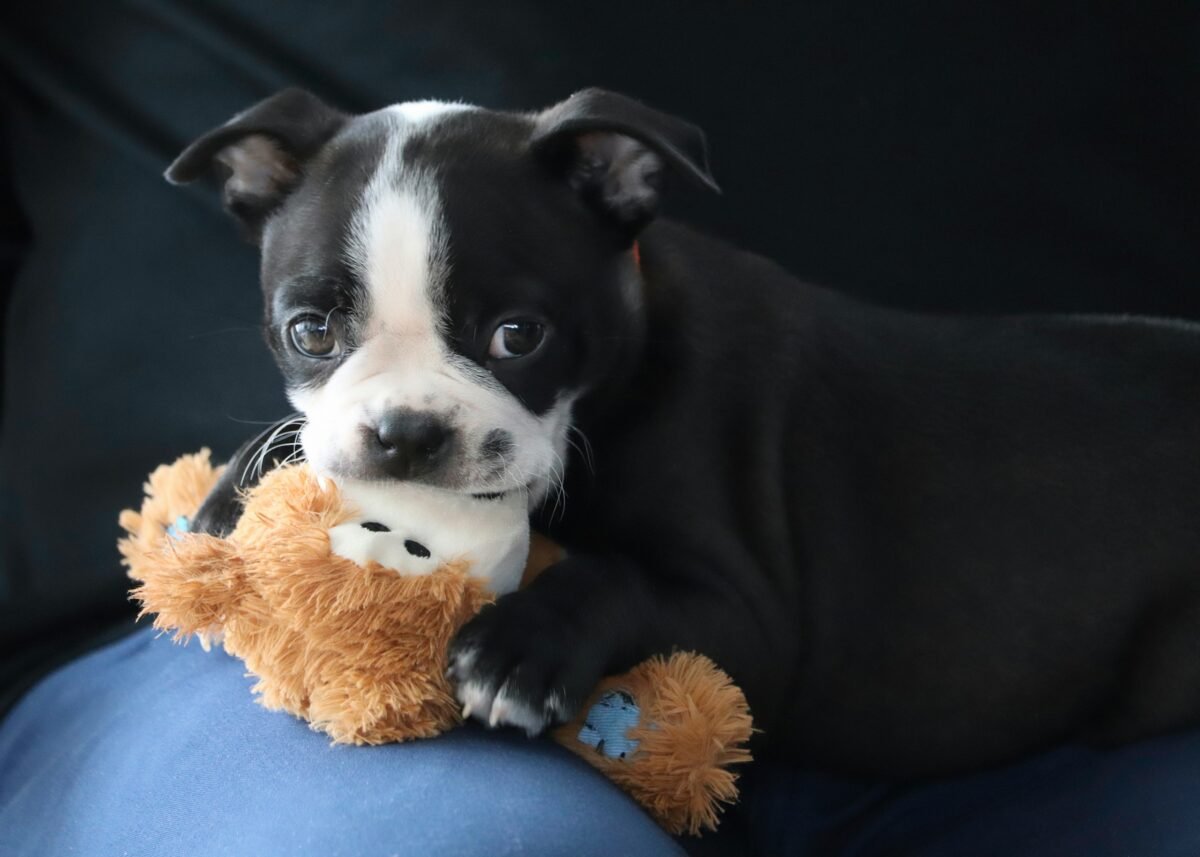
When your dog consistently chooses the same toy, carries it around, or brings it to you, they’re showing you what they enjoy, what excites them, and what helps them feel secure.
Understanding these preferences can help you choose toys that better match your dog’s natural behaviors, leading to more engaging play, less destructive habits, and a stronger bond between you and your pup.
So the next time your dog picks up their favorite toy, it’s worth paying attention. It’s one of the simplest ways they communicate what they love.
Fun Ways To Play With Your Dog (And Make The Most Of Their Favorite Toys)
Understanding why your dog loves certain toys is just the first step; how you play with them matters just as much.
Different types of play tap into your dog’s natural instincts and can make their favorite toys even more engaging.
- Fetch: Great for high-energy dogs that love to chase and retrieve balls or flying toys.
- Tug-of-War: A fun bonding activity that taps into your dog’s natural pulling and gripping instincts.
- Hide-and-Seek: Hide your dog’s favorite toy and encourage them to find it, engaging their sense of smell and problem-solving skills.
- “Barn Hunt”-Style Games: Let your dog search for toys hidden around the house or yard to mimic scent-based hunting activities.
- Interactive Puzzle Play: Use treat-dispensing or puzzle toys to challenge your dog mentally and reduce boredom.
By matching playtime to your dog’s instincts, you can make their favorite toys more rewarding — and help reduce destructive behavior at the same time.
Curious About Other Dog Behaviors?
Dogs have all kinds of quirky behaviors, and many of them have fascinating explanations rooted in instinct and communication.
From sticking their head out the car window to obsessing over tennis balls, letting out deep sighs, or licking other dogs’ mouths, these small habits often reveal how dogs think, feel, and interact with the world around them. The more you understand these behaviors, the easier it becomes to meet your dog’s needs and strengthen the bond you share.
Does Your Dog Have a Favorite Toy?
Does your dog have a favorite toy? We’d love to hear about it. Whether it’s a well-loved stuffed animal, a squeaky ball they won’t put down, or a toy they carry everywhere, share your dog’s story in the comments below. Every pup has its own quirks, and we’re always curious to hear what makes your dog’s favorite toy so special.