When you purchase through links on our site, we may earn a commission at no extra cost to you. Learn more.
Many dog lovers think there is only one Cocker Spaniel, but the English Cocker Spaniel and American Cocker Spaniel are two separate breeds with a few important differences. They share the same sweet expression, Spaniel roots, and affectionate nature, but they differ in size, appearance, energy levels, grooming needs, and sometimes personality.
Table of Contents
Choosing between them isn’t just about looks. One may be a better fit for a quieter family home, while the other may suit a more active household that wants a sportier companion.
So, whether you want to clear your Cocker confusion or are simply Cocker crazy, you’ve come to the right place. Let’s compare the American Cocker Spaniel vs. the English Cocker Spaniel to help you decide which breed is right for you.

Breed Comparison
- Height13.5-15.5 Inches
- Height15-17 Inches
- Weight20-30 Pounds
- Weight26-34 Pounds
- TemperamentHappier, curious, sweet
- TemperamentMerry, responsive, active
- EnergyMedium
- EnergyHigh
- HealthAverage
- HealthAverage
- Lifespan10-14 Years
- Lifespan12-14 Years
- Puppy Prices$800-$2,000
- Puppy Prices$800-$2,000
American Cocker Spaniel vs English Cocker Spaniel: 6 Key Differences
- The English Cocker Spaniel is the original Cocker Spaniel, while the American Cocker Spaniel developed later as a smaller, more companion-focused variation.
- American Cockers are smaller than English Cockers in both height and weight.
- American Cockers usually have a more domed head and shorter muzzle, while English Cockers have a longer muzzle and a more athletic sporting-dog build.
- English Cockers typically need more exercise and mental stimulation than American Cockers, especially if they come from working or field lines.
- American Cockers often have fuller, more coat-intensive coats, especially when kept in a traditional show-style cut.
- American Cockers have a slightly shorter average lifespan than English Cockers, although both breeds can live long, healthy lives with responsible breeding, proper care, and regular veterinary checkups.
Which Cocker Spaniel Is Right For You?
Choose an American Cocker Spaniel if you want a slightly smaller, affectionate companion who is usually a better fit for a calmer household, apartment living, or owners who want a merry family dog with moderate exercise needs. Just be prepared for more coat maintenance, especially if you keep the traditional longer Cocker cut.
Want our human-written content to rank above AI-generated garbage? Help us out by clicking this button!
Choose an English Cocker Spaniel if you want a more athletic, energetic sporting dog who can keep up with longer walks, hikes, scent games, fieldwork, or dog sports. They are still affectionate and family-friendly, but many English Cockers need more daily activity and mental stimulation than their American cousins.
Breed Histories
Spaniels date back to at least the 14th century, when they began appearing in records and artwork. For centuries, they were broadly grouped as either water Spaniels or land Spaniels, with their size often determining the type of game they hunted.
By the 19th century, dog shows and breed standards led to more specific breed classifications. Larger Spaniels became English Springer Spaniels, while smaller ones became Cocker Spaniels, named after the woodcock they were bred to flush.
The English Cocker Spaniel came first, while the American Cocker Spaniel developed later as U.S. breeders favored a smaller dog with a rounder head, shorter muzzle, and fuller coat.
American Cocker Spaniel
Cocker Spaniels were first recognized by the American Kennel Club as a breed in 1878. Over time, American breeders began favoring smaller, more elegant-looking Cockers with shorter muzzles, domed heads, fuller coats, and often solid-colored coats. These preferences eventually helped shape the American Cocker Spaniel into a distinct breed.

The ACS became especially popular in the 1940s and 1950s. A black Cocker named Brucie won Westminster’s Best in Show in 1940 and 1941, and Vice President Richard Nixon’s Cocker, Checkers, became famous during Nixon’s 1952 “Checkers Speech.” Disney’s Lady and the Tramp also helped boost the breed’s popularity, with Lady becoming one of the most recognizable Cocker Spaniels in pop culture.
English Cocker Spaniel
The English Cocker Spaniel is the original Cocker Spaniel, predating the split between the English and American breeds. British breeders focused on slightly larger, athletic Spaniels, often with roan or parti-colored coats. This helped create a taller, more versatile sporting dog than the American Cocker.

The AKC recognized English-type Cockers as a separate type in 1936, and they received full breed status in 1946. Today, the English Cocker Spaniel is less common than the ACS in America, but has become more popular in recent years. In Britain, the breed is simply called the Cocker Spaniel and remains one of the country’s most popular dogs
Size & Appearance Differences
The most notable difference between the American Cocker Spaniel and the English Cocker Spaniel is their appearance. Although you can tell they are closely related, their appearance is quite different.
They are both medium-sized dogs, but the ACS is smaller than the ECS in both height and weight. Americans weigh between 20 and 30 pounds, whereas the English weigh between 26 and 34 pounds. The ACS measures between 13.5 and 15.5 inches tall, from paw to shoulder, and the ECS measures between 15 and 17 inches.

The differences don’t stop there. American Cockers have a smaller head, a more domed skull, and a shorter muzzle. You can see similarities between the Cocker Spaniel and much smaller breeds like the Cavalier King Charles Spaniel and the English Toy Spaniel. English Cocker Spaniels have a longer muzzle, similar to Springer or Field Spaniels. Once you know what to look for, they look pretty different from one another.
- American Cocker Spaniels: Smaller, more compact, with a rounder head, shorter muzzle, and softer expression.
- English Cocker Spaniels: Taller, leggier, and more athletic-looking, with a longer muzzle and more sporting-dog build.
- Quick visual clue: If the dog looks more compact and “doll-like,” it is likely an American Cocker. If it looks more athletic and Spaniel-like, it is likely an English Cocker.
Temperament, Prey Drive & Family Life
There isn’t much difference between American Cocker Spaniels and English Cocker Spaniels regarding their personalities. As the smaller pup of the two, the ACS is slightly more docile than the ECS naturally. However, they both love to spend time cuddling up to their favorite humans on the couch after a day of playing and investigating their yard.
They are playful and fun to be around and make great therapy dogs. They can also live peacefully with other dogs and animals with proper socialization training.
- American Cockers are often slightly calmer and more companion-focused.
- English Cockers are usually more energetic, curious, and driven, especially if they come from working or field lines.
- Both breeds are affectionate, people-oriented, and happiest when included in daily family life.
Both have sweet Cocker characters who need human interaction and companionship throughout the day. Without it, they feel lonely and can suffer from separation anxiety. These merry Spaniels are adaptable to their family’s needs. This is one of the many reasons why they both make great family companions.

As sporting dogs, you can be confident they have a strong prey drive and shouldn’t be off- leash in an unsecured area. Even with a strong recall, they might ignore you if they catch onto a scent.
- Because both breeds were developed as sporting dogs, they may chase birds, squirrels, rabbits, or other small animals if given the chance.
Both the ACS and ECS are known as Velcro dog breeds. As they don’t like to be left alone for too long, I recommend crate training all Cockers. We have a guide on the best dog crates for separation anxiety.
Coat Types, Colors & Markings
The American Cocker usually has a fuller coat than an English Cocker. This is mainly because their breeders selectively breed them for their coats and smaller, more elegant appearance.
This fuller coat is more pronounced when an ACS is groomed traditionally, with short hair along the back and full length on their chest, legs, and underbelly. However, they both have smooth, wavy hair that is medium to long and has a soft texture.

- American Cockers usually have fuller, heavier coats, especially around the ears, chest, legs, and underside.
- English Cockers typically have a slightly more practical sporting coat, although they still need regular brushing and grooming.
- Both breeds can mat easily around the ears, legs, armpits, and belly if their coats are not maintained.
During the ACS and ECS’s separation and development, American breeders favored solid-colored Cockers. Meanwhile, English breeders bred their Cockers with roan and parti-colored Spaniels.
This means that, to this day, the most common ACS coat color is a solid coat, which is black or brown shades ranging from light cream to deep red. Roan and parti-color patterns (two or more colors, one of which must be white) are the most common ECS coat patterns, and the most common colors are black, red, or liver. Both the ACS and ECS can have tan markings, too.
- Coat color should never be the only factor when choosing a puppy. Temperament, health testing, breeder reputation, and lifestyle fit matter much more.
Exercise Needs & Energy Levels
The American and the English Cocker are members of the “sporting group,” meaning you can expect them to be energetic and curious. They both need at least one hour of exercise daily. Although you can expect an English Cocker to need much more than its smaller American cousin.

An ECS could happily spend several hours exercising without skipping a beat. English Cockers are better at fieldwork and sport than American Cockers, which could be an influencing factor for some families. An ACS could be a better option if you’re looking for a calmer family companion.
- American Cockers: Best suited to daily walks, play sessions, training games, and moderate activity.
- English Cockers: Often better suited to active families who enjoy longer walks, hiking, scent work, field training, or dog sports.
- Working-line English Cockers may need significantly more physical and mental exercise than show or companion lines.
- A bored Cocker can become noisy, clingy, destructive, or overly excitable, so mental stimulation is just as important as physical exercise.
As Cockers have an incredible sense of smell, investing in scent toys like snuffle mats and other interactive dog toys is a great way to entertain them throughout the day, in addition to providing them with physical exercise.
Show vs Working English Cocker Spaniels
- Show-line English Cockers are usually more moderate and companion-friendly.
- Working-line English Cockers are often more intense, energetic, and driven.
- Ask breeders what type of lines their dogs come from.
- Active homes may love working lines, but lower-energy homes may find them overwhelming.
Training & Socialization
Both the ACS and the ECS are trainable and responsive. They are eager to please their favorite humans and do anything for a tasty training treat or toy.

Train and socialize your Cocker when they are young, and they should develop into the polite pup they are known to be. All Cocker Spaniels are sensitive dogs that appreciate gentle training over harsher disciplinarian methods. So, be sure to research positive reinforcement training.
- Start early: Both breeds benefit from puppy socialization, leash training, crate training, and basic obedience from a young age.
- Use positive methods: Cockers are sensitive and usually respond best to praise, treats, toys, and consistency.
- Watch for stubbornness: Their sweet nature does not mean they are automatically easy. Both breeds can become selective listeners, especially when distracted by scents or wildlife.
- Prioritize recall training: Because they have sporting-dog instincts and strong noses, recall should be practiced regularly in safe, enclosed areas.
Some people believe the ECS is more trainable than the ACS because they are bred for working in the field rather than being a companion dog. Although there is no conclusive research to back this claim.
Dog training requires lots of effort, patience, and time. We have found the best online dog training options to help you get the most out of your ACS or ECS.
Health Issues & Lifespan
Both the American and the English Cocker Spaniel are generally healthy dog breeds. But like all breeds, there are several predisposed health conditions that you should be aware of.

The average lifespan of an ACS is 10 to 14 years, compared to the ECS, which is 12 to 14 years.
The ACS and ECS are predisposed to hip dysplasia, where the hip develops abnormally. This abnormal development can lead to increased wear and tear of the joint, which can cause restricted movement and arthritis.
Both are at risk of eye concerns, especially progressive retinal atrophy. Reputable breeders screen their pups for both these conditions, so be sure to ask your breeder for these health certificates.
- Common health concerns in both breeds can include hip dysplasia, eye conditions, ear infections, and skin issues.
- American Cockers may be especially prone to ear, skin, and eye problems because of their heavy coats, long ears, and facial structure.
- English Cockers can also face inherited conditions, so responsible breeder screening is still essential.
- Ask breeders for proof of relevant health testing, including eye exams and hip evaluations, before committing to a puppy.
Health Tests To Ask Breeders For
Responsible breeders should be open about their dogs’ health history and able to provide proof of breed-relevant health testing. For both American and English Cocker Spaniels, ask about eye exams and hip evaluations, as both breeds can be prone to inherited eye conditions and hip dysplasia.
Depending on the breed and line, breeders may also screen for conditions such as progressive retinal atrophy, patellar luxation, thyroid issues, and other inherited diseases. If a breeder avoids health questions, cannot provide documentation, or says testing is unnecessary, consider it a red flag.
A trustworthy breeder should not only provide health certificates but also explain what the results mean and how they use them to make responsible breeding decisions.
Regular ear cleaning, weight management, dental care, and routine veterinary checkups can help reduce the risk of common Cocker health problems.
Consider Pet Insurance For Your American & English Cocker Spaniel
Whether you have an American Cocker Spaniel or an English Cocker Spaniel, it’s wise to consider pet insurance. It can help families manage emergency or long-term veterinarian expenses that often cost thousands of dollars. Having a policy in place offers peace of mind, knowing you can focus on your Cocker’s recovery.
Our pet insurance experts have picked the best pet insurance for Cocker Spaniels. We also share our overall pet insurance reviews to provide the best options and help you find a policy that meets your needs. We provide a free quote widget below to pull prices from our top-rated companies to get you started.

Nutrition & Feeding Needs
How much a Cocker eats depends on various factors, including their age, weight, activity levels, and more. Due to their smaller size and lower activity levels, you can expect an ACS to eat less than an ECS. But this is not true in every case.
- American Cockers may eat slightly less than English Cockers because they are usually smaller and often have lower exercise needs.
- English Cockers may need more calories if they are highly active, field-bred, or regularly participate in dog sports.
- Both breeds can gain weight easily, so measure meals and limit high-calorie treats.
- Choose an age-appropriate food for puppies, adults, or seniors that meets AAFCO guidelines.
- Watch body condition, not just the bowl. If your Cocker is gaining or losing weight, adjust portions with your vet’s guidance.
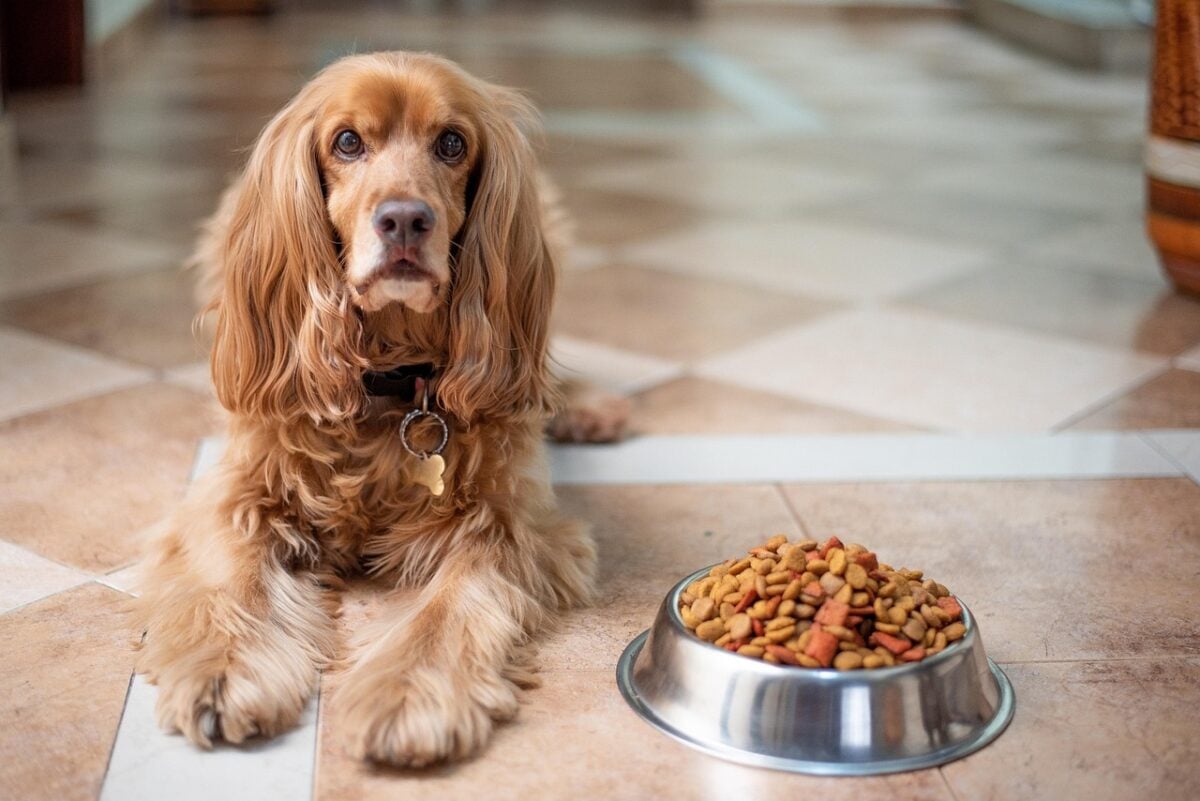
Be sure to feed your Cocker Spaniel a high-quality, age-appropriate diet that meets the Association of American Feed Control Officials (AAFCO). If your Cocker is particularly energetic or assists you in the field, consider a high-protein option to fuel their needs.
We have reviewed the best dog food for Cocker Spaniels, suitable for English and American Cocker Spaniels.
Grooming Needs & Coat Maintenance
The ACS and ECS have similar coats that are medium to long with a soft, wavy texture.
Because the ACS is bred for its coat, they typically have fuller coats than the ECS, but they both have double coats. Because of this, the English Cocker is generally more straightforward and less time-consuming to groom, and they need brushing several times a week.

The ACS, especially if they sport a traditional ACS show coat, needs daily brushing to ensure their longer undercarriage hair remains tangle, dirt, and debris-free. The best type of brush for an ACS or ECS is a wire pin or slicker brush to help keep their longer hair healthy.
- American Cockers usually need more grooming, especially if kept in a traditional longer coat.
- English Cockers are often easier to maintain, but they still need brushing several times a week.
- Both breeds can develop mats around the ears, legs, armpits, belly, and feathering.
- Regular ear care is essential because their long, drop-down ears can trap moisture and debris. Professional grooming may be helpful every few weeks, especially for American Cockers or owners who prefer a longer coat style.
You should consider finding a professional groomer to help keep your pup’s coat in good shape.
Apart from their coat, they have the same grooming needs. You should check and clean their ears every week, as they are prone to ear infections due to their longer length and drop-down shape. Their teeth need brushing several times a week to keep periodontal diseases at bay, and their nails need to be clipped every few weeks.
Quick Grooming Checklist
- Check and clean ears weekly.
- Brush teeth several times a week.
- Trim nails every few weeks.
- Brush more often during shedding seasons.
- Check paws, ears, and belly after outdoor walks.
Watch this short video on what this groomer says about the Cocker Spaniel’s coat.
Puppy Prices & Breeder Tips
My research shows that American and English Cocker Spaniels typically cost between $800 and $2,000. Puppy prices vary depending on a range of factors, including the breeder’s reputation, experience, and location, as well as the pup’s age and lineage.
- Typical puppy price: Most American and English Cocker Spaniel puppies cost between $800 and $2,000.
- Prices may be higher for puppies from champion lines, health-tested parents, or experienced breeders.
- Avoid unusually cheap puppies if the breeder cannot provide health information, parent details, or proper living conditions.
- Ask to meet the puppies and their mother in a home or responsible kennel setting.
- Request health certificates for breed-relevant concerns, including eyes and hips.
- Good breeders ask questions, too. They should care whether your home and lifestyle are a good fit for the puppy.
- Consider rescue or adoption if you are open to an adult Cocker or a Cocker mix.
I recommend researching any breeder you want to work with and completing your due diligence. Insist on seeing the puppies with their mom in their home setting and asking for health certificates before committing financially.

Breeder Red Flags To Watch For
- The breeder cannot provide health-screening documentation.
- They will not let you meet the puppies with their mother.
- They always have puppies available.
- They avoid questions about temperament or health history.
- They do not ask you questions about your lifestyle.
- They sell puppies much cheaper than average without a clear reason.
Adoption & Rescue Options
- Breed-specific rescues may have American and English Cockers.
- Adult Cockers can be a great option because their size, temperament, and grooming needs are already clearer.
- Rescue dogs may still need vet care, training, and grooming, so budget accordingly.
Ongoing Ownership Costs
The initial puppy price is only one part of your Cocker Spaniel budget. Both American and English Cockers come with ongoing costs for food, grooming, routine vet care, training, and enrichment.
American Cockers may cost more to groom if kept in a longer coat, while English Cockers may need more activity-related expenses, such as training classes, scent-work toys, or dog sports.
Common costs to budget for include:
- Food: High-quality dog food, treats, and supplements if recommended by your vet.
- Grooming: Brushes, shampoos, ear-cleaning supplies, and professional grooming appointments.
- Routine vet care: Wellness exams, vaccinations, parasite prevention, dental care, and bloodwork as they age.
- Ear care: Both breeds have long ears that need regular checks and cleaning to help prevent infections.
- Pet insurance: A policy can help offset unexpected accident, illness, or emergency vet bills.
- Training classes: Puppy classes, obedience training, recall work, or sport-specific training.
- Toys and enrichment: Puzzle toys, scent games, chew toys, and interactive play items.
- Boarding or pet sitting: Care costs for travel, workdays, or emergencies.
Before bringing home either breed, consider whether your budget can support not only the puppy price but also the grooming, healthcare, and training needs these affectionate Spaniels require throughout their lives.

American vs English Cocker Spaniel FAQs
Still deciding between an American Cocker Spaniel and an English Cocker Spaniel? Here are some of the most common questions readers ask about these two closely related breeds. If you have another question or want to share your experience with either Cocker breed, let us know in the comments below.
Are English and American Cocker Spaniels the same breed?
No. They share the same Spaniel heritage, but the American Cocker Spaniel and English Cocker Spaniel are recognized as two separate breeds.
Which is bigger, the American or English Cocker Spaniel?
The English Cocker Spaniel is usually bigger. English Cockers typically stand 15 to 17 inches tall and weigh 26 to 34 pounds, while American Cockers usually stand 13.5 to 15.5 inches tall and weigh 20 to 30 pounds.
Which is calmer, an American or English Cocker Spaniel?
American Cockers are often slightly calmer and more companion-focused. English Cockers are usually more energetic and athletic, especially if they come from working or field lines.
Which Cocker Spaniel needs more grooming?
The American Cocker Spaniel usually needs more grooming because they often have fuller, heavier coats. English Cockers still need regular brushing, ear care, and professional grooming, but they are generally less time-consuming to maintain.
Which Cocker Spaniel is better for active families?
The English Cocker Spaniel is usually the better fit for active families who enjoy long walks, hiking, scent work, field training, or dog sports.
Are American Cocker Spaniels good apartment dogs?
They are. American Cockers can do well in apartments if they receive daily walks, playtime, mental stimulation, and plenty of companionship. They are not couch potatoes, but they usually need less exercise than English Cockers.
Do both breeds get ear infections?
Yes, they can. Both breeds have long, drop-down ears that can trap moisture and debris, making them prone to ear infections. Regular ear checks and cleaning are important.
Which Cocker Spaniel is better for first-time owners?
Both breeds can suit first-time owners, but American Cockers may be a slightly easier fit for families wanting a smaller, somewhat calmer companion. English Cockers may be better for active owners who can provide more exercise and mental stimulation.
Other Sporting Breeds To Consider
There’s more to the sporting dog world than American Cocker Spaniels vs English Cocker Spaniels. If you’re searching for a sporting dog but need more help, why not check out our guides on other popular active dogs like the Labrador Retriever or the German Shorthaired Pointer? You could also consider a Cocker Spaniel mixed breed. They are all beautiful in their own way and worthy of a space in the right family home.
Could You Choose Between These Two Sweet Spaniels?
Do you have an American Cocker Spaniel or an English Cocker Spaniel? We love to hear from our readers, so please share your Cocker stories in our comments section below.