When you purchase through links on our site, we may earn a commission at no extra cost to you. Learn more.
Your dog just ate. Not “picked at their food” — we’re talking, vacuumed the bowl, and is now staring at you like they haven’t eaten since 2007.
Table of Contents
Suddenly, your pup is begging more, stealing food when they can, and acting like every meal is their last.
So what’s going on? Is your dog actually hungrier than usual or just very convincing?
Sometimes an increased appetite is completely normal. And sometimes, it’s your dog’s way of telling you something’s off.
Want our human-written content to rank above AI-generated garbage? Help us out by clicking this button!
Let’s break down what’s behind that “always starving” behavior and when it’s worth paying closer attention.
Quick Reality Check: Is This Actually More Hunger Or Just More Attention?
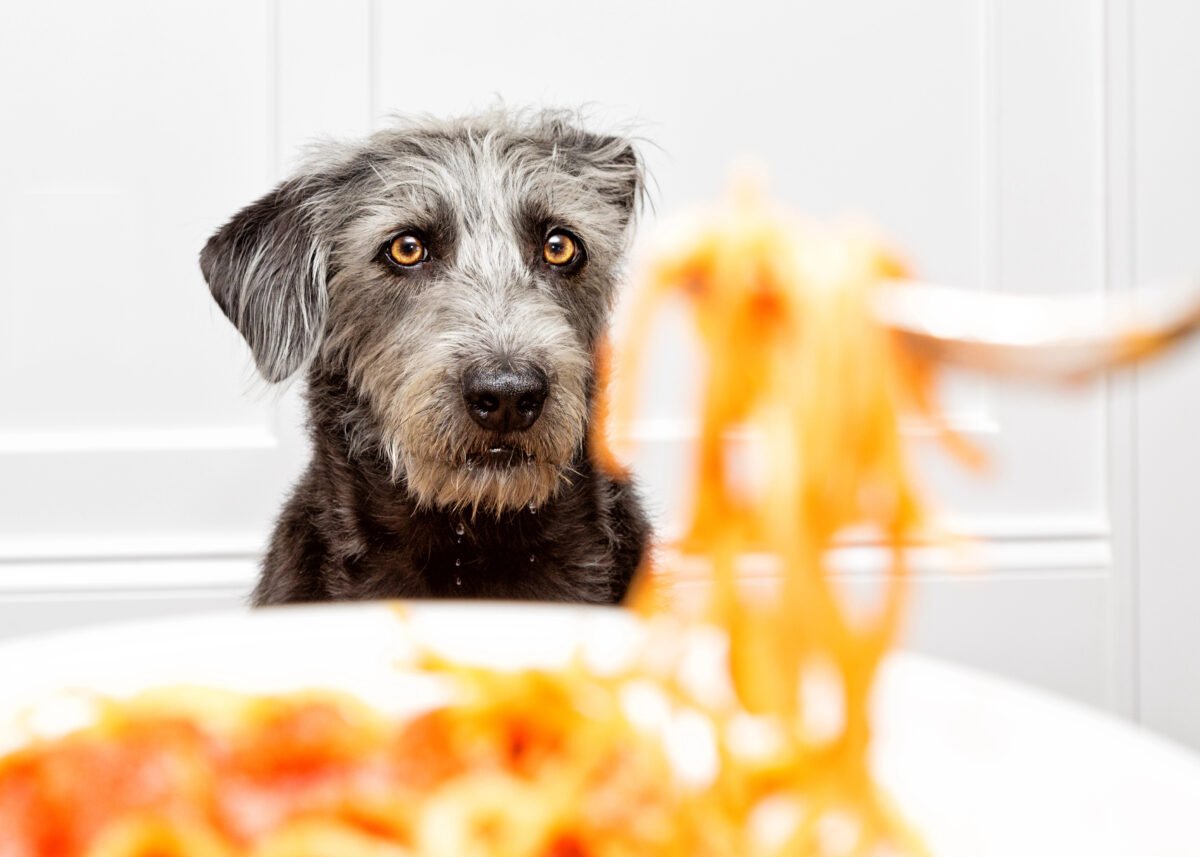
Before you assume your dog suddenly needs double the food, it’s worth asking one simple question:
Are they actually hungrier — or just acting like it?
Dogs are incredibly good at convincing us they’re starving. And a lot of the time, what looks like increased appetite is really just more noticeable behavior.
Here are a few common situations that can make it feel like your dog is suddenly hungrier:
- You’re home more often.
More time together means more chances for your dog to beg, stare, and follow you into the kitchen like a tiny food detective. - You’ve changed your routine.
Feeding a little later than usual? More snacks? Eating in front of them more? Dogs pick up on patterns fast. - They’ve learned begging works (even a little).
One dropped bite. One “just this once.” That’s all it takes for your dog to think, “Oh… this is a great strategy.” - You’re paying more attention to it.
Once you notice the behavior, it suddenly feels like it’s happening all the time.

If your dog’s weight, energy, and bathroom habits haven’t changed, and this is mostly about behavior, you may not be dealing with true hunger at all. That said, if something does feel different, you’re right to look closer.
1. The Most Common (Totally Normal) Reasons Your Dog Is Eating More
Before we get into anything concerning, let’s start with the reassuring part: A lot of dogs go through phases when they’re simply hungrier.
No illness or problems, just a body that needs more fuel (and a dog who’s very enthusiastic about that fact).
Here are the most common and completely normal reasons your dog might be eating more than usual.
More Exercise Or Activity
If your dog has been more active than usual, their appetite will usually follow.
- Longer walks
- More playtime (fetch marathons count)
- Dog park trips
- Even just being more alert and engaged
This is especially noticeable if you’ve recently changed routines or the weather has made your dog more active.
Growth Spurts (Puppies & Adolescents)
If you’ve got a younger dog, sudden hunger can feel dramatic, and honestly, it kind of is.
Puppies and teenage dogs go through growth spurts when their bodies are working overtime.
- Rapid bone and muscle development
- Increased energy needs
- Appetite that seems to spike overnight
During these phases, it can feel like your dog is never full because, for a little while, they kind of aren’t.
Seasonal Changes (Yes, This Is A Thing)
Some dogs naturally eat more during colder months.
- Staying warm burns more calories
- Activity patterns may shift
- Metabolism can adjust slightly
It’s not extreme, but it’s enough that you might notice your dog acting a little more food-focused than usual.
Bottom line:
If your dog is otherwise healthy, active, and maintaining a stable weight, a temporary increase in appetite is often completely normal.
2. Behavioral Reasons: When Hunger Isn’t Really Hunger
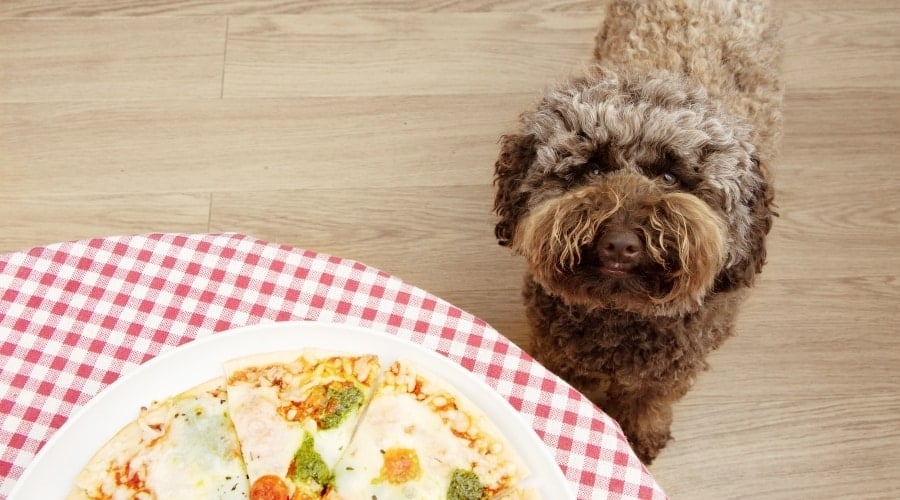
Here’s where things get a little tricky. Sometimes, your dog isn’t actually hungry at all — they’ve just learned that acting hungry works really well.
Dogs are experts at reading us. If there’s even a small chance food might appear, they’ll take it.
Learned Begging (Yes, This One’s On Us)
It usually starts small. A bite from your plate. A dropped snack. A “fine, just one more” moment.
And your dog immediately logs that away as: “This behavior = food appears.”
From then on, the staring, hovering, pawing, and dramatic “I’ve never been fed” routine ramps up fast. Even inconsistent rewards (like sometimes giving in) make this behavior stronger, not weaker.
Boredom Eating
If your dog isn’t getting enough mental and physical stimulation, food can become the most exciting option available.
You might notice:
- Hanging around the kitchen
- Checking their bowl repeatedly
- Suddenly “hungry” right after doing nothing
In this case, it’s not hunger; it’s your pup thinking, “something needs to happen, and food is the best option.”
Stress Or Anxiety
Most of us are guilty of stress eating once in a while, and dogs aren’t any different.
When something feels off in their world, food can become a comfort behavior rather than a need for calories.
Common triggers include:
- New schedule
- New people or pets
- Moving homes
- Travel or boarding
- Loud environments (construction, storms, visitors)
- Less attention or changes in your availability
Signs of anxiety and stress include:
- Increased food-seeking or begging
- Restlessness (pacing, difficulty settling)
- Clingy behavior or following you everywhere
- Whining or vocalizing more than usual
- Excessive licking (paws, lips, or surfaces)
- Destructive habits (chewing, digging)
- Changes in sleep patterns
- More alert or “on edge” behavior
In these cases, food isn’t solving hunger; it’s helping your dog cope.
If the behavior lines up with a recent change or feels emotionally driven, it’s a good sign you’re dealing with stress, not true appetite.
Feel Like Your Dog Is Just Built To Be Hungry?

Some dogs are wired to feel hungrier than others. A genetic mutation found in many Labrador Retrievers and Flat-Coated Retrievers affects appetite control, making them more food-motivated and more likely to overeat. Learn more about the study.
3. Diet Problems That Leave Dogs Feeling Starving
Sometimes the issue isn’t how much your dog is eating — it’s what they’re eating (or how it’s being served).
Not all meals are equally satisfying. And if your dog isn’t getting the nutrition they need, they may keep acting hungry, even after finishing a full bowl.
Low-Quality Food That Doesn’t Satisfy
Some dog foods are packed with fillers that provide calories but little lasting satisfaction.
So your dog technically eats enough, but still feels like they haven’t.
That can lead to:
- Feeling full briefly, then hungry again
- Constant food-seeking behavior
- Eating fast but never seeming satisfied
- Begging soon after meals

So, what’s going on?
Lower-quality foods often rely more on fillers and less on high-quality protein and healthy fats — the nutrients that actually help dogs feel full and stay full.
They may also be less digestible, meaning your dog isn’t getting as much usable nutrition from each bite.
Dogs need the right balance of protein, fat, fiber, and essential nutrients to feel truly satisfied, not just a physically full stomach.
If your dog always seems hungry despite eating the recommended amount, it’s worth looking at whether their food is actually meeting their nutritional needs, not just their calorie count.
Wrong Portion Sizes (It Happens More Than You Think)
It’s surprisingly easy to underfeed without realizing it because:
- Scoops aren’t always accurate
- Feeding guidelines vary by brand
- Activity level changes aren’t always accounted for
If your dog’s needs have increased (more activity, growth, etc.), their current portions might no longer be enough.
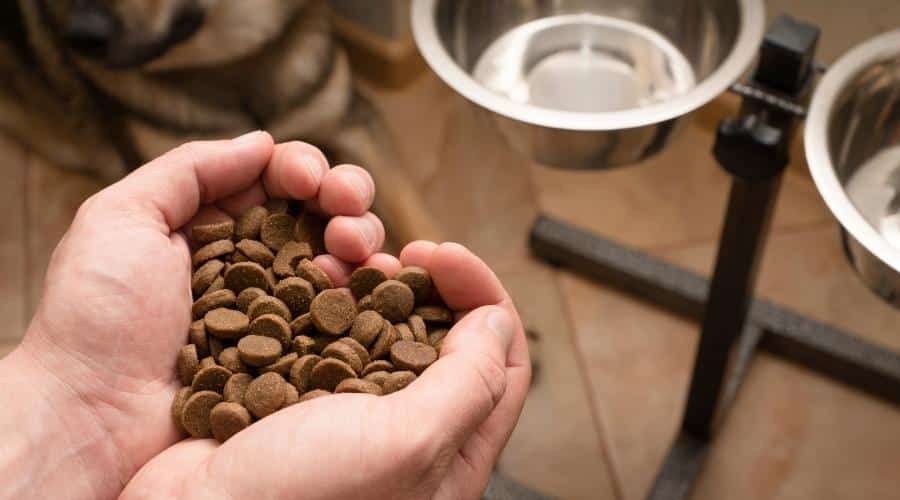
Not sure if you’re feeding the right amount?
Check out this guide on how much food to feed your dog to get a better baseline. The Association for Pet Obesity Prevention also has a handy dog calorie calculator to help you determine how much to feed.
Feeding Schedule Issues
Sometimes it’s not about how much; it’s about when. If your dog has:
- Long gaps between meals
- Irregular feeding times
- One large meal instead of two smaller ones
These can all make your dog feel extra hungry, even if their total daily calorie intake is technically correct.
Many dogs do better with consistent timing and split meals rather than a single big feeding window.
Did You Know? Your Dog Can Feel Hungry And Still Be Overfed
Many dogs who act “starving” are actually already getting enough (or too many) calories. Dogs are driven by opportunity, not fullness.
If food is available, they’ll keep asking. Over time, this can quietly lead to weight gain and obesity, even when owners feel like they’re just responding to hunger cues.
4. Older Dog Suddenly Hungry All The Time? Here’s What Could Be Going On
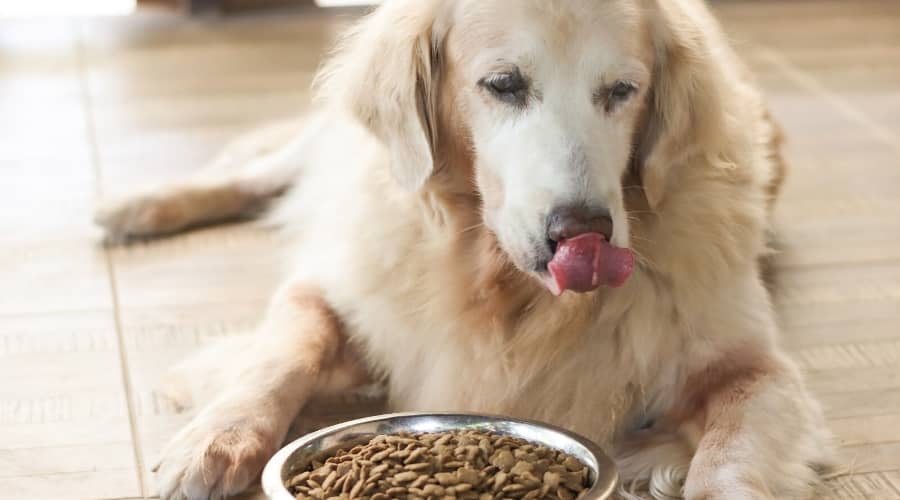
If your dog is getting older and suddenly acting like a bottomless pit, it can feel a little off.
Most people expect senior dogs to slow down, not start acting like they’re constantly starving. And sometimes, it’s just a normal shift. Why?
Metabolism Changes With Age
As dogs age, their bodies don’t process nutrients quite the same way.
- Digestion can become less efficient
- Nutrient absorption may decrease
- Energy levels fluctuate
The result? Your dog may feel hungrier, even if their diet hasn’t changed.
Muscle Loss Can Increase Appetite
Older dogs naturally lose muscle mass over time.
To compensate, the body may:
- Signal for more food
- Try to maintain weight and strength
This can show up as increased appetite, even without obvious weight loss.
Canine Cognitive Dysfunction (Dog Dementia)
Dog dementia, also known as canine cognitive dysfunction (CCD), can cause increased food-seeking behavior. But it’s not true hunger.

Dogs with CCD may forget they’ve already eaten, which can lead to repeated begging, pacing around the food area, or acting like every meal was missed.
This tends to show up alongside other behavioral changes, such as:
- Confusion or disorientation (getting “stuck” in corners, staring at walls)
- Changes in sleep patterns (awake at night, restless pacing)
- Increased clinginess
- Potty accidents
- Less interest in play or interaction
- Difficulty recognizing familiar people or routines
If your older dog suddenly seems constantly hungry and you’re noticing these changes, it’s worth bringing CCD to your vet’s attention.
Here’s the important part:
While some increase in appetite can be normal with age, a sudden or extreme change in hunger in an older dog is always worth paying attention to. Why?
This is also the stage of life where certain medical conditions (which we’ll get into next) become more common.
5. Medical Causes of Increased Appetite
Most of the time, increased appetite (termed polyphagia in the veterinary community) comes down to something simple.
But if your dog seems constantly hungry no matter what you do, it’s time to consider medical causes. The key difference? They’re eating more, but something still isn’t right.
That might mean weight loss, behavioral changes, or other symptoms appearing alongside the hunger. Here are the most common conditions vets look for.

Parasites (Worms)
Intestinal parasites, such as tapeworms, roundworms, and hookworms, literally steal nutrients from your dog. So even if your dog is eating enough, their body isn’t getting what it needs.
You might notice:
- Increased appetite
- Weight loss or difficulty maintaining weight
- Vomiting and/or diarrhea
- Dull coat or low energy
- Distended abdomen
Worms are especially common in puppies, but dogs of any age can contract them.
Diabetes
Dogs with diabetes mellitus can’t properly use glucose for energy, so their body sends a strong signal to eat more, even though fuel isn’t being used correctly.
Watch for:
- Increased hunger
- Excessive thirst
- Frequent urination
- Weight loss despite eating normally
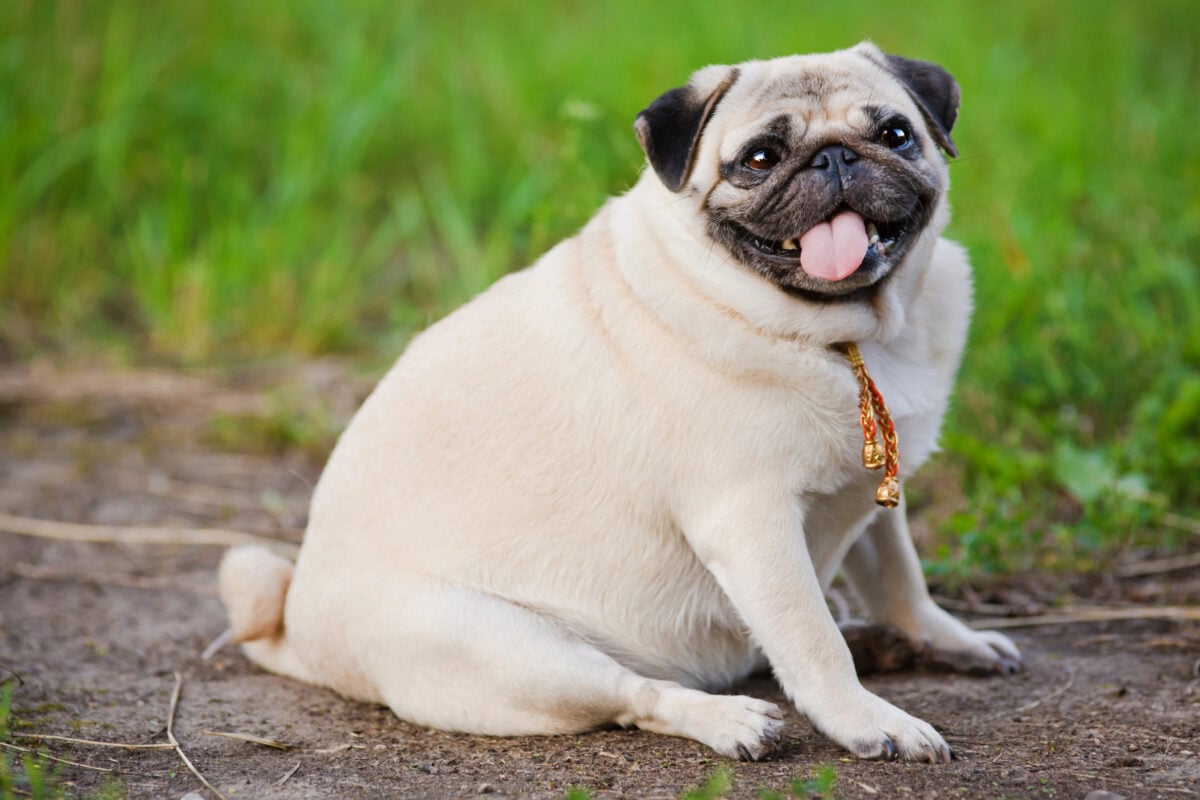
It’s also worth noting that overweight or obese dogs are at higher risk for developing diabetes, because excess body fat can interfere with how the body regulates insulin.
In other words, long-term overfeeding can quietly increase the risk, even before obvious symptoms show up.
Cushing’s Disease
Cushing’s disease (hyperadrenocorticism) occurs when a dog’s body produces too much cortisol, a hormone involved in stress response, metabolism, and inflammation.
In the right amounts, cortisol is helpful. But when it’s chronically elevated, it throws multiple systems out of balance.
One of the most noticeable effects is a dramatic increase in appetite. Many dogs with Cushing’s seem constantly hungry.
Over time, excess cortisol can:
- Increase appetite and thirst
- Break down muscle and redistribute fat
- Affect skin and coat health
- Suppress the immune system
You may also see:
- Increased thirst and urination
- A “pot-bellied” appearance
- Thinning fur or slow hair regrowth
- Lower energy or muscle weakness
Cushing’s tends to develop gradually, which can make the changes easy to miss at first.
However, if your dog seems ravenous along with these other signs, it’s definitely something to bring up with your vet.
See what this veterinarian shares about dogs’ eating habits with Cushing’s.
Medications (Especially Steroids)
Some medications can make your dog feel like they could eat forever.
Common culprits include:
- Corticosteroids, such as prednisone and prednisolone
- Anti-seizure medications like phenobarbital
- Some pain medications, such as gabapentin (rare)
If your dog recently started a new medication and suddenly seems ravenous, this could be the reason.
Digestive Disorders
Conditions like inflammatory bowel disease (IBD) and exocrine pancreatic insufficiency (EPI) don’t just affect digestion; they affect how well your dog can actually use the food they’re eating.
In simple terms, your dog eats, but their body isn’t absorbing enough nutrients (called malabsorption).
So, the body responds the only way it knows how, by asking for more food.
With IBD, chronic inflammation in the gut can interfere with nutrient absorption and cause ongoing digestive upset. With EPI, the pancreas doesn’t produce enough digestive enzymes, so food isn’t properly broken down in the first place.
That can lead to:
- Increased appetite (sometimes extreme)
- Eating non-food items, like leaves, mulch, etc.
- Weight loss despite eating more
- Diarrhea or inconsistent stools
- Large-volume stools or frequent bowel movements
- Poor coat quality or low energy
EPI, in particular, often comes with that frustrating combination of “always starving but losing weight anyway.”
Cancer (Less Common, But Possible)
When people think of cancer, they usually think of loss of appetite, and that’s often true.
But some types of cancer can actually cause the opposite — increased hunger. This is usually tied to how cancer affects the body’s metabolism and hormone balance.
Certain tumors (especially those involving the endocrine system or pancreas) can:
- Disrupt how the body regulates blood sugar
- Increase metabolic demand
- Interfere with normal hunger signals
In some cases, the body is essentially burning through energy inefficiently, which can trigger increased appetite.
You might notice:
- Eating more than usual
- Weight loss despite increased food intake
- Lethargy or decreased stamina
- Other vague, hard-to-pin-down changes
Unexpected illnesses are costly.
Many of these conditions require testing and treatment, which can get expensive quickly. Having pet insurance can help take some of that pressure off when it matters most.
When Increased Appetite Is A Red Flag
A hungrier dog isn’t always a problem. But sometimes, it’s your dog’s way of waving a very obvious flag.

The key is looking at what’s happening alongside the hunger. If you notice any of the signs below, it’s time to stop guessing and call your vet:
- Eating more but losing weight
This is one of the biggest red flags. It often points to an underlying issue with nutrient absorption or metabolism. - Drinking a lot more water than usual
Especially if the water bowl suddenly needs constant refilling. - Frequent urination or accidents
Often shows up alongside increased thirst. - Vomiting or diarrhea
Occasional issues happen, but ongoing symptoms paired with hunger shouldn’t be ignored. - Bloated or swollen abdomen
A “pot-bellied” look can be a sign of certain hormonal conditions. - Sudden, extreme behavior changes
Restlessness, urgency around food, or acting unusually frantic.
If something feels off, trust that instinct. You know your dog better than anyone, and small changes are often the first clue.
What To Do If Your Dog Is Eating More Than Usual
If your dog suddenly seems hungrier, it’s easy to jump straight to worry.
But most of the time, the best approach is simple: take a step back, check a few key things, and adjust from there.
Here’s how to handle it without overcomplicating things.
Schedule A Vet Visit (When In Doubt, Start Here)
If the change feels sudden, intense, or paired with other symptoms, don’t wait it out.
A quick check can help rule out:
- Parasites
- Diabetes
- Hormonal conditions
- Digestive issues
Even if everything turns out normal, you’ll have peace of mind.
Evaluate Your Dog’s Diet
Take a closer look at what’s actually in the bowl.
Ask yourself:
- Is this food appropriate for their age and activity level?
- Does it have enough protein and nutrients to keep them full?
- Have their needs changed recently (more exercise, growth, etc.)?
Sometimes the fix isn’t more food — it’s better food.
Tips:
- At a minimum, your pup should be eating a dog food that meets Association of American Feed Control Officials (AAFCO) guidelines for a complete and balanced diet.
- And if you have your dog on a homemade diet, it’s crucial to work with a veterinary nutritionist to ensure your pup is getting the appropriate nutrients they need.

Measure Portions (No Eyeballing)
It’s very easy to underfeed (or overfeed) without realizing it.
- Use a proper measuring cup
- Double-check feeding guidelines on the bag
- Adjust based on your dog’s actual activity level
Small inaccuracies add up quickly over time.
Increase Activity & Mental Stimulation
If boredom is part of the problem, food won’t fix it.
Try adding:
- Extra walks or play sessions
- Interactive toys, such as puzzles and treat-dispensing games
- Short training sessions and brain games
A mentally and physically engaged dog is less likely to fixate on food.

Use Slow Feeders Or Puzzle Bowls
If your dog inhales meals in seconds, they may not be giving their brain time to register fullness.
Slow feeders can:
- Stretch out mealtime
- Add mental stimulation
- Reduce that “I’m still starving” behavior right after eating
Bottom line:
Start with the basics — food quality, portions, routine — and adjust from there. And if something still doesn’t feel right? That’s your sign to bring your vet into the conversation.
Quick Self-Check: Should You Be Worried or Not?
If you’re still unsure where your dog falls, this quick check can help you make sense of it.

Likely Normal
- Appetite increase is gradual or tied to activity, growth, or weather
- Your dog’s weight is stable
- Energy levels are normal (or even higher)
- No other symptoms (vomiting, diarrhea, excessive thirst, etc.)
In this case, your dog is probably just temporarily hungrier than usual.
Worth Monitoring
- Appetite has suddenly increased drastically, but no major red flags yet
- Mild behavior changes (more begging, food focus)
- Small shifts in routine or diet recently
Keep an eye on things over the next 1–2 weeks and watch for patterns.
Call Your Vet
- Eating more but losing weight
- Drinking or urinating more than usual
- Digestive issues (vomiting, diarrhea)
- Sudden, intense, or out-of-character hunger
- Older dog with a noticeable appetite change
At this point, it’s not something to guess about; it’s worth getting checked.
Frequently Asked Questions
Still wondering what’s normal and what’s not? You’re definitely not alone. This is one of those behaviors almost every dog owner second-guesses at some point. If your dog is doing something unusual that we didn’t cover here, drop it in the comments.
Why Is My Dog Suddenly Always Hungry?
The most common reasons are increased activity, learned begging, or diet issues.
But if the change is sudden and intense, especially with other symptoms, it could point to a medical issue, such as parasites or hormonal conditions.
Should I Feed My Dog More If They Act Hungry?
Not automatically. First, check:
- Has their activity level increased?
- Are you measuring portions accurately?
- Are they actually losing weight?
If everything looks normal, increasing food slightly might make sense, but don’t double portions just because they’re giving you the “starving” look.
Why Is My Dog Eating Faster All Of A Sudden?
This is often behavioral.
- Competition (other pets)
- Learned urgency around food
- Excitement or routine changes
Fast eating doesn’t always mean more hunger — sometimes it just means more enthusiasm.
Can Worms Make My Dog Constantly Hungry?
Yes. Parasites take nutrients from your dog, which can lead to:
- Increased appetite
- Weight loss
- Poor coat condition
It’s a common and treatable cause, especially in younger dogs.
Is It Normal For Older Dogs To Eat More?
Sometimes. Aging can affect how dogs digest and absorb nutrients, potentially increasing hunger.
But a sudden or extreme change in appetite in a senior dog should always be checked by a vet.
Why Does My Dog Act Starving Right After Eating?
This is one of the most common complaints, and it’s usually not true hunger.
- Fast eaters don’t feel “full” right away
- Some dogs are just highly food-motivated
- Learned begging plays a big role
If your dog just finished a full meal and is immediately begging, it’s almost always behavior — not a calorie issue.
Rethinking What’s In Your Pup’s Bowl
Dog nutrition isn’t one-size-fits-all anymore — and a lot of pet parents are starting to explore options beyond traditional kibble.
From fresh meals to air-dried formulas and custom subscription plans, there are more ways than ever to tailor your dog’s diet to their needs (and make mealtime a lot more exciting).
Brands like The Farmer’s Dog, Ollie, Spot & Tango, and Badlands Ranch are leading that shift with options designed around quality ingredients, convenience, and better nutrition.
If you’re wondering whether your dog’s food could be part of the reason they always seem hungry, we’ve reviewed and tested these options to help you find the best fit for your dog’s lifestyle and health.
Does your dog act like they haven’t eaten in days — immediately after finishing a full meal? Steal snacks like a tiny, furry criminal? Stare at you while you eat like it’s a personal betrayal? Drop your dog’s most dramatic “I’m starving” moment in the comments.