When you purchase through links on our site, we may earn a commission at no extra cost to you. Learn more.
If your dog won’t stop mouthing you, those playful nips get old fast. What starts as harmless fun can quickly turn into scratched arms, chewed cuffs, and a whole lot of frustration.
Table of Contents
Most dog mouthing is completely normal. But when it gets intense, happens constantly, or comes with stiff body language, it’s time to take a closer look.
Start Here: Is This Play Or A Problem?
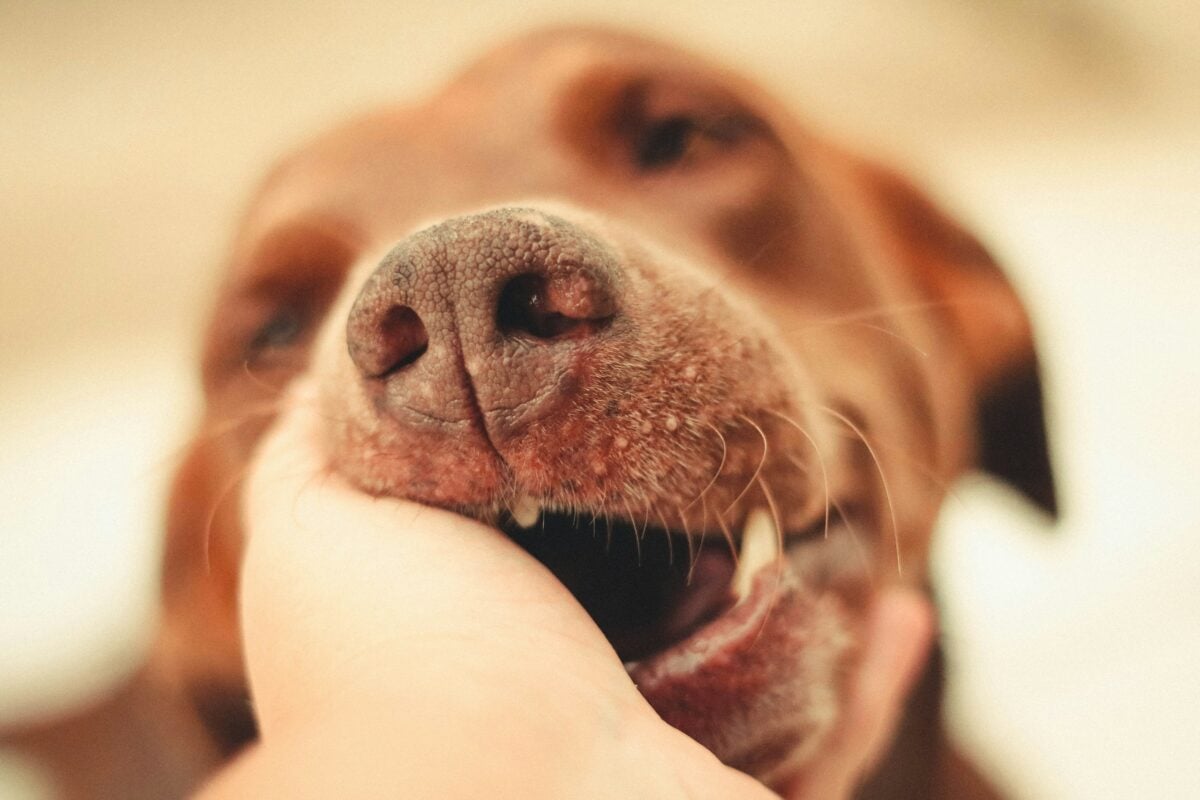
Before diving into why dogs mouth, first look at what’s actually happening when your dog’s teeth make contact. In most cases, mouthing is playful communication. But body language and intensity matter.
It’s Likely Play If Your Dog:
- Has a loose, wiggly body
- Uses light pressure and doesn’t leave marks
- Lets go or redirects easily
- Settles quickly once the interaction ends
This type of mouthing is especially common in puppies and young dogs and is often driven by play, excitement, or attention-seeking.
It May Be A Problem If Your Dog:
- Has stiff or tense body language
- Growls, snarls, or gives a hard stare
- Uses enough pressure to hurt or leave marks
- Escalates when you stop interacting or try to redirect them
When mouthing becomes forceful, persistent, or paired with defensive body language, it’s no longer something to brush off as playful behavior.

Mouthing vs Biting: The Pressure Test
Teeth touching skin can feel alarming, but not every mouth-on-skin moment is a bite. The biggest clues are how much pressure your dog uses, their body language, and what happens when you try to end the interaction. Some common examples include:
- Soft mouth during play: Your dog briefly puts their mouth around your hand or arm without squeezing or leaving marks. Their body stays loose and playful.
- Grabbing hands or sleeves for attention: They catch your clothing or hand when they want you to play, pet them, or keep interacting. Annoying? Absolutely. But it’s usually learned mouthing rather than aggression.
- Pressure that hurts or leaves marks: Even without broken skin, this has moved beyond harmless mouthing. Your dog needs better pressure control and clearer boundaries.
- A hard bite with stiff body language: Clamping down, snapping, freezing, hard staring, growling, or other tense behavior is different. This can signal fear, guarding, pain, or aggression and should be taken seriously.
Understanding your dog’s body language alongside the pressure they use can help you tell the difference. The chart below shows common signs of offensive and defensive aggression.
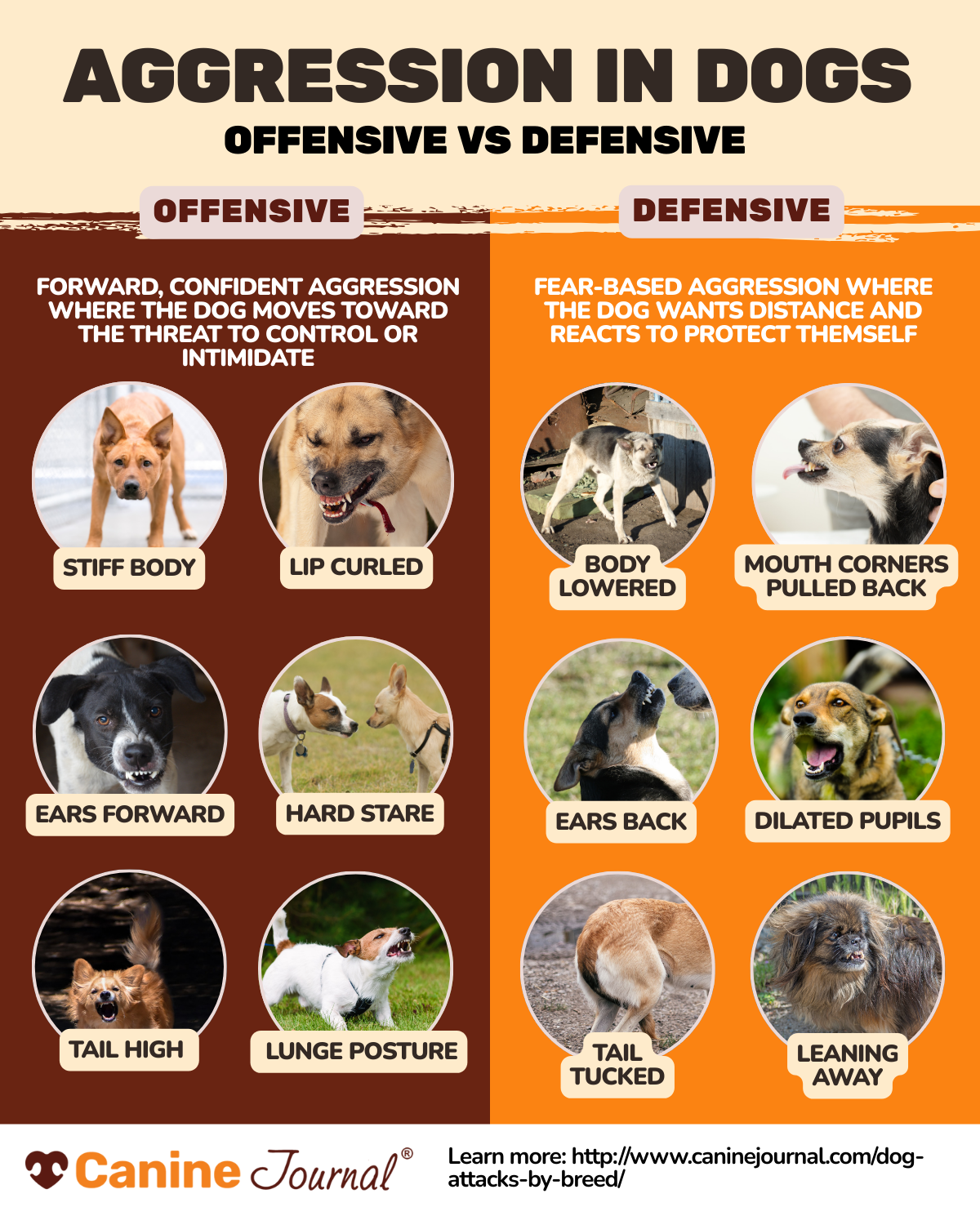
Note: If your dog shows signs of aggression, consult a veterinarian or certified trainer.
Is Dog Mouthing Normal?
In most cases, yes. Puppies naturally use their mouths to explore, play, and learn how much pressure is too much, a skill known as bite inhibition.
When puppies play with littermates, they mouth one another constantly. If one bites too hard, the other may stop playing. That feedback helps puppies learn to control the force of their mouths.
Once they come home, your hands, sleeves, and pant legs may become part of that learning process. Teething can make the behavior even more noticeable.
However, normal doesn’t always mean acceptable. Mouthing that continues into adulthood, becomes forceful, or turns into a reliable way to demand attention may need more structured training.
The important question isn’t simply whether your dog mouths. It’s why they’re doing it and what tends to trigger it.
Dog Mouthing At A Glance
- Most common in puppies and adolescent dogs
- Usually involves controlled pressure rather than a hard bite
- Often connected to play, excitement, teething, or attention
- Body language matters as much as teeth
- Can continue into adulthood if it becomes a learned habit
- Usually improves with consistent redirection and training
When Does Your Dog Get Mouthy?
Sometimes the best clue isn’t the mouthing itself. It’s what happened right before it.
Does your dog suddenly get mouthy when:
- You walk through the door?
- The evening zoomies kick in?
- Kids start running or playing?
- A game of tug or fetch gets intense?
- You stop petting them or turn your attention elsewhere?
- They come home amped up after a walk?
- Guests arrive, or something exciting happens?
These patterns can reveal whether you’re dealing with excitement, attention-seeking, overstimulation, play, or something else entirely.
So why do dogs use their mouths in the first place? Here are the most common reasons.
8 Reasons Dogs Mouth People
If your dog will not stop mouthing you, there is usually a reason behind it. Mouthing is rarely random. In most cases, it serves a purpose, whether that purpose is play, communication, or learned behavior.
Below are the most common reasons dogs mouth their owners.
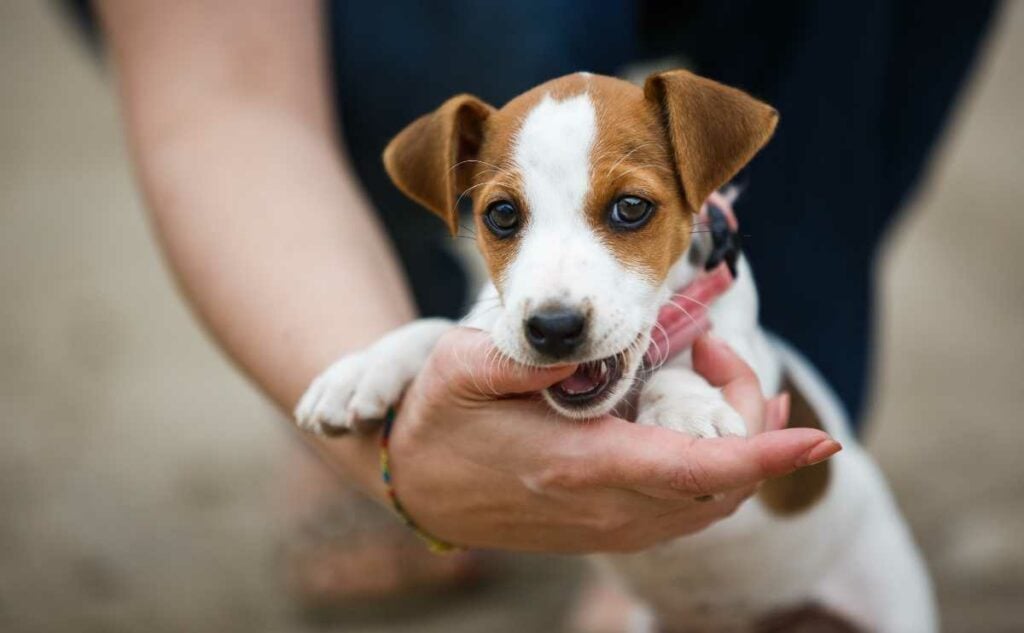
1. They’re Playing
Play is one of the most common causes of mouthing.
As puppies, dogs use their mouths to initiate play with littermates. That habit often carries over into adolescence and sometimes adulthood. Moving hands and feet can be especially tempting targets.
Without clear boundaries, some dogs simply continue treating human hands, sleeves, and ankles as part of the game.
2. They’re Teething
In puppies under six months old, teething is a major factor.

As puppies lose their baby teeth and grow adult teeth, pressure on sore gums can feel soothing, which increases chewing and mouthing.
Without appropriate chew outlets, puppies may turn to hands, sleeves, or pant legs instead.
3. They Want Attention
Sometimes mouthing is your dog’s version of “Hey, pay attention to me.”
You may notice it when you’re working, looking at your phone, stop petting them, or otherwise turn your attention elsewhere. If putting teeth on you reliably gets you to respond, mouthing can become a very effective way to demand interaction.
4. They’re Overstimulated Or Excited
Some dogs mouth when their arousal level rises.
During high-energy moments such as play sessions, greetings, or outdoor activity, excitement can spill over into nipping or grabbing. This is particularly common in adolescent dogs that have not yet developed impulse control.
5. They’re Frustrated
Mouthing doesn’t always happen because a dog is having fun. Some dogs grab with their mouths when they aren’t getting what they want.
You might see it when you stop playing, end petting, hold them back from something exciting, or prevent them from reaching another dog or person.
Frustration-driven mouthing can look more intense than ordinary play because the dog is already highly aroused. Increasing pressure, stiffness, growling, or escalation deserves more attention than a playful grab.
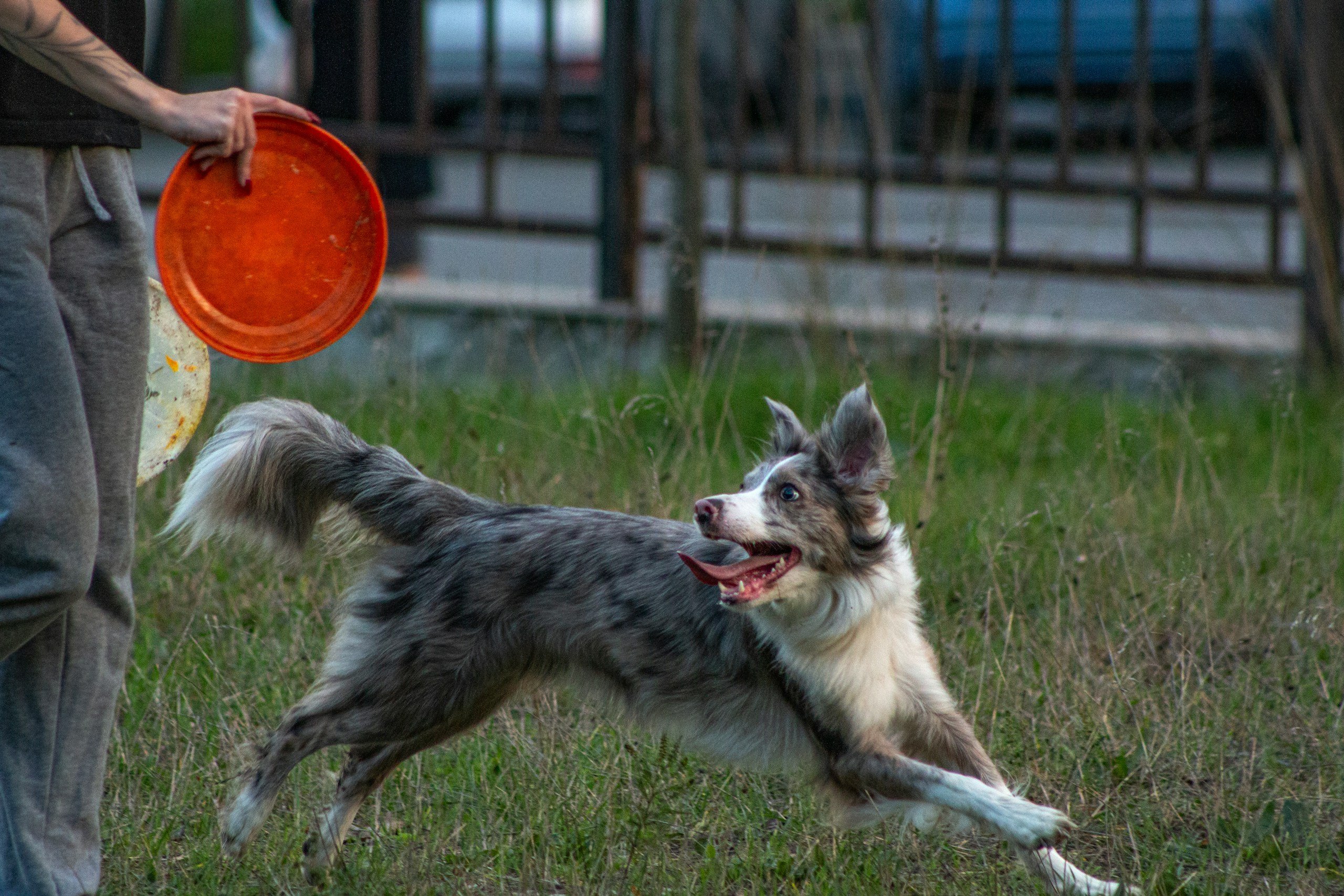
6. They Have Strong Instincts To Chase Or Grab
Certain dogs are naturally more inclined to chase, grab, or control movement.
Herding breeds may target ankles or clothing when people move, while retrievers and other working dogs may be especially inclined to carry or grab things with their mouths.
If mouthing tends to start when someone runs, moves quickly, or turns away, instinct may be contributing.
7. They’re Grooming Or “Cobbing” You
Some dogs gently nibble their owners using their front teeth, a behavior often called cobbing. It resembles the small, repetitive nibbling dogs may use during social grooming.
Cobbing is typically light and accompanied by relaxed body language. Unlike excited mouthing, it may happen while your dog is resting beside you or during calm physical contact.
8. The Behavior Has Been Reinforced
Sometimes mouthing continues for one simple reason: it works.
If grabbing your hand gets you to talk, laugh, push your dog away, start playing, or even scold them, your dog still got a reaction. Behaviors that reliably create interaction are more likely to be repeated.
The original reason may have been play, teething, frustration, or excitement. Reinforcement can be what turns it into a habit.
What To Do When Your Dog Mouths You: 5 Immediate Steps
Your dog just grabbed your hand, sleeve, or pant leg. What do you do? Your reaction in the next few seconds can either calm things down or turn mouthing into an even more exciting game.
The goal isn’t punishment. It’s showing your dog exactly what happens when teeth touch you—and what works better instead.
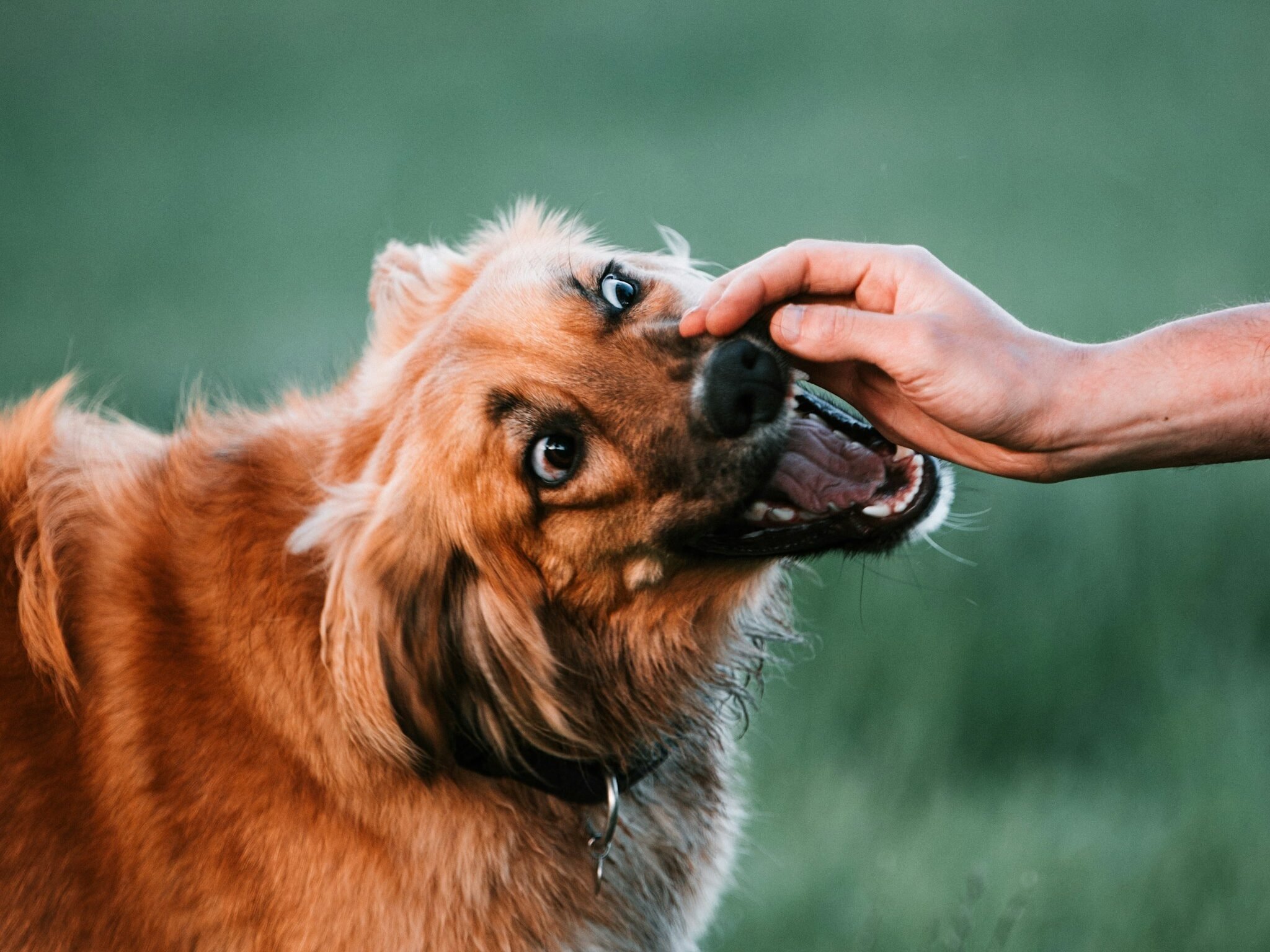
Step 1: Freeze
When teeth hit skin or clothing, your first instinct may be to pull away. Try not to. Quick movements can make your hands, sleeves, or pant legs even more exciting to chase and grab.
Instead:
- Stop moving
- Keep your hands still
- Avoid pushing your dog away
- Keep your voice and reaction neutral
The goal is to make mouthing immediately less interesting, not turn it into a wrestling or chase game.
Step 2: Remove Your Attention
If your dog keeps mouthing, take away what they were trying to get: interaction with you.
Stop petting, playing, or talking to them. Avoid eye contact and, if necessary, calmly stand up or move out of reach for a brief moment.
This works especially well for dogs who mouth to start play, demand attention, or keep an interaction going.
Step 3: Redirect To A Toy
Once your dog disengages from you, give their mouth somewhere appropriate to go. Offer a nearby tug toy, chew, or other toy they already enjoy.
Keep the redirect calm. You’re not trying to launch another round of chaotic play—you’re showing your dog that hands and clothing are off-limits, but toys are fair game.
For dogs with predictable mouthy moments, such as greetings or evening zoomies, keeping a toy within reach can make this much easier.
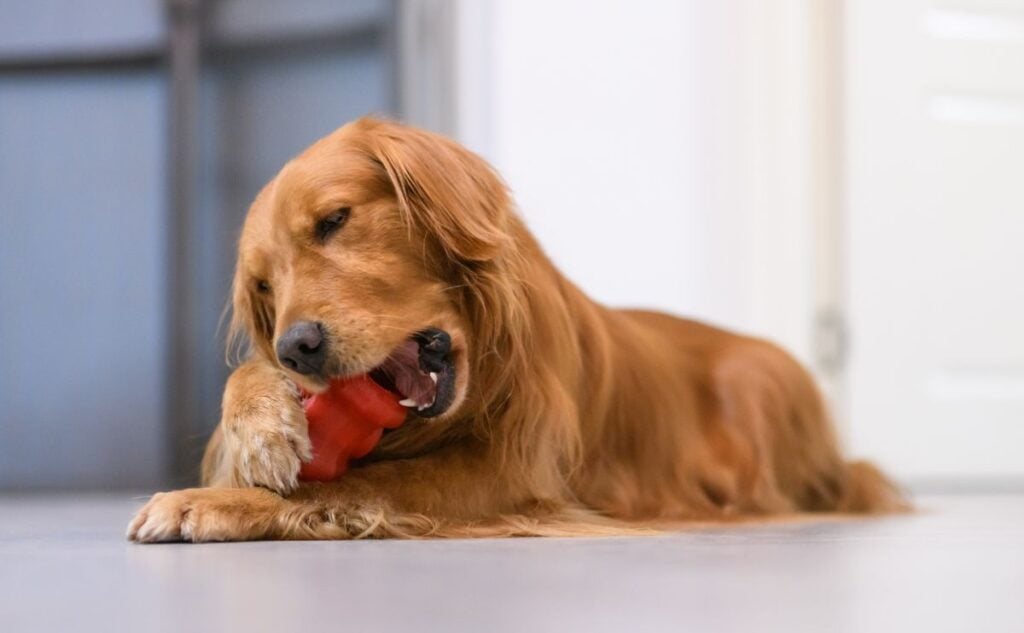
Step 4: Reward The Better Choice
The moment your dog takes the toy, backs off, or settles, reinforce that decision.
Depending on the situation, that might mean:
- Calm praise
- Resuming gentle attention
- Playing appropriately with the toy
- Giving a small treat for settling
Step 5: End The Interaction If Mouthing Continues
If your dog drops the toy and comes straight back for your hands, don’t keep repeating the same cycle indefinitely. If the pressure gets harder, end the interaction.
Calmly step away or create a short break from play and attention. Avoid scolding, grabbing your dog’s muzzle, or turning the break into another confrontation.
Increasing pressure, stiffness, growling, or other concerning body language is different from a dog who simply got carried away during play. If you’re seeing those signs, don’t keep trying to redirect through it.
How To Prevent Mouthing Before It Starts
Stopping mouthing in the moment is important, but the real progress happens when you start catching it before the teeth come out. Once you know your dog’s triggers and early warning signs, you can change the pattern before mouthing takes over.
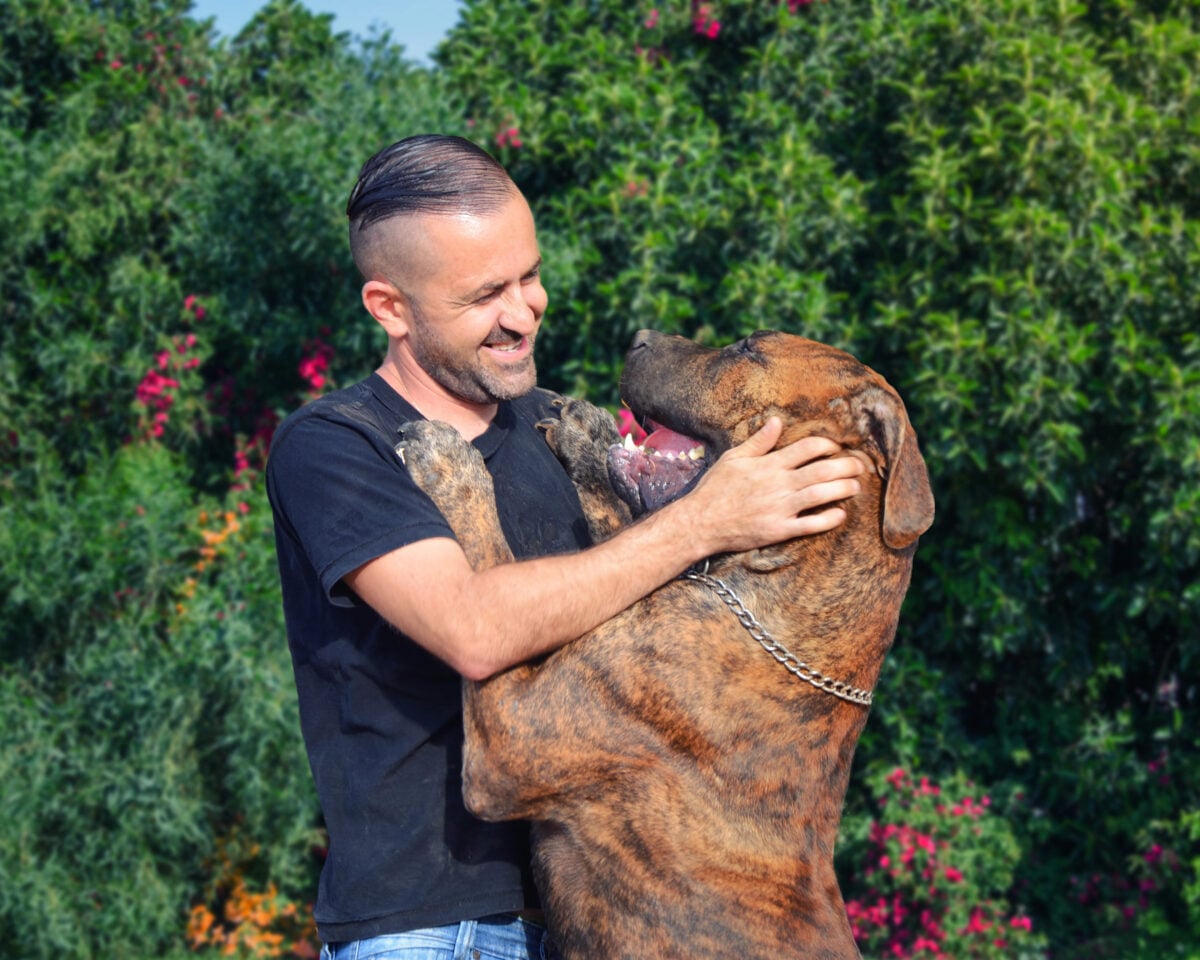
Learn Your Dog’s “About To Get Mouthy” Signs
Pay attention to what happens in the minute or two before your dog starts grabbing. Many dogs give you a window where their excitement is clearly building.
You might notice:
- Play getting faster or rougher
- Jumping, bouncing, or frantic movement
- More barking or vocalizing
- Grabbing toys or clothing
- Difficulty settling or responding to familiar cues
That’s your opportunity to act. Pause the game, offer an appropriate activity, or give your dog a chance to settle before excitement turns into mouthing.
Teach Better Bite Inhibition
Some dogs will redirect to a toy but still struggle with how much pressure they use when they get excited. That’s where bite inhibition comes in.
If your dog mouths too hard, pause the interaction immediately. You can use a calm cue such as “gentle,” but the consequence matters more than the word: harder pressure makes the fun stop.
Some dogs respond to a brief “ouch,” but others find squealing or dramatic reactions exciting and become even mouthier. If your dog ramps up, skip the sound and simply disengage.
When your dog softens, backs off, or returns to appropriate play, you can resume the interaction. If the pressure increases again, end it.
Over time, the pattern becomes clear: better mouth control keeps the interaction going; harder pressure ends it.
Set Up Problem Moments Differently
If your dog gets mouthy at predictable times, use that predictability to your advantage.
Does your dog grab your hands every time you walk through the door? Have a toy ready before the greeting starts. Do the evening zoomies inevitably end with someone’s sleeve in their mouth? Introduce a chew, sniffing game, or calmer activity before your dog reaches that point.
If tug or another favorite game tends to get increasingly wild, end while your dog is still playing appropriately instead of waiting for things to spiral.
You don’t need to eliminate exciting activities. The goal is to stop rehearsing the same mouthy pattern over and over.

Give Their Mouth Better Things To Do
Dogs have a natural need to chew, grab, tug, sniff, play, and explore. Giving them appropriate outlets can make your hands and clothing much less interesting.
Depending on your dog, try incorporating:
- Appropriate chew toys
- Structured tug or fetch
- Short training sessions
- Food puzzles and enrichment activities
- Sniff walks or scent games
But don’t assume a mouthy dog simply needs to be worn out. Overtired puppies and overstimulated dogs can actually become more mouthy, so adequate downtime and rest matter too.
Get Everyone In The House On The Same Page
Mouthing is much harder to change when the rules depend on which human is in the room.
If one person wrestles with the dog using their hands, someone else lets them grab hoodie sleeves, and another expects absolutely no teeth on clothing, your dog is getting mixed messages.
Everyone should agree that:
- Hands and clothing aren’t toys
- Roughhousing shouldn’t encourage grabbing people
- Mouthing gets the same calm response each time
- Appropriate play and calm behavior get attention
Consistency makes the boundary much easier for your dog to understand.
What About Kids?
Kids shouldn’t be responsible for correcting a mouthy dog. Running away, squealing, waving their arms, or pushing the dog away can make an already excited dog even more interested in chasing and grabbing.
Adults should supervise interactions, redirect the dog, and step in when play starts getting too intense.
If your dog repeatedly mouths children with pressure or shows stiff, tense, or aggressive body language, separate them and seek professional guidance rather than asking the child to manage the behavior.
4 Common Mistakes That Make Mouthing Worse
When your dog grabs your hand, the instinct to react is strong. It’s annoying. It’s uncomfortable. And sometimes it feels automatic to say “no” or pull away.
But certain reactions can actually make mouthing more persistent. If progress feels stalled, one of these habits may be getting in the way.
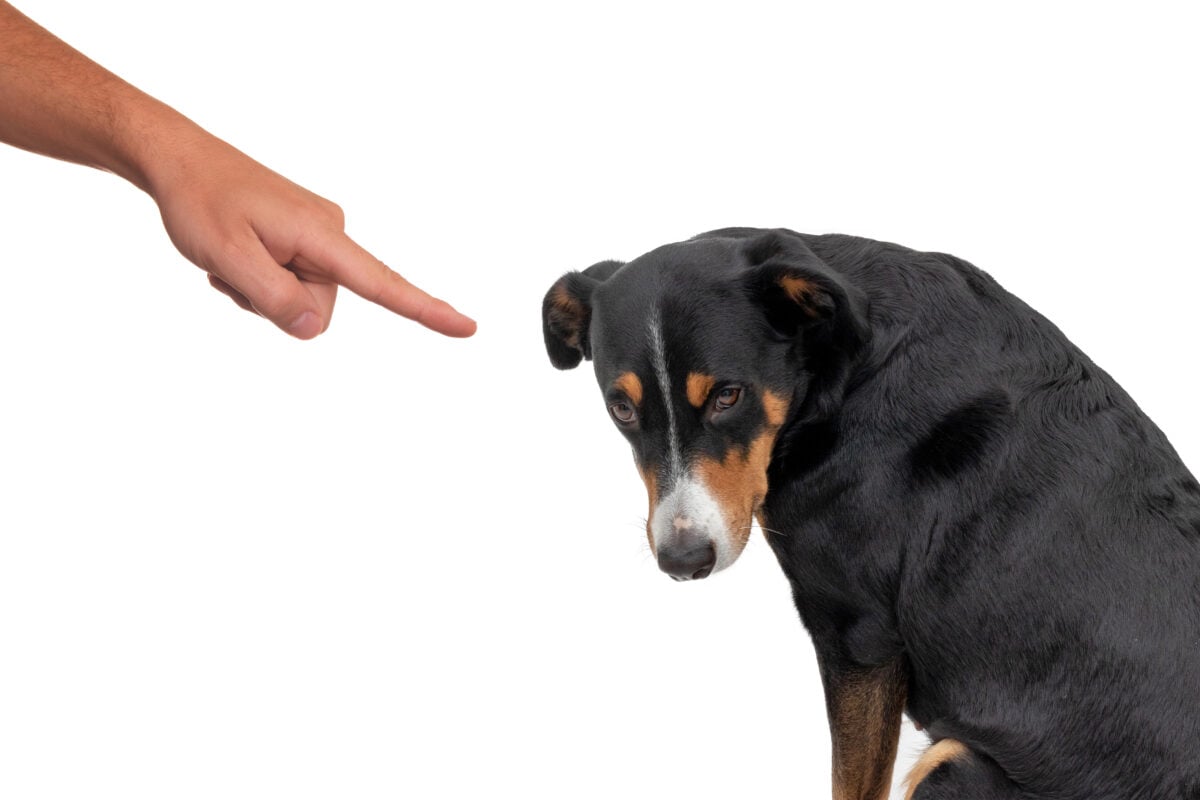
1. Yelling, Scolding, Or Using Physical Punishment
When teeth are involved, it’s tempting to react strongly. But yelling, holding your dog’s mouth shut, tapping their nose, or getting physical can increase excitement, stress, or defensiveness instead of teaching better mouth control.
Mouthing usually isn’t a challenge to your authority. Adding more intensity to the interaction can make the situation worse.
2. Pulling Your Hand Away Quickly
When teeth touch skin, your reflex is to yank your hand back. The problem is that sudden movement can trigger chase instincts. What started as mild mouthing can quickly turn into a grabbing game.
Move slowly instead. Remove the reward, then redirect.
3. Turning Your Hands Into Toys
Wrestling with your dog using your hands can make one rule especially difficult to understand: sometimes grabbing people is fun, but other times it gets them in trouble.
You don’t have to eliminate energetic play. Use toys for grabbing and tugging so the boundary stays clear.
4. Reinforcing It Without Realizing
If mouthing consistently gets a reaction, your dog may decide it works.
Laughing, talking, pushing them away, or accidentally starting a game can all turn unwanted mouthing into a reliable way to get your attention.
When To Seek Professional Help
Most playful mouthing can be worked on at home, but increasing pressure, concerning body language, or a sudden change in behavior can signal that something more is going on. Here’s how to gauge when you may need extra help.
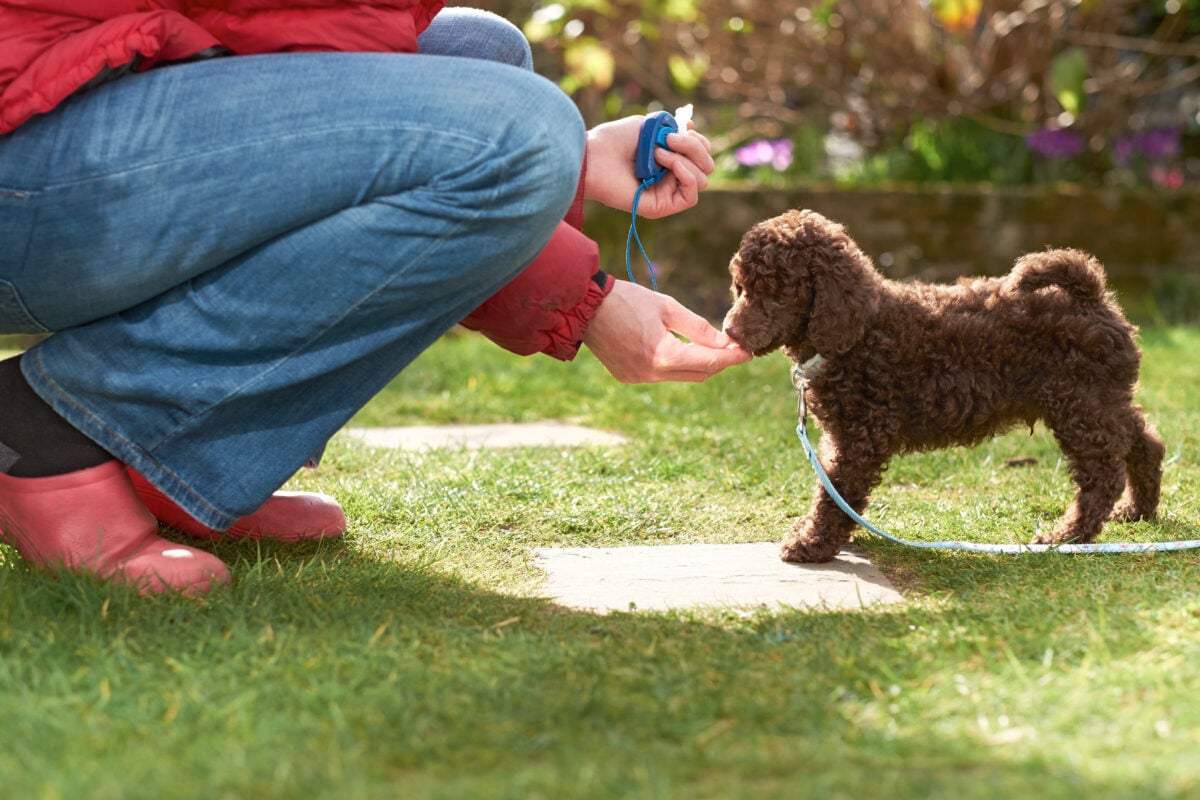
Usually Manageable At Home
You can typically continue working on mouthing at home if your dog:
- Uses light, controlled pressure and doesn’t leave marks
- Has loose, playful body language
- Mouths during predictable situations like play or greetings
- Redirects easily to a toy or calmer activity
- Is gradually improving with consistent training
When A Trainer Can Help
Consider working with a qualified positive-reinforcement trainer if your dog:
- Continues mouthing frequently despite consistent training
- Repeatedly grabs hands, clothing, or ankles and is difficult to interrupt
- Gets increasingly mouthy when excited or frustrated
- Uses enough pressure to hurt or leave marks
- Is an adult dog with an established mouthing habit you’re struggling to change
A trainer can observe the behavior in context, identify patterns you may be missing, and help everyone in the household respond consistently.
When To Contact Your Vet Or A Behavior Professional
Some changes deserve more immediate attention. Contact your veterinarian or an appropriate behavior professional if your dog:
- Suddenly starts mouthing or biting when the behavior is new
- Bites hard, breaks skin, or escalates rapidly
- Freezes, stiffens, growls, snarls, snaps, or gives a hard stare
- Guards food, toys, spaces, or people
- Appears fearful, defensive, or unusually irritable
- Seems painful or reacts when touched in a particular area
- Behaves unpredictably or you’re concerned someone could be injured
A sudden behavior change can sometimes be related to pain or another medical issue, so your veterinarian is an important first call when mouthing or biting appears unexpectedly.
For serious fear, aggression, or more complex behavior problems, your vet may recommend a veterinary behaviorist or another qualified behavior professional.
Best Toys To Redirect Dog Mouthing
The best redirect satisfies what your dog was trying to do with your hand in the first place. A puppy chewing because their gums hurt may need something very different from an adolescent dog trying to start a wrestling match.
For Dogs Who Want To Grab & Play
Tug and rope toys give your dog something appropriate to grab while keeping teeth farther away from your hands.
Keep tug structured: start and stop the game deliberately, and end the session if your dog begins targeting your hands or clothing instead of the toy.
For Dogs Who Want To Chew
Durable rubber toys can give persistent chewers an appropriate outlet, particularly during times when mouthing tends to happen.
Food-stuffable toys can also keep dogs engaged longer and encourage licking and chewing rather than grabbing at people. Natural chews such as bully sticks, dental chews, or yak chews can also satisfy a strong urge to gnaw.
Choose a size and durability level appropriate for your dog’s chewing style, and replace damaged toys.
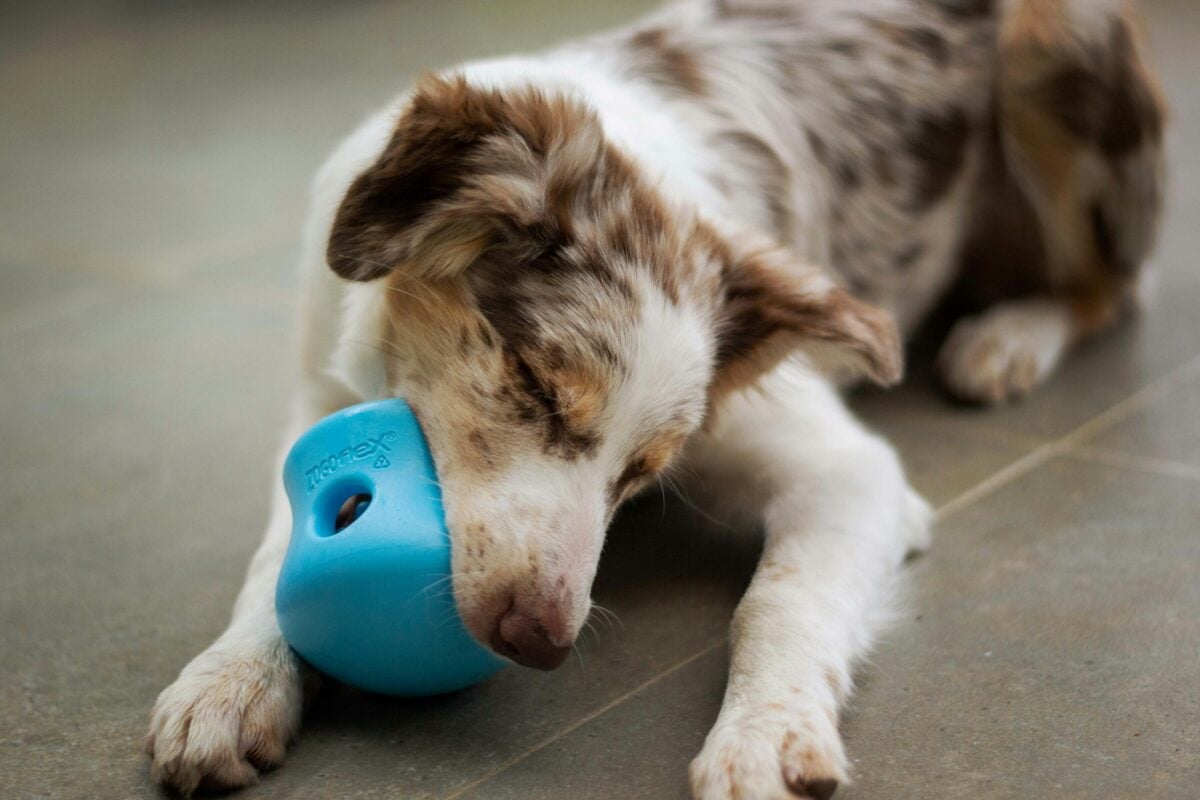
For Teething Puppies
Puppies may prefer softer rubber or puppy-specific teething toys designed for developing teeth and gums. Some toys can also be chilled or frozen according to the manufacturer’s directions for additional relief.
Keep several appropriate options nearby so your hand doesn’t become the most convenient teething toy in the room.
For Dogs Who Need Something To Do
If mouthing tends to appear when your dog is looking for entertainment, try food puzzles, treat-dispensing toys, snuffle mats, or other mental enrichment activities.
These aren’t necessarily substitutes to give your dog in the middle of every mouthing episode. They’re useful for giving bored or restless dogs more appropriate ways to use their brains and bodies throughout the day.
Whatever you choose, supervise your dog with new toys and regularly check them for damage. No dog toy is truly indestructible, and the right size and material depend on how your dog plays and chews.
Does Your Dog’s Age Make A Difference?
Age can change both why your dog mouths and how quickly the behavior improves. A mouthy four-month-old puppy is very different from a four-year-old dog who suddenly starts grabbing hands.
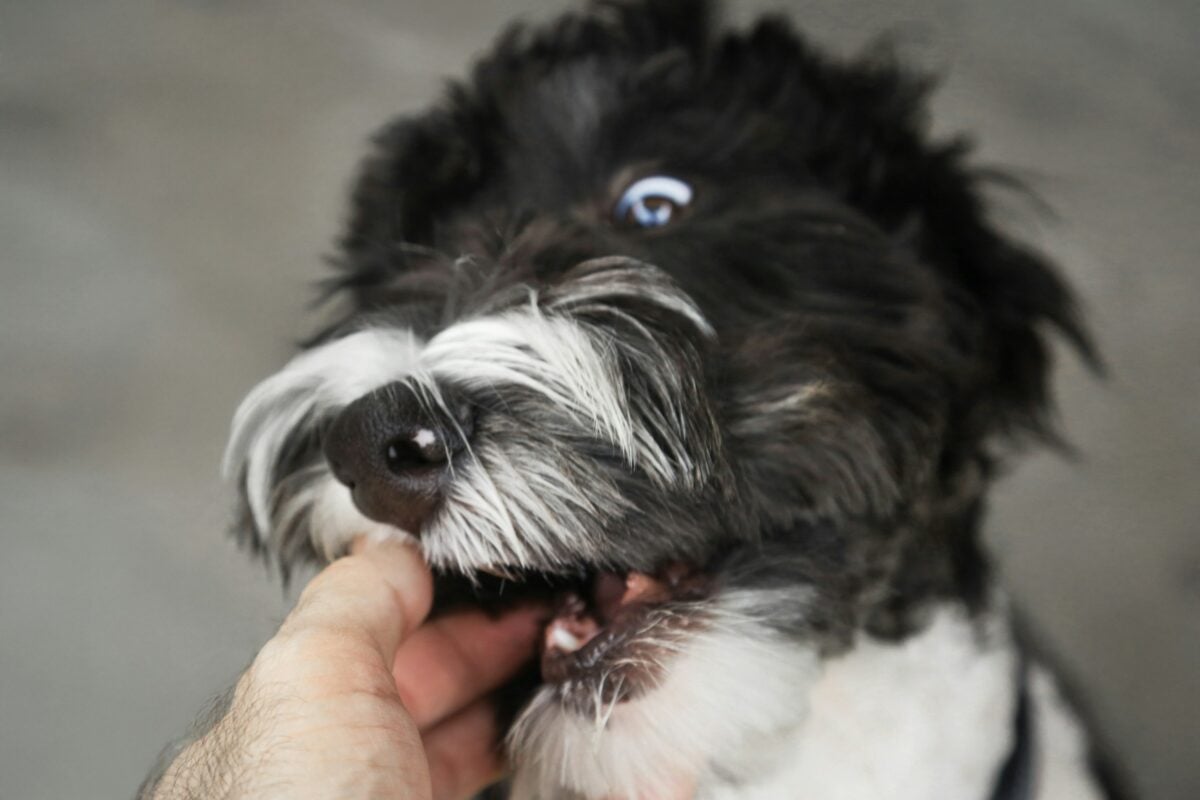
Puppies: Expect Mouthing, But Start Setting Boundaries
Mouthing is a normal part of puppyhood, especially while puppies are teething and still learning how to interact with people. That doesn’t mean you have to wait for them to grow out of it.
This is the ideal time to establish simple rules about what they can chew, how hard is too hard, and what happens when teeth land on people or clothing.
Progress can be uneven. Teething, excitement, and overtiredness can all cause temporary spikes in mouthing, even when your puppy seems to be getting the hang of things.
Adolescent Dogs: Don’t Be Surprised By A Comeback
Just when you thought the bitey stage was behind you, adolescence can bring mouthing back with a vengeance.
Young dogs are bigger, stronger, and often more excitable than they were as puppies, while their impulse control is still developing. That can make grabbing sleeves, jumping, and getting carried away during play much harder to ignore.
If your adolescent dog suddenly seems mouthier again, go back to the same boundaries rather than changing tactics every time the behavior resurfaces. This stage can be frustrating, but consistency matters more than perfection.
Adult Dogs: Look At What Has Changed
Adult-dog mouthing deserves a little more attention because there’s an important difference between a dog who has always been mouthy and one who suddenly starts doing it.
If your adult dog has mouthed people for years, the behavior may simply have become an established habit.
They may have learned that grabbing a sleeve starts a game, mouthing gets your attention, or using their mouth is part of an exciting greeting. Long-practiced habits can take more time and consistency to change.
New mouthing in an adult dog is different. If your dog rarely used their mouth on people before and suddenly starts grabbing, snapping, or reacting differently to touch, pay attention to what else has changed.
A sudden behavior change, particularly when paired with irritability, sensitivity to touch, increasing pressure, or other unusual behavior, is worth discussing with your veterinarian rather than assuming your dog has simply picked up a bad habit.
Quick Reality Check
If your dog’s mouthing is gentle, controlled, and doesn’t escalate, you may not need to stop it completely.
However, consider a few things:
- Will your dog mouth guests the same way?
- Would a child interpret it as playful?
- Could excitement increase pressure unexpectedly?
- Does your dog mouth during overstimulation or frustration?
Even mild mouthing can become problematic if it is inconsistent or unpredictable. You do not have to eliminate every playful nibble. But you should be confident your dog has reliable pressure control and responds immediately to redirection.
If you are unsure, it is safer to teach boundaries early than to undo a habit later.
My Personal Experience With Dog Mouthing
When I first adopted my dog Rio, he used to greet me with full-body excitement, spinning, jumping, and mouthing at my hands. It was never aggressive, but it was intense and sometimes uncomfortable.
I fixed this by withdrawing attention. No petting or eye contact. No engagement until he settled.
Within weeks, the difference was noticeable. Today, he greets me with enthusiasm, but the mouthing is gone.
There was another behavior that initially confused me: cobbing. Rio would gently nibble on blankets, toys, and occasionally my leg. Unlike the excited mouthing at the door, it was soft, deliberate, and affectionate.
Learning to distinguish between overstimulated mouthing and gentle cobbing helped me respond appropriately instead of overcorrecting harmless behavior.
As he matured and settled in, even the cobbing faded. I will admit, I miss that one a little.
Frequently Asked Questions
Still wondering about a particular mouthing habit? Here are a few common questions dog owners have about when, why, and how dogs use their mouths. Don’t see your question? Ask us in the comments, and we’ll get back to you!
Is Canine Mouthing Tied To Aggression?
In most cases, no. Playful mouthing is common and typically involves loose body language and controlled pressure. Aggression involves stiffness, tension, and intent to create distance.
If you are worried that your dog’s mouthing is tied to aggression, be sure to keep an eye out for any behaviors such as snarling, growling, showing their teeth, snapping, stiff posture, intense staring, biting with pressure, and any other alarming behaviors. If these behaviors accompany mouthing, consult a veterinarian or certified trainer for evaluation.
Why Does My Dog Mouth Me But Not Other People?
If your dog mouths you but not others, the behavior has likely been reinforced in your interactions. Even small reactions, such as talking, pulling away, or engaging in play, can reward mouthing.
Dogs are also more likely to mouth the people they feel most comfortable with. Familiarity lowers inhibition. If mouthing consistently earns attention from you, your dog will continue directing it toward you.
Should I Let My Dog Mouth During Play?
It depends on control and consistency. If your dog uses gentle pressure, responds immediately to cues, and never escalates, some owners choose to allow light mouthing during structured play. However, this requires reliable bite inhibition and clear boundaries.
The risk comes when rules are inconsistent. If mouthing is allowed sometimes but corrected other times, confusion can prolong the behavior.
If children, guests, or inexperienced handlers are involved, it is safer to teach that human skin is not part of play.
Is Dog Mouthing A Sign Of Dominance?
Modern behavioral science does not support the idea that mouthing is an attempt to assert dominance. Mouthing is usually linked to excitement, attention-seeking, teething, or overstimulation.
Labeling it as dominance can lead to unnecessary force-based corrections, which often increase stress rather than improve behavior. Focus on structure and reinforcement, not hierarchy myths.
Why Does My Dog Mouth Me When I Stop Petting Them?
This often reflects frustration or learned attention-seeking.
If petting consistently leads to more petting, your dog may use mouthing as a way to continue the interaction. This is especially common in high-energy or easily overstimulated dogs.
Teaching calm transitions helps. Pause petting before arousal increases, reinforce relaxed behavior, and avoid re-engaging immediately after mouthing.
Over time, your dog learns that calm behavior continues attention. Mouthing does not.
Keep Learning About Your Dog’s Behavior
Mouthing is just one way dogs communicate. Many behaviors that seem frustrating at first have underlying reasons rooted in instinct, emotion, or unmet needs.
If you want to better understand what your dog is trying to tell you, explore these guides:
- Why Dogs Dig And When It Becomes A Problem
- What Excessive Barking Really Means
- Why Some Dogs Eat Poop And How To Stop It
The more you understand the reason behind the behavior, the easier it becomes to respond calmly and consistently.
Does your dog have a favorite time to get mouthy? Maybe it’s the second you walk through the door, during the evening zoomies, or whenever you dare to stop petting them. Tell us what triggers your dog’s mouthing in the comments—we’d love to hear what sets yours off.